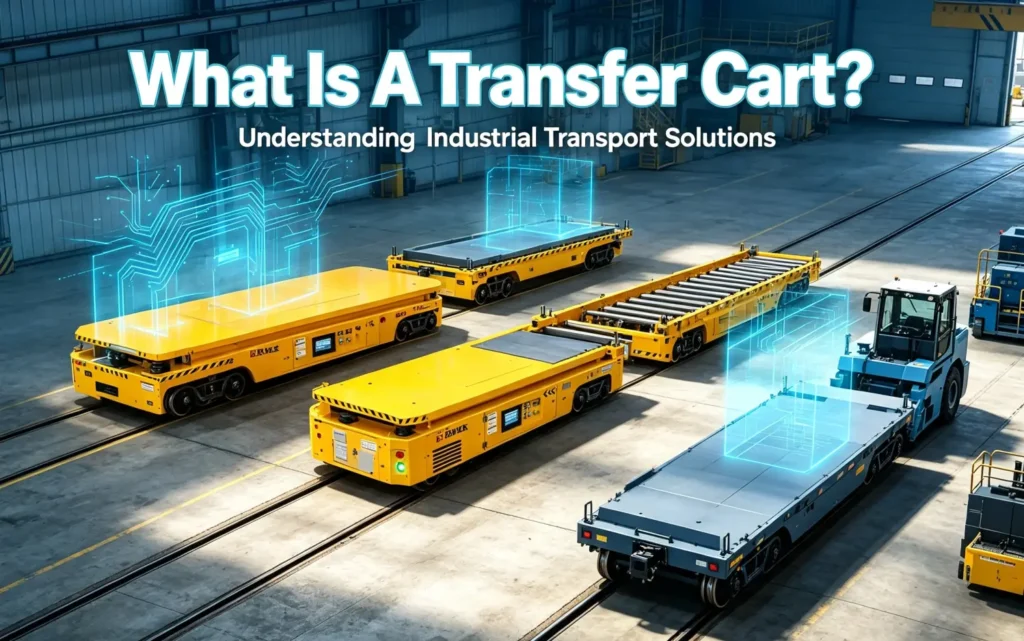
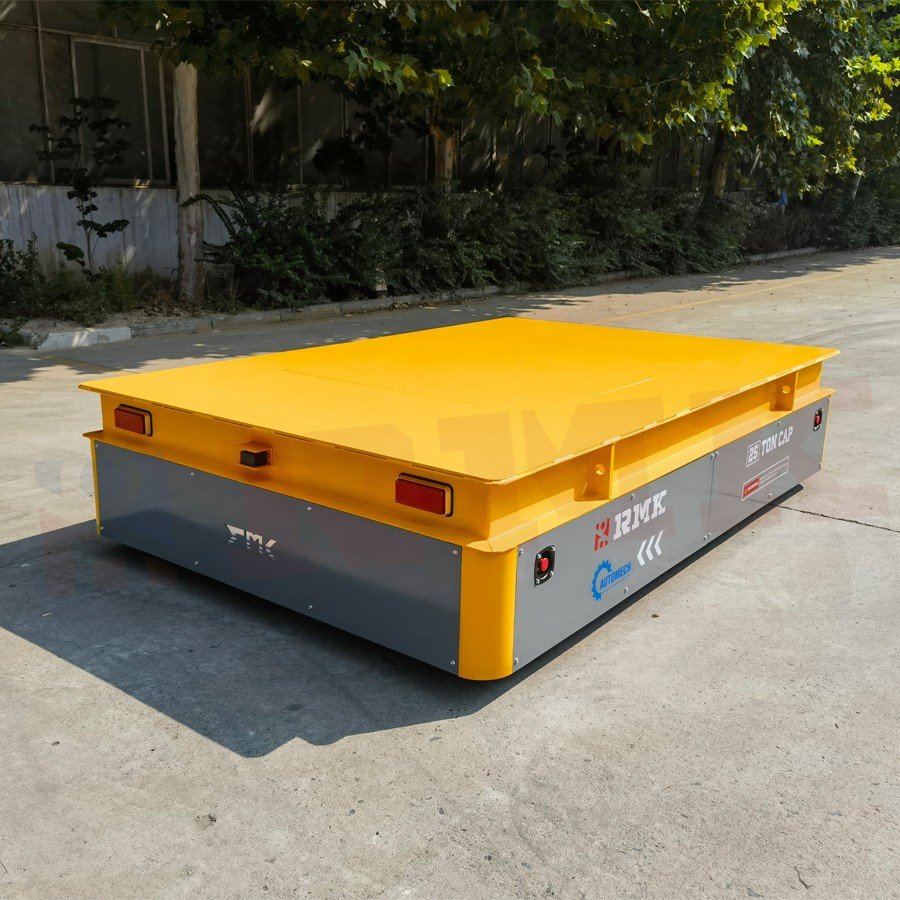
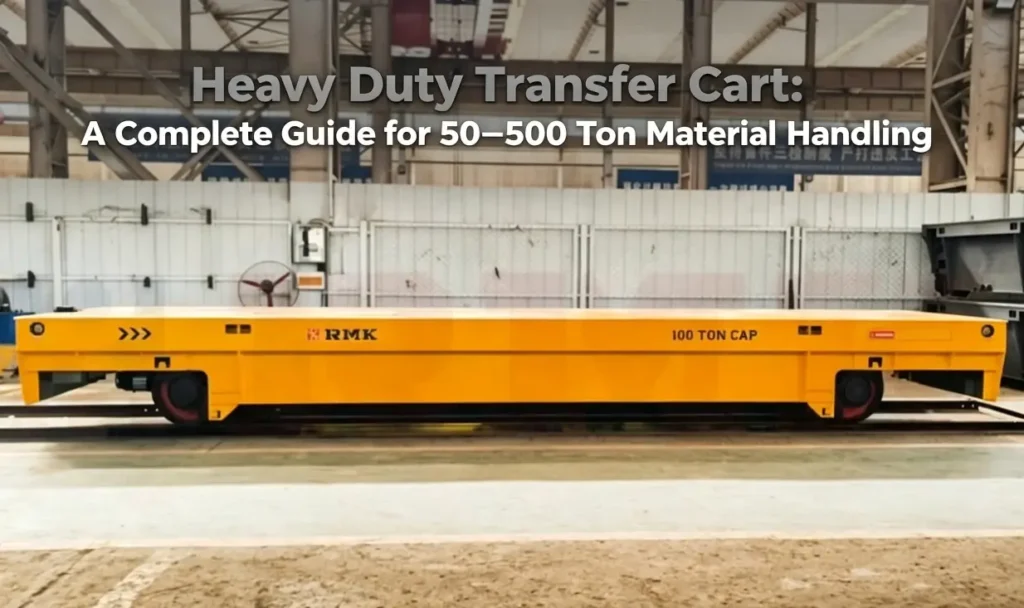
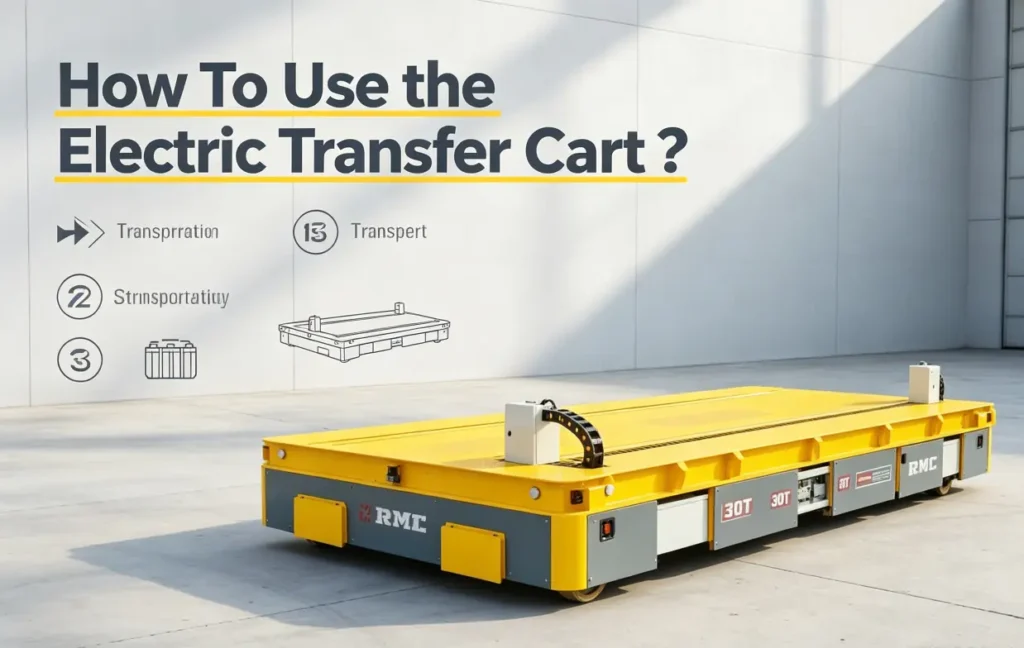
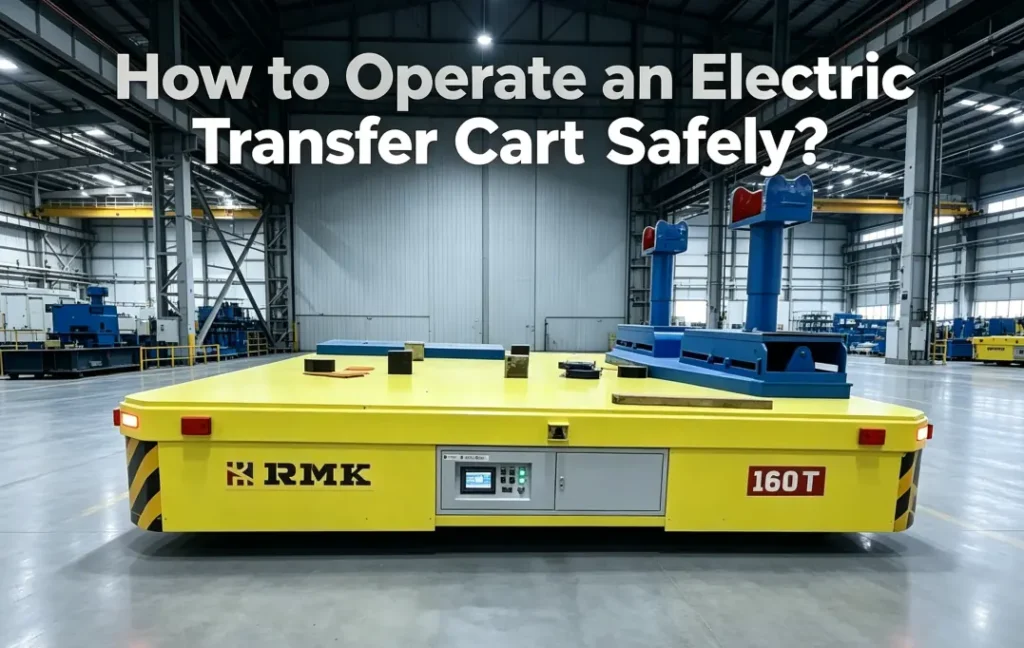
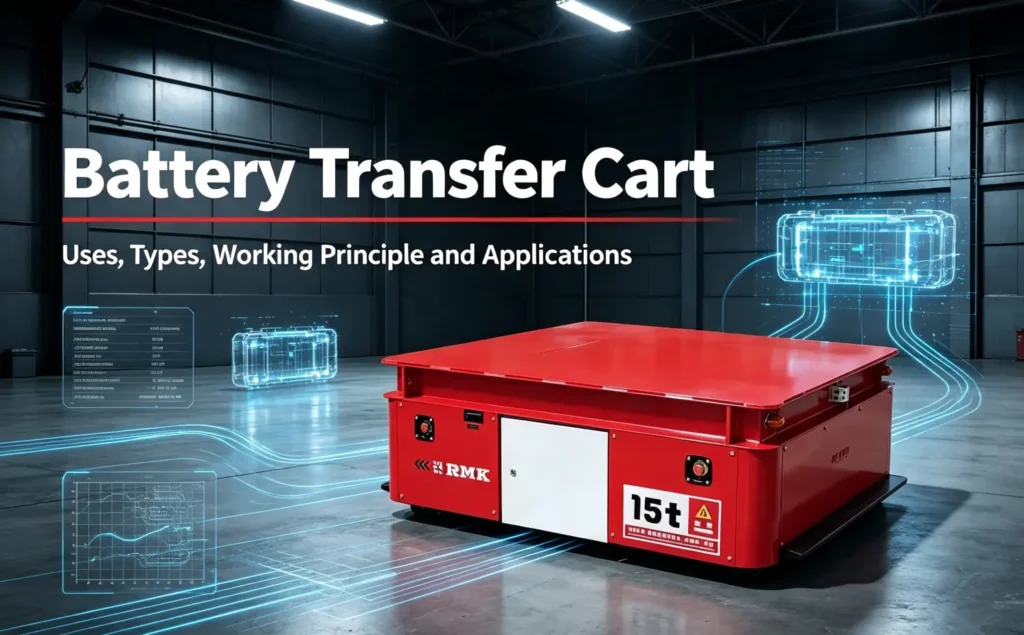
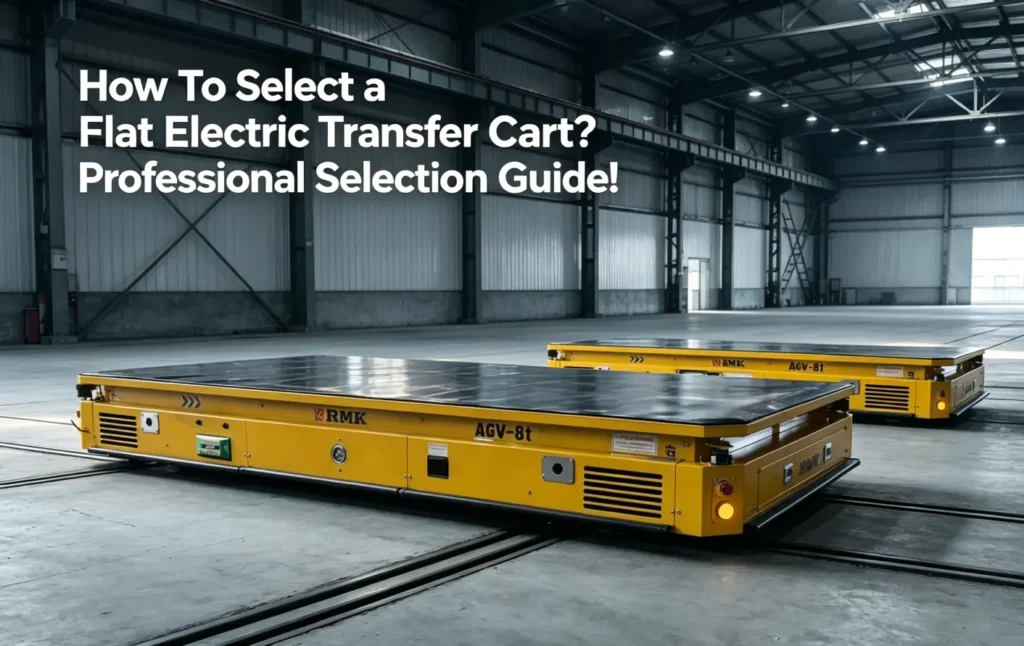
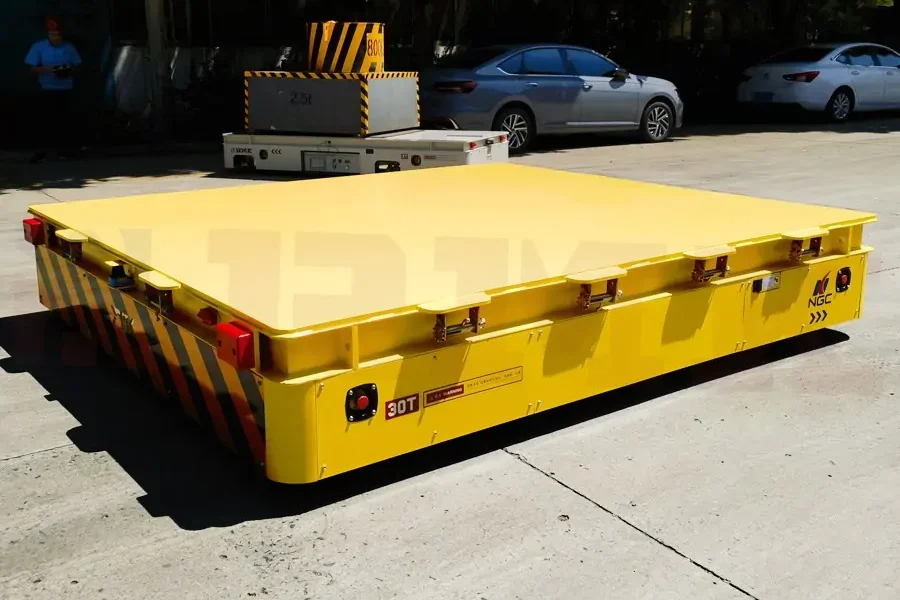
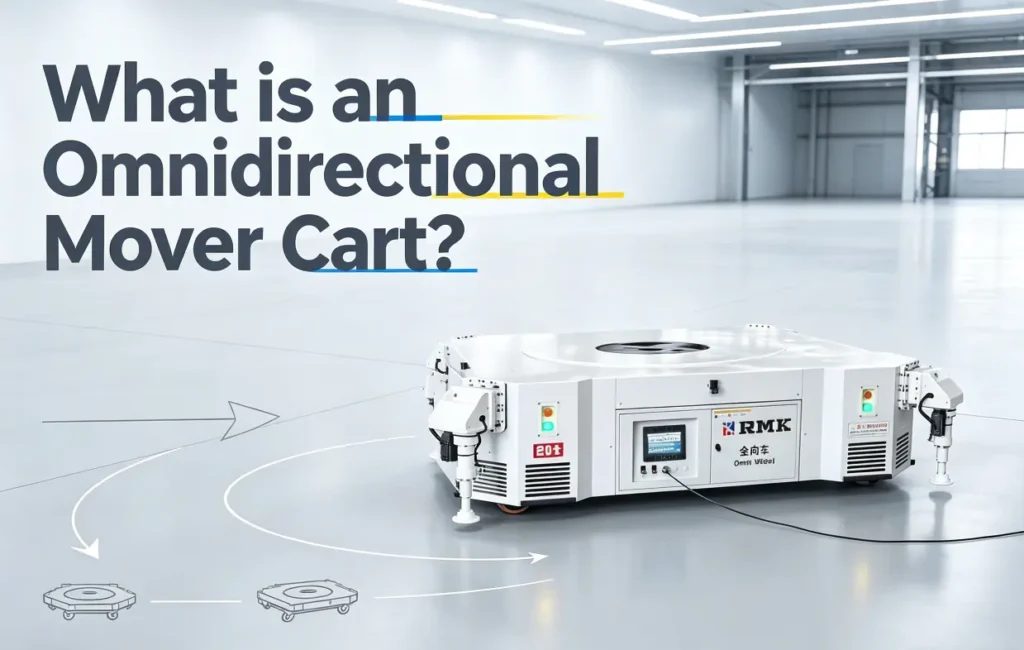
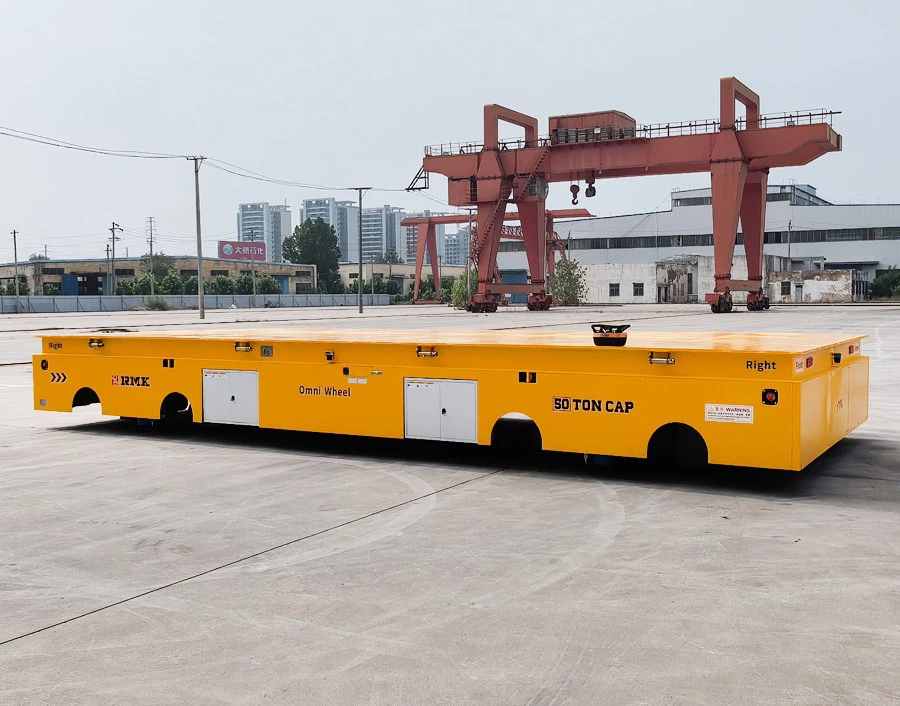
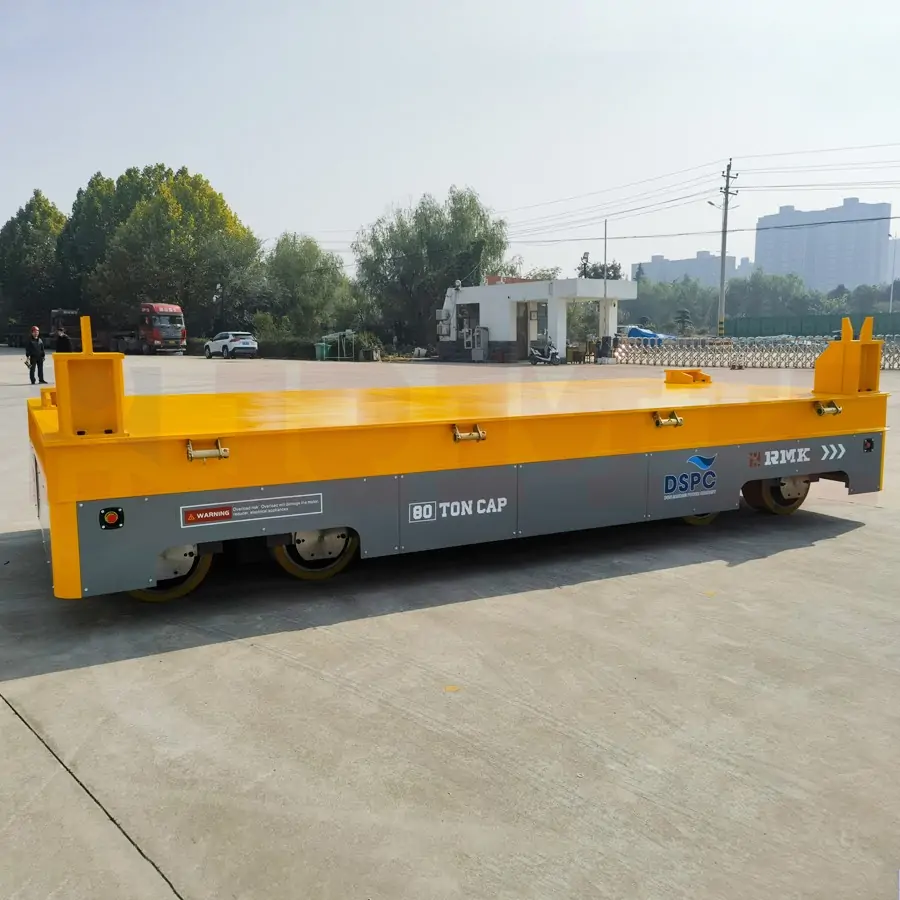
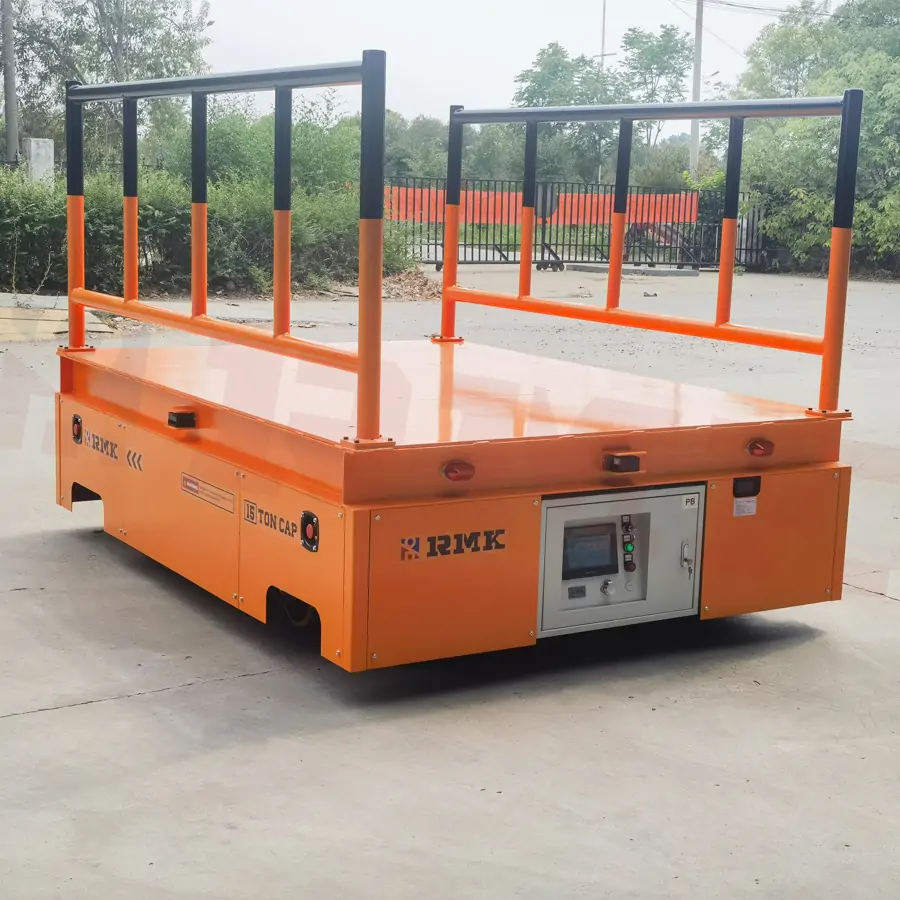
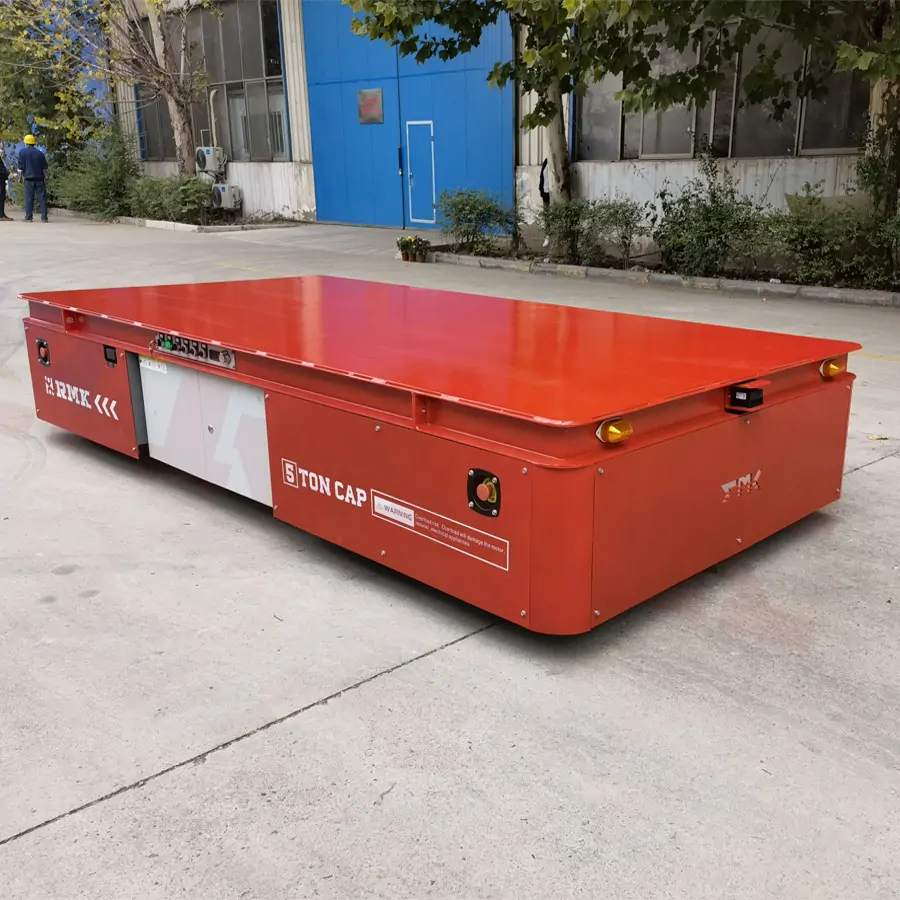
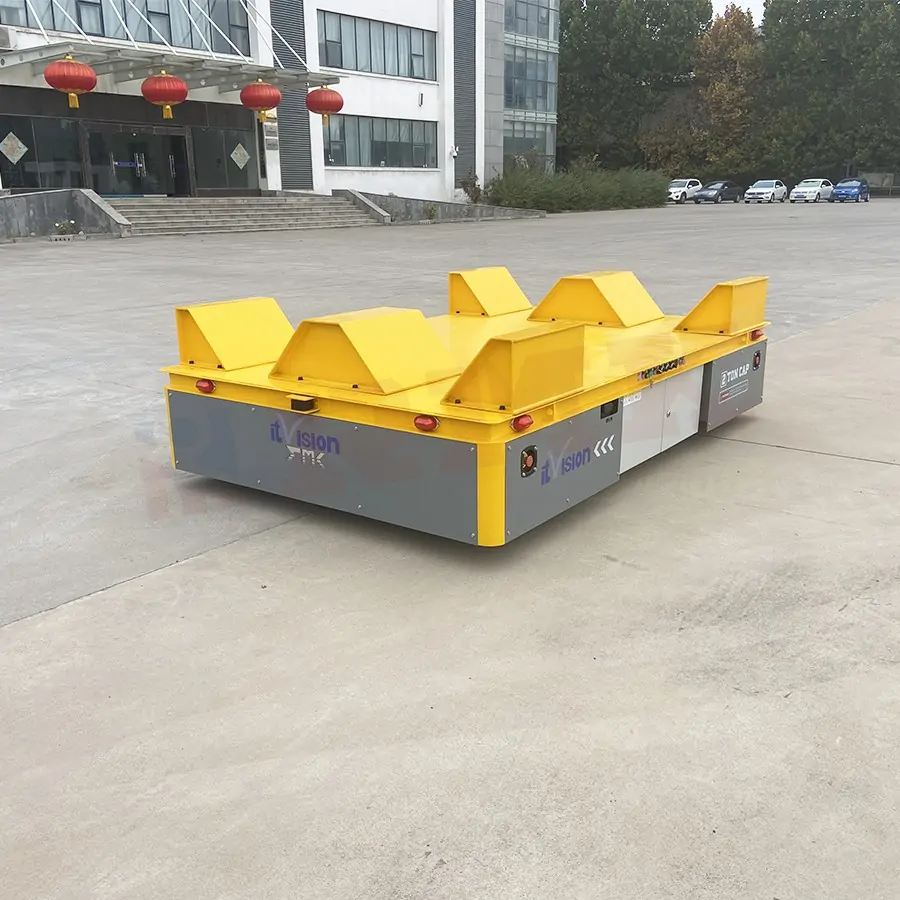
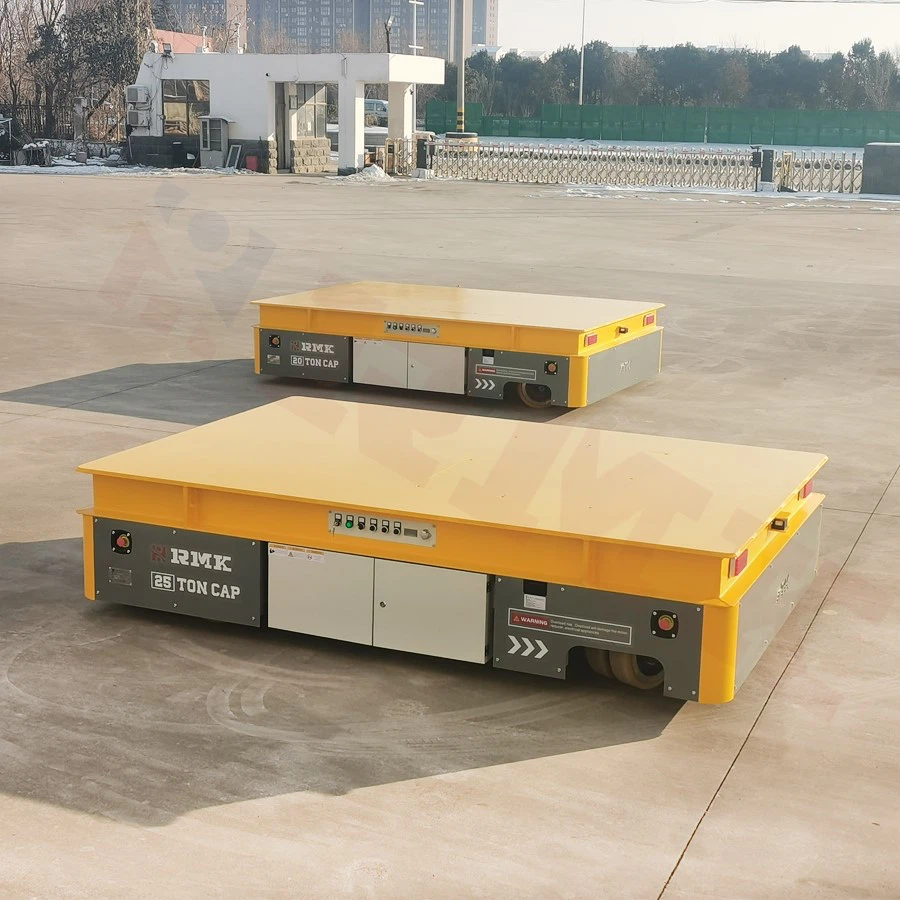
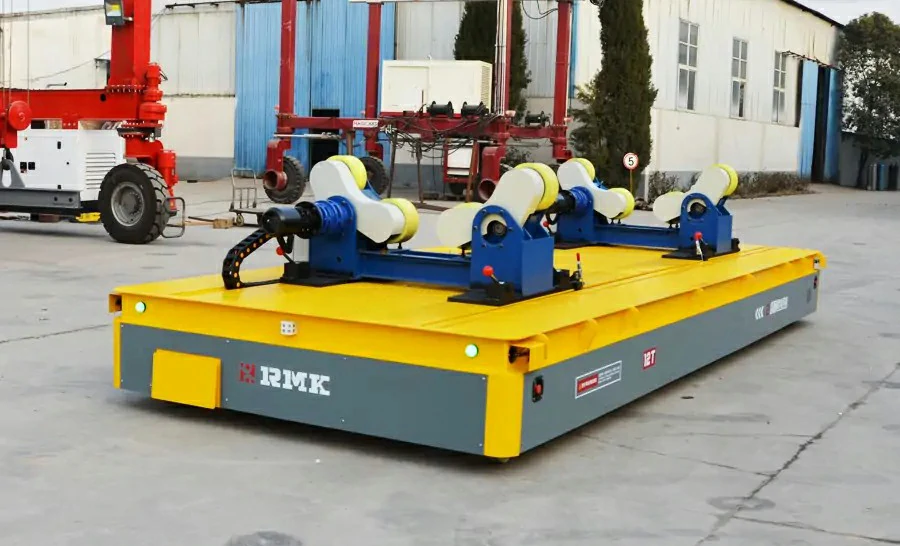
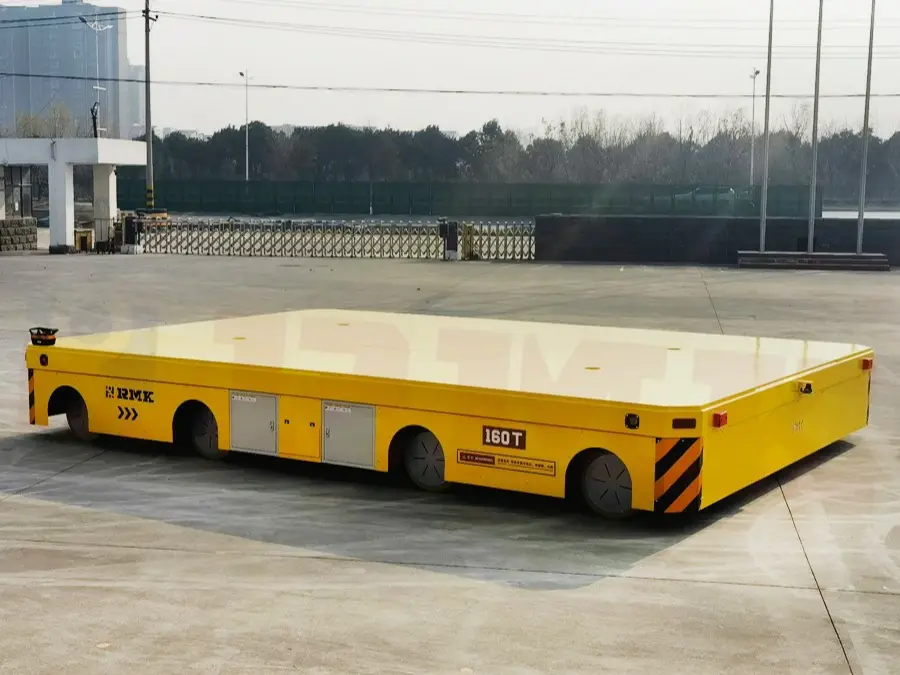
A trackless transfer cart is an intelligent transport device powered by electricity and driven by a motor, capable of freely traveling on the ground. It eliminates the need for fixed tracks and enables flexible, multi-directional transport. Featuring high carrying capacity, safe operation, flexible turning, and smooth operation, trackless transfer carts are widely used in industries such as molds, steel, equipment manufacturing, automotive parts, and warehousing and logistics. First, let’s take a look at its parts.

Parts of a Trackless Transfer Cart
- Vehicle Frame: The main load-bearing structure is constructed of high-strength steel, with a load range of 5 to 100+ tons, offering high load capacity and excellent stability.
- Drive System: Comprising a motor, reducer, and wheels, it enables forward, reverse, and steering movements, adapting to confined spaces or long-distance transport.
- Electronic Control System: Controls vehicle start/stop, speed adjustment, and other functions, providing safety features.
- Battery Pack: Provides electrical energy for the entire vehicle, typically using maintenance-free batteries or lithium batteries.
- Operation and Controls: Precise operation can be achieved through wireless remote control, manual operation, or automatic control.

The trackless transfer carts’ modular design and customization allow for flexible configuration of size, load capacity, and control systems to suit different operating conditions. Let’s take a look at how it works.
How Do Trackless Transfer Carts Work?
The trackless transfer car is powered by batteries, with an electronic control system driving the motor, which in turn drives the wheels via a speed reducer, ensuring smooth travel. The entire vehicle is coordinated by an intelligent control system and can be operated via a remote control or PLC controller, flexibly adjusting travel direction and speed. It supports 360° on-the-spot steering and multi-directional movement, making it easy to maneuver in narrow or complex workshop environments. To enhance operational safety, it is equipped with protective features such as audible and visual alarms, an emergency stop button, and obstacle avoidance sensors. Optional laser or magnetic strip navigation systems enable automated route planning and unmanned handling.
Now that we understand the workings of the trackless transfer cart, let’s explore its advantages.
For more details, see: What Is a Trackless Transfer Cart?
Key Advantages of Trackless Transfer Carts
Compared to traditional railcars or forklifts, trackless transfer carts offer significant advantages. Let’s take a look.
- No track required: The vehicle runs directly on cement or epoxy floors, reducing construction costs and maintenance.
- Flexible Operation: It can move forward, backward, sideways, diagonally, and even rotate on the spot, making it suitable for confined spaces.
- Intelligent Control: It supports multiple control methods, including remote control, automatic navigation, and automatic obstacle avoidance.
- Strong Load Capacity: Customizable load capacities range from 5 to 300 tons, meeting heavy-duty transport needs.
- Safe and Reliable: Equipped with multiple safety protection systems, it operates smoothly and offers a high safety factor.

These advantages have led trackless transfer carts to gradually replace traditional rail flatcars and become a vital transportation tool for intelligent manufacturing and warehousing logistics. So, what are its applications?
Typical Application Areas of Trackless Transfer Cart
Trackless transfer carts have a wide range of applications, covering nearly all industries requiring heavy material transfer. They are primarily used in the following industries:
- Mold Manufacturing: Used for transporting large molds and stamping dies, and loading and unloading them onto and off the production line.
- Steel and Metallurgical Industry: Used for short-distance transport of heavy objects such as steel coils, steel plates, and castings.
- Automotive Manufacturing: Used for transferring workpieces such as car bodies, parts, and chassis on the production line.
- New Energy Equipment Industry: Used for transporting battery modules and energy storage systems.
- Warehouse Logistics Systems: Collaborate with AGVs, forklifts, and robotic systems to achieve automated material flow.
Trackless transfer vehicles are flexible and trackless, making them suitable for use in production areas with complex layouts, variable routes, or limited space. With such a wide range of applications, what should we pay attention to when purchasing one?
Considerations for Purchasing a Trackless Transfer Cart
When purchasing or customizing a trackless transfer cart, consider the following key factors:
- Load Capacity: Select the appropriate tonnage based on the weight of the material. Typically range from 5 to 300 tons.
- Customized Structure: Customize the vehicle structure based on the size of the transported object, with options including hydraulic lift, rotary table, and explosion-proof features.
- Control Method: Choose from manual remote control, wire control, or automatic navigation based on your needs.
- Power Supply Type: Choose from lead-acid batteries, lithium batteries, and other options based on operating time.
- Safety Features: Choose or customize features such as emergency stop, collision avoidance, speed limiter, audible and visual alarms, and automatic charging.
Through appropriate selection and customization, companies can obtain efficient transportation solutions tailored to their specific production scenarios.

Conclusion:
In summary, the trackless transfer cart is an efficient, safe, and flexible intelligent transport device that enables multi-directional operation and intelligent scheduling without relying on tracks. It not only reduces factory construction and maintenance costs but also significantly improves production line automation and logistics efficiency.
REMARKANLE offers customized services for heavy-duty off-track transfer vehicles of various tonnages. If you have any needs or questions regarding trackless transfer carts, please contact us. We will work with you to resolve your issues as quickly as possible and provide you with a more comprehensive transport and transfer solution.
If you would like to read related articles, please refer to:
- What is Electric Trackless Transfer Cart?
- How To Use the Electric Transfer Cart?
- Reason for Automatic Direction Shift When Trackless Transfer Cart Travels in a Straight Line