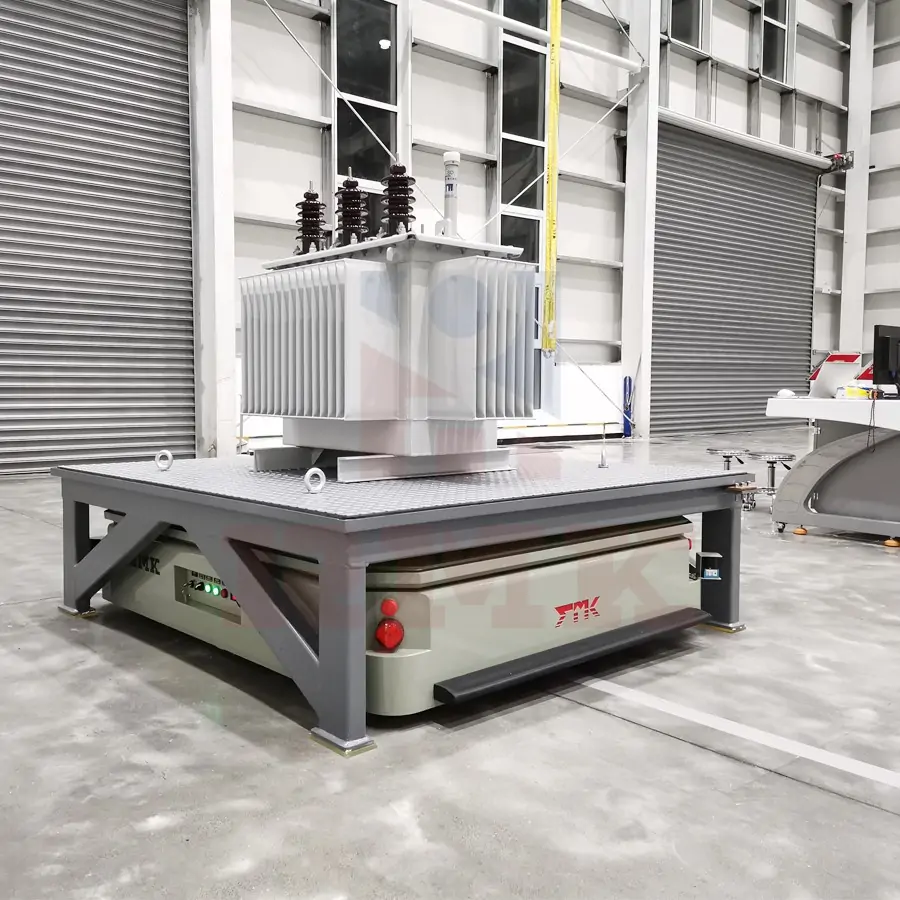
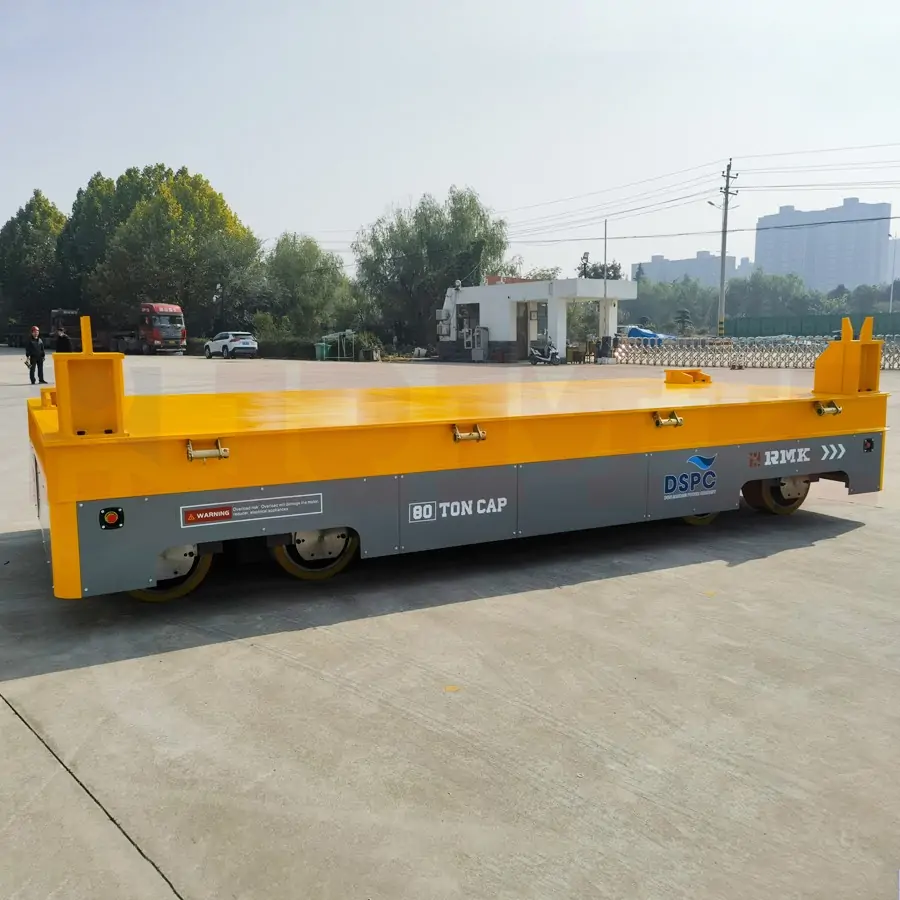
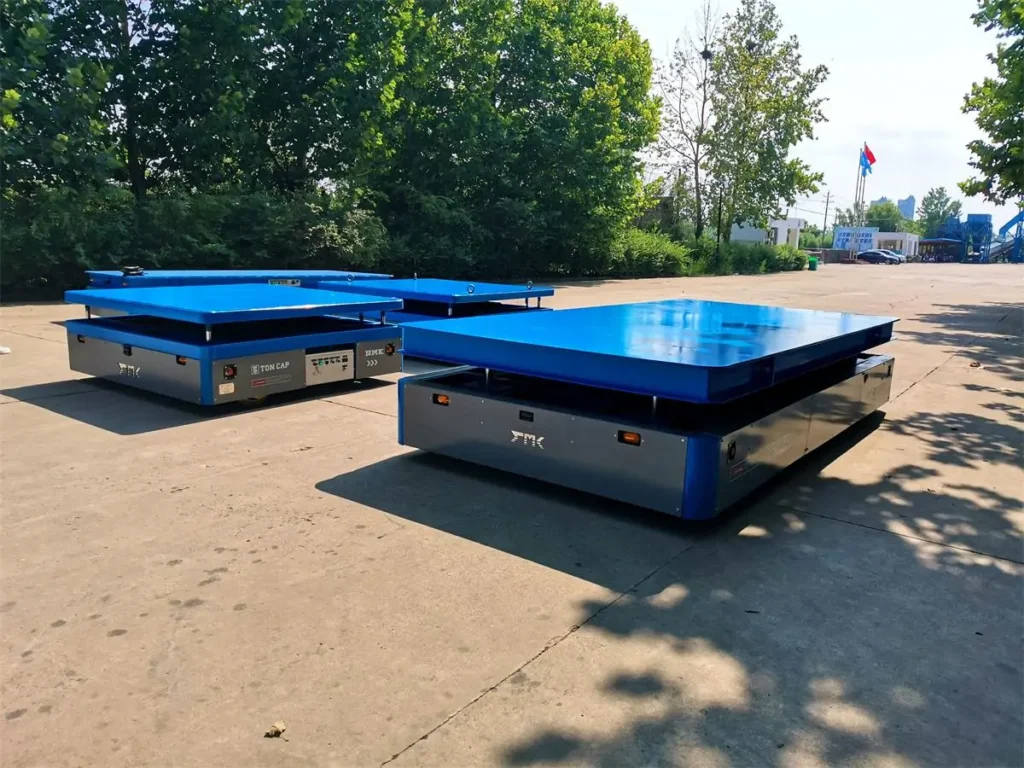
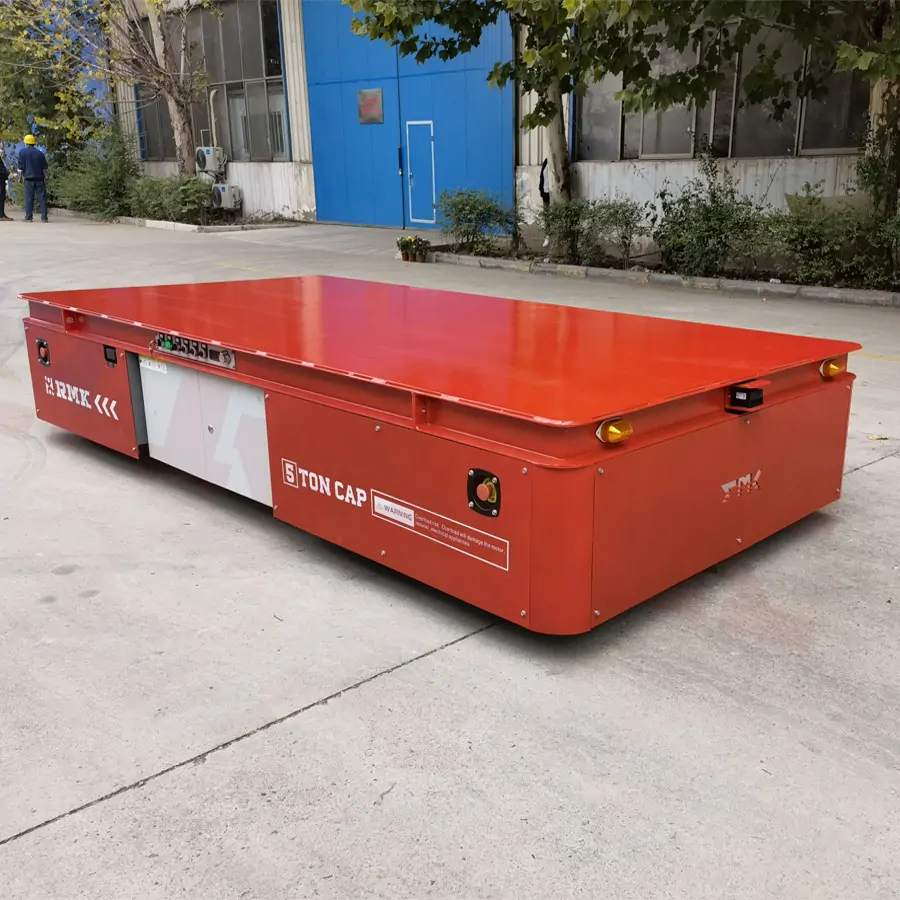
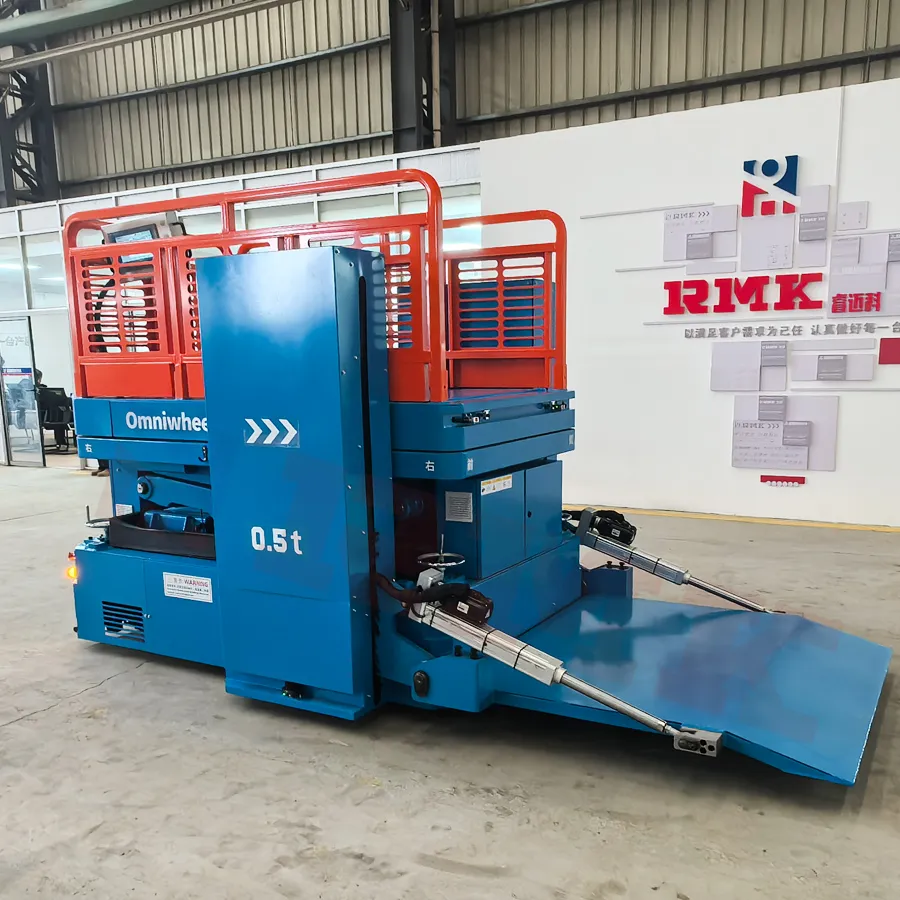
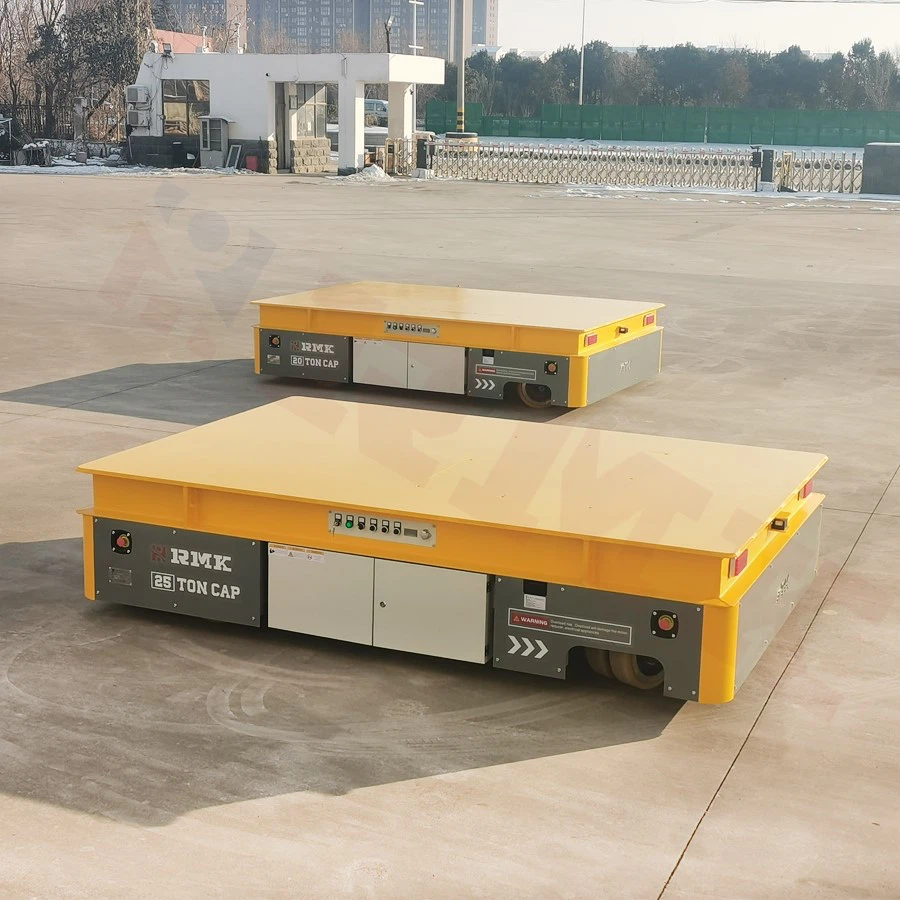
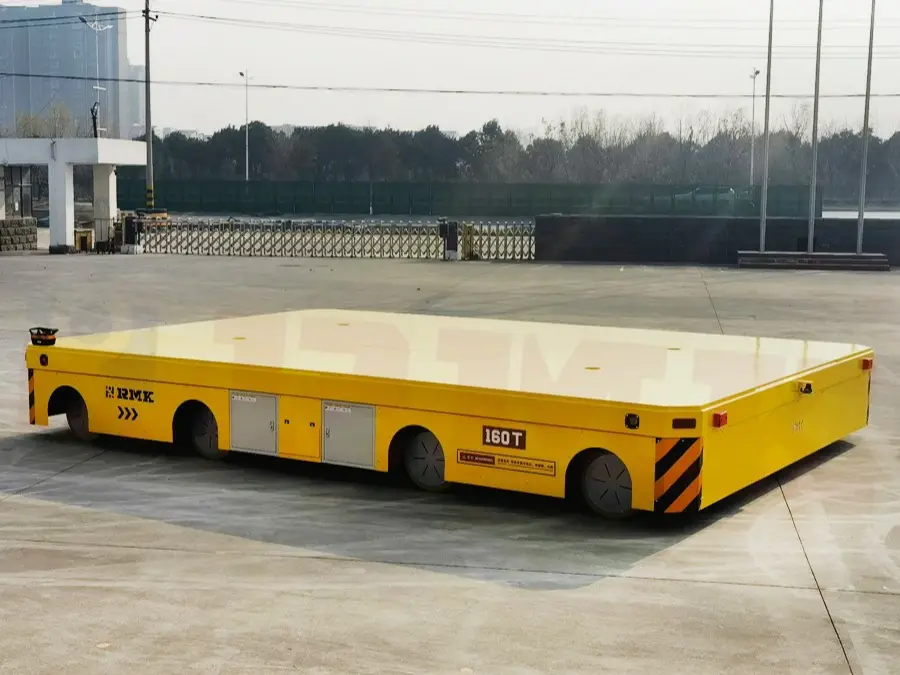
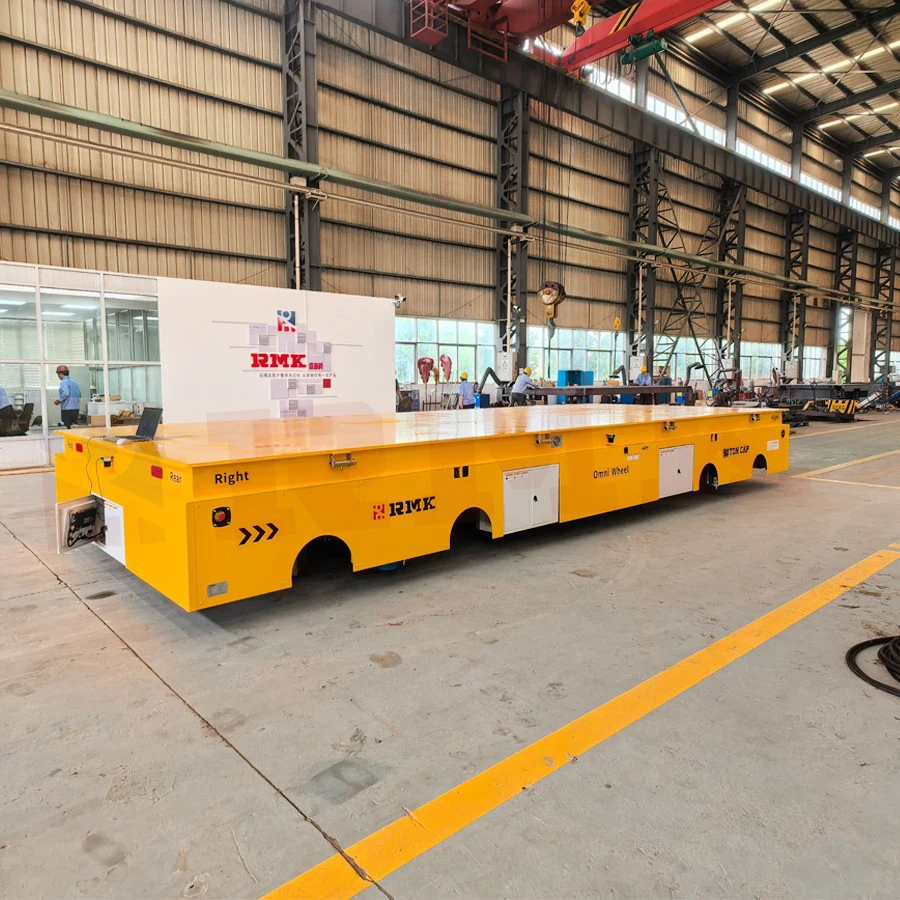
An electric trackless transfer cart is a flat-surface transport device powered by electricity and driven by motors, requiring no track installation. Unlike rail-guided transfer carts, it can freely navigate factory floors without fixed route constraints, enabling multiple movement modes such as forward/reverse travel, lateral shifting, and on-the-spot rotation. It is commonly used for handling large items like heavy workpieces, molds, steel materials, and mechanical components.
 electric trackless transfer cart
Parts of an Electric Trackless Transfer Cart
A conventional and standard electric trackless transfer cart primarily consists of the following parts:
- Frame Structure: Constructed from high-strength steel welded together, providing excellent load-bearing capacity and deformation resistance.
- Drive System: Typically comprising an electric motor, gear reducer, and drive wheels, serving as the vehicle’s power source.
- Battery System: Primarily utilizing maintenance-free batteries or lithium batteries, delivering long-lasting power to support continuous operation.
- Electronic Control System: Utilizes PLC or wireless remote controllers to manage direction, speed, and braking; some models support automated navigation.
- Travel Mechanism: Incorporates swivel casters, directional wheels, and suspension systems for omnidirectional maneuverability.
- Safety System: Equipped with audible/visual alarms, collision detection, emergency braking, and speed limiting functions to enhance operational safety.

The electric trackless transfer car features a modular structure that not only facilitates maintenance but also allows customization based on usage requirements. This includes adding functional modules such as automatic positioning, rotating platforms, and lifting devices. Now, let’s take a look at how it works.
Working Principle of Electric Trackless Transfer Cart
The core functionality of the electric trackless transfer cart lies in the coordinated operation of its motor drive system and intelligent control system. Its fundamental principle is as follows:
Powered by electricity, the electric trackless transfer car achieves smooth movement through motor drive. Its battery provides stable power, which is precisely distributed by the electronic control system to the drive motor and auxiliary devices. The drive motor outputs torque to smoothly rotate the wheels. Through differential control, the vehicle can execute multi-directional movements, including forward/reverse travel, lateral shifting, and 360° on-the-spot rotation, delivering exceptional flexibility and stability. During operation, the system precisely adjusts speed and direction to enhance transport safety and reliability. Some high-end models support automated path planning and unmanned handling, showcasing the efficiency and intelligence of electric trackless transporters in modern industrial logistics.

Electric trackless transfer vehicles are essential equipment for achieving automated material transport in modern factories. So what advantages do they have?
You can also read about how it works: How Does an Electric Transfer Cart Work?
For more information on the types of electric trackless transfer carts and how to select one, see the article: Electric Trackless Transfer Cart Selection Guide: Types, Specifications, and How to Choose
Advantages of Electric Trackless Transfer Carts
Compared to traditional rail-guided transfer carts or forklifts, electric trackless transfer carts offer significant advantages in flexibility and cost-effectiveness, primarily including:
- No track laying required, flexible and efficient: The trackless design allows operation on any surface, easily traversing multiple workstations, making it ideal for flexible transfers between workshops and production lines.
- High Load Capacity and Stability: Material carriers can be customized to handle loads ranging from 5 to 200 tons. Their low center of gravity and robust structure enhance safety during large-item transportation.
- Intelligent Control and Automation: Features such as wireless remote control, autonomous navigation, and path memory ensure precise operation while substantially reducing manual labor intensity.
- Safety and Reliability: Equipped with collision avoidance sensors, emergency stop systems, and audible/visual alerts, it operates smoothly with high safety standards, making it suitable for personnel-dense factory environments.
- Energy Efficiency and Environmental Protection: Powered by electricity with rechargeable batteries, it offers extended service life, zero exhaust emissions, low noise, minimal vibration, and low maintenance requirements, aligning with green manufacturing trends.

Electric trackless transport vehicles offer multiple advantages, making them highly versatile across diverse applications. Let’s look at their common application areas.
Application Areas of Electric Trackless Transfer Carts
Electric trackless transfer carts are widely used across multiple industries due to their high efficiency, flexibility, and intelligent features:
Mold Manufacturing Industry: Used for transporting and installing large molds and stamping dies.
Steel Metallurgy Industry: Handling heavy items such as steel coils, castings, and forgings.
Equipment Manufacturing Industry: Transporting large mechanical components and welded structural parts.
New Energy and Battery Industry: Handling battery packs, energy storage equipment, and structural frames.
Warehousing, Logistics, and Smart Factories: Serving as production line material handling equipment, integrated with AGV systems.
Electric trackless transport vehicles offer flexible operation and robust load-bearing capacity, serving as essential transportation equipment for efficient material handling and intelligent production across industries.
For details on electric flat transfer cart models and a selection guide, see: How to Select a Flat Electric Transfer Cart? Professional Selection Guide!
For guidelines on the operation and safe use of electric transfer carts, see: How to Operate an Electric Transfer Cart Safely?
The price of electric transfer carts is influenced by a variety of factors. For more details, see: Electric Transfer Cart Price: Cost Guide, Factors & Buying Tips
Conclusion:
This article has introduced electric trackless transport carts. As essential equipment for factory material handling, they enhance transportation efficiency while offering safety, flexibility, and environmental benefits. If you are interested in purchasing an electric trackless transport vehicle, please contact us. We will collaborate with you to provide customized transport solutions tailored to your needs.
Email: transfercart@rmkzn.com
Phone: +86-18637369355