Table of Contents
Introduction
Factories with changing production layouts need flexible equipment for internal material transportation. An electric trackless transfer cart is a battery-powered transport vehicle that moves heavy materials without fixed rails, which is suitable for workshops, assembly areas, warehouses, and other industrial environments.
This guide covers the structure, working method, types, specifications, and selection points of electric trackless transfer carts. The content focuses on load capacity, battery configuration, steering system, and application conditions to help users select a suitable model for their material handling requirements.
What Is an Electric Trackless Transfer Cart?
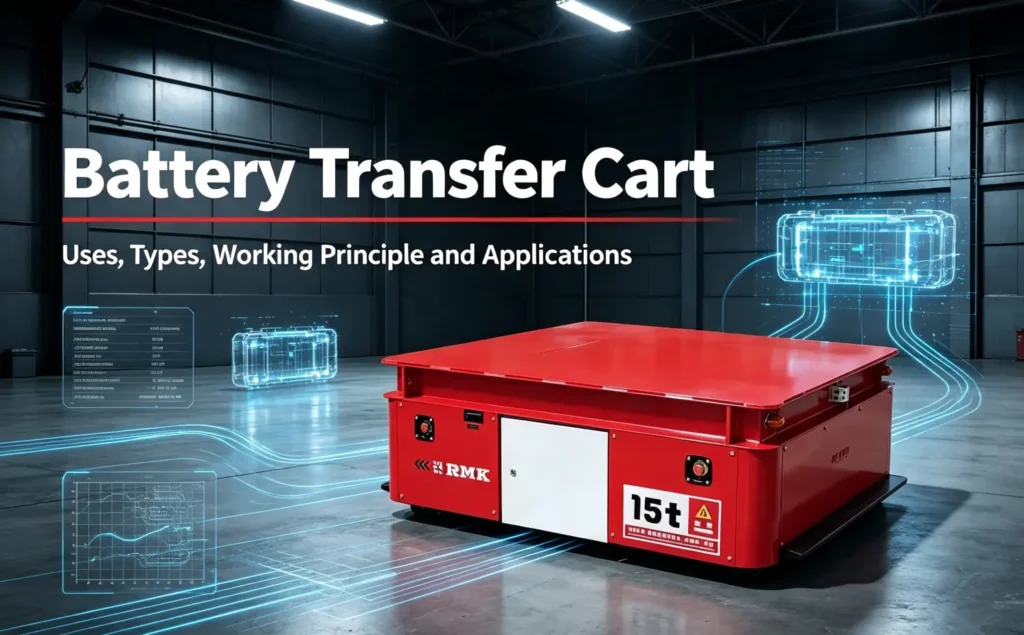
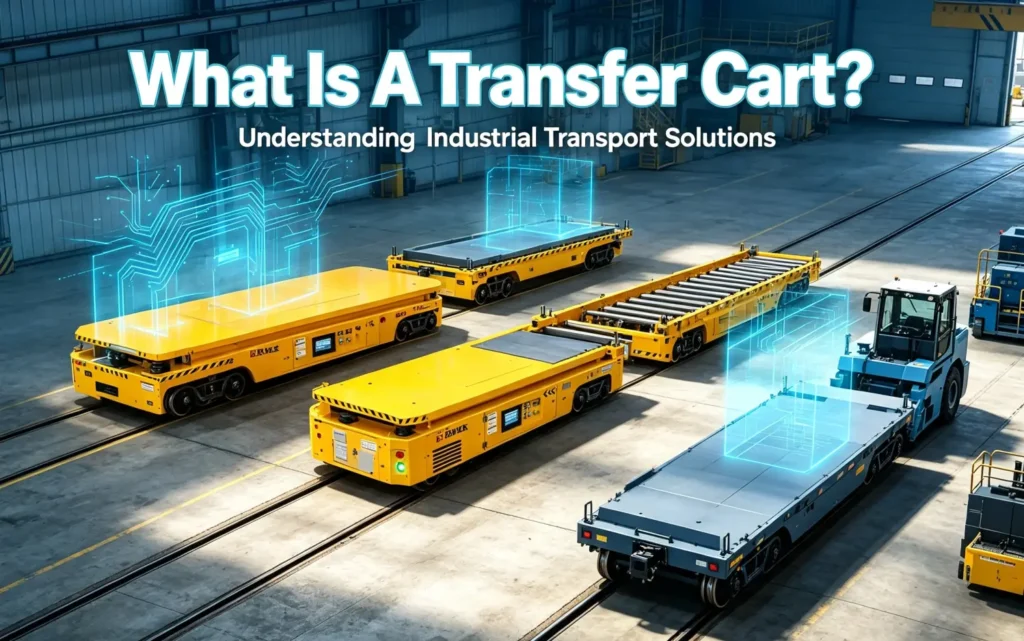
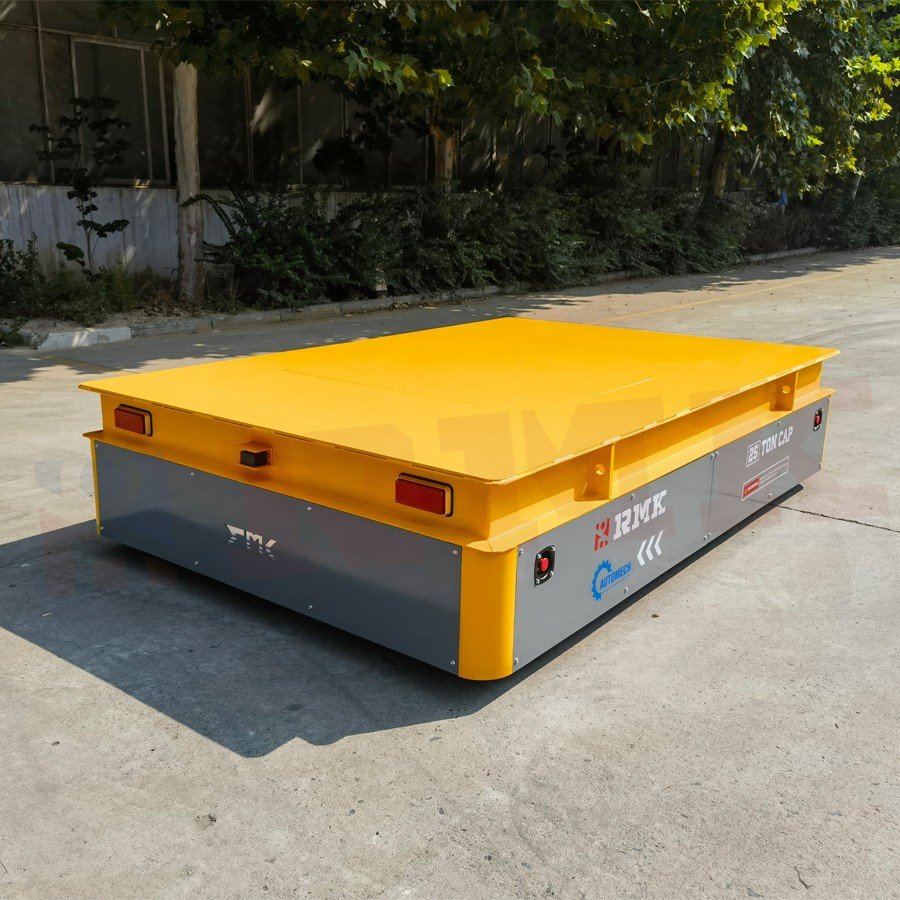
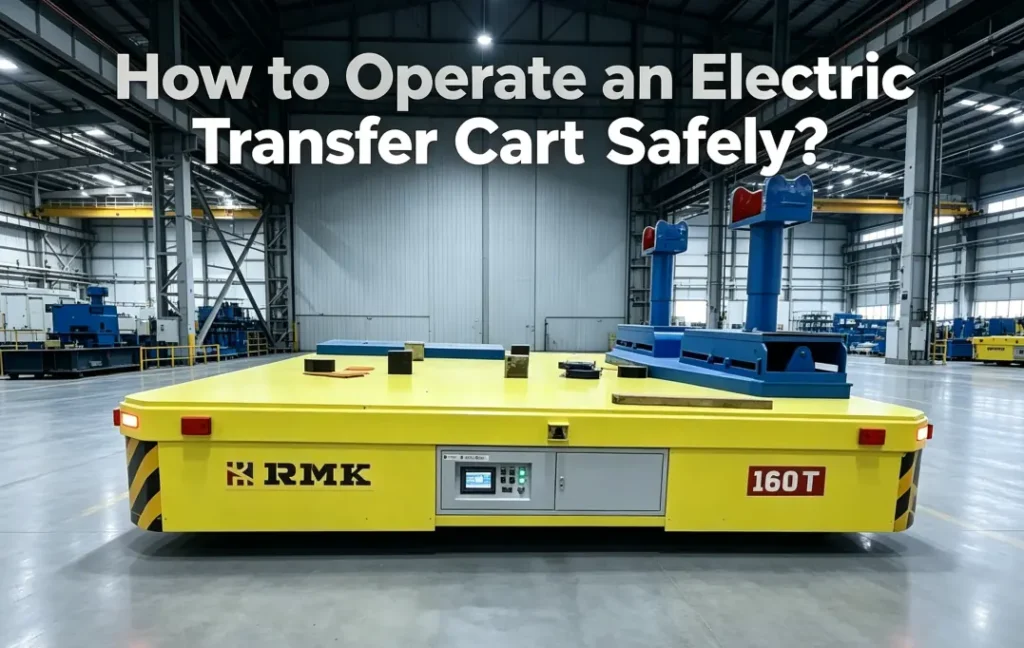
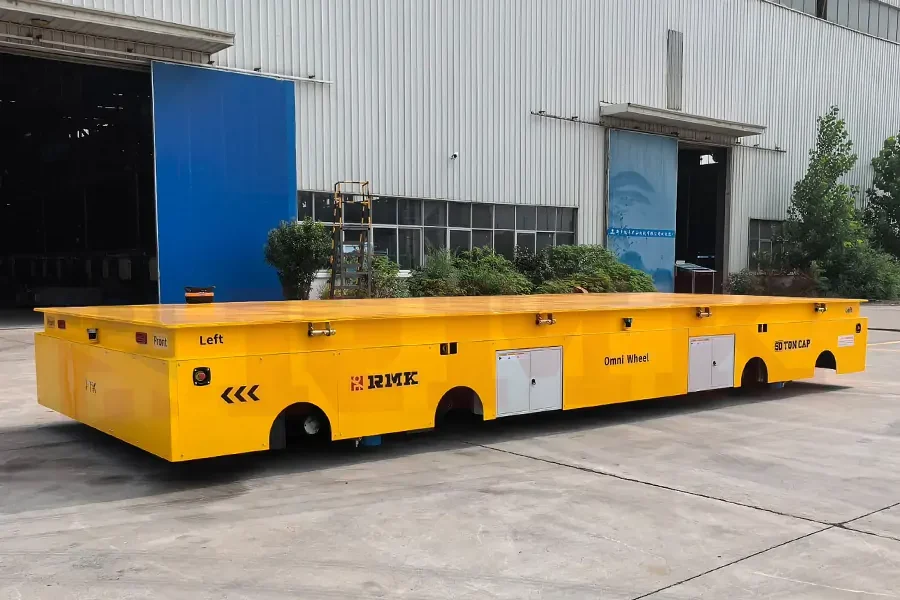
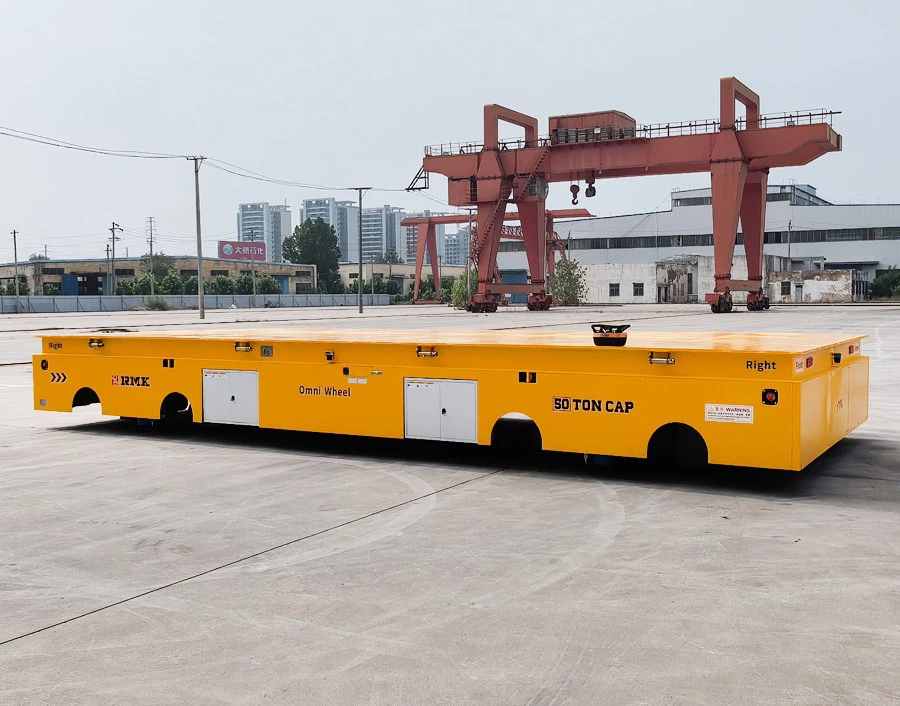
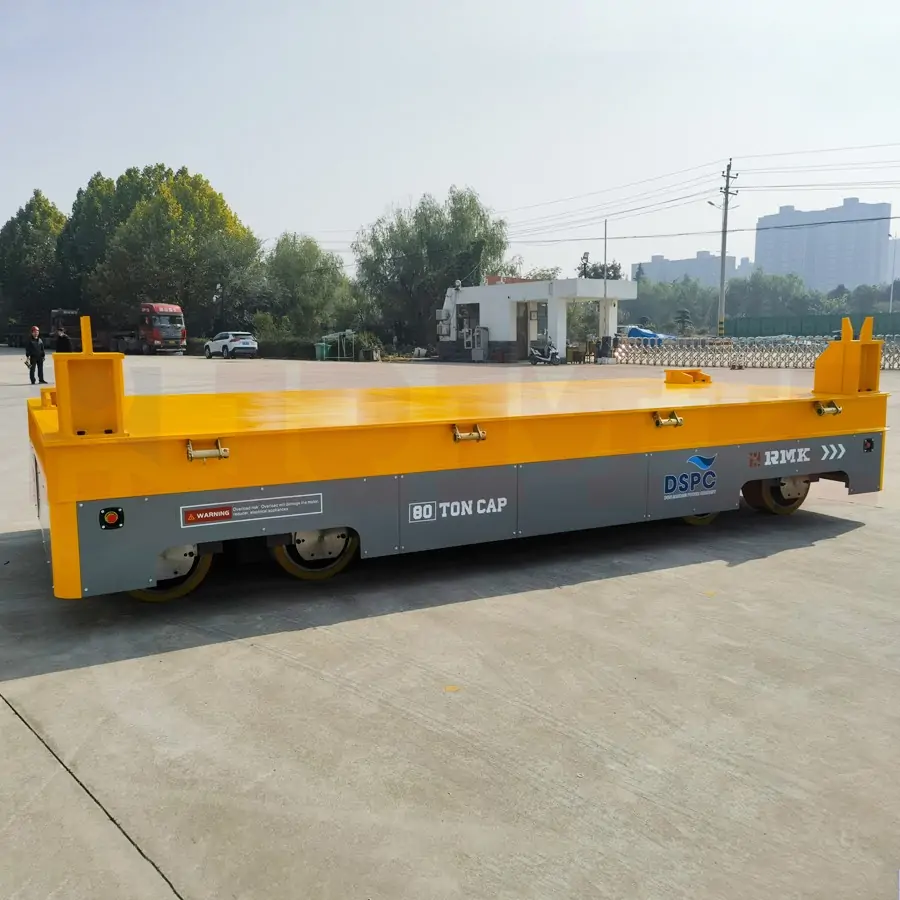
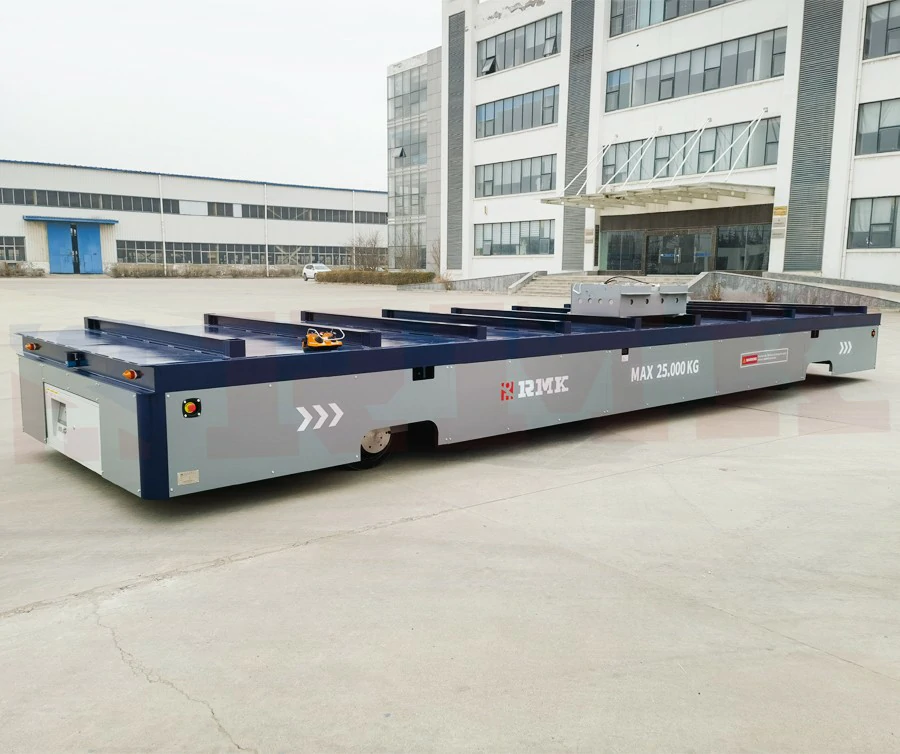
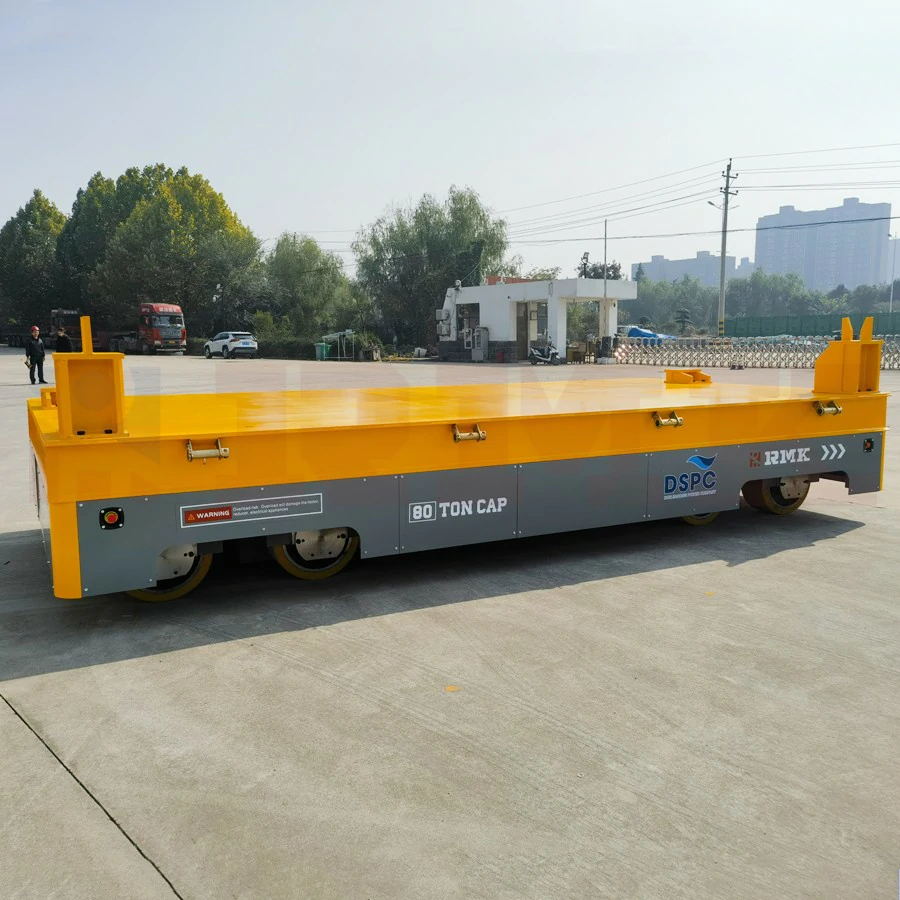
An electric trackless transfer cart, also known as a trackless battery-powered flat cart or rubber-wheeled transfer vehicle, is a material handling vehicle that operates without fixed rails. It uses onboard rechargeable batteries to power the motor and drive system, allowing flexible movement in factories, warehouses, and workshops.
The cart consists of a steel frame, drive system, steering mechanism, braking system, and control unit. Rubber wheels provide stable movement on concrete or epoxy floors, while the steering system allows operation in narrow spaces and changing production areas. Standard models usually handle 1–50 tons, with customized designs available for higher loads.
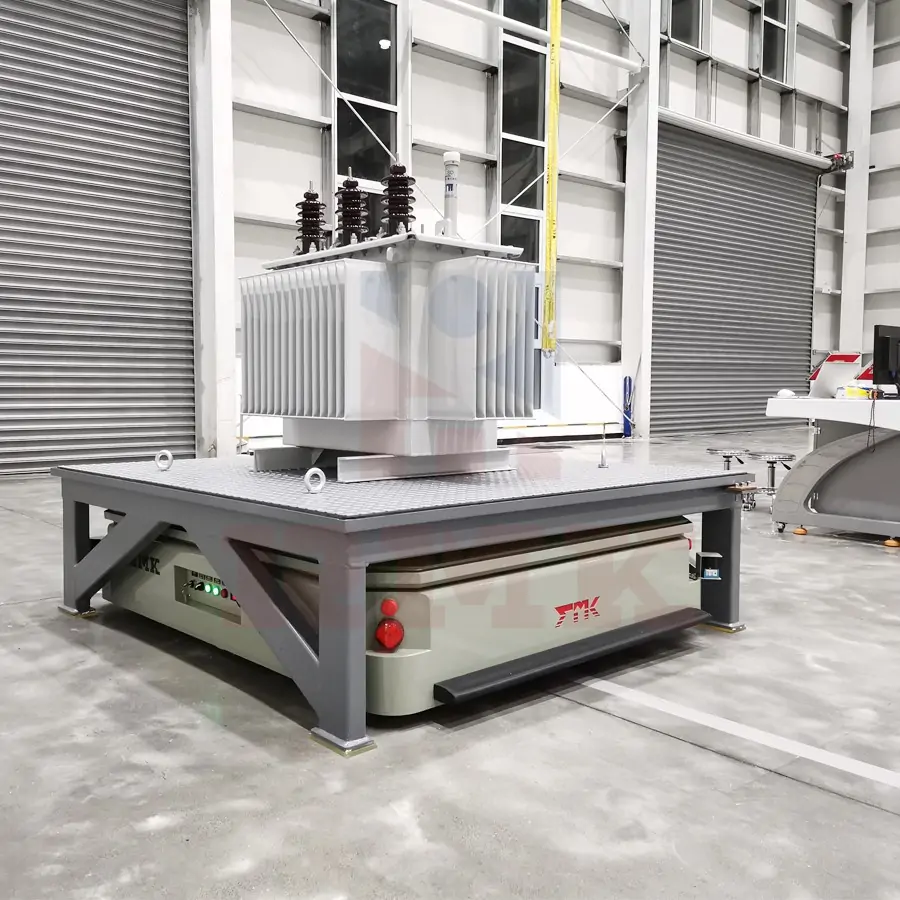
Without track installation, electric trackless transfer carts can be moved between different work areas with less setup time. They are commonly used for mold transportation, assembly line feeding, and heavy material transfer. Remote control, obstacle detection, and AGV navigation systems can be added for automated handling applications.
How Does an Electric Trackless Transfer Cart Work?
An electric trackless transfer cart uses a battery-powered drive system to move heavy materials without fixed rails. The battery supplies power to the motor, and the control system manages movement, steering, and braking during operation.
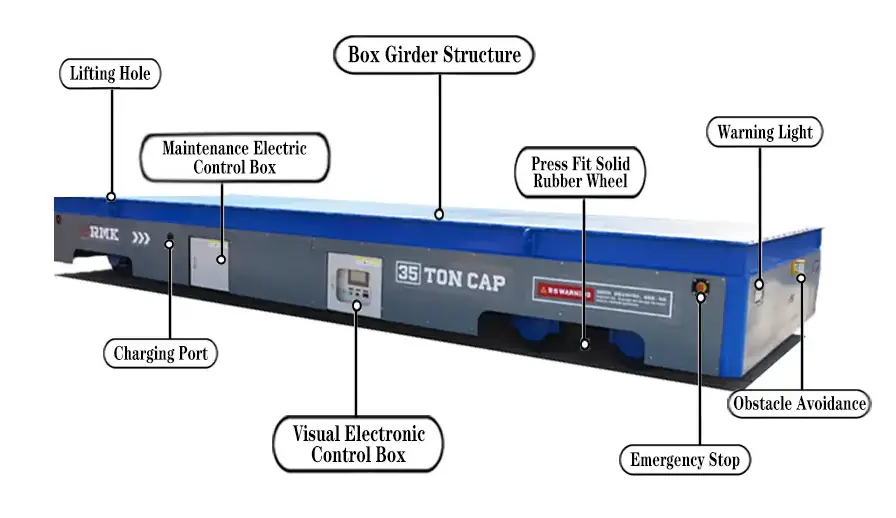
- 1. Battery Power Supply
The onboard battery provides electrical power to the drive motor and control system. Lead-acid and lithium batteries are commonly used according to working hours and load requirements. - 2. Motor Drive System
The electric motor generates driving force and transfers power to the wheels through the gearbox. The cart moves forward, backward, and stops according to the control signals. - 3. Steering and Movement Control
The steering system controls the travel direction through differential steering, hydraulic steering, or other customized methods. Rubber wheels allow flexible movement in workshops without track limitations. - 4. Operation Control
The operator controls the cart through a wireless remote or pendant controller. Advanced models can integrate sensors, obstacle detection, or AGV navigation systems for automatic operation.
The electric trackless transfer cart combines battery power, electric drive, and flexible steering systems to complete heavy material transportation. Its track-free design allows it to adapt to changing factory layouts and various industrial handling requirements.
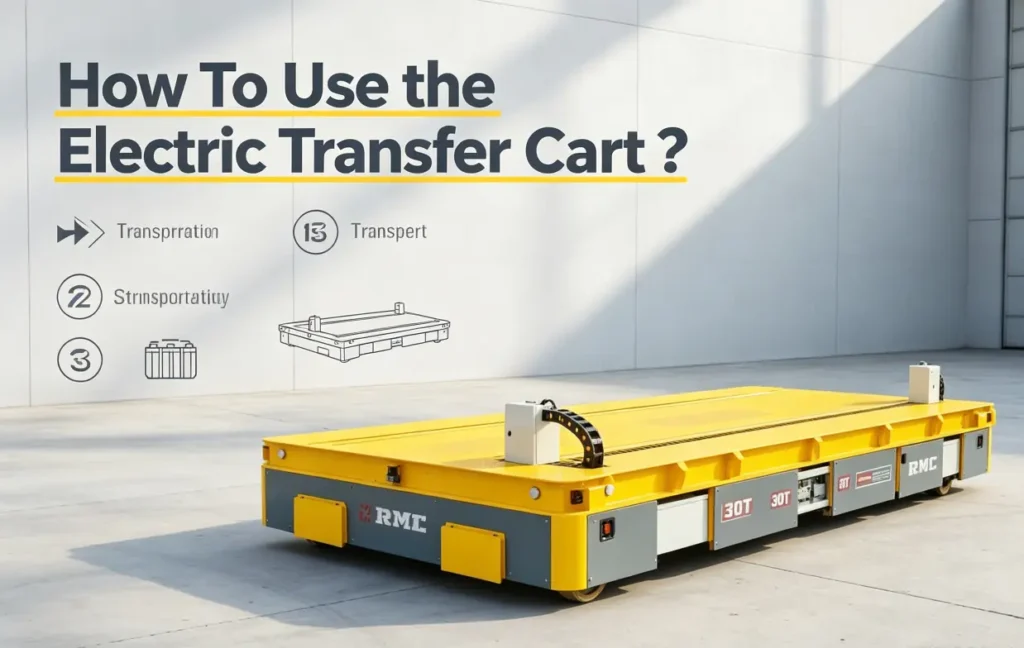
For details on how to use the Electric Transfer Cart, see: How to Use the Electric Transfer Cart?
Types of Electric Trackless Transfer Carts
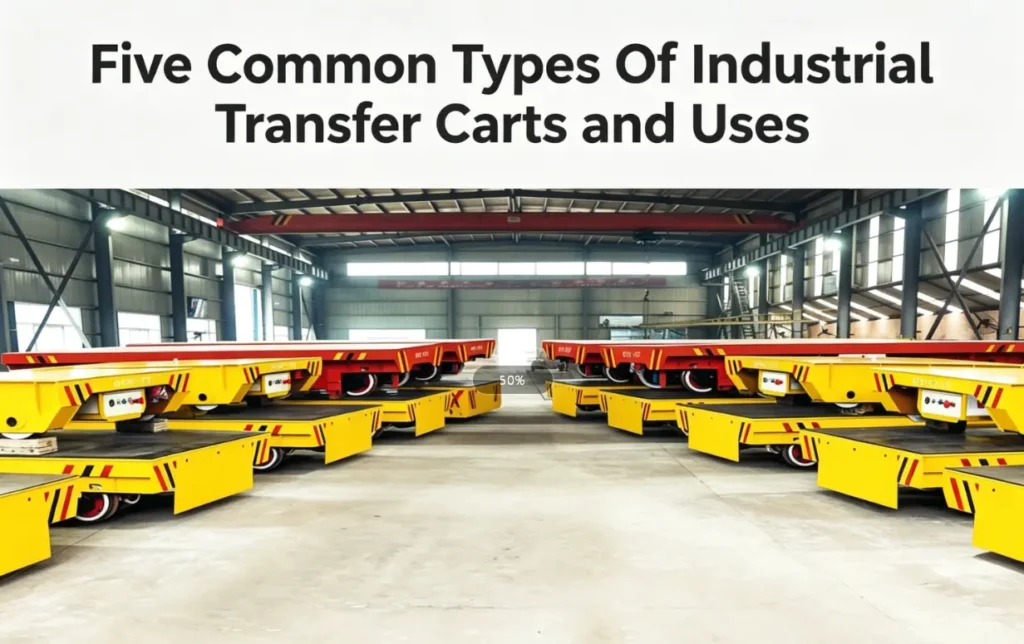
Electric trackless transfer carts are designed in different configurations based on load capacity, steering requirements, and automation levels. Common types include standard battery-powered models, heavy-duty models, AGV trackless carts, and hydraulic lifting models.
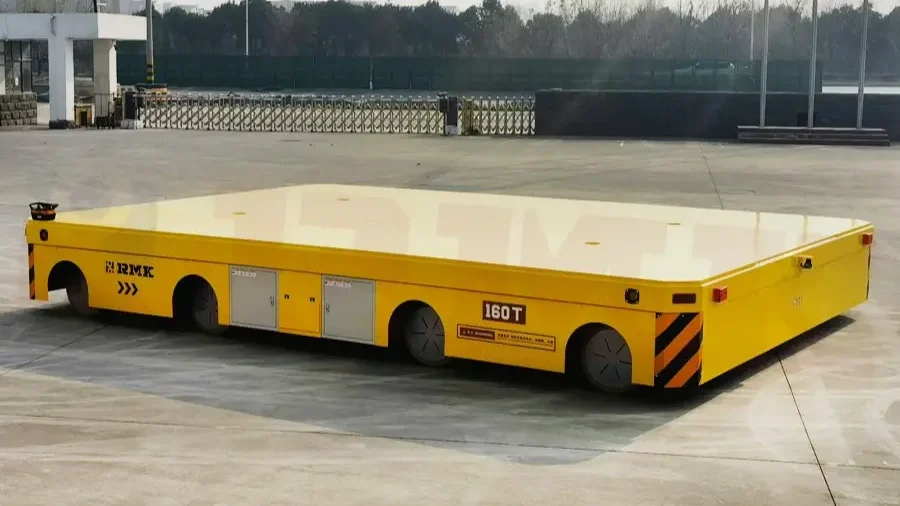
Standard Electric Trackless Transfer Cart
Standard models use battery power and rubber wheels for flexible material transportation inside factories and workshops. They are suitable for general handling tasks with moderate loads and changing routes.
- Load Capacity: 1–50 tons
- Power Supply: Lead-acid Battery / Lithium Battery
- Control Method: Wireless Remote Control / Pendant Control
- Application: Factory Material Handling, Workshop Transportation
Heavy Duty Electric Trackless Transfer Cart
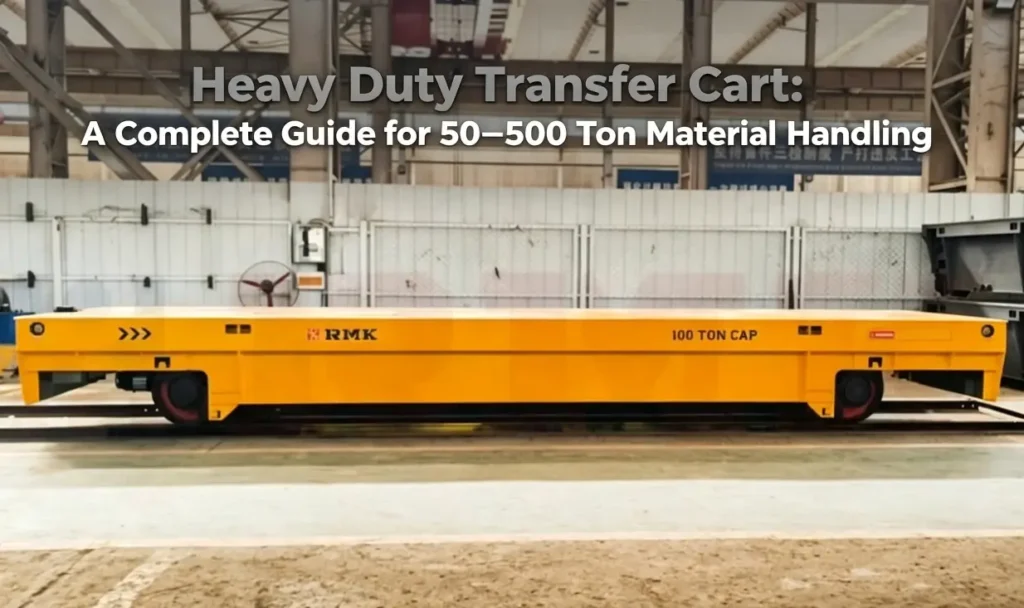
Heavy-duty models are designed for transporting large and oversized loads such as steel structures, molds, and industrial equipment. They feature reinforced frames and high-torque drive systems for demanding working conditions.
- Load Capacity: 50–100+ tons
- Drive System: Heavy-duty Motor Drive
- Platform Size: Customized
- Application: Steel Plants, Shipyards, Heavy Manufacturing
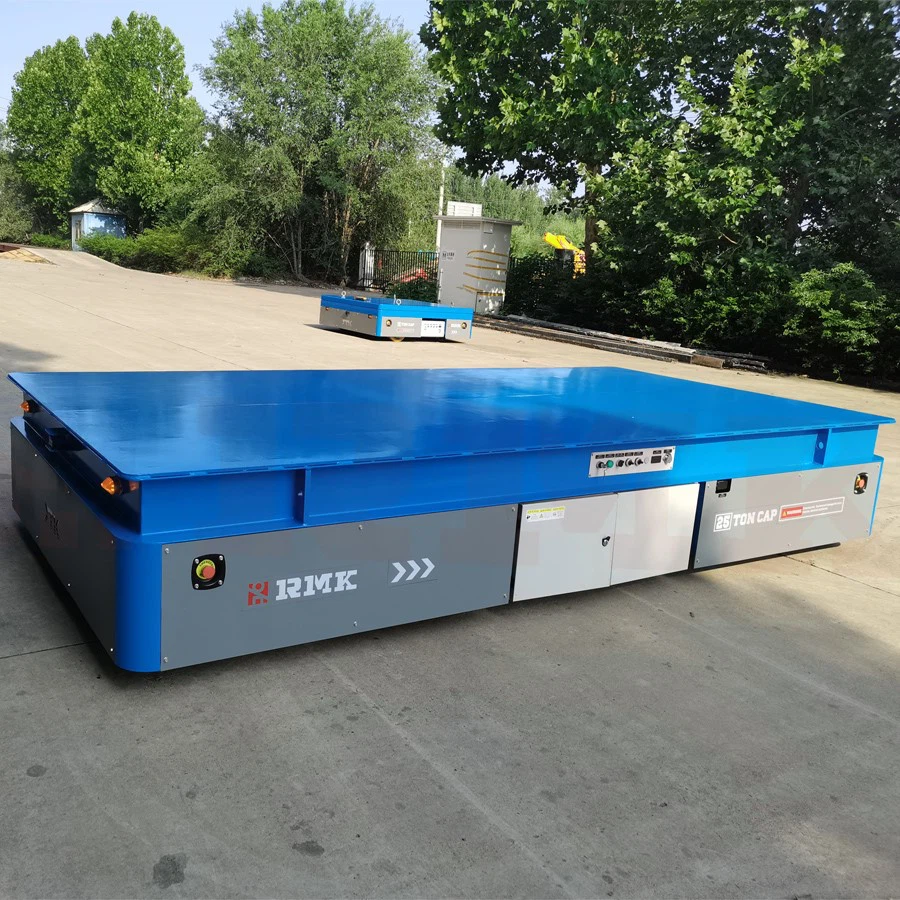
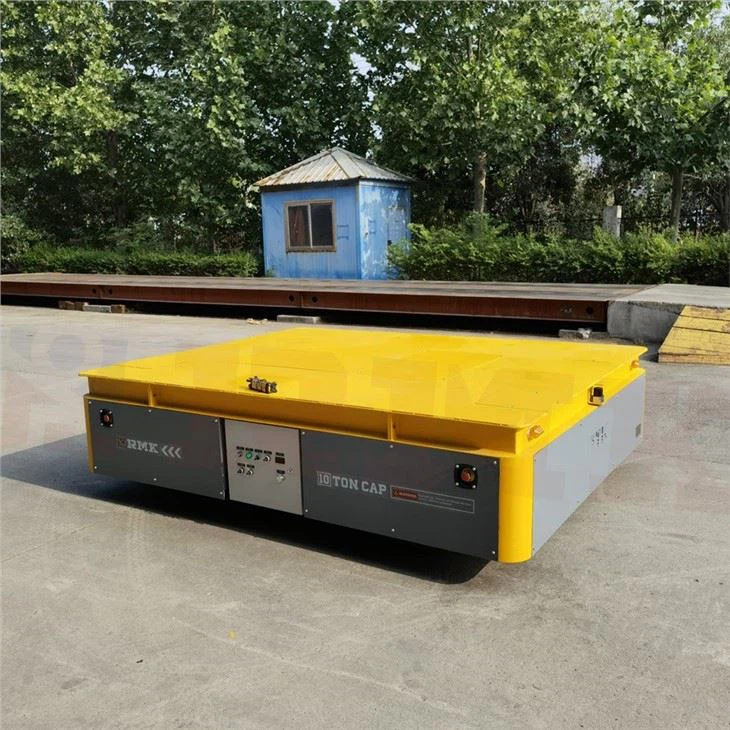
AGV Electric Trackless Transfer Cart
AGV trackless transfer carts integrate navigation and control systems for automatic material transportation. They can follow preset routes, avoid obstacles, and connect with factory automation systems.
- Navigation: Magnetic Navigation / Laser Navigation / SLAM
- Positioning Accuracy: ±10 mm
- Control Mode: Automatic Control
- Application: Smart Factory, Automated Production Lines
Hydraulic Lifting Electric Trackless Transfer Cart
Hydraulic lifting models combine transportation and lifting functions. The platform can adjust height to connect with production equipment, assembly stations, or storage systems.
- Load Capacity: 3–30 tons
- Lifting Height: 0.5–2 m
- Lifting System: Hydraulic Drive
- Application: Assembly Lines, Equipment Transfer, Workstation Docking
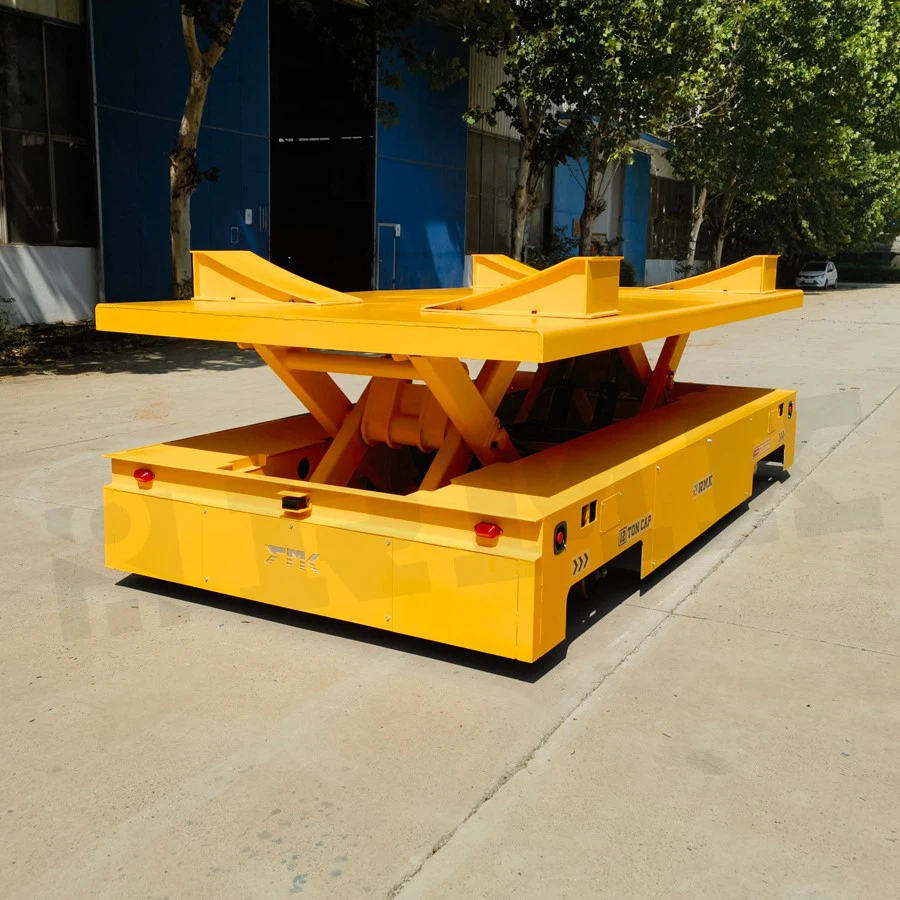
Different electric trackless transfer carts are selected according to load weight, transportation route, working environment, and automation requirements. Proper configuration helps match the cart with the actual production process.
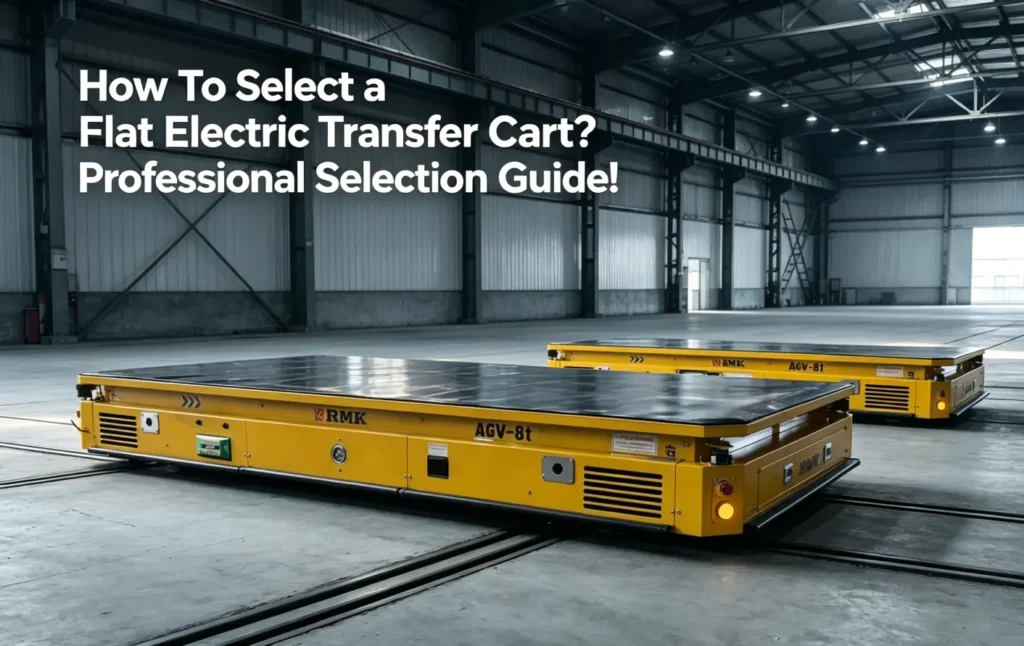
For details on electric flat transfer cart models and a selection guide, see: How to Select a Flat Electric Transfer Cart? Professional Selection Guide!
For guidelines on the operation and safe use of electric transfer carts, see: How to Operate an Electric Transfer Cart Safely?
Video Show
Specifications
The specifications of electric trackless transfer carts vary according to load requirements, working conditions, and customization needs. The main parameters include load capacity, running speed, platform size, battery system, and control method.
| Parameter | Specification |
|---|---|
| Load Capacity | 1–300 tons (customized models available for higher loads) |
| Running Speed | 0–20 m/min |
| Platform Size | 3000 × 3000 mm to 4000 × 3000 mm (customizable) |
| Platform Height | 550–1000 mm |
| Minimum Turning Radius | Approx. 4500 mm (depends on model and steering system) |
| Maximum Gradient | ≤3° |
| Power Supply | Lead-acid Battery / Lithium Battery |
| Operating Time | Up to 8 hours per charge (depending on load and working conditions) |
| Drive System | DC Motor + Gear Reducer |
| Steering System | Differential Steering / Hydraulic Steering / Customized Steering |
| Wheel Type | Solid Rubber Tire / Pneumatic Tire |
| Control Method | Wireless Remote Control / Pendant Control |
| Navigation Option | Magnetic Navigation / Laser Navigation / AGV System |
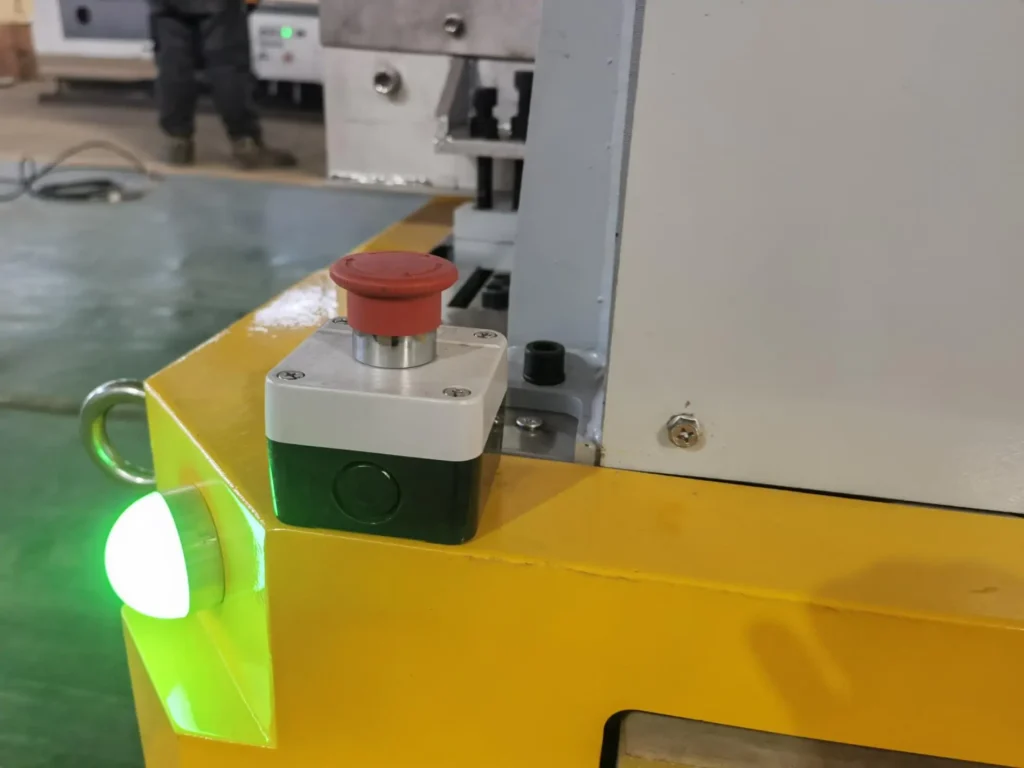
| Safety Features | Emergency Stop, Alarm System, Obstacle Detection |
The specifications of an electric trackless transfer cart should be selected according to load capacity, operating environment, travel requirements, and handling tasks. Customized configurations help match the cart with different industrial transportation needs.
Regular inspections and maintenance are required to ensure the long-term operation of electric transfer carts. For more details, see: Battery-Powered Transfer Cart Maintenance Guide: Daily Inspection and Battery Care
How to Choose an Electric Trackless Transfer Cart?
The selection of an electric trackless transfer cart is based on the actual transportation requirements, including load weight, working conditions, travel route, and operation method. The correct configuration affects the cart’s performance, service life, and handling efficiency.
Confirm Load Capacity and Platform Size
Load capacity is the first factor to consider. The cart should be selected according to the maximum weight of the transported material, with sufficient capacity margin for daily operation. The platform size should match the material dimensions to ensure stable placement during transportation.
For long materials such as pipes and steel profiles, a customized platform with V-shaped supports can prevent movement during operation.
Main Parameters:
- Load Capacity: 1–50 tons for standard models, higher capacity available for customization
- Platform Size: Customized according to material dimensions
- Platform Design: Flat Platform / V-Shaped Support / Customized Structure
Check Working Environment and Floor Conditions
Electric trackless transfer carts run on rubber wheels, so floor conditions directly affect operation stability. Flat concrete floors and epoxy floors are suitable for normal operation.
For outdoor areas, humid environments, or workshops with dust and oil, the cart should be equipped with suitable protection components.
Considerations:
- Floor Flatness
- Workshop Space
- Aisle Width
- Turning Area
- Indoor or Outdoor Operation
Select the Right Automation Level
The control method depends on the production process and handling frequency. Standard models use remote control, while automated models can integrate navigation systems for unmanned transportation.
| Control Type | Application |
| Wireless Remote Control | General material transportation |
| Automatic Positioning | Repeated transport between fixed locations |
| AGV Navigation System | Automated production lines and smart factories |
Determine Required Functions and Safety Features
Additional functions are selected according to the transportation task. Different materials and production processes require different cart configurations.
| Function | Application |
| Hydraulic Lifting Platform | Height adjustment and workstation docking |
| V-Shaped Frame | Pipe and profile transportation |
| Obstacle Detection | Safety protection in working areas |
| Emergency Stop System | Immediate shutdown in emergencies |
Choose Suitable Battery Configuration
Battery type affects operating time, charging frequency, and maintenance requirements. The selection depends on daily running distance and working hours.
Battery Options:
- Lead-acid Battery: Suitable for regular industrial use
- Lithium Battery: Suitable for frequent operation and fast charging requirements
Evaluate Manufacturer Capability
Electric trackless transfer carts often require customization according to factory conditions. The manufacturer should have experience in structural design, electrical systems, and application solutions.
Evaluation Factors:
- Customization Capability
- Manufacturing Experience
- Technical Support
- After-sales Service
The selection process starts with the load capacity and platform size, then considers the working environment, control method, battery system, and required functions. A properly configured electric trackless transfer cart can match different industrial transportation requirements and maintain stable operation.
Electric Trackless Transfer Cart vs Rail Transfer Cart
Electric trackless transfer carts and rail transfer carts are commonly used for heavy material transportation. The main difference is the travel method. Trackless transfer carts use rubber wheels for free movement, while rail transfer carts operate on fixed tracks.
| Comparison | Electric Trackless Transfer Cart | Rail Transfer Cart |
|---|---|---|
| Running Method | Rubber wheels, no fixed rails required | Runs on installed rails |
| Route Flexibility | Suitable for changing routes and multiple working areas | Suitable for fixed transportation routes |
| Installation | No track construction required | Requires rail installation |
| Load Capacity | 1–100+ tons, customized for higher loads | Suitable for heavy-duty transportation, including large tonnage applications |
| Steering | Flexible steering, suitable for narrow spaces | Moves along the rail direction |
| Floor Requirement | Requires flat concrete or epoxy floor | Requires proper rail foundation |
| Maintenance | Mainly involves battery, motor, and wheel maintenance | Includes cart maintenance and rail inspection |
| Typical Applications | Workshops, assembly lines, warehouses, flexible production areas | Steel plants, shipyards, fixed production lines |
Key Differences
- Electric trackless transfer carts are suitable for production areas where transportation routes change frequently. They do not require rail installation and can move between different workstations according to production needs.
- Rail transfer carts are used for repeated transportation between fixed locations. Their rail-guided operation provides stable movement and is suitable for heavy loads and long-term continuous service.
The selection depends on the factory layout, transportation route, load requirement, and operation frequency.
The price of electric transfer carts is influenced by a variety of factors. For more details, see: Electric Transfer Cart Price: Cost Guide, Factors & Buying Tips
Customization Options
- Platform Design: Customized platform size and structure for different materials and handling requirements.
- Load Capacity: Cart frame and drive system are designed according to the required load.
- Steering System: Differential, hydraulic, or omnidirectional steering options are available.
- Battery Configuration: Battery type and capacity are selected based on working time and travel distance.
- Control System: Options include pendant control, wireless remote control, and automatic control.
- Safety Features: Emergency stop, alarms, obstacle detection, and braking systems can be added.
- Special Functions: Hydraulic lifting, positioning, and AGV navigation functions are available for special applications.
We offer a wide range of customization options. Check out the article: Custom Transfer Cart: Complete Guide to Design and Customization
Conclusion
Electric trackless transfer carts provide flexible solutions for heavy material transportation in factories, warehouses, and manufacturing facilities. With different configurations for load capacity, steering systems, battery options, and automation levels, they can be adapted to various handling requirements.
REMARKABLE provides customized electric trackless transfer cart solutions based on working conditions, material characteristics, and production needs. Contact us to discuss your application requirements and select the right transfer cart for your project.
Email: transfercart@rmkzn.com
Phone: +86-18637369355
FAQ
What is an electric trackless transfer cart?
An electric trackless transfer cart is a battery-powered material-handling vehicle that uses rubber wheels rather than fixed rails. It is used to transport heavy materials in factories, workshops, and warehouses.
How does a trackless transfer cart work?
A trackless transfer cart uses onboard batteries to power an electric motor. The motor drives the wheels through the drive system, while the control system manages movement, steering, and braking.
What load capacity can a trackless transfer cart handle?
Trackless transfer carts can typically handle loads from 1 ton to over 100 tons. The capacity depends on the cart structure, drive system, and application requirements.
What battery is used in trackless transfer carts?
Trackless transfer carts commonly use lead-acid batteries or lithium batteries. The battery type is selected according to operating hours, travel distance, and charging requirements.
What is the difference between rail and trackless transfer carts?
Rail transfer carts run on fixed tracks and are suitable for fixed routes and heavy loads. Trackless transfer carts use rubber wheels and provide more flexibility for changing transportation paths.
Can an electric trackless transfer cart work outdoors?
Yes. Electric trackless transfer carts can be used outdoors when equipped with suitable components, such as weather-resistant electrical systems, durable wheels, and dust- and moisture-resistant protection.
Can trackless transfer carts be customized?
Yes. Trackless transfer carts can be customized in load capacity, platform size, steering system, battery type, control method, and additional functions according to application requirements.
How do I choose the right trackless transfer cart?
The selection depends on load weight, material size, travel route, floor conditions, working hours, battery requirements, and automation needs. A suitable configuration should match the actual handling process.