Table of Contents
Introduction
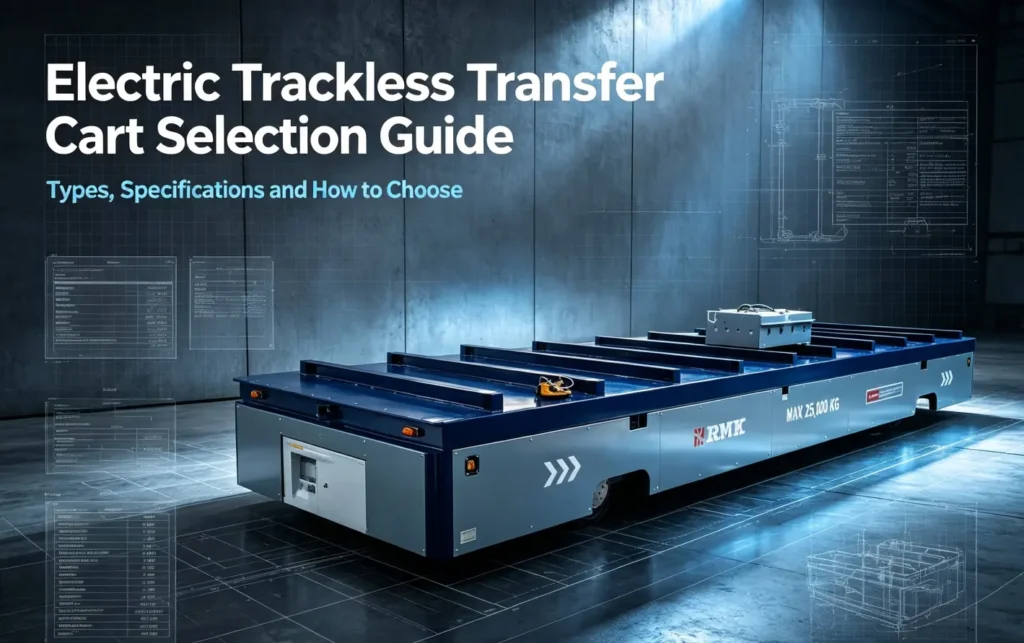
A transfer cart is an electric material handling vehicle designed to move heavy loads horizontally in factories, workshops, warehouses, and industrial facilities. It is widely used for transporting steel products, molds, machinery parts and other heavy materials between production areas. REMARKABLE provides customized transfer cart solutions based on different load capacities, operating environments, and handling requirements, helping customers improve material transportation efficiency and safety in industrial applications.
What Is a Transfer Cart?
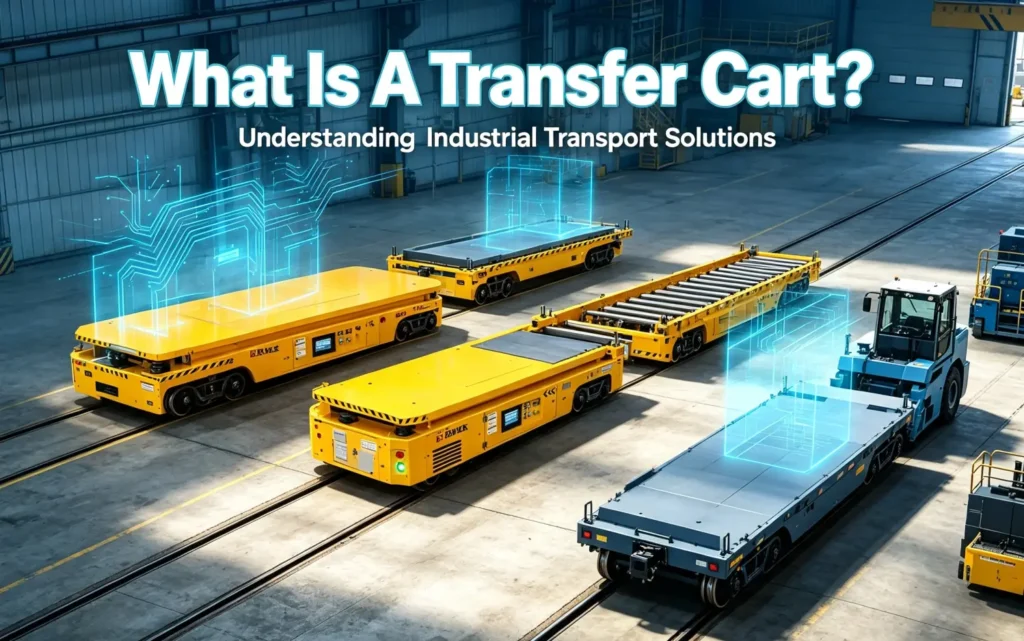
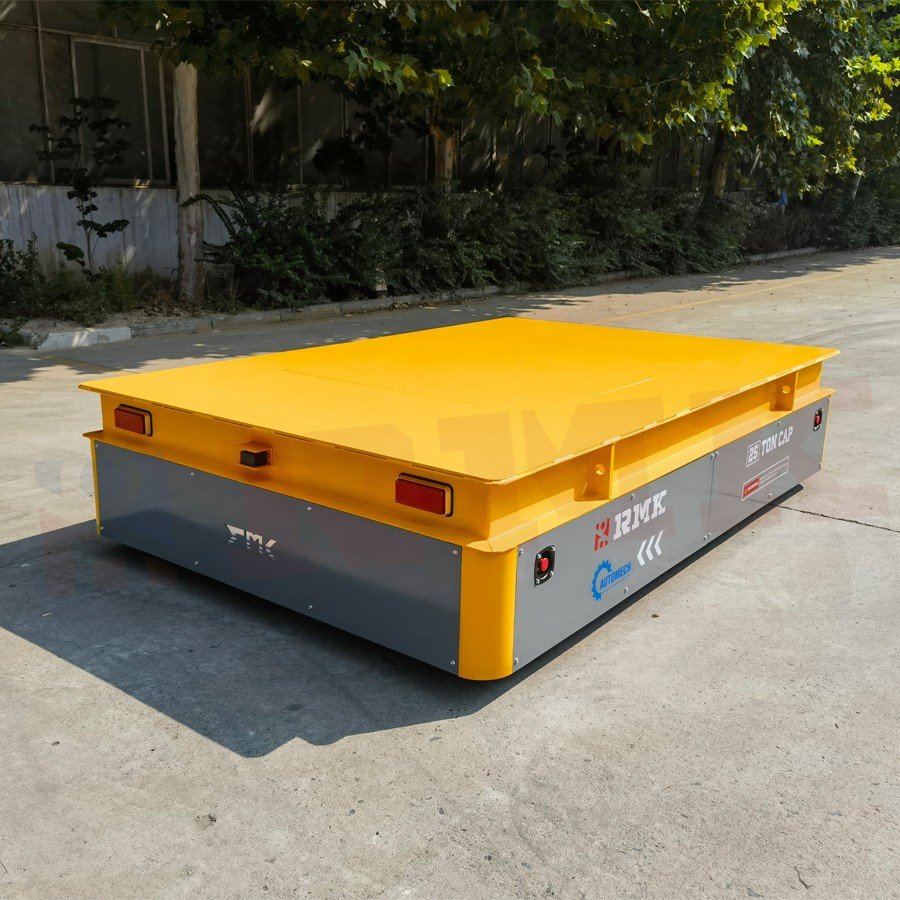
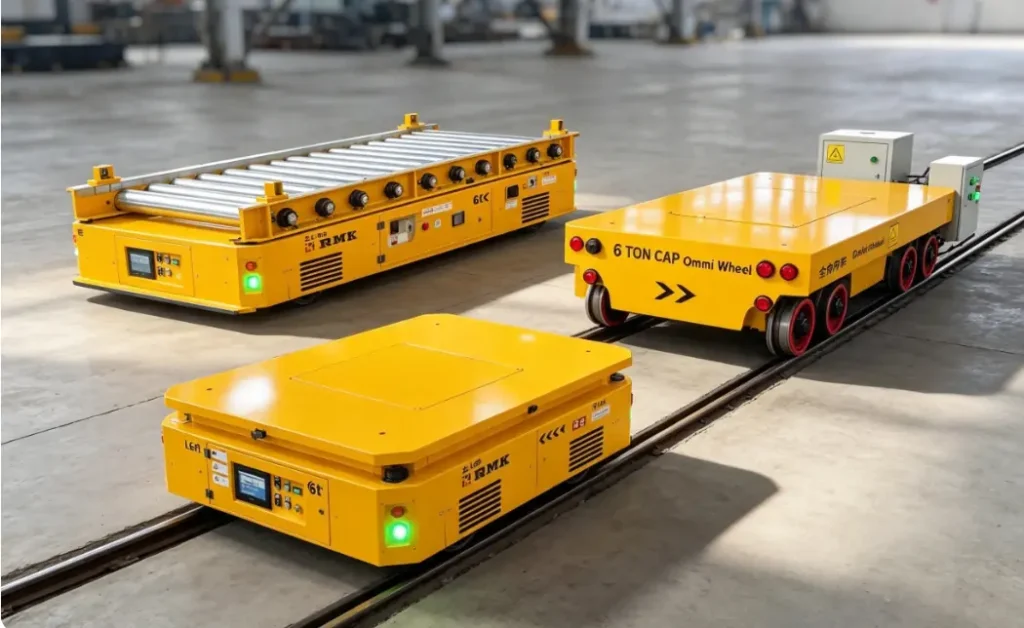
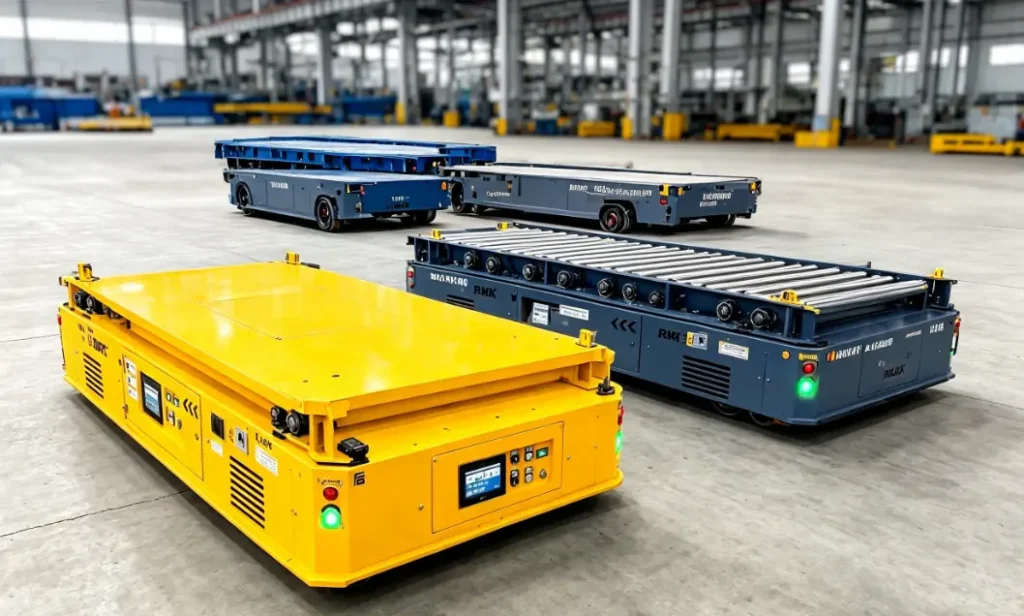
A transfer cart, also known as a material transfer cart, electric flat cart, or industrial transfer trolley, is an electric material handling vehicle used to transport heavy loads, equipment, and products inside factories, workshops, and warehouses. It is also known as a material transfer cart, electric flat cart, or industrial transfer trolley. Depending on the design, it can run on rails, operate without tracks, or move manually on a flat surface.
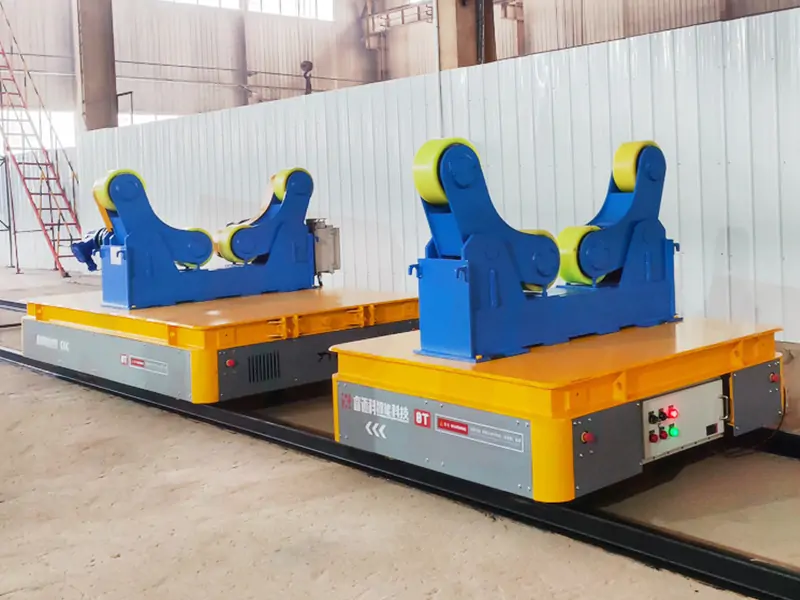
A transfer cart mainly consists of a steel platform, drive system, wheels, steering system, and control unit. Power options include batteries, cable reels, and external power supply. Load capacities typically range from several tons to hundreds of tons, with customized designs available for applications such as steel coil handling, mold transportation, and heavy equipment movement.
Transfer carts are widely used in steel plants, automotive factories, shipyards, precast concrete plants, and machinery workshops. They help move heavy materials between production areas with stable operation, flexible configurations, and reduced dependence on forklifts or cranes.
How Does a Transfer Cart Work?
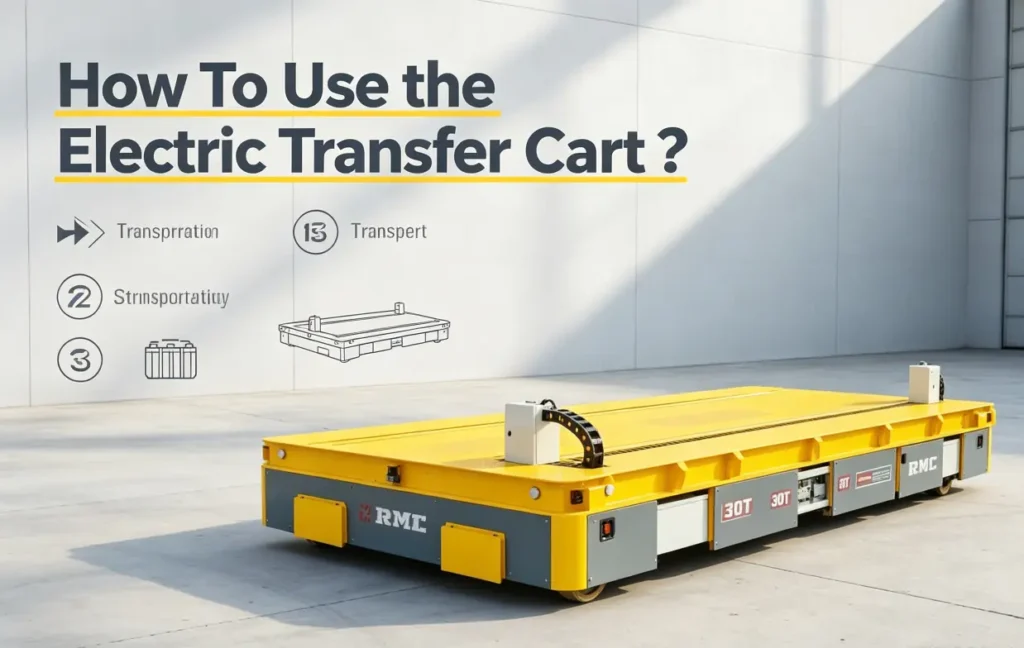
A transfer cart moves heavy loads through an electric power system, drive system, and control system. The motor receives power from the battery or external power source, drives the wheels, and moves the cart along rails or across the factory floor.
Power Supply System
Most transfer carts use lead-acid or lithium-ion batteries. The battery provides DC power to the traction motor through the control system. A standard battery system can support about 8 hours of operation, with fast charging available for continuous production.
Drive and Control System
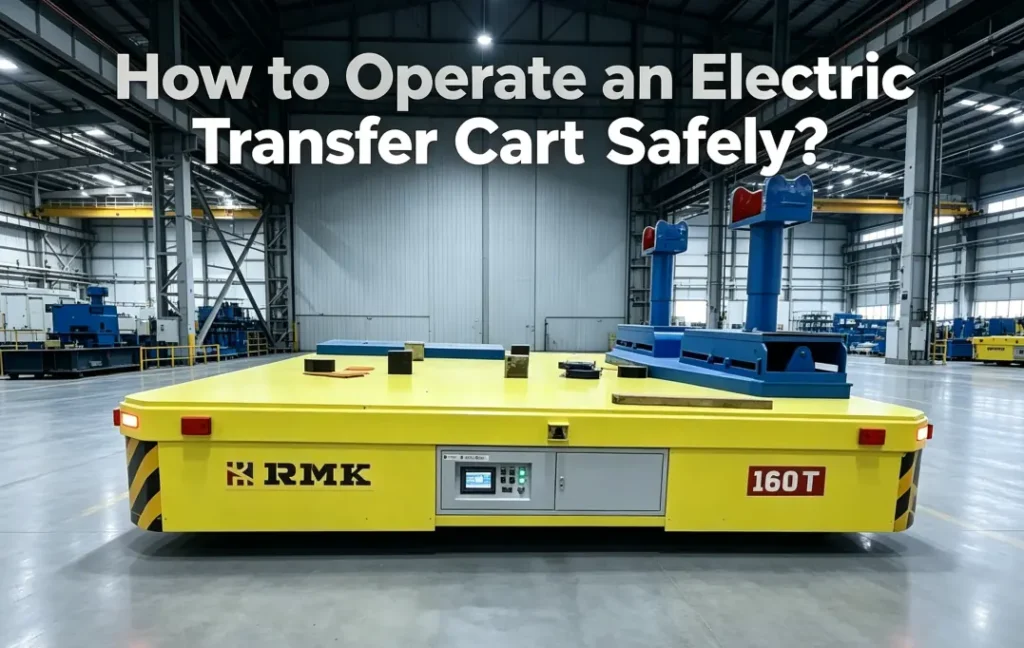
The traction motor transfers power to the wheels through a gear reduction system to move heavy loads. Operators control the cart through a wireless remote or pendant controller for forward, reverse, speed adjustment, and stopping. Common safety devices include emergency stop buttons, warning lights, and obstacle detection sensors.
Guidance and Automation System
Rail transfer carts run on fixed tracks, while trackless transfer carts use rubber tires and steering systems for flexible movement. Automated models can use magnetic guidance, RFID, laser navigation, or SLAM systems for automatic route tracking and positioning.
Transfer carts usually run at speeds of 0–20 m/min and handle loads from 1 ton to more than 300 tons. They are used for transporting steel coils, molds, machinery parts, and other heavy materials in industrial facilities.
What Are the Main Types of Transfer Carts?
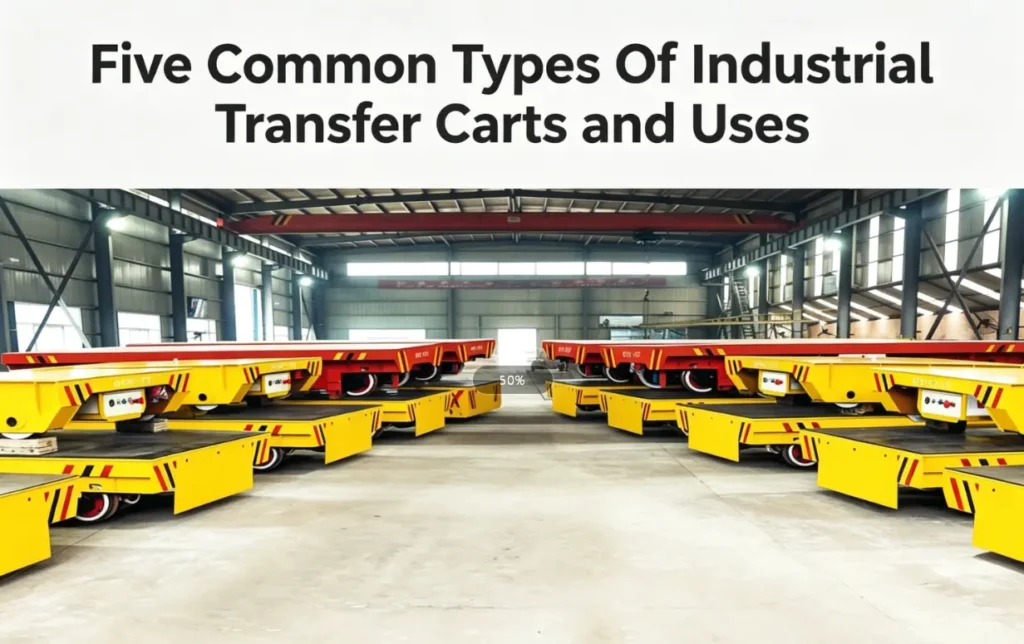
Transfer carts are classified by running method, power supply, control system, and special functions. Different designs are used for different load requirements, working environments, and transportation conditions.
Rail Transfer Cart
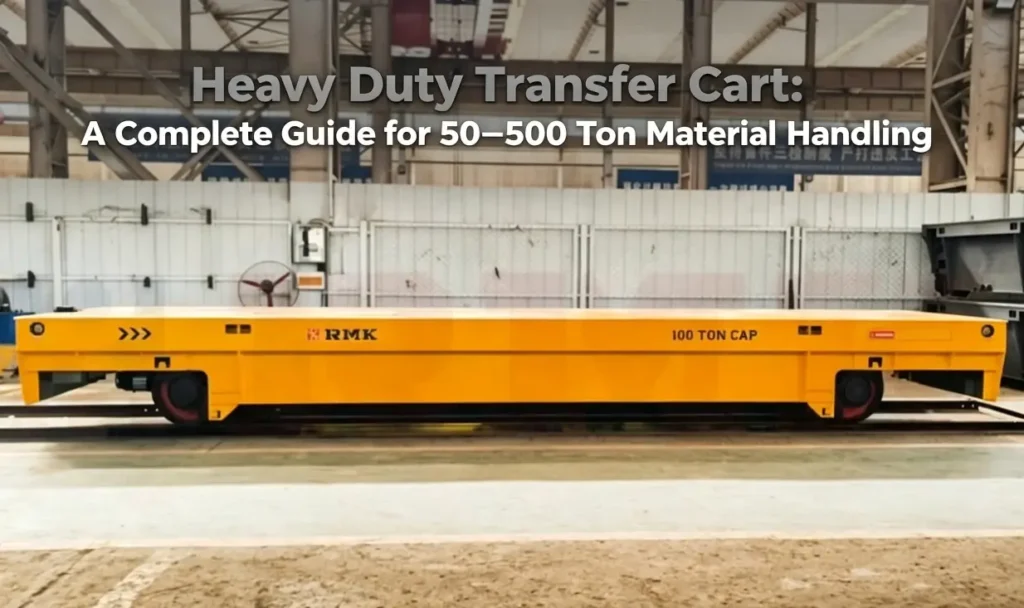
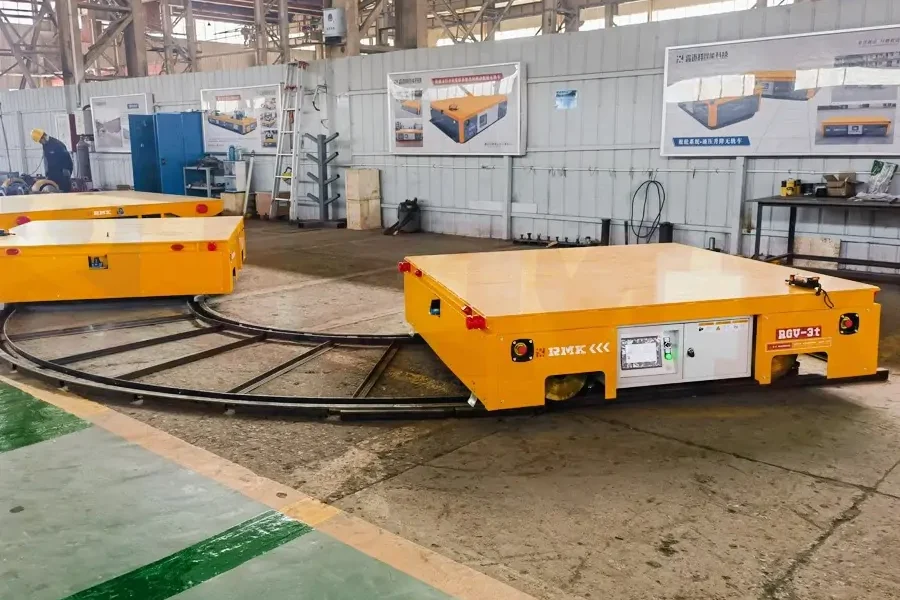
A rail transfer cart runs on fixed rails installed on the factory floor. It provides stable movement, high load capacity, and accurate positioning, making it suitable for heavy-duty transportation in steel plants, foundries, shipyards, and machinery workshops. Some models can handle loads of more than 300 tons.
Trackless Transfer Cart
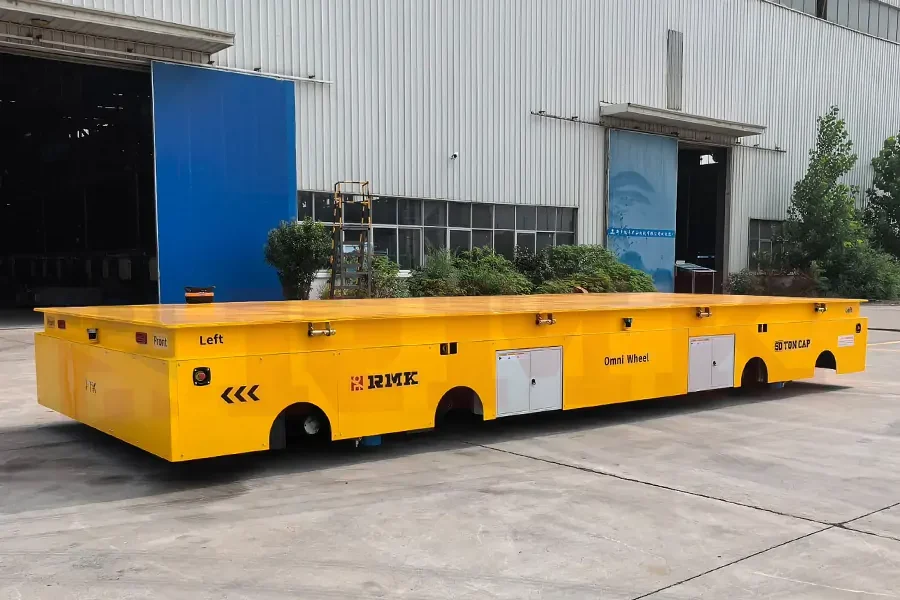
A trackless transfer cart uses rubber tires and a steering system to move without fixed rails. It can operate on concrete floors and change transport routes when needed. This type is suitable for workshops with limited space or production areas that require flexible material handling.
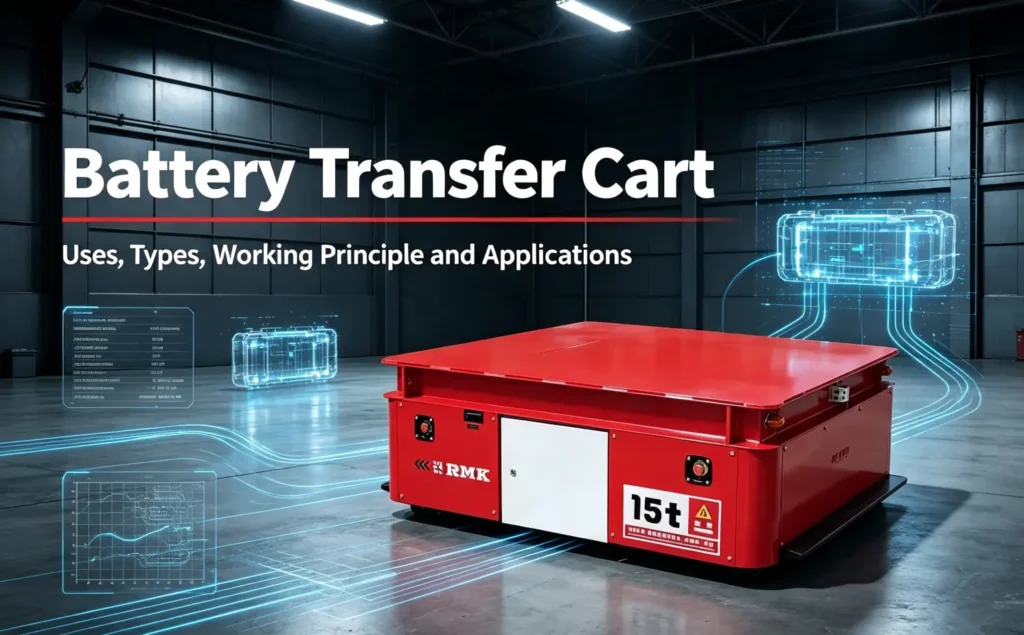
Battery-Powered Transfer Cart
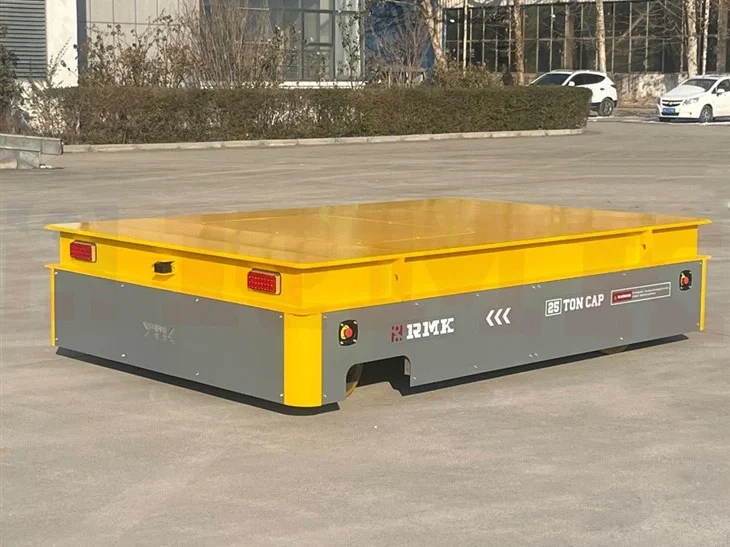
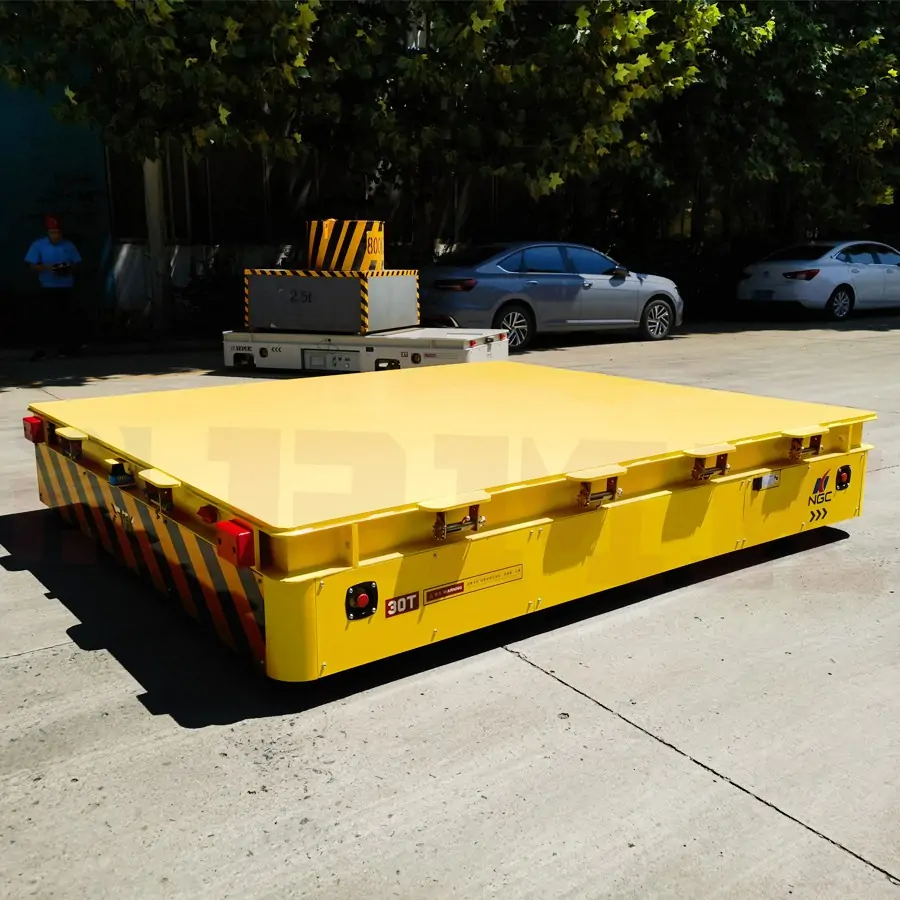
A battery-powered transfer cart uses rechargeable lead-acid or lithium batteries as its power source. It operates without external cables and supports continuous material transport. Battery models are widely used in factories, warehouses, and outdoor handling areas.
Low Voltage Rail Powered Transfer Cart
A low-voltage rail-powered transfer cart receives electricity through conductive rails installed on the ground. It is designed for long-distance transportation and heavy loads where continuous power supply is required.
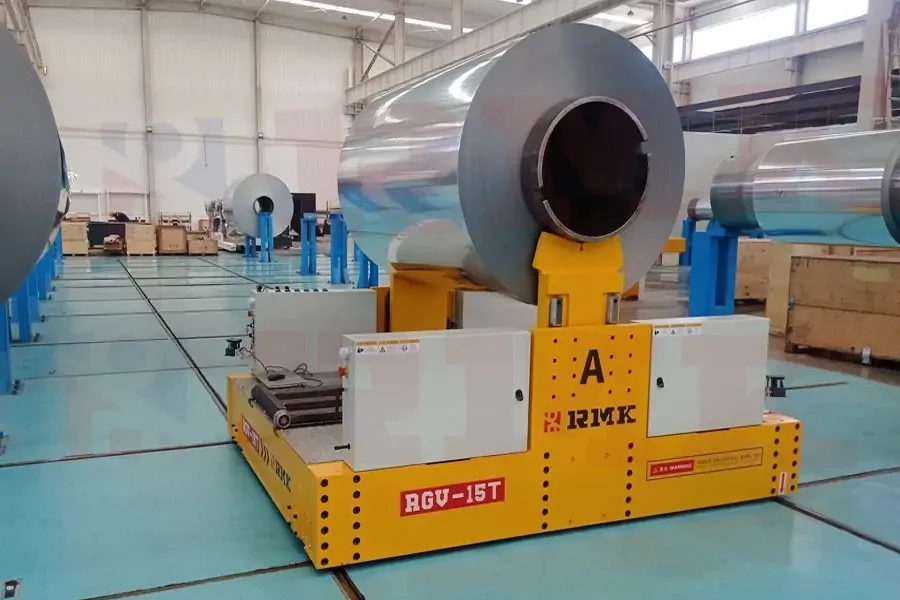
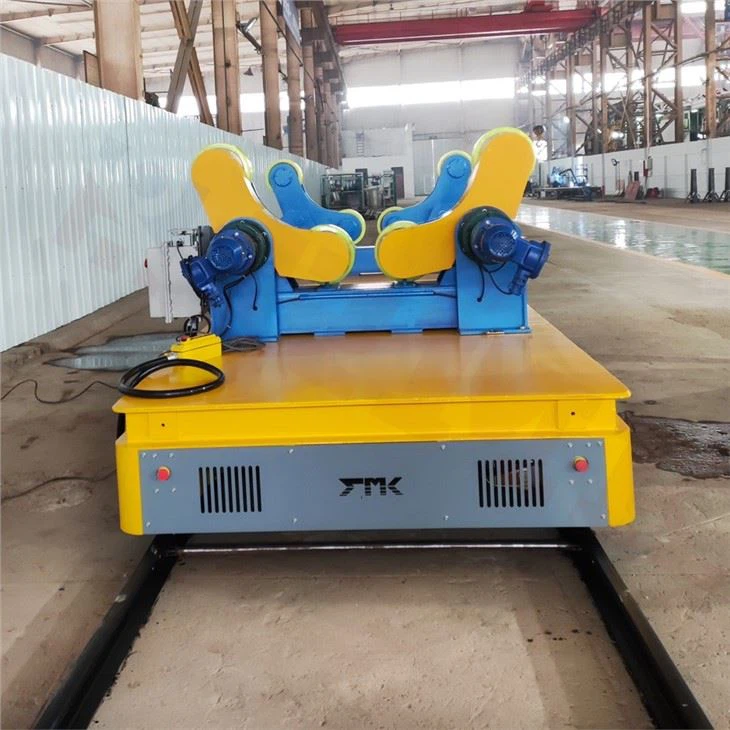
Cable Reel Powered Transfer Cart
A cable reel powered transfer cart uses a cable drum to supply electricity during operation. It is suitable for fixed transport routes with stable working conditions, but the travel distance is limited by the cable length.
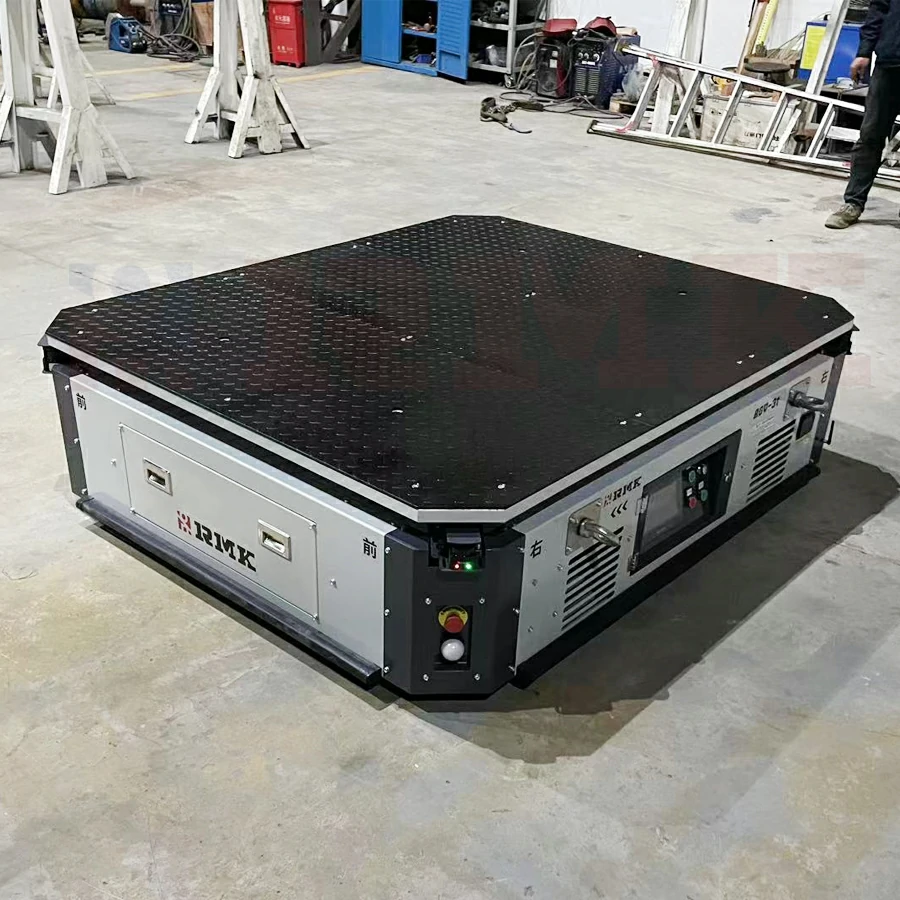
AGV Transfer Cart
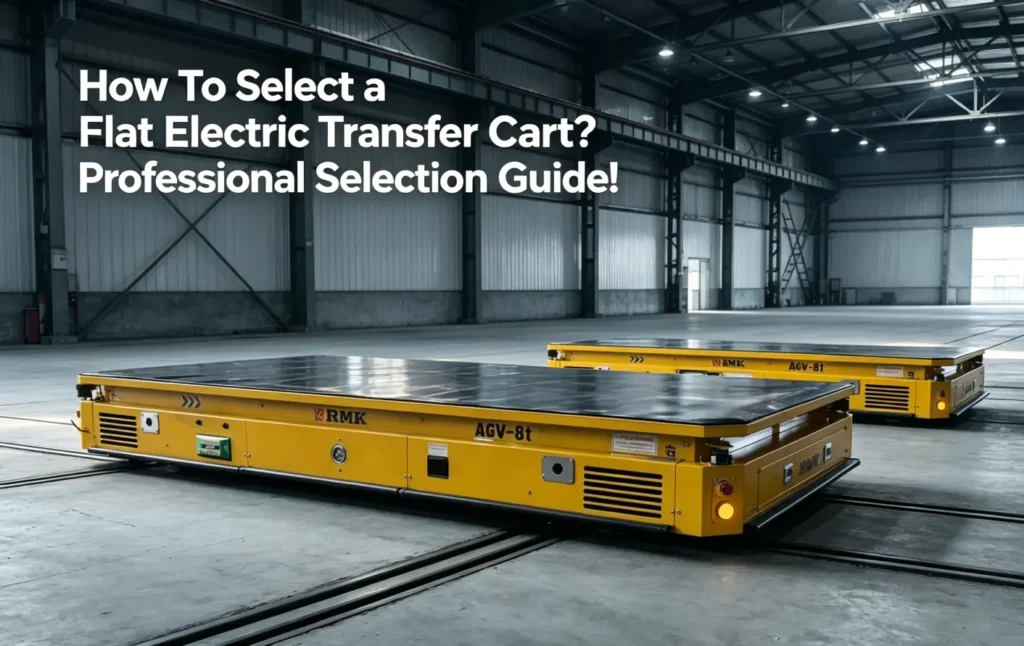
An AGV transfer cart integrates navigation systems such as magnetic guidance, laser navigation, RFID, or SLAM. It can follow programmed routes automatically and is used in automated production lines and smart factories.
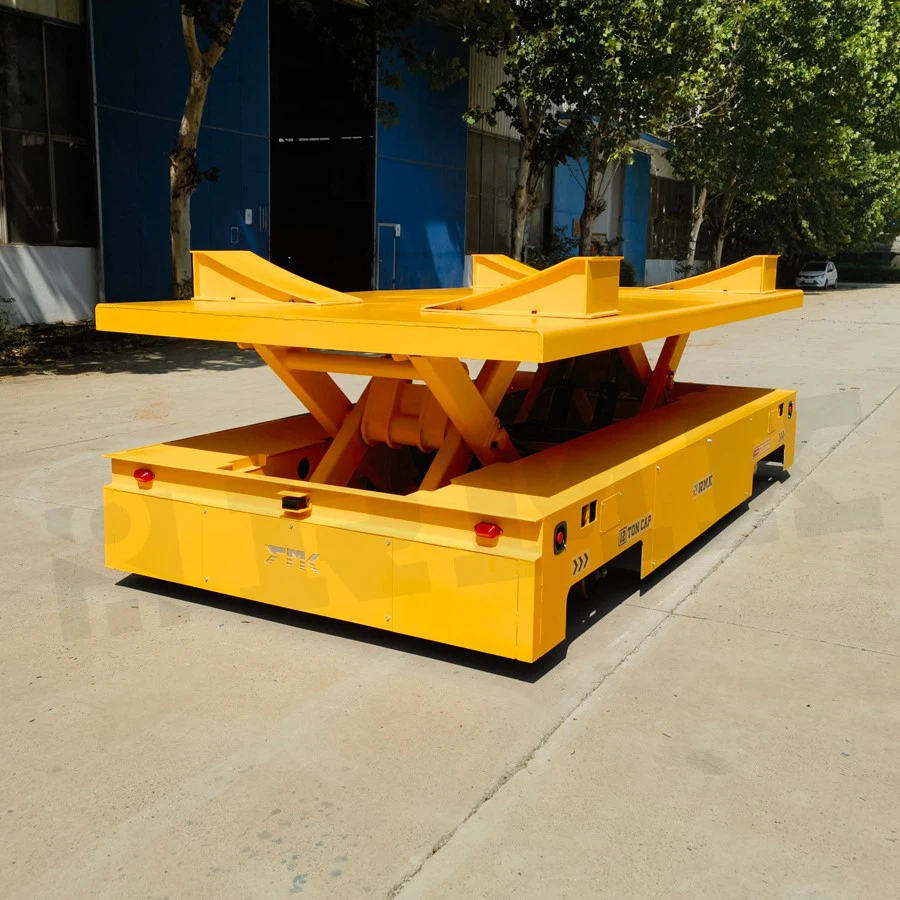
Hydraulic Lifting Transfer Cart
A hydraulic lifting transfer cart combines horizontal movement with a lifting platform. It can raise or lower loads during transportation and is used for applications requiring height adjustment, such as assembly lines and equipment installation.
Explosion Proof Transfer Cart
An explosion-proof transfer cart uses explosion-proof motors, electrical components, and protective structures. It is designed for hazardous environments where flammable gases, dust, or materials are present.
What Are Transfer Carts Used For?
Steel Industry
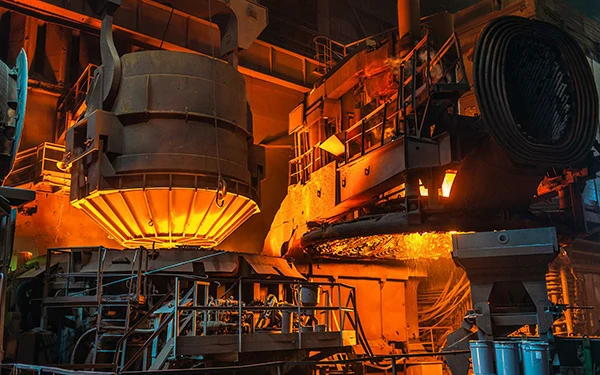
Transfer carts are widely used in steel plants for transporting steel coils, ladles, plates, and structural components. Heavy-duty models with high load capacity are designed for harsh working environments and continuous operation.
Machinery Manufacturing
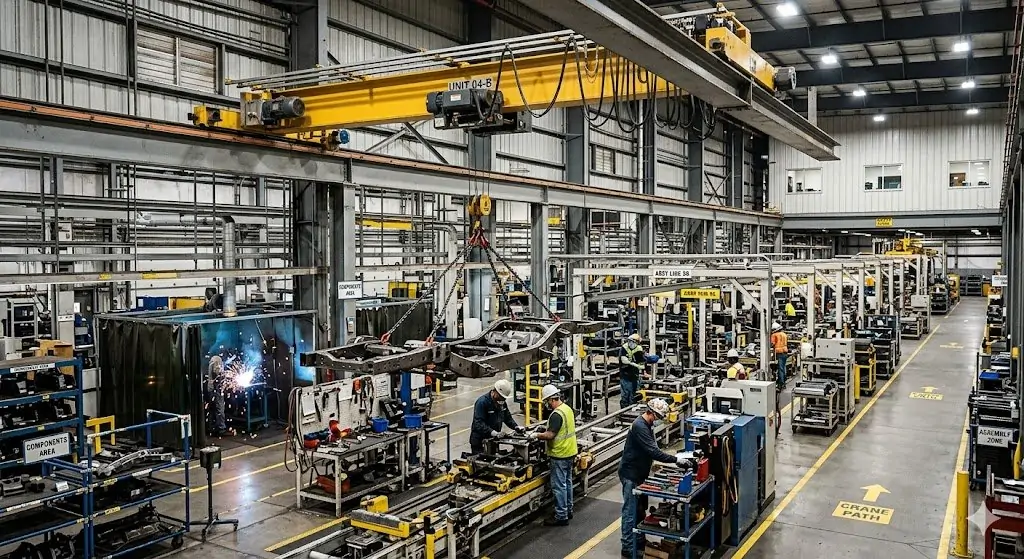
In machinery workshops, transfer carts move large machine parts, molds, and equipment between production stations. They help simplify material handling for oversized and heavy components.
Automotive Industry
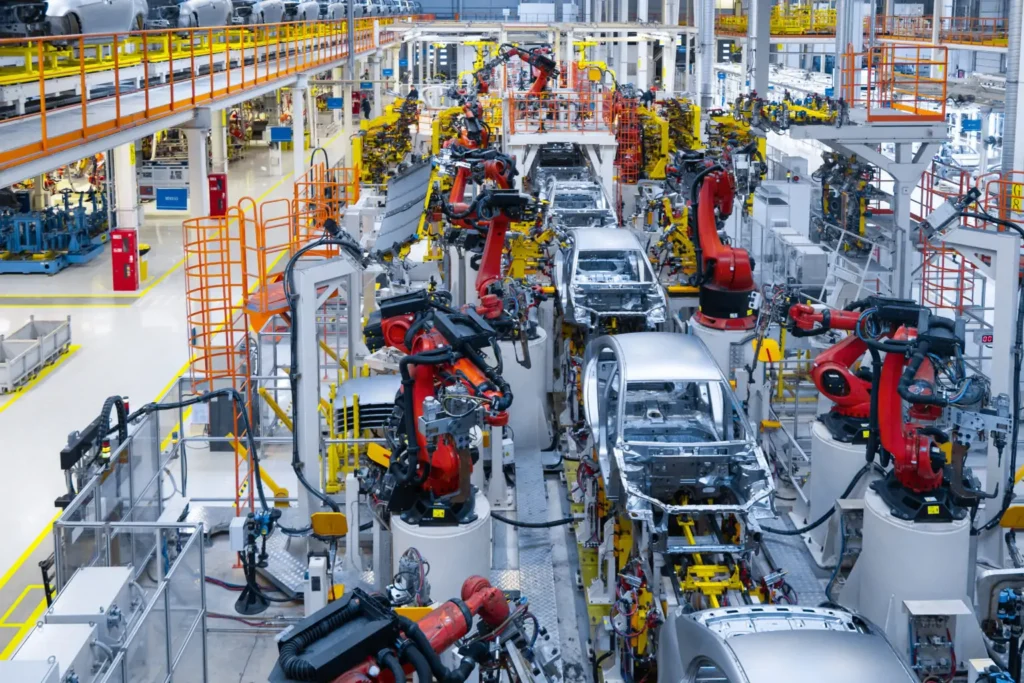
Automotive factories use transfer carts for moving dies, tooling, vehicle components, and assembly materials. Battery-powered and automated models are often used in production lines.
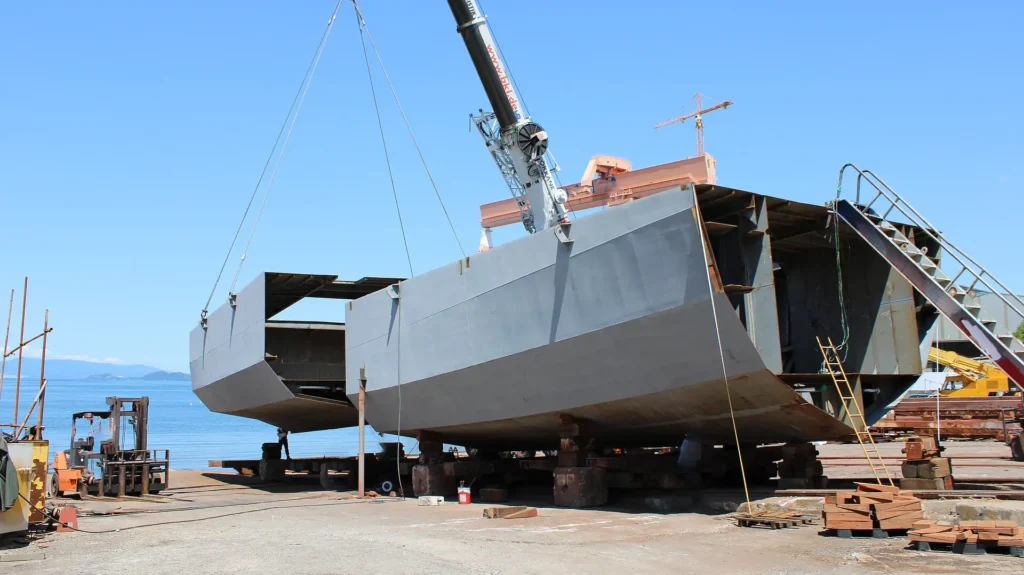
Shipbuilding Industry
Shipyards use transfer carts to transport ship sections, steel structures, and large assemblies. Their high load capacity and customizable platform sizes make them suitable for large-scale fabrication.
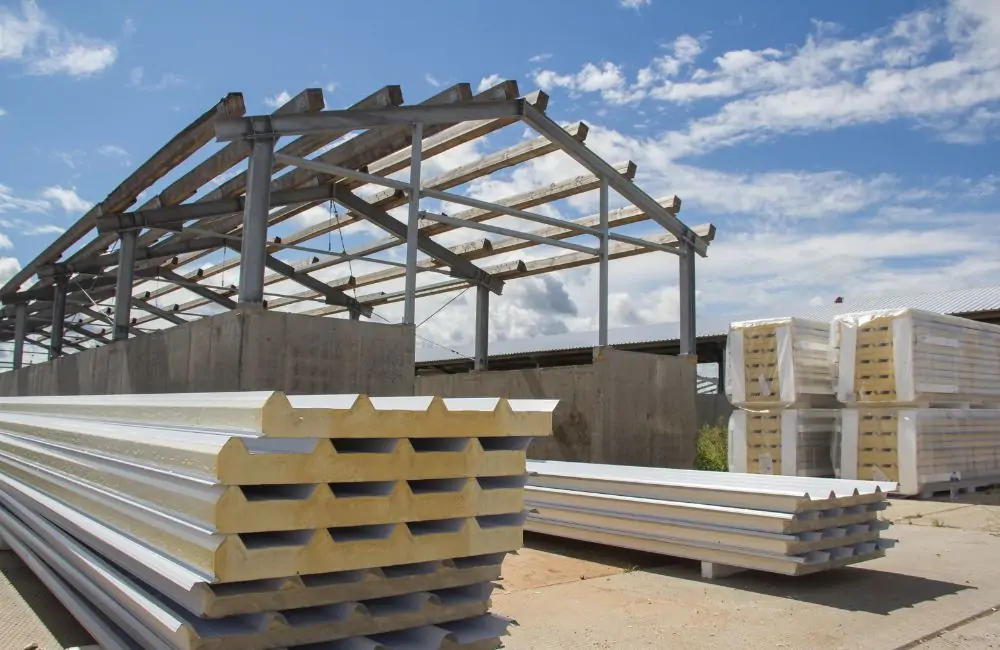
Precast Concrete Industry
Transfer carts are used in precast concrete plants to move concrete molds, slabs, and finished products. Rail and heavy-duty models are commonly selected for fixed production routes.
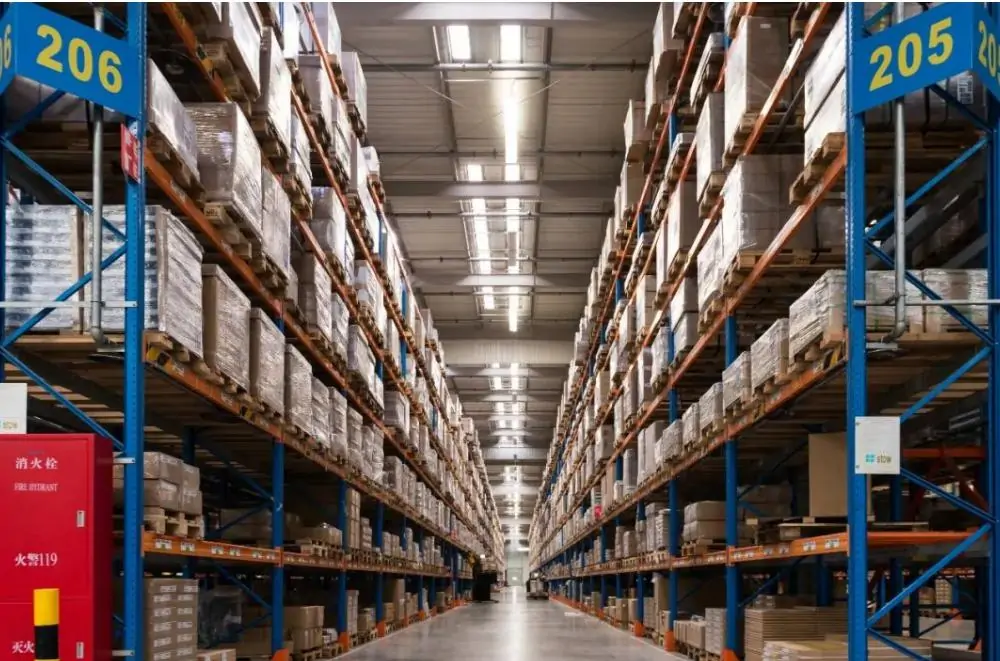
Warehouse and Logistics
In warehouses and logistics centers, transfer carts handle heavy pallets, equipment, and industrial goods. Trackless and automated models provide flexible movement in large storage areas.
Cases
What Load Capacity Can a Transfer Cart Handle?
The load capacity of a transfer cart depends on the cart structure, power system, running method, and application requirements. Standard transfer carts are available from 500 kg to 50 tons, while heavy-duty customized models can handle 300 tons or more.
| Type | Load Capacity | Applications |
|---|---|---|
| Light Duty Trackless Transfer Cart | 1–10 tons | Mold maintenance, assembly line material delivery, workshop transportation |
| Medium Duty Rail Transfer Cart | 10–50 tons | Steel coil handling, heavy machinery assembly, production line transfer |
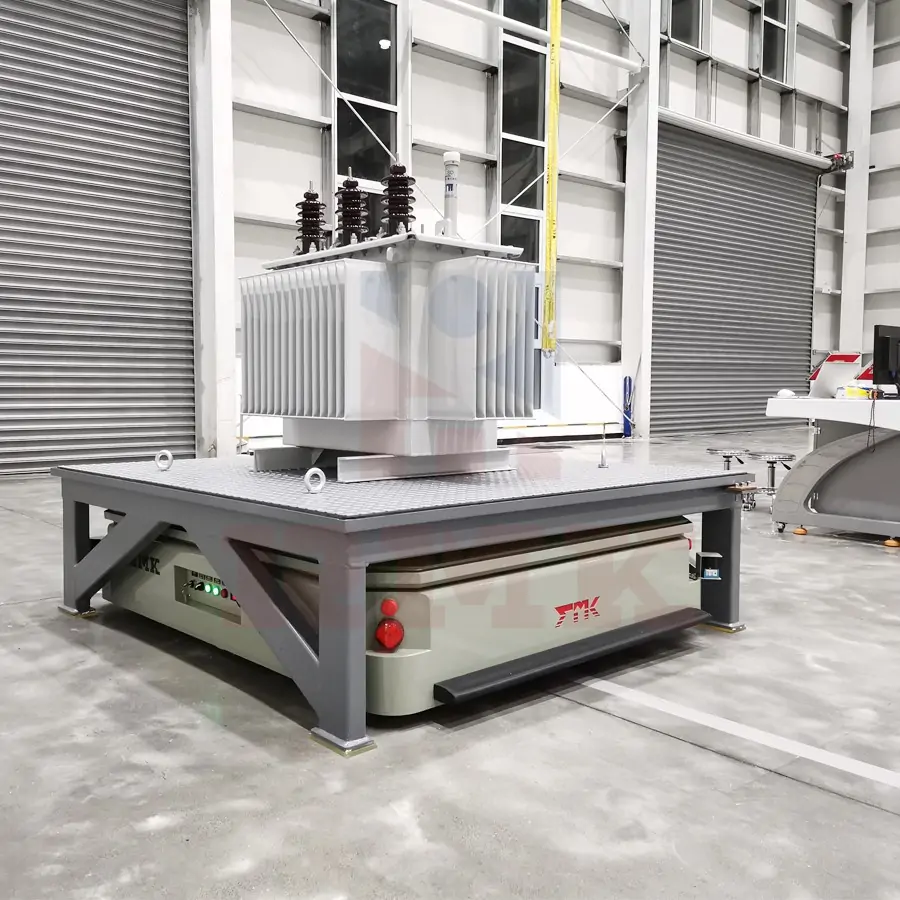
| Heavy Duty Rail Transfer Cart | 50–150 tons | Ship section transportation, large transformer handling, heavy equipment movement |
| Extra Heavy Duty Custom Transfer Cart | 150–300 tons (some models over 500 tons) | Nuclear power equipment, large pressure vessel transportation, oversized load handling |
| AGV Transfer Cart | 500 kg–10 tons | Smart factory logistics, automated production lines, precision positioning |
Transfer cart capacity is customized according to load weight, platform size, travel distance, working frequency, and floor conditions. Selecting the correct capacity helps maintain stable operation and extends equipment service life.
How to Choose the Right Transfer Cart?
Selecting a transfer cart requires considering load requirements, operating conditions, transport routes, and control methods. The right configuration depends on the material type, working environment, and handling process.
Load Capacity — Choose a transfer cart based on the maximum weight of the load. The cart structure and platform size should match the load dimensions to maintain stable operation.
Running Method — Rail transfer carts are suitable for fixed routes and heavy loads. Trackless transfer carts are better for workshops that require flexible movement and changing transport paths.
Power Supply — Battery-powered transfer carts offer flexible operation without external cables. Rail power and cable reel systems are suitable for longer running distances and continuous operation.
Working Environment — Consider floor conditions, temperature, dust, moisture, and outdoor use before selection. Special designs are available for harsh or hazardous environments.
Control System — Remote control is suitable for standard material handling. AGV transfer carts with navigation systems are used for automated production lines and smart factory applications.
Custom Requirements — Platform size, lifting function, steering method, and safety devices can be customized according to the material and transportation requirements.
A suitable transfer cart should match the load, working environment, and transportation requirements. REMARKABLE provides customized transfer cart solutions for different industrial applications, helping customers improve material handling efficiency and operation reliability.
For more information on how to select a transfer cart, see the article: How to Select Industrial Transfer Carts?
Custom Transfer Cart
Transfer carts can be customized according to load requirements, working conditions, and transportation processes. Common customization options include:
- Load Capacity: From several tons to hundreds of tons based on material weight requirements.
- Platform Size: Customized length, width, and deck structure for different load dimensions.
- Power Supply: Battery, cable reel, rail power, or other power systems according to operation conditions.
- Running Method: Rail type, trackless type, or automated transfer cart design.
- Control System: Pendant control, wireless remote control, PLC control, or AGV navigation system.
- Steering System: Fixed-direction running, 360° steering, or multi-directional movement.
- Platform Design: Flat platform, V-frame, hydraulic lifting platform, or special fixtures.
- Safety Devices: Emergency stop, warning lights, obstacle detection sensors, and safety protection systems.
- Working Environment Adaptation: Waterproof, explosion-proof, high-temperature, or outdoor operation designs.
- Travel Distance and Speed: Customized according to factory layout and material handling requirements.
For details on customization options and scope, see the article: Custom Transfer Cart: Complete Guide to Design and Customization
Why Choose REMARKABLE Transfer Cart?
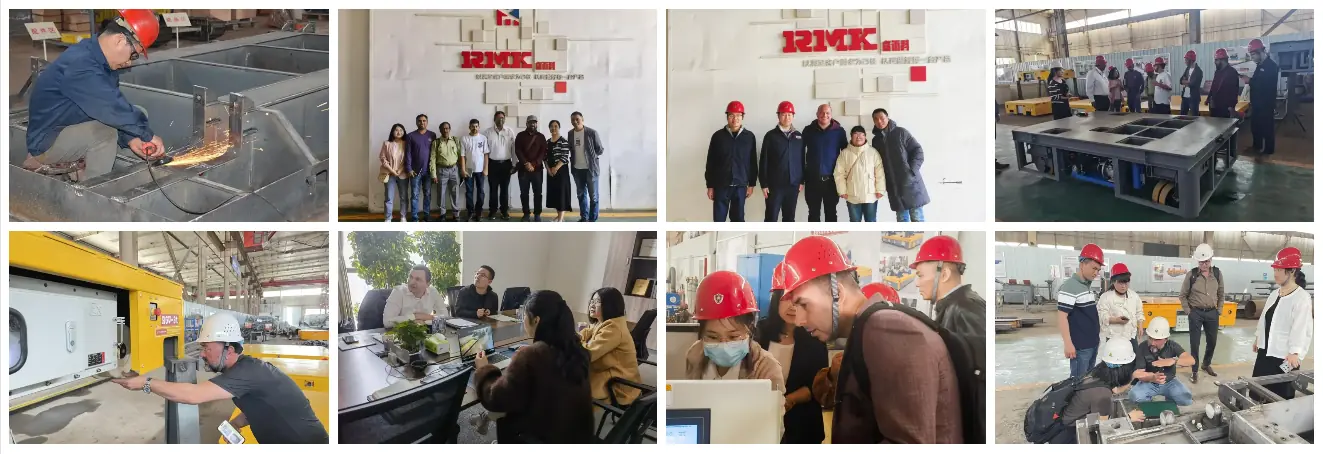
REMARKABLE provides customized transfer cart solutions for different industrial material handling requirements. With experience in R&D, design, manufacturing, and service, the company develops transfer carts for heavy loads, special working conditions, and automated transportation applications.
Customized Solutions
REMARKABLE designs transfer carts based on load capacity, transport distance, working environment, and production requirements. Solutions include rail transfer carts, trackless transfer carts, battery transfer carts, AGV handling systems, and other non-standard transport equipment.
Professional Engineering Support
A technical team provides product design and engineering support for different applications. Product development uses professional design tools, with customized structures available for heavy loads, special environments, and automated handling projects.
Reliable Product Quality
REMARKABLE products comply with industry standards and have passed ISO management system certifications and CE certification. The company has obtained multiple product patents and applies quality control throughout manufacturing and testing.
Wide Industrial Applications
REMARKABLE transfer carts are used in aerospace, metallurgy, steel, shipbuilding, automotive manufacturing, power generation, and heavy equipment industries. The products have been exported to more than 30 countries and regions.
Complete Service Support
REMARKABLE provides support from project consultation and product design to manufacturing, installation guidance, and after-sales service. Each transfer cart solution is developed according to the customer’s actual handling requirements.
Learn more about our company: Transfer Cart Manufacturer
Conclusion
Transfer carts provide an efficient solution for moving heavy materials in factories, workshops, warehouses, and other industrial environments. Different types, power systems, and customized designs allow transfer carts to meet various load capacities and transportation requirements.
REMARKABLE specializes in customized transfer cart solutions, including rail transfer carts, trackless transfer carts, and automated handling systems. Contact us to discuss your material handling needs and find a suitable transfer cart for your application.
Email: transfercart@rmkzn.com
Phone: +86-18637369355
FAQ
What is a transfer cart used for?
A transfer cart is used for moving heavy materials, equipment, and products inside factories, workshops, warehouses, and industrial facilities. It is commonly used for transporting steel coils, molds, machinery parts, ship sections, and other large loads.
How does an electric transfer cart work?
An electric transfer cart uses a battery or external power supply to drive an electric motor. The motor transfers power to the wheels through a drive system, allowing the cart to move forward, backward, and transport heavy loads under operator or automatic control.
What is the maximum capacity of a transfer cart?
The capacity of a transfer cart ranges from several hundred kilograms to more than 300 tons. Heavy-duty customized models can be designed for loads of 500 tons or higher depending on the application requirements.
What are the different types of transfer carts?
The main types include rail transfer carts, trackless transfer carts, battery-powered transfer carts, cable reel-powered transfer carts, AGV transfer carts, and customized transfer carts. Each type is designed for different transport routes and working conditions.
What is the difference between a rail transfer cart and a trackless transfer cart?
A rail transfer cart runs on fixed tracks and is suitable for heavy loads and fixed transport routes. A trackless transfer cart uses rubber tires and a steering system, allowing flexible movement without rails.
Can a transfer cart be customized?
Yes. Transfer carts can be customized according to load capacity, platform size, power supply, running method, control system, steering mode, and working environment. Custom designs are available for special material handling requirements.
How much does a transfer cart cost?
The cost of a transfer cart depends on load capacity, cart size, power system, control method, automation level, and customization requirements. Standard models are more economical, while heavy-duty or automated transfer carts require project-based pricing.
How do I choose a transfer cart?
Choose a transfer cart based on load weight, material size, transport distance, floor conditions, working environment, and operation requirements. The suitable model should match the actual handling process and production needs.