Table of Contents
Introduction
Choosing the right Heavy Duty Transfer Cart capacity is important for safe and efficient heavy load transportation. The selected capacity should match the actual payload weight, load distribution, platform size, and working conditions instead of only considering the weight of a single load.
In this article, I will explain how to choose heavy duty transfer cart capacity from practical selection points, including Transfer Cart Load Capacity calculation, factors affecting capacity, common selection mistakes, and how manufacturers evaluate different load requirements. These details can help you select a suitable transfer cart configuration for your industrial handling application.
What Is Transfer Cart Load Capacity?
Transfer Cart Load Capacity refers to the maximum rated load a transfer cart can transport under specified operating conditions. It is determined by the complete cart design, including payload weight, frame strength, wheel load, and drive system capacity. The capacity rating is an engineering limit, not only the weight marked on the product nameplate.
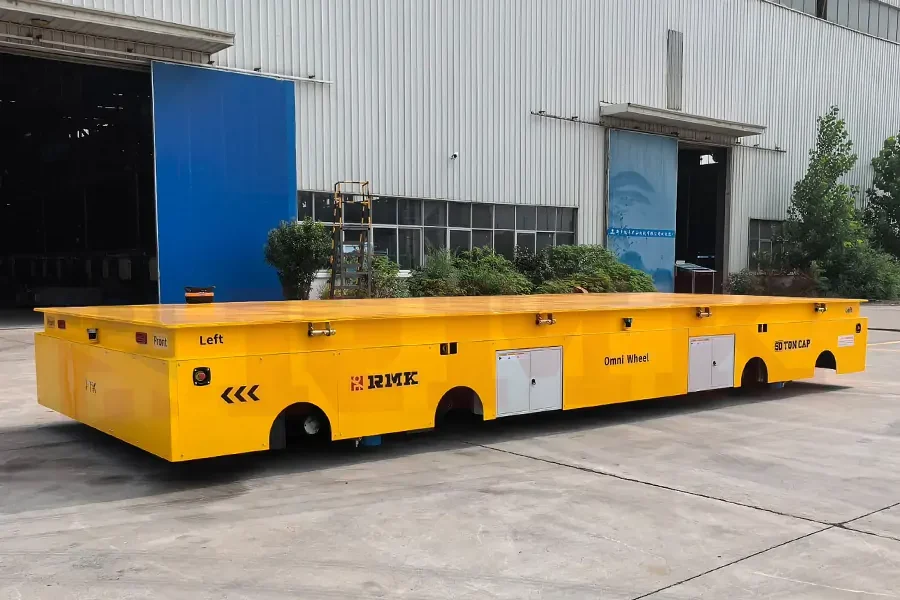
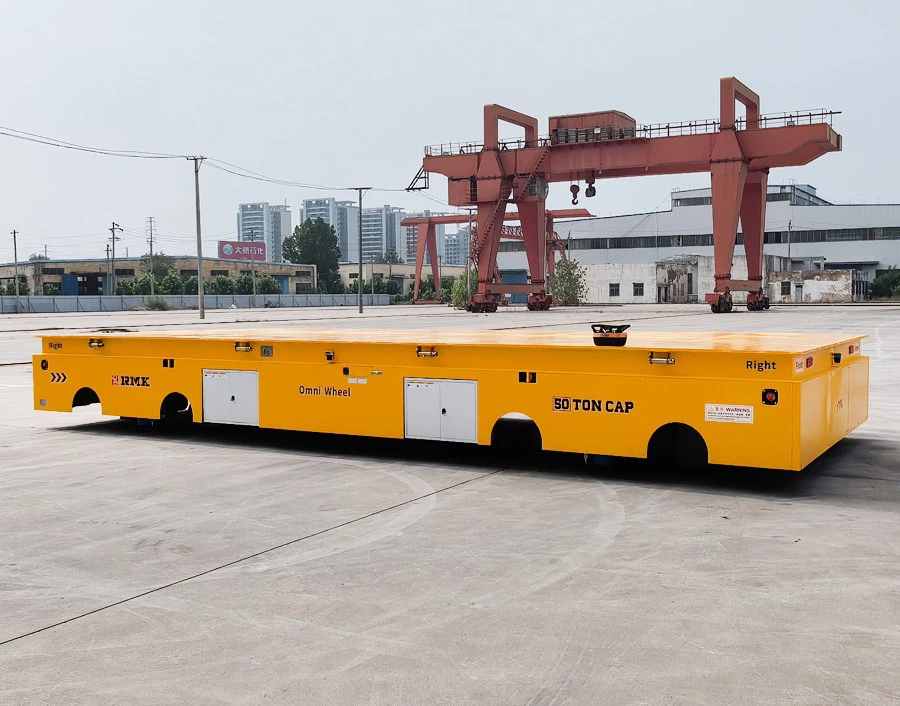
A rated capacity, such as a 50-ton transfer cart, means the cart is designed to move loads up to 50 tons under normal working conditions. The frame must withstand bending and fatigue during operation, the wheels must handle the actual wheel pressure on the rail or floor, and the motor and gearbox must provide enough traction for starting, traveling, and stopping with the rated load.
When selecting a transfer cart, the load capacity should match the heaviest expected load, load distribution, travel conditions, and duty cycle. A cart with a 50-ton rating may require different configurations depending on wheel load, route conditions, and operating frequency. The actual working capacity is determined by the complete system rather than the payload weight alone.
How to Calculate the Required Transfer Cart Load Capacity?
The required transfer cart load capacity is determined by the maximum payload, load condition, and operating requirements. The selected capacity should cover the heaviest load and allow enough margin for impact, uneven loading, and repeated operation. A basic calculation is:
Required Capacity = Maximum Load Weight × Safety Margin
Step 1: Confirm the Maximum Load Weight
Calculate the capacity based on the heaviest load to be transported.
- Maximum material weight
- Largest production load
- Future load increase
Example: A factory transporting 45-ton steel structures should select a transfer cart capacity above 45 tons, such as a 50-ton model.
Step 2: Check Load Distribution
Load position affects wheel pressure and frame stress.
- Load center position
- Length and width of the cargo
- Off-center loading condition
A 50-ton load does not always apply 12.5 tons to each wheel. Uneven loading can increase the pressure on individual wheels, so the frame, axle, and wheel design must match the actual loading condition.
Step 3: Select the Safety Margin
The safety margin covers additional forces during operation.
Main factors include:
- Starting and stopping force
- Braking impact
- Load movement during transportation
Heavy duty transfer carts are generally selected with additional capacity instead of operating continuously at the maximum rated load.
Step 4: Verify Wheel Load and Ground Conditions
Wheel load must match the rail or floor strength.
- Maximum wheel pressure
- Rail type
- Floor load capacity
For example, a 50-ton transfer cart with four wheels may generate around 12.5 tons of load per wheel under balanced conditions. The actual wheel load increases under uneven loading.
Step 5: Match the Drive System
The drive system must handle:
- Total moving weight
- Travel distance
- Working frequency
- Required speed
Battery capacity, motor power, and gearbox selection depend on the duty cycle. A cart with sufficient load capacity but insufficient drive power cannot meet the operating requirement.
The correct Transfer Cart Load Capacity is determined by the lowest limitation among payload weight, wheel load, structural strength, and drive capability.
Factors Affecting Heavy Duty Transfer Cart Capacity
Heavy Duty Transfer Cart capacity is determined by the load requirement, structural design, operating conditions, and working environment. The following factors affect the actual capacity selection.
- Payload Weight: The rated capacity should match the maximum load weight, including the heaviest material or component handled.
- Frame Structure and Platform Size: Frame strength depends on steel plate thickness, beam design, welding structure, and platform dimensions.
- Load Distribution: Uneven or concentrated loads affect wheel pressure and frame stress. Load position should be considered during capacity selection.
- Wheel Load and Ground Condition: Wheel quantity, wheel size, rail type, and floor strength affect the allowable load capacity.
- Drive and Braking System: Motor, gearbox, and braking capacity determine whether the cart can move and stop safely under full load.
- Working Frequency and Travel Distance: Frequent operation and long travel distances require suitable drive systems, battery capacity, and mechanical components.
- Operating Environment: Indoor/outdoor conditions, temperature, dust, moisture, and floor conditions affect the cart configuration.
The correct Heavy Duty Transfer Cart capacity should match the complete working condition, not only the payload weight.
Heavy Duty Transfer Cart Capacity Range
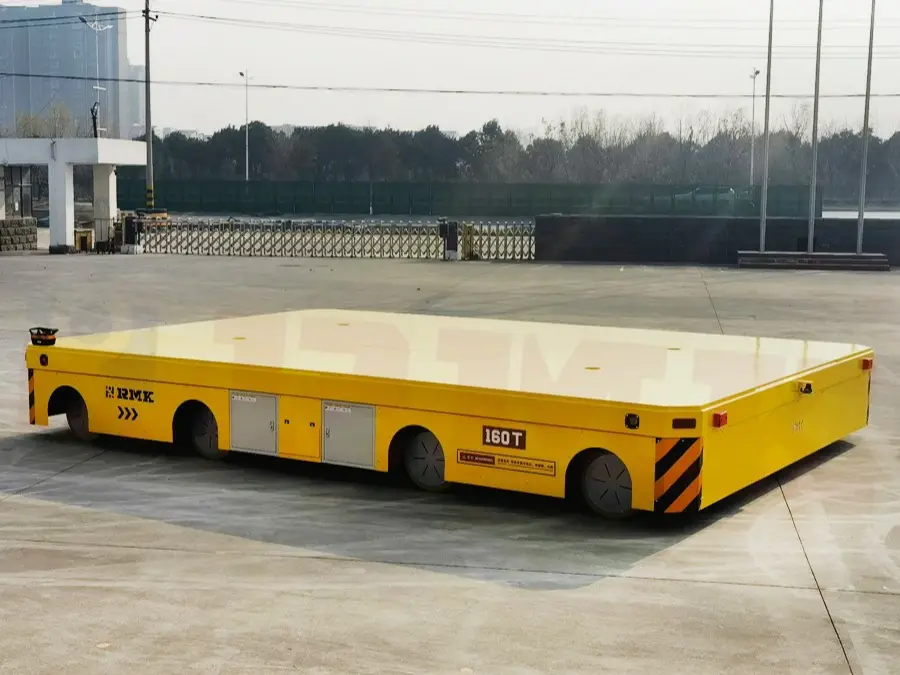
Heavy Duty Transfer Carts are available in different capacity ranges for various industrial material handling applications. RMK provides standard models from 1–500 tons and customized solutions up to 1500 tons for special heavy load projects.
| Capacity Range | Applications | Common Loads |
|---|---|---|
| 1–20 Tons | Small workshops, factory material handling | Factory components, small machinery, production parts |
| 20–100 Tons | Heavy manufacturing and industrial transportation | Steel structures, machinery equipment, large molds |
| 100+ Tons | Ultra-heavy industrial applications | Ship blocks, large industrial equipment, heavy fabrication components |
| Customized Capacity | Special heavy load projects | Oversized structures and special industrial equipment |
RMK selects the suitable transfer cart capacity according to load weight, platform size, transport conditions, and working frequency. Custom designs are available for applications beyond standard capacity ranges.
How Does Capacity Affect Transfer Cart Design?
Transfer Cart capacity affects the selection of the frame, wheels, drive system, power supply, and safety configuration. Higher load requirements require stronger structures and suitable components based on the working conditions.
- Frame Structure — Higher capacity requires reinforced steel frames, thicker plates, and stronger beam structures.
- Wheel and Axle Design — Wheel size, quantity, and axle strength are selected according to load distribution and wheel pressure.
- Drive System — Motor, gearbox, and braking capacity are matched with the rated load and operating cycle.
- Power Supply — Battery, cable reel, busbar, or rail power systems are selected according to travel distance and operation requirements.
- Safety Configuration — Safety devices such as emergency stop, limit switches, warning lights, and anti-collision sensors are configured based on application conditions.
The transfer cart design is determined by the required capacity and working environment. Each load level requires matching structural and mechanical configurations.
How to Choose Between Different Transfer Cart Capacities?
Selecting a transfer cart capacity starts with the maximum load requirement. Load weight, cargo dimensions, operating conditions, and site conditions determine the suitable capacity range.
Step 1: Confirm Maximum Load
Check the heaviest load to be transported. Consider load distribution, including concentrated load, distributed load, and off-center load conditions. Reserve capacity margin for future load changes.
Step 2: Check Load Size and Space Conditions
Confirm the cargo length, width, and height. Check aisle width, door clearance, and workshop layout to determine the suitable platform size and steering method.
Step 3: Check Operating Conditions
Review:
- Travel distance and daily running time
- Operating frequency
- Rail or floor conditions
- Temperature, dust, moisture, and special protection requirements
These factors affect power supply, wheel design, and equipment configuration.
Step 4: Verify Wheel Load
Check whether the rail or floor can support the wheel load. The actual load on each wheel depends on the total weight, wheel arrangement, and load position.
Step 5: Select the Suitable Capacity
Avoid undersized capacity that may cause overload during operation. Avoid excessive capacity that increases equipment cost. Select a capacity that matches the actual load and working conditions.
Capacity selection should match the load, working route, and operating conditions to avoid under-capacity or unnecessary oversizing.
Common Mistakes When Selecting Transfer Cart Load Capacity
Selecting Transfer Cart Load Capacity based only on the load weight can lead to incorrect configuration. The following mistakes are common during equipment selection.
| Common Mistake | Description |
|---|---|
| Selecting Capacity Only by Load Weight | Load weight is not the only factor. Load distribution, wheel pressure, travel conditions, and operating frequency also affect capacity selection. |
| Ignoring Load Distribution | Uneven or off-center loads increase stress on specific wheels and frame sections. The cart design should match the actual loading condition. |
| Choosing Excessive Capacity | Higher capacity increases frame size, drive requirements, and equipment cost. Oversized capacity may add unnecessary investment. |
| Ignoring Future Load Changes | Selecting only for current loads may limit future production needs. A reasonable capacity margin should be considered. |
| Overlooking Working Environment | Temperature, dust, moisture, floor condition, and operating space affect the cart configuration and capacity selection. |
Correct capacity selection requires checking the complete working condition instead of focusing on the load value alone.
How RMK Helps Select the Right Heavy Duty Transfer Cart Capacity?
RMK selects Heavy Duty Transfer Cart capacity based on the actual load requirements, transport conditions, and factory environment. The engineering team evaluates key parameters before recommending the suitable configuration.
- Load Analysis
Review the load weight, dimensions, loading position, and operation frequency to determine the required capacity range. - Structural Design
Configure the frame, platform, wheels, and drive system according to the rated load and working conditions. - Power System Selection
Recommend battery, cable reel, busbar, or rail power systems based on travel distance and operating cycle. - Custom Configuration
Provide customized solutions for special applications, including different capacities, platform sizes, steering systems, and control methods.
RMK provides Heavy Duty Transfer Cart solutions from standard capacities to customized heavy load applications, supporting customers with engineering design, manufacturing, and technical service.
Conclusion
Selecting the right Heavy Duty Transfer Cart capacity requires a complete evaluation of load weight, cargo dimensions, transport route, working frequency, and operating environment. The required tonnage should match the actual handling conditions, not only the weight of the transported material.
REMARKABLE provides customized Heavy Duty Transfer Cart solutions for different industrial applications, covering various load capacities, power systems, platform designs, and control configurations. With professional engineering support, export experience, and strict quality control, REMARKABLE supplies transfer carts for steel plants, machinery factories, shipyards, and other heavy industries.
From capacity selection and technical design to manufacturing, delivery, installation guidance, and after-sales support, REMARKABLE works with customers to provide complete material handling solutions. Contact us to discuss your Heavy Duty Transfer Cart requirements and select the right configuration for your project.
Email: transfercart@rmkzn.com
Phone: +86-18637369355
FAQ
How do I calculate Heavy Duty Transfer Cart capacity?
Heavy Duty Transfer Cart capacity is calculated based on the maximum load weight, load distribution, operating conditions, and safety margin. The selection should also consider wheel load, frame strength, drive system capacity, and working frequency.
What is Transfer Cart Load Capacity?
Transfer Cart Load Capacity refers to the maximum rated load a transfer cart can transport under specified working conditions. It is determined by the payload, frame structure, wheel load, drive system, and operating environment.
How much weight can a Heavy Duty Transfer Cart carry?
A Heavy Duty Transfer Cart typically carries loads from 1 to 500 tons. Customized models can be designed for special projects with capacities up to 1500 tons.
Should I choose a transfer cart with extra capacity?
A reasonable capacity margin should be considered for future load changes and operating impact. Excessive capacity increases equipment cost and may require larger structures and drive systems.
Does platform size affect transfer cart capacity?
Yes. Platform size affects frame design, load distribution, and wheel pressure. Large or irregular loads may require a larger deck structure even when the total weight is within the rated capacity.
What safety factor is used for transfer carts?
The safety factor depends on the load type, working conditions, and design requirements. It is used to account for starting force, braking impact, uneven loading, and repeated operation.
Can a transfer cart be customized for special loads?
Yes. Transfer carts can be customized for special loads with different capacities, platform sizes, wheel arrangements, power systems, steering methods, and control configurations.
What information is needed before selecting a transfer cart?
The main information includes load weight, load dimensions, transport distance, travel route, working frequency, floor or rail condition, power supply requirements, and operating environment.