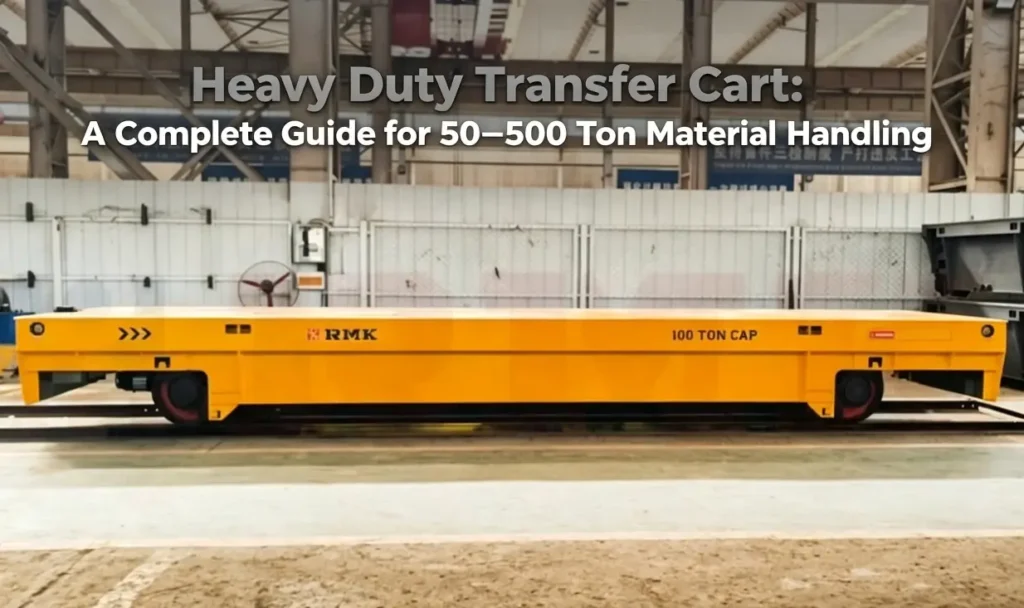
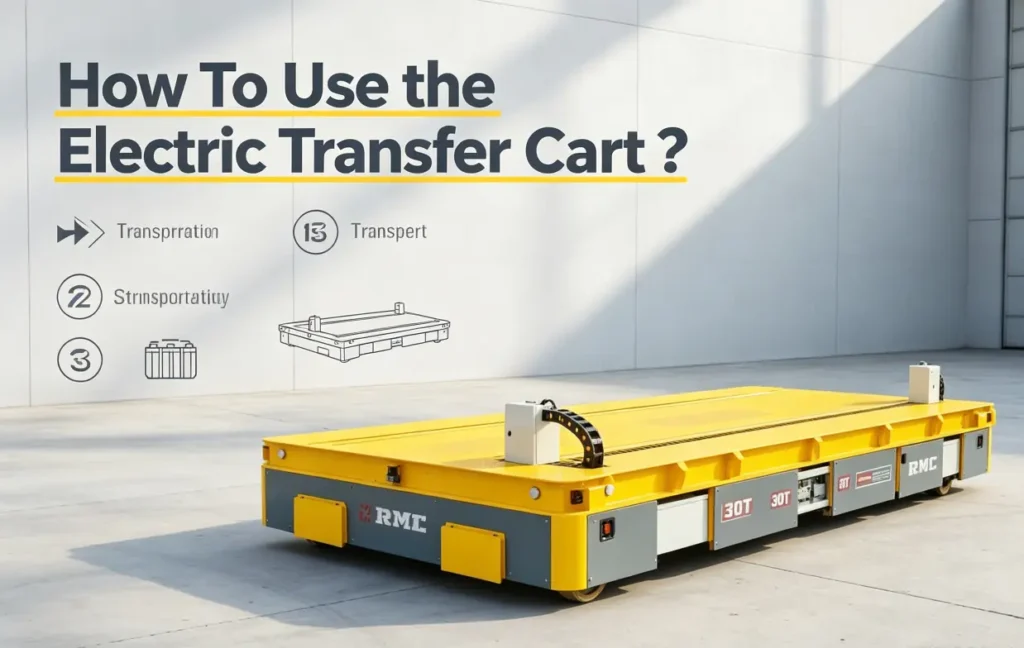
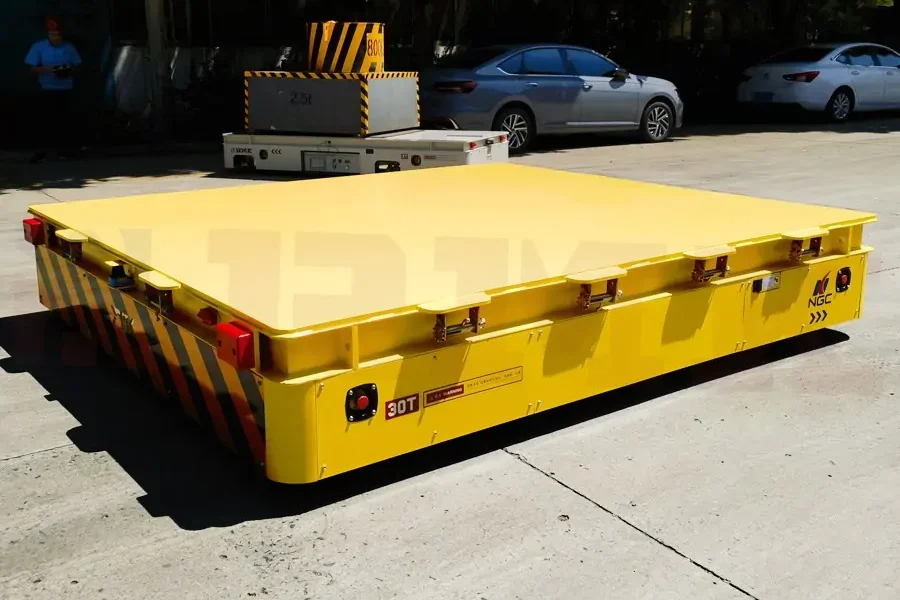
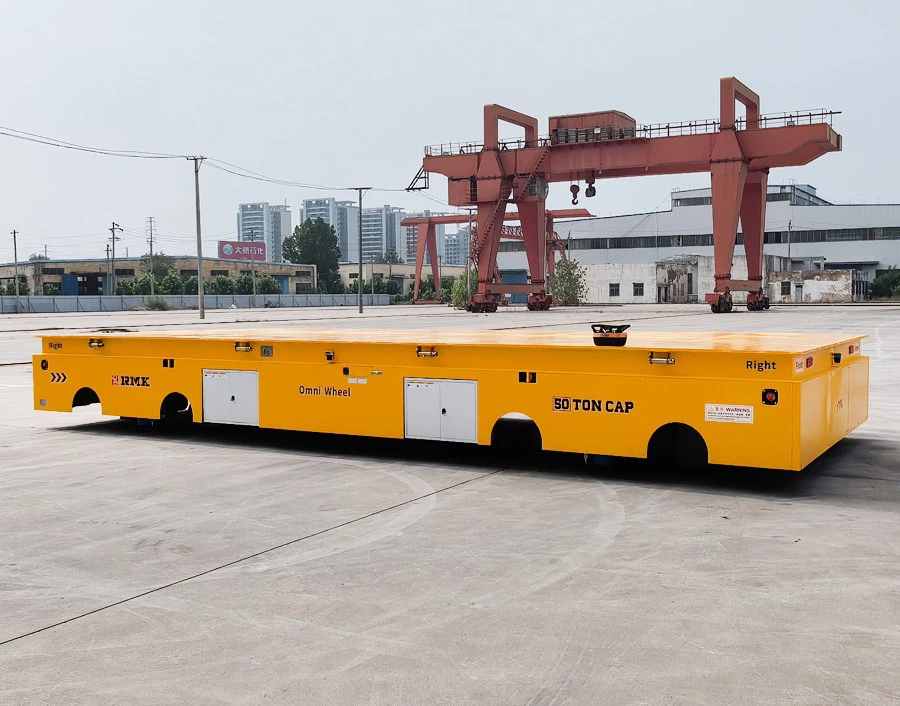
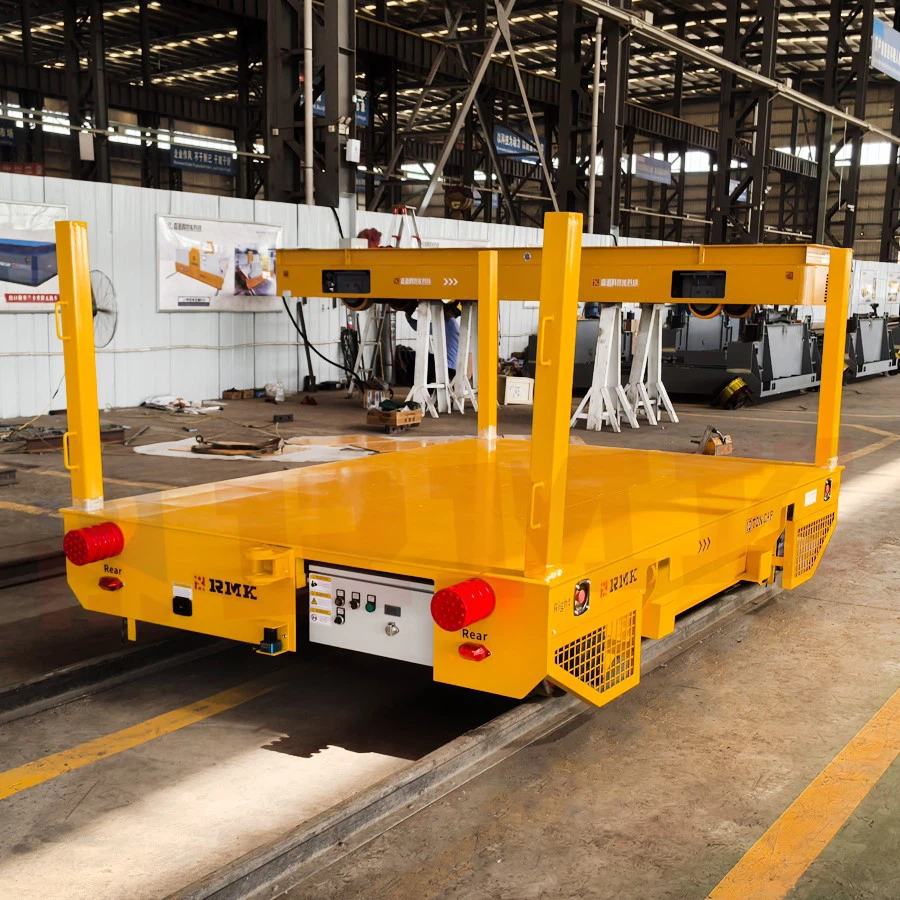
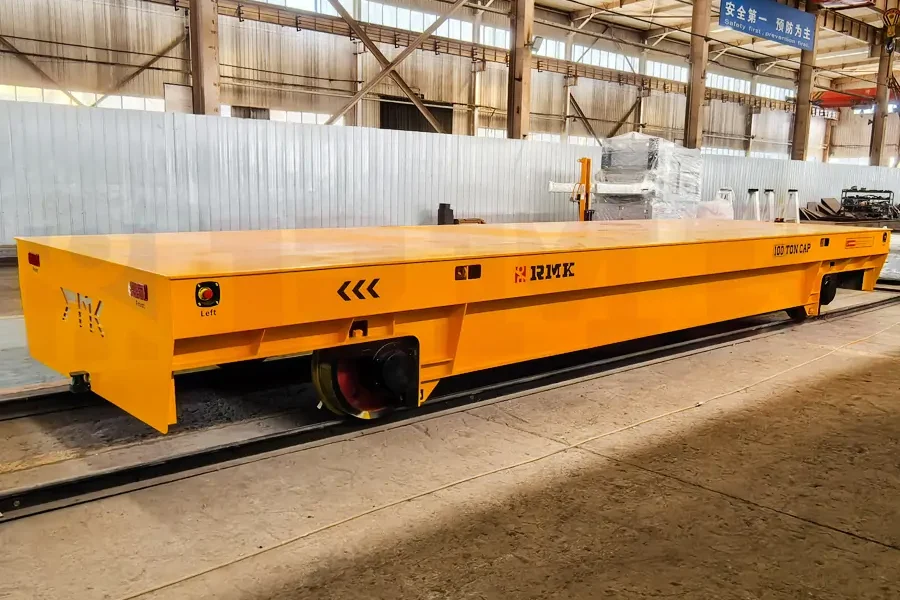
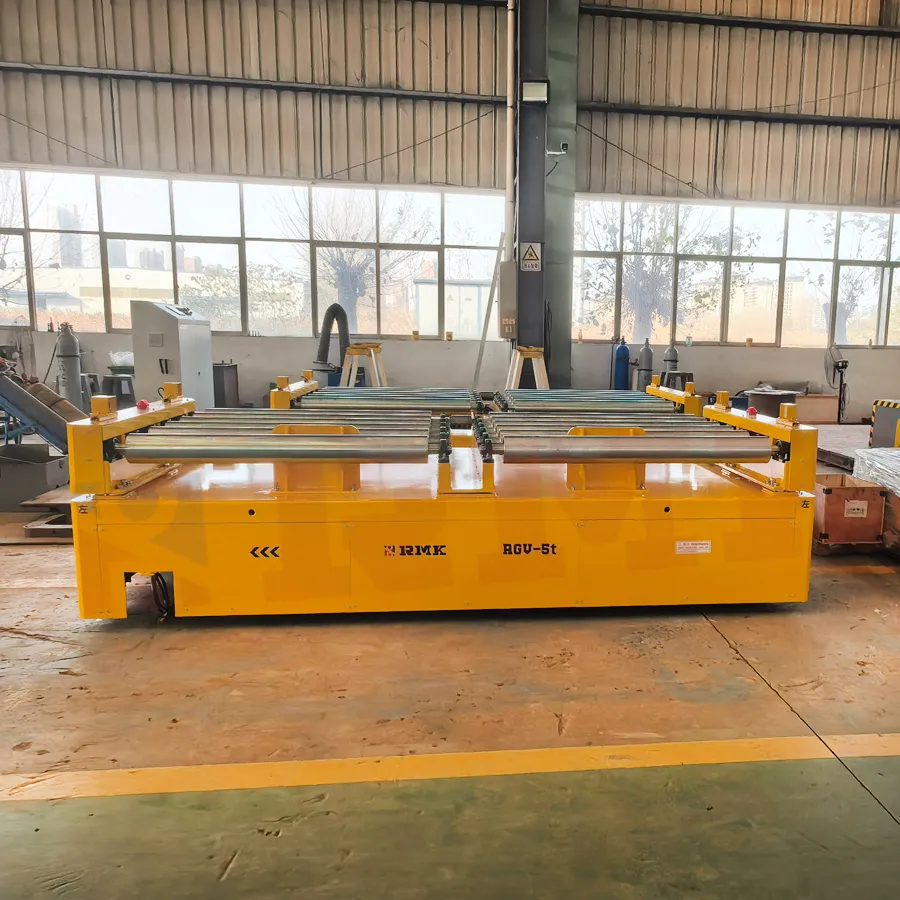
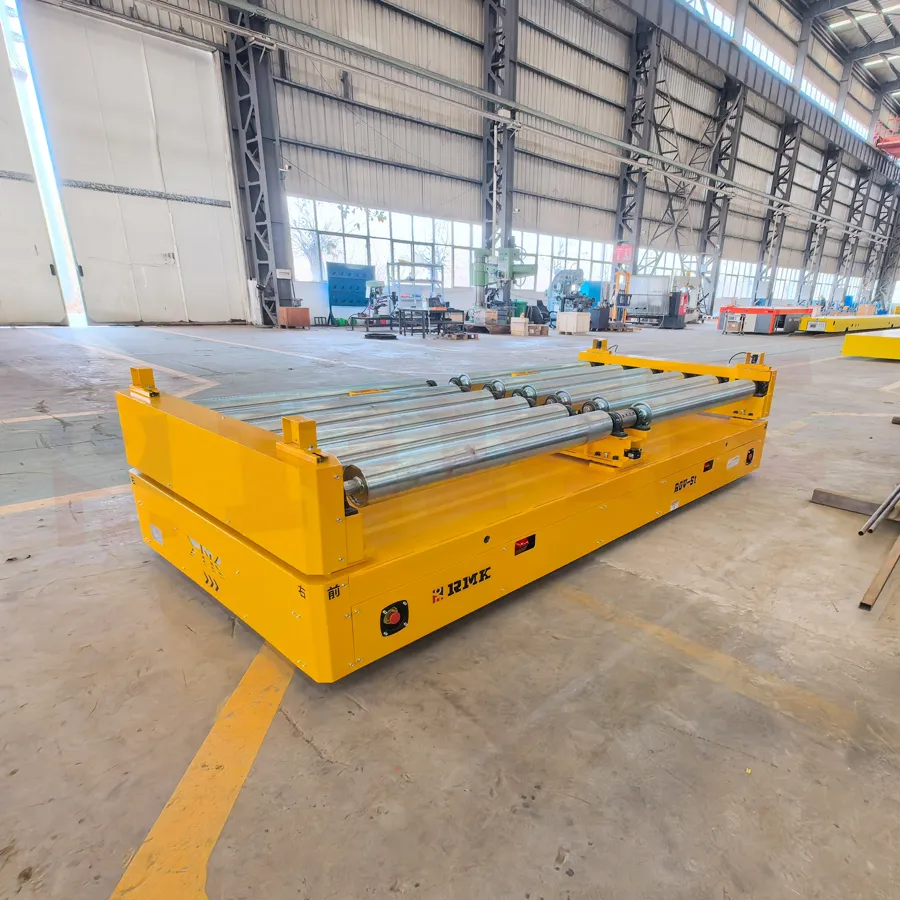
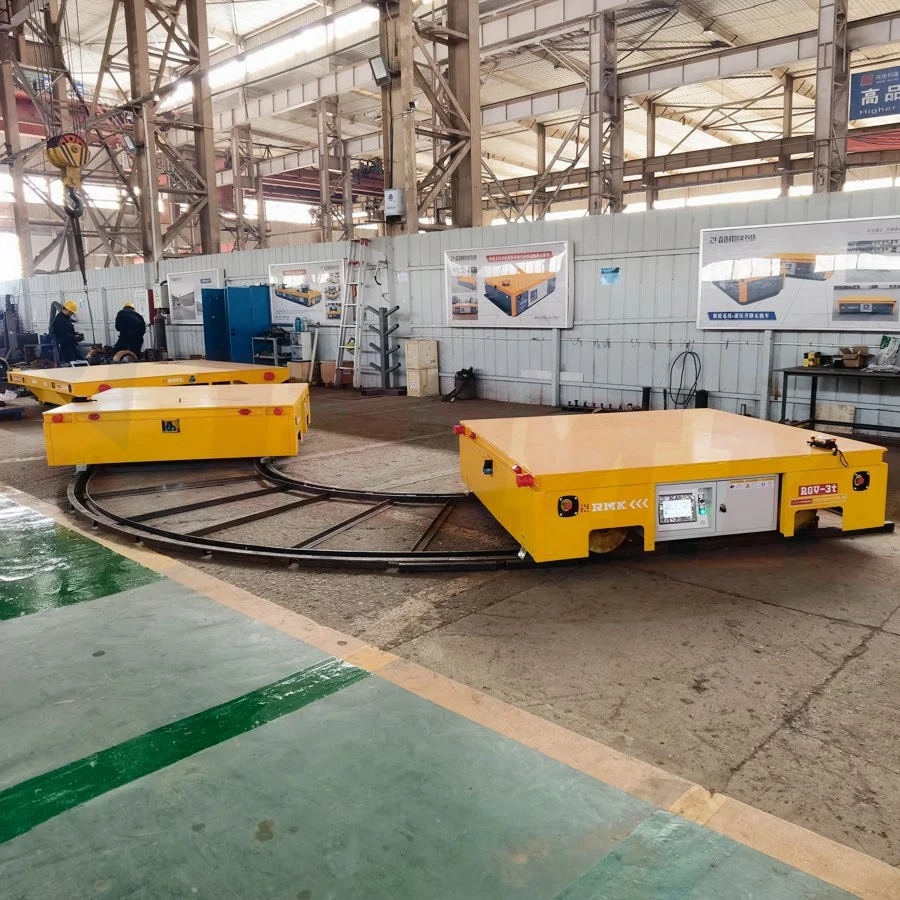
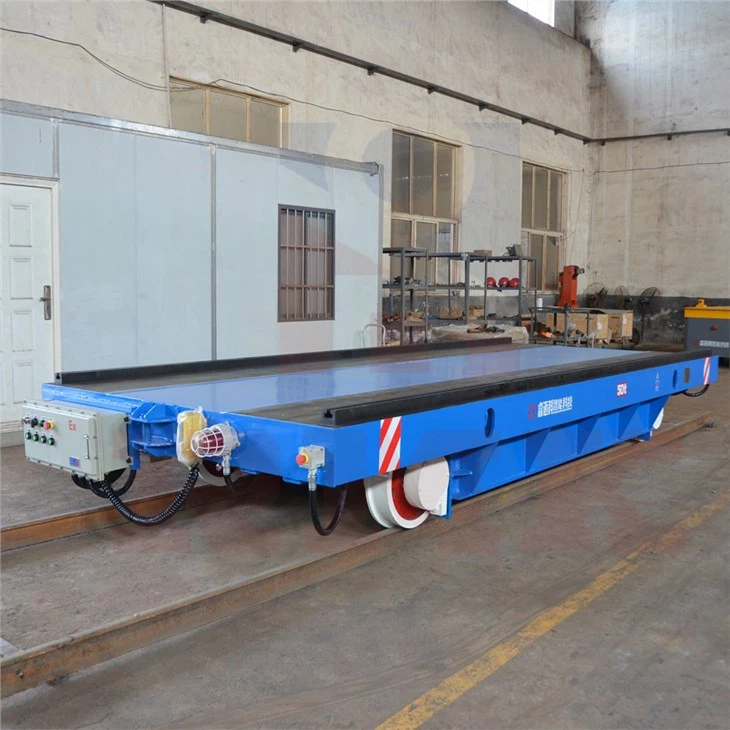
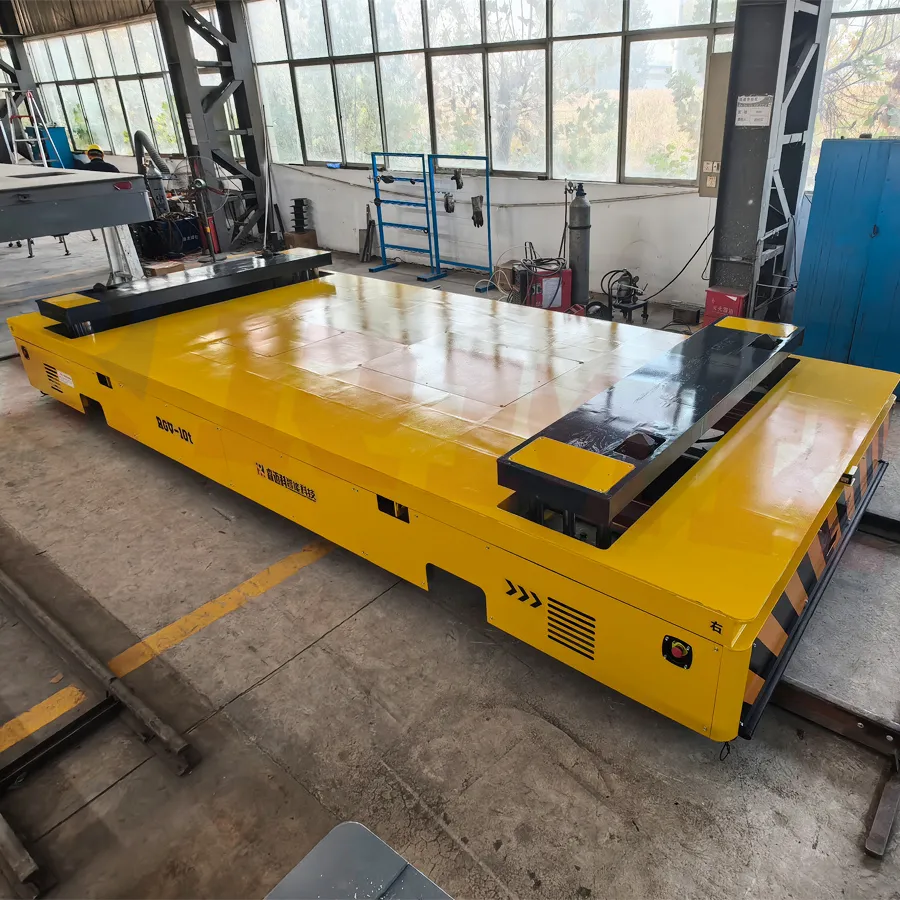
The rail transfer trolley is an electric handling device that operates on pre-laid tracks, also known as an electric rail flatcar or rail transport cart. It is primarily used in factory workshops, warehousing, and logistics centers, or between production lines to transport large, heavy, or irregularly shaped materials.

Parts of a Rail Transfer Trolley
- Chassis Structure: Welded from high-strength steel plates, providing excellent load-bearing and impact resistance.
- Drive System: Comprising motors, gearboxes, and wheels to ensure smooth operation.
- Electrical Control System: Manages start/stop functions, speed regulation, directional control, and safety protection.
- Power Supply System: Common methods include batteries, cable reels, low-voltage tracks, or conductor rails.
Compared to traditional forklifts or AGVs, rail transfer trolleys are better suited for medium-to-long distance, fixed-route, high-frequency, heavy load transfer tasks. They serve as highly efficient, low-energy-consumption transport vehicles in industrial production lines.

Power supply mode of the Rail Transfer Trolley
Rail Transfer Carts are electrically powered, flat-surface material handling equipment that operate along fixed tracks to achieve automated material transfer between different workstations or zones. Their power supply methods vary by model type and can be categorized as follows:
Battery-Powered Type: Features an internal battery for autonomous power supply, enabling flexible operation without external cables. Ideal for workshops with complex track layouts.
Low-voltage track-powered: Receives continuous power through electrified tracks, ideal for high-frequency, extended continuous operation scenarios.
Cable Reel and Conductor Rail Power Supply: Utilizes cables or conductor rails for real-time power delivery. Features a simple structure and lower cost, commonly employed in heavy-duty industries such as steel and foundry.
Their control systems support manual operation, wireless remote control, and even PLC-based automation. Some high-end models further incorporate automatic positioning, obstacle avoidance, and inter-line communication capabilities, providing a robust logistics foundation for smart factories.
If you want to know specifically how rail transfer carts work, you can refer to the article: How Do Rail Transfer Carts Work?
Key Advantages of Rail Transfer Trolleys
Rail transfer trolleys have numerous advantages, and below we will outline their primary benefits:
High Load Capacity and Structural Stability: The trolley body features a reinforced steel structure design, typically offering load capacities ranging from 5 to 200 tons, with customizable options for even higher tonnages. The rail-guided operation ensures smooth movement even under heavy loads, minimizing the risk of tilting or slipping. This makes it ideal for transporting large components such as steel coils, molds, and machinery.
Safe and Reliable Operation: The fixed rail path eliminates collision risks with personnel or other equipment. Safety systems include audible or visual alarms, collision buffers, and automatic limit switches to ensure stable, secure operation.
Low Maintenance & Extended Lifespan: The streamlined structure and sealed transmission system minimize routine maintenance, extending operational life. Overall costs remain significantly lower than deploying multiple forklifts.
Integration into Smart Manufacturing Systems: On automated production lines, rail transfer vehicles can interconnect with AGVs, robots, automated storage systems, and other components to form intelligent logistics networks. Through communication interfaces, they enable automated scheduling and path control, significantly enhancing material flow efficiency on production lines.
Highly Customizable: Dimensions, track gauge, operating speed, and other specifications can be tailored to meet specific enterprise requirements.
- Control options include manual, remote, and automatic modes.
- Operates reliably in high-temperature, explosion-proof, and dust-proof environments.
- It can be equipped with functional modules like rotary tables, lifting platforms, and turning structures.


This flexible customization capability enables the Rail Transfer Trolley to adapt to virtually any industrial material handling scenario. The above represents our common customization options. For additional requirements, please contact us anytime. Our professional designers will provide tailored solutions.
Typical Application Areas of Rail Transfer Trolleys
Rail transfer trolleys feature high load capacity and stable reliability, making them widely used across various industrial manufacturing and warehousing scenarios:
| Application Industry | Typical Applications |
|---|---|
| Steel & Metallurgy | Transportation of steel coils, ingots, and furnace charge |
| Mold Manufacturing | Handling of large molds, mold loading/unloading |
| Machinery Manufacturing | Transportation of large equipment components and workpieces |
| Automotive Manufacturing | Conveyance of semi-finished products between production lines |
| Shipbuilding and Heavy Industry | Transportation of hull structural components and steel plates |
| Warehousing and Logistics | Automated material flow between storage areas and workshops |
Within these industries, rail transfer vehicles typically serve as heavy-duty logistics hubs, connecting various production stages.

Conclusion:
Through the above content, we have gained an understanding of the working principles, advantages, and application areas of rail transfer trolleys. They serve as vital material handling equipment in industrial logistics and represent a solution for numerous enterprises tackling material handling challenges. We are a Chinese manufacturer specializing in customized transfer trolleys. Should you have any questions related to material handling, please contact us immediately. We will provide you with the latest solutions.