Table of Contents
Introduction
Heavy Duty Transfer Cart is designed for transporting heavy loads such as large equipment, steel materials, molds, and industrial components. It is widely used in steel plants, shipyards, foundries, and manufacturing facilities where high load capacity and stable movement are required.
Different working environments require different transfer cart configurations, including load capacity, power supply, running method, and control system. This article introduces the applications, types, specifications, and selection methods of heavy duty transfer carts to help users choose the right solution for their material handling needs.
What Is a Heavy Duty Transfer Cart?
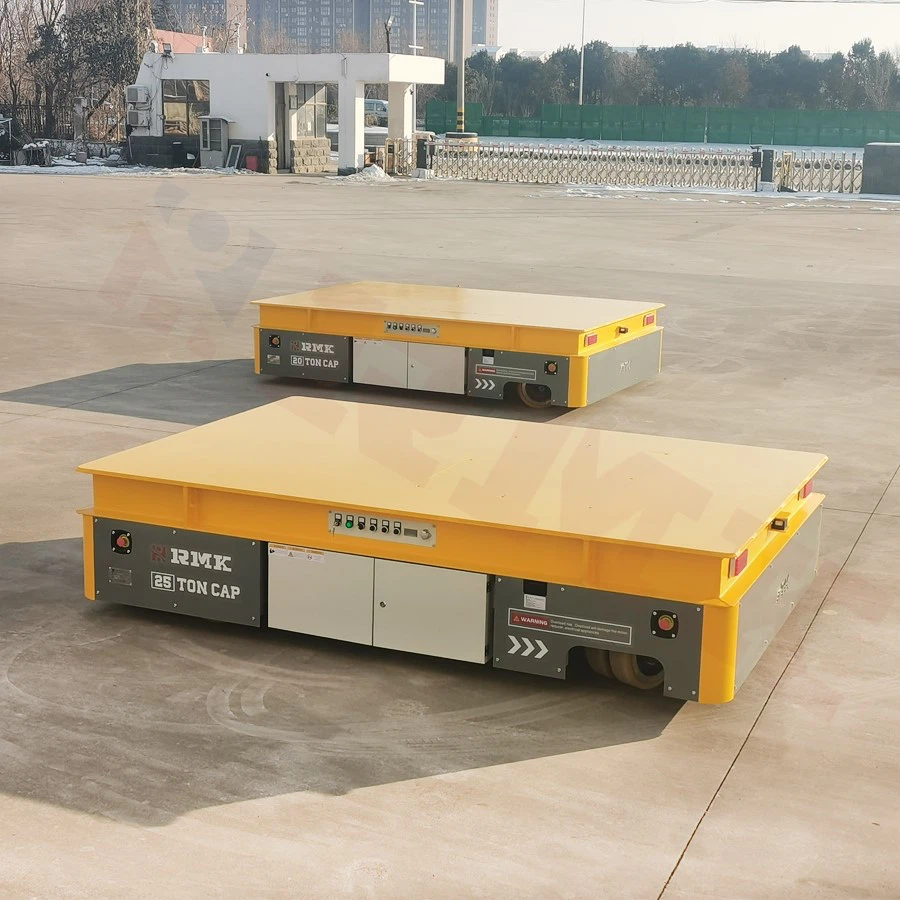
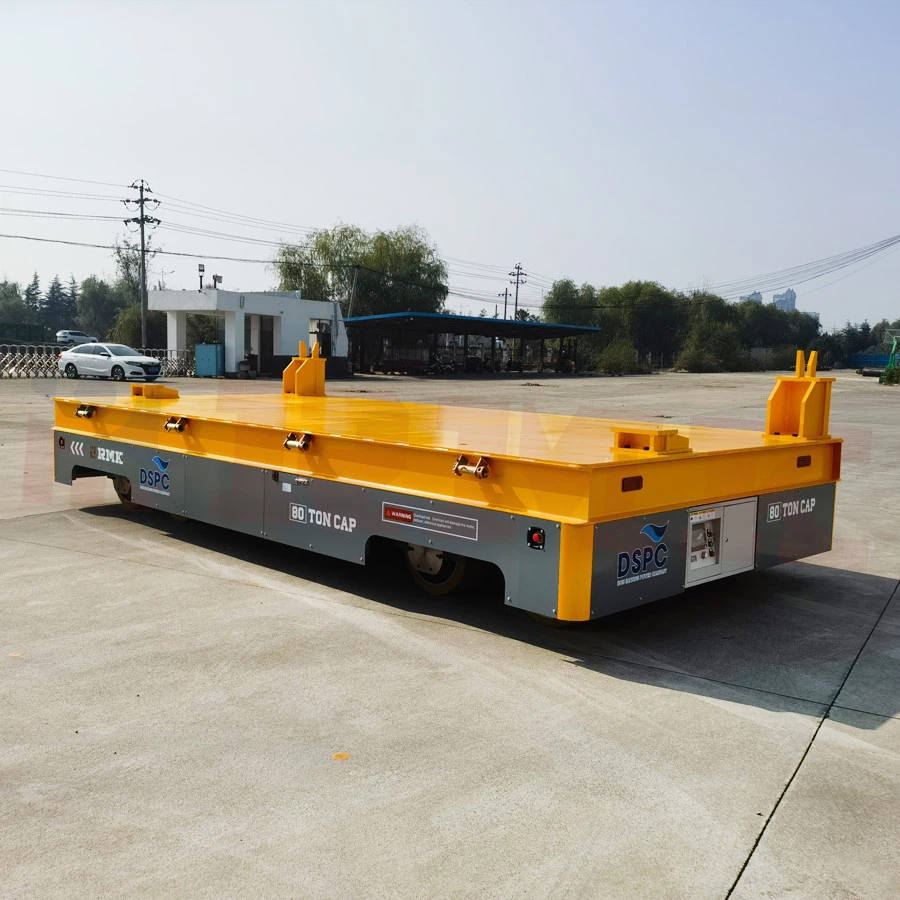
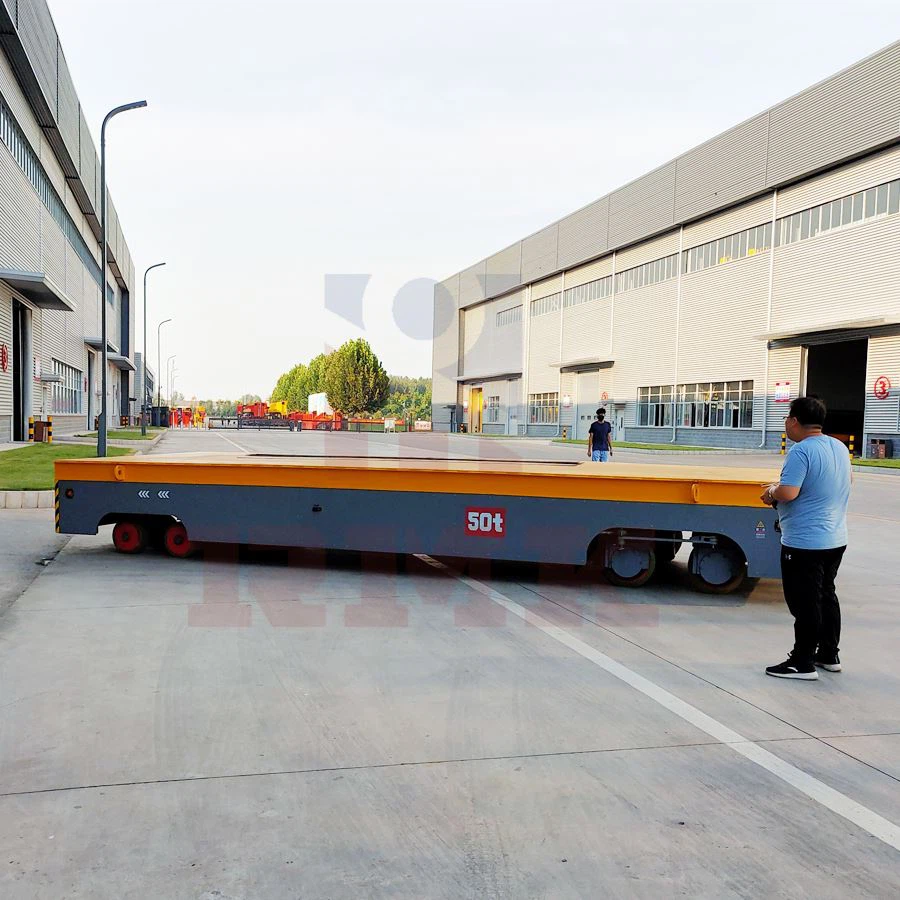
A Heavy Duty Transfer Cart is an electric material handling vehicle designed for transporting large and heavy loads in industrial facilities. It runs on rails or trackless systems and uses a battery, cable reel, or low-voltage rail power supply. With a typical load capacity of 1–300 tons, it is widely used for steel, machinery, automotive, shipbuilding, and warehouse applications. The cart can be customized with features such as explosion-proof design, heat resistance, lifting platforms, and V-shaped supports to meet different working conditions.
For a detailed introduction to heavy-duty transfer carts, see the article: “What Is a Heavy Duty Transfer Cart?”
Applications
Heavy Duty Transfer Cart is widely used for short-distance transportation of heavy materials and large components in industrial facilities. Different configurations are selected according to load requirements, working environments, and transportation conditions.
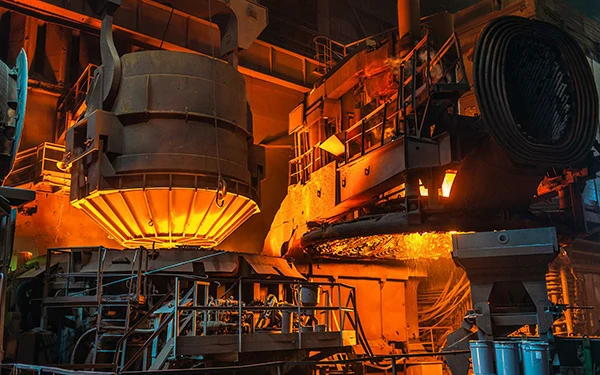
Steel and Metallurgy Industry
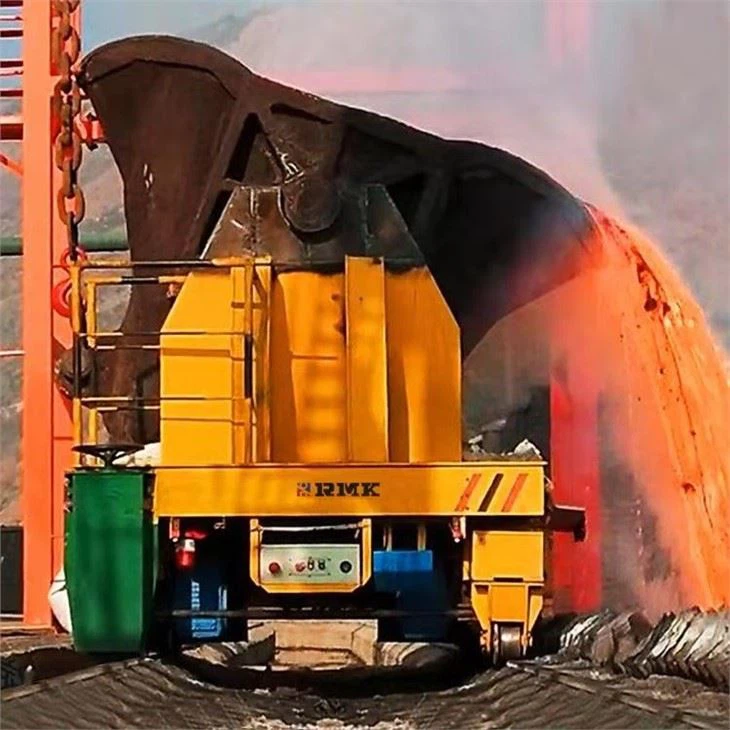
Used for transporting steel coils, plates, ladles, and large steel structures between production areas. Heavy load capacity and stable operation make it suitable for continuous material handling.
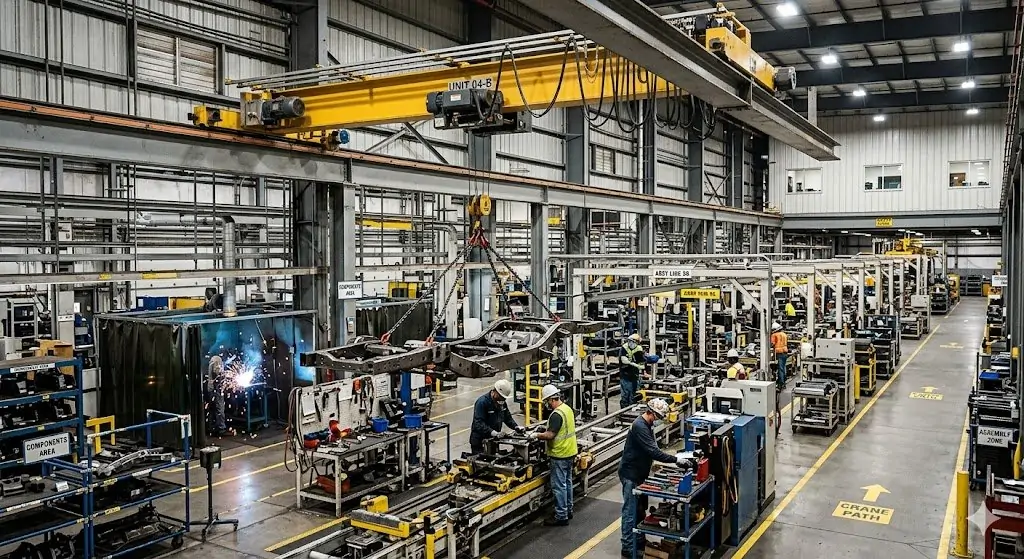
Machinery Manufacturing
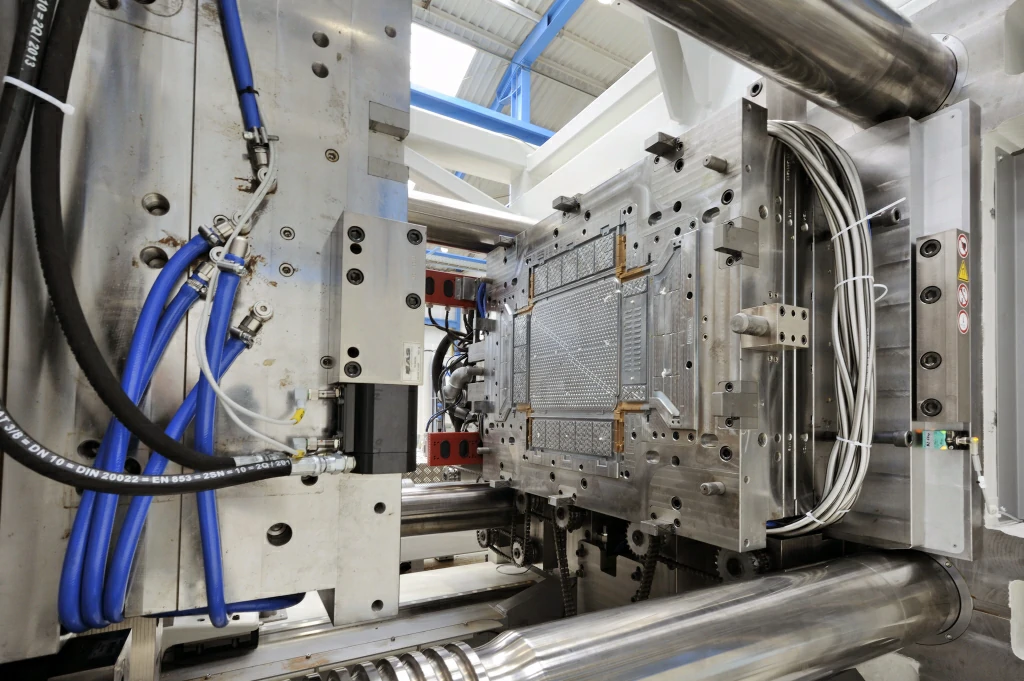
Used to move molds, machine parts, and production equipment during manufacturing and assembly processes.
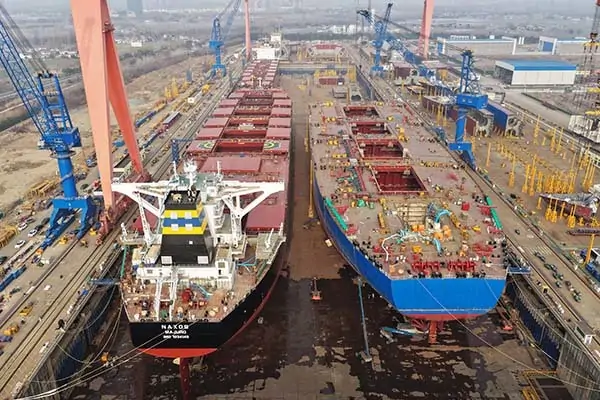
Shipbuilding Industry
Used for transporting ship sections, steel structures, and oversized components that require high-capacity handling solutions.
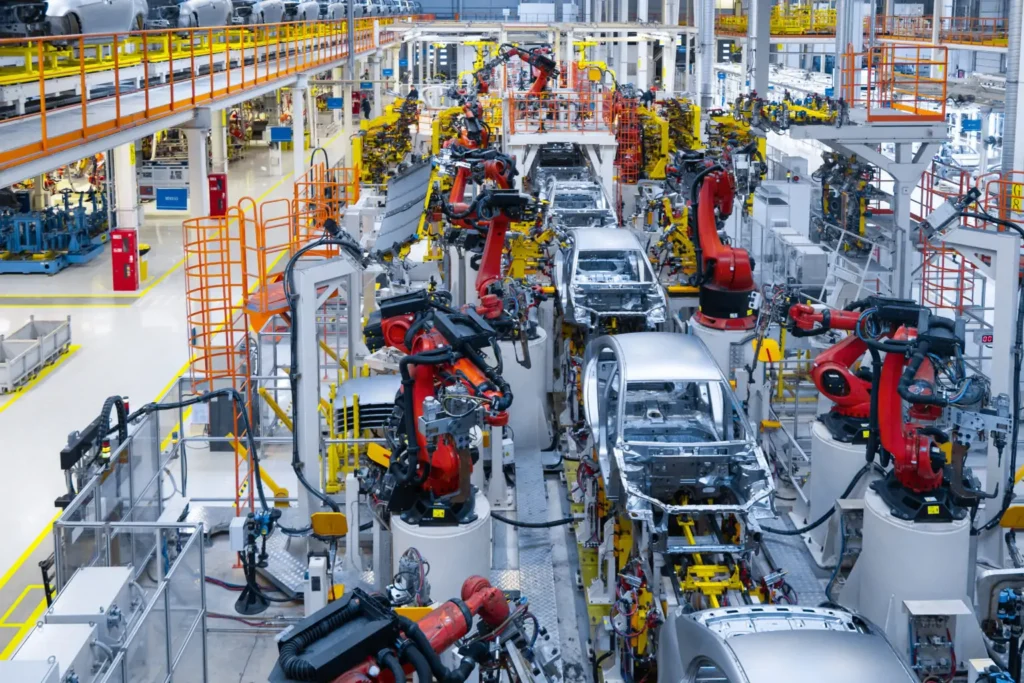
Automotive Manufacturing
Used for moving vehicle bodies, production fixtures, and heavy tooling between different production lines.
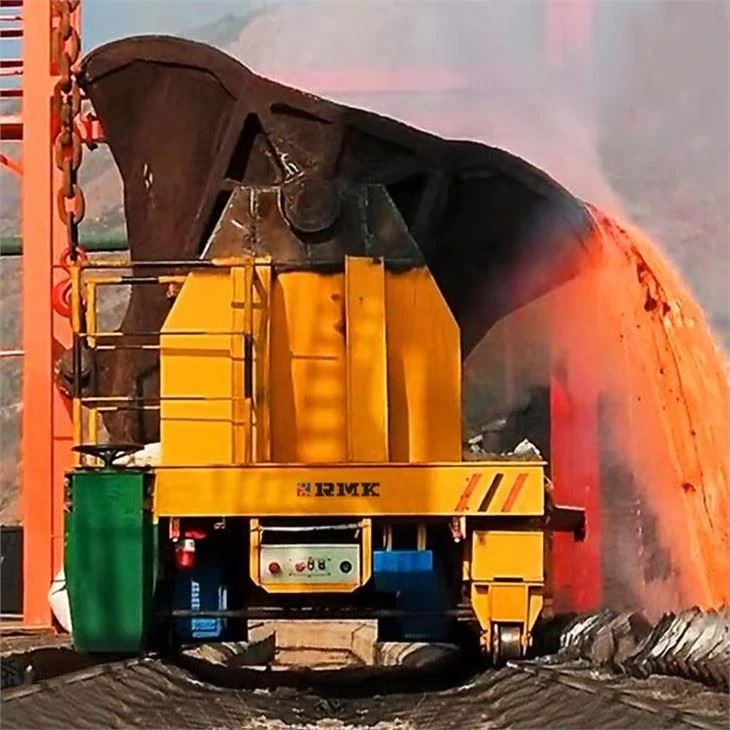
Foundry Industry
Used for handling casting equipment, molds, and heavy workpieces in high-temperature industrial environments.
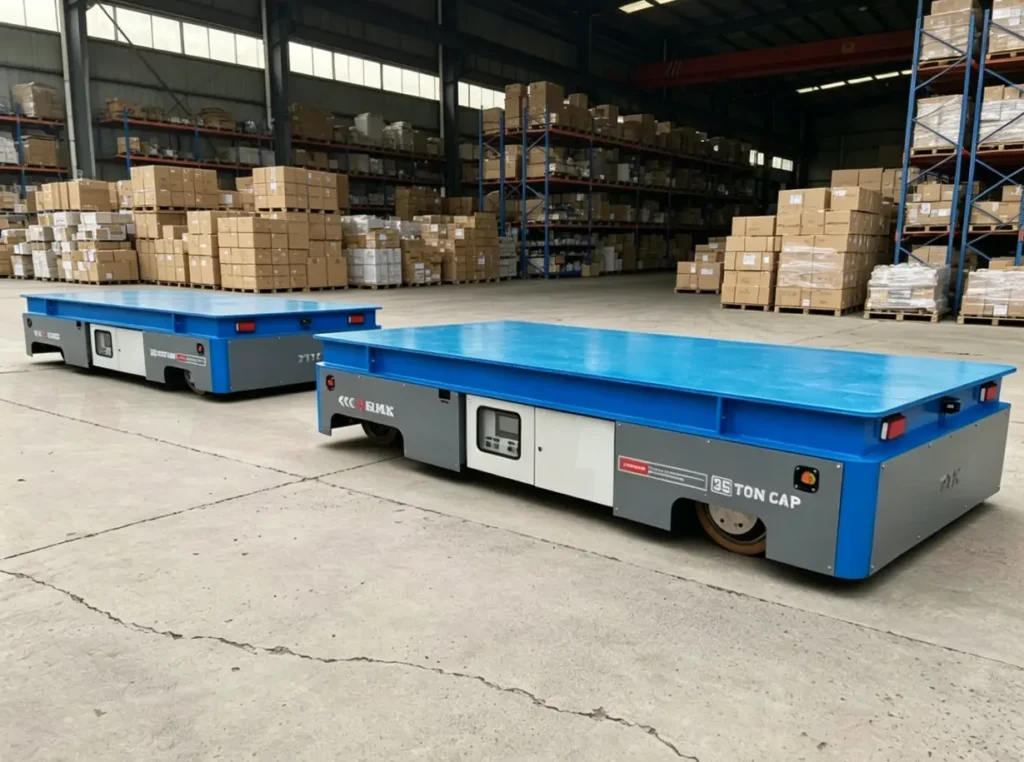
Warehouse and Factory Logistics
Used for transferring large materials, finished products, and equipment between workshops, storage areas, and production lines.
Types
Heavy Duty Transfer Carts are designed in different structures to meet factory transport requirements. The choice mainly depends on load weight, transport route, workshop layout, and operating environment.
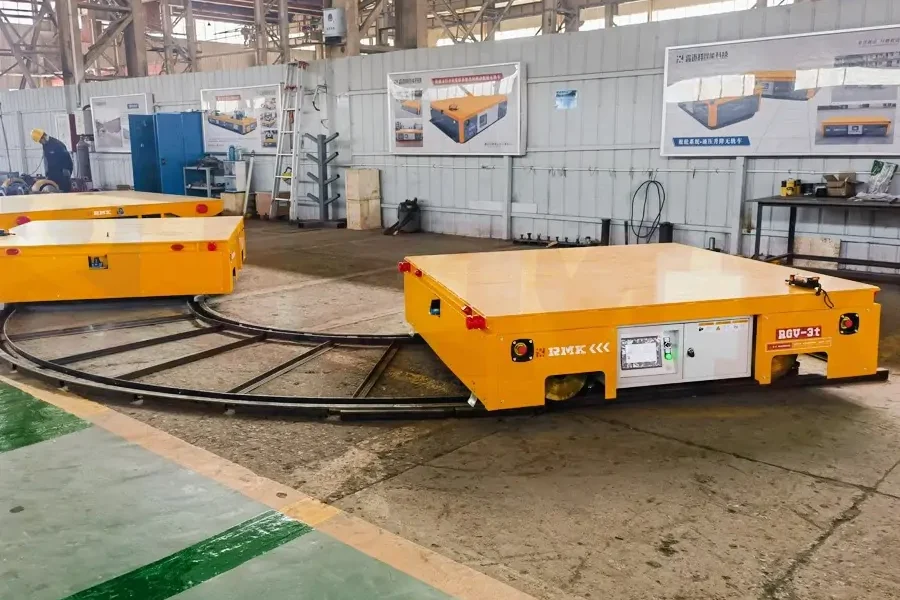
Rail Transfer Cart
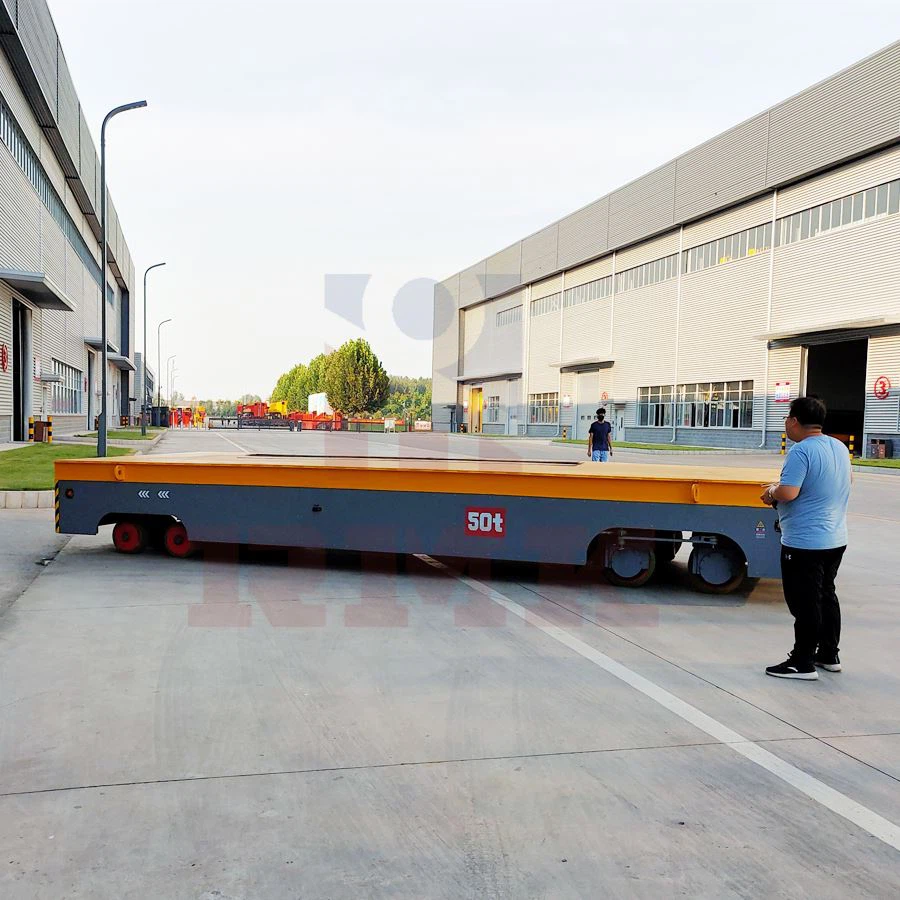
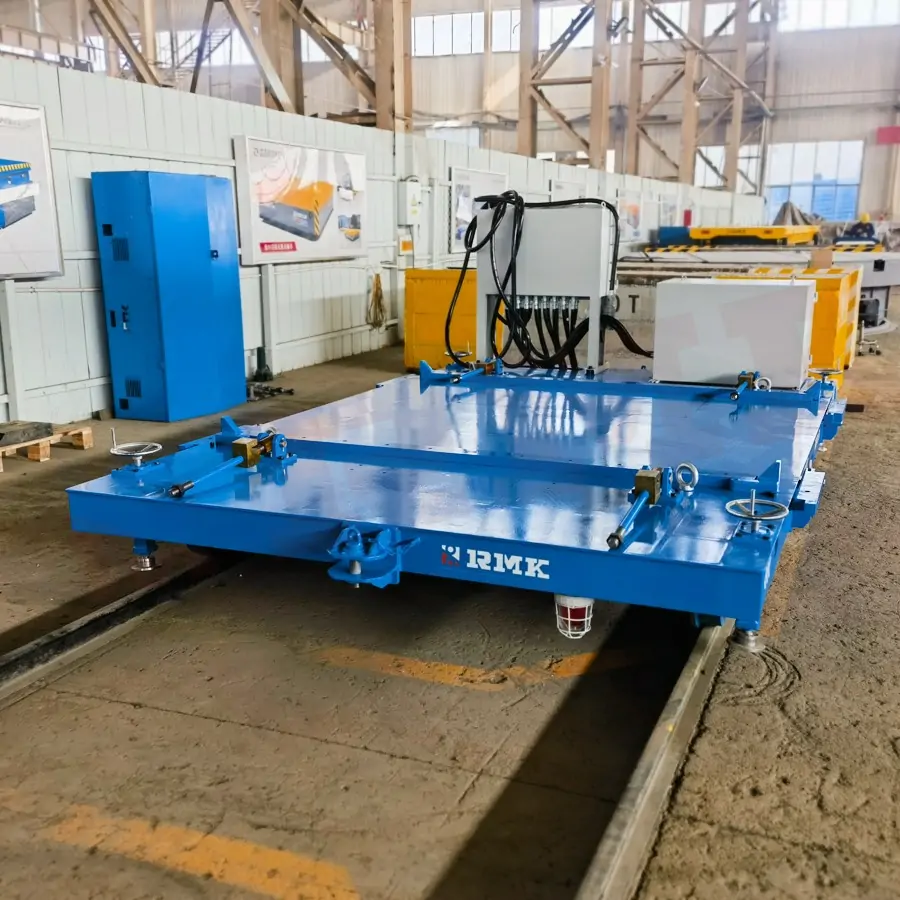
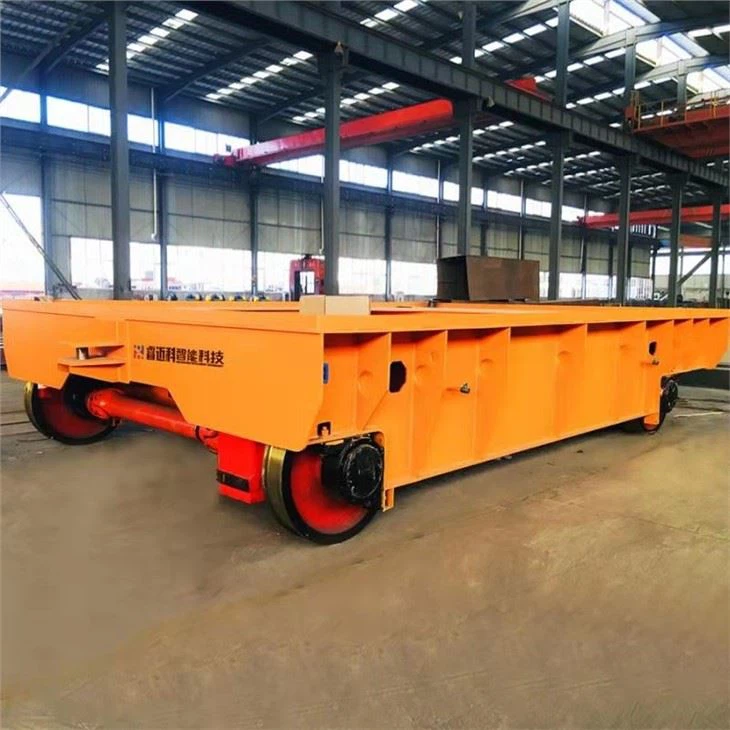
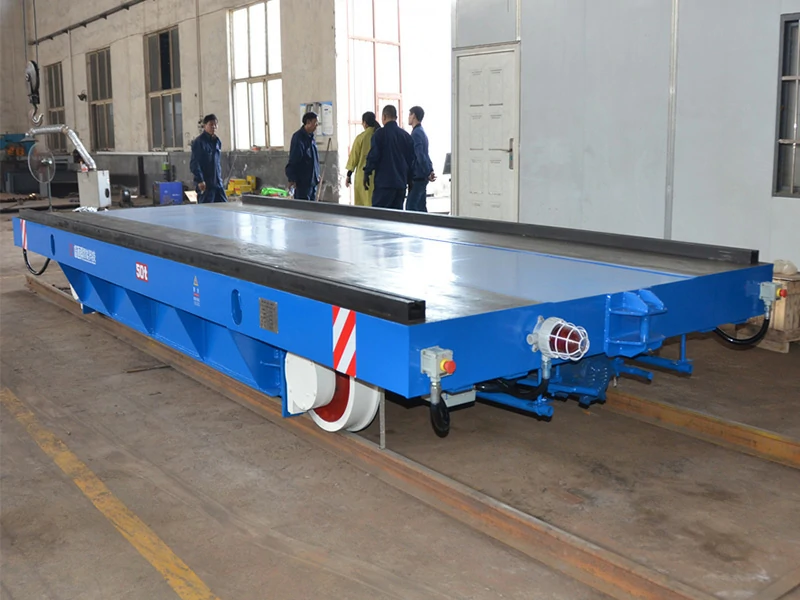
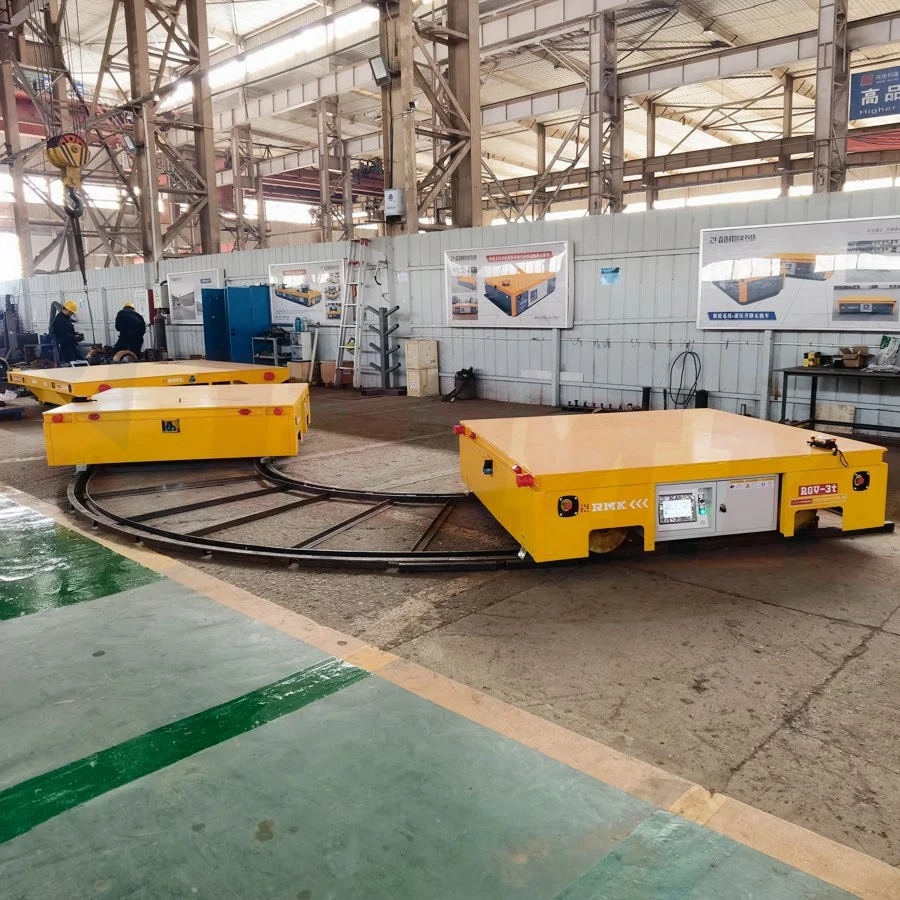
Rail Transfer Cart runs on fixed steel rails and is mainly used for transporting heavy materials over regular routes. It features stable operation, large load capacity, and reliable positioning, making it suitable for steel plants, shipyards, foundries, and heavy equipment manufacturing.
- Load Capacity: 10–500 Tons
- Power Supply: Battery / Cable Reel / Rail Power
- Running Mode: Fixed Rail
- Control Method: Remote Control / Pendant Control
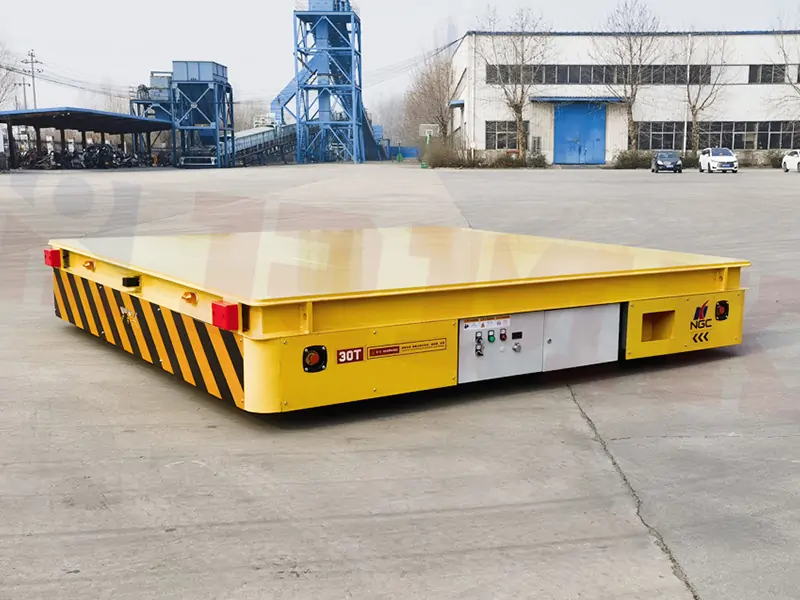
Battery Powered Transfer Cart
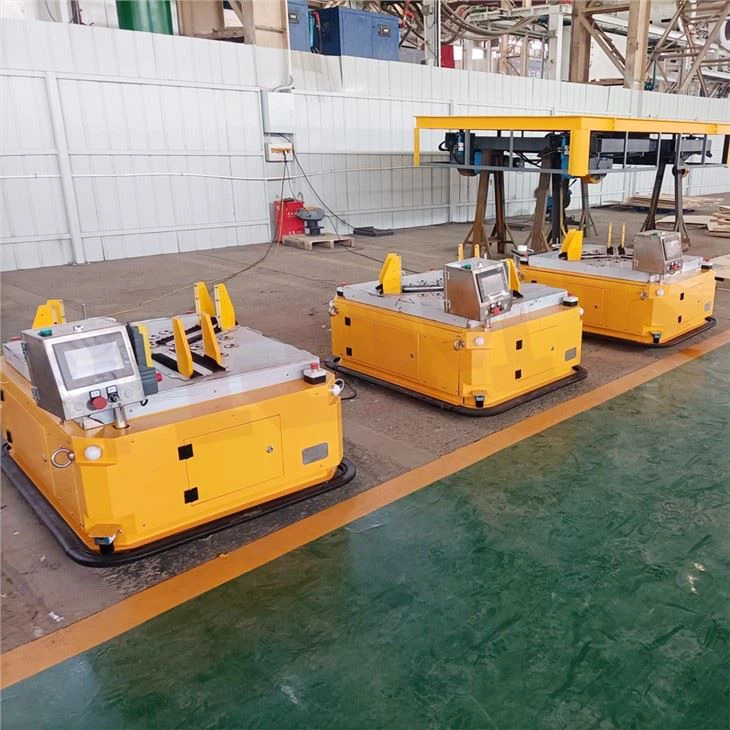
Battery Powered Transfer Cart uses rechargeable batteries and does not require external power cables during operation. It is suitable for workshops with multiple transport areas and applications requiring flexible movement.
- Load Capacity: 5–200 Tons
- Power Supply: Rechargeable Battery
- Running Distance: Customized
- Control Method: Wireless Remote Control
Trackless Transfer Cart
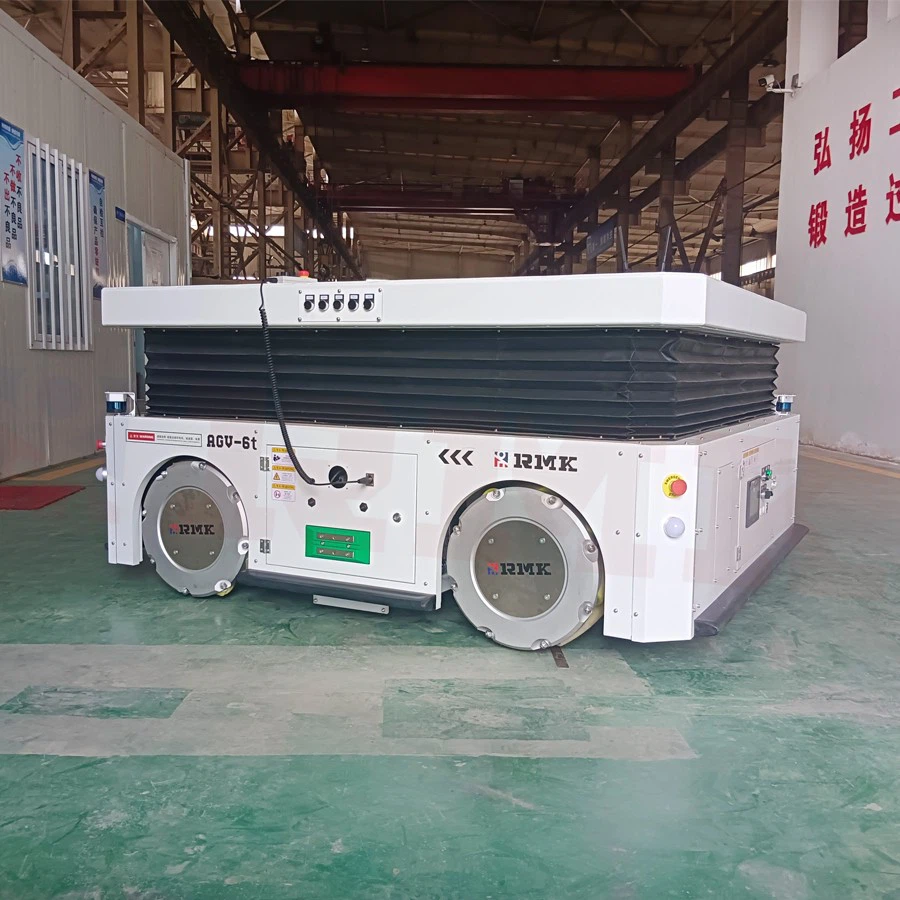
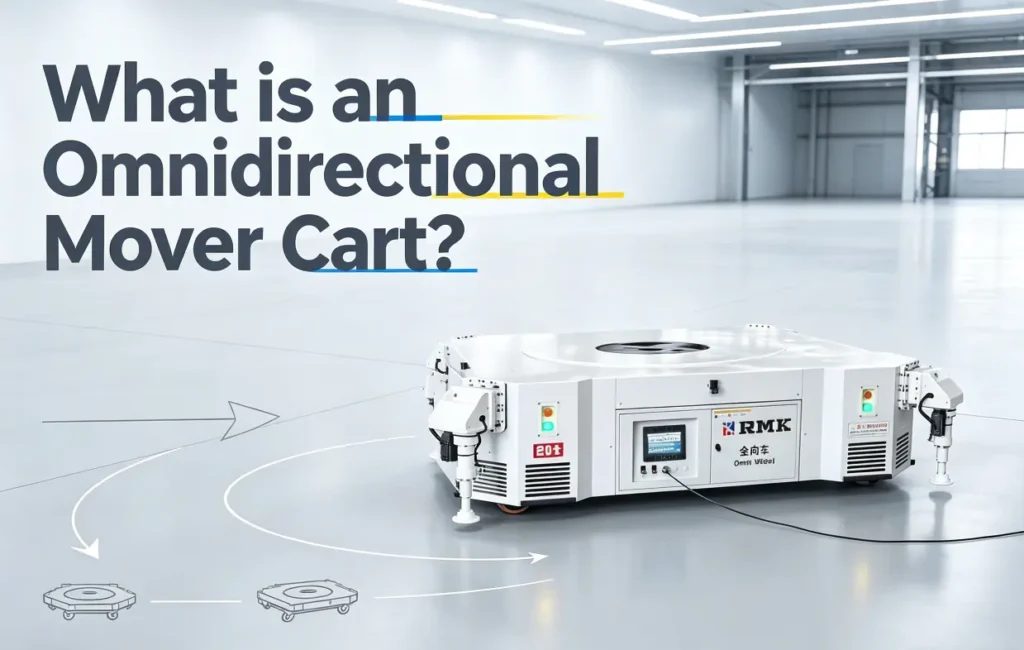
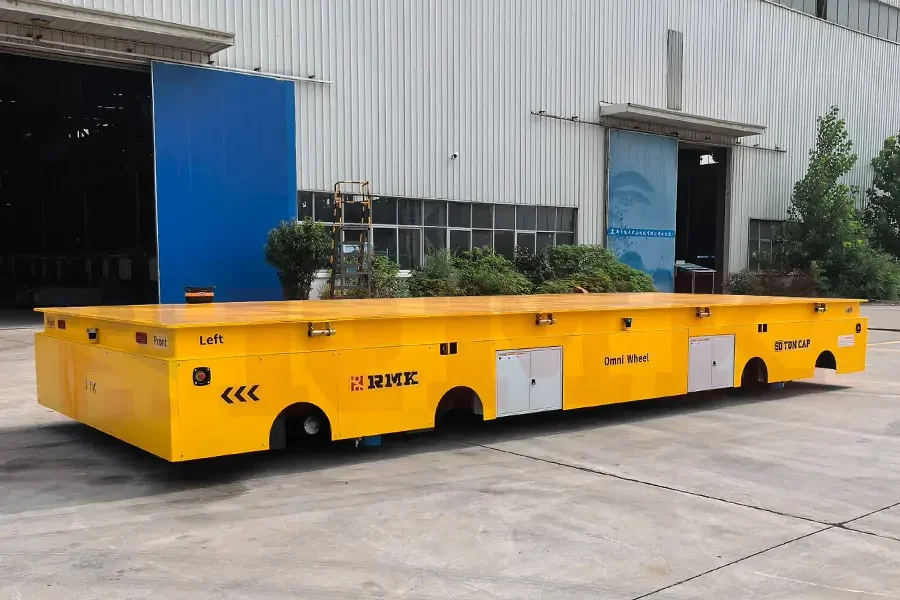
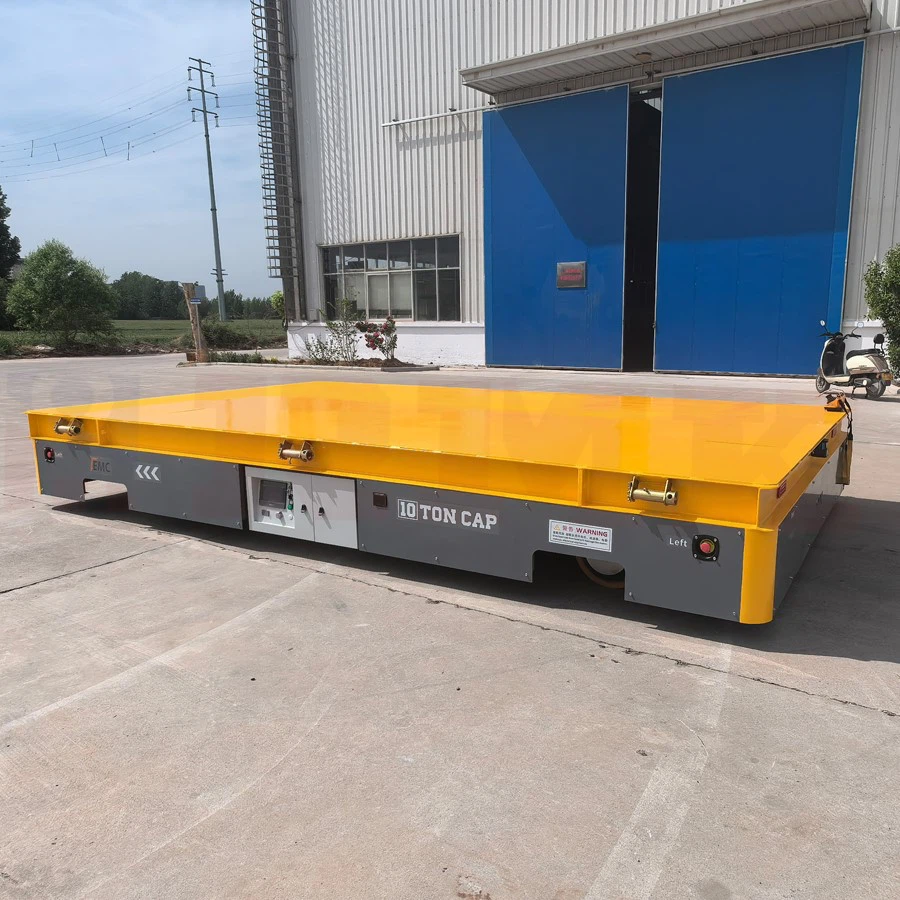
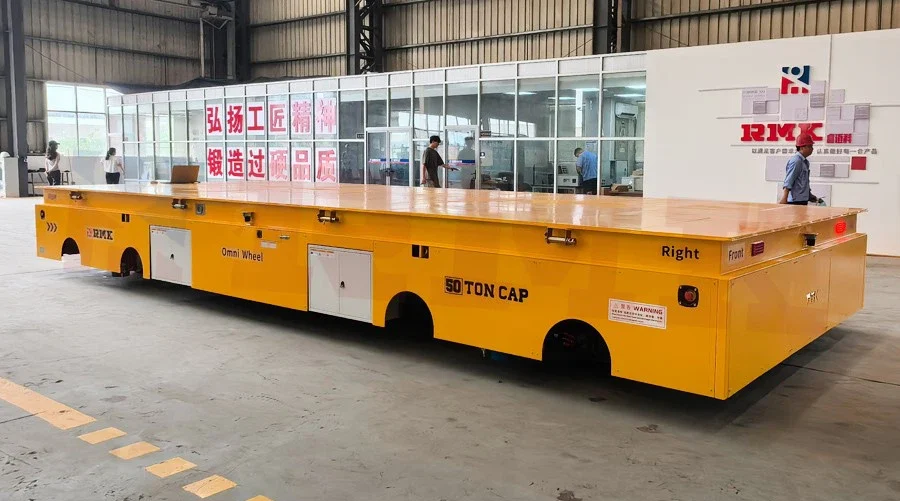
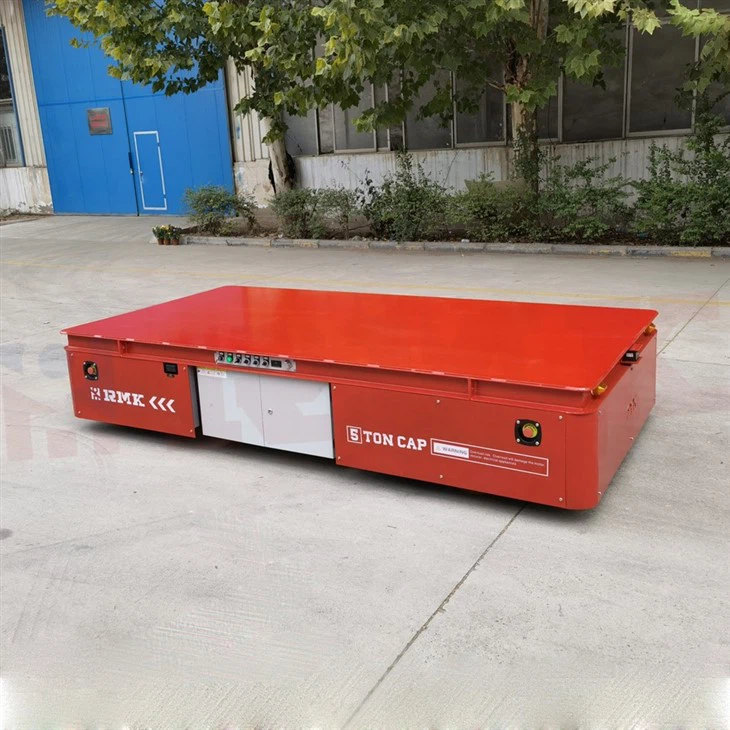
Trackless Transfer Cart operates without rails and uses wheels for free movement inside the workshop. It is suitable for areas with changing transport paths, limited track installation space, or frequent route changes.
- Load Capacity: 10–500 Tons
- Steering Mode: 360° Steering
- Power Supply: Battery
- Control Method: Remote Control
Customized Transfer Cart
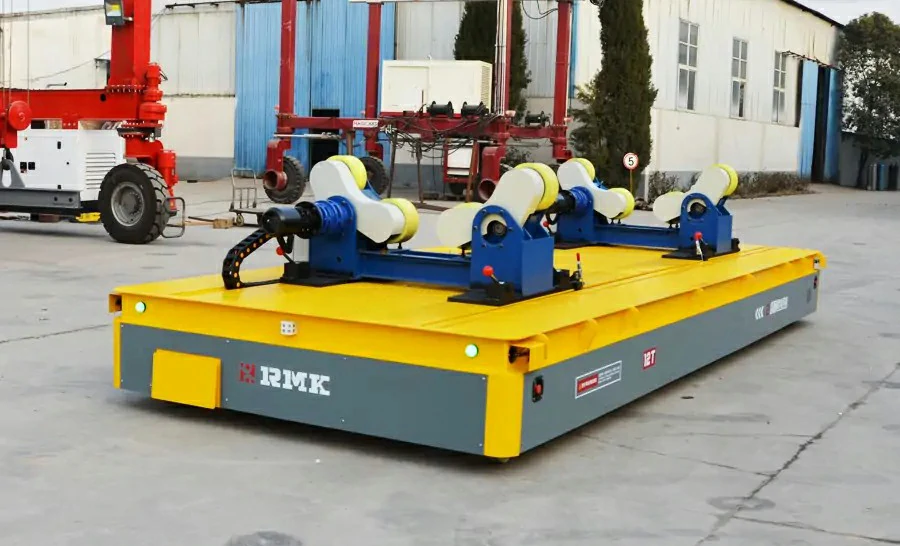
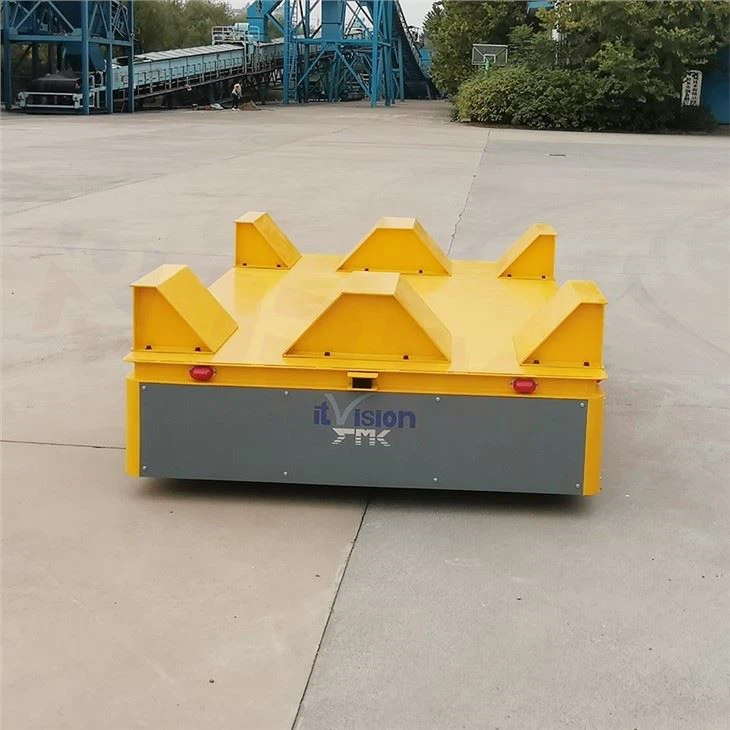
Customized Transfer Cart is manufactured according to specific load, size, and working conditions. It can be equipped with special designs such as lifting platforms, V-shaped supports, explosion-proof structures, and heat-resistant components.
- Load Capacity: Customized
- Platform Size: Customized
- Power Supply: Battery / Rail / Cable Reel
- Optional Features: Lifting / Explosion-Proof / Heat Resistant
For details on the applications and types of heavy-duty transfer carts, see the article: “Heavy-Duty Transfer Cart: A Complete Guide for 50–500-Ton Material Handling”
For a comparison of industrial transfer carts and customization options, see the article:
Five Common Types of Industrial Transfer Carts and Their Uses
Custom Transfer Cart: Complete Guide to Design and Customization
Video
How to Choose a Heavy Duty Transfer Cart for Your Application?
Selecting a suitable heavy duty transfer cart requires considering load capacity, power supply, running method, and working conditions to match the actual material handling needs.
Load Capacity
Determine the maximum load weight first. Heavy-duty applications may require 30 tons, 50 tons, or higher capacity, while small workshops may only need models below 10 tons.
Power Supply
Choose the power source according to the working environment. Battery power suits flexible movement, while rail or cable power is suitable for fixed routes and continuous operation.
Running Method
Rail transfer carts are used for fixed routes between workstations. Trackless transfer carts support flexible movement and 360° steering for complex workshop layouts.
Platform Size and Height
Select platform dimensions according to cargo size. For example, a 30-ton trackless transfer cart may use a platform size of 4800×2200×580 mm to keep loads stable.
Running Speed
Choose speed according to operation frequency. Common running speeds are 20–30 m/min, with higher speeds available for frequent transport tasks.
Control Method
Select control modes based on operation requirements, including pendant control, wireless remote control, PLC control, or automatic navigation. Remote control is suitable for heavy loads and hazardous areas.
Special Functions
Choose additional features according to material characteristics. V-shaped supports are used for round materials such as steel coils and pipes, while heat-resistant or explosion-proof designs suit special environments.
Rail Specifications
For rail transfer carts, confirm rail gauge and length. The rail system should match the workshop layout and required transport distance.
Working Environment
Consider temperature, humidity, dust, and other conditions. Standard operation is usually within -25℃ to 40℃ and an altitude below 1200 m. Special environments require additional protection.
Safety Features
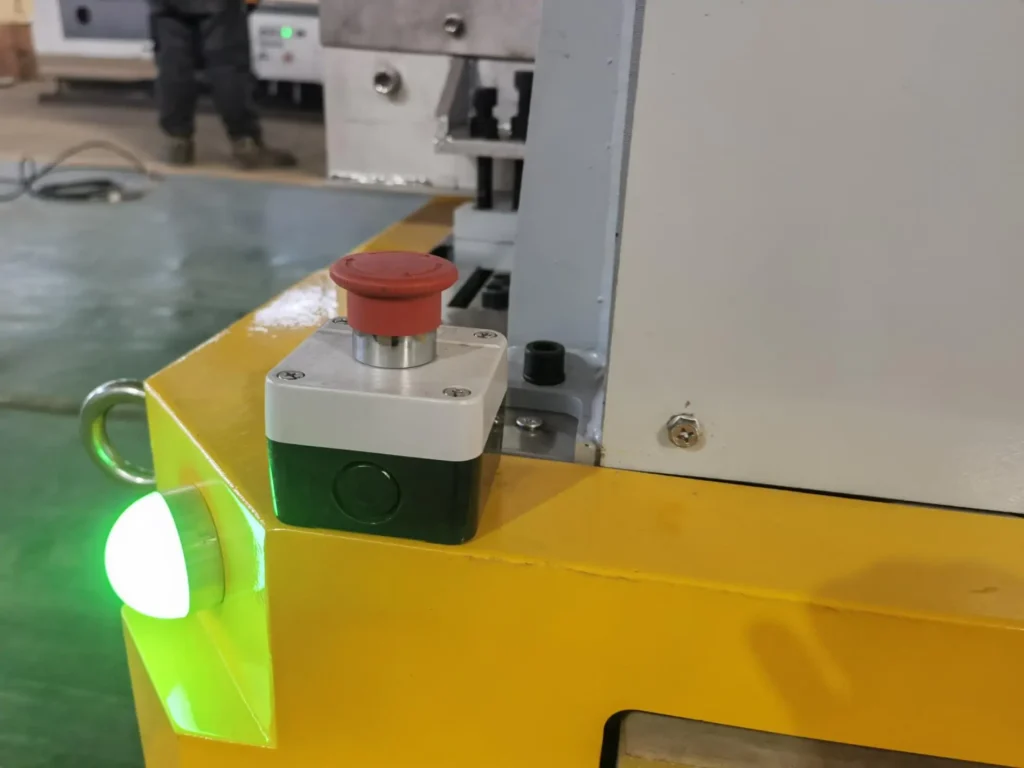
Check safety devices including overload alarm, anti-collision system, emergency stop, and tilt protection to ensure safe operation.
Choosing the right heavy duty transfer cart based on load, layout, operation conditions, and safety requirements helps improve handling efficiency and equipment reliability.
Specifications
| Parameter | Specification |
|---|---|
| Rated Load Capacity | 1–1500 Tons (Common 5–280 Tons) |
| Impact Load | 1.5 times of rated load capacity |
| Platform Size | Length 2000–10000 mm, Width 1500–3000 mm, Height approx. 500 mm |
| Running Speed | Approx. 20 m/min |
| Frame Structure | Welded steel beam structure, plate thickness 8–16 mm |
| Power Supply | Battery, Low Voltage Rail, Cable Reel, Busbar |
| Battery Type | Maintenance-free lead-acid battery, running time approx. 5 hours |
| Control Method | Pendant Control, Wireless Remote Control, PLC Automatic Control |
| Custom Functions | Explosion-Proof, Heat Resistant, Lifting, Tilting, V-Shaped Support |
| Safety Devices | Alarm Light, Emergency Stop Button, Limit Switch, Anti-Collision Detection |
| Special Capability | 360° Motor Rotation, Cable-Free Flexible Steering |
| Application Industries | Steel, Metallurgy, Machinery Manufacturing, Automotive, Shipbuilding, Warehouse, Port |
| Operating Environment | Altitude ≤1200 m, Temperature -25℃ to 40℃ |
Advantages
- 1. Heavy Load Transportation: Handles large and heavy materials with load capacities from several tons to hundreds of tons, suitable for industrial material handling.
- 2. Stable Operation: Steel structure, reliable drive system, and smooth running performance support continuous transport operations.
- 3. Flexible Configuration: Available with different power supplies, control methods, platform sizes, and special designs for various working conditions.
- 4. Reduced Manual Handling: Replaces manual transport and reduces the use of forklifts or cranes in heavy material movement.
- 5. Improved Workplace Safety: Equipped with safety devices such as emergency stop, alarms, limit switches, and anti-collision systems.
- 6. Wide Industrial Applications: Used in steel plants, shipyards, machinery factories, automotive production lines, and warehouse operations.
- 7. Low Maintenance Requirements: Simple structure and durable components help reduce maintenance frequency and operating costs.
Cases
Conclusion
Heavy Duty Transfer Cart provides a reliable solution for transporting large and heavy materials in steel plants, machinery factories, shipyards, and other industrial applications. This article covers the working principle, applications, types, selection methods, technical specifications, and key advantages to help users choose the right transfer cart according to their handling requirements.
REMARKABLE designs and manufactures heavy duty transfer carts with customized load capacity, power supply, platform size, and control options for different working conditions. With professional production capability, technical support, and after-sales service, REMARKABLE provides complete material handling solutions. Contact us for a suitable heavy duty transfer cart for your project.
Email: transfercart@rmkzn.com
Phone: +86-18637369355
FAQ
What is a heavy duty transfer cart?
A heavy duty transfer cart is an electric material handling vehicle used to transport large and heavy loads in industrial facilities.
How much weight can a heavy duty transfer cart carry?
Heavy duty transfer carts can carry from 1 ton to over 500 tons, depending on the design and application.
Where are heavy duty transfer carts used?
They are used in factories, steel plants, shipyards, foundries, warehouses, and machinery manufacturing facilities.
What industries use transfer carts?
Common industries include steel, metallurgy, automotive, shipbuilding, machinery, and heavy equipment manufacturing.
What is the difference between rail and trackless transfer carts?
Rail transfer carts run on fixed tracks, while trackless transfer carts move freely without rails and suit flexible transport routes.
Can heavy duty transfer carts be customized?
Yes. Load capacity, platform size, power supply, control system, and special functions can be customized.
What power options are available?
Common power options include battery, low-voltage rail, cable reel, and busbar power supply.
How long does a transfer cart last?
With proper operation and maintenance, a transfer cart can provide reliable service for many years.