Table of Contents
Introduction
Steel plants, shipyards, and manufacturing facilities often need to move steel coils, oversized components, molds, and heavy equipment that standard forklifts can’t handle. A heavy-duty transfer cart provides a reliable ground-level transportation solution for these loads, offering high load capacity, stable movement, and flexible configurations for different industrial environments.
In this guide, I will introduce the main types of heavy duty transfer carts, including heavy duty rail carts, trackless transfer carts, battery-powered transfer carts, and AGV transfer solutions. I will explain how they work, their applications, advantages, and selection factors to help you choose the right heavy-duty industrial transfer cart for your load requirements, transportation routes, and production conditions.
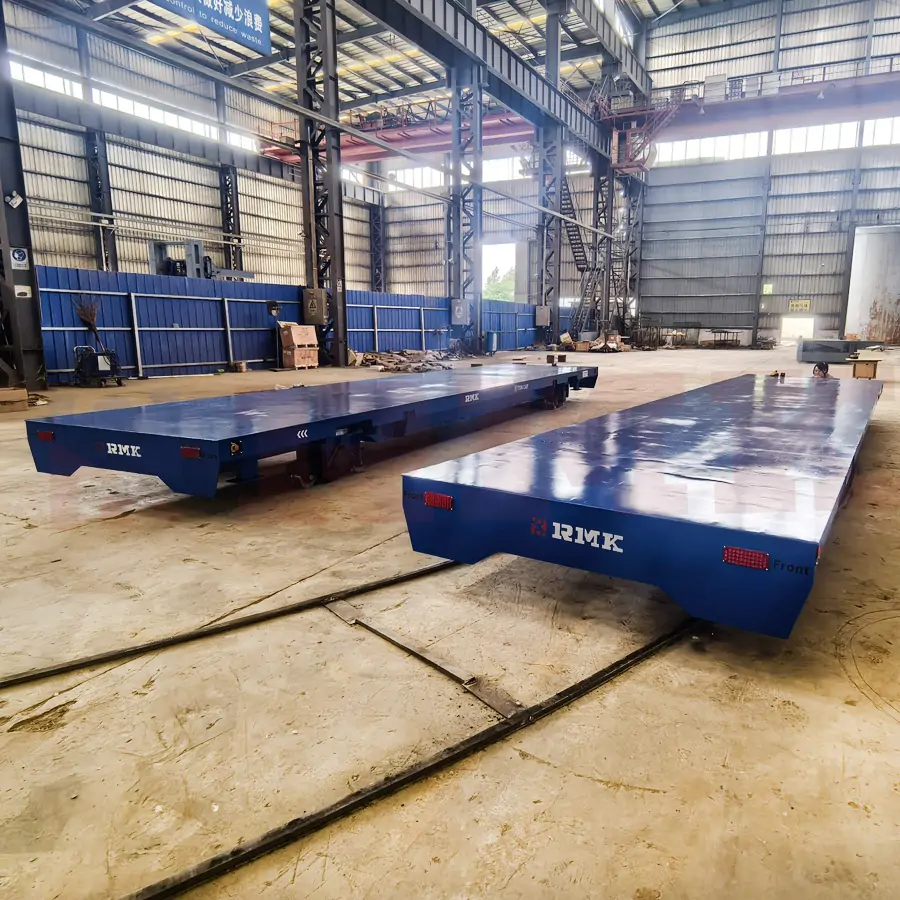
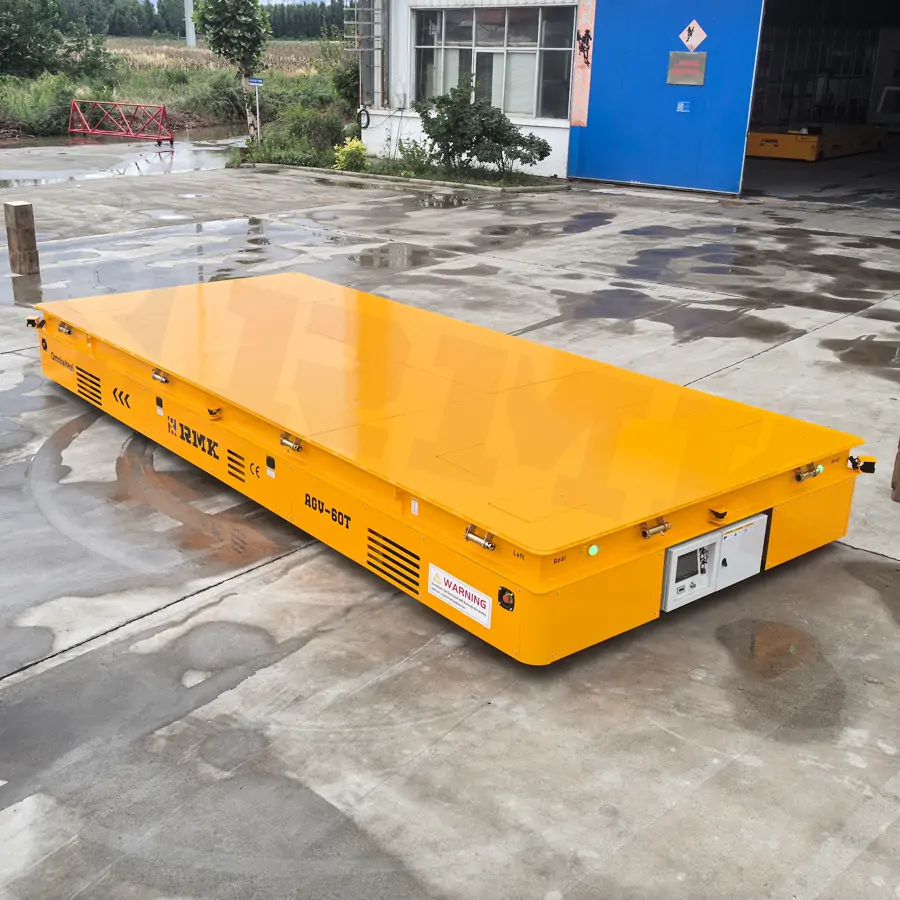
What Is a Heavy Duty Transfer Cart?
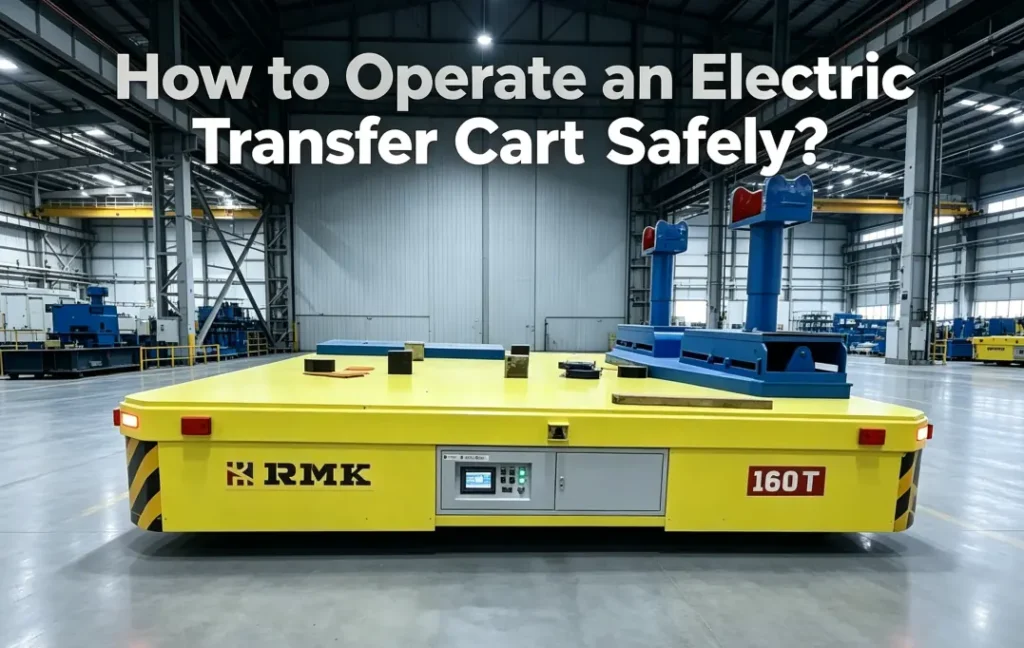
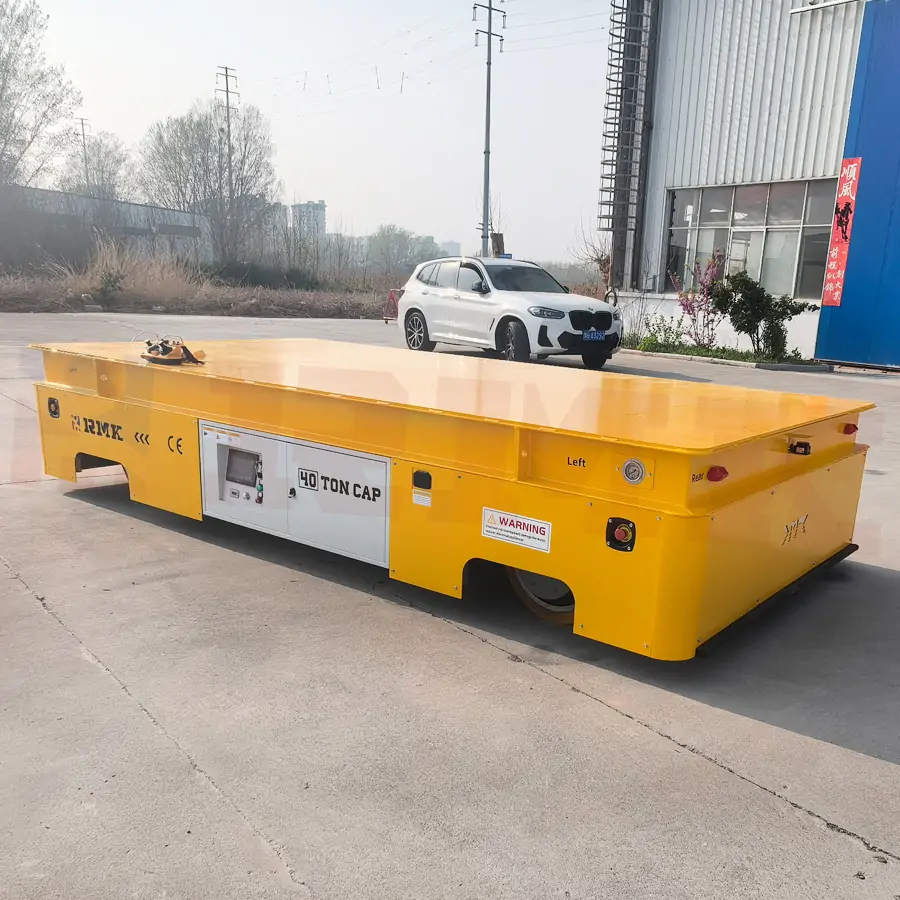
A heavy-duty transfer cart is an electric-powered industrial vehicle designed to move heavy loads horizontally inside factories, warehouses, shipyards, and production facilities. It is mainly used for transporting steel coils, molds, pumps, machinery, and oversized components that are difficult to handle with conventional equipment. A transfer cart heavy duty solution typically supports loads from several tons to hundreds of tons, depending on the structure and application requirements.
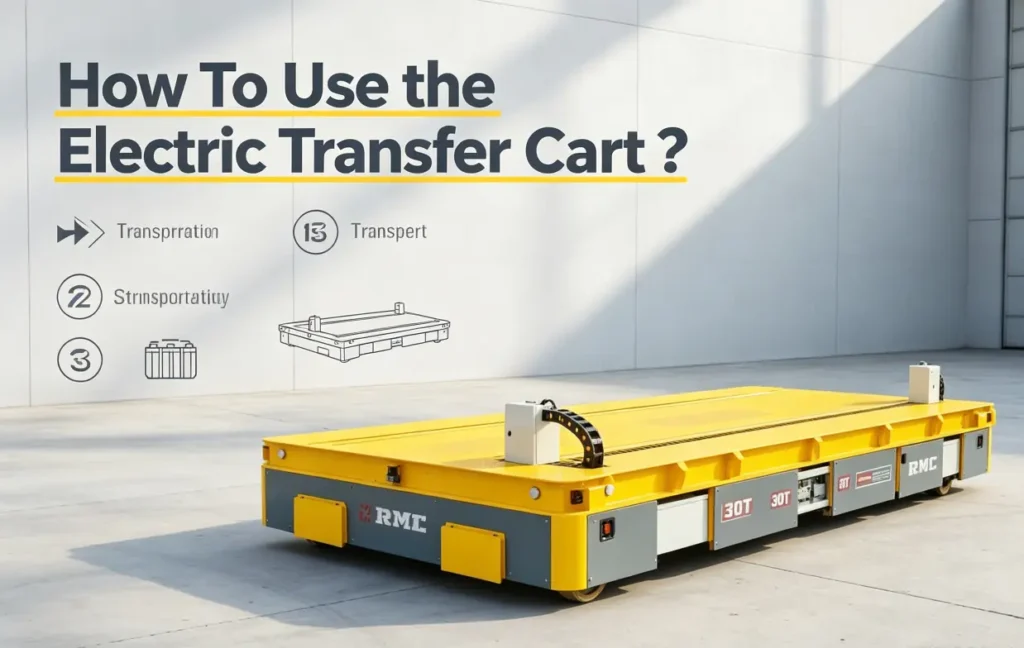
The cart works through an electric drive system powered by batteries, providing stable movement under heavy loads. Its main components include a high-strength steel frame platform, industrial wheels and drive system, control system, battery power supply, and safety devices. Different configurations, such as rail-mounted or trackless designs, allow the cart to operate on fixed routes or flexible paths according to the working environment.
Heavy-duty transfer carts are widely used in steel plants, shipyards, foundries, automotive factories, and heavy machinery industries. They help move steel structures, production equipment, molds, and other large materials between workstations, improving transportation efficiency and reducing manual handling requirements.
For a detailed definition and explanation of how heavy-duty transfer carts work, see the following articles:
What Is a Heavy-Duty Transfer Cart?
How Does a Heavy-Duty Transfer Cart Work?
Types of Heavy Duty Transfer Carts
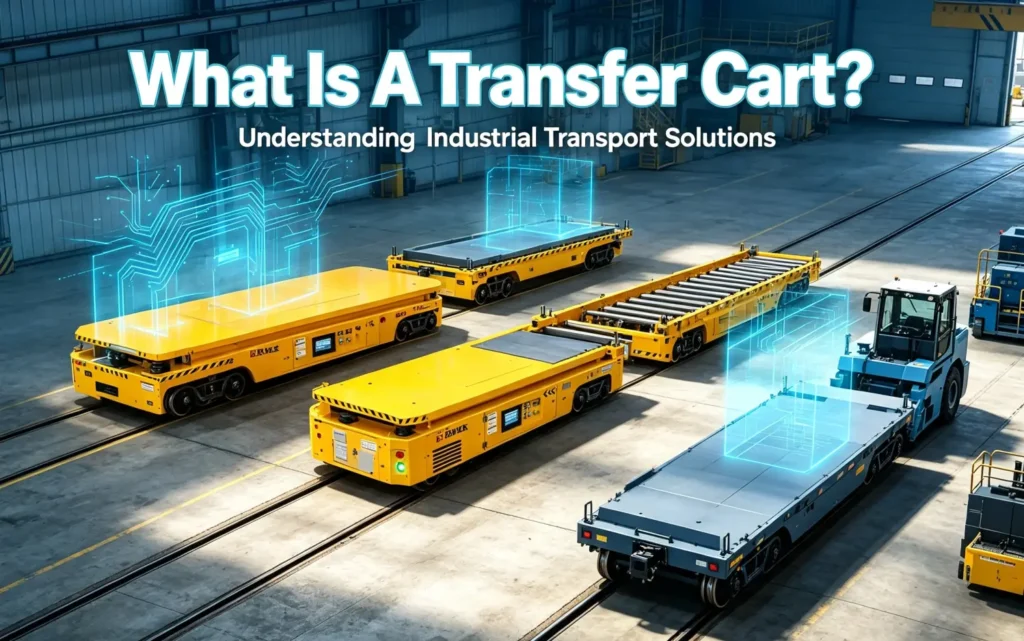
Heavy duty transfer carts are classified by traveling method, power source, and automation level. The main types include heavy duty rail transfer carts, trackless transfer carts, battery-powered transfer carts, AGV transfer carts, and hydraulic lift transfer carts. Each type matches different factory layouts, transportation routes, and load requirements.
Heavy Duty Rail Transfer Cart
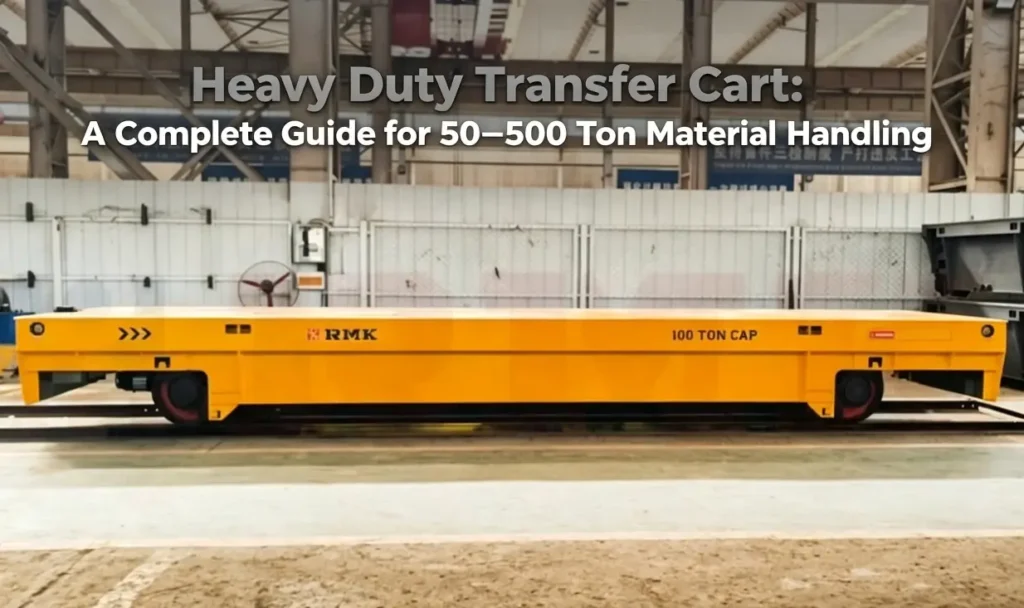
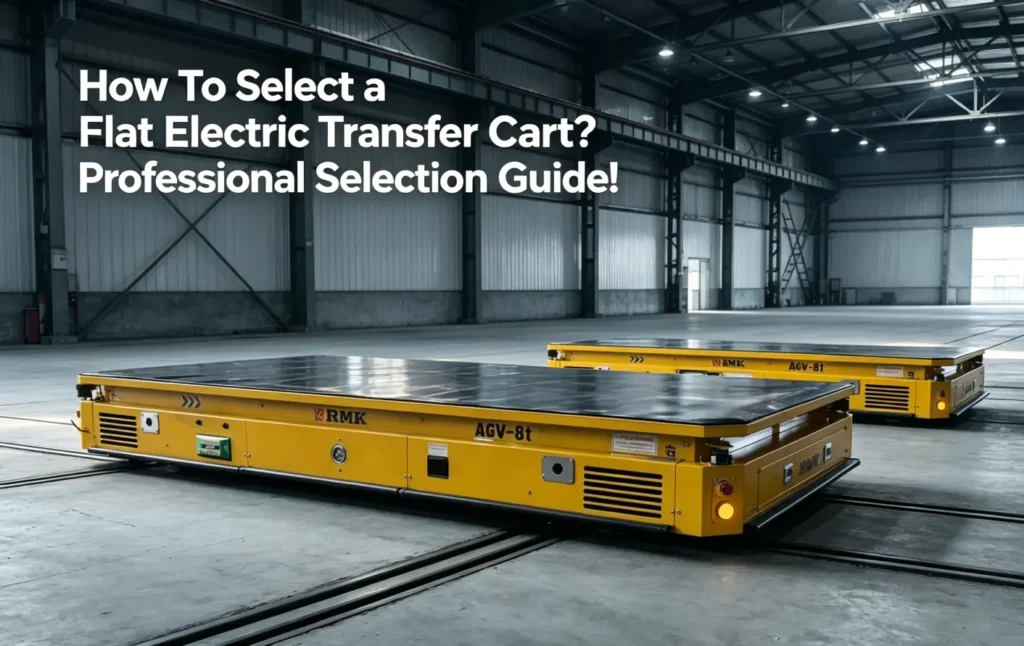
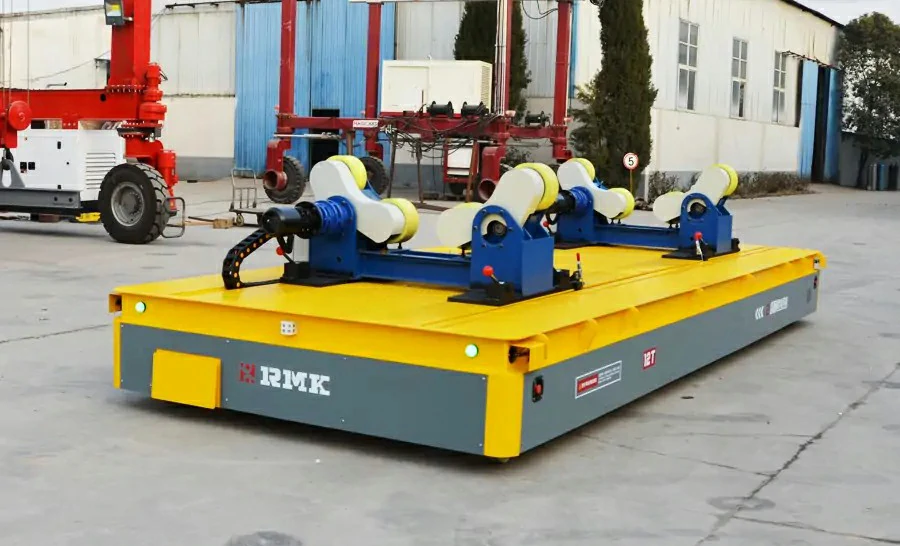
A heavy duty rail transfer cart is an electric transport cart that runs on fixed rails to move heavy materials between designated points. It uses a steel platform structure, rail wheels, and electric drive system for stable transportation of steel coils, molds, machinery parts, and large components. It is widely used in steel mills, shipyards, foundries, and heavy manufacturing plants with fixed material handling routes.
Specifications:
- Load Capacity: 1–500 tons
- Power Supply: Battery, cable reel, or rail power
- Travel Speed: 5–30 m/min
- Control Mode: Remote control or automatic control
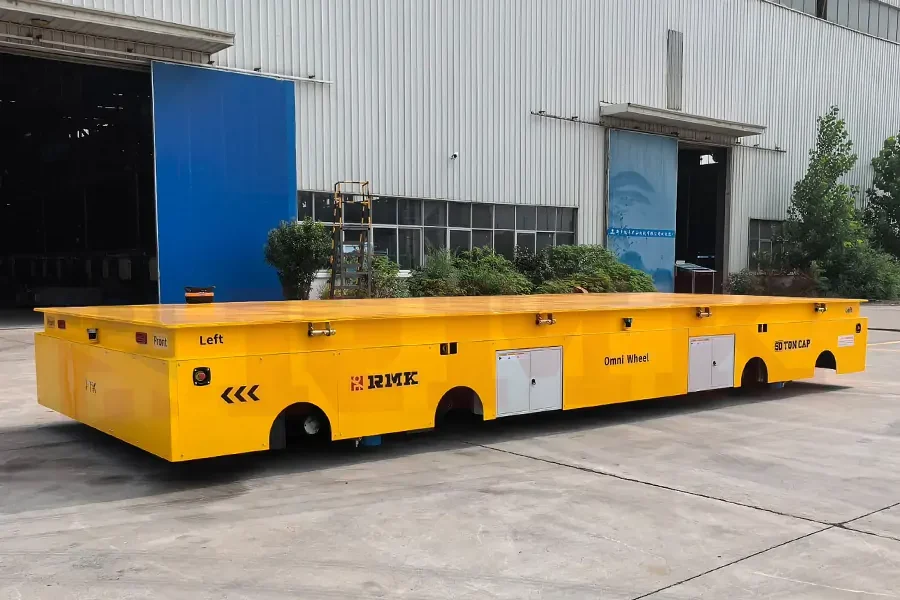
Heavy Duty Trackless Transfer Cart
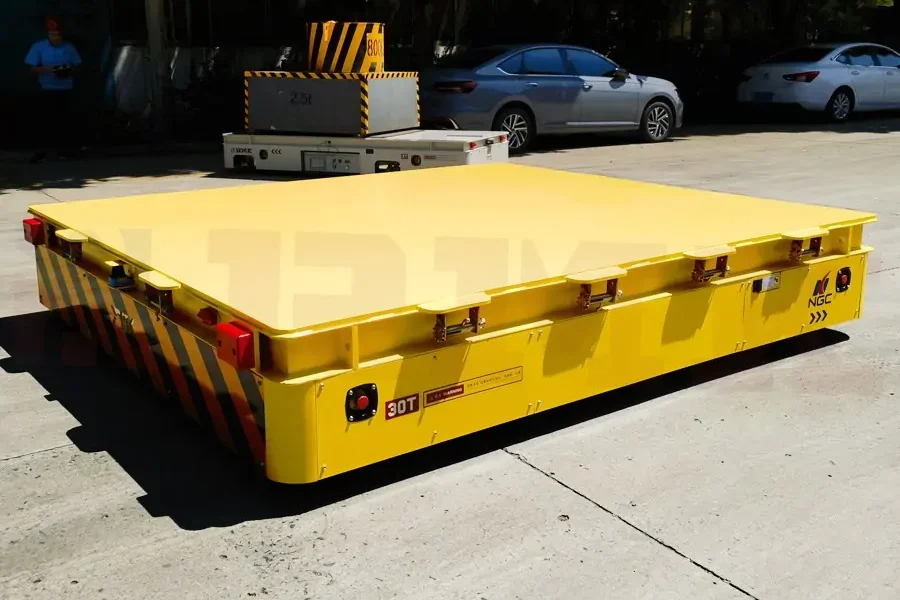
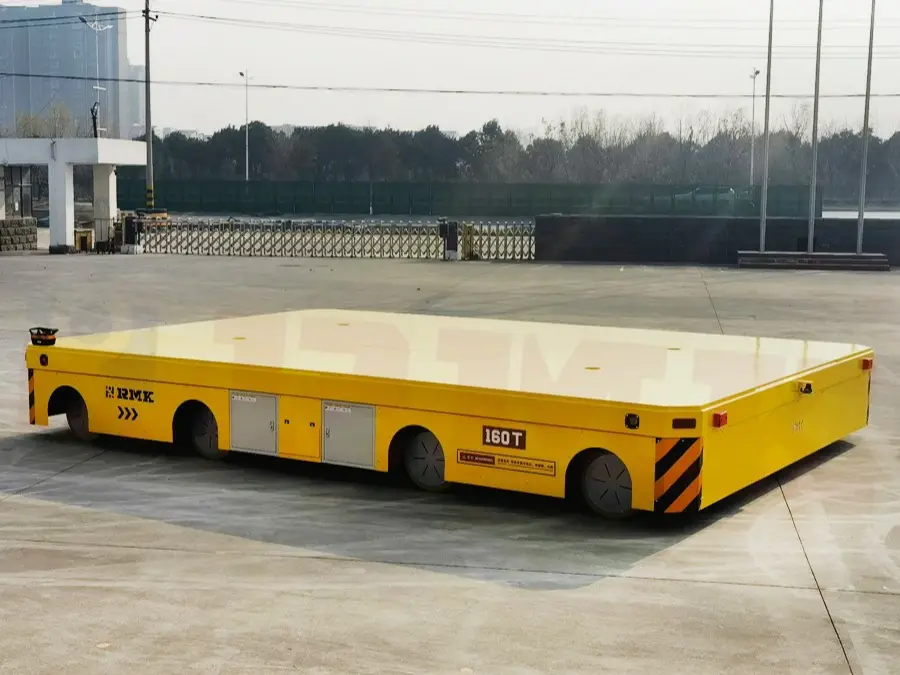
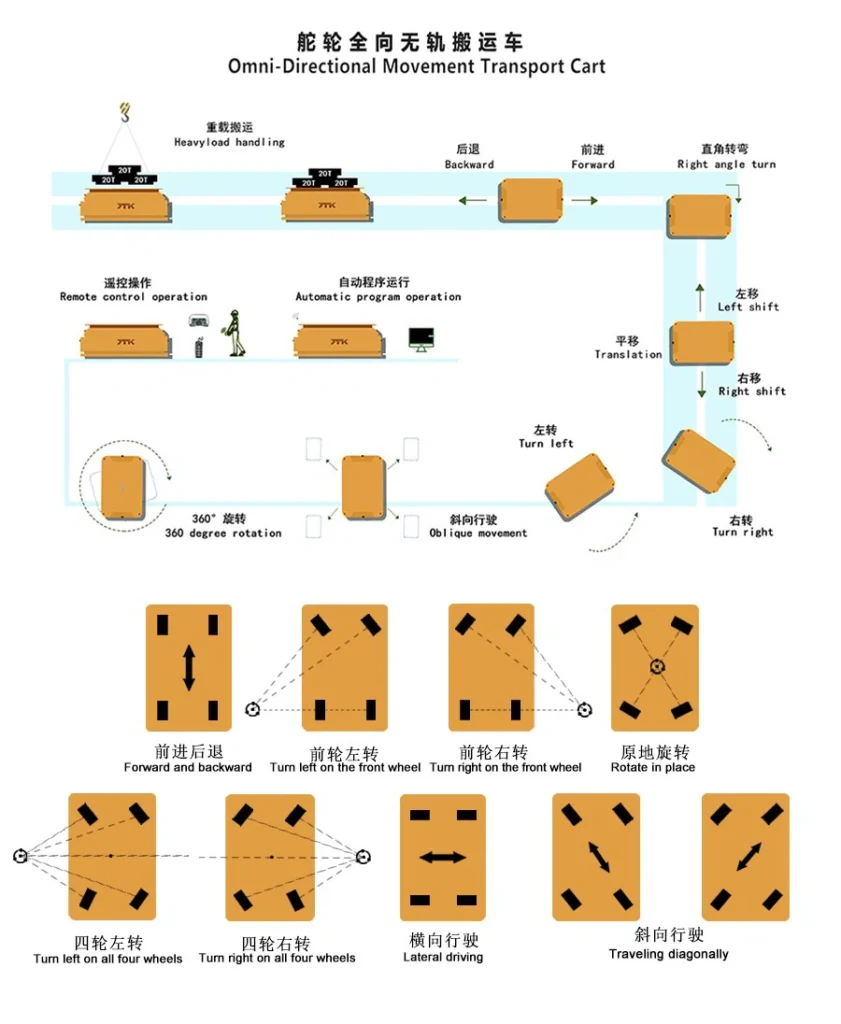
A trackless heavy duty transfer cart is a battery-powered industrial cart that travels directly on the factory floor without rails. It uses a steering system for forward, backward, and multi-directional movement. The cart is used for transporting heavy equipment, molds, steel structures, and production materials in workshops with changing layouts or multiple transfer locations.
Specifications:
- Load Capacity: 1–300 tons
- Power Supply: Lithium battery or lead-acid battery
- Travel Speed: 5–35 m/min
- Steering Mode: Multi-directional steering
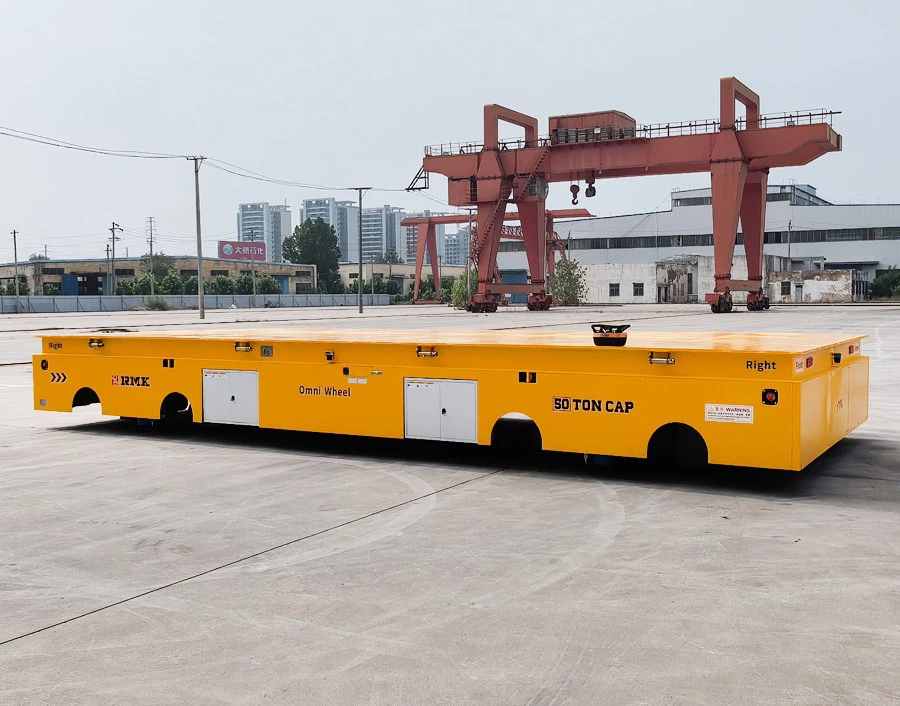
Battery Powered Heavy Duty Transfer Cart
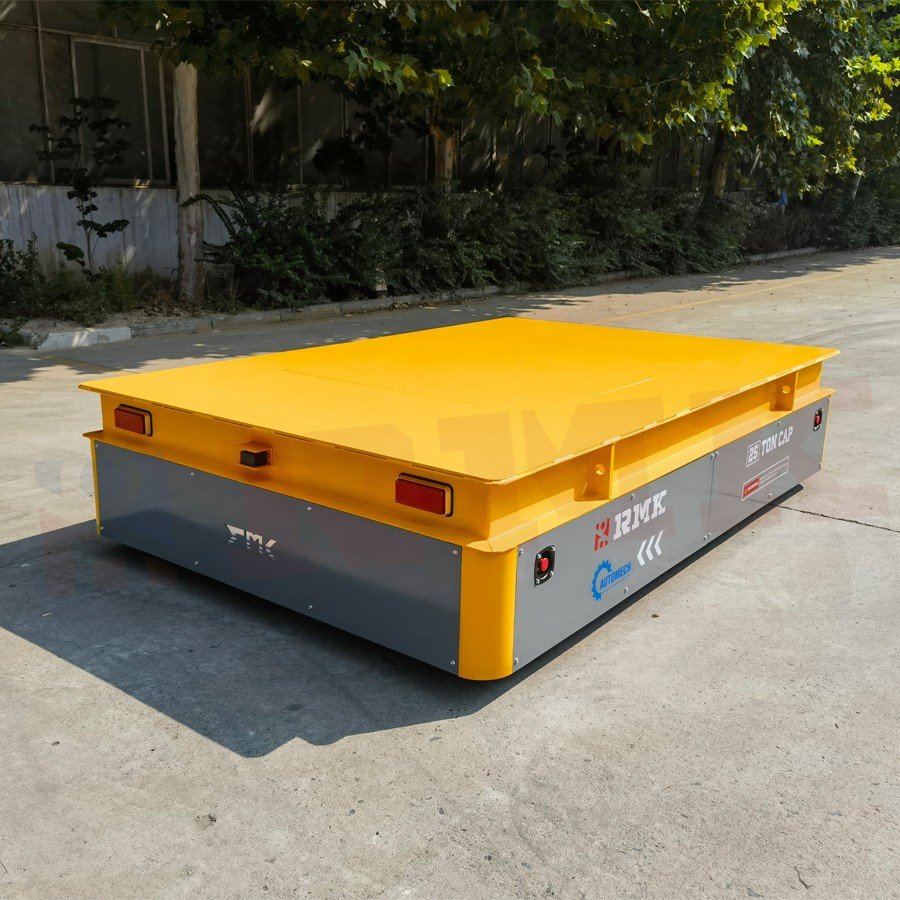
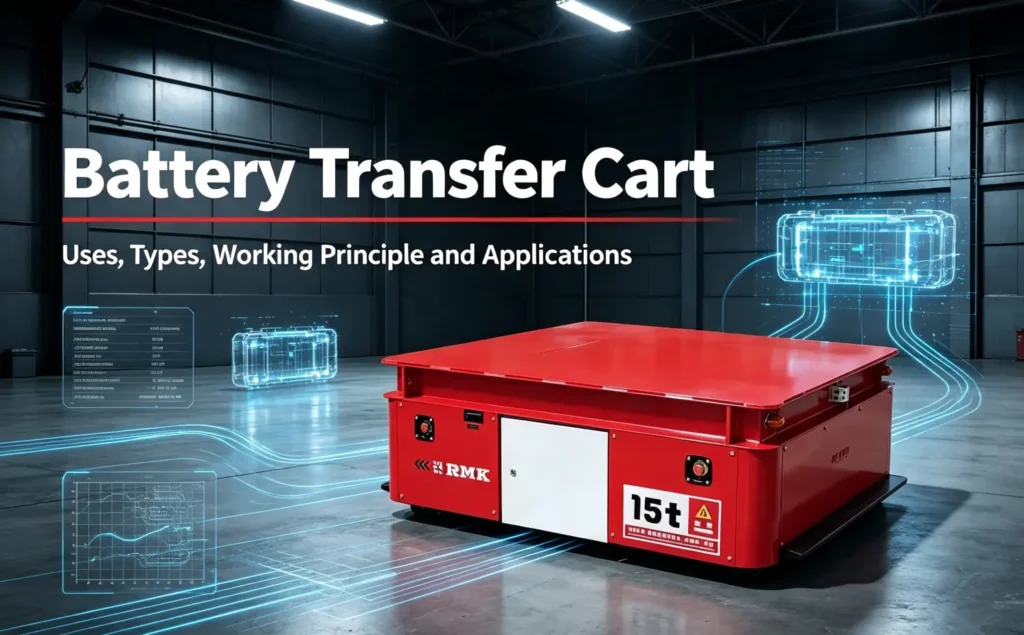
A battery-powered heavy duty transfer cart uses onboard batteries as the main power source for material transportation. The cart operates without external cables and is suitable for indoor workshops, assembly lines, warehouses, and production areas requiring independent movement.
Specifications:
- Load Capacity: 1–500 tons
- Battery Voltage: 24–96V
- Operating Time: Customized according to working cycle
- Charging Method: Automatic or manual charging
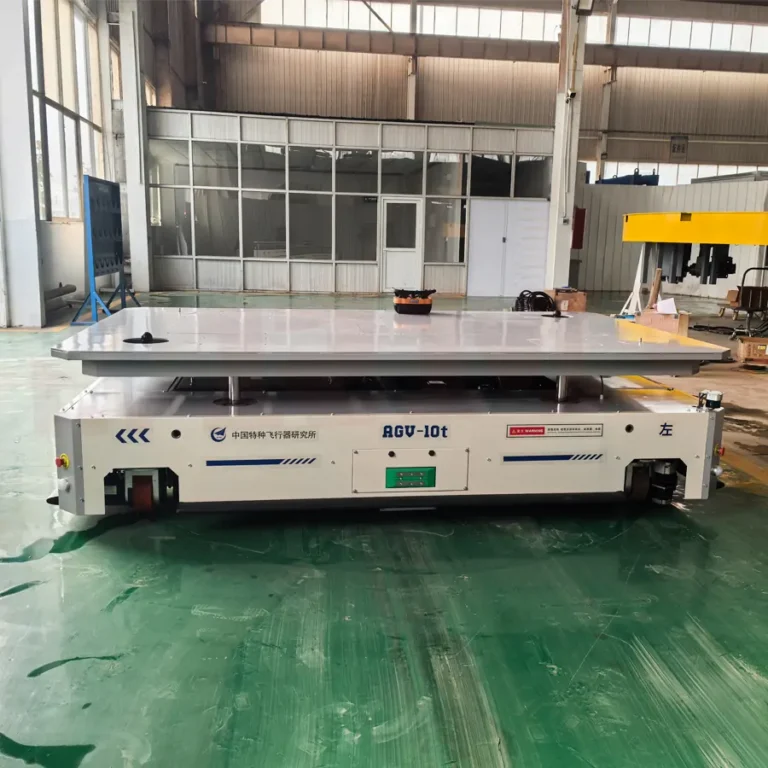
Heavy Duty AGV Transfer Cart
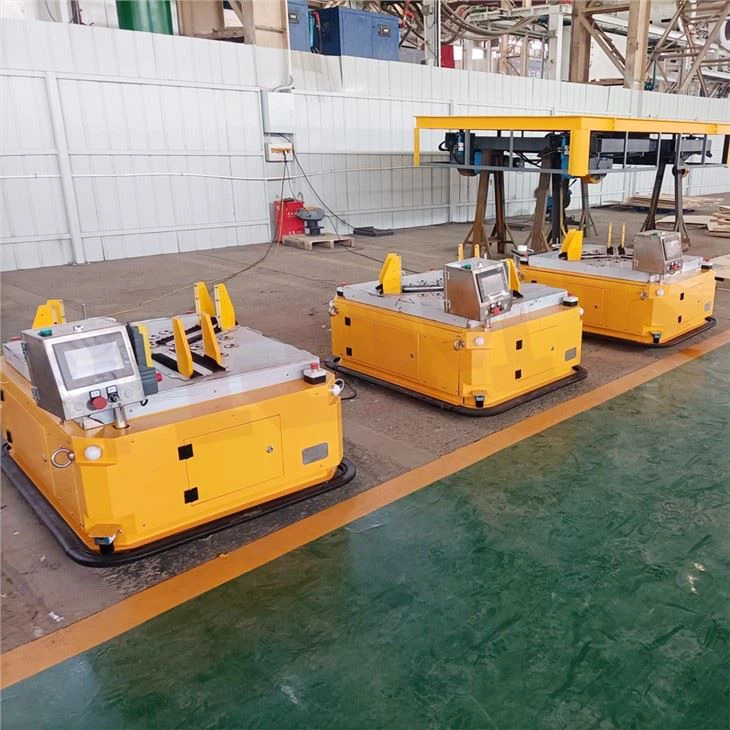
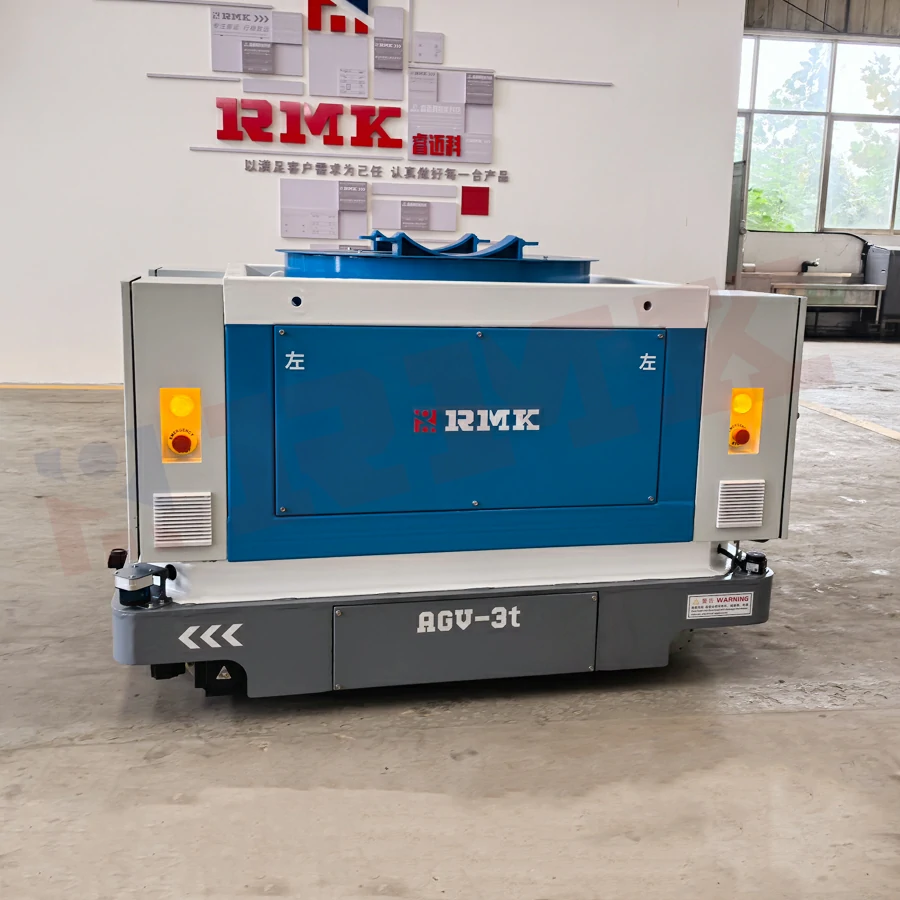
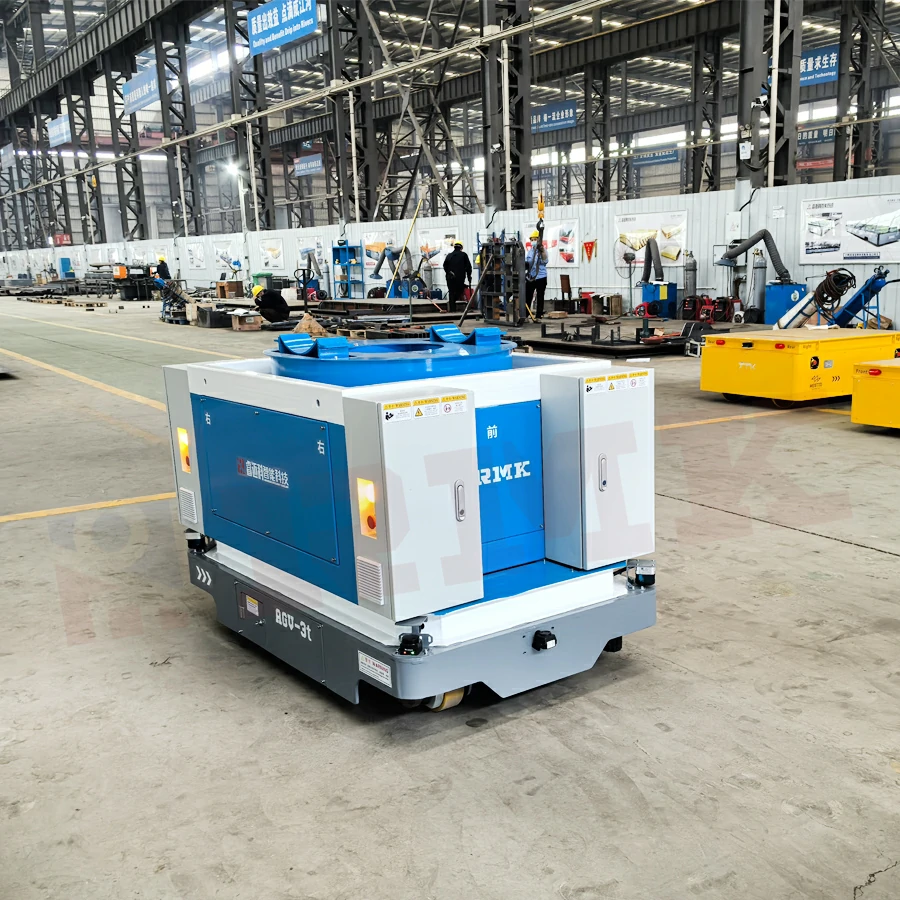
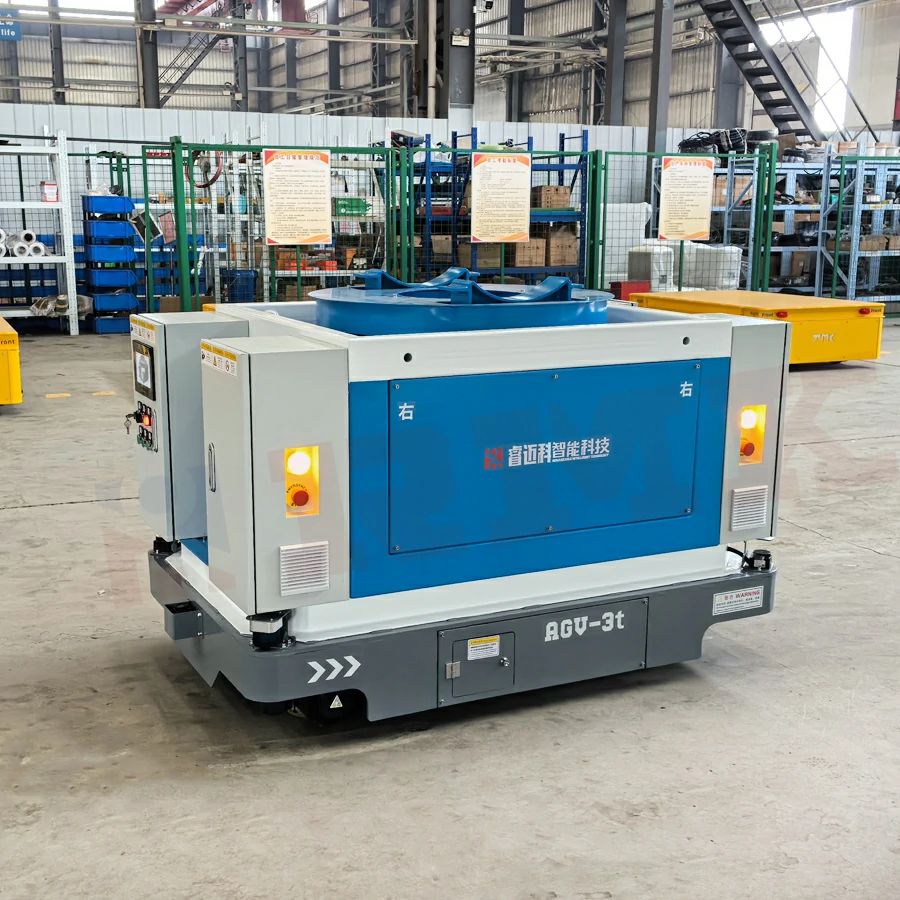
An AGV heavy duty transfer cart is an automated transport vehicle equipped with navigation and control systems. It uses magnetic navigation, QR code positioning, or laser SLAM technology for unmanned material handling. The cart is used in smart factories, automotive production lines, and automated logistics areas requiring accurate route control.
Specifications:
- Load Capacity: 1–300 tons
- Navigation System: Magnetic, QR code, or laser SLAM
- Positioning Accuracy: ±3–10 mm
- Control Mode: Automatic operation system
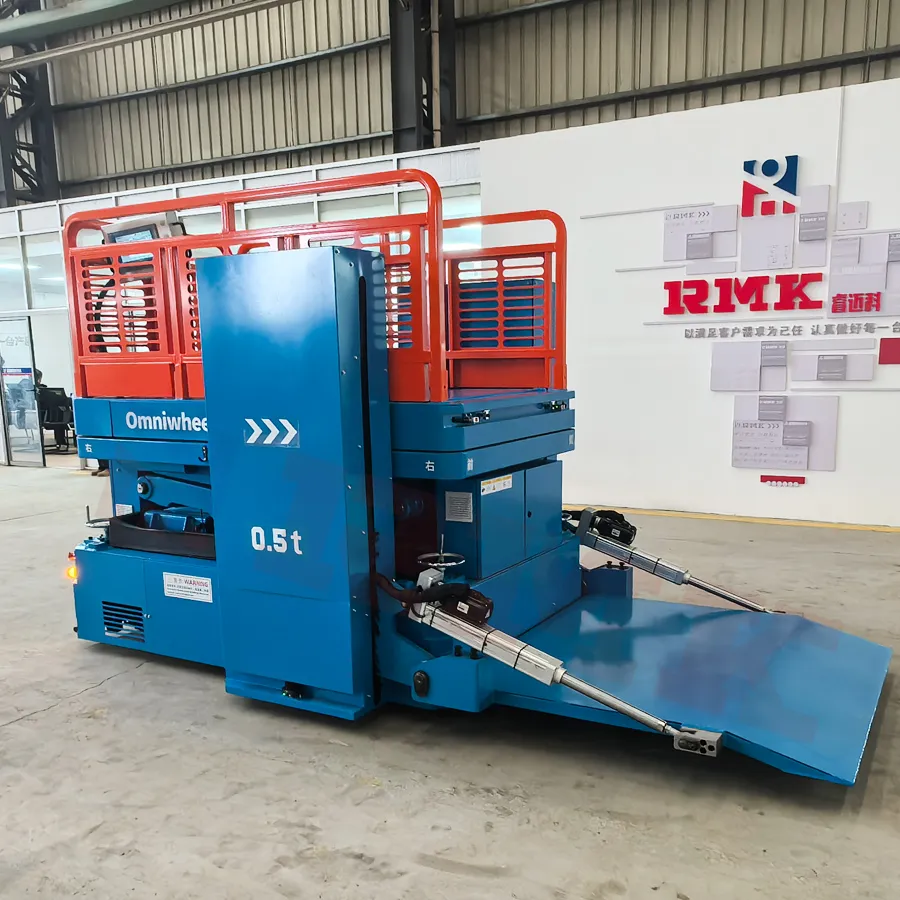
Hydraulic Lift Transfer Cart
A hydraulic lift transfer cart is a heavy load transport vehicle with a hydraulic lifting platform. The lifting function adjusts the platform height for equipment docking, mold transfer, and production line connection. It is used in manufacturing plants, assembly workshops, and maintenance areas.
Specifications:
- Load Capacity: 2–300 tons
- Lifting Height: Customized
- Power Supply: Battery or cable power
- Control Mode: Remote control or automatic control
Heavy Duty Transfer Cart Types Comparison
Heavy duty transfer carts are available in different configurations based on movement method, power supply, and operating conditions. The comparison below shows the main differences between rail transfer carts, trackless carts, battery-powered carts, AGV carts, and hydraulic lift carts.
| Type | Movement Method | Power Supply | Load Capacity | Best For | Advantage |
|---|---|---|---|---|---|
| Rail Transfer Cart | Fixed rail movement | Battery, cable reel, or rail power | 1–500 tons | Heavy repetitive transport routes | High load capacity and stable operation |
| Trackless Transfer Cart | Free floor movement | Battery power | 1–300 tons | Flexible factory layouts | No rail installation required |
| Battery Powered Transfer Cart | Electric drive with onboard battery | Lithium battery or lead-acid battery | 1–500 tons | Indoor material handling | Independent operation without external cables |
| AGV Transfer Cart | Automatic navigation movement | Battery power | 1–300 tons | Smart factories and automated production lines | Automatic transportation and precise positioning |
| Hydraulic Lift Transfer Cart | Horizontal movement with lifting platform | Battery or cable power | 2–300 tons | Equipment docking and production line connection | Adjustable platform height |
Different types of heavy duty transfer carts match different working conditions. Rail transfer carts are used for fixed heavy-load transportation, while trackless and AGV models fit factories requiring flexible or automated handling. Hydraulic lift carts are selected for applications that require both transportation and height adjustment.
How to Choose the Right Heavy Duty Transfer Cart?
Choosing a heavy duty transfer cart requires consideration of load weight, transportation route, power supply, and working conditions.
1. Load Capacity
Load capacity is the first factor when selecting a transfer cart. Confirm the maximum weight of the transported material, including steel coils, molds, machinery parts, or large structures. Choose a cart capacity based on the actual load requirement.
2. Transportation Route
The travel route determines the cart type. A heavy duty rail transfer cart fits fixed transportation paths with repeated movement between workstations. Trackless transfer carts fit workshops with changing routes and limited rail space.
3. Power Supply
Select the power system according to operating conditions. Battery-powered carts are suitable for independent indoor transportation. Cable reel and rail-powered systems fit long-distance or continuous operation.
4. Operation Method
Remote control is used for standard material handling. AGV transfer carts use automatic navigation systems for unmanned transportation in automated production environments.
5. Working Environment
Consider floor conditions, temperature, dust, humidity, and available working space. Steel plants, shipyards, and foundries may require reinforced frames, special wheels, and protective components.
The right heavy-duty transfer cart depends on the load, route, and working environment. A suitable configuration improves transportation reliability and reduces handling limitations in heavy industrial applications.
Applications
Heavy duty industrial transfer carts are used for transporting heavy materials, large components, and production equipment in industries where forklifts and standard handling equipment cannot meet load requirements. Different cart configurations match specific transportation conditions in factories, workshops, and industrial facilities.
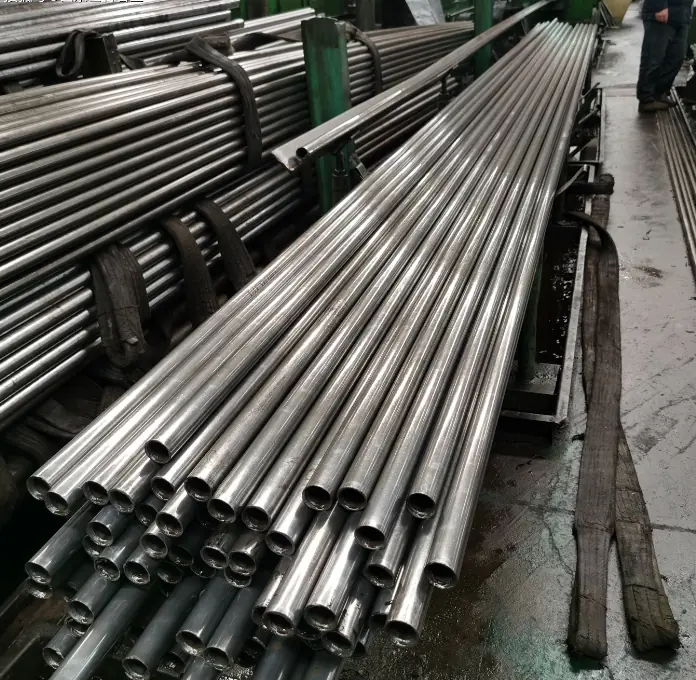
Steel Industry
Heavy duty transfer carts move steel coils, billets, ladles, steel structures, and other heavy materials between production areas.
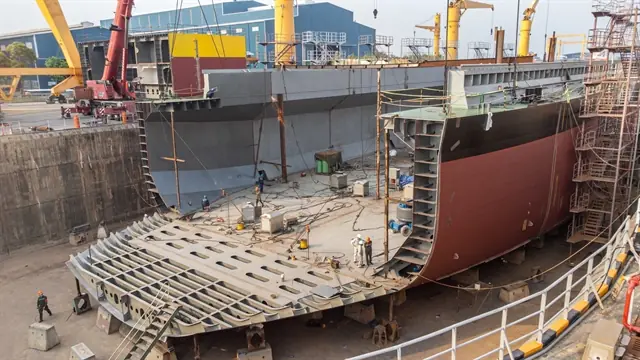
Shipbuilding Industry
Transfer carts transport ship sections, steel plates, and large assemblies during ship manufacturing and maintenance.
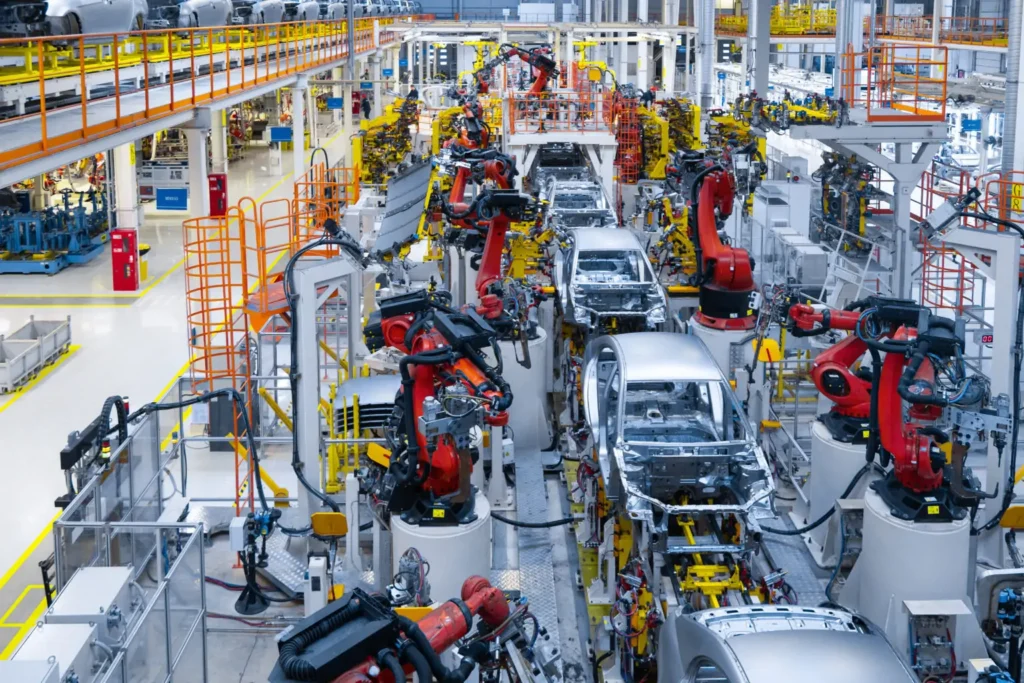
Automotive Manufacturing
They are used for moving molds, dies, vehicle components, and production equipment between assembly stations.
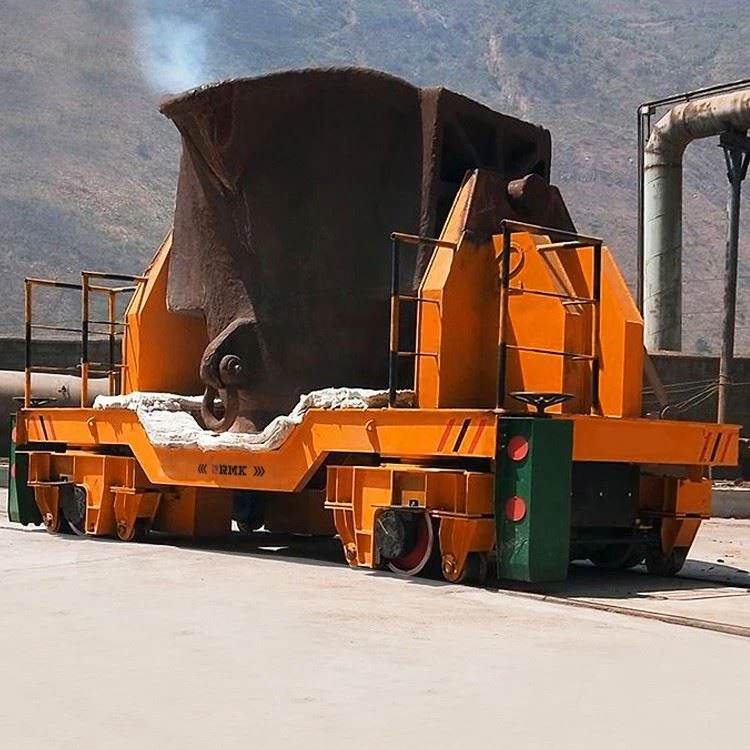
Foundry Industry
Transfer carts handle castings, molds, and heavy containers in high-temperature production environments.
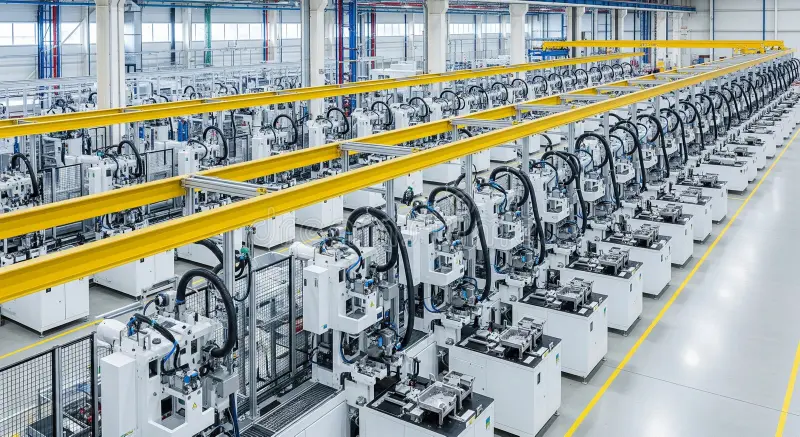
Machinery Manufacturing
They transport large machines, equipment parts, and components during machining, assembly, and maintenance processes.
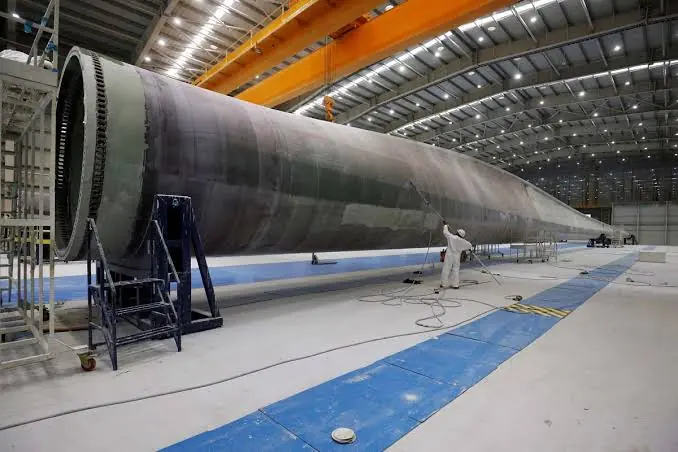
Wind Power Industry
Transfer carts move wind turbine components, towers, and heavy equipment during manufacturing and assembly.
Cases
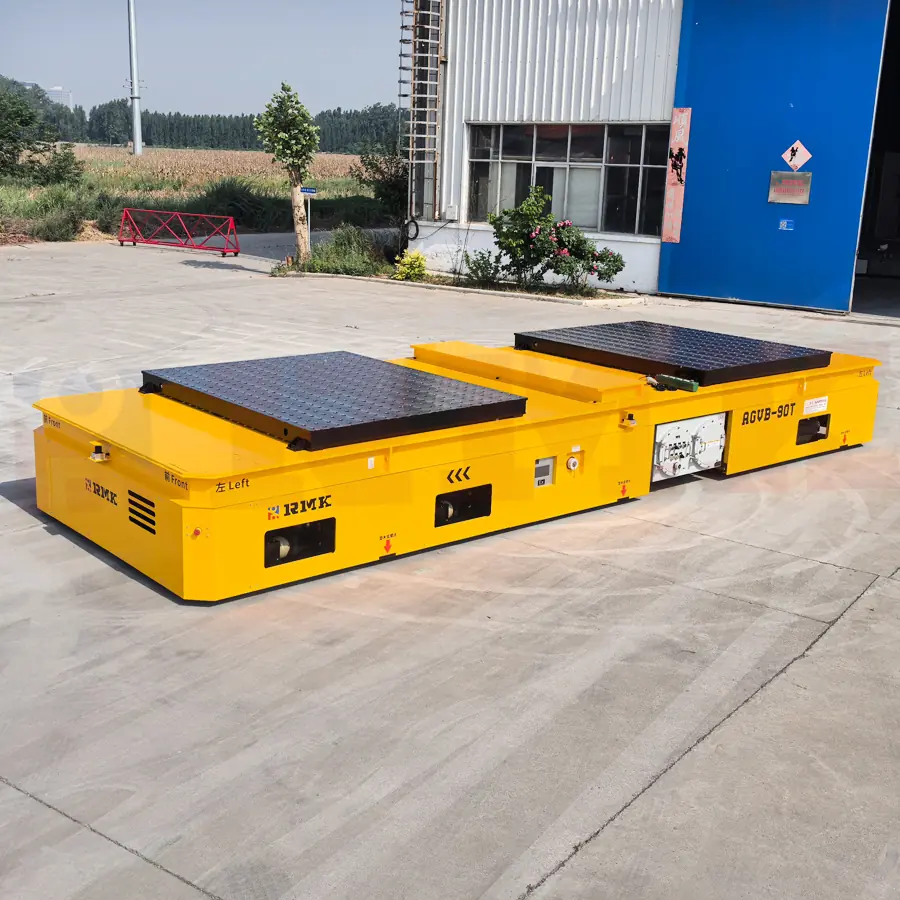
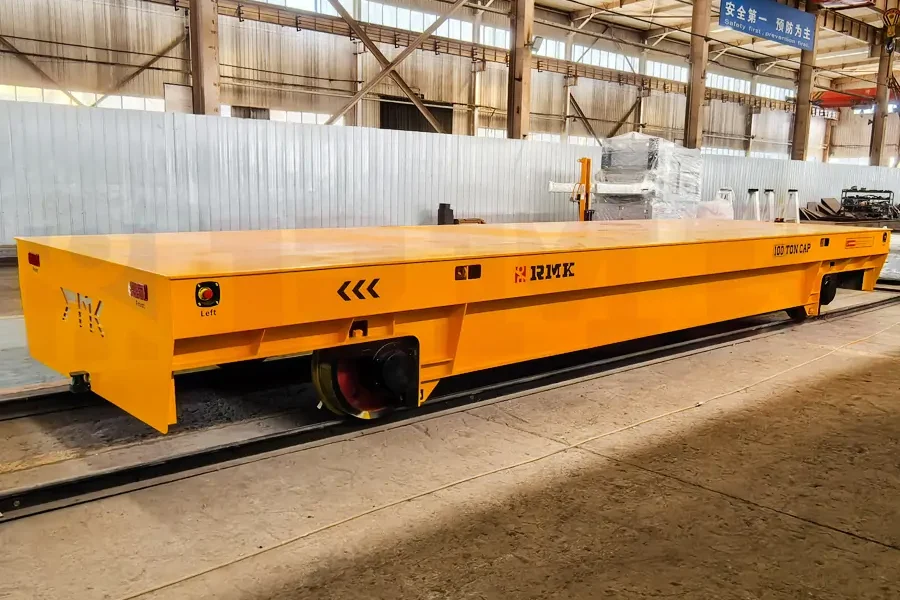
Heavy Duty Transfer Cart Customization Options
A heavy-duty transfer cart is customized based on load requirements, travel routes, power supply, and working conditions. RMK provides different configurations for various industrial material handling applications.
- Load Capacity: Customized from 1 ton to 300 tons or higher for special heavy-load projects.
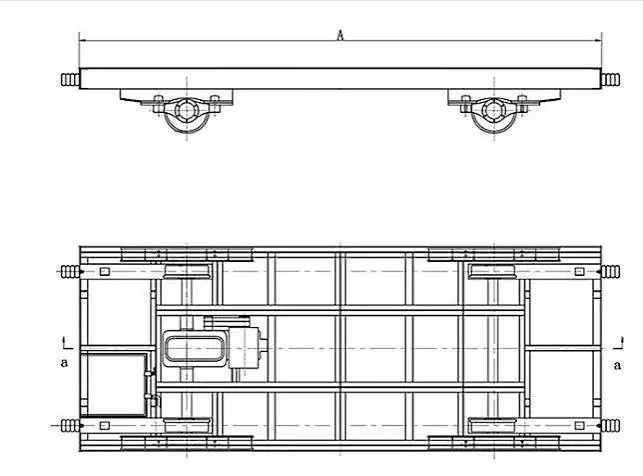
- Platform Size and Shape: Platform dimensions are designed for different materials, including coils, molds, equipment, and large structures.
- Travel Method: Available in rail-mounted and trackless types for fixed routes or flexible movement.
- Power Supply: Options include battery, cable reel, low-voltage rail, and busbar power according to operating conditions.
- Drive and Steering System: Drive systems are configured for load requirements. Trackless models support multi-directional movement and turning.
- Control System: Control options include remote control, pendant control, PLC control, and automatic operation systems.
- Safety Devices: Safety features include emergency stop, anti-collision sensors, speed control, and warning alarms.
- Wheel and Rail Configuration: Wheel size, wheel arrangement, and rail gauge can be customized for different load and track conditions.
- Working Environment Protection: Special designs are available for high-temperature, dusty, humid, and corrosive environments.
- Hydraulic Functions: Hydraulic lifting, tilting, and positioning functions are available for equipment handling and production line connection.
Why Choose RMK Heavy Duty Transfer Carts?
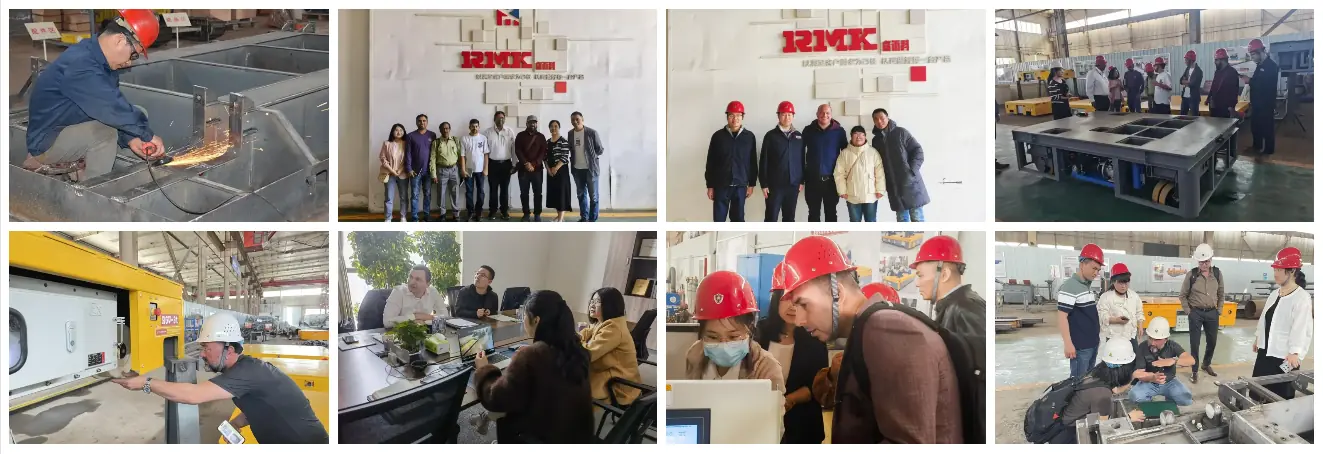
RMK specializes in the design and manufacturing of heavy duty transfer carts for factories, shipyards, steel plants, and other heavy industries. With customized engineering solutions, export experience, and complete service support, RMK provides transfer carts for different load requirements and working conditions.
Manufacturer Experience — RMK focuses on heavy material handling equipment and provides transfer cart solutions for various industrial applications.
Custom Engineering — Each transfer cart can be customized according to load capacity, platform size, travel route, power supply, and operating environment.
Export Projects — RMK transfer carts have been supplied to overseas customers for industrial transportation projects in different countries and regions.
Different Capacity Solutions — RMK provides heavy duty transfer carts from 1 ton to 500 tons, with customized designs for special heavy-load applications.
After-Sales Support — RMK offers technical support, installation guidance, operation training, and after-sales service for global customers.
RMK provides reliable heavy duty transfer cart solutions for heavy-load transportation in manufacturing plants, steel mills, shipyards, and logistics facilities. Contact us to discuss your load requirements, working conditions, and customized transfer cart solution.
Email: transfercart@rmkzn.com
Phone: +86-18637369355
FAQ
What are the different types of heavy duty transfer carts?
The main types of heavy duty transfer carts include rail transfer carts, trackless transfer carts, battery-powered transfer carts, AGV transfer carts, and hydraulic lift transfer carts. Each type matches different load requirements, transportation routes, and factory conditions.
What is a heavy duty rail transfer cart used for?
A heavy duty rail transfer cart is used for transporting heavy materials along fixed rail routes. It is commonly used in steel plants, shipyards, foundries, and manufacturing facilities for moving steel coils, molds, equipment, and large components.
How much weight can a heavy duty transfer cart carry?
The capacity of a heavy duty transfer cart usually ranges from 1 ton to 300 tons. Custom models can reach higher capacities for special projects involving heavy machinery, steel structures, and oversized industrial components.
What is the difference between rail transfer carts and trackless transfer carts?
Rail transfer carts operate on fixed tracks and are suitable for repeated transportation routes. Trackless transfer carts move directly on the floor and offer more flexibility for factories with changing layouts.
Are heavy duty transfer carts battery powered?
Yes. Many heavy duty transfer carts use battery power, including lithium and lead-acid batteries. Other options include cable reel, low-voltage rail, and busbar power systems based on operating conditions.
Can heavy duty transfer carts be customized?
Yes. Heavy duty transfer carts can be customized for load capacity, platform size, power supply, travel method, control system, navigation system, and working environment.
Which industries use heavy duty industrial transfer carts?
Heavy duty industrial transfer carts are used in steel plants, shipyards, automotive factories, foundries, machinery manufacturing, wind power, aerospace, and other industries requiring heavy material transportation.
How do I choose the right transfer cart heavy duty solution?
Choose a transfer cart heavy duty solution based on load capacity, transportation route, working environment, operation frequency, and automation requirements. The correct configuration depends on the actual material handling process.