Introduction
On factory assembly lines or in mold rooms, material handling often hits an “awkward spot”: the goods arrive, but the height doesn’t match the workbench. The emergence of the scissor transfer cart has solved this problem. It integrates a hydraulic scissor mechanism onto a transport chassis, allowing it to travel horizontally like a standard flat cart and lift vertically like an elevating platform. Whether it’s the scissor rail transfer cart that needs precise alignment or the portable scissor lift with transfer cart for flexible moving, these devices exist to bridge the height gap in material docking. This article will provide a deep dive into the working principles, core categories, and selection precautions for scissor transfer carts.
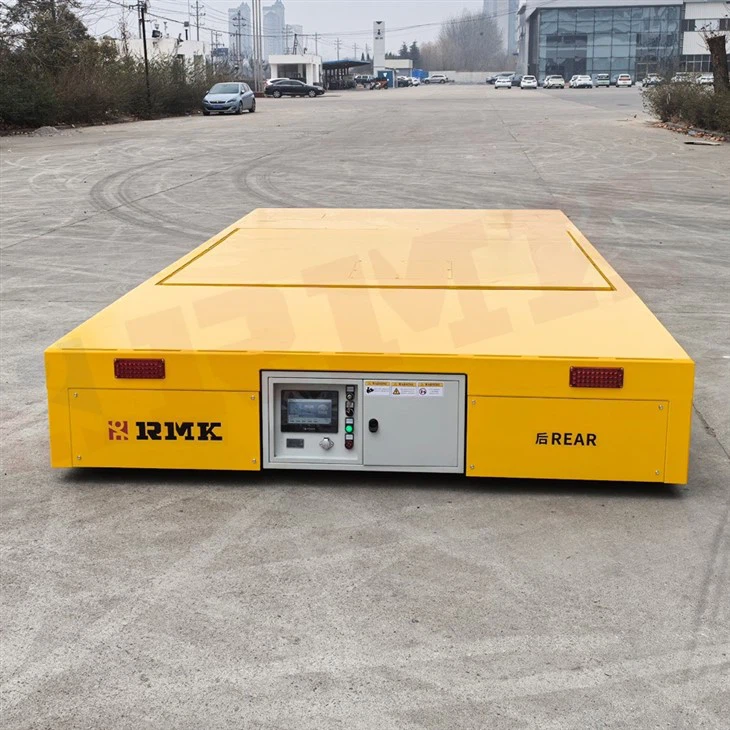
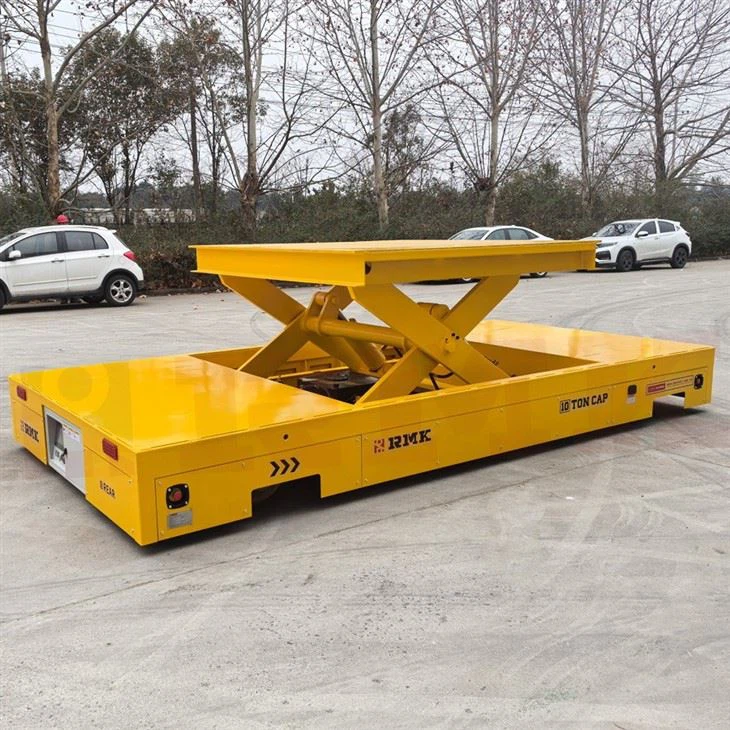
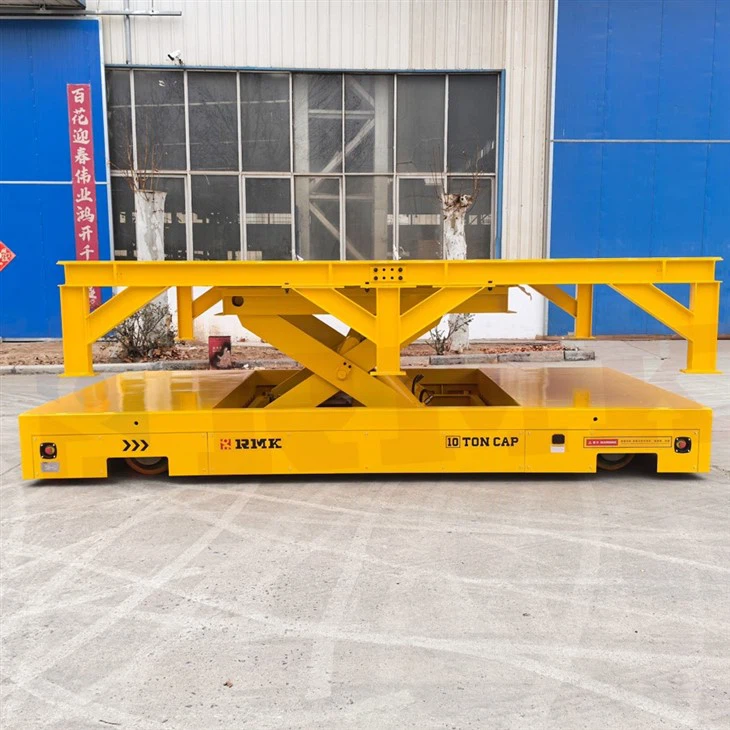
Working Principle
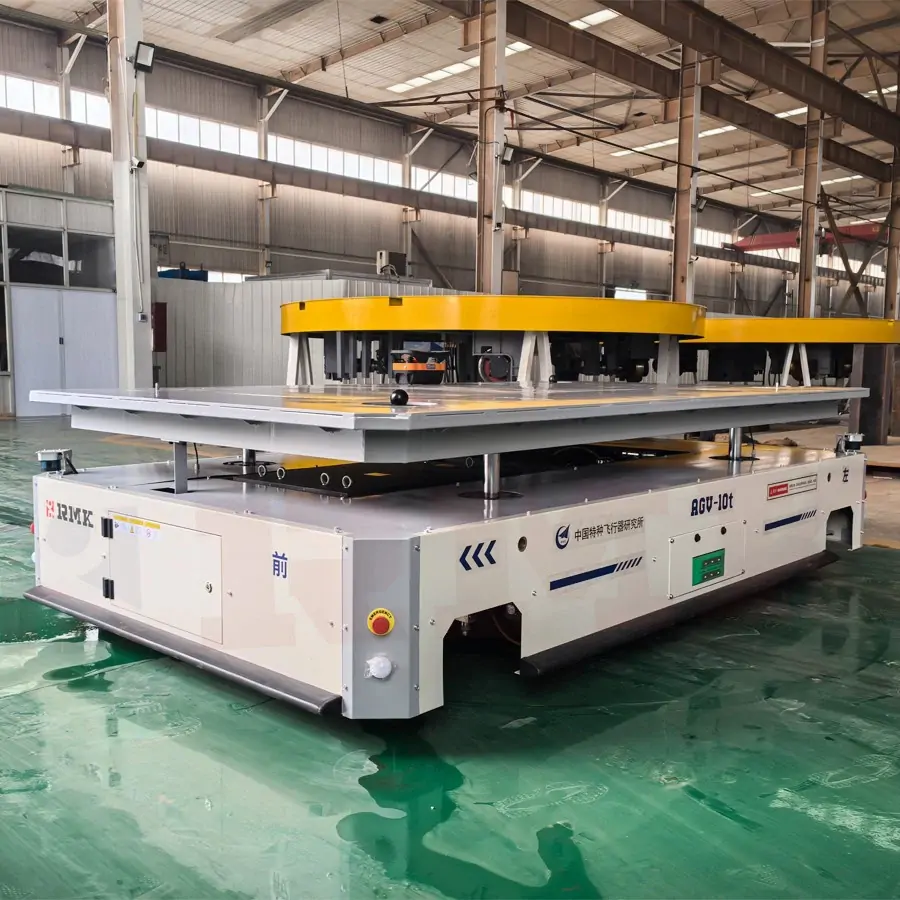
A scissor transfer cart is a hybrid of a “traveling chassis” and a “scissor lifting mechanism.” It converts hydraulic power into stable vertical displacement while enabling horizontal transport.
Power Drive: An on-board storage battery drives the hydraulic pump station, pressing hydraulic oil into the cylinder.
Mechanical Lifting: Utilizing the unique cross-linkage mechanism of the scissors lifting transfer cart, the cylinders push the links to open and close alternately, achieving smooth rising and falling of the platform.
Horizontal Travel: An electronic control system at the bottom drives DC or AC motors, allowing the equipment to move precisely on rails or the floor.
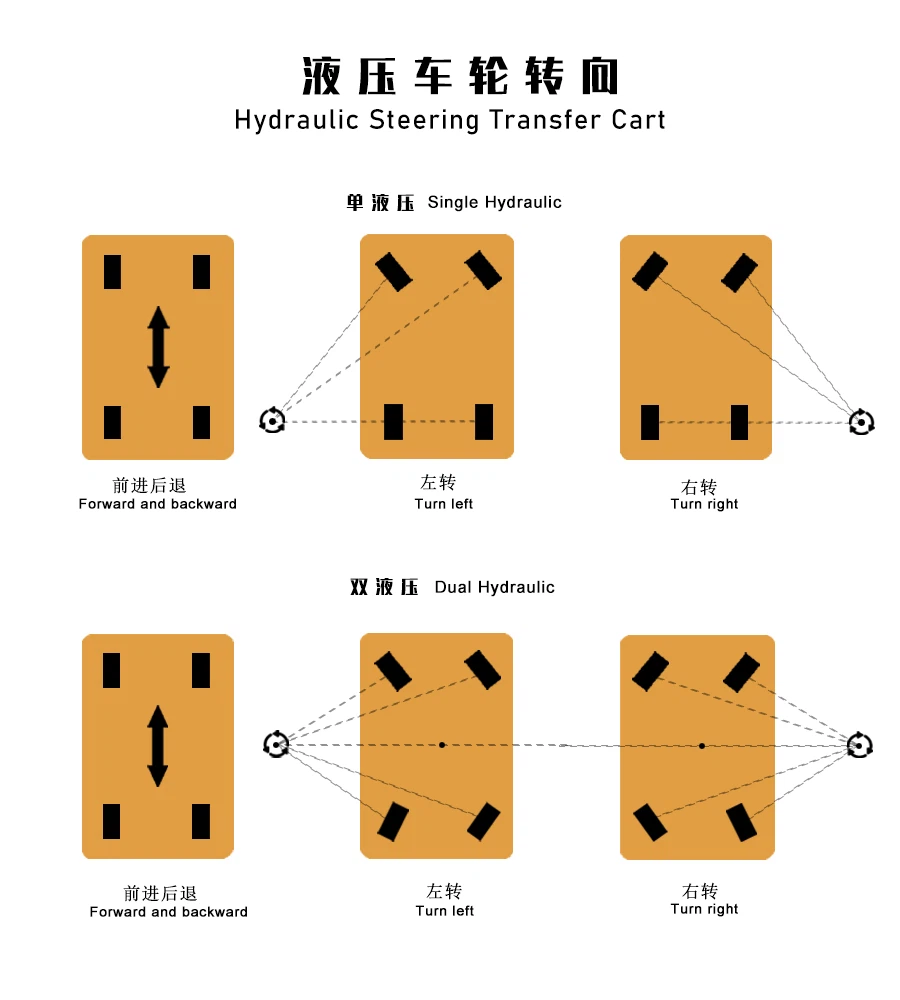
Through the coordination of electronic control and hydraulics, the equipment achieves precise transfer of heavy loads in three-dimensional space. It not only solves the problem of material displacement but also ensures high safety during station docking through mechanical limits and hydraulic self-locking.
Video Showcase
Classification
Scissor transfer carts are mainly divided into two categories based on chassis structure: rail-based and trackless. This is also a key factor in determining factory construction costs.
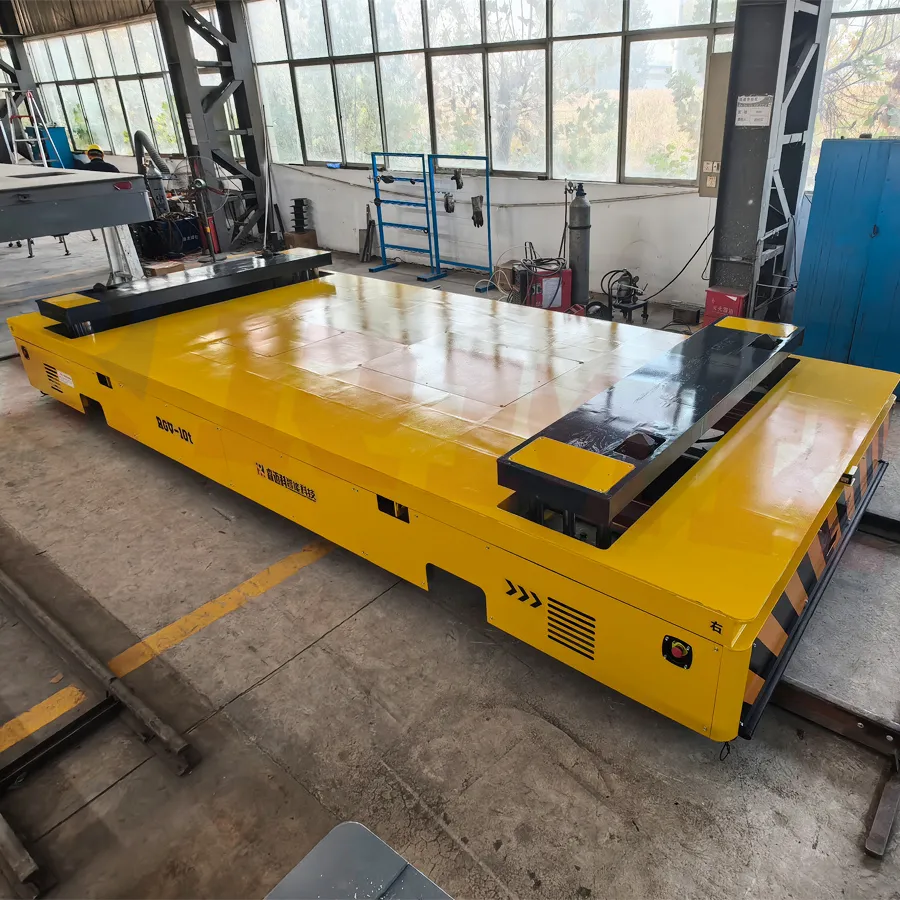
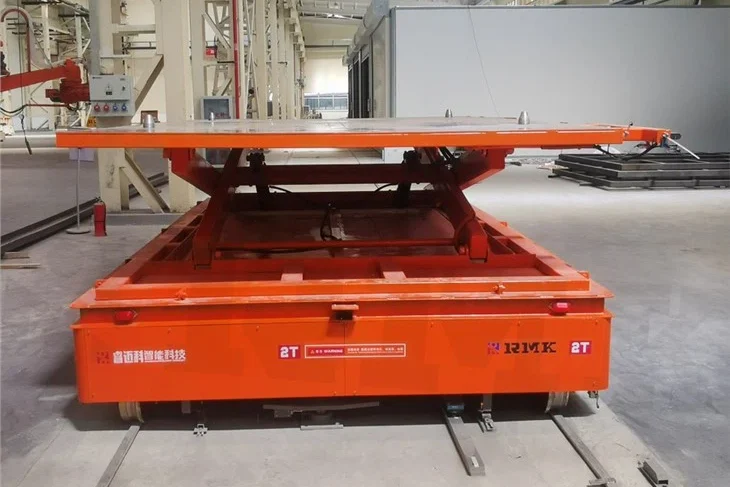
Scissor Rail Transfer Cart: This equipment runs on fixed ground rails, powered by batteries or cable drums. Its advantage is precise positioning, making it ideal for high-frequency, fixed-point height docking with automated assembly lines.
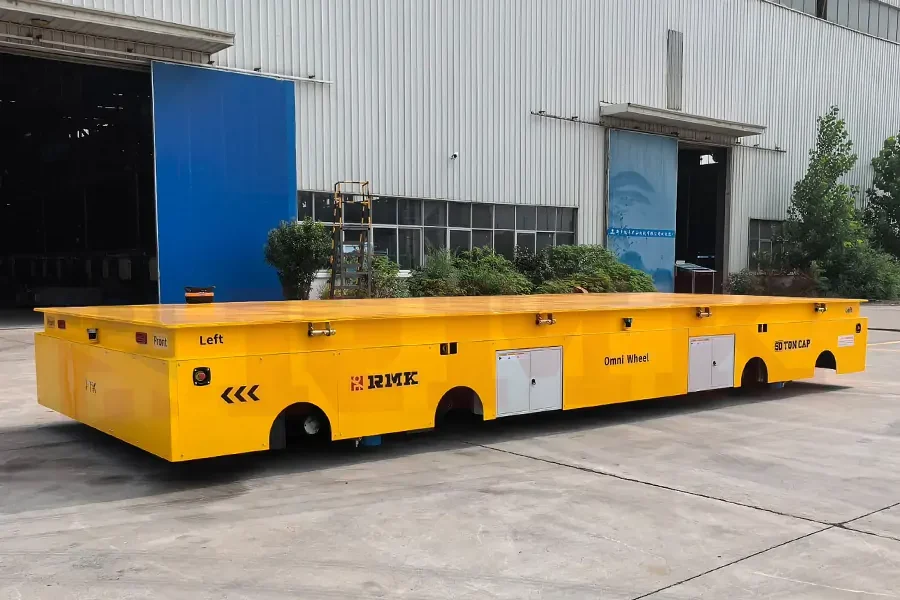
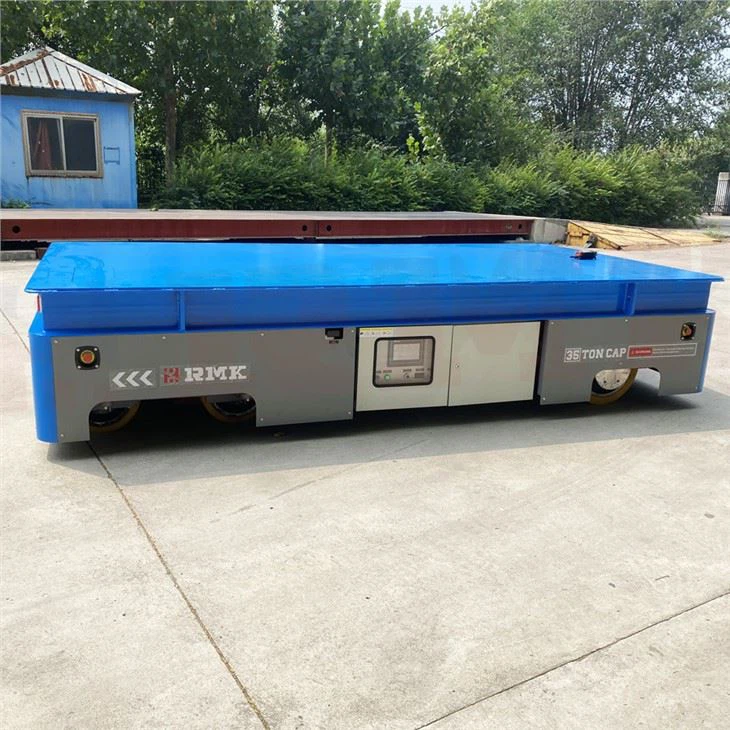
Portable scissor lift with transfer cart: Equipped with polyurethane rubber wheels, it can steer freely on ordinary concrete floors. Without the restriction of rails, it is suitable for production environments with scattered workstations, the need for flexible cross-workshop scheduling, or frequently changing factory layouts.
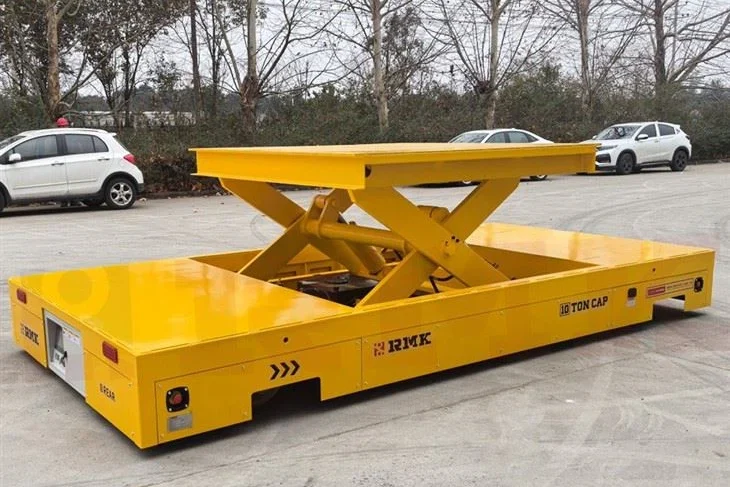
Rail-type focuses on “high-frequency positioning,” while trackless focuses on “multi-point flexibility.” Both provide strong support in the vertical direction.
Parameters
By organizing your factory’s operational needs against this parameter table, you can quickly lock in the right model:
| Technical Indicator | Rail Type | Trackless Type |
| Load Range | $1-100\text{ Tons}$ | $1-50\text{ Tons}$ |
| Lifting Height | Customized (up to $3\text{m}$+) | Customized (generally within $2\text{m}$) |
| Travel Path | Fixed straight or L-shaped rail | 360° omnidirectional steering |
| Floor Requirements | Pre-embedded standard rails | Ordinary concrete/epoxy floor |
| Positioning Accuracy | Extremely high (works with PLC) | High (relies on manual or sensors) |
| Power Source | Battery/Cable drum/Sliding line | Battery power (wireless) |
Advantages
Compared to simple flat carts or expensive fixed lifting platforms, the biggest advantage of the scissor transfer cart is its “composite attributes.”
- Height Docking: It can deliver heavy loads precisely to a designated height. Whether docking with a production line or changing molds with a machine tool, this height compensation capability solves the problem of traditional forklifts not reaching or flat carts not lifting.
- Stability Under Heavy Load: Using the unique mechanical structure of the scissors lifting transfer cart, the center of gravity stays centered during lifting, and the four corners bear force evenly. Even with a load of dozens of tons, it remains as steady as a mountain when raised, unlike single-column lifts that sway easily.
- Space Flexibility: It doesn’t need a fixed location. For the portable scissor lift with transfer cart solution, it can be placed in any corner of the workshop at any time and parked against a wall when finished, without blocking production aisles.
- Reduced Labor Intensity and Risk: It replaces traditional manual handling and dangerous crane lifting. Materials are always in a stable supported state, greatly reducing the risk of safety accidents caused by center-of-gravity shifts.
Its advantage lies in turning handling from “planar” to “three-dimensional,” adding a safety lock to expensive workpieces while improving efficiency.
Application Scenarios
The core application of the scissor transfer cart is to solve the conflict between “material flow” and “manual operation height.”
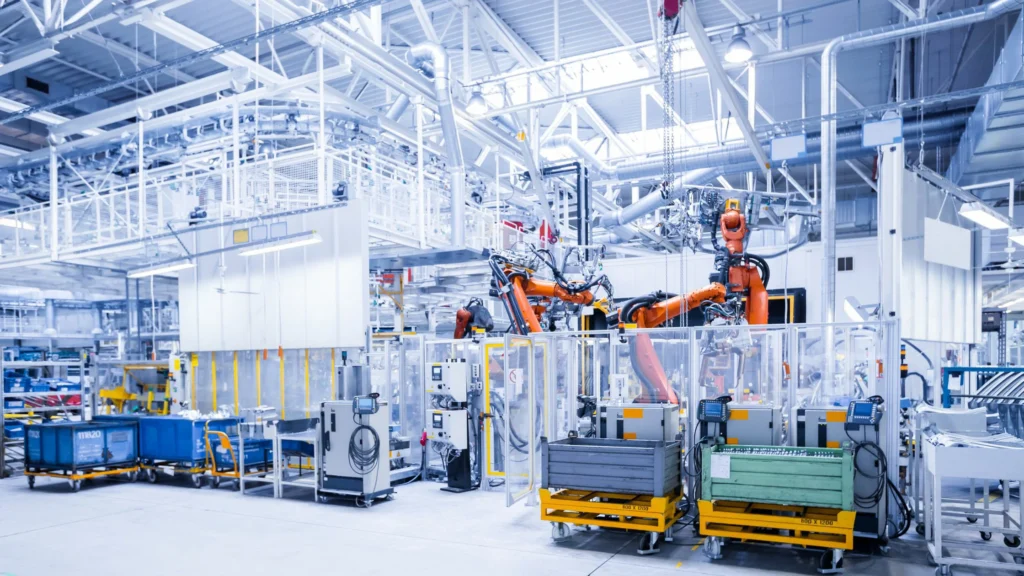
Assembly Line Workpiece Docking: In engine or large machinery assembly lines, the scissors lifting transfer cart can lift heavy components to an ergonomic height, allowing workers to complete assembly at the most comfortable angle and avoid frequent bending.

Painting and Grinding Stations: For massive components, workers need to handle surfaces at different heights. The scissor cart can adjust the height according to work progress, keeping the operator at the optimal working plane.

Mold/Plate Warehouse Docking: In stamping workshops, the scissor rail transfer cart can shuttle between storage racks of different heights and the press bed, achieving efficient “one-key replacement” of molds.
Cross-floor or Cross-line Connection: When two workshops have a height difference, the scissor transfer cart acts as a “mobile elevator.” It carries materials to the connection point, lifts to dock with a conveyor belt, and lets materials slide smoothly between logistics systems of different heights.
Anywhere involving a vertical height drop or workpieces too heavy for manual moving is where a scissor transfer cart is needed; it is the flexible “lifting station” on the production line.
Selection Advice
When buying a scissor cart, you can’t just look at the price; you must align parameters with your work site. Choosing the wrong detail can lead to unexpected maintenance costs later.
- Clarify “Offset Loading”: Is the center of gravity in the middle? If there is a clear offset, you must inform the manufacturer to reinforce the scissor arms or adjust the cylinder layout. Unbalanced lifting accelerates wear and can cause the platform to tilt.
- Verify Stroke and Closed Height: Look at the maximum lift height and the “closed height” when fully lowered. If your workshop workbench is low but the cart body is too thick, it won’t fit under even when fully lowered.
- Choose the Right Drive Mode: For high-frequency fixed-point handling, the scissor rail transfer cart is recommended for its accuracy and durability. For multi-station flow, choose a battery-powered trackless type for more flexible movement without cables.
- Equip Safety Protection: The scissor mechanism has a pinch risk when closing; always require safety protection devices. Also, overload alarms, limit switches, and anti-fall valves are essential safety configurations—don’t skip any.
Measure your lowest workbench and highest docking point before selecting. Don’t chase fancy parameters; choosing a stable structure with full safety protection is the most correct choice.
Conclusion
The scissor transfer cart has solved the problem of height docking in factories. By combining vertical lifting with horizontal displacement, it has become an indispensable tool in heavy industry, automotive, and smart manufacturing.

As a specialist in transfer cart customization in China, Remarkable excels at handling complex lifting conditions. Whether you need a heavy-duty scissor rail transfer cart or a flexible, small portable scissor lift with transfer cart, contact us. We can provide the most stable and safe customized solution based on your actual site data.
Email: transfercart@rmkzn.com
Phone: +86-18637369355
FAQS
What is the maximum load capacity of a scissor transfer cart?
Capacity depends on the chassis design. Generally, the scissor rail transfer cart can easily handle 1-100 tons. The portable scissor lift with transfer cart usually ranges between 1-50 tons to maintain steering flexibility. Remarkable supports non-standard reinforced customization based on material weight.
Is the lifting process stable? How do you prevent cargo from tilting?
Stability is core to the scissor mechanism. We use synchronous hydraulic systems and high-rigidity manganese steel arms to ensure multiple cylinders bear force simultaneously. For workpieces with an offset center of gravity, we add mechanical limits or guide rods to prevent tilting. Additionally, the hydraulic system includes an explosion-proof lock function; even if power is lost, the platform locks in place and won’t drop suddenly.
Can this cart turn on ordinary concrete floors?
Yes. If you choose the trackless type, it is equipped with polyurethane coated wheels that can travel and steer directly on concrete, epoxy, or steel plate floors. It supports 360° rotation in place, perfect for navigating around fixed equipment in tight spaces.
How long is the battery life? What if it runs out of power mid-job?
A typical battery powered scissor transfer cart supports 6-8 hours of high-frequency operation. We usually recommend batteries based on shifts, such as large-capacity lead-acid or fast-charging lithium batteries. If running on fixed rails, cable drums or sliding lines can also be considered for 24-hour continuous operation.
Are there special environmental requirements for installation?
Rail-type requires pre-laid tracks with high flatness. Trackless requires a flat ground without deep pits or large steps. Also, because the scissor mechanism has a “closed height,” if your docking height is extremely low, we might need a shallow pit in the floor so the cart surface is flush with the ground when lowered.
Can this equipment be upgraded to an automated AGV?
Absolutely. This would be the lifting version of a steerable AGV transfer cart. We can integrate laser or magnetic navigation onto the scissor transfer cart and interface it with the factory’s WMS through a PLC system to achieve unmanned “automatic addressing, lifting/picking, and storage.”