
Table of Contents
Introduction
Electric transfer carts are widely used in factories, warehouses, steel plants, and production lines for moving heavy materials safely and efficiently. Powered by batteries, cables, or other electrical systems, these carts use motors, drive mechanisms, and control systems to transport loads along fixed routes or designated working areas. Understanding the basic structure and operating principle helps users select the right transfer cart for different material handling requirements.
In this article, I will explain How Does an Electric Transfer Cart Work? from several aspects, including the power supply system, driving mechanism, control methods, main components, common applications, and key factors for choosing a suitable model. Based on industrial handling experience, we will also compare different types of electric transfer carts and explain how they are used in real production environments.
What Is an Electric Transfer Cart?
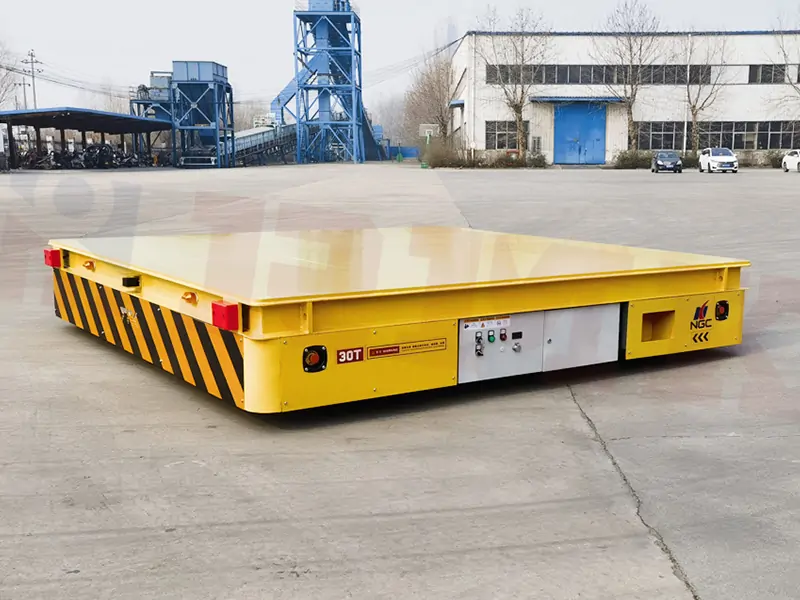
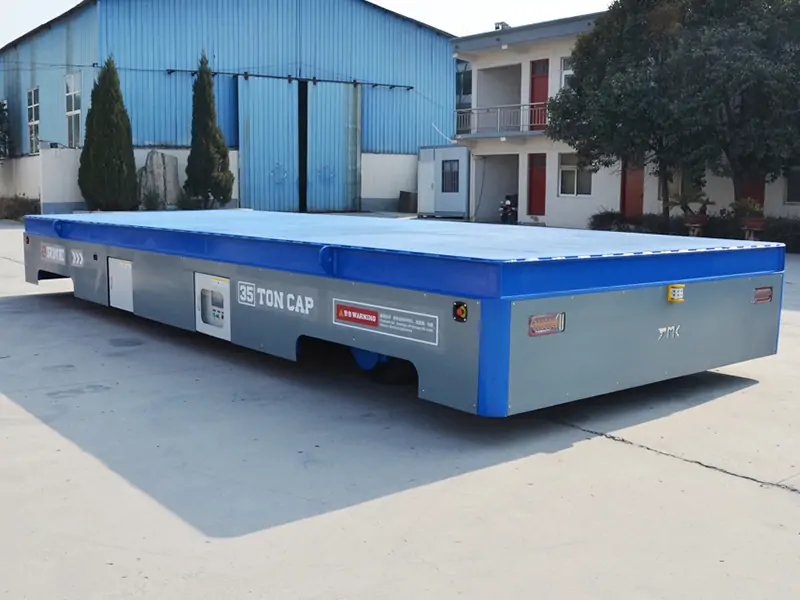
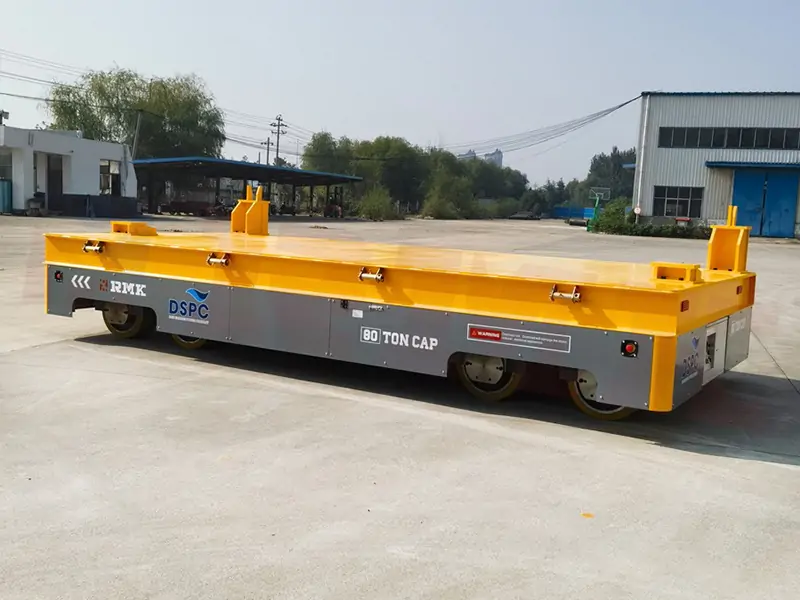
An electric transfer cart is an industrial handling vehicle that uses electric power to move heavy materials inside factories, workshops, and warehouses. It is also called an electric flat cart, electric transfer trolley, motorized transfer cart, or electric rail cart. According to the working environment and transportation requirements, electric transfer carts can be divided into rail transfer carts and trackless transfer carts. Rail transfer carts run on fixed tracks and are commonly used for heavy-duty transportation, while trackless transfer carts use rubber wheels and can move freely in different working areas. The main power sources include batteries, cable reels, and rail power systems, which supply energy to the motor and drive mechanism.
Electric transfer carts are used in steel plants, foundries, machinery manufacturing, warehouses, and other industries to transport steel coils, molds, equipment parts, and large components. They are suitable for short-distance material transfer where forklifts or cranes are not convenient to use. Depending on the application, electric transfer carts can be equipped with remote control, hydraulic lifting platforms, automatic charging systems, or AGV/RGV functions for different production requirements.
How Does an Electric Transfer Cart Work?
An electric transfer cart works by using electric power to drive the motor, which transfers the power to the wheels through the transmission system. The cart moves along rails or the workshop floor to transport heavy materials. Its operation process mainly includes power supply, driving, control, positioning, and auxiliary functions.
Step 1: Power Supply Provides Energy
The electric transfer cart first receives power from the selected power supply system. Different working conditions require different power solutions.
- Battery Power: Lead-acid or lithium batteries provide energy for the motor and allow the cart to operate without external cables.
- Cable Power: A cable reel or cable system supplies continuous power for fixed transportation routes.
- Low Voltage Rail Power: Conductive rails provide power during operation and are suitable for continuous material transfer.
The power supply sends electrical energy to the control system and motor to start the cart operation.
Step 2: Motor Generates Driving Force
After receiving electrical power, the motor starts to generate rotation force. The motor output passes through the gear reducer, transmission shaft, and wheel assembly.
The reducer increases the output torque, allowing the wheels to generate enough traction to move heavy loads. This drive system enables the transfer cart to operate smoothly across different load capacities.
Step 3: Control System Controls Movement
The operator controls the electric transfer cart via a wireless remote, a pendant controller, or a control cabinet.
The control system manages:
- Forward and reverse movement
- Start and stop operation
- Running speed adjustment
- Emergency stop
For automated production lines, the cart can be connected with PLC systems or integrated into AGV/RGV handling systems for automatic transportation.
Step 4: Running System Guides the Cart Movement
The running method depends on the cart design and application requirements.
Rail Transfer Cart:
The cart moves along fixed rails. The track controls the travel direction and provides stable support for heavy-duty transportation, such as steel coils, molds, and large equipment parts.
Trackless Transfer Cart:
The cart uses rubber wheels and a steering system to move directly on the ground. It does not require fixed rails and is suitable for workshops with changing transportation routes.
For applications requiring direction changes, rail transfer carts can work with turntables or transfer platforms to connect different tracks.
Step 5: Additional Functions Support Different Applications
Based on production requirements, electric transfer carts can be equipped with additional systems:
- Hydraulic lifting system: Adjusts the platform height for docking with different production lines.
- Anti-collision system: Detects obstacles and improves operation safety.
- Automatic charging system: Charges the battery without manual connection.
- Positioning system: Controls the cart position for accurate material handling.
Through the cooperation of the power system, motor drive, control components, and running structure, electric transfer carts are used for heavy material transportation in steel plants, manufacturing workshops, warehouses, and other industrial environments.
An electric transfer cart uses electrical energy to drive the motor, and the motor drives the wheels through the transmission mechanism. The control system manages the cart’s movement to complete material transfer operations in factories and workshops.
For details on how to use the Electric Transfer Cart, see: How to Use the Electric Transfer Cart?
Parts
An electric transfer cart consists of several key components that work together to complete material transportation. The main parts include the frame, power system, drive system, control system, and safety devices. Different models can also be equipped with lifting, steering, and positioning systems according to specific working requirements.
An electric transfer cart consists of several main parts, including the frame, power system, drive system, control system, and safety components. These parts work together to move heavy materials in factories and industrial areas.
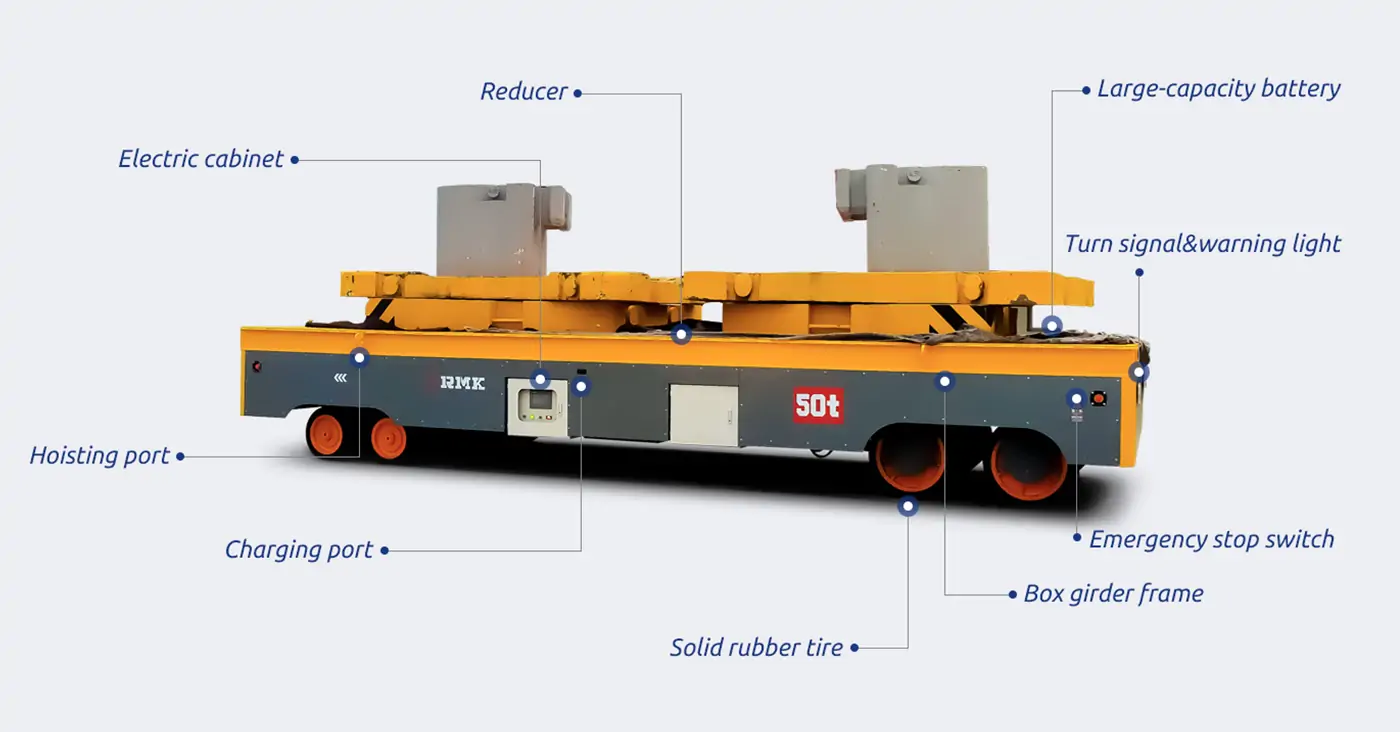
- Frame: The frame is the main structure of the transfer cart. It is made of welded steel and supports the load, platform, and other components. The frame size and structure are designed according to the load capacity and working conditions.
- Power Supply System: The power supply system provides electricity for the motor and control system. Common options include battery power, cable power, low voltage rail power, and cable reel power. The suitable power method depends on the transportation distance and working environment.
- Drive System: The drive system provides the power for cart movement. It includes the motor, reducer, transmission shaft, and wheels. The motor generates power, and the reducer increases torque to drive the wheels and move the cart with heavy loads.
- Control System: The control system manages the cart operation. It includes the control cabinet, remote controller, pendant controller, and PLC system. Operators can control forward, reverse, stop, and speed adjustment through the control system.
- Steering and Positioning System: The steering system controls the running direction of the transfer cart. Rail transfer carts follow fixed tracks, while trackless transfer carts use steering wheels for flexible movement. Some models use turntables for track switching and direction changes.
- Safety and Optional Components: Electric transfer carts can be equipped with safety and additional functions according to application needs. Common components include emergency stop buttons, warning lights, anti-collision devices, automatic charging systems, and hydraulic lifting platforms.
Different Power Supply Types of Electric Transfer Carts
Electric transfer carts use different power supply methods according to the working distance, route layout, and operating conditions. The main power options include battery power, low voltage rail power, cable power, and conductor rail power.
Battery Powered Transfer Cart
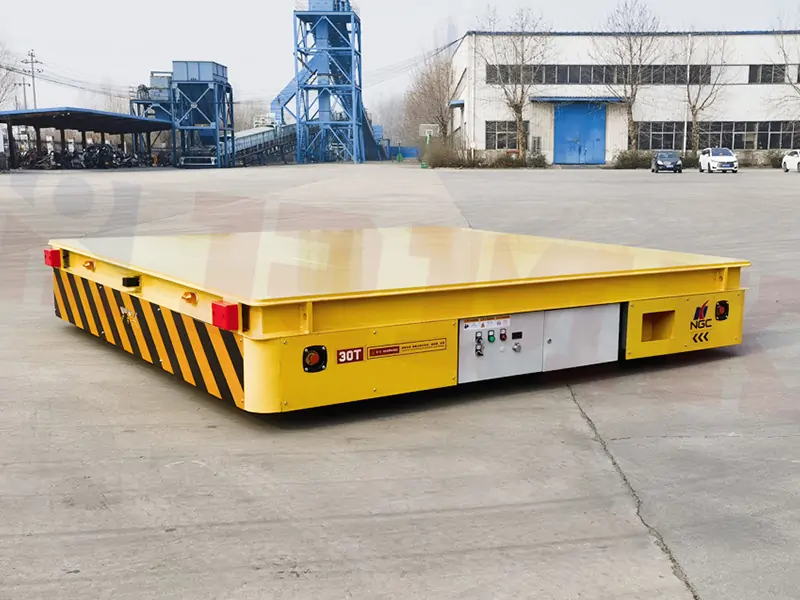
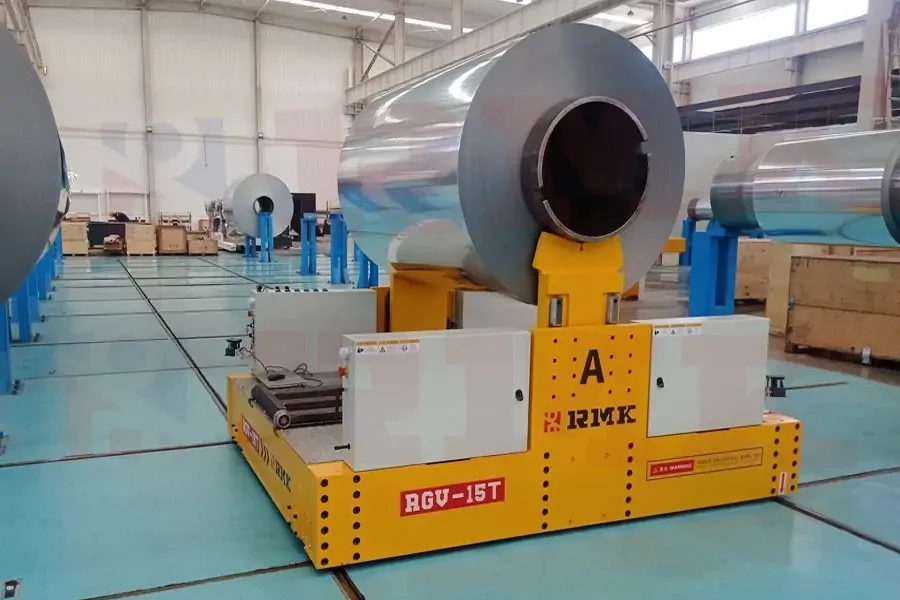
Battery powered transfer carts use onboard lead-acid or lithium batteries to supply power to the motor. They do not require external cables or fixed power lines, allowing flexible movement in workshops and warehouses. This type is suitable for applications that require route changes or longer travel distances.
Low Voltage Rail Powered Transfer Cart
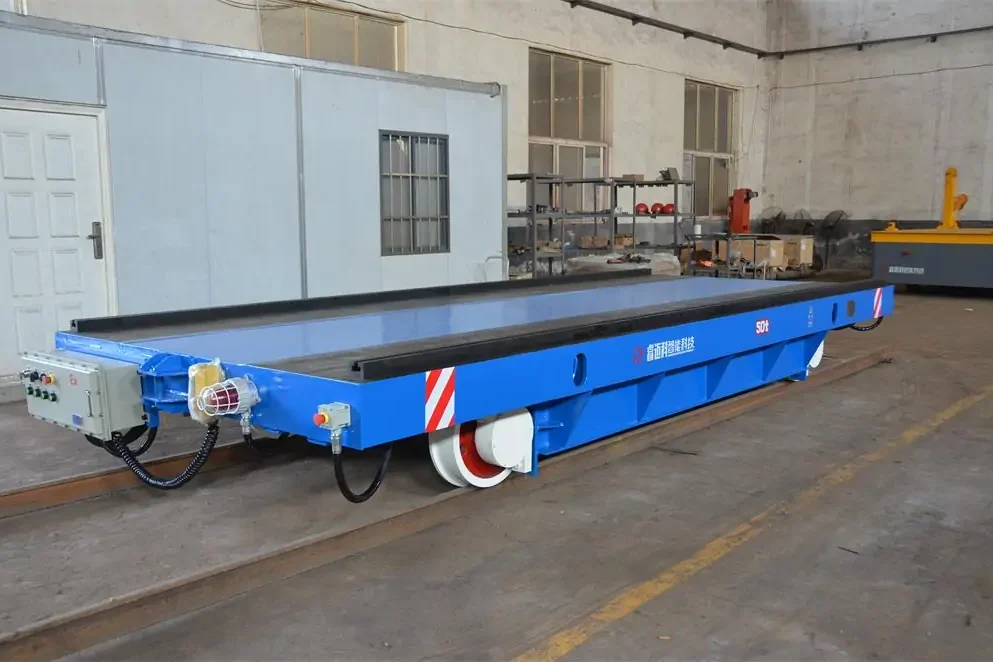
Low voltage rail powered transfer carts receive power through conductive rails installed along the travel route. The system provides stable power for continuous operation and is mainly used for heavy-duty transportation with fixed paths, such as steel plants and machinery manufacturing facilities.
Cable Powered Transfer Cart
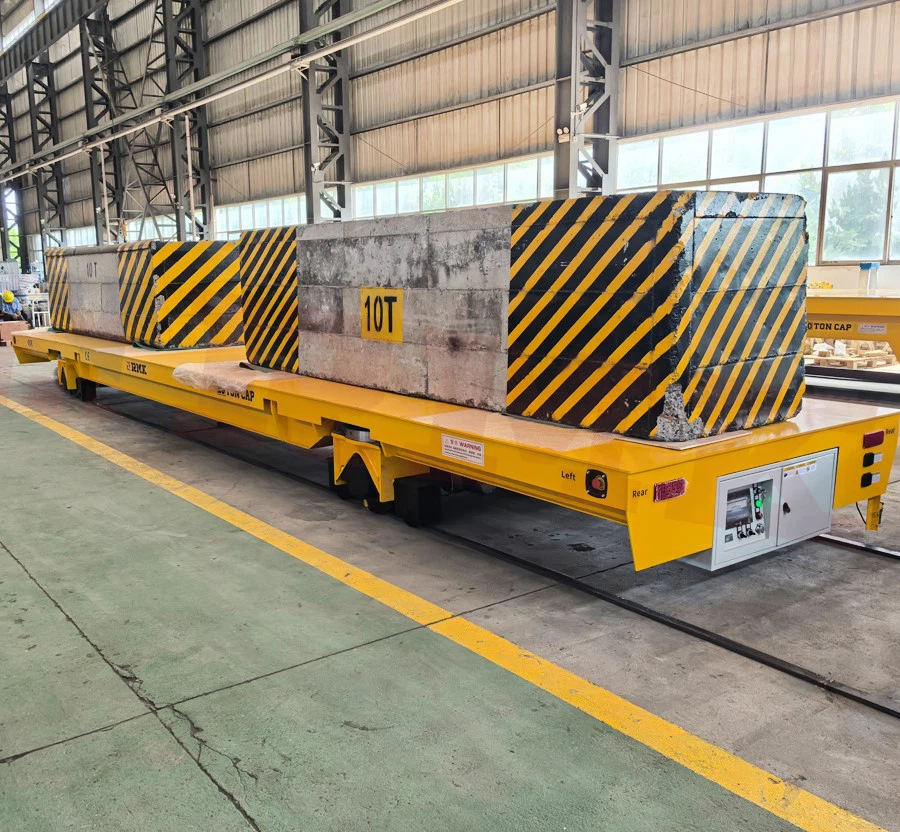
Cable-powered transfer carts use a cable reel or drag cable to connect with an external power supply. This structure is simple and cost-effective, making it suitable for short-distance transportation between fixed working areas. The operation range is limited by the cable length.
Conductor Rail Powered Transfer Cart
Conductor rail powered transfer carts use a busbar or sliding contact system to receive power during operation. This method provides continuous power supply and is suitable for automatic production lines, warehouses, and applications requiring frequent operation.
The power supply type depends on the working environment, transportation distance, operation frequency, and route requirements. Battery power is suitable for flexible movement, while rail and conductor systems are better for fixed routes and continuous operation. Cable power is commonly used for short-distance material transfer with stable working positions.
For more information on the types of electric trackless transfer carts and how to select one, see the article: Electric Trackless Transfer Cart Selection Guide: Types, Specifications, and How to Choose
Applications
Electric transfer carts are used for heavy material transportation in factories, warehouses, and industrial production areas. They are commonly applied in industries that require the movement of large and heavy components.
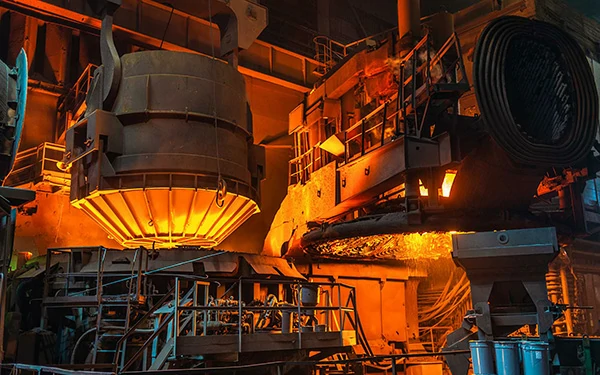
Steel and Metallurgy Industry
Electric transfer carts are used to transport steel coils, steel plates, billets, molds, and ladles in steel plants.
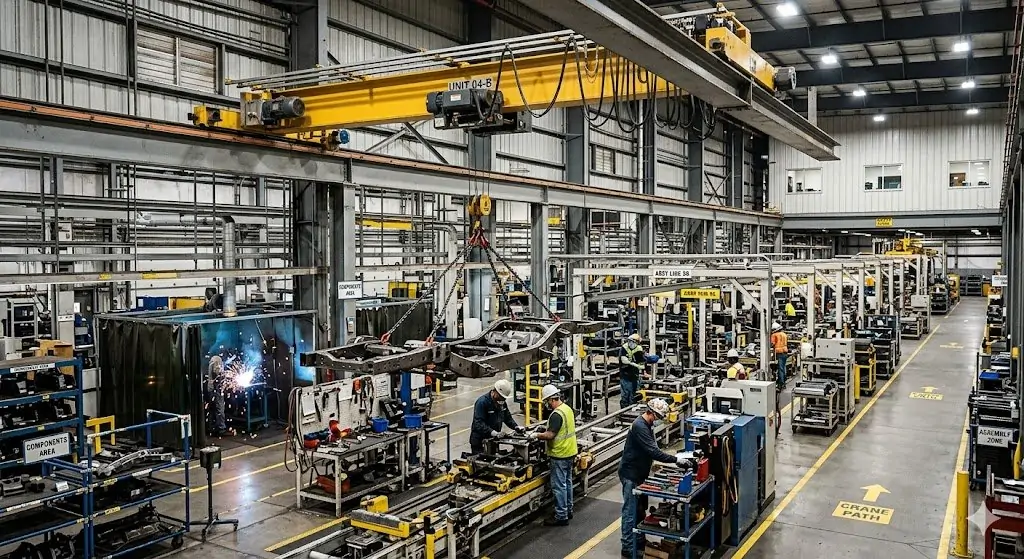
Machinery Manufacturing
Electric transfer carts are used to move machine parts, equipment bases, molds, and large components during manufacturing and assembly.
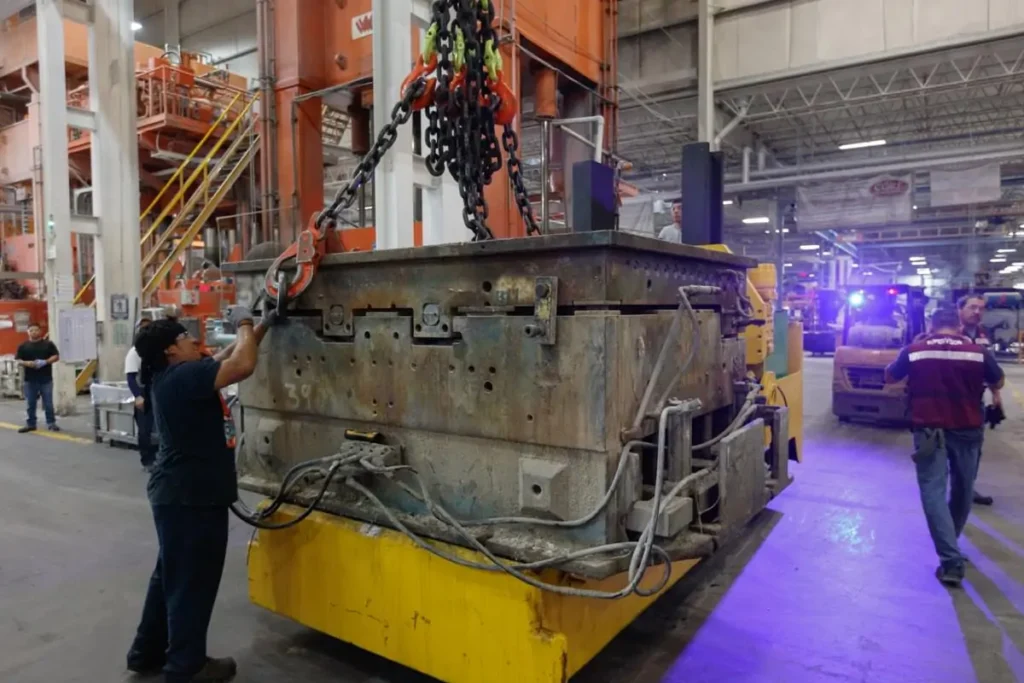
Mold and Die Handling
Electric transfer carts are used for transporting injection molds, stamping dies, and tooling equipment in mold workshops.
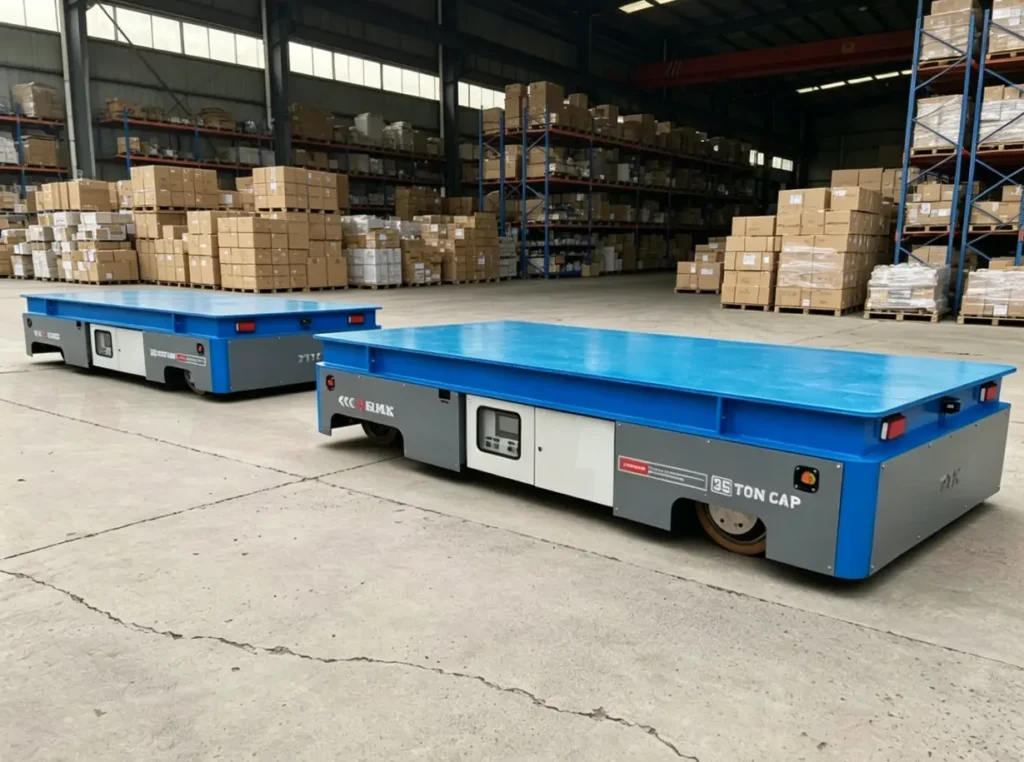
Warehouse and Logistics
Electric transfer carts are used for moving heavy goods, pallets, and production materials in warehouses and storage areas.
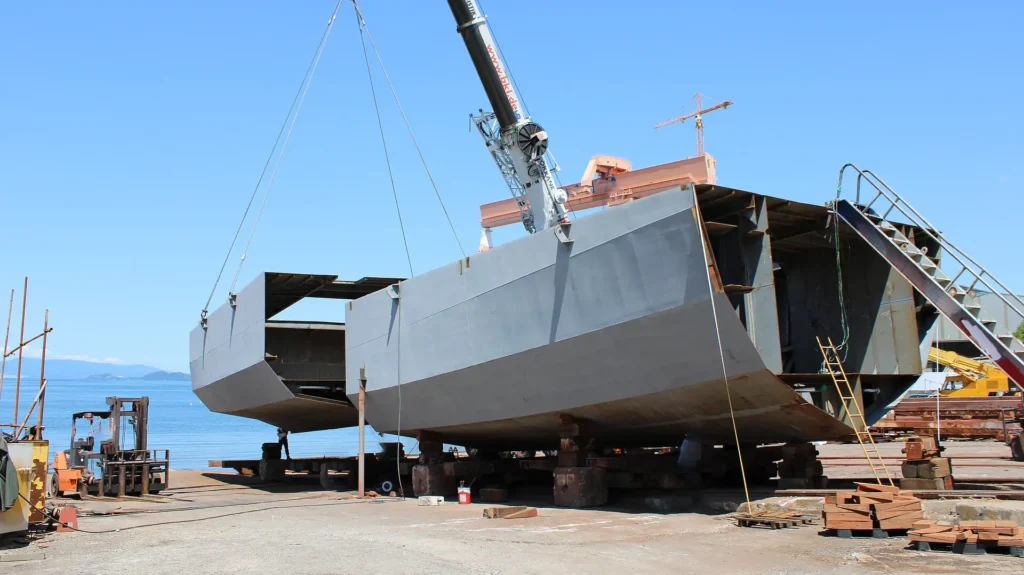
Shipbuilding Industry
Electric transfer carts are used to transport ship sections, steel structures, and heavy components in shipyards.
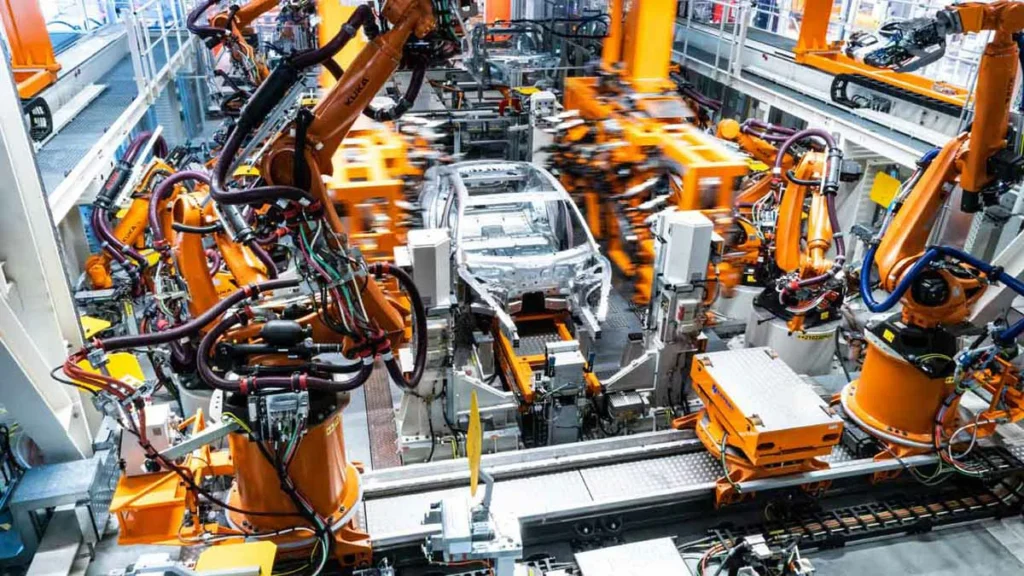
Automotive Production Lines
Electric transfer carts are used to move vehicle bodies, assembly parts, and production equipment in automotive factories.
Electric Transfer Cart vs AGV
Electric transfer carts and AGVs are both used for industrial material handling, but they have different functions and working methods. An electric transfer cart is mainly used for heavy-load transportation between fixed locations, while an AGV (Automated Guided Vehicle) uses navigation systems to complete automatic material movement without manual operation.
| Comparison | Electric Transfer Cart | AGV |
|---|---|---|
| Operation | Remote control or manual operation | Automatic operation |
| Navigation | Fixed rail or preset routes | Laser, vision, magnetic, or other navigation methods |
| Load Capacity | Suitable for heavy loads, up to hundreds of tons | Mainly used for light and medium loads |
| Route Flexibility | Best for fixed transportation routes | Suitable for changing routes and multiple stations |
| Cost | Lower investment and simple maintenance | Higher investment with advanced automation functions |
| Applications | Steel, machinery, molds, heavy material handling | Smart factories, warehouses, automated production lines |
In simple terms, electric transfer carts are suitable for heavy-duty transportation with fixed routes, while AGVs are designed for automated and flexible material handling. The right choice depends on the required load, production layout, and automation requirements.
The price of electric transfer carts is influenced by a variety of factors. For more details, see: Electric Transfer Cart Price: Cost Guide, Factors & Buying Tips
How to Choose the Right Electric Transfer Cart?
Selecting an electric transfer cart requires considering load capacity, working conditions, transportation route, and operation requirements.
Confirm Load Requirements: Choose the cart according to the material weight, size, and platform requirements. The load capacity and structure should match the actual handling needs.
Check Working Conditions: Consider the travel distance, operation frequency, speed, and route layout. Fixed routes usually use rail transfer carts, while flexible routes require trackless models.
Select Power Supply: Choose the power method based on the application. Battery power is suitable for flexible operation, while cable and rail power are used for fixed routes and continuous work.
Consider Environment: Check the ground condition, temperature, dust, and special requirements. Explosion-proof or heat-resistant designs may be needed for specific industries.
Choose the Cart Type
- Rail Transfer Cart: For fixed routes and heavy loads.
- Trackless Transfer Cart: For flexible movement.
- AGV/RGV: For automated material handling.
Check Control and Safety: Select suitable control methods, such as remote control or PLC control. Safety devices like emergency stops, alarms, and anti-collision systems should be included.
For guidelines on the operation and safe use of electric transfer carts, see: How to Operate an Electric Transfer Cart Safely?
Select a Reliable Manufacturer: Choose a manufacturer with experience in transfer cart production, customization capability, and after-sales support.
You can also read this article for more detailed information on selecting the right model: How to Select a Cable Flat Electric Transfer Cart? A Professional Selection Guide!
Regular inspections and maintenance are required to ensure the long-term operation of electric transfer carts. For more details, see: Battery-Powered Transfer Cart Maintenance Guide: Daily Inspection and Battery Care
Conclusion
Electric transfer carts are widely used for moving heavy materials in factories, warehouses, and production areas. Their operation depends on the power system, drive structure, control method, and cart design. Different models are selected according to load capacity, transportation routes, and working conditions.
REMARKABLE designs and manufactures electric transfer carts for various industrial applications, including rail transfer carts, trackless transfer carts, and heavy-duty transfer vehicles. We provide customized solutions based on customer requirements such as load capacity, platform size, power supply, and control system. Contact us for an electric transfer cart solution suitable for your handling needs.
Email: transfercart@rmkzn.com
Phone: +86-18637369355
FAQ
How does an electric transfer cart work?
An electric transfer cart works by using electrical power to drive motors, which transmit torque through reducers to move wheels. The control system manages forward, reverse, speed, and stopping operations.
What powers an electric transfer cart?
Electric transfer carts can use battery power, cable reel power, rail power, or other customized electrical supply systems.
How much weight can an electric transfer cart carry?
Electric transfer carts can be customized from several tons to hundreds of tons depending on application requirements.
Can electric transfer carts run automatically?
Yes. Electric transfer carts can be integrated with PLC systems, sensors, and automatic control systems for automated material handling.
What is the difference between an electric transfer cart and an AGV?
Electric transfer carts usually follow fixed routes and focus on heavy-load transportation, while AGVs use navigation systems for flexible automatic movement.
Are electric transfer carts suitable for outdoor use?
Yes. Outdoor transfer carts can be designed with weather protection, durable structures, and suitable power systems.