
Table of Contents
Introduction
Choosing the right heavy duty transfer cart depends on the load requirements, working environment, and transportation conditions. These electric transfer vehicles are widely used for moving steel coils, molds, machinery, and heavy structures in factories, warehouses, shipyards, and other industrial facilities. The suitable model helps improve handling efficiency and supports reliable daily operations.
In this guide, I will cover the main factors for selecting a heavy duty transfer cart, including capacity, power supply, rail or trackless options, control methods, and customization choices. These points can help buyers better understand different models and select a solution that fits their applications.
What Is a Heavy Duty Transfer Cart?
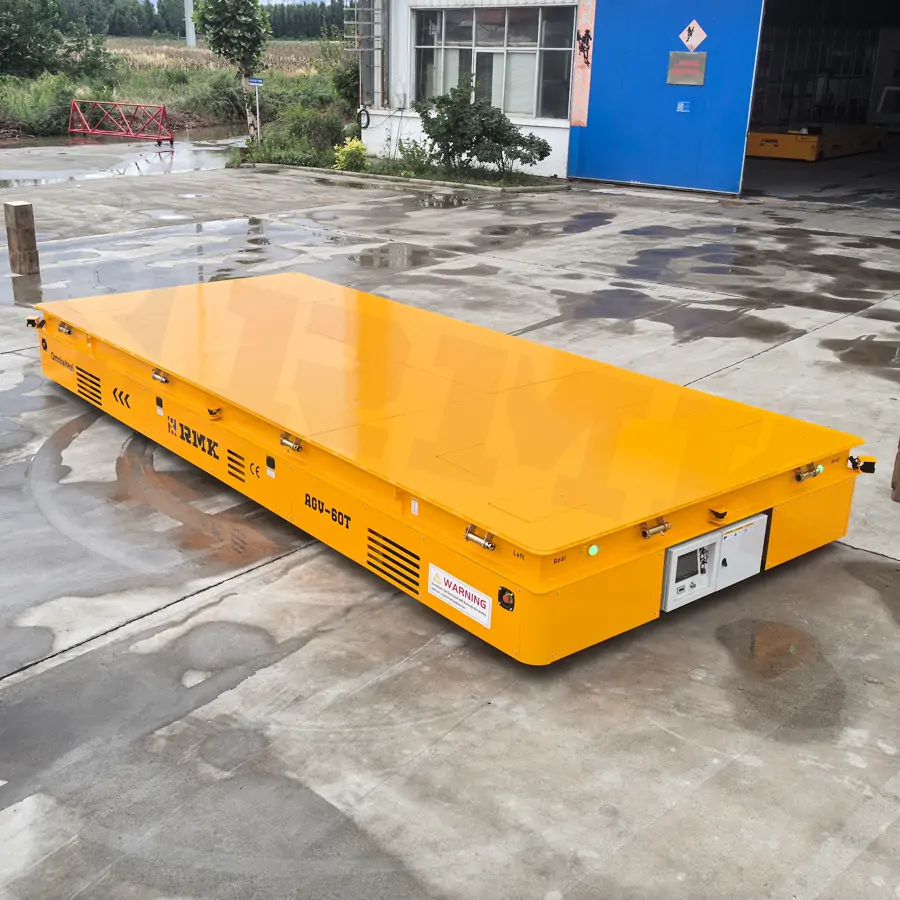
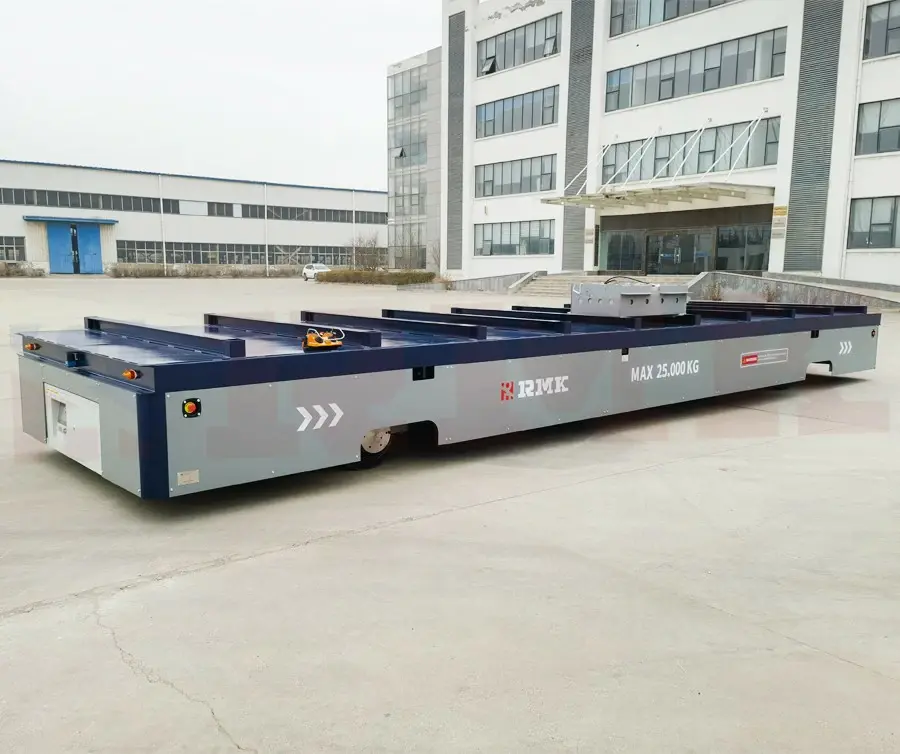
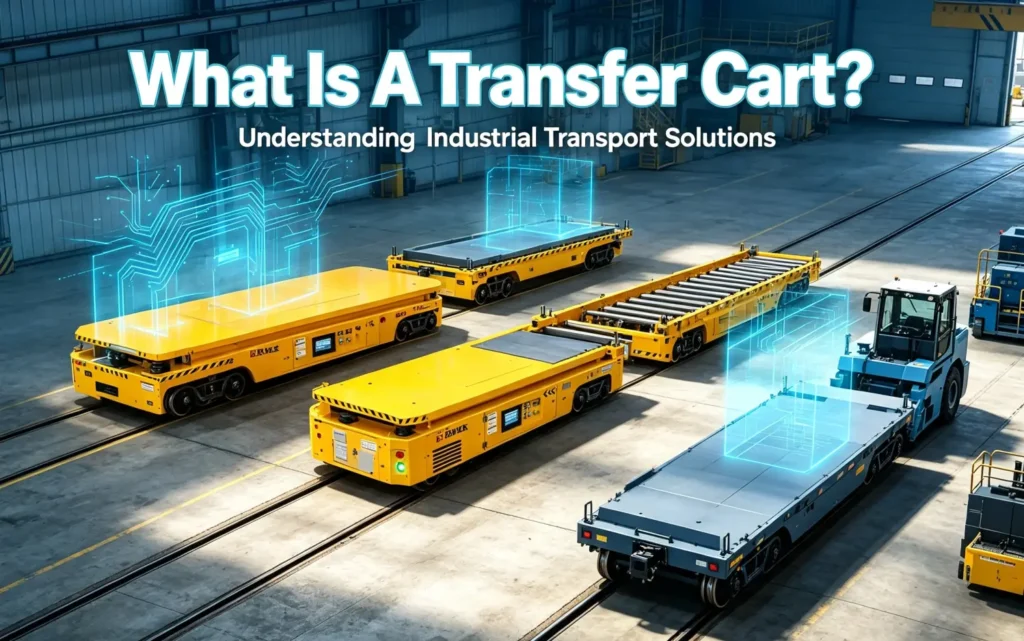
A heavy duty transfer cart is an industrial material handling vehicle designed to move large, heavy, or oversized loads horizontally in facilities such as steel mills, shipyards, warehouses, and manufacturing plants. Compared with standard forklifts, these carts feature reinforced steel structures, heavy-duty wheels or rails, and powerful drive systems to handle loads from several tons to hundreds of tons. They are also known as industrial transfer carts, die carts, or rail transfer carts.
Heavy duty transfer carts are available in rail-mounted, trackless, and cross-transfer designs. Rail transfer carts are used for fixed routes and high-frequency transportation, while trackless models provide flexible movement without permanent rails. Capacity is one of the key selection factors, with standard models ranging from 5 to 500 tons and custom solutions available for special applications.
Modern heavy duty transfer carts use electric drive systems powered by batteries, cable reels, or conductor rails. Features such as variable-frequency drives, anti-collision sensors, and emergency stop systems improve operation control and safety. These carts are widely used with cranes and production lines to optimize heavy material transportation.
For a more detailed introduction to heavy-duty transfer carts, see: What Is a Heavy-Duty Transfer Cart?
What Factors Should You Consider Before Buying a Heavy Duty Transfer Cart?
Before selecting a heavy duty transfer cart, buyers need to evaluate load requirements, travel conditions, power supply, and working environment. These factors directly affect the cart structure, drive system, operating performance, and long-term maintenance cost.
1. Load Capacity Requirements
Heavy duty transfer cart capacity is the first factor to confirm. Standard models are commonly designed for loads from 5 tons to 500 tons, including 5-ton, 20-ton, 50-ton, and 100-ton+ applications. Customized transfer carts are available for special heavy-duty handling tasks.
Capacity selection should consider more than the maximum load weight. Load distribution, center of gravity, loading method, safety margin, and future production requirements all affect the final design. Choosing a suitable capacity helps prevent structural overload and supports stable operation during daily transportation.
2. Rail or Trackless Transfer Cart?
The transportation route determines whether a rail transfer cart or trackless transfer cart is the better choice.
- A rail transfer cart runs on fixed steel tracks and is commonly used in workshops, production lines, and areas with repeated transportation routes. It provides stable movement, high load capacity, and accurate positioning, making it suitable for heavy and frequent material handling.
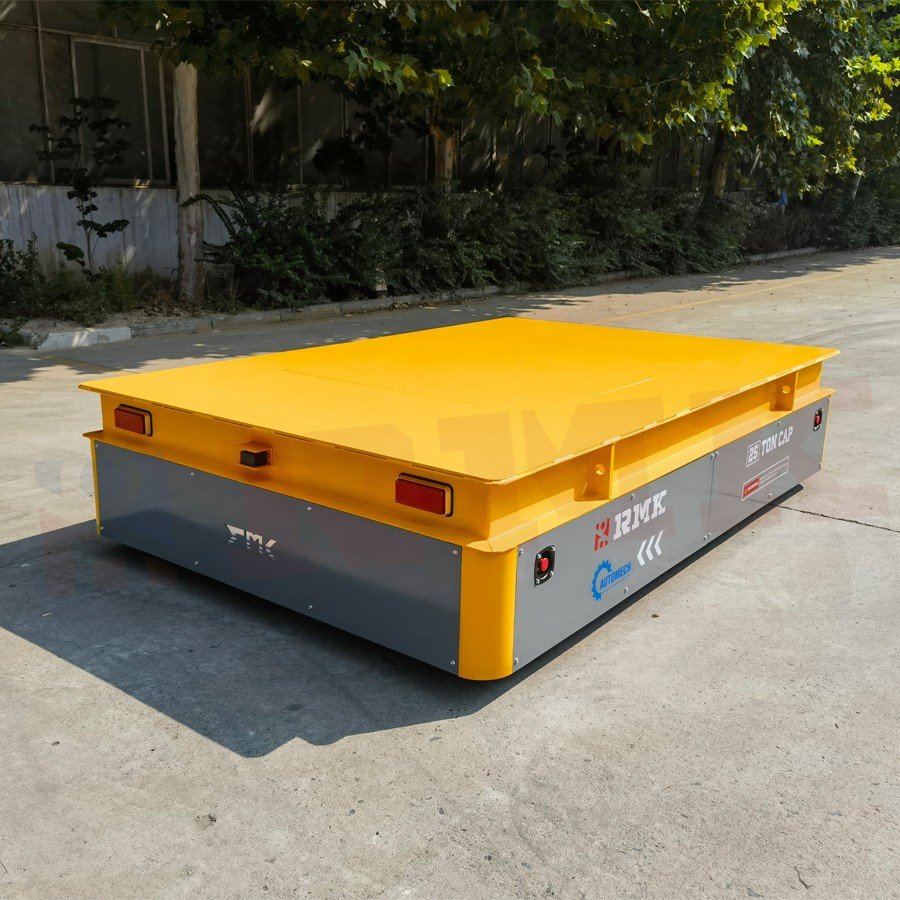
- A trackless transfer cart uses rubber or polyurethane wheels and does not require permanent rails. It is designed for flexible transportation between multiple working areas, especially in large workshops or facilities where layouts may change. Its main advantages include free route planning and easier installation.
| Feature | Rail Transfer Cart | Trackless Transfer Cart |
|---|---|---|
| Route | Fixed | Flexible |
| Installation | Rail required | No rail required |
| Application | Production lines, fixed transport routes | Large workshops, multiple working areas |
The choice between rail and trackless models depends on factory layout, transport frequency, load requirements, and future expansion plans.
How to Choose the Right Power Supply System?
The power supply system affects the running distance, flexibility, and maintenance of a heavy duty transfer cart. The selection depends on travel distance, operation frequency, and working environment. Common options include battery, cable reel, and rail power systems.
Battery Powered Transfer Cart
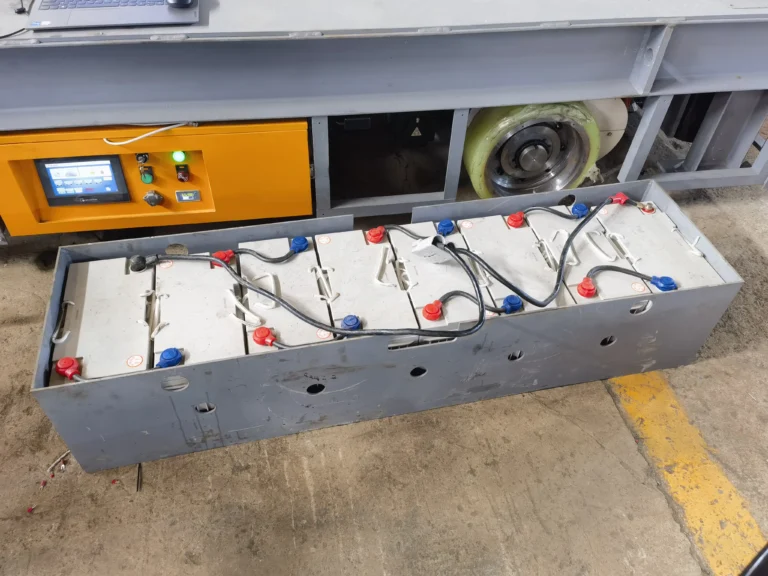
A battery powered transfer cart uses rechargeable batteries for independent operation. It is suitable for indoor applications that require flexible movement, simple installation, and low maintenance.
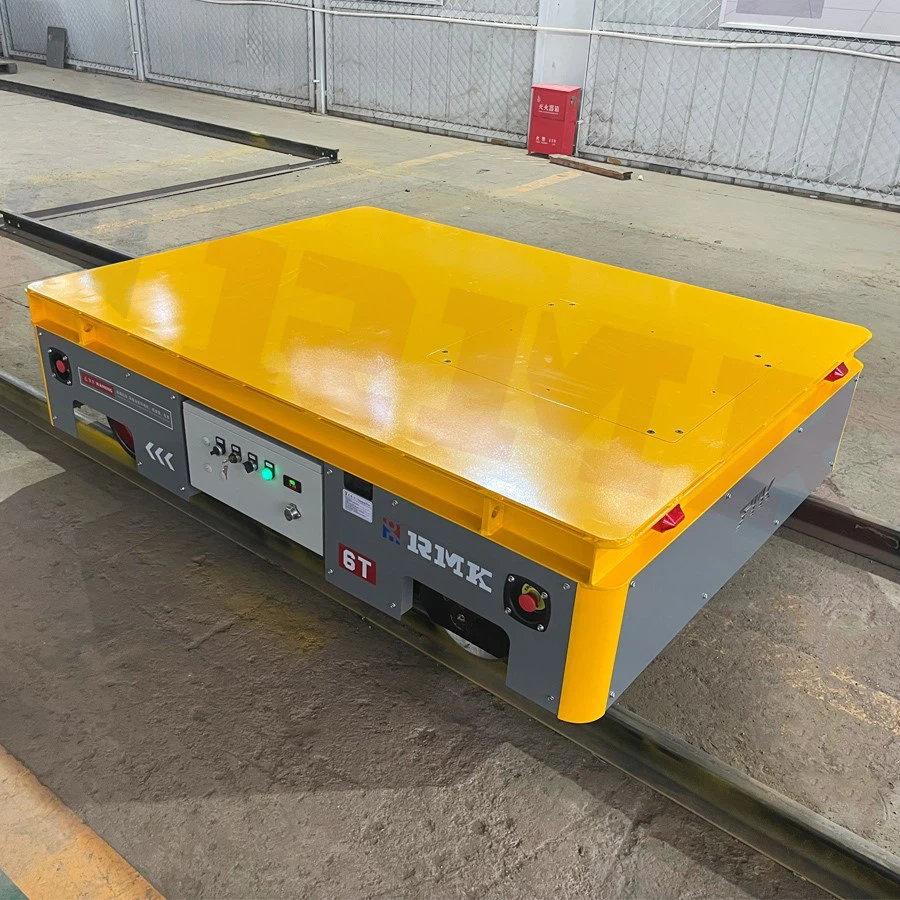
Cable Reel Transfer Cart
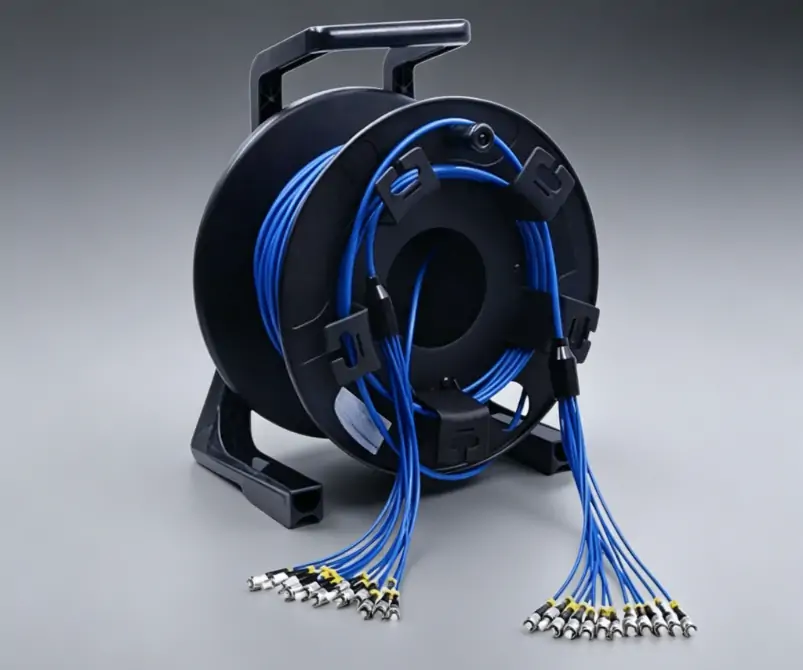
A cable reel transfer cart is designed for continuous operation and long working hours. It provides stable power for fixed working areas but requires proper cable management.
Rail Powered Transfer Cart
Rail powered transfer carts are used for high-frequency transportation on fixed routes. They are suitable for production lines and heavy-duty applications that require stable running and accurate positioning.
The right power system should be selected based on operating conditions, transport distance, and production requirements.
How to Select Transfer Cart Capacity?
Capacity is the key specification when selecting a transfer cart. It determines the frame design, wheel load, motor power, and power system. Choosing the wrong capacity can increase wear, reduce service life, or add unnecessary costs.
- Select Based on Maximum Load: Always calculate capacity based on the heaviest load, not the average weight. Include fixtures, tools, and other additional loads. If load weights vary, use the maximum expected payload for the design.
- Consider Future Production Needs: A reasonable capacity margin helps avoid replacement when production requirements increase. Common heavy duty transfer cart capacities include 30 tons, 50 tons, and 100 tons+, while customized models are available for special applications.
- Check Load Size and Distribution: Capacity is not only about weight. Large or uneven loads such as coils, ladles, and steel structures require suitable platforms and load distribution designs to prevent excessive stress.
- Match Capacity with Working Conditions: Travel distance, rail or floor conditions, running frequency, and wheel load affect the final design. Rail transfer carts usually support higher loads, while trackless models offer flexible operation.
- Confirm Specifications with the Manufacturer: Before ordering, provide cargo details, platform size, working hours, and operating environment. These factors help determine the correct structure, drive system, and power configuration.
Selecting the right capacity ensures safe operation, longer service life, and better cost efficiency.
Transfer carts have load capacities ranging from a few metric tons to over a thousand metric tons. How do you determine a transfer cart’s actual load capacity, and how do you calculate the final load capacity? For details, see: How Much Weight Can a Heavy-Duty Transfer Cart Carry?
What Types of Heavy Duty Transfer Carts Are Available?
Heavy duty transfer carts are designed to move heavy materials, equipment, and components inside industrial facilities. Different designs are available based on travel routes, power supply, load requirements, and automation needs. The main types include rail transfer carts, trackless transfer carts, battery powered transfer carts, AGV transfer carts, and hydraulic lift transfer carts.
Rail Transfer Cart
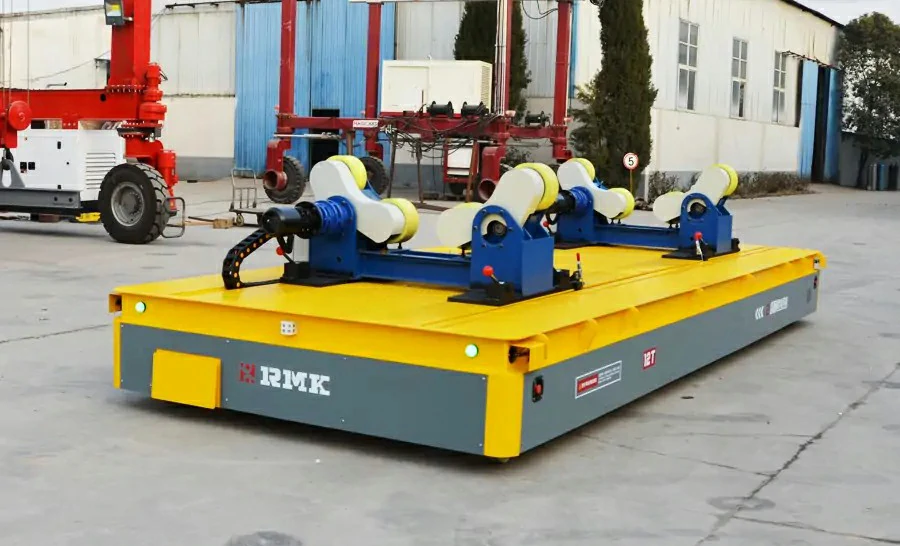
A rail transfer cart runs on fixed steel rails and is designed for stable transportation of heavy loads along a specific route. It is commonly used in factories and production areas where repeated material movement, high load capacity, and accurate positioning are required.
Suitable for:
- Fixed transportation routes
- Steel plants and manufacturing workshops
- Heavy load transfer between production stations
- High-frequency material handling operations
Trackless Transfer Cart
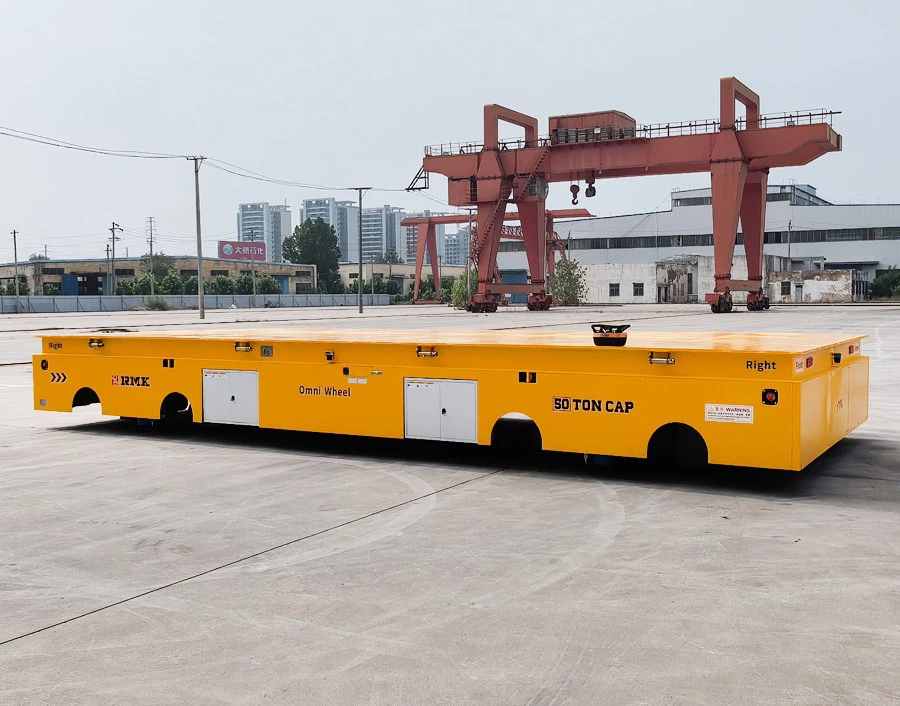
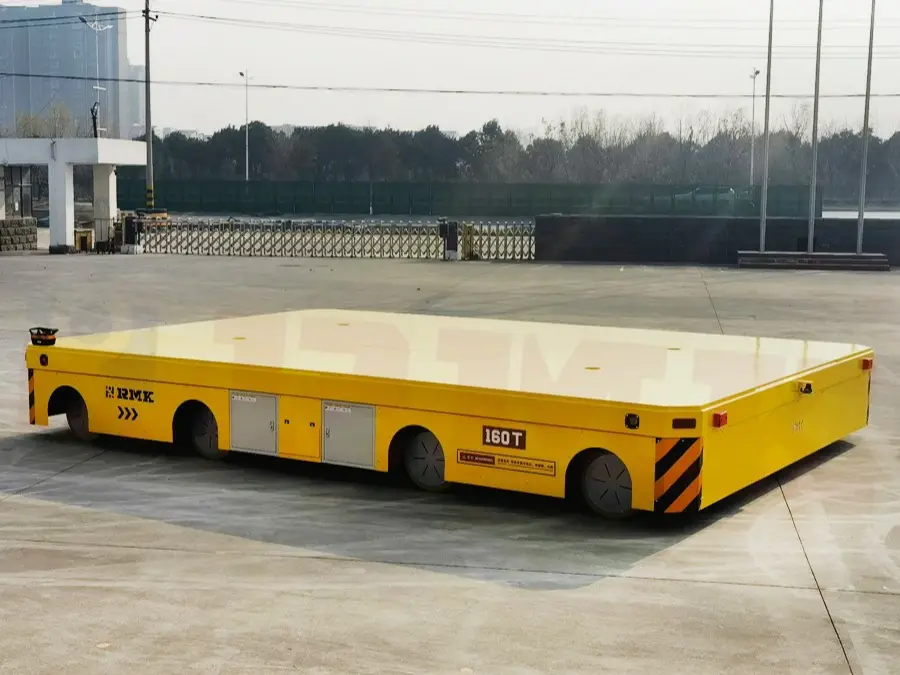
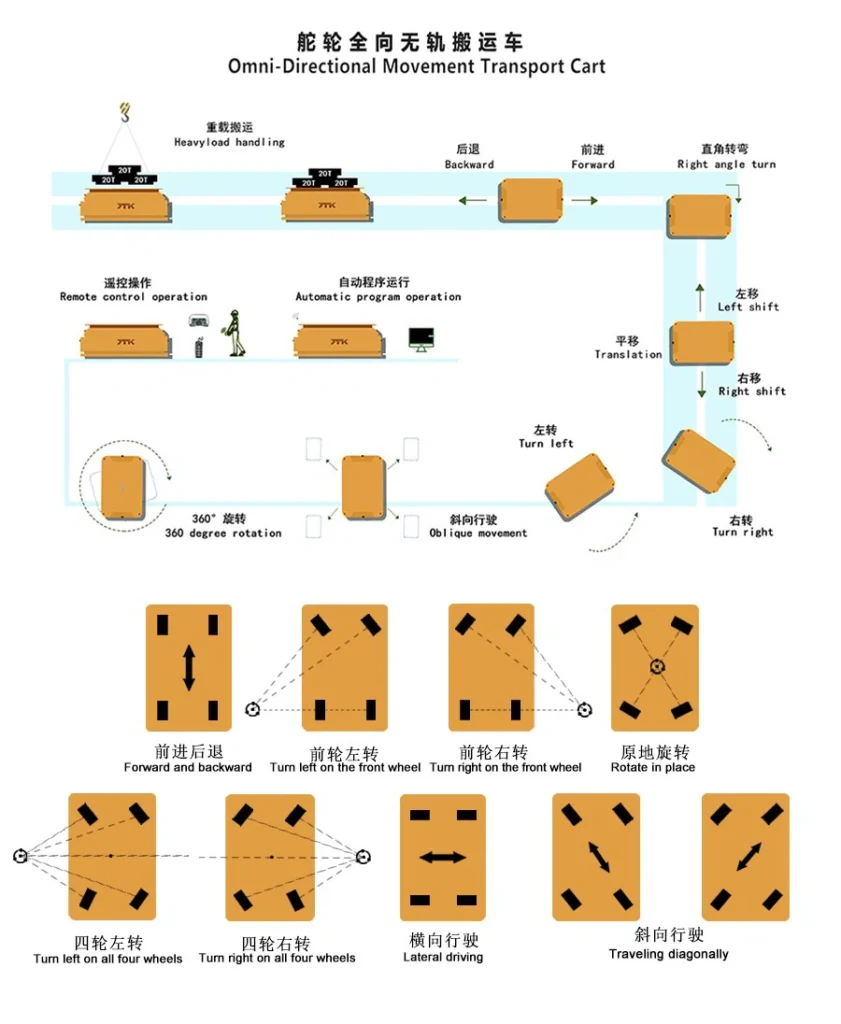
A trackless transfer cart uses rubber wheels and operates without permanent rails. It provides flexible movement across factory floors and is suitable for facilities where transport routes may change or multiple working areas need to be connected.
Suitable for:
- Large workshops with flexible layouts
- Multiple transportation areas
- Sites without existing rail systems
- Internal transportation over long distances
Heavy Duty Battery Powered Transfer Cart
A heavy duty battery powered transfer cart uses rechargeable batteries as the power source and does not require external cables or fixed power lines. It offers flexible operation and is widely used for applications requiring easy installation and low maintenance.
Suitable for:
- Indoor and outdoor material handling
- Factories requiring flexible movement
- Applications without fixed power supply systems
- Transportation between multiple working areas
AGV Transfer Cart
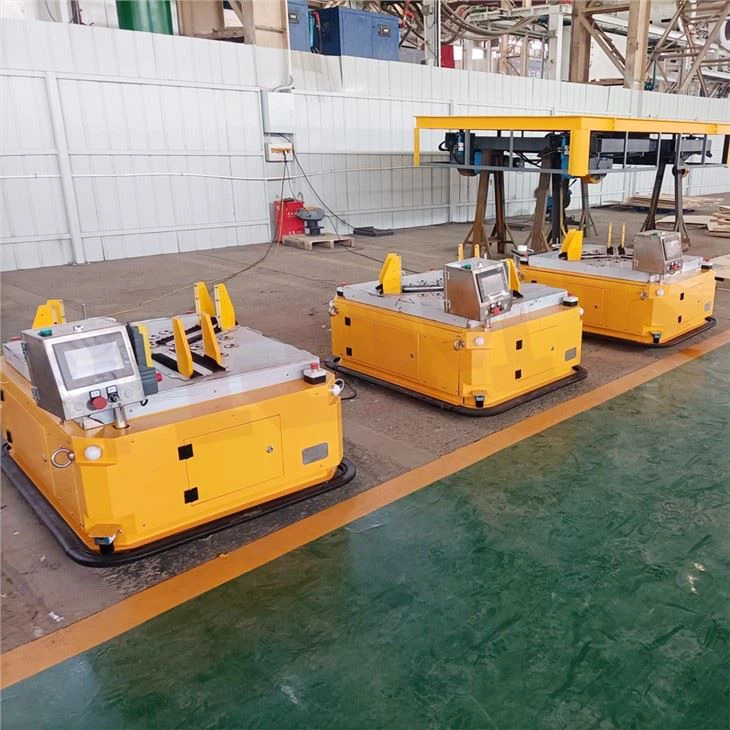
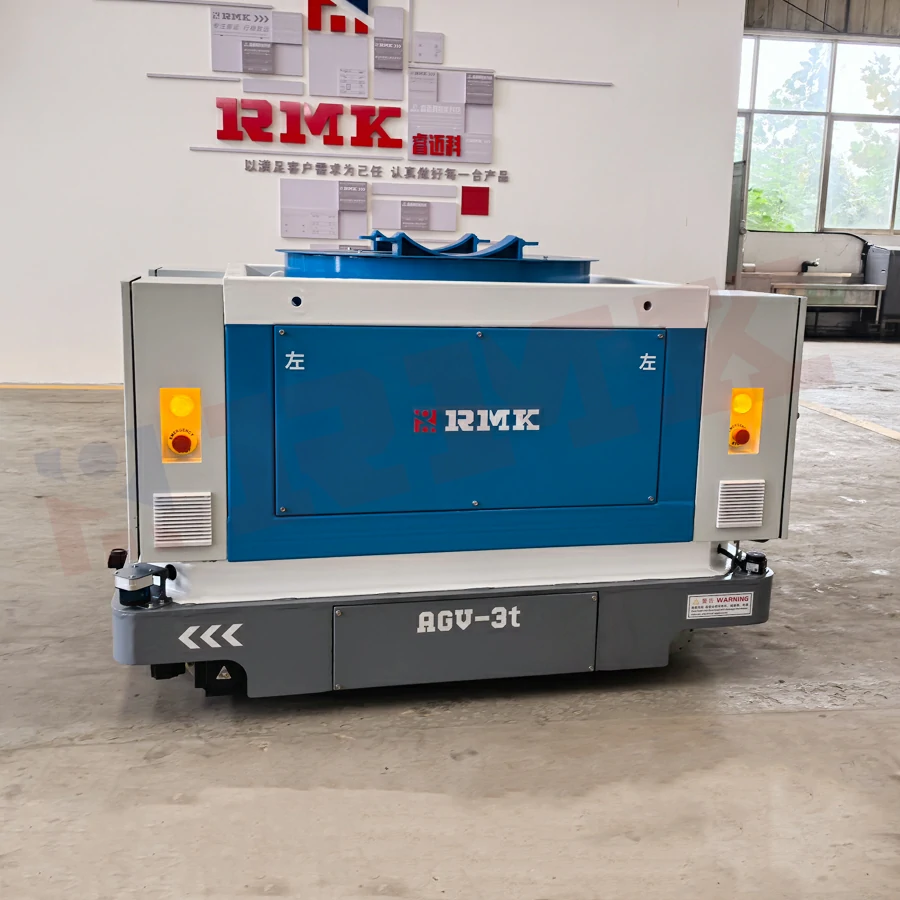
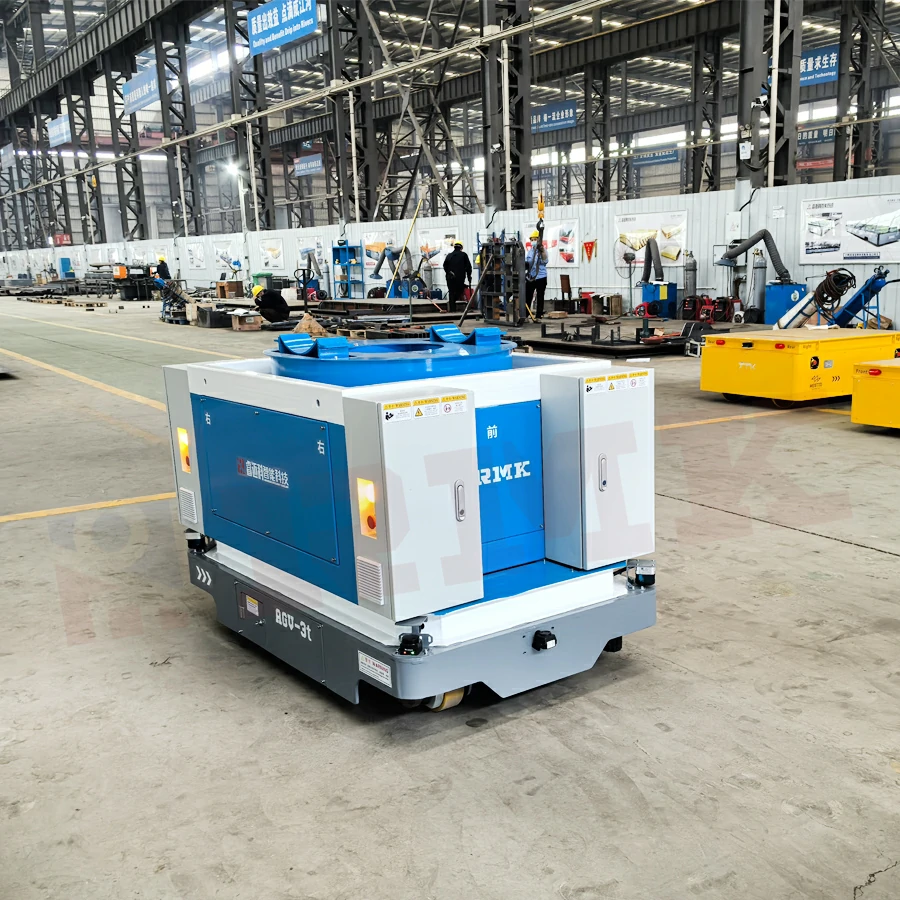
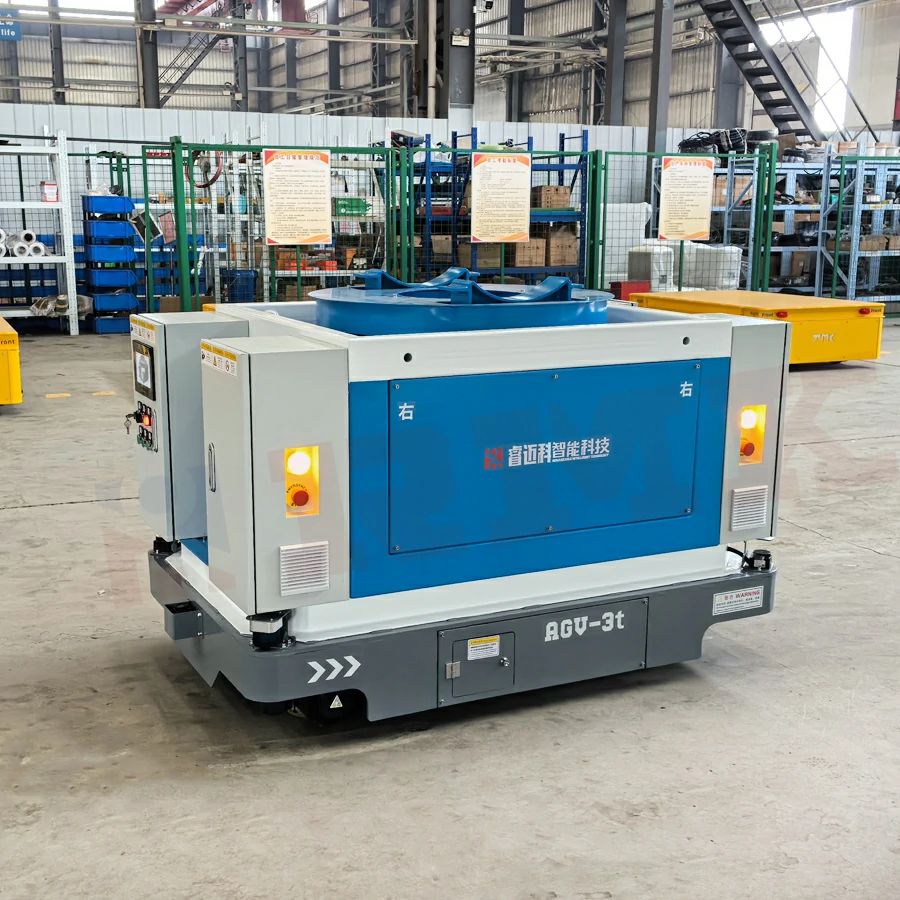
An AGV transfer cart combines heavy load transportation with automatic navigation technology. It can use laser SLAM, magnetic guidance, or QR navigation systems to achieve automatic movement and improve handling efficiency in automated production environments.
Suitable for:
- Smart factories
- Automated production lines
- Repetitive material transportation
- Unmanned handling applications
Hydraulic Lift Transfer Cart
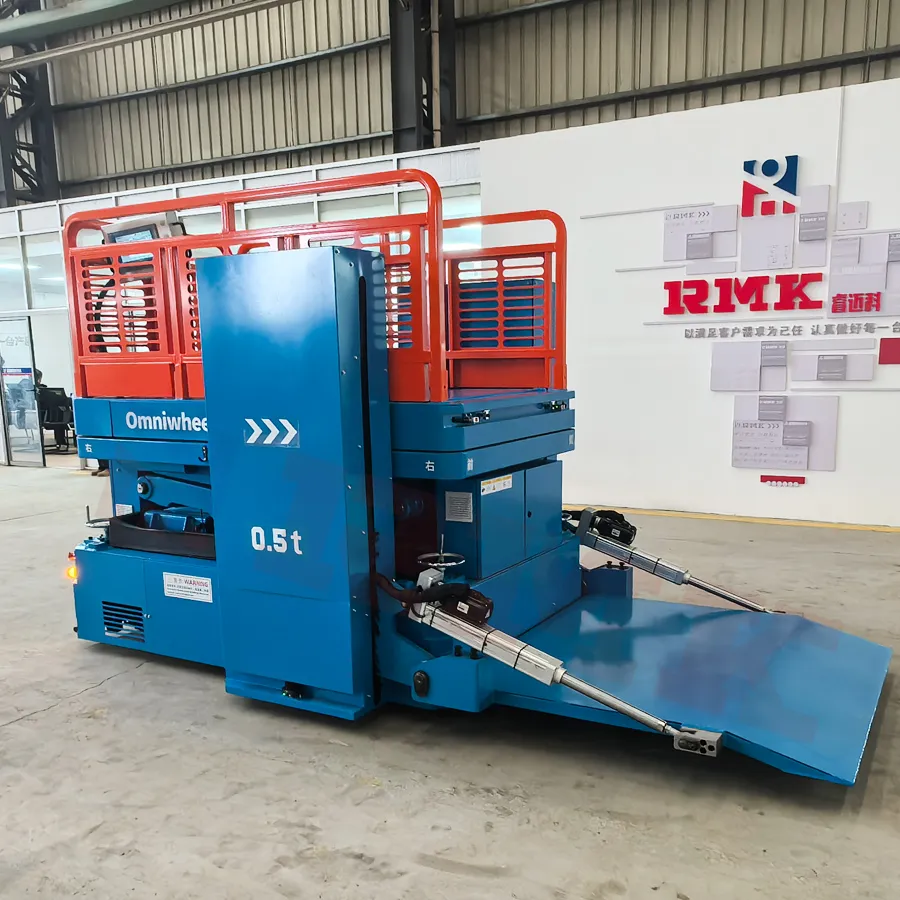
A hydraulic lift transfer cart integrates lifting and transportation functions into one system. The hydraulic platform allows height adjustment, making it suitable for connecting different production processes and improving loading or positioning efficiency.
Suitable for:
- Assembly lines
- Die and mold handling
- Material positioning applications
- Operations requiring lifting and transfer functions
When selecting a heavy duty transfer cart, consider load capacity, transportation route, power system, working environment, and required automation level to choose the right model for your application.
How Does Working Environment Affect Transfer Cart Selection?
The working environment affects the structure, components, and operating performance of a heavy duty transfer cart. Floor conditions, temperature, dust, moisture, and operating location are key factors during model selection.
- Indoor Applications: Indoor transfer carts are used in workshops, warehouses, and production areas. Smooth floors and fixed transport routes allow standard wheel systems and power configurations for most applications.
- Outdoor Applications: Outdoor transfer carts require protection against weather, uneven ground, and temperature changes. Weather-resistant components, suitable wheels, and reliable power systems are commonly used for outdoor operation.
- Harsh Industrial Environments: Steel plants, foundries, and shipyards often involve high temperatures, dust, impact loads, and demanding working conditions. These applications require reinforced structures, protective designs, and customized configurations based on site requirements.
Choosing a transfer cart that matches the working environment improves operating reliability and reduces maintenance requirements.
What Custom Options Are Available for Heavy Duty Transfer Carts?
Heavy duty transfer carts are usually designed according to specific handling requirements. Load weight, cargo size, transport route, working environment, and operation frequency determine the final configuration. Manufacturers can customize the cart structure, power system, and control method for different applications.
Capacity and Platform Design
The cart capacity and platform structure are selected based on the load type and handling method. Common customization options include:
- Capacity from several tons to hundreds of tons
- Custom platform size and height
- V-groove decks for steel coils
- Special fixtures for molds, equipment, and components
Travel and Power Configuration
The travel system can be customized according to factory conditions:
- Rail-mounted or trackless design
- Customized rail gauge and travel direction
- Battery, cable reel, or conductor rail power supply
- Remote control or automatic operation systems
Additional Functions
Heavy duty transfer carts can be equipped with additional functions for special handling requirements:
- Hydraulic lifting platforms
- Rotating or tilting decks
- Positioning devices
- Safety systems such as emergency stops and anti-collision sensors
Before customization, provide the load capacity, cargo dimensions, transport distance, working environment, and daily operating cycle. These details help determine the suitable transfer cart design and configuration.
For more detailed information on customization options and limitations, see: Custom Transfer Cart: Complete Guide to Design and Customization
How Much Does a Heavy Duty Transfer Cart Cost?
The price of a heavy duty transfer cart depends on the load capacity, design structure, power system, travel method, and additional functions. Since most transfer carts are customized for specific working conditions, the final cost varies based on the application requirements.
| Cost Factor | How It Affects Price |
|---|---|
| Load Capacity | Higher capacity requires stronger frames, larger wheels, and more powerful drive systems |
| Platform Size | Larger decks need more structural materials and customized designs |
| Travel Method | Rail, trackless, and multidirectional designs have different mechanical requirements |
| Power Supply | Battery, cable reel, and conductor rail systems vary in equipment cost and maintenance needs |
| Travel Distance | Longer operating distances require suitable power and control configurations |
| Working Environment | Outdoor, high-temperature, dusty, or special environments require additional protection |
| Control System | Remote control, automatic operation, and AGV integration increase system complexity |
| Additional Functions | Hydraulic lifting, rotating decks, and positioning devices affect the final price |
Cost Range by Application
- Small Capacity Transfer Cart — Used for workshops and light industrial material handling.
- Medium Capacity Transfer Cart — Applied in machinery manufacturing and production line transportation.
- Heavy Duty Transfer Cart — Designed for steel plants, shipyards, and large equipment handling.
- Customized Transfer Cart — Used for special loads, complex routes, and automated handling projects.
For an accurate quotation, provide the load capacity, cargo dimensions, travel distance, operating frequency, power supply requirements, and working environment. These details allow the manufacturer to select the correct structure and configuration.
Heavy Duty Transfer Cart Selection Checklist
- 1. Load Capacity: Confirm the maximum load, load distribution, and future capacity needs.
- 2. Cargo Dimensions: Provide the load size, center of gravity, and special support requirements.
- 3. Travel Route: Define rail or trackless operation, travel distance, route layout, and positioning needs.
- 4. Power Supply: Select the suitable power system, including battery, cable reel, or conductor rail.
- 5. Working Environment: Consider indoor or outdoor use, temperature, dust, moisture, and floor conditions.
- 6. Operation Frequency: Confirm daily running distance, working hours, and duty cycle.
- 7. Control System: Choose the required control method, such as remote control or automatic operation.
- 8. Safety Requirements: Specify safety features, including emergency stop, alarms, and anti-collision devices.
- 9. Custom Functions: Confirm additional options such as lifting, rotating platforms, or special fixtures.
Conclusion
Choosing the right heavy duty transfer cart requires careful consideration of load capacity, travel method, power supply, working environment, and customization requirements. A suitable transfer cart design improves handling efficiency, reduces maintenance needs, and supports reliable operation in different industrial applications.
REMARKABLE designs and manufactures heavy duty transfer carts for different industrial applications, with customized options for capacity, platform structure, drive systems, and control methods. From standard handling needs to complex transport projects, we provide solutions based on real working conditions. Contact us with your application details to get a suitable transfer cart proposal.
Email: transfercart@rmkzn.com
Phone: +86-18637369355
Related Articles
FAQ
What is a heavy duty transfer cart used for?
A heavy duty transfer cart is used to move heavy materials, equipment, molds, steel coils, and large components inside industrial facilities. It is commonly applied in steel plants, shipyards, warehouses, and manufacturing workshops for horizontal transportation.
How much weight can a heavy duty transfer cart carry?
The capacity of a heavy duty transfer cart usually ranges from a few tons to hundreds of tons. Standard models can handle 5–500 tons, while customized designs are available for special applications requiring higher load capacity.
What is the difference between rail transfer carts and trackless transfer carts?
Rail transfer carts operate on fixed steel tracks and provide stable movement with high load capacity. Trackless transfer carts use rubber wheels and move freely without rails, making them suitable for flexible routes and changing factory layouts.
Are heavy duty transfer carts battery powered?
Yes. Many heavy duty transfer carts use rechargeable batteries as the power source. Battery powered transfer carts provide flexible movement without cables or fixed power lines and are suitable for applications requiring independent operation.
How do I choose the right transfer cart capacity?
Choose the transfer cart capacity based on the maximum load weight, cargo dimensions, load distribution, working frequency, and future production needs. The selected capacity should include a suitable margin for safe and stable operation.
Can heavy duty transfer carts be customized?
Yes. Heavy duty transfer carts can be customized according to load requirements and working conditions. Options include platform size, capacity, power supply, travel method, lifting functions, control systems, and safety features.
What industries use heavy duty transfer carts?
Heavy duty transfer carts are widely used in steel manufacturing, shipbuilding, automotive production, machinery manufacturing, foundries, warehouses, and other industries that require transportation of heavy materials and large equipment.
How long does a heavy duty transfer cart last?
The service life of a heavy duty transfer cart depends on load conditions, operating frequency, maintenance, and working environment. Proper selection, regular inspection, and correct maintenance help extend equipment service life.