Table of Contents
Introduction
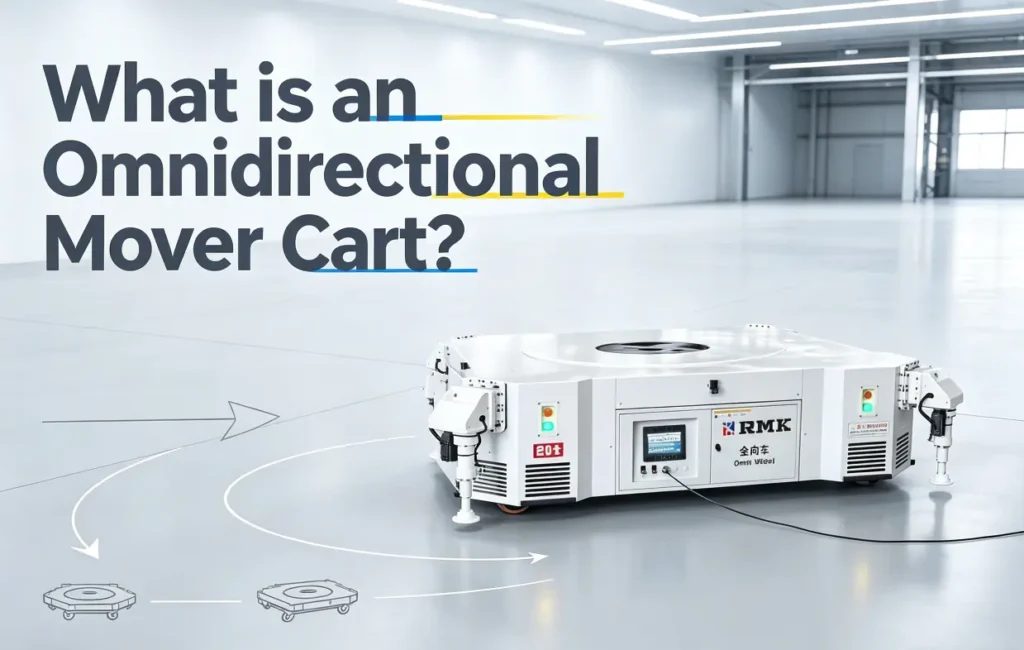
Automated Guided Vehicle System is an automated material handling solution used in smart manufacturing, warehouse logistics, and production lines. It integrates navigation, control, and drive systems to complete unmanned material transportation between different working areas.
This article explains the basic concept of an Automated Guided Vehicle system, including its working principle, main components, navigation technologies, system types, industrial applications, and selection factors. It helps users understand how Automated Guided Vehicle systems work and how to choose a suitable solution for different handling requirements.
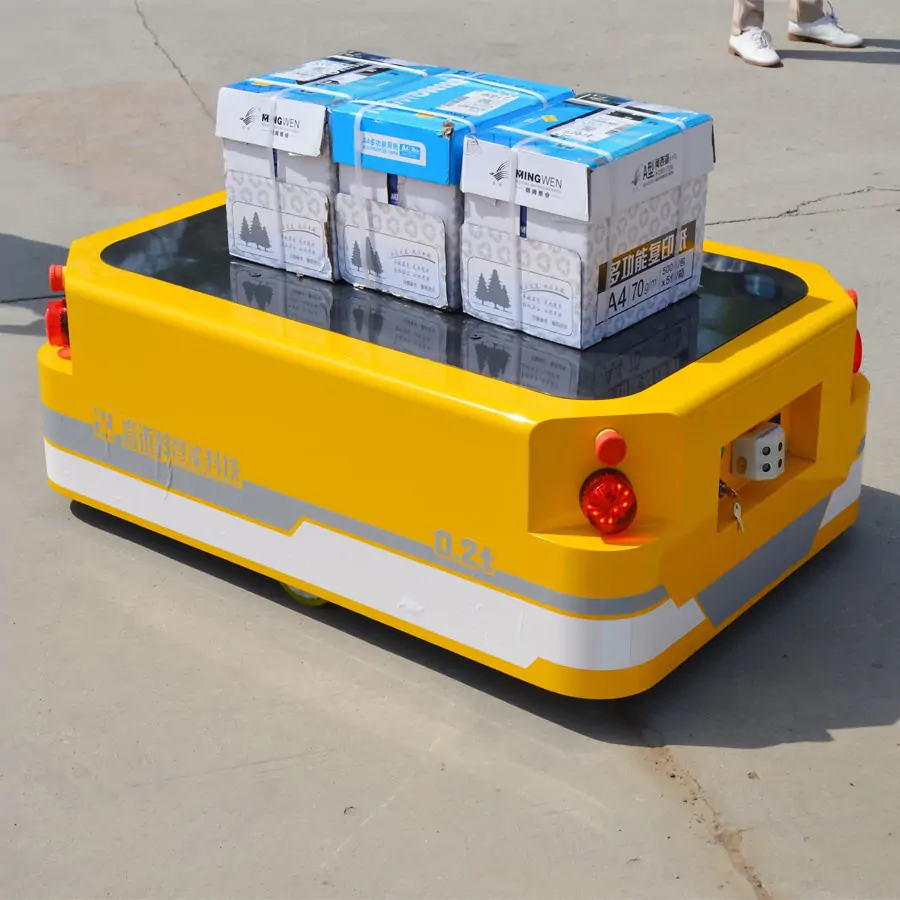
What Is an AGV Transfer Cart System?
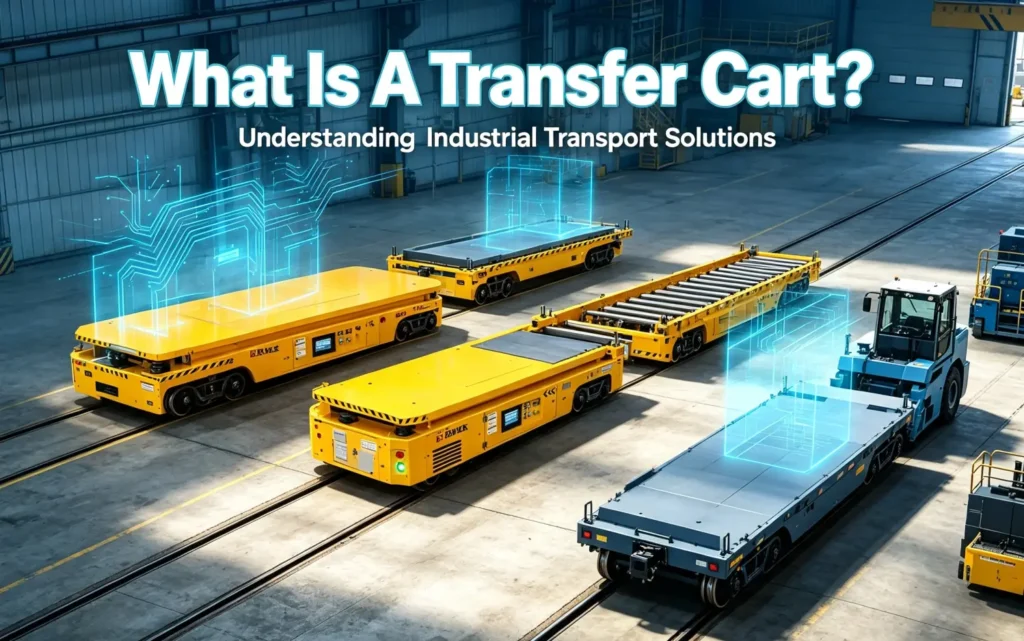
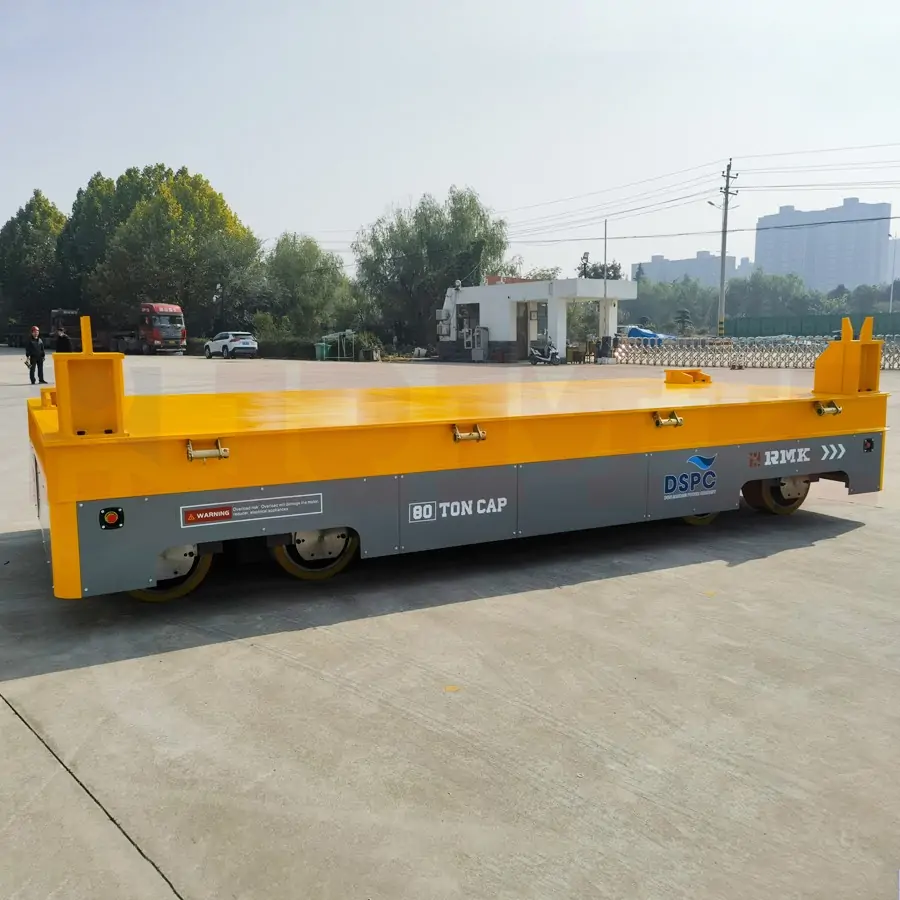
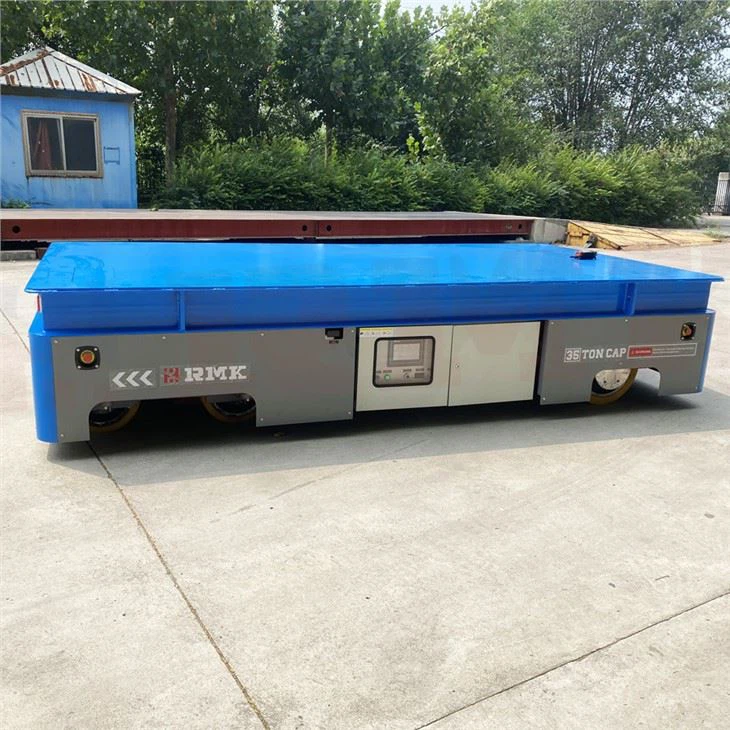
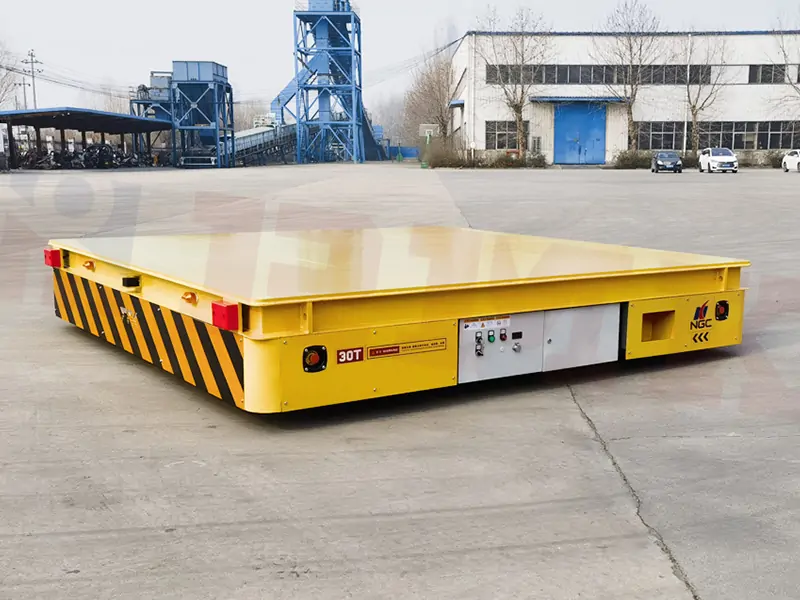
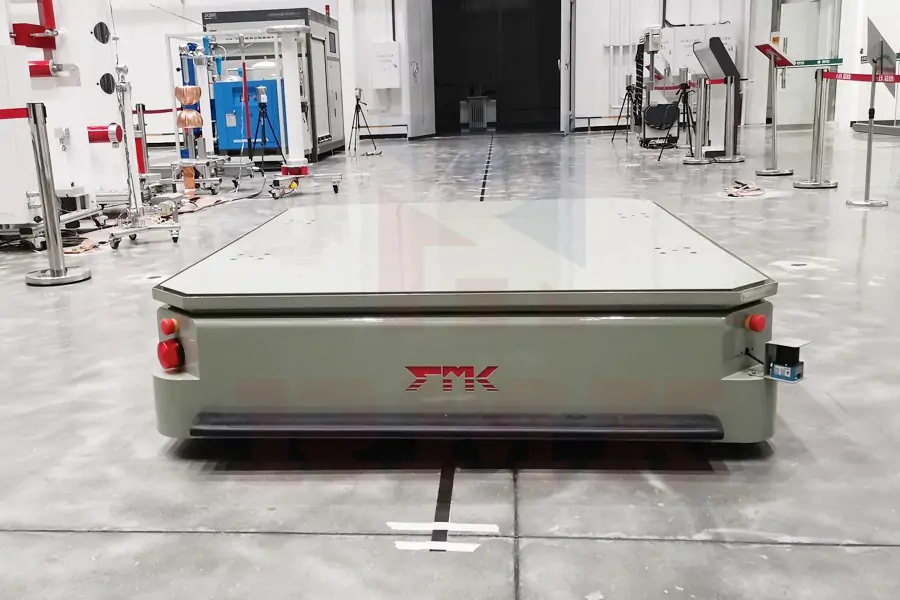
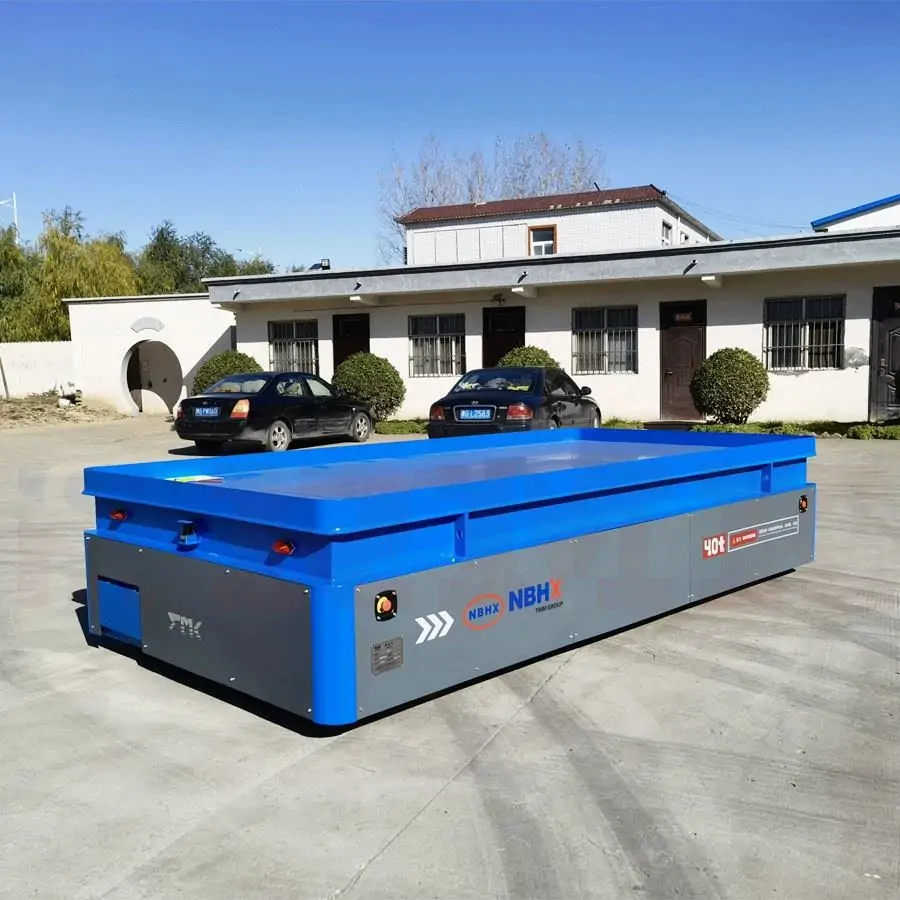
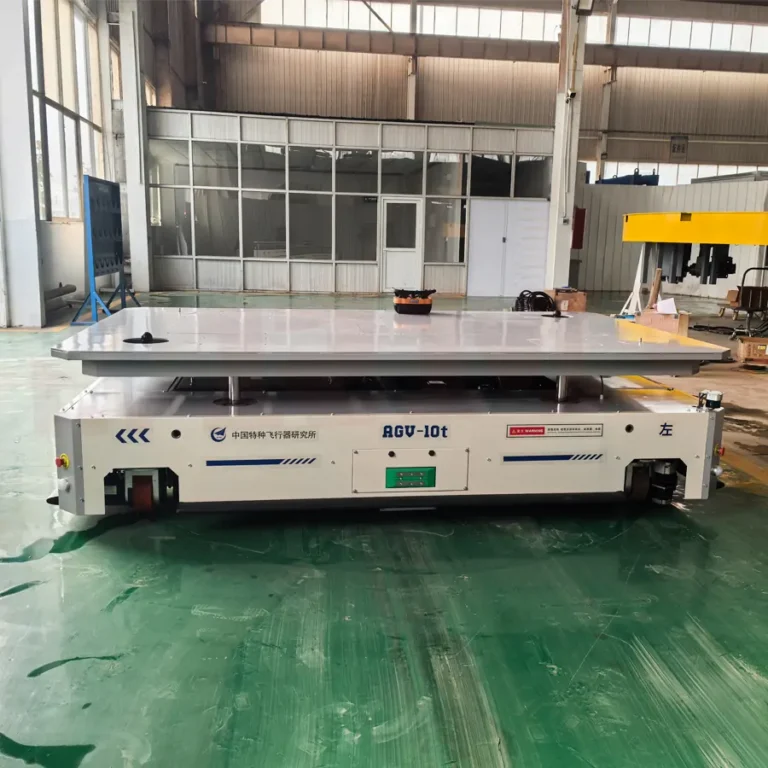
An AGV Transfer Cart System is an automated material handling solution based on Automated Guided Vehicles (AGVs). It consists of AGV vehicles, ground control systems, onboard control systems, communication networks, and related facilities. The system uses navigation and control technologies to complete unmanned material transportation between different production areas.
Unlike a single transport vehicle, an AGV Transfer Cart System provides automatic task scheduling, route control, real-time communication, and intelligent charging management. It is widely used in smart factories, warehouse logistics, automotive production, machinery manufacturing, and other industries that require flexible and automated material handling.
Video Show
How Does an Automated Guided Vehicle System Work?
An Automated Guided Vehicle System completes automatic material transportation through task scheduling, navigation, movement control, and safety management.
- 1. Task Assignment: The control system receives transport tasks from operators or factory management systems such as WMS and MES, then assigns the required AGV for the job.
- 2. Path Planning: The AGV control system calculates the transport route according to the destination, traffic conditions, and available paths to avoid conflicts with other vehicles.
- 3. Navigation and Positioning: The AGV uses navigation technologies such as magnetic guidance, laser SLAM, QR code, or vision navigation to identify its position and follow the planned route.
- 4. Material Handling: After reaching the target location, the AGV completes loading, unloading, lifting, or docking operations through onboard handling devices.
- 5. Real-Time Communication: The AGV exchanges data with the control system through wireless communication, allowing status monitoring, task updates, and vehicle coordination.
- 6. Automatic Charging: When the battery reaches the set charging level, the AGV automatically returns to the charging station and resumes operation after charging.
This working mode allows Automated Guided Vehicle systems to operate continuously in factories, warehouses, and automated production lines with reduced manual handling requirements.
Parts
An Automated Guided Vehicle System consists of multiple hardware and software components that work together to complete automatic material handling tasks. Each part is responsible for vehicle movement, task control, communication, and safety management.
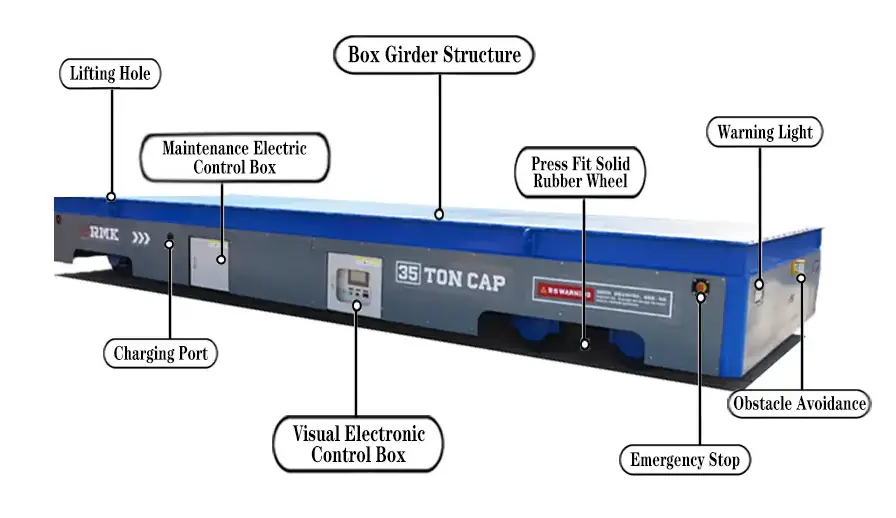
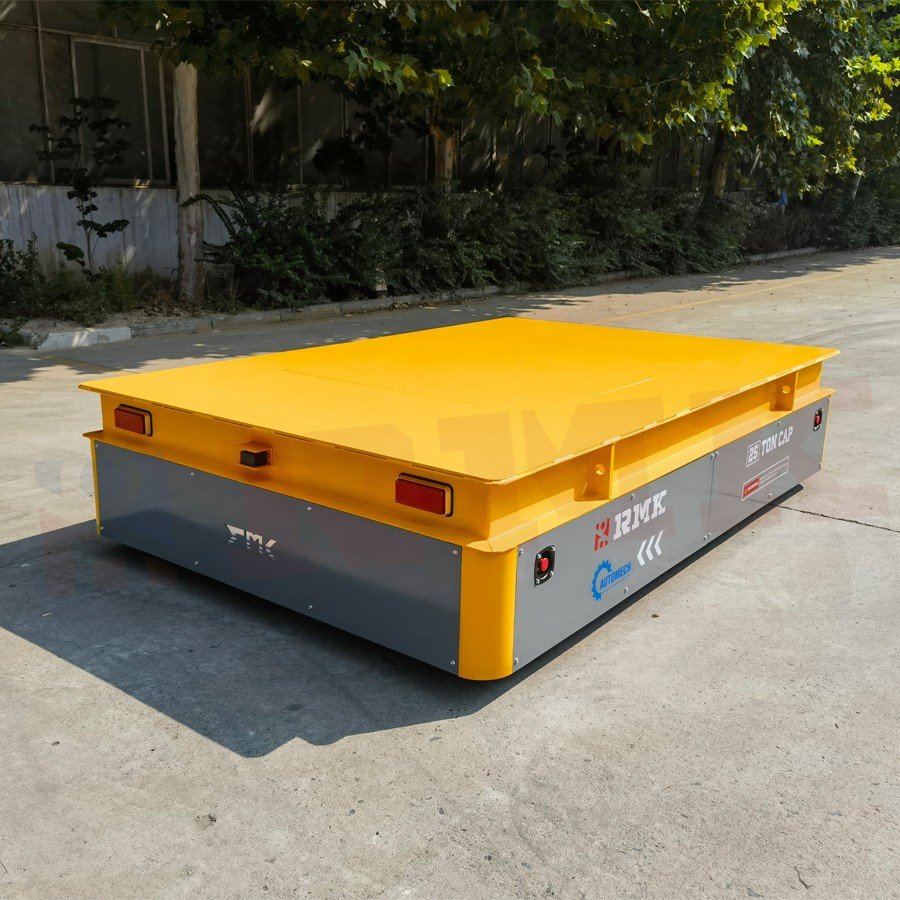
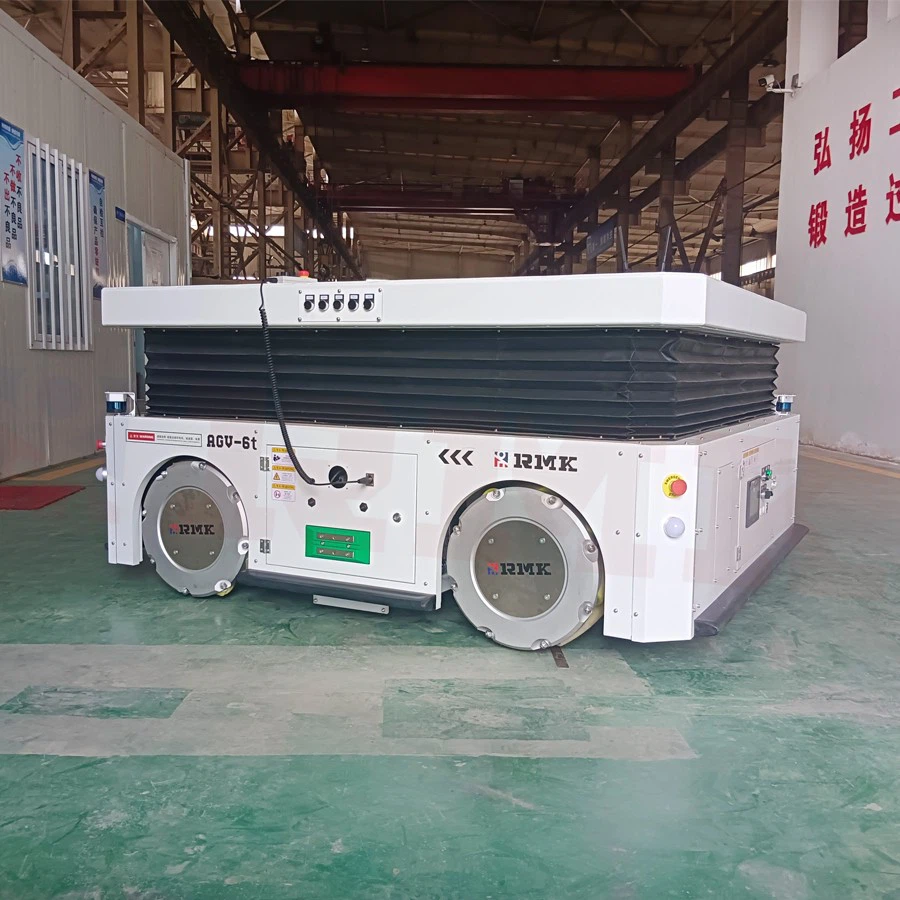
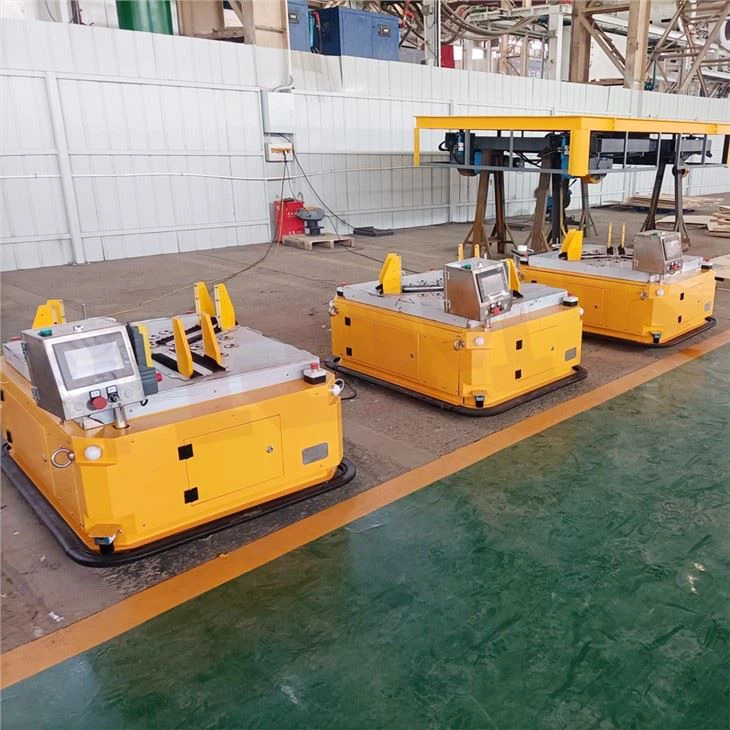
- AGV Vehicle: The AGV vehicle is the transport unit of the system. It includes the drive system, battery, navigation sensors, safety devices, and material handling mechanism for carrying and moving loads.
- Navigation System: The navigation system determines the AGV position and travel route. Common methods include magnetic navigation, laser SLAM, QR code navigation, and vision navigation.
- Control System: The control system manages task assignment, route planning, vehicle scheduling, and operation monitoring. It coordinates multiple AGVs through centralized management software.
- Communication System: The communication system connects AGVs with the control center and factory management systems such as WMS and MES for real-time data exchange.
- Safety System: The safety system includes laser scanners, sensors, emergency stop buttons, and warning devices to detect obstacles and protect operators and equipment.
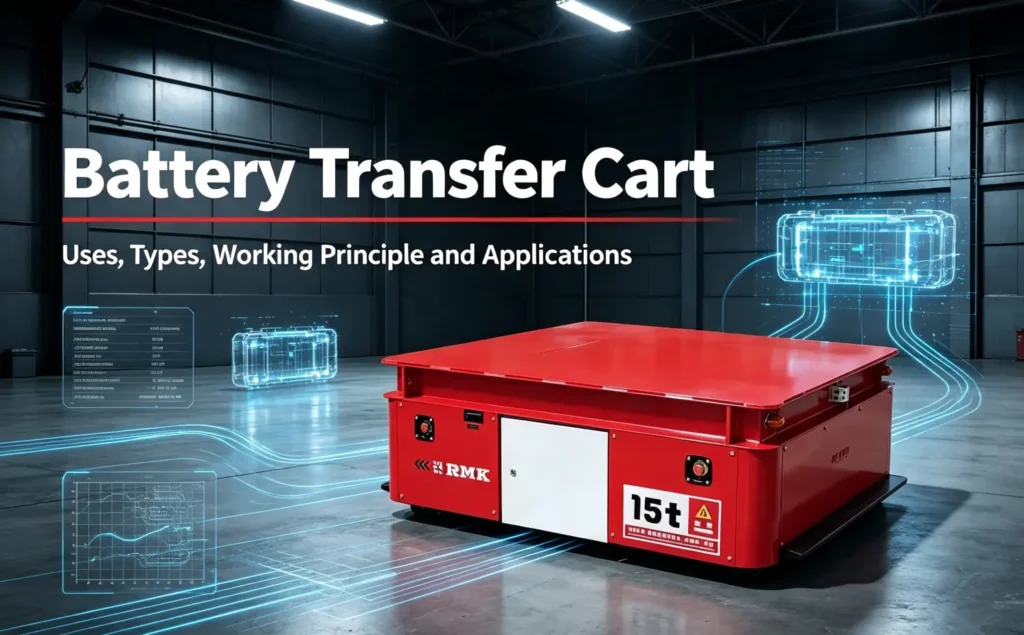
- Charging System: The charging system provides power management for AGV operation. Automatic charging stations allow vehicles to recharge according to battery status and production requirements.
- Material Handling Device: The handling device is selected according to application needs, including lifting platforms, conveyor units, forks, rollers, or customized fixtures for different materials.
AGV Navigation Technologies
AGV navigation technology determines how the vehicle identifies its position, plans routes, and completes automatic movement. Different navigation methods are selected according to workshop layout, transport requirements, and application conditions.
 Laser-SLAM-Navigation
 Magnetic-Strip-Navigation
 QR-Code-Navigation
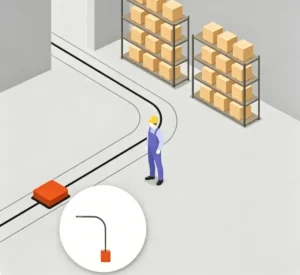
Magnetic Navigation
Magnetic navigation uses magnetic strips or wires installed on the floor to guide AGV movement. It features simple positioning, stable operation, and low installation cost, making it suitable for fixed routes and repetitive transport tasks.
Laser SLAM Navigation
Laser SLAM navigation uses laser sensors to scan the surrounding environment and create maps without fixed guidance lines. It supports flexible route changes and is suitable for complex workshops, warehouses, and changing production layouts.
Vision Navigation
Vision navigation uses cameras and image recognition technology to identify paths, markers, and surrounding objects. It is suitable for environments requiring higher flexibility and visual positioning.
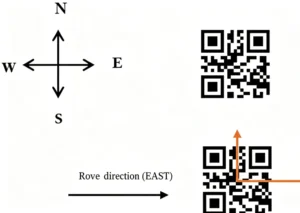
QR Code Navigation
QR code navigation uses floor-mounted QR markers for position recognition and route correction. It provides accurate positioning and is commonly used in factories and warehouses with defined transport paths.
| Navigation Type | Cost | Flexibility | Accuracy | Best Use Case |
| Magnetic Strip | Low | Low | Medium | Fixed production line |
| QR Code | Medium | Medium | High | Flexible routes |
| Laser SLAM | High | Very High | Very High | Smart factory |
| Natural | High | High | High | Complex environment |
Applications
Warehouse Logistics
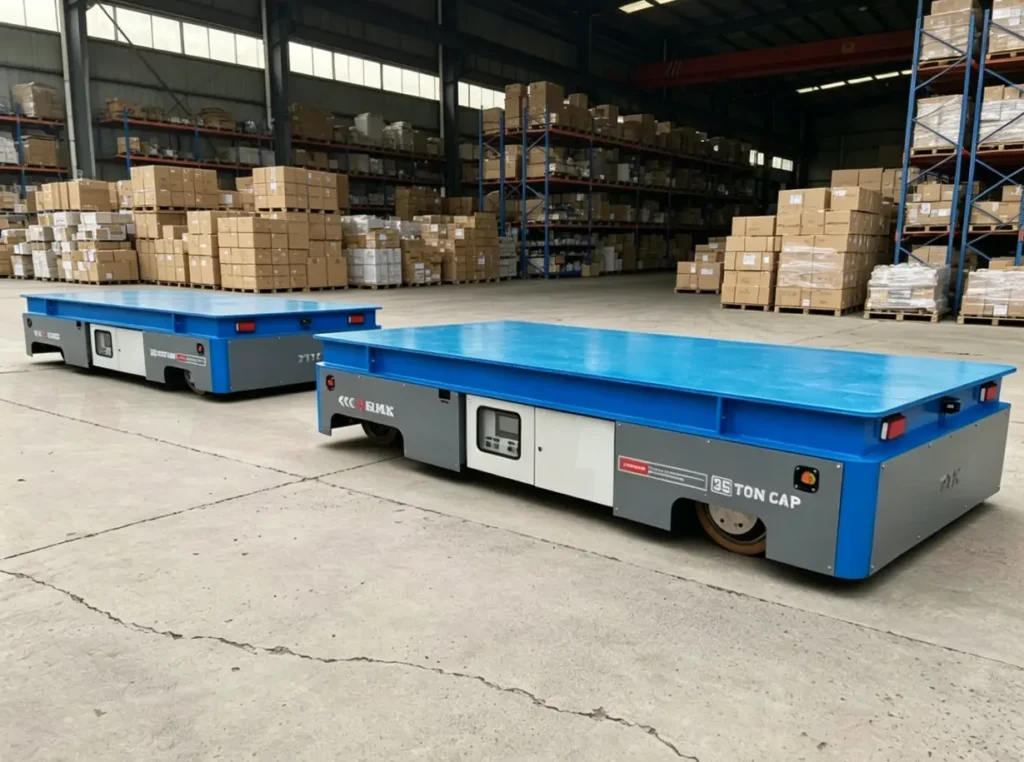
AGVs are used for pallet movement, storage transfer, and order handling in warehouses, supporting automated material flow between storage areas and workstations.
Automotive Industry
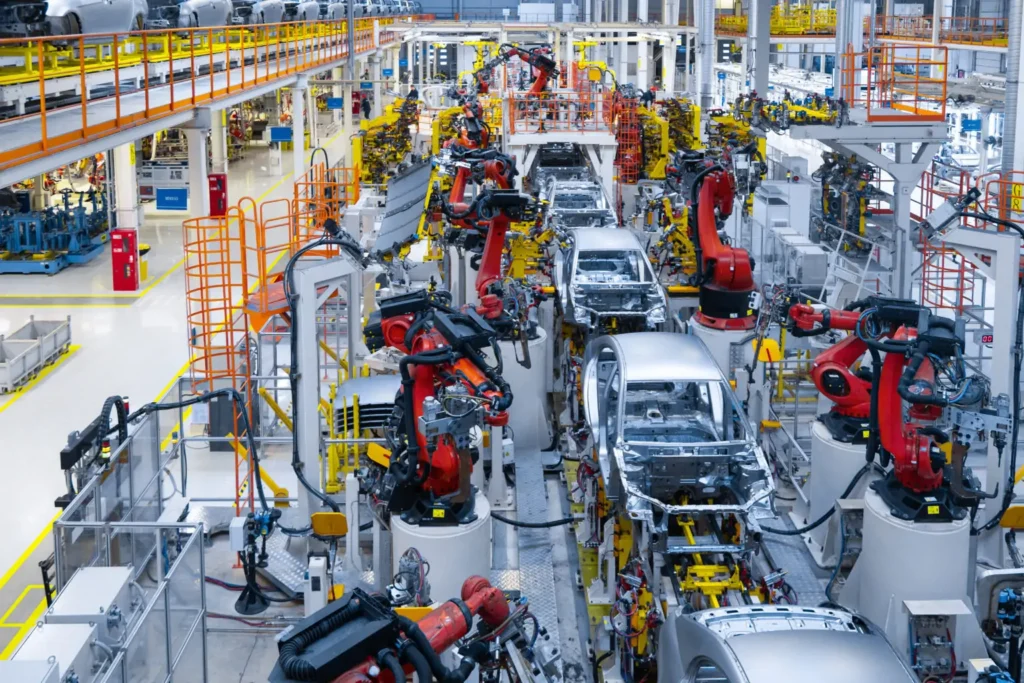
AGV systems move vehicle parts, assembly components, and tooling between production lines to support continuous manufacturing operations.
Electronics and Cleanroom Industry
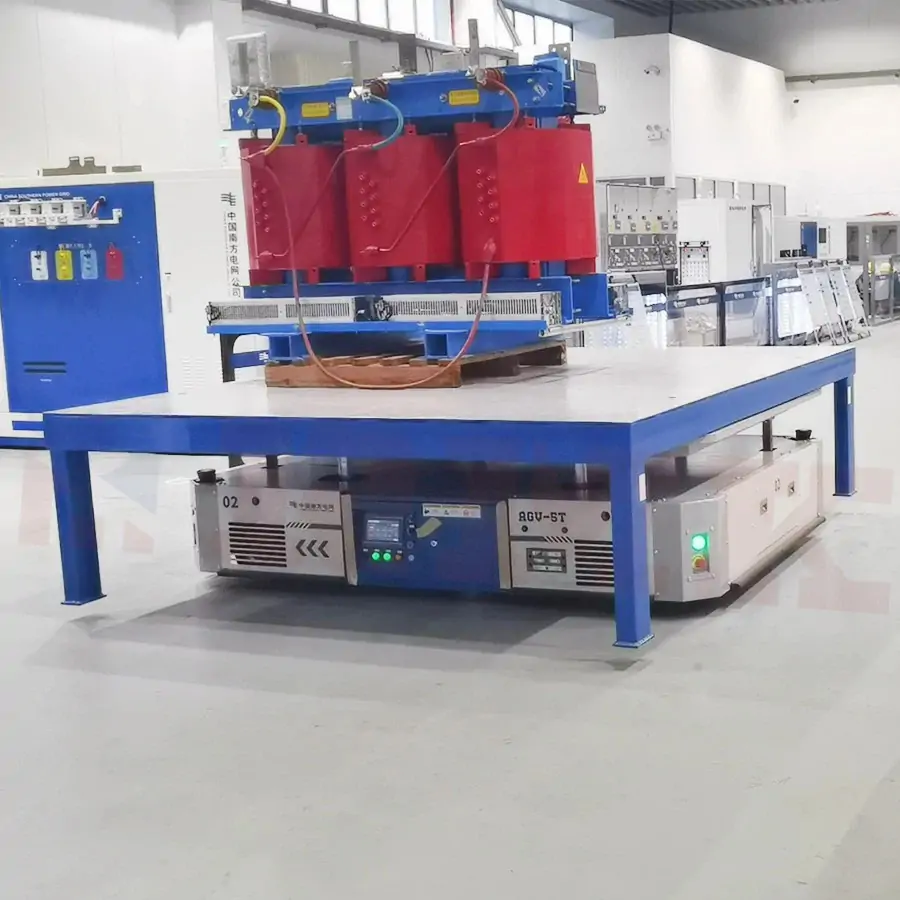
AGVs transport precision components and materials in clean environments where stable movement and low contamination are required.
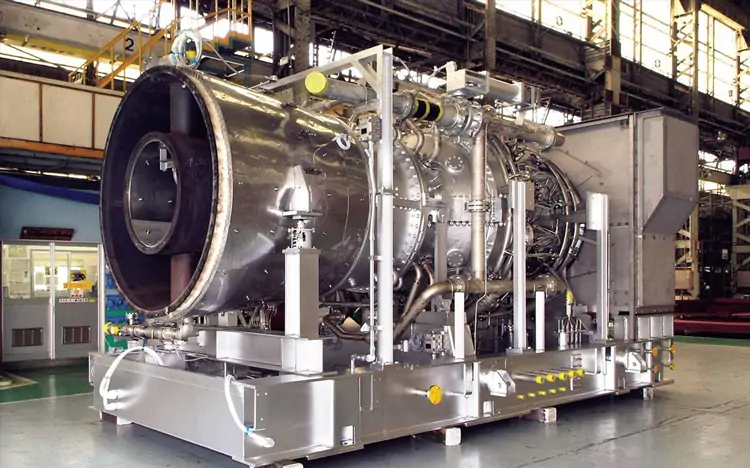
Machinery Manufacturing
AGVs handle molds, machine parts, and heavy components during machining, assembly, and inspection processes.
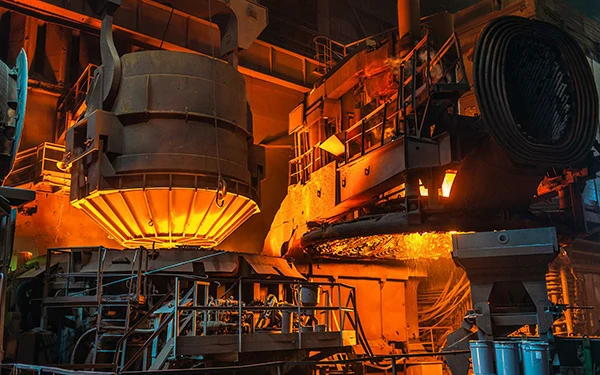
Steel and Heavy Industry
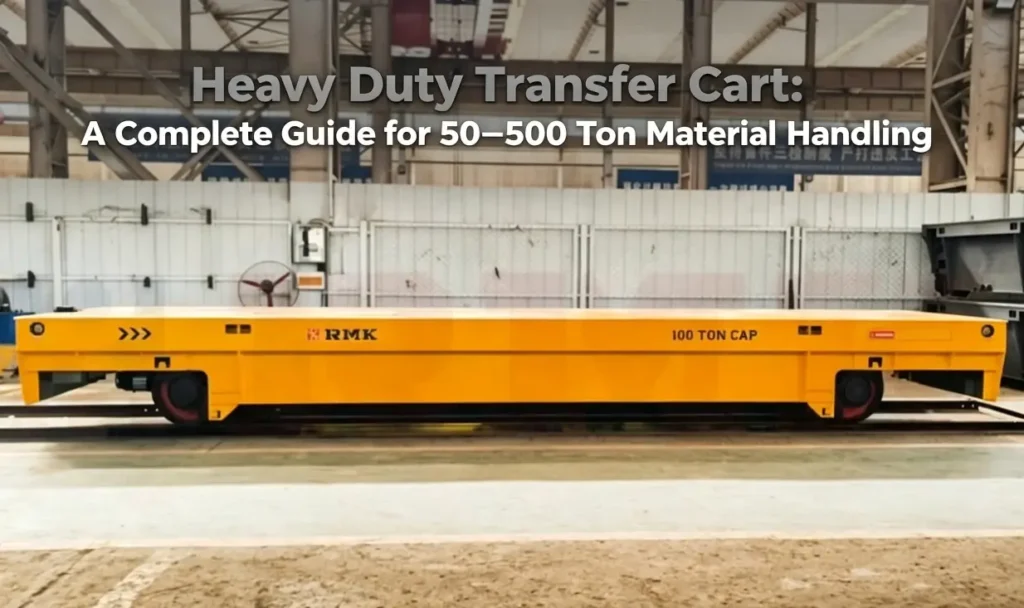
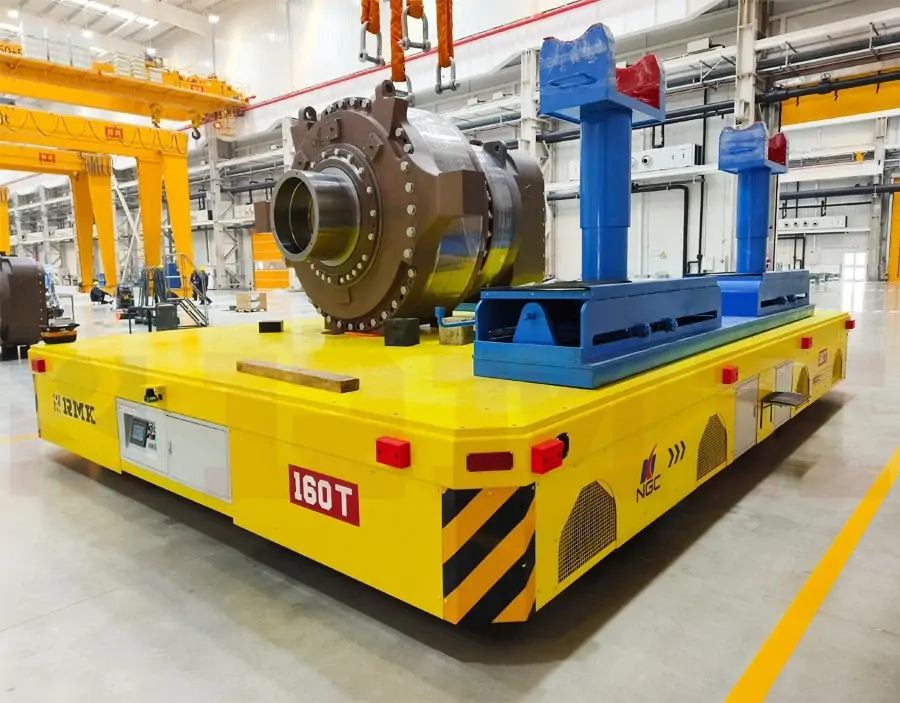
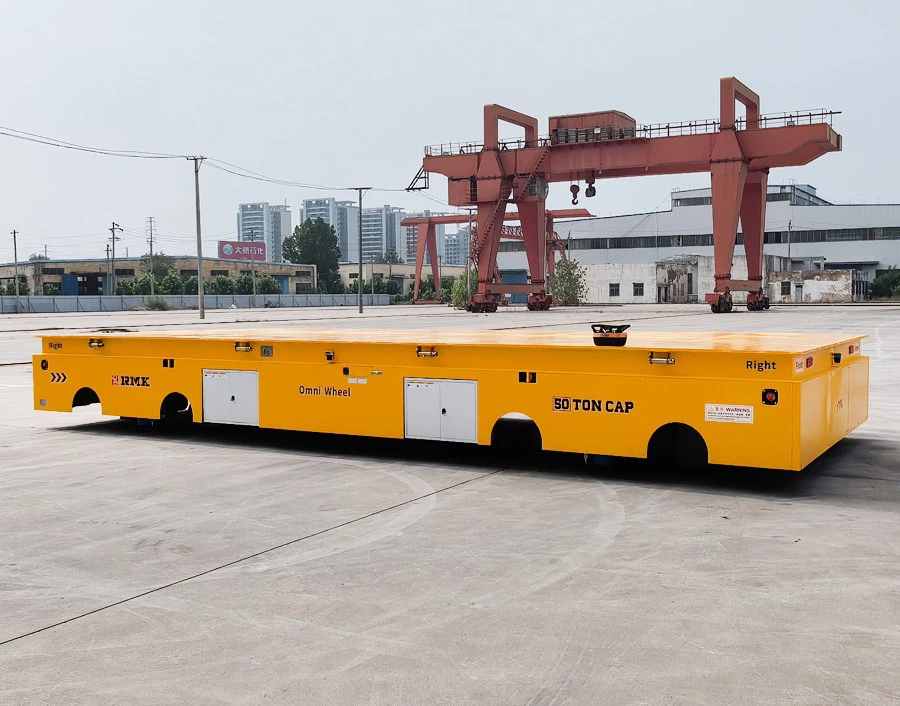
Heavy-duty AGVs are used for transporting steel plates, coils, equipment parts, and other large materials in demanding industrial environments.

Pharmaceutical and Food Industry
AGVs provide controlled material transportation for production areas requiring high hygiene standards and accurate delivery.
Advantages
- Reduced Manual Handling — AGV systems replace repetitive transport work and reduce labor requirements in material handling operations.
- Improved Transport Efficiency — Automatic routing and continuous operation help maintain stable material flow between production areas.
- High Positioning Accuracy — Advanced navigation technology allows precise movement and reliable docking with production equipment.
- Flexible Factory Layout — AGVs operate without fixed transport paths, making production line adjustments and layout changes easier.
- Enhanced Workplace Safety — Obstacle detection, emergency stop, and safety sensors reduce risks during material transportation.
- Easy System Integration — AGV systems can connect with WMS, MES, and factory control systems for task scheduling and operation monitoring.
- Reduced Operating Costs — Automated transportation lowers labor costs and reduces handling errors caused by manual operation.
- Suitable for Continuous Production — AGVs support automatic charging and scheduled operation for long-running production processes.
How to Choose the Right Automated Guided Vehicle System?
Choosing the right Automated Guided Vehicle system requires evaluating the material type, transport requirements, factory environment, and automation level.
Load Capacity
Select the AGV according to the maximum weight of transported materials. Light-load AGVs suit small parts handling, while heavy-load AGVs are required for pallets, equipment, and large components.
Material Handling Requirements
Determine the required handling function based on the material type, including lifting, towing, pallet transport, roller transfer, or customized fixtures.
Navigation Method
Choose the navigation system according to the workshop layout. Magnetic navigation suits fixed routes, while laser SLAM navigation is suitable for flexible paths and changing environments.
Operating Environment
Consider factors such as floor condition, temperature, dust, humidity, and cleanroom requirements to select the proper AGV configuration.
Transport Route and Distance
Evaluate the travel path, turning space, loading points, and transport distance to determine the AGV design and battery capacity.
Control and Integration Requirements
For automated factories, the Automated Guided Vehicle system should support connection with WMS, MES, and production management systems for task scheduling and monitoring.
Safety Requirements
Check safety functions such as obstacle detection, emergency stop, warning lights, and speed control according to the working environment.
Future Expansion Needs
Consider whether the Automated Guided Vehicle system can add vehicles, change routes, or connect with other equipment when production requirements increase.
Selecting the right Automated Guided Vehicle system based on load capacity, handling requirements, navigation method, and factory conditions helps improve transport efficiency and supports reliable automated operations.
For more detailed information on how to choose, see the article: How to Choose the Right AGV Transfer Cart?
Conclusion
AGV systems are widely used for automatic material transport in factories, warehouses, and production lines. From system structure and working principle to navigation methods, applications, advantages, and selection points, this article explains the key information needed to understand AGV solutions.
REMARKABLE designs and manufactures AGV systems for different industrial handling requirements, providing customized options for load capacity, vehicle structure, navigation mode, and control methods. With manufacturing capability and technical support, REMARKABLE works with customers to develop suitable automation transport solutions. Contact us for Automated Guided Vehicle system solutions and project requirements.
Email: transfercart@rmkzn.com
Phone: +86-18637369355
FAQ
What is an automated guided vehicle system?
An automated guided vehicle system is an automatic material handling system that uses AGVs to transport materials without manual operation.
What are the main components of an AGV system?
An AGV system includes the AGV vehicle, navigation system, control system, communication system, safety system, and charging system.
How does an AGV system work?
The AGV receives transport tasks, plans routes, navigates to the target location, completes handling, and returns for charging when needed.
What navigation methods are used in AGV systems?
Common methods include magnetic navigation, laser SLAM navigation, vision navigation, and QR code navigation.
What industries use AGV systems?
AGV systems are used in manufacturing, automotive, warehousing, electronics, machinery, and other industrial applications.
What is the difference between AGV and AMR?
AGVs usually follow predefined routes, while AMRs use advanced sensors and mapping technology for more flexible navigation.
Can AGV systems be customized?
Yes. AGV systems can be customized based on load capacity, vehicle structure, navigation method, and handling requirements.
How much load can an AGV system carry?
AGV load capacity varies by design, from small material handling units to heavy-duty models carrying several tons or more.