Table of Contents
Introduction
Trackless transfer cart maintenance involves inspecting the battery, wheels, steering system, brakes, electrical controls, and load-bearing structure. Regular checks help identify worn components, loose connections, abnormal noise, and safety-system faults before they lead to equipment failure or unplanned downtime.
Maintenance frequency depends on the manufacturer’s instructions, operating hours, load conditions, and working environment. Daily checks should cover battery status, wheel condition, braking response, and safety devices. Weekly and monthly inspections should address steering components, fasteners, electrical connections, the frame, and any fitted hydraulic or roller attachments.
This guide explains how to maintain the main components of a trackless transfer cart, establish a practical maintenance schedule, identify warning signs that require the cart to be taken out of service, and reduce avoidable repair costs through proper operation and preventive maintenance.
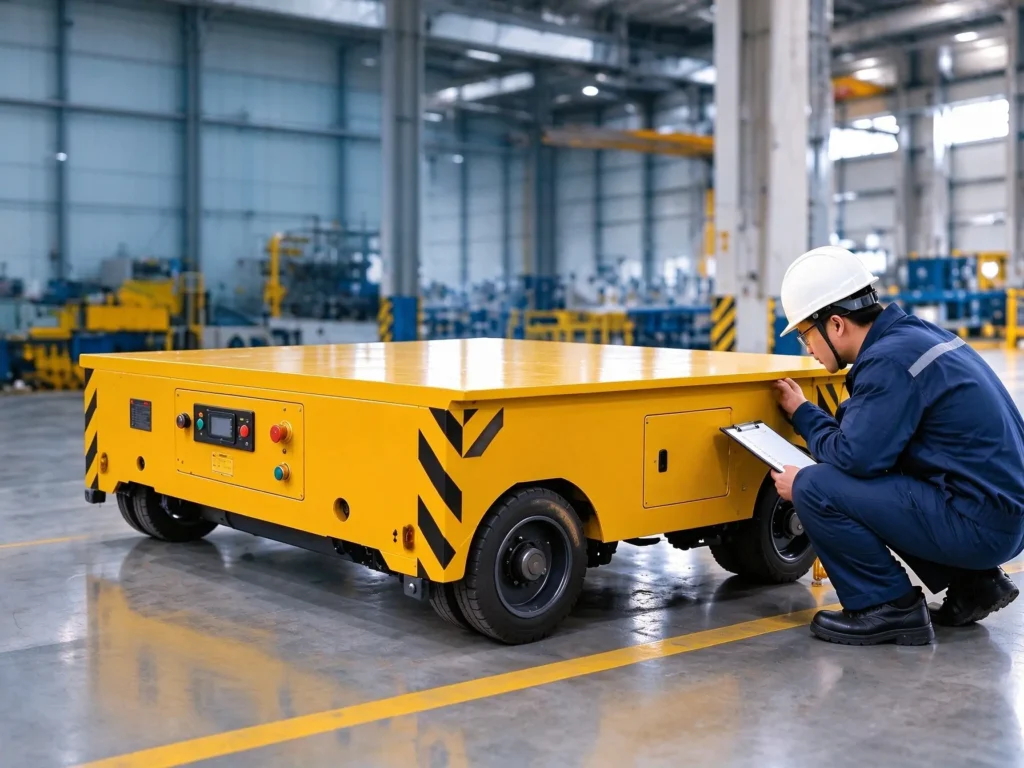
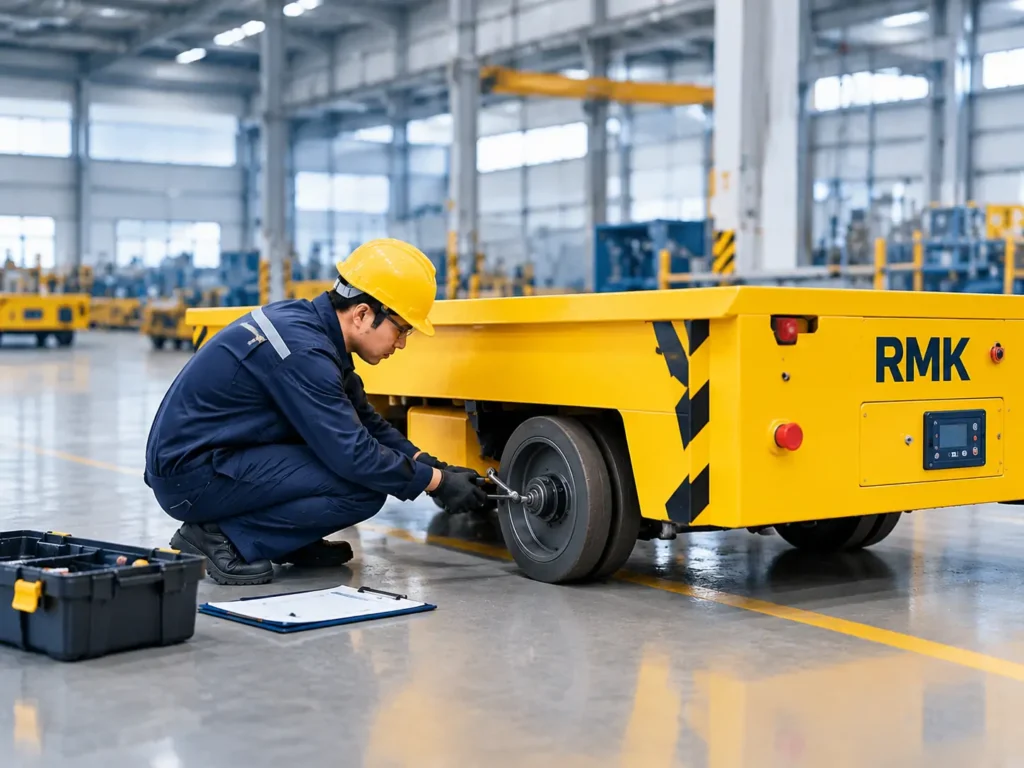
Trackless Transfer Cart Maintenance Checklist
Trackless transfer cart maintenance covers battery condition, wheels, brakes, steering, electrical controls, and structural components. Inspection intervals depend on the manufacturer’s manual, operating hours, load conditions, and working environment. Use the following checklist as a general reference and adjust it to the actual equipment configuration.
| Maintenance Interval | Inspection Tasks |
|---|---|
| Before Each Shift | Check battery charge, wheel condition, brake response, emergency stop, warning devices, and visible damage. |
| Weekly | Inspect steering response, wheel mountings, fasteners, moving joints, and unusual noise or vibration. |
| Monthly or as Scheduled | Check electrical connections, frame and welds, drive components, control systems, and fitted attachments. |
| Periodic Professional Service | Assess component wear, service drive and steering systems, evaluate battery condition, and test safety functions. |
Record inspection results, faults, and corrective actions in a maintenance log. Defects affecting braking, steering, structural integrity, or electrical safety must be resolved before the cart returns to service. Follow the manufacturer’s maintenance instructions for inspection intervals and servicing procedures.
How to Maintain the Main Components of a Trackless Transfer Cart
Trackless transfer cart maintenance focuses on the battery, wheels, steering, drive system, brakes, electrical controls, and load-bearing structure. Inspect each component for wear, damage, loose connections, and abnormal operation. Follow the equipment manual for servicing procedures and replacement intervals.
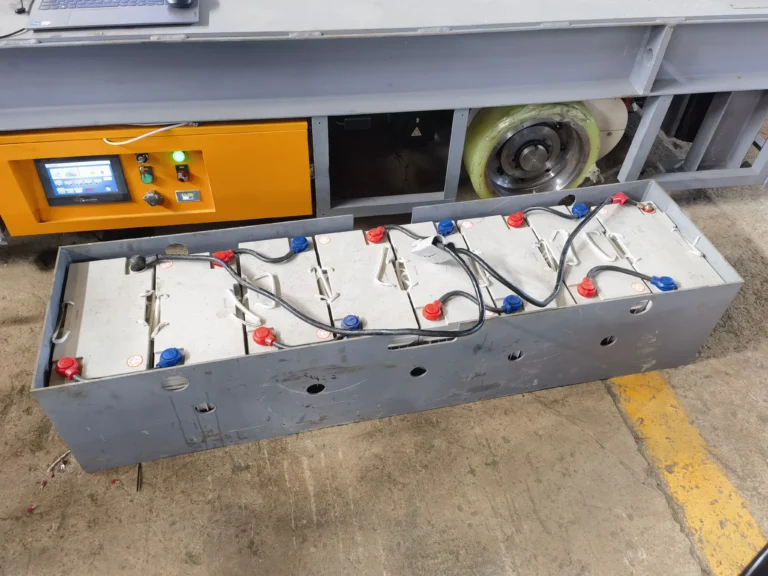
Battery and Charging System
Check the battery charge level, terminals, cables, and signs of overheating. Use a charger compatible with the installed battery type and follow the manufacturer’s charging instructions. Avoid excessive discharge. Investigate reduced battery capacity or a noticeable drop in operating time.

Wheels, Tires, and Wheel Mountings
Inspect wheels for cracks, uneven wear, deformation, and trapped debris. Check mounting bolts for looseness and compare wear across the wheels. Inspect the travel surface for potholes, debris, and uneven joints that may accelerate wheel wear or affect cart movement.
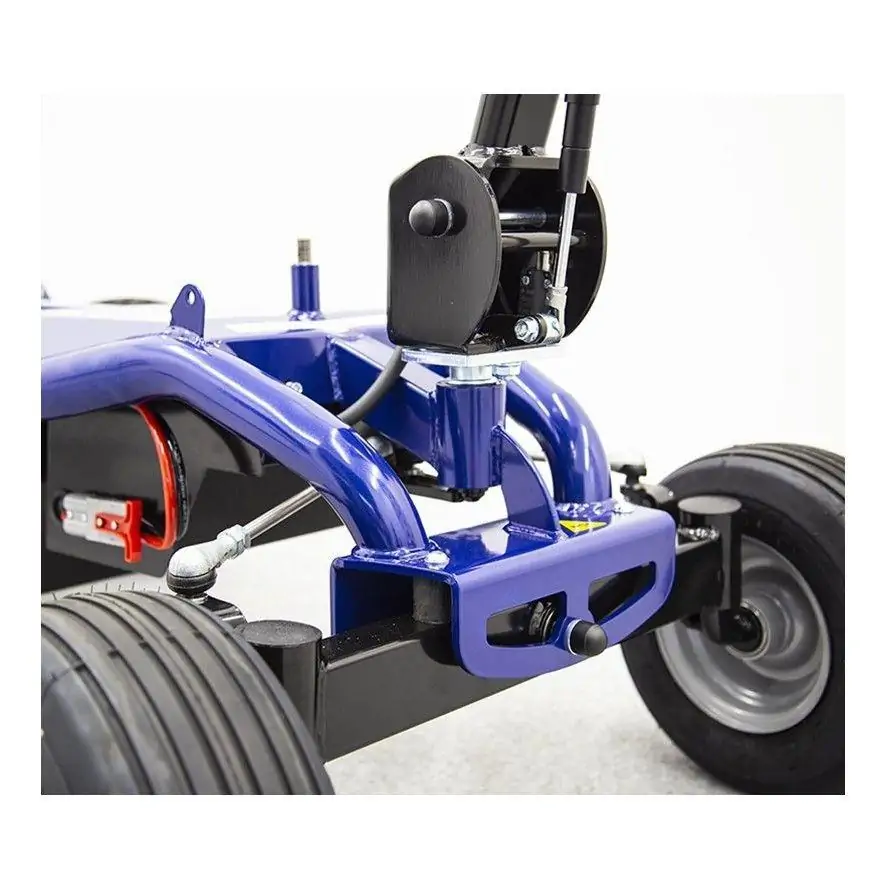
Steering and Drive System
Check steering response, excessive play, drive motors, and gearboxes during operation. Unusual noise, steering resistance, or unintended deviation from the travel path requires inspection before further use. Lubricate designated points at the intervals specified in the equipment manual.

Braking and Safety Devices
Inspect the braking system, emergency stop, audible and visual alarms, and collision detection sensors where fitted. Test braking and safety functions in a clear area without personnel or obstacles in the travel path. Use the manufacturer’s specified test procedure rather than applying a universal stopping distance or sensor detection range.

Electrical Controls and Remote Controller
Inspect cable insulation, electrical connections, the remote controller, receiver, and control cabinet. Keep electrical enclosures clean and dry. If wiring is damaged, controls malfunction, or components show signs of overheating or a burning smell, isolate the power supply and arrange inspection by qualified personnel.
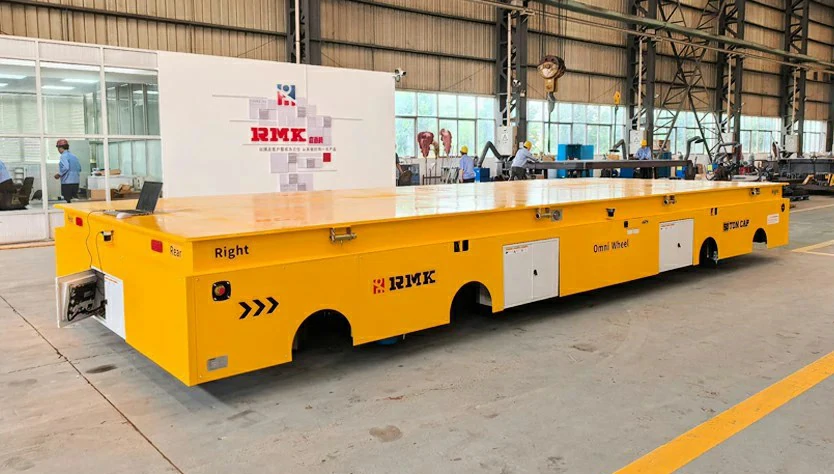
Frame, Platform, and Fasteners
Inspect the frame, welds, load platform, and fasteners for cracks, deformation, corrosion, and looseness. Pay particular attention to high-stress areas, workpiece support points, and fixture connections. Remove the cart from service if structural damage could affect load stability or safe operation.
Inspect each component according to the maintenance schedule and record any defects or repairs. Replace damaged parts and resolve safety-related faults before returning the cart to operation.
Maintenance for Customized Trackless Transfer Carts
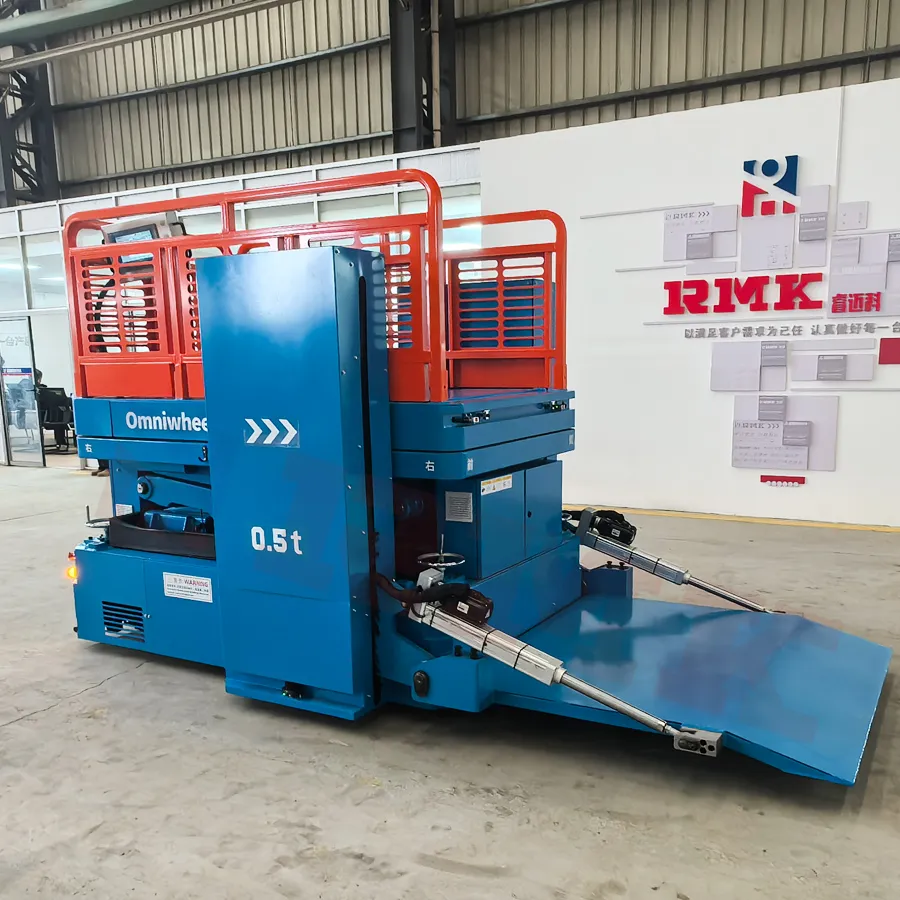
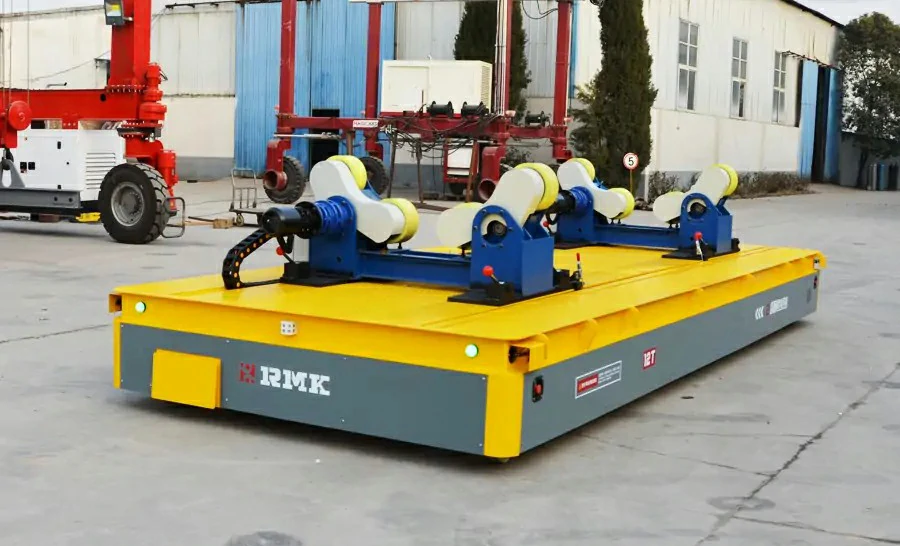
Customized trackless transfer carts may include hydraulic lifting platforms, roller decks, automatic navigation systems, or special environmental protection. Maintenance tasks depend on the installed equipment and its operating conditions.
- Hydraulic Lifting Platforms: Check hydraulic fluid levels, hoses, fittings, and cylinder seals for leaks or damage. Observe lifting and lowering movements for abnormal noise, uneven motion, or pressure loss.
- Roller or Conveyor Decks: Inspect rollers, bearings, drive components, and workpiece stops for wear, looseness, or damage. Check that the conveying system runs smoothly and that load restraints remain secure.
- Automatic Navigation Systems: Check navigation sensors, positioning devices, communication links, and programmed safety zones. Clean sensor surfaces and investigate positioning errors, signal interruptions, or irregular stopping behavior.
- Special Working Environments: Inspect protective covers, seals, and other components specified for the operating environment. Check for corrosion, heat damage, dust ingress, or moisture exposure where relevant to the application.
Follow the maintenance procedures in the equipment manual and the technical documents for each installed system. Do not apply servicing requirements for optional components that are not fitted to the cart.
Safe Operating Practices to Reduce Maintenance Costs
1. Load Capacity: Keep the load within the cart’s rated capacity. Position the workpiece according to the platform’s load distribution requirements.
2. Driving: Avoid sudden starts, sharp turns, and hard braking. Follow the specified travel speed and turning limits.
3. Floor Conditions: Keep travel routes clear of debris, oil, and loose materials. Repair potholes, damaged joints, and uneven floor sections.
4. Personnel Training: Allow trained operators to drive the cart. Maintenance work must follow the equipment manual and site safety procedures.
5. Maintenance Records: Record inspection dates, faults, replaced parts, and repair work. Check recurring faults for possible component wear or operating errors.
Stop the cart if abnormal movement, unusual noise, or braking faults occur. Inspect the equipment and repair the fault before resuming operation.
When Should a Trackless Transfer Cart Be Taken Out of Service?
Stop operating the trackless transfer cart if any of the following conditions occur:
- Brake failure or emergency stop malfunction
- Cracks in the frame or welds
- Severely damaged or deformed wheels
- Exposed electrical wires or damaged cables
- Abnormal overheating, burning smells, or unusual drive system noise
- Steering failure or uncontrolled movement
Park the cart in a safe area, remove the load if this can be done safely, and isolate the power supply according to the manufacturer’s procedures. Apply lockout measures to prevent accidental startup during inspection or repair. Qualified maintenance personnel must identify and correct the fault before the cart returns to service. Do not operate the cart with unresolved safety-critical defects.

Conclusion
Trackless transfer cart maintenance requirements depend on load capacity, travel routes, operating hours, floor conditions, and installed equipment. Regular inspections and timely repairs keep the cart in safe working condition and reduce avoidable equipment downtime.
REMARKABLE provides customized trackless transfer carts for industrial material handling applications. Our team can assess your load specifications, workshop layout, operating conditions, and attachment requirements to identify a suitable configuration and maintenance approach.
Contact RMK with your equipment model, application details, or current maintenance issues to discuss your requirements and request technical support.
Email: transfercart@rmkzn.com
Phone: +86-18637369355
FAQ
How often should a trackless transfer cart be maintained?
Inspect the cart before each shift and perform weekly, monthly, and periodic servicing according to the manufacturer’s manual. Inspection frequency depends on operating hours, load conditions, and the working environment.
What should a trackless transfer cart maintenance checklist include?
Check the battery, wheels, brakes, steering, drive system, emergency stop, warning devices, electrical controls, frame, and fasteners. Inspect hydraulic or conveyor attachments if fitted.
How do you maintain a trackless transfer cart battery?
Check the charge level, terminals, cables, and signs of overheating. Use a compatible charger and follow the battery manufacturer’s charging instructions. Investigate reduced runtime or a noticeable loss of capacity.
How can I tell if trackless transfer cart wheels need replacement?
Replace wheels with severe wear, cracks, deformation, flat spots, or other damage that affects movement. Uneven wear, excessive vibration, and unusual rolling noise also require inspection.
How do you check the brakes on a trackless transfer cart?
Inspect the braking components and test the braking function in a clear, controlled area according to the manufacturer’s procedure. Check the emergency stop separately. Remove the cart from service if braking performance is abnormal.
What causes a trackless transfer cart to stop working?
Common causes include a depleted or faulty battery, loose electrical connections, motor or drive faults, control system errors, and activated safety interlocks. Check the fault indicators and consult the equipment manual before troubleshooting.
Does a trackless transfer cart require lubrication?
Some models require lubrication of steering joints, bearings, gearboxes, or other designated points. Lubrication requirements vary by design. Follow the manufacturer’s instructions for lubricant type, application points, and service intervals.
How can regular maintenance reduce trackless transfer cart downtime?
Routine inspections identify worn components, loose connections, and developing faults before they cause equipment stoppages. Timely repairs and maintenance records also support spare parts planning and help identify recurring problems.