Table of Contents
Introduction
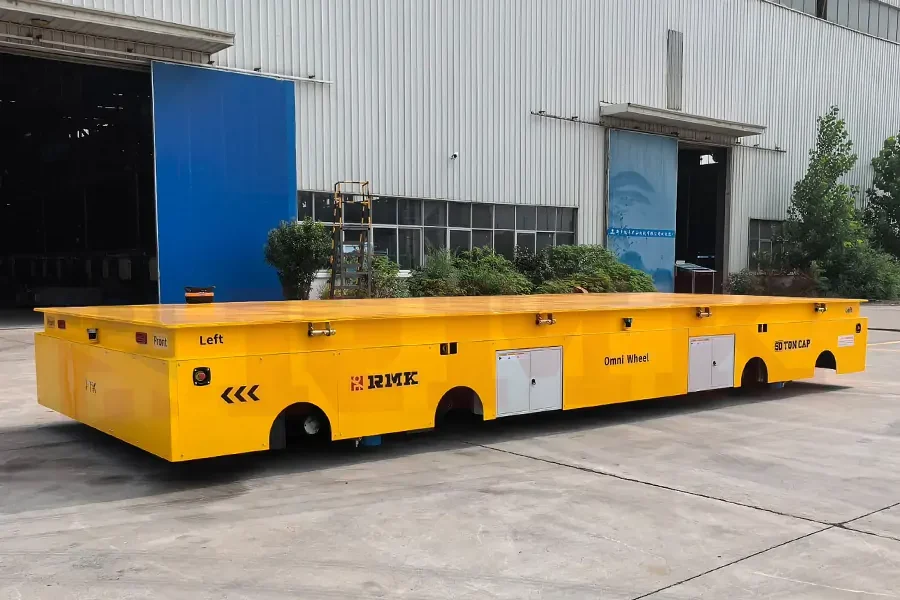
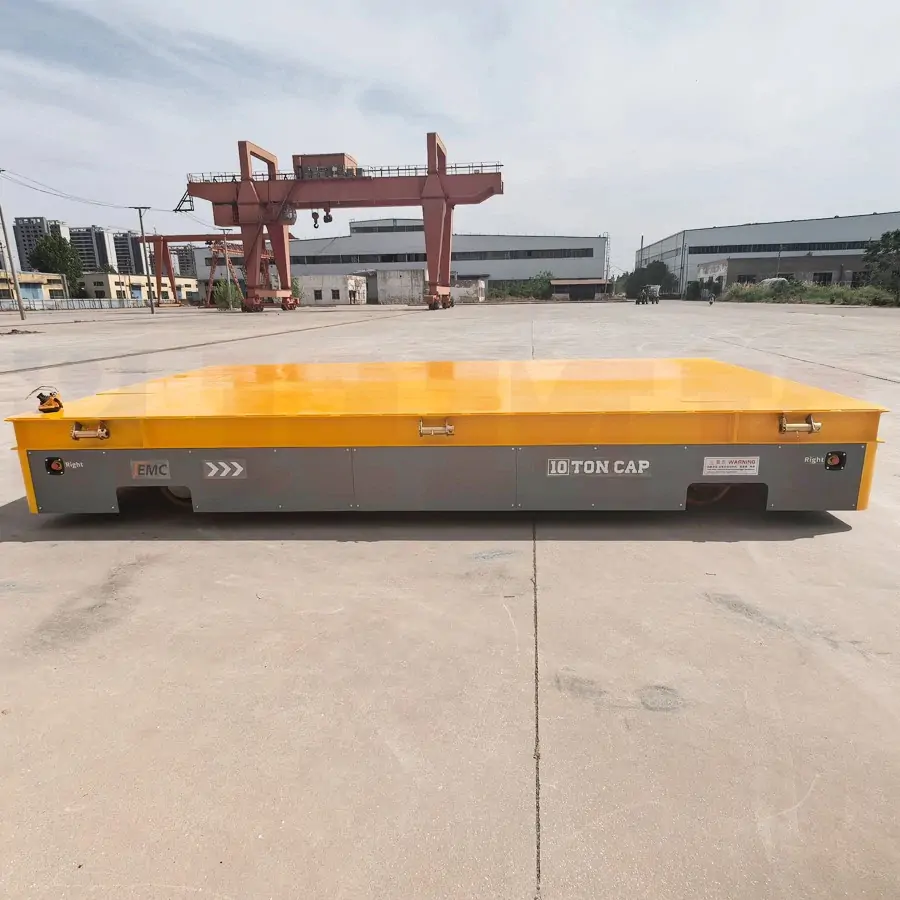
Battery Powered Transfer Cart is a kind of electric transport equipment widely used in factories, warehouses, and logistics centers, which relies on the battery to provide power and has the characteristics of flexibility, environmental protection, high efficiency, and so on. The battery is the core component of the battery transfer cart, and its performance directly affects the service life and operational efficiency of the equipment. Correct battery maintenance not only extends the battery life, but also ensures the stable operation of electric transfer carts and reduces the operating costs of enterprises.
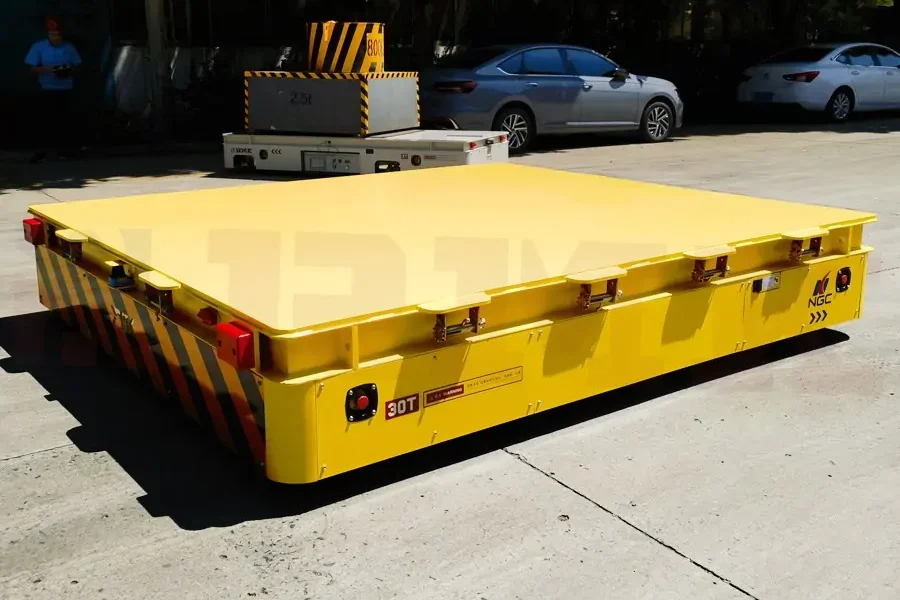
Why Does a Battery Powered Transfer Cart Need Regular Maintenance?
Regular maintenance keeps the battery powered transfer cart in stable working condition by reducing component wear, extending service life, and preventing unexpected downtime.
1. Extend Battery Life
The battery is the main power source of the transfer cart. Check for leakage in humid or corrosive environments, use the original charger, maintain proper ventilation, and follow correct charge-discharge methods in winter.
2. Maintain Mechanical Components
Wheel axles, motors, and reducers need regular maintenance. Wheel axles are usually lubricated every 4–6 months, motors are serviced every 6 months, and motor inspections are recommended once a year.
3. Improve Safety and Reliability
Inspect battery connections, cables, controllers, and electrical parts regularly. Cleaning and anti-rust treatment help prevent corrosion in industrial environments.
4. Reduce Repair Costs
A transfer cart battery usually lasts about 3 years. Regular checks of battery capacity, wheels, and control systems help find problems early and reduce downtime.
5. Suit Different Environments
For cold or humid conditions, adjust maintenance methods. Increase charging temperature and time in winter, and keep the battery area clean and dry in corrosive environments.
Regular maintenance of a battery powered transfer cart protects key components, lowers operating costs, and keeps the equipment reliable for long-term industrial material handling.
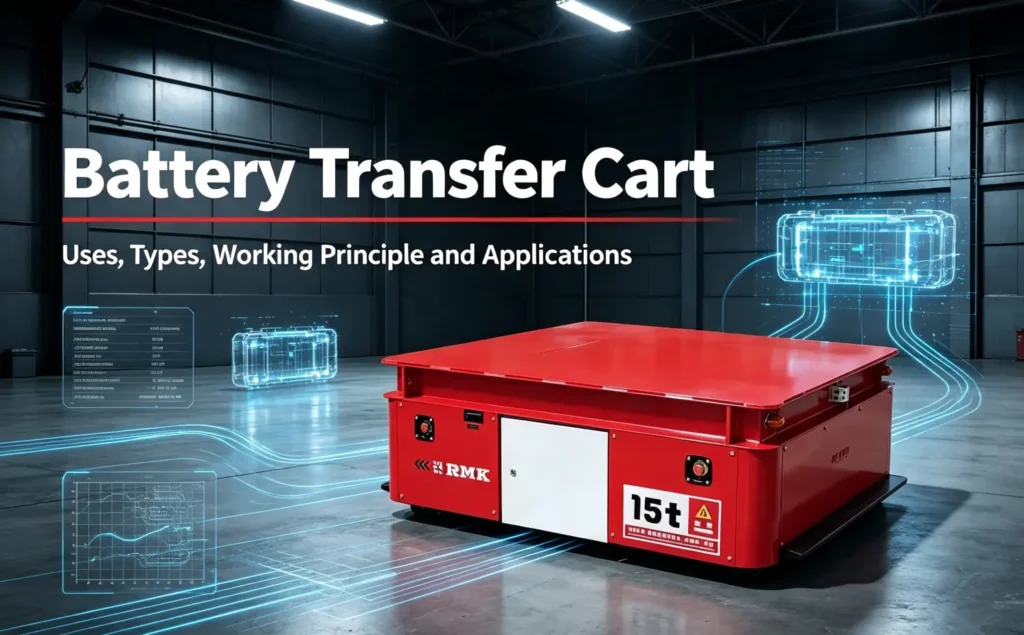
For more information on battery transfer cart types and applications, see the article: Battery Transfer Cart: Uses, Types, Working Principle, and Applications
Winter has a significant impact on batteries, so proper care and maintenance of the battery transfer cart’s battery are crucial. For more details, read the article: How to Solve the Problem of the Transfer Cart Battery Not Lasting Long in Winter?
Daily Inspection Checklist for Battery Powered Transfer Cart
Battery powered transfer carts are widely used for industrial material handling, and their operating condition directly affects production efficiency and workplace safety. Daily inspection helps identify potential problems early and prevents unexpected equipment downtime.
| Inspection Item | Inspection Details | Standard Requirement |
|---|---|---|
| Cart Body | Check for deformation, cracks, or rust | No structural damage or abnormal corrosion |
| Wheels and Tires | Check tire wear, pressure, and wheel bolts | Even wear, proper pressure, tight bolts |
| Battery Condition | Check battery swelling, leakage, cable connection, and terminal corrosion | Clean and dry surface, secure connections |
| Charging System | Check charging plug, socket, and charger condition | Good contact, no burn marks |
| Electrical Wiring | Check cable damage, aging, and loose connections | Good insulation, firm wiring |
| Control System | Test start, stop, steering, and lifting functions | Smooth operation without delay |
| Braking System | Check brake performance and stopping distance | Quick response, no deviation |
| Warning Devices | Check alarm, horn, and emergency stop button | All functions work properly |
| Lubrication | Check lubrication of moving parts and abnormal noise | Smooth operation with sufficient lubrication |
| Safety Protection | Check guards, limit switches, and anti-collision devices | Complete protection and accurate limit control |
Daily inspection is a simple and effective way to maintain battery powered transfer carts. A few minutes of regular checks can reduce repair costs, extend equipment service life, and keep the cart operating safely in industrial applications.
How to Maintain the Battery of a Transfer Cart?
I. Charging Management
Avoid overcharging and undercharging
Please use the original matching charger, and disconnect the power in time after full charge (most batteries stop automatically after full charge, but long-term plugging will shorten the life).
It is recommended to charge the battery when the remaining power is 20%-30%, to avoid complete depletion (deep discharge will shorten the battery life).
Control the charging temperature
Avoid charging at high temperature (>40℃) or low temperature (<0℃); extreme temperature will damage the chemical structure of the battery.
Choose a cool place for charging in summer, and charge in winter after the battery is warmed up (if the vehicle has a temperature control function).
Charging Frequency
Avoid frequent “charging with use”; it is recommended to charge the battery when the power drops to about 30%, to reduce the impact of the number of cycles on the life of the battery (lithium batteries can be recharged at any time). 4.
Use the original charger:
Different models of batteries need to match the charging parameters; poor-quality chargers may lead to overcharging or under-charging. When the charger fails, it should be stopped immediately and replaced.
Control charging time:
The general charging time is 8-10 hours; avoid prolonged overcharging (more than 12 hours), and disconnect the power supply in time after the charging is completed.

II. The Battery Powered Transfer Cart Use Specification
Reasonable control of the load:
Do not exceed the rated load capacity of the motorized transfer cart; overloading will accelerate battery discharge, resulting in overheating of the battery, and long-term overloading will permanently damage the battery.
Avoid deep discharge:
When the power indication is less than 20%, stop using, deep discharge will damage the internal structure of the battery. Equipment equipped with a low battery alarm device should pay attention to the alarm prompts.
Smooth Operating Habits:
Reduce rapid acceleration, rapid braking, or overloading; these behaviors will cause the battery to output a large current in a short period of time, accelerating the loss. It is recommended to operate the handle or controller smoothly, keep driving at a constant speed, and reduce the load appropriately for long uphill sections.
Reasonable planning of the length of use
continuous work, every 2-3 hours, it is recommended to let the battery rest for 10-15 minutes to avoid sustained high temperature.
III. The Battery Powered Transfer Cart environment and storage requirements
Suitable working environment:
The best working temperature: 10 ℃ -30 ℃, avoid extreme temperatures (below -10 ℃ or higher than 45 ℃) during use. In a humid and dusty environment, strengthen the battery protection.
Correct storage method:
When not in use for a long time, the battery should be kept at 50%-70% charge for storage, and the storage environment should be dry, ventilated, and avoid direct sunlight.
Every 2-3 months, for the storage of the battery for a supplemental charge.
Regular cleaning and inspection:
Keep the battery surface clean and dry.
Regularly check the battery connecting cables for looseness or corrosion.
Check the battery case for deformation or liquid leakage.
Components That Require Regular Maintenance
Regular maintenance of key components directly affects the reliability, safety, and service life of a battery powered transfer cart.
Battery System
The battery provides power for the cart. Check cable connections, terminal corrosion, and surface condition regularly. Battery life is usually around 3 years. Proper charging and discharging prevents over-discharge and low-power storage damage.
Drive Motor
The drive motor powers the wheels. Check running condition, abnormal noise, and lubrication regularly. Motor maintenance is generally required every 6 months.
Reducer
The reducer controls speed and torque output. Check oil level and oil condition regularly, and replace or refill lubricating oil when needed to reduce gear wear.
Wheels and Wheel Assembly
Wheels carry the load and affect running stability. Check tire wear, air pressure, and bolt tightness. Common wheel materials include polyurethane and cast steel.
Electrical Control System
The control system manages starting, stopping, speed, and direction. Check cables, connectors, and electrical parts for aging, damage, or loose connections.
Braking System
The braking system ensures safe stopping, especially under heavy loads. Check brake wear and test braking performance regularly to keep the stopping distance within safety requirements.
Charging System
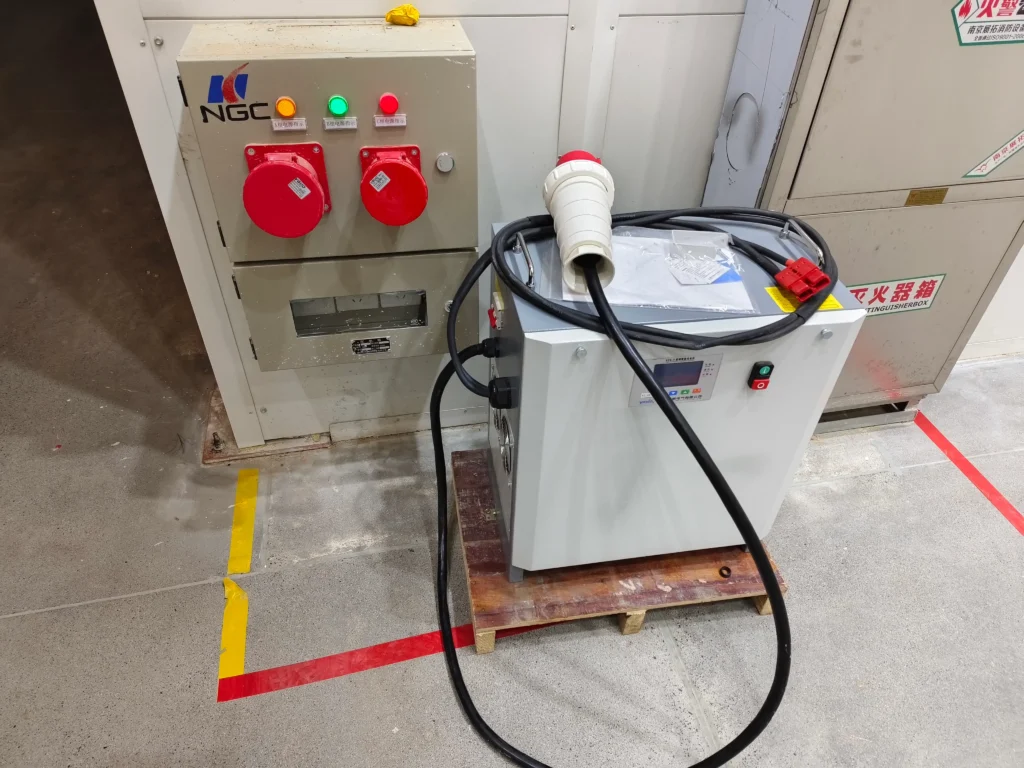
The charging system includes the charger, plug, and socket. Check connection condition and burn marks. Use the original charger and keep the charging area well ventilated.
Safety Protection Devices
Safety devices include warning lights, emergency stop buttons, and buffers. Regular testing ensures reliable operation during emergencies.
Cart Structure
The frame supports the full load. Check for deformation, cracks, rust, and weld damage, especially when operating in harsh environments.
Regular inspection and maintenance of each component reduce failures, improve operating reliability, and extend the service life of battery powered transfer carts.
Common Battery Powered Transfer Cart Problems and Solutions
Battery powered transfer carts may experience faults during long-term operation, and timely troubleshooting helps reduce downtime and maintain stable production.
| Problem | Possible Cause | Solution |
| Cart Cannot Start | Emergency stop activated, low battery, blown fuse, loose battery connection | Reset emergency stop, check battery power, inspect fuse and wiring |
| Weak Movement or Low Speed | Battery aging, low voltage, overload, brake drag | Check load capacity, inspect brake condition, replace old battery if needed |
| Fast Battery Drain | Low electrolyte, battery aging, electrical leakage | Add distilled water, check leakage points, replace damaged battery |
| Battery Cannot Charge | Oxidized charging port, charger fault, battery damage | Clean charging contacts, check charger, replace damaged battery |
| Wheel Noise | Poor lubrication, bearing damage, uneven wheel wear | Clean and lubricate parts, inspect bearings, replace worn wheels |
| Cart Running Off Track | Track debris, uneven wheel wear, loose frame bolts | Clean track, check wheels, tighten frame bolts |
| Brake Failure | Control circuit fault, worn brake pads | Check control system, replace worn brake pads |
| Lifting Vibration | Air in hydraulic cylinder, hydraulic leakage | Remove air from system, check seals and cylinders |
| Load Drops Automatically | Oil leakage, damaged seals | Inspect hydraulic lines and valves, replace seals |
| Slow or Failed Lifting | Low hydraulic oil, low valve pressure, worn pump | Add hydraulic oil, adjust valve pressure, replace worn pump |
Maintenance Tips: Check battery condition regularly and avoid long-term low-power storage. For carts parked over 7 days, recharge the battery every 3 days. Clean dust from the electrical cabinet and motor surface to reduce the risk of electrical faults.
Regular inspection and proper maintenance help identify faults early, reduce repair costs, and keep battery powered transfer carts operating safely and efficiently.
How Often Should a Battery Powered Transfer Cart Be Maintained?
The maintenance cycle of a battery powered transfer cart depends on the model, battery type, and operating conditions. A proper maintenance plan helps keep the equipment reliable and reduces unexpected failures.
Basic Maintenance Schedule
| Maintenance Period | Inspection Items |
| Daily Check | Check battery level, wheel condition, emergency stop, alarm system, frame, bolts, and brake performance before operation |
| Weekly Maintenance | Clean electrical cabinet and motor surface, lubricate bearings and shafts, check cable insulation condition |
| Monthly Maintenance | Check battery voltage, hydraulic system leakage, steering accuracy, and tire wear |
| Every 6 Months / 5,000 km | Inspect tire wear, brake response, lights, wiring harness, and charging port condition |
| Annual Overhaul | Check motor insulation, reducer oil, controller, contactor, wheels, bearings, sensors, and perform load testing |
Key Component Maintenance Cycle
| Component | Maintenance Interval |
| Wheel Axle | Lubricate every 4–6 months |
| Reducer | Add lubricating oil after first 200 hours, then check regularly |
| Drive Motor | Maintain every 6 months and add grease as required |
| Belt | Check monthly under frequent operation |
| Control Board | Clean every 2 months |
| Battery | Check condition annually and replace if voltage is too low |
- Battery Maintenance Tips: The battery directly affects the running time and service life of the transfer cart. Keep the battery charge between 20%–80% during daily use, avoid long-term low-power storage, and recharge within 24 hours after operation. For long-term storage, keep the battery at 50%–70% charge and recharge once a month.
- Long-Term Storage Maintenance: When the transfer cart is unused for more than 7 days, recharge the battery every 3 days. Store the cart in a dry and flat area, support the wheels to prevent deformation, and cover the electrical cabinet and battery to protect against dust and moisture.
A regular maintenance plan combining daily inspection, scheduled servicing, and component checks helps extend battery powered transfer cart service life and maintain stable operation.
Tips to Extend Battery Powered Transfer Cart Service Life
- Use the original charger for charging to avoid battery damage caused by poor-quality chargers.
- Keep the charging area well ventilated and avoid high-temperature or humid environments.
- Recharge the battery when the power level is below 20% to prevent battery damage.
- Charge the battery once a week during long-term non-use.
- Do not replace transfer cart parts without authorization. Contact the manufacturer when problems occur.
- Stop operation immediately if the cart does not move after startup to avoid motor damage.
- Wait until the cart stops completely before changing the driving direction.
- Regularly check battery cables for tight connections and terminals for corrosion.
- Keep the battery surface clean and dry. Do not place objects on the battery or connect positive and negative terminals directly.
- For long-term storage, keep the battery SOC between 30%–50%.
- Perform one charge-discharge cycle every month to maintain battery activity.
- Keep the battery warm in winter and extend charging time when necessary.
- Clean dust from the electrical cabinet and motor surface regularly to prevent short circuits.
- Lubricate wheel axles, reducers, motors, and other components according to the maintenance schedule.
- Check wheel wear, braking performance, and safety devices every day.
- Recharge the battery every 3 days when the cart is unused for more than 7 days.
- Cover the electrical cabinet and battery during storage to prevent moisture and dust.
- Follow the maintenance principle of “daily inspection + regular servicing + key component maintenance.”
Battery Powered Transfer Cart Manufacturer and Supplier
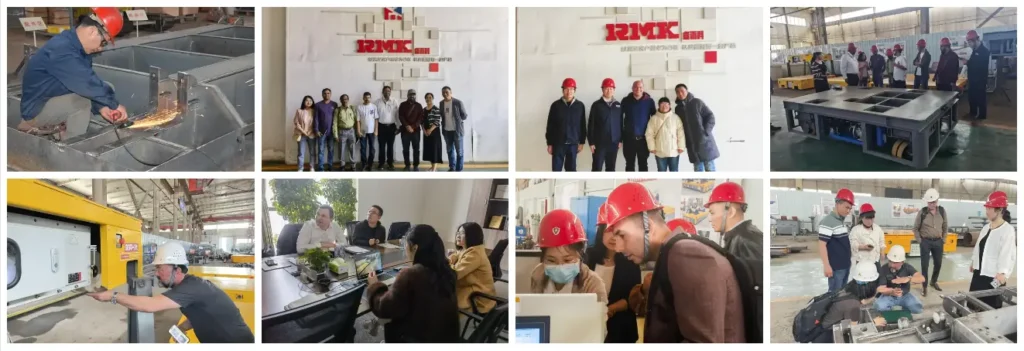
REMARKABLE specializes in the design and manufacturing of heavy-duty battery-powered transfer carts for industrial material handling applications. With experience in heavy load transportation solutions, we provide customized transfer carts with different capacities, power options, control methods, and configurations to meet various factory handling requirements.
From equipment selection and customized design to production, delivery, and after-sales support, REMARKABLE provides complete service throughout the project process. Each transfer cart is tested before shipment and supported with reliable quality assurance and technical support. Contact us for a suitable battery-powered transfer cart solution for your application.
Email: transfercart@rmkzn.com
Phone: +86-18637369355
FAQ
How often should a battery powered transfer cart be maintained?
Daily inspection is recommended, with regular maintenance every 6 months or according to operating conditions.
How long does a transfer cart battery last?
A transfer cart battery usually lasts around 3 years, depending on usage and maintenance.
How do I maintain a transfer cart battery?
Keep the battery clean and dry, avoid deep discharge, and follow proper charging methods.
Why does my battery transfer cart lose power quickly?
Common causes include battery aging, insufficient charging, overload operation, or electrical leakage.
What should I check before operating a transfer cart?
Check battery level, wheels, brakes, control system, safety devices, and electrical connections.
How can I prevent transfer cart breakdowns?
Perform regular inspections, maintain key components, and repair faults as soon as they are found.
Can a battery powered transfer cart be customized?
Yes. Load capacity, size, battery type, control method, and other features can be customized.
What is the service life of a transfer cart?
With proper maintenance, a transfer cart can typically operate reliably for many years.