Índice
In modern industrial production, efficient handling of heavy materials is a key link to improving production efficiency. Different types of industrial transfer carts can meet various complex material-handling needs because of their different functional characteristics and application scope. This article will provide you with a detailed introduction to five common types of industrial transfer carts and their application scenarios, to help enterprises better understand the product classification and use of transfer cart scenarios.
What Is An Industrial Transfer Cart?
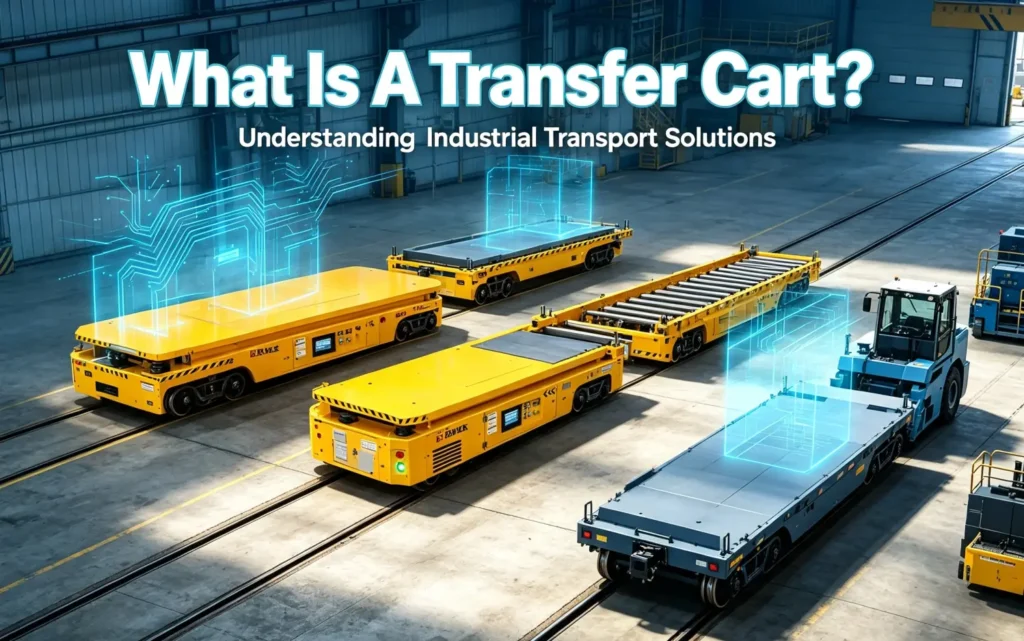
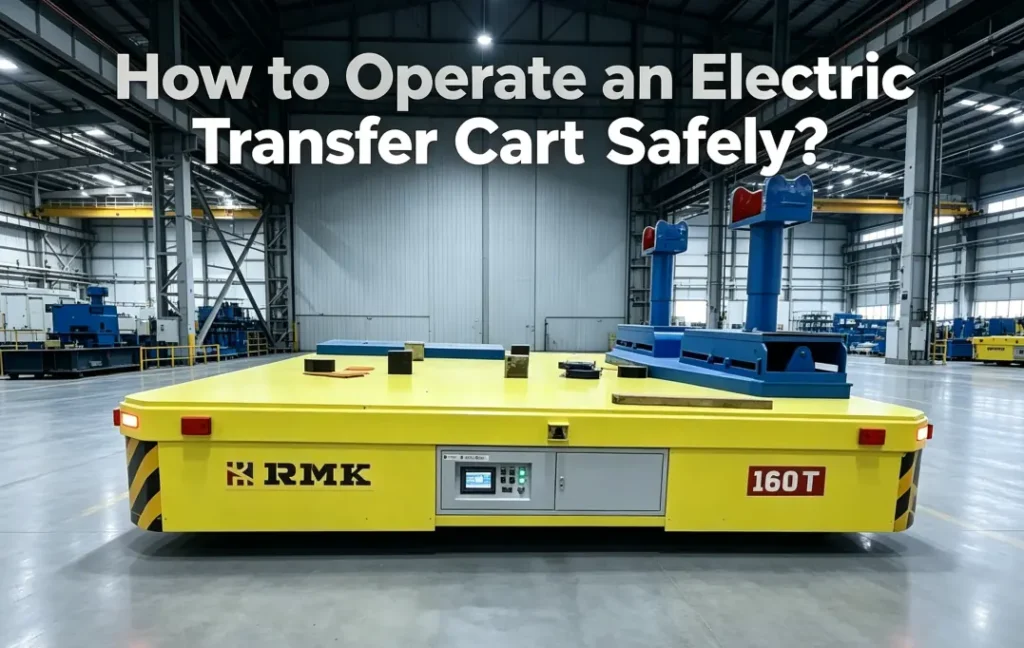
An industrial transfer cart is a heavy-duty material handling vehicle used to move large and heavy loads within factories, workshops, warehouses, and industrial facilities. It runs on rails or a trackless system and is designed to transport materials such as steel coils, molds, machinery parts, and finished products safely and efficiently.
Industrial transfer carts are powered by different systems, including batteries, rail power, cable reels, and busbars. Depending on the working environment and load requirements, they can be customized with different platform sizes, capacities, control methods, and safety features. Common types include rail transfer carts, trackless transfer carts, AGV transfer carts, and RGV transfer carts.

Main Types of Industrial Transfer Carts
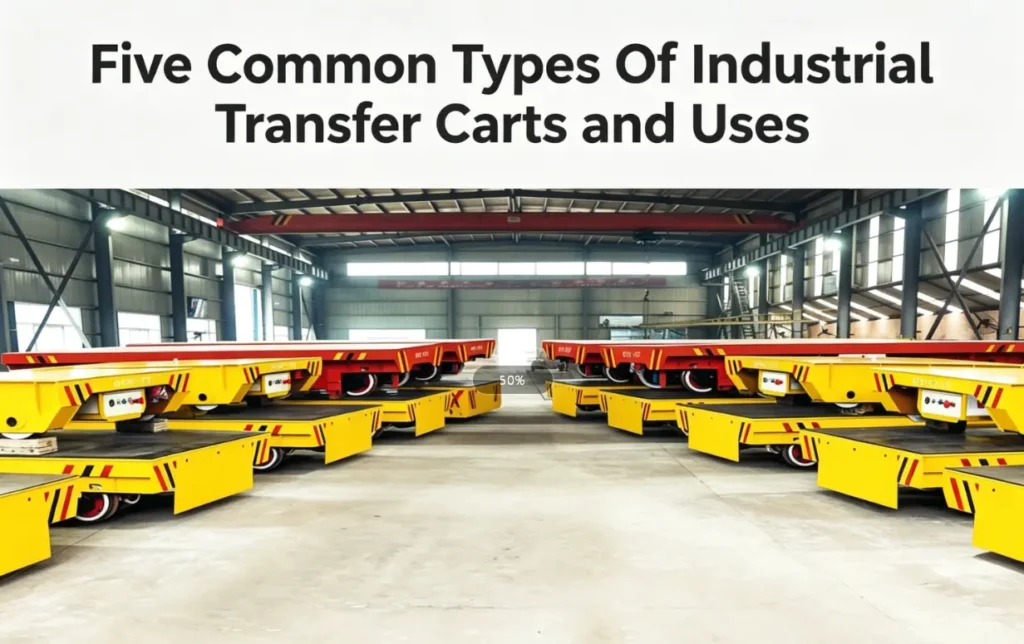
Industrial transfer carts are available in different types to meet various material handling requirements. The selection depends on factors such as load capacity, transportation route, working environment, and automation needs. The main types include rail transfer carts, trackless transfer carts, AGV transfer carts, RGV transfer carts, and heavy duty transfer carts.
Carro de transferencia sin raíles
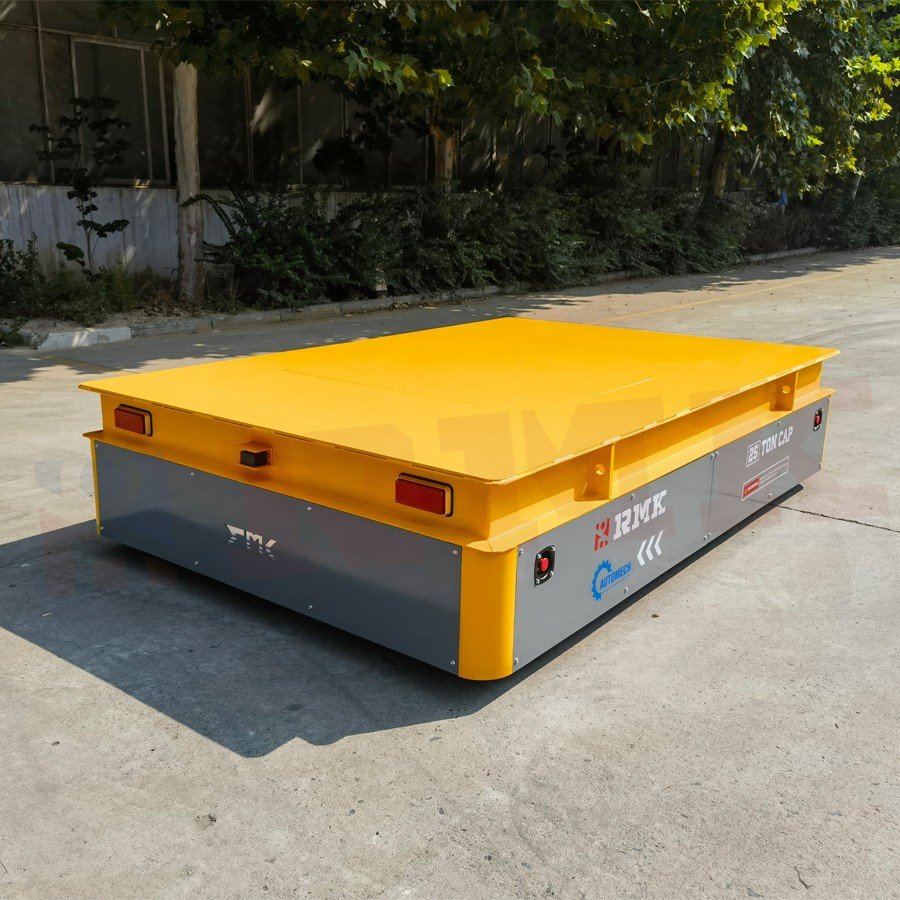
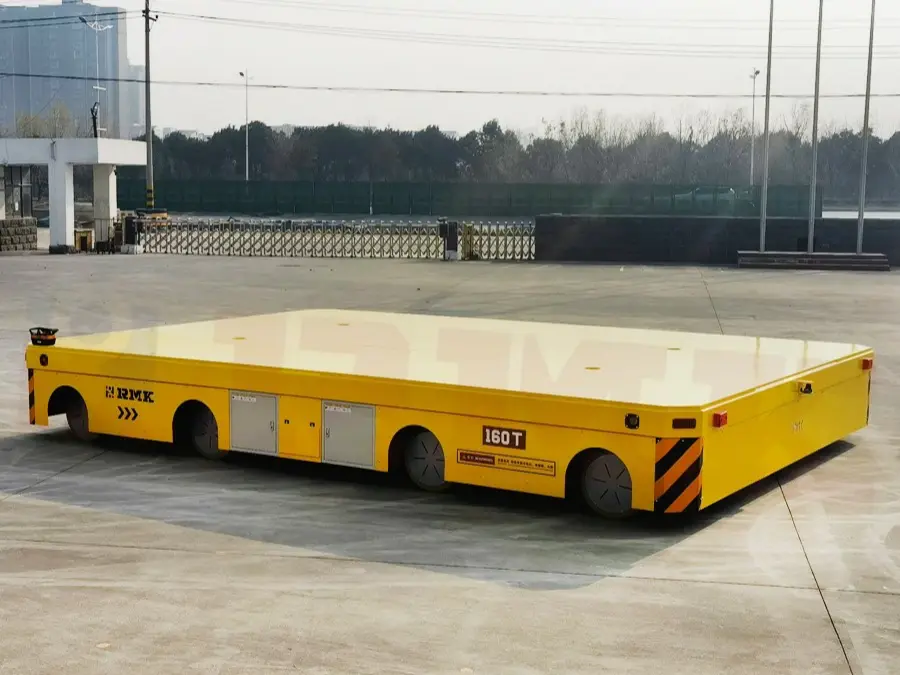
A customized carro de transferencia sin orugas is a popular piece of material handling equipment in recent years, and its biggest feature is that it doesn’t rely on a fixed track traveling. It has high mobility and flexibility, especially suitable for material transfer between multiple workshops.
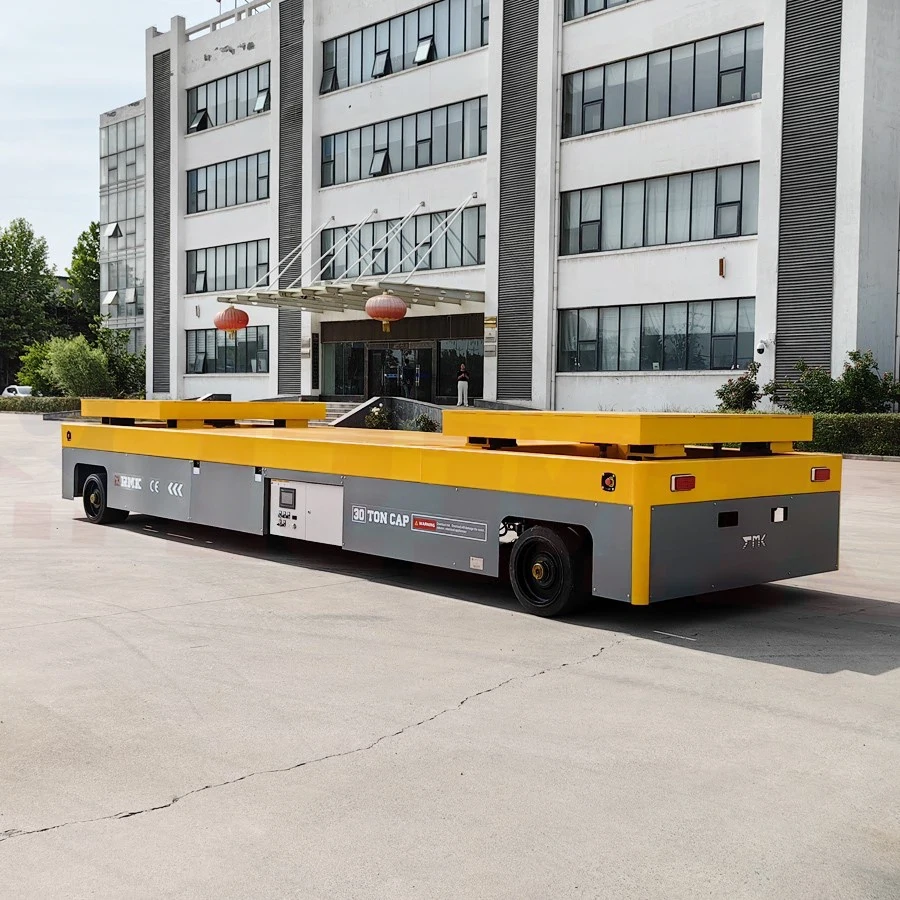
La principal ventaja de la carretilla de transferencia sin orugas es su adaptabilidad. Puede manejar fácilmente la tarea de transportar moldes, bobinas, palanquillas y otros materiales grandes y pesados, con una capacidad de carga que va desde unas pocas toneladas hasta cientos de toneladas. Al no estar limitado por la vía, este tipo de carro de transferencia puede planificar libremente la ruta de transporte, lo que mejora enormemente la eficiencia de la logística interna de la fábrica. En la actualidad, estos productos se han exportado a Estados Unidos, Italia, Singapur, Polonia, Países Bajos, México, Arabia Saudí, República Checa, Sri Lanka, Mongolia y otros países, favorecidos por muchos usuarios industriales.
El carro de transferencia sin orugas es especialmente adecuado para aquellas fábricas cuya distribución de la producción se ajusta con frecuencia o requiere cambios temporales en las rutas de los materiales. Su flexibilidad permite a las empresas responder rápidamente a los cambios de producción sin tener que invertir grandes sumas de dinero en remodelar la infraestructura.
Carro de transferencia de raíles
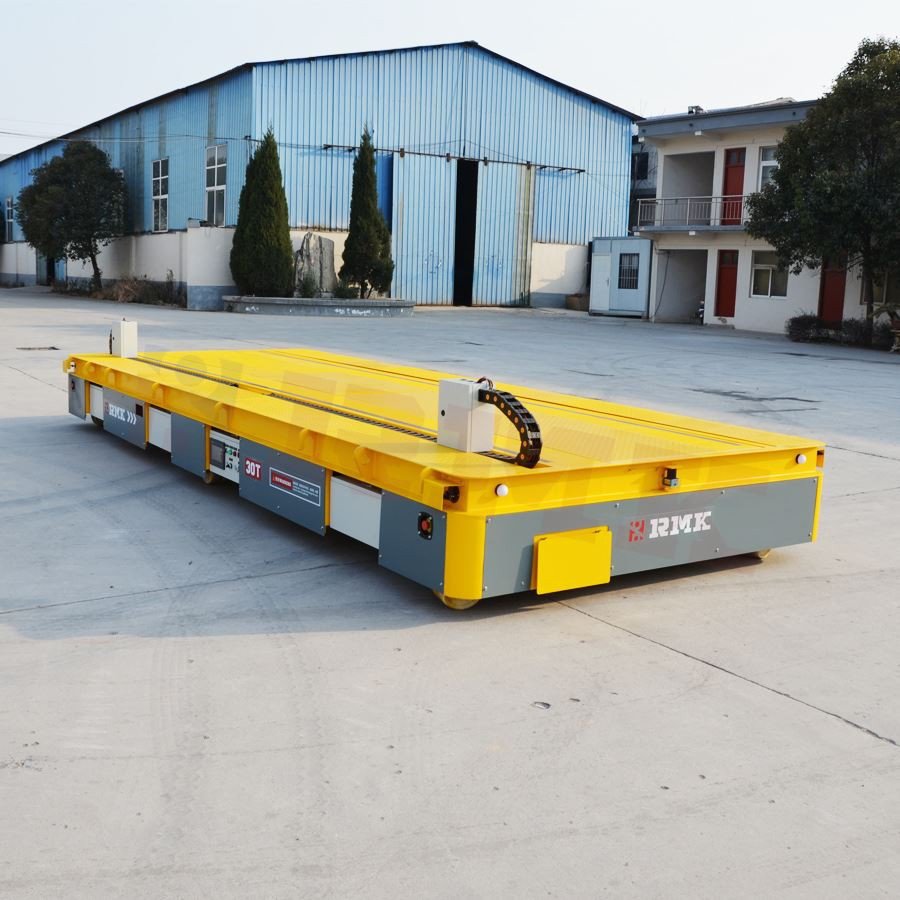
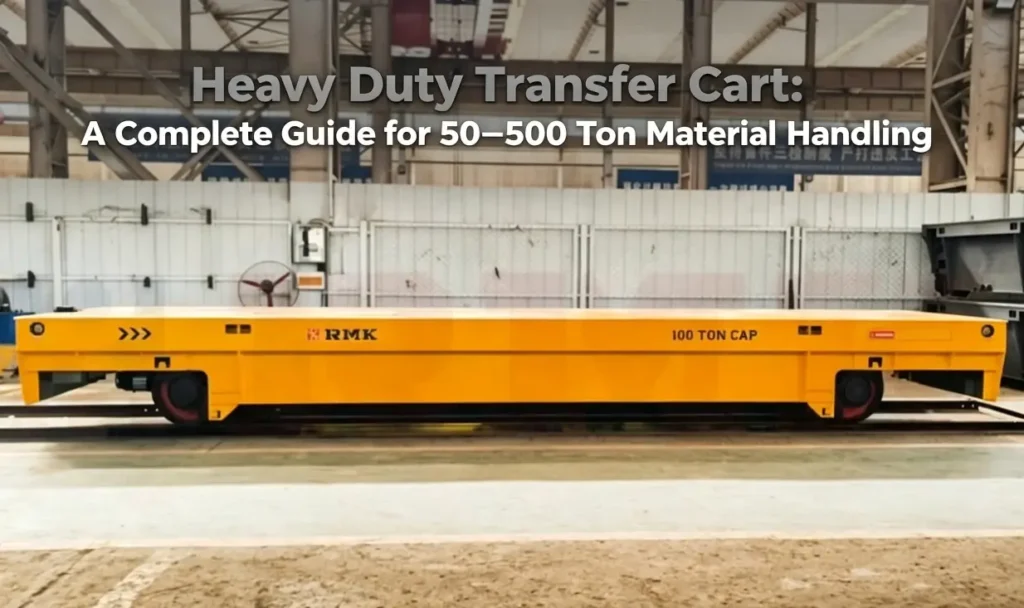
Carros de transferencia sobre raíles son uno de los tipos de equipos de transporte industrial más tradicionales y fiables. Estos carros circulan por vías preestablecidas, ya sea en línea recta o adaptadas a vías en forma de S, curvas o combinadas, proporcionando una solución estable para el transporte de materiales en rutas fijas.
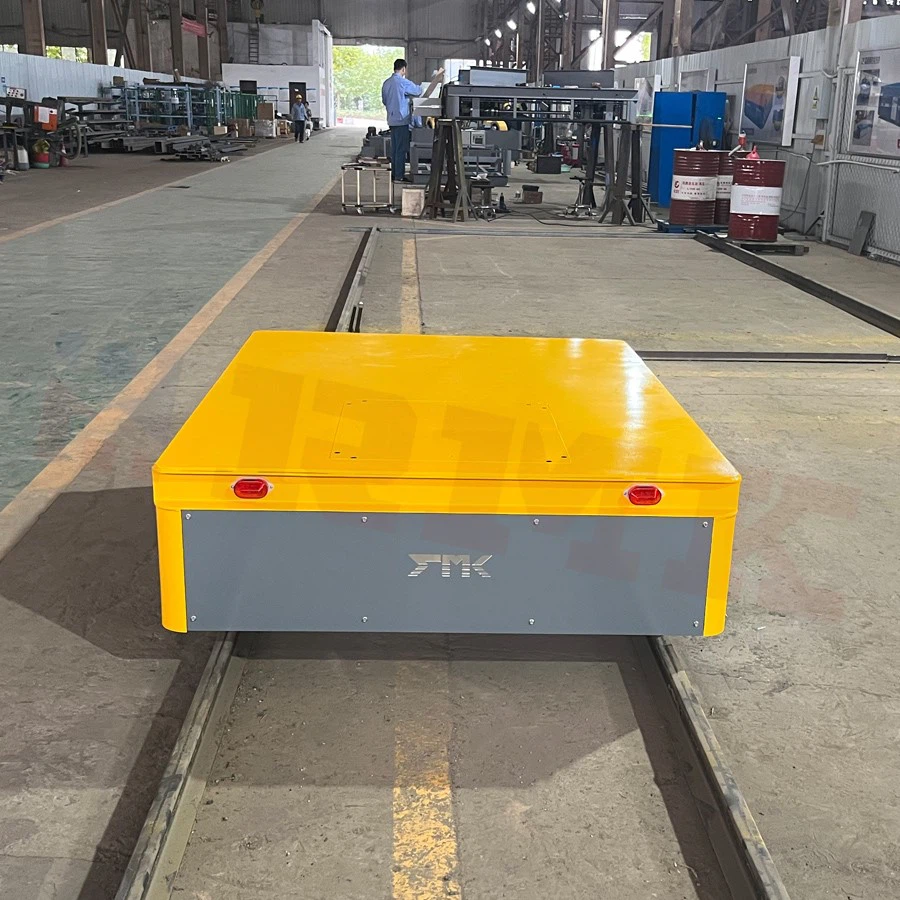
A wide range of specialized models of rail transfer cars have been developed to meet different industrial needs. Commonly, there are low-pressure railcars, explosion-proof special railcars, automated railcars, RGV automated railcars, and high-temperature resistant railcars. This diversity allows the railcars to be widely used in paper making, metallurgy, coal, electromechanical, military, and other industries.
En comparación con las vagonetas de transferencia sin raíles, las vagonetas de transferencia sobre raíles tienen la ventaja de un funcionamiento más estable y fiable, especialmente adecuado para el transporte en ruta fija a largo plazo de materiales pesados. El sistema ferroviario garantiza un posicionamiento preciso y un transporte repetible, lo que es especialmente importante para los procesos de producción que requieren un acoplamiento de alta precisión. Además, muchas empresas de la industria pesada prefieren los vagones por su mayor capacidad de carga y vida útil.
Volante móvil omnidireccional
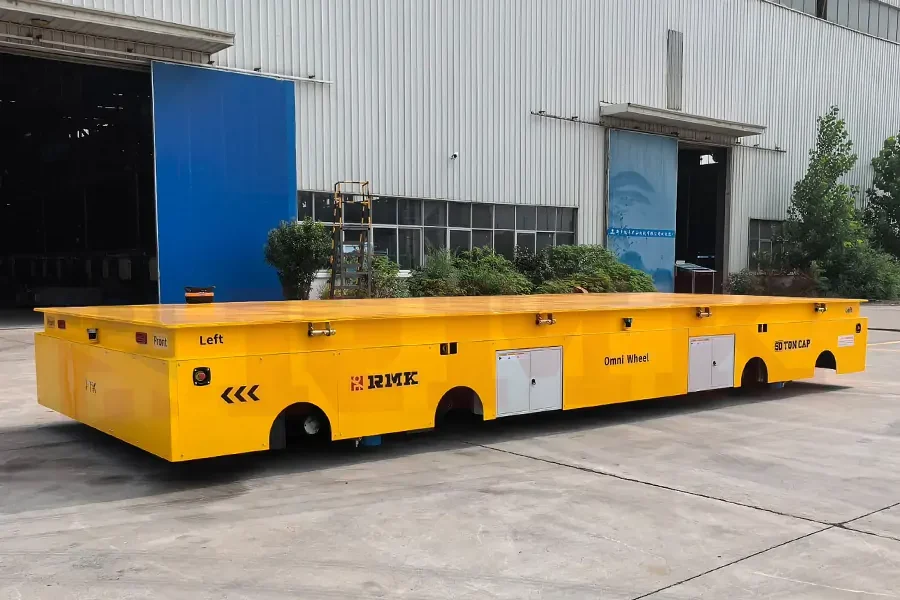
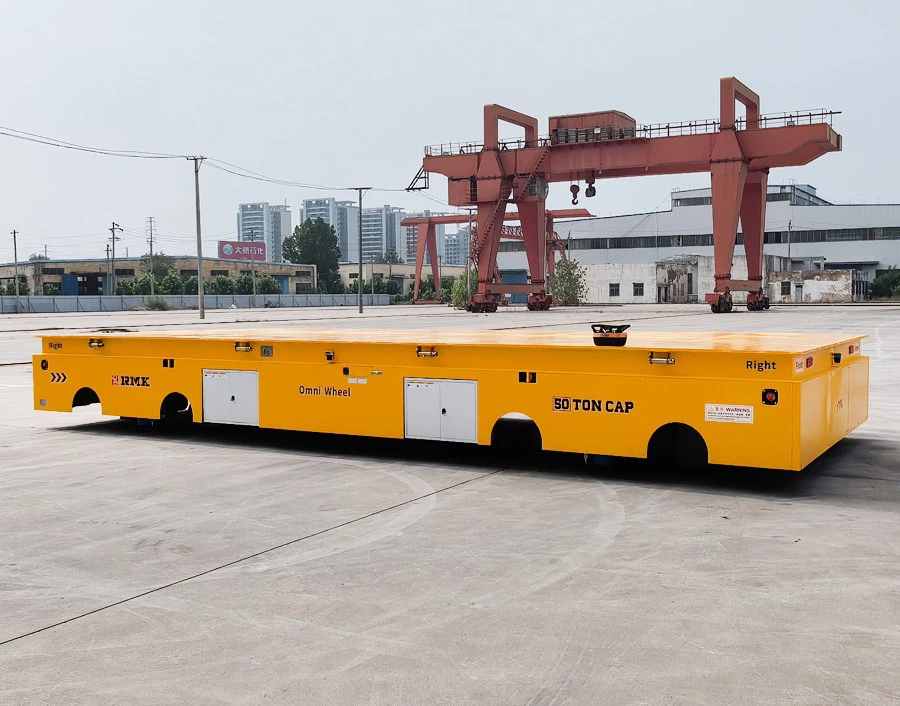
El carro de transferencia móvil sin orugas omnidireccional con volante representa el desarrollo de gama alta de la tecnología de carros de transferencia industrial. La carretilla consta de cinco componentes principales: bastidor de acero, batería, sistema de volante, sistema eléctrico y sistema de inspección de seguridad, y se puede reequipar con diversos módulos funcionales, como elevación hidráulica y sistema de rodillos.
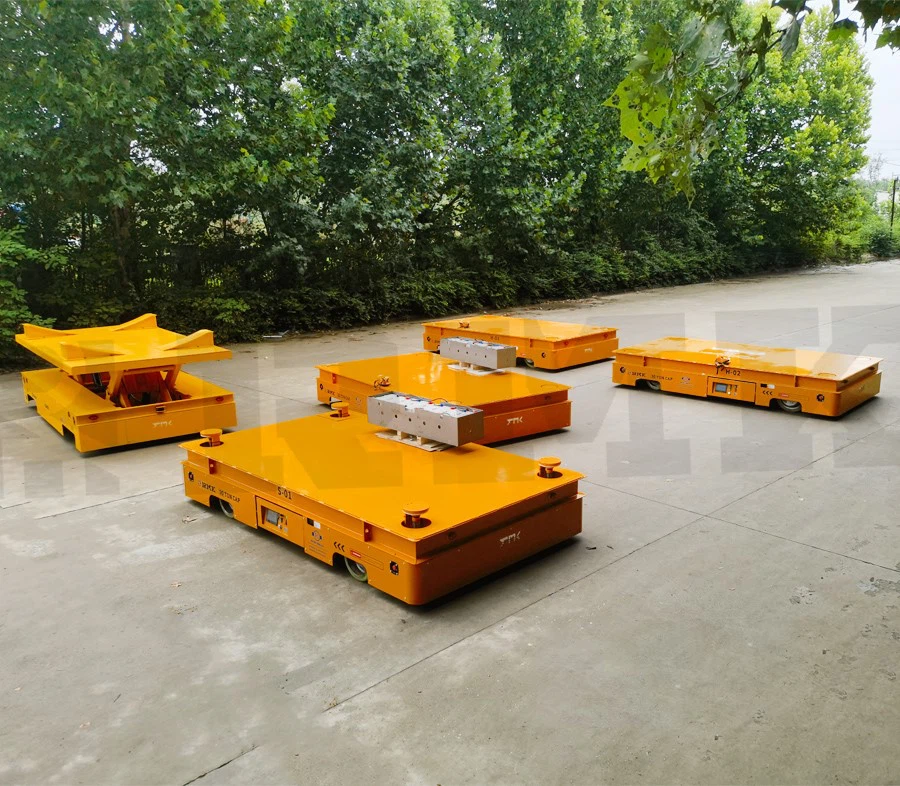
The unique design of the omnidirectional wheel system is the biggest highlight of this type of transfer cart. It is not only able to realize conventional forward and backward movement, but also lateral movement, oblique movement, in-situ 360-degree rotation, and is free to travel through narrow spaces. This excellent mobility makes it a very popular tool for modern industrial material transportation, especially suitable for production environments with limited space but complex handling requirements.
Omnidirectional wheeled trackless transfer carts are offered on the market with load capacities ranging from 1 to 150 tons, with off-standard customized solutions available according to customer needs. This flexibility allows it to be adapted to different scales of production needs, from light electronics assembly to heavy machinery manufacturing. In practice, it is often used in applications that require precision positioning or high space utilization, such as aircraft assembly and large equipment maintenance.
Carro automatizado de transferencia de carriles (RGV)
RGV (Automated rail transfer trolley) is an intelligent upgraded version of the rail transfer cart, which is characterized by fast running speed, high reliability, and low cost of use. This kind of transfer trolley is mainly used for industrial material transportation and workshop assembly, which is an indispensable logistics equipment for modern automated workshops.
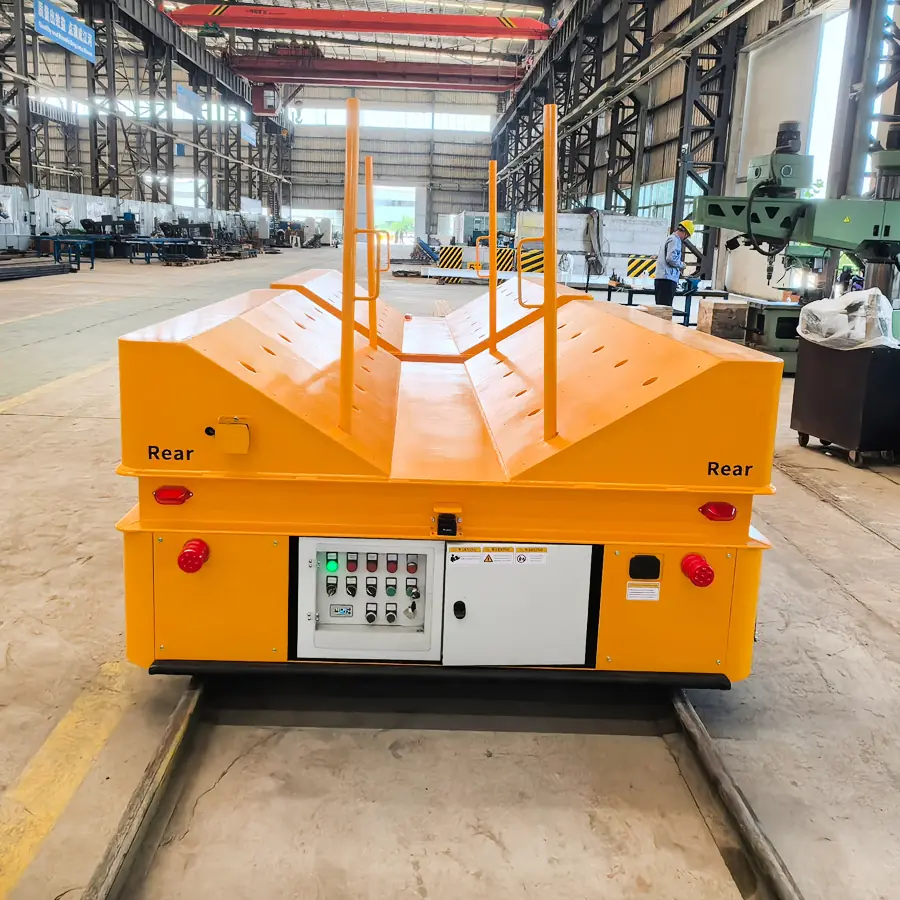
La principal ventaja de RGV es su grado de automatización. Puede integrarse perfectamente con el sistema de automatización de la fábrica para realizar una programación precisa y un transporte de materiales sin personal. Los tipos personalizados más comunes en el mercado incluyen transportadores RGV de raíles cruzados, transportadores de raíles móviles automatizados longitudinales y transversales, etc., que pueden satisfacer las necesidades especiales de diferentes diseños de producción.
These transfer trolleys are suitable for modern factories with 24-hour continuous production, which can reduce labor costs and improve logistics efficiency. In demanding industries such as automobile manufacturing and electronics assembly, AGVs have become standard. Their precise positioning capability and programmable operation modes provide strong support for lean production.
Carro guiado automáticamente (ACV/AMR)
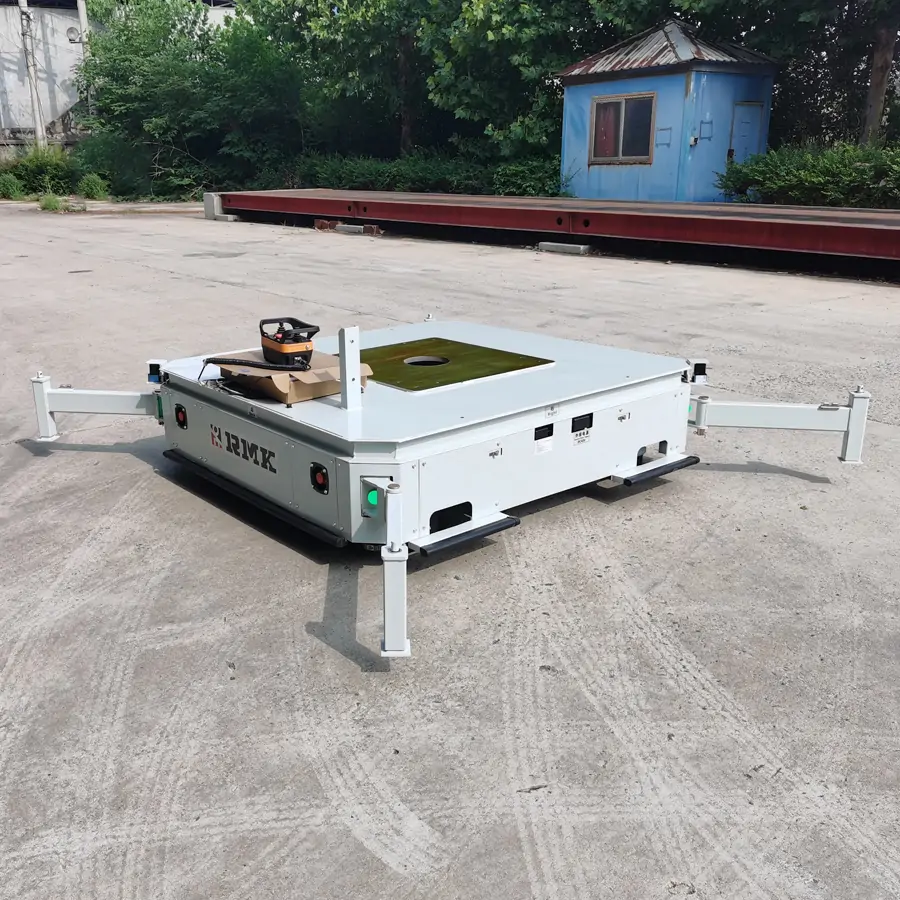
AGV Carros de guiado automático representan el nivel más alto de carro de transferencia industrial tecnología y son un componente central de los sistemas logísticos de fábricas inteligentes. Este tipo de equipo generalmente consta de un sistema de elevación hidráulica, un sistema de transmisión diferencial, un sistema de transmisión de rueda direccional, un sistema de control PLC, un sistema de navegación, un sistema de comunicación, un sistema de alarma, un sistema operativo y un sistema de potencia, entre otros, capaz de resolver los problemas de manipulación de materiales en fábricas inteligentes y otros entornos especiales.
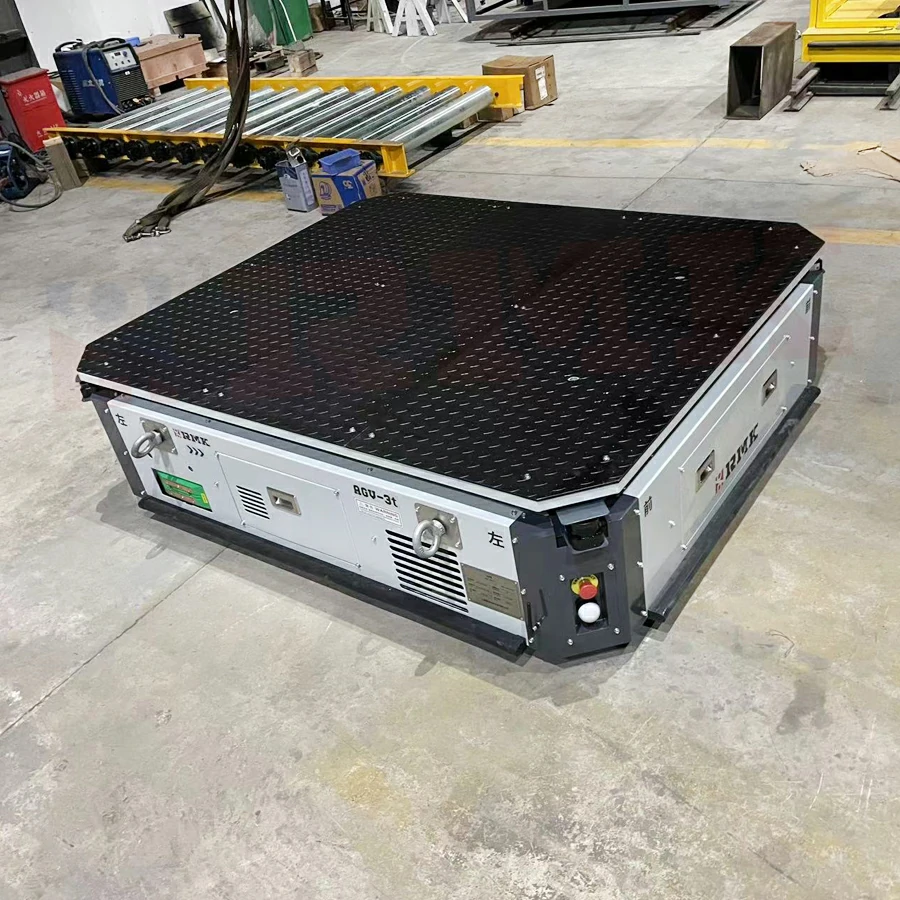
La mayor característica del ACV/AMR es su inteligencia y autonomía. No necesita orugas fijas ni bandas magnéticas que lo guíen, sino que planifica autónomamente su trayectoria mediante una avanzada tecnología de navegación para realizar un transporte flexible de materiales. Actualmente, el mercado ofrece una capacidad de carga que va de 1 a 20 toneladas, y también admite la personalización no estándar, que puede adaptarse a las necesidades especiales de muchas industrias como la automovilística, la eléctrica, la química, la siderúrgica, la militar, la nuclear, etc.
Este tipo de camión de transferencia es especialmente adecuado para aquellos procesos de producción con complejidad, variedad de materiales y un entorno de producción cambiante. Se puede acoplar con MES de la empresa, WMS y otros sistemas de información para lograr la programación inteligente y el seguimiento de los materiales, proporcionando un apoyo básico para la construcción de fábricas digitales. Con el aumento actual de los costes laborales, ACV/AMR se está convirtiendo en una opción estratégica para cada vez más empresas.
Después de comprender los tipos y usos de los carros de transferencia industriales, puede consultar este artículo si desea elegir el adecuado: ¿Cómo seleccionar carros de transferencia industriales?
Industrial Transfer Cart Comparison
Different types of industrial transfer carts are designed for specific material handling conditions. The right choice depends on factors such as load capacity, power supply, transportation route, automation level, and working environment.
| Comparación | Carro de transferencia de raíles | Carro de transferencia sin raíles | Carro de transferencia AGV | Carro de transferencia RGV | Carro de transferencia para cargas pesadas |
|---|---|---|---|---|---|
| Fuente de Alimentación | Low-voltage rail power, cable reel power, or battery power | Battery powered (lithium battery or lead-acid battery) | Battery powered with automatic charging support | Rail power or battery power with automatic charging support | Battery power, cable reel power, or rail power |
| Trayectoria de Desplazamiento | Fixed rail system, suitable for straight, L-shaped, S-shaped, and curved tracks | No fixed track required, 360° free steering, suitable for complex routes | Trackless operation with laser, magnetic strip, or QR code navigation | Fixed rail system with longitudinal and transverse movement | Rail or trackless design can be customized according to requirements |
| Capacidad de carga | 1–300 tons, commonly 20–100 tons | 1–150 tons, commonly 5–30 tons | 1–50 tons, commonly 5–20 tons | 1–100 tons, commonly 10–50 tons | Up to 200 tons or more |
| Velocidad de funcionamiento | 0–25 m/min, stepless speed adjustment | 0–15 m/min | 0–30 m/min, automatic speed adjustment available | 0–20 m/min | 0–20 m/min |
| Método de Control | Remote control, pendant controller, PLC control | Wireless remote control, automatic navigation | Central control system, wireless remote control, automatic navigation | PLC scheduling, remote control, automatic scheduling | Remote control + pendant controller |
| Características de Seguridad | Sound and light alarm, emergency stop button, laser obstacle detection | Laser obstacle avoidance, sound and light alarm, emergency stop, power-off braking | Laser sensors, ultrasonic obstacle detection, multiple safety protection systems | Rail cleaning system, automatic charging system, sensor stop function | Explosion-proof options and multiple safety protections |
| Aplicaciones | Fixed production lines, heavy load transportation, steel plants, bridge construction | Flexible material transfer, mold handling, cross-workshop transportation, narrow spaces | Automated production lines, smart warehouses, high-frequency operations | Large material transfer, logistics sorting, automated production systems | Metallurgy, shipbuilding, wind power, and other heavy industries |
| Mantenimiento | Requires rail inspection and wheel maintenance; simple structure with low maintenance cost | Mainly battery maintenance and charging management | Requires navigation system calibration and battery maintenance | Requires rail maintenance and automatic charging system inspection | Maintenance requirements depend on configuration and working conditions |
| Main Advantages | High load capacity, accurate positioning, compact structure | High flexibility, no track installation required, strong adaptability | High automation level, remote scheduling, safe human-machine cooperation | Precise scheduling, high automation, suitable for fixed routes | Extremely high load capacity and highly customizable design |
How to Choose the Right Industrial Transfer Cart?
- Rail Transfer Cart: Suitable for factories with fixed production processes and defined transportation routes, such as steel structure manufacturing and heavy equipment workshops. It provides high load capacity, accurate positioning, and stable operation with relatively simple maintenance.
- Trackless Transfer Cart: Ideal for workshops requiring flexible movement and multi-station transportation. Its 360° steering capability allows it to handle complex routes and limited spaces without installing rails.
- AGV Transfer Cart: Designed for automated material handling. With navigation systems, obstacle detection, and central scheduling, it is suitable for high-frequency operations and smart manufacturing environments.
- RGV Transfer Cart: Best suited for automated transport along fixed routes. It supports efficient material movement in production lines and can operate continuously with automatic charging systems.
- Heavy Duty Transfer Cart: Developed for extremely heavy loads and special industrial environments. It can be customized for applications in metallurgy, shipyards, wind power, and other heavy industries.
Each industrial transfer cart type has different advantages in load capacity, flexibility, automation, and application range. Selecting the right transfer cart based on operating conditions and material handling requirements can improve transportation efficiency and reduce operational costs.
Aplicaciones
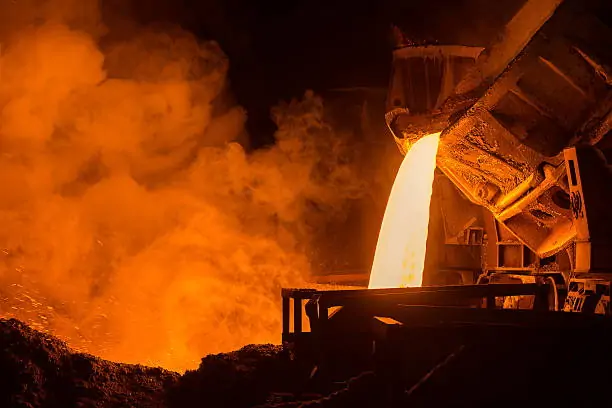
Fabricación de acero
Industrial transfer carts are used to move steel coils, plates, and heavy components between production lines, storage areas, and processing stations.
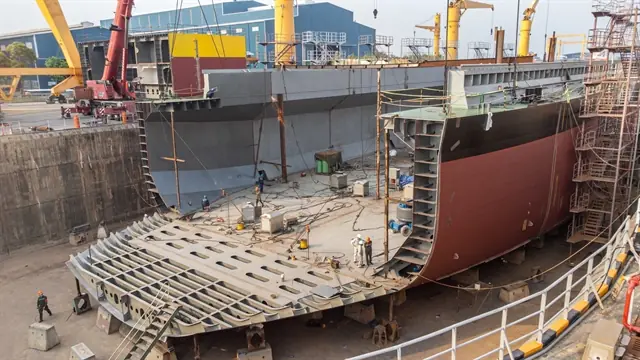
Industria naval
Heavy duty transfer carts transport ship sections, steel structures, and large equipment during ship assembly and fabrication.
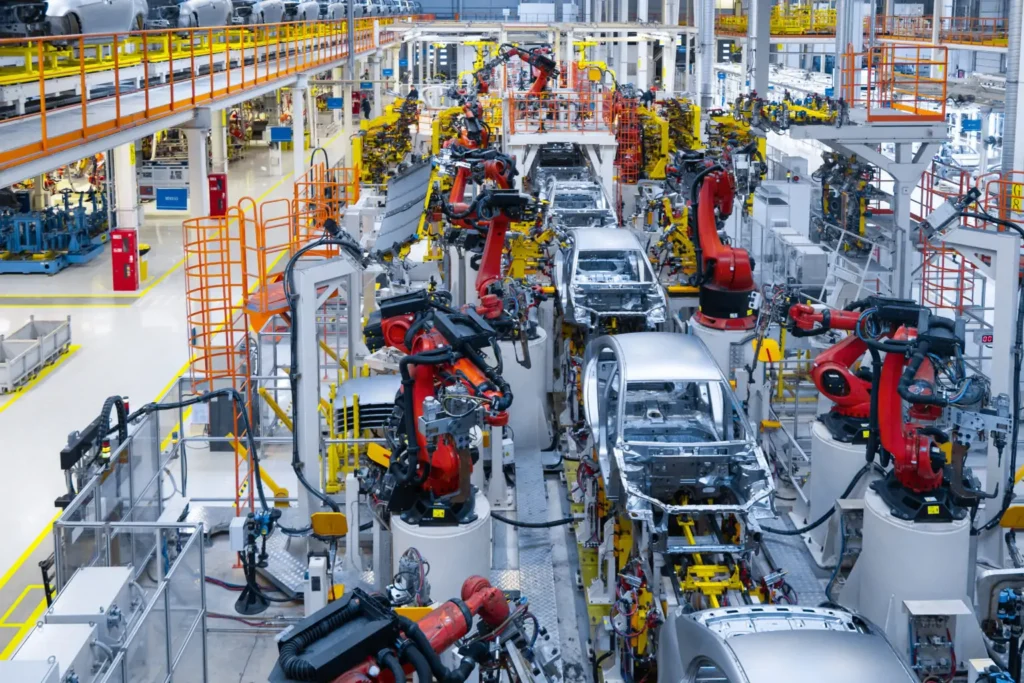
Fabricación de automóviles
Transfer carts support the movement of vehicle bodies, molds, and production materials across different manufacturing processes.
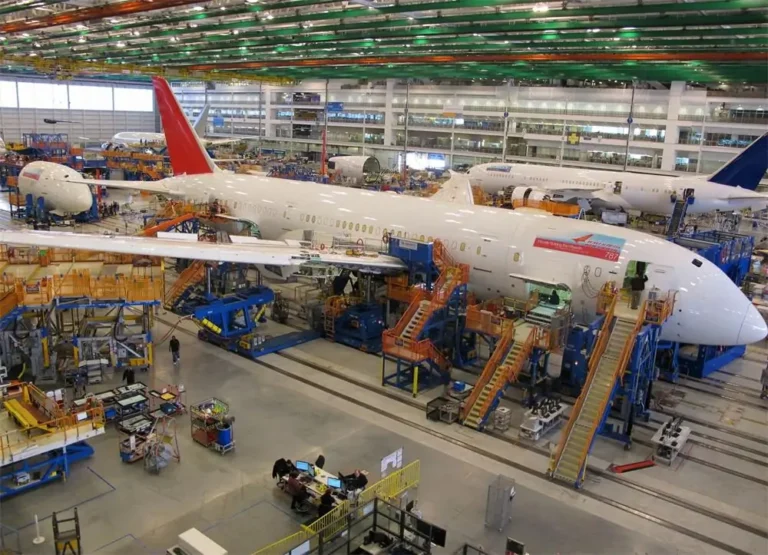
Fabricación aeroespacial
High-precision transfer carts are used for transporting large aircraft parts and sensitive components in controlled production areas.
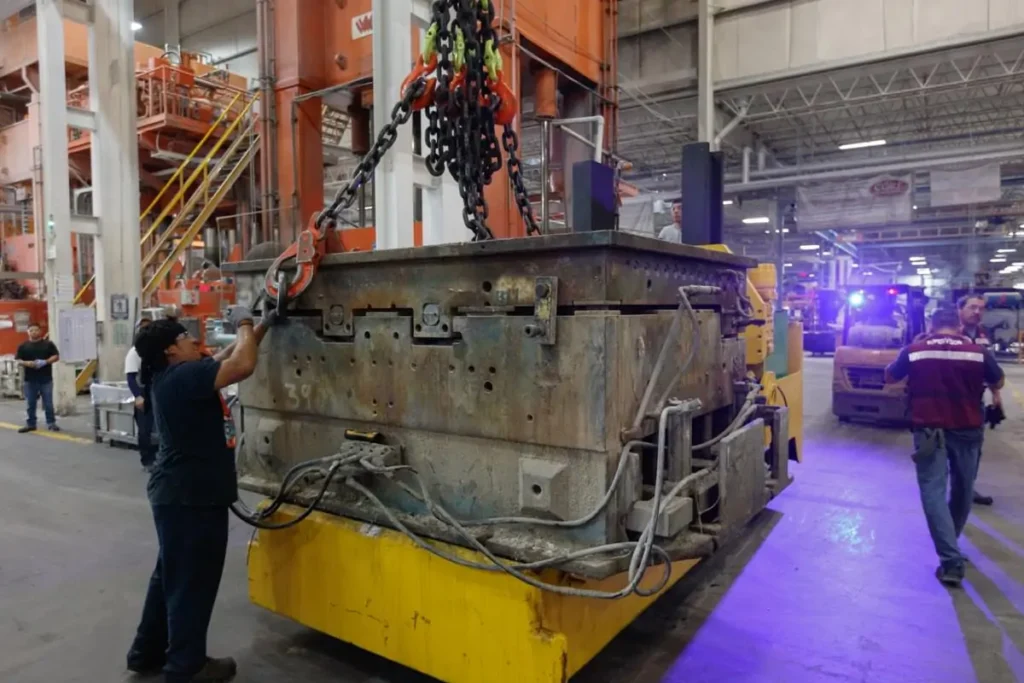
Manipulación de Moldes y Troqueles
Transfer carts provide safe transportation for heavy molds, dies, and tooling equipment in manufacturing workshops.
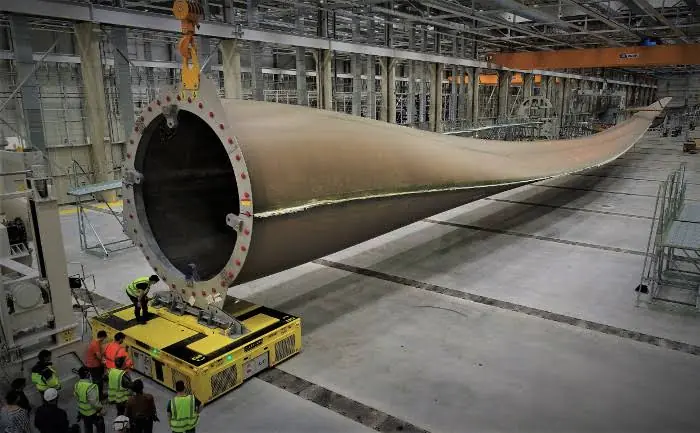
Wind Power Equipment
Heavy load transfer carts are used to move wind turbine components such as blades, towers, and nacelle parts during production and assembly.
Industrial Transfer Cart Customization Options
- Industrial transfer carts can be customized according to different load requirements, working environments, and transportation processes.
- Load Capacity — The load capacity can be designed according to the weight of transported materials, ranging from small loads to hundreds of tons.
- Platform Size — The platform length, width, and height can be customized to match the dimensions of different workpieces and handling requirements.
- Power Supply System — Available power options include battery power, rail power, cable reel power, and busbar power for different operating conditions.
- Drive and Steering System — Transfer carts can be configured with different drive systems and steering modes, including straight running, 360° rotation, and automatic steering.
- Control Method — Control options include wireless remote control, pendant control, PLC control, and automated control systems.
- Safety Features — Safety devices such as emergency stop buttons, warning lights, obstacle detection sensors, and limit switches can be added based on application needs.
- Working Environment Design — Special versions can be customized for high-temperature, explosion-proof, outdoor, or heavy-duty industrial environments.
- Surface and Fixture Design — The platform can be equipped with rollers, V-shaped supports, clamps, or customized fixtures for specific material handling tasks.
Comprehensive customization options—see details here: Carro de Transferencia Personalizado: Guía Completa de Diseño y Personalización
Conclusión
Industrial transfer carts provide reliable solutions for moving heavy materials in factories, workshops, and industrial facilities. From rail transfer carts and trackless transfer carts to AGV, RGV, and heavy duty models, each type is designed for different transportation requirements. Choosing the right transfer cart based on load capacity, working environment, and operation needs can improve handling efficiency and production safety.
Correo electrónico: transfercart@rmkzn.com
Teléfono: +86-18637369355
PREGUNTAS FRECUENTES
What are the different types of industrial transfer carts?
The main types include rail transfer carts, trackless transfer carts, AGV transfer carts, RGV transfer carts, and heavy duty transfer carts. Each type is designed for different load requirements, routes, and working conditions.
¿Cuál es la diferencia entre los carros de transferencia sobre riel y los sin riel?
Rail transfer carts run on fixed tracks and are suitable for stable routes with heavy loads, while trackless transfer carts use battery power and can move freely without rails, making them suitable for flexible transportation.
How much load can an industrial transfer cart carry?
Industrial transfer carts can handle loads from a few tons to hundreds of tons. The capacity can be customized according to the material weight and application requirements.
Which transfer cart is suitable for heavy loads?
Heavy duty transfer carts and rail transfer carts are commonly used for heavy loads. They can be designed for transporting steel structures, machinery, molds, and other large industrial components.
¿Se pueden personalizar los carros de transferencia industriales?
Yes. Industrial transfer carts can be customized in terms of load capacity, platform size, power supply, steering system, control method, and safety features.
What power supply options are available?
Common power options include battery power, low-voltage rail power, cable reel power, and busbar power. The suitable system depends on the working environment and operating requirements.
Are transfer carts suitable for outdoor use?
Yes. Transfer carts can be designed for outdoor applications with weather-resistant components, durable structures, and suitable protection systems for different environments.
¿Cómo elijo el transportador industrial adecuado?
The selection should consider load capacity, transportation distance, route conditions, operation frequency, working environment, and automation requirements. A customized solution is recommended for complex applications.