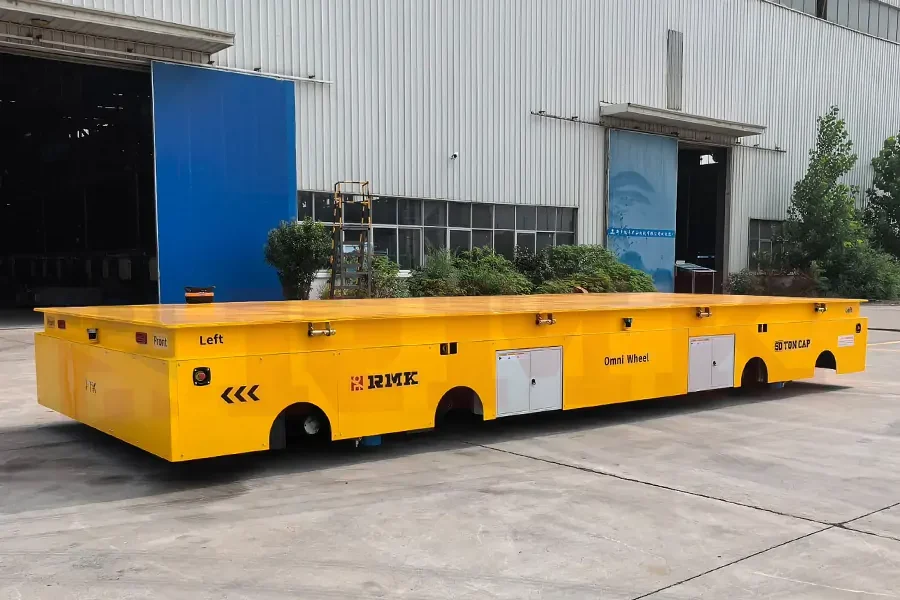
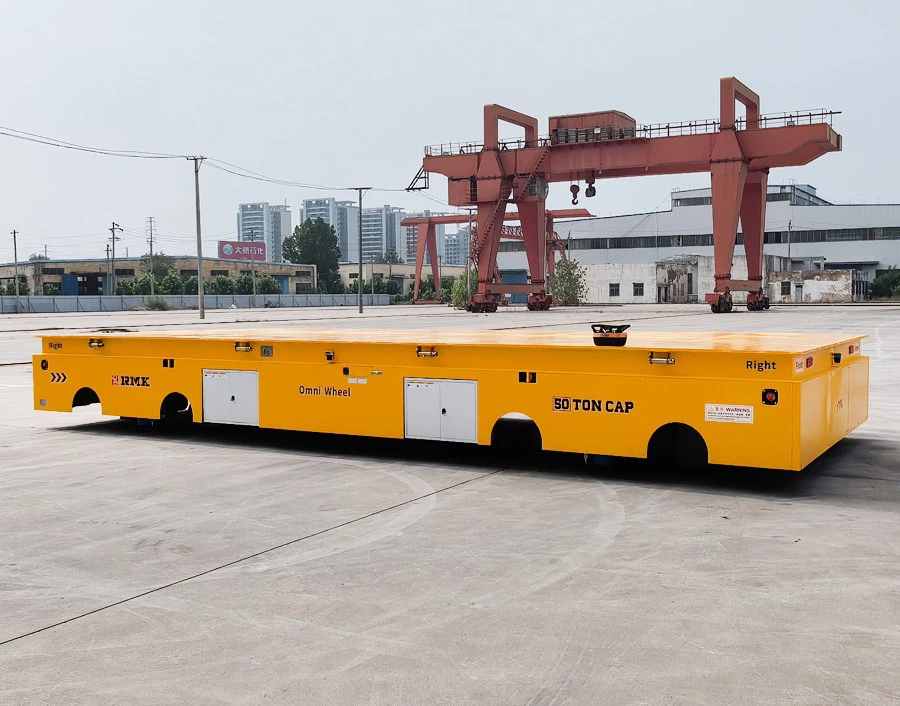
Índice
In modern industrial production, efficient handling of heavy materials is a key link to improving production efficiency. Different types of industrial transfer carts can meet various complex material-handling needs because of their different functional characteristics and application scope. This article will provide you with a detailed introduction to five common types of industrial transfer carts and their application scenarios, to help enterprises better understand the product classification and use of transfer cart scenarios.
What Is An Industrial Transfer Cart?
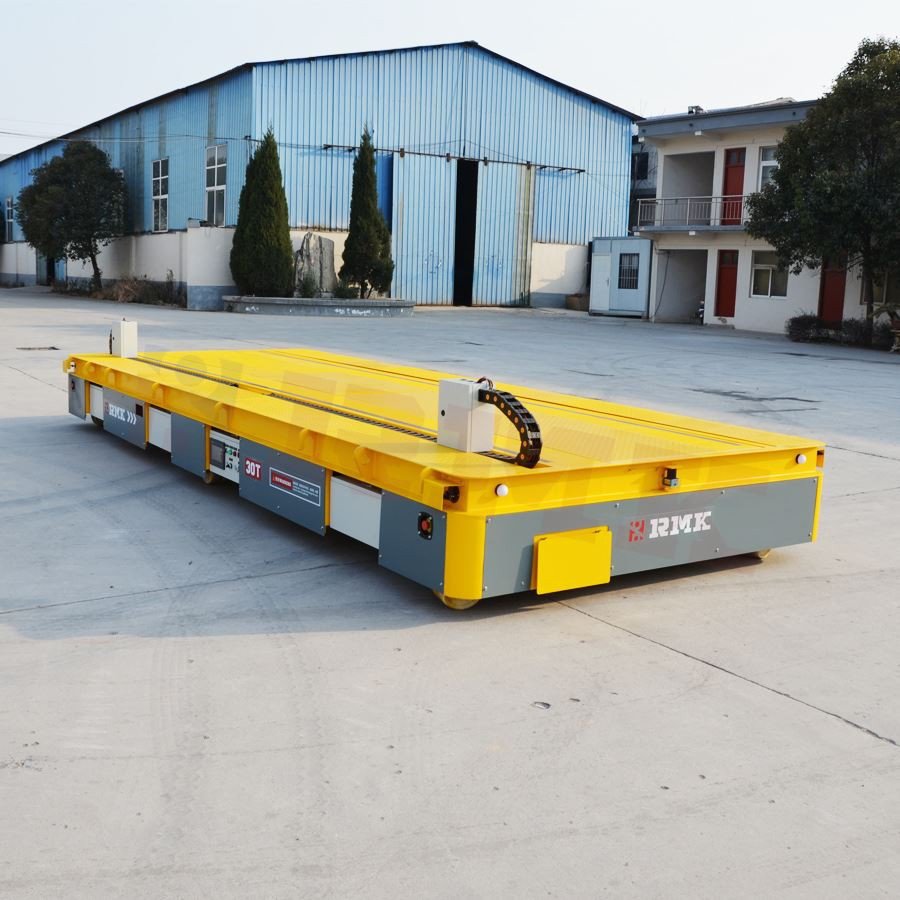
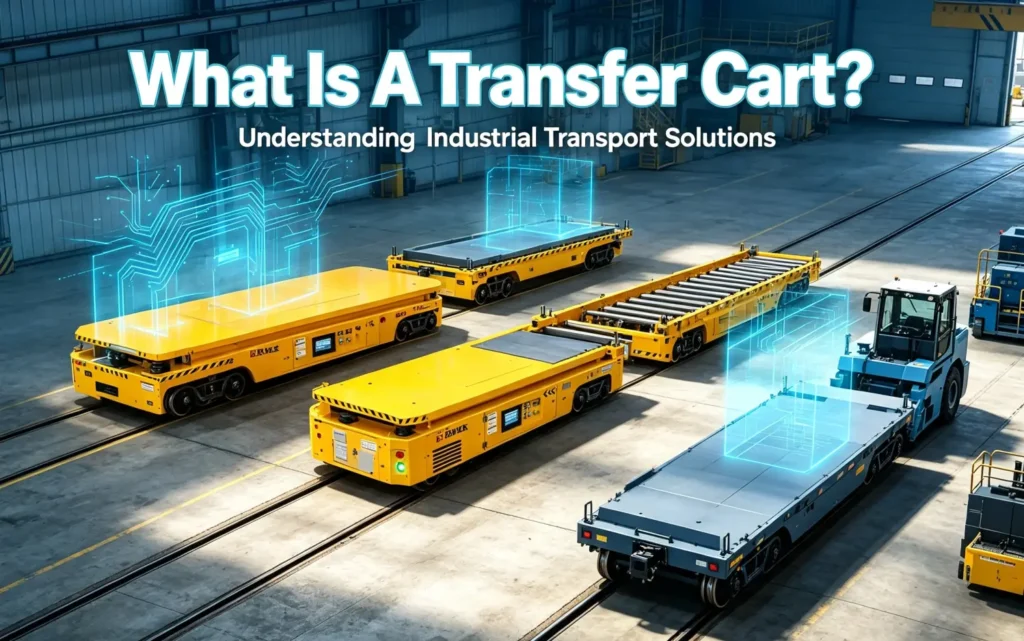
An industrial transfer cart is a heavy-duty material handling vehicle used to move large and heavy loads within factories, workshops, warehouses, and industrial facilities. It runs on rails or a trackless system and is designed to transport materials such as steel coils, molds, machinery parts, and finished products safely and efficiently.
Industrial transfer carts are powered by different systems, including batteries, rail power, cable reels, and busbars. Depending on the working environment and load requirements, they can be customized with different platform sizes, capacities, control methods, and safety features. Common types include rail transfer carts, trackless transfer carts, AGV transfer carts, and RGV transfer carts.

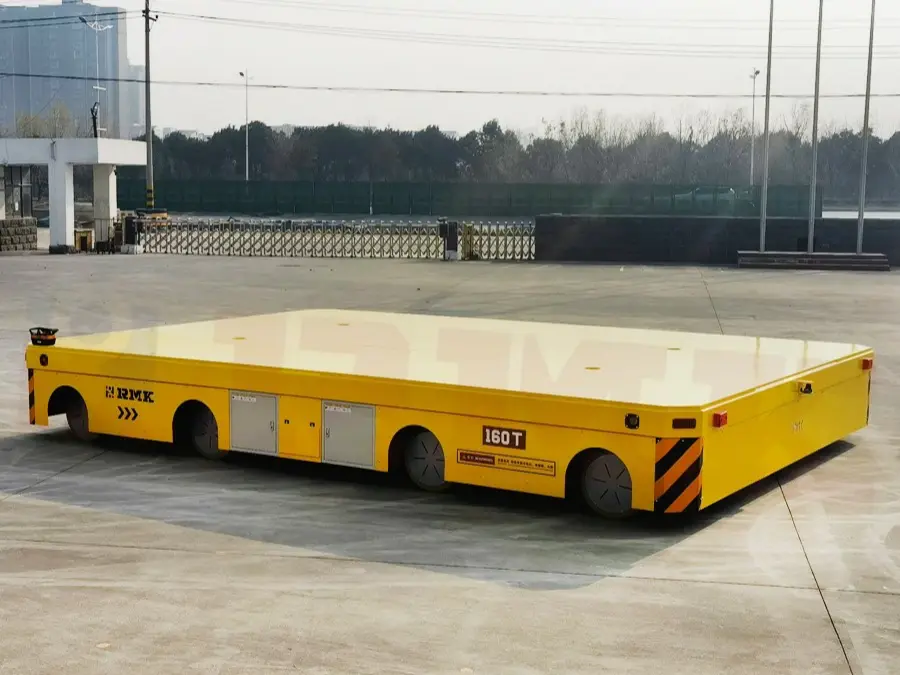
Main Types of Industrial Transfer Carts
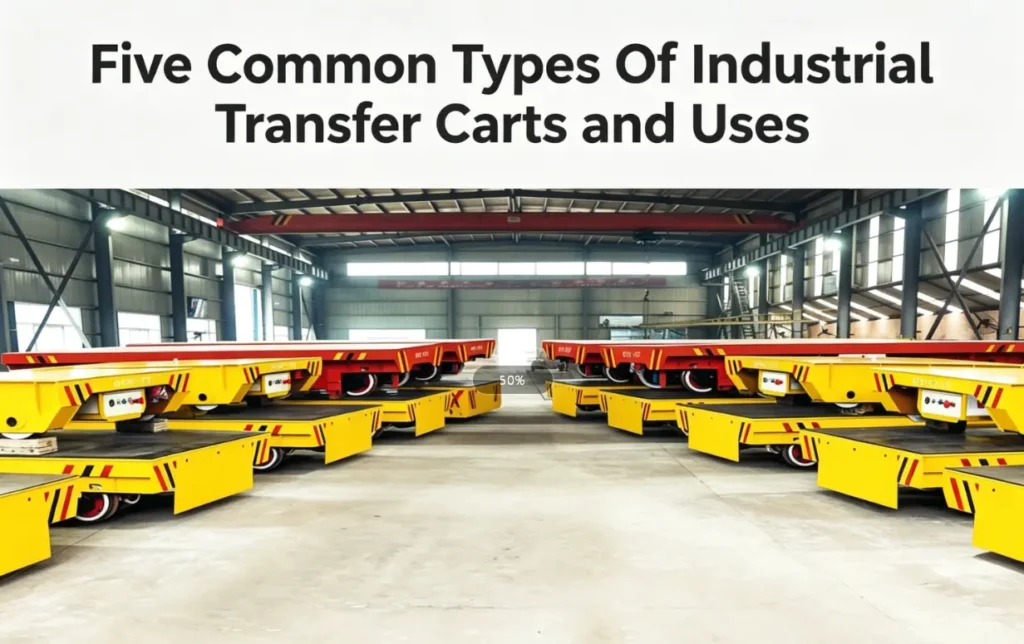
Industrial transfer carts are available in different types to meet various material handling requirements. The selection depends on factors such as load capacity, transportation route, working environment, and automation needs. The main types include rail transfer carts, trackless transfer carts, AGV transfer carts, RGV transfer carts, and heavy duty transfer carts.
Carro de transferência sem carris
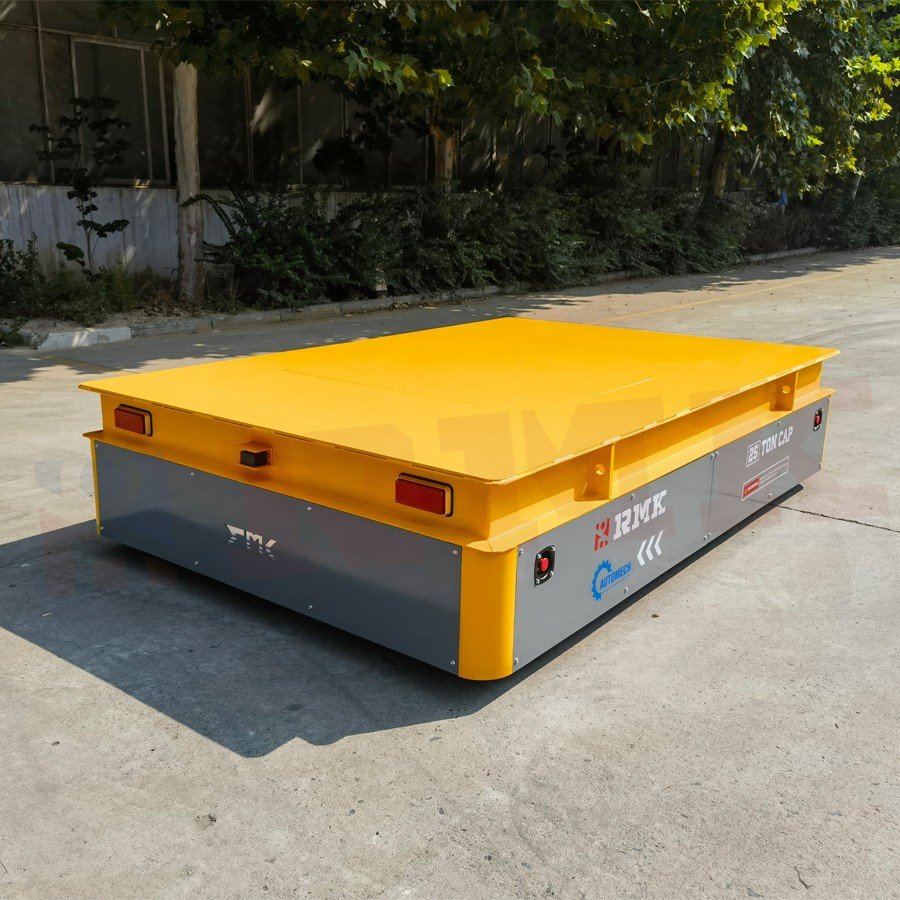
A customized carrinho de transferência sem lagartas is a popular piece of material handling equipment in recent years, and its biggest feature is that it doesn’t rely on a fixed track traveling. It has high mobility and flexibility, especially suitable for material transfer between multiple workshops.
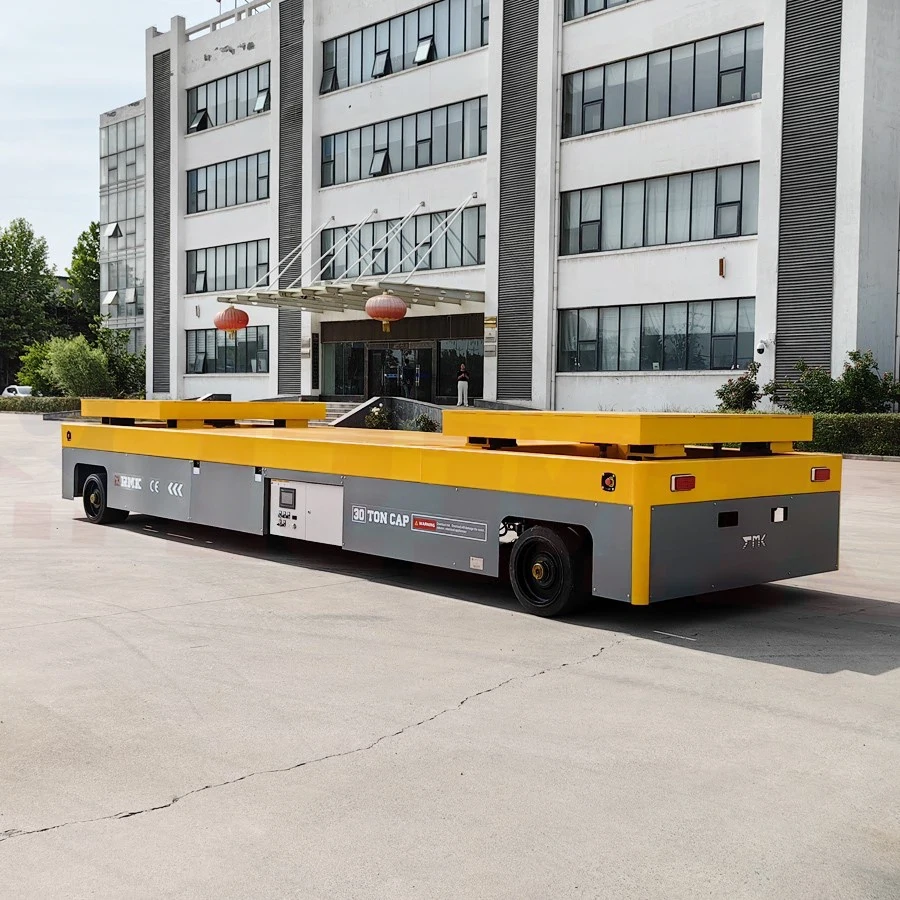
A principal vantagem do carrinho de transferência sem trilhos é sua adaptabilidade. Ele pode lidar facilmente com a tarefa de transportar moldes, bobinas, tarugos e outros materiais grandes e pesados, com capacidade de carga variando de algumas toneladas a centenas de toneladas. Como não é limitado por trilhos, esse tipo de carrinho de transferência pode planejar livremente a rota de transporte, o que melhora significativamente a eficiência da logística interna da fábrica. Atualmente, esses produtos foram exportados para os Estados Unidos, Itália, Singapura, Polônia, Países Baixos, México, Arábia Saudita, República Tcheca, Sri Lanka, Mongólia e outros países, sendo favorecidos por muitos usuários industriais.
O carrinho de transferência sem trilhos é especialmente adequado para fábricas cujo layout de produção é frequentemente ajustado ou que exigem mudanças temporárias nas rotas de materiais. Sua flexibilidade permite que as empresas respondam rapidamente a mudanças na produção sem precisar investir grandes quantias em reformas de infraestrutura.
Carro de transferência de carris
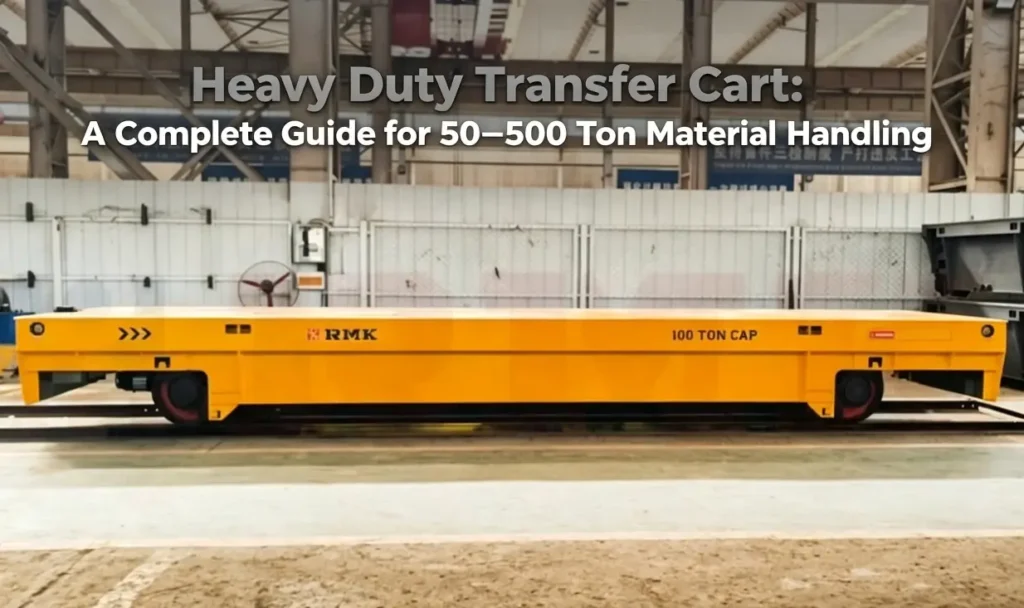
Carrinhos de transferência sobre trilhos são um dos tipos mais tradicionais e confiáveis de equipamentos de transporte industrial. Esses carrinhos se deslocam ao longo de trilhos pré-definidos, seja em linha reta ou adaptados a trilhos em forma de S, curvos ou combinados, fornecendo uma solução estável para o transporte de materiais em rotas fixas.
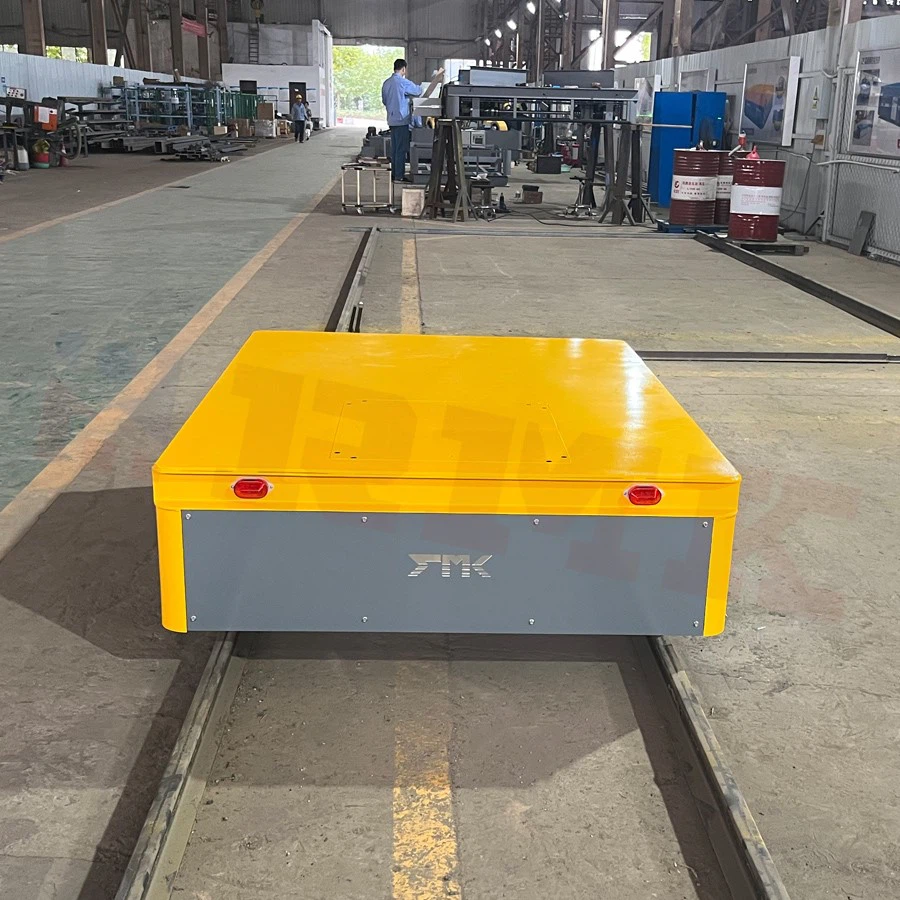
A wide range of specialized models of rail transfer cars have been developed to meet different industrial needs. Commonly, there are low-pressure railcars, explosion-proof special railcars, automated railcars, RGV automated railcars, and high-temperature resistant railcars. This diversity allows the railcars to be widely used in paper making, metallurgy, coal, electromechanical, military, and other industries.
Em comparação com carrinhos de transferência sem trilhos, os carrinhos sobre trilhos têm a vantagem de operação mais estável e confiável, sendo especialmente adequados para transporte de longo prazo de materiais pesados em rotas fixas. O sistema de trilhos garante posicionamento preciso e transporte repetível, o que é particularmente importante para processos de produção que exigem acoplamento de alta precisão. Além disso, os carrinhos sobre trilhos são frequentemente preferidos por muitas empresas de indústria pesada devido à sua maior capacidade de carga e vida útil mais longa.
Móvel omnidirecional com volante de direção
O carrinho de transferência sem trilhos móvel omnidirecional com volante de direção representa o desenvolvimento de ponta da tecnologia de carrinhos de transferência industrial. O carrinho consiste em cinco componentes principais: estrutura de aço, conjunto de baterias, sistema de volante de direção, sistema elétrico e sistema de inspeção de segurança, podendo ser adaptado com vários módulos funcionais, como elevação hidráulica e sistema de roletes.
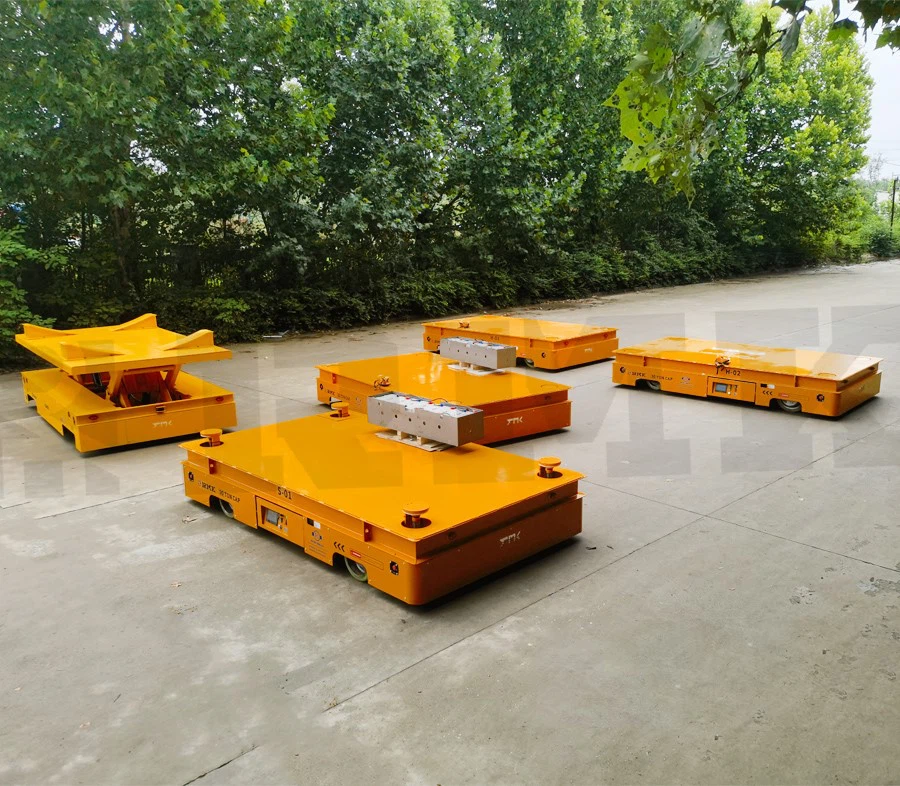
The unique design of the omnidirectional wheel system is the biggest highlight of this type of transfer cart. It is not only able to realize conventional forward and backward movement, but also lateral movement, oblique movement, in-situ 360-degree rotation, and is free to travel through narrow spaces. This excellent mobility makes it a very popular tool for modern industrial material transportation, especially suitable for production environments with limited space but complex handling requirements.
Omnidirectional wheeled trackless transfer carts are offered on the market with load capacities ranging from 1 to 150 tons, with off-standard customized solutions available according to customer needs. This flexibility allows it to be adapted to different scales of production needs, from light electronics assembly to heavy machinery manufacturing. In practice, it is often used in applications that require precision positioning or high space utilization, such as aircraft assembly and large equipment maintenance.
Carrinho de transferência sobre trilhos automatizado (RGV)
RGV (Automated rail transfer trolley) is an intelligent upgraded version of the rail transfer cart, which is characterized by fast running speed, high reliability, and low cost of use. This kind of transfer trolley is mainly used for industrial material transportation and workshop assembly, which is an indispensable logistics equipment for modern automated workshops.
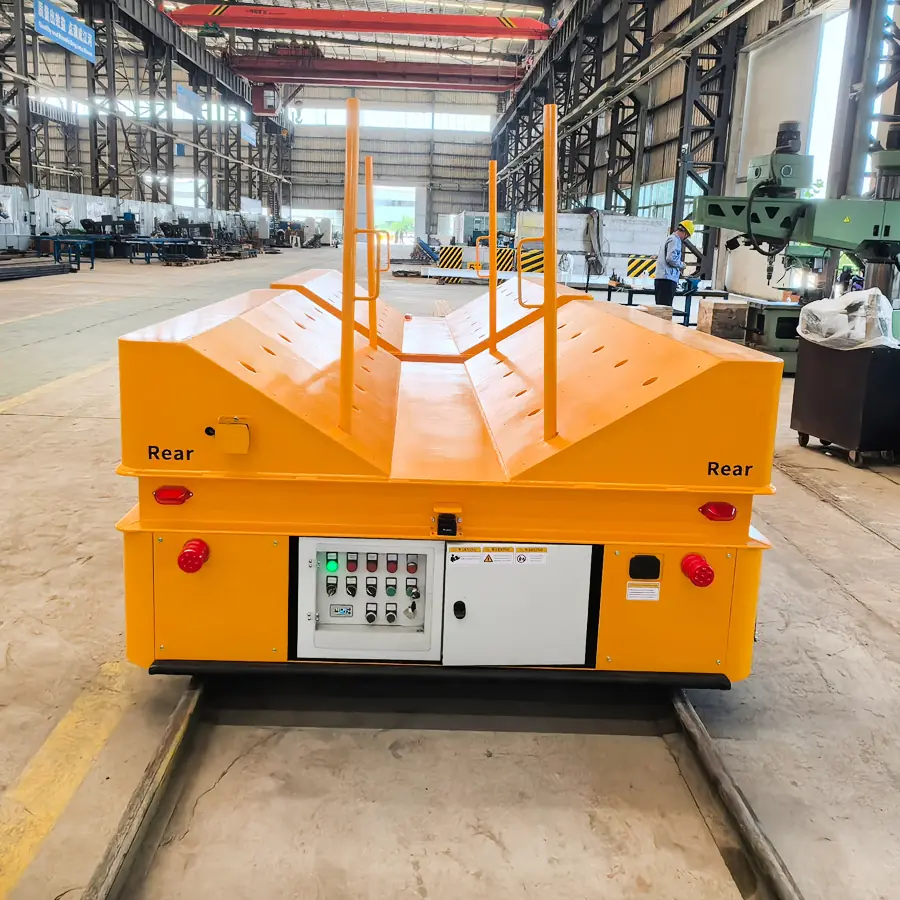
A principal vantagem do RGV é seu grau de automação. Ele pode ser integrado perfeitamente ao sistema de automação da fábrica para realizar agendamento preciso e transporte não tripulado de materiais. Os tipos personalizados comuns no mercado incluem transportadores RGV de trilhos transversais, transportadores automatizados de trilhos móveis longitudinais e transversais, etc., que podem atender às necessidades especiais de diferentes layouts de produção.
These transfer trolleys are suitable for modern factories with 24-hour continuous production, which can reduce labor costs and improve logistics efficiency. In demanding industries such as automobile manufacturing and electronics assembly, AGVs have become standard. Their precise positioning capability and programmable operation modes provide strong support for lean production.
Carrinho guiado automatizado (AGV/AMR)
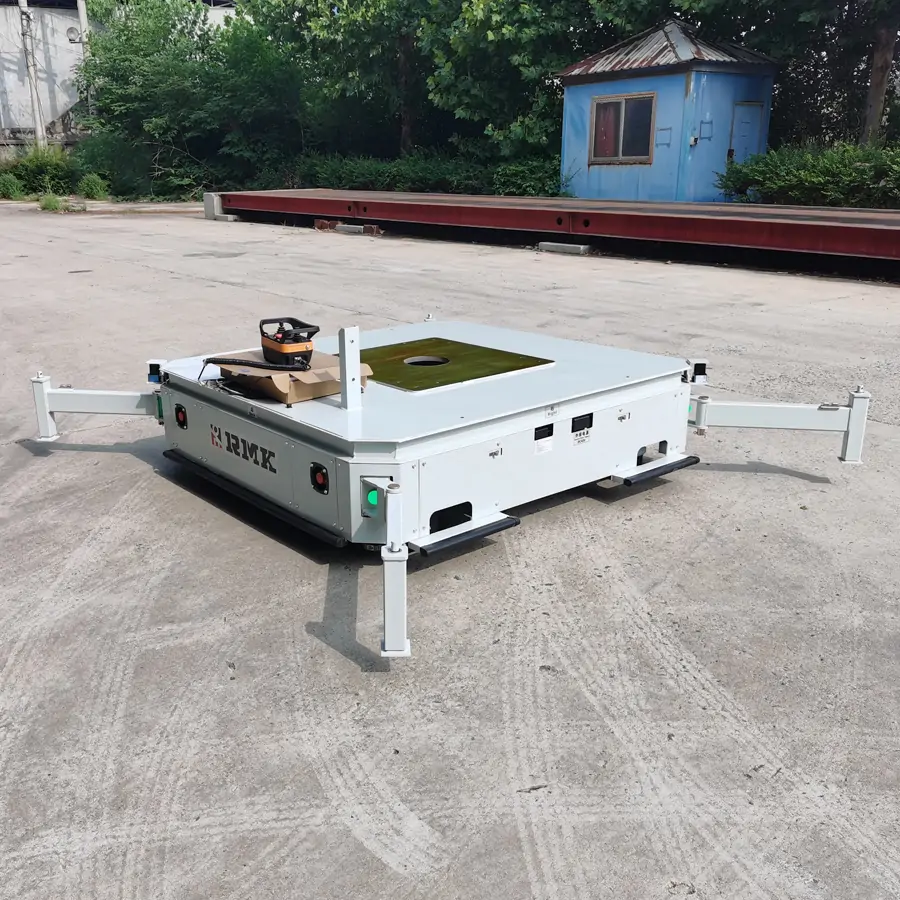
Carrinhos guiados automatizados AGV representam o mais alto nível de carrinho de transferência industrial tecnologia e são um componente central dos sistemas logísticos de fábricas inteligentes. Este tipo de equipamento geralmente consiste em um sistema de elevação hidráulica, um sistema de acionamento diferencial, um sistema de acionamento por volante, um sistema de controle PLC, um sistema de navegação, um sistema de comunicação, um sistema de alarme, um sistema operacional e um sistema de energia, etc., sendo capaz de resolver problemas de movimentação de materiais em fábricas inteligentes e outros ambientes especiais.
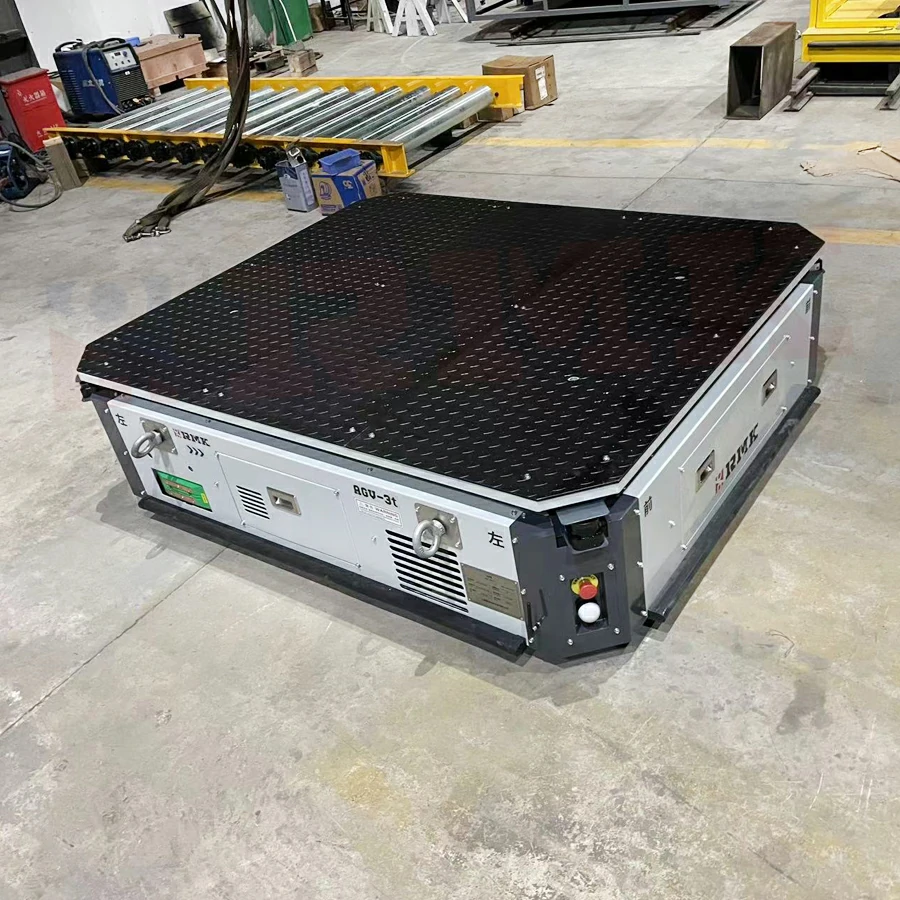
A maior característica do ACV/AMR é sua inteligência e autonomia. Ele não precisa de trilhos fixos ou fitas magnéticas para guiá-lo, mas planeja autonomamente seu percurso por meio de tecnologia de navegação avançada para realizar o transporte flexível de materiais. Atualmente, o mercado oferece capacidade de carga variando de 1 tonelada a 20 toneladas, e também suporta personalização não padronizada, podendo se adaptar às necessidades especiais de muitos setores, como automotivo, elétrico, químico, siderúrgico, indústria militar, energia nuclear, entre outros.
Este tipo de carro de transferência é especialmente adequado para processos de produção com complexidade, variedade de materiais e um ambiente de produção mutável. Ele pode ser integrado a sistemas de informação empresariais como MES e WMS para alcançar agendamento e rastreamento inteligentes de materiais, fornecendo suporte básico para a construção de fábricas digitais. No cenário atual de aumento dos custos de mão de obra, o ACV/AMR está se tornando uma escolha estratégica para cada vez mais empresas.
Após entender os tipos e usos dos carros de transferência industriais, você pode consultar este artigo se quiser escolher o modelo adequado: Como selecionar carrinhos de transferência industriais?
Industrial Transfer Cart Comparison
Different types of industrial transfer carts are designed for specific material handling conditions. The right choice depends on factors such as load capacity, power supply, transportation route, automation level, and working environment.
| Comparação | Carrinho de transferência de carris | Carro de transferência sem lagartas | Carrinho de transferência AGV | Carrinho de Transferência RGV | Carrinho de transferência para serviço pesado |
|---|---|---|---|---|---|
| Fonte de alimentação | Low-voltage rail power, cable reel power, or battery power | Battery powered (lithium battery or lead-acid battery) | Battery powered with automatic charging support | Rail power or battery power with automatic charging support | Battery power, cable reel power, or rail power |
| Percurso de Deslocamento | Fixed rail system, suitable for straight, L-shaped, S-shaped, and curved tracks | No fixed track required, 360° free steering, suitable for complex routes | Trackless operation with laser, magnetic strip, or QR code navigation | Fixed rail system with longitudinal and transverse movement | Rail or trackless design can be customized according to requirements |
| Capacidade de carga | 1–300 tons, commonly 20–100 tons | 1–150 tons, commonly 5–30 tons | 1–50 tons, commonly 5–20 tons | 1–100 tons, commonly 10–50 tons | Up to 200 tons or more |
| Velocidade de corrida | 0–25 m/min, stepless speed adjustment | 0–15 m/min | 0–30 m/min, automatic speed adjustment available | 0–20 m/min | 0–20 m/min |
| Método de controlo | Remote control, pendant controller, PLC control | Wireless remote control, automatic navigation | Central control system, wireless remote control, automatic navigation | PLC scheduling, remote control, automatic scheduling | Remote control + pendant controller |
| Recursos de Segurança | Sound and light alarm, emergency stop button, laser obstacle detection | Laser obstacle avoidance, sound and light alarm, emergency stop, power-off braking | Laser sensors, ultrasonic obstacle detection, multiple safety protection systems | Rail cleaning system, automatic charging system, sensor stop function | Explosion-proof options and multiple safety protections |
| Aplicações | Fixed production lines, heavy load transportation, steel plants, bridge construction | Flexible material transfer, mold handling, cross-workshop transportation, narrow spaces | Automated production lines, smart warehouses, high-frequency operations | Large material transfer, logistics sorting, automated production systems | Metallurgy, shipbuilding, wind power, and other heavy industries |
| Extremamente baixa | Requires rail inspection and wheel maintenance; simple structure with low maintenance cost | Mainly battery maintenance and charging management | Requires navigation system calibration and battery maintenance | Requires rail maintenance and automatic charging system inspection | Maintenance requirements depend on configuration and working conditions |
| Main Advantages | High load capacity, accurate positioning, compact structure | High flexibility, no track installation required, strong adaptability | High automation level, remote scheduling, safe human-machine cooperation | Precise scheduling, high automation, suitable for fixed routes | Extremely high load capacity and highly customizable design |
How to Choose the Right Industrial Transfer Cart?
- Rail Transfer Cart: Suitable for factories with fixed production processes and defined transportation routes, such as steel structure manufacturing and heavy equipment workshops. It provides high load capacity, accurate positioning, and stable operation with relatively simple maintenance.
- Trackless Transfer Cart: Ideal for workshops requiring flexible movement and multi-station transportation. Its 360° steering capability allows it to handle complex routes and limited spaces without installing rails.
- AGV Transfer Cart: Designed for automated material handling. With navigation systems, obstacle detection, and central scheduling, it is suitable for high-frequency operations and smart manufacturing environments.
- RGV Transfer Cart: Best suited for automated transport along fixed routes. It supports efficient material movement in production lines and can operate continuously with automatic charging systems.
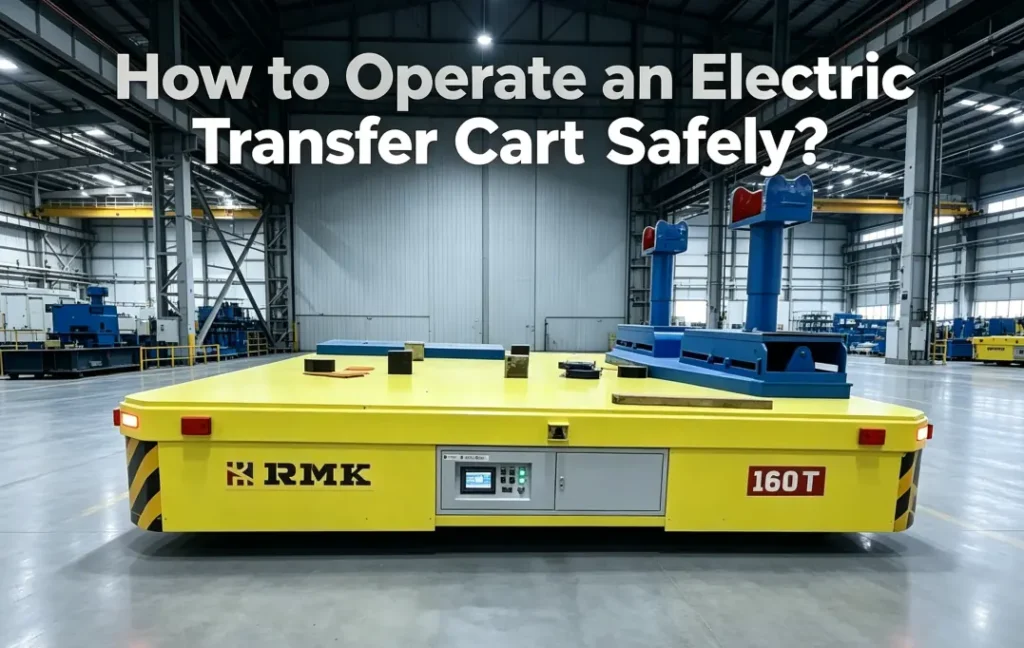
- Heavy Duty Transfer Cart: Developed for extremely heavy loads and special industrial environments. It can be customized for applications in metallurgy, shipyards, wind power, and other heavy industries.
Each industrial transfer cart type has different advantages in load capacity, flexibility, automation, and application range. Selecting the right transfer cart based on operating conditions and material handling requirements can improve transportation efficiency and reduce operational costs.
Aplicações
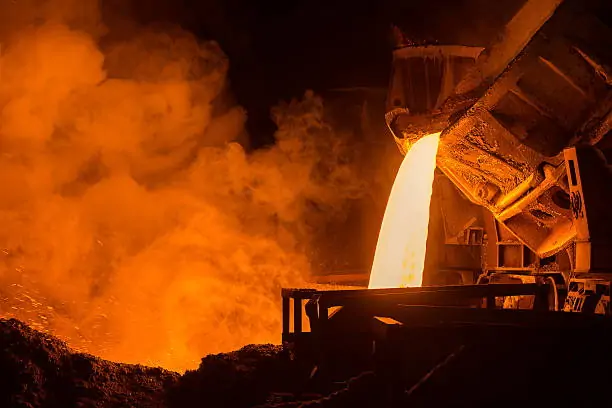
Fabricação de Aço
Industrial transfer carts are used to move steel coils, plates, and heavy components between production lines, storage areas, and processing stations.
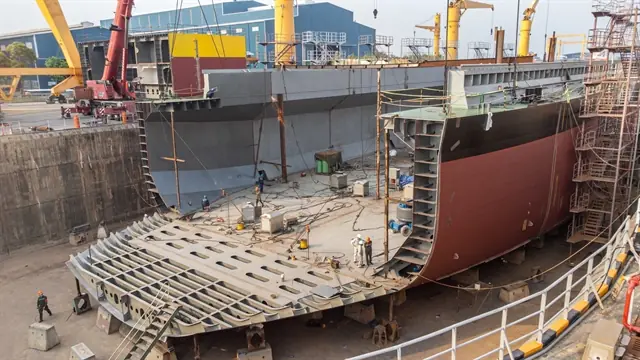
Indústria de Construção Naval
Heavy duty transfer carts transport ship sections, steel structures, and large equipment during ship assembly and fabrication.
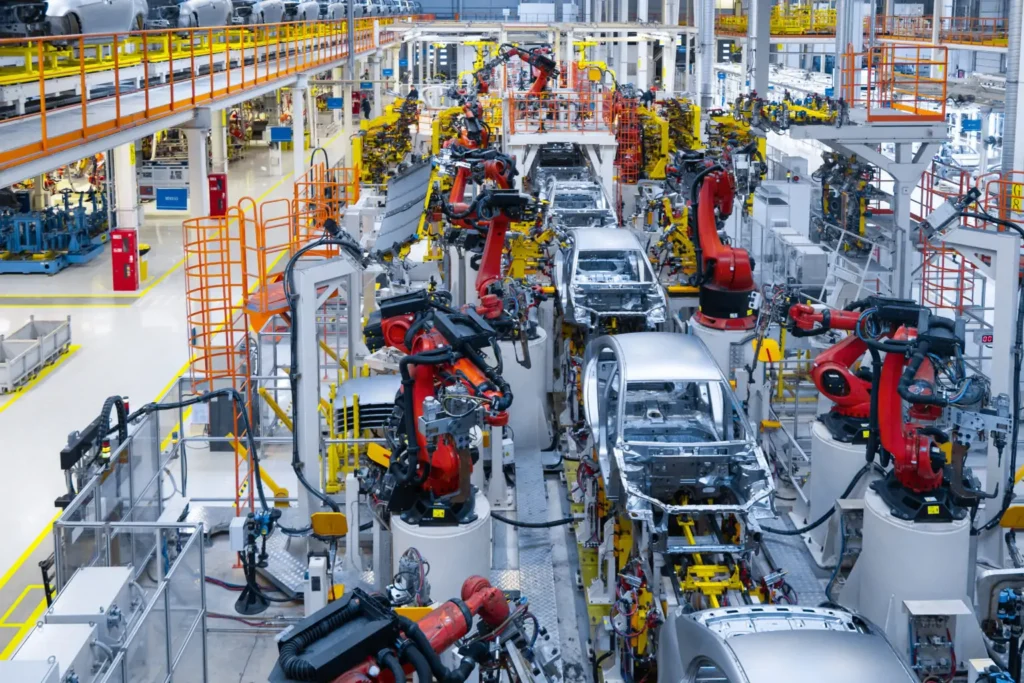
Fabrico de automóveis
Transfer carts support the movement of vehicle bodies, molds, and production materials across different manufacturing processes.
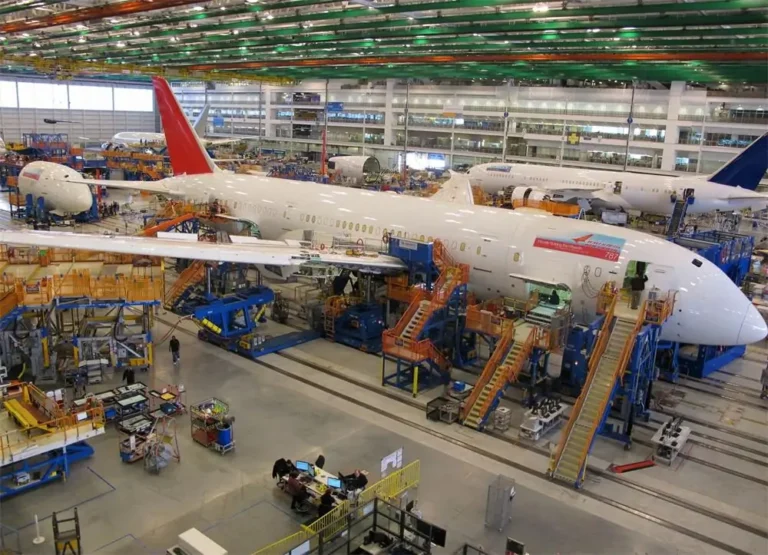
Manufatura Aeroespacial
High-precision transfer carts are used for transporting large aircraft parts and sensitive components in controlled production areas.
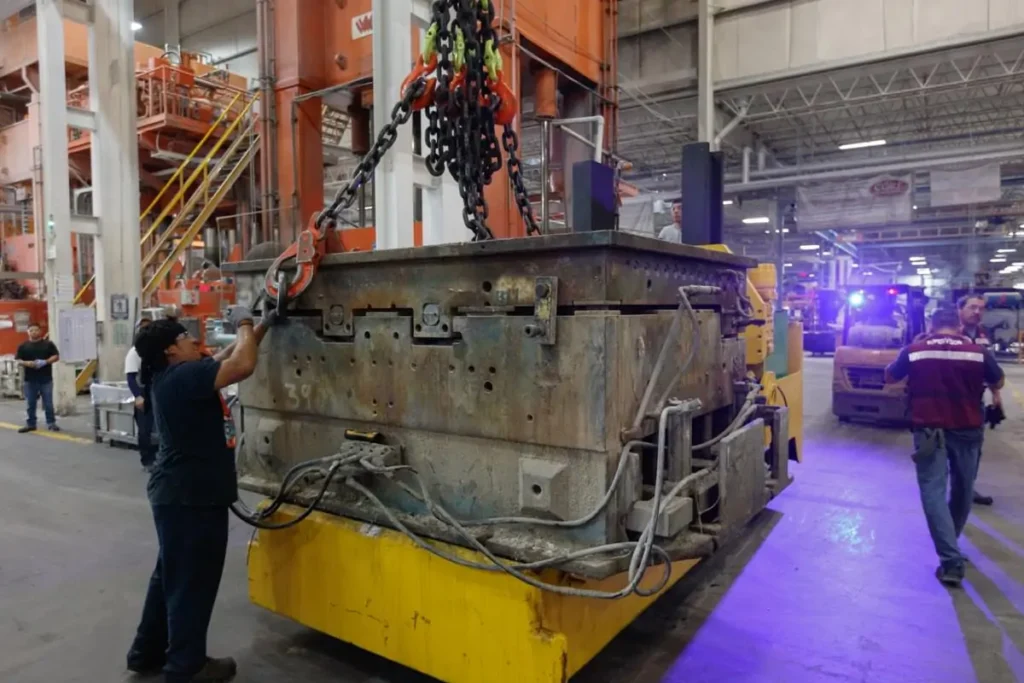
Manuseio de Moldes e Matrizes
Transfer carts provide safe transportation for heavy molds, dies, and tooling equipment in manufacturing workshops.
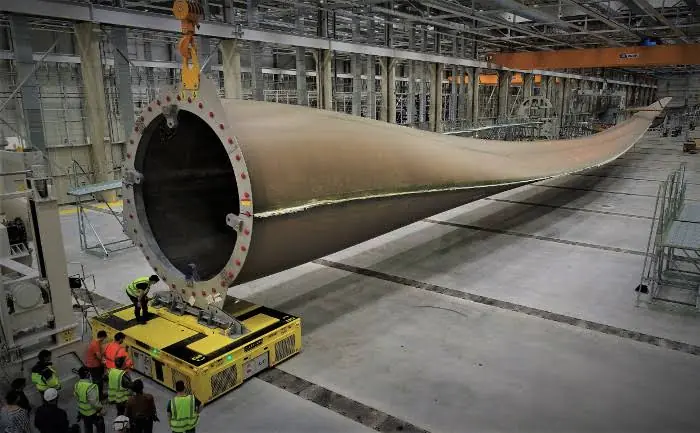
Wind Power Equipment
Heavy load transfer carts are used to move wind turbine components such as blades, towers, and nacelle parts during production and assembly.
Industrial Transfer Cart Customization Options
- Industrial transfer carts can be customized according to different load requirements, working environments, and transportation processes.
- Load Capacity — The load capacity can be designed according to the weight of transported materials, ranging from small loads to hundreds of tons.
- Platform Size — The platform length, width, and height can be customized to match the dimensions of different workpieces and handling requirements.
- Power Supply System — Available power options include battery power, rail power, cable reel power, and busbar power for different operating conditions.
- Drive and Steering System — Transfer carts can be configured with different drive systems and steering modes, including straight running, 360° rotation, and automatic steering.
- Control Method — Control options include wireless remote control, pendant control, PLC control, and automated control systems.
- Safety Features — Safety devices such as emergency stop buttons, warning lights, obstacle detection sensors, and limit switches can be added based on application needs.
- Working Environment Design — Special versions can be customized for high-temperature, explosion-proof, outdoor, or heavy-duty industrial environments.
- Surface and Fixture Design — The platform can be equipped with rollers, V-shaped supports, clamps, or customized fixtures for specific material handling tasks.
Comprehensive customization options—see details here: Carrinho de Transferência Personalizado: Guia Completo para Design e Customização
Conclusão
Industrial transfer carts provide reliable solutions for moving heavy materials in factories, workshops, and industrial facilities. From rail transfer carts and trackless transfer carts to AGV, RGV, and heavy duty models, each type is designed for different transportation requirements. Choosing the right transfer cart based on load capacity, working environment, and operation needs can improve handling efficiency and production safety.
Correio eletrónico: transfercart@rmkzn.com
Telefone: +86-
18637369355
FAQ
What are the different types of industrial transfer carts?
The main types include rail transfer carts, trackless transfer carts, AGV transfer carts, RGV transfer carts, and heavy duty transfer carts. Each type is designed for different load requirements, routes, and working conditions.
Qual é a diferença entre carros de transferência sobre trilhos e sem trilhos?
Rail transfer carts run on fixed tracks and are suitable for stable routes with heavy loads, while trackless transfer carts use battery power and can move freely without rails, making them suitable for flexible transportation.
How much load can an industrial transfer cart carry?
Industrial transfer carts can handle loads from a few tons to hundreds of tons. The capacity can be customized according to the material weight and application requirements.
Which transfer cart is suitable for heavy loads?
Heavy duty transfer carts and rail transfer carts are commonly used for heavy loads. They can be designed for transporting steel structures, machinery, molds, and other large industrial components.
Os carrinhos de transferência industrial podem ser personalizados?
Yes. Industrial transfer carts can be customized in terms of load capacity, platform size, power supply, steering system, control method, and safety features.
What power supply options are available?
Common power options include battery power, low-voltage rail power, cable reel power, and busbar power. The suitable system depends on the working environment and operating requirements.
Are transfer carts suitable for outdoor use?
Yes. Transfer carts can be designed for outdoor applications with weather-resistant components, durable structures, and suitable protection systems for different environments.
Como escolher o carrinho de transferência industrial certo?
The selection should consider load capacity, transportation distance, route conditions, operation frequency, working environment, and automation requirements. A customized solution is recommended for complex applications.