Inhaltsverzeichnis
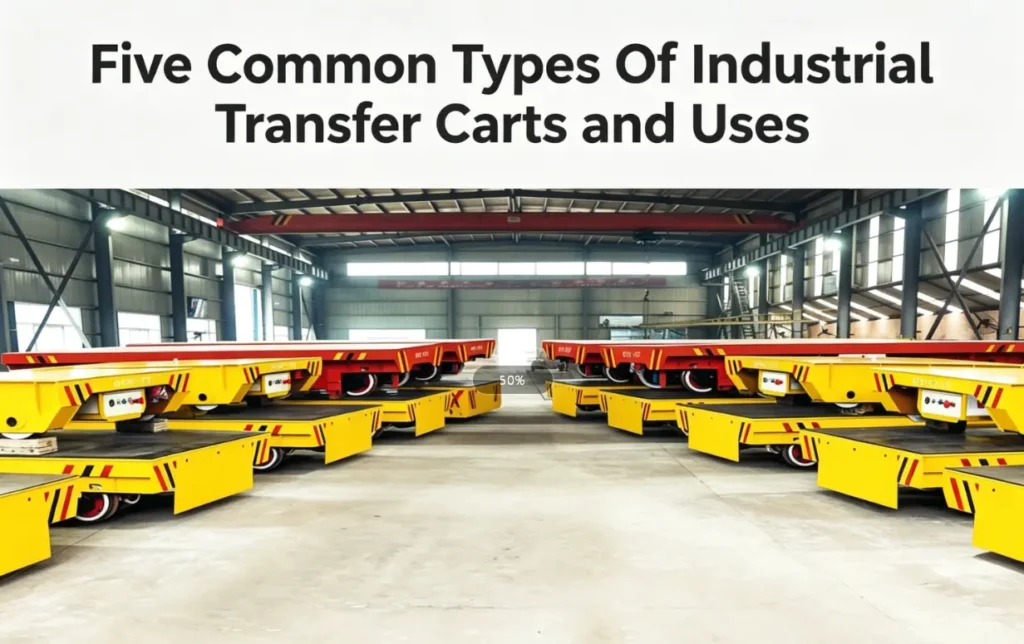
In modern industrial production, efficient handling of heavy materials is a key link to improving production efficiency. Different types of industrial transfer carts can meet various complex material-handling needs because of their different functional characteristics and application scope. This article will provide you with a detailed introduction to five common types of industrial transfer carts and their application scenarios, to help enterprises better understand the product classification and use of transfer cart scenarios.
What Is An Industrial Transfer Cart?
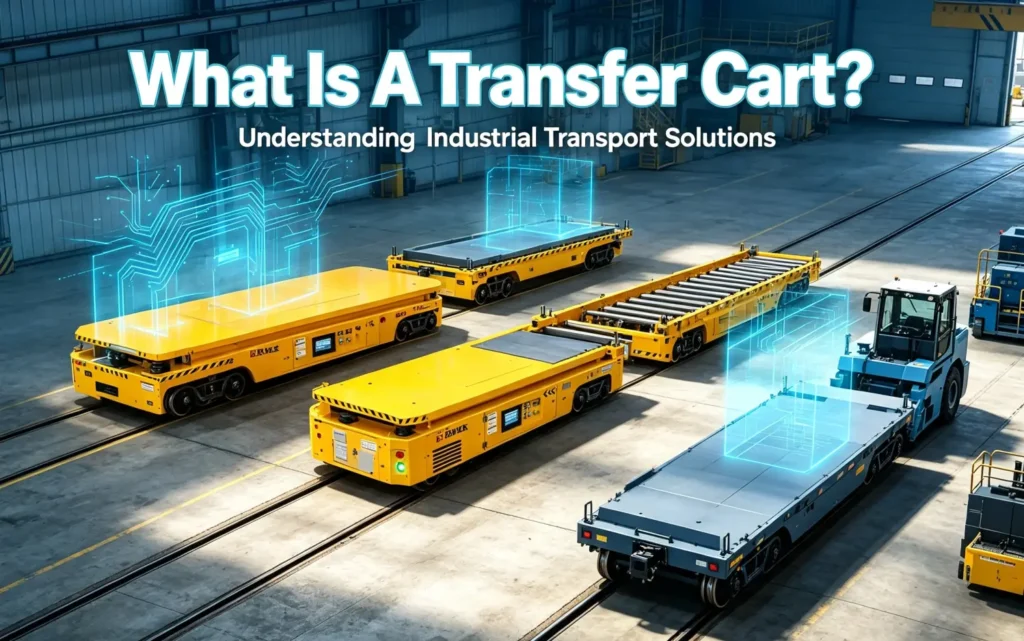
An industrial transfer cart is a heavy-duty material handling vehicle used to move large and heavy loads within factories, workshops, warehouses, and industrial facilities. It runs on rails or a trackless system and is designed to transport materials such as steel coils, molds, machinery parts, and finished products safely and efficiently.
Industrial transfer carts are powered by different systems, including batteries, rail power, cable reels, and busbars. Depending on the working environment and load requirements, they can be customized with different platform sizes, capacities, control methods, and safety features. Common types include rail transfer carts, trackless transfer carts, AGV transfer carts, and RGV transfer carts.

Main Types of Industrial Transfer Carts
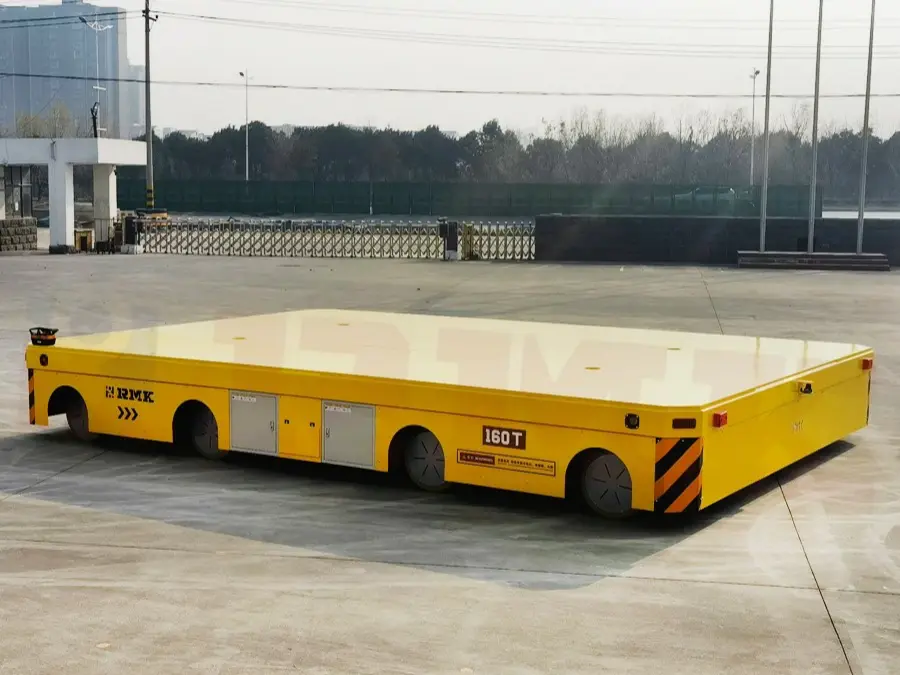
Industrial transfer carts are available in different types to meet various material handling requirements. The selection depends on factors such as load capacity, transportation route, working environment, and automation needs. The main types include rail transfer carts, trackless transfer carts, AGV transfer carts, RGV transfer carts, and heavy duty transfer carts.
Gleisloser Transferwagen
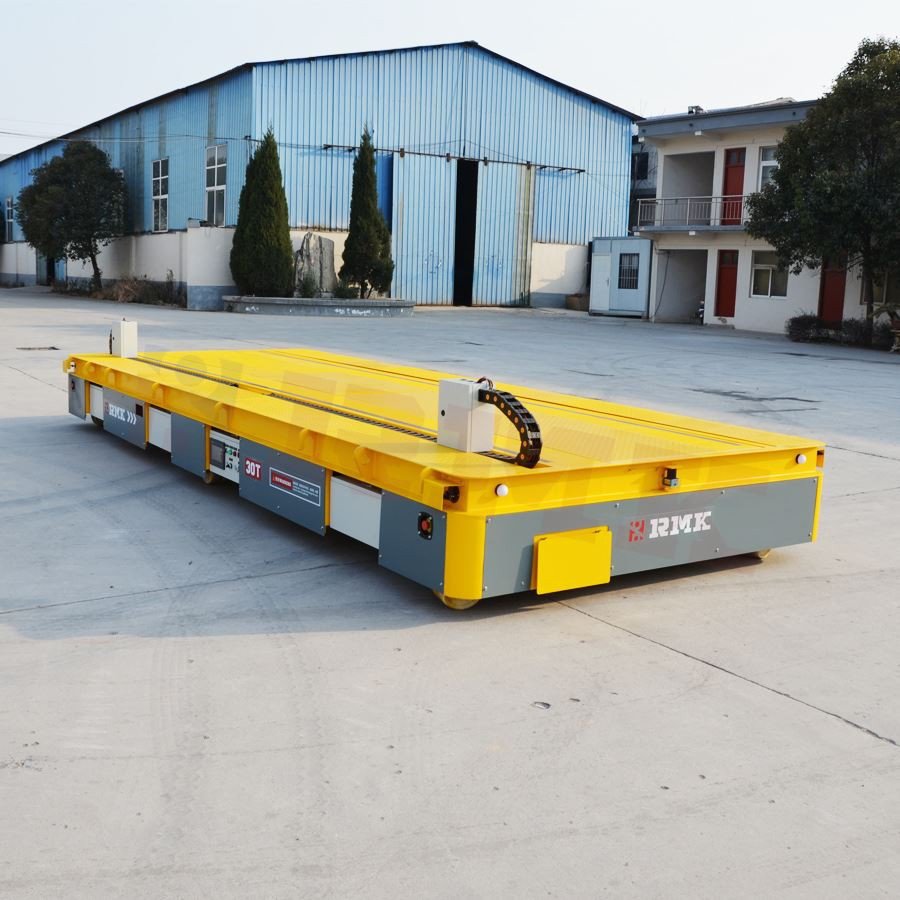
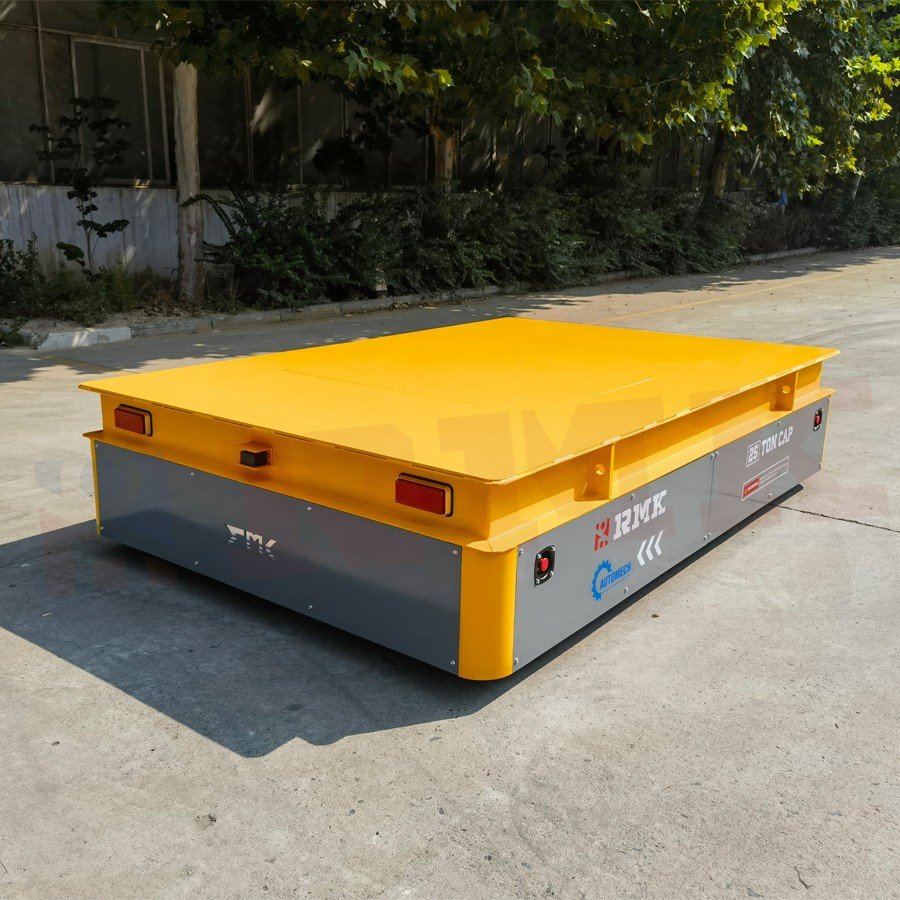
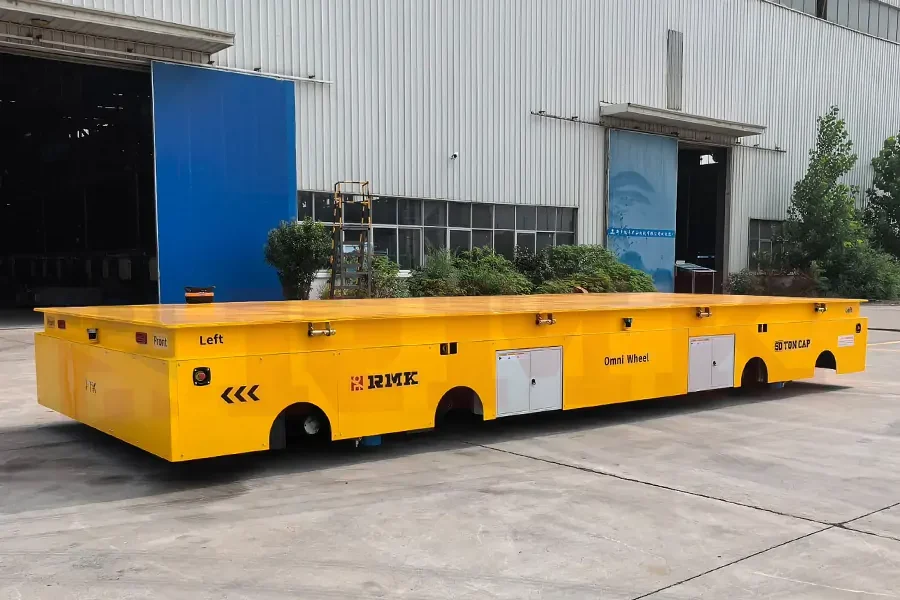
A customized gleisloser Transportwagen is a popular piece of material handling equipment in recent years, and its biggest feature is that it doesn’t rely on a fixed track traveling. It has high mobility and flexibility, especially suitable for material transfer between multiple workshops.
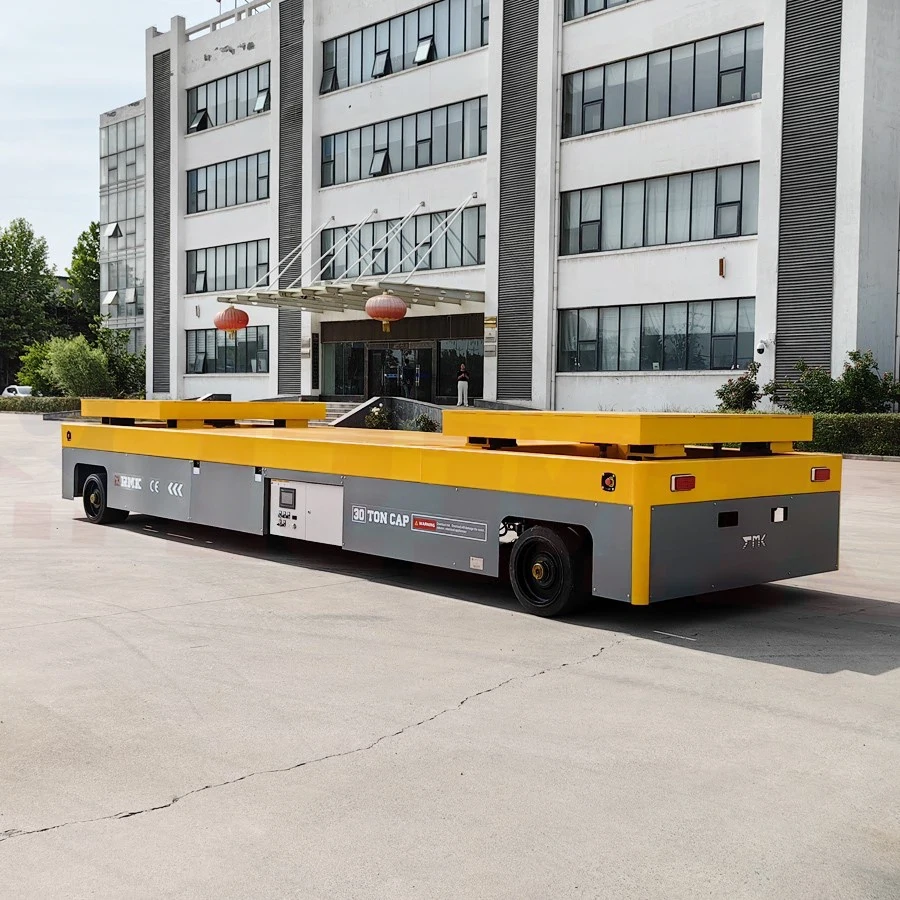
Der Hauptvorteil des gleislosen Transportwagens ist seine Anpassungsfähigkeit. Er kann die Aufgabe des Transports von Formen, Coils, Knüppeln und anderen großen und schweren Materialien mit einer Tragfähigkeit von einigen Tonnen bis zu Hunderten von Tonnen problemlos bewältigen. Da er nicht durch das Gleis begrenzt ist, kann diese Art von Transferwagen die Transportroute frei planen, was die Effizienz der internen Logistik des Werks erheblich verbessert. Derzeit werden diese Produkte in die Vereinigten Staaten, nach Italien, Singapur, Polen, in die Niederlande, nach Mexiko, Saudi-Arabien, in die Tschechische Republik, nach Sri Lanka, in die Mongolei und in andere Länder exportiert und von vielen industriellen Anwendern geschätzt.
Der gleislose Verschiebewagen eignet sich besonders für Betriebe, deren Produktionslayout häufig angepasst wird oder vorübergehende Änderungen der Materialwege erfordert. Seine Flexibilität ermöglicht es Unternehmen, schnell auf Produktionsänderungen zu reagieren, ohne große Summen in den Umbau der Infrastruktur investieren zu müssen.
Schienentransferwagen
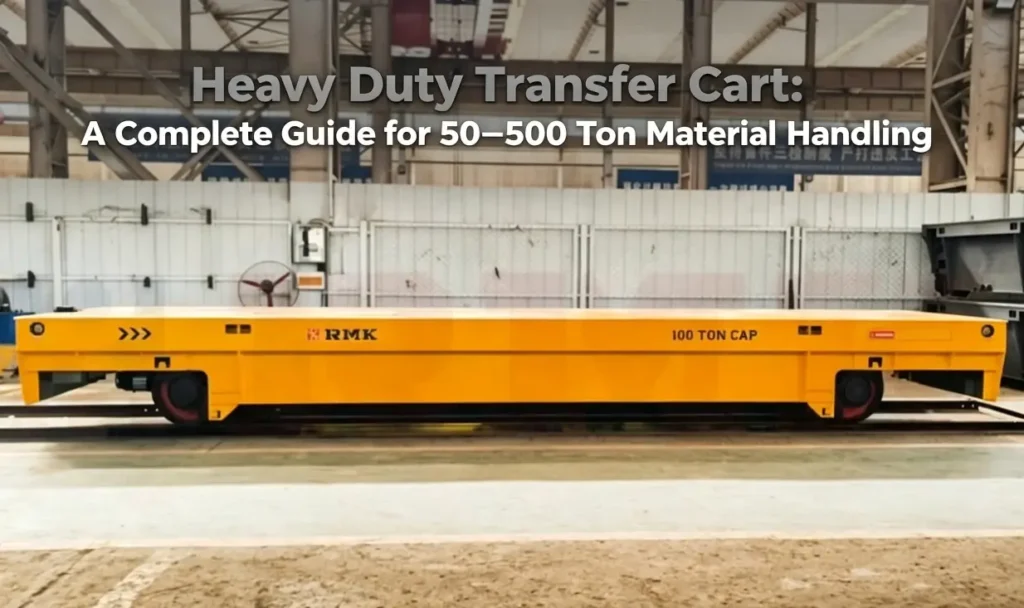
Schienenverschiebewagen sind eine der traditionellsten und zuverlässigsten Arten von industriellen Transportgeräten. Diese Wagen laufen auf vordefinierten Schienen, entweder in gerader Linie oder angepasst an S-förmige, gebogene oder kombinierte Schienen und bieten eine stabile Lösung für den Transport von Materialien auf festen Strecken.
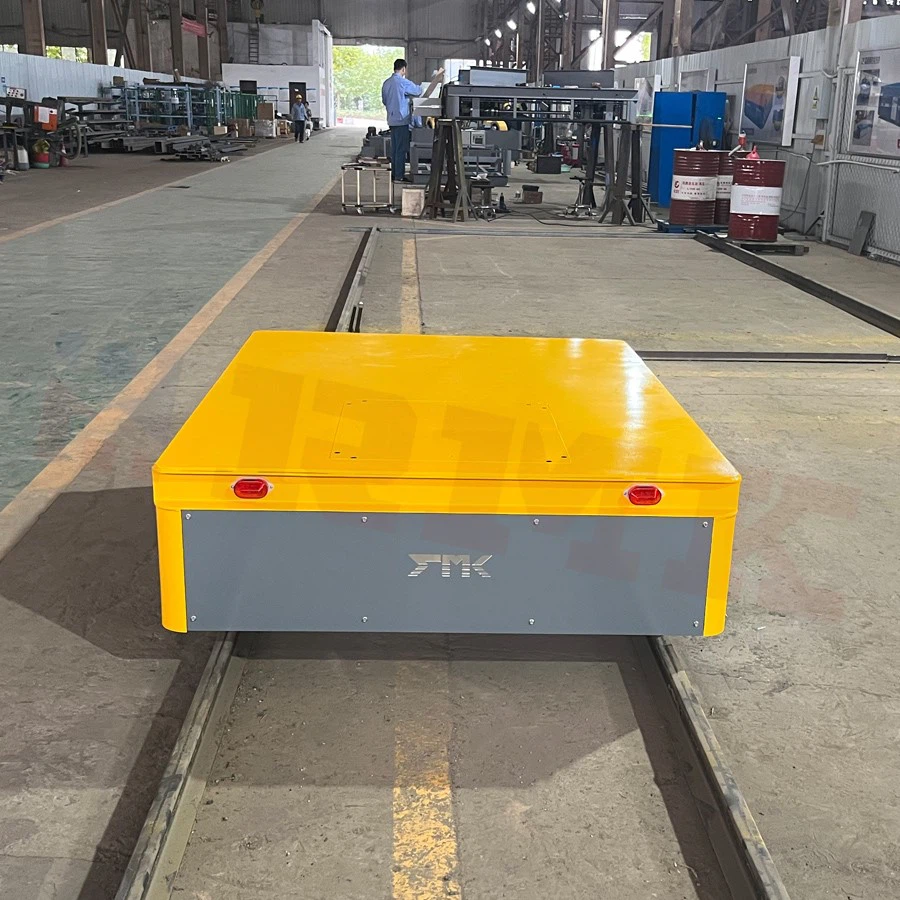
A wide range of specialized models of rail transfer cars have been developed to meet different industrial needs. Commonly, there are low-pressure railcars, explosion-proof special railcars, automated railcars, RGV automated railcars, and high-temperature resistant railcars. This diversity allows the railcars to be widely used in paper making, metallurgy, coal, electromechanical, military, and other industries.
Im Vergleich zu gleislosen Schiebebühnen haben Schienentransferwagen den Vorteil, dass sie stabiler und zuverlässiger arbeiten und sich besonders für den langfristigen Transport von schweren Materialien auf festen Strecken eignen. Das Schienensystem gewährleistet eine präzise Positionierung und einen wiederholbaren Transport, was besonders für Produktionsprozesse wichtig ist, die ein hochpräzises Andocken erfordern. Darüber hinaus werden Triebwagen von vielen Unternehmen der Schwerindustrie wegen ihrer höheren Tragfähigkeit und längeren Lebensdauer bevorzugt.
Lenkrad omnidirektional mobil
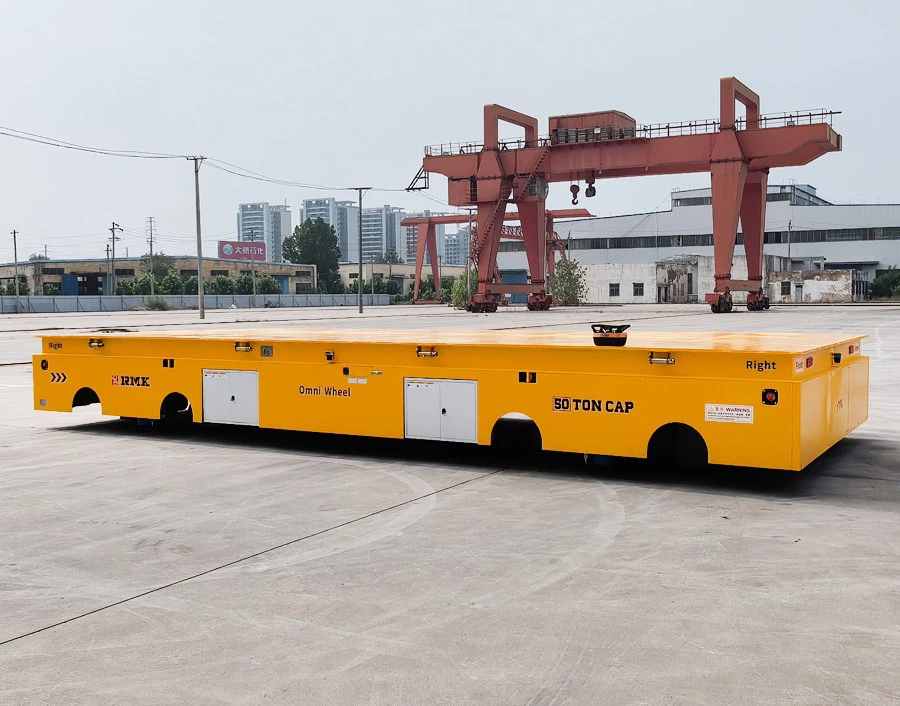
Der omnidirektionale, mobile, gleislose Transferwagen mit Lenkrad stellt die High-End-Entwicklung der industriellen Transferwagen-Technologie dar. Der Wagen besteht aus fünf Kernkomponenten: Stahlrahmen, Batteriepaket, Lenkradsystem, elektrisches System und Sicherheitsinspektionssystem und kann mit einer Vielzahl von Funktionsmodulen wie hydraulischem Heben und Rollensystem nachgerüstet werden.
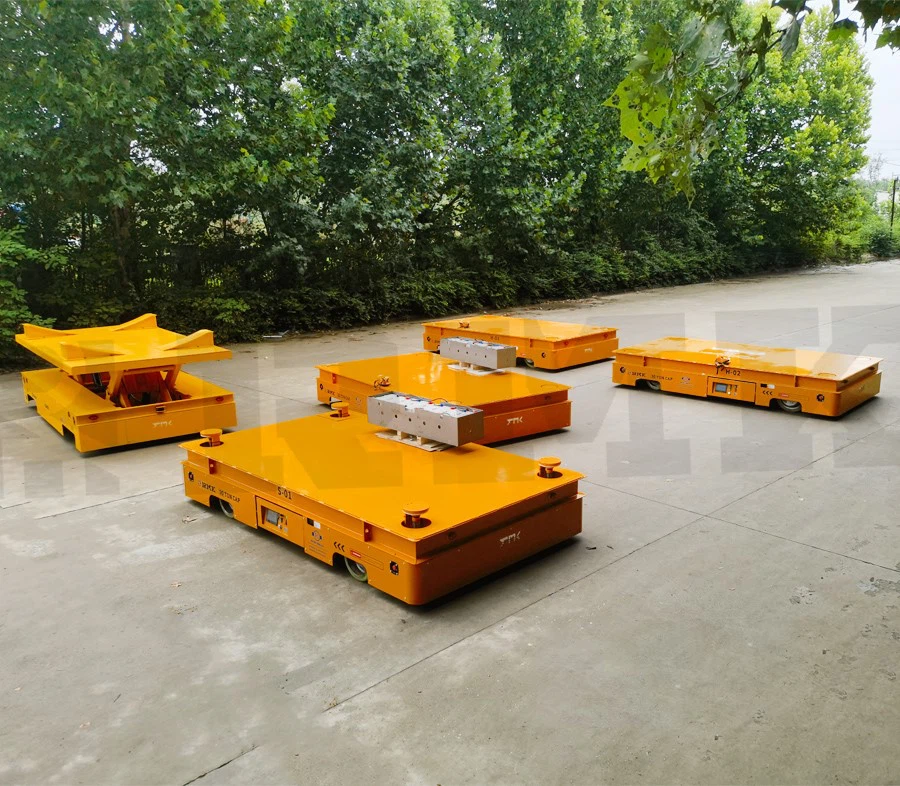
The unique design of the omnidirectional wheel system is the biggest highlight of this type of transfer cart. It is not only able to realize conventional forward and backward movement, but also lateral movement, oblique movement, in-situ 360-degree rotation, and is free to travel through narrow spaces. This excellent mobility makes it a very popular tool for modern industrial material transportation, especially suitable for production environments with limited space but complex handling requirements.
Omnidirectional wheeled trackless transfer carts are offered on the market with load capacities ranging from 1 to 150 tons, with off-standard customized solutions available according to customer needs. This flexibility allows it to be adapted to different scales of production needs, from light electronics assembly to heavy machinery manufacturing. In practice, it is often used in applications that require precision positioning or high space utilization, such as aircraft assembly and large equipment maintenance.
Automatischer Schienentransportwagen (RGV)
RGV (Automated rail transfer trolley) is an intelligent upgraded version of the rail transfer cart, which is characterized by fast running speed, high reliability, and low cost of use. This kind of transfer trolley is mainly used for industrial material transportation and workshop assembly, which is an indispensable logistics equipment for modern automated workshops.
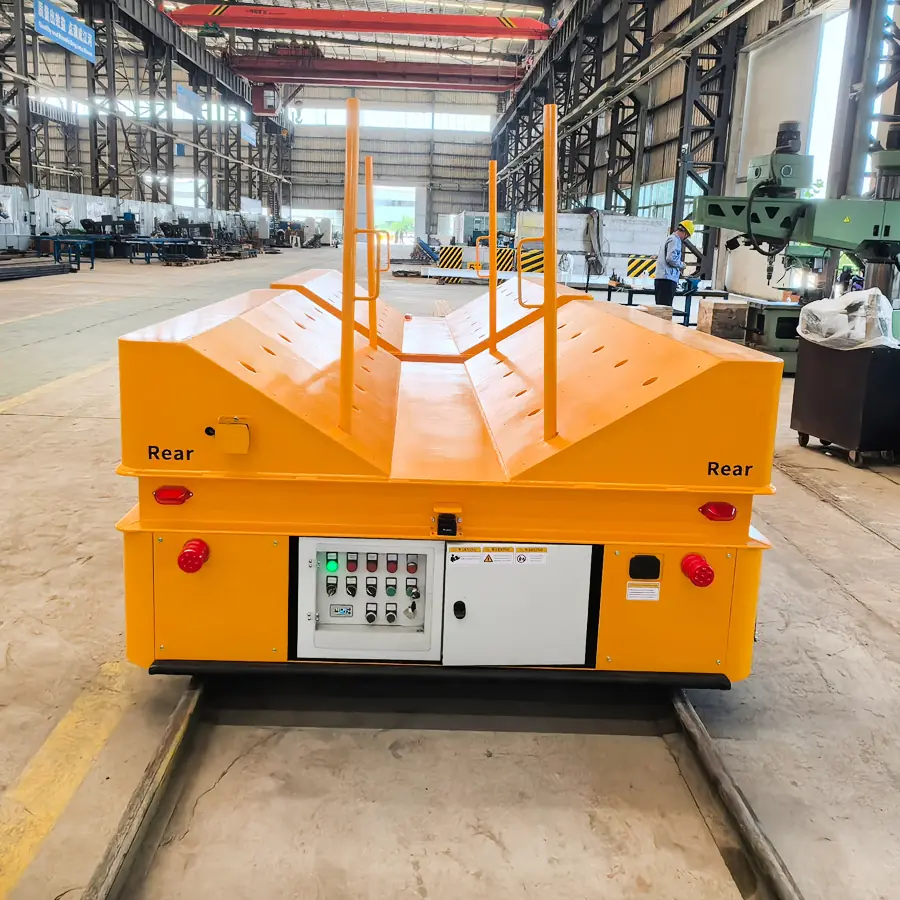
Der Hauptvorteil von RGV ist sein Automatisierungsgrad. Er kann nahtlos in das Werksautomatisierungssystem integriert werden, um eine genaue Zeitplanung und einen unbemannten Materialtransport zu ermöglichen. Zu den auf dem Markt erhältlichen kundenspezifischen Typen gehören RGV-Transporter mit Querschienen, mobile automatische Schienentransporter in Längs- und Querrichtung usw., die den besonderen Anforderungen unterschiedlicher Produktionslayouts gerecht werden können.
These transfer trolleys are suitable for modern factories with 24-hour continuous production, which can reduce labor costs and improve logistics efficiency. In demanding industries such as automobile manufacturing and electronics assembly, AGVs have become standard. Their precise positioning capability and programmable operation modes provide strong support for lean production.
Automatisch geführter Wagen (ACV/AMR)
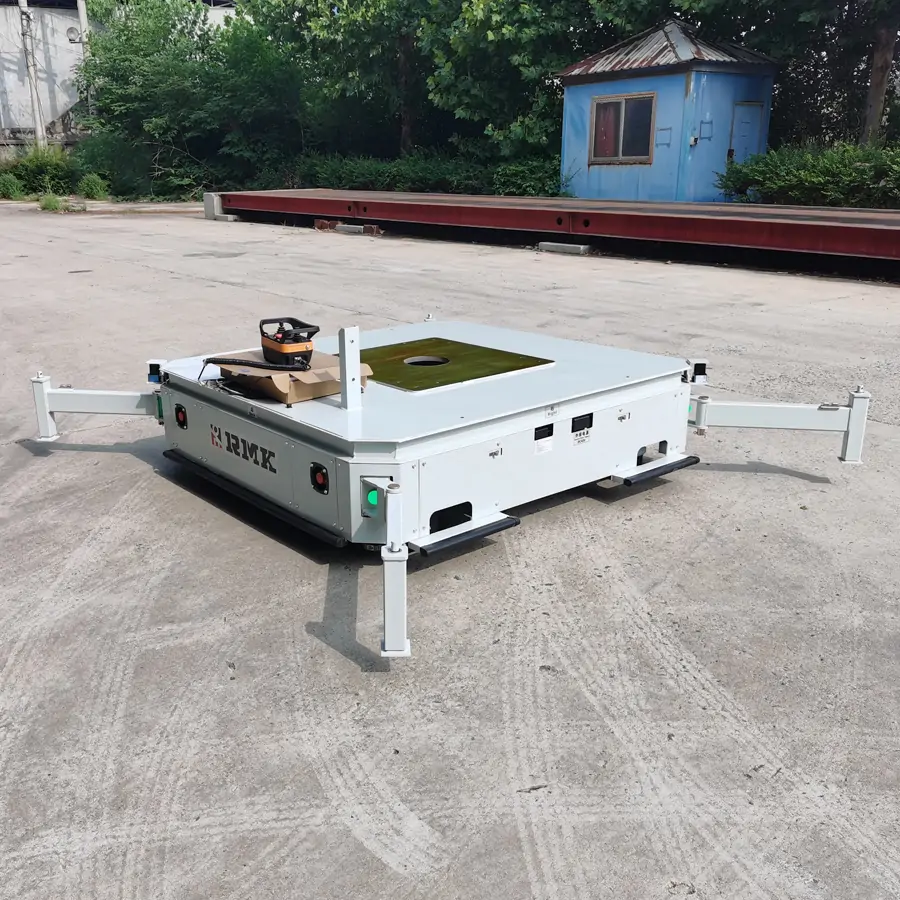
AGV Automatisch gesteuerte Wagen repräsentieren das höchste Niveau an Industrietransportwagen Technologie und sind eine Kernkomponente intelligenter Fabriklogistiksysteme. Diese Art von Ausrüstung besteht in der Regel aus einem hydraulischen Hubsystem, einem Differenzialantriebssystem, einem Lenkradantriebssystem, einem SPS-Steuerungssystem, einem Navigationssystem, einem Kommunikationssystem, einem Alarmsystem, einem Betriebssystem und einem Antriebssystem usw. und ist in der Lage, die Materialtransportprobleme in intelligenten Fabriken und anderen speziellen Umgebungen zu lösen.
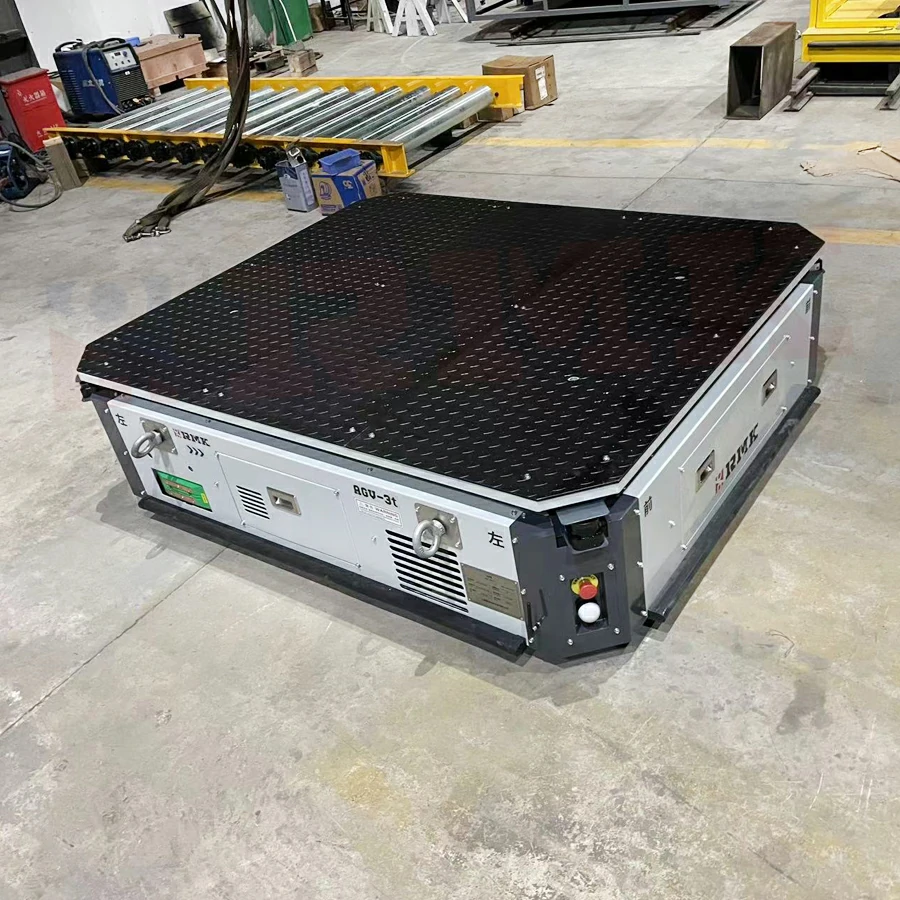
Das wichtigste Merkmal des ACV/AMR ist seine Intelligenz und Autonomie. Es braucht keine festen Gleise oder Magnetstreifen, um sich zu orientieren, sondern plant seinen Weg selbständig mit Hilfe fortschrittlicher Navigationstechnologie, um einen flexiblen Materialtransport zu ermöglichen. Derzeit bietet der Markt Tragfähigkeiten von 1 Tonne bis 20 Tonnen und unterstützt auch nicht standardisierte Anpassungen, die sich an die besonderen Bedürfnisse vieler Branchen wie Automobilbau, Elektrizitätswirtschaft, chemische Industrie, Eisen- und Stahlindustrie, Militärindustrie, Kernkraft usw. anpassen lassen.
Diese Art von Transferwagen eignet sich besonders für komplexe Produktionsprozesse, eine große Materialvielfalt und eine veränderliche Produktionsumgebung. Er kann an MES-, WMS- und andere Informationssysteme des Unternehmens angedockt werden, um eine intelligente Planung und Verfolgung von Materialien zu erreichen und so den Aufbau digitaler Fabriken grundlegend zu unterstützen. Angesichts der steigenden Arbeitskosten wird ACV/AMR für immer mehr Unternehmen zu einer strategischen Entscheidung.
Nachdem Sie die Arten und Verwendungszwecke von Industrietransportwagen kennengelernt haben, können Sie sich auf diesen Artikel beziehen, wenn Sie den richtigen Wagen auswählen möchten: Wie wählt man industrielle Transportwagen aus?
Industrial Transfer Cart Comparison
Different types of industrial transfer carts are designed for specific material handling conditions. The right choice depends on factors such as load capacity, power supply, transportation route, automation level, and working environment.
| Vergleich | Schienentransferwagen | Gleisloser Transferwagen | AGV-Transferwagen | RGV-Transferwagen | Schwerlast-Transferwagen |
|---|---|---|---|---|---|
| Verwendet standardmäßige industrielle elektrische Komponenten. | Low-voltage rail power, cable reel power, or battery power | Battery powered (lithium battery or lead-acid battery) | Battery powered with automatic charging support | Rail power or battery power with automatic charging support | Battery power, cable reel power, or rail power |
| Fahrweg | Fixed rail system, suitable for straight, L-shaped, S-shaped, and curved tracks | No fixed track required, 360° free steering, suitable for complex routes | Trackless operation with laser, magnetic strip, or QR code navigation | Fixed rail system with longitudinal and transverse movement | Rail or trackless design can be customized according to requirements |
| Tragfähigkeit | 1–300 tons, commonly 20–100 tons | 1–150 tons, commonly 5–30 tons | 1–50 tons, commonly 5–20 tons | 1–100 tons, commonly 10–50 tons | Up to 200 tons or more |
| Laufgeschwindigkeit | 0–25 m/min, stepless speed adjustment | 0–15 m/min | 0–30 m/min, automatic speed adjustment available | 0–20 m/min | 0–20 m/min |
| Kontrollmethode | Remote control, pendant controller, PLC control | Wireless remote control, automatic navigation | Central control system, wireless remote control, automatic navigation | PLC scheduling, remote control, automatic scheduling | Remote control + pendant controller |
| Sicherheitsmerkmale | Sound and light alarm, emergency stop button, laser obstacle detection | Laser obstacle avoidance, sound and light alarm, emergency stop, power-off braking | Laser sensors, ultrasonic obstacle detection, multiple safety protection systems | Rail cleaning system, automatic charging system, sensor stop function | Explosion-proof options and multiple safety protections |
| Anwendungen | Fixed production lines, heavy load transportation, steel plants, bridge construction | Flexible material transfer, mold handling, cross-workshop transportation, narrow spaces | Automated production lines, smart warehouses, high-frequency operations | Large material transfer, logistics sorting, automated production systems | Metallurgy, shipbuilding, wind power, and other heavy industries |
| Wartung | Requires rail inspection and wheel maintenance; simple structure with low maintenance cost | Mainly battery maintenance and charging management | Requires navigation system calibration and battery maintenance | Requires rail maintenance and automatic charging system inspection | Maintenance requirements depend on configuration and working conditions |
| Main Advantages | High load capacity, accurate positioning, compact structure | High flexibility, no track installation required, strong adaptability | High automation level, remote scheduling, safe human-machine cooperation | Precise scheduling, high automation, suitable for fixed routes | Extremely high load capacity and highly customizable design |
How to Choose the Right Industrial Transfer Cart?
- Rail Transfer Cart: Suitable for factories with fixed production processes and defined transportation routes, such as steel structure manufacturing and heavy equipment workshops. It provides high load capacity, accurate positioning, and stable operation with relatively simple maintenance.
- Trackless Transfer Cart: Ideal for workshops requiring flexible movement and multi-station transportation. Its 360° steering capability allows it to handle complex routes and limited spaces without installing rails.
- AGV Transfer Cart: Designed for automated material handling. With navigation systems, obstacle detection, and central scheduling, it is suitable for high-frequency operations and smart manufacturing environments.
- RGV Transfer Cart: Best suited for automated transport along fixed routes. It supports efficient material movement in production lines and can operate continuously with automatic charging systems.
- Heavy Duty Transfer Cart: Developed for extremely heavy loads and special industrial environments. It can be customized for applications in metallurgy, shipyards, wind power, and other heavy industries.
Each industrial transfer cart type has different advantages in load capacity, flexibility, automation, and application range. Selecting the right transfer cart based on operating conditions and material handling requirements can improve transportation efficiency and reduce operational costs.
Anwendungen
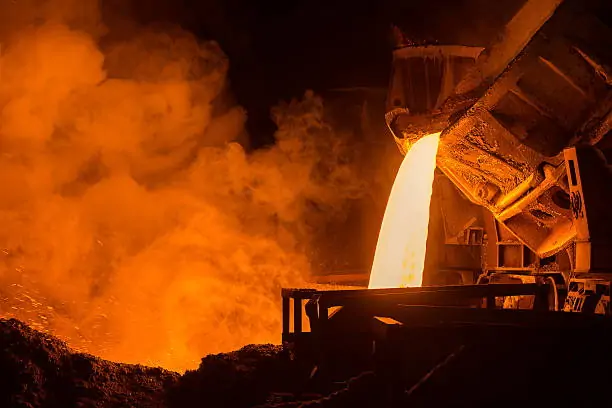
Stahlherstellung
Industrial transfer carts are used to move steel coils, plates, and heavy components between production lines, storage areas, and processing stations.
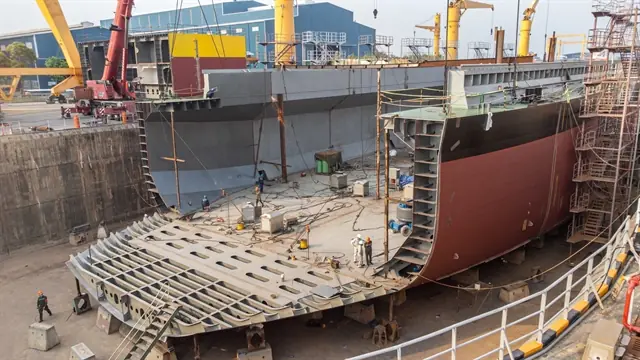
Schiffbauindustrie
Heavy duty transfer carts transport ship sections, steel structures, and large equipment during ship assembly and fabrication.
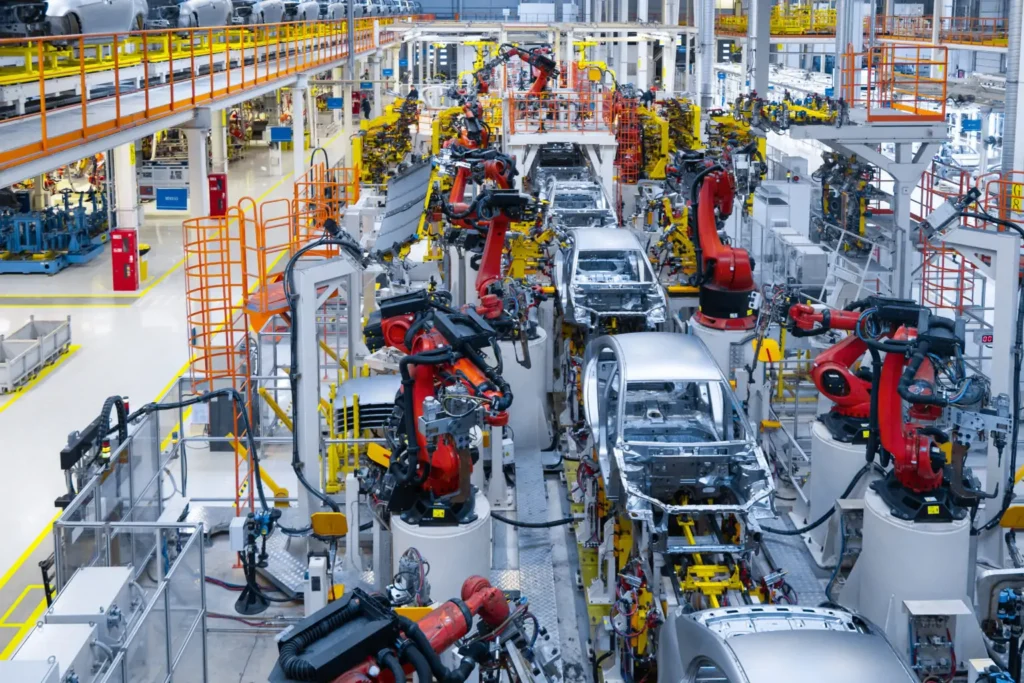
Automobilherstellung
Transfer carts support the movement of vehicle bodies, molds, and production materials across different manufacturing processes.
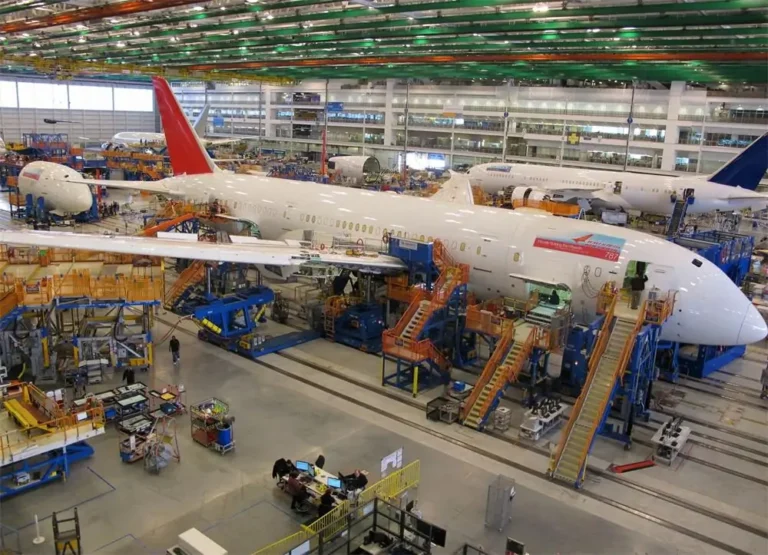
Luft- und Raumfahrtfertigung
High-precision transfer carts are used for transporting large aircraft parts and sensitive components in controlled production areas.
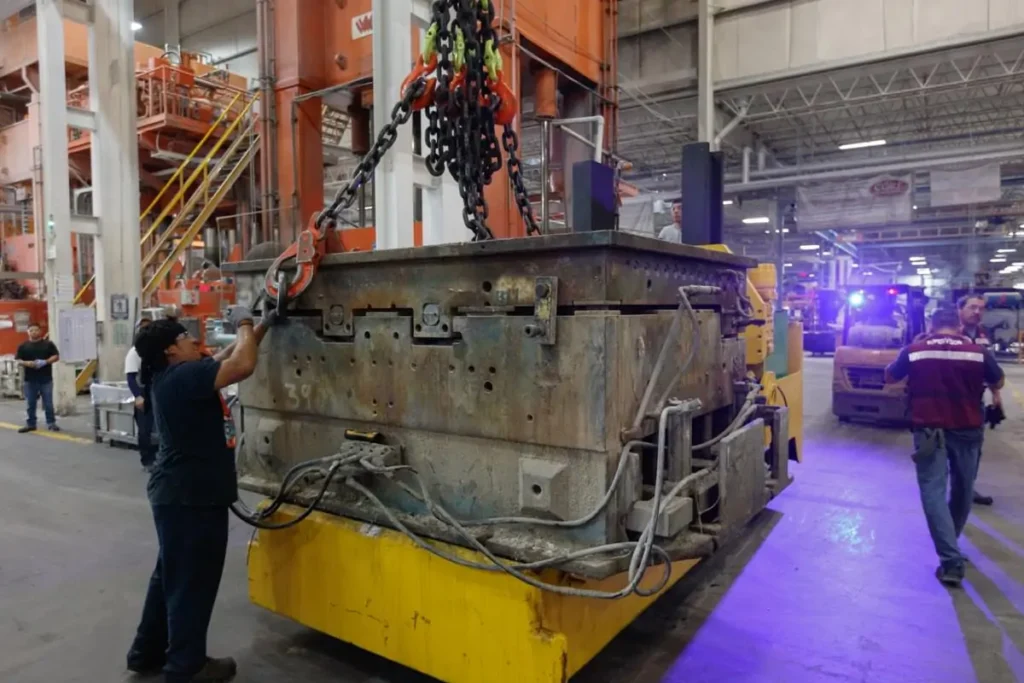
Formen- und Werkzeughandhabung
Transfer carts provide safe transportation for heavy molds, dies, and tooling equipment in manufacturing workshops.
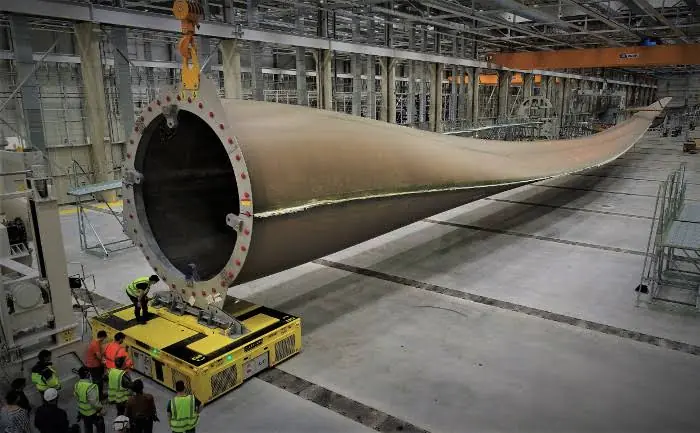
Wind Power Equipment
Heavy load transfer carts are used to move wind turbine components such as blades, towers, and nacelle parts during production and assembly.
Industrial Transfer Cart Customization Options
- Industrial transfer carts can be customized according to different load requirements, working environments, and transportation processes.
- Load Capacity — The load capacity can be designed according to the weight of transported materials, ranging from small loads to hundreds of tons.
- Platform Size — The platform length, width, and height can be customized to match the dimensions of different workpieces and handling requirements.
- Power Supply System — Available power options include battery power, rail power, cable reel power, and busbar power for different operating conditions.
- Drive and Steering System — Transfer carts can be configured with different drive systems and steering modes, including straight running, 360° rotation, and automatic steering.
- Control Method — Control options include wireless remote control, pendant control, PLC control, and automated control systems.
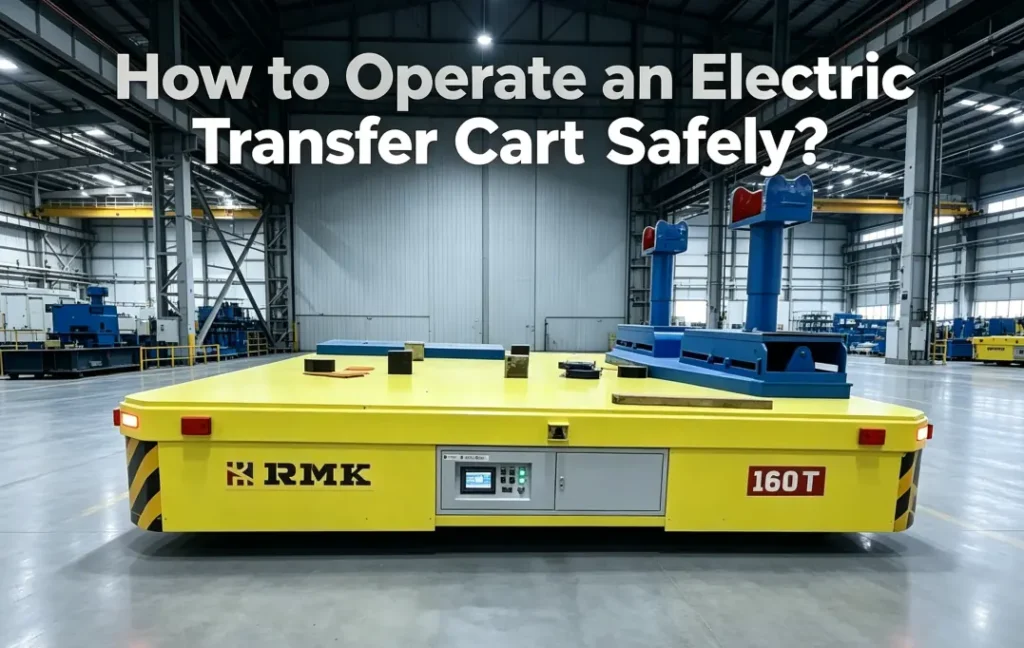
- Safety Features — Safety devices such as emergency stop buttons, warning lights, obstacle detection sensors, and limit switches can be added based on application needs.
- Working Environment Design — Special versions can be customized for high-temperature, explosion-proof, outdoor, or heavy-duty industrial environments.
- Surface and Fixture Design — The platform can be equipped with rollers, V-shaped supports, clamps, or customized fixtures for specific material handling tasks.
Comprehensive customization options—see details here: Kundenspezifischer Transportwagen: Vollständiger Leitfaden zu Design und Individualisierung
Schlussfolgerung
Industrial transfer carts provide reliable solutions for moving heavy materials in factories, workshops, and industrial facilities. From rail transfer carts and trackless transfer carts to AGV, RGV, and heavy duty models, each type is designed for different transportation requirements. Choosing the right transfer cart based on load capacity, working environment, and operation needs can improve handling efficiency and production safety.
E-Mail: transfercart@rmkzn.com
Telefon: +86-18637369355
FAQ
What are the different types of industrial transfer carts?
The main types include rail transfer carts, trackless transfer carts, AGV transfer carts, RGV transfer carts, and heavy duty transfer carts. Each type is designed for different load requirements, routes, and working conditions.
Was ist der Unterschied zwischen Schienen- und spurgebundenen Transportwagen?
Rail transfer carts run on fixed tracks and are suitable for stable routes with heavy loads, while trackless transfer carts use battery power and can move freely without rails, making them suitable for flexible transportation.
How much load can an industrial transfer cart carry?
Industrial transfer carts can handle loads from a few tons to hundreds of tons. The capacity can be customized according to the material weight and application requirements.
Which transfer cart is suitable for heavy loads?
Heavy duty transfer carts and rail transfer carts are commonly used for heavy loads. They can be designed for transporting steel structures, machinery, molds, and other large industrial components.
Können industrielle Transferwagen individuell angepasst werden?
Yes. Industrial transfer carts can be customized in terms of load capacity, platform size, power supply, steering system, control method, and safety features.
What power supply options are available?
Common power options include battery power, low-voltage rail power, cable reel power, and busbar power. The suitable system depends on the working environment and operating requirements.
Are transfer carts suitable for outdoor use?
Yes. Transfer carts can be designed for outdoor applications with weather-resistant components, durable structures, and suitable protection systems for different environments.
Wie wähle ich den richtigen industriellen Transferwagen aus?
The selection should consider load capacity, transportation distance, route conditions, operation frequency, working environment, and automation requirements. A customized solution is recommended for complex applications.