Índice
Introducción
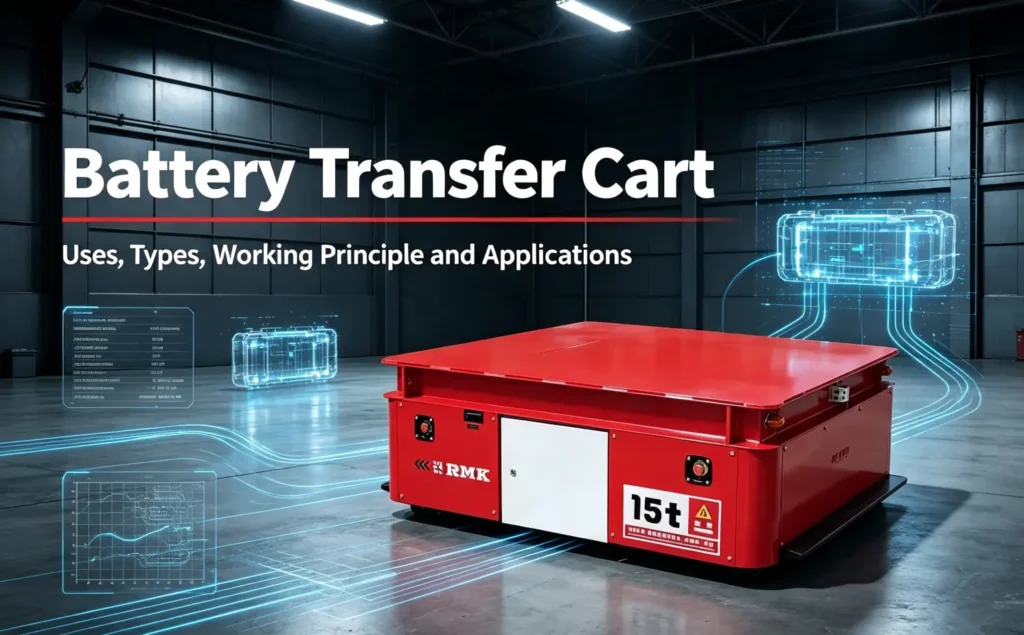
Las fábricas con diseños de producción cambiantes necesitan equipos flexibles para el transporte interno de materiales. Un carro eléctrico de transferencia sin orugas es un vehículo de transporte alimentado por batería que mueve materiales pesados sin rieles fijos, adecuado para talleres, áreas de ensamblaje, almacenes y otros entornos industriales.
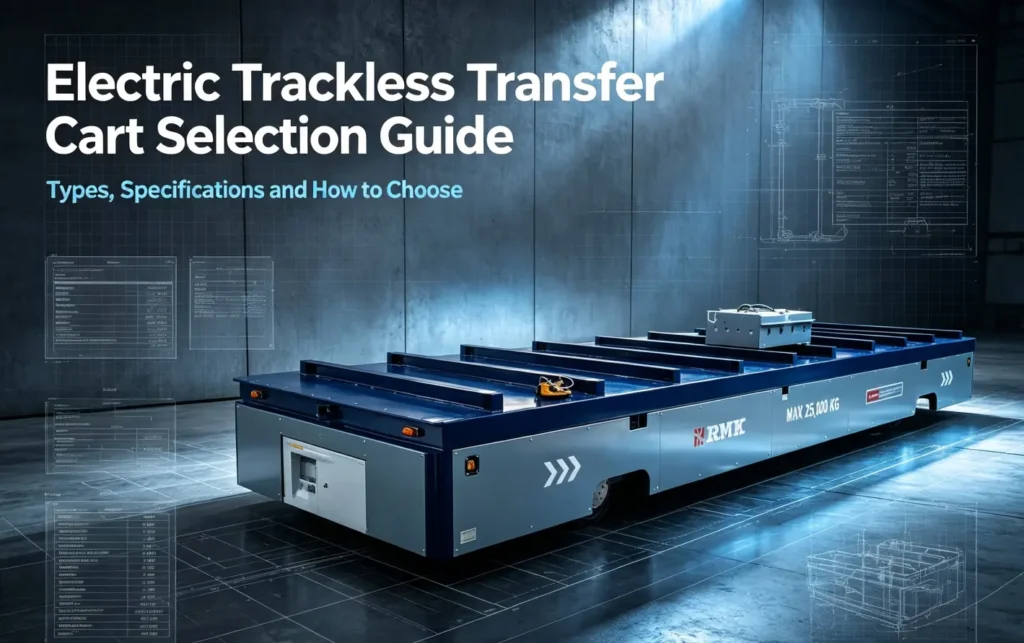
Esta guía cubre la estructura, el método de funcionamiento, los tipos, las especificaciones y los puntos de selección de los carros de transferencia eléctricos sin rieles. El contenido se centra en la capacidad de carga, la configuración de la batería, el sistema de dirección y las condiciones de aplicación para ayudar a los usuarios a seleccionar un modelo adecuado para sus requisitos de manejo de materiales.
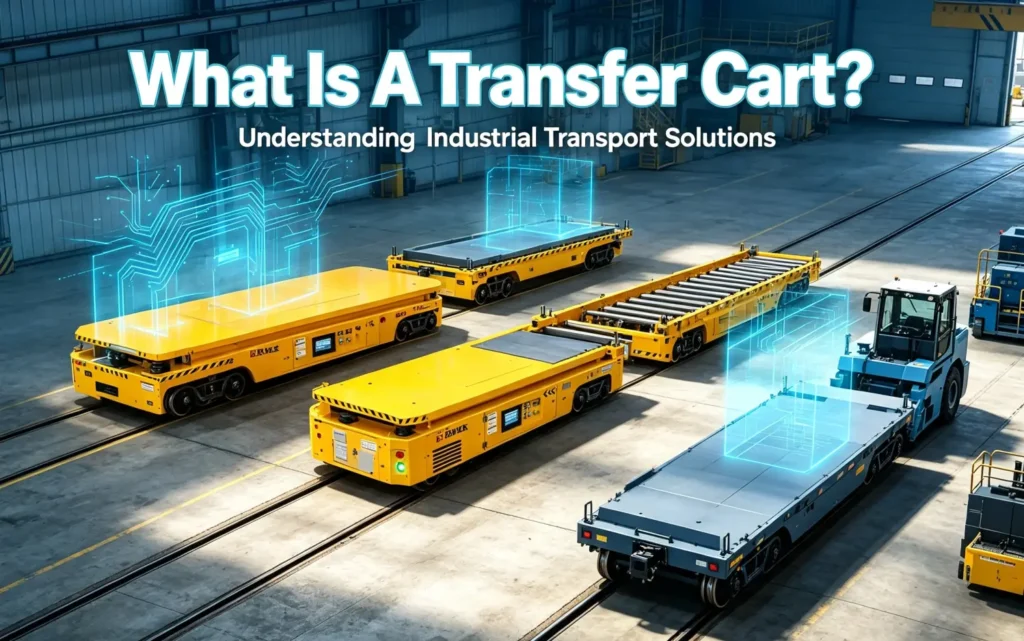
¿Qué es un carro de transferencia eléctrico sin rieles?
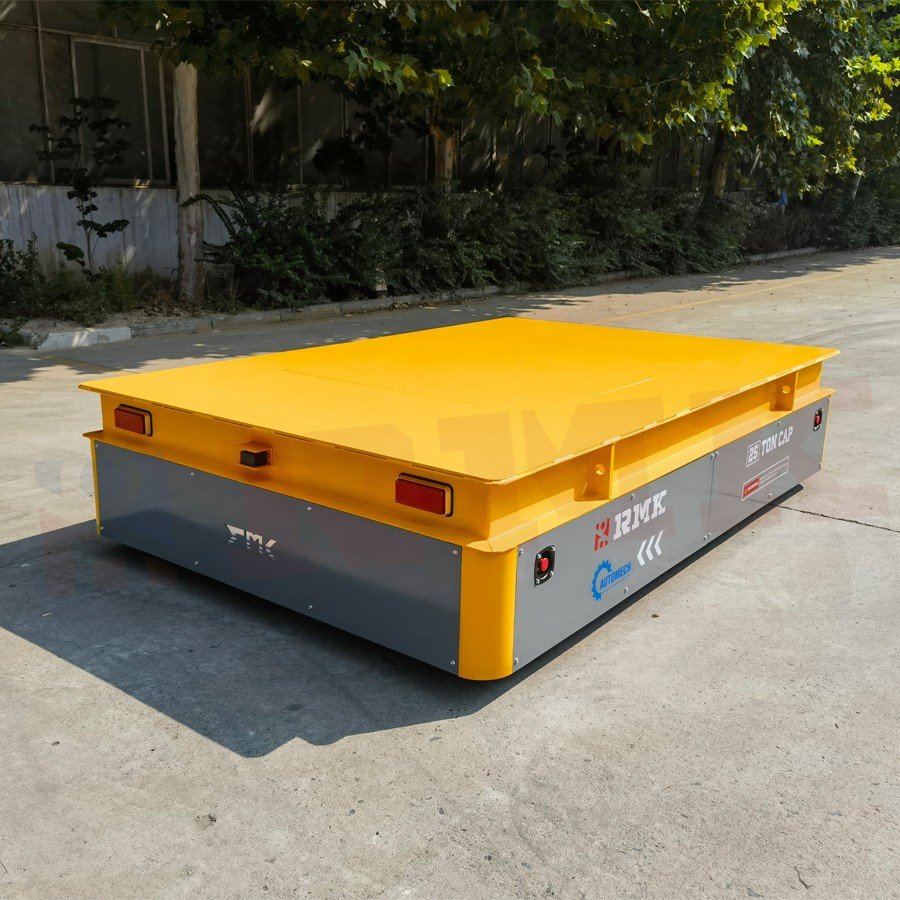
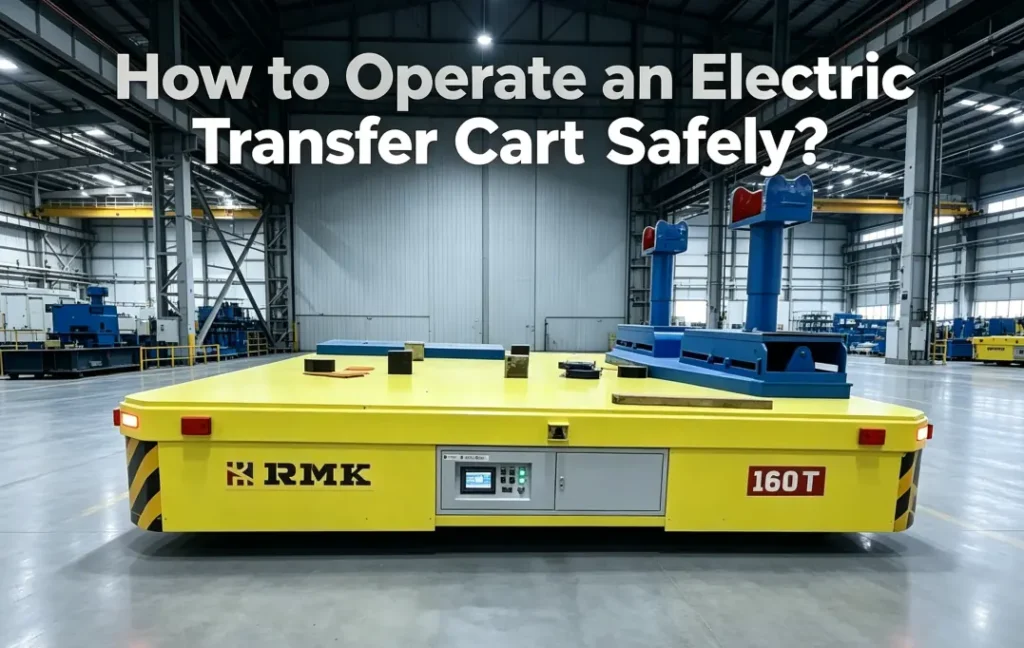
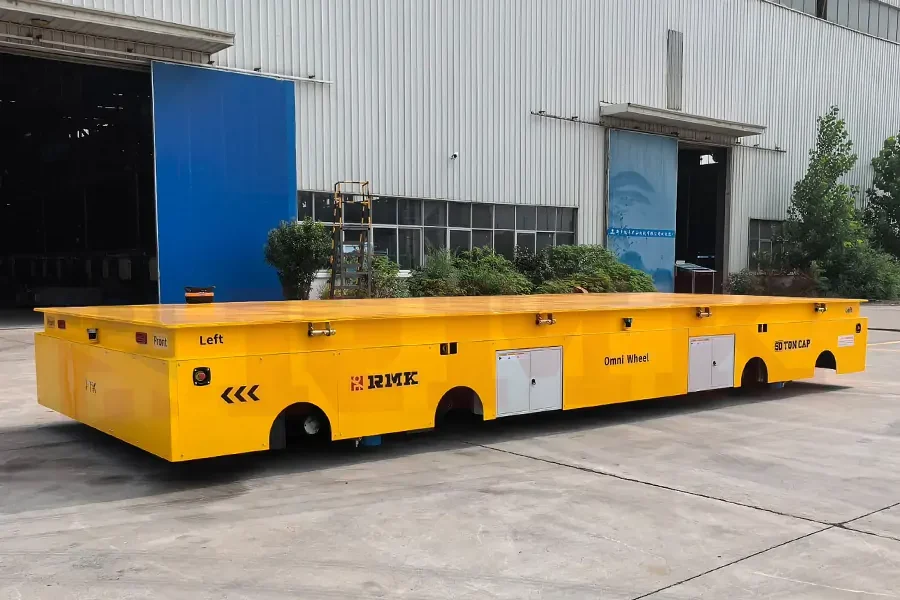
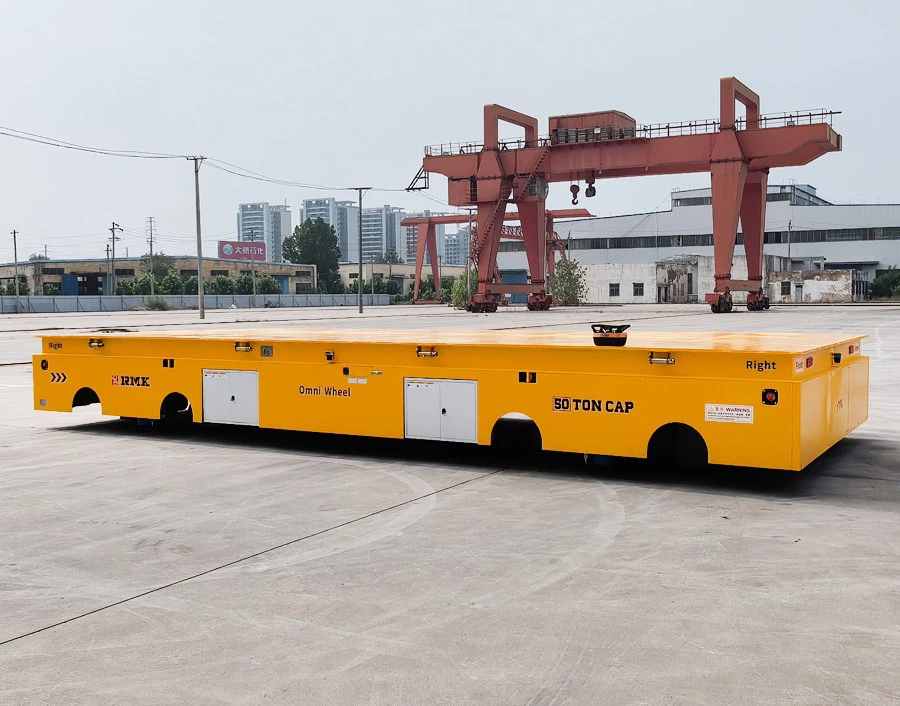
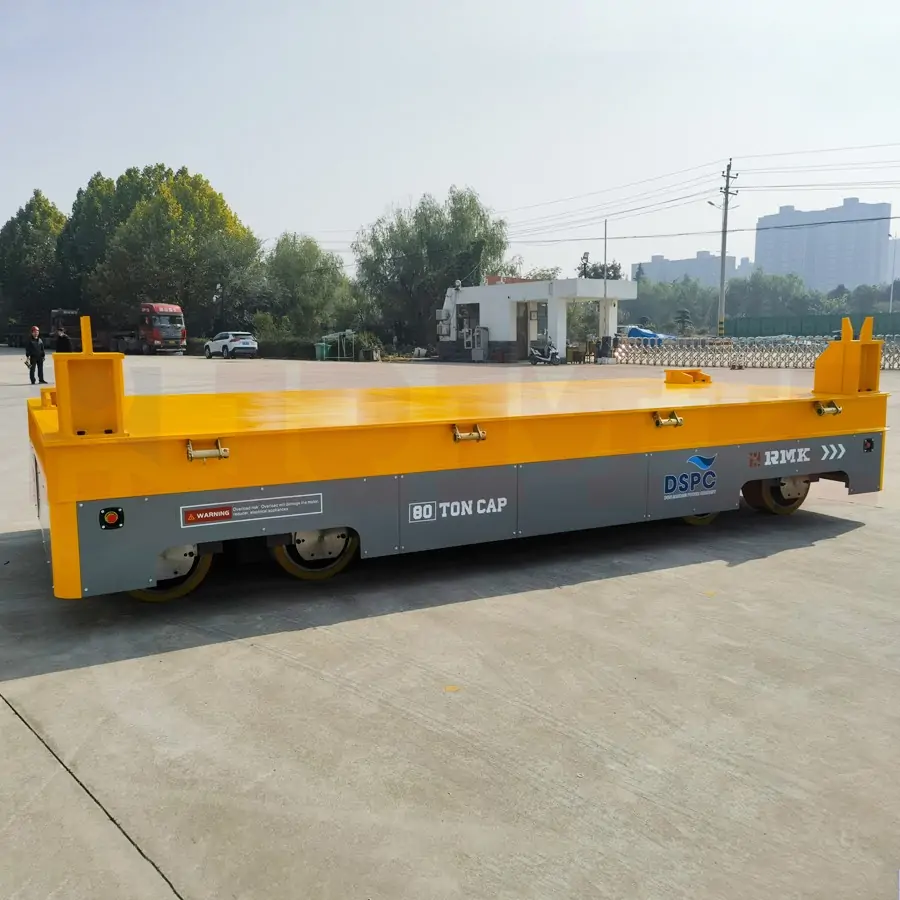
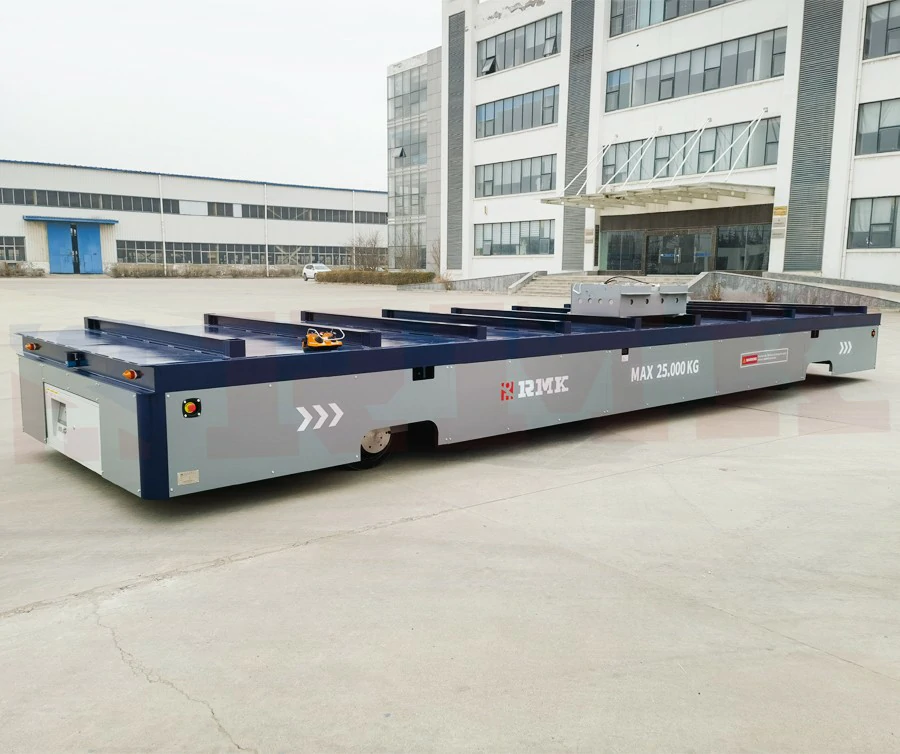
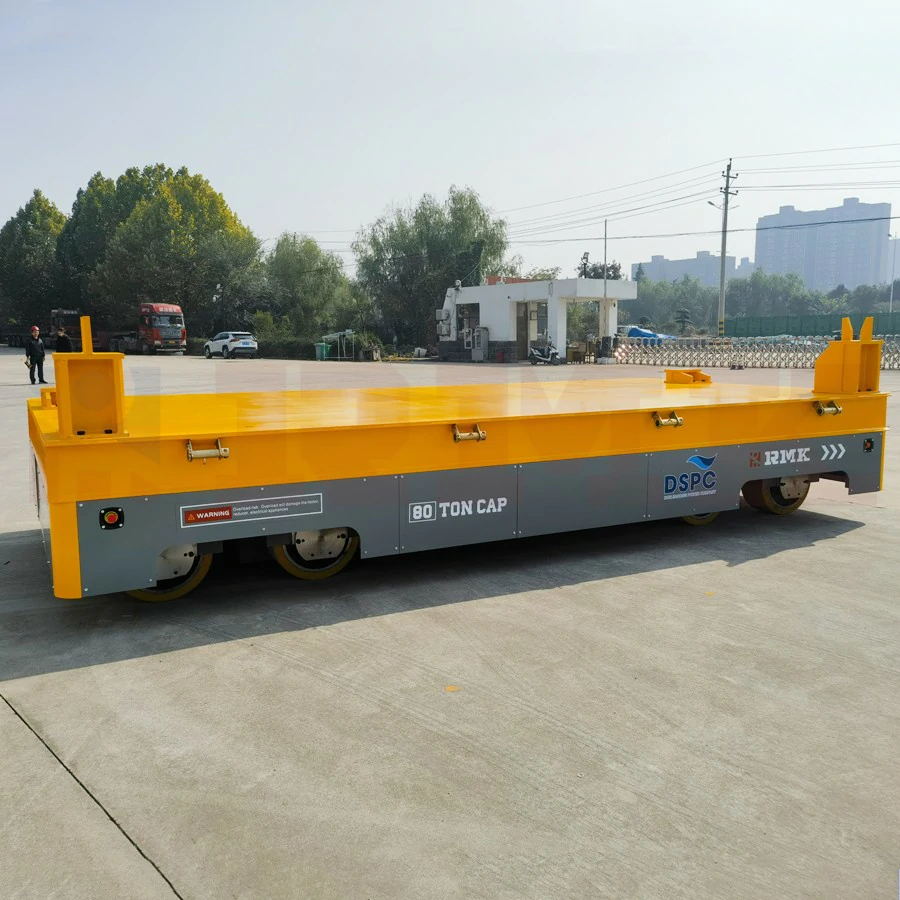
Un carro de transferencia eléctrico sin rieles, también conocido como carro plano eléctrico sin rieles alimentado por batería o vehículo de transferencia con ruedas de goma, es un vehículo de manejo de materiales que opera sin rieles fijos. Utiliza baterías recargables a bordo para alimentar el motor y el sistema de transmisión, lo que permite un movimiento flexible en fábricas, almacenes y talleres.
El carro consiste en un marco de acero, sistema de transmisión, mecanismo de dirección, sistema de frenado y unidad de control. Las ruedas de goma proporcionan un movimiento estable en pisos de concreto o epoxi, mientras que el sistema de dirección permite la operación en espacios estrechos y áreas de producción cambiantes. Los modelos estándar generalmente manejan 1–50 toneladas, con diseños personalizados disponibles para cargas más altas.
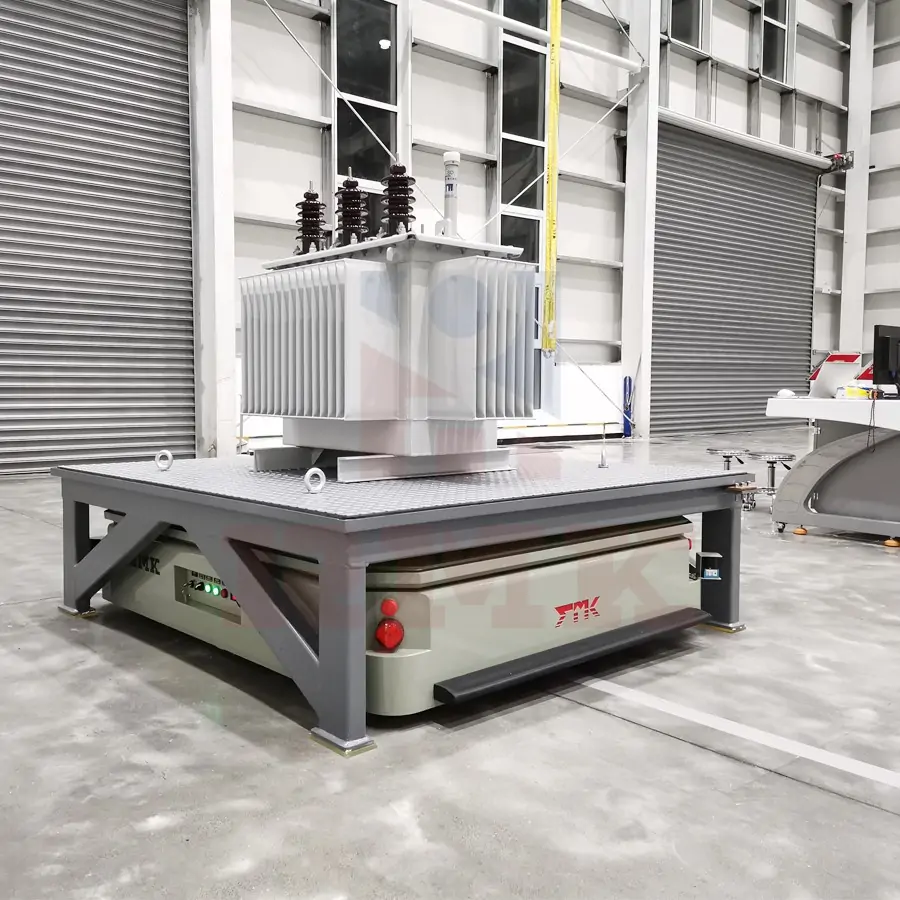
Sin la instalación de rieles, los carros de transferencia eléctricos sin rieles pueden moverse entre diferentes áreas de trabajo con menos tiempo de configuración. Se utilizan comúnmente para el transporte de moldes, alimentación de líneas de ensamblaje y transferencia de materiales pesados. Se pueden agregar control remoto, detección de obstáculos y sistemas de navegación AGV para aplicaciones de manejo automatizado.
¿Cómo funciona un carro de transferencia eléctrico sin rieles?
Un carro de transferencia eléctrico sin rieles utiliza un sistema de transmisión alimentado por batería para mover materiales pesados sin rieles fijos. La batería suministra energía al motor, y el sistema de control gestiona el movimiento, la dirección y el frenado durante la operación.
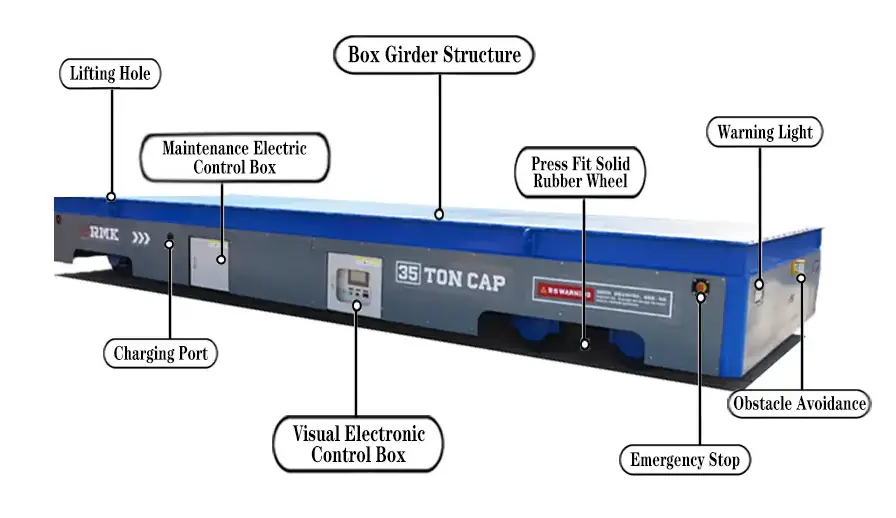
- Suministro de energía de la batería
La batería a bordo proporciona energía eléctrica al motor de transmisión y al sistema de control. Las baterías de plomo-ácido y de litio se utilizan comúnmente según las horas de trabajo y los requisitos de carga. - Sistema de transmisión del motor
El motor eléctrico genera fuerza motriz y transfiere potencia a las ruedas a través de la caja de engranajes. El carro se mueve hacia adelante, hacia atrás y se detiene según las señales de control. - Dirección y control de movimiento
El sistema de dirección controla la dirección de desplazamiento mediante dirección diferencial, dirección hidráulica u otros métodos personalizados. Las ruedas de goma permiten un movimiento flexible en talleres sin limitaciones de rieles. - Control de operación
El operador controla el carro mediante un control remoto inalámbrico o un controlador colgante. Los modelos avanzados pueden integrar sensores, detección de obstáculos o sistemas de navegación AGV para operación automática.
El carro de transferencia eléctrico sin rieles combina energía de batería, transmisión eléctrica y sistemas de dirección flexibles para completar el transporte de materiales pesados. Su diseño sin rieles le permite adaptarse a diseños de fábrica cambiantes y diversos requisitos de manejo industrial.
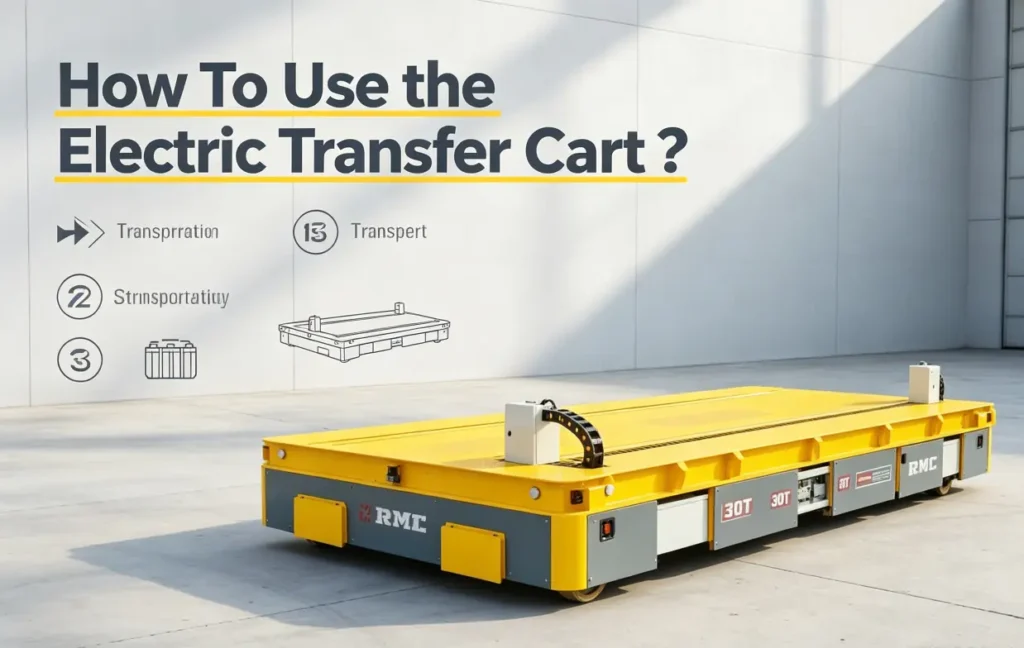
Para obtener detalles sobre cómo usar el carro de transferencia eléctrico, consulte: ¿Cómo usar el carro de transferencia eléctrico?
Tipos de Carretillas de Transferencia Eléctricas Sin Rieles
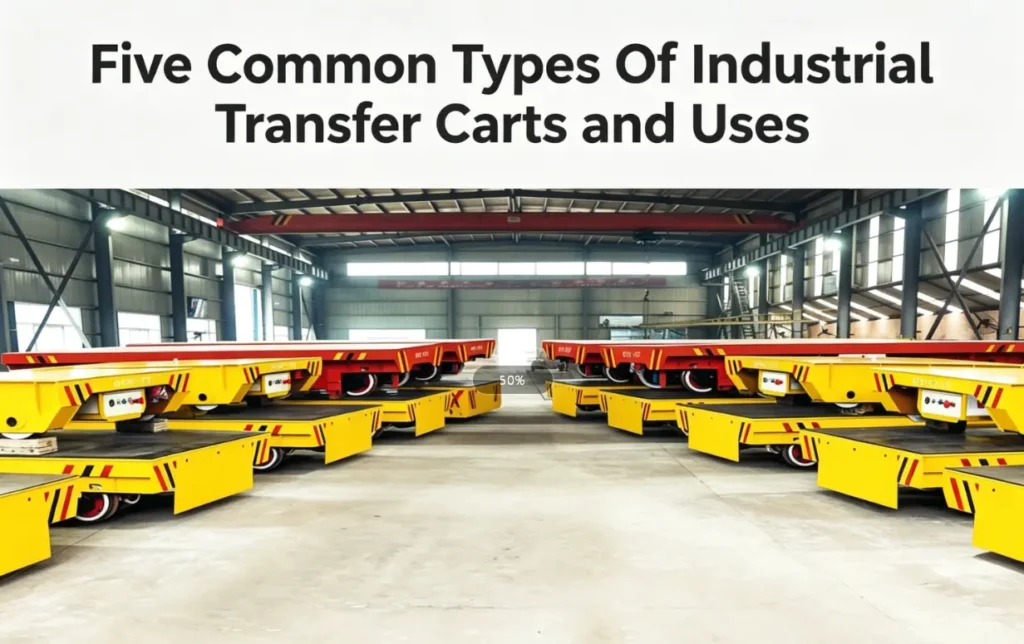
Los carros de transferencia eléctricos sin rieles se diseñan en diferentes configuraciones según la capacidad de carga, los requisitos de dirección y los niveles de automatización. Los tipos comunes incluyen modelos estándar alimentados por batería, modelos de servicio pesado, carros sin rieles AGV y modelos con elevación hidráulica.
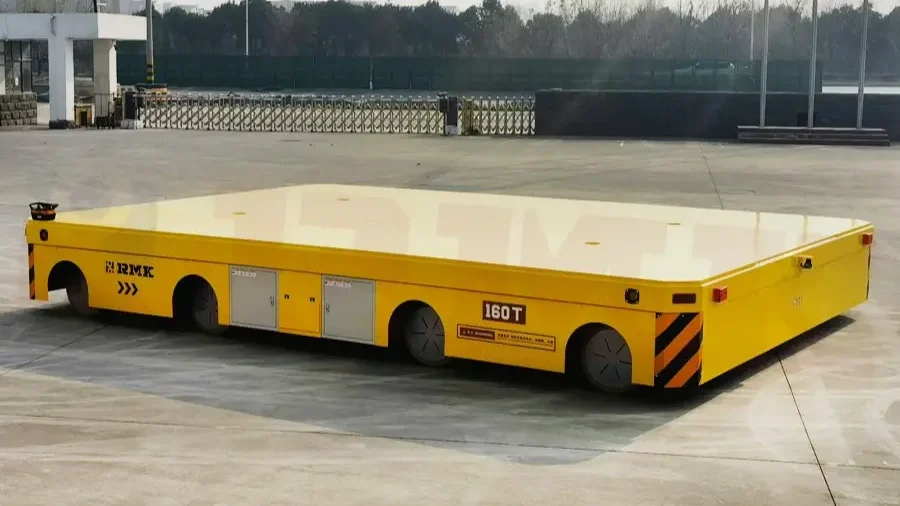
Carro de transferencia eléctrico sin rieles estándar
Los modelos estándar utilizan energía de batería y ruedas de goma para el transporte flexible de materiales dentro de fábricas y talleres. Son adecuados para tareas de manejo general con cargas moderadas y rutas cambiantes.
- Capacidad de carga: 1–50 toneladas
- Suministro de energía: Batería de plomo-ácido / Batería de litio
- Método de control: Control remoto inalámbrico / Control colgante
- Aplicación: Manejo de materiales en fábricas, transporte en talleres
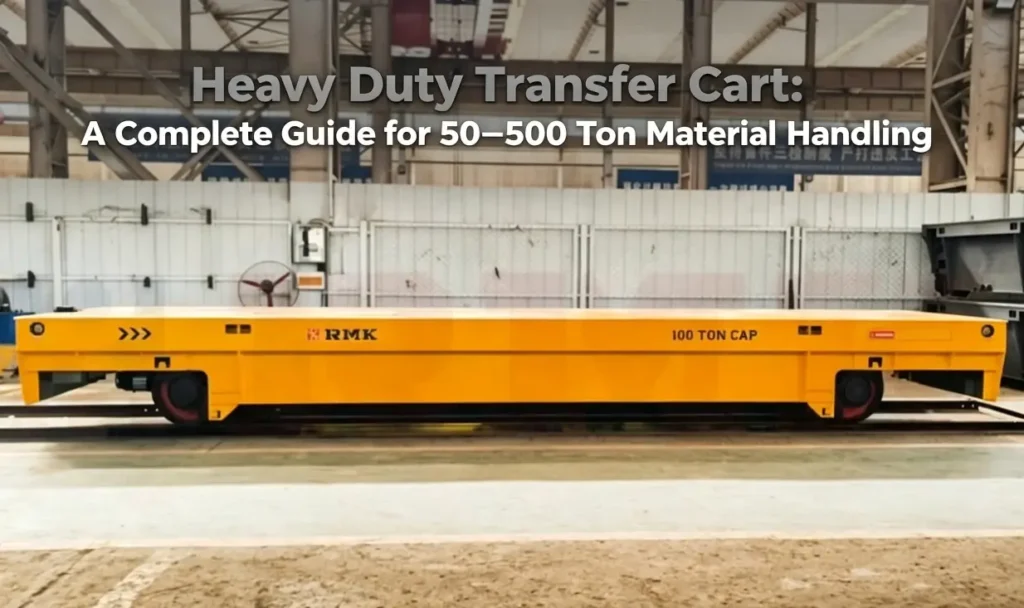
Carro de transferencia eléctrico sin rieles de servicio pesado
Los modelos de servicio pesado están diseñados para transportar cargas grandes y sobredimensionadas, como estructuras de acero, moldes y equipos industriales. Cuentan con marcos reforzados y sistemas de transmisión de alto par para condiciones de trabajo exigentes.
- Capacidad de carga: 50–100+ toneladas
- Sistema de transmisión: Transmisión de motor de servicio pesado
- Tamaño de plataforma: personalizado
- Aplicación: Plantas siderúrgicas, astilleros, manufactura pesada
Carro de transferencia eléctrico sin rieles AGV
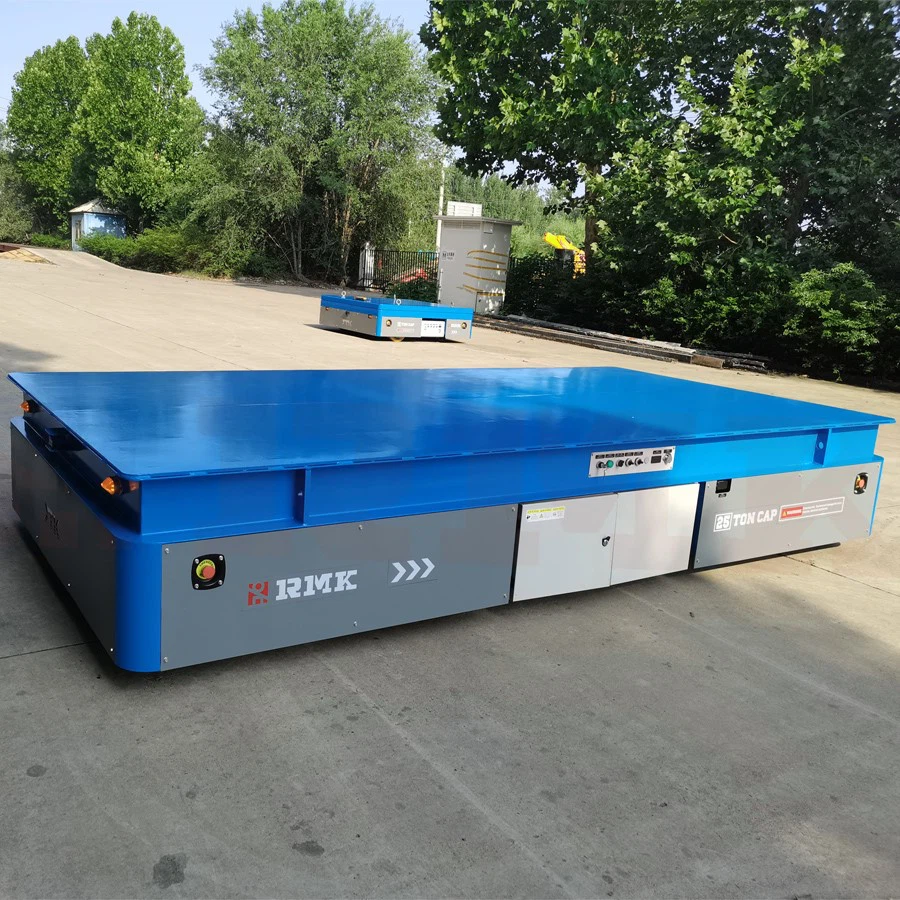
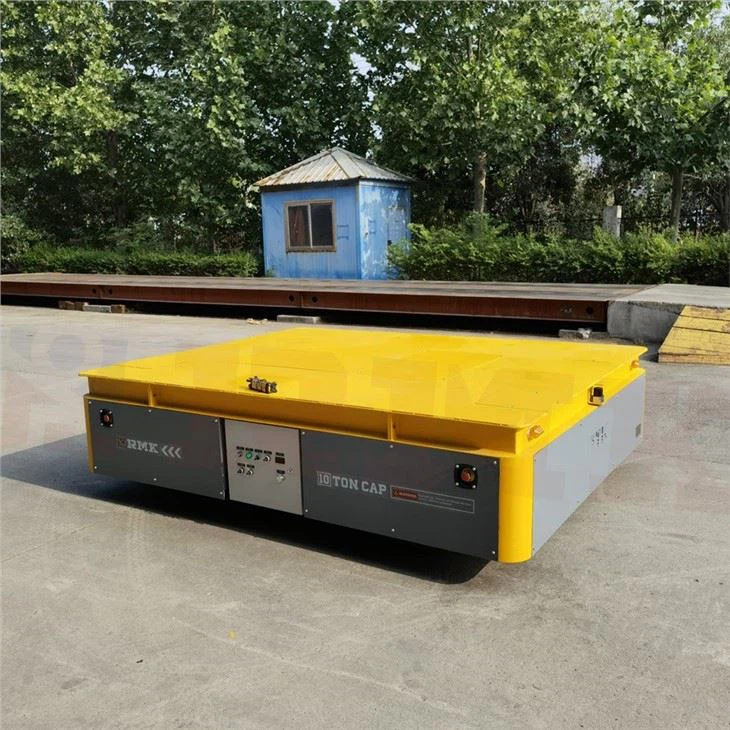
Los carros de transferencia sin rieles AGV integran sistemas de navegación y control para el transporte automático de materiales. Pueden seguir rutas preestablecidas, evitar obstáculos y conectarse con sistemas de automatización de fábrica.
- Navegación: Navegación magnética / Navegación láser / SLAM
- Precisión de posicionamiento: ±10 mm
- Modo de control: Control automático
- Aplicación: Fábrica inteligente, líneas de producción automatizadas
Carro de transferencia eléctrico sin rieles con elevación hidráulica
Los modelos con elevación hidráulica combinan funciones de transporte y elevación. La plataforma puede ajustar la altura para conectarse con equipos de producción, estaciones de ensamblaje o sistemas de almacenamiento.
- Capacidad de carga: 3–30 toneladas
- Altura de elevación: 0.5–2 m
- Sistema de elevación: Transmisión hidráulica
- Aplicación: Líneas de ensamblaje, transferencia de equipos, acoplamiento en estaciones de trabajo
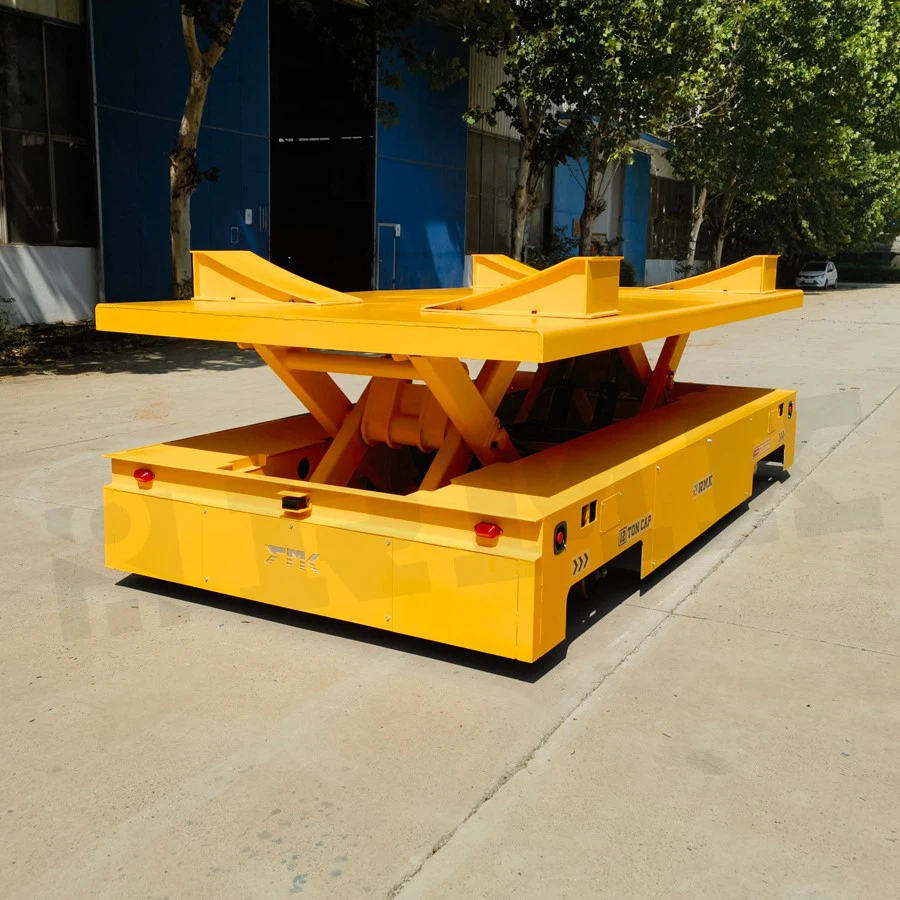
Diferentes carros de transferencia eléctricos sin rieles se seleccionan según el peso de la carga, la ruta de transporte, el entorno de trabajo y los requisitos de automatización. Una configuración adecuada ayuda a alinear el carro con el proceso de producción real.
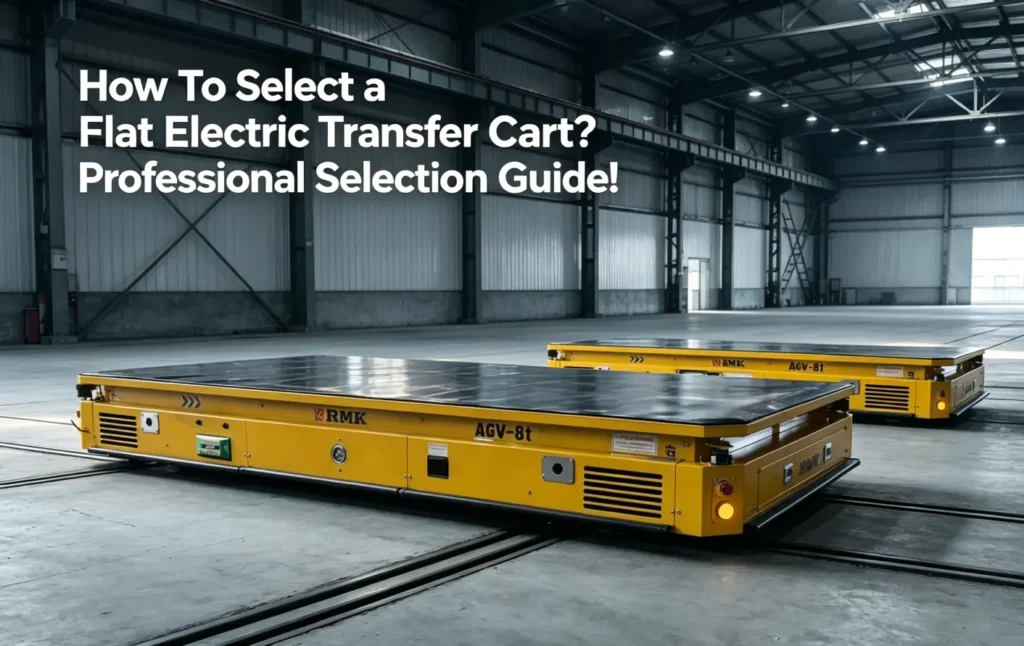
Para obtener detalles sobre los modelos de carros de transferencia planos eléctricos y una guía de selección, consulte: ¿Cómo seleccionar un carro de transferencia plano eléctrico? ¡Guía profesional de selección!
Para pautas sobre la operación y el uso seguro de los carros de transferencia eléctricos, consulte: ¿Cómo operar un carro de transferencia eléctrico de manera segura?
Vídeo
Especificaciones
Las especificaciones de los carros de transferencia eléctricos sin rieles varían según los requisitos de carga, las condiciones de trabajo y las necesidades de personalización. Los parámetros principales incluyen capacidad de carga, velocidad de desplazamiento, tamaño de la plataforma, sistema de batería y método de control.
| Parámetro | Especificación |
|---|---|
| Capacidad de carga | 1–300 toneladas (modelos personalizados disponibles para cargas más altas) |
| Velocidad de funcionamiento | 0–20 m/min |
| Tamaño de la plataforma | 3000 × 3000 mm a 4000 × 3000 mm (personalizable) |
| Altura de la Plataforma | 550–1000 mm |
| Radio de Giro Mínimo | Aprox. 4500 mm (depende del modelo y del sistema de dirección) |
| Pendiente máxima | ≤3° |
| Fuente de Alimentación | Batería de plomo-ácido / Batería de litio |
| Tiempo de Operación | Hasta 8 horas por carga (según carga y condiciones de trabajo) |
| Sistema de transmisión | Motor de CC + Reductor de engranajes |
| Sistema de Dirección | Dirección diferencial / Dirección hidráulica / Dirección personalizada |
| Tipo de rueda | Neumático de goma maciza / Neumático neumático |
| Método de Control | Control remoto inalámbrico / Control colgante |
| Opción de Navegación | Navegación magnética / Navegación láser / Sistema AGV |
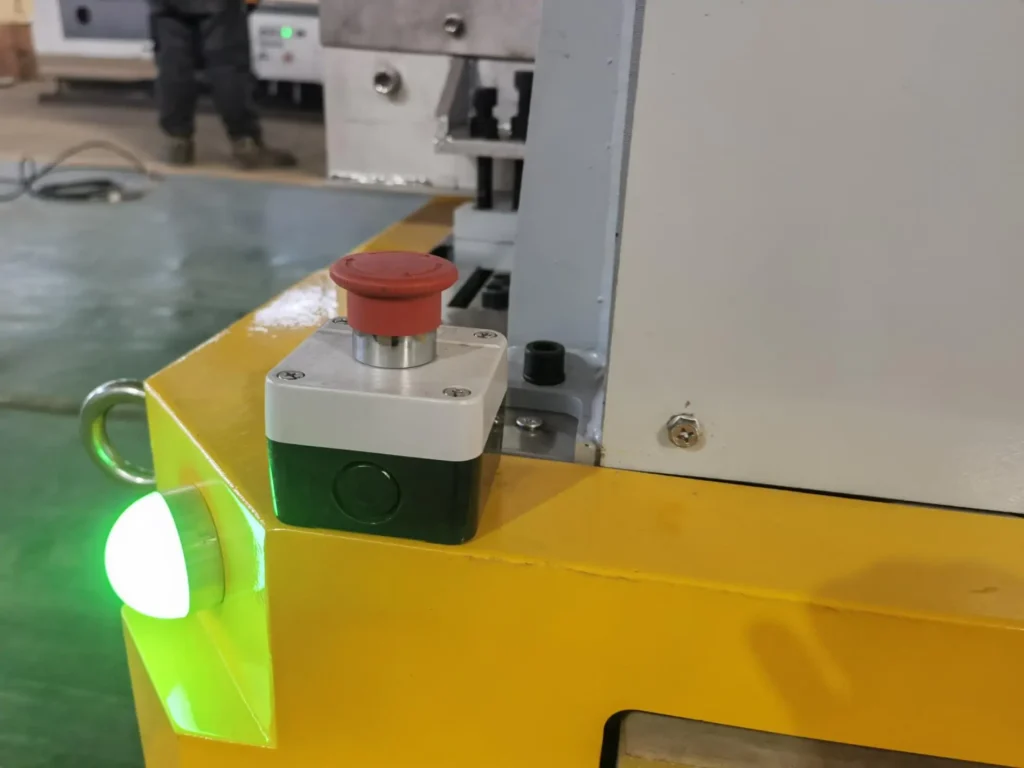
| Características de Seguridad | Parada de emergencia, sistema de alarma, detección de obstáculos |
Las especificaciones de un carro de transferencia eléctrico sin rieles deben seleccionarse según la capacidad de carga, el entorno de operación, los requisitos de desplazamiento y las tareas de manipulación. Las configuraciones personalizadas ayudan a adaptar el carro a diferentes necesidades de transporte industrial.
Se requieren inspecciones y mantenimiento regulares para garantizar la operación a largo plazo de los carros de transferencia eléctricos. Para más detalles, consulte: Guía de Mantenimiento para Carros de Transferencia con Batería: Inspección Diaria y Cuidado de la Batería
¿Cómo elegir un carro de transferencia eléctrico sin rieles?
La selección de un carro de transferencia eléctrico sin rieles se basa en los requisitos reales de transporte, incluidos el peso de la carga, las condiciones de trabajo, la ruta de desplazamiento y el método de operación. La configuración correcta afecta el rendimiento del carro, su vida útil y la eficiencia de manipulación.
Confirmar capacidad de carga y tamaño de plataforma
La capacidad de carga es el primer factor a considerar. El carro debe seleccionarse según el peso máximo del material transportado, con un margen de capacidad suficiente para la operación diaria. El tamaño de la plataforma debe coincidir con las dimensiones del material para garantizar una colocación estable durante el transporte.
Para materiales largos como tuberías y perfiles de acero, una plataforma personalizada con soportes en forma de V puede evitar el movimiento durante la operación.
Parámetros principales:
- Capacidad de carga: 1–50 toneladas para modelos estándar, mayor capacidad disponible bajo pedido
- Tamaño de plataforma: personalizado según las dimensiones del material
- Diseño de plataforma: plataforma plana / soporte en V / estructura personalizada
Verificar el entorno de trabajo y las condiciones del piso
Los carros de transferencia eléctricos sin rieles funcionan con ruedas de goma, por lo que las condiciones del piso afectan directamente la estabilidad de la operación. Los pisos de concreto planos y los pisos epóxicos son adecuados para la operación normal.
Para áreas exteriores, entornos húmedos o talleres con polvo y aceite, el carro debe estar equipado con componentes de protección adecuados.
Consideraciones:
- Planitud del piso
- Espacio del taller
- Ancho del pasillo
- Área de giro
- Operación interior o exterior
Seleccionar el nivel de automatización adecuado
El método de control depende del proceso de producción y la frecuencia de manipulación. Los modelos estándar usan control remoto, mientras que los modelos automatizados pueden integrar sistemas de navegación para transporte no tripulado.
| Tipo de control | Aplicación |
| Control remoto inalámbrico | Transporte general de materiales |
| Posicionamiento automático | Transporte repetido entre ubicaciones fijas |
| Sistema de navegación AGV | Líneas de producción automatizadas y fábricas inteligentes |
Determinar las funciones requeridas y las características de seguridad
Las funciones adicionales se seleccionan según la tarea de transporte. Diferentes materiales y procesos de producción requieren diferentes configuraciones del carro.
| Función | Aplicación |
| Plataforma elevadora hidráulica | Ajuste de altura y acoplamiento con estaciones de trabajo |
| Marco en forma de V | Transporte de tuberías y perfiles |
| Detección de Obstáculos | Protección de seguridad en áreas de trabajo |
| Sistema de parada de emergencia | Apagado inmediato en emergencias |
Elegir la configuración de batería adecuada
El tipo de batería afecta el tiempo de operación, la frecuencia de carga y los requisitos de mantenimiento. La selección depende de la distancia diaria de recorrido y las horas de trabajo.
Opciones de batería:
- Batería de plomo-ácido: adecuada para uso industrial regular
- Batería de litio: Adecuada para operación frecuente y requisitos de carga rápida
Evaluar la capacidad del fabricante
Los carros de transferencia eléctricos sin rieles a menudo requieren personalización según las condiciones de la fábrica. El fabricante debe tener experiencia en diseño estructural, sistemas eléctricos y soluciones de aplicación.
Factores de evaluación:
- Capacidad de Personalización
- Experiencia de fabricación
- Soporte técnico
- Servicio posventa
El proceso de selección comienza con la capacidad de carga y el tamaño de la plataforma, luego considera el entorno de trabajo, el método de control, el sistema de batería y las funciones requeridas. Un carro de transferencia eléctrico sin rieles configurado adecuadamente puede satisfacer diferentes requisitos de transporte industrial y mantener una operación estable.
Carro de transferencia eléctrico sin rieles vs carro de transferencia sobre rieles
Los carros de transferencia eléctricos sin rieles y los carros de transferencia sobre rieles se utilizan comúnmente para el transporte de materiales pesados. La diferencia principal es el método de desplazamiento. Los carros sin rieles utilizan ruedas de goma para movimiento libre, mientras que los carros sobre rieles operan sobre rieles fijos.
| Comparación | Carro de transferencia eléctrico sin orugas | Carro de transferencia de raíles |
|---|---|---|
| Método de desplazamiento | Ruedas de goma, sin necesidad de rieles fijos | Opera sobre rieles instalados |
| Flexibilidad de Ruta | Adecuado para rutas cambiantes y múltiples áreas de trabajo | Adecuado para rutas de transporte fijas |
| Instalación | No requiere construcción de rieles | Requiere instalación de rieles |
| Capacidad de carga | 1–100+ toneladas, personalizable para cargas superiores | Adecuado para transporte de servicio pesado, incluyendo aplicaciones de gran tonelaje |
| Dirección | Dirección flexible, adecuado para espacios estrechos | Se desplaza a lo largo de la dirección del riel |
| Requisito del Piso | Requiere piso de concreto plano o epóxico | Requiere una base adecuada para rieles |
| Mantenimiento | Involucra principalmente mantenimiento de batería, motor y ruedas | Incluye mantenimiento del carro e inspección de rieles |
| Aplicaciones Típicas | Talleres, líneas de ensamblaje, almacenes, áreas de producción flexibles | Plantas de acero, astilleros, líneas de producción fijas |
Diferencias clave
- Los carros de transferencia eléctricos sin rieles son adecuados para áreas de producción donde las rutas de transporte cambian con frecuencia. No requieren instalación de rieles y pueden moverse entre diferentes estaciones de trabajo según las necesidades de producción.
- Los carros de transferencia sobre rieles se utilizan para transporte repetido entre ubicaciones fijas. Su operación guiada por rieles proporciona movimiento estable y es adecuada para cargas pesadas y servicio continuo a largo plazo.
La selección depende de la distribución de la fábrica, la ruta de transporte, el requisito de carga y la frecuencia de operación.
El precio de los carros de transferencia eléctricos está influenciado por diversos factores. Para más detalles, consulte: Precio del Carro de Transferencia Eléctrico: Guía de Costos, Factores y Consejos de Compra
Opciones de Personalización
- Diseño de plataforma: Tamaño y estructura de plataforma personalizados para diferentes materiales y requisitos de manejo.
- Capacidad de carga: El bastidor del carro y el sistema de transmisión se diseñan según la carga requerida.
- Sistema de dirección: Opciones de dirección diferencial, hidráulica u omnidireccional disponibles.
- Configuración de batería: El tipo y la capacidad de la batería se seleccionan según el tiempo de trabajo y la distancia de recorrido.
- Sistema de control: Las opciones incluyen control colgante, control remoto inalámbrico y control automático.
- Características de seguridad: Se pueden agregar parada de emergencia, alarmas, detección de obstáculos y sistemas de frenado.
- Funciones especiales: Elevación hidráulica, posicionamiento y funciones de navegación AGV disponibles para aplicaciones especiales.
Ofrecemos una amplia gama de opciones de personalización. Consulte el artículo: Carro de Transferencia Personalizado: Guía Completa de Diseño y Personalización
Conclusión
Los carros de transferencia eléctricos sin rieles proporcionan soluciones flexibles para el transporte de materiales pesados en fábricas, almacenes e instalaciones de fabricación. Con diferentes configuraciones de capacidad de carga, sistemas de dirección, opciones de batería y niveles de automatización, pueden adaptarse a diversos requisitos de manejo.
REMARCABLE proporciona soluciones personalizadas de carros de transferencia eléctricos sin rieles según las condiciones de trabajo, las características del material y las necesidades de producción. Póngase en contacto con nosotros para analizar sus requisitos de aplicación y seleccionar el carro de transferencia adecuado para su proyecto.
Correo electrónico: transfercart@rmkzn.com
Teléfono: +86-18637369355
PREGUNTAS FRECUENTES
¿Qué es un carro de transferencia eléctrico sin rieles?
Un carro de transferencia eléctrico sin rieles es un vehículo de manejo de materiales alimentado por batería que utiliza ruedas de goma en lugar de rieles fijos. Se utiliza para transportar materiales pesados en fábricas, talleres y almacenes.
¿Cómo funciona un carro de transferencia sin rieles?
Un carro de transferencia sin rieles utiliza baterías a bordo para alimentar un motor eléctrico. El motor impulsa las ruedas a través del sistema de transmisión, mientras que el sistema de control gestiona el movimiento, la dirección y el frenado.
¿Qué capacidad de carga puede manejar un carro de transferencia sin rieles?
Los carros de transferencia sin rieles pueden manejar típicamente cargas de 1 tonelada a más de 100 toneladas. La capacidad depende de la estructura del carro, el sistema de transmisión y los requisitos de aplicación.
¿Qué batería se utiliza en los carros de transferencia sin rieles?
Los carros de transferencia sin rieles utilizan comúnmente baterías de plomo-ácido o baterías de litio. El tipo de batería se selecciona según las horas de operación, la distancia de recorrido y los requisitos de carga.
¿Cuál es la diferencia entre los carros de transferencia sobre riel y los sin riel?
Los carros de transferencia sobre rieles operan sobre rieles fijos y son adecuados para rutas fijas y cargas pesadas. Los carros de transferencia sin rieles utilizan ruedas de goma y ofrecen más flexibilidad para cambiar las rutas de transporte.
¿Puede un carro de transferencia eléctrico sin rieles trabajar al aire libre?
Sí. Los carros de transferencia eléctricos sin rieles pueden usarse al aire libre cuando están equipados con componentes adecuados, como sistemas eléctricos resistentes a la intemperie, ruedas duraderas y protección contra polvo y humedad.
¿Se pueden personalizar los carros de transferencia sin rieles?
Sí. Los carros de transferencia sin rieles se pueden personalizar en capacidad de carga, tamaño de plataforma, sistema de dirección, tipo de batería, método de control y funciones adicionales según los requisitos de la aplicación.
¿Cómo elijo el carro de transferencia sin rieles adecuado?
La selección depende del peso de la carga, el tamaño del material, la ruta de recorrido, las condiciones del piso, las horas de trabajo, los requisitos de batería y las necesidades de automatización. Una configuración adecuada debe coincidir con el proceso de manejo real.