Introduction
Die and mold transport carts are widely used in injection molding, stamping, automotive manufacturing, and heavy equipment industries for safely moving large molds and dies between storage areas, production lines, and maintenance stations. Depending on load capacity, transfer distance, workshop layout, and automation requirements, the cost of a die transfer cart can vary significantly from one project to another.
In this article, we will look at the price range of die and mold transport carts and the main factors that influence cost, such as load capacity, rail or trackless operation, power supply methods, and automation functions. We will also compare different cart types and explain how manufacturers choose suitable transport solutions for different workshop conditions and production requirements.
What Is a Die/Mold Transport Cart?
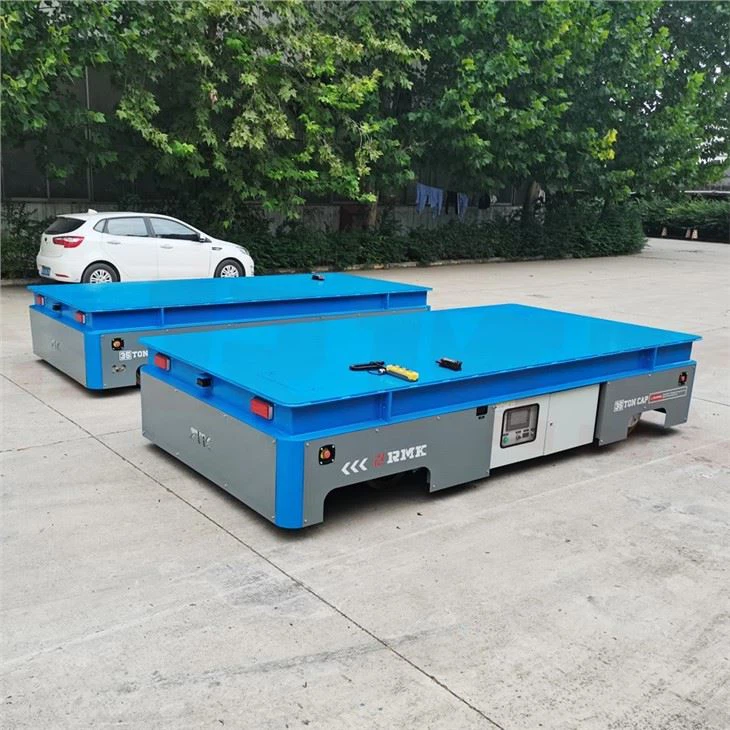
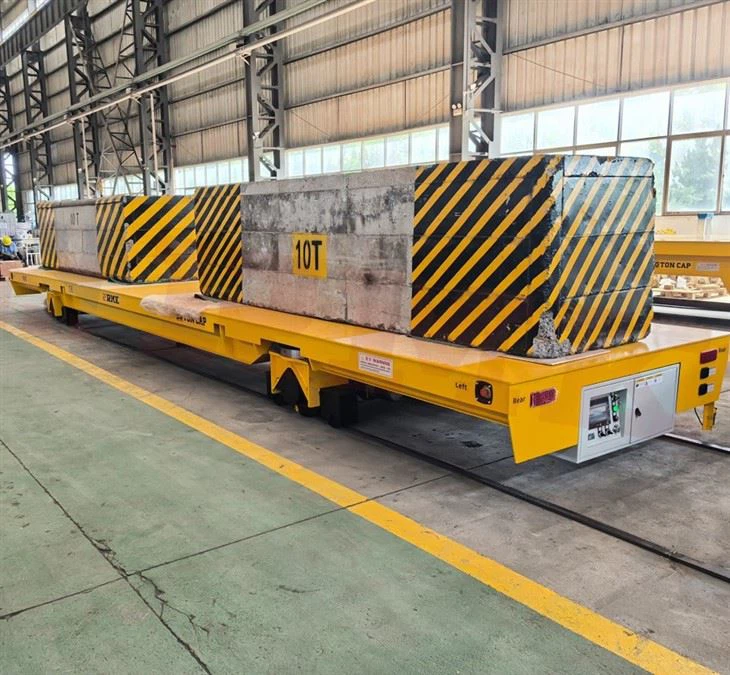
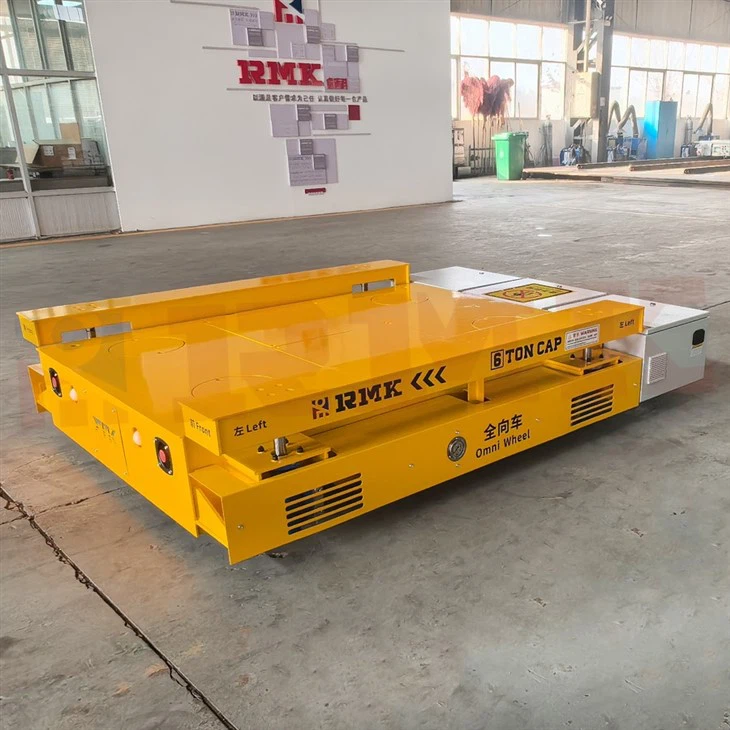
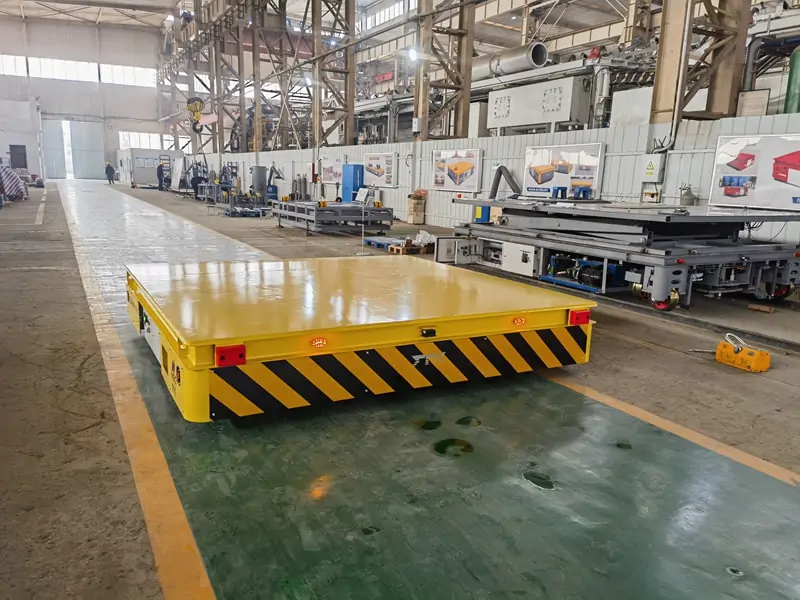
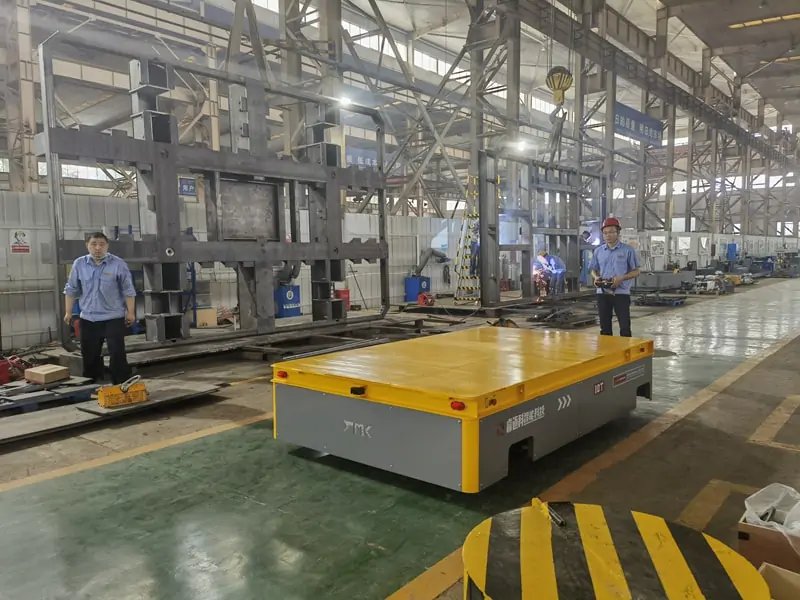
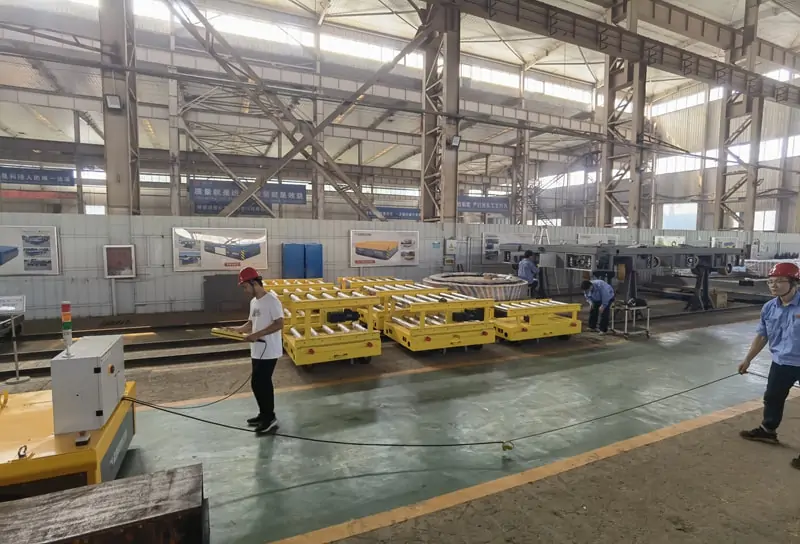
A mold transport cart is essentially a heavy-duty mobile platform. Its primary function is to carry and transport molds smoothly. According to search results, it is typically powered by a battery (lead-acid or lithium-ion), driven by a DC motor, and equipped with a hydraulic steering system. It is operated via a wired or wireless remote control to perform all movement functions, including starting, stopping, moving forward, moving backward, and turning. For more information, read: What Is a Mold Transfer Cart? How Does a Mold Transfer Cart Work?
Average Die/Mold Transport Cart Price Range
The price of a mold transport cart is greatly affected by factors such as cart type, load capacity, configuration, and level of customization. The following is a general price analysis based on different configurations.
Price Analysis by Cart Type
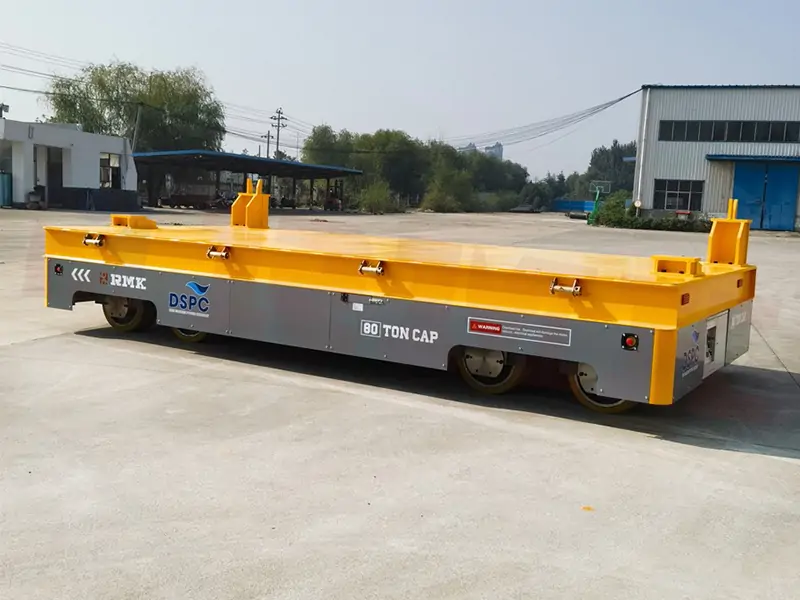
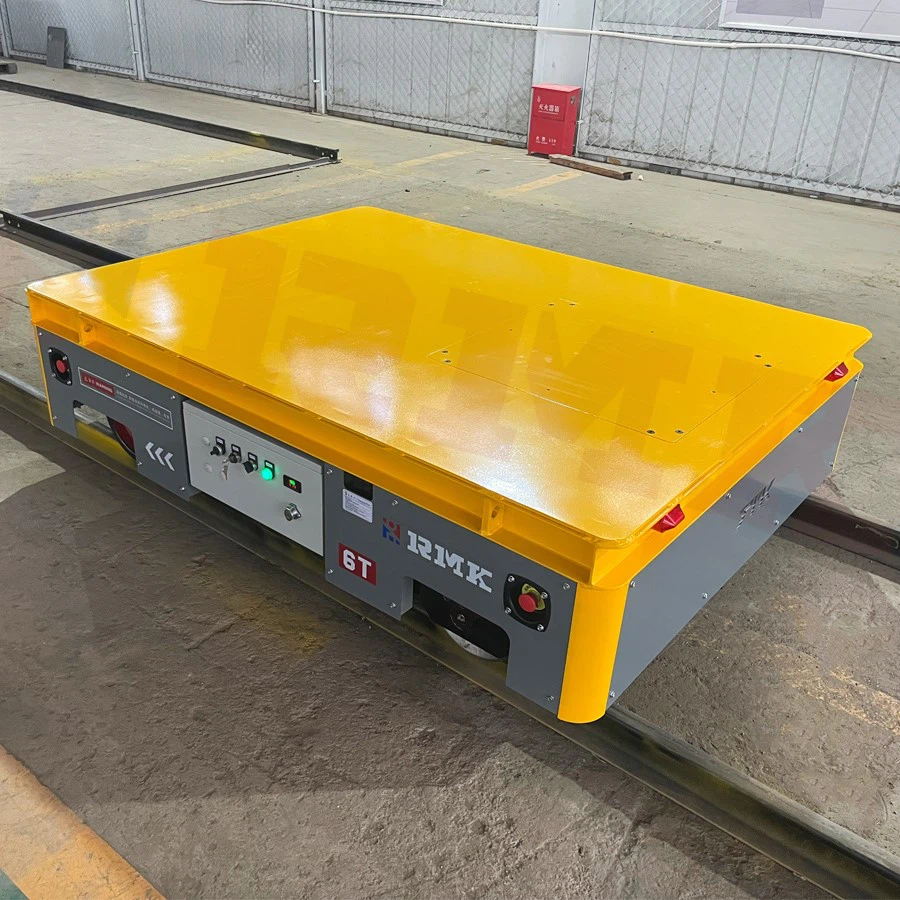
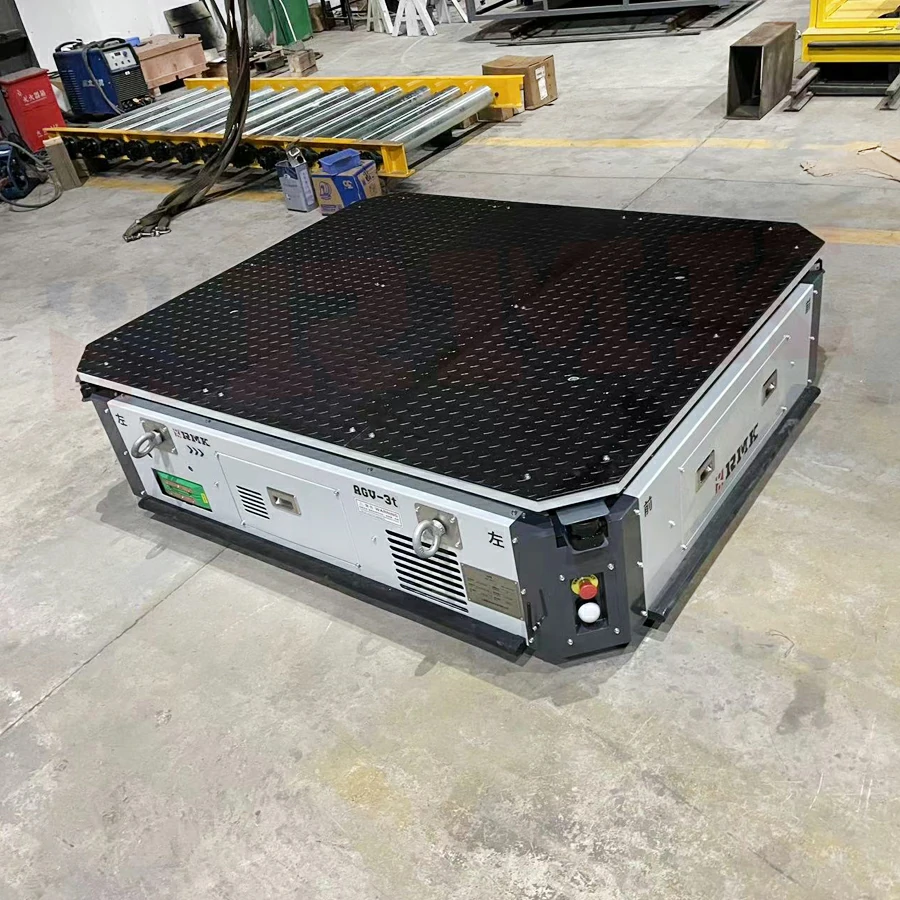
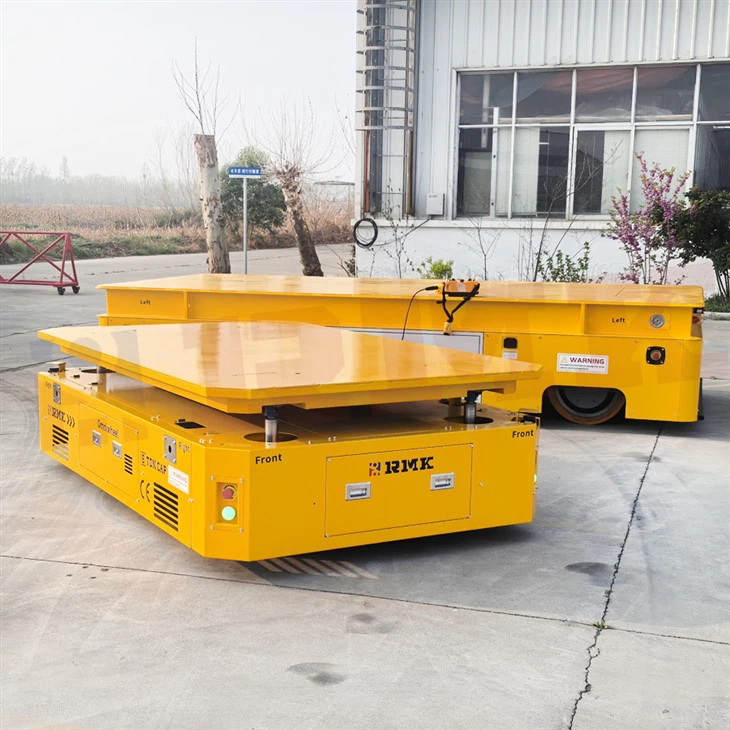
| Type | Common Capacity Range | Price Range (USD) | Main Features |
| Trackless die transfer cart | 1T–100T | USD 2,000–11,000 | Flexible movement without rails. Heavy-duty, lifting, or special steering models cost more. |
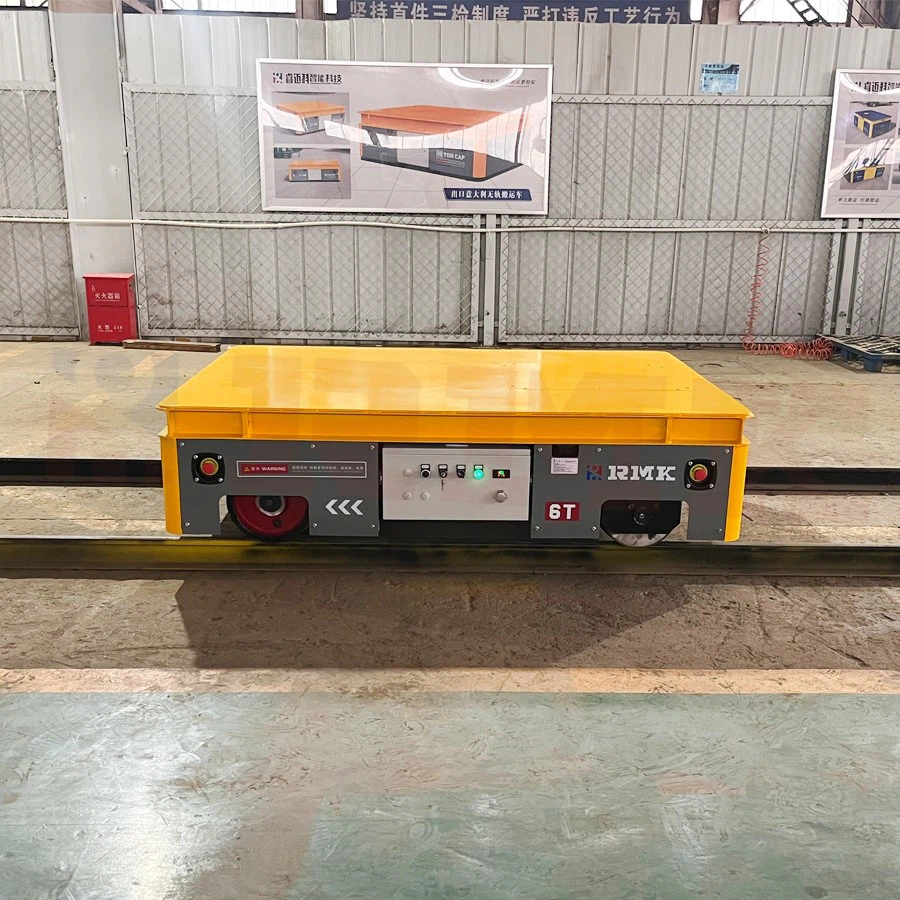
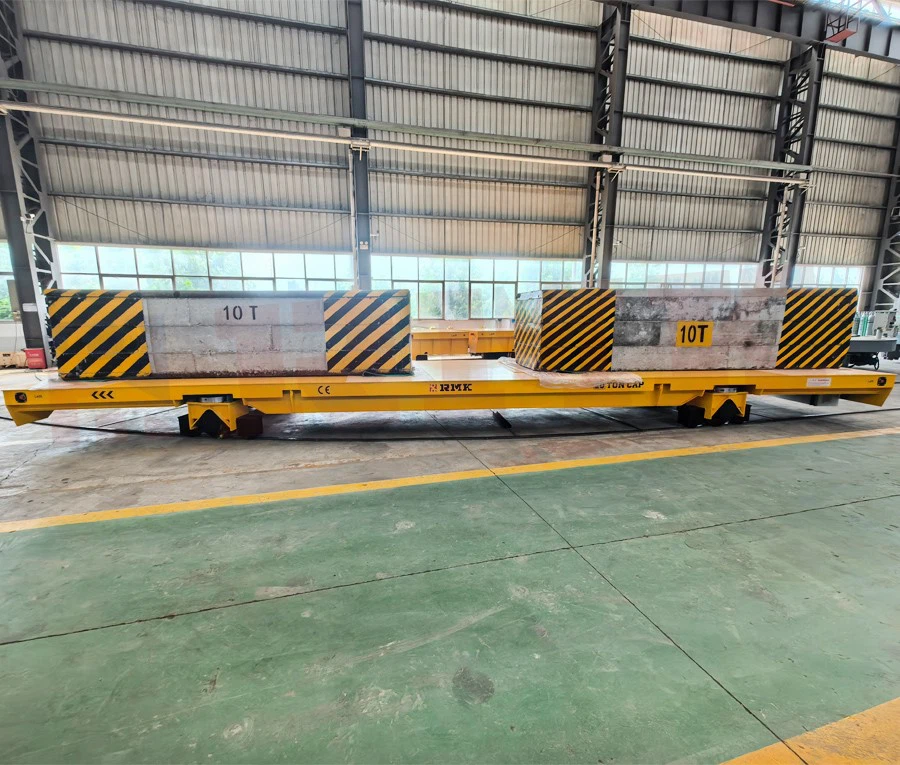
| Rail mold transfer cart | 10T–300T+ | USD 2,800–14,000+ | Fixed-path transport with high load capacity. Additional rail installation costs required. |
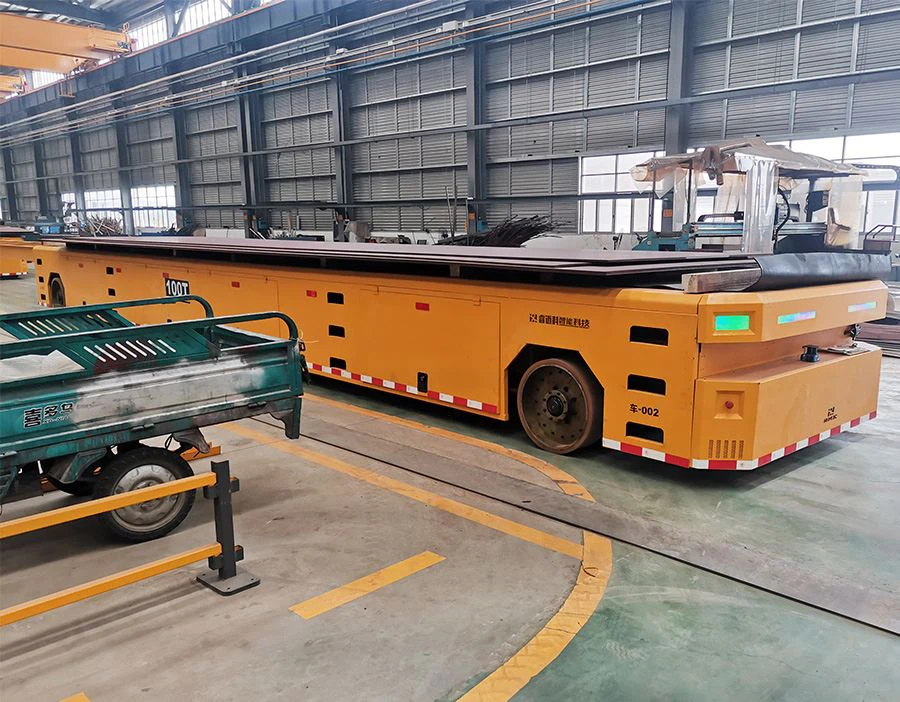
| AGV mold transfer cart | 0.5T–50T | USD 4,200–42,000+ | Automated transport with navigation and intelligent control systems. |
| Lifting mold transfer cart | Based on base model | +USD 1,400–7,000 | Adds a lifting function for precise mold docking and height adjustment. |
Price Analysis by Load Capacity
The price of a mold transport cart is directly related to its load capacity. As the tonnage increases, higher requirements are placed on the frame structure, drive system, wheels, and safety performance, resulting in non-linear price growth.
| Capacity Range | Typical Applications | Reference Price Range (USD) |
| 1T–10T (Light Duty) | Precision molds, semiconductor parts, medical devices, and light material handling | USD 2,800–11,000 |
| 10T–30T (Medium Duty) | Injection molds, medium stamping dies, and production line transport | USD 11,000–35,000 |
| 30T–100T (Heavy Duty) | Automotive stamping dies, die-casting molds, and heavy equipment handling | USD 35,000–112,000+ |
| Over 100T (Ultra Heavy Duty) | Large industrial tooling and special heavy transport applications | USD 112,000–hundreds of thousands |
The die transfer cart price clearly reflects the “you get what you pay for” nature of industrial handling equipment. Prices can range from basic low-cost transfer platforms to fully automated intelligent logistics systems costing tens or even hundreds of thousands of dollars. Final pricing depends entirely on production process requirements, operating efficiency goals, and safety standards. Before purchasing, it is recommended to clearly define project requirements and request detailed solutions and quotations from multiple custom mold transport cart manufacturer suppliers.
Factors That Affect Die Transfer Cart Cost
Many factors affect the cost of a mold transport cart, including load capacity, rail or trackless design, power supply system, automation level, and customization requirements. These factors are interconnected and directly influence the final die transfer cart price.
1. Load Capacity
Load capacity is the core factor that determines the basic cost. As the load increases, the cost rises non-linearly.
| Capacity Level | Main Cost Factors | Basic Price Trend (USD) |
| 5–10 tons | Standard industrial structure with high component commonality | USD 14,000 – 42,000 |
| 20–50 tons | Reinforced frame structure and higher customization of drive units | USD 42,000 – 112,000 |
| 100 tons and above | Fully customized design involving heavy casting/forging parts, multi-motor synchronous drive systems, and advanced safety systems | USD 112,000+, potentially several hundred thousand dollars |
2. Rail vs Trackless Design
This choice fundamentally determines the equipment structure and deployment cost.
- Rail Mold Transfer Cart: Rail systems usually have a lower initial cost due to a simple structure and fixed guidance. However, the total cost includes rail installation, floor modification, and maintenance. They are suitable for fixed routes, long-distance, and high-frequency use.
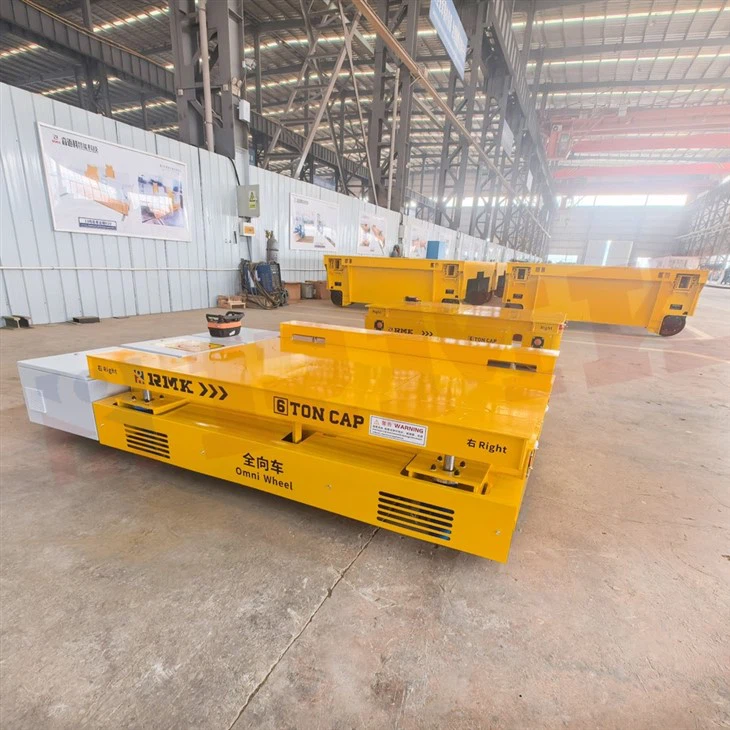
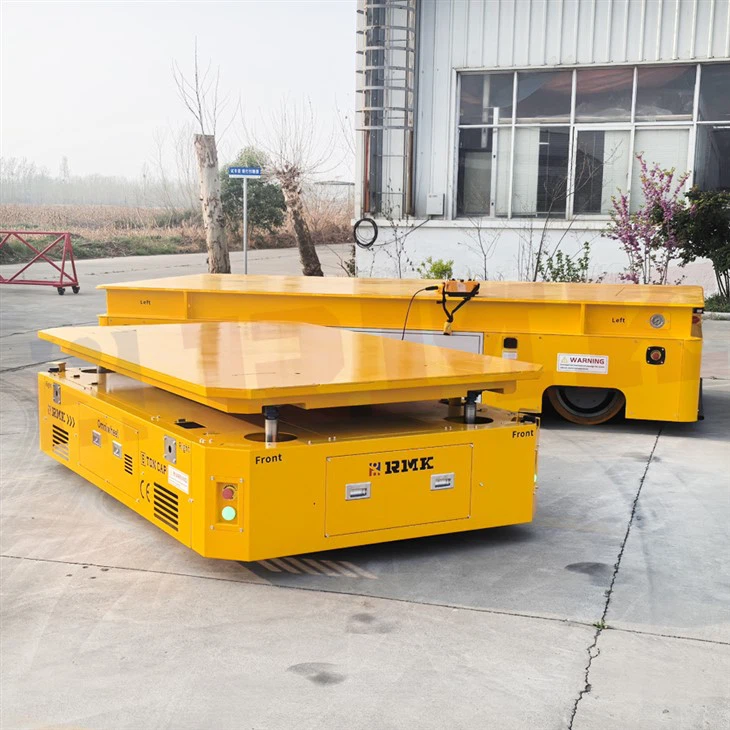
- Trackless Die Transfer Cart: Trackless systems have a higher unit cost due to steering and navigation systems such as magnetic, laser, or visual guidance. Their key advantage is no rail construction, offering flexible routing and easy layout changes. They also support AGV-based logistics systems.
3. Power Supply System
The power supply solution affects operating cost, flexibility, and maintenance complexity.
- Battery Power Supply: Battery-powered systems offer high flexibility with no cable limitations. A lithium battery die handling cart costs more than lead-acid systems, but provides higher energy density, faster charging, and longer service life, making it more cost-effective for long-term use.
- Cable Drum Power Supply: This solution has a moderate cost and continuous power supply capability, but the operating range is limited by cable length, and cables are subject to wear during use.
- Busbar Power Supply: Suitable for long-distance rail transport applications. Initial installation is more complex, but operation is stable, and there is almost no downtime for power replenishment.
4. Automation Level
Automation level creates the largest price differences because the technical value increases significantly at each stage.
- Standard Electric Operation: Only basic functions such as forward, reverse, and speed adjustment are included. The cart is controlled directly by an operator, resulting in the lowest cost.
- Remote Control System: A wireless remote-control system improves operational safety and convenience while increasing equipment cost slightly.
- Semi-Automatic Operation: The cart can automatically travel and stop at preset points, but route changes and complex tasks still require manual intervention. Programmable controllers and sensors are required.
5. AGV mold transfer cart Intelligent Navigation
This is the highest-cost solution. It integrates laser navigation, visual navigation, or SLAM technology and can communicate with MES/WMS systems to achieve fully automatic scheduling, route planning, obstacle avoidance, and task management. Software systems, navigation hardware, and system integration account for most of the cost.
6. Customization Requirements
Any function beyond standard configuration will increase cost. Common customization options include:
- Hydraulic Lifting Platform: Used for mold alignment adjustment and loading/unloading operations. Additional hydraulic pump stations, cylinders, and control valves are required.
- Rotating Platform: Allows 360-degree mold rotation and requires slewing bearings and additional drive systems.
- Explosion-Proof Design: Used in flammable or explosive environments. Motors, electrical components, and junction boxes must meet explosion-proof standards, significantly increasing material and certification costs.
- Mold Positioning System: Laser distance measurement or visual recognition systems can achieve sub-millimeter positioning accuracy, requiring advanced sensors and control systems.
- Automatic Docking System: Automatically aligns and locks with machine tools or workstations through complex mechanical interfaces and control logic.
The final cost of a mold transport cart depends on multiple factors. A standard 10-ton rail transfer cart can cost far less than a 100-ton trackless AGV with lithium batteries, automatic navigation, and hydraulic lifting—sometimes by tens or even hundreds of times. When selecting equipment, consider long-term use, operating frequency, flexibility, and site conditions to balance initial investment with overall efficiency.
Trackless vs Rail Die Transport Cart: Which Is More Cost-Effective?
To determine whether a trackless die transfer cart or a rail mold transfer cart is more cost-effective, it is important to consider not only the purchase price but also installation, operation, and long-term maintenance costs. The table below outlines the main differences between the two solutions.
| Comparison Item | Trackless Die Transfer Cart | Rail Mold Transfer Cart |
|---|---|---|
| Initial Purchase Cost | Higher due to steering systems, battery capacity, and control systems. | Lower because of the simpler structure. |
| Installation Cost | Very low, no rail installation required. | Higher due to rail installation and floor modification. |
| Flexibility | High flexibility with free steering and route adjustment. | Limited to fixed transport routes. |
| Maintenance Cost | Tire replacement required, but no rail maintenance. | Rails require regular inspection and maintenance. |
| Automation Potential | Easily integrated with AGV systems for unmanned transport. | Automation is limited to fixed-track operation. |
Rail systems are more suitable for fixed and repetitive transport tasks, while trackless systems are better for flexible manufacturing and frequently changing layouts.n, and frequently changing layouts, a trackless die transfer cart is often the more efficient and cost-effective solution.
How to Choose the Right Mold Transfer Cart
Selecting the right mold transport cart is a systematic process that requires a full evaluation of production requirements, workshop conditions, and long-term planning. The following is a professional selection framework and step-by-step decision guide:
Step 1: Define Core Requirements
This is the foundation of the entire selection process and must be clearly determined first.
Mold Parameters
Measure the exact weight of the heaviest mold to be transported, including its maximum dimensions (length, width, height) and center of gravity. Load capacity is the primary factor for selecting the cart type and configuration.
Transport Path and Environment
Transport conditions are a key factor in equipment selection. This includes whether the route is fixed or requires multi-point flexible movement, workshop aisle width, door frame height, and whether slopes or space constraints exist.
Usage Frequency and Intensity
Whether the equipment is used frequently every day or only occasionally will affect durability requirements and power system selection.
Step 2: Choose Movement Type – Rail vs Trackless
This is a key decision affecting cost, flexibility, and infrastructure requirements.
| Evaluation Dimension | Rail mold transfer cart | Trackless die transfer cart |
| Initial Cost | Equipment cost is usually lower, but rail installation cost must be added | Higher equipment cost, but no rail construction required |
| Flexibility | Low. Operates only on fixed rails; route changes are difficult and costly | High. Free steering, flexible routing, suitable for complex workshop layouts |
| Operational Stability | High, especially for long-distance and heavy-load transport | Depends on floor condition and requires higher operator skill |
| Future Expandability | Low compatibility with automation upgrades | High. Ideal base for upgrading to AGV mold transfer cart systems |
| Application Scenarios | Fixed production lines and point-to-point heavy mold transfer | Mold warehouses to multiple machines and flexible production layouts |
Step 3: Select Power Supply System
Choose based on working range and operating intensity.
- Battery-powered system: Highest flexibility, suitable for large operating areas without fixed power supply points. Requires consideration of charging time and battery lifespan.
- Cable drum system: Suitable for medium-distance, continuous heavy-duty operation with almost unlimited runtime, but limited by cable length.
- Busbar system: Ideal for fixed-area, long-distance heavy transport with stable performance and no charging downtime.
- Lithium battery system: High-end option with fast charging, high energy density, and long service life, but higher cost.
Step 4: Determine Automation Level
This is one of the main factors driving price differences and requires balancing efficiency and investment.
- Manual/basic electric: Entry-level type, operated directly by personnel or simple remote control. Lowest cost, suitable for basic handling tasks.
- Semi-automatic/remote control: Allows safe-distance operation with improved control precision and safety.
- Fully automatic (AGV mold transfer cart): Equipped with intelligent navigation systems (magnetic guidance, laser navigation, SLAM). Can execute preset tasks automatically. Highest initial investment, but significantly reduces labor cost and improves logistics efficiency, supporting smart factory operations.
Step 5: Evaluate Customization Requirements
Standard models may not meet all application needs. The following customization options significantly affect the final cost:
- Hydraulic lifting platform: For precise mold alignment and loading/unloading
- Rotating platform: Allows directional adjustment during transport for easier docking
- Explosion-proof design: Required for hazardous environments such as chemical or coating industries
- Mold positioning system: Uses visual or mechanical guidance for millimeter-level alignment with machines
- Automatic docking and charging system: Key component for fully automated operation
The most suitable mold transport cart is the one that achieves the best balance between load capacity, flexibility, automation level, and project budget. It is recommended to communicate in detail with professional suppliers based on actual application scenarios to obtain the most appropriate solution.
How to Reduce Mold Transfer Cart Investment Costs
To reduce the investment cost of a mold transport cart, planning should focus on four key areas: precise requirement definition, optimized configuration selection, strategic purchasing methods, and total cost of ownership evaluation.
1. Accurately Define Core Requirements and Avoid Over-Engineering
This is the most important and effective step for cost control.
Select Load Capacity Based on Actual Needs
Choose the tonnage based on the heaviest mold normally handled in the factory, with only a 10%–20% safety margin. Over-specifying load capacity is unnecessary, as tonnage directly determines the size and cost of the frame, motor, and battery system.
Rational Selection of Drive Type
If the transport route is fixed, a rail system can significantly reduce initial equipment cost. Although rail installation is required, the long-term maintenance is simpler, and the total cost may be lower for fixed-route operations. Trackless systems should only be selected when flexible turning or workshop layout changes are required.
Carefully Evaluate Automation Level
Fully automated AGV mold transfer cart systems represent the highest cost component and should be selected only when necessary:
- Manual or remote control is sufficient for most point-to-point transport tasks and offers the lowest cost.
- Semi-automatic systems (such as guided tracking) provide a cost-effective balance, enabling automatic movement on fixed routes without expensive navigation or dispatch systems.
2. Optimize Configuration and Equipment Selection
Choose cost-effective configurations while meeting operational requirements.
Prefer Standard Models Over Custom Designs
Standard models should be prioritized whenever possible. Custom features such as rotating platforms or high-precision positioning systems significantly increase both cost and delivery time. Only essential functions, such as hydraulic lifting, should be added when required.
Select the Right Power System
- For rail carts, cable drum or busbar power systems are mature and relatively low-cost solutions.
- For trackless carts, lead-acid battery systems have a lower initial cost than lithium batteries, but service life, charging time, and replacement costs must also be considered.
3. Adopt Strategic Purchasing Methods
Bulk Purchasing and Negotiation
When multiple units are required, consolidated purchasing can secure better pricing compared to individual orders.
Consider Reliable Refurbished Equipment
For standard tonnage models such as 10-ton or 20-ton electric carts, refurbished units may offer significant cost savings. Key components such as the frame, motor, and drive system must be carefully inspected.
Evaluate Supplier Service Capability
Choose suppliers that offer reasonable spare parts pricing, clear warranty terms, and local technical support. Poor after-sales service can lead to high long-term maintenance costs that offset initial savings.
4. Focus on Total Cost of Ownership (Not Just Purchase Price)
The lowest purchase price does not necessarily mean the lowest long-term cost.
- A higher-priced but stable and low-failure-rate mold transport cart can reduce downtime losses, which often exceed the savings from cheaper equipment.
- Energy consumption and maintenance costs should also be evaluated across different power systems, such as battery versus cable supply.
The key to reducing investment cost lies in “right-sizing the configuration.” Clearly define the maximum required load capacity, route flexibility, and automation level, and prioritize standard models that meet these core requirements. Combined with smart purchasing strategies and lifecycle cost evaluation, it is possible to achieve an optimal balance between performance and cost efficiency.
Why Customized Die Transfer Carts Cost More
The cost of a customized mold transport cart is significantly higher than that of standard models. This is mainly due to additional engineering input in design, materials, manufacturing, and control systems. Customization is not simply selecting optional features, but a full engineering process that starts from a tailored solution rather than a standardized product.
- Load capacity (tonnage): Higher tonnage directly increases cost, as it requires a stronger frame structure, more powerful motors, and higher-capacity battery systems.
- Rail vs trackless design: Rail carts generally have a lower initial cost and are suitable for long-distance fixed-route transport, while trackless systems offer higher flexibility but require more complex steering and control systems, especially when integrated with AGV mold transfer cart solutions.
- Power supply system: Options such as battery power, cable drum, busbar, or lithium battery systems all affect both initial investment and long-term operating and maintenance costs.
- Automation level: From basic electric operation to fully intelligent AGV navigation, higher automation significantly increases system complexity and cost, making it one of the main cost drivers.
- Customization requirements: Additional functions such as hydraulic lifting, rotating platforms, or explosion-proof design can substantially increase overall system cost due to added mechanical, electrical, and safety engineering requirements.
The premium cost of a customized mold transport cart reflects not only the equipment itself but also a tailored engineering solution designed for specific operational challenges, higher reliability alignment, and potential productivity improvements. For non-standard, high-value, or time-critical mold handling applications, this investment is often both necessary and economically justified.
Conclusion
Overall, the cost of a mold transport cart depends on a combination of factors such as load capacity, rail or trackless structure, power system, automation level, and customization needs. In most cases, the right choice is not the cheapest option, but the one that fits the actual production flow and delivers stable performance over time.
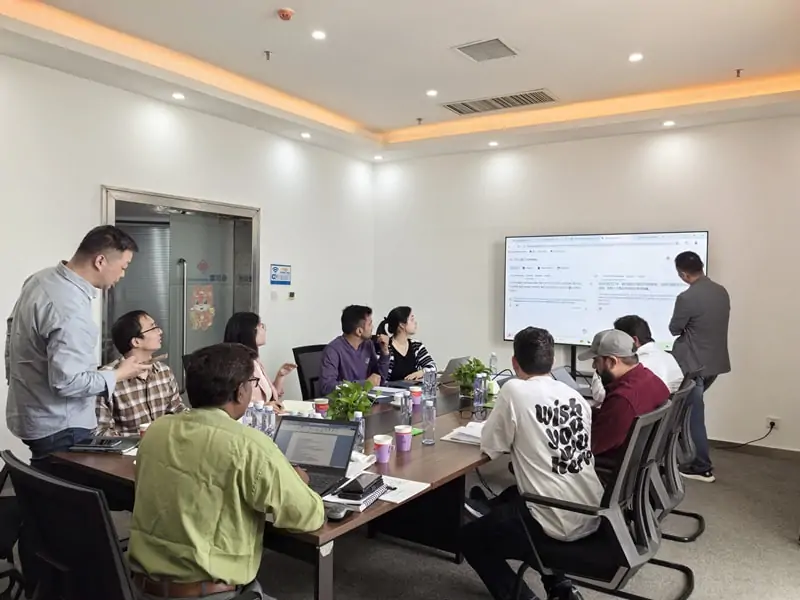
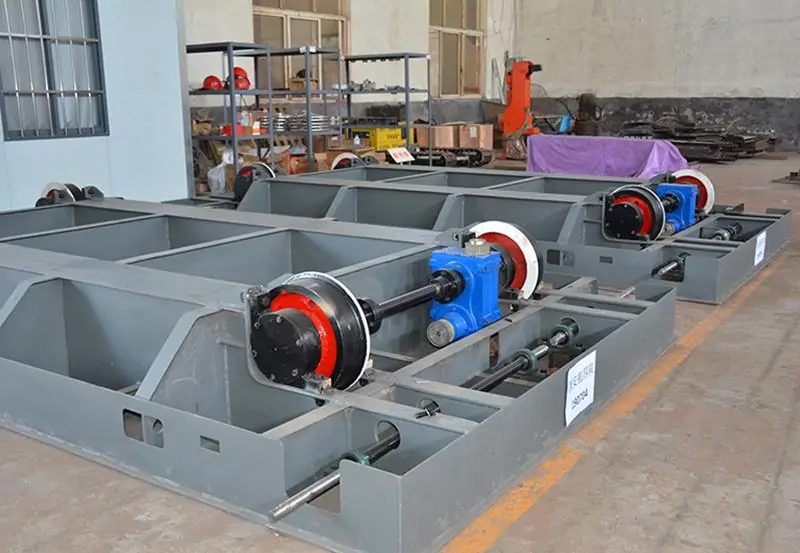
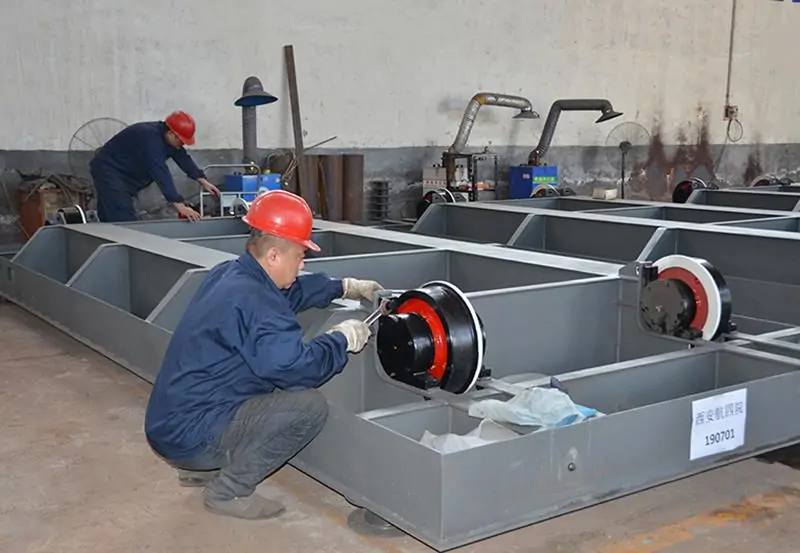
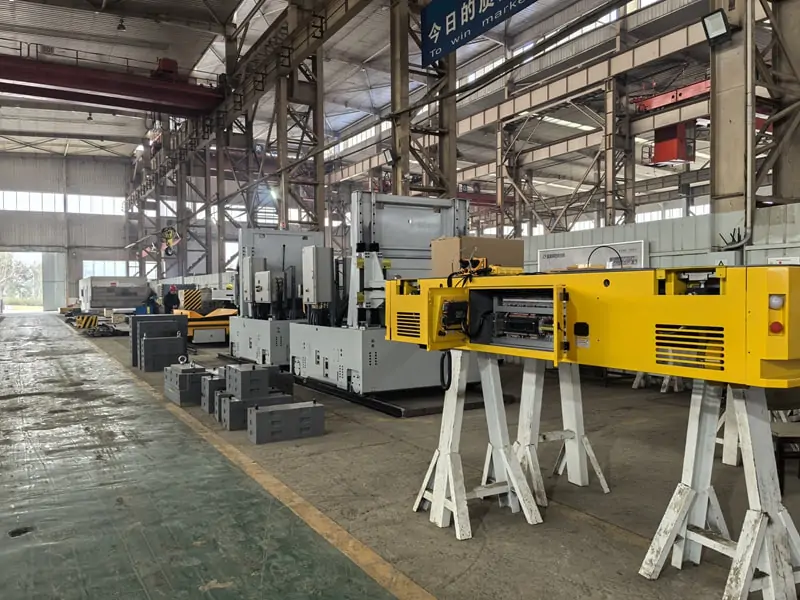
REMARKABLE focuses on customized industrial handling solutions, covering everything from standard rail and trackless carts to AGV systems used in complex workshop environments. With practical engineering experience and project-based design capability, we support clients in building reliable transport solutions based on real working conditions. If you are planning a project, feel free to contact us for tailored suggestions and a detailed quotation.
Email: transfercart@rmkzn.com
Phone: +86-18637369355
FAQ
How much does a die transfer cart cost?
Most mold transport cart systems range from USD 2,000 to over USD 100,000, depending on load capacity, structure (rail or trackless), and automation level.
What is the difference between a trackless die transfer cart and a rail cart?
A trackless cart runs freely without rails and offers high flexibility, while a rail cart runs on fixed tracks with lower initial cost and higher route stability.
Which is more cost-effective: rail or a trackless mold transfer cart?
Rail systems are cheaper upfront, but trackless systems often perform better in flexible workshops with changing layouts, making them more cost-effective in dynamic environments.
What affects the mold transfer cart cost the most?
Load capacity, automation level (especially AGV systems), power supply type, and customization features are the main cost drivers.
Can an AGV mold transfer cart replace manual operation?
Yes. AGV systems can handle automatic navigation, scheduling, and obstacle avoidance, significantly reducing labor dependency in modern factories.
What is the lifespan of a mold transport cart?
With proper maintenance, most industrial transfer carts can operate 8–15 years, depending on usage frequency and working conditions.
Is a battery-powered die handling cart better than cable-powered models?
Battery-powered carts offer higher flexibility and no cable restrictions, while cable-powered systems are better for continuous heavy-duty operation without charging downtime.
Can a custom mold transport cart manufacturer design non-standard solutions?
Yes. Manufacturers can customize load capacity, size, lifting systems, rotation platforms, and automation levels based on specific workshop requirements