Introducción
As industrial equipment, steel structures, moldes, and large components continue to increase in size and weight, heavy material handling is becoming more complex than ever. Manufacturers are facing labor shortages, stricter workplace safety requirements, and growing pressure to improve automation levels. At the same time, traditional handling equipment, such as forklifts and cranes, often struggles with oversized loads, long-distance transportation, and flexible production layouts. Large Platform AGV Transfer Carts provide an efficient solution for moving heavy, bulky materials in modern factories.
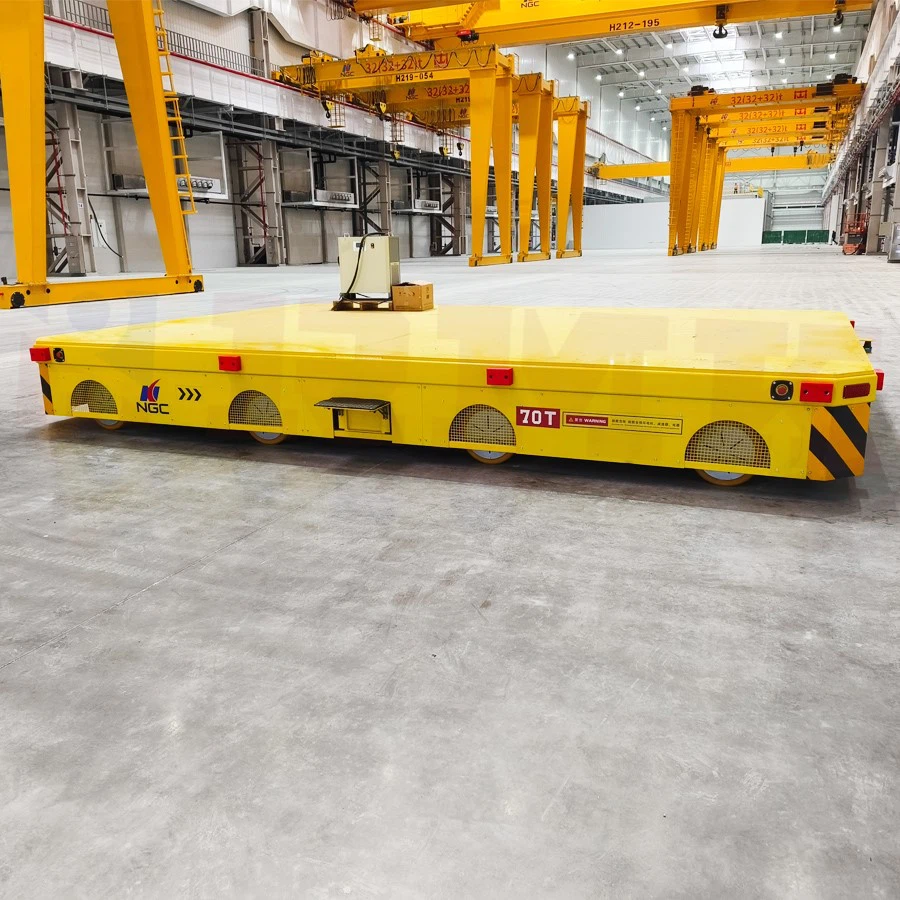
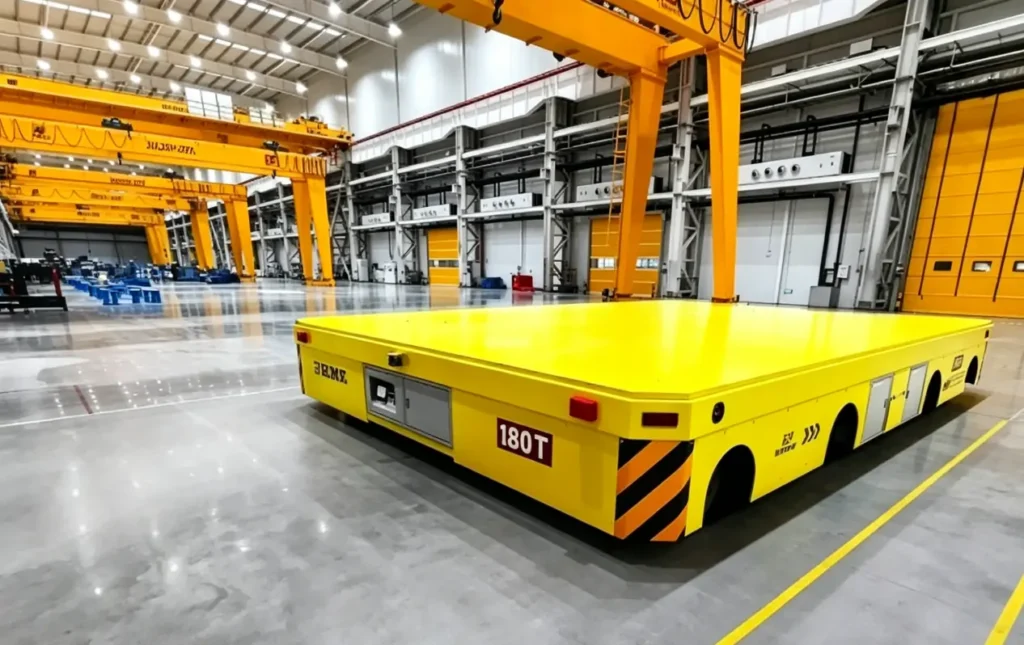
This article explores their working principles, key advantages, typical applications, technical considerations, and how to select the right AGV system for heavy-duty material handling.
What Is a Large Platform AGV Transfer Cart?
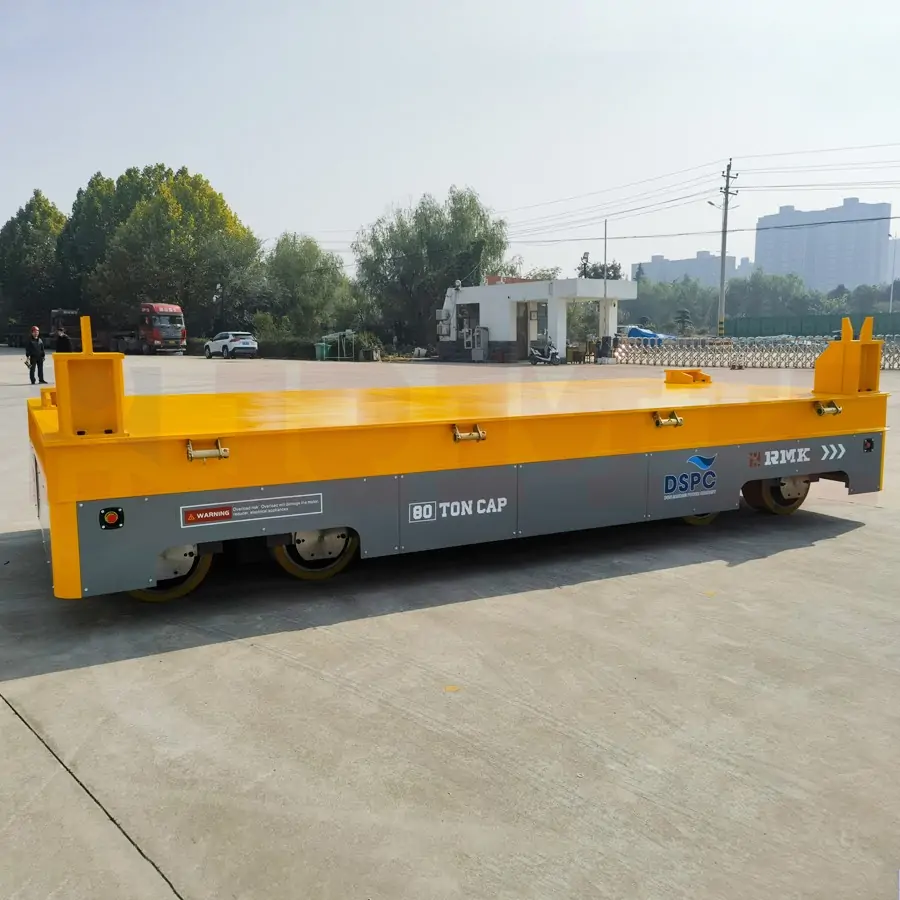
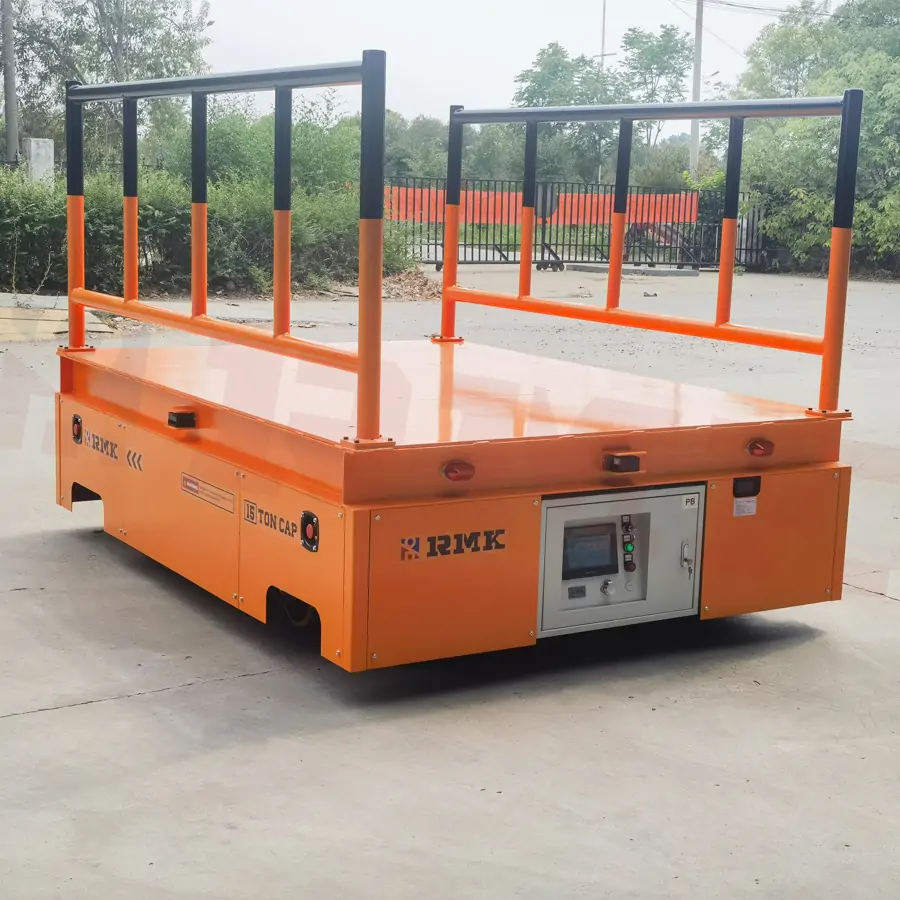
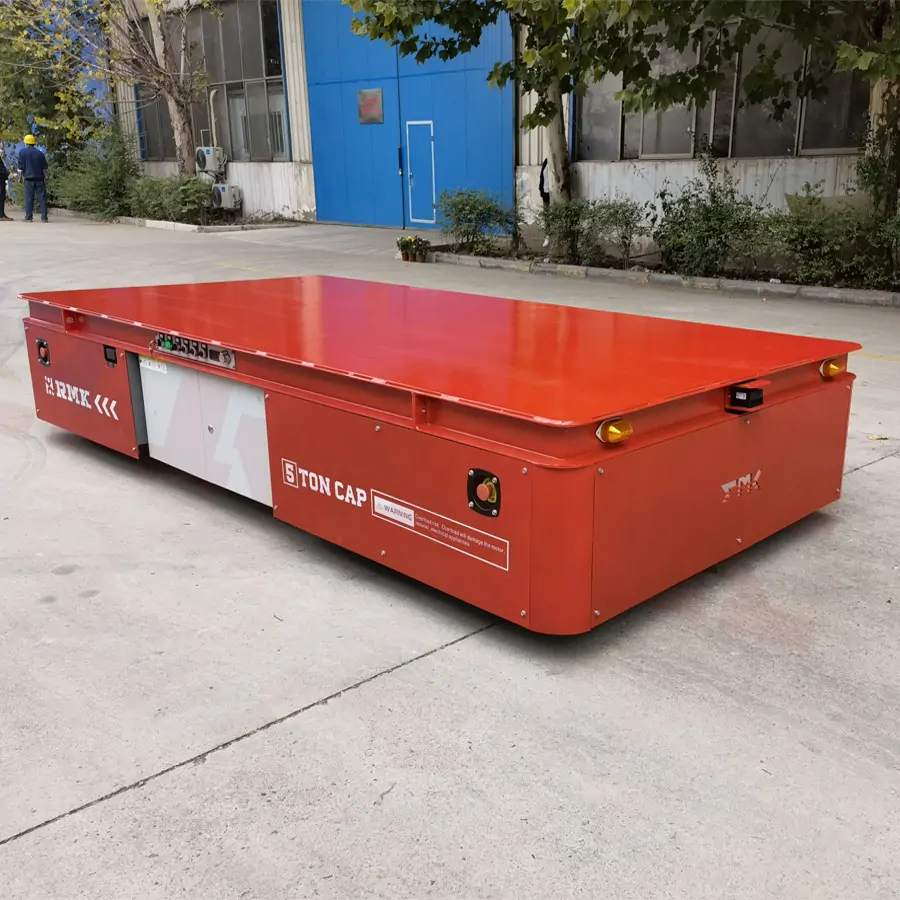
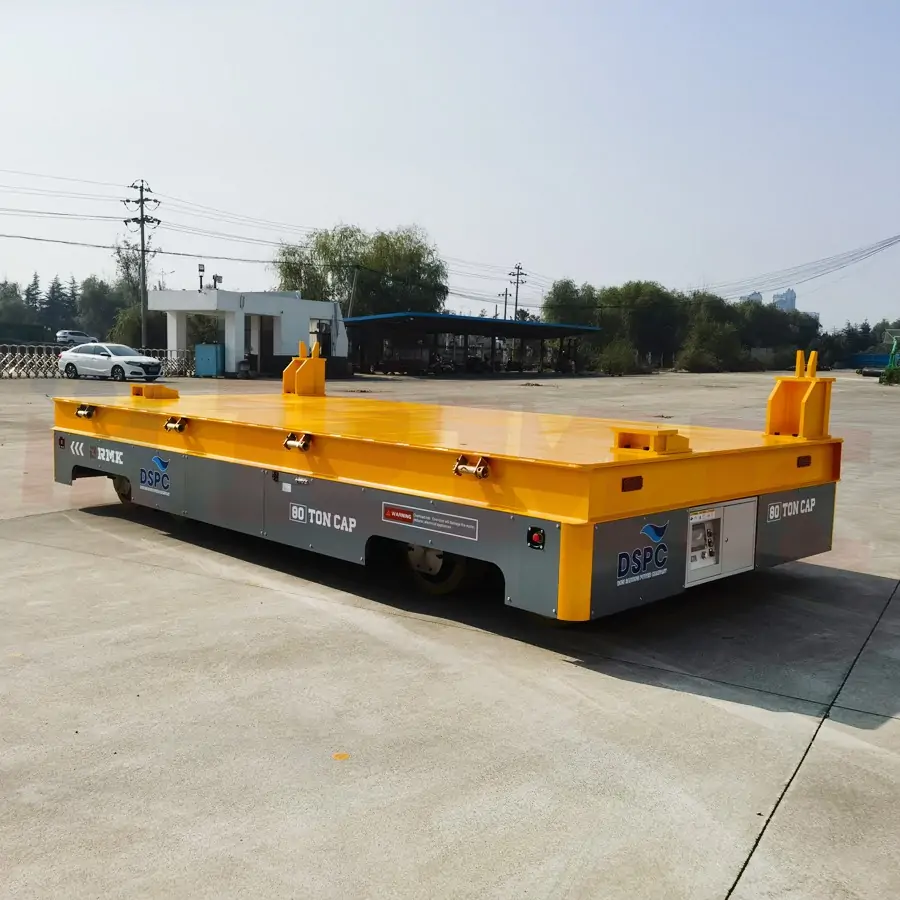
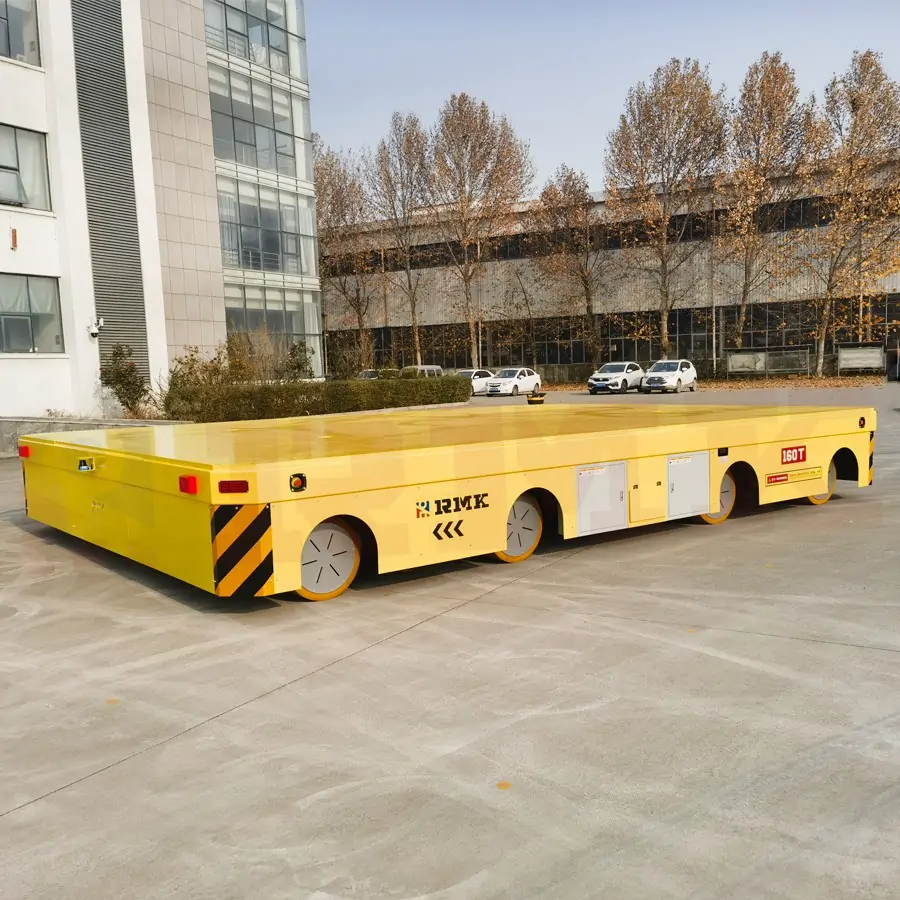
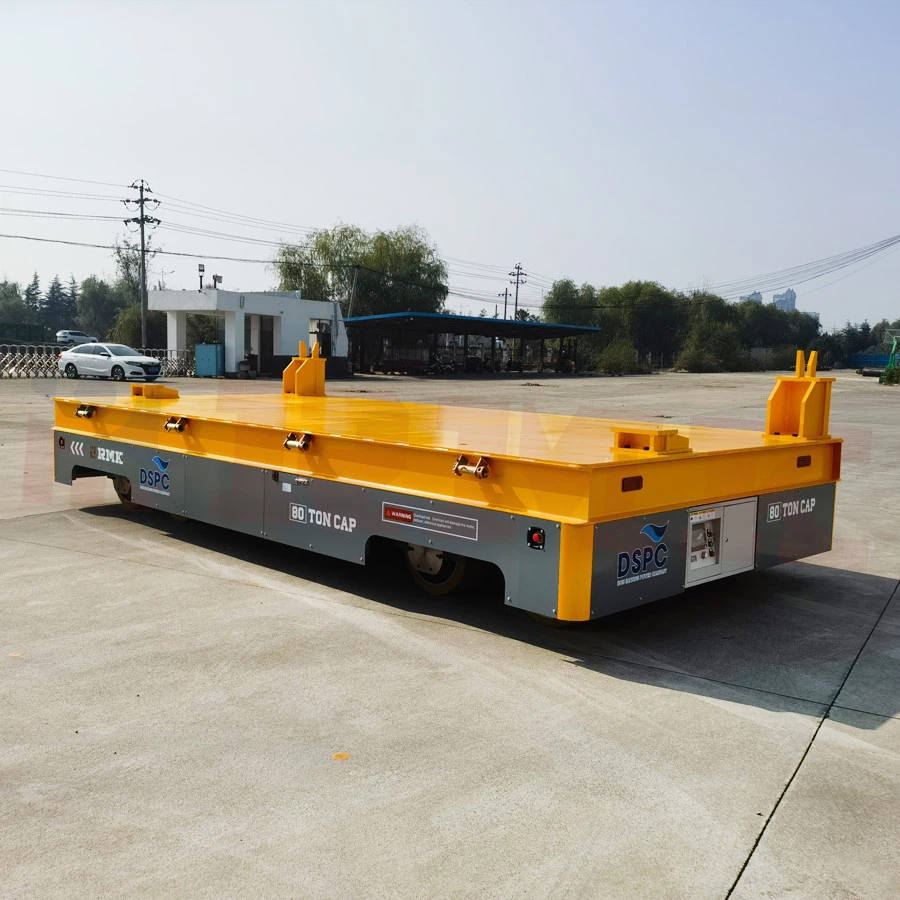
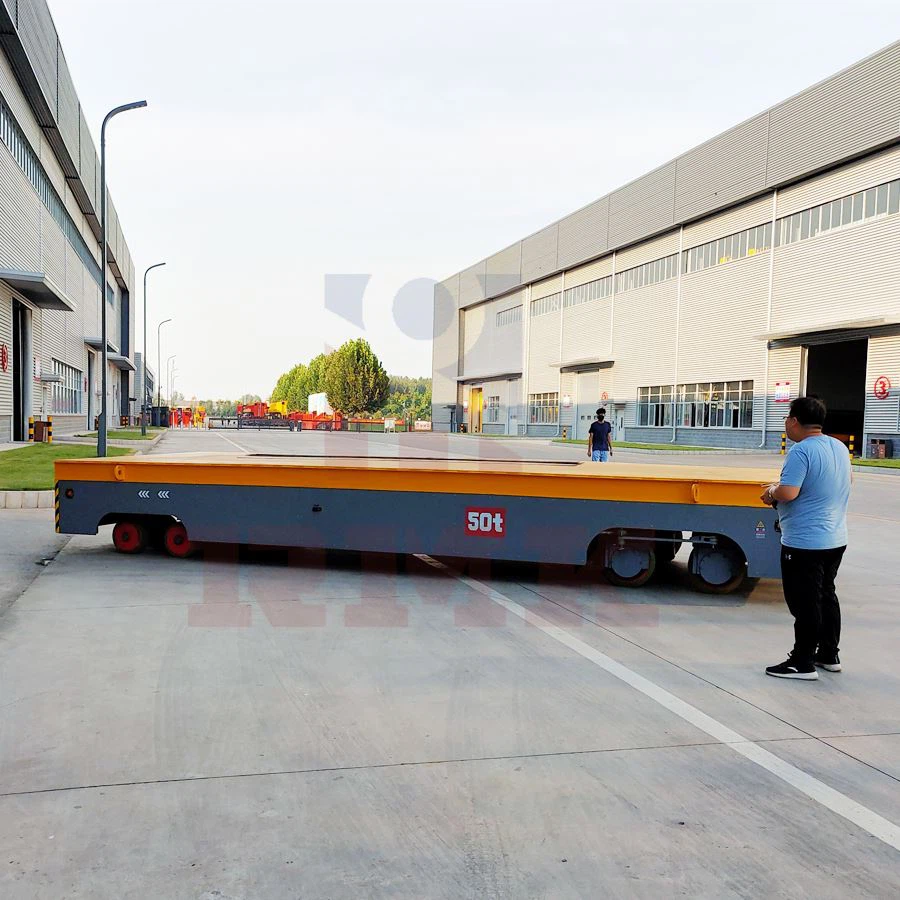
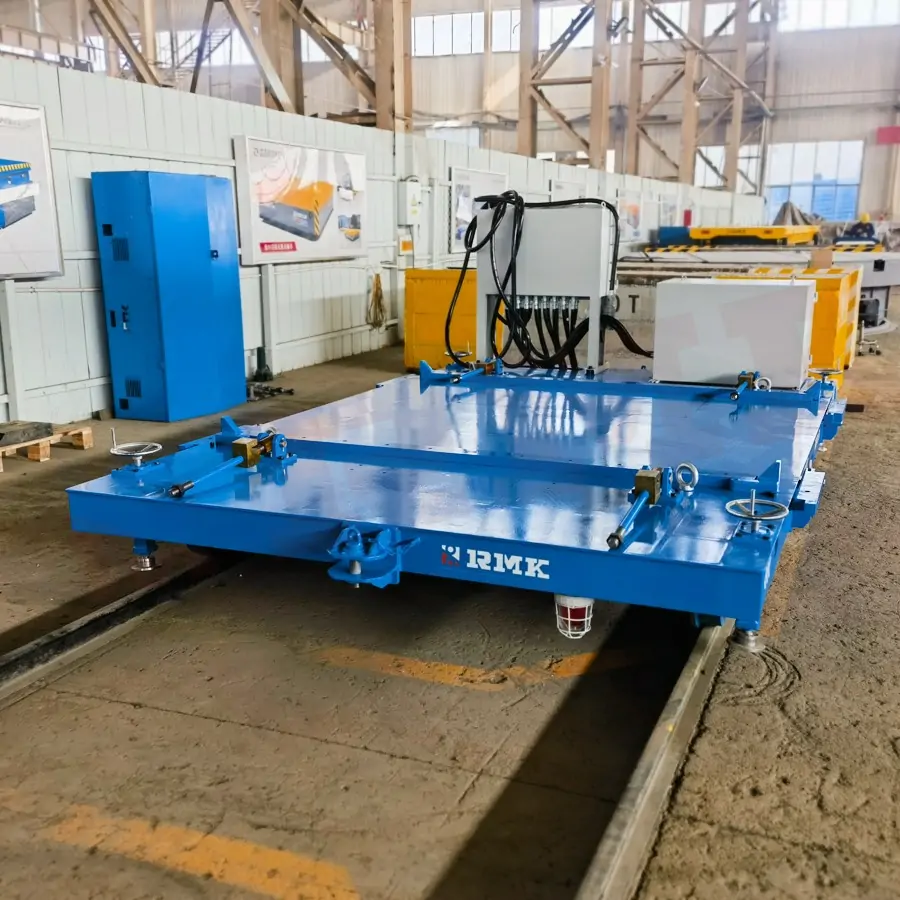
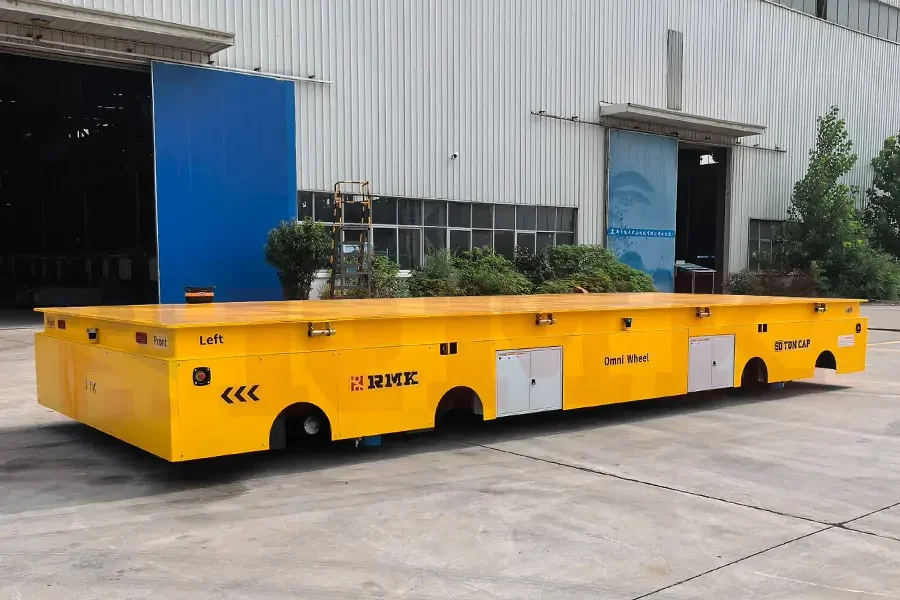
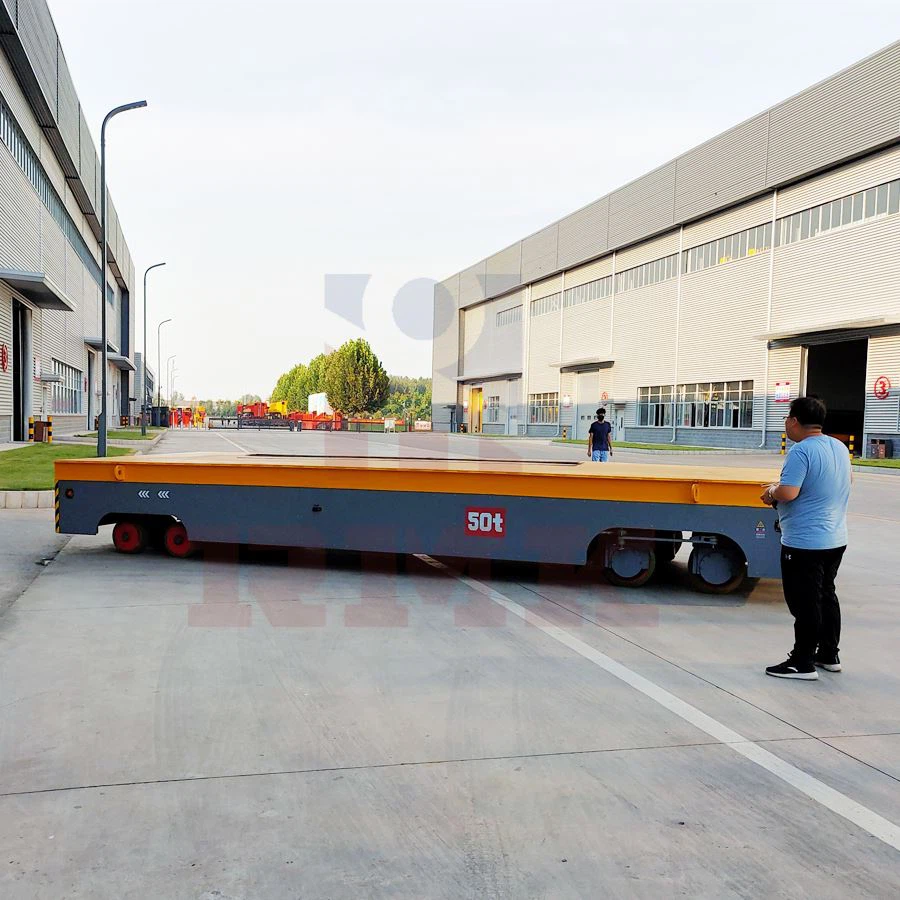
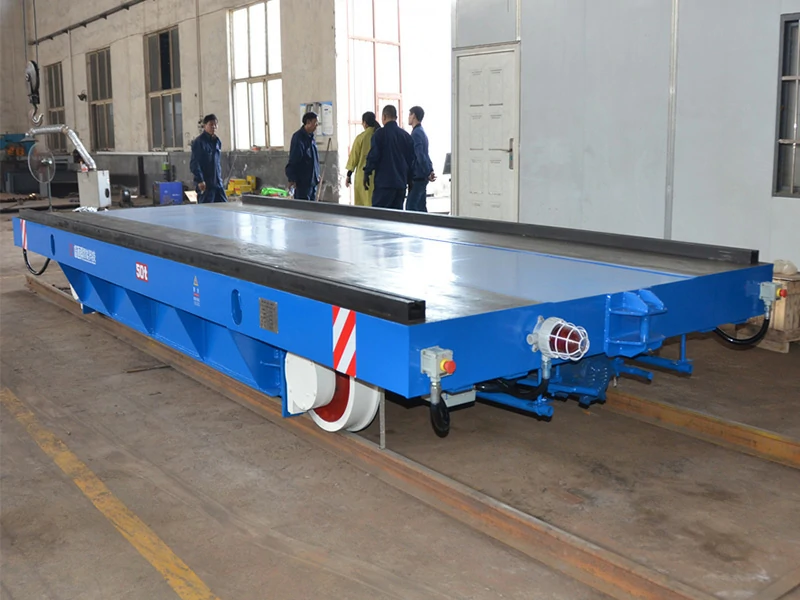
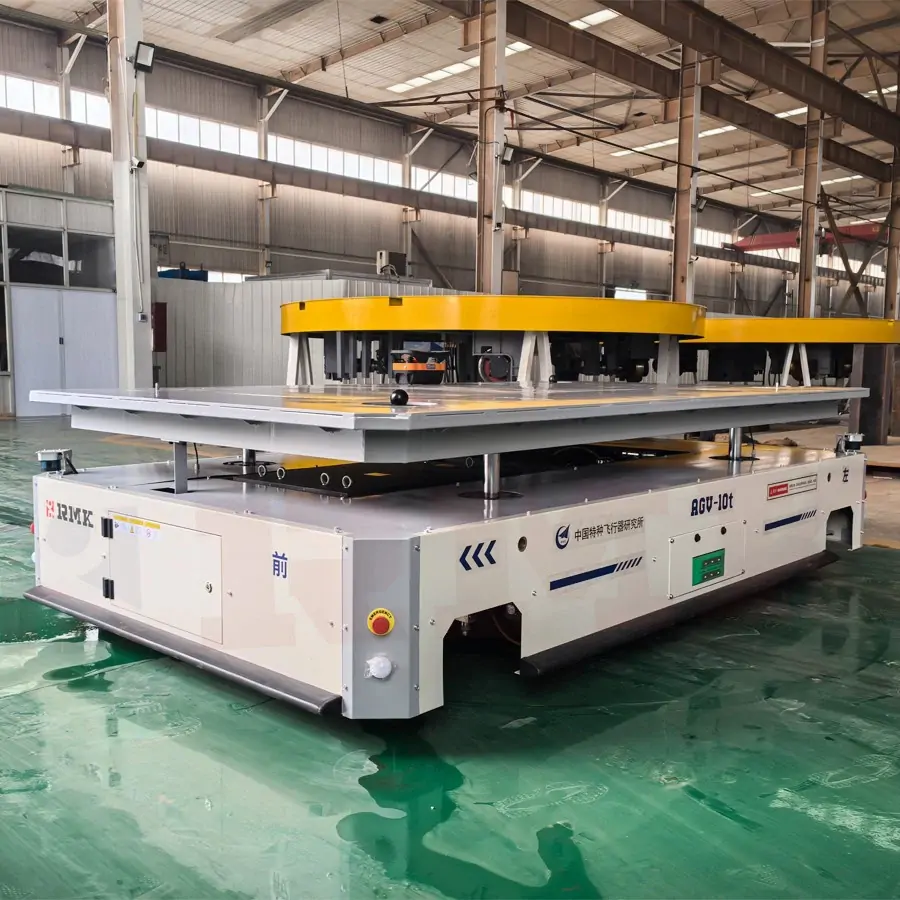
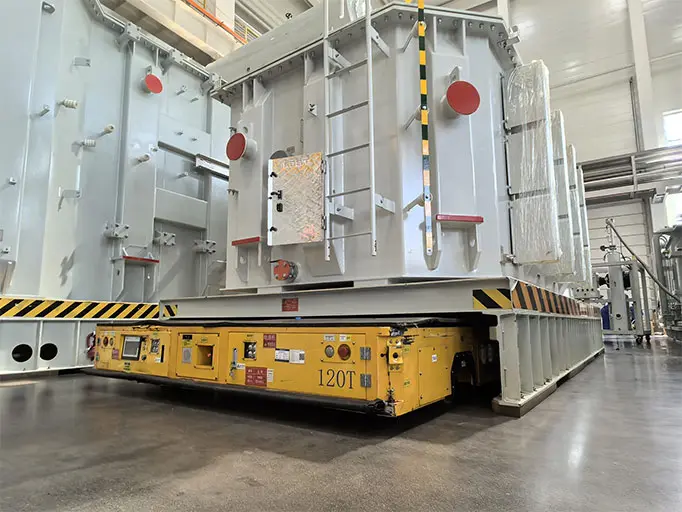
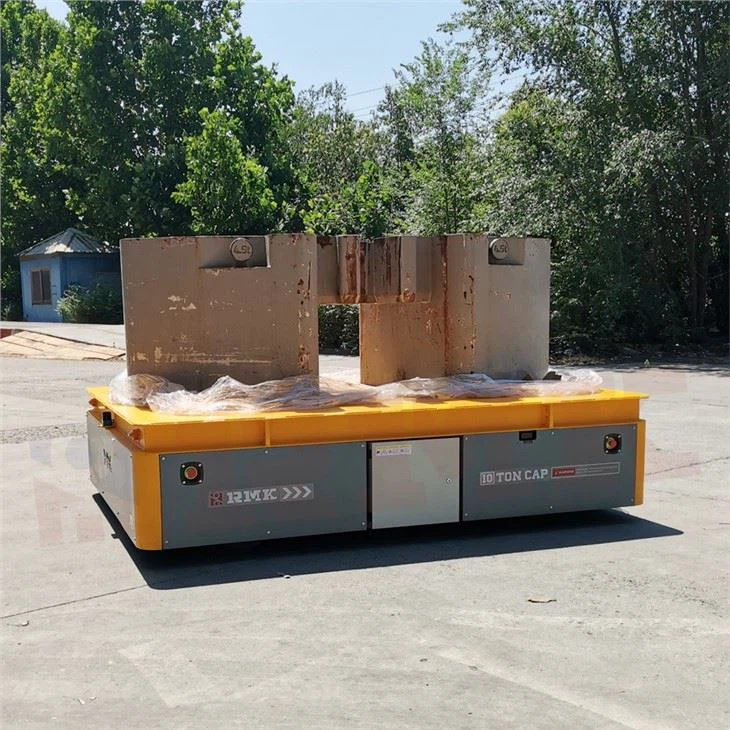
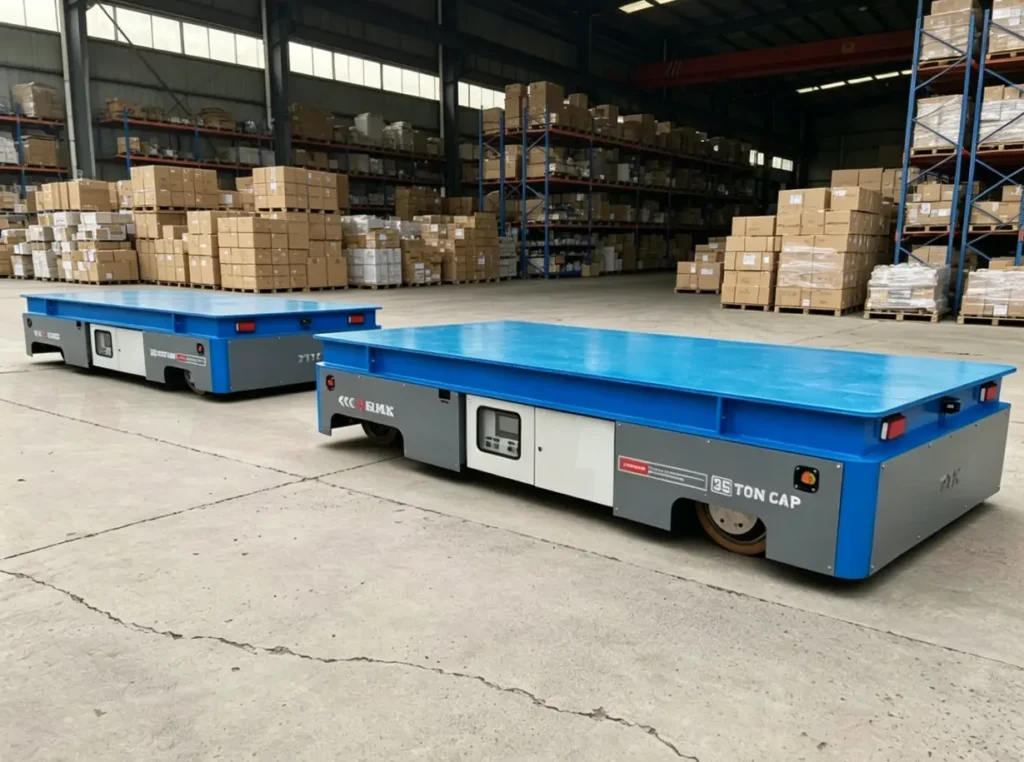
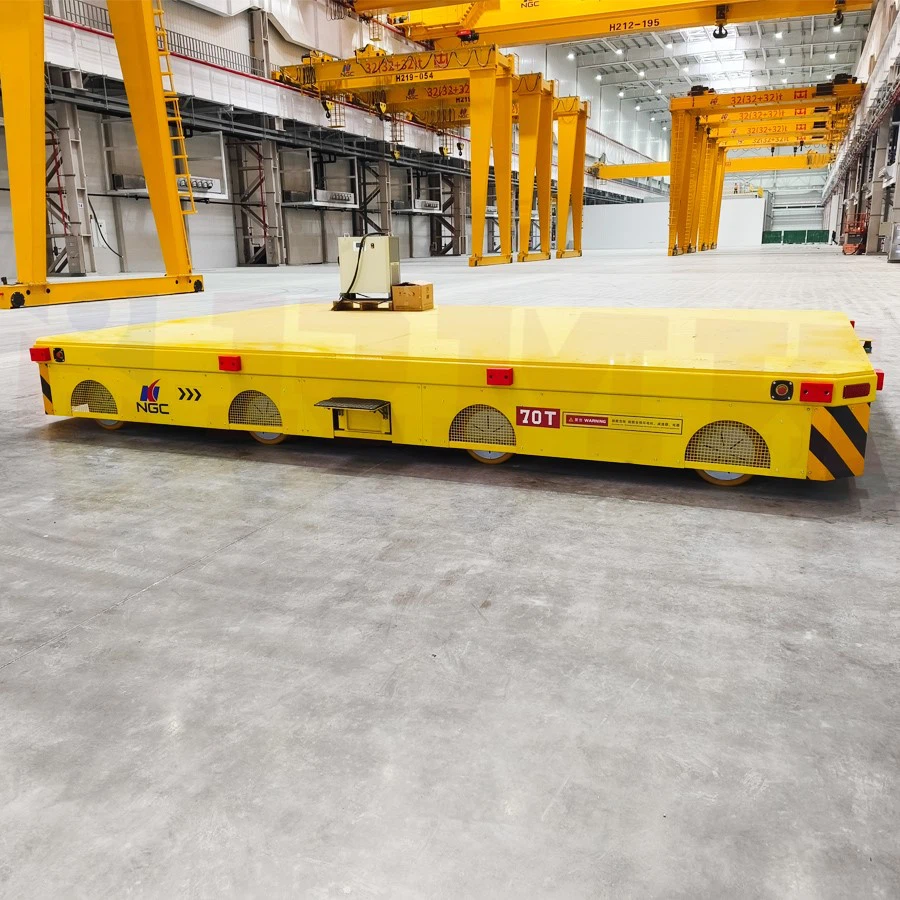
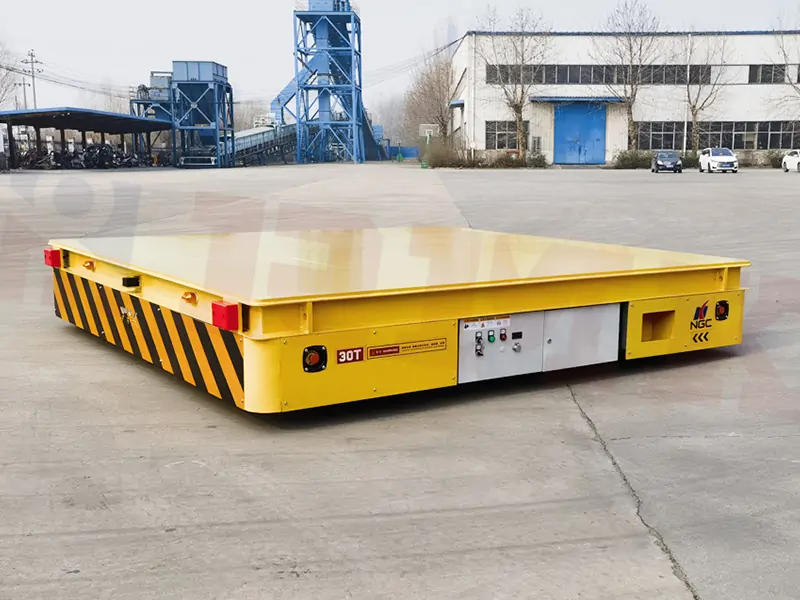
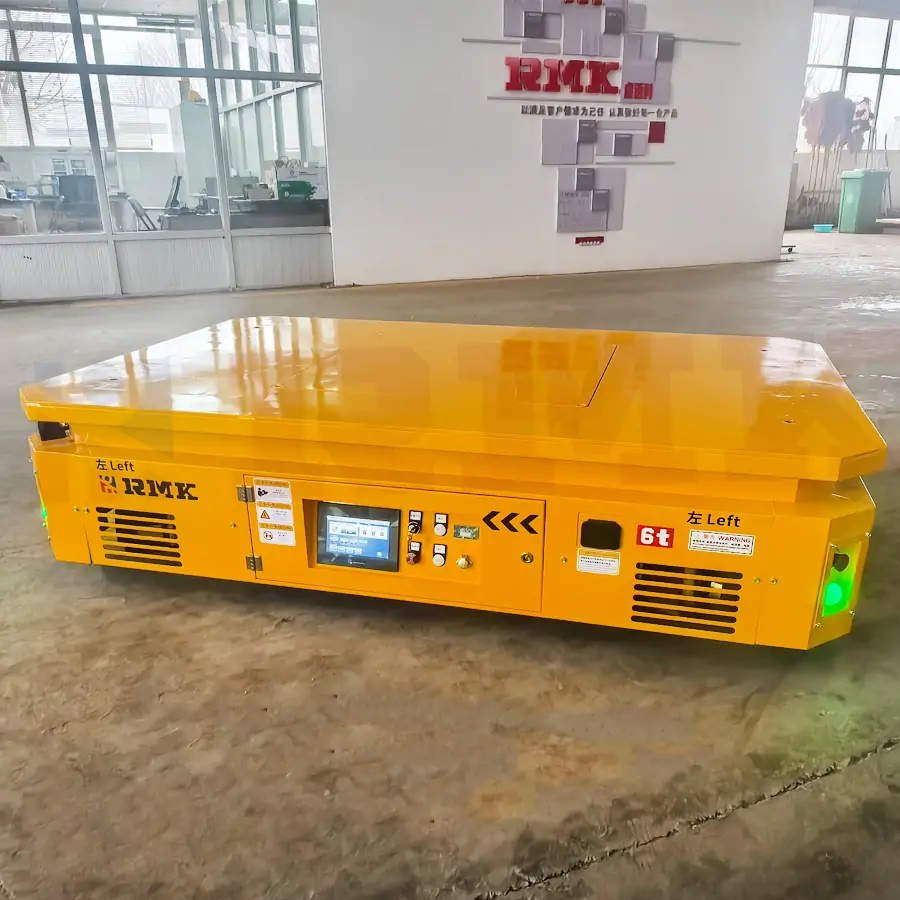
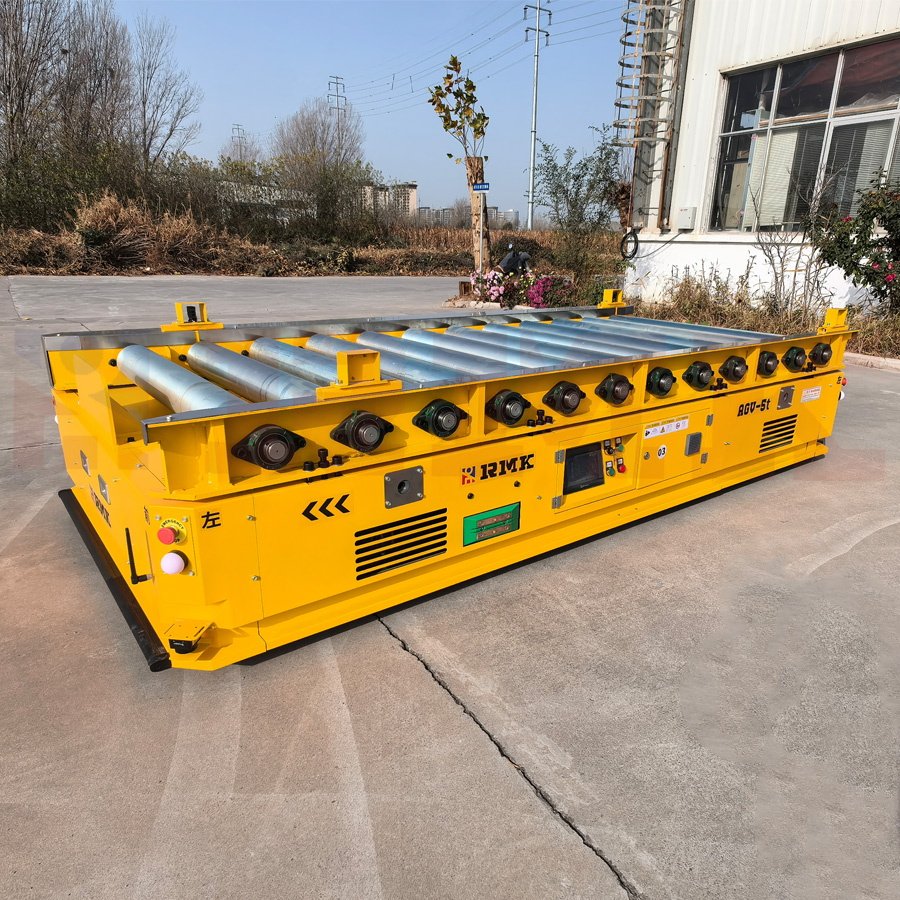
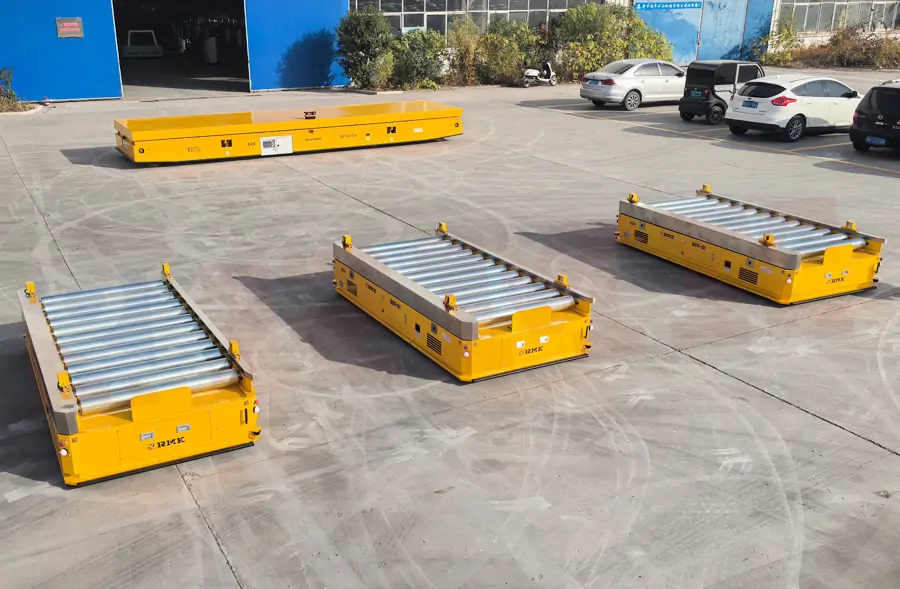
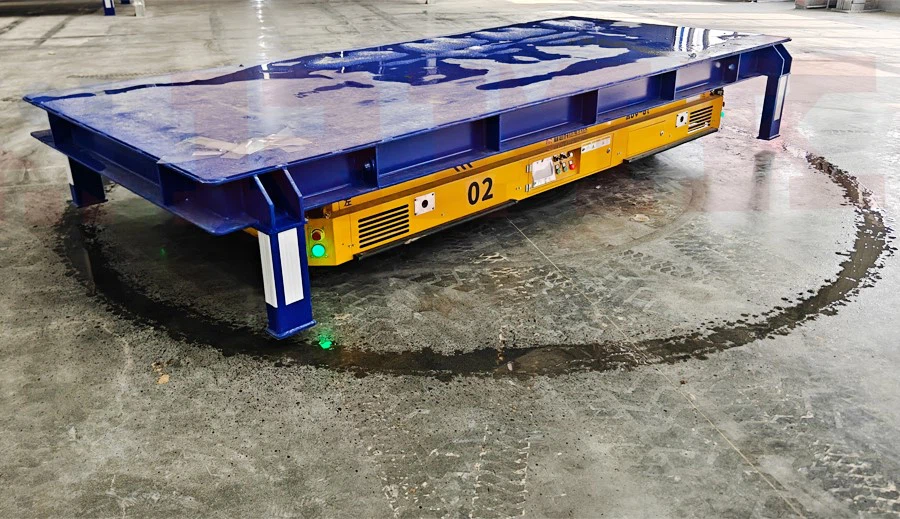
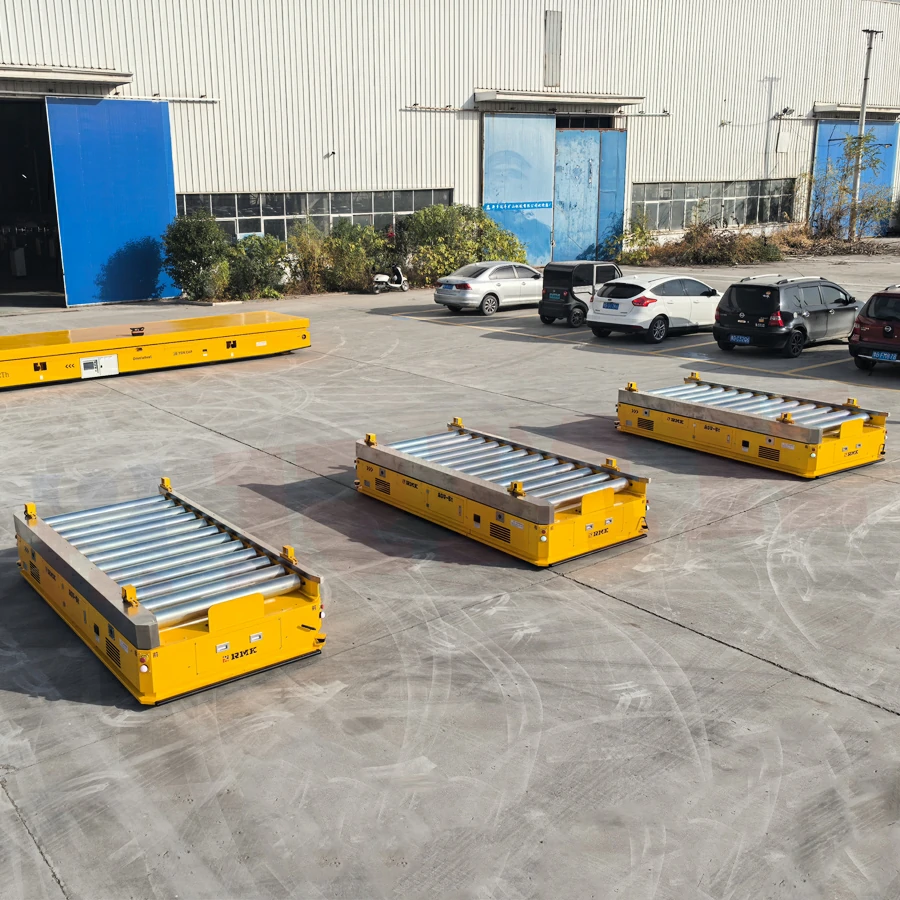
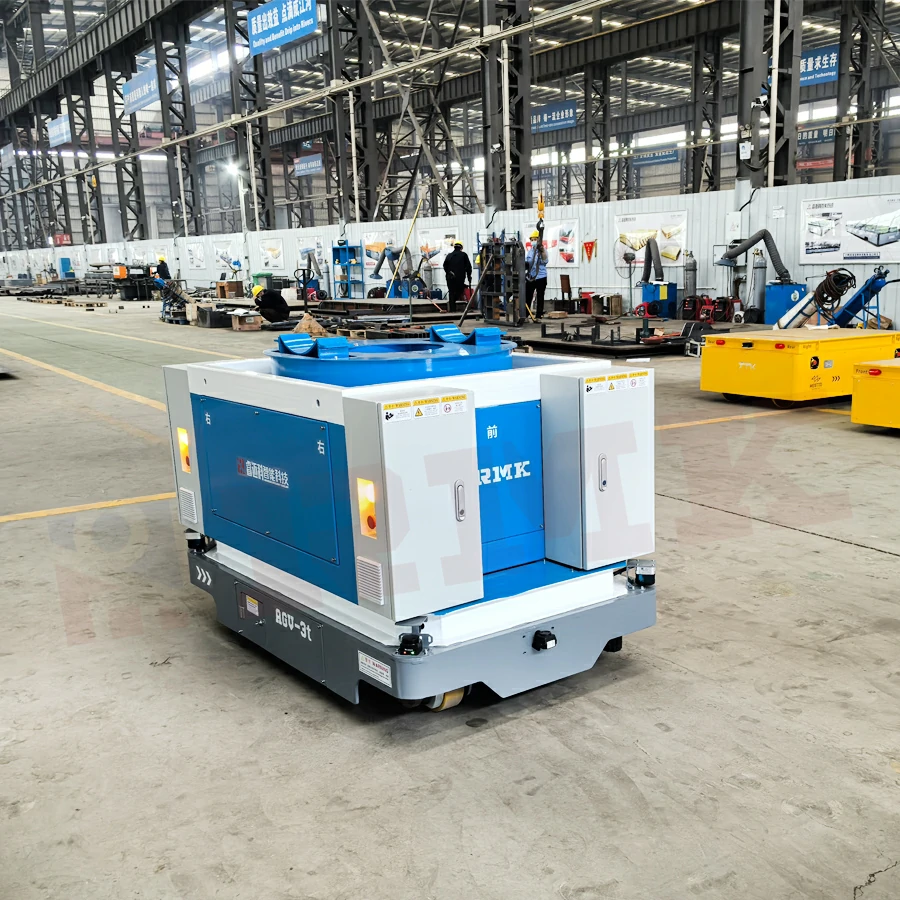
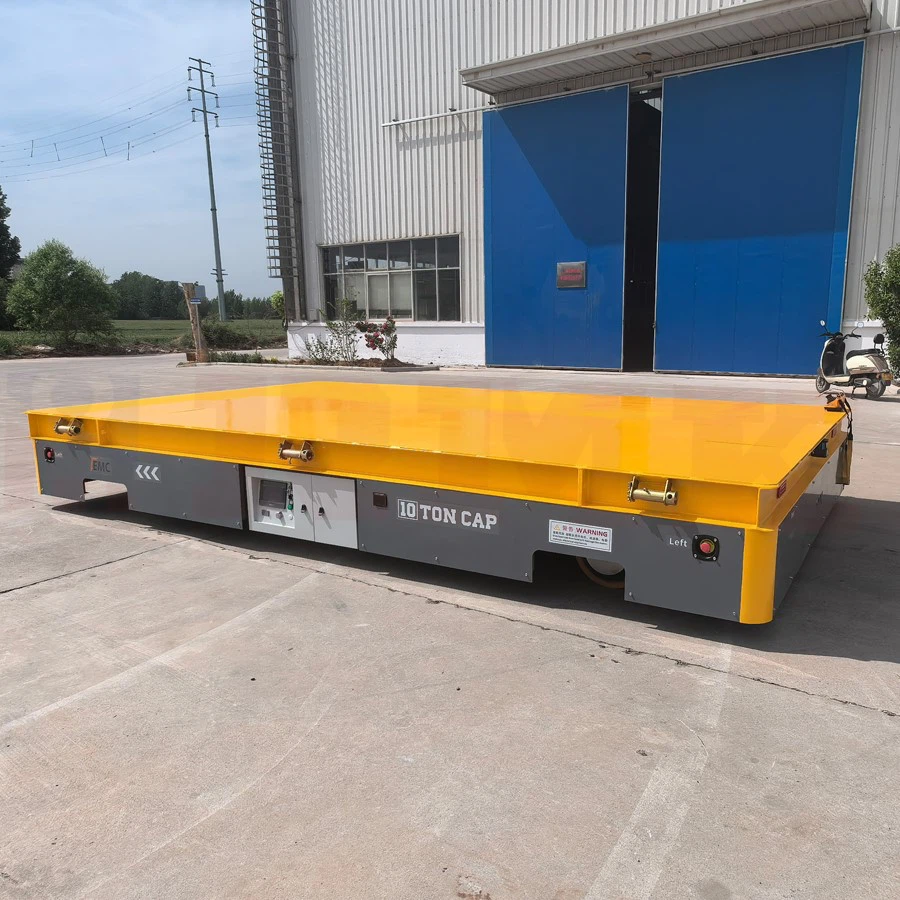
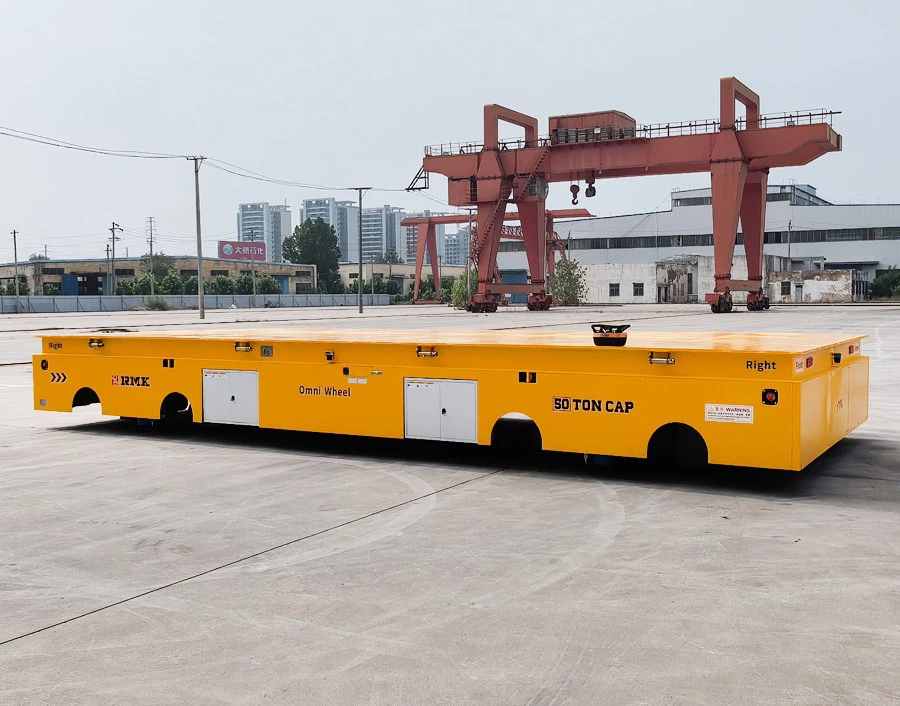
A Large Platform AGV Transfer Cart is a heavy-duty automated guided vehicle designed to transport large, oversized materials within industrial facilities. Equipped with a large load platform, battery power, and automatic navigation, it can move heavy equipment, steel structures, molds, coils, containers, and other high-capacity loads. With load capacities typically ranging from 10 tons to over 100 tons, it is widely used in manufacturing, steel, energy, and heavy industries where stable, efficient, and continuous material handling is required.
Piezas
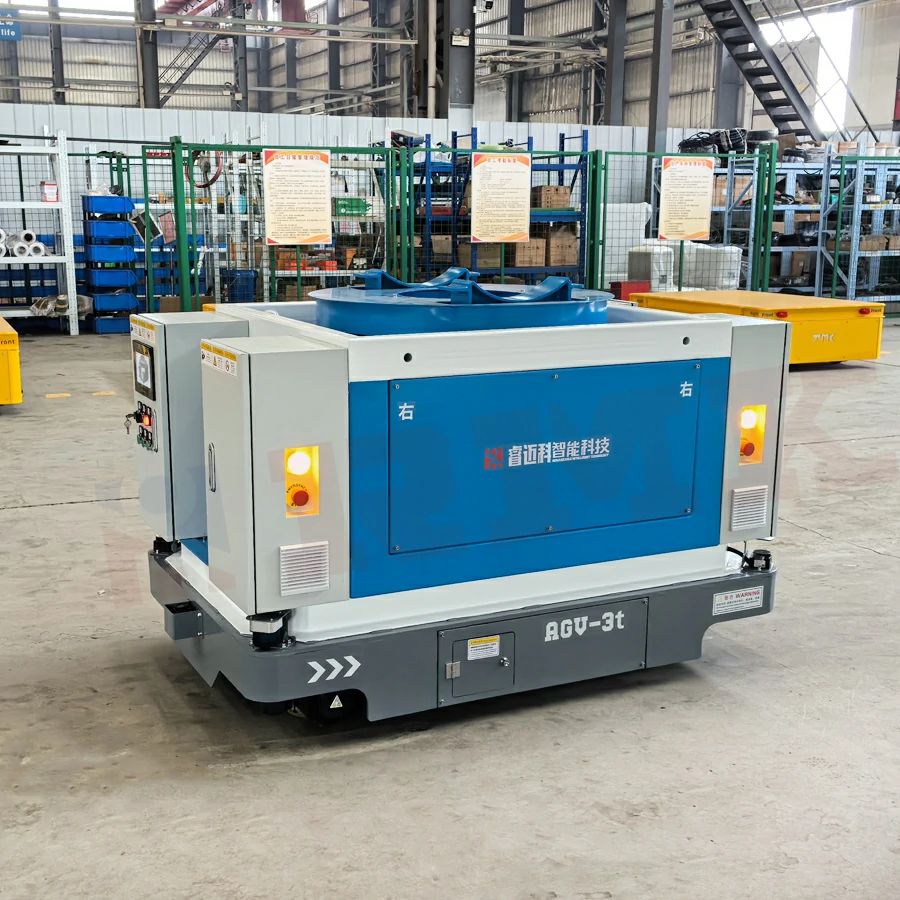
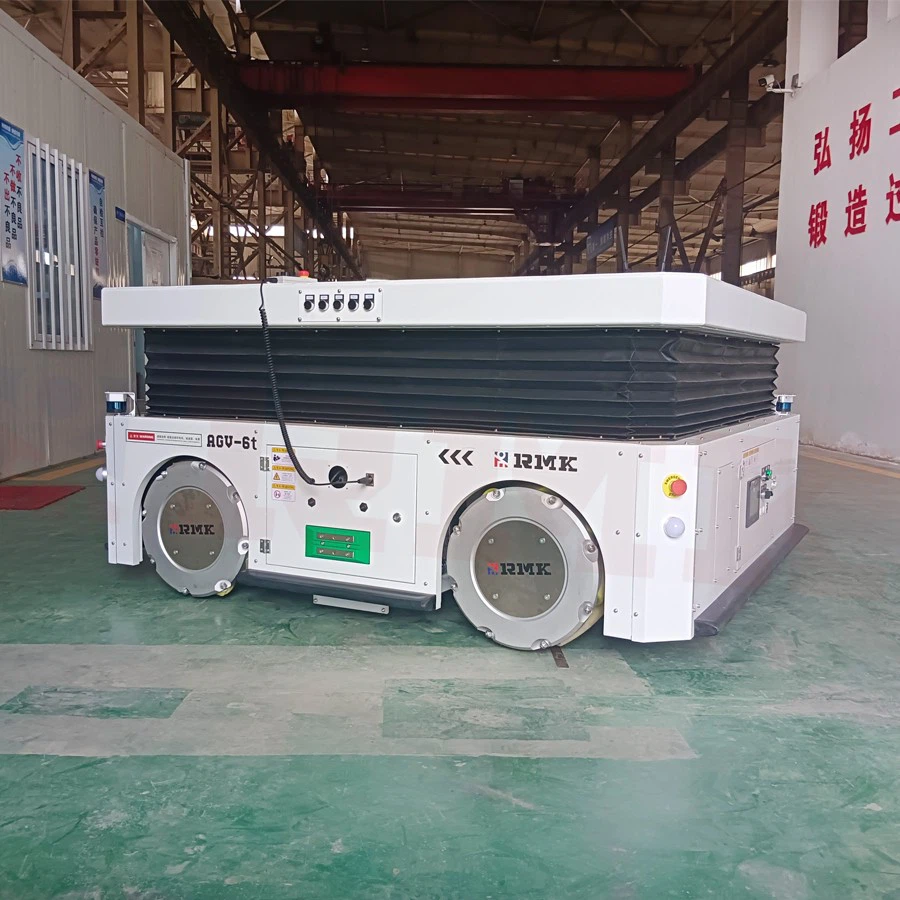
A Large Platform AGV Transfer Cart is built from several core systems that support load carrying, vehicle movement, positioning, power supply, and operational safety in heavy-duty material handling applications.
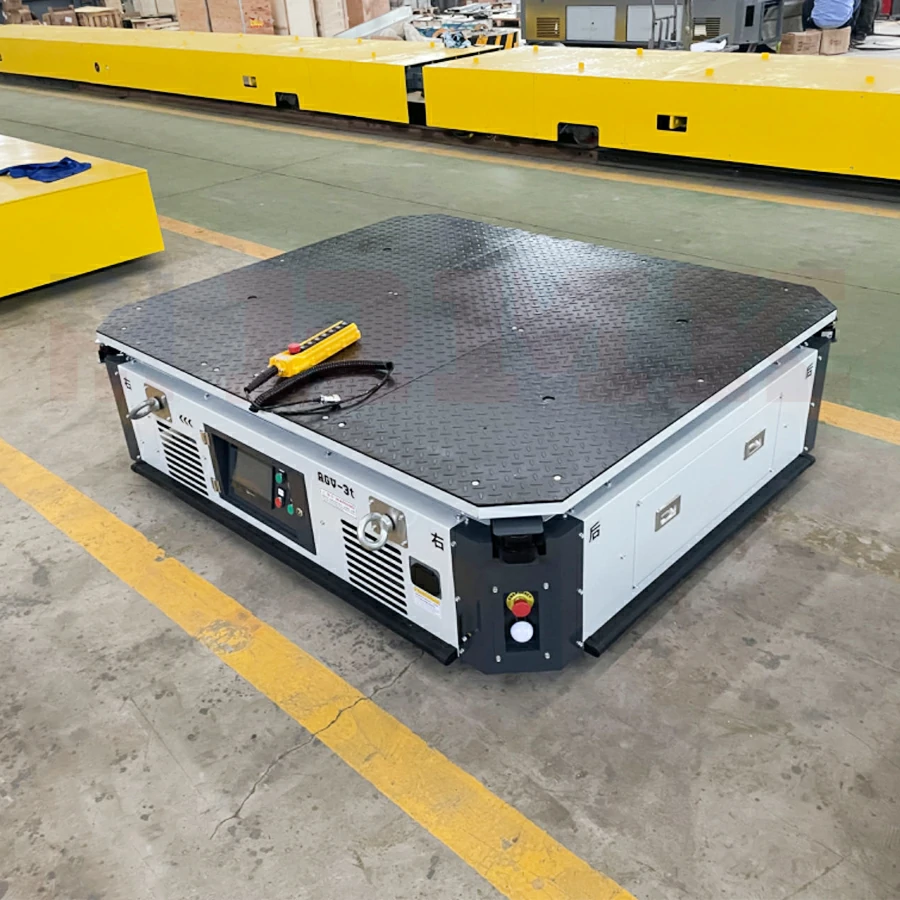
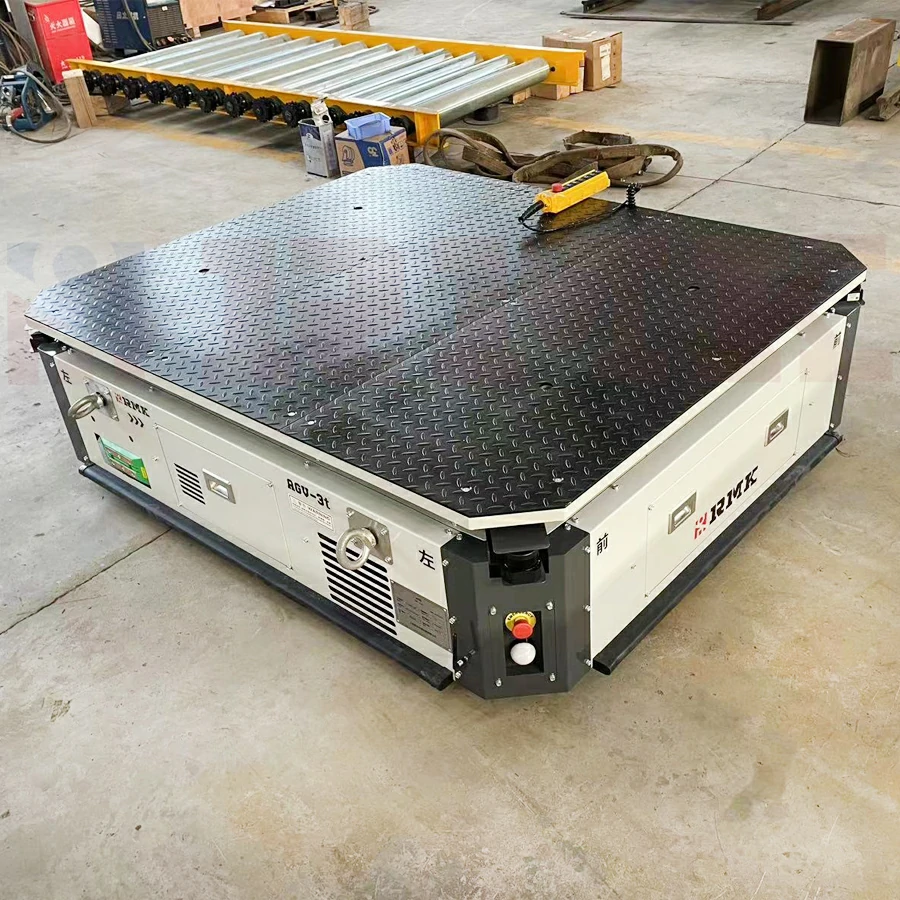
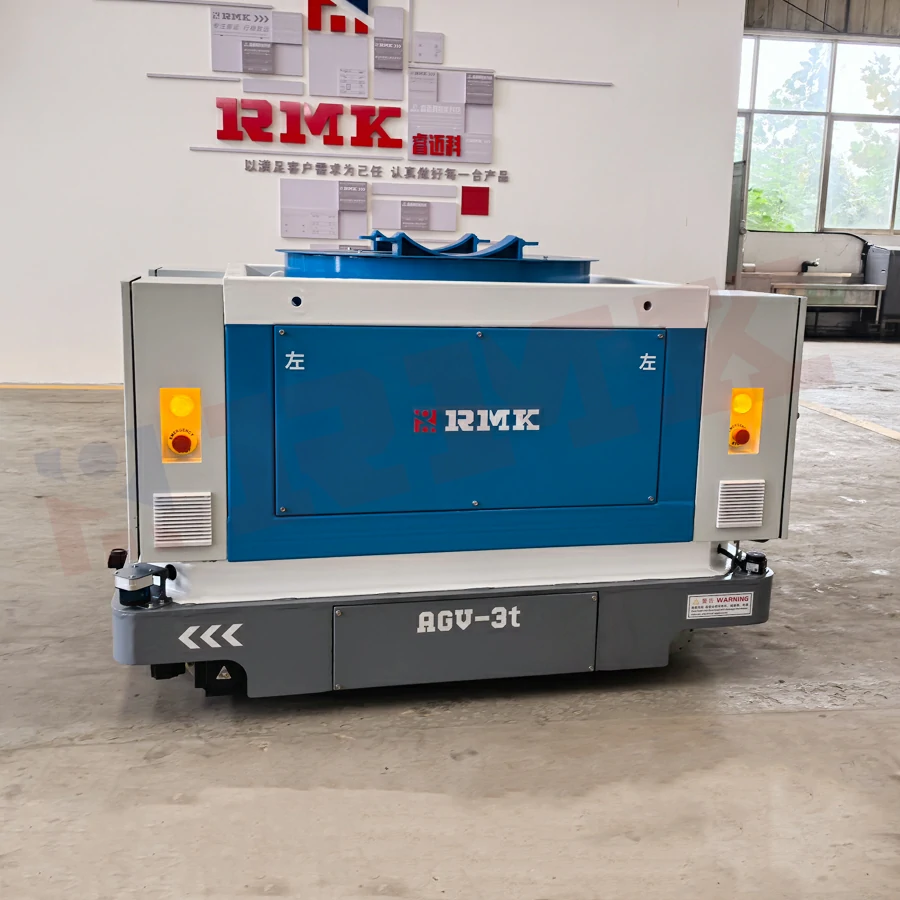
Mechanical Structure: Consists of the vehicle frame, load platform, drive units, and steering mechanism. The welded steel structure provides the load-bearing capacity required for heavy-duty transport applications.
Navigation System: Includes laser navigation, magnetic guidance, SLAM navigation, or hybrid navigation technologies for route guidance and vehicle positioning.
Control System: Composed of the onboard controller and central dispatch system for travel control, task allocation, route scheduling, and multi-vehicle operation.
Power System: Features a lithium battery pack, battery management system (BMS), and optional automatic charging equipment for continuous production operations.
Safety System: Includes laser scanners, obstacle detection sensors, anti-collision bumpers, emergency stop devices, and safety control circuits for industrial operating conditions.
How It Works
The operating process of a Large Platform AGV Transfer Cart covers task dispatching, material loading, transportation, unloading, and charging within factory and warehouse material handling operations.
1. Task Assignment: The MES, WMS, or other management systems generate a transport task and send it to the AGV dispatch system, including pickup location, destination, and load information.
2. Vehicle Dispatch: The dispatch system assigns an available AGV based on vehicle location, operating status, and battery level, then generates the travel route.
3. Load Pickup: The AGV travels to the designated loading station and aligns with equipment such as conveyors, lifting platforms, or transfer stations for material loading.
4. Material Transport: After loading, the AGV transports the material along the planned route to the target workstation, warehouse area, or production line.
5. Load Delivery: The AGV positions at the unloading point and transfers the material to the designated equipment or storage location.
6. Task Completion: Transport information is returned to the control system, and the AGV becomes available for the next assignment.
7. Charging and Standby: When battery capacity reaches the preset level, the AGV moves to the charging station. Otherwise, it remains on standby for the next transport task.
Combining high load capacity, stable operation, and automated transportation, Large Platform AGV Transfer Carts are widely used for heavy material handling across a wide range of industries. Learn more: Heavy Load AGV – Structure, Usage, and Maintenance
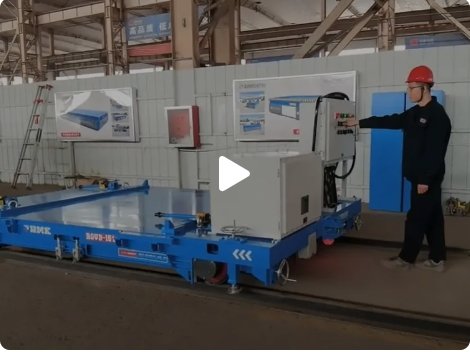
Video
Why Traditional Material Handling Equipment Has Limitations
Traditional material handling equipment remains widely used in industrial facilities, but limitations in flexibility, efficiency, and scalability can create challenges for modern manufacturing and logistics operations.
| Equipment Type | Key Limitations |
|---|---|
| Forklifts | Limited maneuverability in narrow aisles and congested areas.Operator-dependent performance and safety.Limited system integration with modern production and warehouse management systems. |
| Overhead Cranes | Intermittent operation may slow material flow.Fixed service area restricted by runway coverage.Additional handling steps required for cross-workshop transportation. |
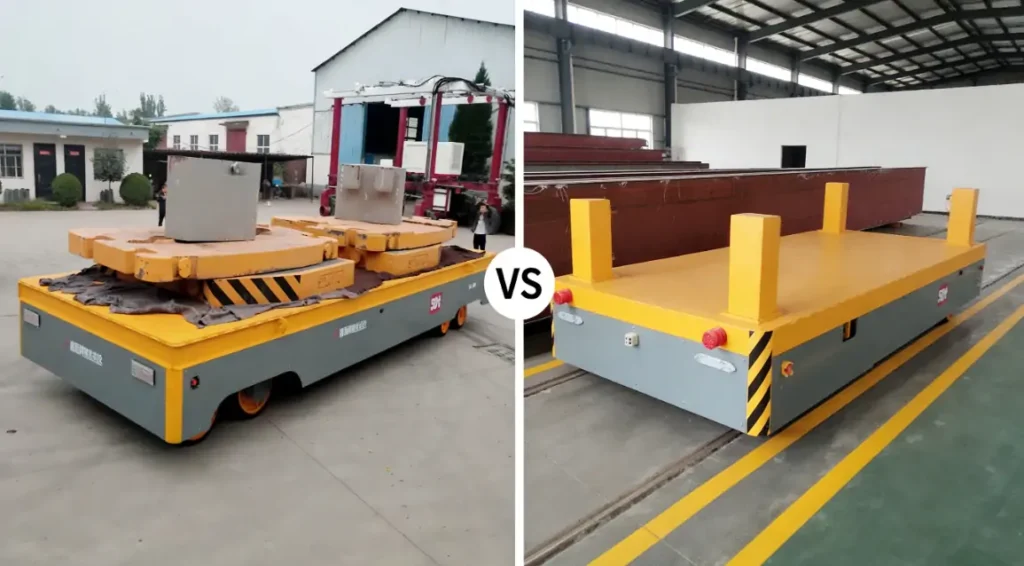
| Carros de transferencia sobre raíles | Fixed travel routes require installed rail infrastructure.Low layout flexibility when production lines change.Track installation and expansion costs increase with facility growth. |
| Manual Material Handling | Low transport efficiency for heavy or oversized loads.High labor requirements and operating costs.Increased risk of workplace injuries and product damage.Limited process traceability during material movement. |
These limitations have increased demand for automated transport solutions that can handle heavy loads, support flexible routing, and operate across complex production environments.
Ventajas
Compared with forklifts, cranes, and rail-guided transport systems, Large Platform AGV Transfer Carts offer greater flexibility for handling heavy and oversized materials across production, storage, and assembly areas.
- High Load Capacity: Designed for transporting heavy and oversized materials, with load capacities typically ranging from 10 tons to over 100 tons.
- Flexible Movement: Available with steering wheel or omnidirectional drive systems, allowing operation in narrow aisles and complex factory layouts.
- Accurate Positioning: Provides precise docking with production lines, workstations, warehouses, and automated equipment.
- Stable Transportation: Heavy-duty frame structures and multi-wheel drive systems support the smooth movement of large and high-value loads.
- Improved Safety: Reduces manual handling and forklift traffic while incorporating obstacle detection, anti-collision protection, and emergency stop functions.
- Higher Material Handling Efficiency: Supports continuous transport operations and helps reduce material transfer time between production processes.
- Easy System Integration: Can be connected with MES, WMS, ERP, conveyors, lifts, and other factory equipment for coordinated material flow.
- Customizable Design: Load capacity, platform size, navigation method, and vehicle configuration can be tailored to specific application requirements.
Large Platform AGV Transfer Carts provide a practical transport solution for heavy and oversized materials, combining high carrying capacity, stable operation, and flexible movement for a wide range of industrial applications.
Navigation Technologies Used in Large Platform AGVs
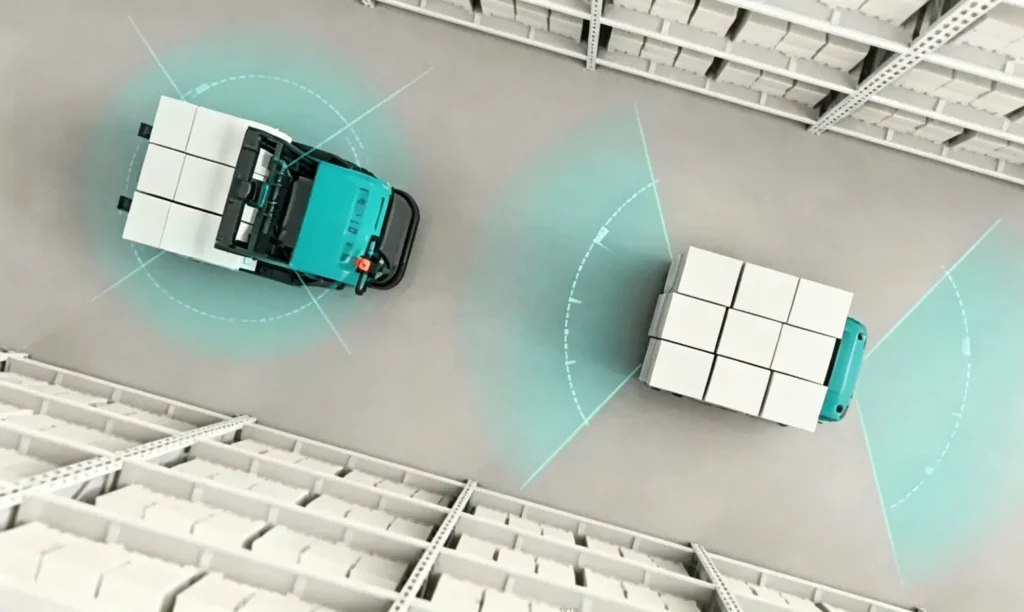
Different navigation systems are available for the large platform AGV transfer cart depending on factory layout, positioning accuracy, and automation level.
Laser SLAM Navigation 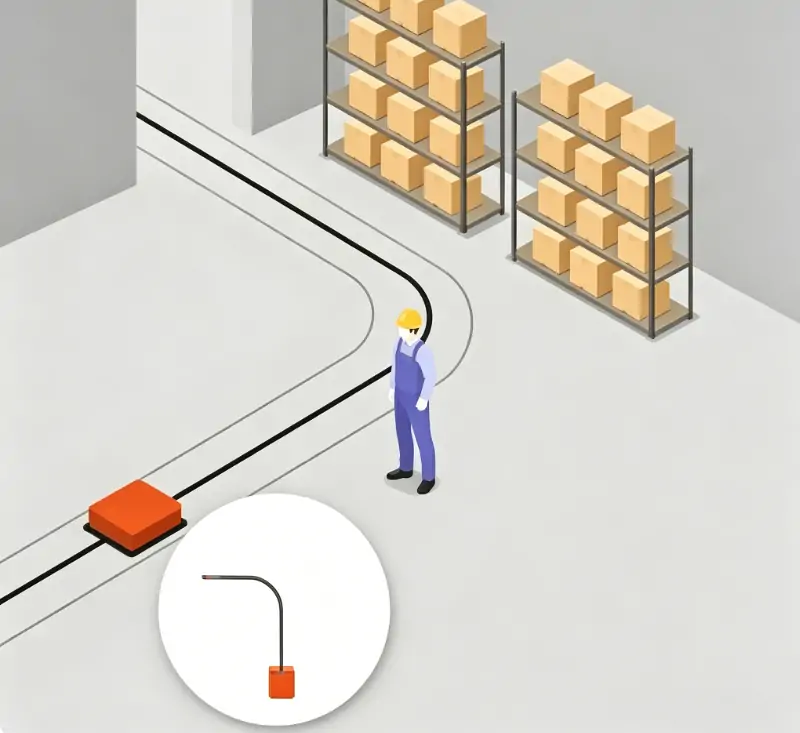
Magnetic Strip Navigation 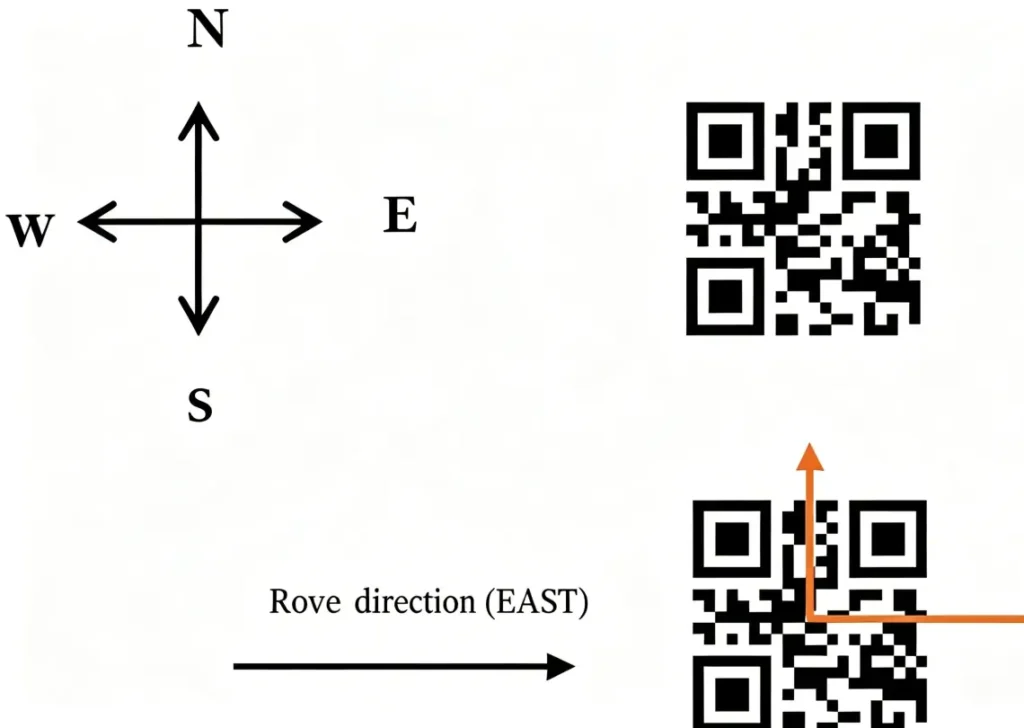
QR Code Navigation
| Navigation Type | Cost | Flexibilidad | Accuracy | Best Use Case |
| Magnetic Strip | Bajo | Bajo | Medium | Fixed production line |
| QR Code | Medium | Medium | Alta | Flexible routes |
| Laser SLAM | Alta | Very High | Very High | Smart factory |
| Natural | Alta | Alta | Alta | Complex environment |
Multiple navigation options are available for different factory layouts. RMK mainly uses Laser SLAM navigation, which enables marker-free operation, real-time positioning, and flexible path adjustment.
Common Applications of Large Platform AGV Transfer Carts
Large Platform AGV Transfer Carts are widely used across heavy industry and manufacturing sectors where large, heavy, and irregular materials need to be moved between production and storage areas.
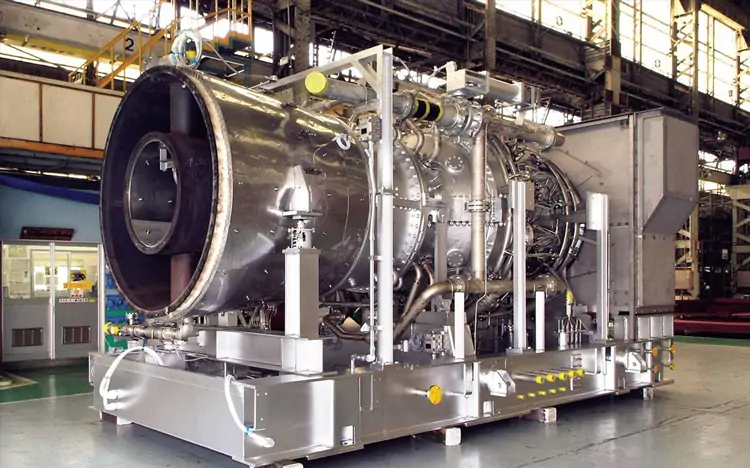
Heavy Machinery Manufacturing
Used for moving large machine tools, modules, and structural parts between machining and assembly areas.
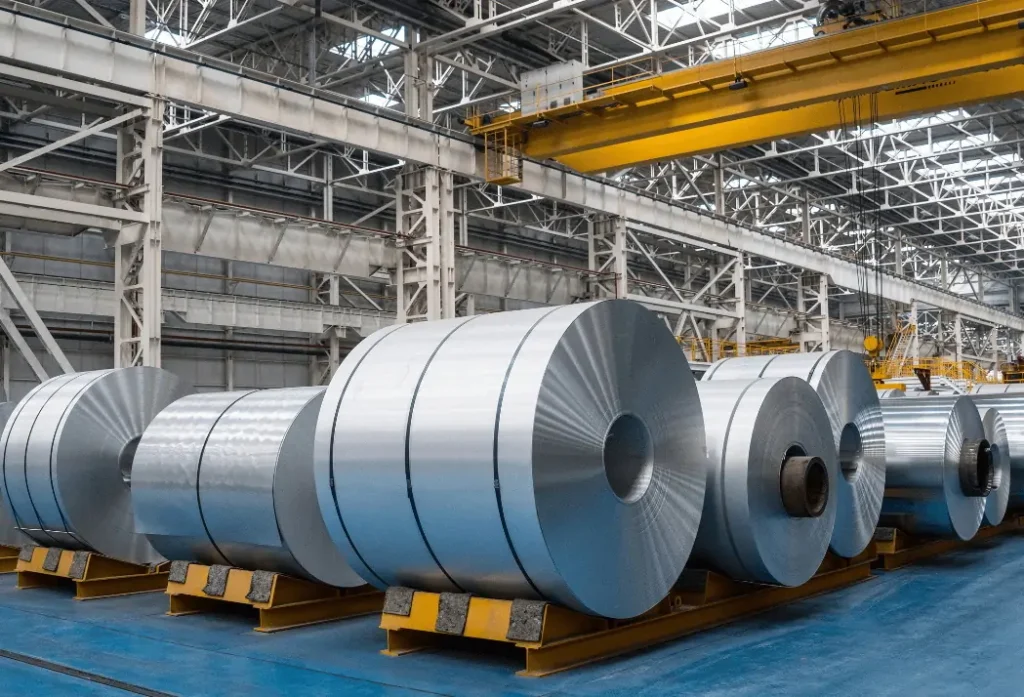
Steel and Metal Processing
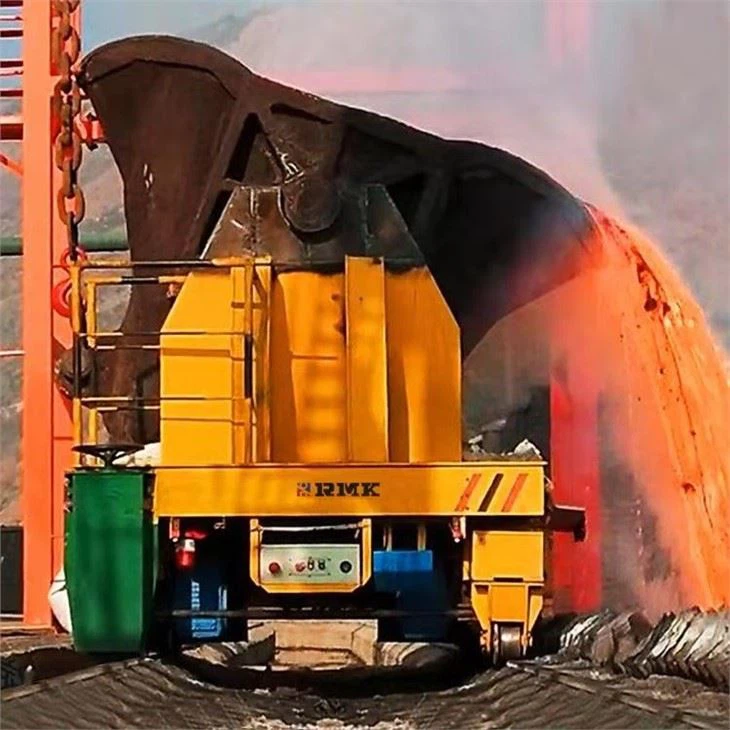
Used for transporting steel coils, plates, frames, and welded structures in workshops and storage areas.
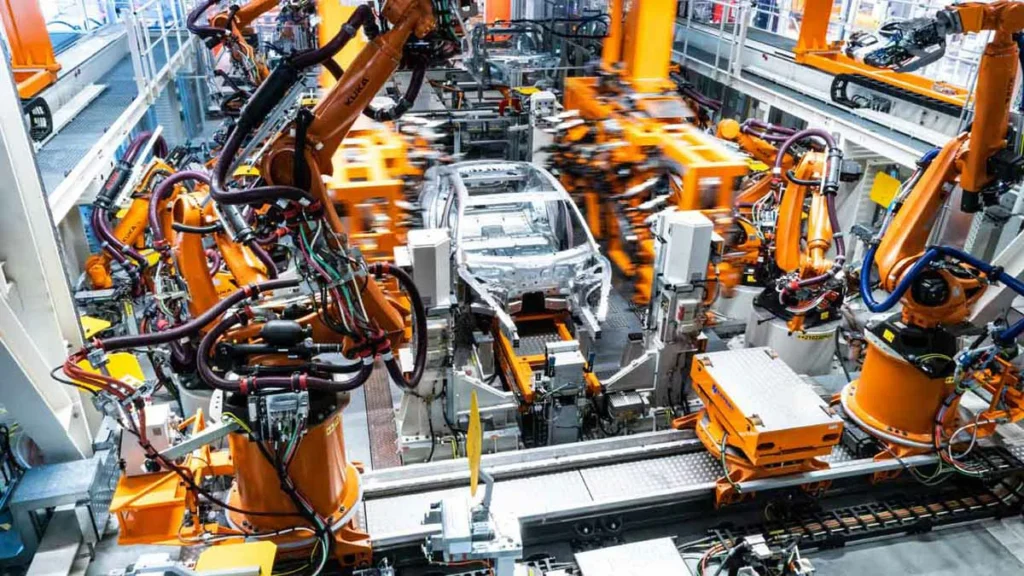
Automotive and Rail Industry
Used for handling vehicle bodies, chassis, molds, and large components along production lines.

Energy Equipment Industry
Used for transporting wind power parts, transformers, and energy storage containers.
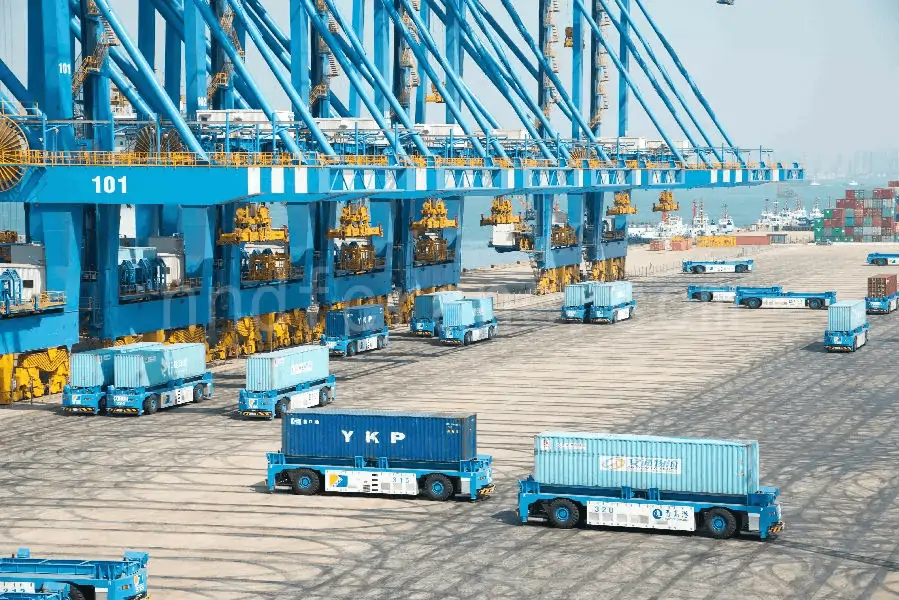
Port and Logistics
Used for moving containers and heavy cargo within yards and storage zones.
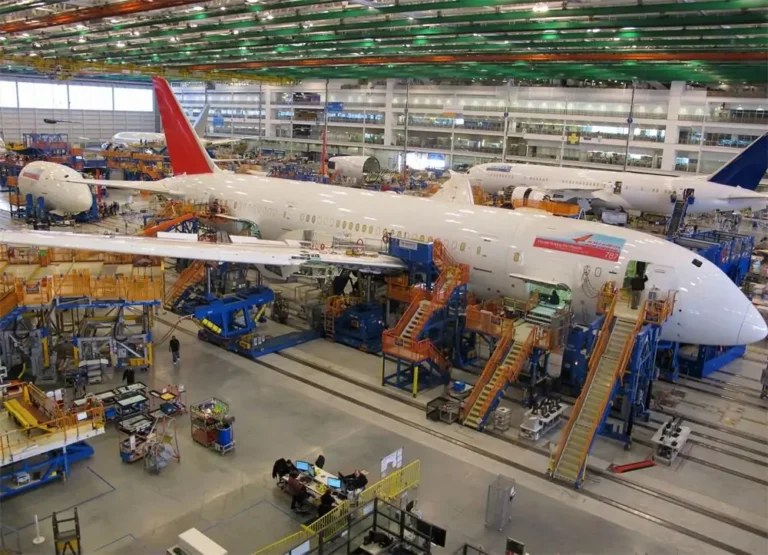
Aerospace and Defense
Used for transporting aircraft sections and large precision assemblies between production stations.
These applications highlight the role of Large Platform AGV Transfer Carts in supporting efficient material flow across different industrial environments.
Large Platform AGV Transfer Cart vs Other Transport Solutions
Large Platform AGV Transfer Carts are increasingly used in modern factories as an alternative to forklifts, cranes, and rail systems for heavy material handling.
AGV vs Forklift
1. Forklifts rely on manual operation, and efficiency varies with operators. Continuous operation is limited.
2. Large Platform AGVs operate without drivers, follow preset routes, and support multi-shift use with sensor-based obstacle detection.
AGV vs Rail Transfer Cart
1. Rail carts run on fixed tracks and are difficult to change after installation.
2. Large Platform AGVs use laser SLAM and other navigation methods, require no tracks, and allow route adjustment based on layout changes.
AGV vs Overhead Crane
1. Overhead cranes move along fixed overhead paths and often need additional equipment for ground handling.
2. AGVs operate on the floor and provide direct transport between production, storage, and assembly areas.
AGV vs Tugger Train
1. Tugger trains are used for batch transport along fixed routes.
2. Large Platform AGVs handle single heavy loads with flexible routing and accurate positioning. Both can be used within the same system.
Compared with traditional material handling equipment, Large Platform AGV Transfer Carts provide a more flexible and integrated solution for industrial logistics operations.
Technical Specifications to Consider Before Buying
1. Load Capacity and Vehicle Size
- Define maximum load requirements with at least 20% margin
- Distinguish between rated load and peak load
- Ensure vehicle size matches aisle width and turning radius
- Match platform size with maximum cargo dimensions
2. Drive System and Chassis
- Steering wheel drive and differential drive are common options
- Steering wheel systems support omnidirectional movement
- Differential drive has a simpler structure but limited movement directions
- Wheel selection depends on load, speed, floor condition, and slope
3. Navigation and Positioning
- Magnetic or QR navigation: fixed routes, stable operation
- Laser SLAM: no ground markers, flexible routing
- Vision or hybrid navigation: higher adaptability for changing layouts
- Positioning accuracy typically within ±5–10 mm
4. Battery and Charging
- Lithium battery (especially LFP type) is widely used
- One charge should support a full shift (around 8 hours)
- Automatic charging or battery swap supports continuous operation
5. Control and Software System
- Multi-vehicle scheduling for task allocation and traffic control
- Real-time path planning to avoid congestion
- Supports integration with WMS, MES, or ERP systems via API
6. Safety System
- Mechanical braking for emergency and power loss situations
- Anti-tip structure for loaded operation and sudden stops
- 360° obstacle detection, including low-height objects
- Emergency stop buttons on multiple sides
- Charging system with electrical protection and certified batteries
7. Supplier and Lifecycle Considerations
- Prefer suppliers with independent R&D capability
- Check patents and engineering capability
- After-sales support: response time, spare parts, software updates
- Evaluate the total cost of ownership (TCO), not only the purchase cost
Selecting an AGV requires a clear evaluation of technical specifications, including load capacity, navigation system, control functions, safety features, and long-term operating requirements.
How Much Does a Large Platform AGV Transfer Cart Cost?
The cost of a Large Platform AGV Transfer Cart varies based on technical configuration, load requirements, and system complexity. Higher load capacity and advanced automation level lead to higher investment.
Capacidad de carga
Higher tonnage requires a stronger structure, drive system, and control components.
Platform Dimensions
Larger platforms increase steel usage, drive power, and manufacturing cost.
Navigation Technology
Laser SLAM and hybrid navigation cost more than magnetic or QR-based systems.
Battery System
Battery capacity and fast-charging or swap systems affect overall price.
Nivel de automatización
Multi-vehicle scheduling, system integration, and smart dispatch increase cost.
Custom Design
Special structures, extreme loads, or non-standard environments require additional engineering.
Estimated Price Range
| Capacity Range | Estimated Price |
| 5–20 tons | $15,000 – $50,000 |
| 20–50 tons | $50,000 – $120,000 |
| 50–100 tons | $120,000 – $250,000 |
| 100–300 tons+ | Custom quotation |
AGV pricing is mainly driven by load capacity, navigation system, and customization level. Higher industrial requirements lead to higher configuration and cost.
Future Trends in Heavy-Duty AGV Technology
Heavy-duty AGV technology is moving toward higher levels of automation, system integration, and data-driven operation in modern industrial environments.
Fleet Management Systems
Centralized control of multiple AGVs, handling task assignment and route management, reducing congestion and idle running.
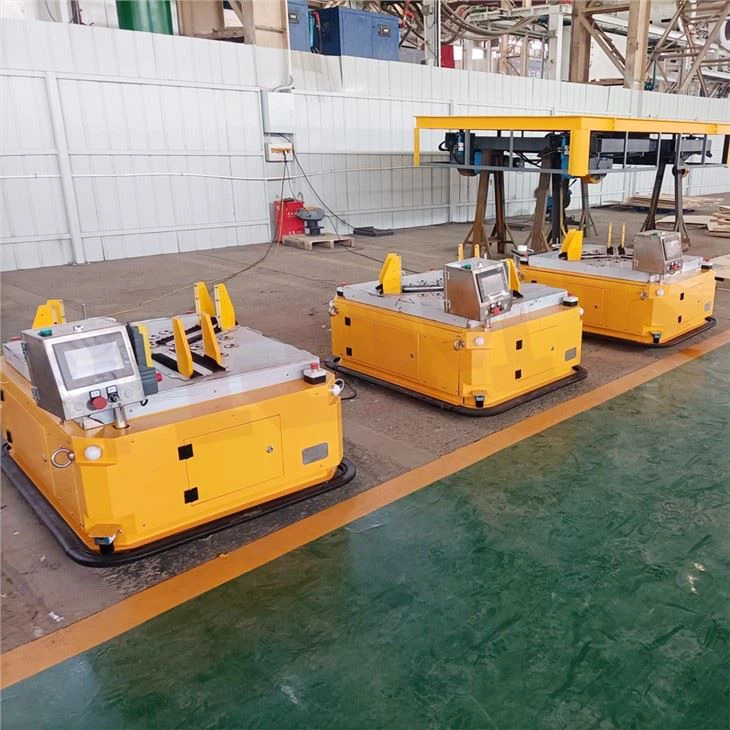
Multi-AGV Operation
Multiple AGVs operate in the same environment, completing transport tasks through coordinated work.
Factory System Integration
Direct connection with production lines, warehouses, and conveyor equipment, supporting continuous material flow.
Digital Twin Monitoring
Viewing equipment operating status through virtual models, supporting maintenance planning and layout optimization.
Automatic Charging Systems
Automatic return to charging when battery is low, no manual operation required.
Industrial System Connectivity
Connection with MES, WMS, and ERP systems, data synchronization, and production coordination.
These trends show a clear shift toward smarter, more connected material handling systems that support efficient and continuous factory operations.
Conclusión
Large Platform AGV Transfer Carts play an important role in heavy-duty material handling, offering stable transport for oversized loads and improving workflow across production, storage, and logistics areas. From system selection to application and future technology trends, AGV solutions continue to support the shift toward more organized and connected factory operations.
REMARCABLE focuses on the design and manufacturing of heavy-duty AGV systems, supported by a technical team with engineering experience in industrial automation and material handling projects. The company follows strict quality control processes and holds relevant industry certifications to ensure product reliability and performance in demanding environments. Póngase en contacto con nosotros for customized heavy-duty industrial solutions.

Correo electrónico: transfercart@rmkzn.com
Teléfono: +86-18637369355