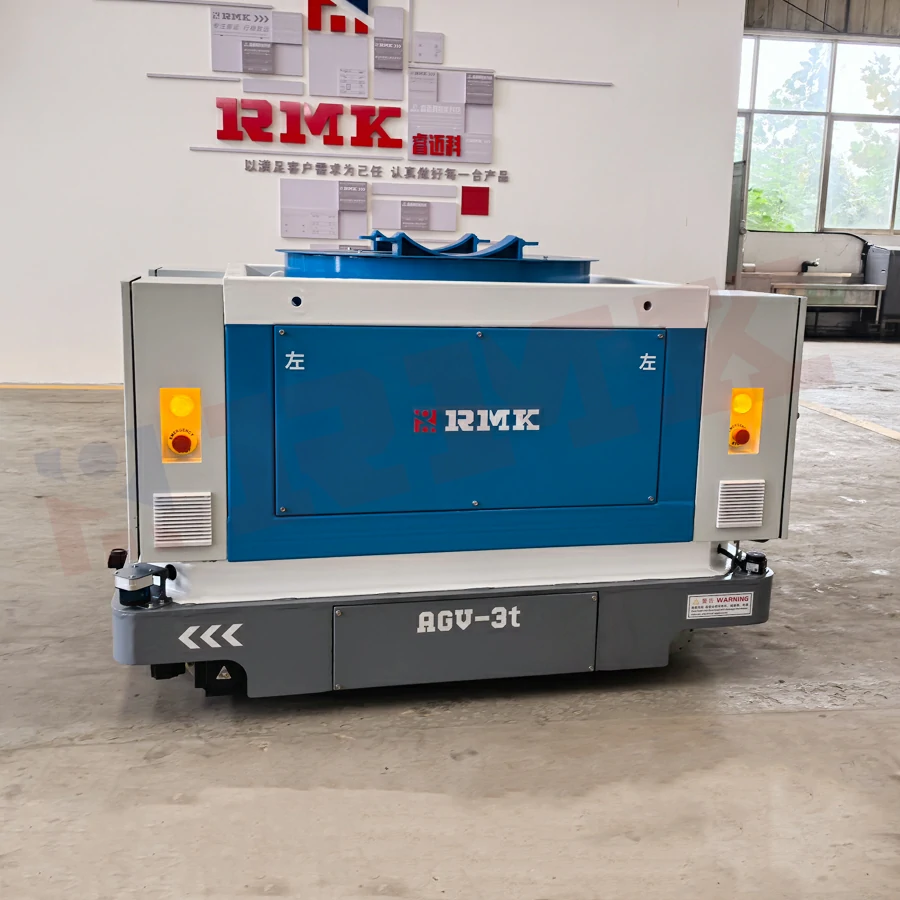
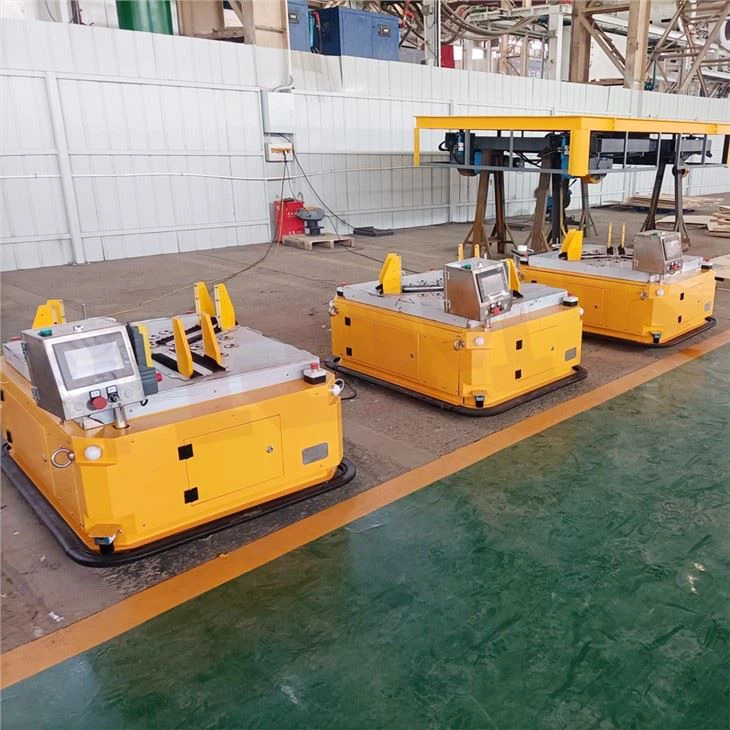
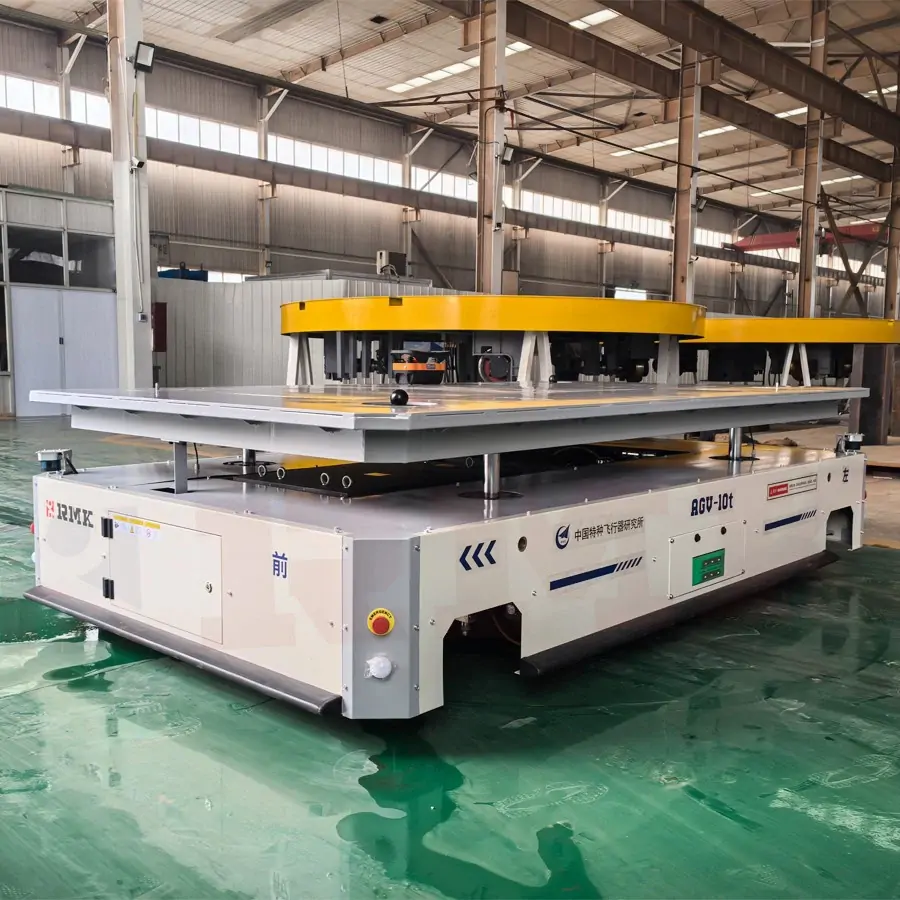
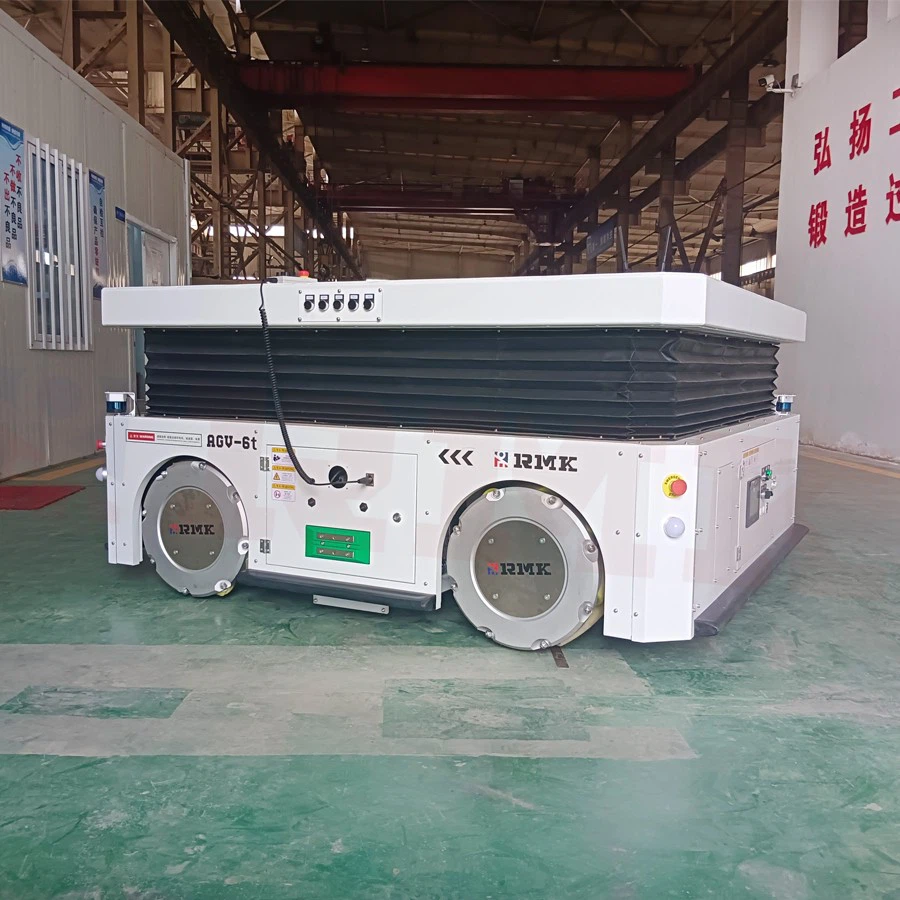
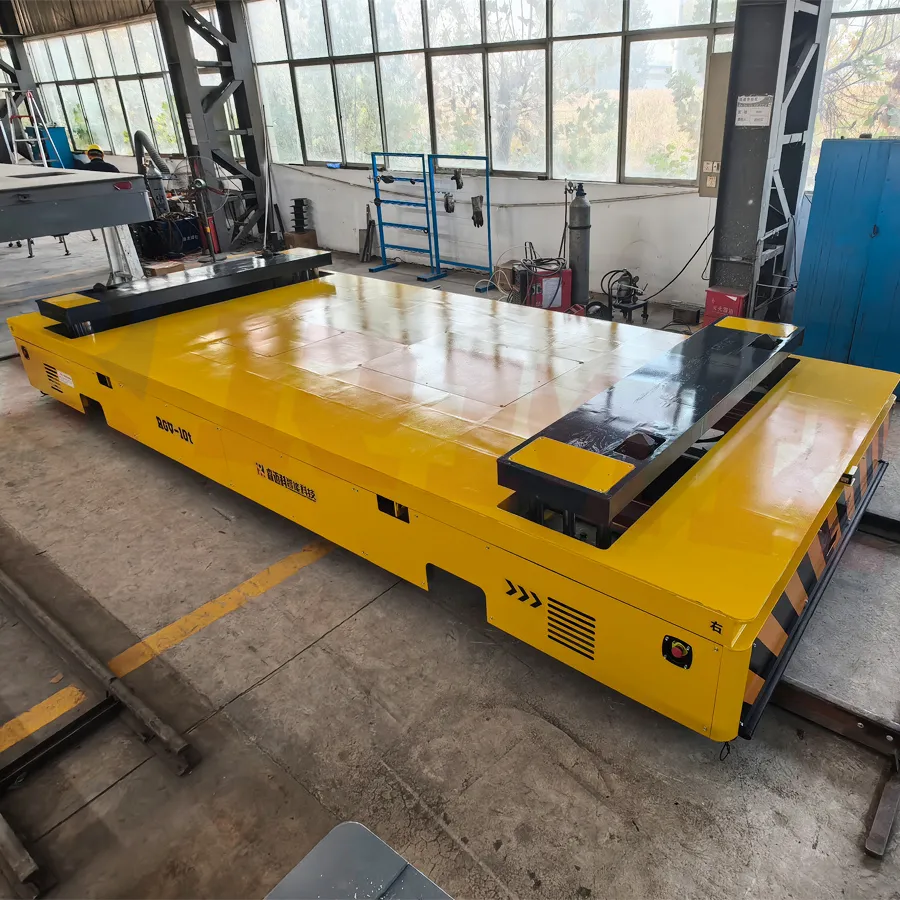
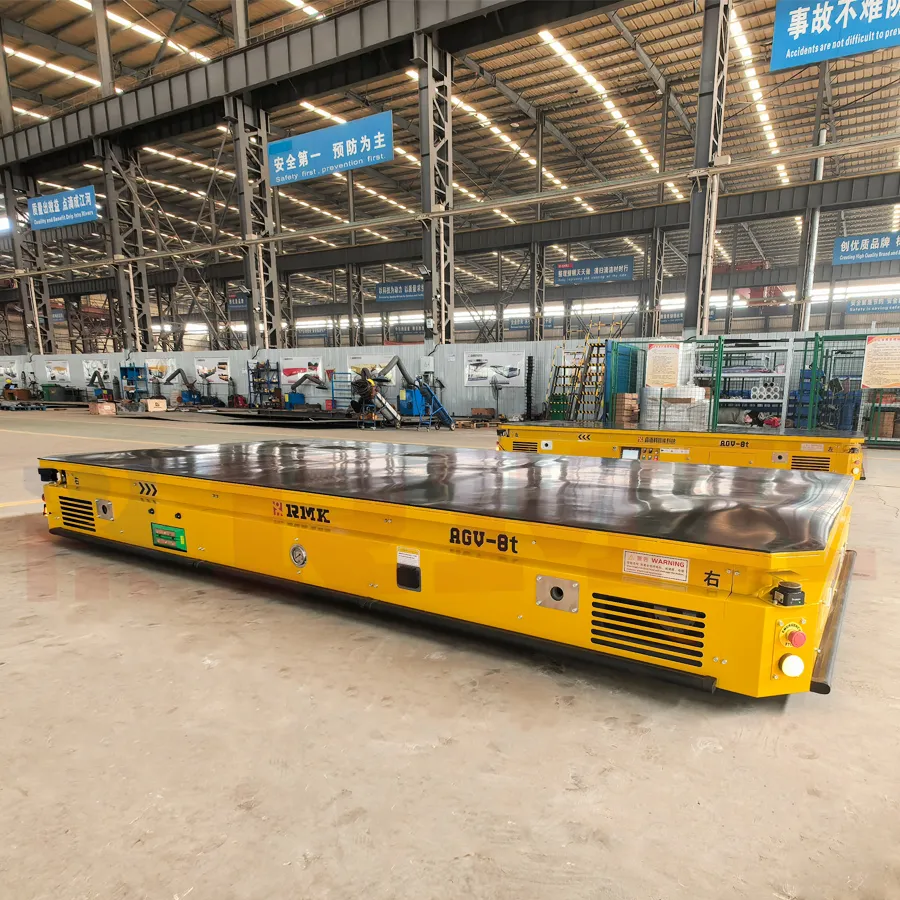
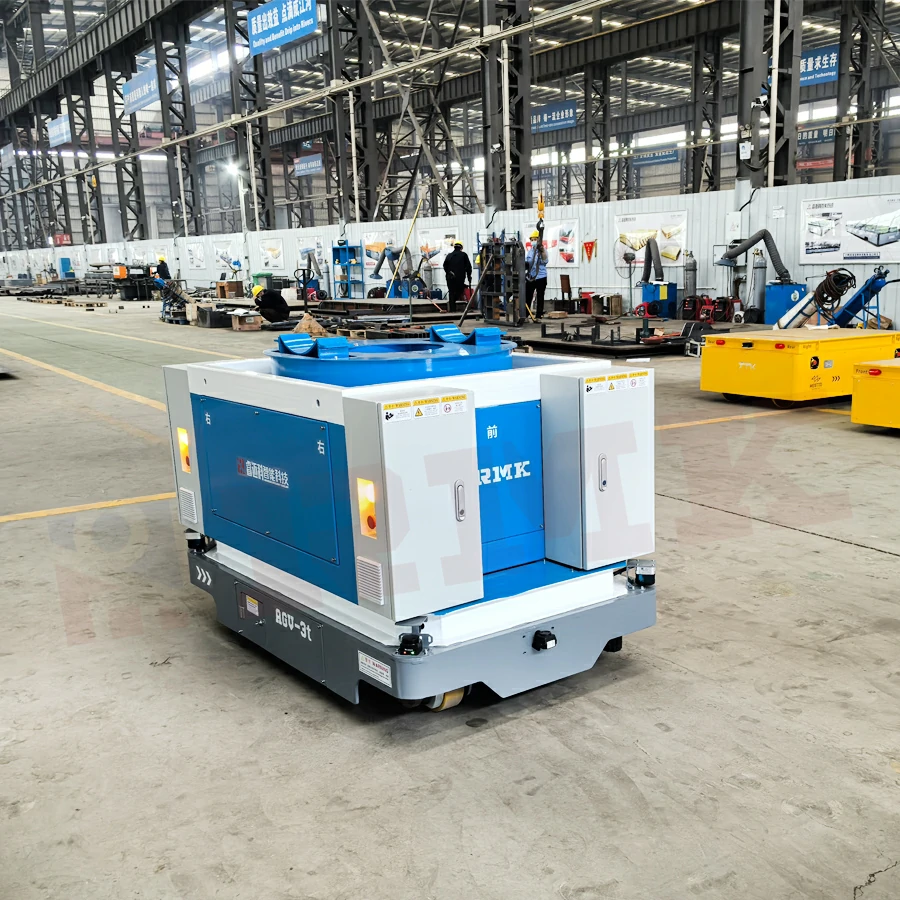
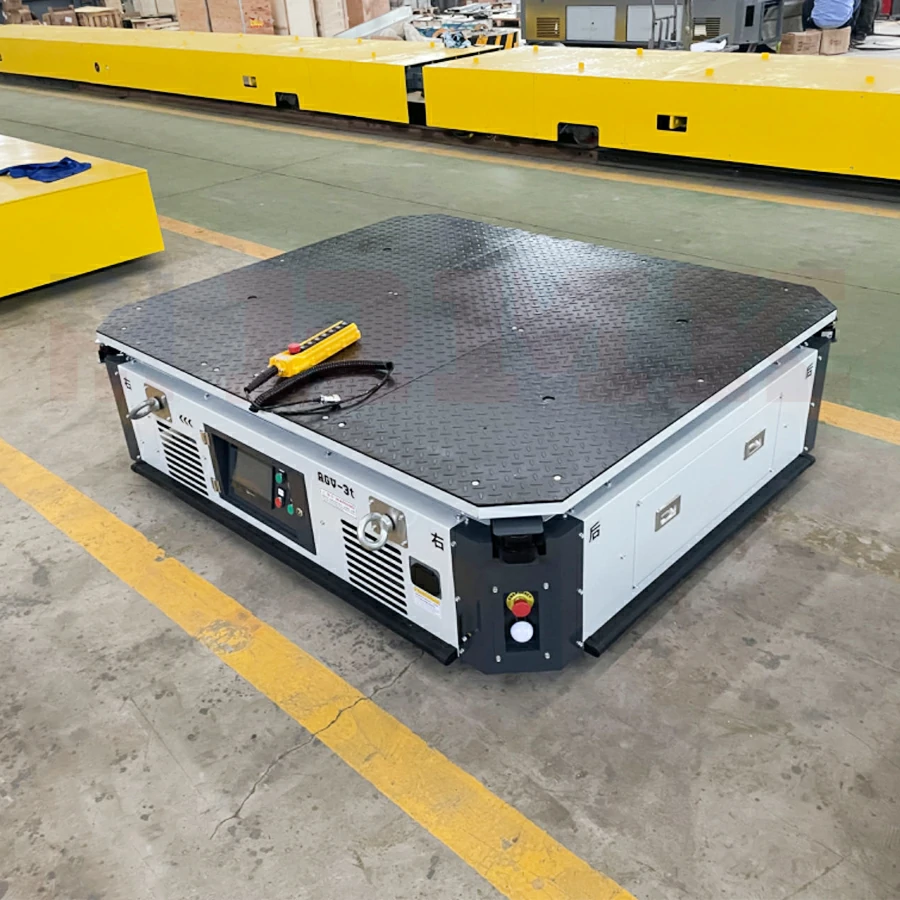
Con el rápido avance de la fabricación inteligente, los requisitos de logística interna dentro de las empresas se extienden más allá del simple manejo de materiales. Existe una demanda creciente de coordinación de múltiples tareas y capacidades operativas flexibles. Para satisfacer estas elevadas exigencias de la industria, REMARKABLE ha diseñado un vehículo guiado AGV multifuncional automatizado. Este innovador AGV inteligente integra múltiples funciones —transporte, elevación, rotación, alineación y operaciones de pick-and-place— en una sola unidad. Logra una integración profunda con las líneas de producción, permitiendo una automatización de extremo a extremo. Exploremos sus capacidades.
¿Qué es un Vehículo Guiado Automatizado AGV Multifuncional?
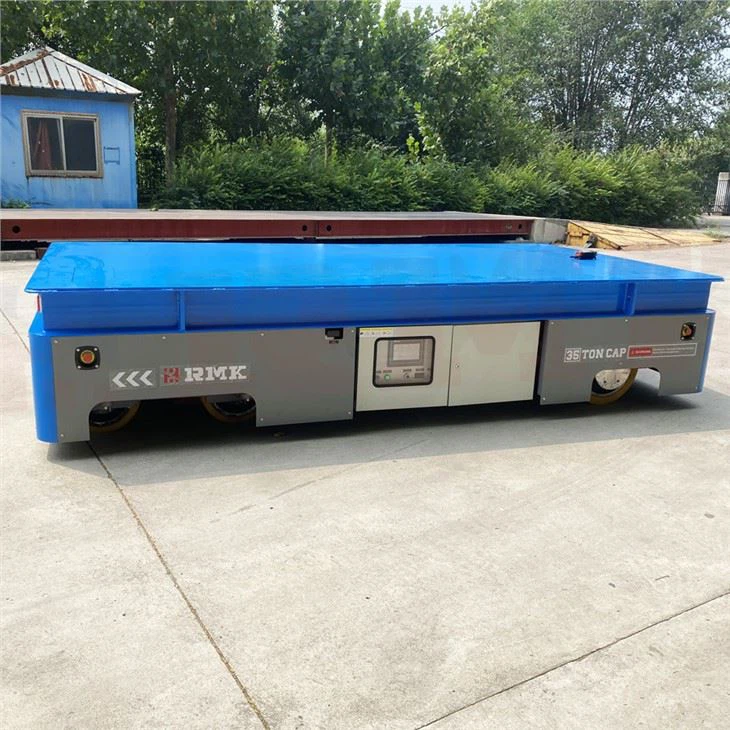
A Vehículo Guiado AGV Multifuncional es una plataforma de transporte inteligente sin conductor que integra múltiples capacidades de manejo de materiales en un solo sistema. A diferencia de los AGV estándar diseñados para una sola tarea (por ejemplo, remolque simple), un AGV multifuncional puede realizar una combinación de operaciones como carga/descarga autónoma, apilado preciso de palés, manipulación con brazo robótico y entrega sincronizada a las líneas de producción. Por lo general, emplea tecnologías de navegación avanzadas como SLAM láser o guiado visual para operar sin marcadores fijos en el piso, lo que le permite adaptarse a entornos dinámicos.
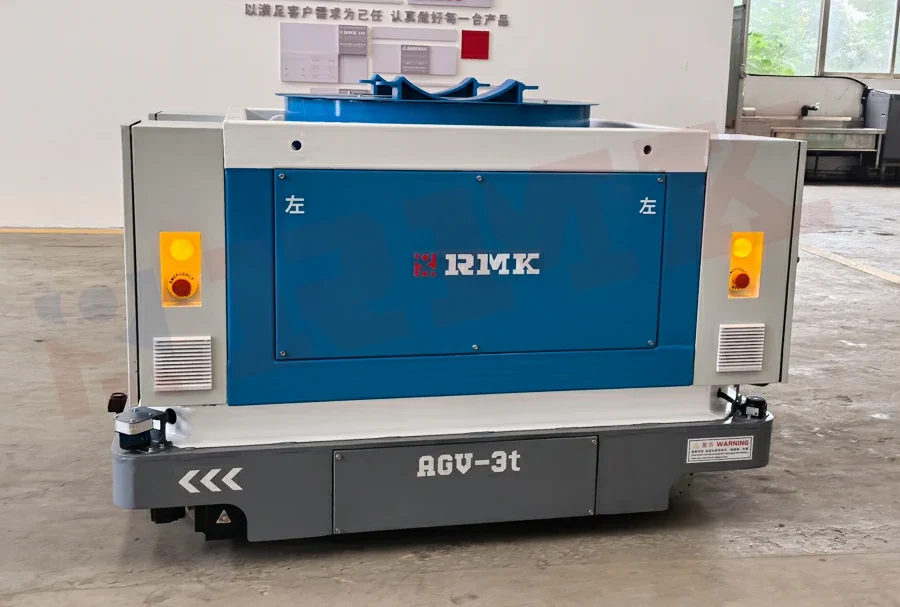
Su propósito principal es reemplazar el trabajo manual en escenarios logísticos complejos y de alta frecuencia, como mover mercancías entre estanterías de almacén y estaciones de ensamblaje, o realizar el servicio de máquinas en celdas de fabricación. Las características clave incluyen alta flexibilidad (reconfigurable para diferentes tareas), sistemas de seguridad integrados (escáneres láser, parachoques) y comunicación fluida con sistemas de control central como WMS o MES para la programación de tareas en tiempo real y la gestión del tráfico. Esto lo convierte en un componente central de la automatización de fábricas inteligentes, mejorando significativamente la eficiencia operativa y reduciendo el error humano.
Tipos
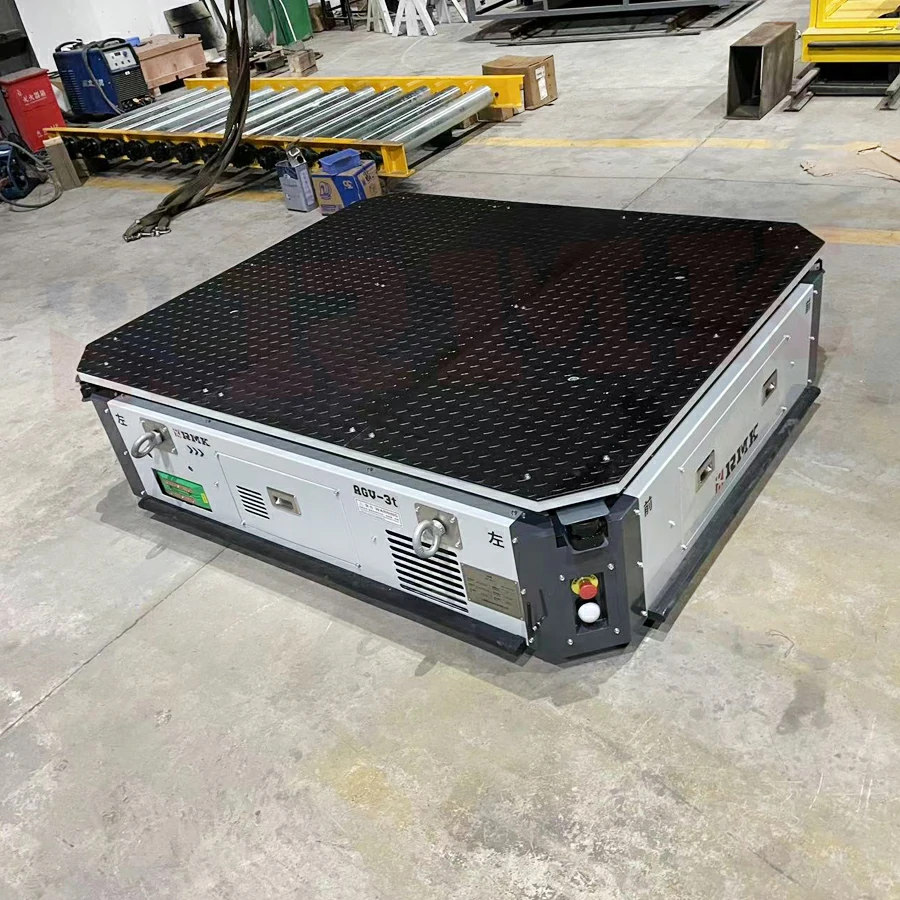
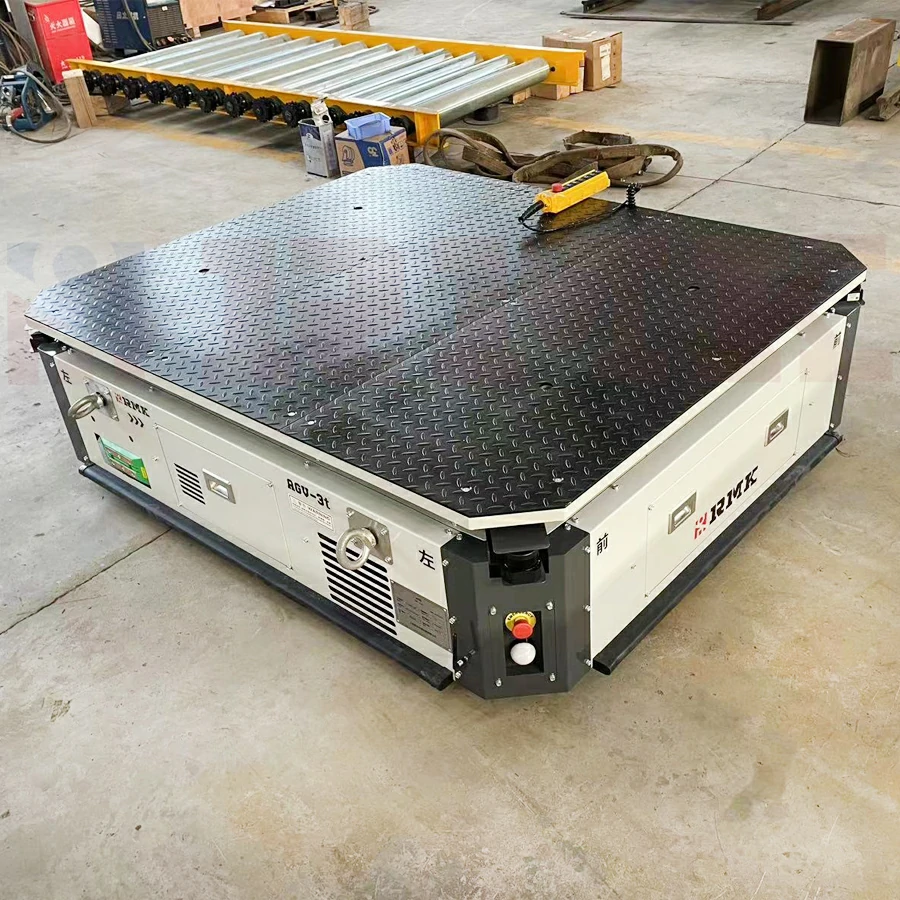
Carro transferente AGV elevador
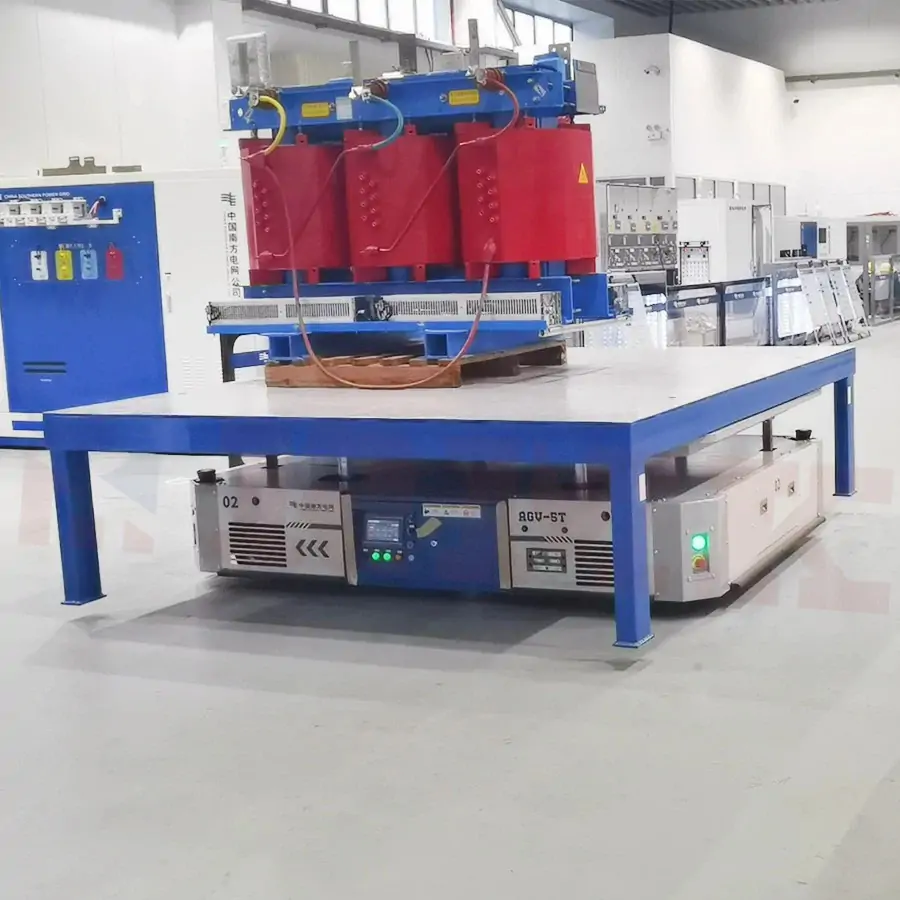
A carro de transferencia AGV elevador es un vehículo automatizado equipado con un mecanismo de elevación para el manejo de palés, moldes y materiales. Puede desplazarse bajo carga, elevarlos y transportar materiales entre diferentes estaciones de trabajo sin intervención manual.
Características:
- Funciones integradas de elevación y transporte
- Adecuado para el manejo de palés y líneas de producción
- Operación flexible en fábricas y almacenes
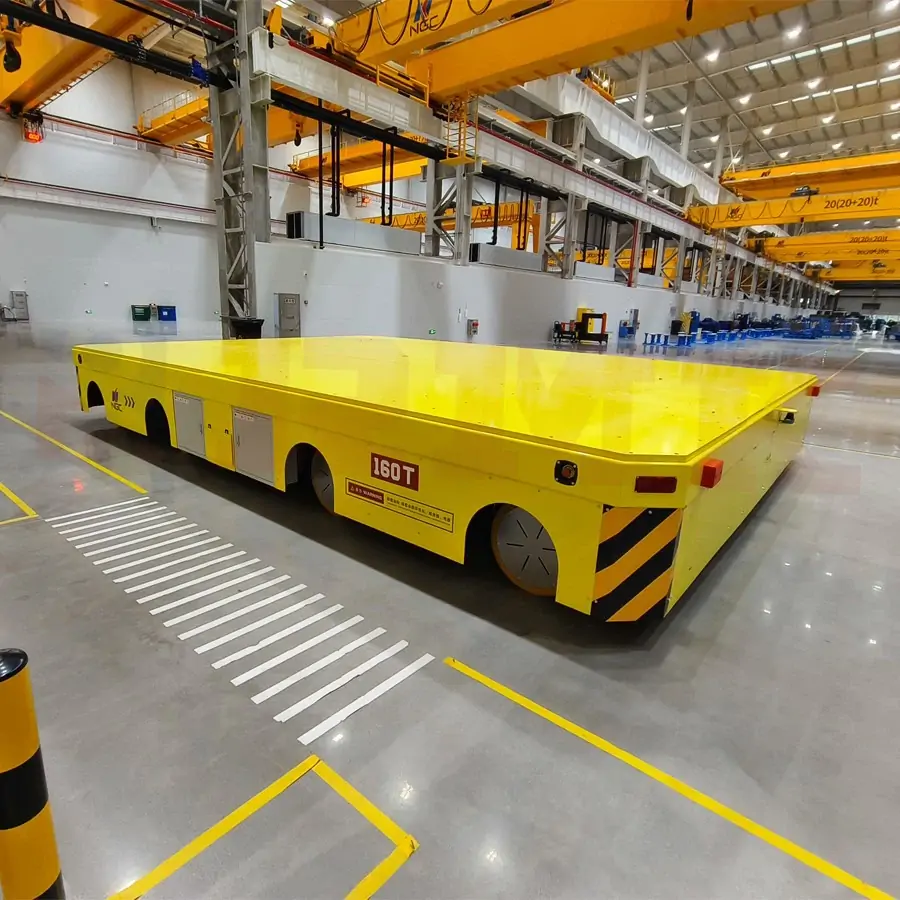
Sistema AGV de carga pesada
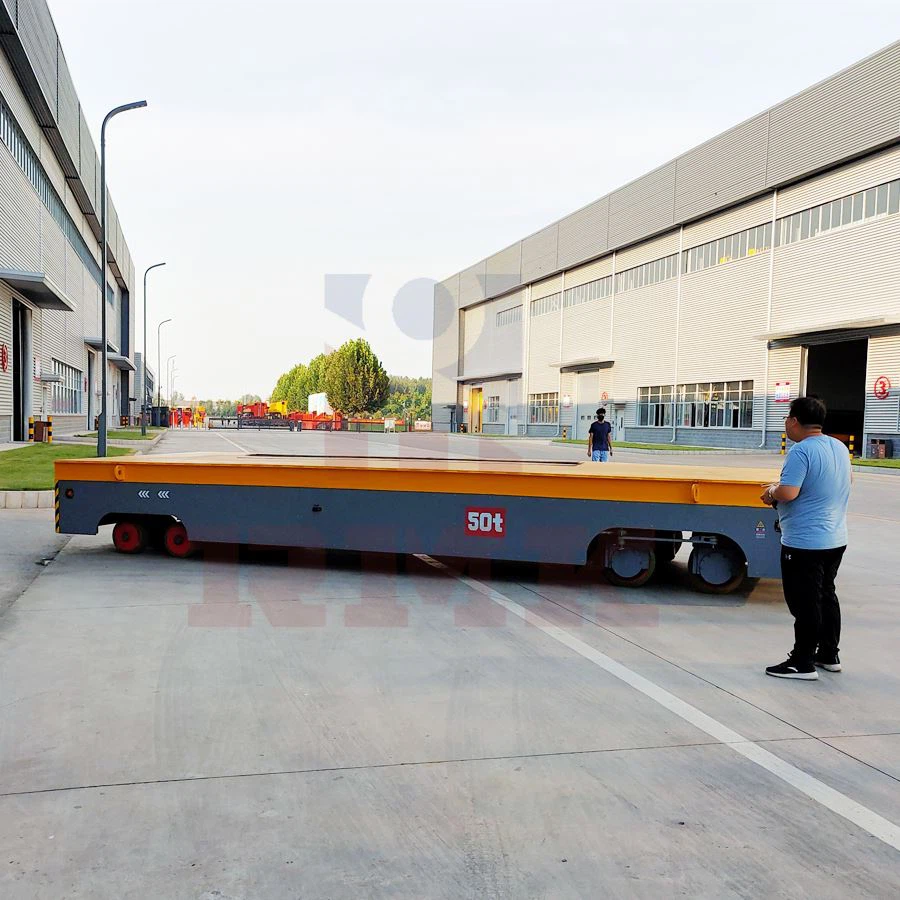
A sistema AGV de carga pesada está diseñado para transportar componentes grandes y pesados en entornos industriales. Se utiliza comúnmente para estructuras de acero, piezas de maquinaria, moldes y otras cargas de gran tamaño que requieren manejo de alta capacidad.
Características:
- Alta capacidad de carga con diseño personalizado
- Adecuado para aplicaciones industriales pesadas
- Soporta transporte automatizado de materiales
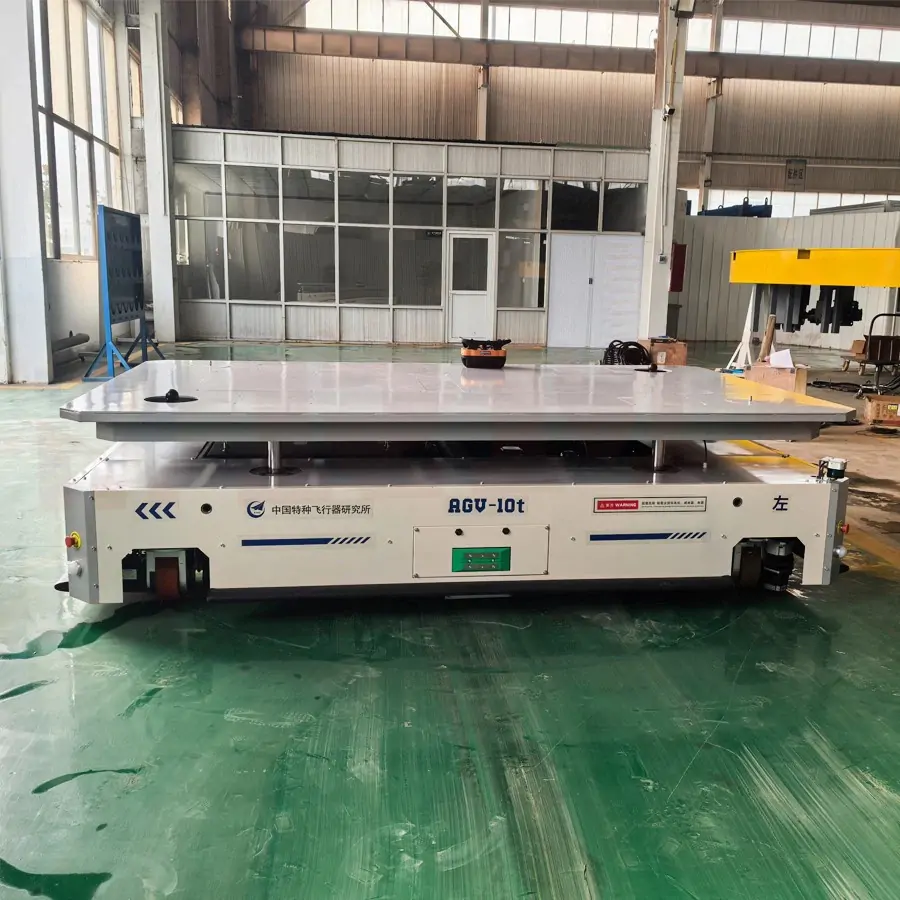
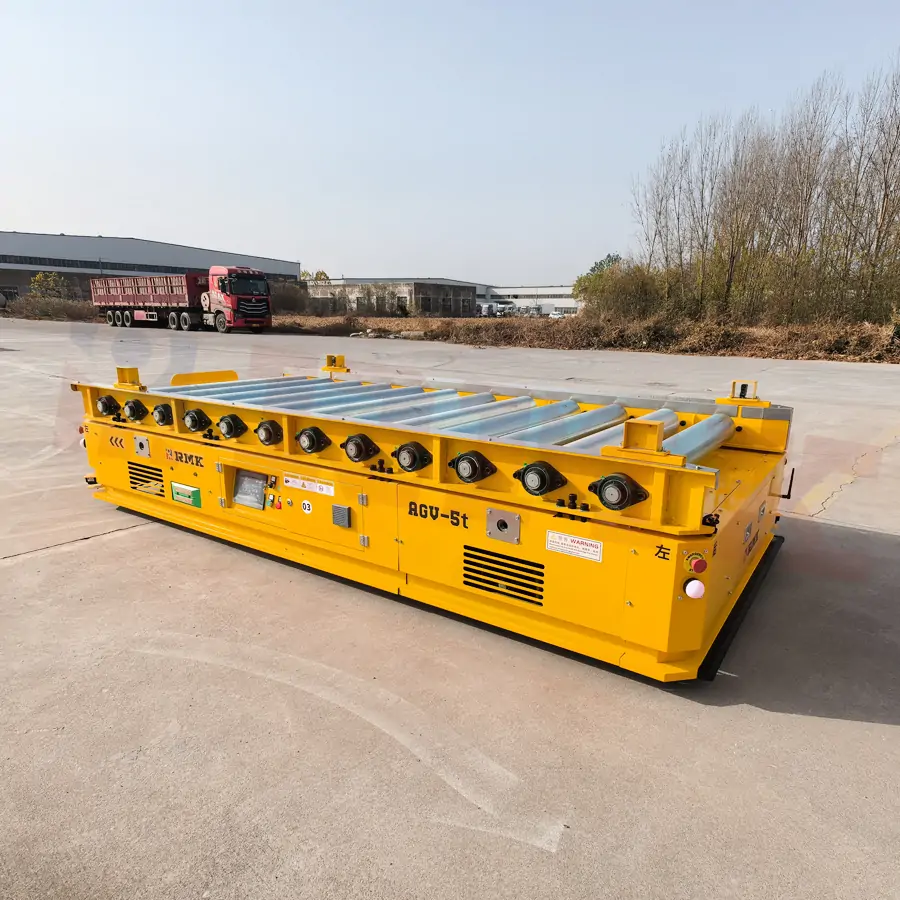
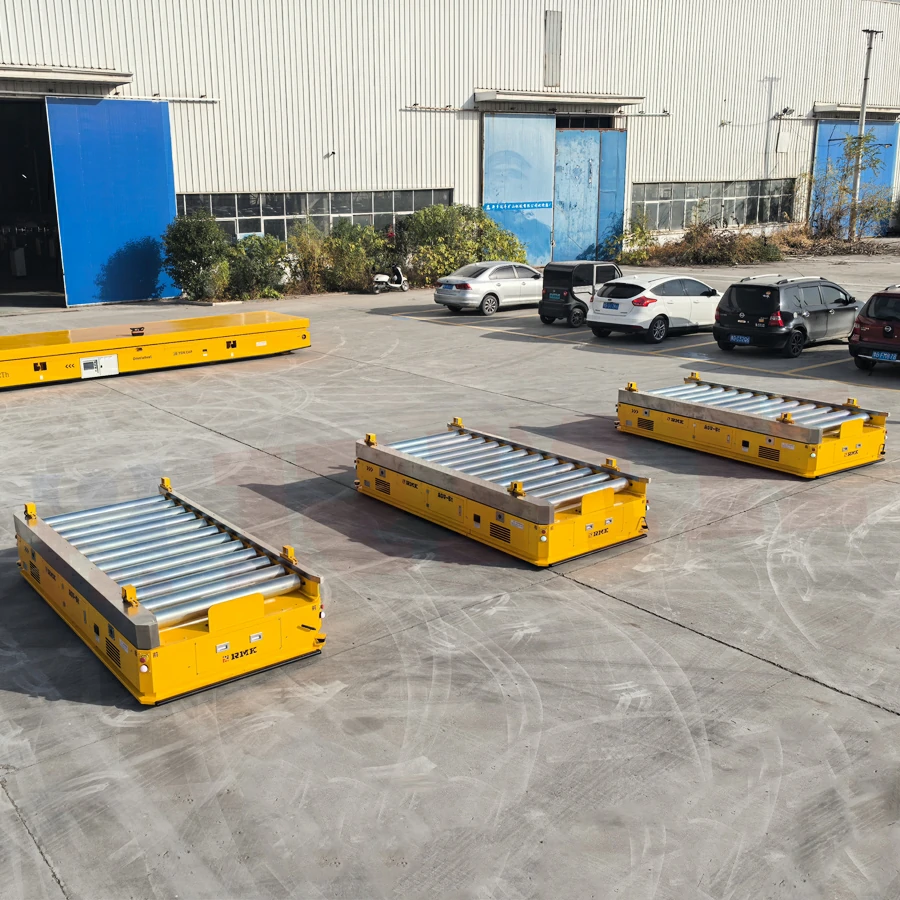
AGV de rodillos transportadores
A AGV con transportador de rodillos combina el movimiento automatizado con una plataforma de transportador de rodillos integrada. Transfiere materiales conectándose con líneas de producción, transportadores o sistemas de almacenamiento para carga y descarga automática.
Características:
- Transferencia automática de materiales entre estaciones
- Adecuado para el manejo de palés y contenedores
- Fácil integración con sistemas de producción
Carro de transferencia AGV multifuncional
A carro de transferencia AGV multifuncional combina el transporte con funciones adicionales como elevación, rotación y posicionamiento. Está diseñado para tareas de manejo complejas en fábricas automatizadas y entornos de producción flexibles.
Características:
- Múltiples funciones de manejo en un solo sistema
- Adaptable a diferentes requisitos de producción
- Soporta soluciones de automatización personalizadas
¿Cómo Funciona un Vehículo Guiado AGV?
Un Vehículo Guiado AGV opera mediante una combinación de software de control, sistemas de navegación, unidades de accionamiento y dispositivos de seguridad. El sistema recibe tareas de transporte, planifica rutas, controla el movimiento y completa el manejo de materiales automáticamente sin operación manual.
- Asignación y Programación de Tareas: El AGV recibe tareas de transporte del sistema de control y se asigna según el estado del vehículo, la carga de trabajo y las necesidades de producción.
- Planificación de rutas y navegación: El AGV utiliza sistemas de navegación como SLAM láser, guiado magnético o posicionamiento por código QR para determinar rutas y mantener un movimiento preciso.
- Conducción y Control Autónomos: El sistema de control a bordo gestiona la conducción, la dirección y el ajuste de velocidad, permitiendo que el AGV se mueva automáticamente a lo largo de la ruta planificada.
- Carga y Descarga de Materiales: Según las diferentes aplicaciones, los AGV completan el manejo de materiales mediante sistemas de elevación, remolque, transferencia por rodillos o acoplamiento con transportadores.
- Detección de Seguridad y Evitación de Obstáculos: Los sensores integrados y los dispositivos de seguridad monitorean el entorno de trabajo y detienen o ajustan el movimiento cuando se detectan obstáculos.
- Finalización de Tareas y Retroalimentación: Después de completar una tarea, el AGV informa su estado operativo al sistema de control y recibe la siguiente instrucción automáticamente.
- Gestión de Carga Automática: El AGV monitorea el estado de la batería y puede regresar automáticamente a la estación de carga para mantener una operación continua.
Ventajas
Manejo automatizado de materiales
Los vehículos guiados AGV transportan materiales automáticamente según rutas y tareas preestablecidas, reduciendo los requisitos de manejo manual y mejorando el flujo de trabajo de producción.
Operación flexible
Con diferentes métodos de navegación y estructuras personalizadas, los AGV pueden adaptarse a diversas distribuciones de fábrica, líneas de producción y requisitos de manejo de materiales.
Seguridad mejorada
Los AGV utilizan sensores, sistemas de navegación y dispositivos de seguridad para detectar obstáculos y controlar el movimiento, reduciendo los riesgos durante el transporte de materiales.
Alta eficiencia de manejo
Los sistemas AGV soportan operación continua y programación automática de tareas, ayudando a las fábricas a mejorar el flujo de materiales y reducir los retrasos en el transporte.
Reducción de requisitos de mano de obra
Al reemplazar tareas repetitivas de transporte manual, los AGV reducen la carga de trabajo del operador y permiten que los trabajadores se concentren en operaciones de mayor valor.
Fácil integración del sistema
Los AGV pueden conectarse con WMS, MES y sistemas de producción automatizados para soportar operaciones de fábrica inteligente y gestión basada en datos.
Aplicaciones
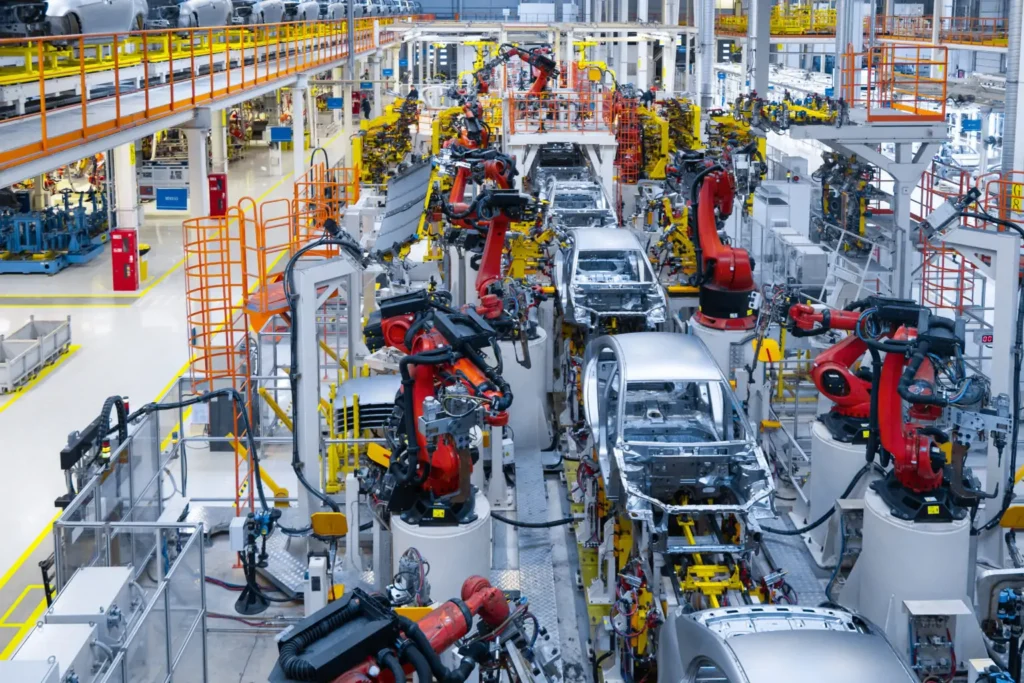
Fabricación de automóviles
Los AGV se utilizan para transportar componentes, piezas de motor, paquetes de baterías y materiales de ensamblaje entre estaciones de producción.
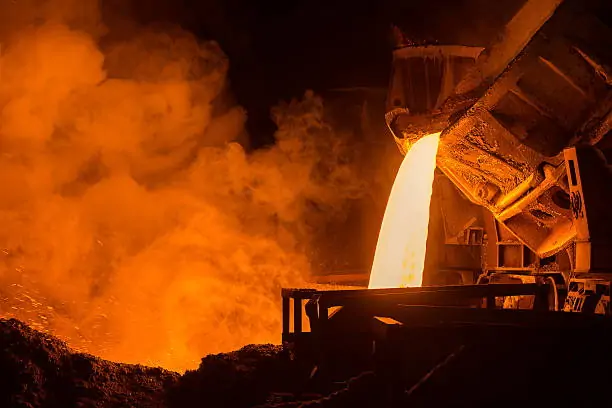
Industria del Acero y el Metal
Los AGV de carga pesada manejan bobinas de acero, moldes y grandes componentes metálicos en plantas de fabricación y talleres de procesamiento.
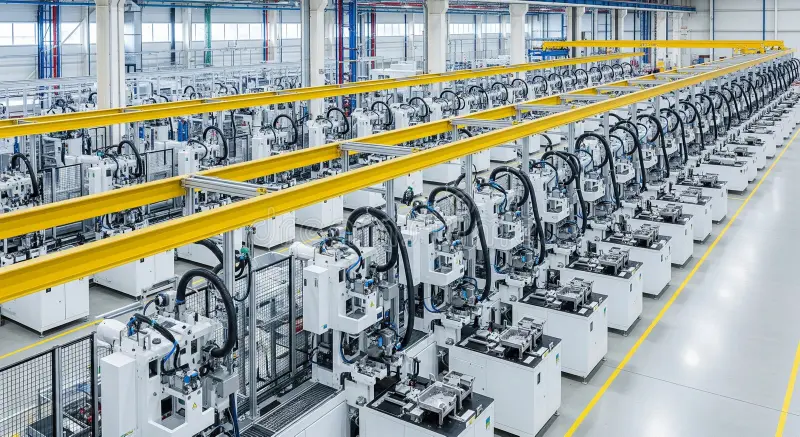
Fabricación de maquinaria
Los sistemas AGV soportan el movimiento de piezas de maquinaria, herramientas y piezas de trabajo pesadas durante los procesos de producción y ensamblaje.
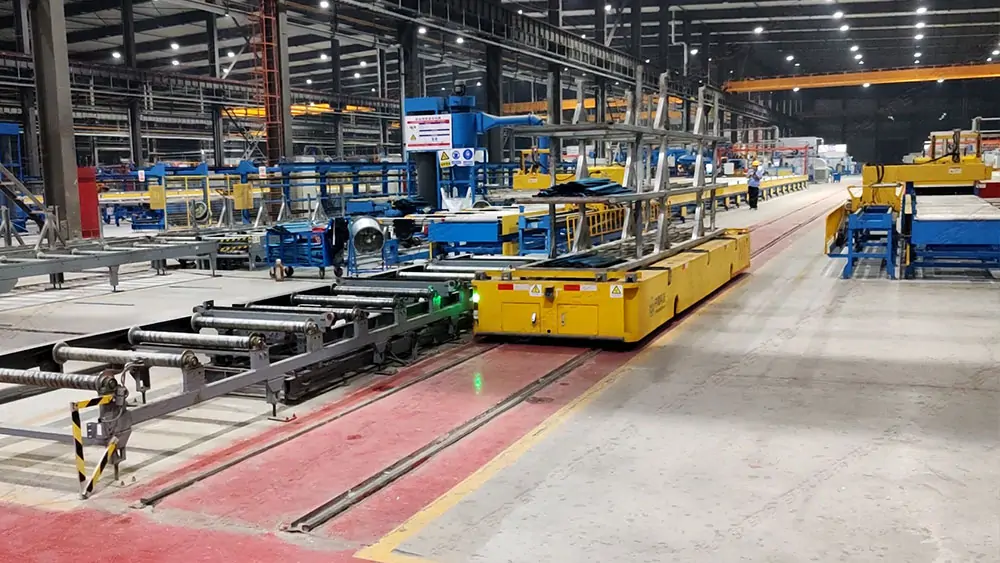
Almacenamiento y logística
Los AGV se utilizan para el transporte de palés, manejo en almacenes y distribución de materiales en almacenes automatizados y centros logísticos.
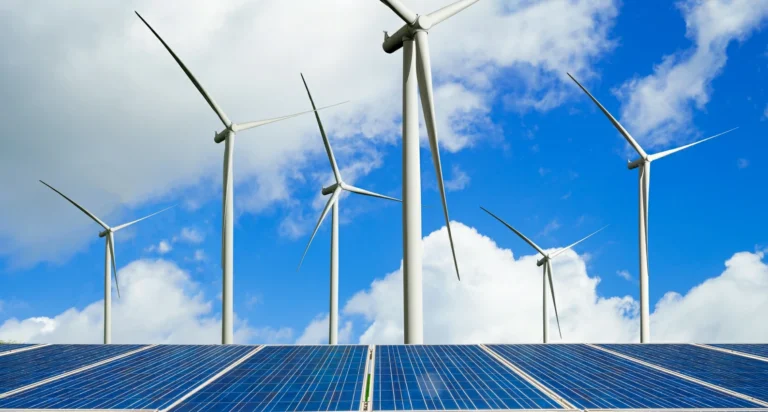
Industria de baterías y nuevas energías
Los AGV transportan módulos de batería, materiales de producción y componentes en entornos de producción limpia con altos requisitos de posicionamiento.
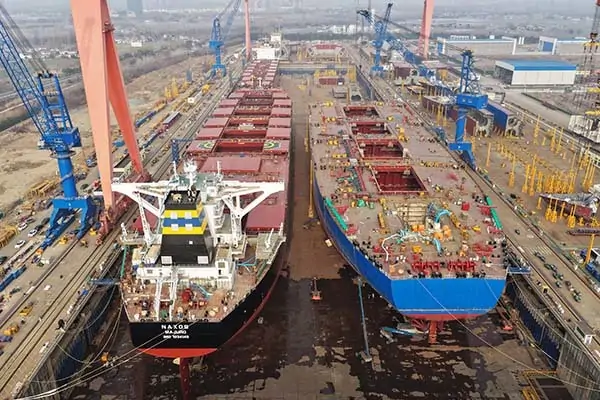
Construcción Naval y Equipos Pesados
Los AGV de servicio pesado mueven estructuras de gran tamaño, piezas de equipo y componentes fabricados en astilleros e instalaciones de fabricación grandes.
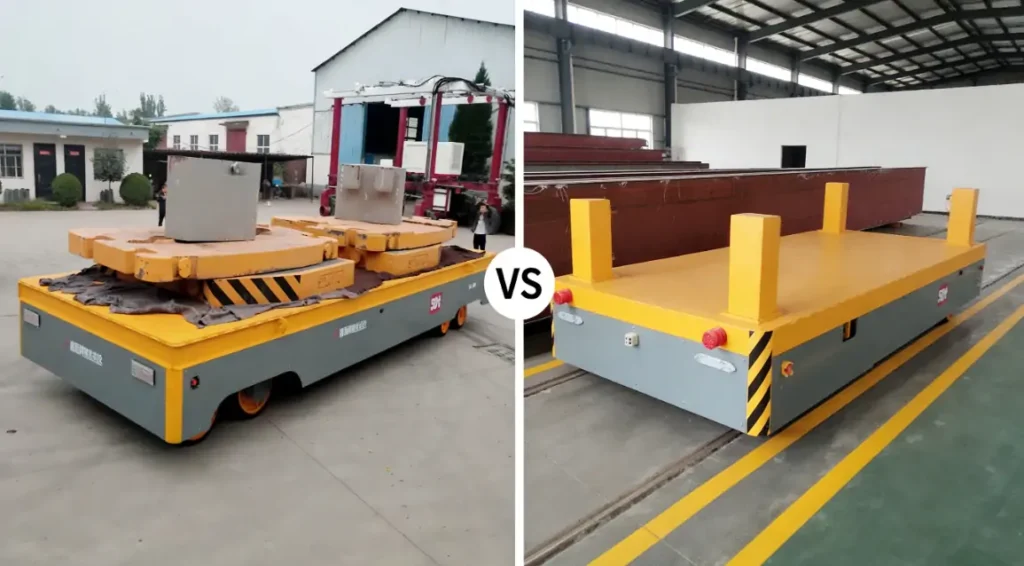
Vehículo guiado AGV vs carro de transferencia tradicional
Los vehículos guiados AGV y los carros de transferencia tradicionales se utilizan para el transporte industrial de materiales, pero difieren en navegación, flexibilidad, nivel de automatización y escenarios de aplicación.
| Comparación | Vehículo Guiado Automatizado (AGV) | Carro de Transferencia Tradicional |
|---|---|---|
| Método de funcionamiento | Navegación automática y operación autónoma | Control manual, control remoto u operación en ruta fija |
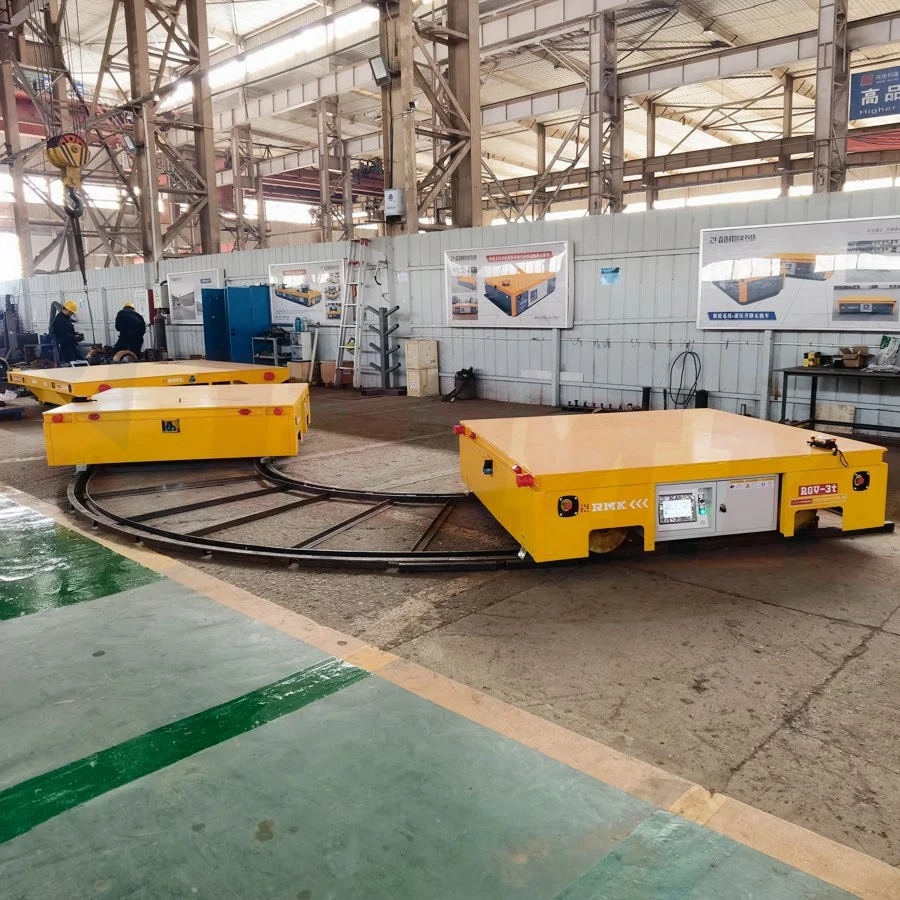
| Sistema de navegación | SLAM láser, guiado magnético, código QR, visión o navegación híbrida | Carril, cable o ruta fija |
| Flexibilidad | Alta flexibilidad con rutas y diseños ajustables | Limitado por carriles o rutas de transporte predefinidas |
| Capacidad de carga | Disponible desde modelos de servicio ligero hasta carga pesada | Adecuado para manejo de materiales medianos y pesados |
| Instalación | Sin carril fijo requerido para la mayoría de los modelos | Generalmente requiere instalación de carril o infraestructura fija |
| Aplicación | Fábricas automatizadas, almacenes, líneas de producción flexibles | Transporte industrial pesado, rutas de transferencia de materiales fijas |
Los vehículos guiados AGV son adecuados para fábricas que requieren manejo de materiales flexible y automatizado, mientras que los carros de transferencia tradicionales se utilizan comúnmente para transporte de carga pesada en rutas fijas. La elección depende de los requisitos de carga, la distribución de producción y las necesidades de automatización.
Cómo Elegir el Fabricante Adecuado de Vehículos Guiados AGV
Los robots AGV multifuncionales son equipos hechos a medida que requieren capacidades sustanciales por parte de los fabricantes. Al seleccionar proveedores, concéntrese en los siguientes aspectos clave:
- Capacidades de I+D Internas: Opte por fabricantes con desarrollo propio de tecnologías centrales, como sistemas de navegación, para garantizar una integración funcional profunda y actualizaciones sostenibles del sistema.
- Capacidad de integración multifuncional: Posee una alta capacidad de personalización para modularizar estructuras complejas como elevación, rotación y superficies de trabajo, satisfaciendo las demandas de automatización multiproceso.
- Experiencia en proyectos intersectoriales: Examine los casos de implementación en sectores de alto estándar como generación de energía, conservación de agua, aeroespacial y nuevas energías para verificar la madurez técnica y la capacidad de ingeniería.
- Fiabilidad del equipo: Asegúrese de que los dispositivos se sometan a pruebas rigurosas y certificaciones de seguridad industrial, ofreciendo un funcionamiento estable que cumpla con los requisitos de seguridad y precisión.
- Sistema de servicio postventa: Un equipo de soporte integral y un mecanismo de respuesta rápida garantizan la resolución inmediata de fallos en los equipos, minimizando las pérdidas por tiempo de inactividad.
Los fabricantes de vehículos guiados AGV que poseen estas capacidades ofrecen soluciones de transporte genuinamente fiables, eficientes y seguras, permitiendo la actualización de la automatización de la producción.
Conclusión:
Los vehículos guiados AGV proporcionan una solución eficiente para el manejo automatizado de materiales al combinar navegación autónoma, control inteligente y funciones de transporte flexibles. Desde AGV elevadores y sistemas AGV de servicio pesado hasta AGV con transportador de rodillos y carros de transferencia AGV multifuncionales, diferentes modelos pueden satisfacer diversos requisitos de transporte en fábricas.
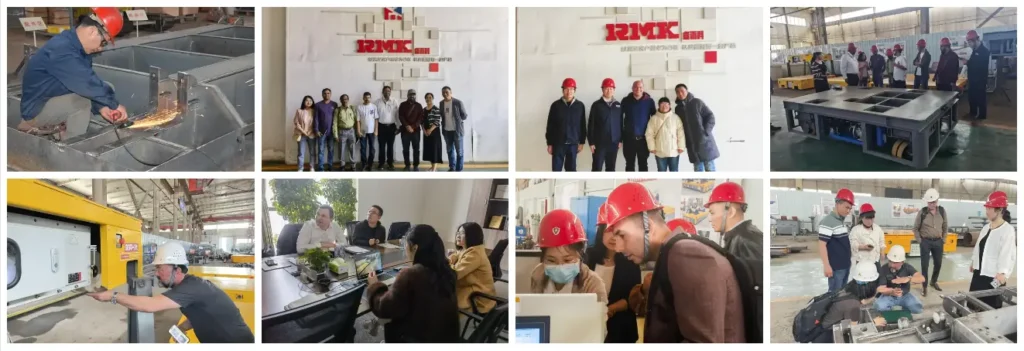
REMARCABLE se especializa en carros de transferencia AGV personalizados y soluciones automatizadas de manejo de materiales para aplicaciones industriales. Con experiencia en exportación, soporte de ingeniería profesional y capacidades de personalización flexibles, REMARKABLE proporciona sistemas AGV diseñados para diferentes capacidades de carga, distribuciones de producción y requisitos de automatización.
Ya sea que necesite un vehículo AGV estándar o una solución de manejo de servicio pesado personalizada, REMARKABLE puede proporcionar el equipo adecuado y soporte técnico. Póngase en contacto con nosotros para discutir los requisitos de su proyecto AGV.
PREGUNTAS FRECUENTES
¿Qué es un vehículo guiado AGV?
Un vehículo guiado AGV es un vehículo automatizado de manejo de materiales que mueve mercancías sin conducción manual. Utiliza sistemas de navegación y software de control para transportar materiales en fábricas, almacenes y áreas de producción.
¿Cómo funciona un vehículo guiado AGV?
Un AGV recibe tareas de transporte de un sistema de control, planifica una ruta a través de su sistema de navegación y se conduce automáticamente para completar las operaciones de manejo de materiales.
¿Qué sistemas de navegación se utilizan en los AGV?
Los métodos comunes de navegación de AGV incluyen SLAM láser, guiado magnético, posicionamiento por código QR, navegación visual y sistemas de navegación híbridos.
¿Cuál es la diferencia entre AGV y AMR?
Los AGV generalmente siguen rutas predefinidas utilizando sistemas de navegación, mientras que los AMR emplean sensores y algoritmos avanzados para identificar entornos y planificar rutas más flexibles.
¿Qué capacidad de carga puede manejar un carro de transferencia AGV?
Los carros de transferencia AGV pueden manejar cargas desde varias toneladas hasta cientos de toneladas, dependiendo del diseño, la estructura y los requisitos de la aplicación.
¿Se pueden personalizar los vehículos guiados AGV?
Sí. Los sistemas AGV se pueden personalizar con diferentes capacidades de carga, funciones de elevación, plataformas transportadoras, métodos de navegación y sistemas de control según las necesidades de producción.
¿Dónde se utilizan los vehículos AGV?
Los vehículos AGV se utilizan en fabricación automotriz, almacenes, centros logísticos, plantas siderúrgicas, fábricas de maquinaria, producción de baterías y otras aplicaciones industriales.
¿Qué industrias utilizan AGV de servicio pesado?
Los AGV de servicio pesado se utilizan ampliamente en las industrias del acero, construcción naval, aeroespacial, maquinaria pesada, equipos energéticos y fabricación de componentes grandes.