Introduction
In the field of heavy-duty industrial handling, many factories face challenges like insufficient battery life or easily worn cables when moving hundreds of tons of molds or steel coils. The low-voltage transfer cart was developed to solve these pain points. Using the rails themselves for power delivery perfectly balances travel distance with operational efficiency. In fast-paced production lines, its “infinite autonomy” has become an irreplaceable asset. Below, we will take a deep dive into the working principles, core classifications, and real-world performance of this low-voltage equipment in complex industrial settings.
Working Principle
A low-voltage transfer car essentially transforms the rails from simple load-bearing supports into a massive power distribution network. Its operation consists of three main parts:
- Step-down and Power Feeding: First, a ground-based transformer reduces standard industrial power (usually 380V) to a safe voltage of 36V. This voltage level is far below the threshold of human perception, meaning there is no danger of electric shock even if workers accidentally touch the rails.
- Insulation Treatment: To prevent current leakage into the ground, a comprehensive electrical isolation process is conducted during rail installation. This includes special insulation pads and bolts to ensure rail-to-rail resistance is no less than 10kΩ. Simultaneously, high-strength insulation sleeves are embedded between the wheel axles of the low-voltage rail transfer car to lock in the current and prevent leakage.
- Energy Conversion: The low-voltage transfer cart operates much like a ground-level “tram.” Conductive copper blocks installed under the chassis maintain friction with the rails to pick up the 36V safety power. This current is then restored to 380V via an onboard step-up transformer or converted to DC to provide ample power to the motor. Even a low-voltage coil transfer cart designed for heavy coils can start, stop, and carry heavy loads smoothly over long distances.
In short, the operation of a low-voltage transfer cart is about “electrifying” the tracks: a ground transformer drops 380V power to a 36V safety level and feeds it into insulated rails; the vehicle picks up this power in real-time via conductive sliders and steps it back up to drive the motor, completing heavy-duty tasks without the tangle of cables.
Types
In actual production, the low-voltage transfer cart is not a one-size-fits-all machine. It has evolved into various models to match specific load shapes and process logic.
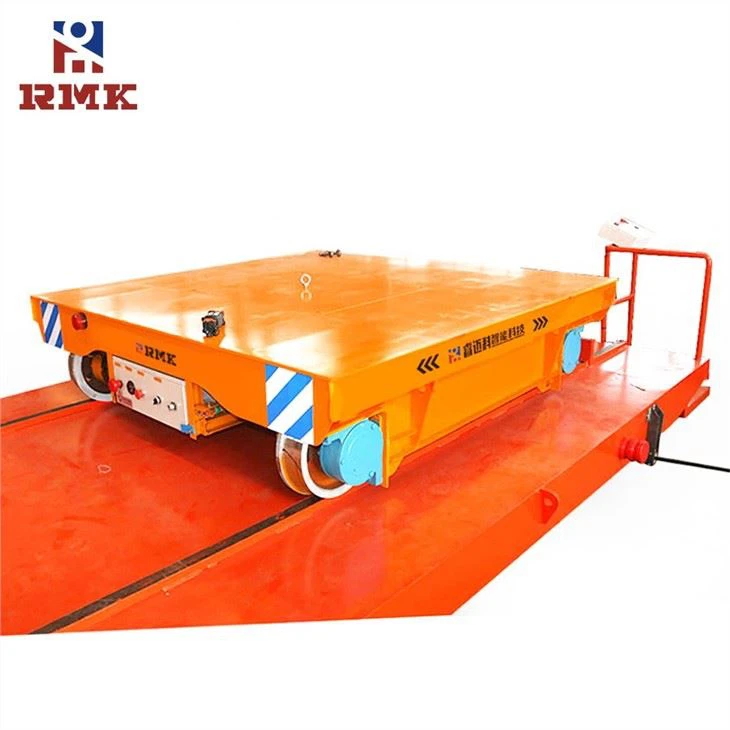
KPD Series Universal Low-Voltage Rail Flat Car
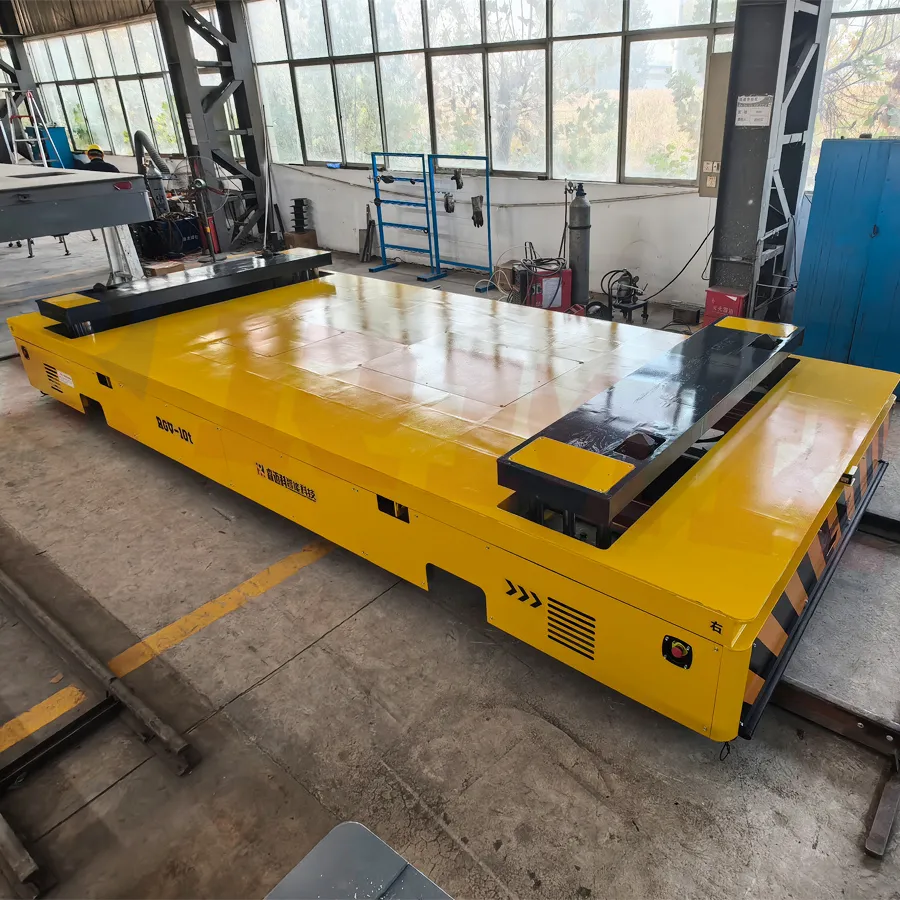
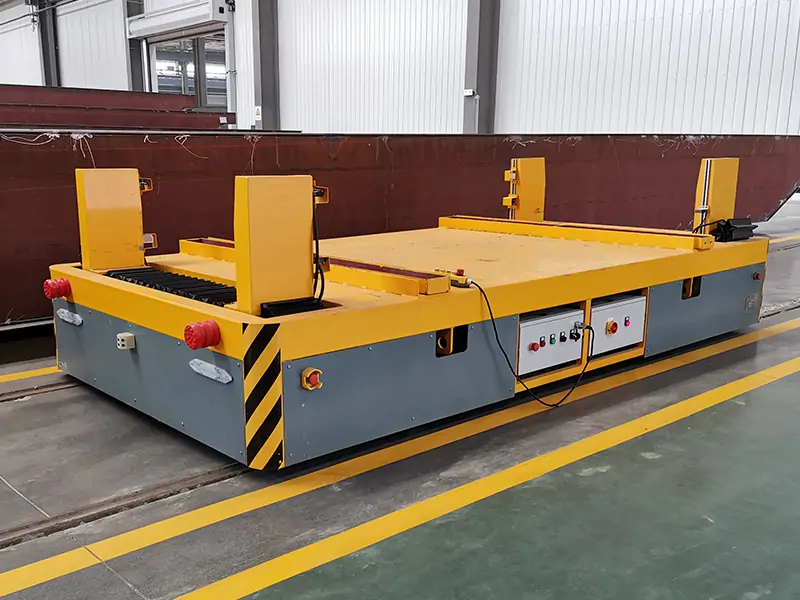
This is the most fundamental and classic model, mainly used for cross-workshop transfer of standard-sized molds, structural components, or large equipment.
- Load Range: 1t – 500t (Customizable)
- Travel Speed: 0 – 30m/min (Variable frequency speed control)
- Control Mode: Wired pendant, wireless remote, or PLC automation
- Rail Requirement: P18 – P50 insulated rails
Low Voltage Coil Transfer Cart
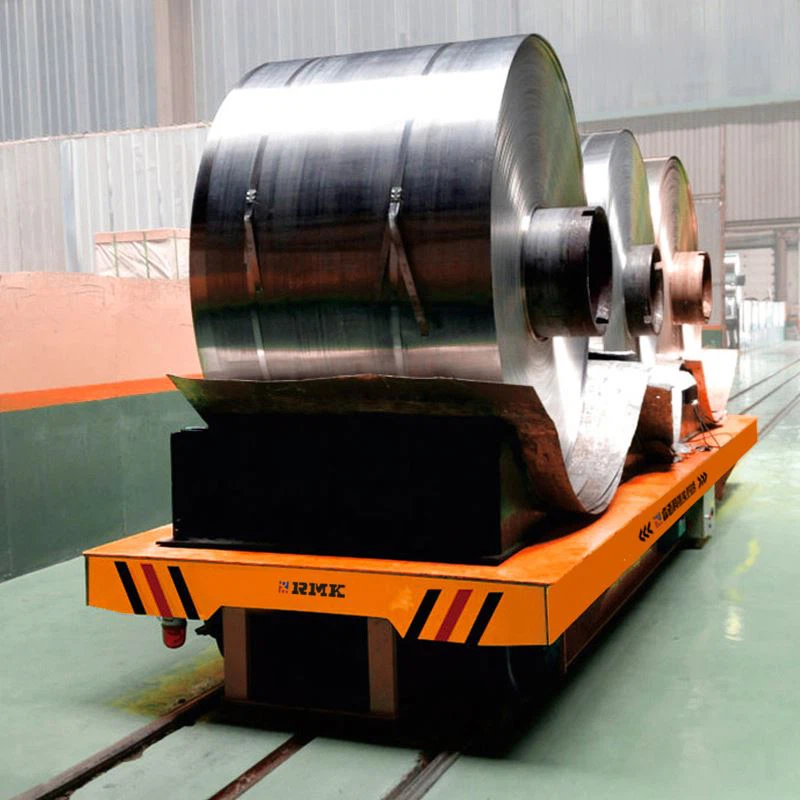
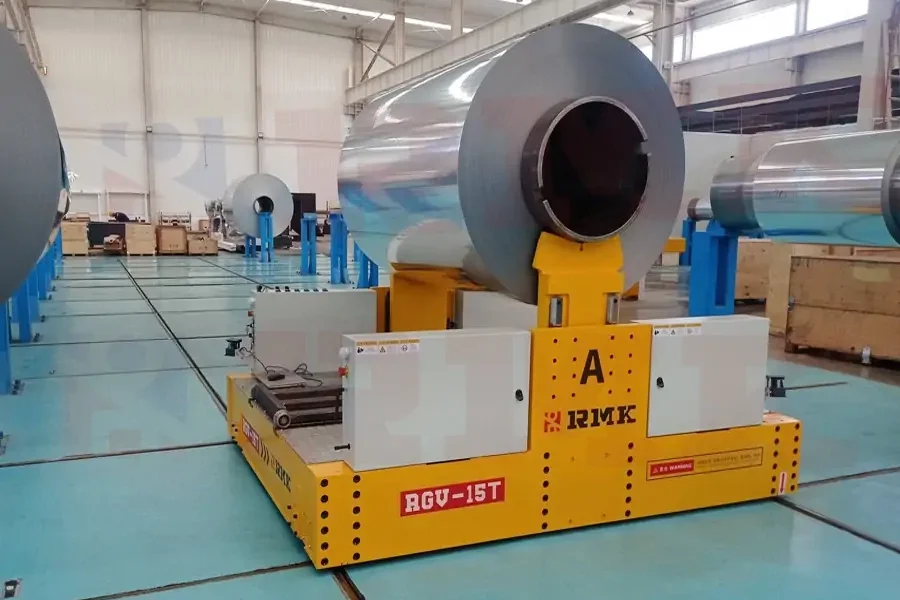
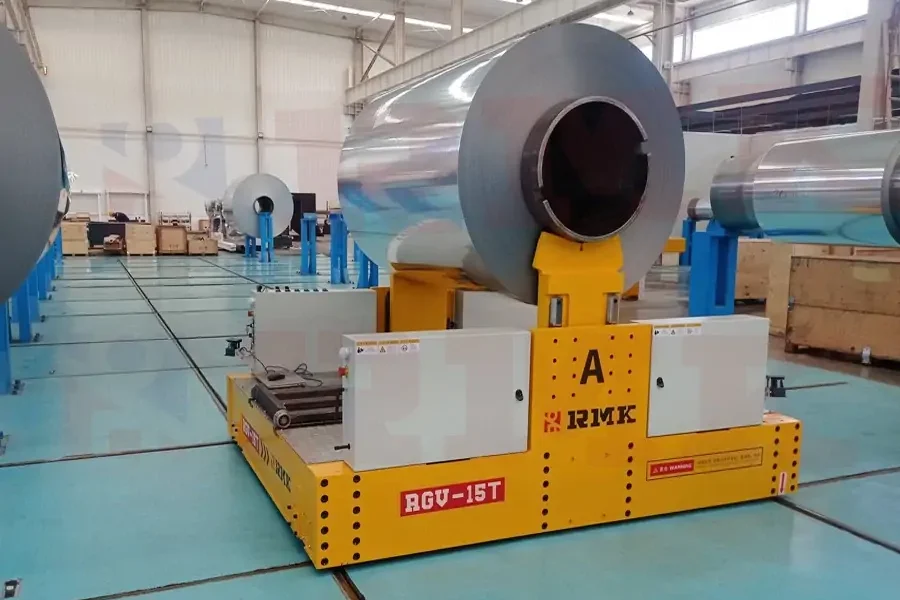
Specifically designed for cylindrical cargo, the platform is equipped with removable V-shaped or U-shaped frames to prevent steel or aluminum coils from rolling during starts and stops.
- Cargo Types: Steel coils, aluminum coils, cable reels, round pipes
- Safety Configuration: Intelligent collision sensing, sound/light alarms, and limit switches
- Custom Features: Adjustable V-frame angles and optional rubber padding to protect coil surfaces.
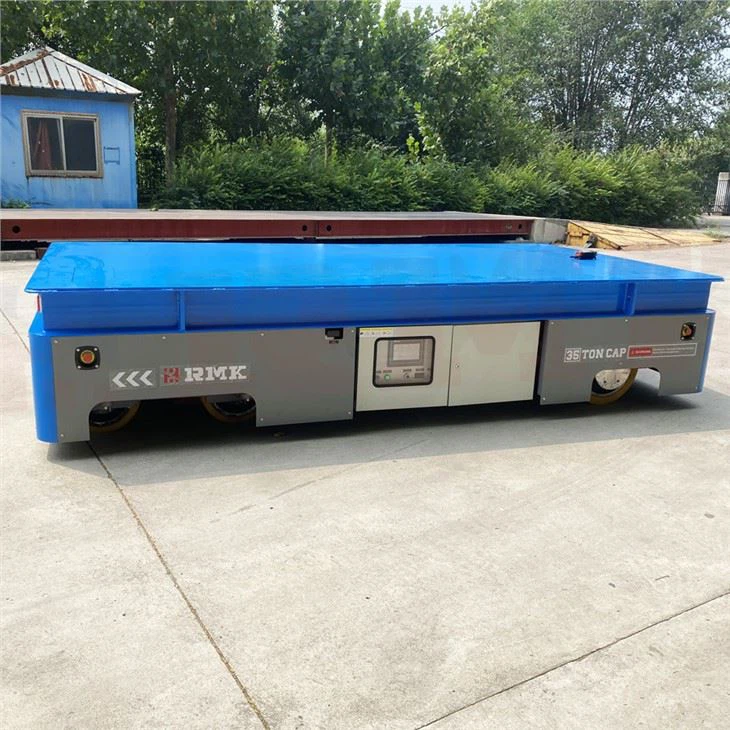
Low-Voltage Rail Automated Transfer Car
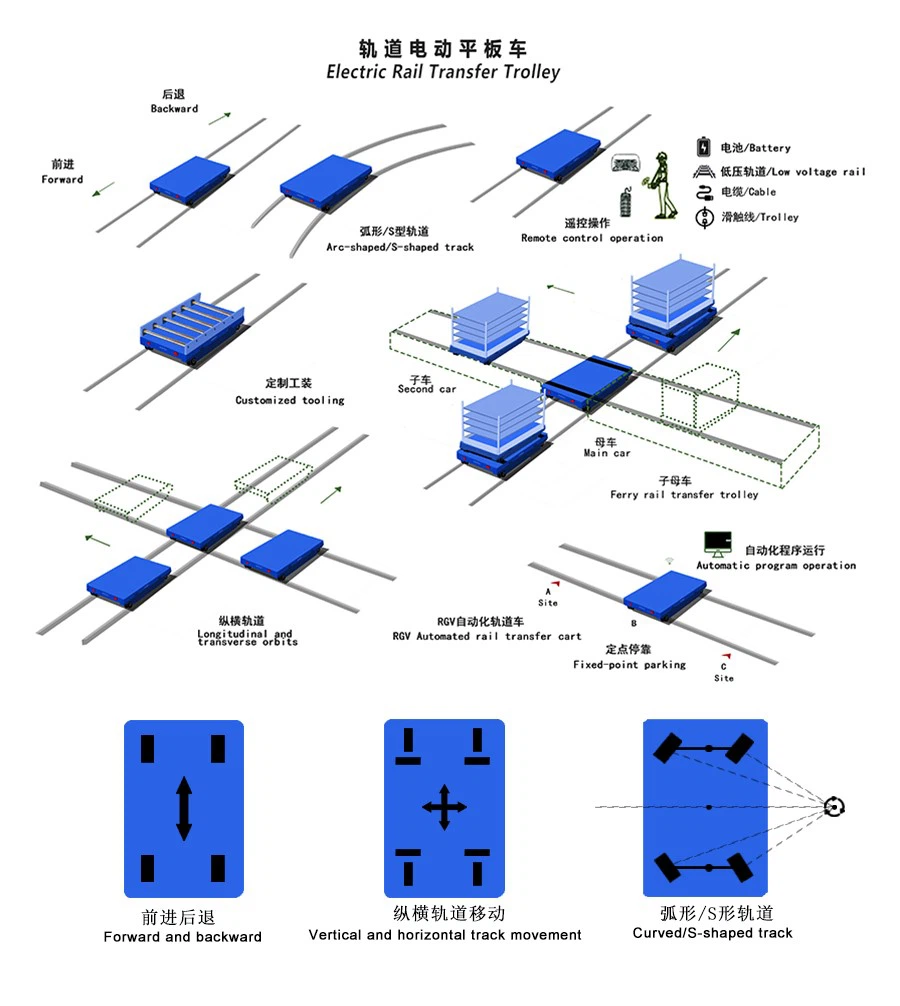
Integrated with industrial vision or laser sensors, this model links with onsite dispatch systems for unmanned handling.
- Positioning Accuracy: ±5mm – ±10mm
- Communication: 4G/5G, Wi-Fi, Bluetooth
- Power Mode: Continuous rail power + supercapacitor for short-term compensation
- Scenario: 24-hour high-frequency smart manufacturing lines.

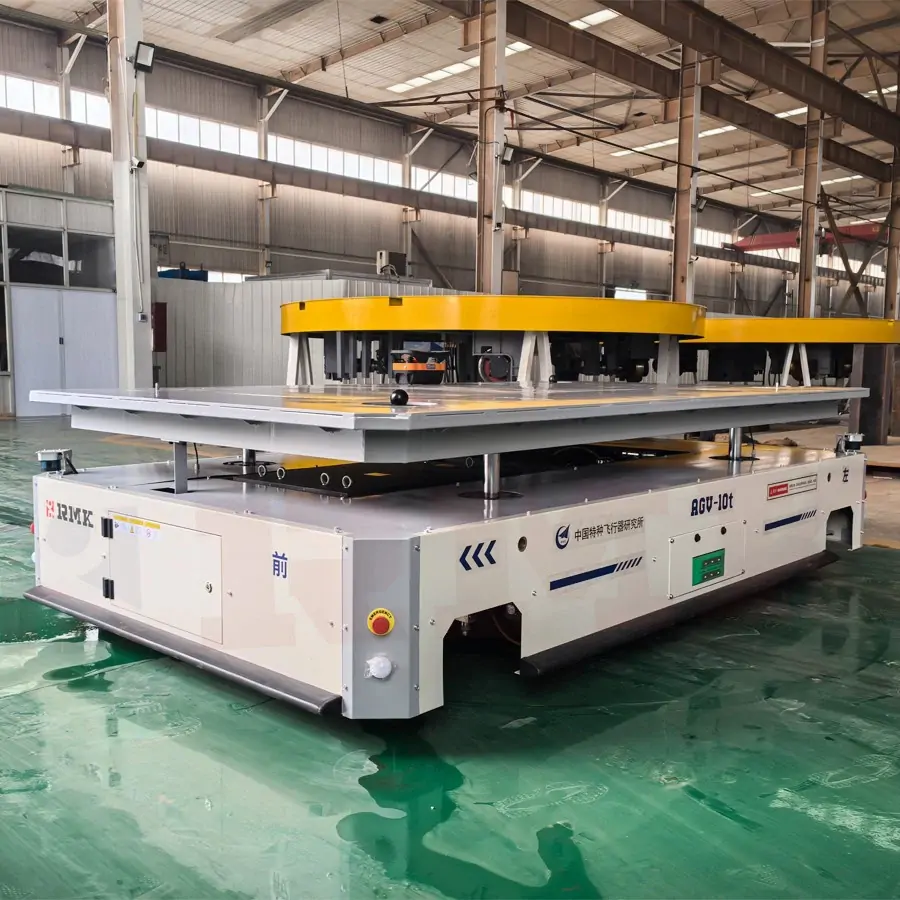
Turning/Turntable Low-Voltage Rail Car
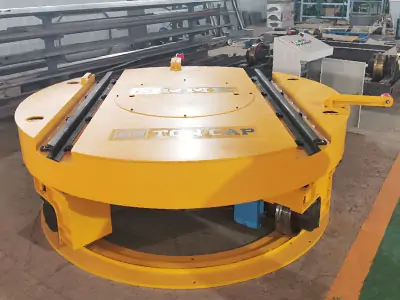
Through specialized wheel arrangements or by working with ground turntables, this solves the straight-line limitation of the low-voltage rail transfer cart, allowing for smooth transitions through S-curves or cross-intersections.
- Turning Radius: Customized based on wheelbase (usually starting from 5m)
- Operation: Automatic induction steering and deceleration control
- Turntable Diameter: Covers the full series from 2m to 10m.
The core of a low-voltage rail transfer car always revolves around “reliable power pickup” and “safe handling.” Companies can find the most economical and efficient configuration based on their cargo’s physical traits and automation needs.
Advantages
The reason more heavy industry customers are turning to the low-voltage rail transfer cart is that it solves the conflict between “continuous power” and “operational safety.”
- Unlimited Travel Distance: Unrestricted by cable length or battery capacity, as long as the rails are laid, the low-voltage transfer cart can travel extremely long distances, perfect for large multi-bay factories.
- High-Frequency Continuous Work: With real-time rail power, it runs 24/7 without charging downtime, directly boosting production line turnover.
- Superior Safety: The rails carry only 36V safety voltage, posing no threat to personnel and eliminating chemical risks associated with flammable or explosive batteries.
- Easier Maintenance: Without fragile cables, expensive lithium batteries, or complex hydraulics, the mechanical structure is simple and reliable, slashing spare part and downtime costs.
The low-voltage rail-guided transport vehicle represents a revolutionary step forward in power supply technology, resolving the long-standing conflict between “range anxiety” and “construction safety” while delivering purer, more enduring reliability for industrial operations.
Why Choose a Low-Voltage Transfer Cart?
Among industrial logistics power options, the low-voltage rail transfer cart is the top choice for heavy industry due to its “infinite endurance” and “high safety factor.”
- Efficiency: It is the ultimate “workhorse.” Rail power eliminates the charging wait times required by battery cars.
- Travel Range: As long as the rails are there, the low-voltage transfer cart can shuttle across hundreds of meters of factory space.
- Optimized Space Management: No exposed cables on the ground means fewer safety hazards and a cleaner, more professional shop floor layout.
- Extreme Load Stability: The stable power supply ensures smooth starts and stops even with 100-ton loads, protecting expensive precision molds or heavy components.
It serves as the “heart” of enhanced factory logistics efficiency. Through streamlined spatial layout and precise control of heavy-duty power, it elevates the professionalism and operational stability of heavy industrial production to new heights.
Typical Application Scenarios
The low-voltage transfer cart is highly versatile, but it is irreplaceable in these specific scenarios:
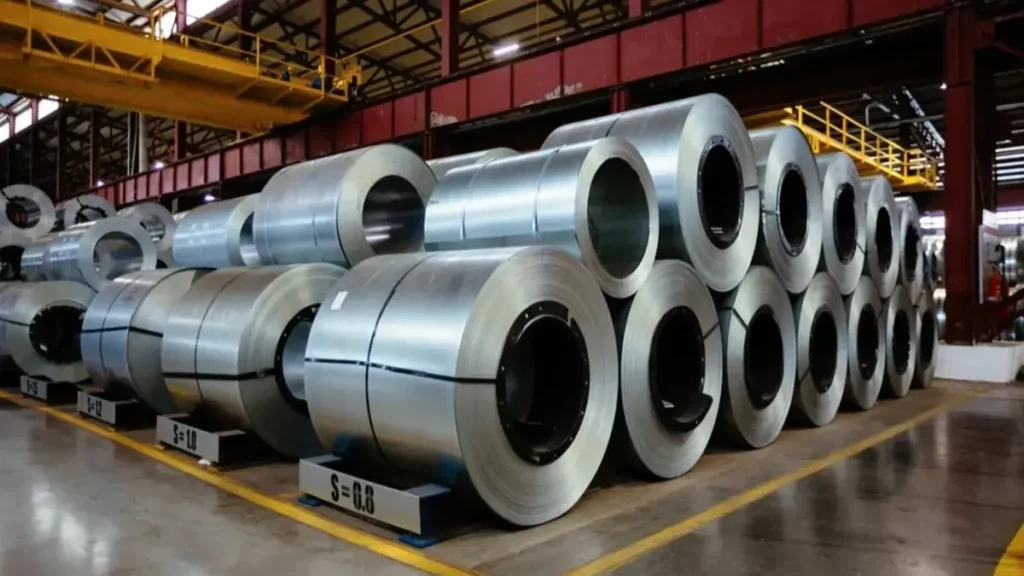
Heavy Coil Flow: In steel and aluminum processing, the low-voltage transfer car moves constantly between cold rolling lines and finished product warehouses, with V-frames keeping the center of gravity stable.

Heavy Machinery & Mold Manufacturing: Its immense rigidity allows the low-voltage rail transfer car to move hundreds of tons of molds frequently and smoothly—a must-have for large precision mold transfers.
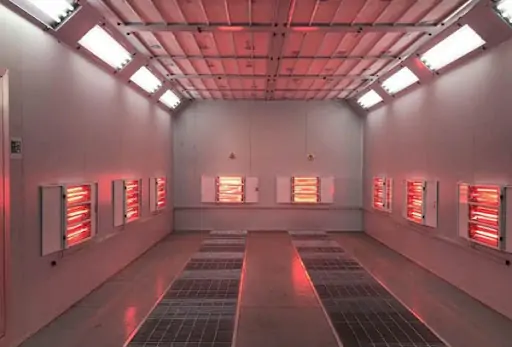
Painting & Sandblasting Booths: With power components effectively sealed and protected, it is ideal for harsh coating lines with high dust levels.

Automated Assembly Lines: Equipped with PLC systems, the low-voltage transfer car can position itself with high precision to work seamlessly with robotic arms or lift tables.
From demanding spray booths to precision automated production lines, low-voltage transfer vehicles demonstrate exceptional environmental adaptability, making them indispensable “all-around material handling experts” capable of navigating extreme operating conditions and ensuring precise material transfer.
How to Choose the Right Model?
Buying a low-voltage transfer cart isn’t just about the load capacity; it requires deep customization based on working conditions.
- Evaluate Travel Distance: This is the first step. If the distance exceeds 70 meters, voltage compensation devices must be configured to offset the voltage drop at the far end of the rail.
- Define Cargo Characteristics: The center of gravity and shape dictate the platform structure. Loose items need guardrails, while cylindrical workpieces require a dedicated low-voltage coil transfer cart bracket.
- Inspect Ground Environment: Rail insulation is the lifeline. If the environment has standing water, metal shavings, or is outdoors, the manufacturer must provide higher-level insulation protection and drainage advice.
- Operational Logic: Decide between a manual remote control or an automated model with obstacle avoidance and safety sensors.
Conclusion
From core principles to multi-scenario applications, it is clear that the low-voltage rail transfer cart is the key equipment for businesses looking to pick up the production pace and lower maintenance costs. Turning the rails into a power source, it solves the riddles of energy endurance and spatial constraints.

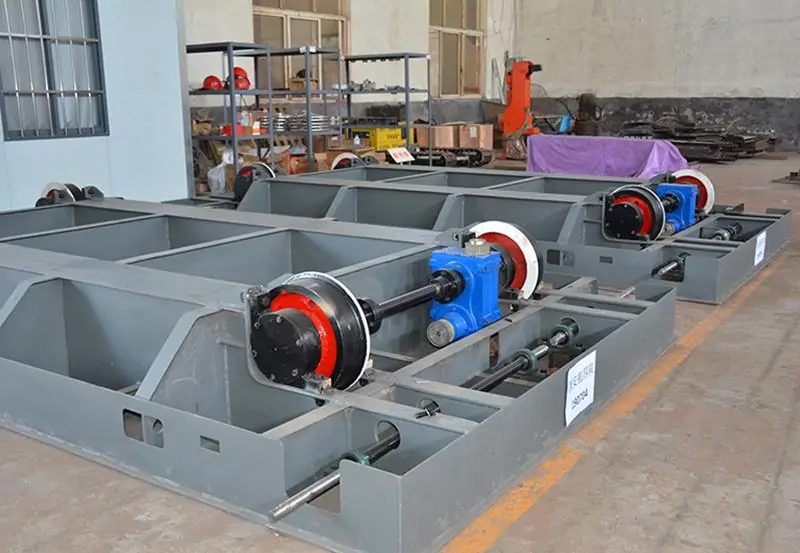
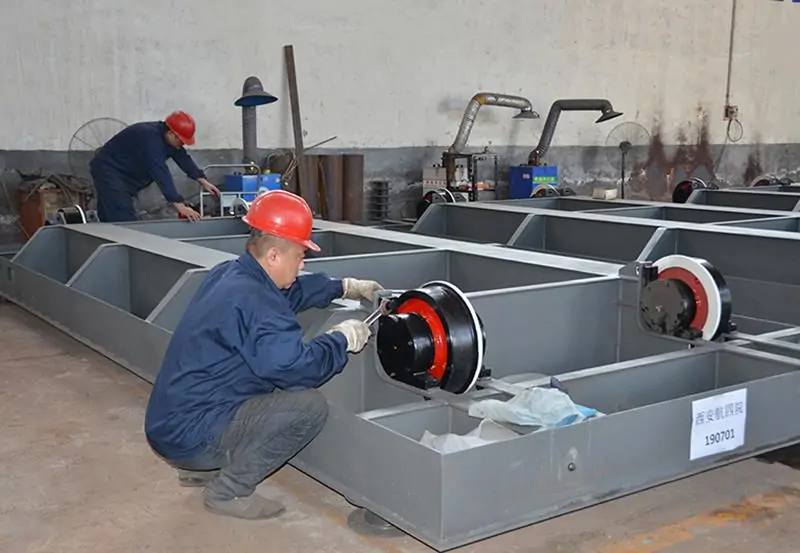
Remarkable is a professional Chinese transfer cart supplier. We don’t just provide standard products; we are committed to tailoring the most robust industrial handling solutions based on your load requirements, travel distance, and automation level. We know every factory floor is unique. If you are looking for a professional low-voltage coil transfer cart, please contact us. Remarkable will provide the best solution with precision technology and comprehensive after-sales support.
Email: transfercart@rmkzn.com
Phone: +86-18637369355
FAQ
Can low-voltage rail carts be used outdoors or in wet environments?
Yes, but they require special treatment. Since the rails are electrified, standing water can cause shorts. Remarkable provides rail drainage designs and upgrades electrical components to IP65/67 protection.
What are the special requirements for rail installation?
The key is “insulation.” Beyond structural strength, the rails must be installed with insulation gaskets and sleeves between the track, foundation, and bolts to prevent current loss.
What if the voltage drop is too severe over long distances (over 70m)?
This is a common challenge. We solve this by increasing the number of ground transformers or using voltage compensation devices to ensure the low-voltage rail transfer car has strong torque even at the end of the line.
Is 36V on the rails safe for workers?
Absolutely. 36V is within the human safety voltage range. Even if a worker steps on the rail, it will not cause harm. However, we still recommend warning signs and keeping rails clean for conductivity.
Can this cart achieve automated unmanned driving?
Completely. By integrating PLC systems, LiDAR, and positioning modules, the low-voltage transfer cart can handle automatic starts, stops, and obstacle avoidance while communicating with the factory MES.
What is the advantage compared to battery transfer carts?
The biggest advantage is “infinite endurance.” Rail carts don’t need charging time, fitting 24-hour high-frequency work perfectly with a mechanical lifespan usually exceeding 10 years.