Inhaltsverzeichnis
Einleitung
Da Fabriken zunehmend schwereren Stahl, Maschinen, Formen und große Bauteile handhabten, erwiesen sich konventionelle Handhabungsgeräte für bestimmte Lasten und Transportwege als ungeeignet. Schwerlast-Transferwagen wurden für diese Art der internen Materialhandhabung entwickelt, um schwere Lasten zwischen Produktionslinien, Lagerbereichen, Montagestationen und anderen Arbeitsbereichen zu bewegen.
In diesem Artikel erkläre ich, was ein Schwerlast-Transferwagen ist, wie er funktioniert, welche Typen und Antriebssysteme verfügbar sind und welche Faktoren bei der Auswahl eine Rolle spielen. Diese Informationen helfen Lesern, die Ausrüstung zu verstehen, bevor sie einen Transferwagen für eine bestimmte Last und einen bestimmten Arbeitsort auswählen.
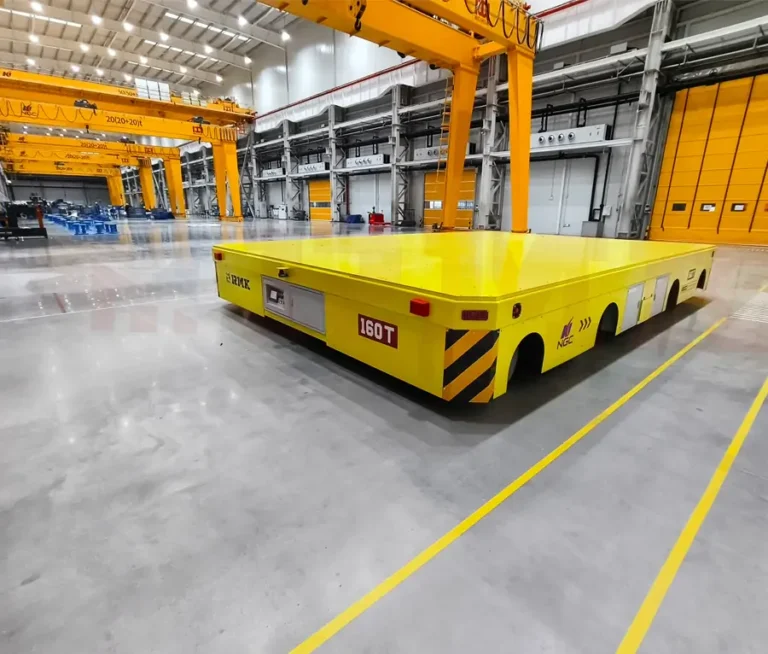
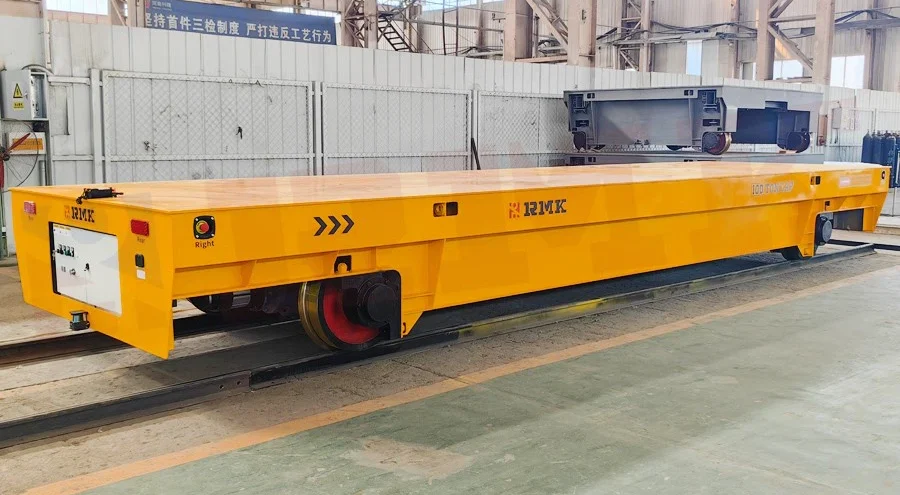
Was ist ein Schwerlast-Transferwagen?
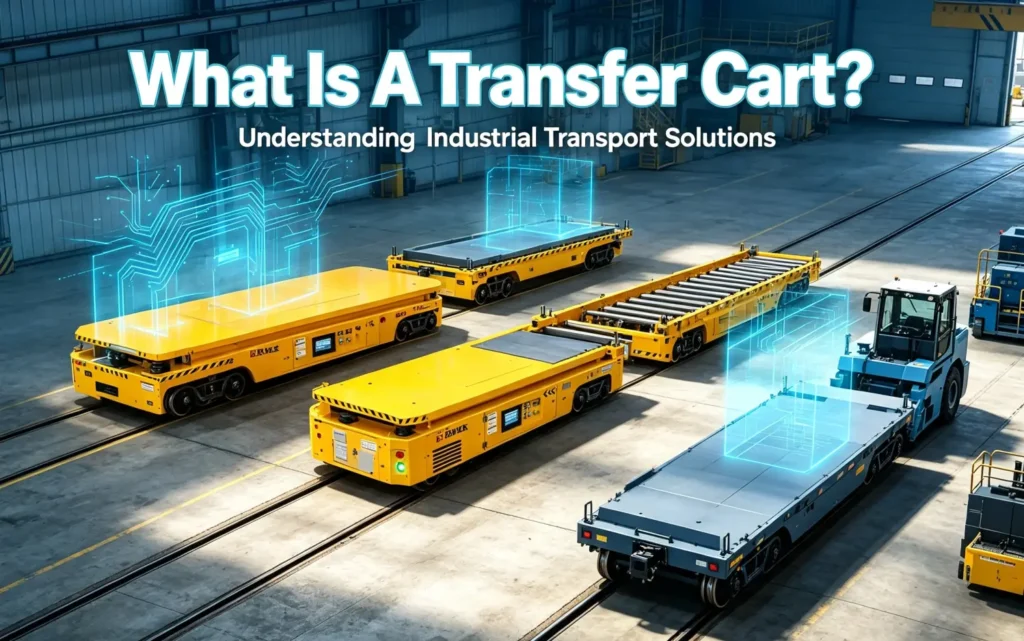
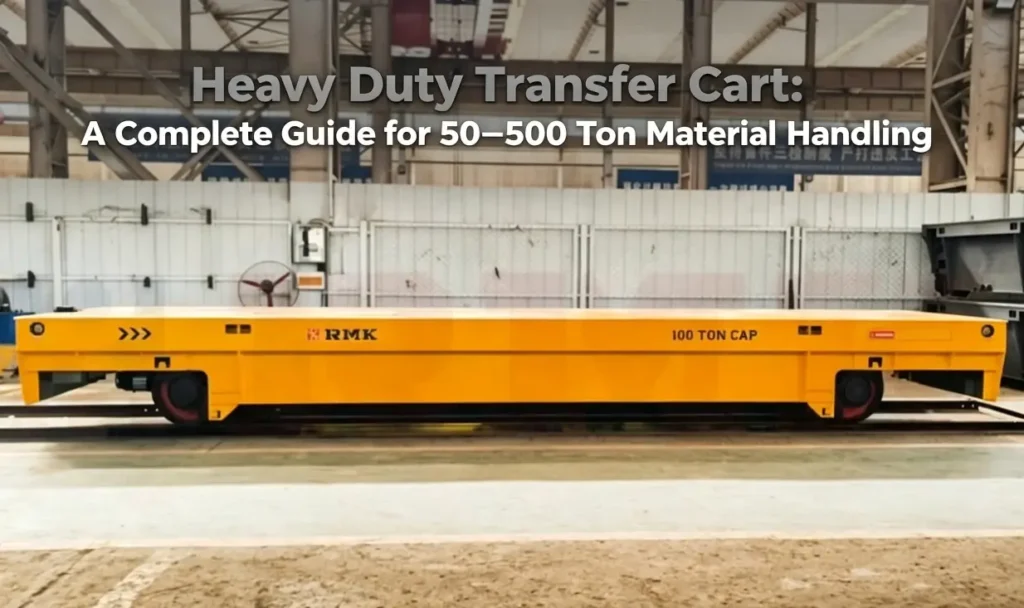
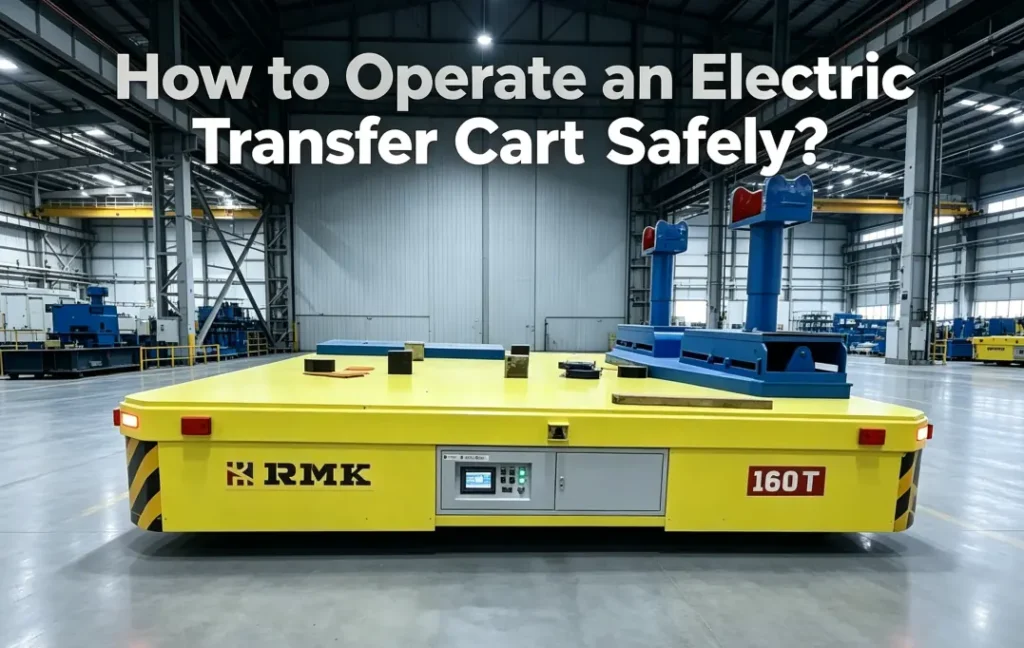
Ein Schwerlast-Transferwagen, auch Schienen-Plattformwagen oder elektrischer Plattformwagen genannt, ist ein industrielles Transportfahrzeug, das auf fest verlegten Schienen fährt. Er wird verwendet, um schwere Materialien wie Stahlknüppel, große Formen, Maschinenteile und große Ausrüstungen zwischen Produktionsbereichen, Lagerbereichen und Montagestationen zu bewegen. Schwerlast-Transferwagen werden häufig in Stahlwerken, Werften, Gießereien und großen Montagehallen eingesetzt.
Ein Schwerlast-Transferwagen besteht üblicherweise aus einem geschweißten Stahlrahmen, Schwerlast-Radanordnungen und einem Schienenführungssystem. Der Rahmen trägt die Last, die Radanordnungen stützen und antreiben den Wagen, und die Schienen führen die Fahrtrichtung. Zu den Antriebsoptionen gehören Niederspannungsschiene, Kabeltrommel und Batteriebetrieb. Das Antriebssystem wird entsprechend der Fahrstrecke, der Betriebshäufigkeit und den Stromversorgungsbedingungen am Standort ausgewählt.
Die Wagenspezifikationen werden entsprechend der Last und den Arbeitsbedingungen konfiguriert. Zu den Hauptparametern gehören Nenntragfähigkeit, Plattformgröße, Spurweite und Fahrgeschwindigkeit. Die Kapazitäten reichen von 5 bis 200 Tonnen oder mehr. Zu den Steuerungsoptionen gehören Hängepultsteuerung, Funkfernbedienung und SPS-Steuerung für den Transport auf festen Routen und die Materialhandhabung in Produktionslinien.
Wie funktioniert ein Schwerlast-Transferwagen?
Ein Schwerlast-Transferwagen bewegt schwere Lasten über ein elektrisches Antriebssystem. Der Wagen trägt das Material auf seiner Plattform, während der Antriebsmotor und das Getriebe die Fahrleistung bereitstellen. Je nach Wagentyp laufen die Räder auf festen Schienen oder direkt auf dem Fabrikboden. Schienengebundene Transferwagen folgen einer festen Route, während spurungebundene Transferwagen auf festgelegten Bodenbereichen fahren können.
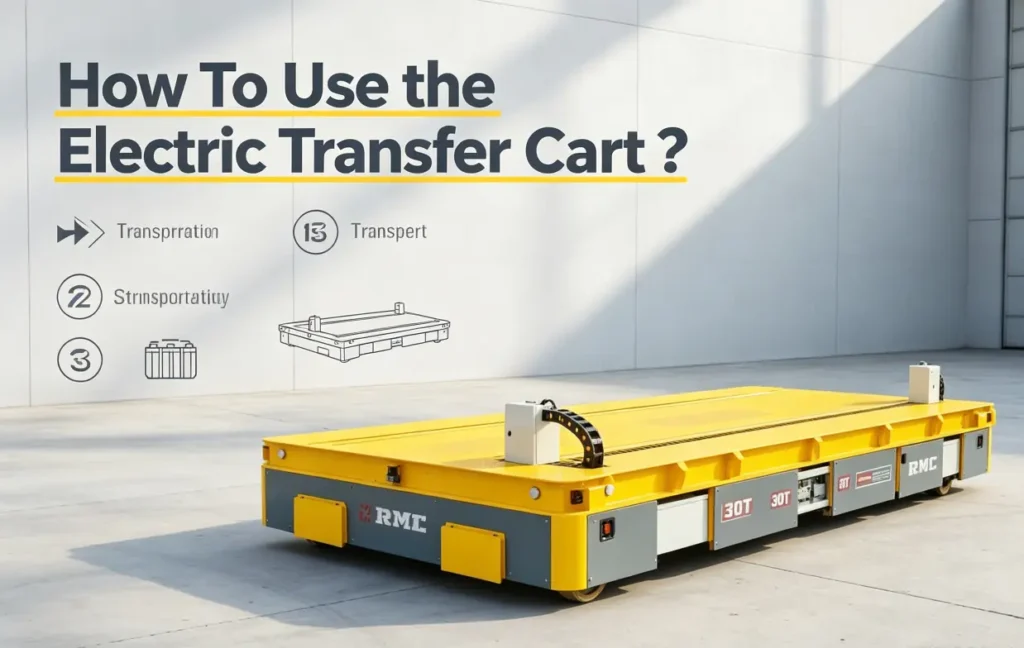
Die Stromversorgung hängt von der Wagenkonstruktion ab. Batteriebetriebene Wagen verwenden eingebaute Batterien, während Schienenwagen Niederspannungsschienen oder Kabeltrommeln nutzen können. Weitere Konfigurationen umfassen Kabelketten und Lithium-Batteriesysteme. Das Steuerungssystem regelt Anfahren, Stoppen, Vorwärts- und Rückwärtsfahrt, Geschwindigkeit und Bremsen über ein Hängepult, eine Funkfernbedienung oder eine SPS.
Während des Betriebs startet der Bediener den Wagen und steuert seine Fahrt zur gewünschten Position. Die Antriebsräder bewegen den Wagen entlang der Schienen oder über den Fabrikboden. Der Wagen hält an der Be- oder Entladestation oder Montagestation, wo das Material durch einen Kran, Gabelstapler oder andere Ausrüstung gehandhabt wird.
Für die spezifischen Betriebsabläufe von Schwerlast-Transferwagen siehe den Artikel: “Wie funktioniert ein Schwerlast-Transferwagen?”
Arten von Schwerlast-Transferwagen
Schwerlast-Transferwagen sind in verschiedenen Konfigurationen für unterschiedliche Transportwege und Betriebsbedingungen erhältlich. Zu den Haupttypen gehören Schienen-Transferwagen, spurungebundene Transferwagen, batteriebetriebene Transferwagen und AGV-Transferwagen. Der Wagentyp wird entsprechend der Last, der Fahrroute, der Stromversorgung und dem Automatisierungsgrad ausgewählt.
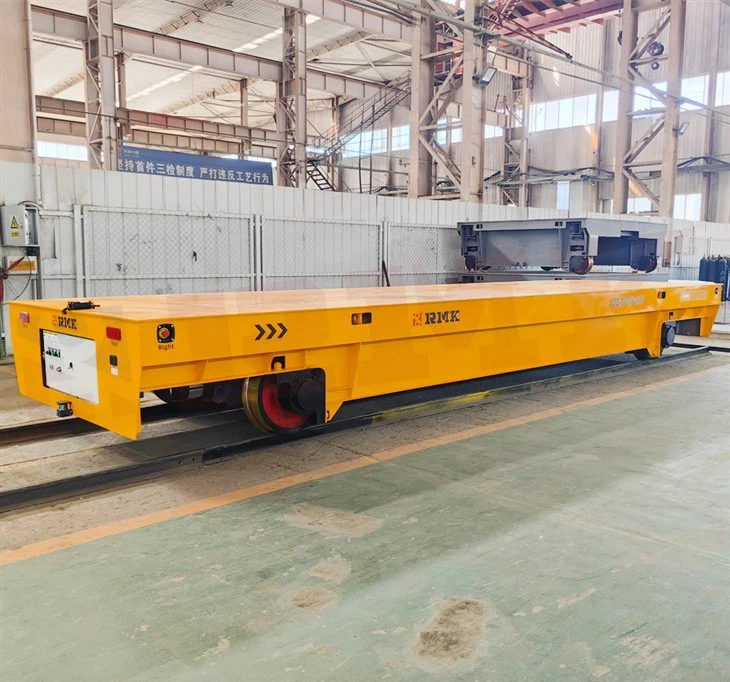
Schwerlast-Schienen-Transferwagen
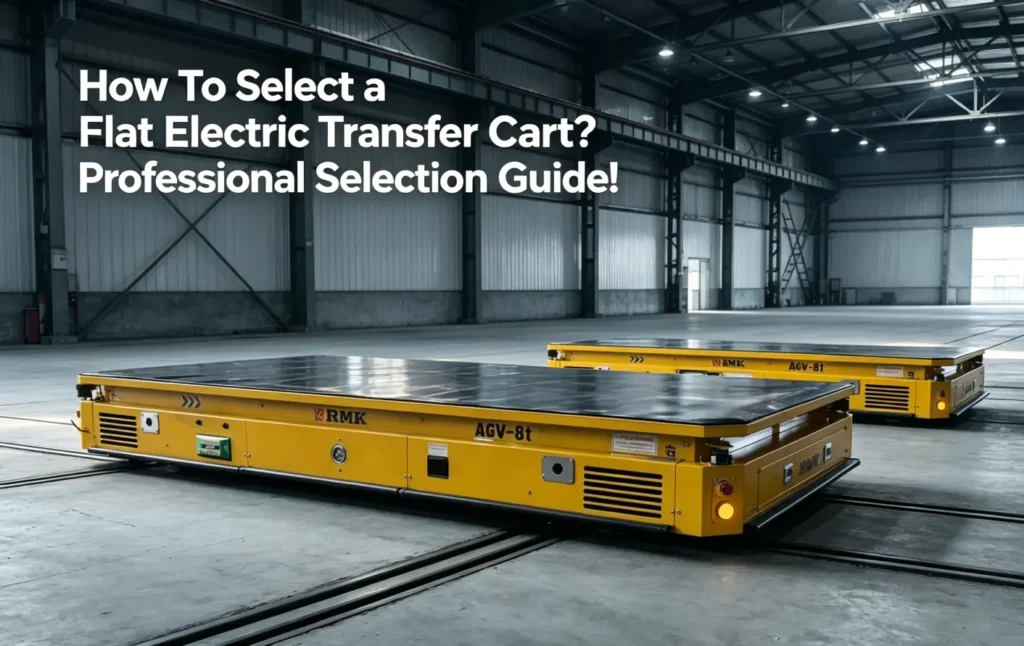
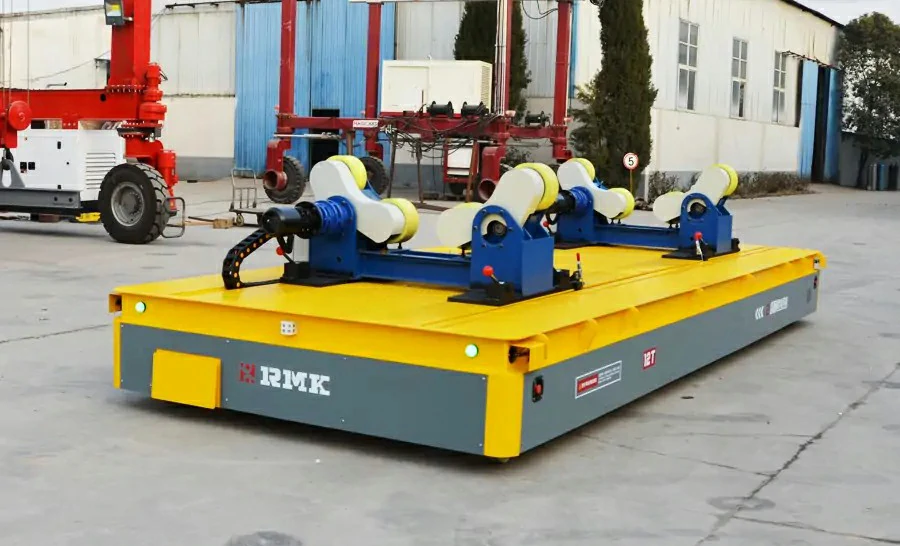
A Schwerlast-Schienen-Transferwagen fährt auf festen Schienen und wird für schwere Lasten auf regelmäßigen Transportwegen eingesetzt. Er ist in Stahlwerken, Werften, Gießereien und Schwermaschinenbauhallen üblich.
- Tragfähigkeit: 1–300 Tonnen
- Plattformgröße: Kundenspezifisch
- Spurweite: 1.200–2.000 mm
- Stromversorgung: Batterie / Kabeltrommel / Niederspannungsschiene
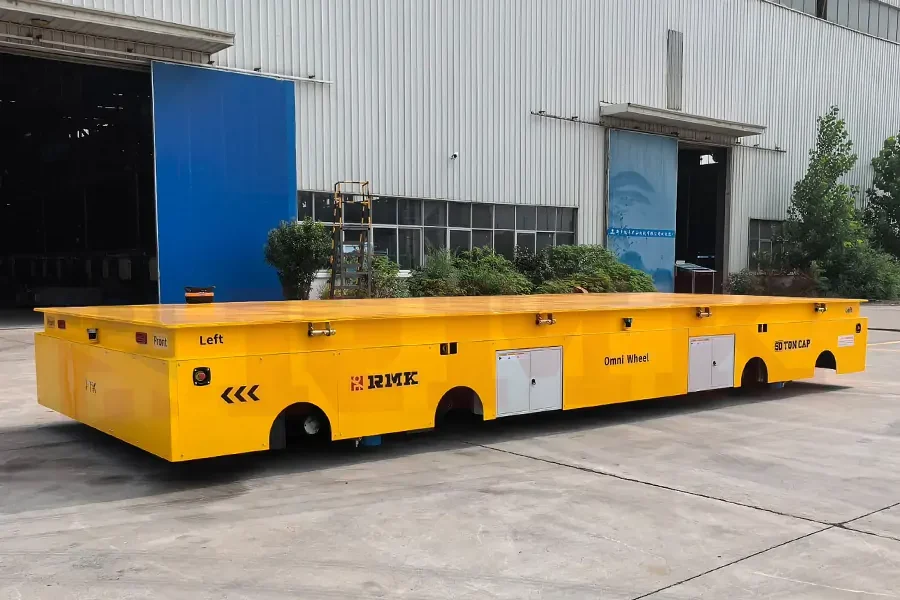
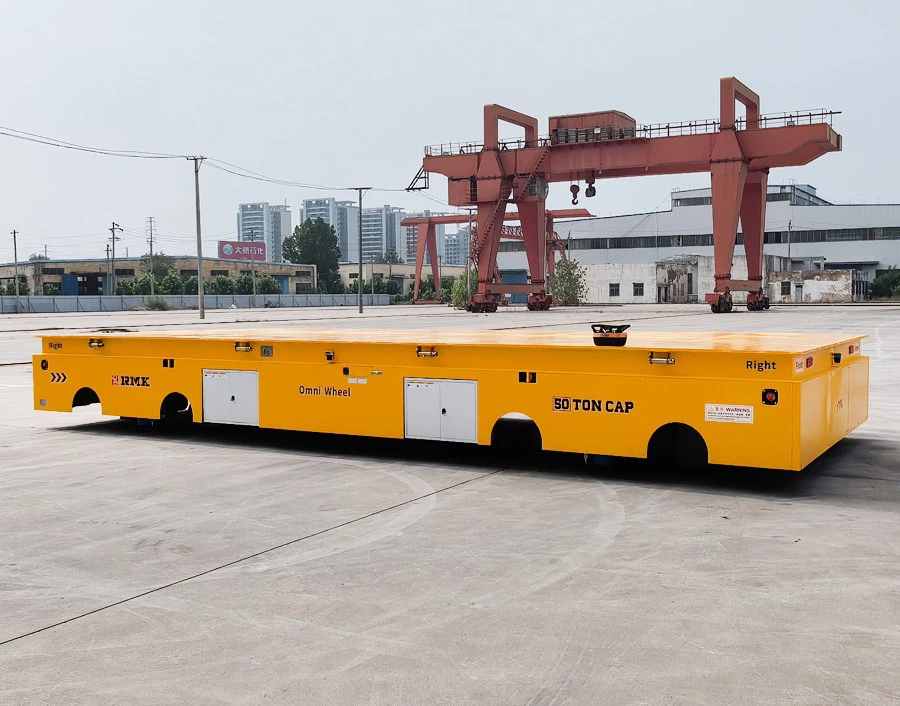
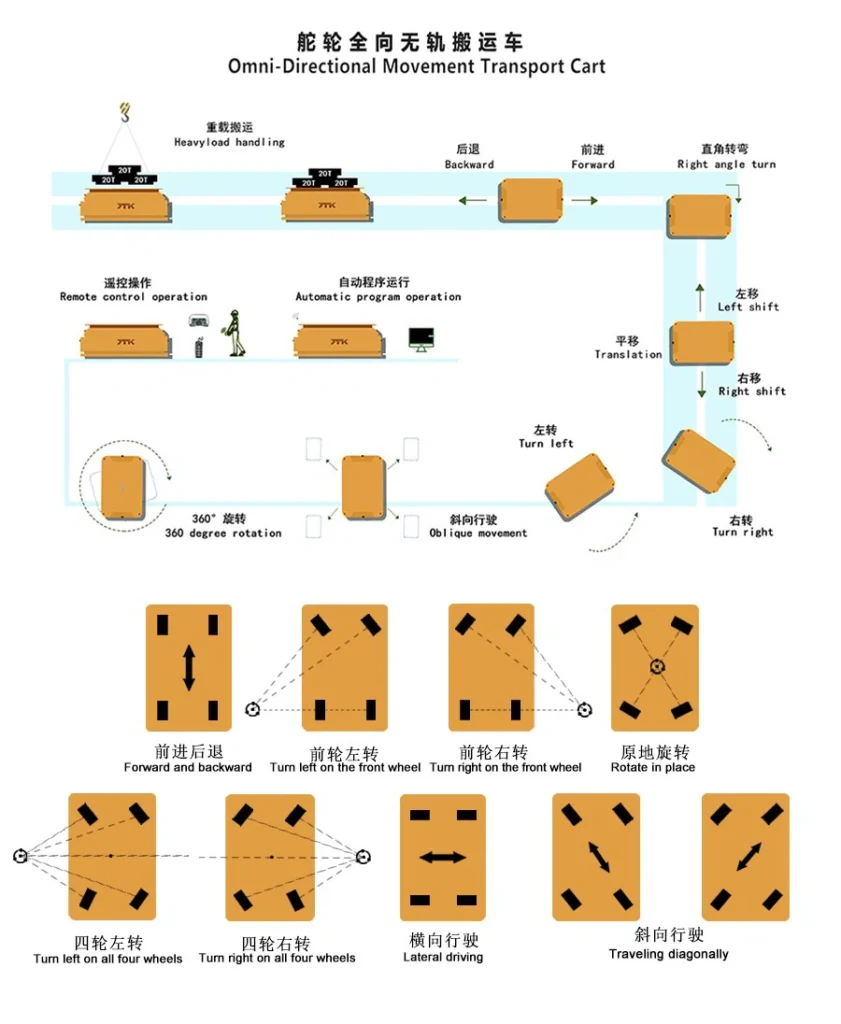
Schwerlast-Spurgebundener Transportwagen
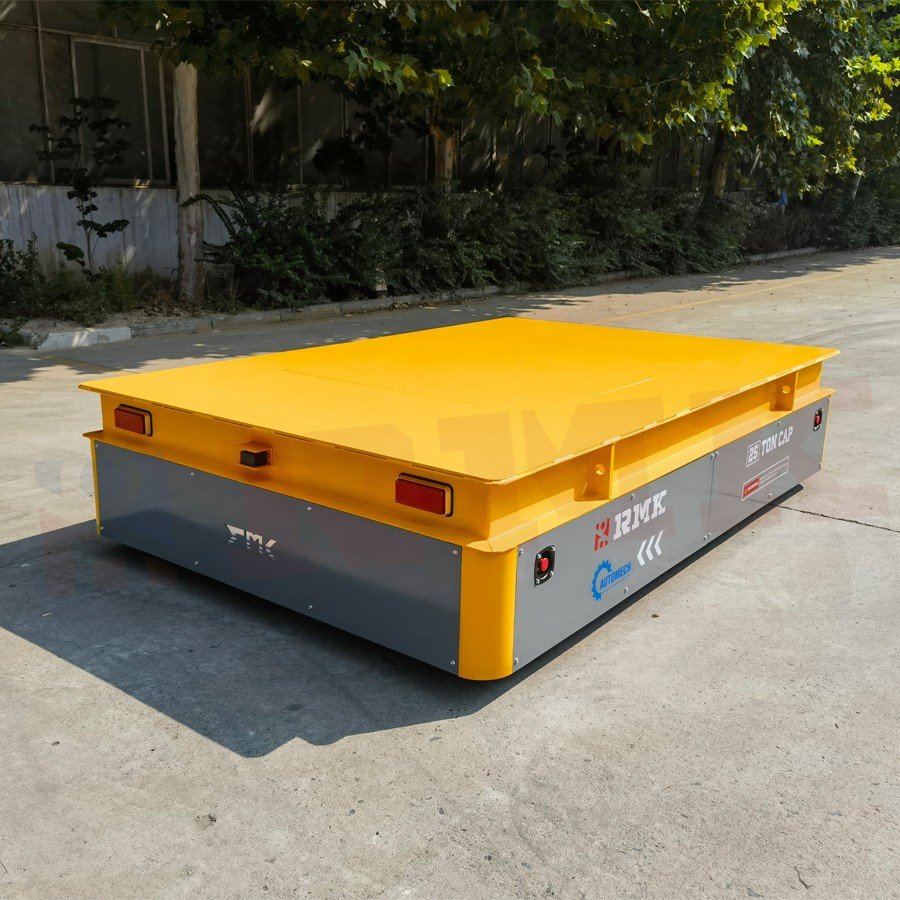
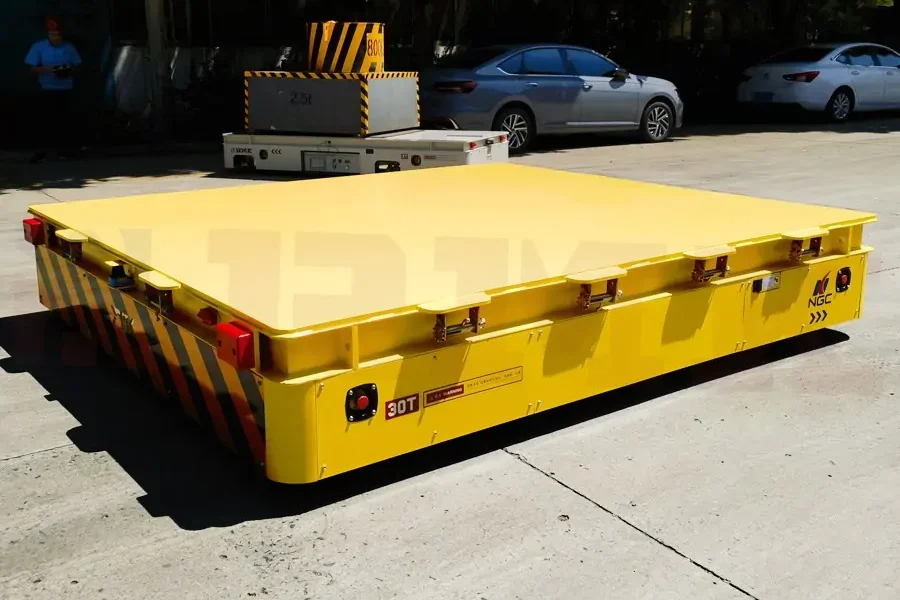
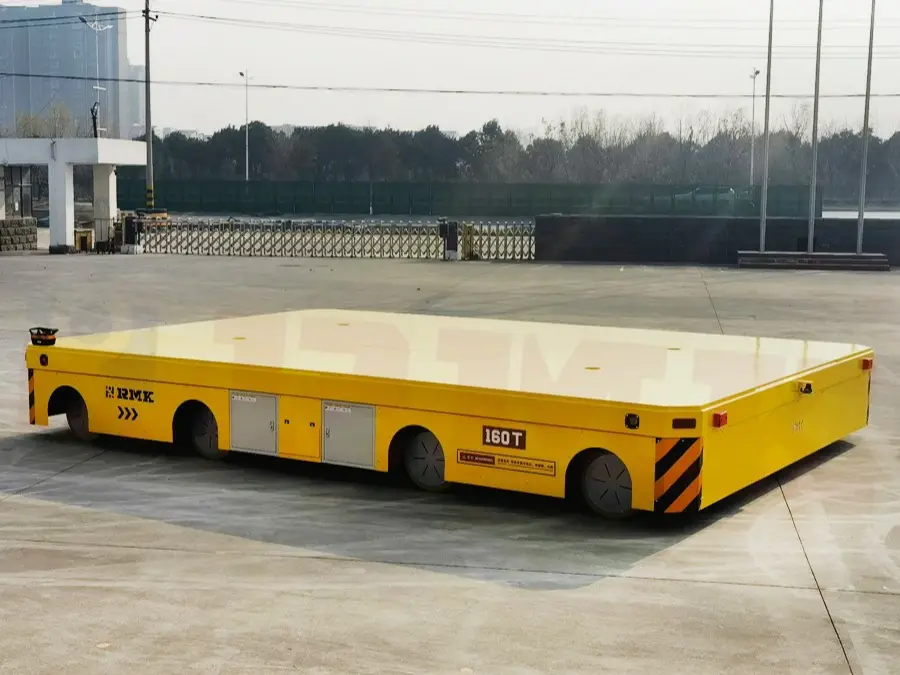
A Schwerlast-Spurgebundener Transportwagen fährt direkt auf dem Fabrikboden ohne feste Schienen. Er wird eingesetzt, wenn sich Transportwege zwischen verschiedenen Arbeitsbereichen ändern.
- Tragfähigkeit: 1–300 Tonnen
- Plattformgröße: Kundenspezifisch
- Fahrgeschwindigkeit: 0–20 m/min
- Stromversorgung: Batterie / Lithium-Batterie
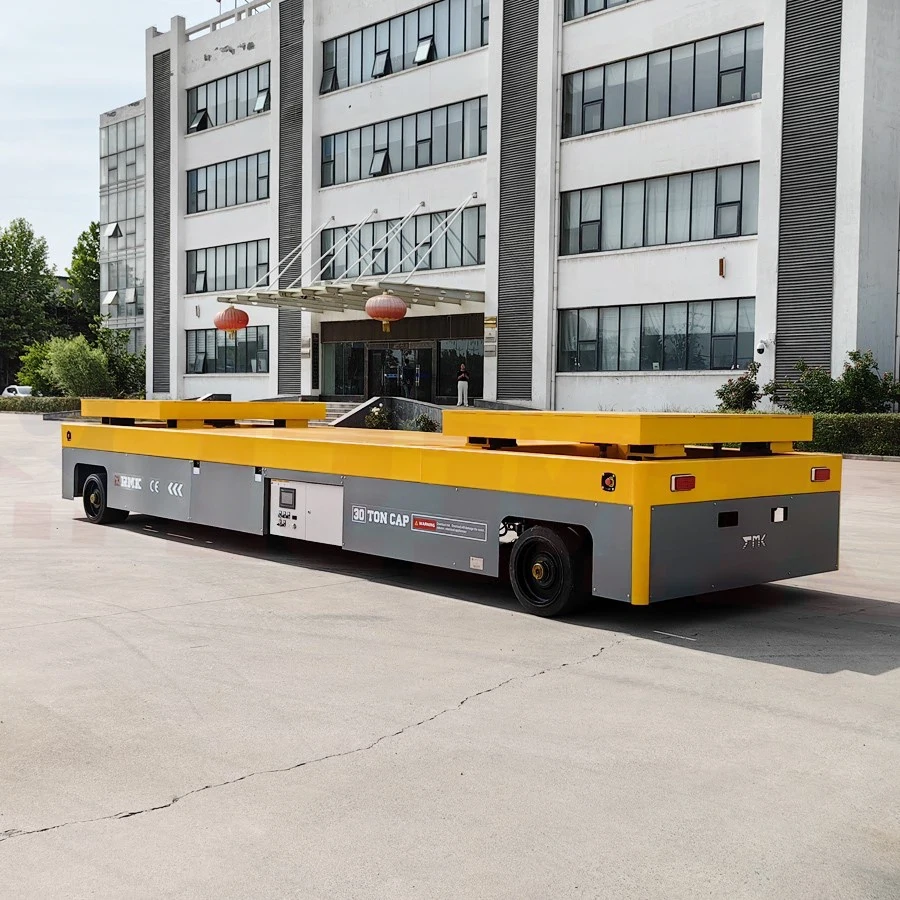
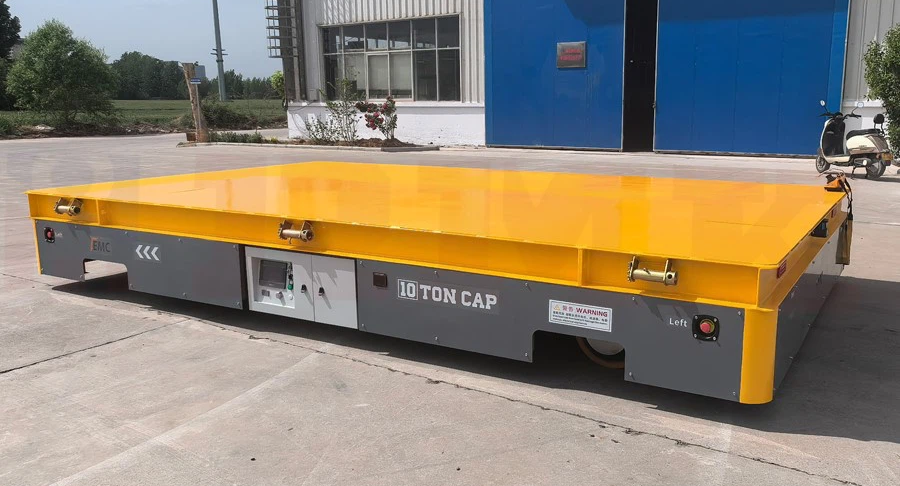
Schwerlast-Batterie-Transferwagen
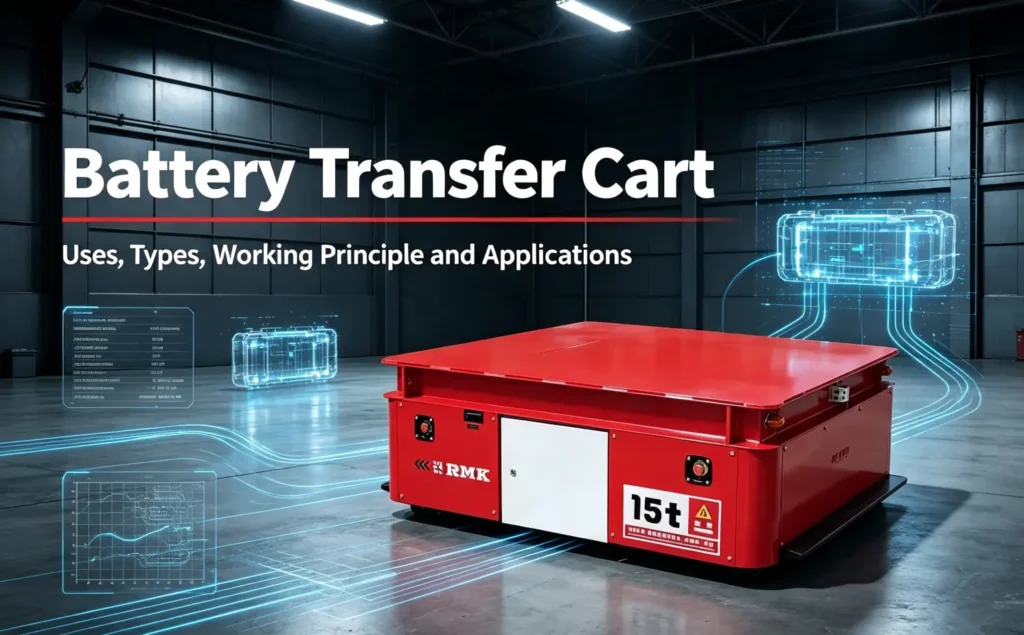
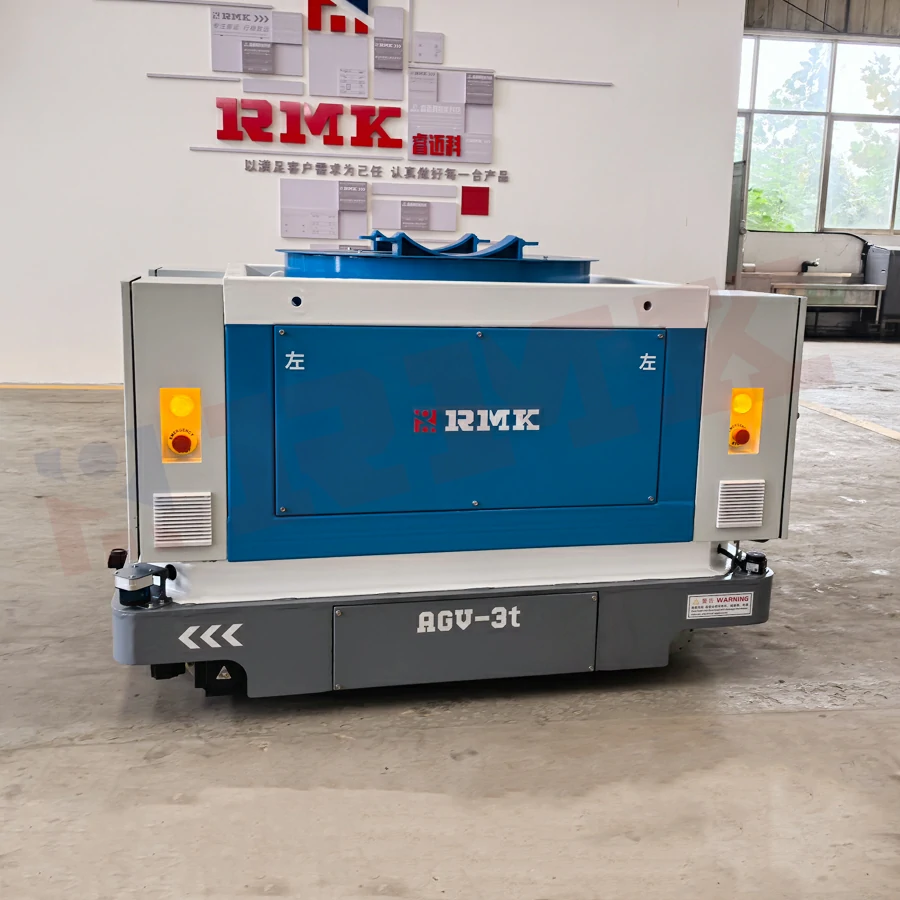
A Schwerlast-Batterie-Transferwagen verwendet eine eingebaute Batterie als Stromquelle. Er hat während des Betriebs kein externes Stromkabel und kann sich zwischen verschiedenen Bereichen einer Fabrik bewegen.
- Tragfähigkeit: 1–300 Tonnen
- Plattformgröße: Kundenspezifisch
- Fahrgeschwindigkeit: 0–20 m/min
- Steuerungsmodus: Hängepult / Funkfernbedienung / SPS
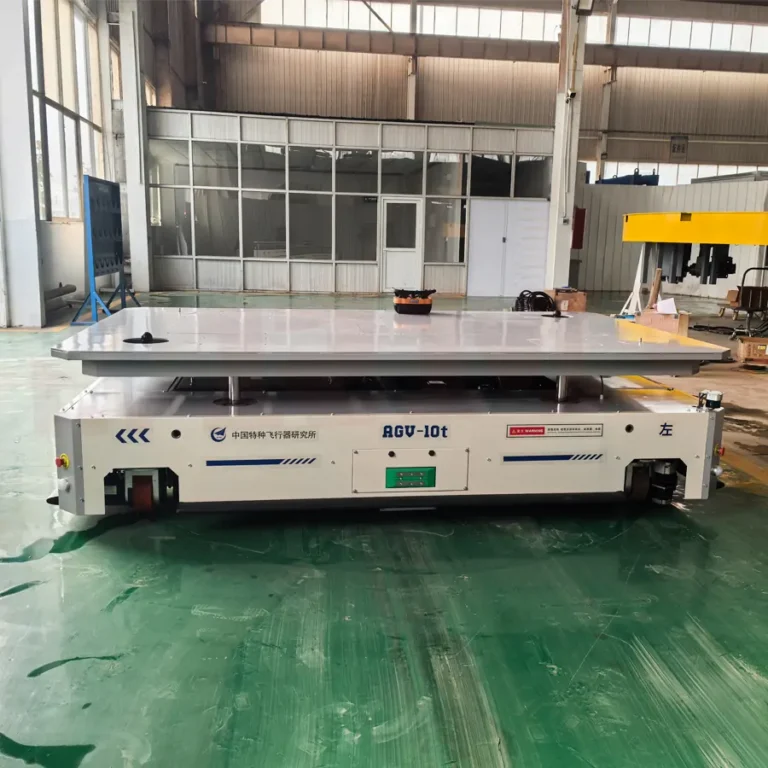
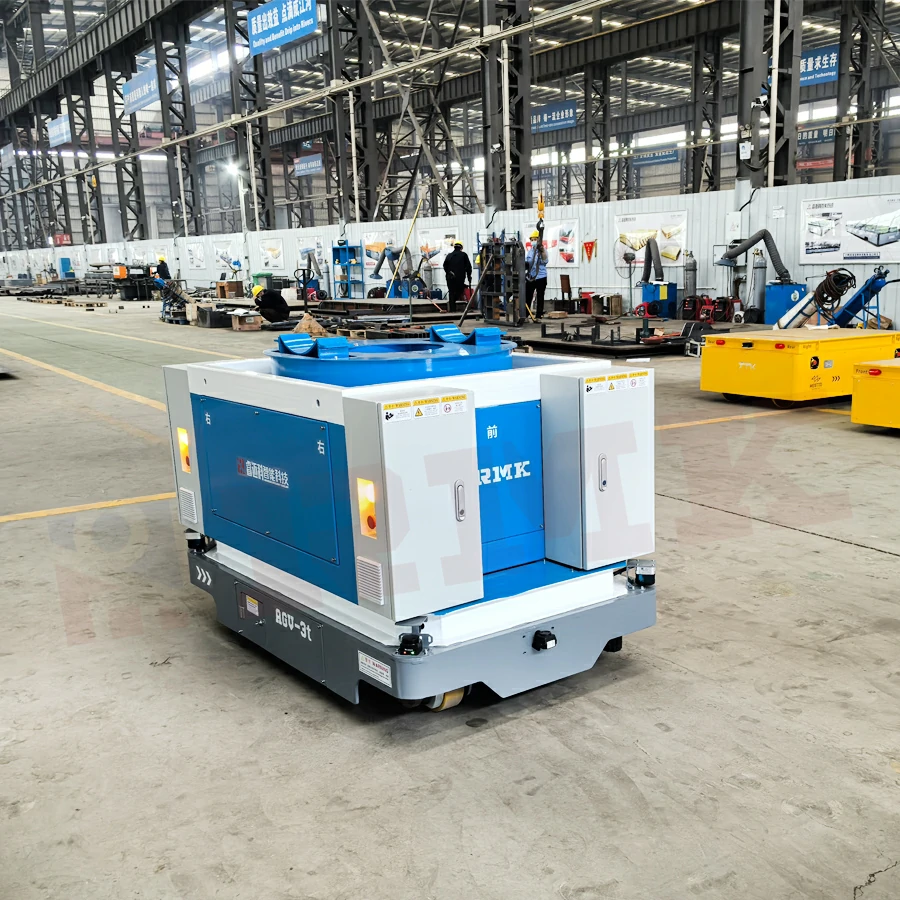
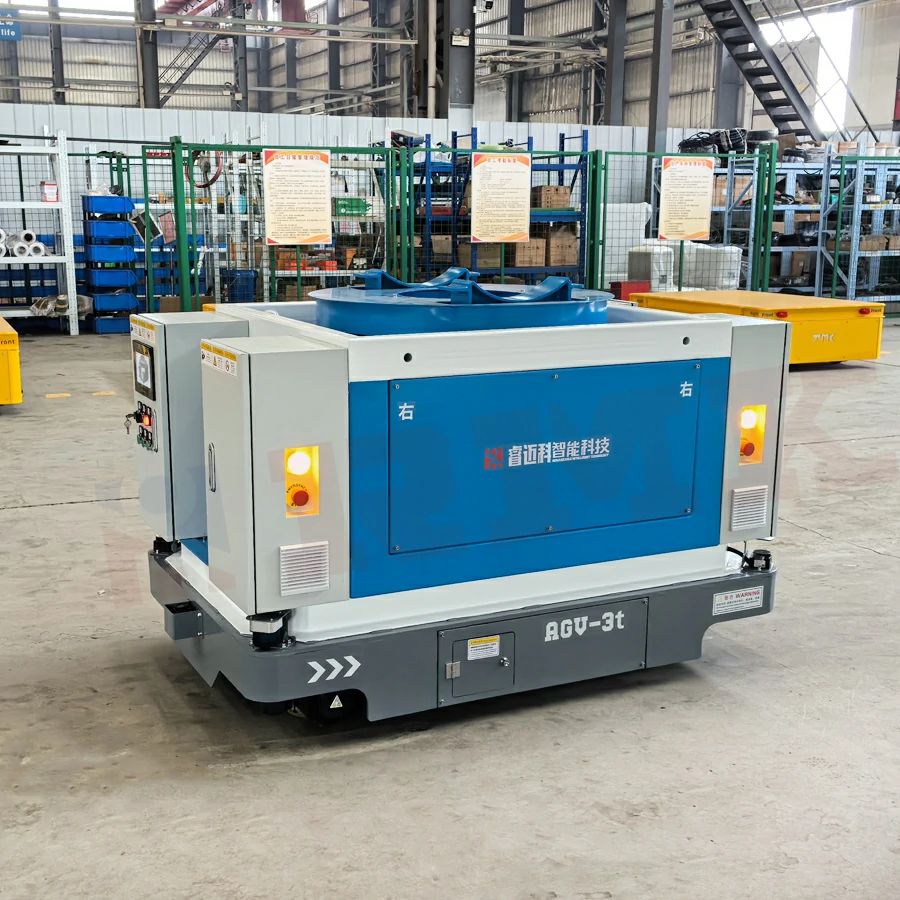
Schwerlast-AGV-Transferwagen
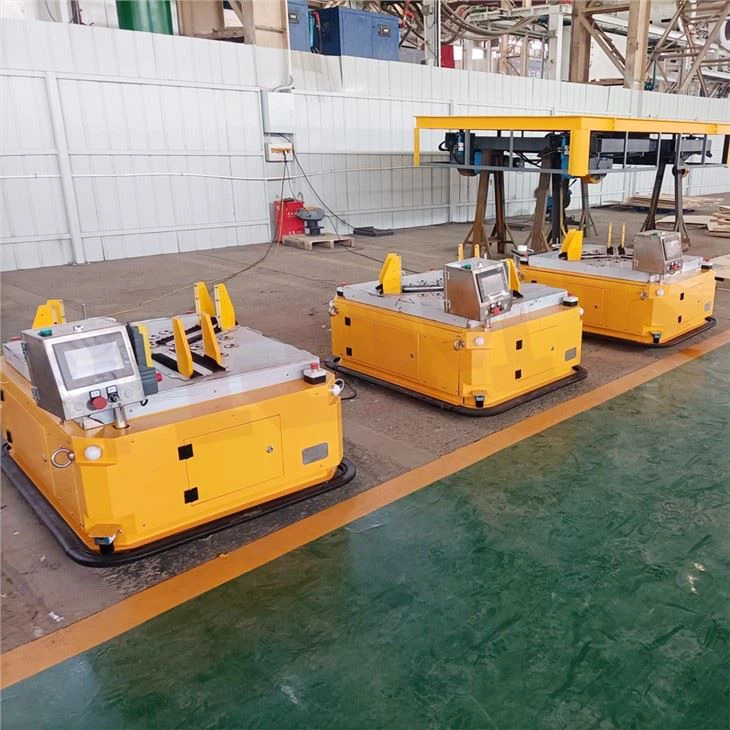
A Schwerlast-AGV-Transferwagen wird für den automatisierten Schwerlasttransport eingesetzt. Er verwendet ein Navigationssystem, um programmierten Routen zu folgen, und kann mit den Materialhandhabungssystemen der Fabrik verbunden werden.
- Tragfähigkeit: Kundenspezifisch
- Plattformgröße: Kundenspezifisch
- Navigation: Laser / Magnetisch / Andere Navigation
- Steuerung: Automatisch / SPS
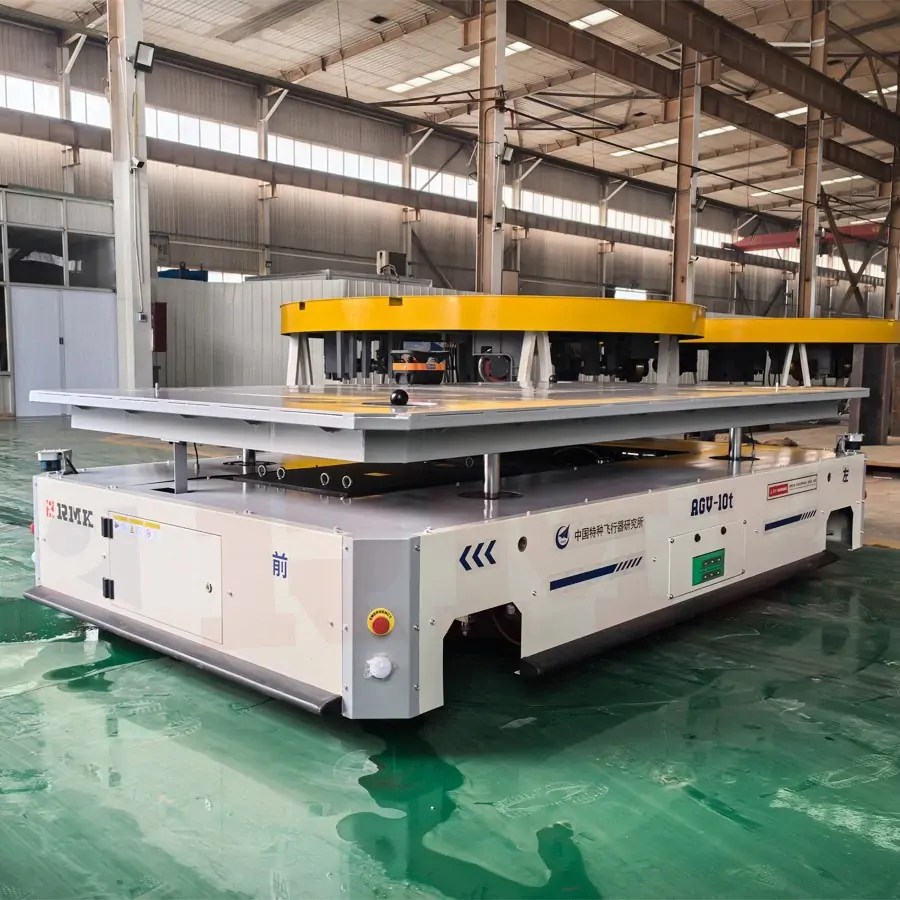
Welches Gewicht kann ein Schwerlast-Transferwagen tragen?
Die Tragfähigkeit eines Schwerlast-Transferwagens hängt von seinem Modell, der Rahmenstruktur, der Radanordnung und dem Antriebssystem ab. Standardkonfigurationen decken üblicherweise 1–300 Tonnen ab, während kundenspezifische Schwerlast-Transferwagen für große Industrieprojekte 800–1.000 Tonnen erreichen können.
| Nennlast | Stoßbelastung | Wagengewicht | Max. Radlast |
|---|---|---|---|
| 5 Tonnen | 7,5 Tonnen | 4,3 Tonnen | 2,8 Tonnen |
| 10 Tonnen | 15 Tonnen | 5,3 Tonnen | 4,6 Tonnen |
| 20 Tonnen | 30 Tonnen | 7,9 Tonnen | 5,6 Tonnen |
| 30 Tonnen | 45 Tonnen | 8,8 Tonnen | 7,7 Tonnen |
| 50 Tonnen | 75 Tonnen | 10,5 Tonnen | 12 Tonnen |
- Nennlast und Stoßlast: Die Nennlast bezeichnet die maximale Last für den Normalbetrieb. Die Stoßlast berücksichtigt die zusätzliche Kraft beim Anfahren, Bremsen und bei unebenen Schienen- oder Bodenverhältnissen. Beide Werte werden bei der Auswahl der Wagenstruktur und des Antriebssystems berücksichtigt.
- Wheel Load and Rail Selection: Cart capacity affects wheel load and rail selection. Higher-capacity carts require larger wheels, stronger rail sections, and a suitable wheel arrangement. For carts above 300 tons, multi-axle bogies and high-torque drive systems are commonly used.
- Drive Power: Motor power increases with cart capacity, travel distance, and operating conditions. Running speed is commonly within 0–25 m/min, with variable-speed control available for different transport requirements.
- Heavy Load Customization: For loads above standard capacity, the cart can be configured with additional axles, reinforced frames, high-torque drive units, and suitable power systems. The actual configuration is based on the total load, wheel load, rail condition, travel distance, and operating frequency.
The load capacity of a transfer vehicle is influenced by various factors. For more details, please consult our experts.
Anwendungen
A Heavy Duty Transfer Cart is used to move heavy and oversized loads horizontally across factories, workshops, warehouses, shipyards, steel plants, and other industrial sites.
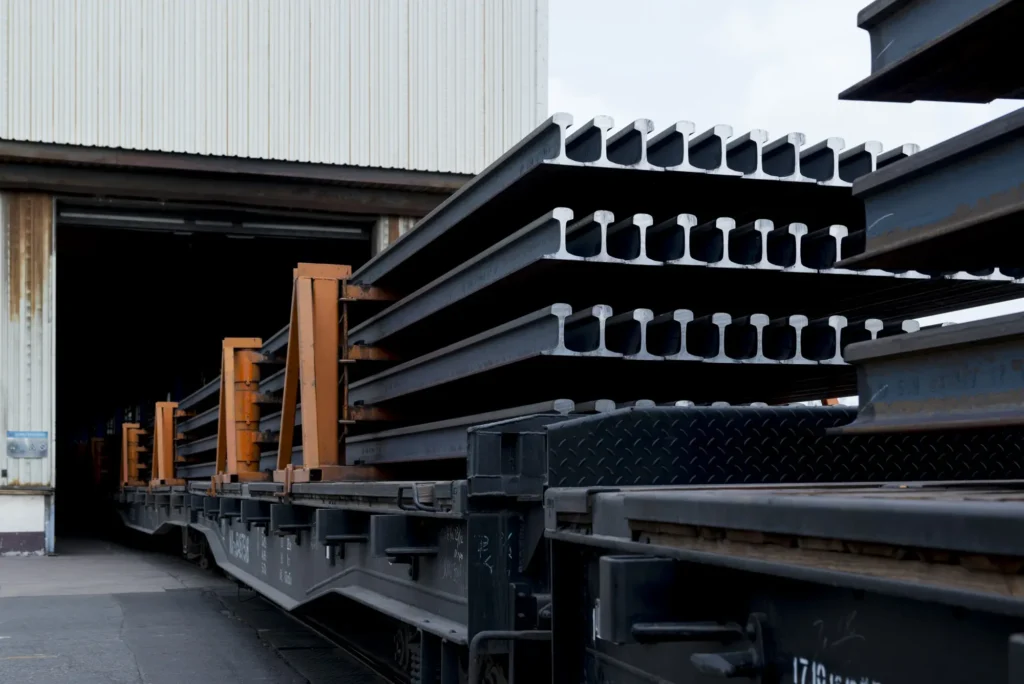
Steel and Metal Handling
Used to transport steel plates, coils, beams, pipes, molds, and fabricated metal structures between production areas.
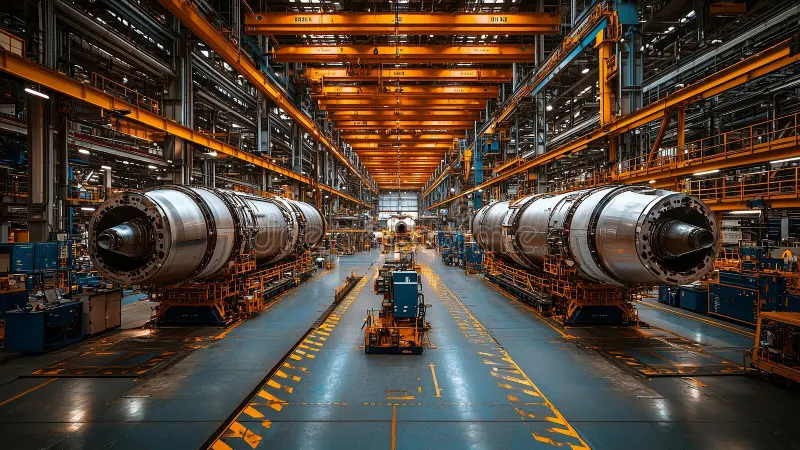
Machinery and Equipment Transport
Moves heavy machinery, industrial equipment, engines, transformers, and other large components during manufacturing, assembly, or maintenance.
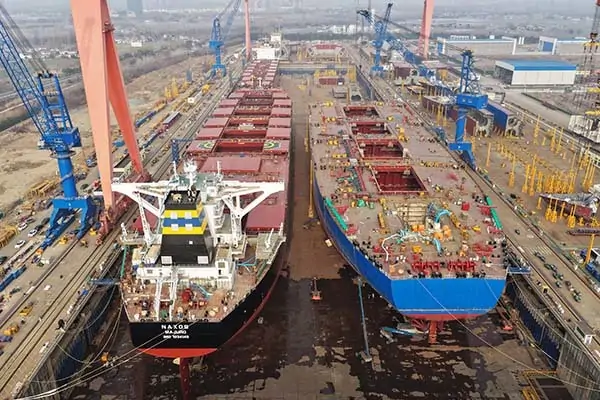
Shipyard Operations
Carries ship sections, steel structures, blocks, and other oversized components between fabrication and assembly areas.
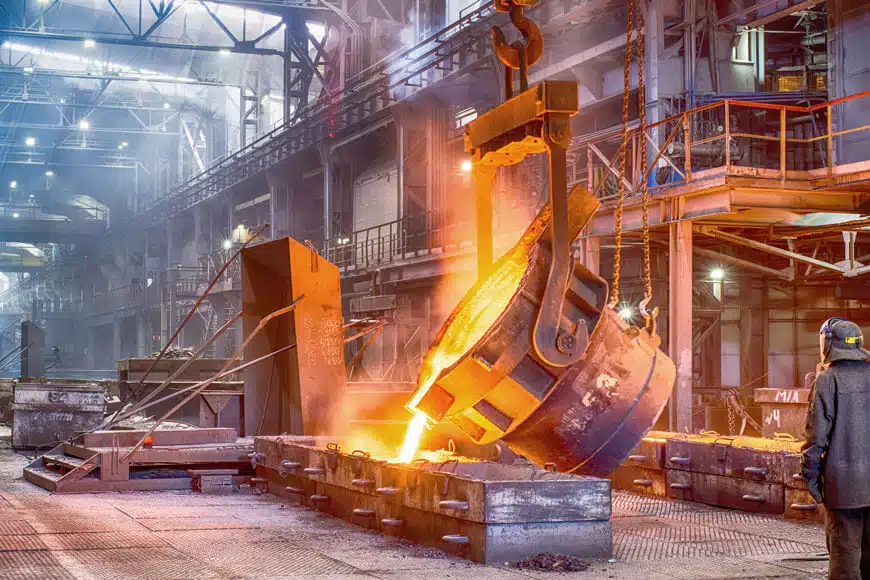
Foundry and Metallurgical Plants
Used for transferring ladles, molds, castings, and heavy workpieces in high-load production environments.
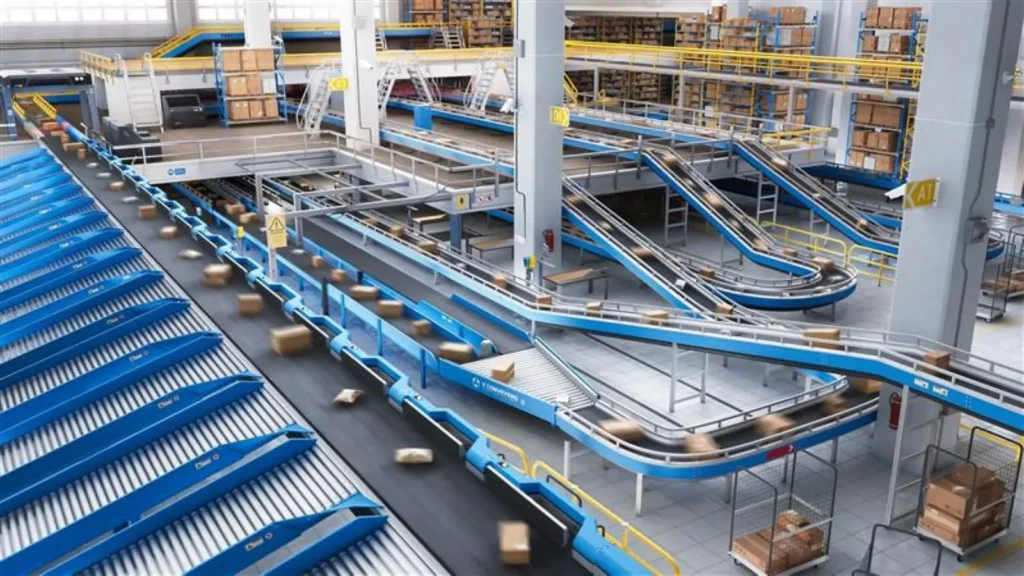
Lager- und Fabriklogistik
Connects different workshops, storage areas, assembly lines, and loading zones for regular heavy-load transportation.
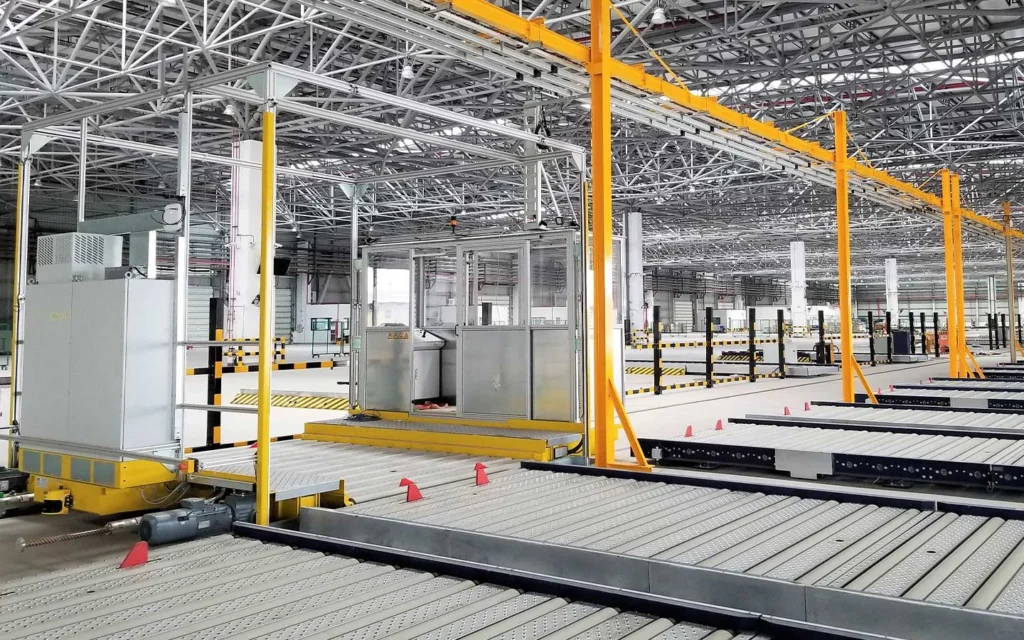
Construction and Large-Structure Handling
Transports precast concrete sections, bridge components, steel structures, and other oversized loads.
Parts of a Heavy Duty Transfer Cart?
A Heavy Duty Transfer Cart consists of five main systems: frame, running gear, power supply, control system, and safety devices. Component specifications are selected according to load capacity and operating conditions.
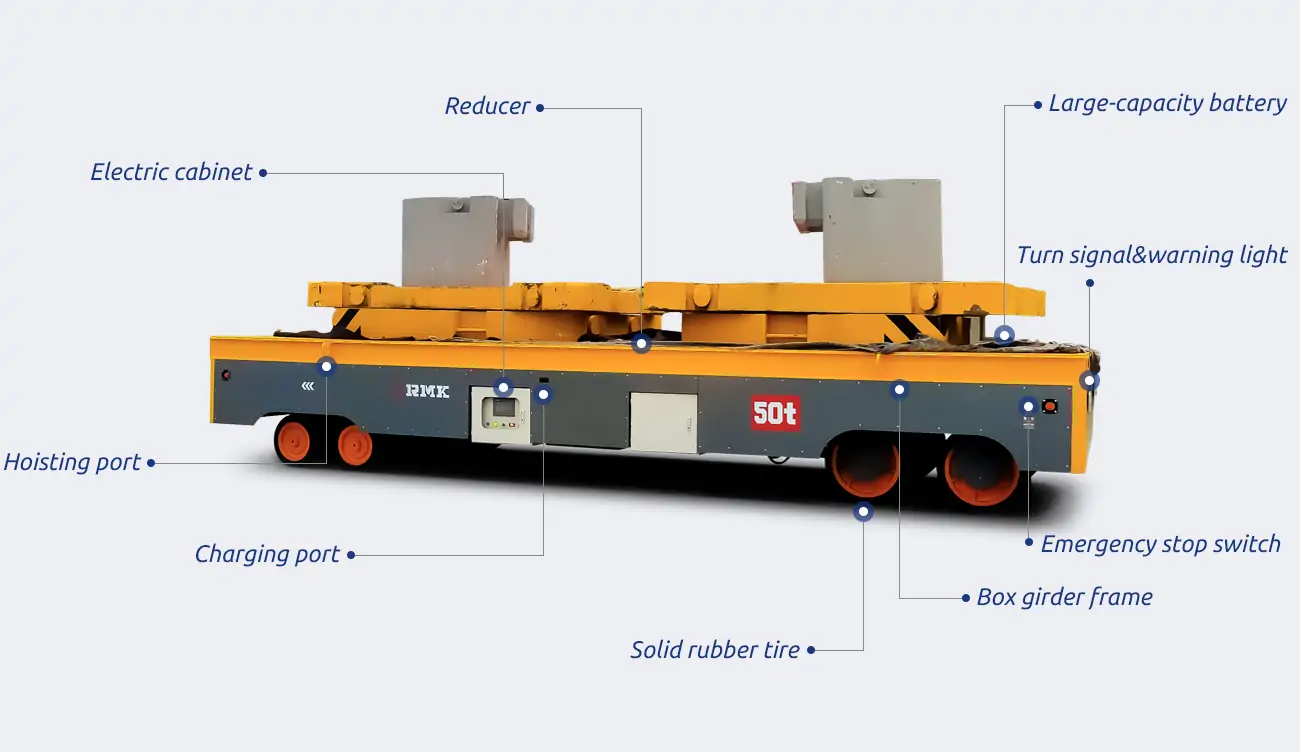
- Cart Frame — Welded steel structure that supports the load and provides the main structural strength of the cart.
- Wheel Assembly — Includes rail wheels, axles, bearings, and bearing housings for load support and stable travel.
- Drive System — Consists of drive motors, gear reducers, couplings, and drive wheels for cart movement.
- Power Supply System — Battery, low-voltage rail, cable reel, or cable drag chain can be selected according to the operating conditions.
- Electrical Control System — Includes the electrical cabinet, PLC, inverter, and control components for starting, stopping, speed control, and travel direction.
- Braking System — Electromagnetic or hydraulic brakes control deceleration and stopping under heavy loads.
- Rail System — Includes running rails and rail joints to provide a fixed travel route for the transfer cart.
- Safety Devices — Include emergency stop buttons, warning lights, alarms, buffers, limit switches, and anti-collision devices.
- Positioning System — Proximity switches, encoders, or other positioning devices can be used for accurate stopping and automated operation.
Heavy Duty Transfer Cart components are selected based on load capacity, wheel pressure, rail type, drive power, power supply, control method, and operating environment. The cart can be configured for applications such as steel handling, foundries, shipyards, machinery plants, and automated production lines.
Welche Stromversorgung verwendet ein Schwerlast-Transferwagen?
The power supply of a Heavy Duty Transfer Cart is selected according to travel distance, operating frequency, and site conditions. The main options are battery power, low-voltage rail power, and cable reel power.
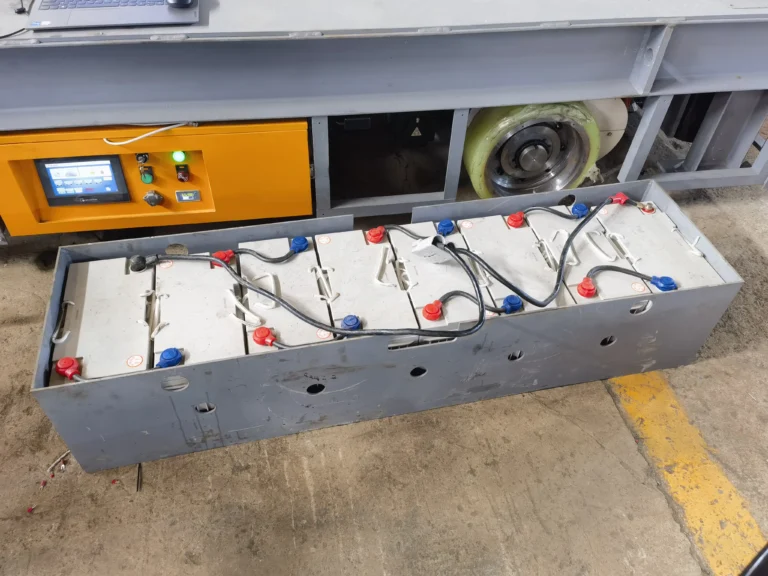
Battery Power Supply
Batteries are installed on the cart to power the drive motors. The cart operates without an external power cable and is suitable for flexible material transport and multi-area operation. Battery capacity is selected according to load, travel distance, and working hours.
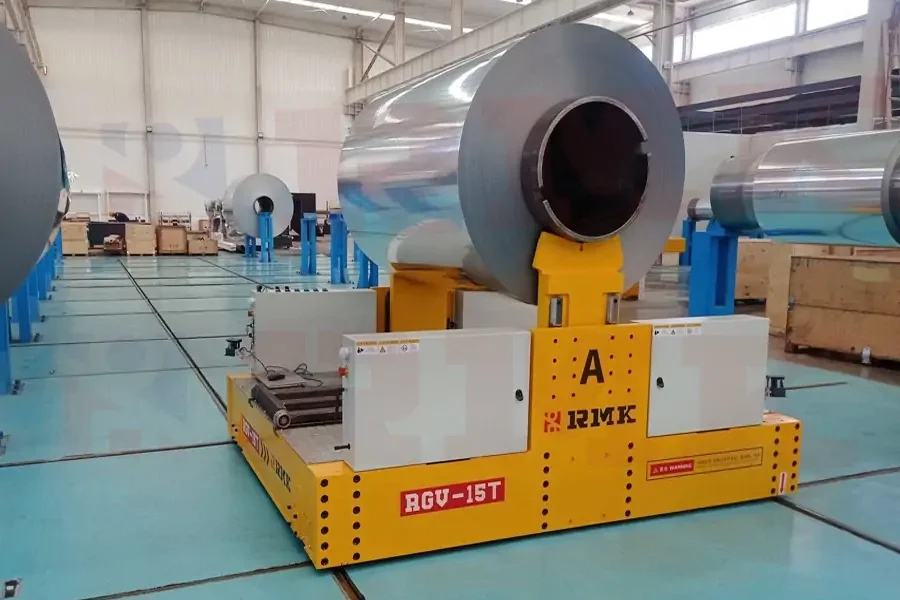
Low-Voltage Rail Power Supply
The cart receives power through the rail system. AC power is reduced to a low safety voltage, typically 36V, before being supplied to the cart. It is suitable for frequent operation and continuous heavy-load transport. Rail insulation and proper installation are required.
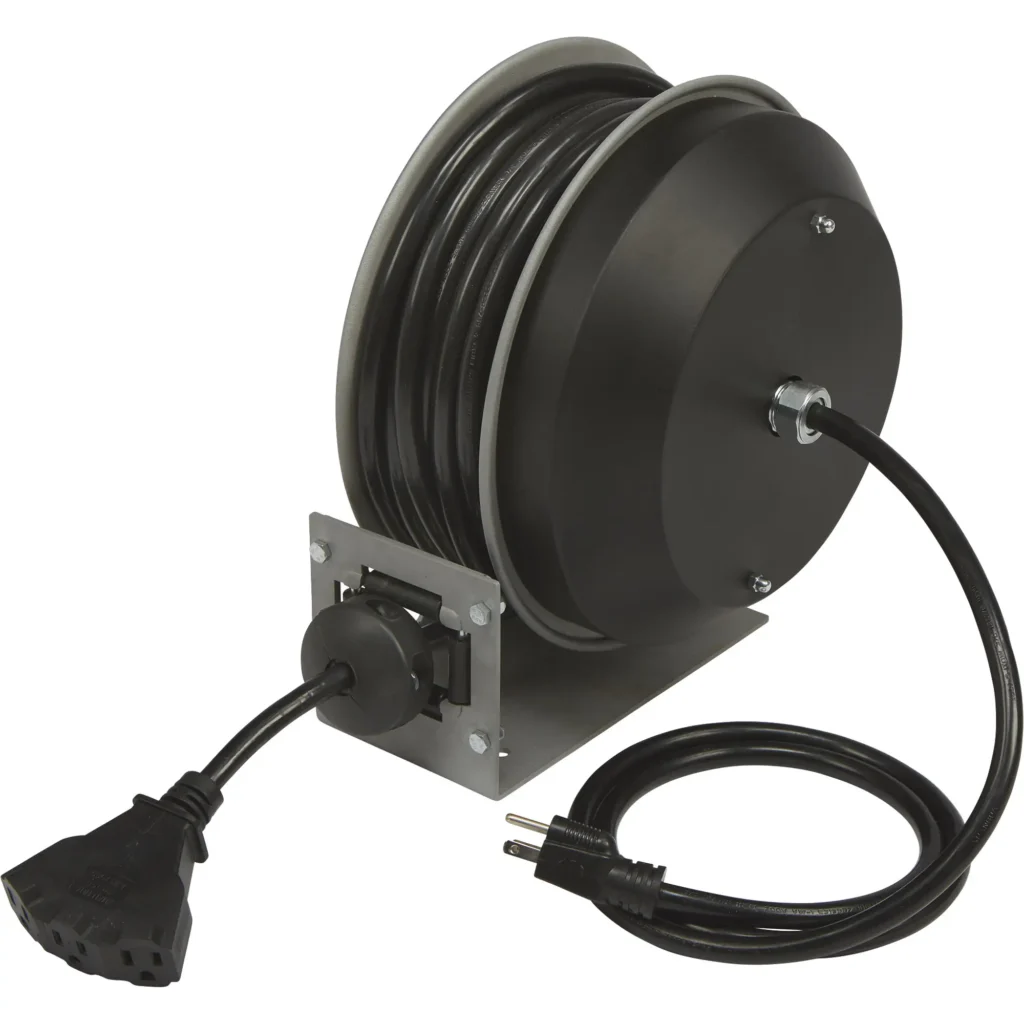
Kabeltrommel-Stromversorgung
A cable reel automatically winds and unwinds the power cable as the cart moves. It is suitable for fixed routes and short- to medium-distance transport. The system provides stable power, while the travel distance depends on the cable length.
Battery power is suitable for flexible operation without external cables. Low-voltage rail power is suitable for frequent and continuous heavy-load transport. Cable reel power is suitable for fixed-route operation with stable power requirements.
Vorteile
- High Load Capacity: Load capacities range from 1 to 500 tons. The cart can transport heavy equipment, steel structures, molds, transformers, and other large loads.
- Reduced Manual Handling: The transfer cart handles heavy materials between work areas, reducing manual lifting and handling operations.
- Stable Material Transport: Rail-guided travel provides stable movement for heavy loads. Controlled speed and braking reduce load movement and impact during transport.
- Flexible Power Options: Battery power allows operation without external cables. Low-voltage rail and cable reel systems are suitable for fixed transport routes and frequent operation.
- Safe and Precise Operation: Variable speed control provides controlled travel. Safety equipment can include emergency stops, warning lights, buffers, limit switches, and anti-collision sensors.
- Compact and Customizable Design: The cart size, platform, wheel arrangement, and load capacity can be customized for different loads, routes, and workspace dimensions.
- Automation Integration: PLC control, remote control, positioning sensors, and production-line interfaces can be added for automated material handling.
- Low Operating Cost: Electric drive systems require less routine maintenance than fuel-powered handling equipment. The cart can be configured for repeated heavy-load transport within the same facility.
When to Use a Heavy Duty Transfer Cart
Heavy Duty Transfer Carts are used for heavy-load transport between work areas. Selection depends on load, distance, route, and working conditions.
1. Heavy Loads: Suitable for transporting steel, machinery, molds, transformers, and other loads over 5 tons.
2. Fixed Routes: Suitable for frequent transport between fixed workstations.
3. Long-Distance Transport: Suitable for moving heavy loads between workshops, production lines, and storage areas.
4. Limited Space: Customized cart dimensions and platforms can handle long or oversized loads in narrow spaces.
5. Automated Handling: PLC, remote control, and positioning systems support automated material transport.
6. Special Working Conditions: Special configurations are available for high-temperature, foundry, steel, and hazardous environments.
7. Heavy Manual Handling: Suitable for replacing manual transport of heavy materials.
Light loads, temporary handling, and operations requiring frequent route changes are better suited to forklifts or trackless transfer carts.
Schlussfolgerung
A Heavy Duty Transfer Cart is designed for moving heavy and oversized loads within factories, warehouses, steel plants, shipyards, and other industrial facilities. Load capacity, travel route, power supply, platform size, and control system can be configured according to the application.
REMARKABLE provides heavy duty transfer carts for different load capacities and working conditions. The cart structure, drive system, power supply, platform, control system, and safety devices can be customized to match the customer’s site and transport requirements. Technical support, installation guidance, commissioning, spare parts, and after-sales service are available throughout the equipment life cycle.
For a heavy load transfer solution matched to your application, kontaktieren Sie uns with your load weight, travel distance, route, and working conditions.
E-Mail: transfercart@rmkzn.com
Telefon: +86-18637369355
FAQ
What is a Heavy Duty Transfer Cart?
A Heavy Duty Transfer Cart is an electric material handling vehicle used to move heavy and oversized loads between work areas in industrial facilities.
How does a Heavy Duty Transfer Cart work?
The cart uses an electric drive system to move on rails or prepared ground. The control system manages starting, stopping, direction, speed, and braking.
How much weight can a Heavy Duty Transfer Cart carry?
Capacity depends on the cart design and application. Heavy Duty Transfer Carts can be designed for loads from several tons to hundreds of tons.
What is the difference between a rail and trackless transfer cart?
A rail transfer cart runs along fixed rails, while a trackless transfer cart travels directly on a suitable ground surface without fixed rails.
What power supply does a Heavy Duty Transfer Cart use?
Common power options include batteries, low-voltage rail power, and cable reels. The choice depends on travel distance, operating frequency, and site conditions.
Where are Heavy Duty Transfer Carts used?
They are used in steel plants, shipyards, foundries, machinery factories, warehouses, construction sites, and other facilities that handle heavy loads.
Can a Heavy Duty Transfer Cart be customized?
Yes. Load capacity, platform size, wheel arrangement, drive system, power supply, control system, speed, and safety devices can be customized.
How do I choose the right Heavy Duty Transfer Cart?
Consider the load weight and dimensions, travel distance, route, floor or rail conditions, operating frequency, power supply, and working environment.