目次
はじめに
随着工厂开始处理更重的钢材、机械、模具和大型部件,传统搬运设备在某些负载和运输路线上变得难以使用。重型搬运平车正是为此类内部物料搬运而开发,用于在生产线、存储区域、装配工位及其他工作区域之间移动重载。.
在本文中,我将解释什么是重型搬运平车、其工作原理、可用的类型和动力系统,以及选型时需要考虑的因素。这些信息有助于读者在为特定负载和工作现场选择搬运平车之前了解该设备。.
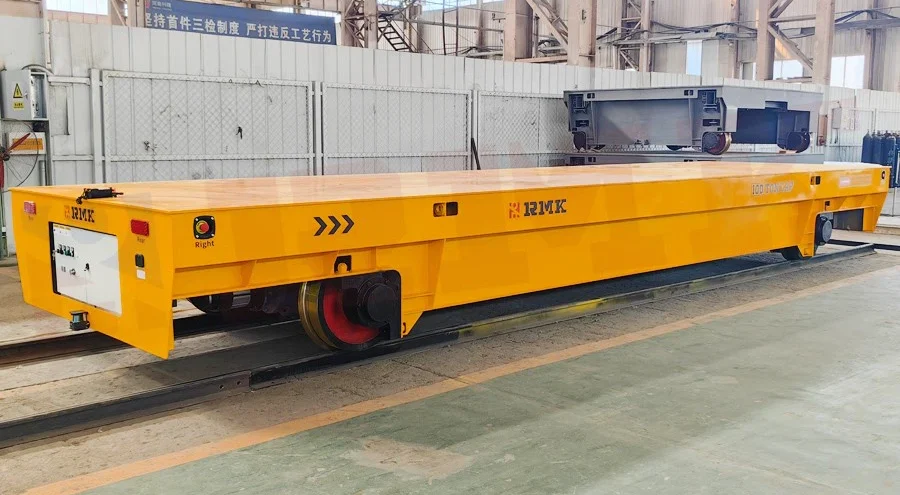
ヘビーデューティートランスファーカートとは?
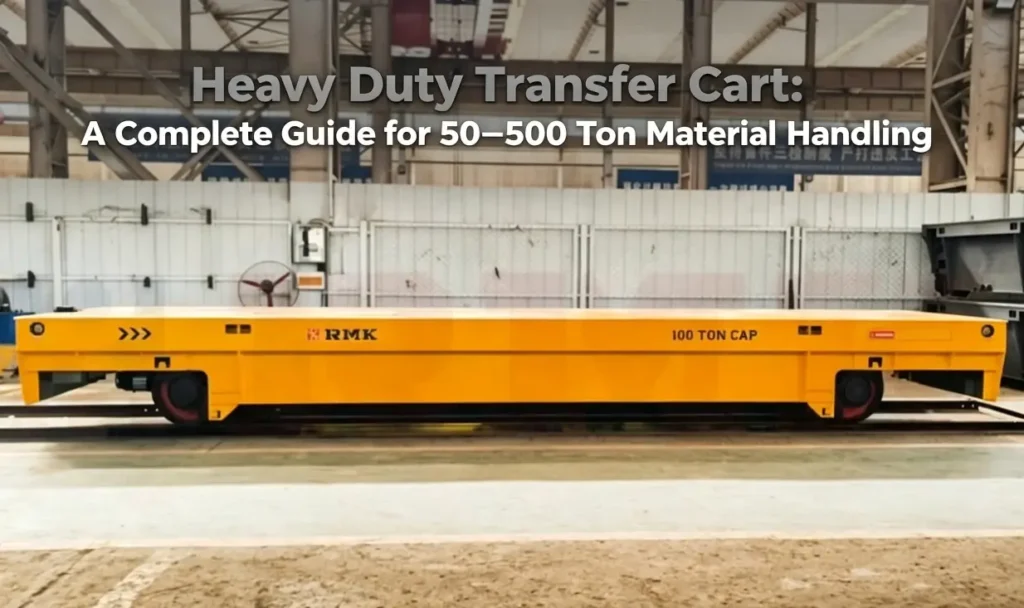
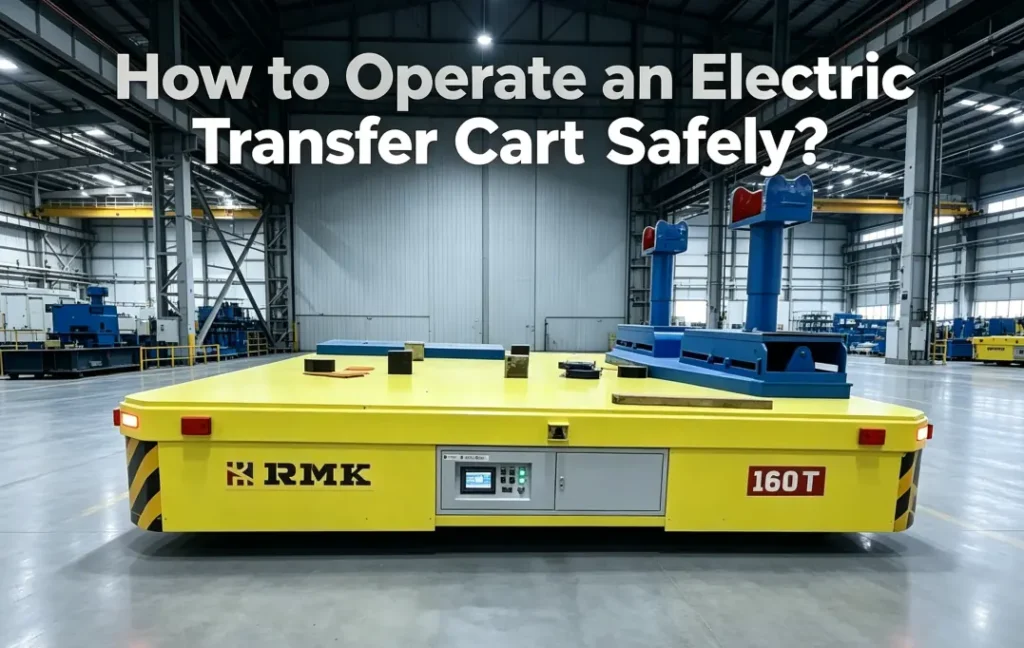
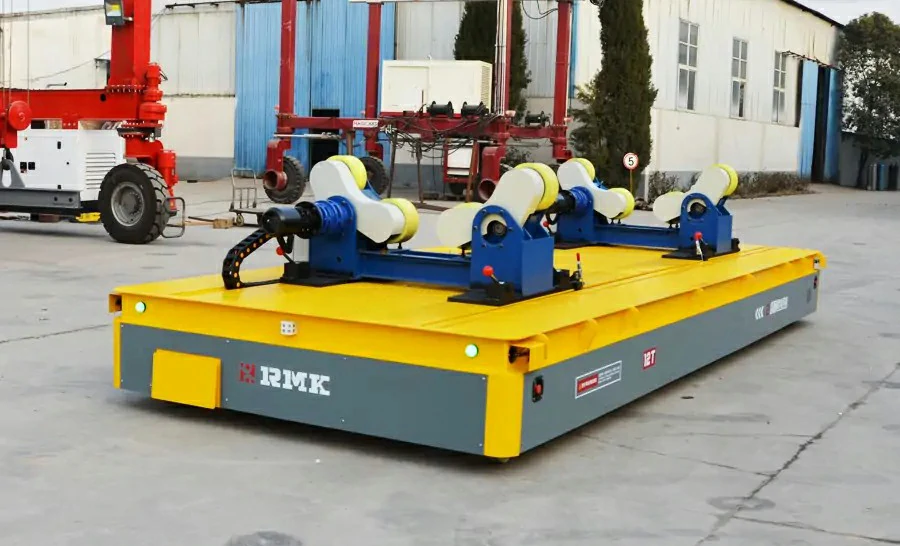
重型搬运平车,也称为轨道平车或电动平车,是一种在固定轨道上运行的工业运输车辆。它用于在生產区域、存储区域和装配工位之间移动钢坯、大型模具、机械零件和大型设备等重型物料。重型搬运平车常用于钢厂、造船厂、铸造厂和大型装配车间。.
重型搬运平车通常由焊接钢架、重型车轮组件和轨道导向系统组成。车架承载负载,车轮组件支撑并驱动平车,轨道则引导其行驶方向。动力选项包括低压轨道供电、电缆卷筒和电池供电。动力系统根据行驶距离、运行频率和现场供电条件进行选择。.
平车规格根据负载和工作条件进行配置。主要参数包括额定载重能力、平台尺寸、轨距和运行速度。载重能力范围为5至200吨或更高。控制选项包括按钮控制、无线遥控和PLC控制,适用于固定路线运输和生产线物料搬运。.
重载转运车是如何工作的?
重型搬运平车通过电动驱动系统移动重载。平车在平台上承载物料,而驱动电机和减速机提供行驶动力。根据平车类型,车轮在固定轨道上或直接在工厂地面上运行。轨道搬运平车沿固定路线行驶,而无轨搬运平车可在指定地面区域行驶。.
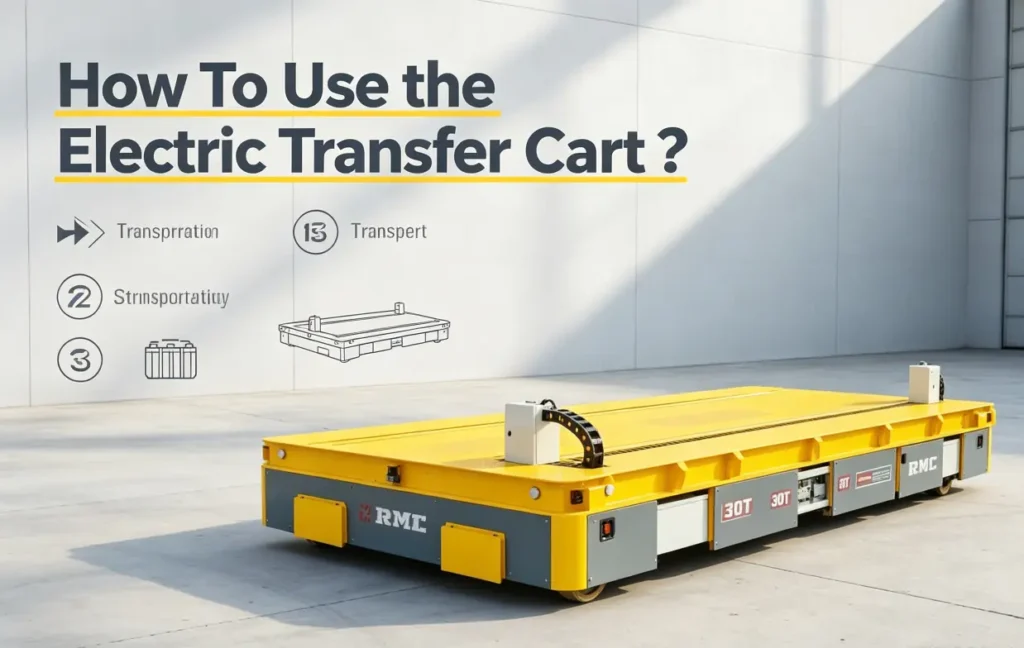
电源取决于平车设计。电池供电平车使用车载电池,而轨道平车可使用低压轨道供电或电缆卷筒。其他配置包括电缆链和锂电池系统。控制系统通过按钮、无线遥控或PLC操作启动、停止、前进和后退行驶、速度及制动。.
运行过程中,操作员启动平车并控制其行驶至所需位置。驱动轮使平车沿轨道或工厂地面移动。平车在装卸点或装配工位停止,物料由起重机、叉车或其他设备进行搬运。.
有关重型搬运平车的具体操作流程,请参阅文章: “重型搬运平车如何工作?”
重型搬运平车类型
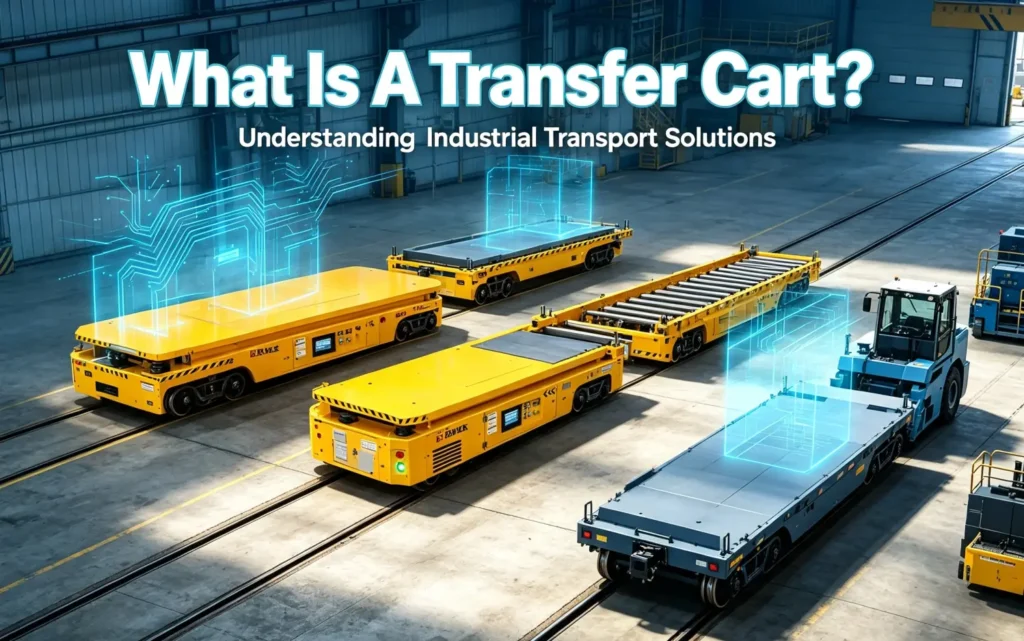
重型搬运平车可根据不同的运输路线和运行条件提供多种配置。主要类型包括轨道搬运平车、无轨搬运平车、电池供电搬运平车和AGV搬运平车。平车类型根据负载、行驶路线、电源和自动化水平进行选择。.
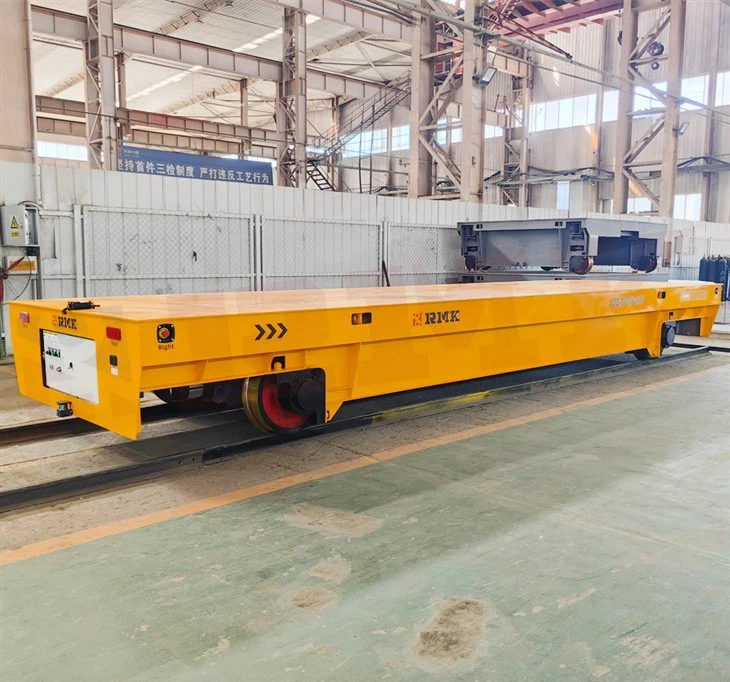
重荷重レールトランスファーカート
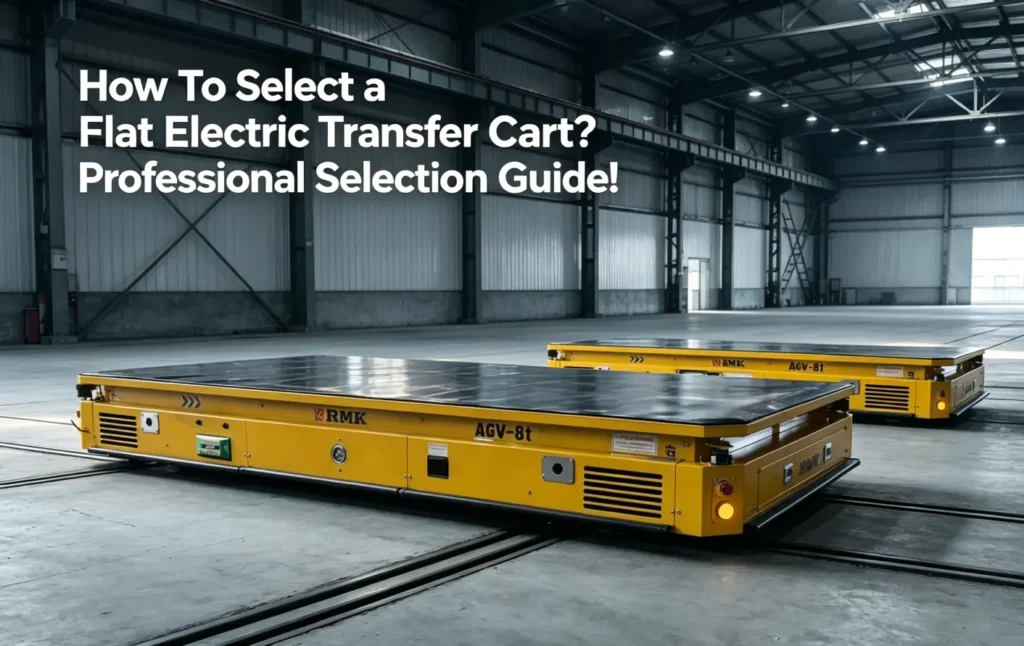
A 重荷重レールトランスファーカート 在固定轨道上运行,适用于常规运输路线上的重载搬运。常见于钢厂、造船厂、铸造厂和重型制造车间。.
- 载重能力:1–300吨
- 平台尺寸:定制
- 轨距:1,200–2,000 mm
- 电源:电池 / 电缆卷筒 / 低压轨道
重型无轨转运小车
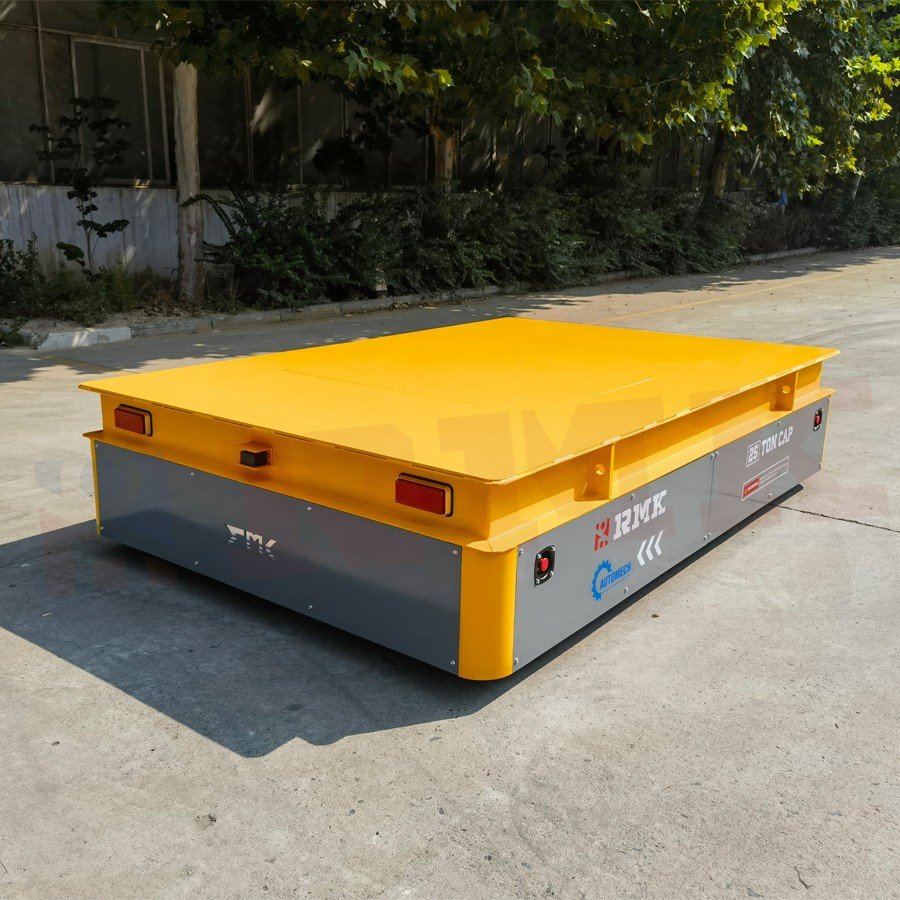
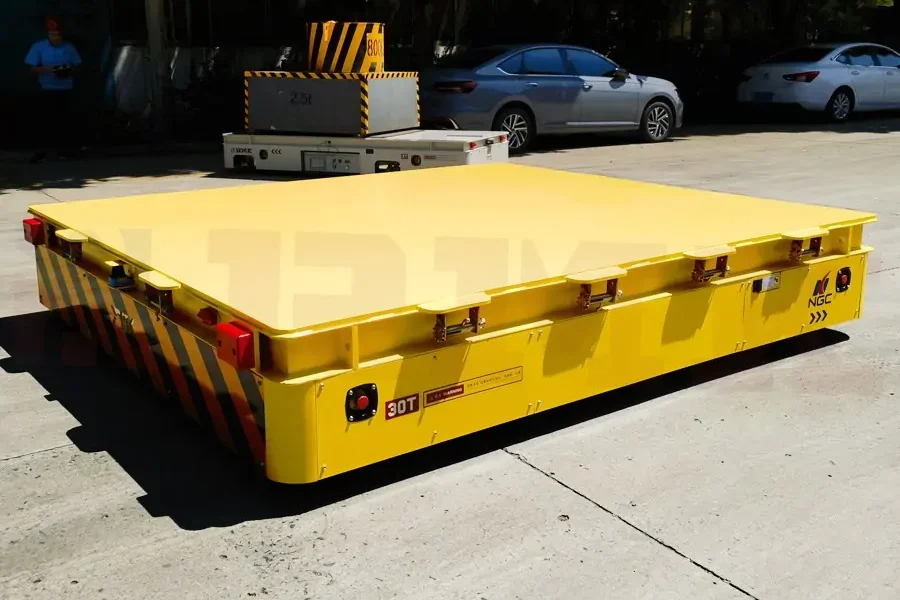
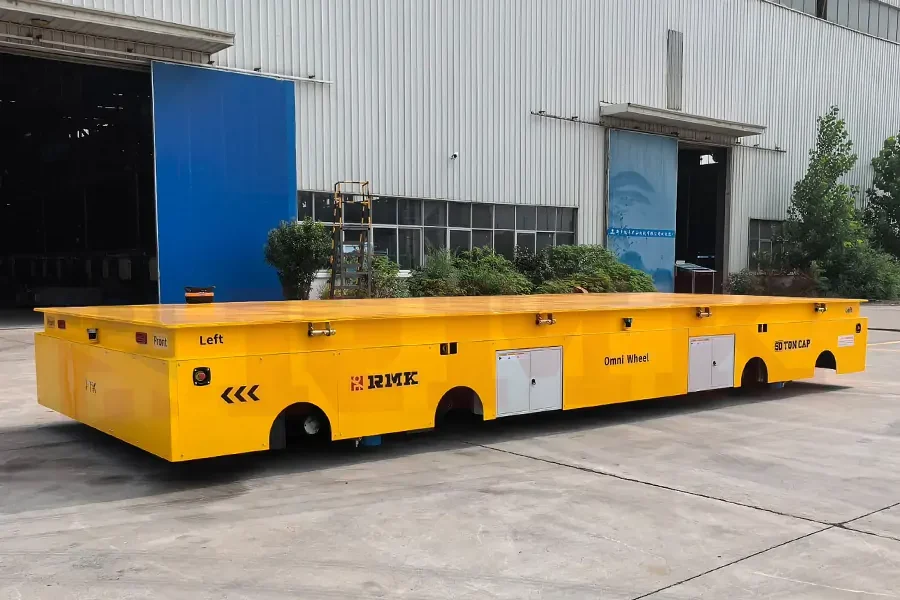
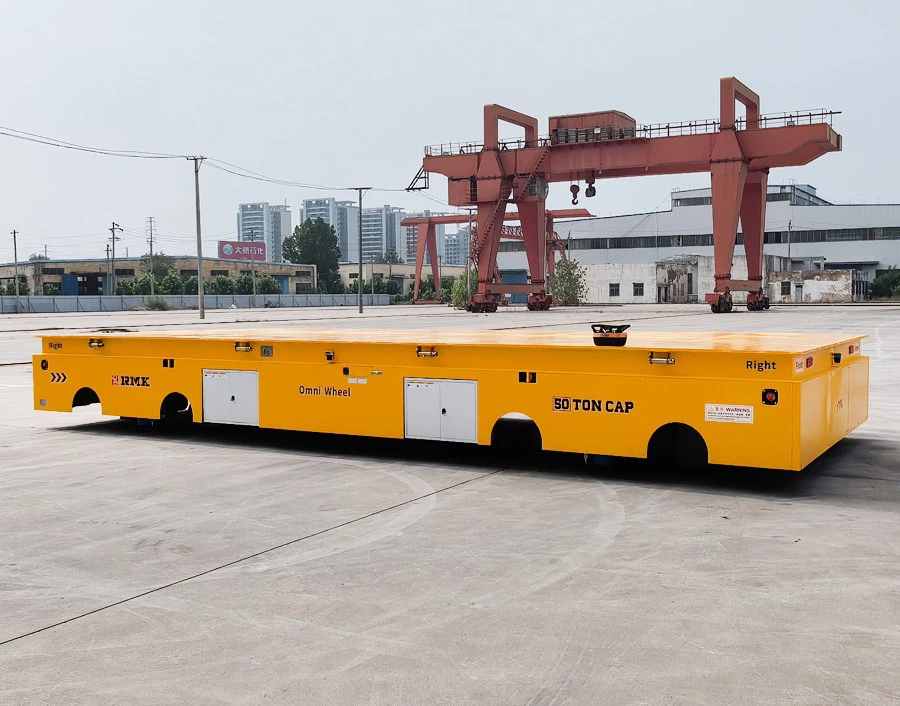
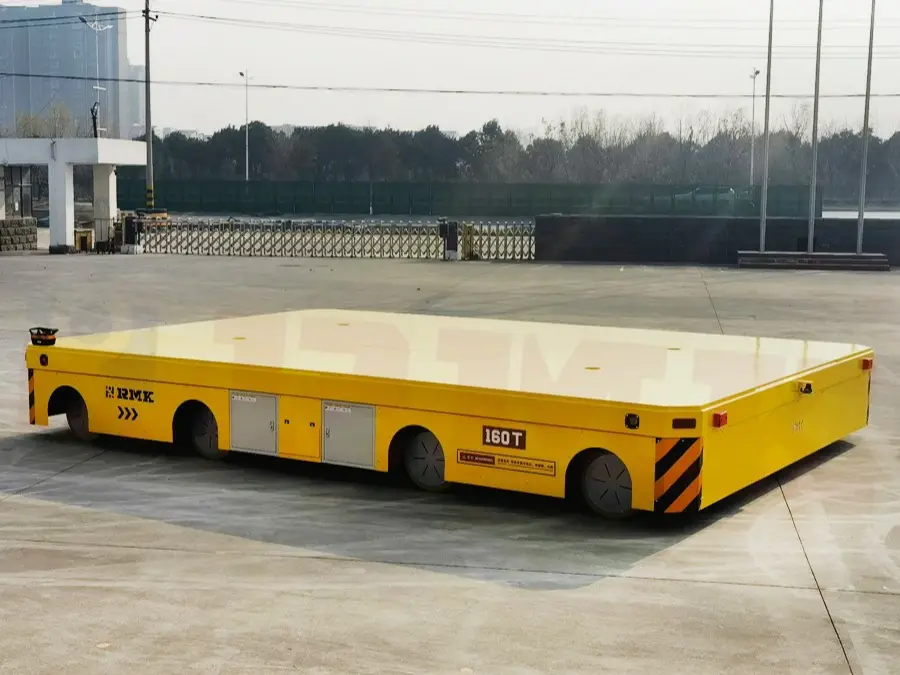
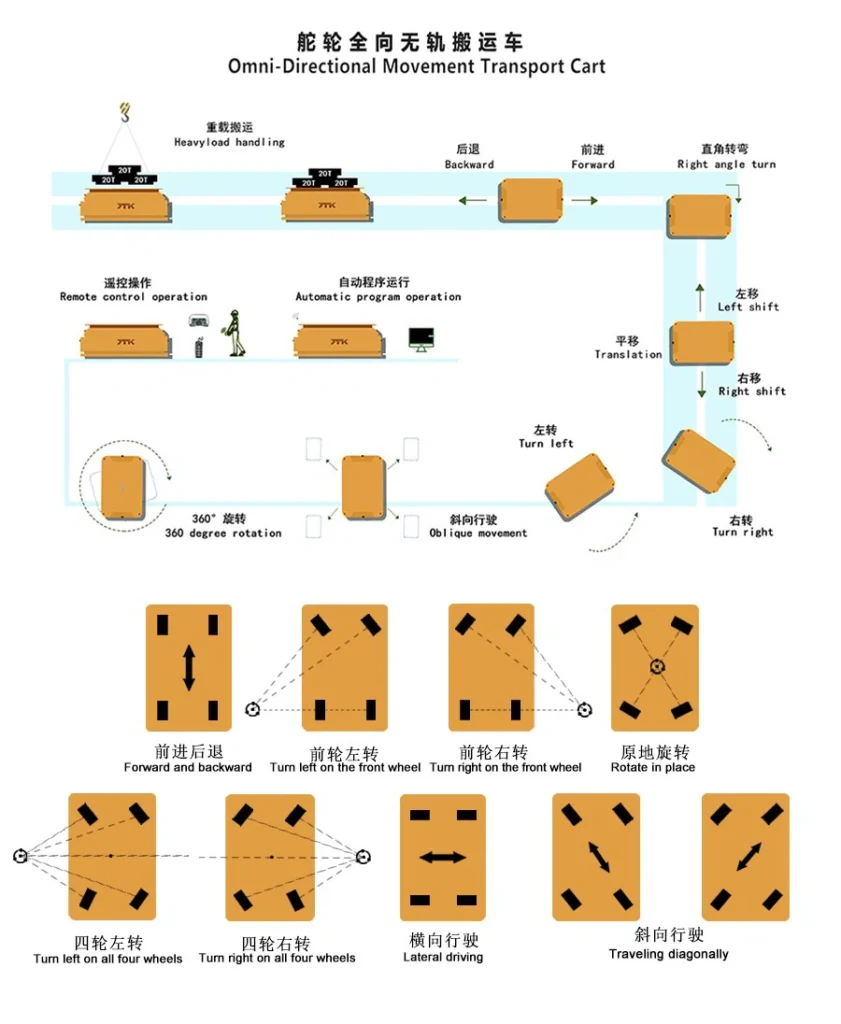
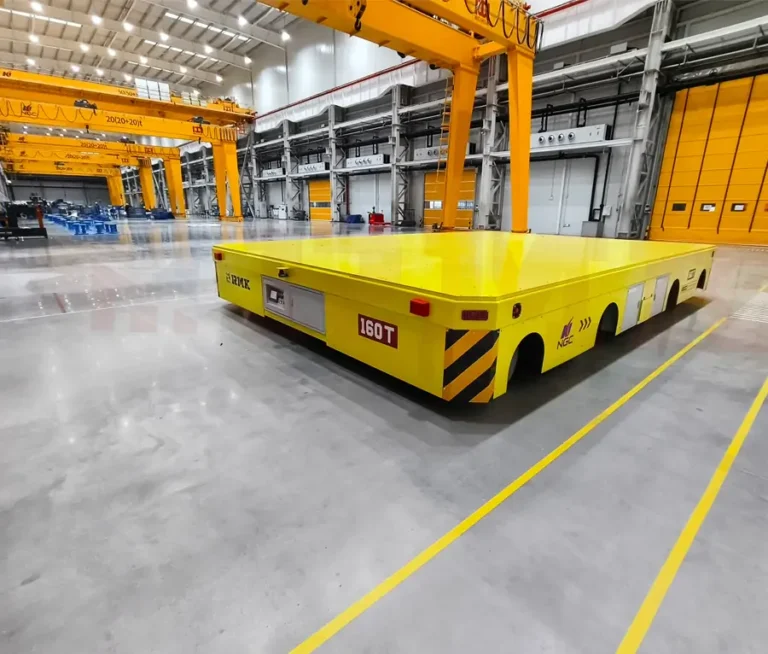
A 重型无轨转运小车 直接在工厂地面上运行,无需固定轨道。适用于不同工作区域之间运输路线变化的情况。.
- 载重能力:1–300吨
- 平台尺寸:定制
- 运行速度:0–20 m/min
- 电源:电池 / 锂电池
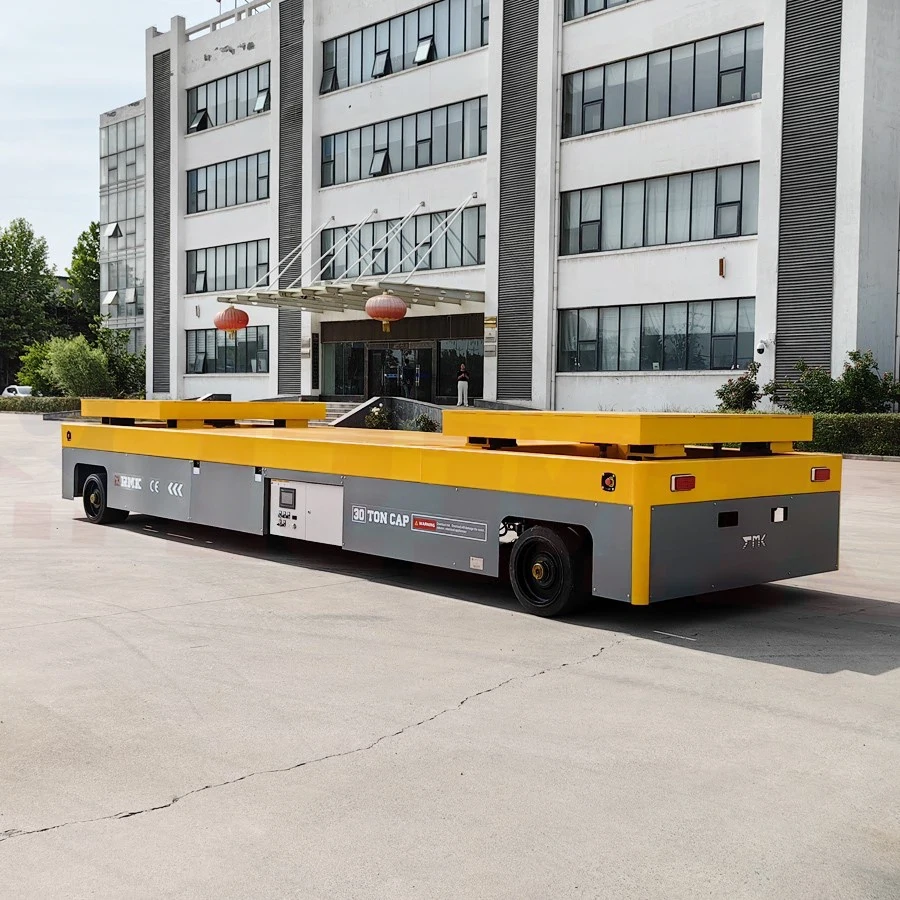
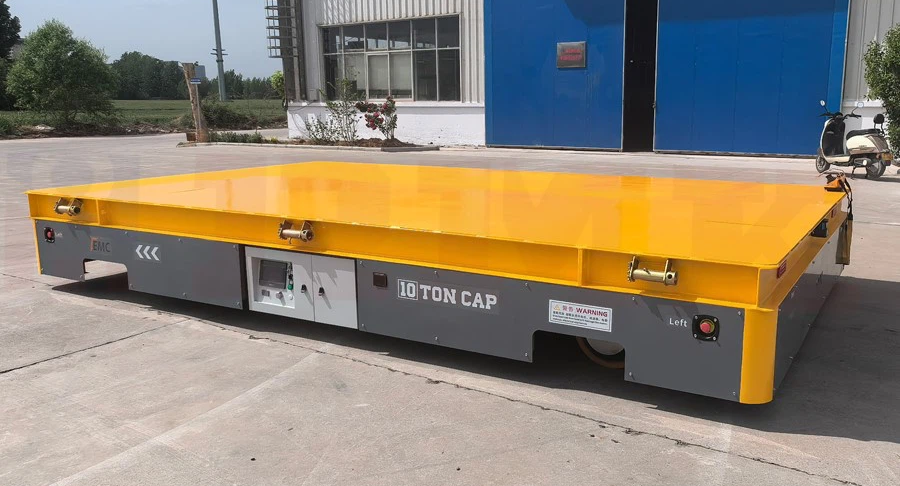
重型电池供电搬运平车
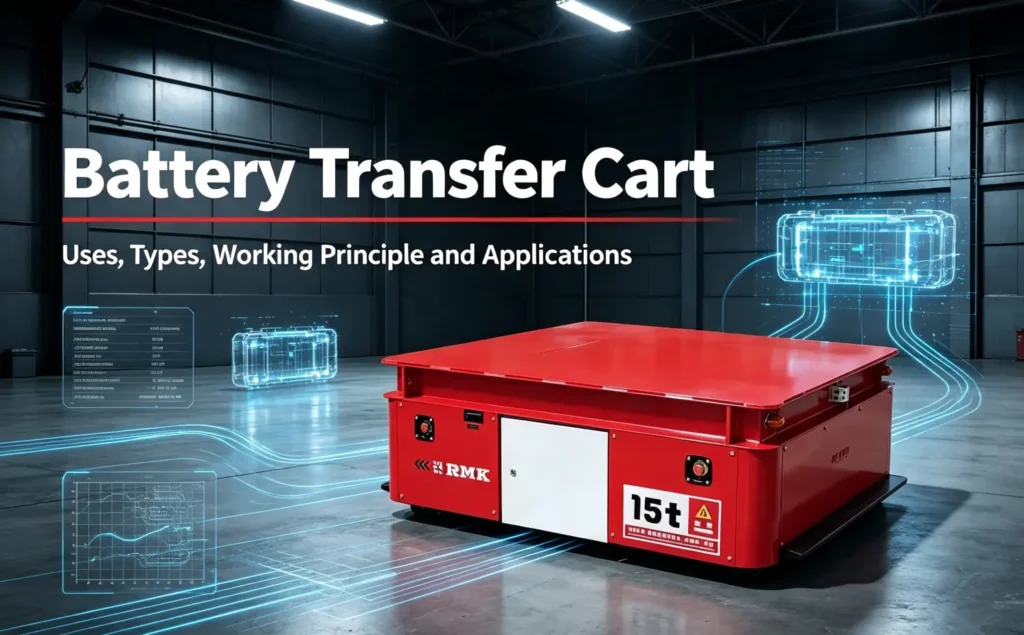
A 重型电池供电搬运平车 使用车载电池作为动力源。运行过程中无外部电源电缆,可在工厂不同区域之间移动。.
- 载重能力:1–300吨
- 平台尺寸:定制
- 运行速度:0–20 m/min
- 控制方式:按钮 / 无线遥控 / PLC
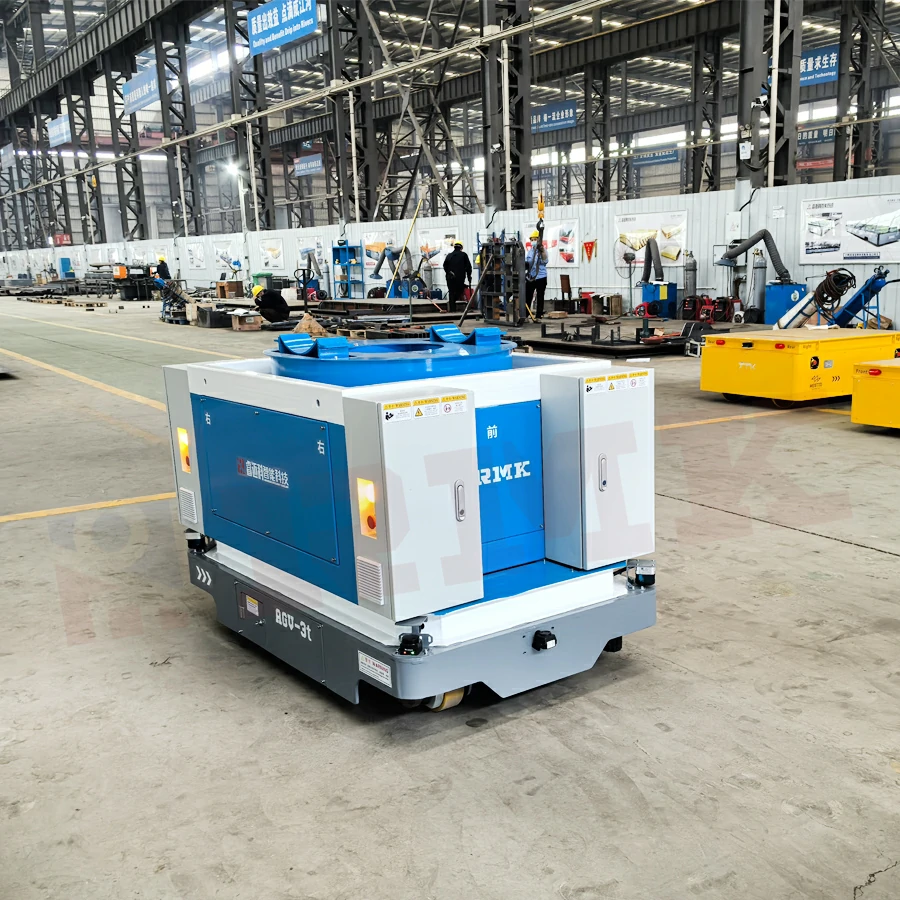
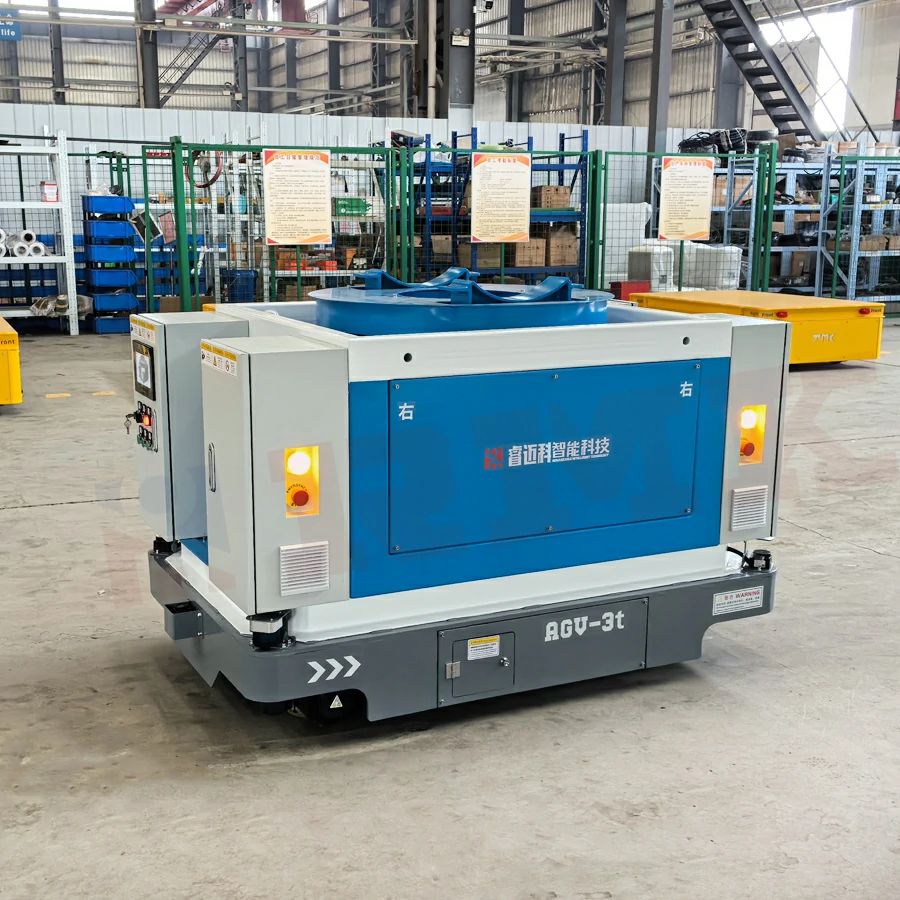
重型AGV搬运平车
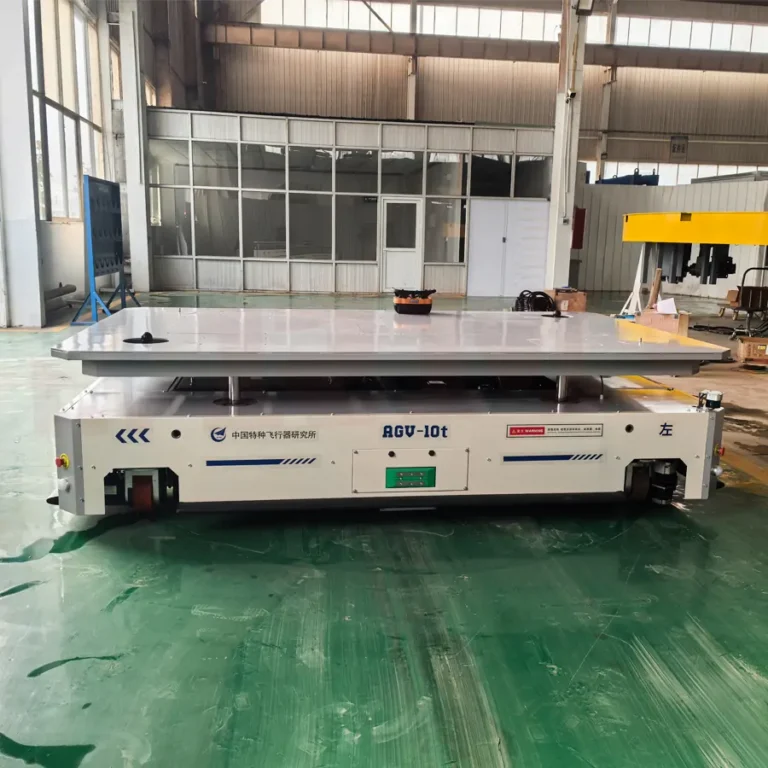
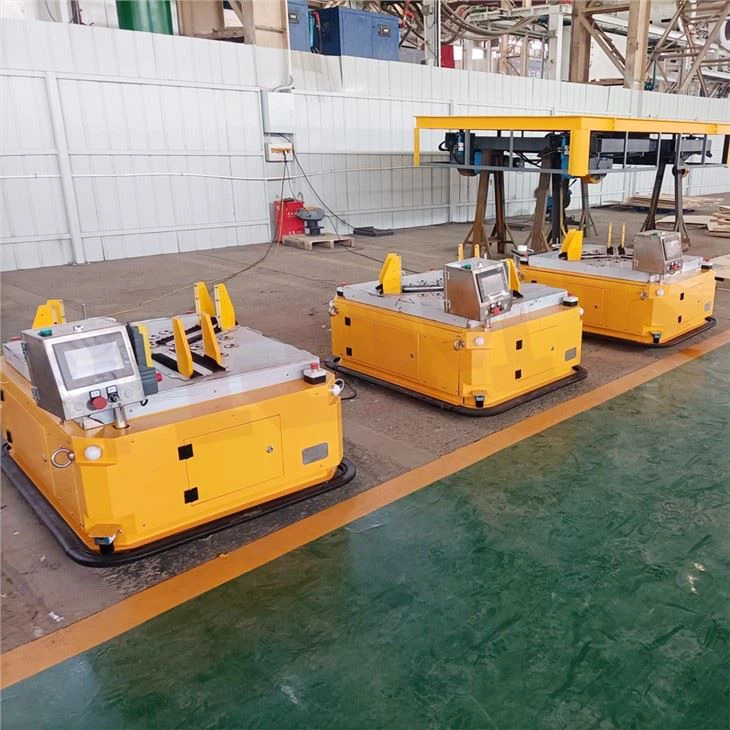
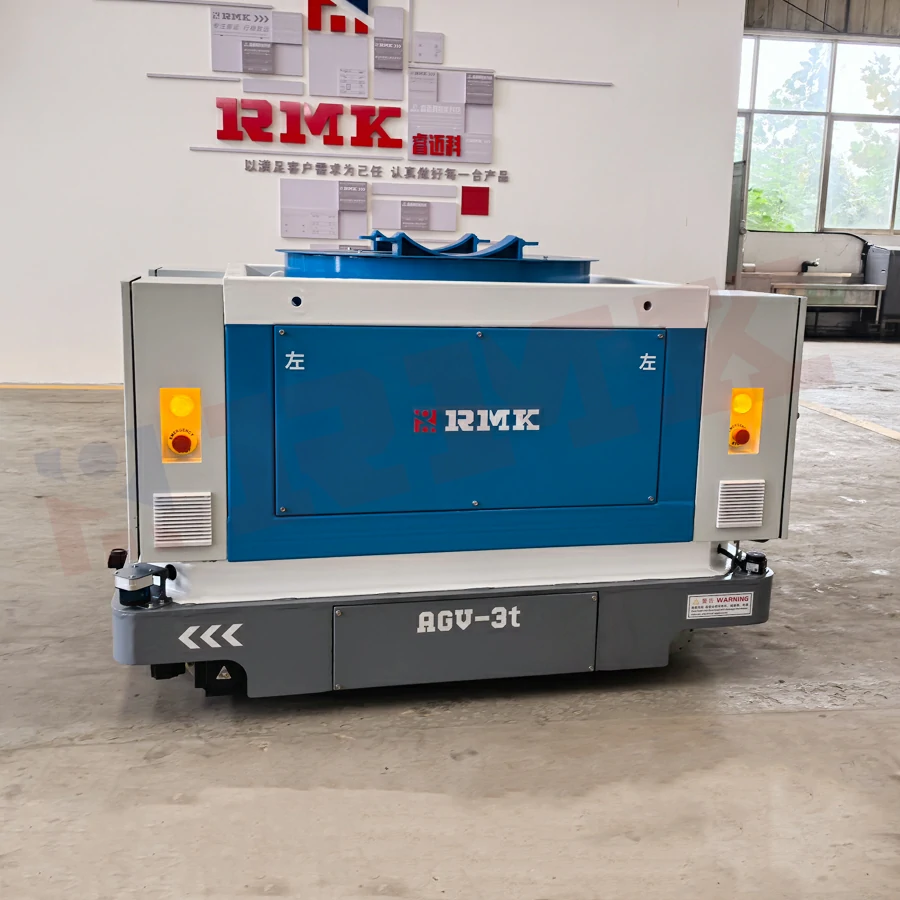
A 重型AGV搬运平车 用于自动化重载运输。采用导航系统沿编程路线运行,并可连接工厂物料搬运系统。.
- 载重能力:定制
- 平台尺寸:定制
- 导航:激光 / 磁导航 / 其他导航
- 控制:自动 / PLC
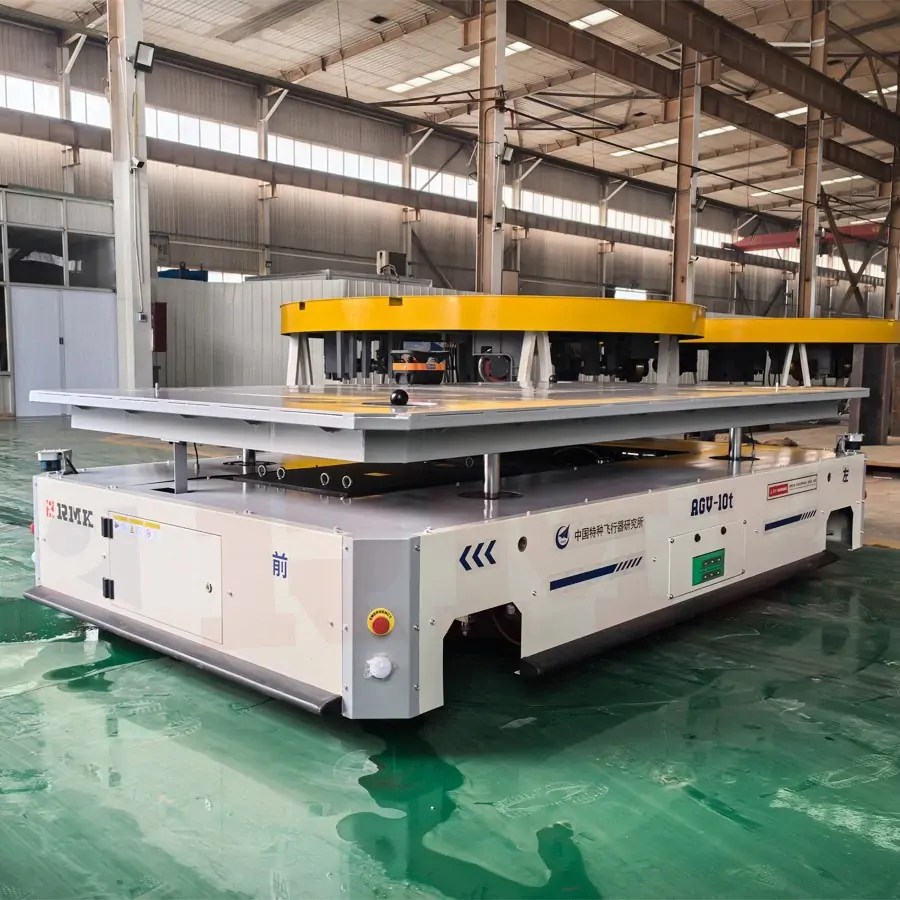
重型搬运平车可承载多少重量?
重型搬运平车的载重能力取决于其型号、车架结构、车轮布置和驱动系统。标准配置通常覆盖1–300吨,而定制的重型搬运平车可达到800–1,000吨,适用于大型工业项目。.
| 定格負荷 | 衝撃荷重 | 平车自重 | 最大车轮负载 |
|---|---|---|---|
| 5トン | 5吨 | 3吨 | 8吨 |
| 10トン | 15吨 | 3吨 | 6吨 |
| 20トン | 30トン | 9吨 | 6吨 |
| 30トン | 45吨 | 8吨 | 7吨 |
| 50トン | 75吨 | 5吨 | 12吨 |
- 额定负载和冲击负载:额定负载指正常运行时的最大负载。冲击负载考虑启动、制动以及轨道或地面不平整时产生的附加力。选择平车结构和驱动系统时,两个值均需考虑。.
- Wheel Load and Rail Selection: Cart capacity affects wheel load and rail selection. Higher-capacity carts require larger wheels, stronger rail sections, and a suitable wheel arrangement. For carts above 300 tons, multi-axle bogies and high-torque drive systems are commonly used.
- Drive Power: Motor power increases with cart capacity, travel distance, and operating conditions. Running speed is commonly within 0–25 m/min, with variable-speed control available for different transport requirements.
- Heavy Load Customization: For loads above standard capacity, the cart can be configured with additional axles, reinforced frames, high-torque drive units, and suitable power systems. The actual configuration is based on the total load, wheel load, rail condition, travel distance, and operating frequency.
The load capacity of a transfer vehicle is influenced by various factors. For more details, please consult our experts.
アプリケーション
A Heavy Duty Transfer Cart is used to move heavy and oversized loads horizontally across factories, workshops, warehouses, shipyards, steel plants, and other industrial sites.
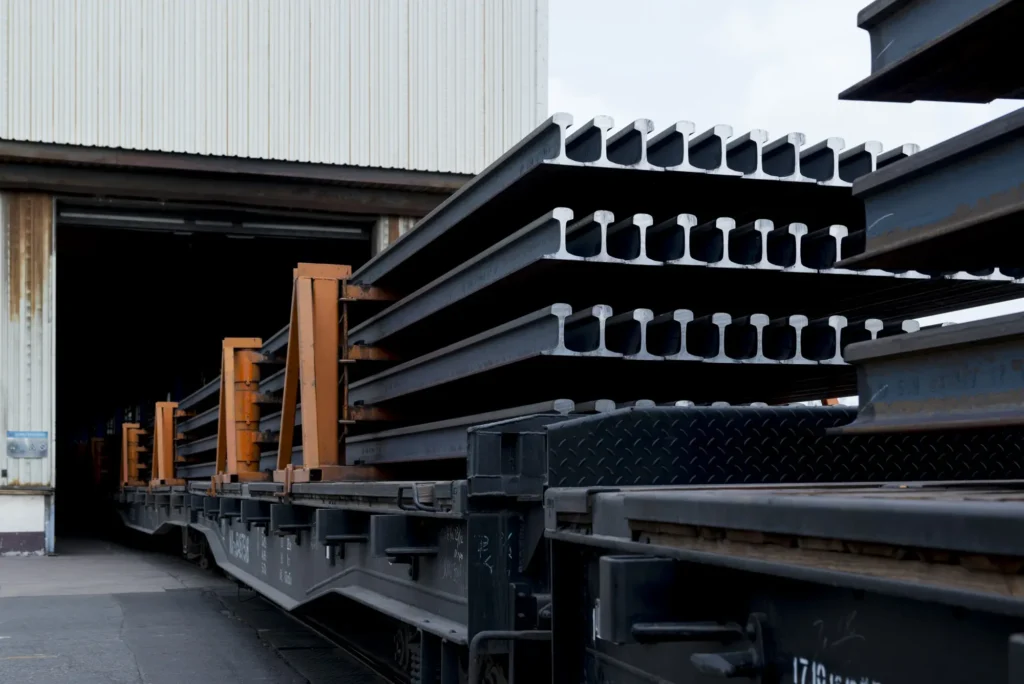
Steel and Metal Handling
Used to transport steel plates, coils, beams, pipes, molds, and fabricated metal structures between production areas.
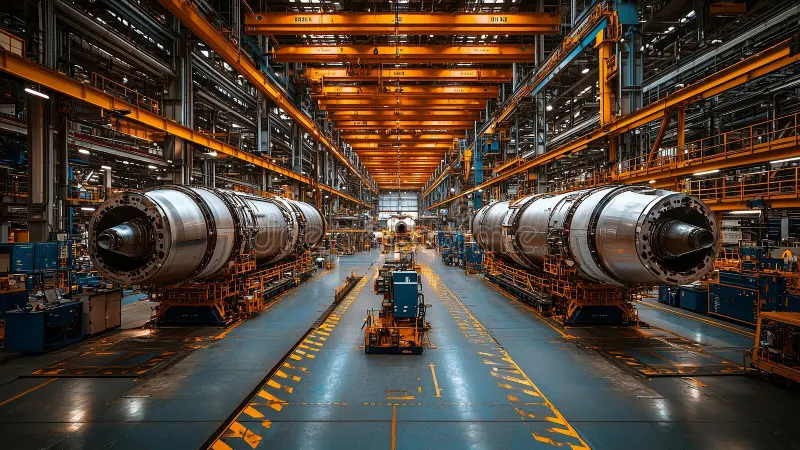
Machinery and Equipment Transport
Moves heavy machinery, industrial equipment, engines, transformers, and other large components during manufacturing, assembly, or maintenance.
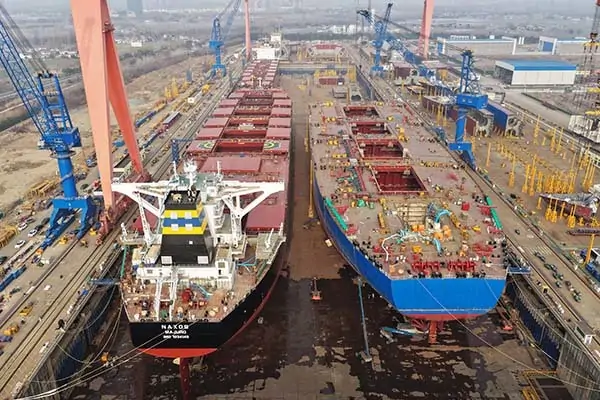
Shipyard Operations
Carries ship sections, steel structures, blocks, and other oversized components between fabrication and assembly areas.
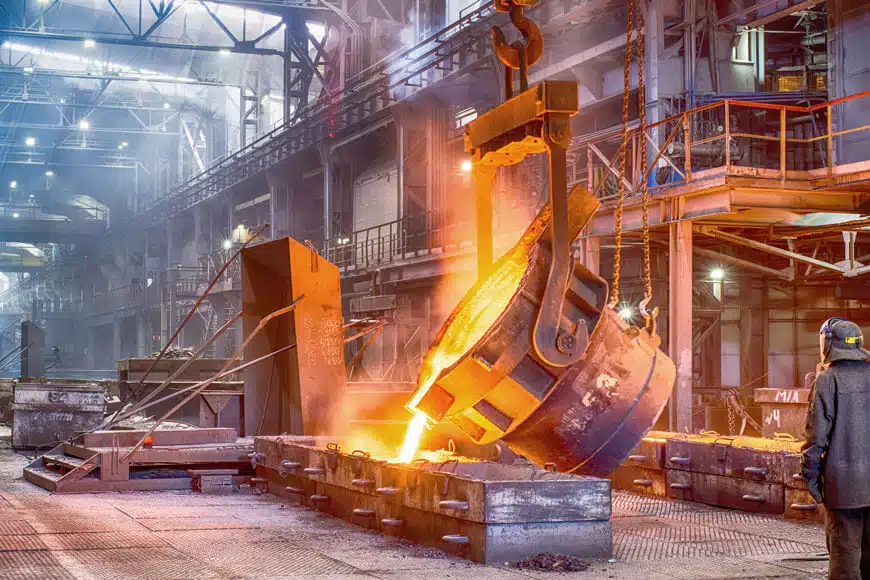
Foundry and Metallurgical Plants
Used for transferring ladles, molds, castings, and heavy workpieces in high-load production environments.
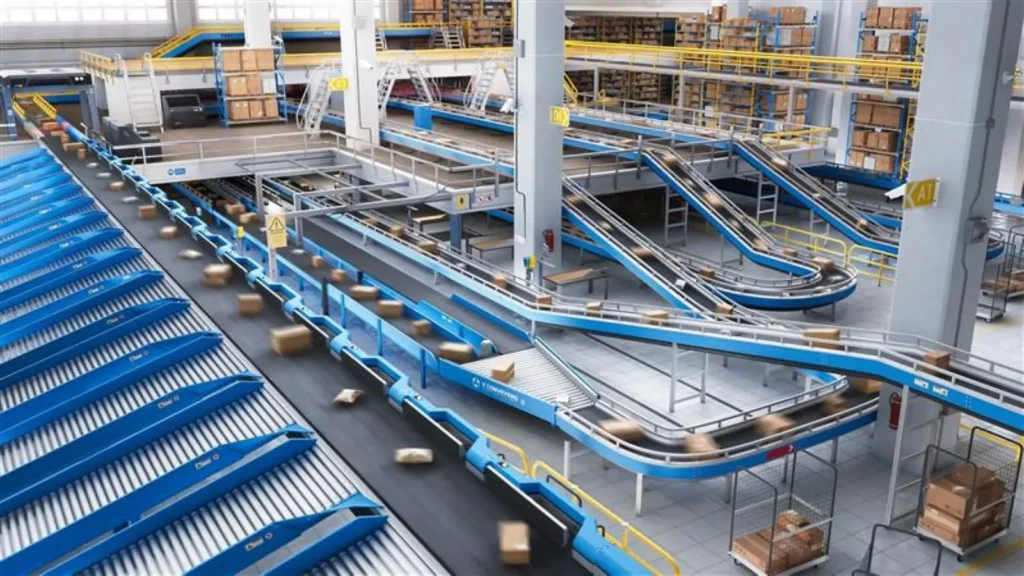
倉庫および工場物流
Connects different workshops, storage areas, assembly lines, and loading zones for regular heavy-load transportation.
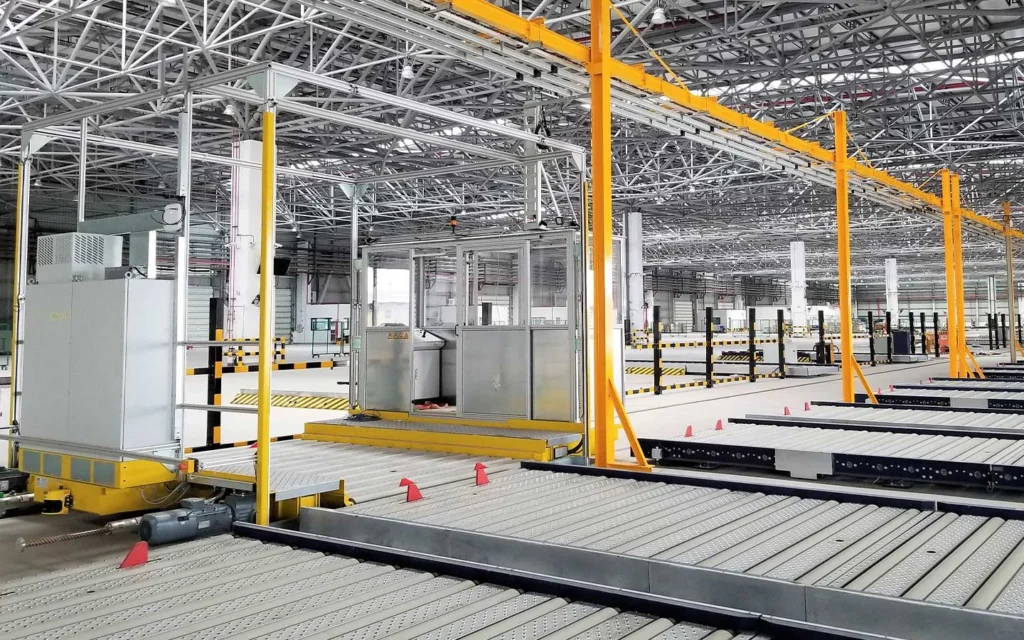
Construction and Large-Structure Handling
Transports precast concrete sections, bridge components, steel structures, and other oversized loads.
Parts of a Heavy Duty Transfer Cart?
A Heavy Duty Transfer Cart consists of five main systems: frame, running gear, power supply, control system, and safety devices. Component specifications are selected according to load capacity and operating conditions.
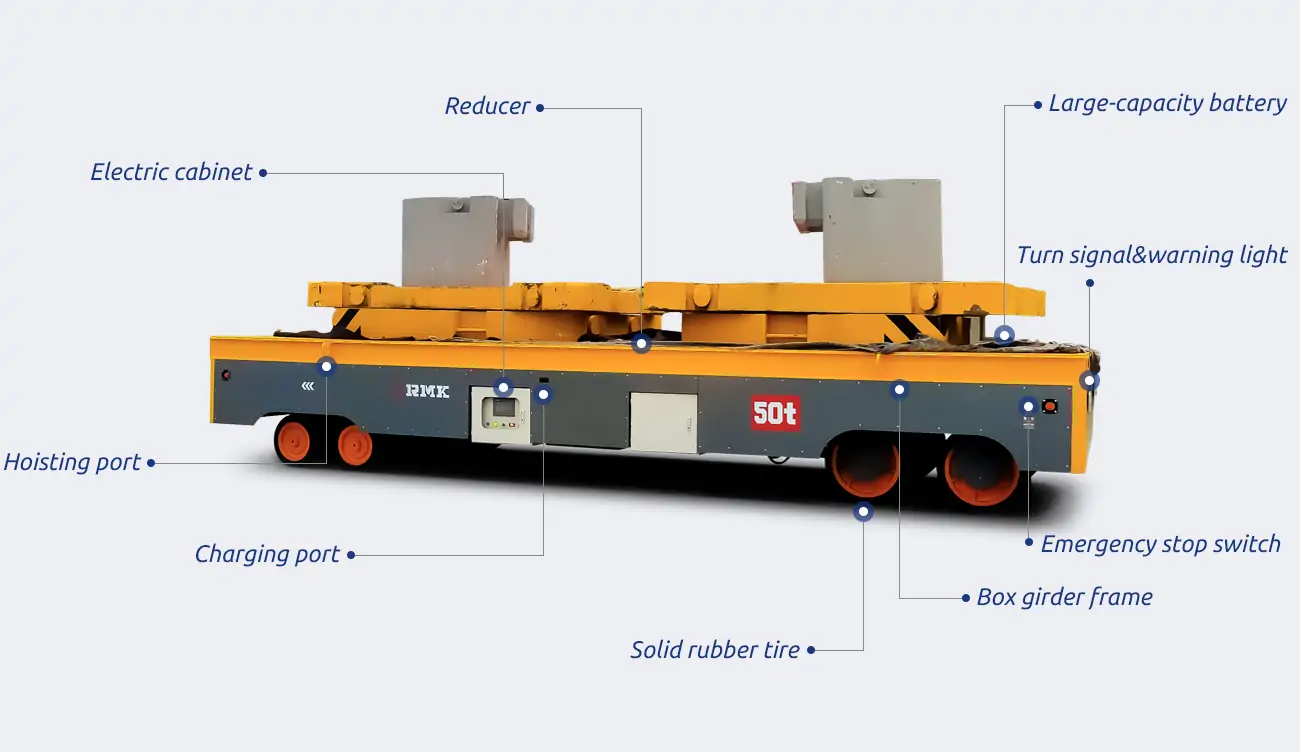
- Cart Frame — Welded steel structure that supports the load and provides the main structural strength of the cart.
- Wheel Assembly — Includes rail wheels, axles, bearings, and bearing housings for load support and stable travel.
- Drive System — Consists of drive motors, gear reducers, couplings, and drive wheels for cart movement.
- Power Supply System — Battery, low-voltage rail, cable reel, or cable drag chain can be selected according to the operating conditions.
- Electrical Control System — Includes the electrical cabinet, PLC, inverter, and control components for starting, stopping, speed control, and travel direction.
- Braking System — Electromagnetic or hydraulic brakes control deceleration and stopping under heavy loads.
- Rail System — Includes running rails and rail joints to provide a fixed travel route for the transfer cart.
- Safety Devices — Include emergency stop buttons, warning lights, alarms, buffers, limit switches, and anti-collision devices.
- Positioning System — Proximity switches, encoders, or other positioning devices can be used for accurate stopping and automated operation.
Heavy Duty Transfer Cart components are selected based on load capacity, wheel pressure, rail type, drive power, power supply, control method, and operating environment. The cart can be configured for applications such as steel handling, foundries, shipyards, machinery plants, and automated production lines.
重型搬运平车使用哪种电源?
The power supply of a Heavy Duty Transfer Cart is selected according to travel distance, operating frequency, and site conditions. The main options are battery power, low-voltage rail power, and cable reel power.
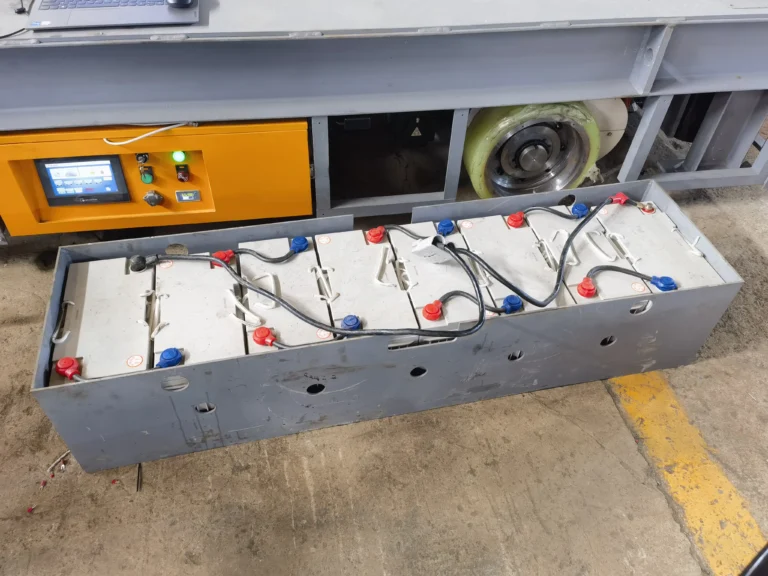
Battery Power Supply
Batteries are installed on the cart to power the drive motors. The cart operates without an external power cable and is suitable for flexible material transport and multi-area operation. Battery capacity is selected according to load, travel distance, and working hours.
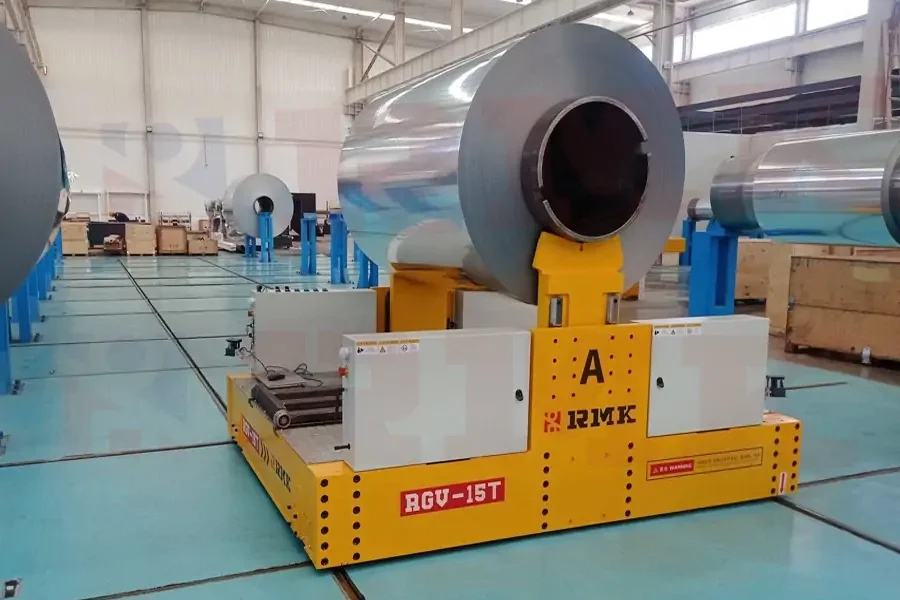
Low-Voltage Rail Power Supply
The cart receives power through the rail system. AC power is reduced to a low safety voltage, typically 36V, before being supplied to the cart. It is suitable for frequent operation and continuous heavy-load transport. Rail insulation and proper installation are required.
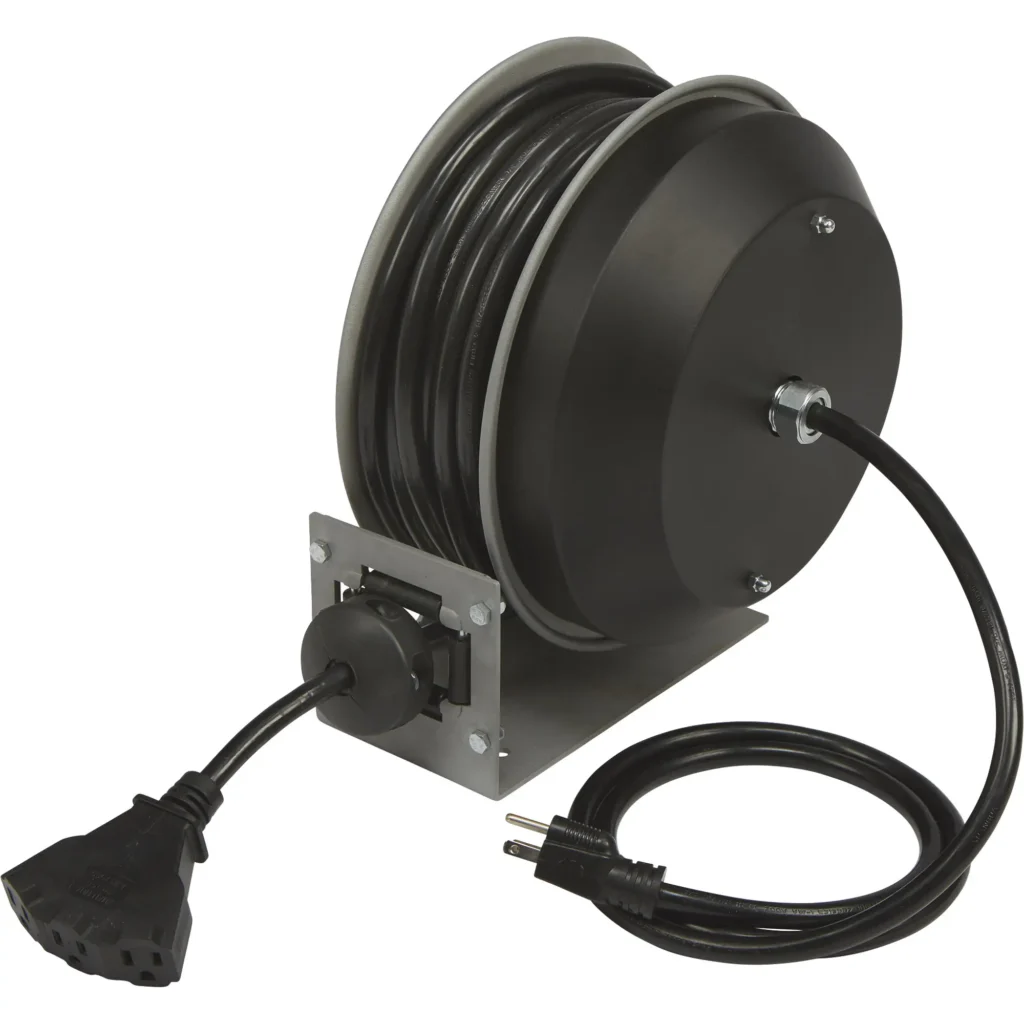
ケーブルリール電源
A cable reel automatically winds and unwinds the power cable as the cart moves. It is suitable for fixed routes and short- to medium-distance transport. The system provides stable power, while the travel distance depends on the cable length.
Battery power is suitable for flexible operation without external cables. Low-voltage rail power is suitable for frequent and continuous heavy-load transport. Cable reel power is suitable for fixed-route operation with stable power requirements.
メリット
- High Load Capacity: Load capacities range from 1 to 500 tons. The cart can transport heavy equipment, steel structures, molds, transformers, and other large loads.
- Reduced Manual Handling: The transfer cart handles heavy materials between work areas, reducing manual lifting and handling operations.
- Stable Material Transport: Rail-guided travel provides stable movement for heavy loads. Controlled speed and braking reduce load movement and impact during transport.
- Flexible Power Options: Battery power allows operation without external cables. Low-voltage rail and cable reel systems are suitable for fixed transport routes and frequent operation.
- Safe and Precise Operation: Variable speed control provides controlled travel. Safety equipment can include emergency stops, warning lights, buffers, limit switches, and anti-collision sensors.
- Compact and Customizable Design: The cart size, platform, wheel arrangement, and load capacity can be customized for different loads, routes, and workspace dimensions.
- Automation Integration: PLC control, remote control, positioning sensors, and production-line interfaces can be added for automated material handling.
- Low Operating Cost: Electric drive systems require less routine maintenance than fuel-powered handling equipment. The cart can be configured for repeated heavy-load transport within the same facility.
When to Use a Heavy Duty Transfer Cart
Heavy Duty Transfer Carts are used for heavy-load transport between work areas. Selection depends on load, distance, route, and working conditions.
1. Heavy Loads: Suitable for transporting steel, machinery, molds, transformers, and other loads over 5 tons.
2. Fixed Routes: Suitable for frequent transport between fixed workstations.
3. Long-Distance Transport: Suitable for moving heavy loads between workshops, production lines, and storage areas.
4. Limited Space: Customized cart dimensions and platforms can handle long or oversized loads in narrow spaces.
5. Automated Handling: PLC, remote control, and positioning systems support automated material transport.
6. Special Working Conditions: Special configurations are available for high-temperature, foundry, steel, and hazardous environments.
7. Heavy Manual Handling: Suitable for replacing manual transport of heavy materials.
Light loads, temporary handling, and operations requiring frequent route changes are better suited to forklifts or trackless transfer carts.
結論
A Heavy Duty Transfer Cart is designed for moving heavy and oversized loads within factories, warehouses, steel plants, shipyards, and other industrial facilities. Load capacity, travel route, power supply, platform size, and control system can be configured according to the application.
リマーカブル provides heavy duty transfer carts for different load capacities and working conditions. The cart structure, drive system, power supply, platform, control system, and safety devices can be customized to match the customer’s site and transport requirements. Technical support, installation guidance, commissioning, spare parts, and after-sales service are available throughout the equipment life cycle.
For a heavy load transfer solution matched to your application, お問い合わせ with your load weight, travel distance, route, and working conditions.
電話番号: +86-18637369355
よくあるご質問
What is a Heavy Duty Transfer Cart?
A Heavy Duty Transfer Cart is an electric material handling vehicle used to move heavy and oversized loads between work areas in industrial facilities.
How does a Heavy Duty Transfer Cart work?
The cart uses an electric drive system to move on rails or prepared ground. The control system manages starting, stopping, direction, speed, and braking.
How much weight can a Heavy Duty Transfer Cart carry?
Capacity depends on the cart design and application. Heavy Duty Transfer Carts can be designed for loads from several tons to hundreds of tons.
What is the difference between a rail and trackless transfer cart?
A rail transfer cart runs along fixed rails, while a trackless transfer cart travels directly on a suitable ground surface without fixed rails.
What power supply does a Heavy Duty Transfer Cart use?
Common power options include batteries, low-voltage rail power, and cable reels. The choice depends on travel distance, operating frequency, and site conditions.
Where are Heavy Duty Transfer Carts used?
They are used in steel plants, shipyards, foundries, machinery factories, warehouses, construction sites, and other facilities that handle heavy loads.
Can a Heavy Duty Transfer Cart be customized?
Yes. Load capacity, platform size, wheel arrangement, drive system, power supply, control system, speed, and safety devices can be customized.
How do I choose the right Heavy Duty Transfer Cart?
Consider the load weight and dimensions, travel distance, route, floor or rail conditions, operating frequency, power supply, and working environment.