Содержание
Введение
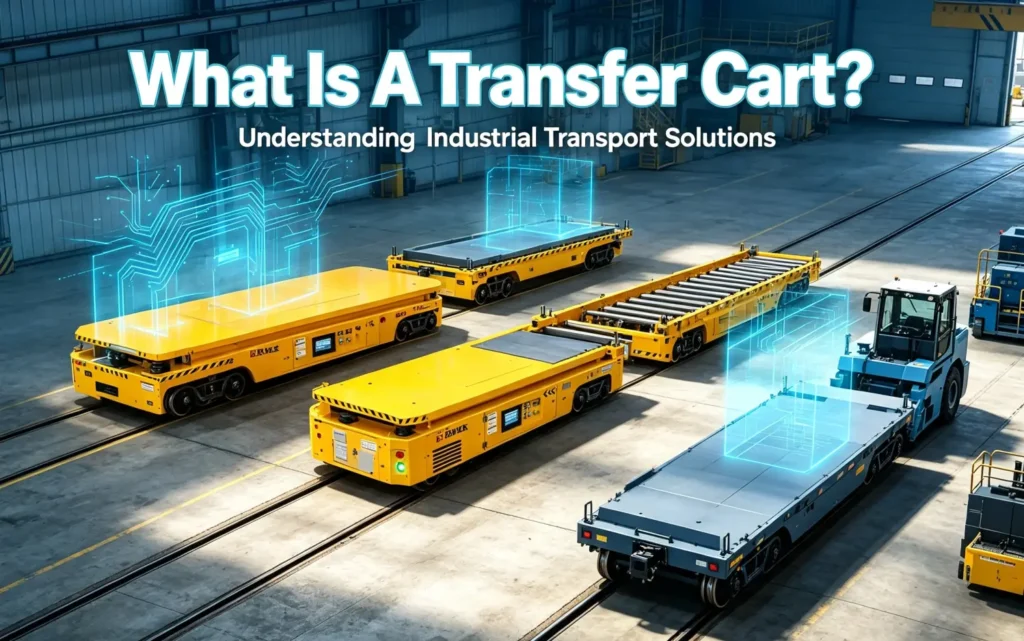
As factories began handling heavier steel, machinery, molds, and large components, conventional handling equipment became difficult to use for some loads and transport routes. Heavy Duty Transfer Carts were developed for this type of internal material handling, moving heavy loads between production lines, storage areas, assembly stations, and other work areas.
In this article, I will explain what a Heavy Duty Transfer Cart is, how it works, what types and power systems are available, and which factors matter when selecting one. This information helps readers understand the equipment before choosing a transfer cart for a specific load and working site.
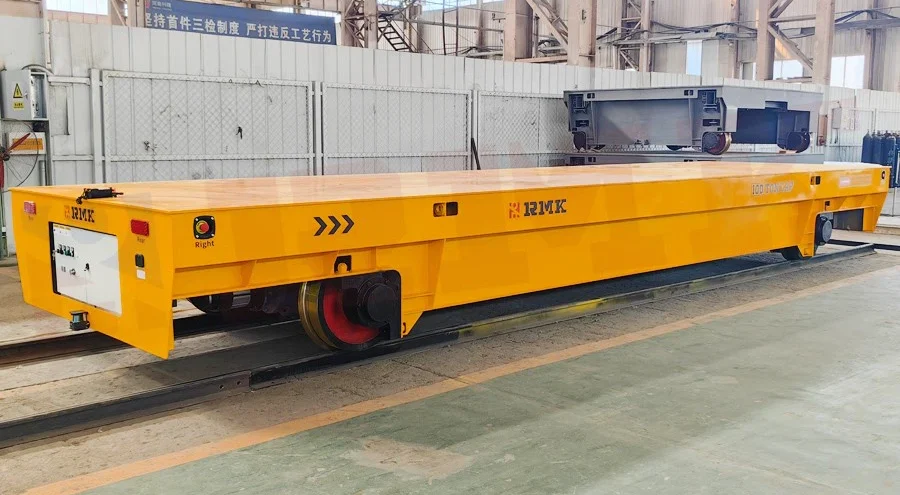
Что такое тяжелый перегрузочный вагонеточный тележка?
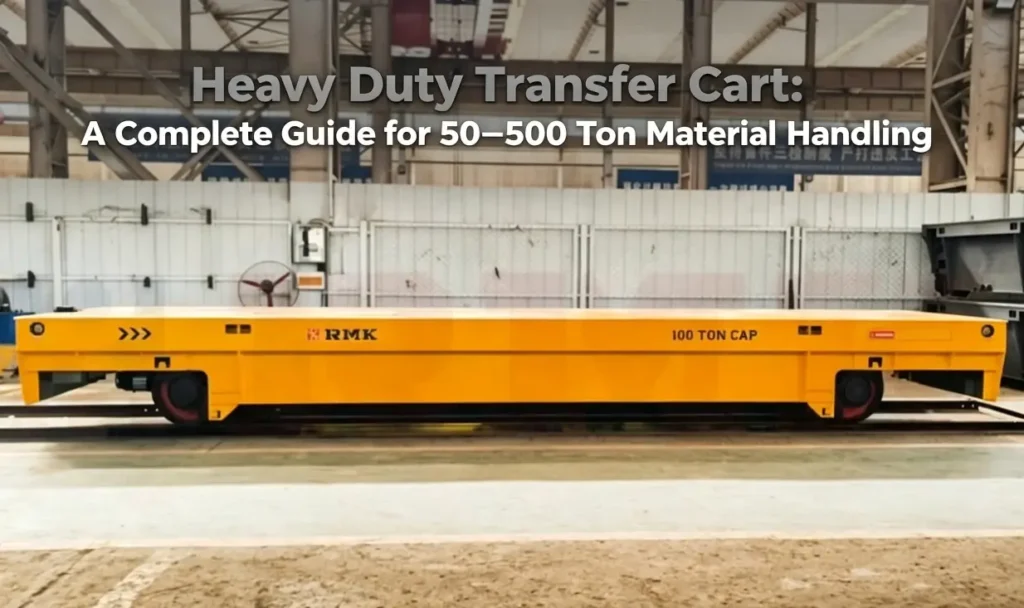
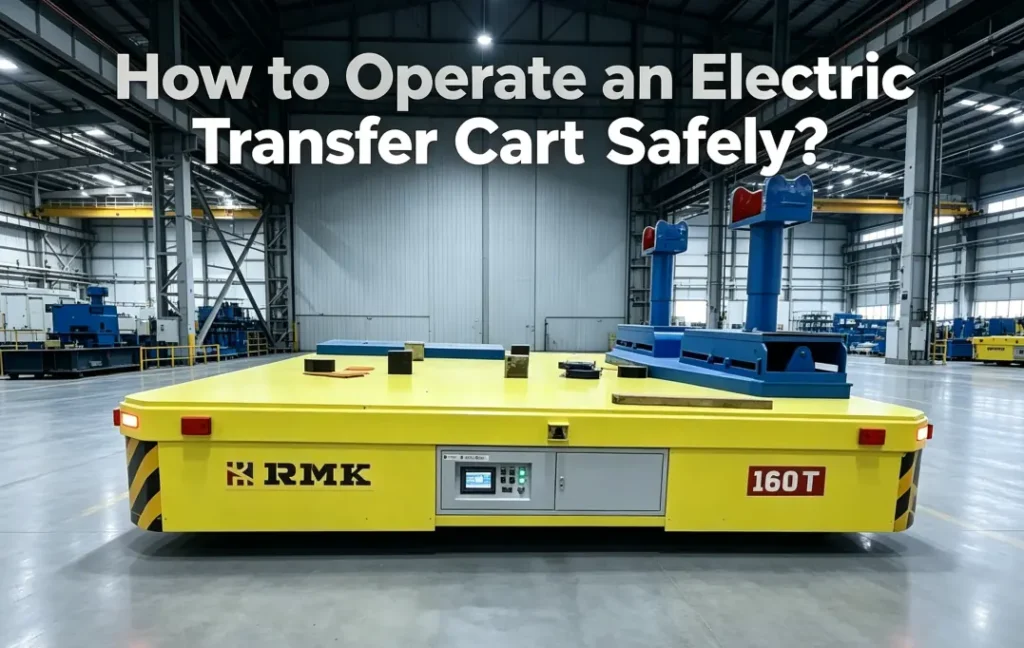
A Heavy Duty Transfer Cart, also called a rail flat cart or electric flat cart, is an industrial transport vehicle that runs on fixed rails. It is used to move heavy materials such as steel billets, large molds, machinery parts, and large equipment between production areas, storage areas, and assembly stations. Heavy Duty Transfer Carts are commonly used in steel plants, shipyards, foundries, and large assembly workshops.
A Heavy Duty Transfer Cart usually consists of a welded steel frame, heavy-duty wheel assemblies, and a rail guidance system. The frame carries the load, the wheel assemblies support and drive the cart, and the rails guide its travel direction. Power options include low-voltage rail, cable reel, and battery power. The power system is selected according to the travel distance, operating frequency, and site power conditions.
Cart specifications are configured according to the load and working conditions. Main parameters include rated load capacity, platform size, rail gauge, and running speed. Capacities range from 5 to 200 tons or more. Control options include pendant control, wireless remote control, and PLC control for fixed-route transport and production line material handling.
Как работает тяжелый передаточный вагонеточный тележка?
A Heavy Duty Transfer Cart moves heavy loads through an electric drive system. The cart carries the material on its platform, while the drive motor and gearbox provide the travel power. Depending on the cart type, the wheels run on fixed rails or directly on the factory floor. Rail transfer carts follow a fixed route, while trackless transfer carts can travel on designated floor areas.
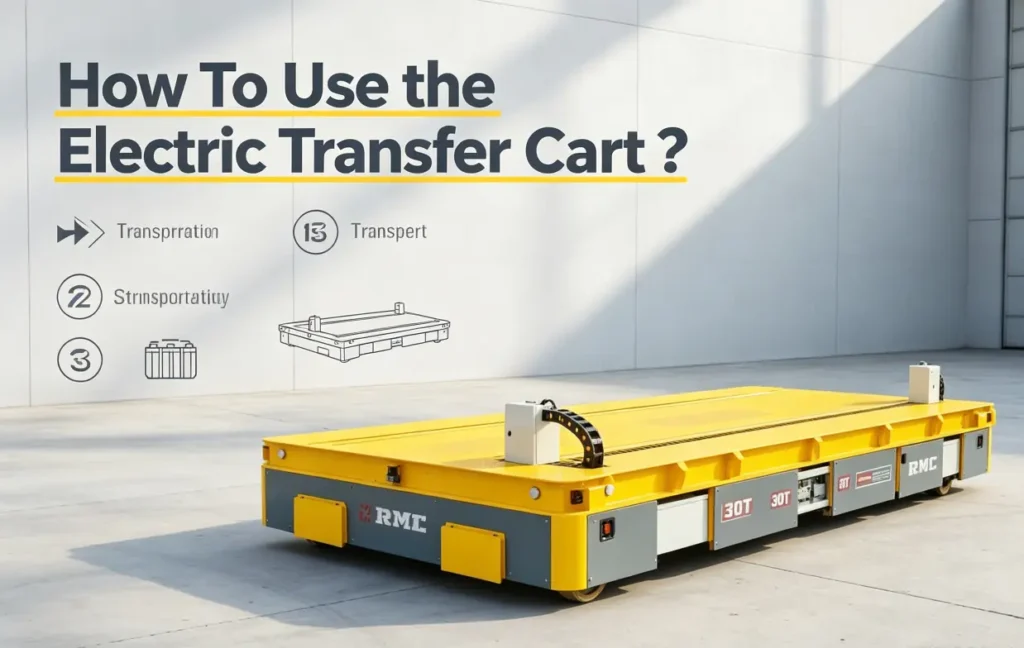
The power supply depends on the cart design. Battery-powered carts use onboard batteries, while rail carts can use low-voltage rail power or cable reels. Other configurations include cable chains and lithium battery systems. The control system operates starting, stopping, forward and reverse travel, speed, and braking through a pendant, wireless remote, or PLC.
During operation, the operator starts the cart and controls its travel to the required position. The drive wheels move the cart along the rails or factory floor. The cart stops at the loading, unloading, or assembly station, where the material is handled by a crane, forklift, or other equipment.
For the specific operating procedures of heavy-duty transfer carts, see the article: “How Does a Heavy-Duty Transfer Cart Work?”
Types of Heavy Duty Transfer Carts
Heavy Duty Transfer Carts are available in different configurations for different transport routes and operating conditions. The main types include rail transfer carts, trackless transfer carts, battery-powered transfer carts, and AGV transfer carts. The cart type is selected according to the load, travel route, power supply, and level of automation.
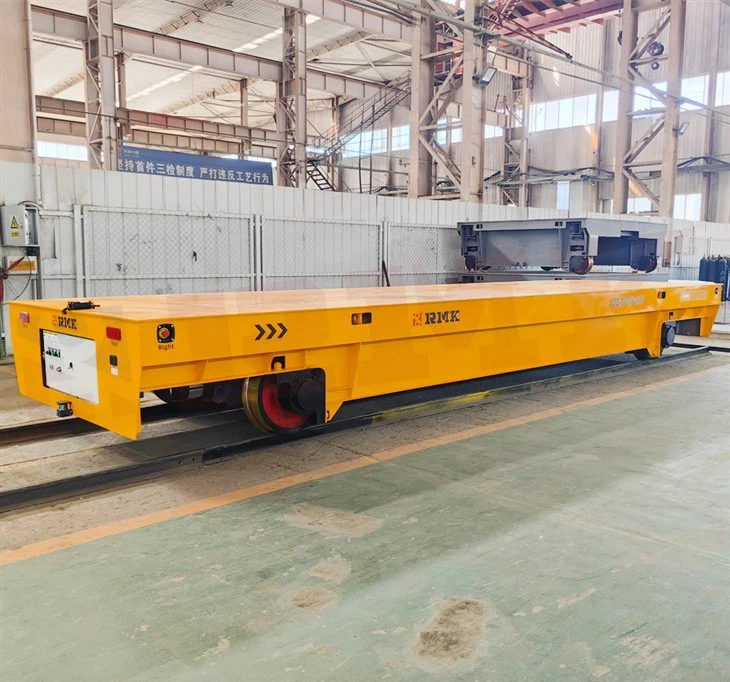
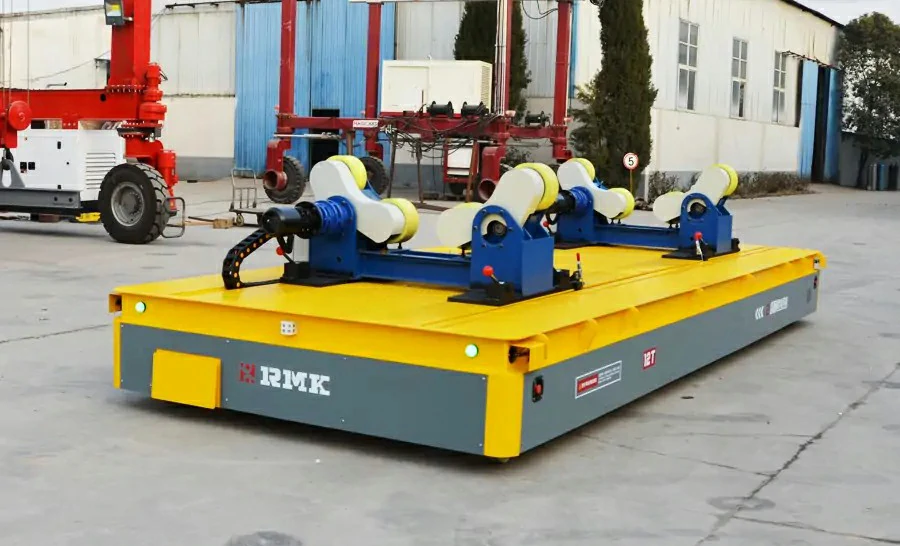
Тяжелая рельсовая перегрузочная тележка
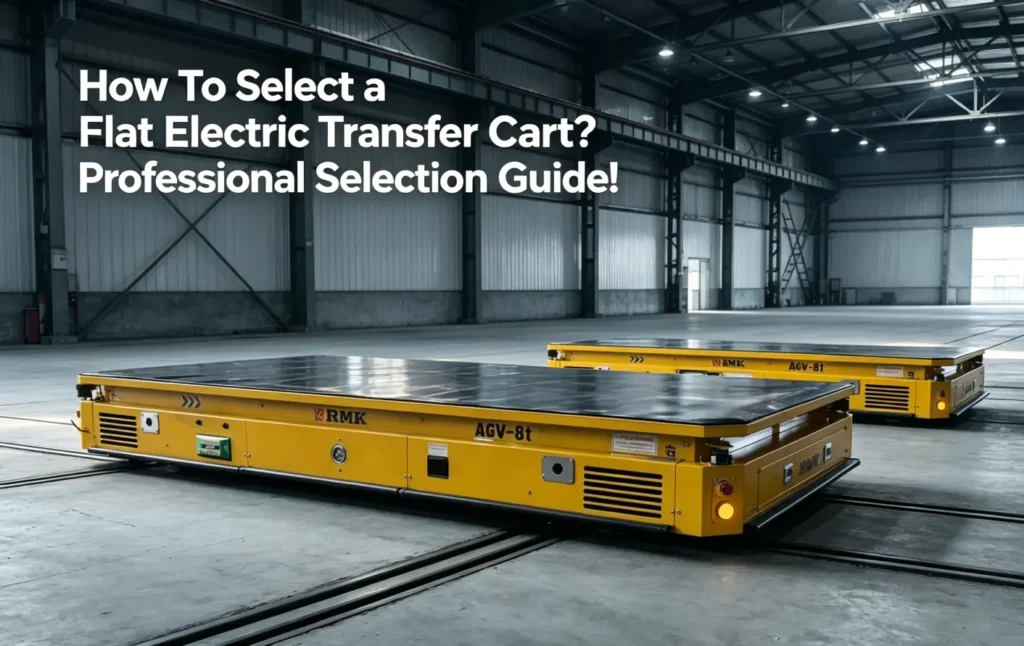
A Тяжелая рельсовая перегрузочная тележка runs on fixed rails and is used for heavy loads on regular transport routes. It is common in steel plants, shipyards, foundries, and heavy manufacturing workshops.
- Load Capacity: 1–300 tons
- Platform Size: Customized
- Rail Gauge: 1,200–2,000 mm
- Power Supply: Battery / Cable Reel / Low-Voltage Rail
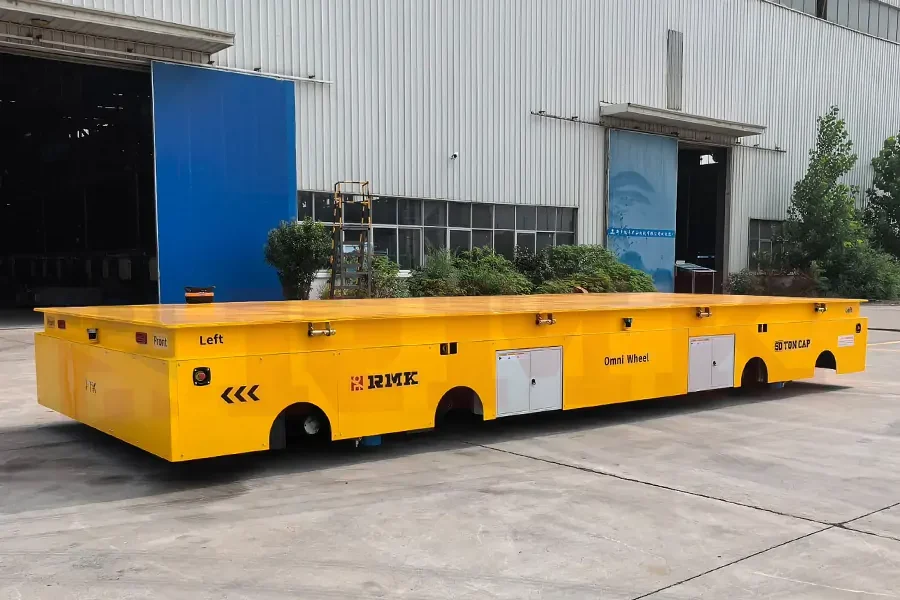
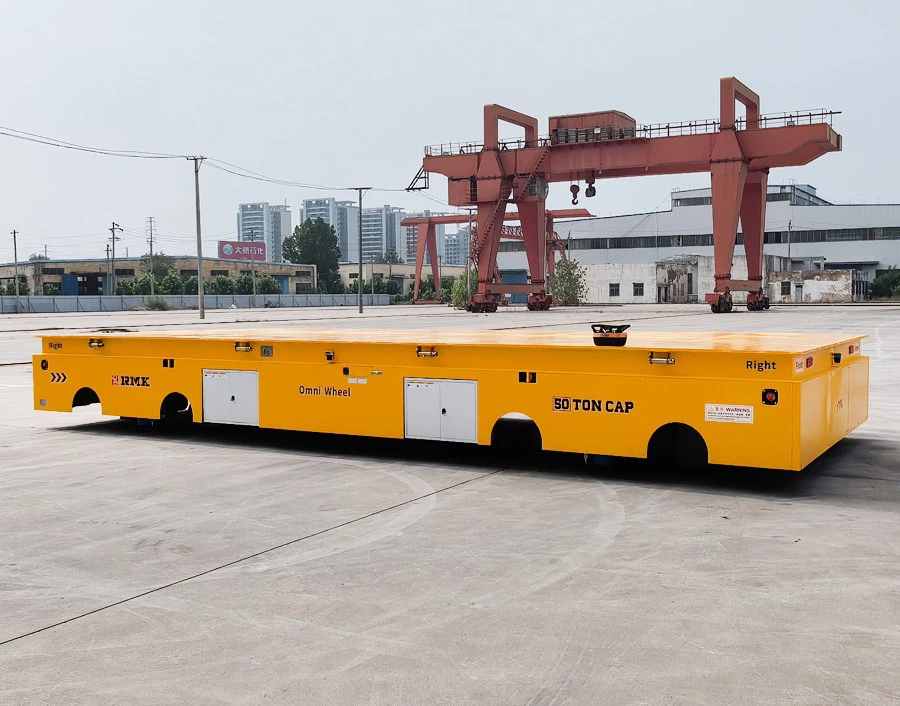
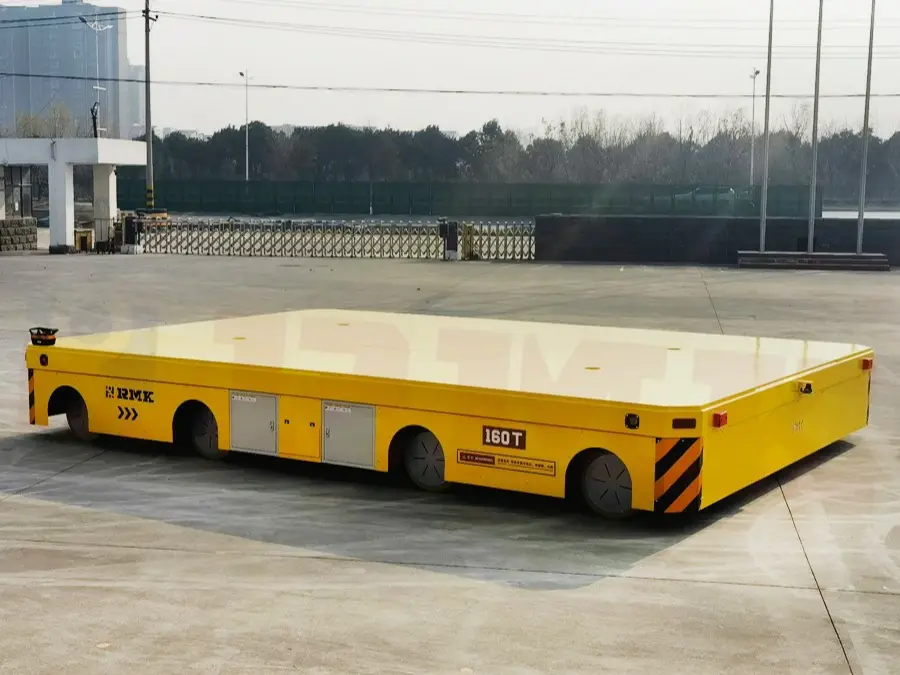
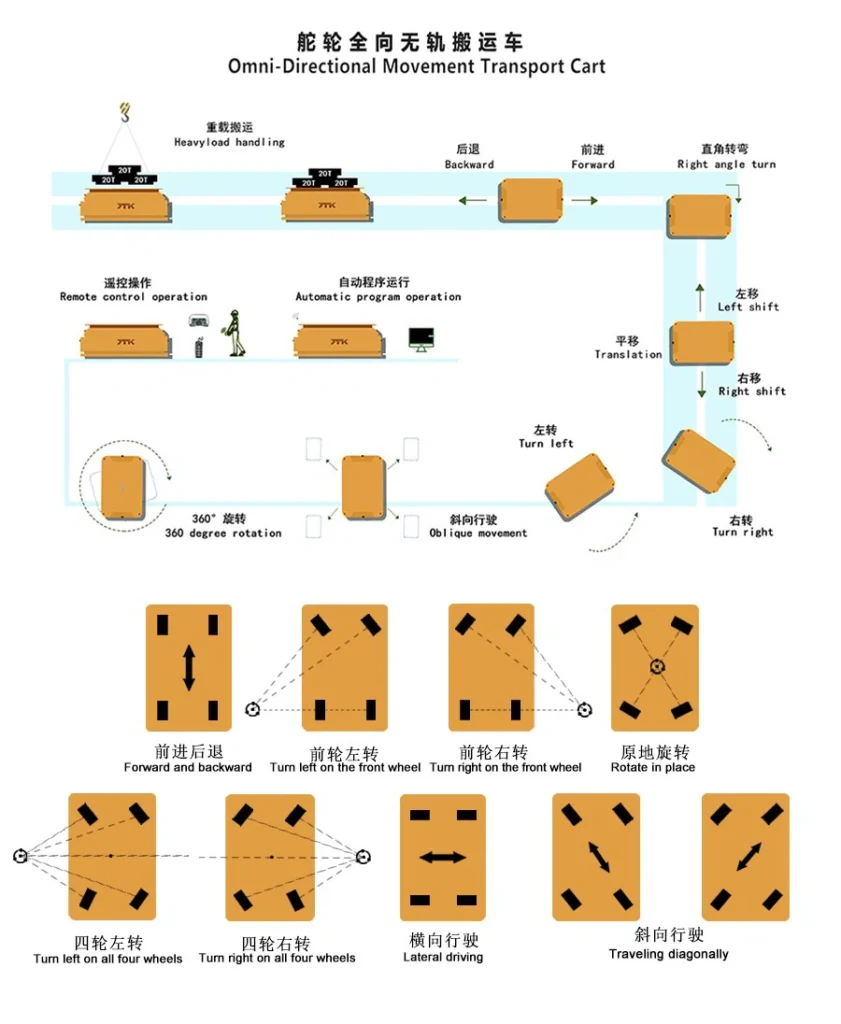
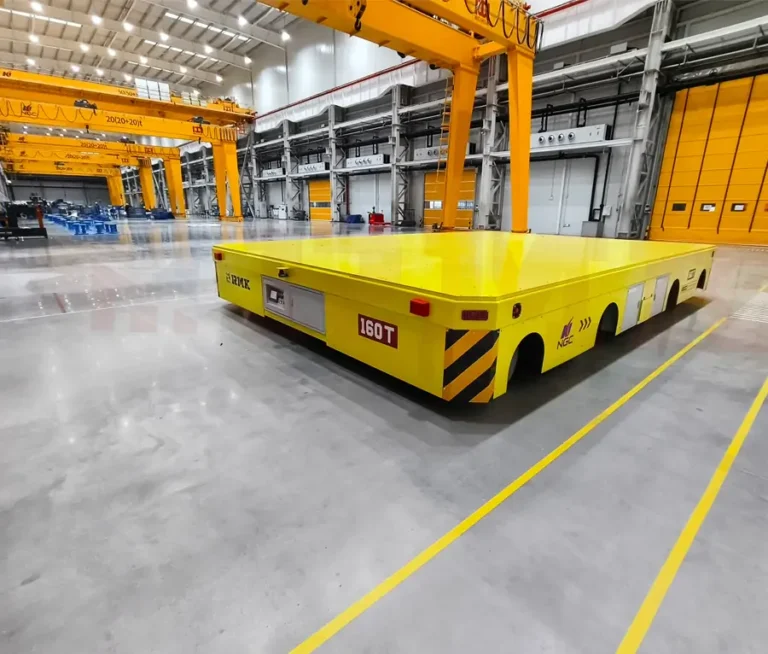
Тяжелая безрельсовая транспортная тележка
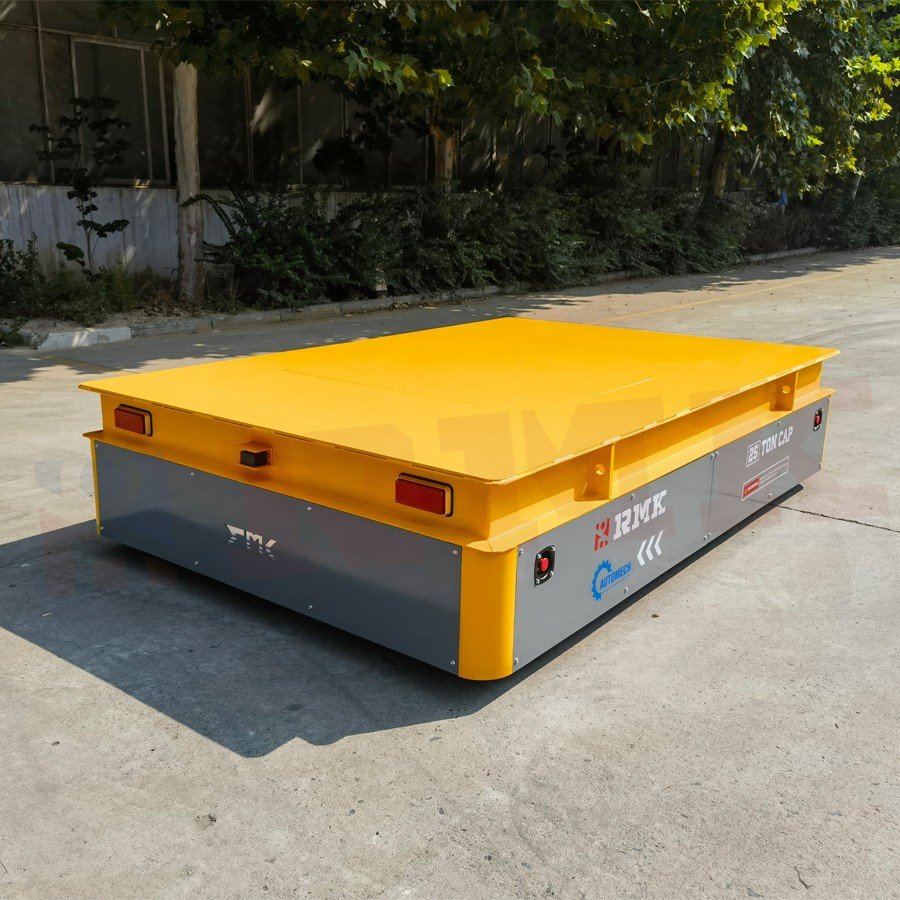
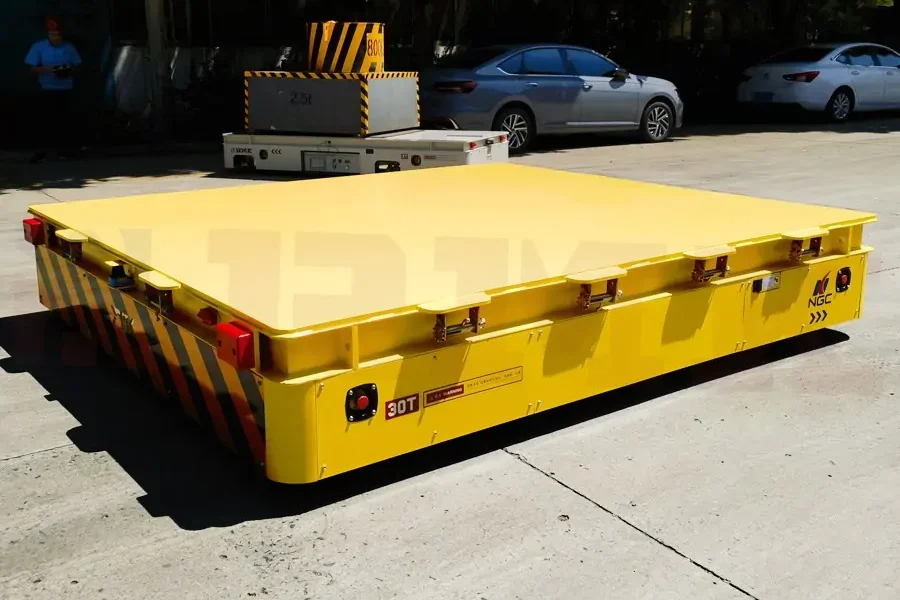
A Тяжелая безрельсовая транспортная тележка runs directly on the factory floor without fixed rails. It is used when transport routes change between different work areas.
- Load Capacity: 1–300 tons
- Platform Size: Customized
- Running Speed: 0–20 m/min
- Power Supply: Battery / Lithium Battery
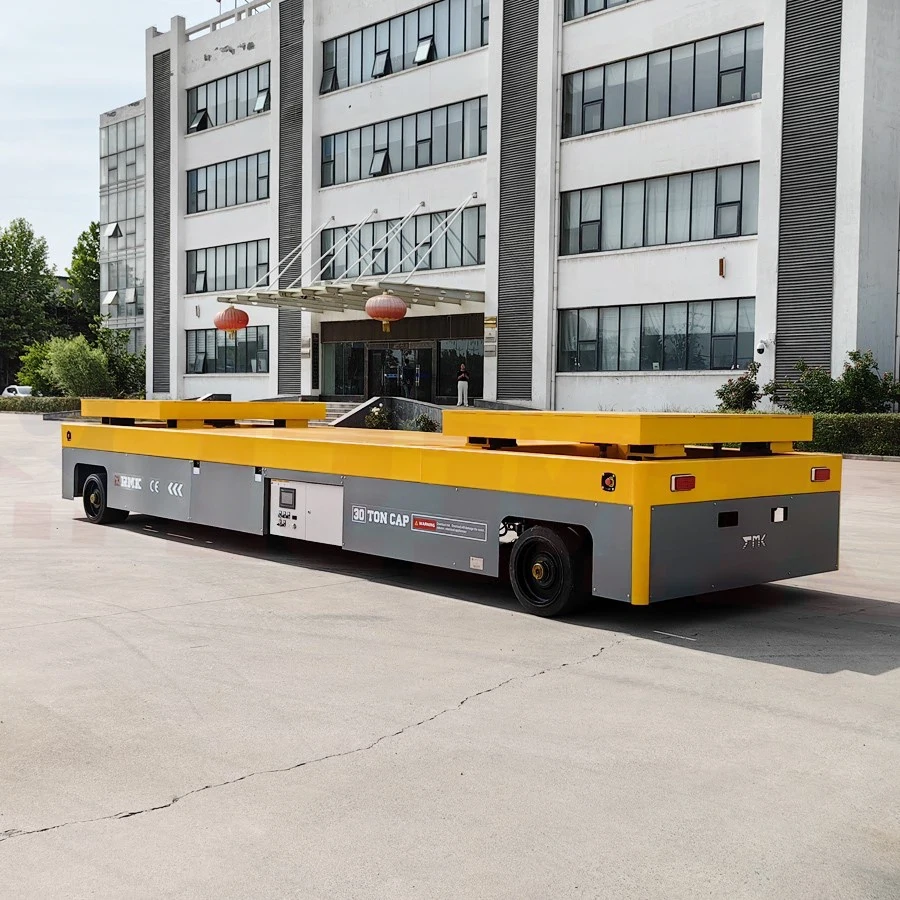
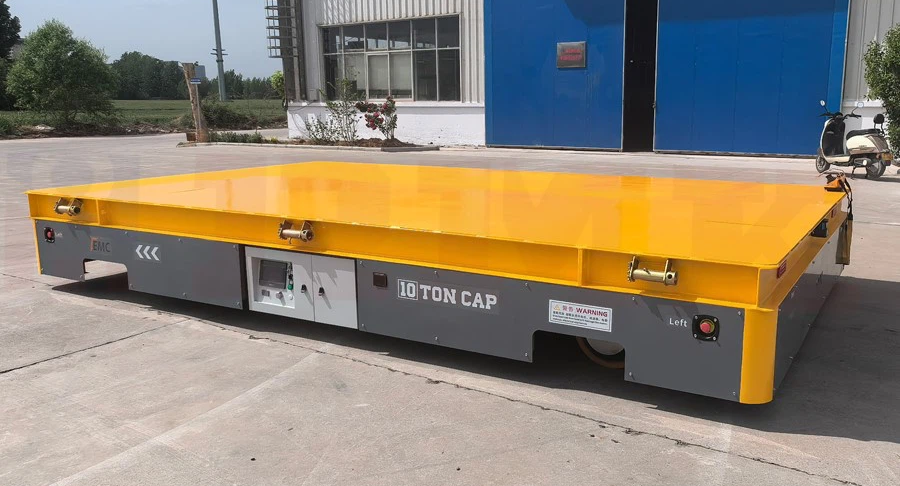
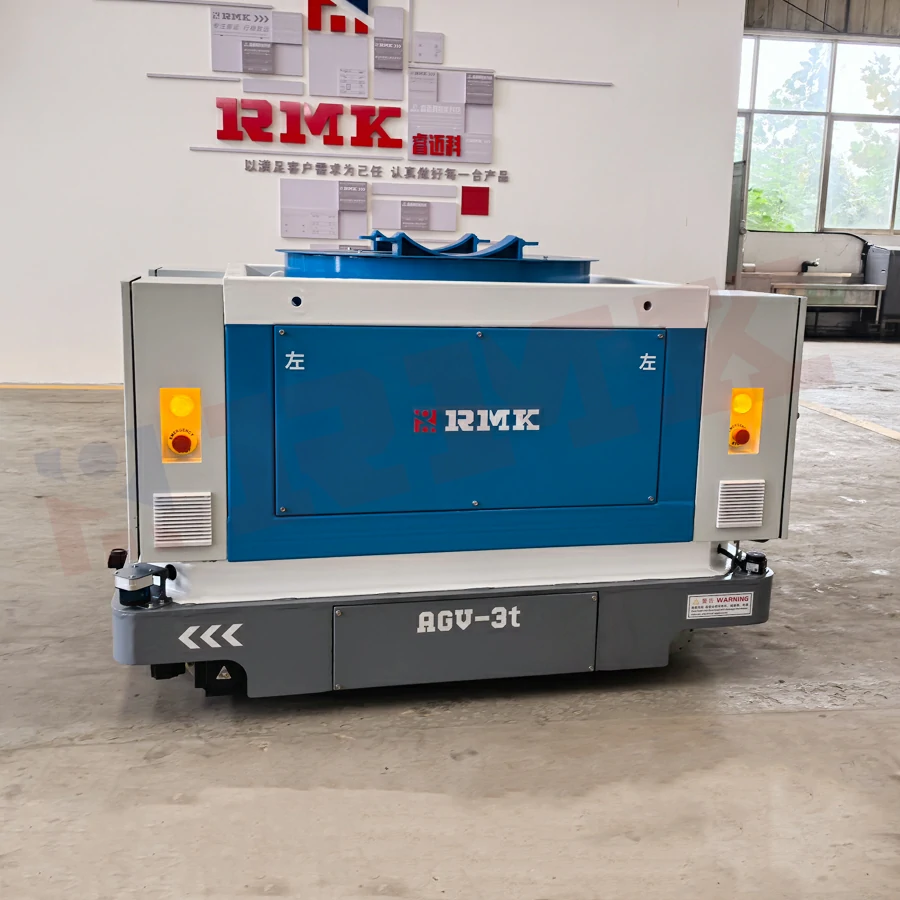
Heavy Duty Battery Powered Transfer Cart
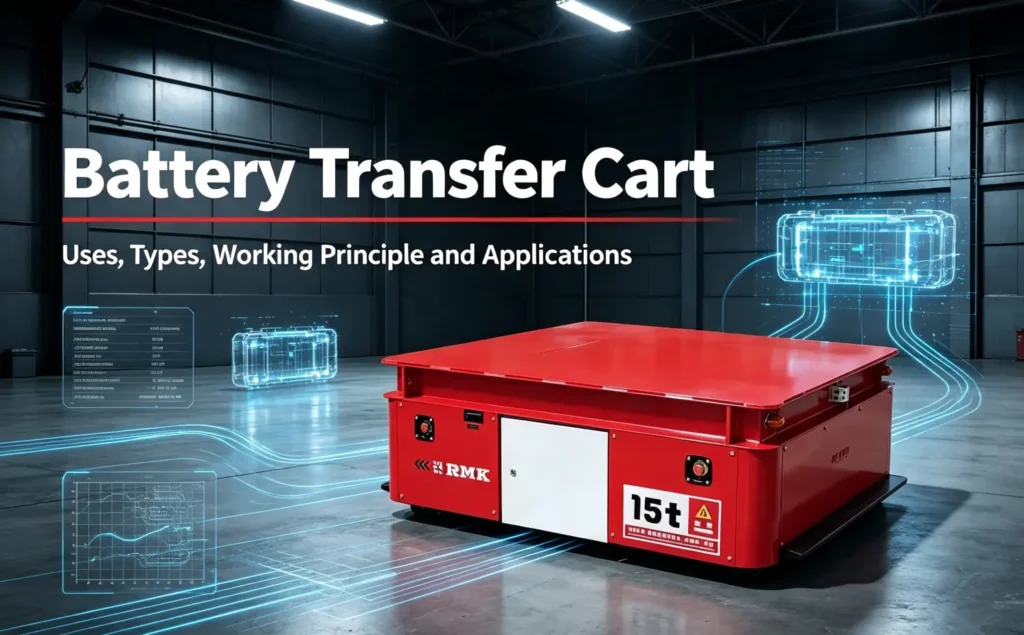
A Heavy Duty Battery Powered Transfer Cart uses an onboard battery as its power source. It has no external power cable during operation and can move between different areas of a factory.
- Load Capacity: 1–300 tons
- Platform Size: Customized
- Running Speed: 0–20 m/min
- Control Mode: Pendant / Wireless Remote / PLC
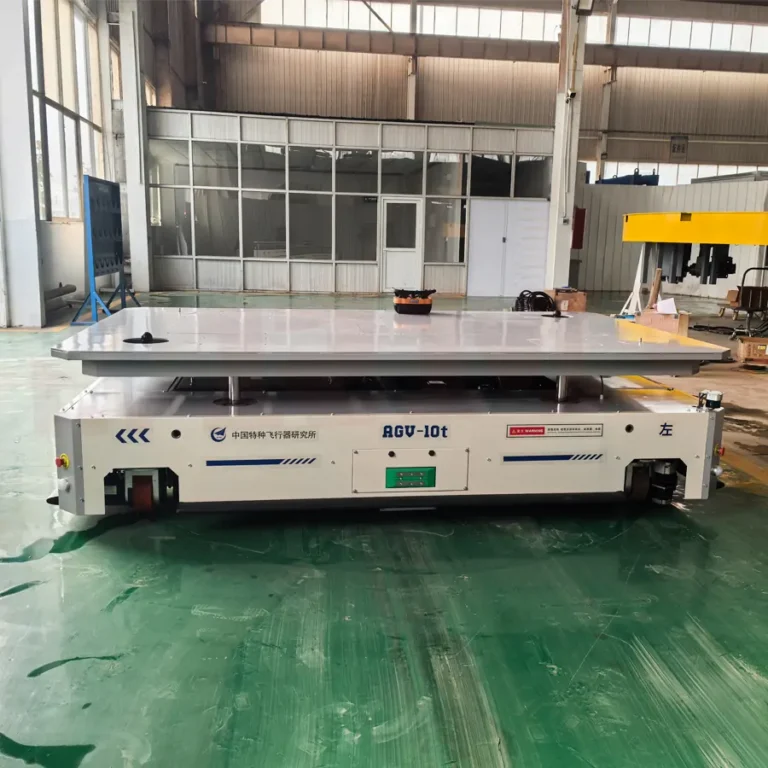
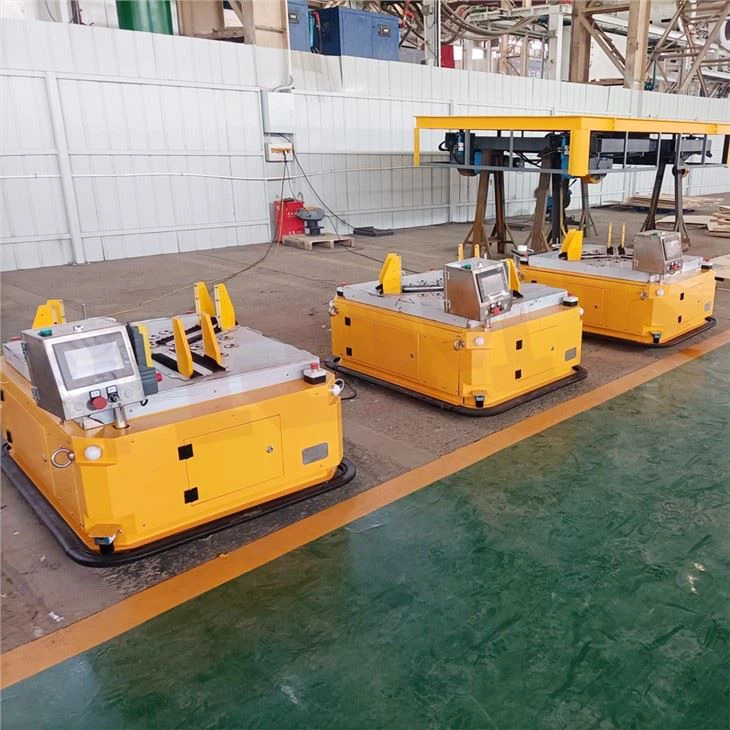
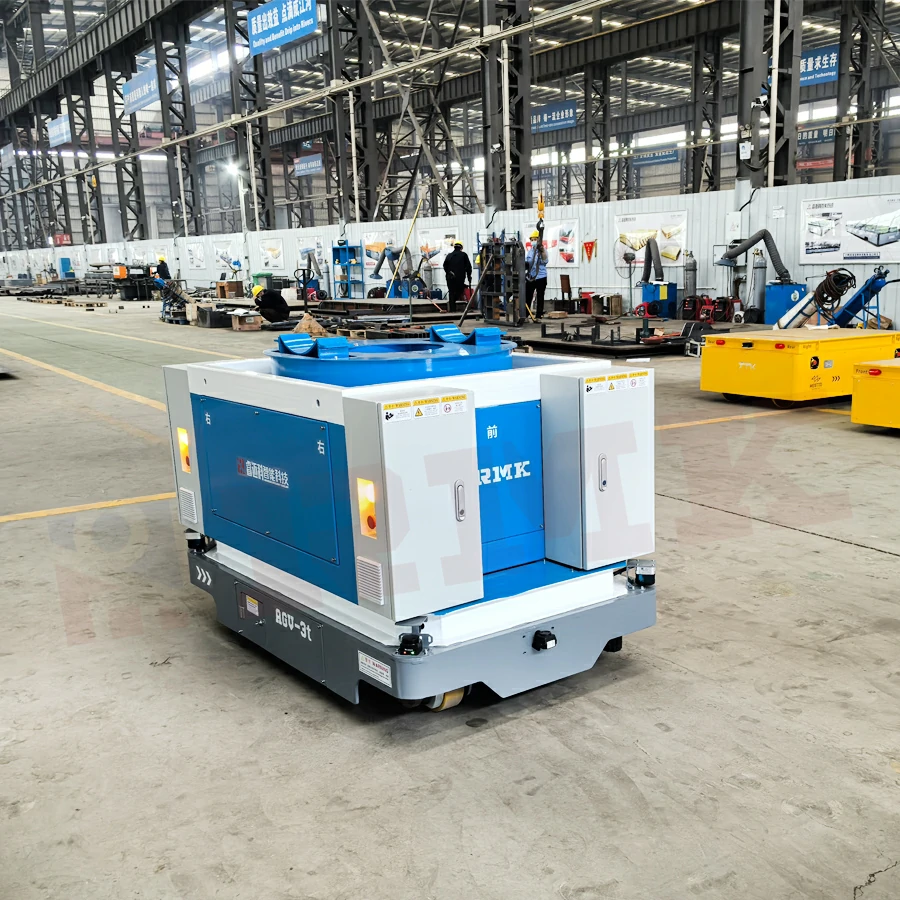
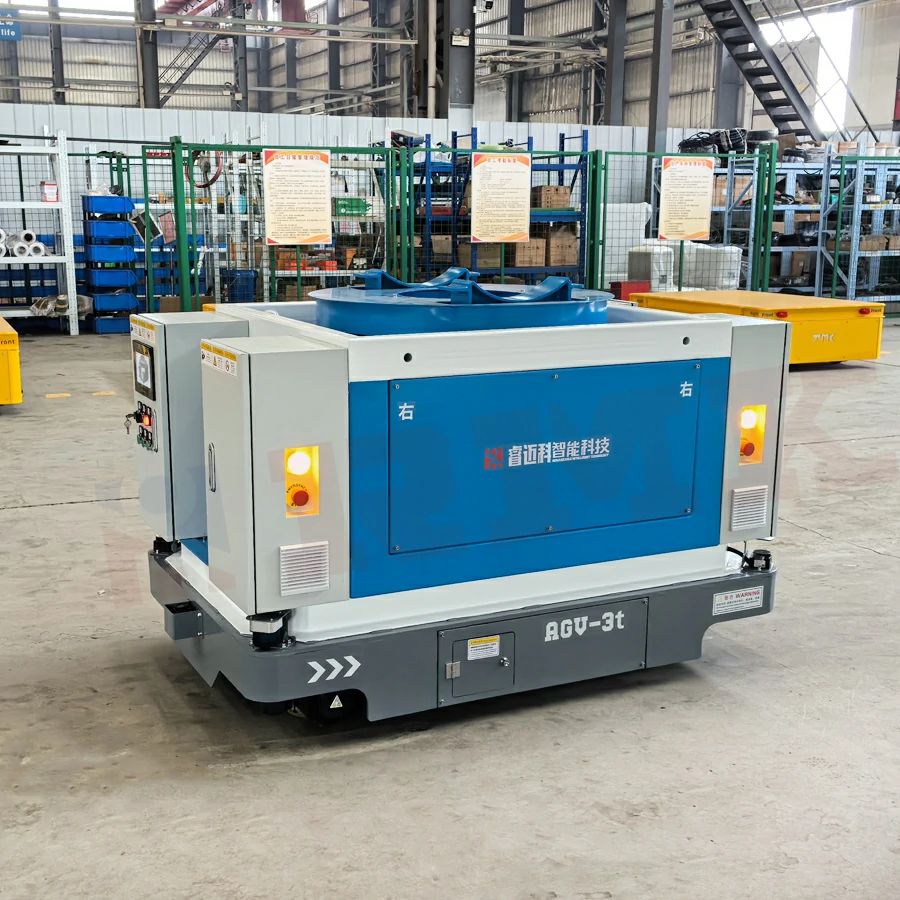
Heavy Duty AGV Transfer Cart
A Heavy Duty AGV Transfer Cart is used for automated heavy-load transport. It uses a navigation system to follow programmed routes and can connect with factory material handling systems.
- Load Capacity: Customized
- Platform Size: Customized
- Navigation: Laser / Magnetic / Other Navigation
- Control: Automatic / PLC
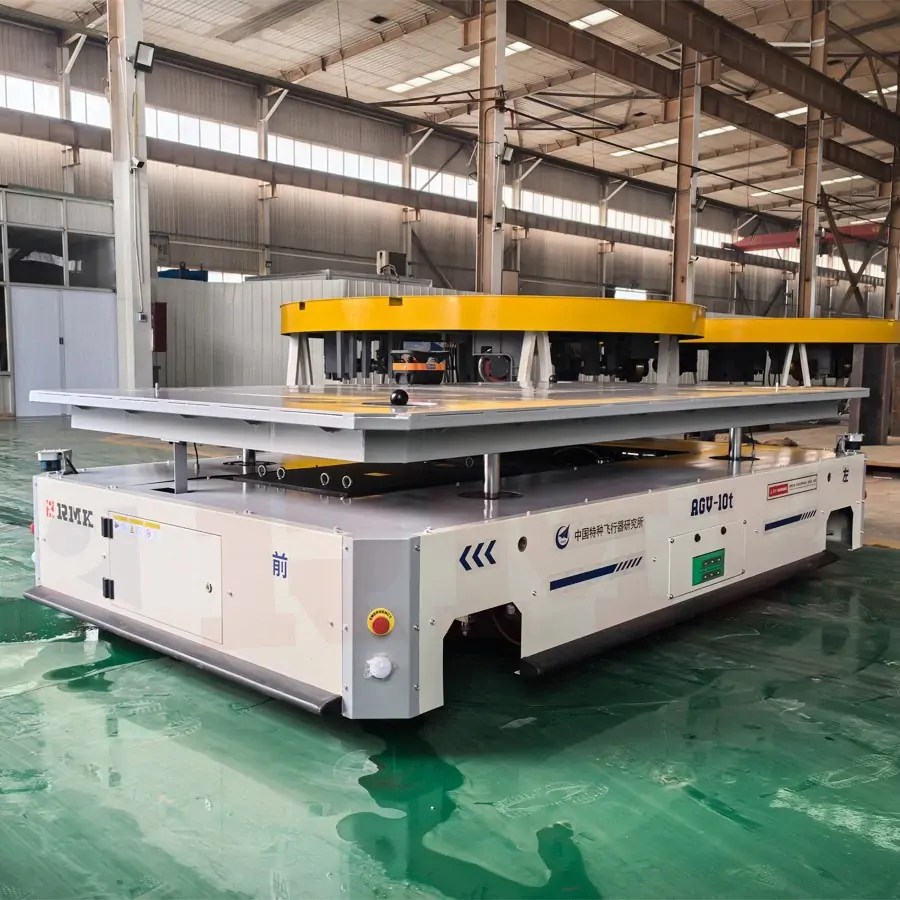
How Much Weight Can a Heavy Duty Transfer Cart Carry?
The load capacity of a Heavy Duty Transfer Cart depends on its model, frame structure, wheel arrangement, and drive system. Standard configurations commonly cover 1–300 tons, while custom heavy-load transfer carts can reach 800–1,000 tons for large industrial projects.
| Номинальная нагрузка | Ударная нагрузка | Cart Weight | Max. Wheel Load |
|---|---|---|---|
| 5 Тонн | 7.5 Ton | 4.3 Ton | 2.8 Ton |
| 10 Тонн | 15 Ton | 5.3 Ton | 4.6 Ton |
| 20 Тонн | 30 Тонн | 7.9 Ton | 5.6 Ton |
| 30 Тонн | 45 Ton | 8.8 Ton | 7.7 Ton |
| 50 тонн | 75 Ton | 10.5 Ton | 12 Ton |
- Rated Load and Impact Load: Rated load refers to the maximum load for normal operation. Impact load accounts for the additional force during starting, braking, and uneven track or floor conditions. Both values are considered when selecting the cart structure and drive system.
- Wheel Load and Rail Selection: Cart capacity affects wheel load and rail selection. Higher-capacity carts require larger wheels, stronger rail sections, and a suitable wheel arrangement. For carts above 300 tons, multi-axle bogies and high-torque drive systems are commonly used.
- Drive Power: Motor power increases with cart capacity, travel distance, and operating conditions. Running speed is commonly within 0–25 m/min, with variable-speed control available for different transport requirements.
- Heavy Load Customization: For loads above standard capacity, the cart can be configured with additional axles, reinforced frames, high-torque drive units, and suitable power systems. The actual configuration is based on the total load, wheel load, rail condition, travel distance, and operating frequency.
The load capacity of a transfer vehicle is influenced by various factors. For more details, please consult our experts.
Приложения
A Heavy Duty Transfer Cart is used to move heavy and oversized loads horizontally across factories, workshops, warehouses, shipyards, steel plants, and other industrial sites.
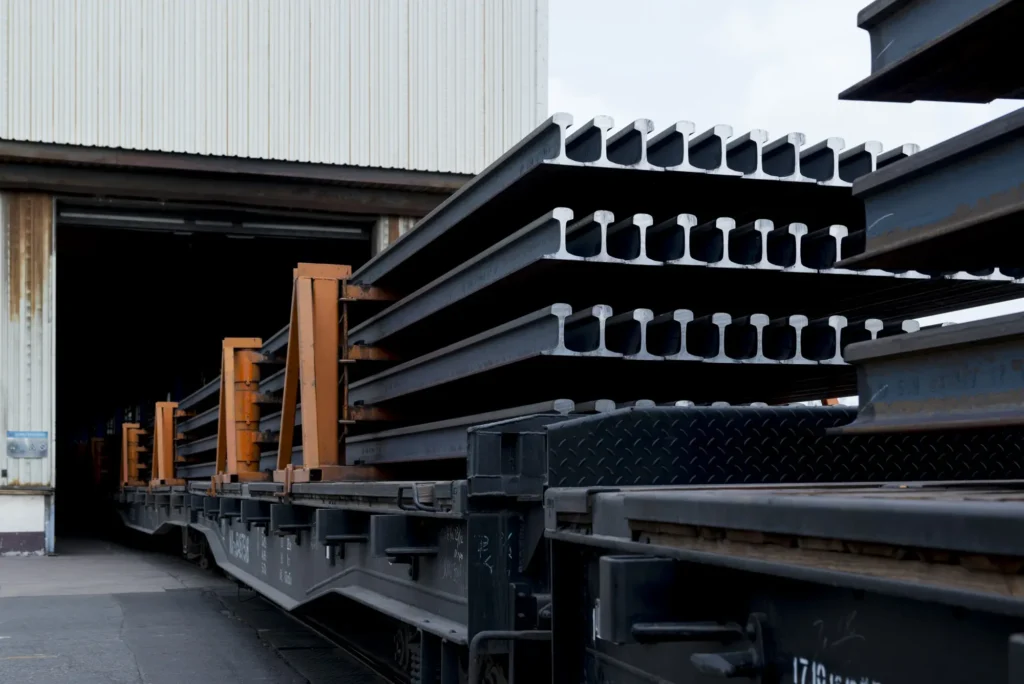
Steel and Metal Handling
Used to transport steel plates, coils, beams, pipes, molds, and fabricated metal structures between production areas.
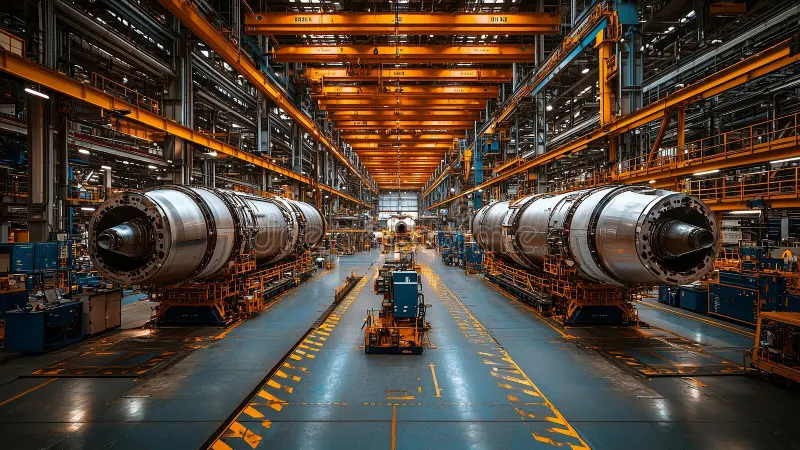
Machinery and Equipment Transport
Moves heavy machinery, industrial equipment, engines, transformers, and other large components during manufacturing, assembly, or maintenance.
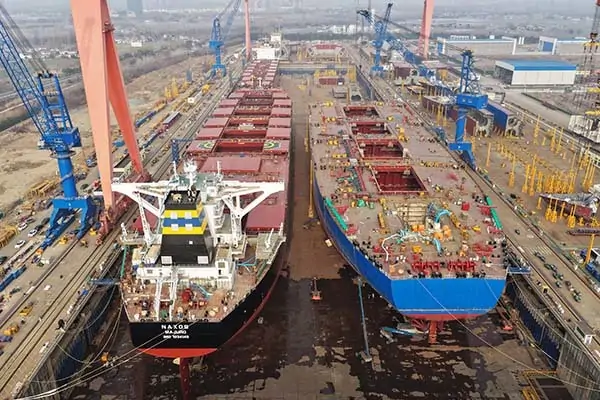
Shipyard Operations
Carries ship sections, steel structures, blocks, and other oversized components between fabrication and assembly areas.
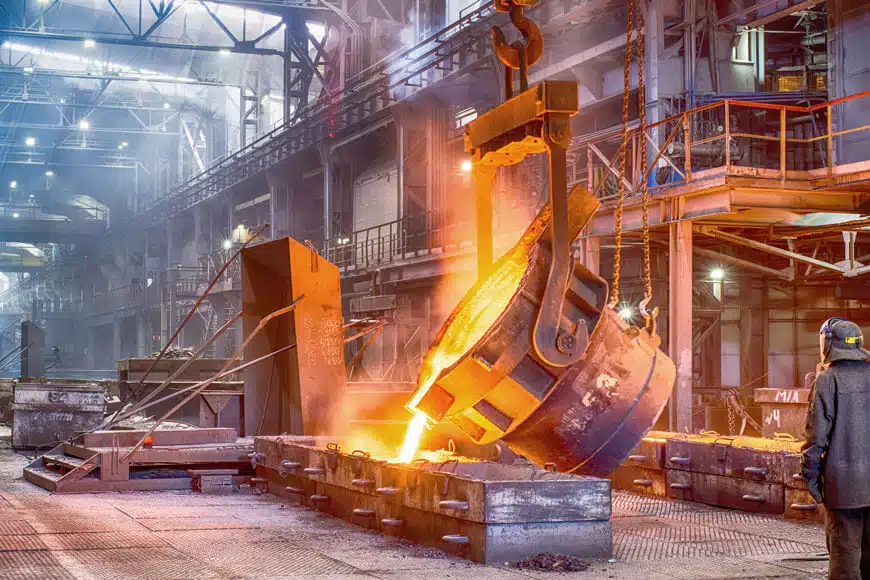
Foundry and Metallurgical Plants
Used for transferring ladles, molds, castings, and heavy workpieces in high-load production environments.
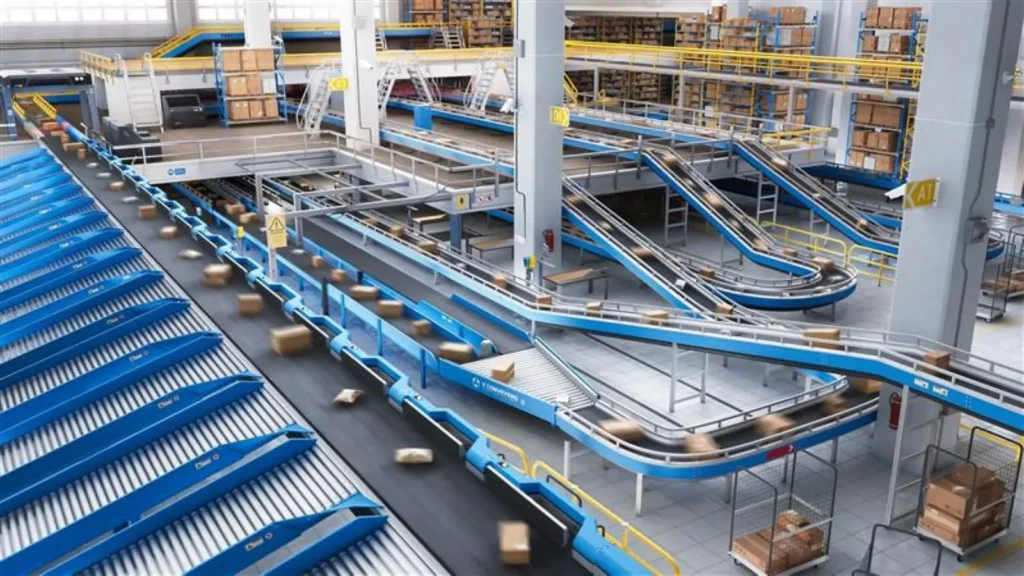
Складская и заводская логистика
Connects different workshops, storage areas, assembly lines, and loading zones for regular heavy-load transportation.
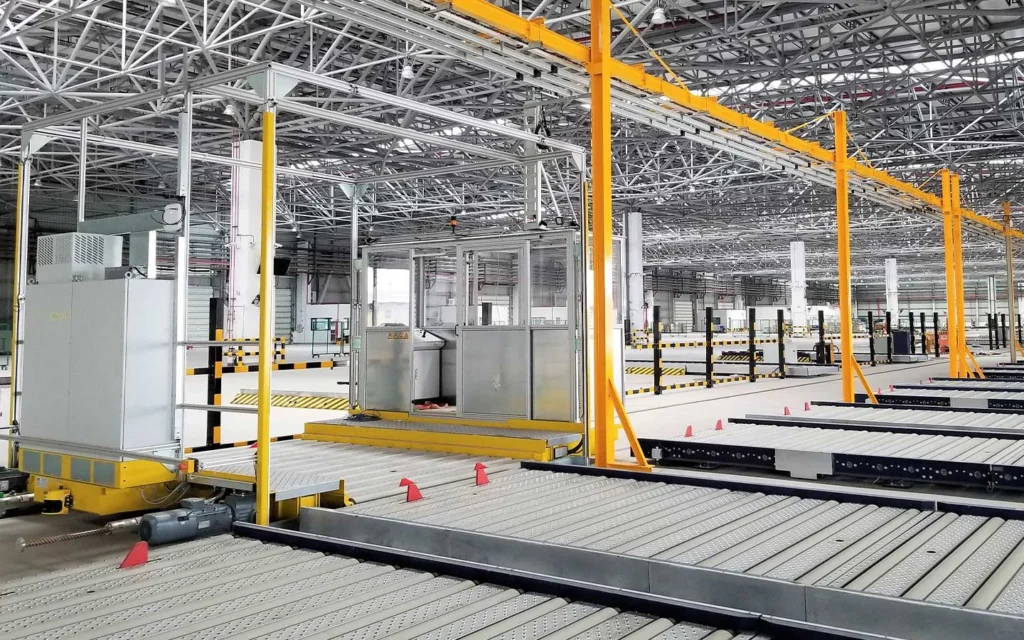
Construction and Large-Structure Handling
Transports precast concrete sections, bridge components, steel structures, and other oversized loads.
Parts of a Heavy Duty Transfer Cart?
A Heavy Duty Transfer Cart consists of five main systems: frame, running gear, power supply, control system, and safety devices. Component specifications are selected according to load capacity and operating conditions.
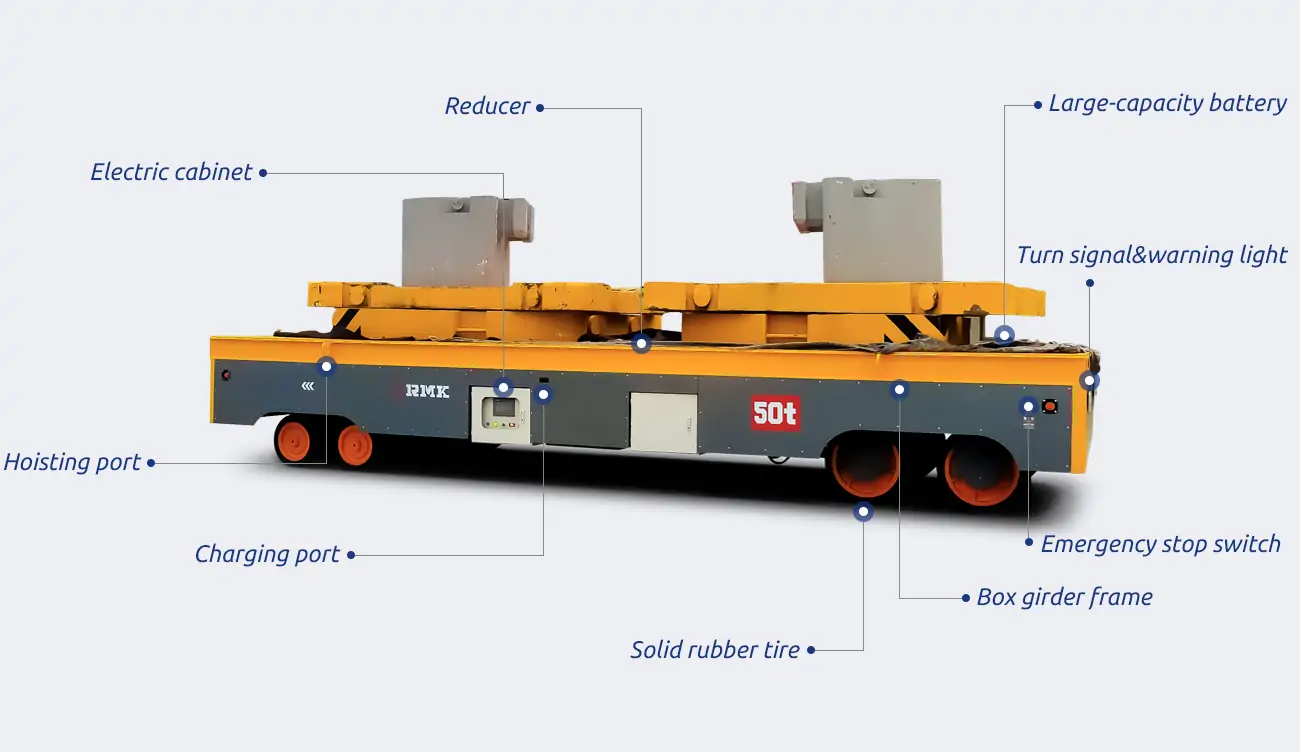
- Cart Frame — Welded steel structure that supports the load and provides the main structural strength of the cart.
- Wheel Assembly — Includes rail wheels, axles, bearings, and bearing housings for load support and stable travel.
- Drive System — Consists of drive motors, gear reducers, couplings, and drive wheels for cart movement.
- Power Supply System — Battery, low-voltage rail, cable reel, or cable drag chain can be selected according to the operating conditions.
- Electrical Control System — Includes the electrical cabinet, PLC, inverter, and control components for starting, stopping, speed control, and travel direction.
- Braking System — Electromagnetic or hydraulic brakes control deceleration and stopping under heavy loads.
- Rail System — Includes running rails and rail joints to provide a fixed travel route for the transfer cart.
- Safety Devices — Include emergency stop buttons, warning lights, alarms, buffers, limit switches, and anti-collision devices.
- Positioning System — Proximity switches, encoders, or other positioning devices can be used for accurate stopping and automated operation.
Heavy Duty Transfer Cart components are selected based on load capacity, wheel pressure, rail type, drive power, power supply, control method, and operating environment. The cart can be configured for applications such as steel handling, foundries, shipyards, machinery plants, and automated production lines.
What Power Supply Does a Heavy Duty Transfer Cart Use?
The power supply of a Heavy Duty Transfer Cart is selected according to travel distance, operating frequency, and site conditions. The main options are battery power, low-voltage rail power, and cable reel power.
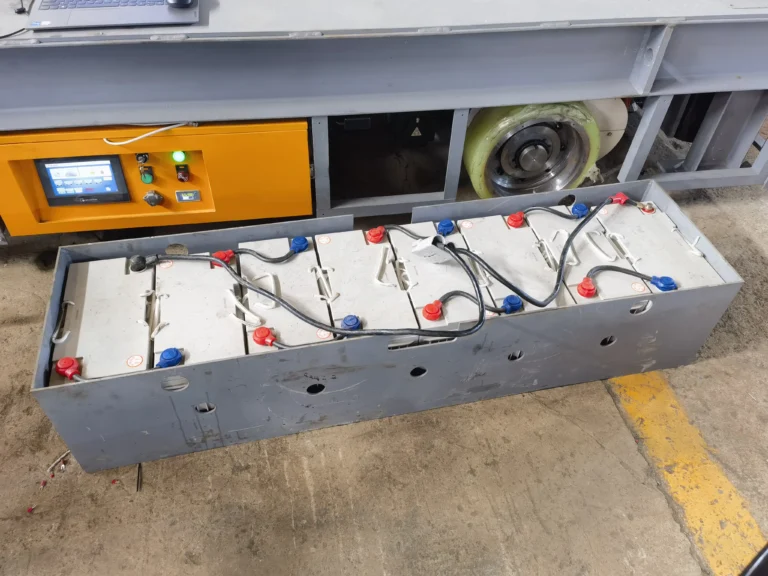
Battery Power Supply
Batteries are installed on the cart to power the drive motors. The cart operates without an external power cable and is suitable for flexible material transport and multi-area operation. Battery capacity is selected according to load, travel distance, and working hours.
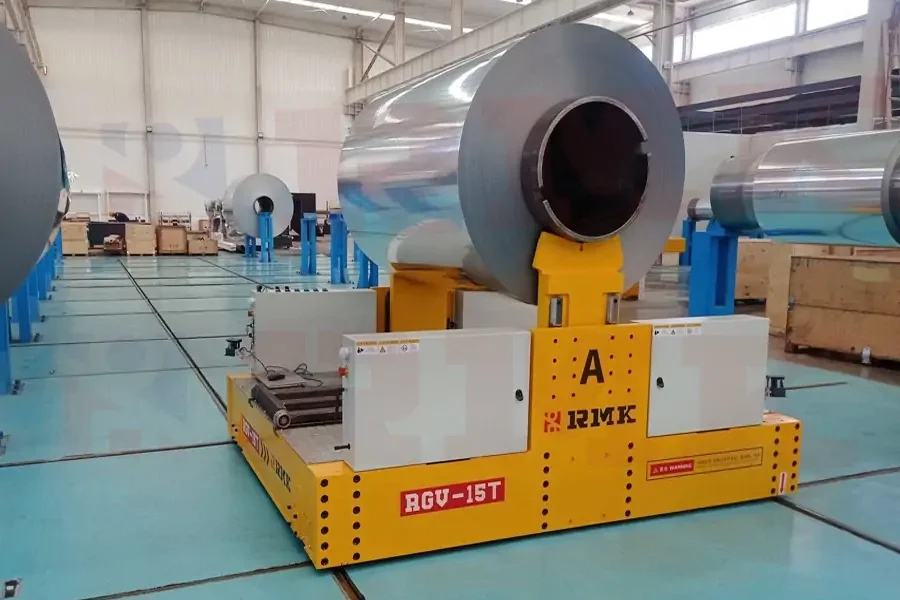
Low-Voltage Rail Power Supply
The cart receives power through the rail system. AC power is reduced to a low safety voltage, typically 36V, before being supplied to the cart. It is suitable for frequent operation and continuous heavy-load transport. Rail insulation and proper installation are required.
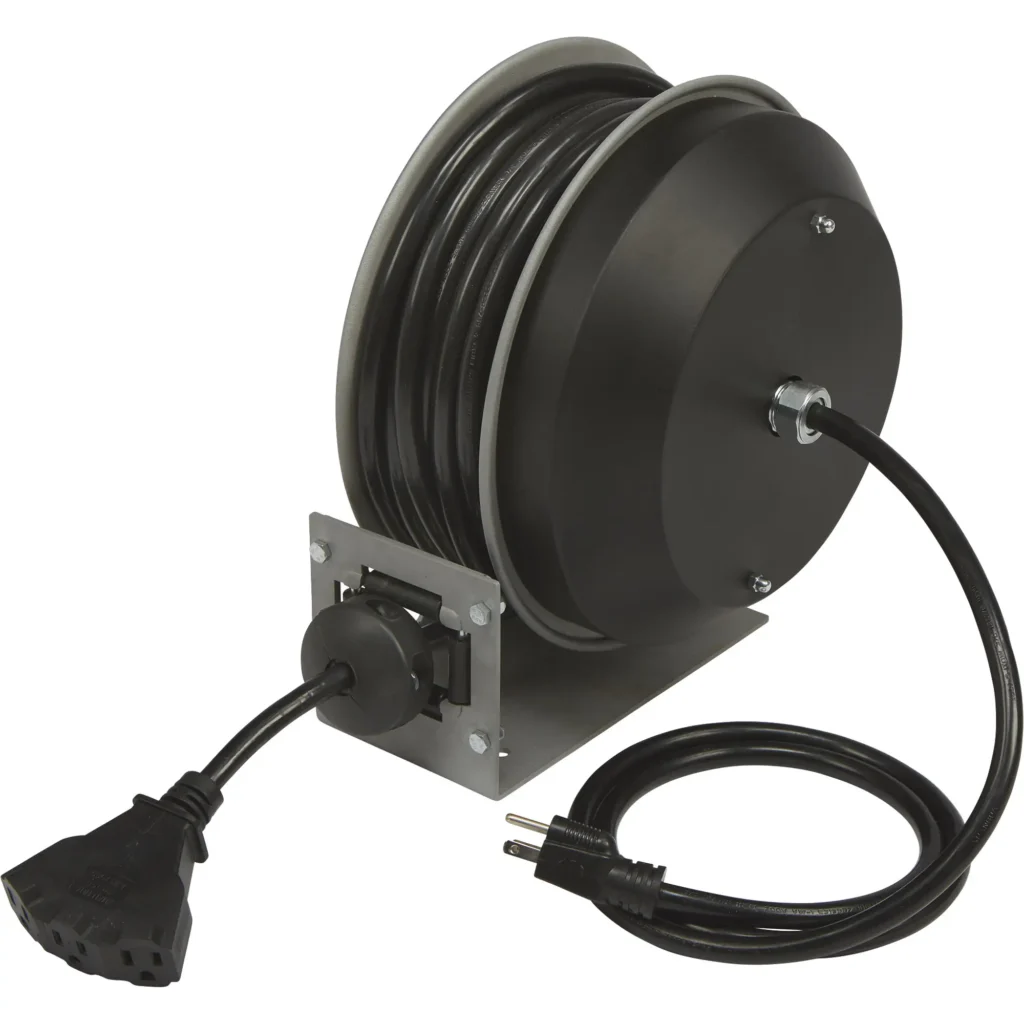
Cable Reel Power Supply
A cable reel automatically winds and unwinds the power cable as the cart moves. It is suitable for fixed routes and short- to medium-distance transport. The system provides stable power, while the travel distance depends on the cable length.
Battery power is suitable for flexible operation without external cables. Low-voltage rail power is suitable for frequent and continuous heavy-load transport. Cable reel power is suitable for fixed-route operation with stable power requirements.
Преимущества
- High Load Capacity: Load capacities range from 1 to 500 tons. The cart can transport heavy equipment, steel structures, molds, transformers, and other large loads.
- Reduced Manual Handling: The transfer cart handles heavy materials between work areas, reducing manual lifting and handling operations.
- Stable Material Transport: Rail-guided travel provides stable movement for heavy loads. Controlled speed and braking reduce load movement and impact during transport.
- Flexible Power Options: Battery power allows operation without external cables. Low-voltage rail and cable reel systems are suitable for fixed transport routes and frequent operation.
- Safe and Precise Operation: Variable speed control provides controlled travel. Safety equipment can include emergency stops, warning lights, buffers, limit switches, and anti-collision sensors.
- Compact and Customizable Design: The cart size, platform, wheel arrangement, and load capacity can be customized for different loads, routes, and workspace dimensions.
- Automation Integration: PLC control, remote control, positioning sensors, and production-line interfaces can be added for automated material handling.
- Low Operating Cost: Electric drive systems require less routine maintenance than fuel-powered handling equipment. The cart can be configured for repeated heavy-load transport within the same facility.
When to Use a Heavy Duty Transfer Cart
Heavy Duty Transfer Carts are used for heavy-load transport between work areas. Selection depends on load, distance, route, and working conditions.
1. Heavy Loads: Suitable for transporting steel, machinery, molds, transformers, and other loads over 5 tons.
2. Fixed Routes: Suitable for frequent transport between fixed workstations.
3. Long-Distance Transport: Suitable for moving heavy loads between workshops, production lines, and storage areas.
4. Limited Space: Customized cart dimensions and platforms can handle long or oversized loads in narrow spaces.
5. Automated Handling: PLC, remote control, and positioning systems support automated material transport.
6. Special Working Conditions: Special configurations are available for high-temperature, foundry, steel, and hazardous environments.
7. Heavy Manual Handling: Suitable for replacing manual transport of heavy materials.
Light loads, temporary handling, and operations requiring frequent route changes are better suited to forklifts or trackless transfer carts.
Заключение
A Heavy Duty Transfer Cart is designed for moving heavy and oversized loads within factories, warehouses, steel plants, shipyards, and other industrial facilities. Load capacity, travel route, power supply, platform size, and control system can be configured according to the application.
REMARKABLE provides heavy duty transfer carts for different load capacities and working conditions. The cart structure, drive system, power supply, platform, control system, and safety devices can be customized to match the customer’s site and transport requirements. Technical support, installation guidance, commissioning, spare parts, and after-sales service are available throughout the equipment life cycle.
For a heavy load transfer solution matched to your application, связаться с нами with your load weight, travel distance, route, and working conditions.
Электронная почта: transfercart@rmkzn.com
Телефон: +86-18637369355
ЧАСТО ЗАДАВАЕМЫЕ ВОПРОСЫ
What is a Heavy Duty Transfer Cart?
A Heavy Duty Transfer Cart is an electric material handling vehicle used to move heavy and oversized loads between work areas in industrial facilities.
How does a Heavy Duty Transfer Cart work?
The cart uses an electric drive system to move on rails or prepared ground. The control system manages starting, stopping, direction, speed, and braking.
How much weight can a Heavy Duty Transfer Cart carry?
Capacity depends on the cart design and application. Heavy Duty Transfer Carts can be designed for loads from several tons to hundreds of tons.
What is the difference between a rail and trackless transfer cart?
A rail transfer cart runs along fixed rails, while a trackless transfer cart travels directly on a suitable ground surface without fixed rails.
What power supply does a Heavy Duty Transfer Cart use?
Common power options include batteries, low-voltage rail power, and cable reels. The choice depends on travel distance, operating frequency, and site conditions.
Where are Heavy Duty Transfer Carts used?
They are used in steel plants, shipyards, foundries, machinery factories, warehouses, construction sites, and other facilities that handle heavy loads.
Can a Heavy Duty Transfer Cart be customized?
Yes. Load capacity, platform size, wheel arrangement, drive system, power supply, control system, speed, and safety devices can be customized.
How do I choose the right Heavy Duty Transfer Cart?
Consider the load weight and dimensions, travel distance, route, floor or rail conditions, operating frequency, power supply, and working environment.