
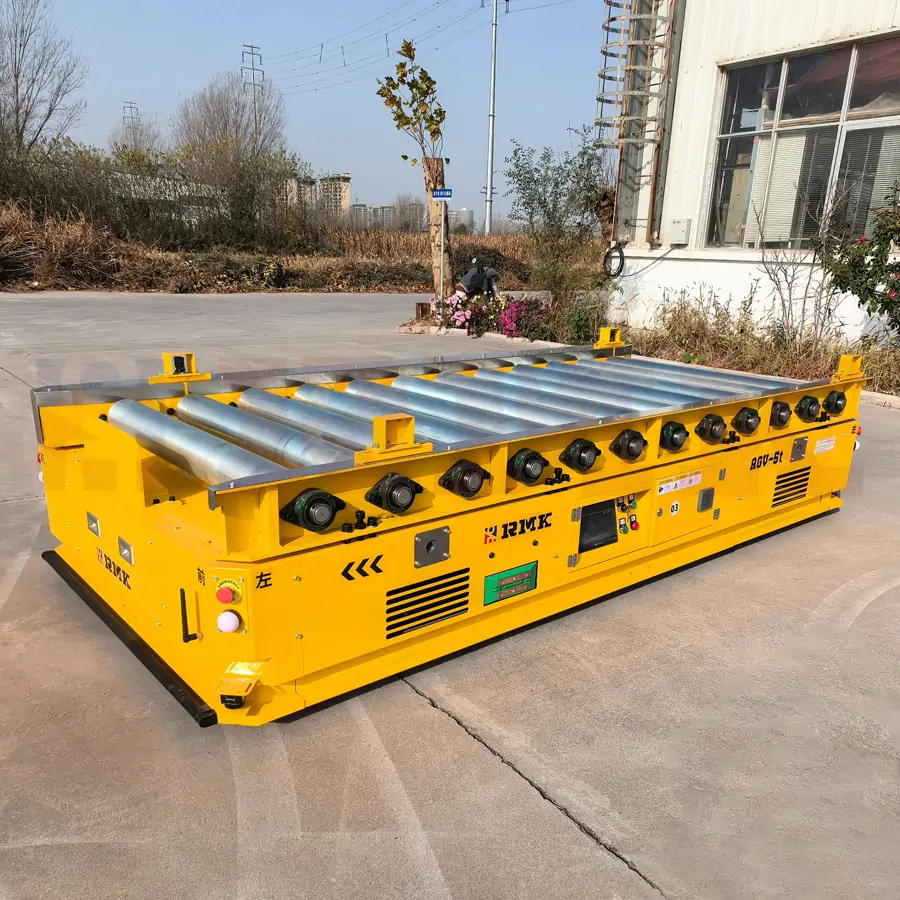
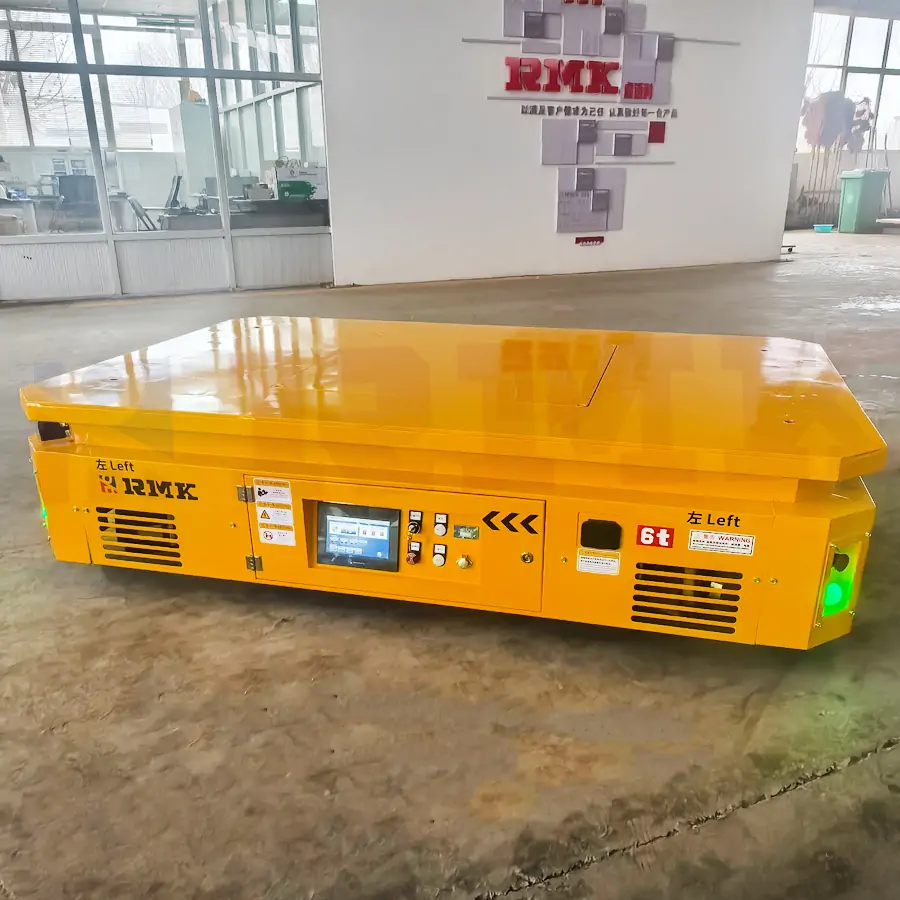
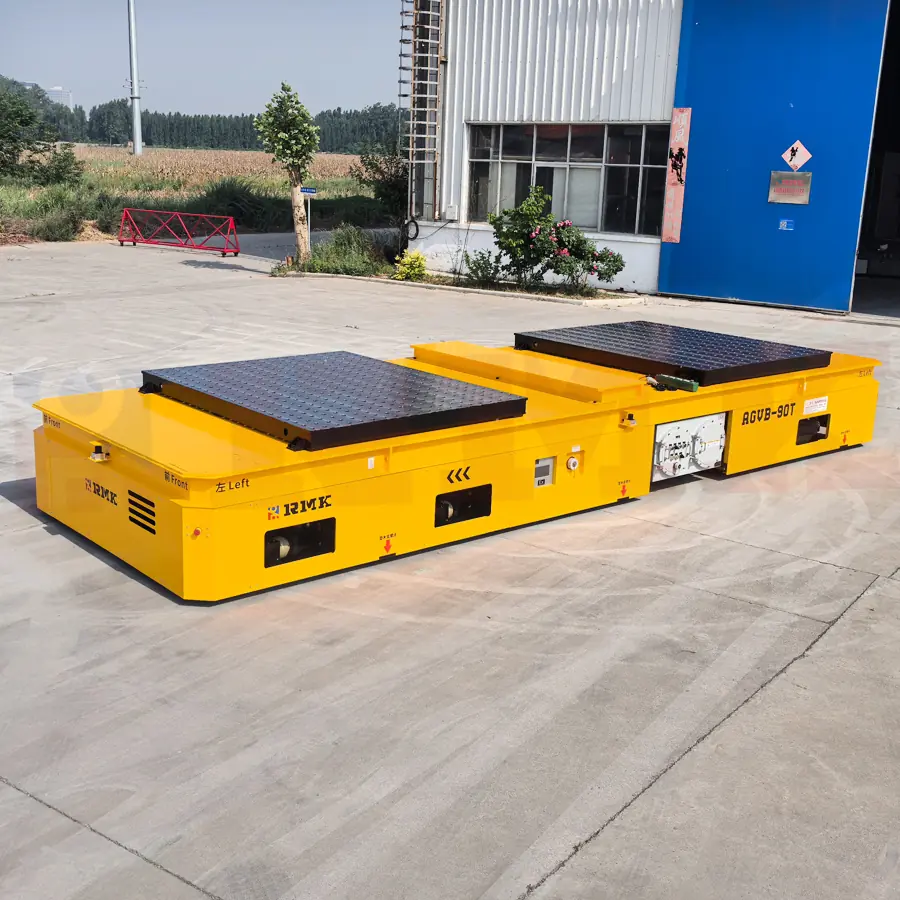
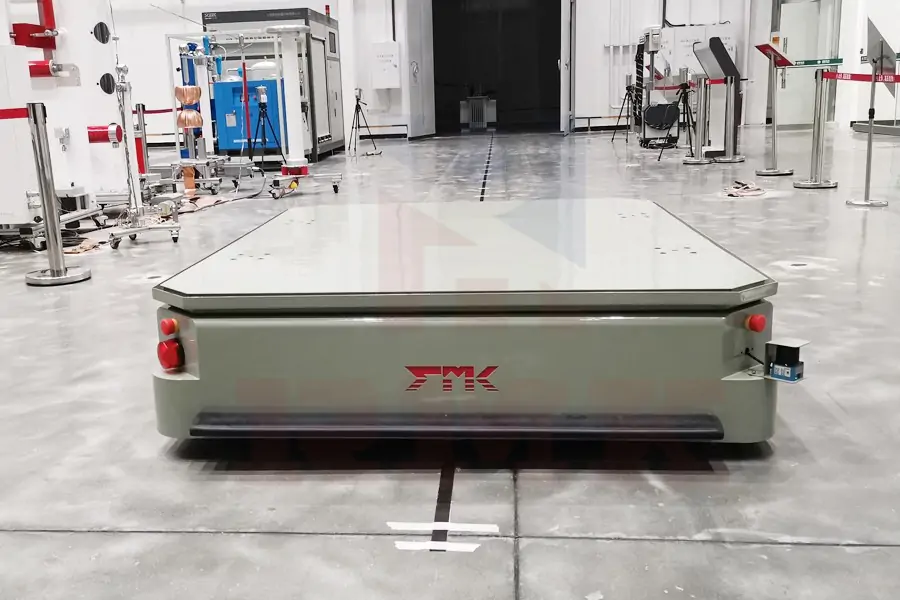
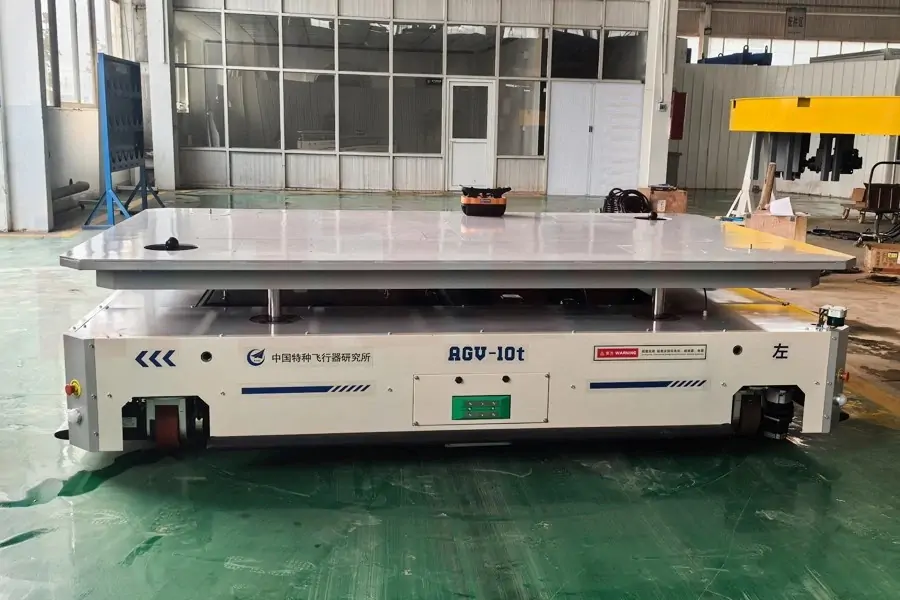
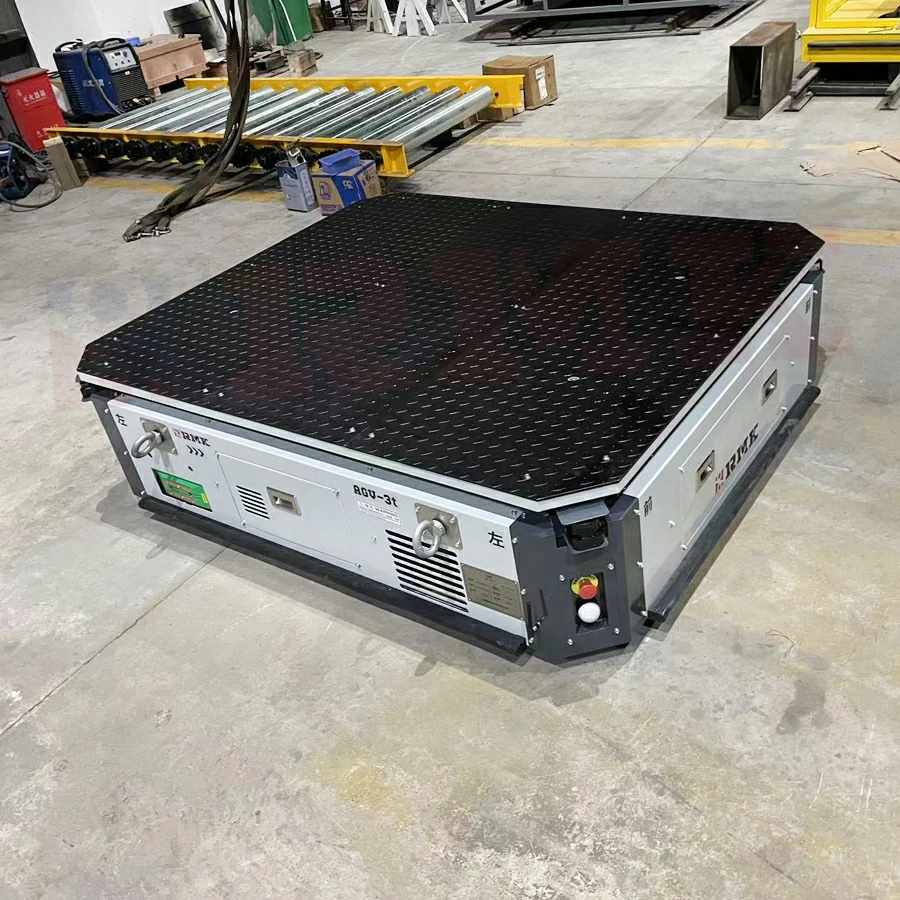
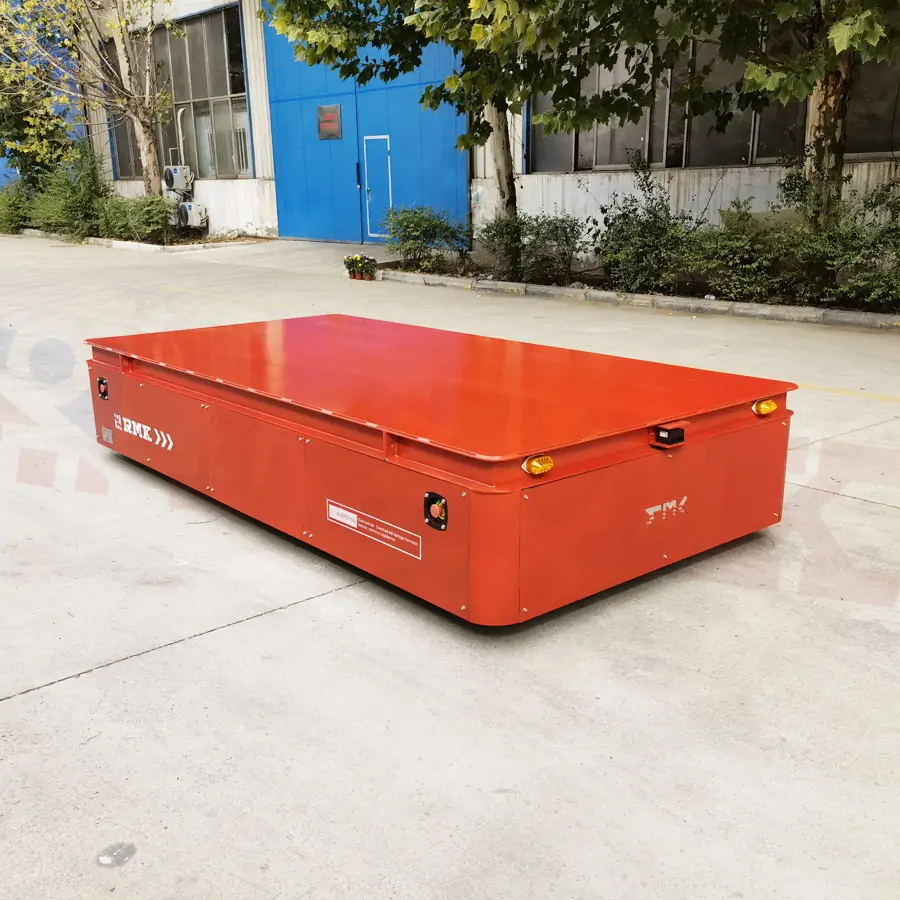
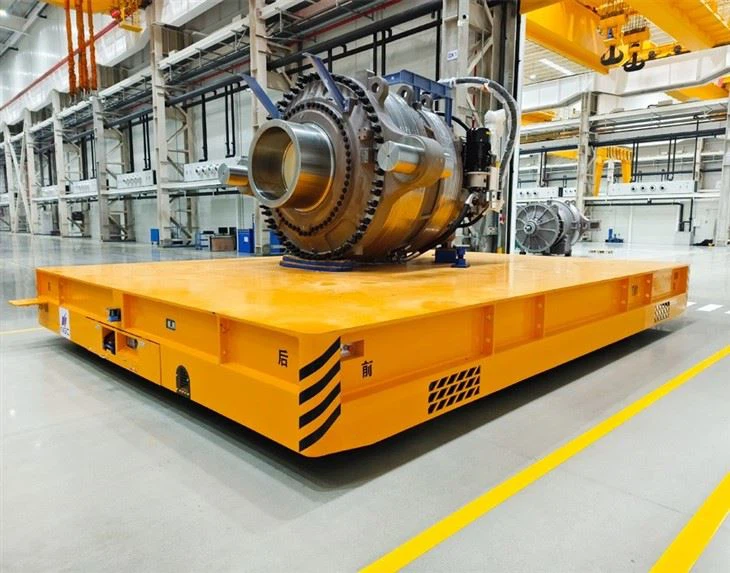
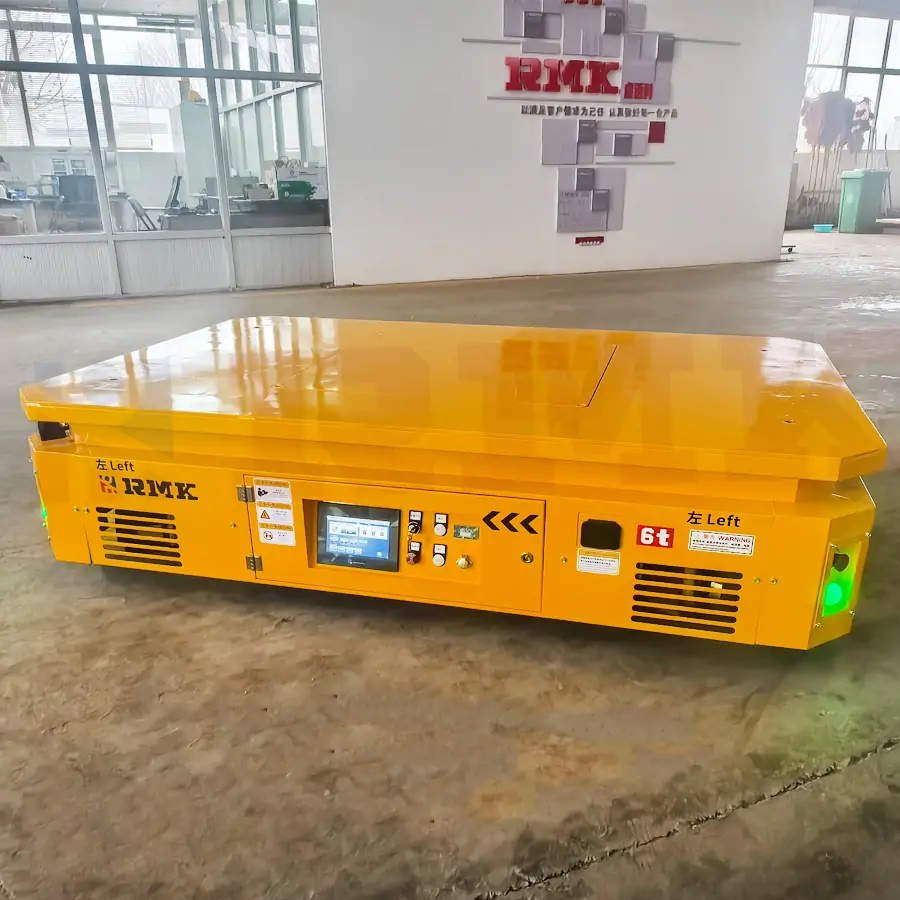
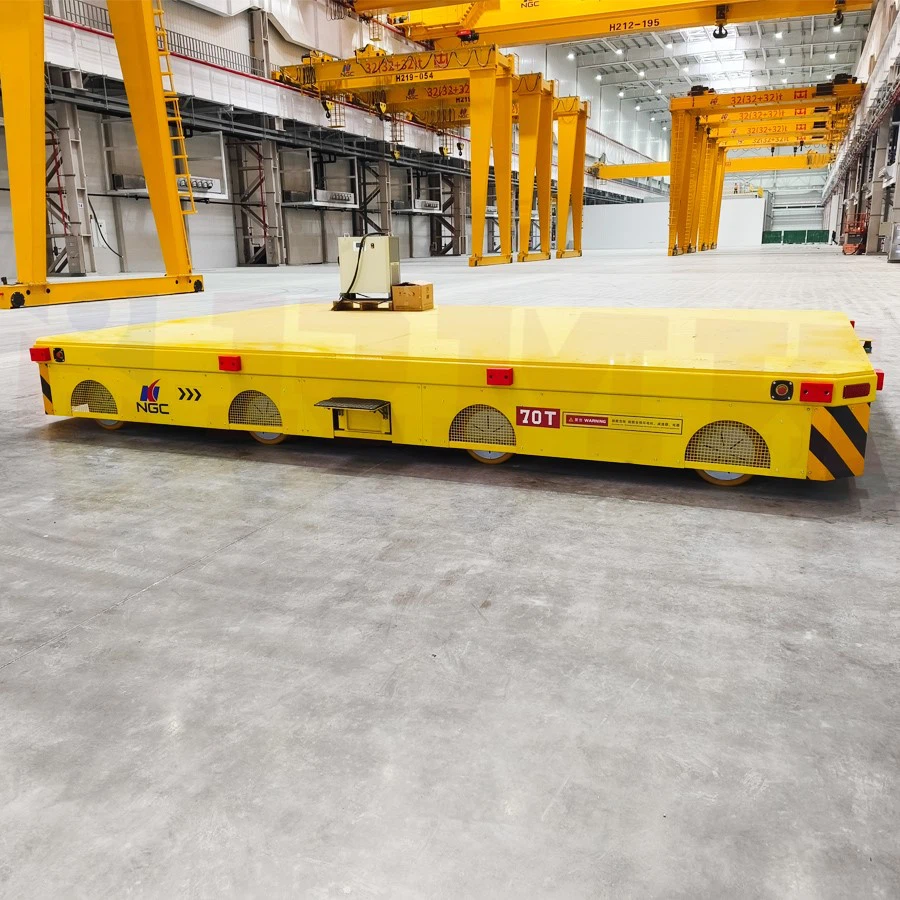
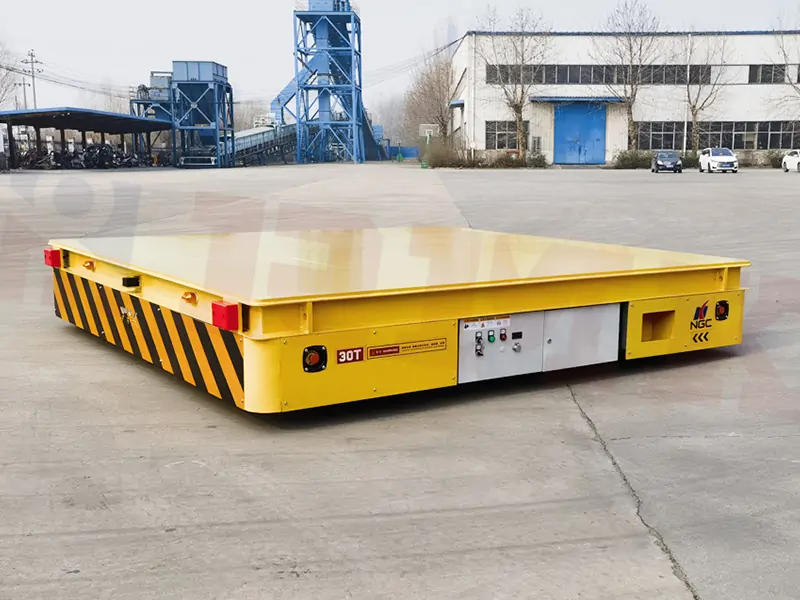
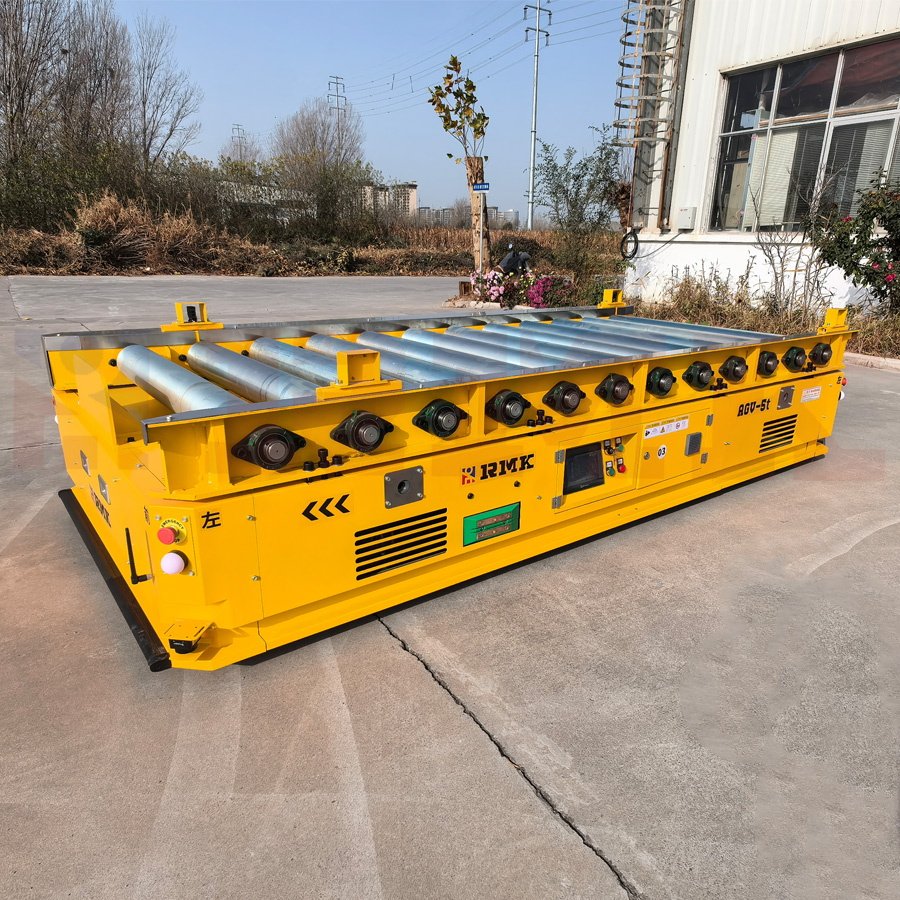
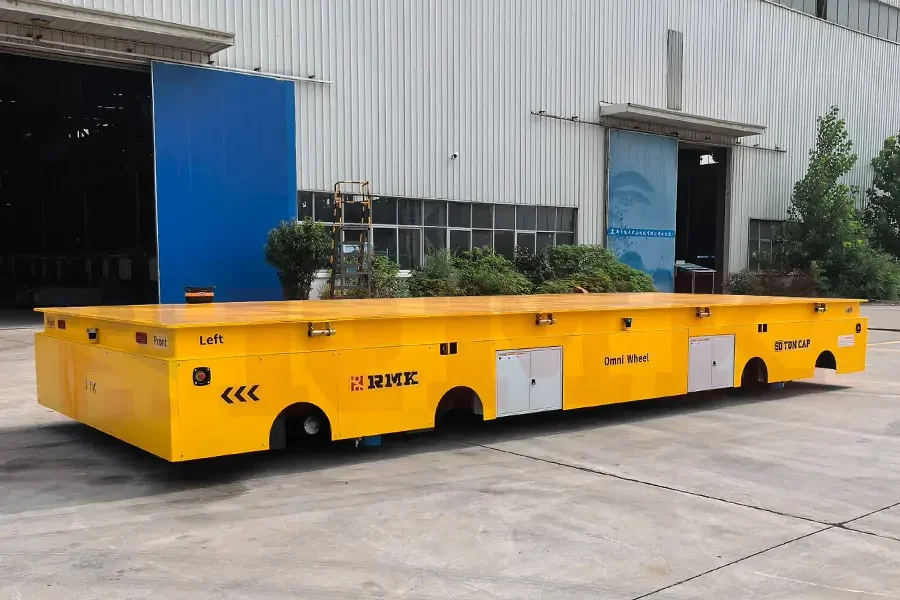
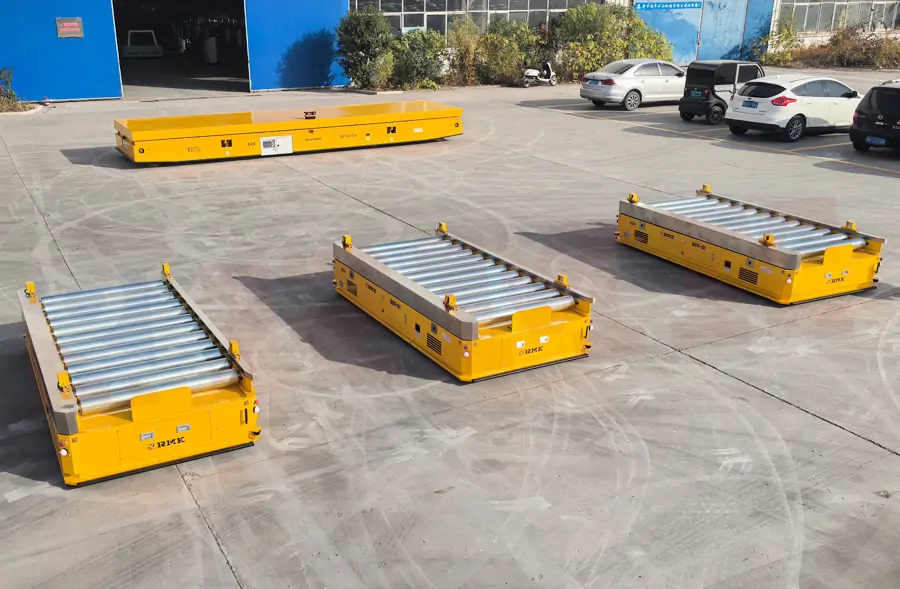
Heavy Duty AGV Transfer Cart is an automated material handling vehicle for moving heavy and oversized loads between production lines, workshops, warehouses, and workstations. It is designed for machinery, steel structures, molds, equipment, and other large industrial loads.
REMARKABLE provides heavy duty AGV transfer carts with automatic navigation, positioning, and control systems. Load capacity, platform size, navigation method, drive system, and control and safety functions can be configured for different material handling tasks.
- Load Capacity: 1–300 t
- · Travel Speed: 0–35 m/min
- · Navigation: Magnetic Stripe / Laser SLAM / QR Code / Remote Control
- · Positioning Accuracy: ±3 mm ~ ±10 mm
What Is a Heavy Duty AGV Transfer Cart?
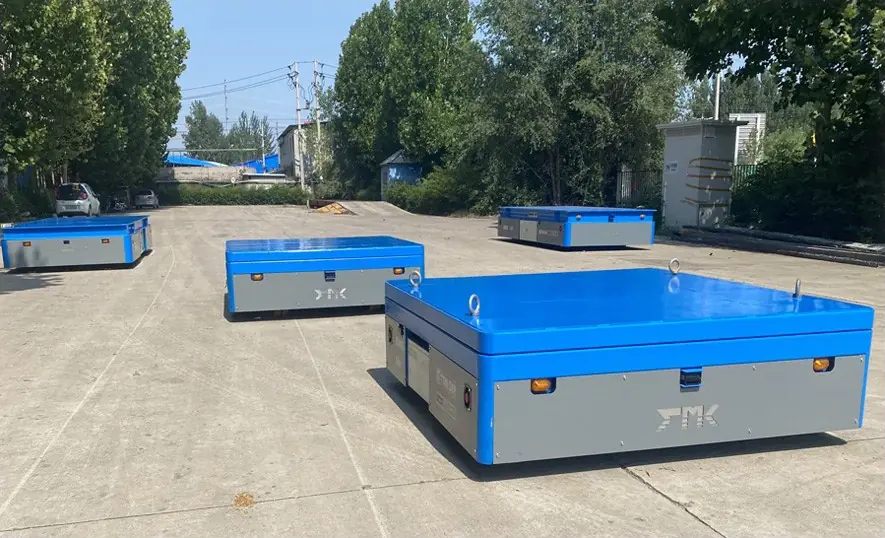
A Heavy Duty AGV Transfer Cart is a battery-powered automated vehicle for moving heavy loads along defined routes without fixed rails or a driver. It is also called an automated guided transfer cart, heavy-duty AGV flatbed, or laser-guided transfer trolley. It uses an AGV navigation and control system to move materials between designated locations.
The cart can use magnetic stripe, laser SLAM, QR code, or hybrid navigation. Encoders, laser scanners, or magnetic sensors provide position feedback for route control. Positioning accuracy can reach ±10 mm, with point-to-point docking available for automatic load transfer. Safety systems can include obstacle detection, anti-collision devices, and emergency stop functions.
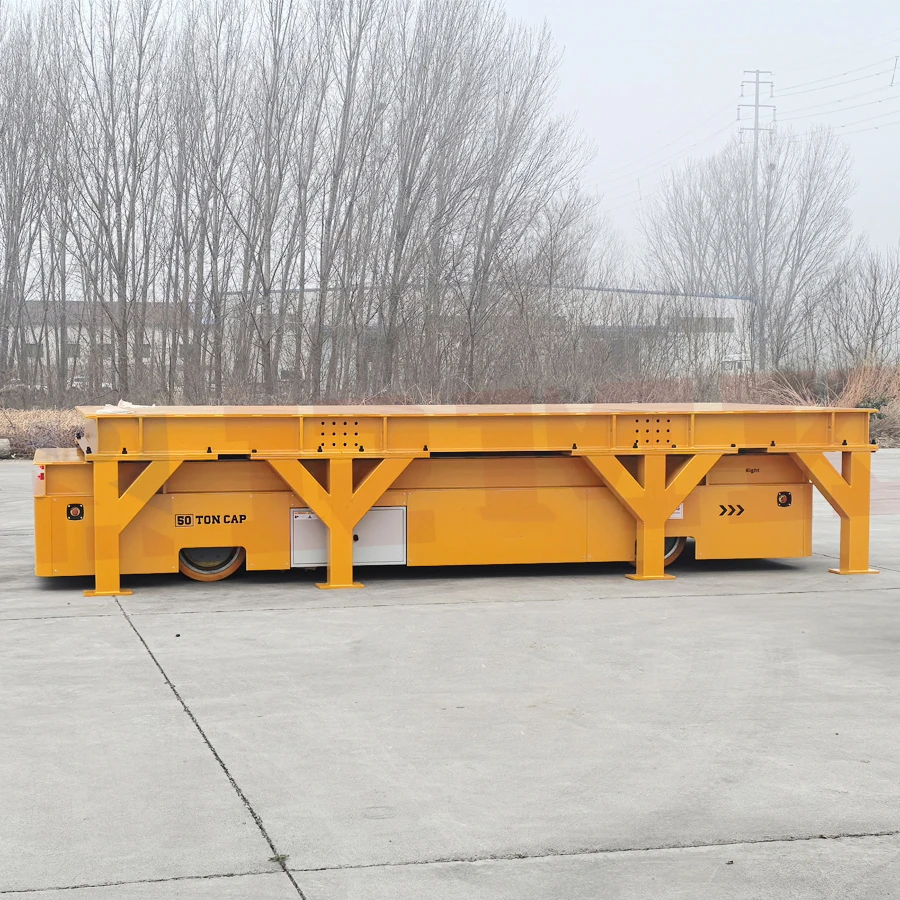
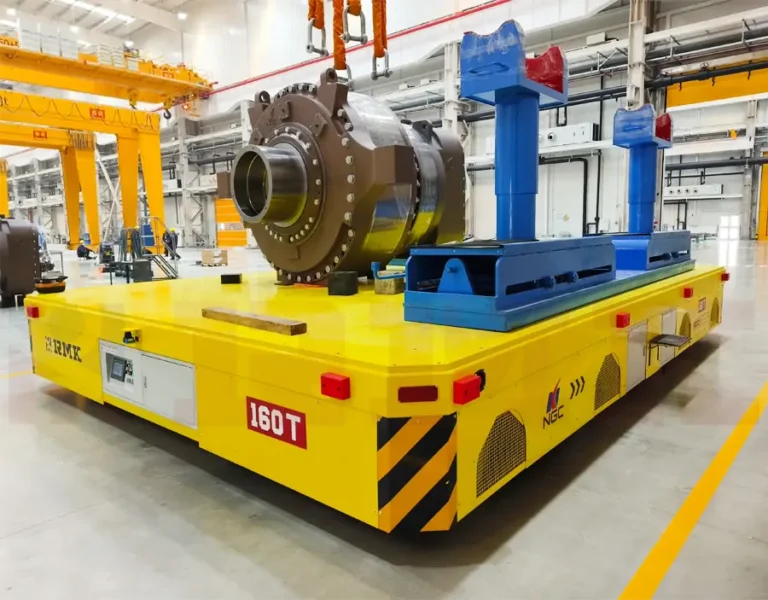
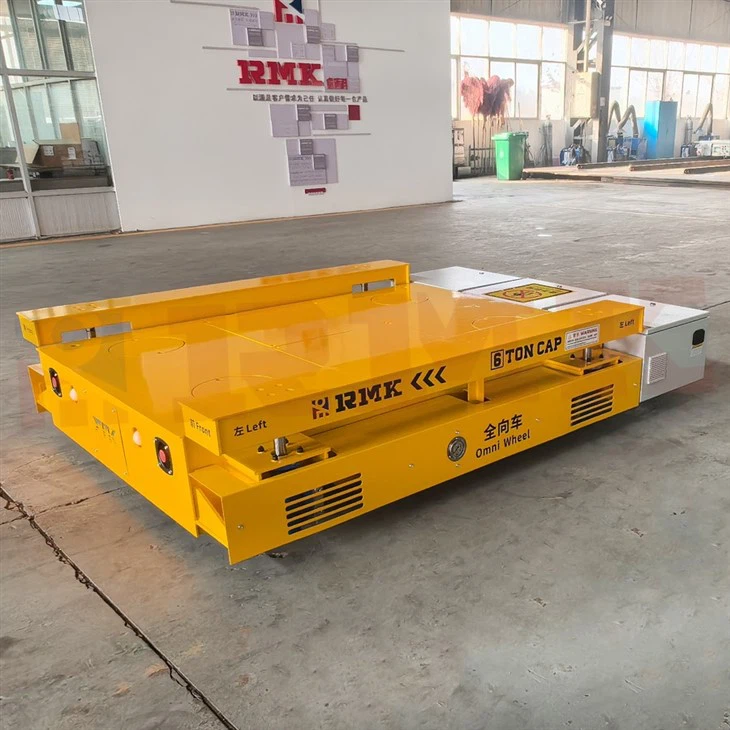
The main frame is a welded steel structure designed for the rated load, with the battery and drive components mounted on the chassis. Load capacity ranges from 1 to 300 t, with travel speed configured for the application. Heavy Duty AGV Transfer Carts are used in workshops, warehouses, assembly lines, and steel plants where fixed routes require automated material transport without rail installation.
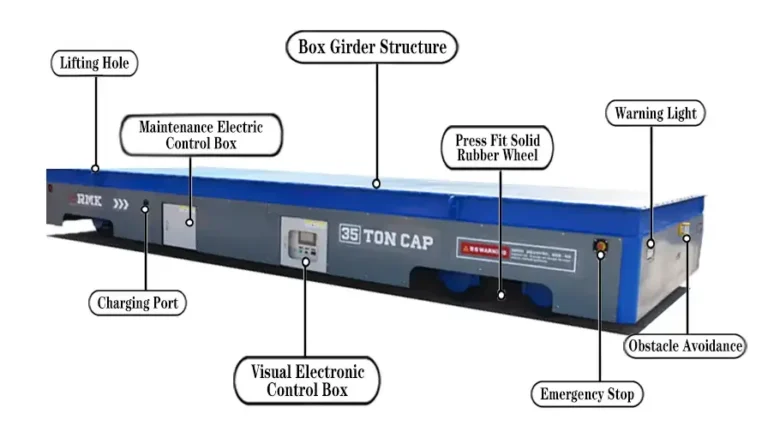
Parts of Heavy Duty AGV Transfer Cart
A Heavy Duty AGV Transfer Cart consists of several main systems for load support, driving, navigation, control, and safety. The configuration varies with capacity, navigation method, and application.
- Steel Frame: Supports the load and carries the main cart components.
- Load Platform: Provides the surface for machinery, steel structures, and other heavy loads.
- Drive System: Powers the wheels and controls cart movement.
- Steering System: Controls travel direction and turning.
- Battery System: Supplies power to the drive and control systems.
- Navigation System: Guides the cart along the programmed route.Control System: Manages travel, steering, positioning, and operating commands.
- Positioning System: Detects the cart position for accurate stopping and docking.
- Safety System: Includes emergency stop, alarms, and obstacle detection.
- Wheels and Axles: Support the load and transfer driving force to the floor.
These components work together to provide automated heavy-load transport. REMARKABLE can configure the structure, drive, navigation, control, and safety systems according to the load and working site.
Specifications
| Parameter | Specification |
|---|---|
| Load Capacity | 1–300 t |
| Platform Size | Customized according to load and cargo dimensions |
| Travel Speed | 0–35 m/min |
| Navigation | Magnetic Stripe / Laser SLAM / QR Code / Customized |
| Positioning Accuracy | ±3 mm ~ ±10 mm |
| Drive System | Electric Drive with Customized Steering |
| Power Supply | Battery Powered |
| Control Mode | Automatic Control / PLC / Wireless Remote |
| Safety System | Emergency Stop / Alarm / Obstacle Detection |
| Optional Functions | Hydraulic Lifting / Automatic Docking / Special Functions |
Note: The above specifications are reference values. REMARKABLE provides customized Heavy Duty AGV Transfer Carts according to load requirements, platform dimensions, transport routes, and working conditions. Navigation system, drive configuration, battery capacity, control mode, and special functions can be adjusted for different industrial applications.
Working Principle of Heavy Duty AGV Transfer Cart
A Heavy Duty AGV Transfer Cart uses an onboard battery, electric drive system, and automatic navigation system to transport heavy loads along a programmed route without a driver. The controller coordinates navigation, movement, steering, and positioning during operation.
- Power Supply
The onboard battery supplies power to the drive motors, steering system, and control components. - Route Detection
The navigation system identifies the programmed route through magnetic stripe, laser SLAM, QR code, or a hybrid guidance method. - Drive and Movement
The controller sends movement commands to the drive motors. Motor torque is transmitted through the gear reducer to the drive wheels, moving the cart along the route. - Path Correction
Encoders, laser scanners, or magnetic sensors provide position feedback. The controller adjusts travel direction and speed when the cart deviates from the programmed path. - Positioning and Docking
The cart slows down and stops at the target position according to the positioning signal. It can be configured for automatic docking, loading, unloading, or transfer between workstations.
Navigation and control systems allow a Heavy Duty AGV Transfer Cart to locate its position, follow a defined route, and complete transport tasks with limited operator input. The system can be configured according to route layout, positioning requirements, and the level of automation required.
Navigation Options
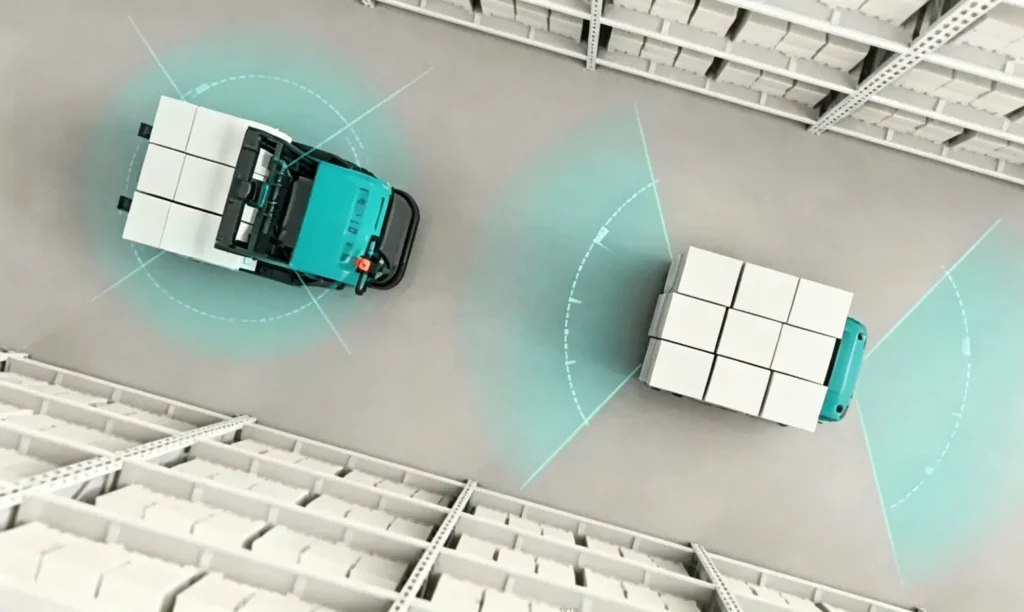
Laser Navigation
Laser SLAM uses laser scanners to map and locate the cart without fixed floor tracks. It suits changing layouts and routes with multiple operating areas.
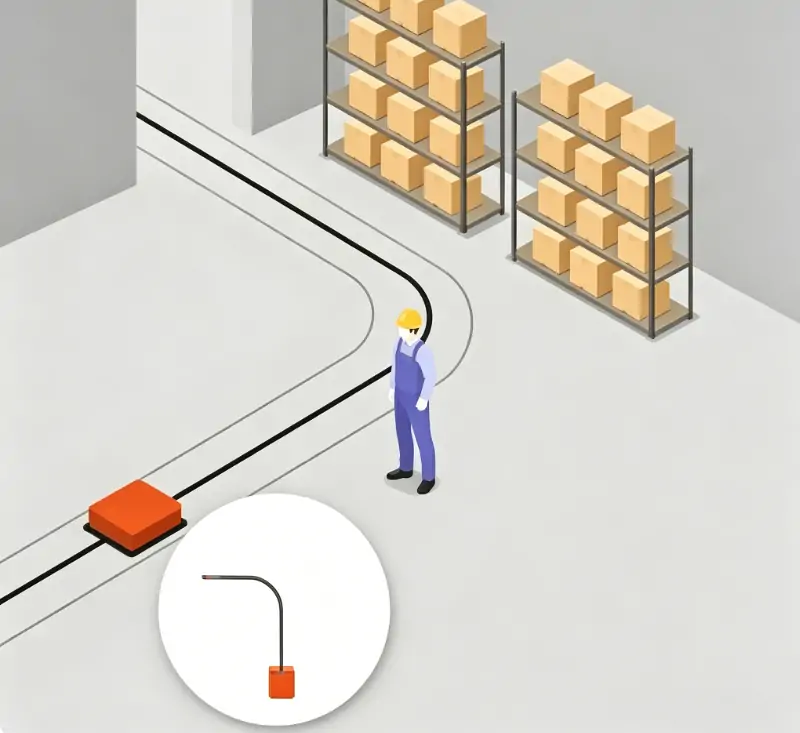
Magnetic Navigation
Magnetic strips installed on the floor guide the cart along a defined route. It suits fixed transport paths and repetitive material handling.
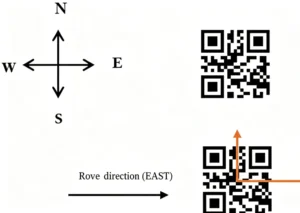
QR Code Navigation
QR codes placed at designated points provide position references for route control and station docking. It suits applications that require defined stopping points and route changes.
Hybrid or site-specific navigation can be configured for complex routes, multiple workstations, or special operating conditions.
For detailed information on the differences between navigation systems and their settings, see: Automated Guided Vehicle System: Components, Working Principle, and Applications
Control Options
- Automatic Navigation
The control system manages route following, speed, stopping, and docking according to programmed tasks. - PLC Control
PLC-based control handles drive commands, steering, safety interlocks, and operating status. - Wireless Remote Control
Wireless remote control allows operators to move the cart manually during commissioning, maintenance, or special operating conditions. - Upper-Level System Communication
The AGV can exchange task commands, position, and operating status with an upper-level control system where required.
Heavy Duty AGV Transfer Cart can be configured to communicate with production or warehouse management systems. System integration can support task assignment, transport scheduling, workstation docking, and status feedback for automated material handling.
Advantages
Automated Material Transport
Moves heavy loads along programmed routes without a driver, reducing manual transport work.
Flexible Route Planning
Laser, magnetic, QR code, or hybrid navigation can be configured for different factory layouts and transport routes.
Accurate Positioning
Positioning systems support controlled stopping and docking at loading points, production stations, and unloading areas.
Heavy Load Handling
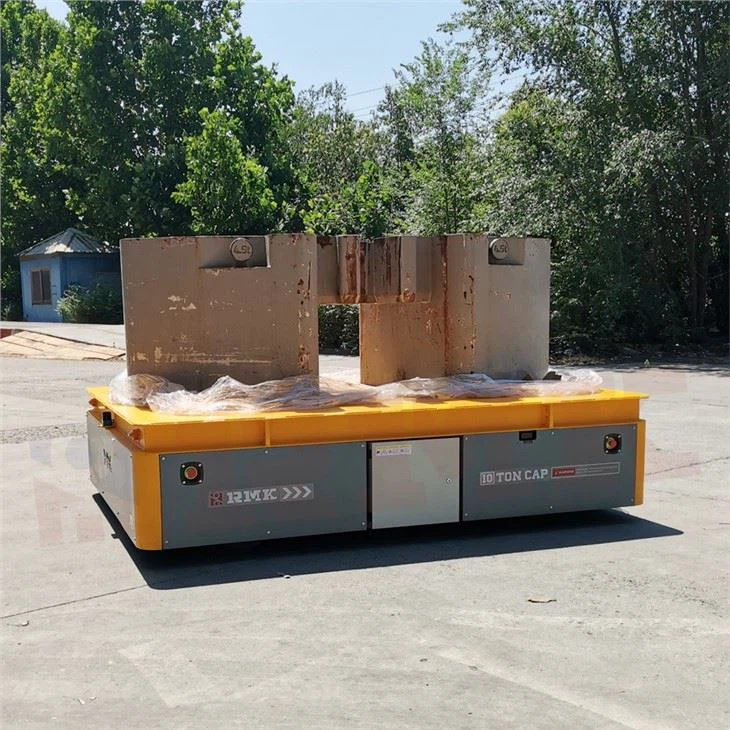
Designed for transporting machinery, molds, steel structures, equipment, and other large industrial loads.
Production Line Integration
Can exchange transport tasks and operating status with PLCs or upper-level production and warehouse systems.
Configurable Safety Systems
Emergency stop, obstacle detection, alarms, and other safety functions can be configured for the operating environment.
Applications
Heavy Duty AGV Transfer Carts automate the movement of heavy materials between production, storage, and assembly areas.
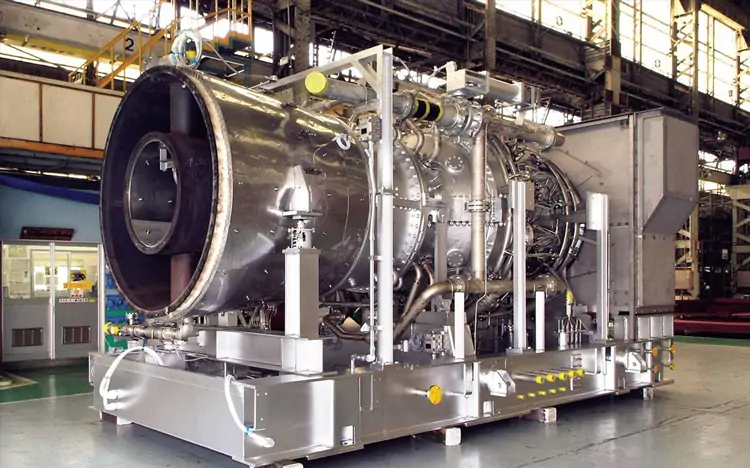
Machinery Manufacturing
Transport machine bases, equipment parts, molds, and heavy components between workstations.

Steel Manufacturing
Move steel structures, coils, plates, and fabricated components across production areas.

Automotive Manufacturing
Transport dies, body components, assemblies, and production tooling between process stations.

Warehousing
Move heavy materials between storage areas, loading points and production lines.
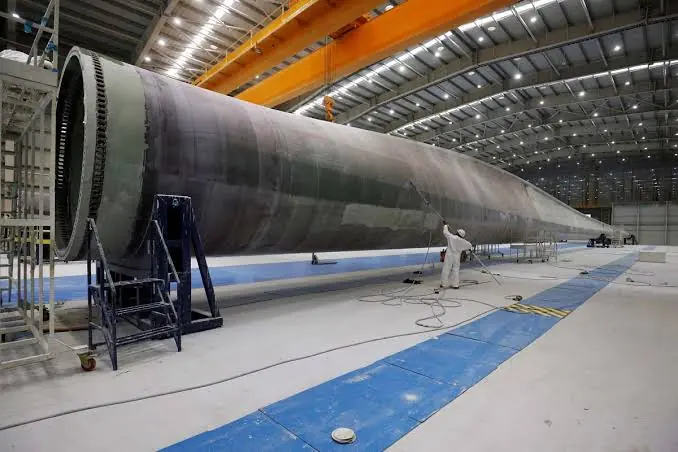
Power Equipment
Transport transformers, generators and other large electrical equipment.
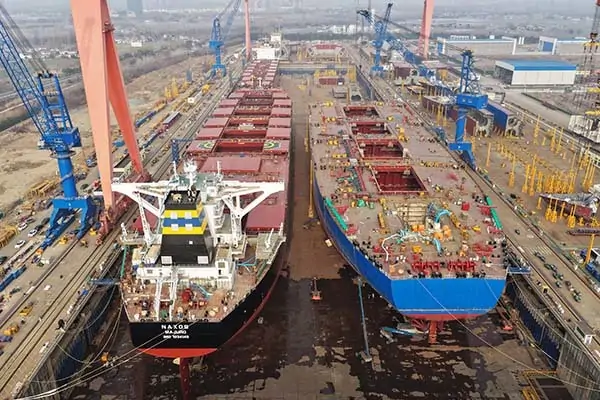
Shipbuilding
Move ship sections, steel panels, hull components, and oversized structures within shipyards.
For more details on application scope, see: Large Platform AGV Transfer Cart: Ideal Solution for Heavy and Oversized Material Handling
Functions
- Automatic Navigation: Follows the programmed route and moves between designated stations without manual driving.
- Forward / Reverse Movement: Moves in both directions for flexible loading, unloading, and material transfer.
- Lateral Movement: Moves sideways for cross-line transfer and precise positioning in confined areas.
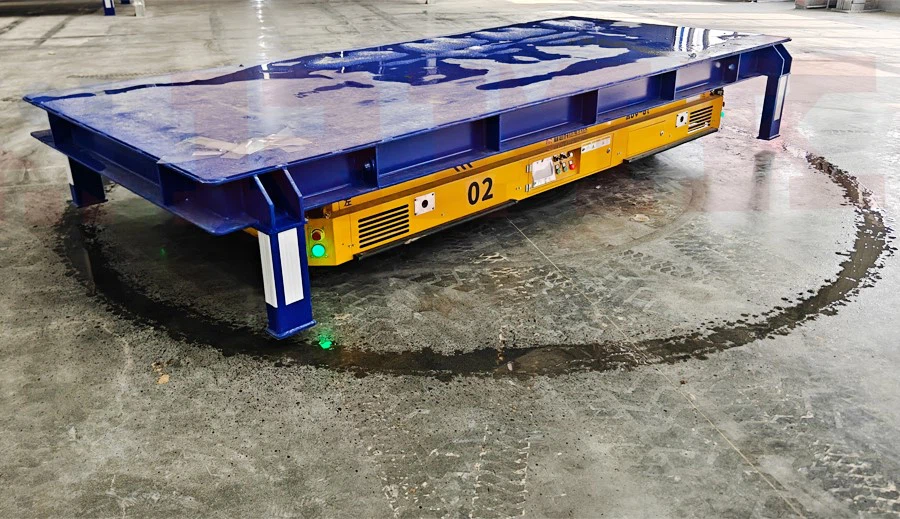
- 360° Rotation: Rotates within a defined area for applications with limited turning space.
- Hydraulic Lifting: Raises the load for height adjustment, workstation docking, or material transfer.
- Automatic Positioning: Stops at programmed positions for accurate loading, unloading, and station docking.
- Load Docking: Aligns with production lines, workstations, or transfer equipment for load handover.
- Obstacle Detection: Detects obstacles in the travel area and triggers controlled stopping or avoidance.
- Remote Control: Allows manual operation during commissioning, maintenance, or special transport tasks.
- Multi-AGV Coordination: Coordinates multiple AGVs for scheduled material transport and shared work areas.
How to Choose a Heavy Duty AGV Transfer Cart?
Selecting a Heavy Duty AGV Transfer Cart starts with the load, route, and automation requirements. The main specifications should match the actual material handling process and working environment.
1. Load Capacity — Confirm the maximum load weight, load distribution, and center of gravity. Select the cart capacity based on the heaviest transport task.
2. Platform Size — Measure the load length, width, and height. The platform should provide sufficient support and allow safe loading and unloading.
3. Travel Route — Define the travel distance, route width, turning areas, and station locations. The route determines the required navigation and steering configuration.
4. Navigation Method — Select magnetic stripe, laser SLAM, QR code, or a customized navigation system based on the floor layout and positioning requirements.
5. Positioning Accuracy — Define the stopping and docking accuracy required at production lines, workstations, or transfer stations.
6. Automation Level — Choose automatic operation, PLC control, remote control, or upper-level system communication based on the required workflow.
7. Working Environment — Consider floor conditions, temperature, humidity, dust, slopes, and other site conditions before finalizing the cart configuration.
8. Safety Requirements — Define obstacle detection, emergency stop, alarms, and other safety functions according to the traffic conditions and operating area.
REMARKABLE can configure the Heavy Duty AGV Transfer Cart according to load, cargo dimensions, route, automation level, and working conditions.
Selecting the right model requires a more comprehensive evaluation. For details, see: “How to Choose the Right AGV Transfer Cart?”
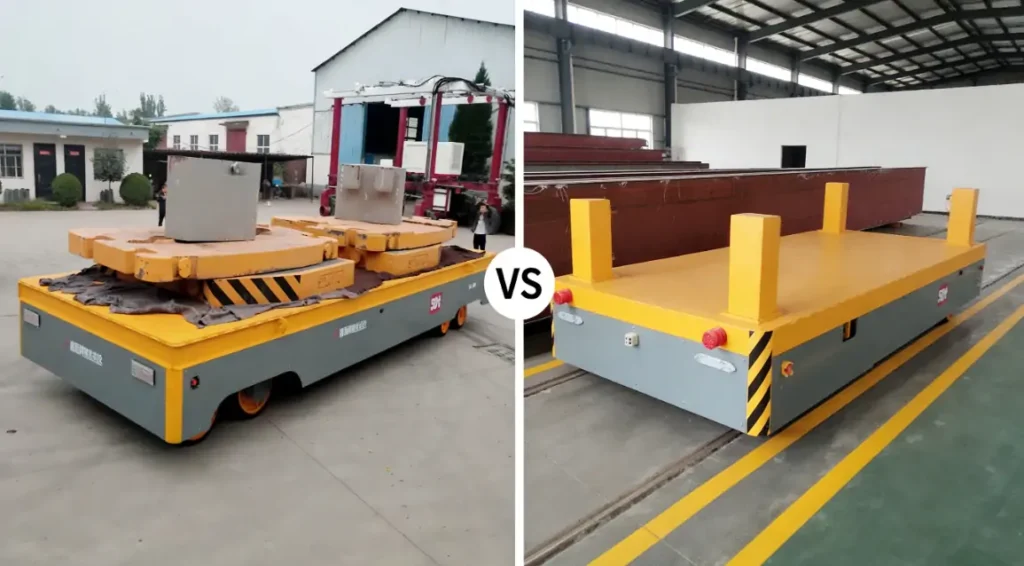
Heavy Duty AGV Transfer Cart vs. Trackless Transfer Cart
Heavy Duty AGV Transfer Cart and Trackless Transfer Cart both move heavy loads without fixed rails. The main difference is the level of navigation and automation.
| Comparison | Heavy Duty AGV Transfer Cart | Trackless Transfer Cart |
|---|---|---|
| Navigation | Laser SLAM, magnetic stripe, QR code, or other automatic navigation | Manual control by remote or handle |
| Route | Programmed route | Operator-controlled route |
| Positioning | Automatic positioning and docking | Manual positioning |
| Automation | Automatic transport between designated stations | Manual or remote-controlled operation |
| System Integration | Can connect with PLC or upper-level systems | Mainly operates as an independent cart |
| Best For | Repetitive routes and automated material handling | Flexible transport with direct operator control |
A Trackless Transfer Cart is suitable when flexible movement and manual control are the main requirements. A Heavy Duty AGV Transfer Cart is better suited to repetitive transport routes, automatic positioning, and higher-level material handling automation.
Cases
Heavy Duty AGV Transfer Cart Customization
REMARKABLE provides customized Heavy Duty AGV Transfer Carts for different loads, transport routes, and automation requirements. The cart can be configured around the cargo, working area, and material handling process.
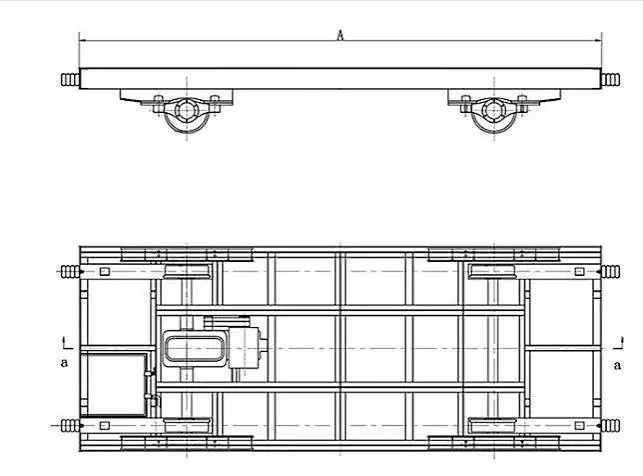
Customizable Configurations
- Load Capacity: 1–300 tons according to the transport load.
- Platform Size: Customized to cargo dimensions and load distribution.
- Navigation System: Magnetic stripe, laser SLAM, QR code, or hybrid navigation.
- Drive and Steering: Configured for load weight, floor conditions, and route layout.
- Travel Speed: Set according to travel distance and operating cycle.
- Control System: PLC, automatic control, wireless remote, or upper-level system communication.
- Positioning: Configured for workstation docking and material transfer accuracy.
- Safety System: Obstacle detection, emergency stop, alarms, and other site-specific functions.
- Optional Functions: Hydraulic lifting, lateral movement, 360° rotation and other functions for selected models.
Final configuration is based on load weight, cargo dimensions, floor conditions, travel route, positioning requirements, operating cycle, and automation level. REMARKABLE can develop the AGV transfer cart configuration around the actual material handling process.
For more information on customization, see the article: Custom Transfer Cart: Complete Guide to Design and Customization
For details on the applications and maintenance of AGV transfer carts, read: “Heavy Load AGV – Structure, Usage, and Maintenance”
Heavy Duty AGV Transfer Cart Manufacturer and Supplier
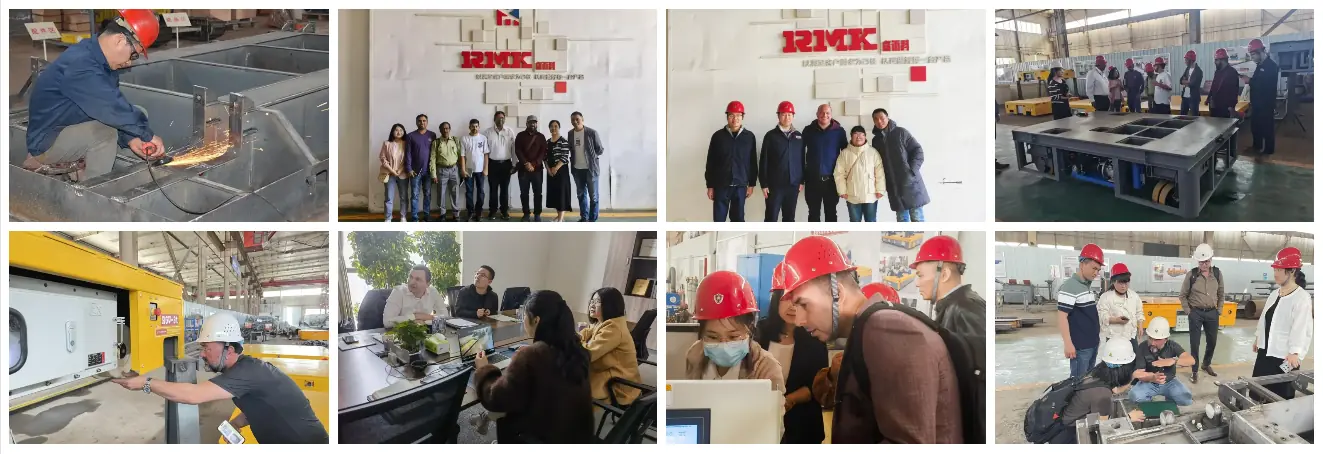
REMARKABLE is a manufacturer and supplier of Heavy Duty AGV Transfer Carts for industrial material handling. We provide custom engineering based on load type, platform dimensions, transport routes, and working conditions. Load and platform design, navigation methods, and control systems can be configured for machinery manufacturing, steel production, warehousing, automotive, and other industrial applications.
REMARKABLE supports overseas projects from engineering and production to delivery and installation guidance. Our team provides technical communication, project support, and after-sales service throughout the equipment lifecycle. Contact us to discuss your AGV transfer cart requirements and develop a configuration for your application.
Related Articles
Customized Intelligent Material Handling Solutions
To ensure that a customized transfer cart fits your needs perfectly, please provide the following details:
- Load Capacity: _____ tons (1~500 ton)
- Table Size: _____ × _____ mm/m (e.g., 1500×3000)
- Power Options:
- ☐ Lead-acid ☐ Lithium-ion ☐ Other: _____
- ☐ Cable: _____V/_____A
- ☐ Standard 380V/50Hz/3-phase
- Cargo Details:
- Type: _____ (e.g., steel coils, machinery)
- Special Needs: _____ (e.g., anti-slip, corrosion-proof)
- Optional Features:
- ☐ Emergency stop ☐ Anti-collision sensors
- ☐ Rail guides ☐ Lifting mechanism ☐ Remote control
Get a Quote Now
FAQ
What is a Heavy Duty AGV Transfer Cart?
A Heavy Duty AGV Transfer Cart is an automated vehicle for moving heavy loads between production lines, warehouses, and workstations. It uses automatic navigation, positioning, and control systems to follow programmed transport routes.
How does a Heavy Duty AGV Transfer Cart work?
The AGV uses a battery-powered drive system and navigation sensors to follow a programmed route. The control system manages movement, steering, positioning, and stopping based on navigation and position feedback.
How much weight can a Heavy Duty AGV carry?
Heavy Duty AGV Transfer Carts can be designed for different load requirements. REMARKABLE provides AGV transfer carts with capacities from 1 to 300 tons, with the final configuration based on the load and working conditions.
What navigation systems are used for AGV transfer carts?
AGV transfer carts can use laser SLAM, magnetic stripe, QR code, or hybrid navigation. The choice depends on the route layout, positioning requirements, and automation level of the material handling process.
Can a Heavy Duty AGV Transfer Cart move without rails?
Yes. A Heavy Duty AGV Transfer Cart can use a rail-less chassis with wheels, electric drive, and automatic navigation. It can move along programmed routes without fixed floor rails.
Can an AGV transfer cart be customized?
Yes. The cart can be customized for load capacity, platform size, drive system, steering, navigation, control, positioning, and safety functions based on the application and working conditions.
Can an AGV transfer cart be integrated with a production line?
Yes. An AGV transfer cart can be configured to communicate with a PLC or upper-level control systems. This allows transport tasks, workstation docking and operating status to be coordinated with the production process.
What is the difference between an AGV transfer cart and a trackless transfer cart?
An AGV transfer cart uses automatic navigation and positioning for programmed transport. A Trackless Transfer Cart is mainly controlled by an operator. AGVs are suited to repetitive automated routes, while trackless carts offer direct operator control.