
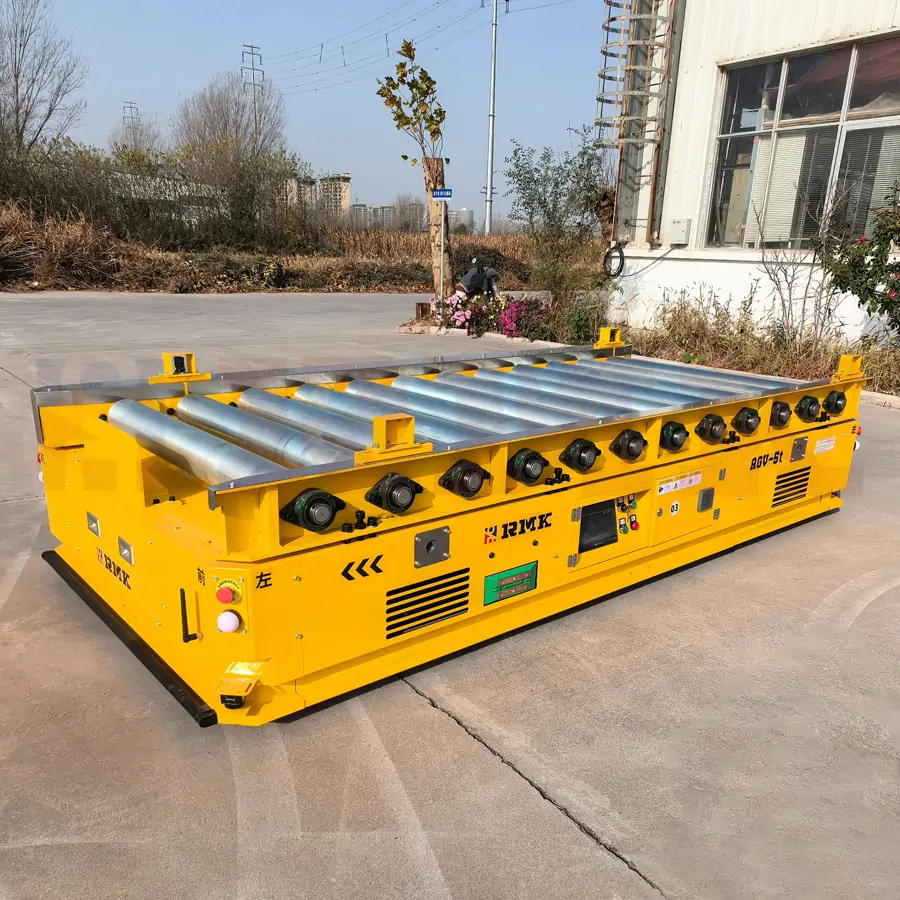
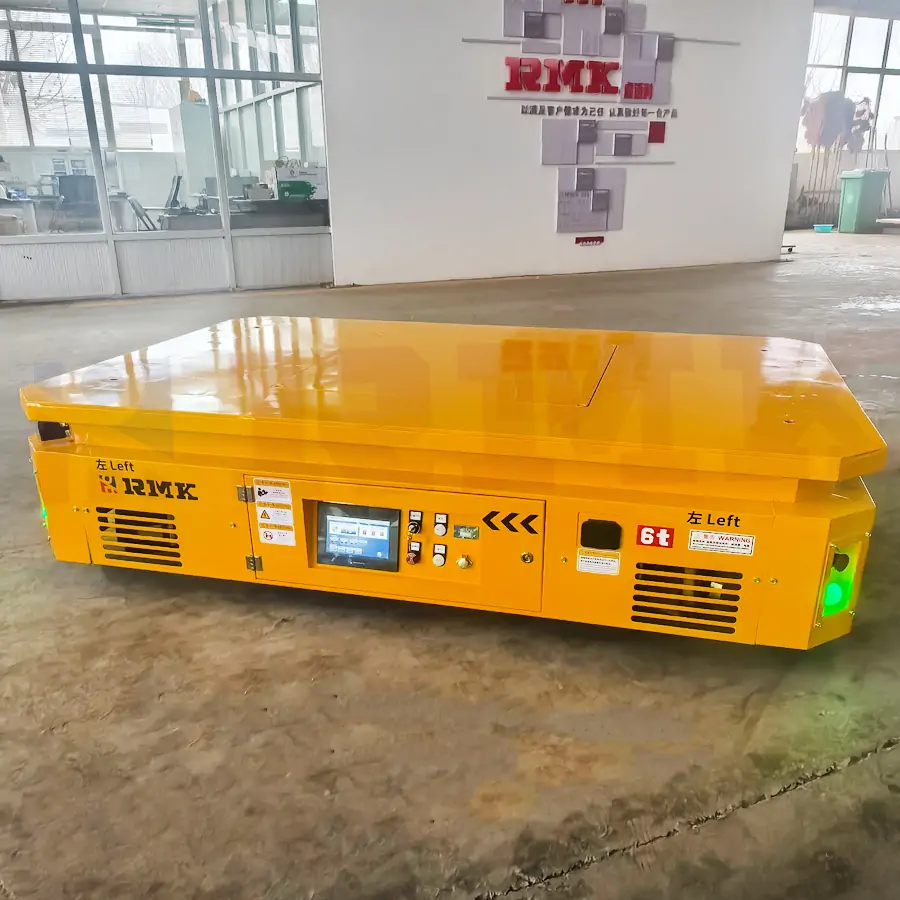
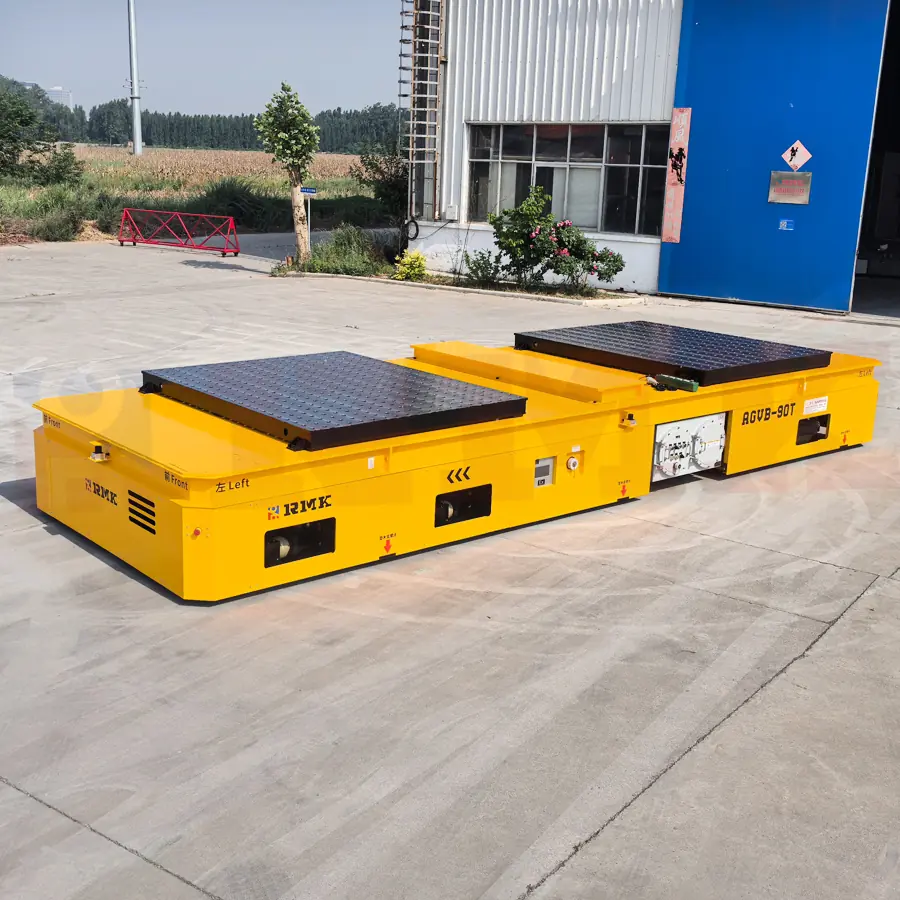
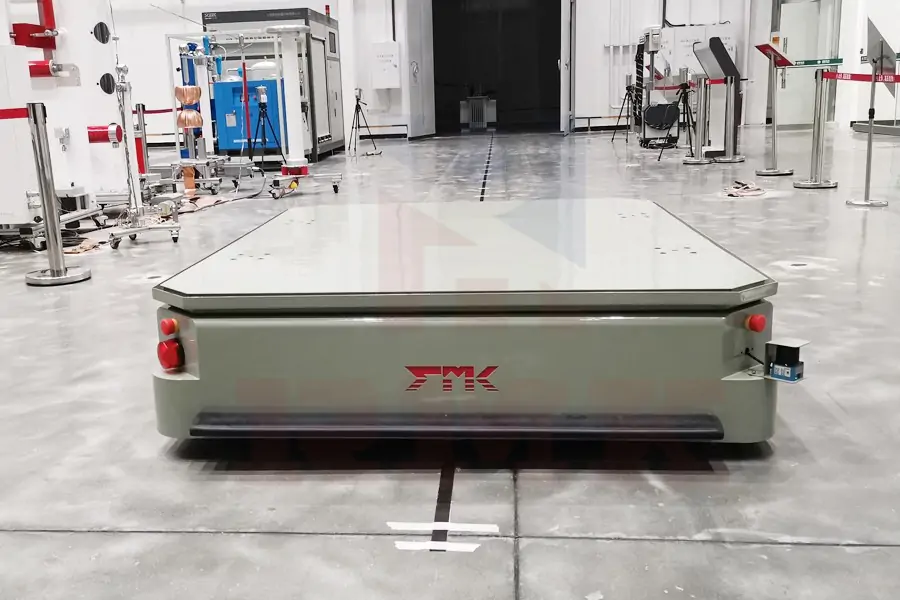
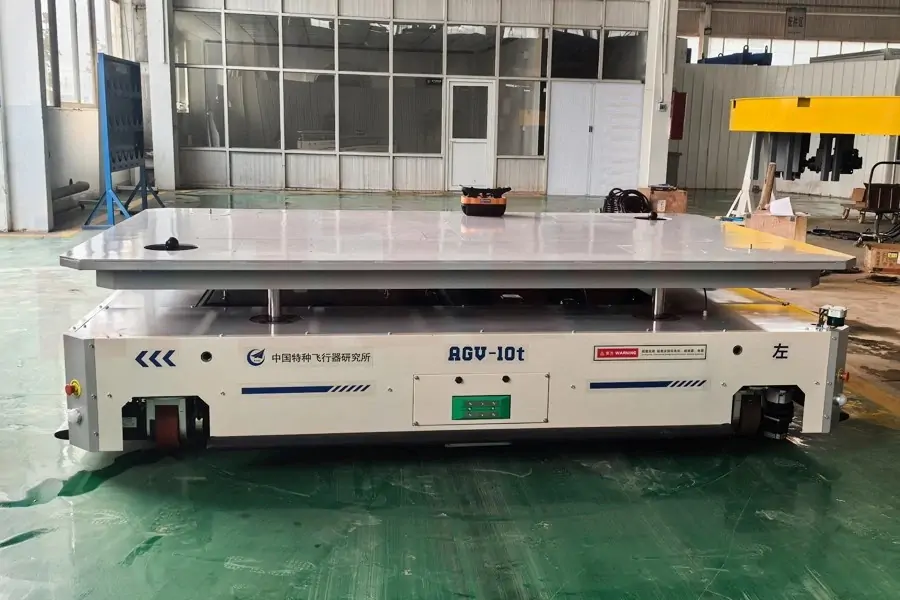
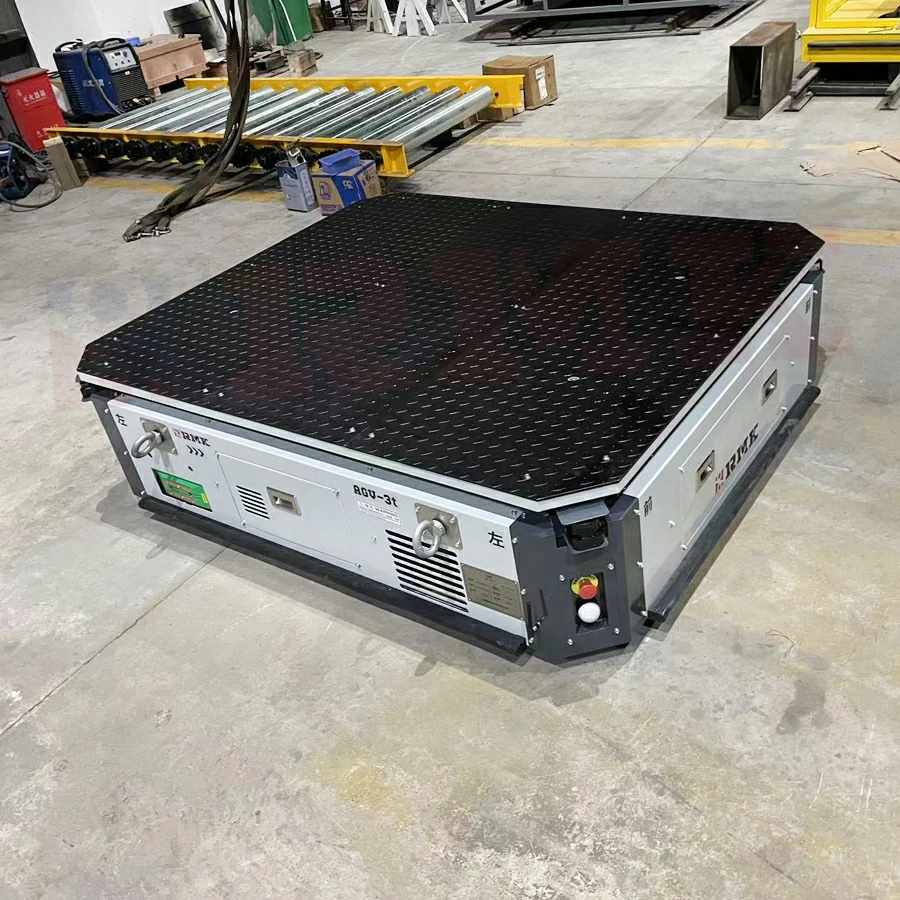
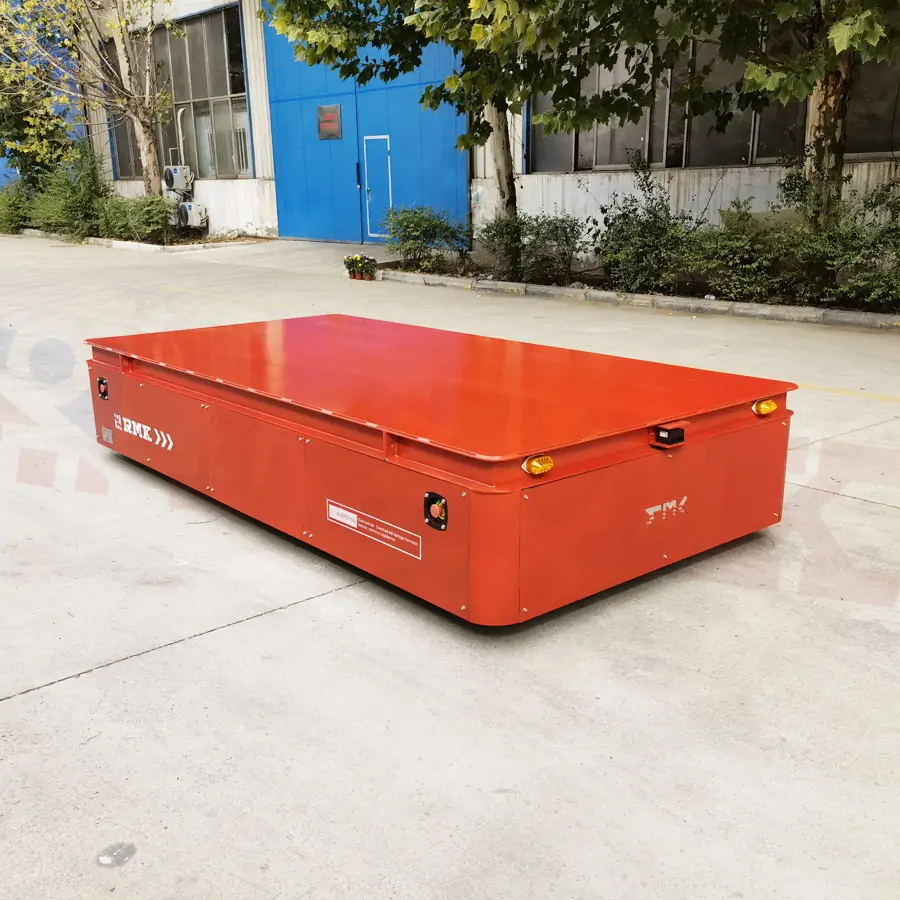
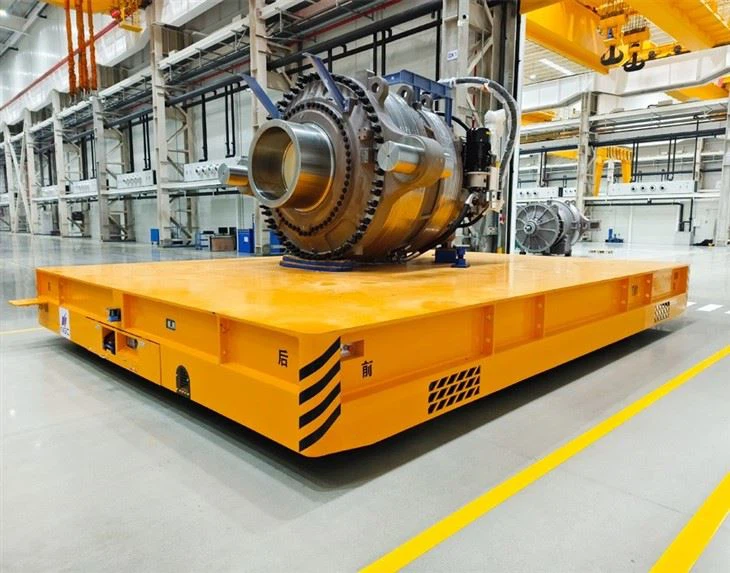
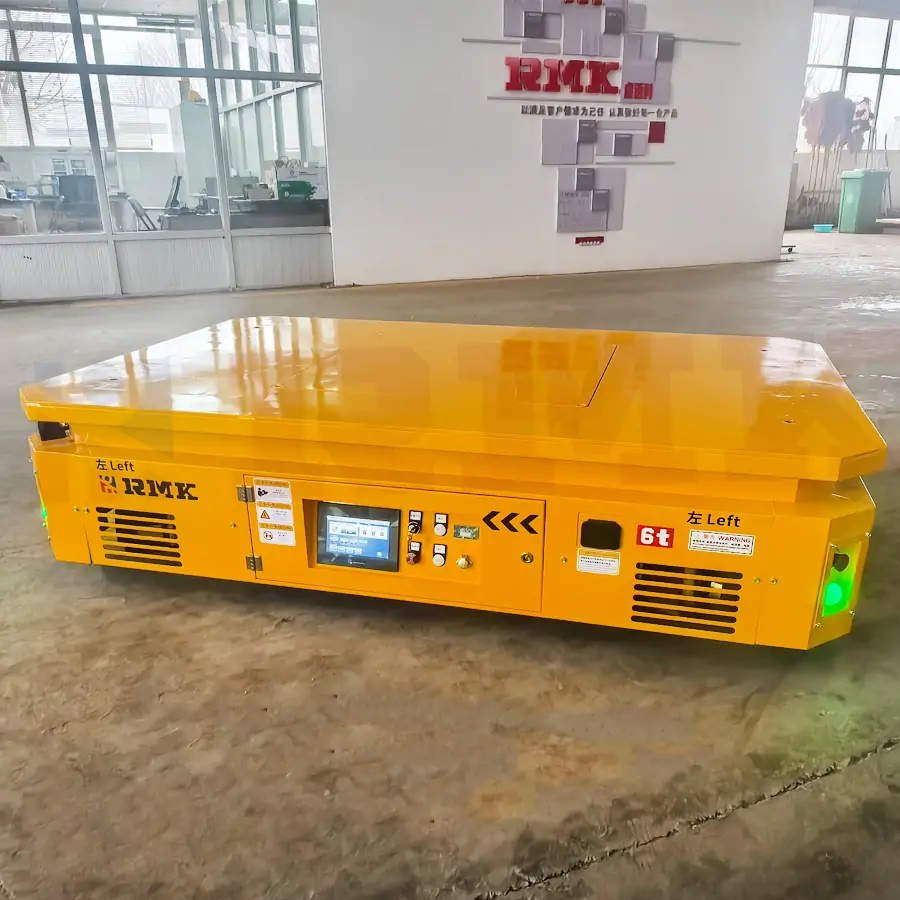
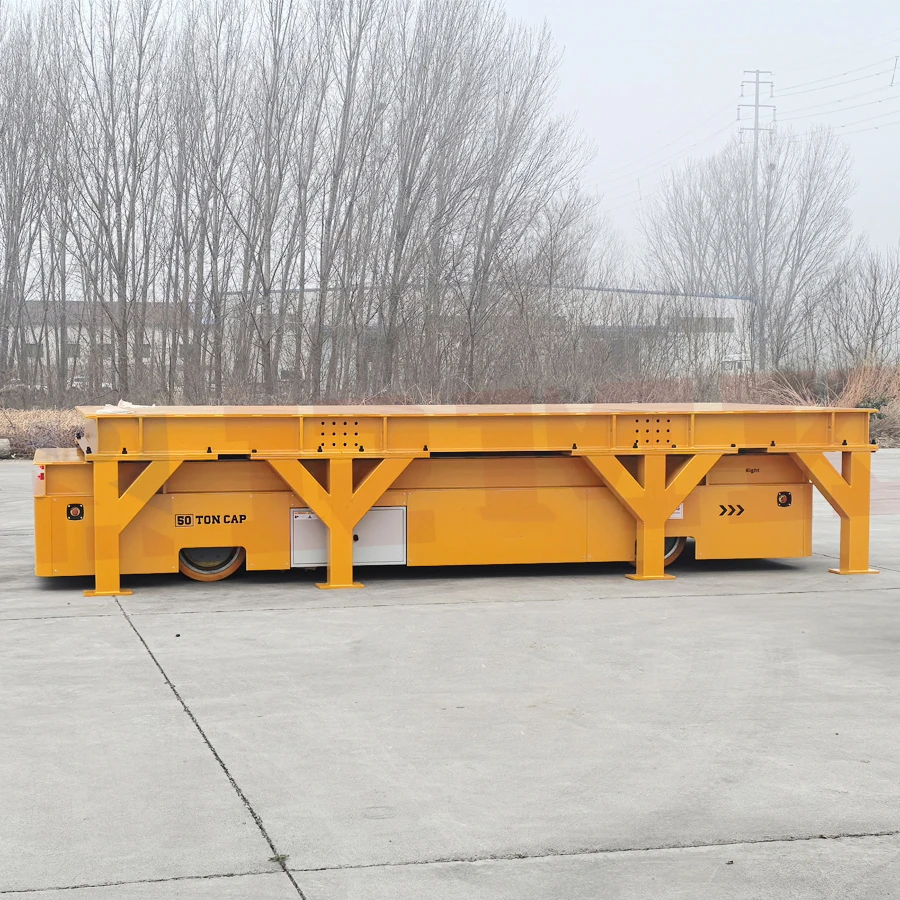
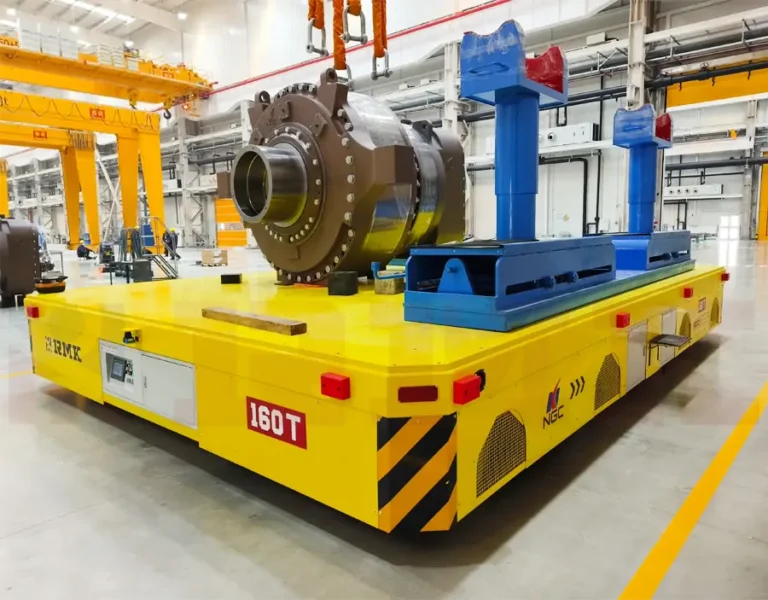
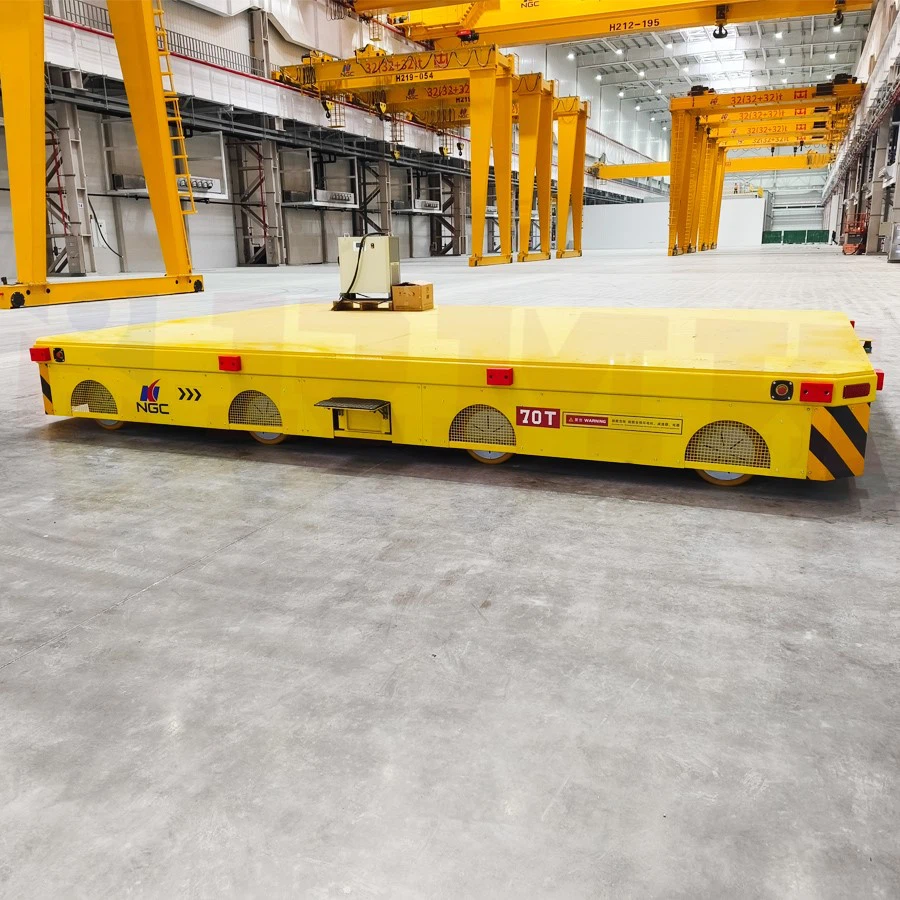
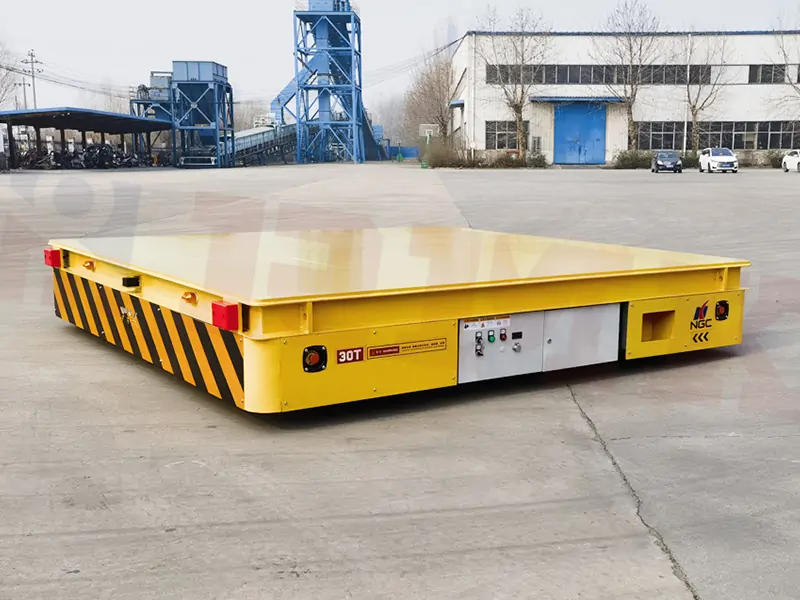
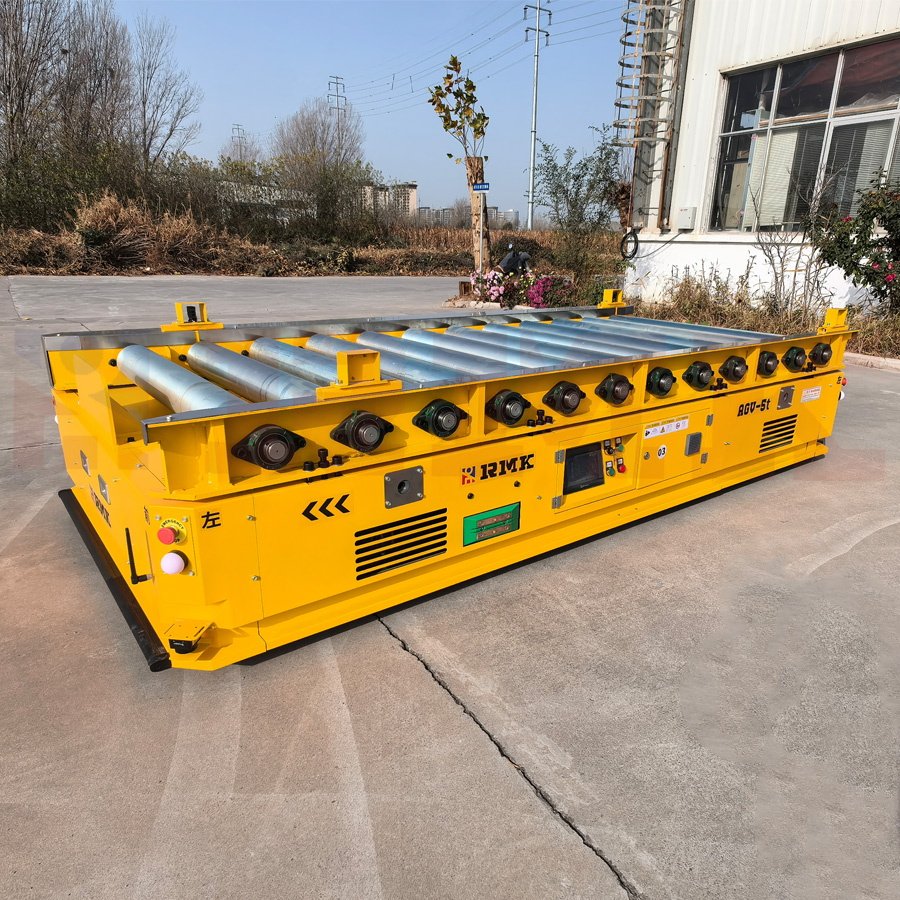
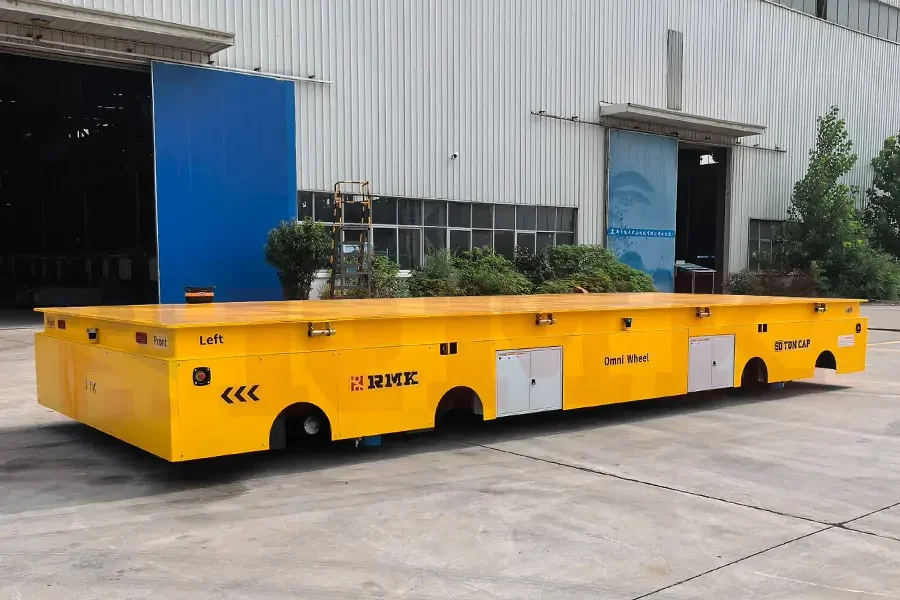
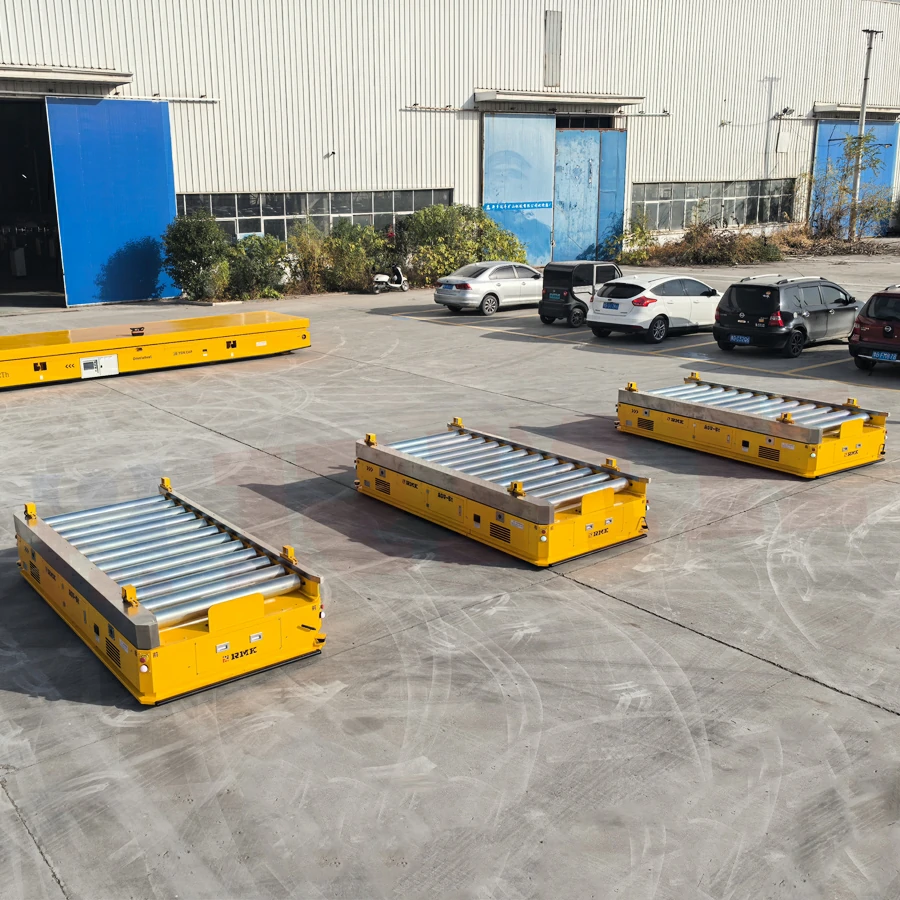
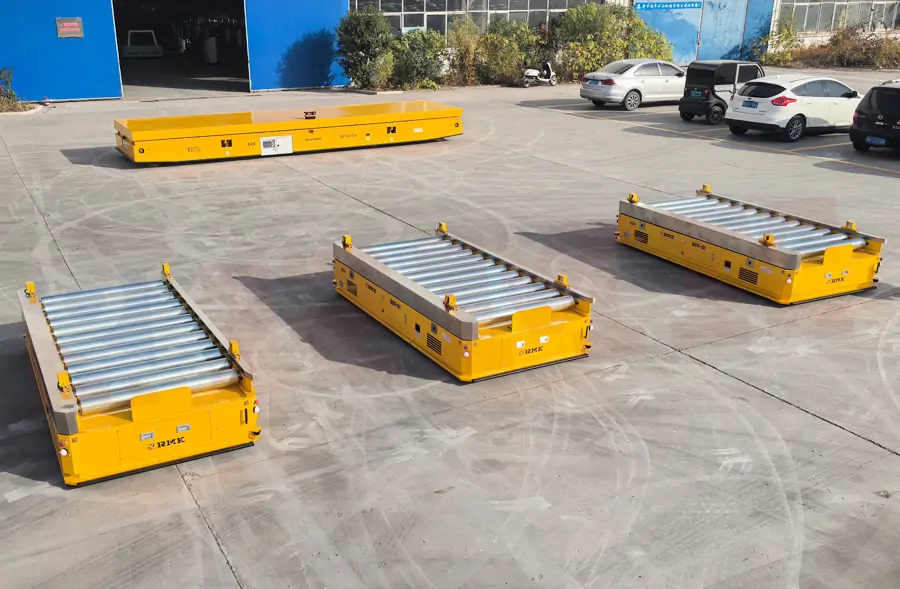
El carro de transferencia AGV de servicio pesado es un vehículo automatizado de manipulación de materiales para mover cargas pesadas y de gran tamaño entre líneas de producción, talleres, almacenes y estaciones de trabajo. Está diseñado para maquinaria, estructuras de acero, moldes, equipos y otras cargas industriales de gran tamaño.
REMARKABLE proporciona carros de transferencia AGV de servicio pesado con sistemas de navegación, posicionamiento y control automáticos. La capacidad de carga, el tamaño de la plataforma, el método de navegación, el sistema de propulsión y las funciones de control y seguridad se pueden configurar para diferentes tareas de manipulación de materiales.
- Capacidad de carga: 1–300 t
- · Velocidad de desplazamiento: 0–35 m/min
- · Navegación: Banda magnética / SLAM láser / Código QR / Control remoto
- · Precisión de posicionamiento: ±3 mm ~ ±10 mm
¿Qué es un carro de transferencia AGV de servicio pesado?
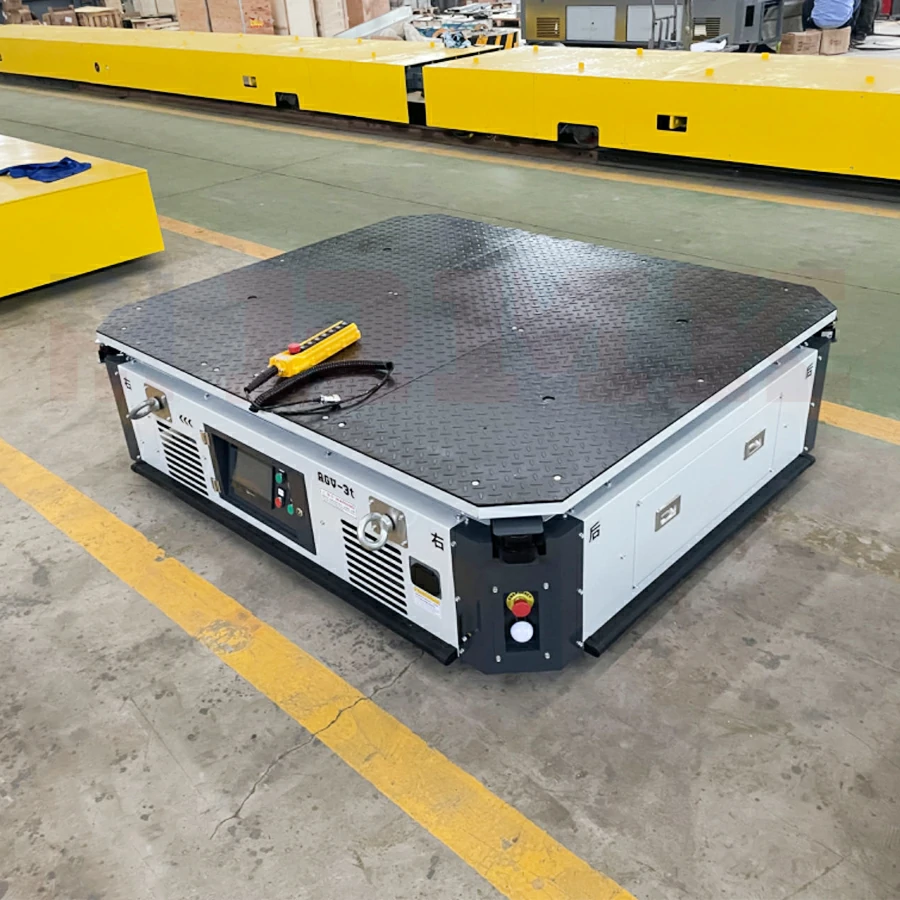
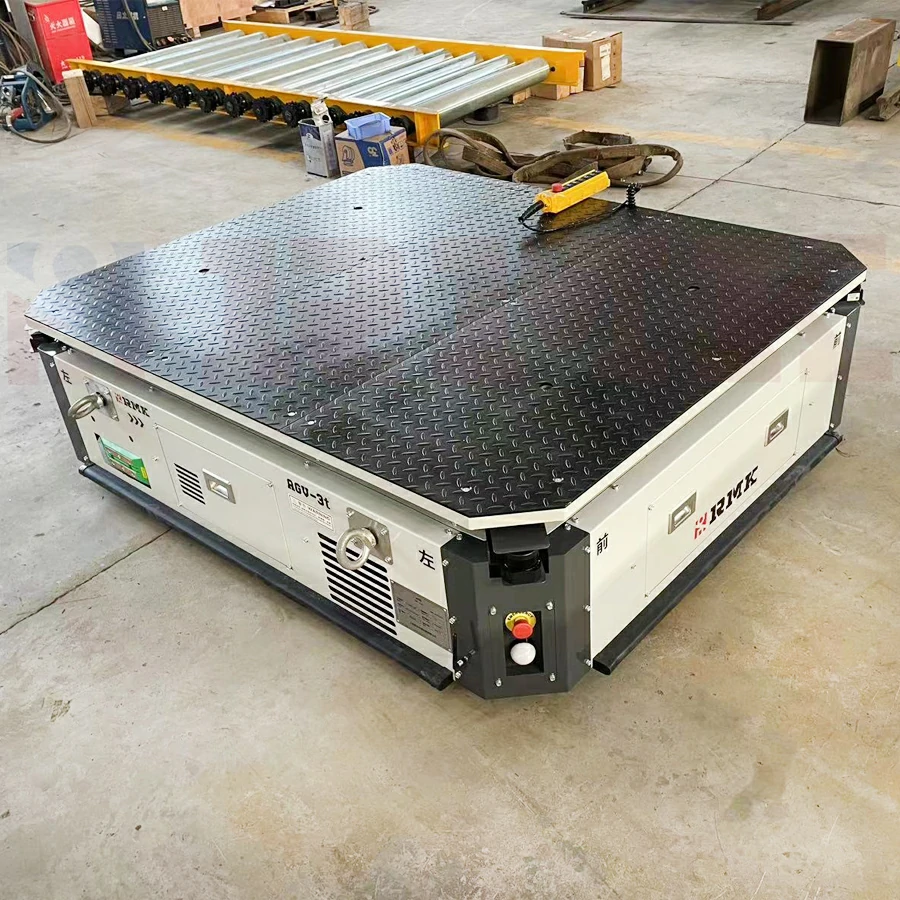
Un carro de transferencia AGV de servicio pesado es un vehículo automatizado alimentado por batería para mover cargas pesadas a lo largo de rutas definidas sin rieles fijos ni conductor. También se denomina carro de transferencia guiado automáticamente, plataforma AGV de servicio pesado o carro de transferencia guiado por láser. Utiliza un AGV sistema de navegación y control para mover materiales entre ubicaciones designadas.
El carro puede utilizar banda magnética, SLAM láser, código QR o navegación híbrida. Los codificadores, escáneres láser o sensores magnéticos proporcionan retroalimentación de posición para el control de ruta. La precisión de posicionamiento puede alcanzar ±10 mm, con acoplamiento punto a punto disponible para la transferencia automática de carga. Los sistemas de seguridad pueden incluir detección de obstáculos, dispositivos anticolisión y funciones de parada de emergencia.
El bastidor principal es una estructura de acero soldada diseñada para la carga nominal, con la batería y los componentes de propulsión montados en el chasis. La capacidad de carga varía de 1 a 300 t, con la velocidad de desplazamiento configurada para la aplicación. Los carros de transferencia AGV de servicio pesado se utilizan en talleres, almacenes, líneas de ensamblaje y acerías donde las rutas fijas requieren transporte automatizado de materiales sin instalación de rieles.
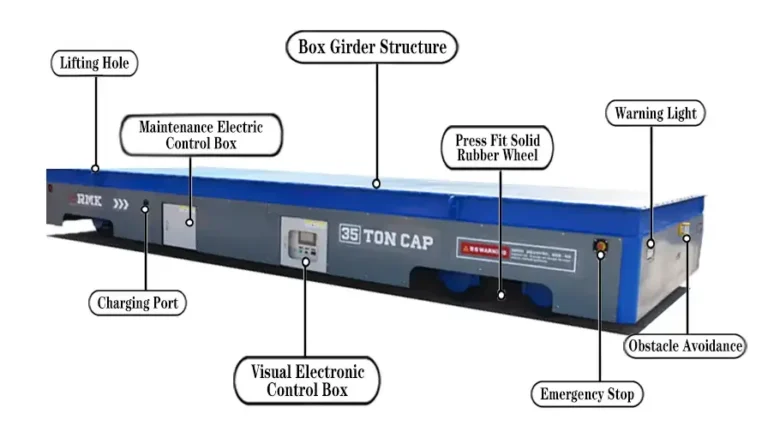
Partes del carro de transferencia AGV de servicio pesado
Un carro de transferencia AGV de servicio pesado consta de varios sistemas principales para soporte de carga, propulsión, navegación, control y seguridad. La configuración varía según la capacidad, el método de navegación y la aplicación.
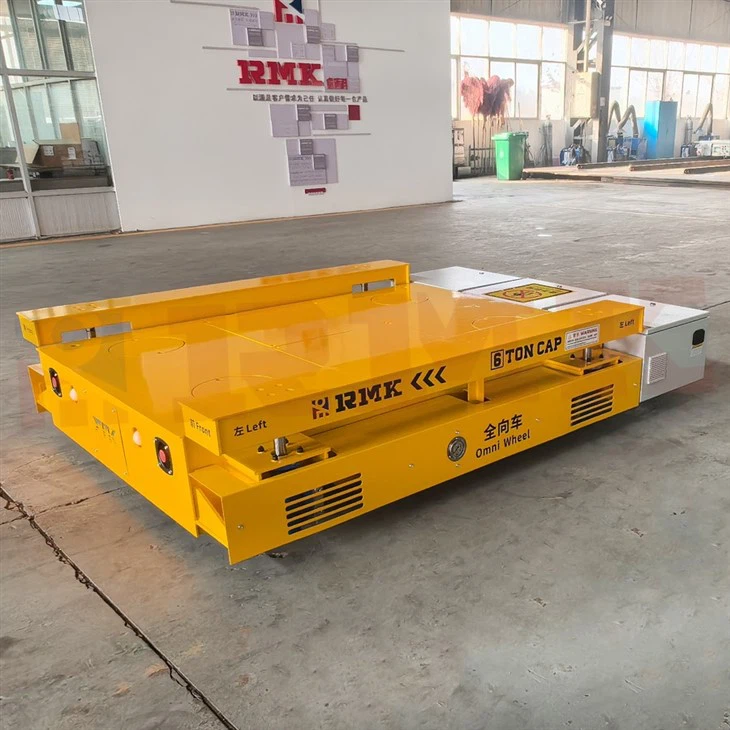
- Bastidor de acero: Soporta la carga y transporta los componentes principales del carro.
- Plataforma de carga: Proporciona la superficie para maquinaria, estructuras de acero y otras cargas pesadas.
- Sistema de propulsión: Impulsa las ruedas y controla el movimiento del carro.
- Sistema de dirección: Controla la dirección de desplazamiento y el giro.
- Sistema de batería: Suministra energía a los sistemas de propulsión y control.
- Sistema de navegación: Guía el carro a lo largo de la ruta programada.Sistema de control: Gestiona el desplazamiento, la dirección, el posicionamiento y los comandos de operación.
- Sistema de posicionamiento: Detecta la posición del carro para una parada y acoplamiento precisos.
- Sistema de seguridad: Incluye parada de emergencia, alarmas y detección de obstáculos.
- Ruedas y ejes: Soportan la carga y transfieren la fuerza motriz al suelo.
Estos componentes trabajan juntos para proporcionar transporte automatizado de cargas pesadas. REMARKABLE puede configurar la estructura, la propulsión, la navegación, el control y los sistemas de seguridad según la carga y el sitio de trabajo.
Especificaciones
| Parámetro | Especificación |
|---|---|
| Capacidad de carga | 1–300 t |
| Tamaño de la plataforma | Personalizado según la carga y las dimensiones de la mercancía |
| Velocidad de Desplazamiento | 0–35 m/min |
| Navegación | Banda magnética / SLAM láser / Código QR / Personalizado |
| Precisión de posicionamiento | ±3 mm ~ ±10 mm |
| Sistema de transmisión | Propulsión eléctrica con dirección personalizada |
| Fuente de Alimentación | Alimentado por batería |
| Modo de Control | Control automático / PLC / Control remoto inalámbrico |
| Sistema de seguridad | Parada de emergencia / Alarma / Detección de obstáculos |
| Funciones opcionales | Elevación hidráulica / Acoplamiento automático / Funciones especiales |
Nota: Las especificaciones anteriores son valores de referencia. REMARKABLE proporciona carros de transferencia AGV de servicio pesado personalizados según los requisitos de carga, las dimensiones de la plataforma, las rutas de transporte y las condiciones de trabajo. El sistema de navegación, la configuración de propulsión, la capacidad de la batería, el modo de control y las funciones especiales se pueden ajustar para diferentes aplicaciones industriales.
Principio de funcionamiento del carro de transferencia AGV de servicio pesado
Un carro de transferencia AGV de servicio pesado utiliza una batería a bordo, un sistema de propulsión eléctrica y un sistema de navegación automática para transportar cargas pesadas a lo largo de una ruta programada sin conductor. El controlador coordina la navegación, el movimiento, la dirección y el posicionamiento durante la operación.
- Fuente de Alimentación
La batería a bordo suministra energía a los motores de propulsión, al sistema de dirección y a los componentes de control. - Detección de ruta
El sistema de navegación identifica la ruta programada mediante banda magnética, SLAM láser, código QR o un método de guiado híbrido. - Propulsión y movimiento
El controlador envía comandos de movimiento a los motores de propulsión. El par motor se transmite a través del reductor de engranajes a las ruedas motrices, moviendo el carro a lo largo de la ruta. - Corrección de trayectoria
Los codificadores, escáneres láser o sensores magnéticos proporcionan retroalimentación de posición. El controlador ajusta la dirección de desplazamiento y la velocidad cuando el carro se desvía de la trayectoria programada. - Posicionamiento y acoplamiento
El carro reduce la velocidad y se detiene en la posición objetivo según la señal de posicionamiento. Se puede configurar para acoplamiento automático, carga, descarga o transferencia entre estaciones de trabajo.
Los sistemas de navegación y control permiten que un carro de transferencia AGV de servicio pesado localice su posición, siga una ruta definida y complete tareas de transporte con una intervención mínima del operador. El sistema se puede configurar según la disposición de la ruta, los requisitos de posicionamiento y el nivel de automatización requerido.
Opciones de navegación
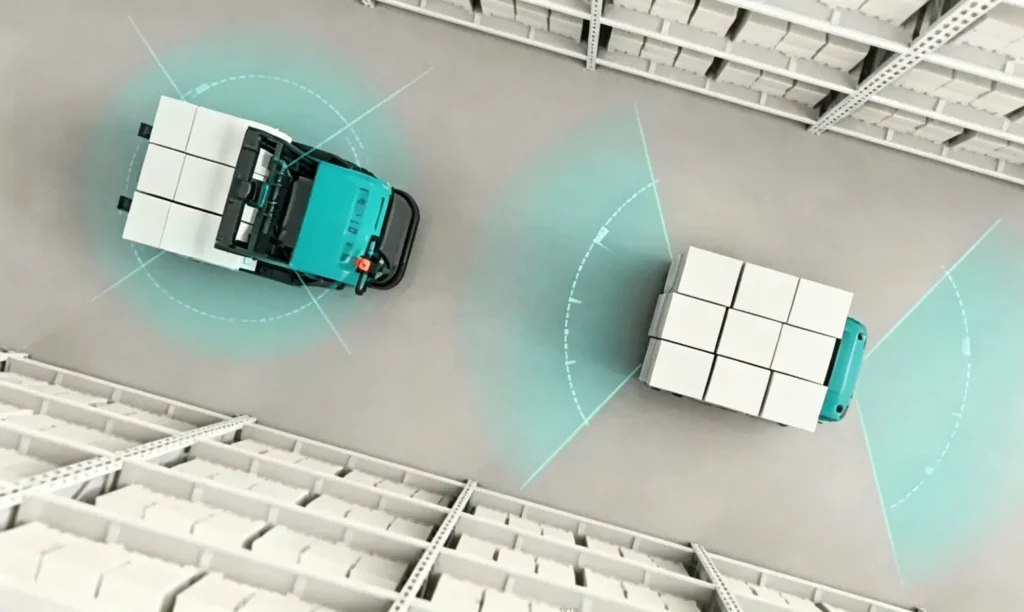
Navegación láser
Laser SLAM uses laser scanners to map and locate the cart without fixed floor tracks. It suits changing layouts and routes with multiple operating areas.
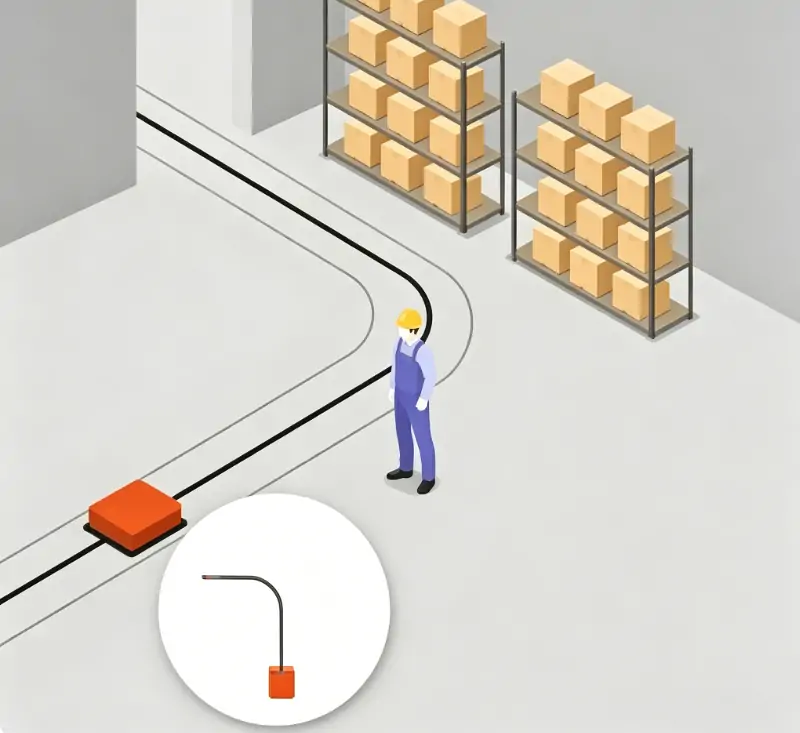
Navegación magnética
Magnetic strips installed on the floor guide the cart along a defined route. It suits fixed transport paths and repetitive material handling.
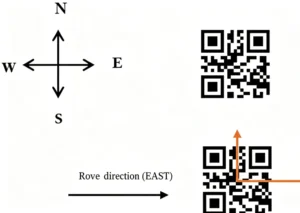
Navegación por Código QR
QR codes placed at designated points provide position references for route control and station docking. It suits applications that require defined stopping points and route changes.
Hybrid or site-specific navigation can be configured for complex routes, multiple workstations, or special operating conditions.
For detailed information on the differences between navigation systems and their settings, see: Sistema de Vehículo de Guiado Automatizado: Componentes, Principio de Funcionamiento y Aplicaciones
Opciones de control
- Navegación automática
The control system manages route following, speed, stopping, and docking according to programmed tasks. - PLC Control
PLC-based control handles drive commands, steering, safety interlocks, and operating status. - Control remoto inalámbrico
Wireless remote control allows operators to move the cart manually during commissioning, maintenance, or special operating conditions. - Upper-Level System Communication
The AGV can exchange task commands, position, and operating status with an upper-level control system where required.
Heavy Duty AGV Transfer Cart can be configured to communicate with production or warehouse management systems. System integration can support task assignment, transport scheduling, workstation docking, and status feedback for automated material handling.
Ventajas
Automated Material Transport
Moves heavy loads along programmed routes without a driver, reducing manual transport work.
Flexible Route Planning
Laser, magnetic, QR code, or hybrid navigation can be configured for different factory layouts and transport routes.
Accurate Positioning
Positioning systems support controlled stopping and docking at loading points, production stations, and unloading areas.
Manejo de cargas pesadas
Designed for transporting machinery, molds, steel structures, equipment, and other large industrial loads.
Sistema de navegación más complejo
Can exchange transport tasks and operating status with PLCs or upper-level production and warehouse systems.
Configurable Safety Systems
Emergency stop, obstacle detection, alarms, and other safety functions can be configured for the operating environment.
Aplicaciones
Heavy Duty AGV Transfer Carts automate the movement of heavy materials between production, storage, and assembly areas.
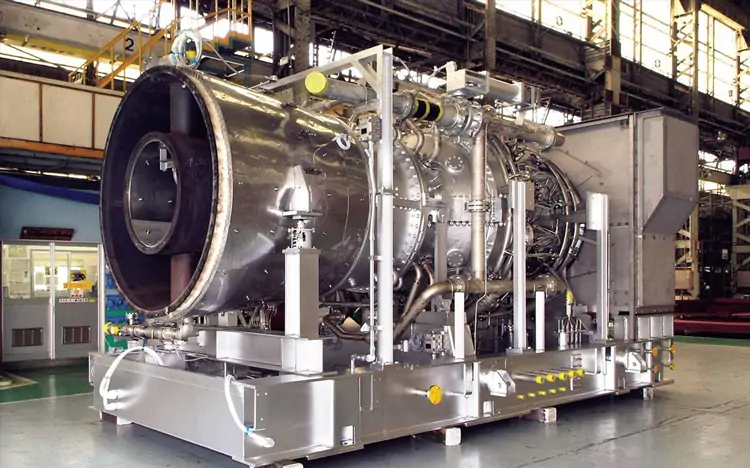
Fabricación de maquinaria
Transport machine bases, equipment parts, molds, and heavy components between workstations.

Fabricación de acero
Move steel structures, coils, plates, and fabricated components across production areas.

Fabricación de automóviles
Transport dies, body components, assemblies, and production tooling between process stations.

Warehousing
Move heavy materials between storage areas, loading points and production lines.
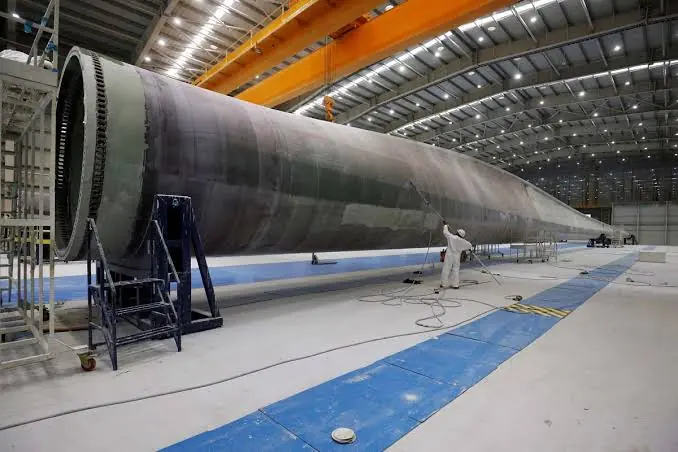
Equipos de Potencia
Transport transformers, generators and other large electrical equipment.
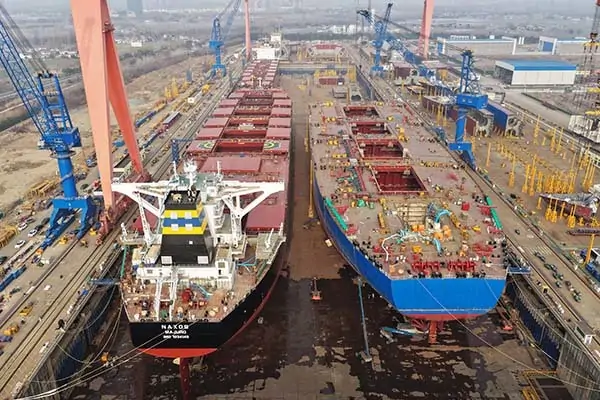
Construcción Naval
Move ship sections, steel panels, hull components, and oversized structures within shipyards.
For more details on application scope, see: Carro de Transferencia AGV de Plataforma Grande: Solución Ideal para el Manejo de Materiales Pesados y Sobredimensionados
Functions
- Automatic Navigation: Follows the programmed route and moves between designated stations without manual driving.
- Forward / Reverse Movement: Moves in both directions for flexible loading, unloading, and material transfer.
- Lateral Movement: Moves sideways for cross-line transfer and precise positioning in confined areas.
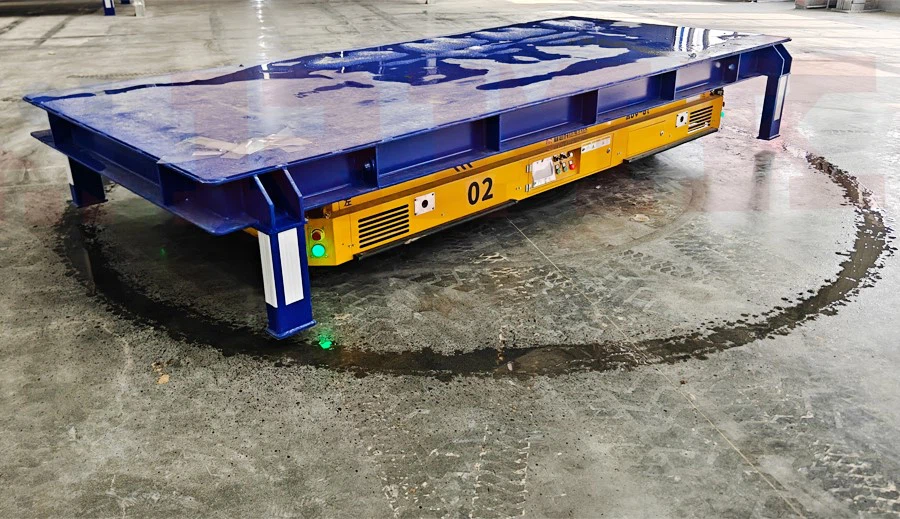
- 360° Rotation: Rotates within a defined area for applications with limited turning space.
- Hydraulic Lifting: Raises the load for height adjustment, workstation docking, or material transfer.
- Automatic Positioning: Stops at programmed positions for accurate loading, unloading, and station docking.
- Load Docking: Aligns with production lines, workstations, or transfer equipment for load handover.
- Obstacle Detection: Detects obstacles in the travel area and triggers controlled stopping or avoidance.
- Remote Control: Allows manual operation during commissioning, maintenance, or special transport tasks.
- Multi-AGV Coordination: Coordinates multiple AGVs for scheduled material transport and shared work areas.
How to Choose a Heavy Duty AGV Transfer Cart?
Selecting a Heavy Duty AGV Transfer Cart starts with the load, route, and automation requirements. The main specifications should match the actual material handling process and working environment.
1. Load Capacity — Confirm the maximum load weight, load distribution, and center of gravity. Select the cart capacity based on the heaviest transport task.
2. Platform Size — Measure the load length, width, and height. The platform should provide sufficient support and allow safe loading and unloading.
3. Travel Route — Define the travel distance, route width, turning areas, and station locations. The route determines the required navigation and steering configuration.
4. Navigation Method — Select magnetic stripe, laser SLAM, QR code, or a customized navigation system based on the floor layout and positioning requirements.
5. Positioning Accuracy — Define the stopping and docking accuracy required at production lines, workstations, or transfer stations.
6. Automation Level — Choose automatic operation, PLC control, remote control, or upper-level system communication based on the required workflow.
7. Working Environment — Consider floor conditions, temperature, humidity, dust, slopes, and other site conditions before finalizing the cart configuration.
8. Safety Requirements — Define obstacle detection, emergency stop, alarms, and other safety functions according to the traffic conditions and operating area.
REMARCABLE can configure the Heavy Duty AGV Transfer Cart according to load, cargo dimensions, route, automation level, and working conditions.
Selecting the right model requires a more comprehensive evaluation. For details, see: “¿Cómo elegir el carro de transferencia AGV adecuado?”
Heavy Duty AGV Transfer Cart vs. Trackless Transfer Cart
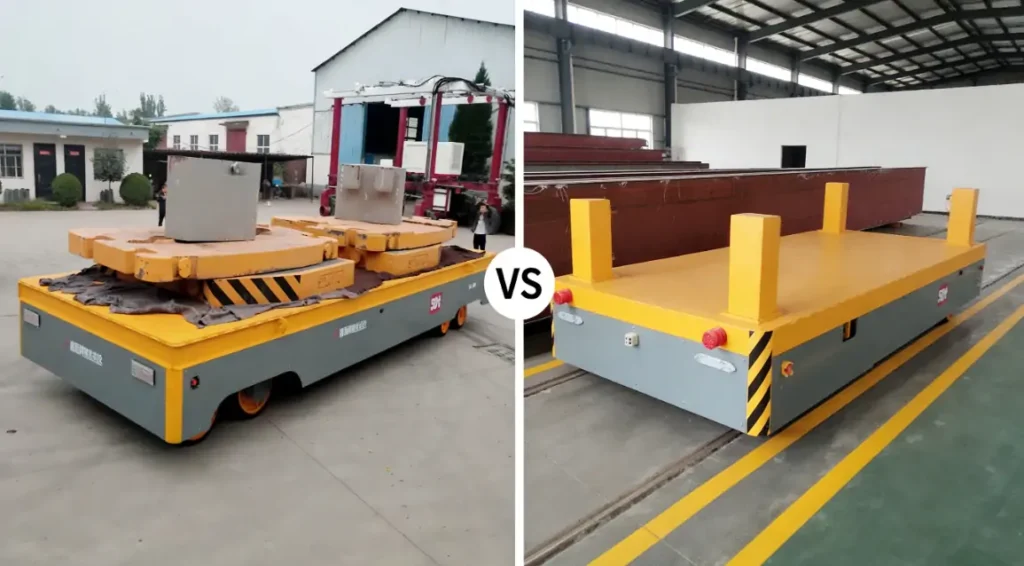
Heavy Duty AGV Transfer Cart and Carro de transferencia sin raíles both move heavy loads without fixed rails. The main difference is the level of navigation and automation.
| Comparación | Carro de transferencia AGV para cargas pesadas | Carro de transferencia sin raíles |
|---|---|---|
| Navegación | Laser SLAM, magnetic stripe, QR code, or other automatic navigation | Manual control by remote or handle |
| Ruta | Programmed route | Operator-controlled route |
| Posicionamiento | Automatic positioning and docking | Manual positioning |
| Automatización | Automatic transport between designated stations | Manual or remote-controlled operation |
| Integración del Sistema | Can connect with PLC or upper-level systems | Mainly operates as an independent cart |
| Lo mejor para | Repetitive routes and automated material handling | Flexible transport with direct operator control |
A Trackless Transfer Cart is suitable when flexible movement and manual control are the main requirements. A Heavy Duty AGV Transfer Cart is better suited to repetitive transport routes, automatic positioning, and higher-level material handling automation.
Casos
Heavy Duty AGV Transfer Cart Customization
REMARKABLE provides customized Heavy Duty AGV Transfer Carts for different loads, transport routes, and automation requirements. The cart can be configured around the cargo, working area, and material handling process.
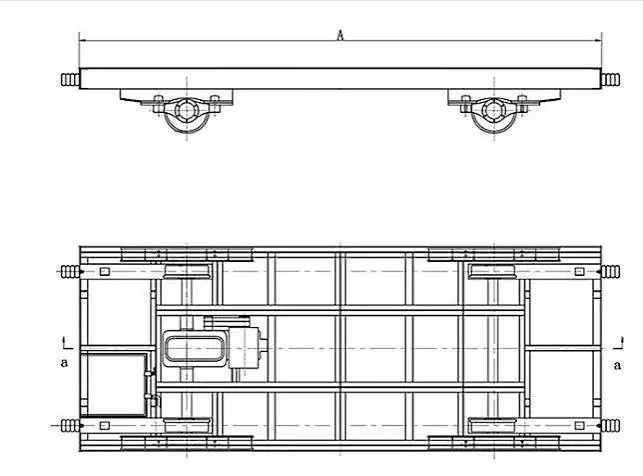
Customizable Configurations
- Load Capacity: 1–300 tons according to the transport load.
- Platform Size: Customized to cargo dimensions and load distribution.
- Navigation System: Magnetic stripe, laser SLAM, QR code, or hybrid navigation.
- Drive and Steering: Configured for load weight, floor conditions, and route layout.
- Travel Speed: Set according to travel distance and operating cycle.
- Control System: PLC, automatic control, wireless remote, or upper-level system communication.
- Positioning: Configured for workstation docking and material transfer accuracy.
- Safety System: Obstacle detection, emergency stop, alarms, and other site-specific functions.
- Optional Functions: Hydraulic lifting, lateral movement, 360° rotation and other functions for selected models.
Final configuration is based on load weight, cargo dimensions, floor conditions, travel route, positioning requirements, operating cycle, and automation level. REMARKABLE can develop the AGV transfer cart configuration around the actual material handling process.
For more information on customization, see the article: Carro de Transferencia Personalizado: Guía Completa de Diseño y Personalización
For details on the applications and maintenance of AGV transfer carts, read: “Heavy Load AGV – Structure, Usage, and Maintenance”
Heavy Duty AGV Transfer Cart Manufacturer and Supplier
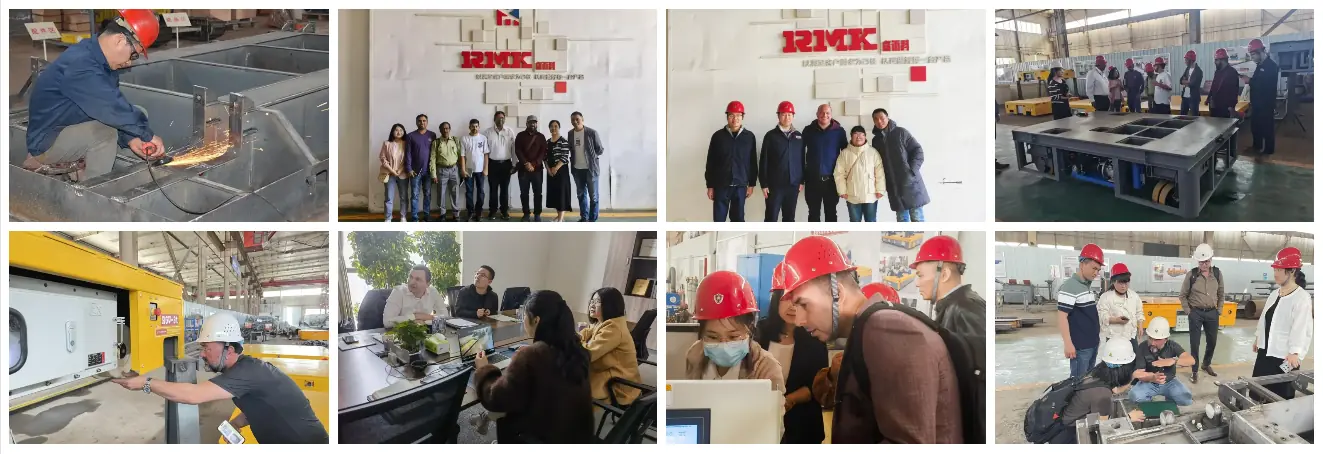
REMARCABLE is a manufacturer and supplier of Heavy Duty AGV Transfer Carts for industrial material handling. We provide custom engineering based on load type, platform dimensions, transport routes, and working conditions. Load and platform design, navigation methods, and control systems can be configured for machinery manufacturing, steel production, warehousing, automotive, and other industrial applications.
REMARKABLE supports overseas projects from engineering and production to delivery and installation guidance. Our team provides technical communication, project support, and after-sales service throughout the equipment lifecycle. Póngase en contacto con nosotros to discuss your AGV transfer cart requirements and develop a configuration for your application.
Artículos relacionados
Soluciones inteligentes de manipulación de materiales personalizadas
Para garantizar que un carro de traslado personalizado se adapte perfectamente a sus necesidades, facilítenos los siguientes datos:
- Capacidad de carga: _____ toneladas (1~500 toneladas)
- Tamaño de la mesa: _____ × _____ mm/m (por ejemplo, 1500×3000)
- Opciones de alimentación:
- ☐ Plomo-ácido ☐ Ión-litio ☐ Otros: _____
- ☐ Cable: _____V/_____A
- Estándar 380 V/50 Hz/3 fases
- Detalles de la carga:
- Tipo: _____ (por ejemplo, bobinas de acero, maquinaria)
- Necesidades especiales: _____ (por ejemplo, antideslizante, resistente a la corrosión)
- Características opcionales:
- ☐ Parada de emergencia ☐ Sensores anticolisión
- ☐ Guías de carril ☐ Mecanismo de elevación ☐ Mando a distancia
Solicitar presupuesto
PREGUNTAS FRECUENTES
What is a Heavy Duty AGV Transfer Cart?
A Heavy Duty AGV Transfer Cart is an automated vehicle for moving heavy loads between production lines, warehouses, and workstations. It uses automatic navigation, positioning, and control systems to follow programmed transport routes.
How does a Heavy Duty AGV Transfer Cart work?
The AGV uses a battery-powered drive system and navigation sensors to follow a programmed route. The control system manages movement, steering, positioning, and stopping based on navigation and position feedback.
How much weight can a Heavy Duty AGV carry?
Heavy Duty AGV Transfer Carts can be designed for different load requirements. REMARKABLE provides AGV transfer carts with capacities from 1 to 300 tons, with the final configuration based on the load and working conditions.
What navigation systems are used for AGV transfer carts?
AGV transfer carts can use laser SLAM, magnetic stripe, QR code, or hybrid navigation. The choice depends on the route layout, positioning requirements, and automation level of the material handling process.
Can a Heavy Duty AGV Transfer Cart move without rails?
Yes. A Heavy Duty AGV Transfer Cart can use a rail-less chassis with wheels, electric drive, and automatic navigation. It can move along programmed routes without fixed floor rails.
¿Se puede personalizar un carro de transferencia AGV?
Yes. The cart can be customized for load capacity, platform size, drive system, steering, navigation, control, positioning, and safety functions based on the application and working conditions.
Can an AGV transfer cart be integrated with a production line?
Yes. An AGV transfer cart can be configured to communicate with a PLC or upper-level control systems. This allows transport tasks, workstation docking and operating status to be coordinated with the production process.
What is the difference between an AGV transfer cart and a trackless transfer cart?
An AGV transfer cart uses automatic navigation and positioning for programmed transport. A Trackless Transfer Cart is mainly controlled by an operator. AGVs are suited to repetitive automated routes, while trackless carts offer direct operator control.