
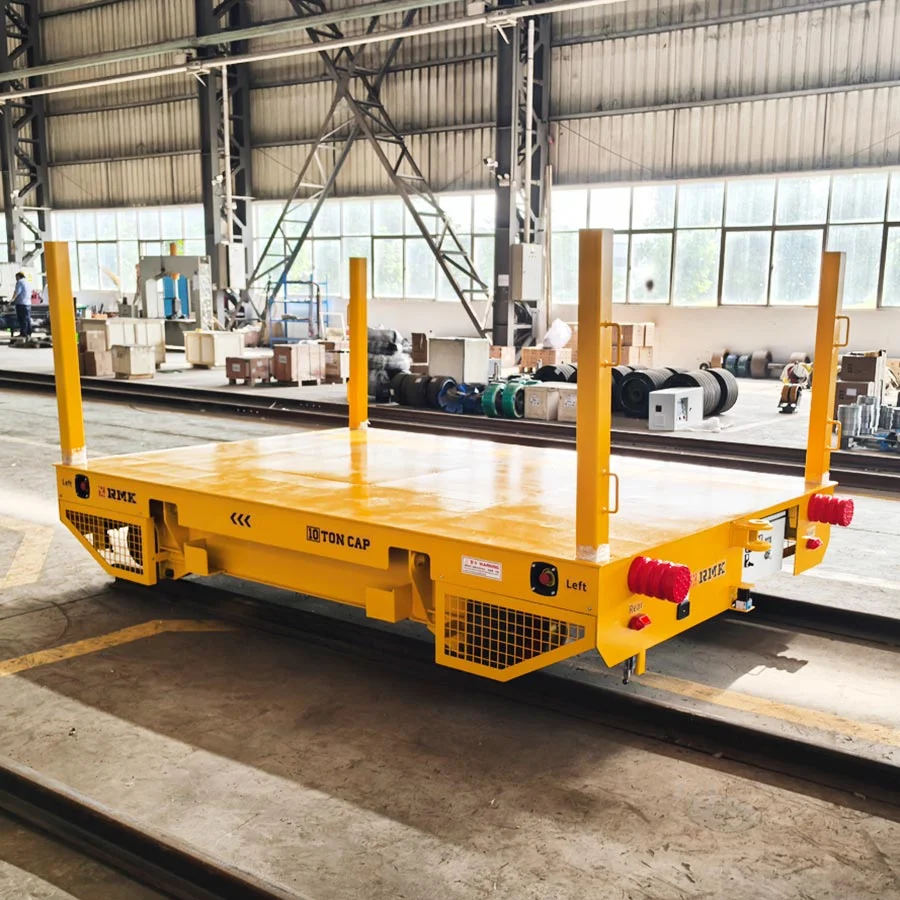
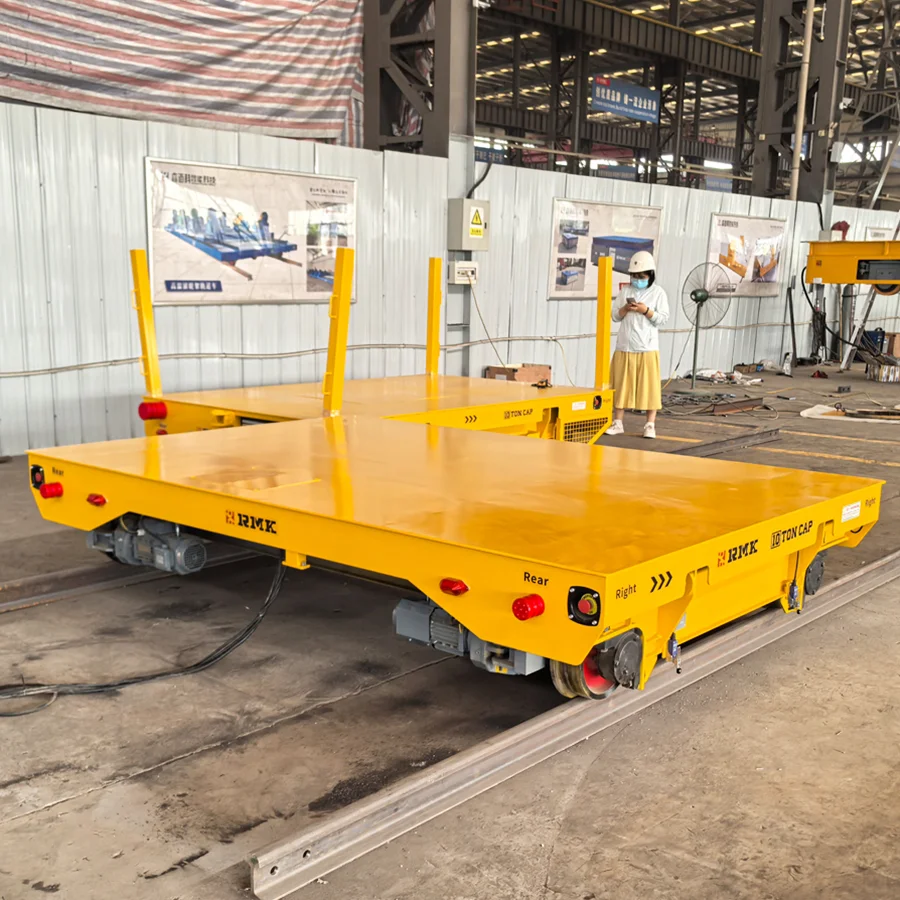
An Electric Rail Transfer Cart is designed to move heavy materials, machinery, molds, steel products, and industrial components along fixed rail tracks. Driven by an electric motor, it provides stable, controlled transportation between workshops, production lines, and storage areas. RMK supplies rail transfer carts for industrial loads ranging from 1 to 300 tons, with different power supply systems for short-distance, long-distance, and frequent transport operations.
- Load Capacity: 1–300 tons
- Power Supply: Low-Voltage Rail / Cable Reel / Trailing Cable / Battery
- Running Speed: Customized according to operating requirements
- Platform Dimensions: Customized to load size and handling requirements
Electric Rail Transfer Cart Overview
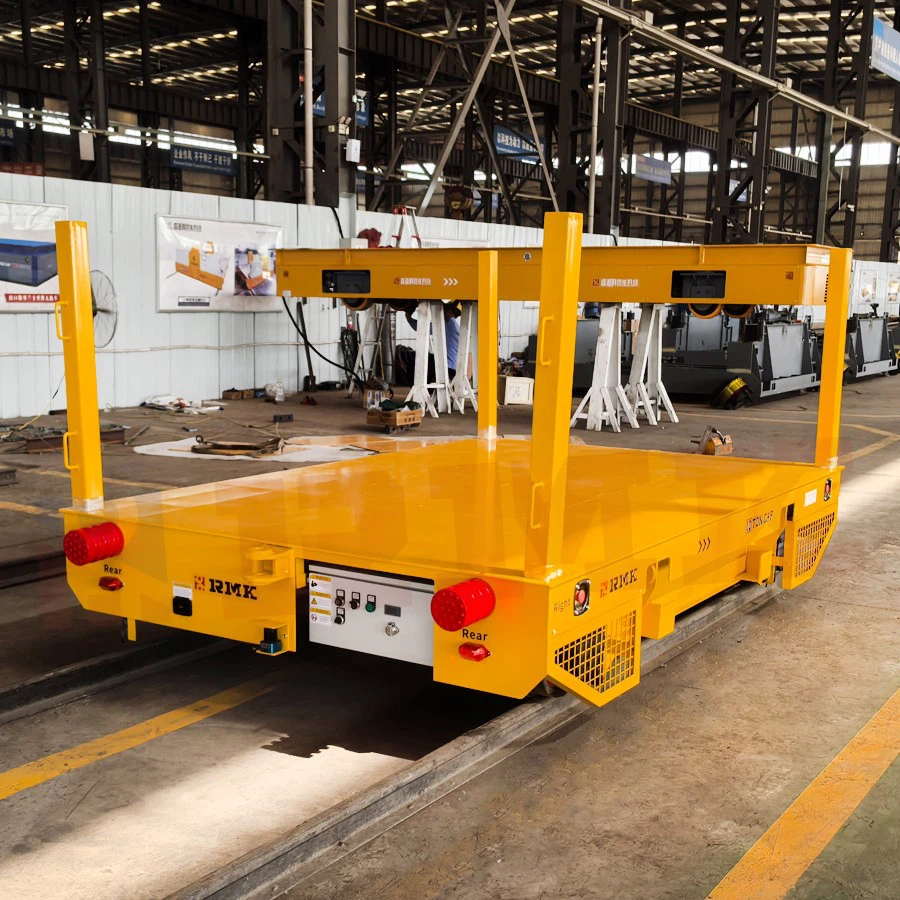
An Electric Rail Transfer Cart, also known as a rail transfer trolley, electric flat cart, or rail-mounted transfer vehicle, is a motor-driven industrial transport platform that runs along fixed steel rails. It is designed for horizontal movement of heavy materials, workpieces, molds, steel coils, and machinery between production areas, workshops, and warehouses. Load capacities range from 1 to 300 tons, depending on the cart design and operating requirements.
RMK electric rail transfer carts are available with low-voltage rail power, cable reel, trailing cable, or onboard battery systems. Each power option suits different track layouts, transport distances, and operating frequencies. The carts are used in steel mills, heavy machinery plants, metal fabrication workshops, automotive factories, and industrial warehouses.
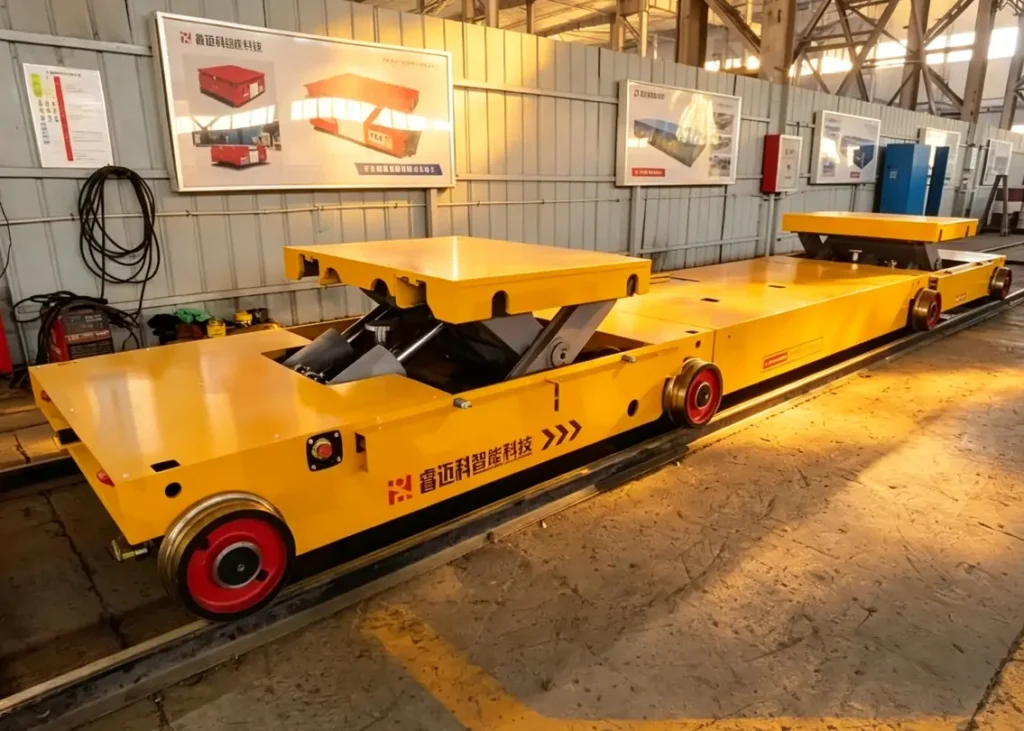
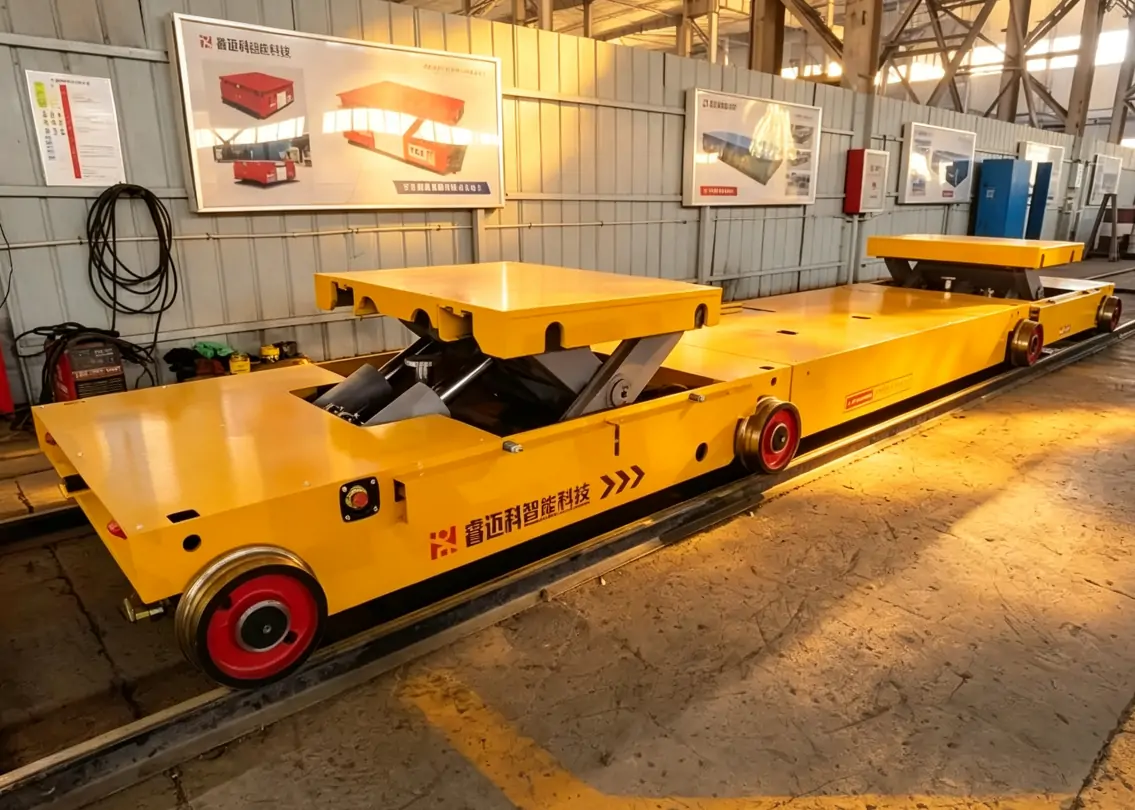
Platform dimensions, rail gauge, wheel configuration, drive system, and control mode can be customized according to load specifications and site conditions. Optional configurations include hydraulic lifting platforms, V-shaped supports, roller decks, clamping devices, and PLC-based automatic control for specialized material handling operations.
Electric Rail Transfer Cart Specifications
| Parameter | Reference configuration |
|---|---|
| Rated Load | 1–300 tons |
| Platform Length | 2,000–10,000 mm |
| Platform Width | 1,500–4,000 mm |
| Platform Height | 400–1,200 mm |
| Running Speed | 0–30 m/min |
| Drive Motor Power | 1.5–30 kW |
| Wheel Diameter | 250–700 mm |
| Wheel Quantity | 4–16 |
| Rail Gauge | 600–2,000 mm |
| Power Supply | Low-voltage rail, cable reel, trailing cable, battery |
| Drive System | Motor and gear reducer matched to the selected power system |
| Braking System | Electromagnetic brake |
| Control Mode | Pendant control, wireless remote control, PLC control |
| Travel Direction | Forward and reverse |
| Platform Structure | Flat deck, V-shaped support, roller deck, lifting platform |
| Safety Devices | Audible and visual alarms, emergency stop, limit switches; other devices by configuration |
| Operating Environment | Indoor workshops, warehouses, and designated outdoor industrial areas |
The actual parameters are calculated according to rated load, maximum wheel load, travel distance, rail arrangement, start-stop frequency, and operating environment. Special platform structures, positioning devices, and automatic control systems are specified according to the application.
Load Capacity and Model Selection
Load capacity is selected according to the maximum cargo weight, fixture weight, load distribution, and operating conditions. RMK specifies the frame, wheel arrangement, and drive system for the required duty. Available capacities and configurations are confirmed in the project proposal.
Which Power Supply Should You Choose?
An electric rail transfer cart can use low-voltage rail power, a cable reel, a trailing cable, or an onboard battery. Selection depends on the route, transport cycle, available electrical supply, and the space available for cables or charging. All four configurations run on fixed rails; the power source does not determine whether the cart can travel without tracks.

Low-Voltage Rail Power
Conductive rails supply electricity through onboard current collectors. See the low-voltage rail-powered transfer cart for installation and rail power considerations. This arrangement can suit frequent transfers where rail insulation and dedicated power feeds can be installed. Longer routes require an assessment of voltage drop, rail connections, and feed locations. Track drainage and access for cleaning and inspection should also be considered.
Cable Reel Power
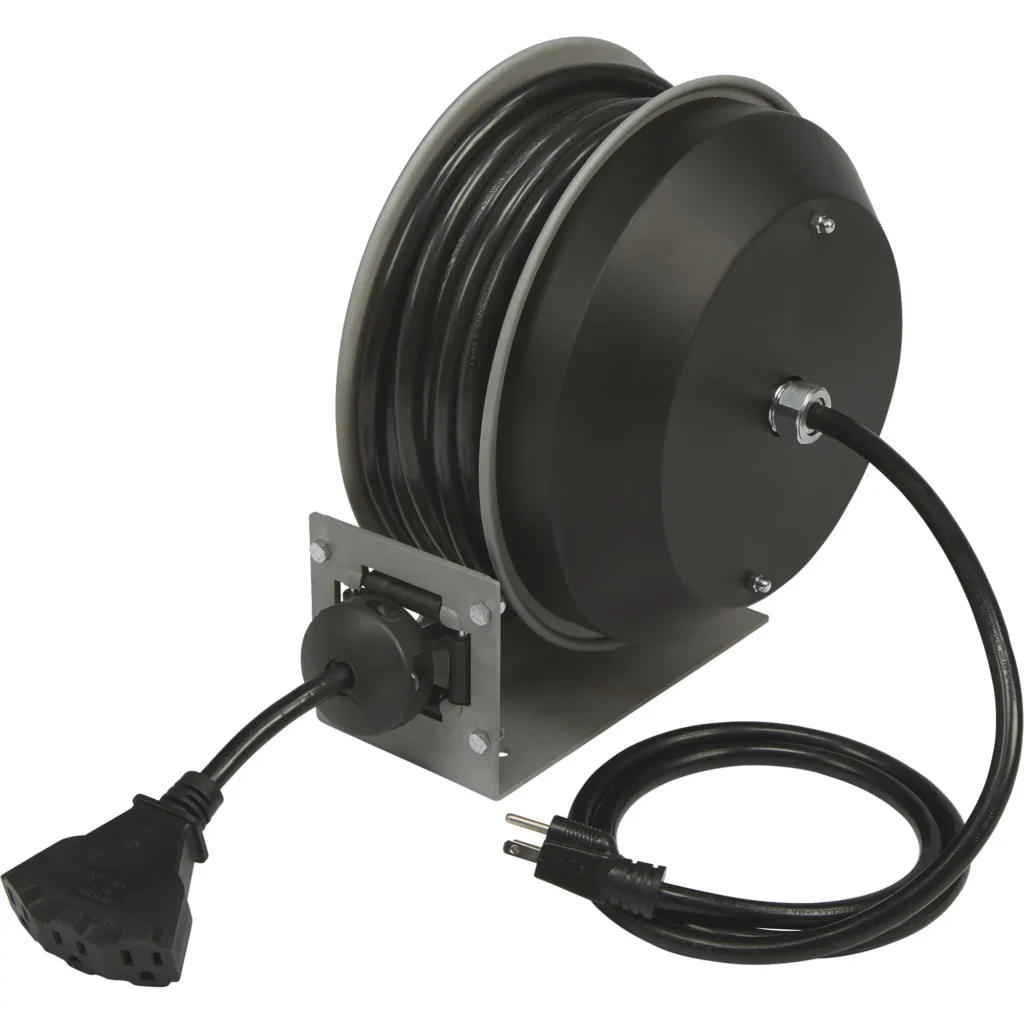
A flexible cable connects the cart to a fixed supply point, while an onboard reel manages payout and retrieval. See our cable transfer cart guide for the power connection and cable management arrangements. This option can suit fixed routes with a defined, protected cable path. Confirm the usable cable length, reel capacity, winding control, and clearance from workshop traffic. The working range must be checked against the actual routing and electrical load.
Trailing Cable Power
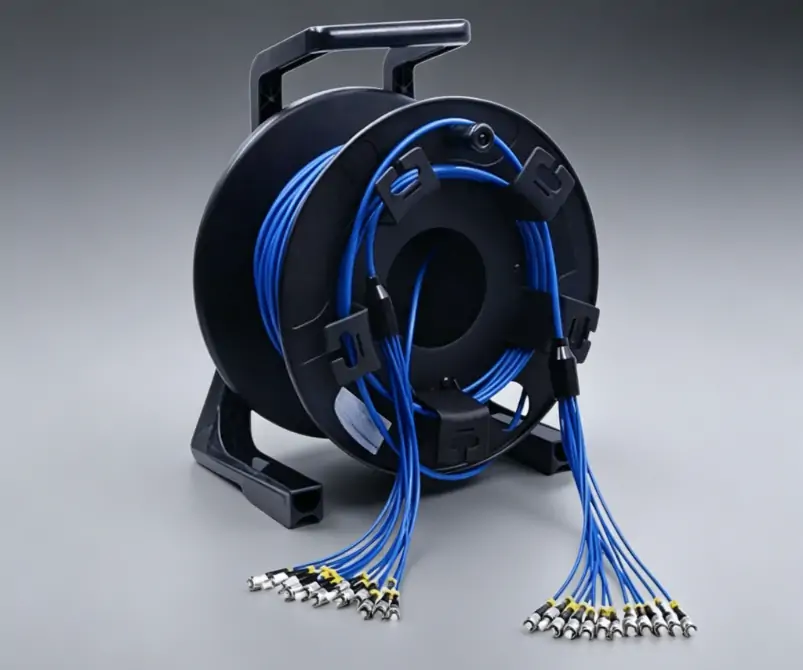
A flexible cable supplies the cart without an onboard winding reel. It can be a practical option for shorter routes where cable movement is easy to manage. The layout must protect the cable from wheels, sharp edges, and loading equipment, and prevent loose cable from obstructing traffic.
Battery Power
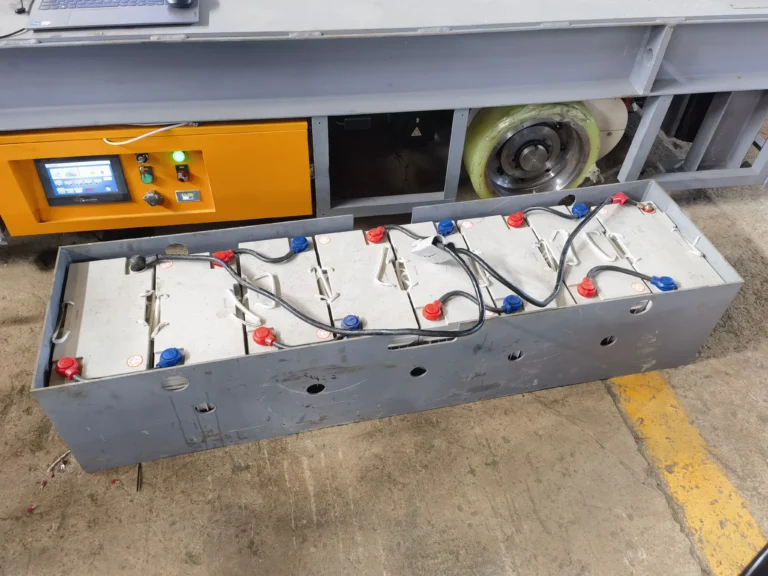
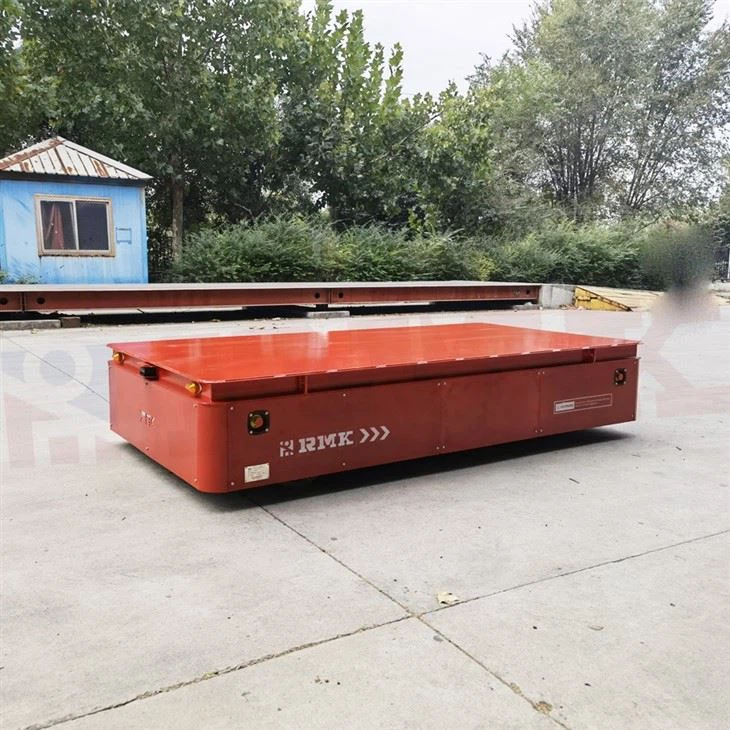
An onboard battery supplies the drive and controls without a traveling power cable or conductive rail supply. View a 20 ton battery powered rail transfer cart configuration. This can suit routes where cable handling or rail power installation is impractical, provided that charging fits the production schedule. Battery capacity should be selected using loaded and unloaded travel, transport frequency, and auxiliary power demand. Curved-track operation still depends on the wheel arrangement, wheelbase, and track geometry.
Before choosing a power source, review the complete operating cycle, maintenance access and site restrictions. A route serving several workstations does not by itself determine the best power option.
Structure and Working Principle of an Electric Rail Transfer Cart
An electric rail transfer cart consists of a load-bearing frame, rail wheels, drive system, power supply, electrical controls, and safety devices. Each component is selected according to the rated load, platform dimensions, rail specifications, and operating conditions.
Electrical power is supplied to the drive system through the selected power source. The motor drives the wheels along the fixed rails, moving the loaded platform between designated workstations.
Advantages of Electric Rail Transfer Carts
Load-Matched Steel Frame
Box-girder or welded steel structure designed for the rated load and platform dimensions.
Rail-Guided Load Support
Steel wheels configured according to wheel load, rail profile, and track gauge.
Electric Motor Drive
Electric motor, gear reducer, and transmission components for cart movement.
Choice of Power Supply
Conductive rail collectors, cable reel, trailing cable, or onboard battery, depending on the selected power source.
Controlled Travel and Braking
Controls starting, stopping, forward and reverse travel, speed adjustment, and braking.
Configurable Safety Protection
Emergency stop, audible and visual alarms, travel limit switches, and optional obstacle detection devices.
Industrial Applications of Electric Rail Transfer Carts
Electric rail transfer carts are used for heavy material movement between production lines, processing areas, assembly stations, and storage zones. Their load capacity, platform structure, and power supply are selected according to the materials and transport routes.
Heavy Machinery Manufacturing
Move large machine components, fabricated steel structures, equipment bases, and assembled parts between machining, welding, and assembly stations.

Warehousing & Logistics
Transfer heavy pallets, industrial materials, and oversized goods between receiving areas, storage zones, and dispatch stations along fixed rail routes.
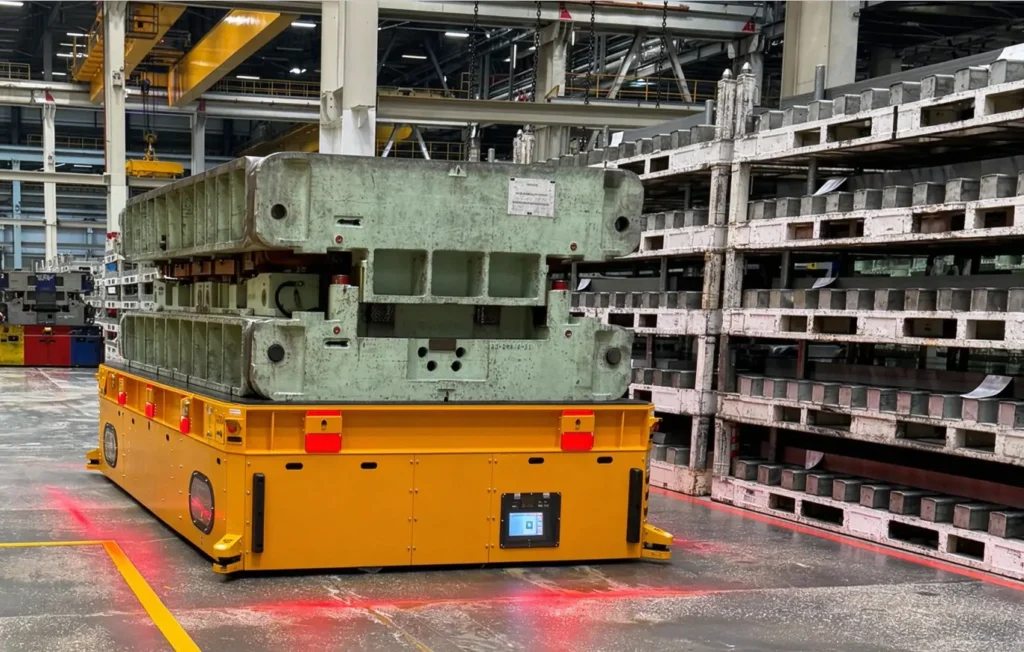
Mold & Die Workshops
Carry injection molds, stamping dies, casting molds, and large tooling between storage racks, presses, injection molding machines, and maintenance areas.
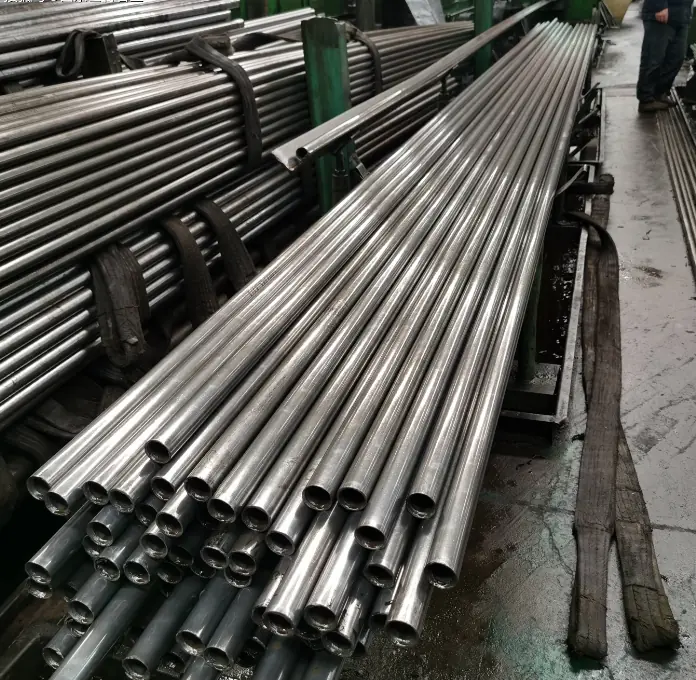
Steel & Metallurgy
Transport steel billets, plates, coils, slabs, and other metal materials between furnaces, rolling mills, processing lines, and storage areas.

Automotive Manufacturing
Transport vehicle frames, chassis components, engine assemblies, and production fixtures between manufacturing and assembly workstations.
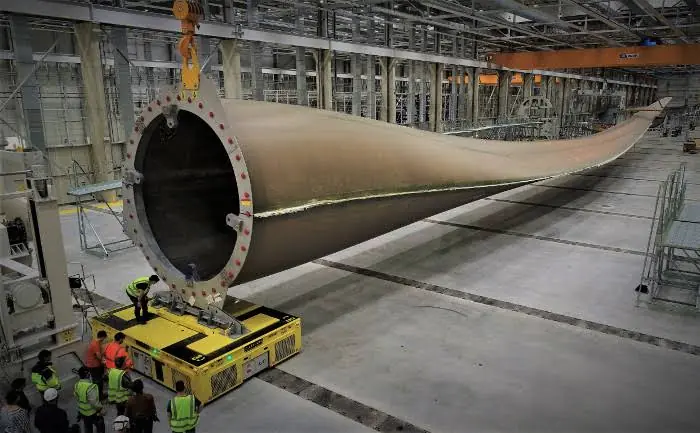
Energy & Heavy Equipment Manufacturing
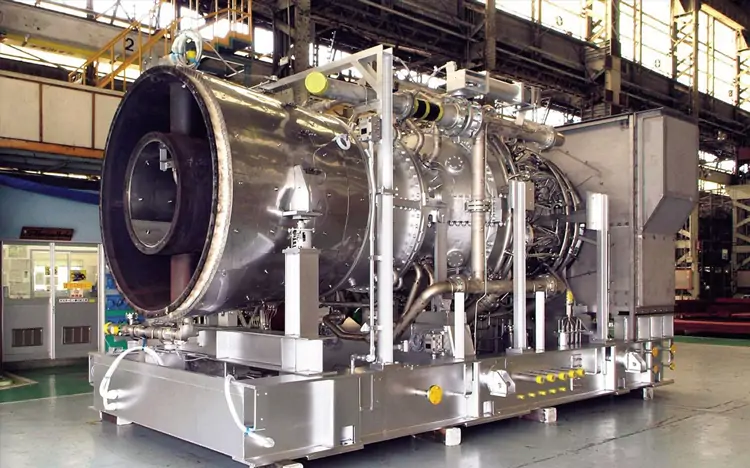
Move generator components, transformer parts, wind turbine sections, and large fabricated equipment between production, assembly, and testing areas.
Electric Rail Transfer Cart Project Examples
25 Ton Low-Voltage Rail Transfer Trolley for Weihua Group
- Application: Crane main girder handling
- Rated Capacity: 25 tons
- Power Supply: Low-voltage rail
- Controls: PLC, variable-frequency drive, and remote operation
- Additional Functions: Obstacle-response functions, positioning, and crane interlocking
The project called for frequent transfers, automated operation, and travel on curved tracks. View the Weihua Group project. Rail power supplied the trolley without a traveling cable. The control arrangement coordinated trolley positioning and movement with the crane handling process.
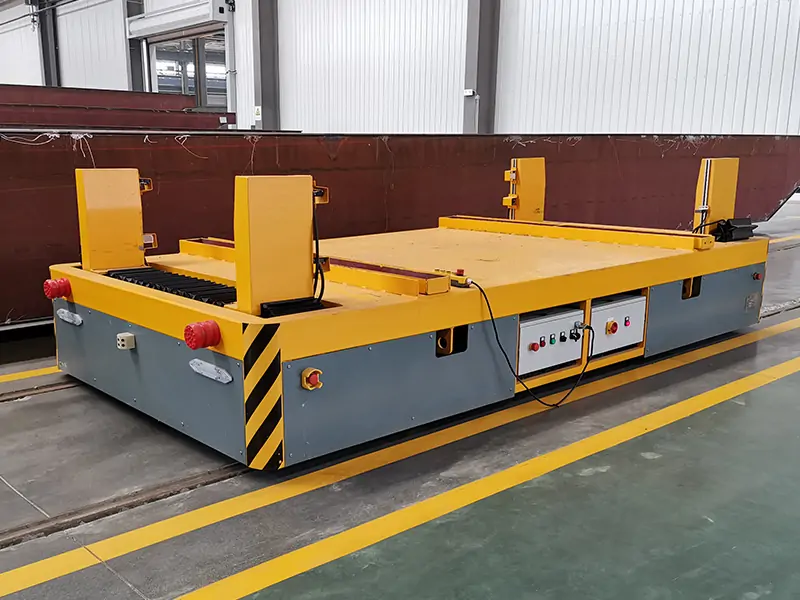

20 Ton Battery Rail Transfer Cart in Croatia
- Application: Steel plate and heavy material handling
- Rated Capacity: 20 tons
- Platform Dimensions: 6,000 x 2,200 x 700 mm
- Power Supply: Lead-acid battery
- Controls: Wireless remote and pendant control
- Rail Layout: Straight and curved sections, including S-shaped and U-shaped layouts
The workshop route served several workstations and included curved sections. View the Croatia battery rail cart project. Battery power removed the need to manage a trailing power cable. The wheel and frame arrangement was adapted to the specified curves and track geometry.
How to Select an Electric Rail Transfer Cart
Electric rail transfer cart selection starts with the load, track layout, and operating cycle. Review the following six factors before specifying the equipment.
- 1. Load Capacity: Confirm the maximum workpiece weight, individual load, and weight distribution. Check the rated capacity and maximum wheel load.
- 2. Platform Size: Determine platform length, width, and height according to workpiece dimensions, support points, and loading method.
- 3. Rail Layout: Specify rail gauge, rail profile, track length, turning radius, and foundation conditions.
- 4. Power Supply: Select low-voltage rail, cable reel, trailing cable, or battery power according to travel distance, operating frequency, and available power sources.
- 5. Operating Requirements: Define travel speed, start-stop frequency, positioning accuracy, and control mode.
- 6. Working Environment: Identify ambient temperature, dust, humidity, explosion protection requirements, and other site-specific conditions.
For existing rail systems, provide track drawings and rail specifications for compatibility checks. New installations require coordinated assessment of the cart, rails, and supporting foundation. Our rail transfer cart selection guide covers the load, route and operating conditions to review before ordering.
Existing Track Compatibility
An electric rail transfer cart can operate on existing tracks after the rail system, wheel arrangement, and load conditions have been checked. Track gauge alone is not sufficient for compatibility assessment.
Rail Gauge and Profile: Check the distance between rails, rail section, head width, and wheel-to-rail contact.
Curve Radius: Verify minimum curve radius, track transitions, and wheelbase compatibility.
Wheel Load: Calculate maximum wheel load under the actual load distribution and compare it with rail and foundation capacity.
Track Foundation: Inspect rail alignment, levelness, fastening, settlement, and foundation condition.
Running Clearance: Check platform overhang, surrounding equipment, columns, doors, and loading areas.
Track Layout: Confirm straight sections, curves, branches, crossings, and total travel distance.
Provide existing track drawings, rail specifications, gauge measurements, curve radius, foundation details, and workshop layout. Load weight, platform dimensions, operating speed, and transport frequency are also required for the compatibility review.
Custom Electric Rail Transfer Cart Solutions
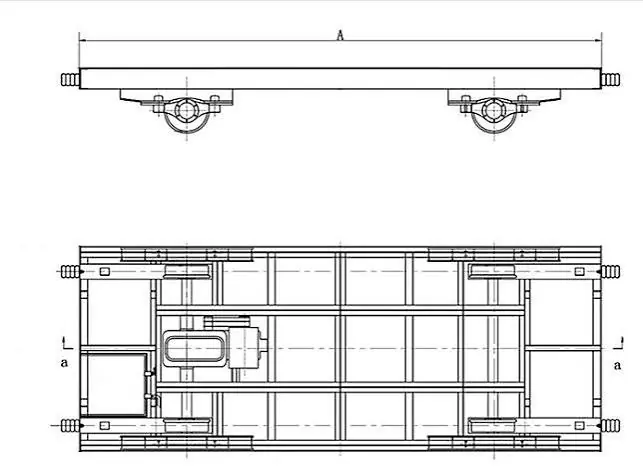
RMK designs electric rail transfer carts according to workpiece weight, load dimensions, track conditions, transport routes, and production cycles. We specify the mechanical structure, drive components, power supply, and control systems for each project.
- Load Capacity: Frame strength and wheel arrangement based on rated load, workpiece weight, and load distribution.
- Platform Dimensions: Customized length, width, height, deck structure, and loading surface.
- Rail Gauge & Wheel Configuration: Wheel diameter, quantity, material, and running clearance matched to rail gauge, rail profile, and wheel load.
- Power Supply: Low-voltage rail, cable reel, trailing cable, or onboard battery.
- Drive System: Motor power, gear reducer, drive arrangement, and travel speed selected according to load and operating cycle.
- Control System: Pendant control, wireless remote control, or PLC-based operation.
- Functional Attachments: Hydraulic lifting platforms, V-shaped supports, roller decks, clamping devices, and positioning mechanisms.
- Safety Configuration: Braking systems, emergency stops, audible and visual alarms, travel limit switches, and optional obstacle detection.
- Operating Conditions: Design considerations for indoor or outdoor use, floor and rail conditions, ambient temperature, and operating frequency.
The above items are project-specific design options. They are not included in every standard model. Final configurations are confirmed against technical requirements and site conditions.
Pricing Factors and Scope of Supply
The price of an electric rail transfer cart is determined by its load capacity, mechanical structure, power supply, and project-specific functions. See the electric transfer cart price guide for how these choices affect equipment and operating costs.
Cart Structure: Rated load, platform dimensions, frame design, wheel quantity, and drive configuration.
Power Supply: Low-voltage rail equipment, cable reel, cable specifications, battery capacity, and charging system.
Control System: Pendant control, wireless remote, PLC, variable-frequency drive, and automatic positioning.
Functional Attachments: Hydraulic lifting, V-shaped supports, roller decks, clamping devices, and positioning mechanisms.
Safety Configuration: Braking system, alarms, limit switches, and obstacle detection.
Project Conditions: Rail layout, operating environment, installation requirements, and delivery location.
Scope of Supply and Project Responsibilities
The quotation should clearly distinguish equipment supply from supporting infrastructure and site work.
| Scope Item | Items to Confirm |
|---|---|
| Transfer Cart | Cart structure, drive system, power system, controls, and specified accessories |
| Rail System | Rail supply, installation, fastening, and electrical insulation |
| Power Infrastructure | Transformer, feeder cables, power connections, and distribution equipment |
| Civil Works | Track foundation, trenches, drainage, and floor modifications |
| Installation & Commissioning | Equipment installation, electrical connection, testing, and operator training |
| Transportation | Export packing, inland transport, international freight, and destination charges |
The quotation should state which items are included in RMK’s supply and which are provided by the customer or local contractor. Installation, commissioning, and after-sales service should follow the agreed project scope and contract.
Electric Rail Transfer Cart Manufacturer and Supplier
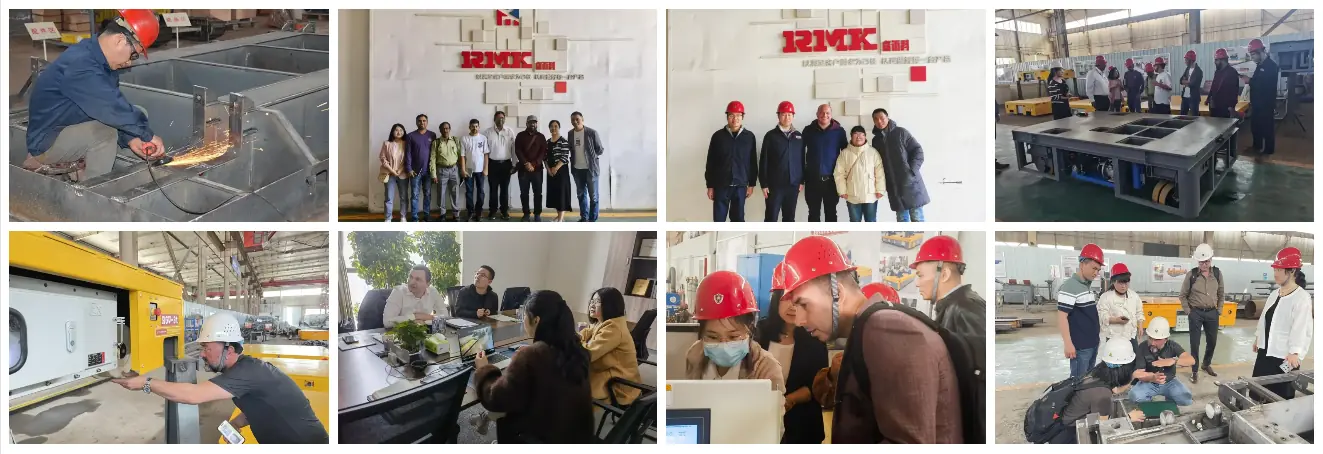
RMK manufactures industrial transfer carts with rated capacities from 1 to 300 tons. Engineering and manufacturing cover cart structure, drive systems, power supply, and control configurations. Each project is specified according to load requirements, rail conditions, transport routes, and operating cycles. RMK provides technical consultation, equipment production, export coordination, and after-sales technical support according to project requirements and contract terms.
Contact RMK to discuss your Electric Rail Transfer Cart requirements and request a technical proposal. Send us the workpiece weight and dimensions, rail gauge and profile, transport distance, operating frequency, and site layout. Our engineering team will review the application and provide a suitable equipment configuration and quotation.
FAQ
What is an electric rail transfer cart used for?
An electric rail transfer cart moves heavy materials, machinery, molds, steel products, and industrial components along fixed steel rails. It is widely used in workshops, steel plants, warehouses, and production lines.
What is the load capacity of an electric rail transfer cart?
RMK electric rail transfer carts cover rated capacities from 1 to 300 tons. The required capacity is determined by the maximum workpiece weight, load distribution, and additional fixtures carried on the platform.
What power supply options are available for electric rail transfer carts?
Four power options are available: low-voltage rail power, cable reel, trailing cable, and onboard battery. Selection depends on track length, travel distance, operating frequency, and workshop power conditions.
What is the difference between a battery-powered rail transfer cart and a low-voltage rail-powered transfer cart?
Both run on fixed rails. A battery-powered cart uses an onboard battery and requires planned charging. A low-voltage rail-powered cart collects electricity from conductive rails. Selection depends on the operating cycle, charging opportunities and site installation requirements.
How fast does an electric rail transfer cart travel?
Running speed is selected according to the rated load, track conditions, stopping requirements and operating cycle. The technical proposal specifies the running speed and any adjustable range for the selected configuration.
Can an electric rail transfer cart operate on existing rails?
Yes, if checks confirm that the rails, foundation and clearances are suitable for the proposed cart and load. Track drawings and site measurements are required before the design is finalized.
How much does an electric rail transfer cart cost?
A project quotation is based on the cargo, platform dimensions, power supply, controls and required functions. Provide the operating requirements and delivery location, and confirm whether rails, site work, installation and transport are included when comparing prices.
Can an electric rail transfer cart be customized for specific industrial applications?
Yes. Custom options include platform dimensions, load capacity, wheel configuration, power supply, hydraulic lifting, V-shaped supports, clamping devices, and PLC control. The design follows workpiece specifications and site operating conditions.
Related Rail Transfer Cart Articles

Discuss Your Transfer Cart Requirements
Send the cargo weight and dimensions, rail layout, travel distance, operating cycle, and available power supply. RMK can review the application and prepare a configuration and quotation with a defined scope of supply.
- Load: Cargo and fixture weights, dimensions, and load positions
- Track: Rail gauge, profile, route length and curve radii
- Duty: Trips per shift, travel speed and stopping requirements
- Site: Available power, loading method and working environment