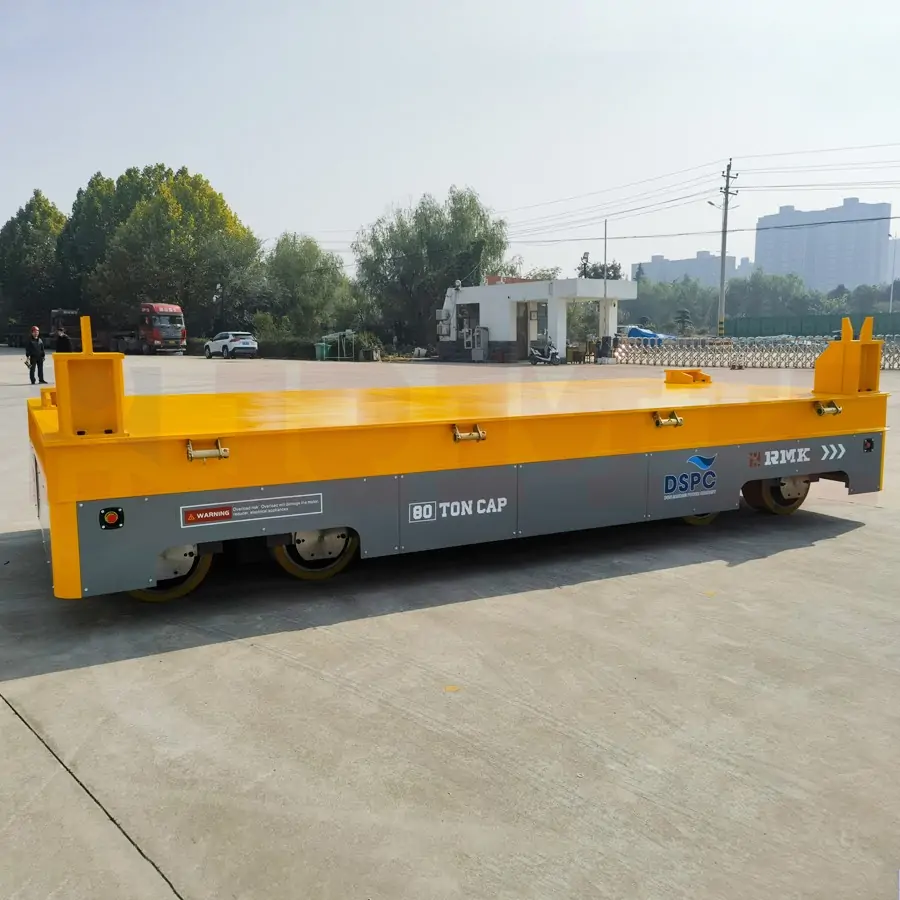
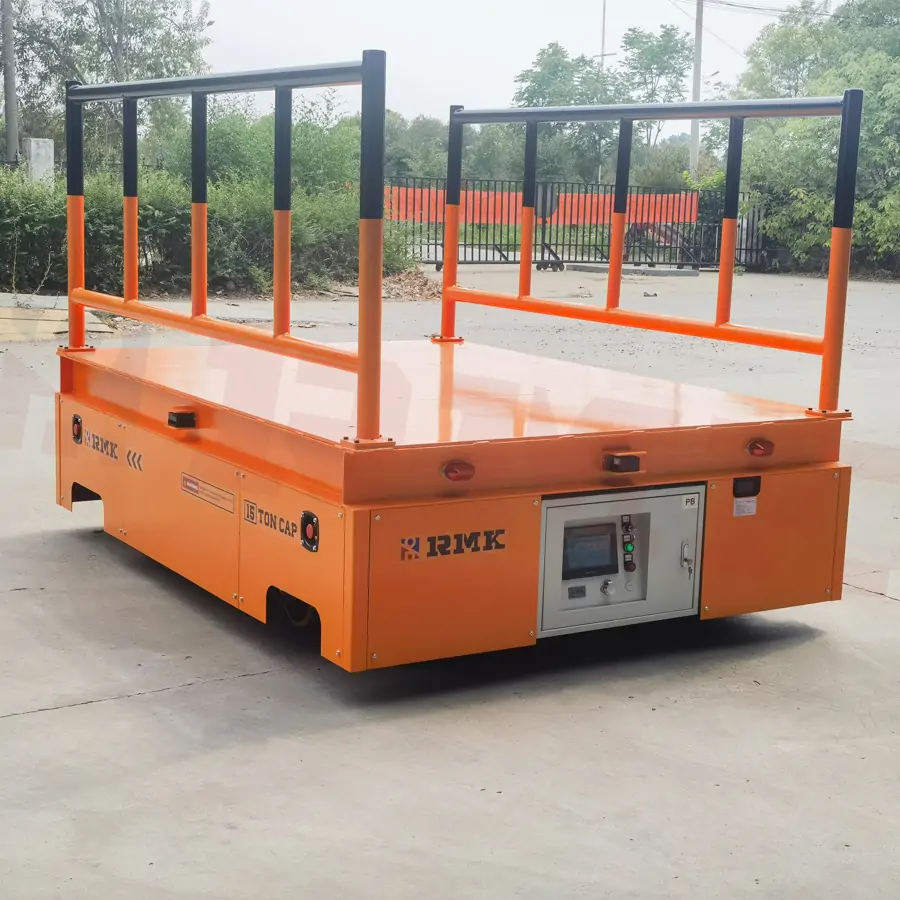
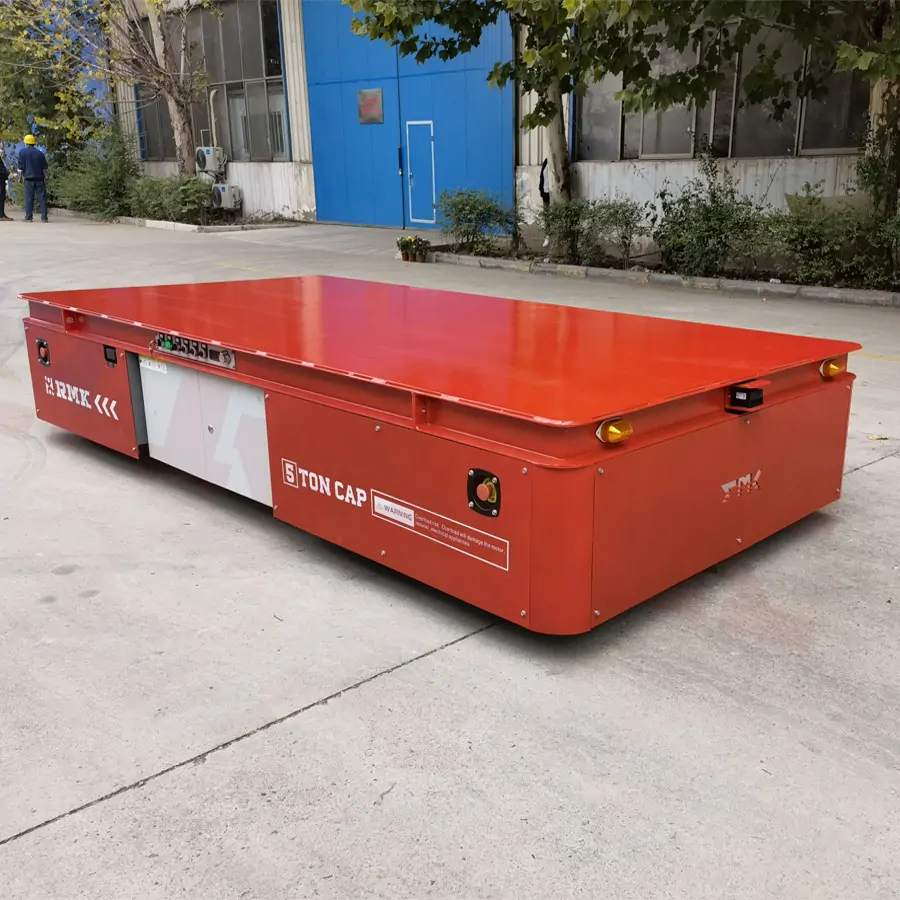
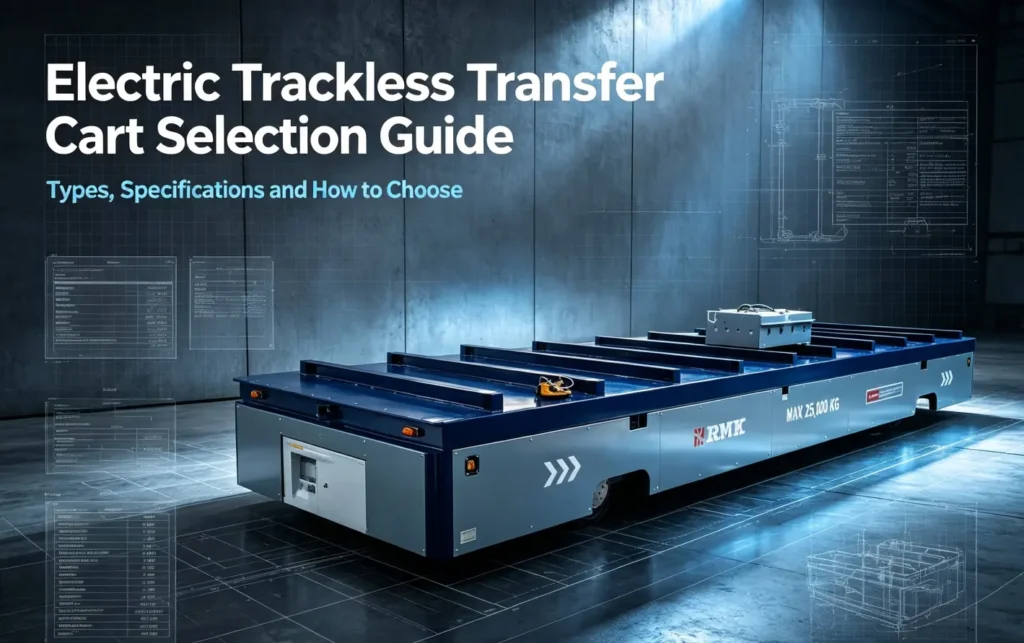
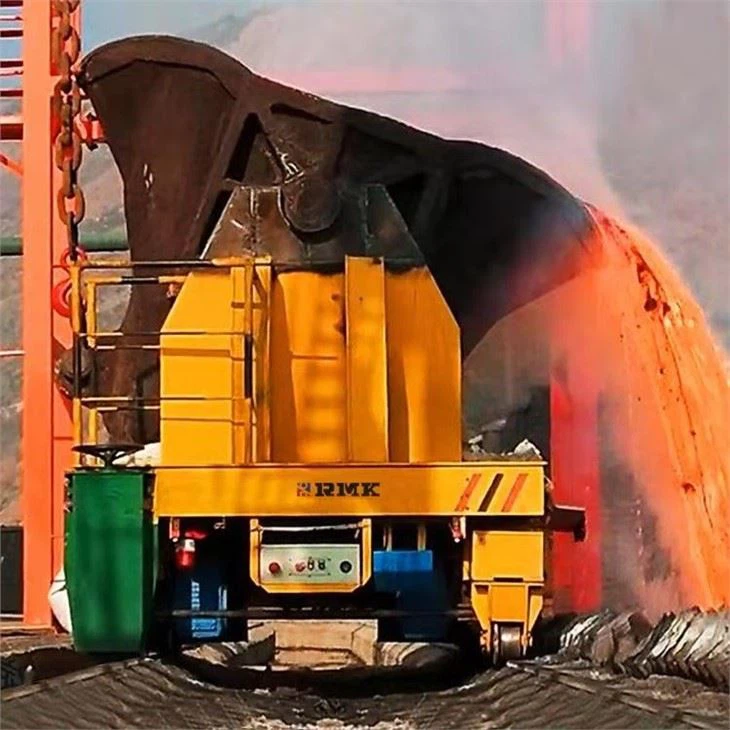
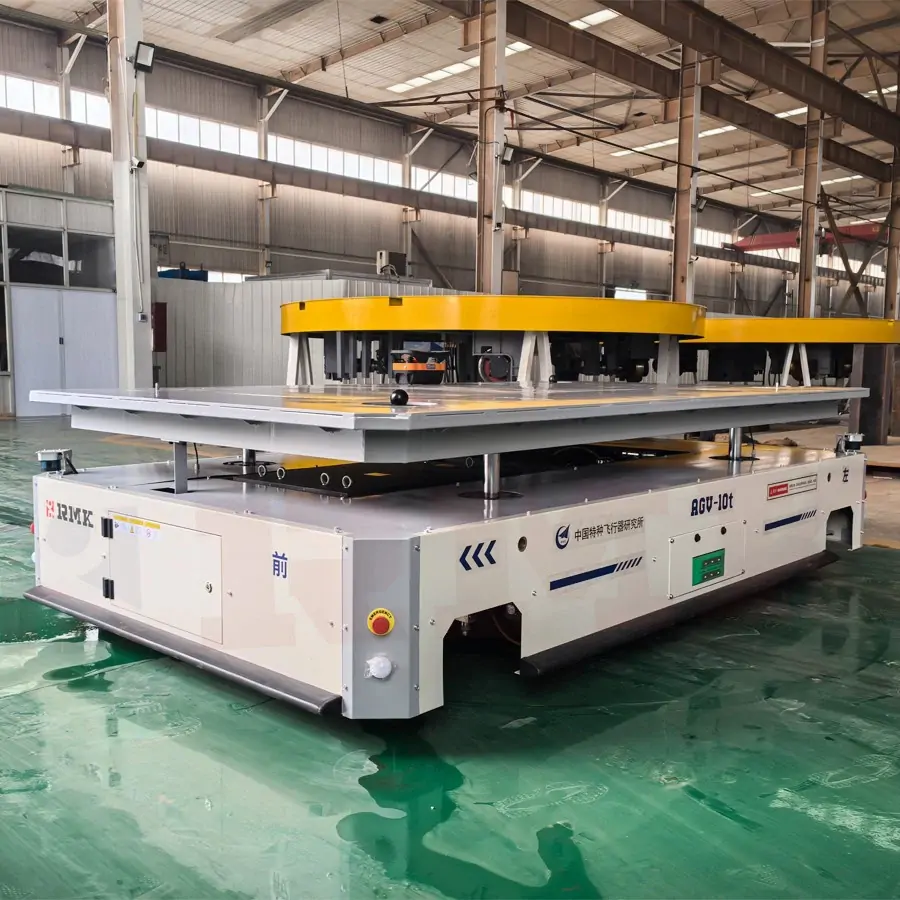
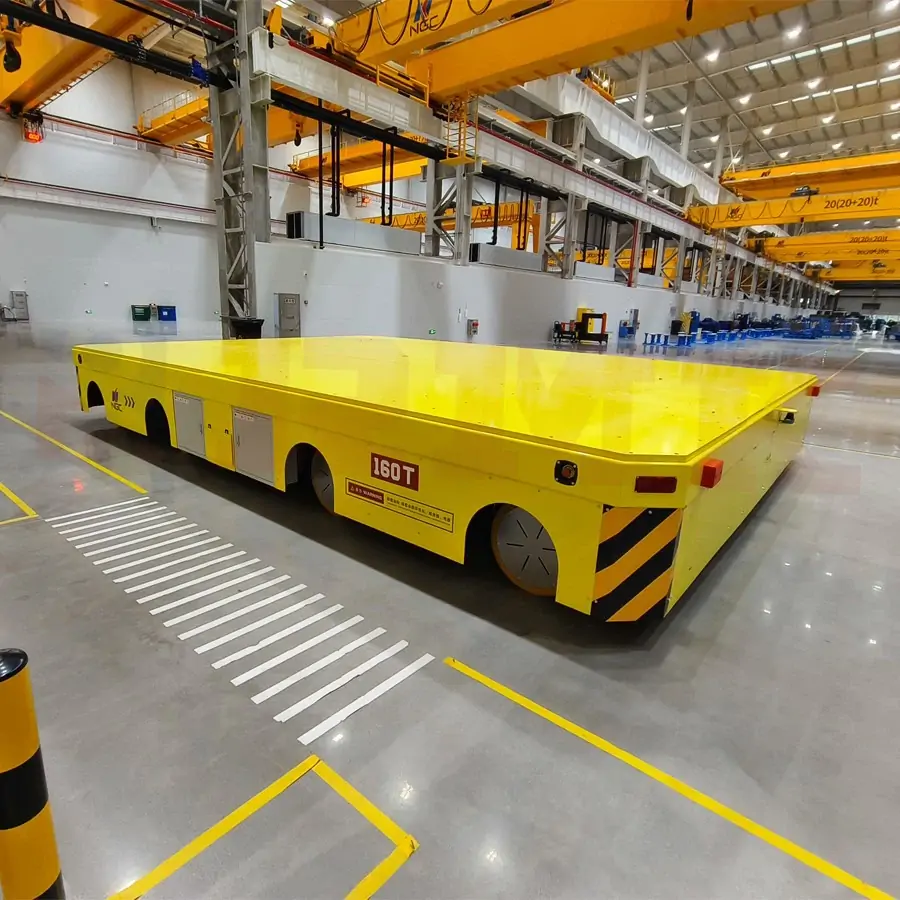
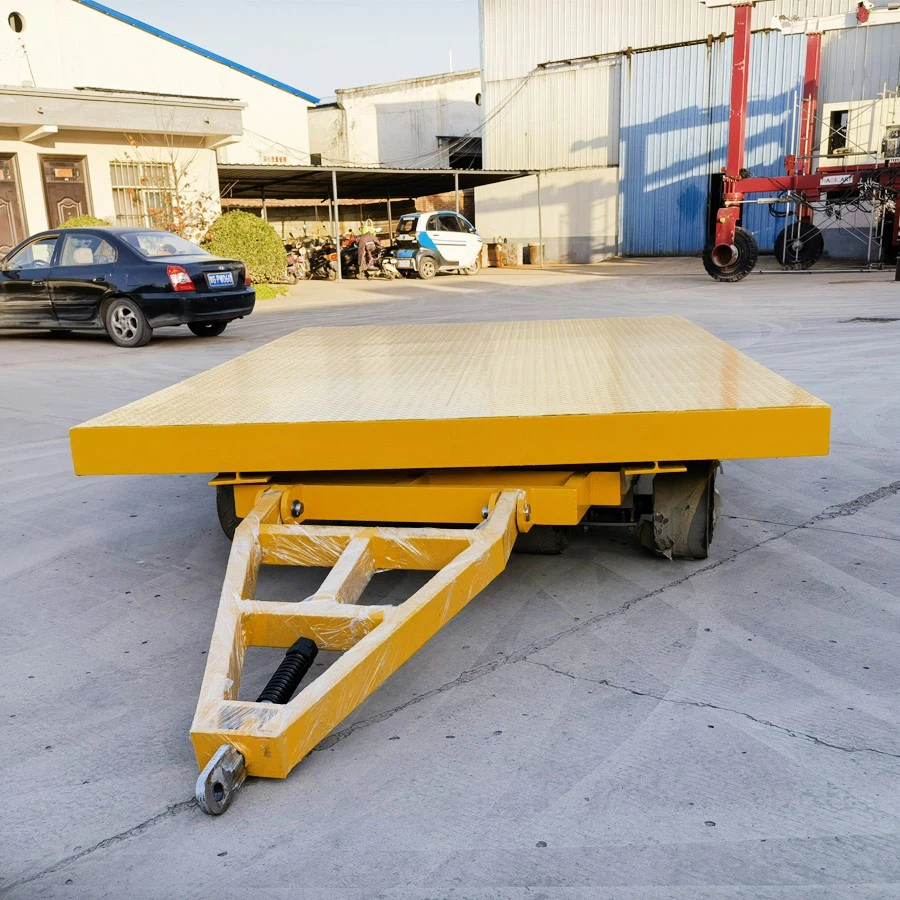
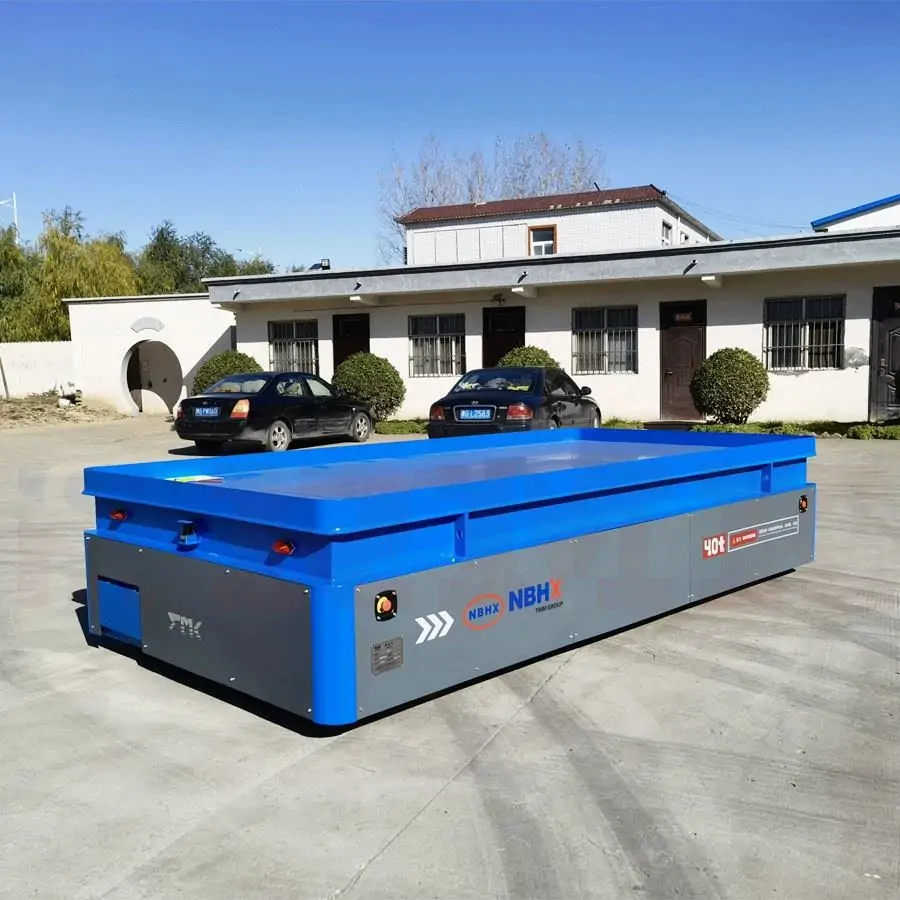
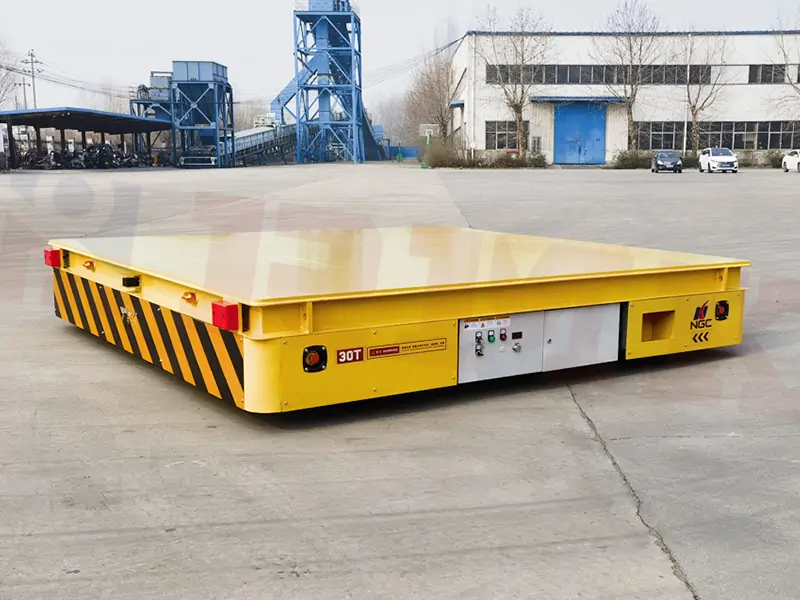
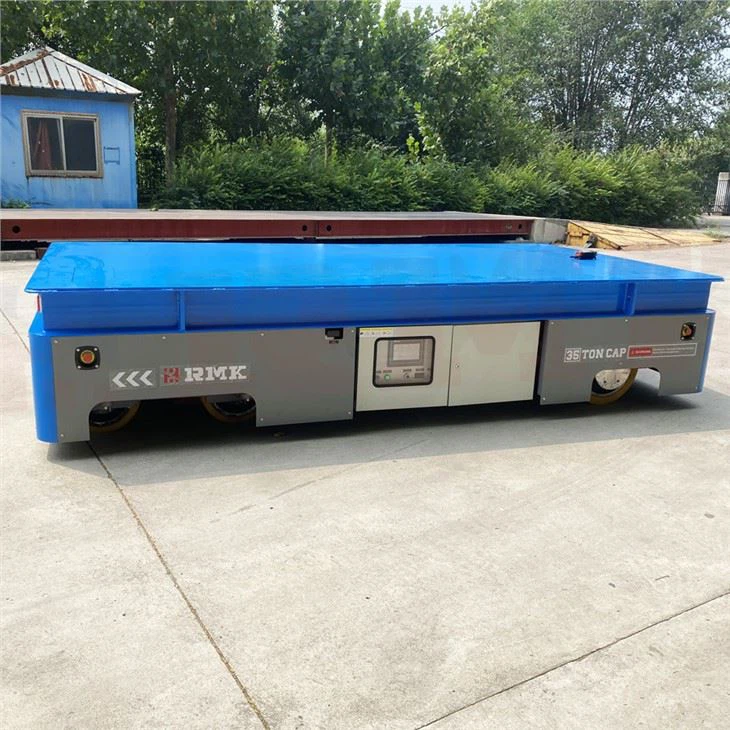
Las 50 toneladas carro de transferencia la solución debe seleccionarse según las condiciones de trabajo específicas y los escenarios de aplicación.
Actualmente, las rutas técnicas principales incluyen AGV y carro de transferencia de raíles sistemas. Entre ellos, AGV de servicio pesado, con movilidad omnidireccional y ventajas de control inteligente, se han convertido en la solución preferida para las fábricas modernas; los carros de transferencia sobre rieles son más adecuados para transferencias de alta frecuencia en rutas fijas.
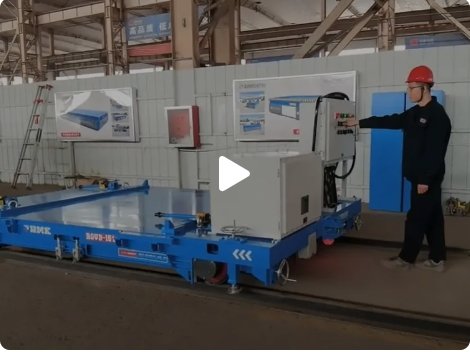
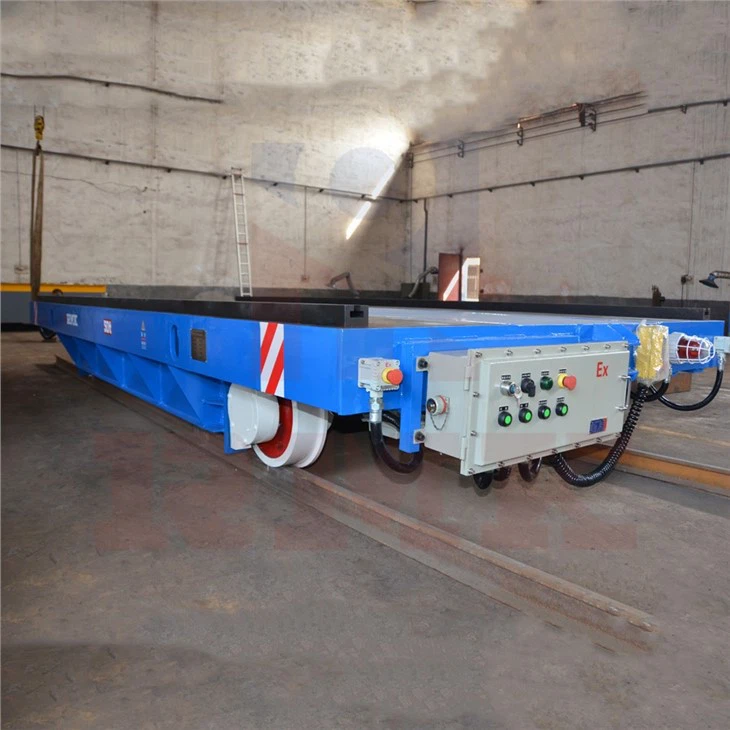
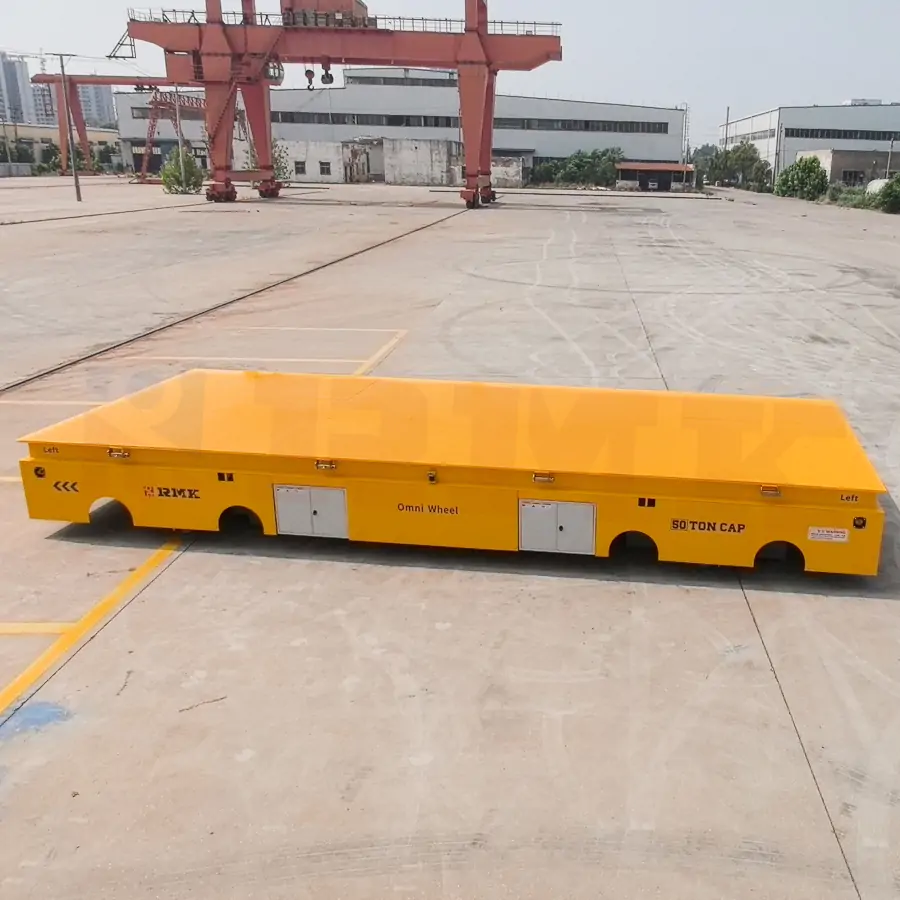 Carro de transferencia de 50 toneladas
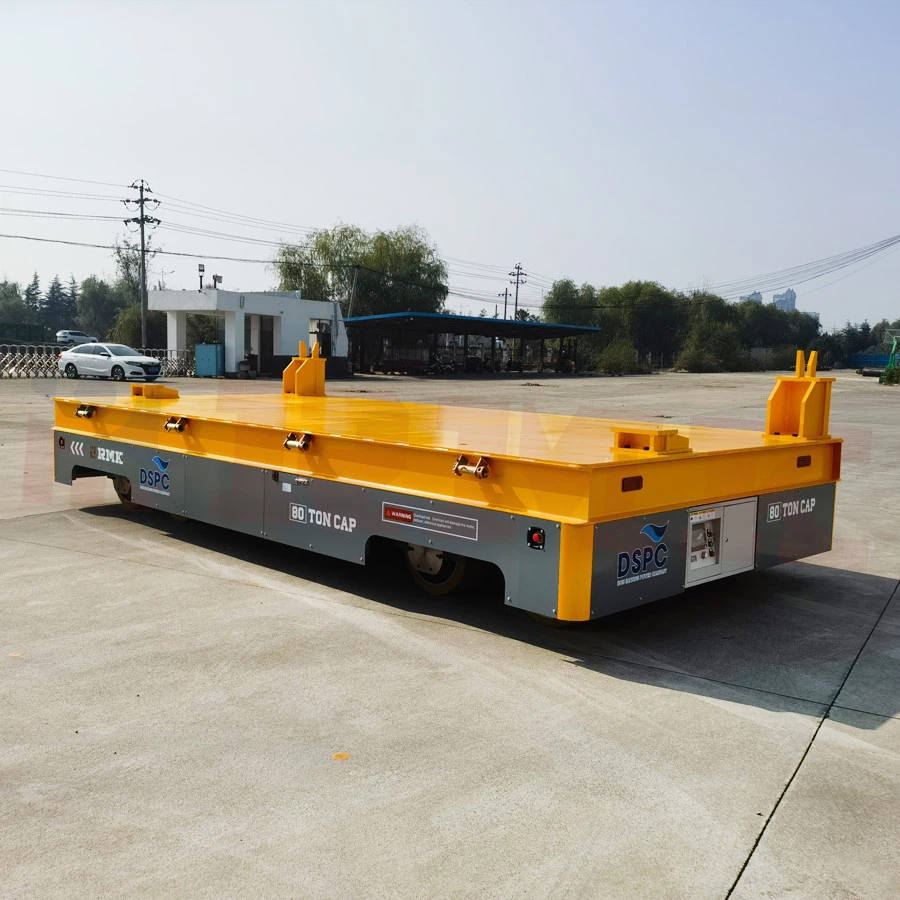
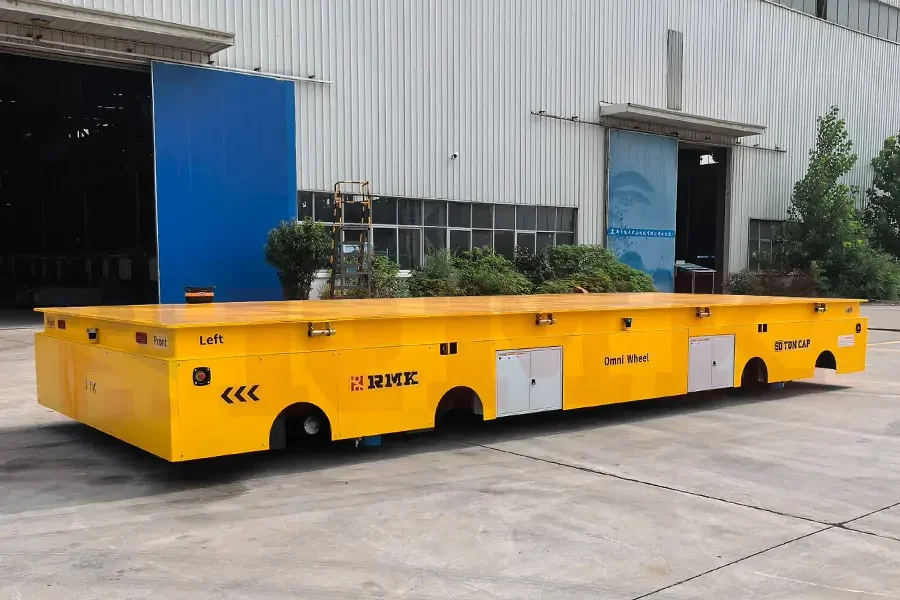 Carro de transferencia de 50 toneladas
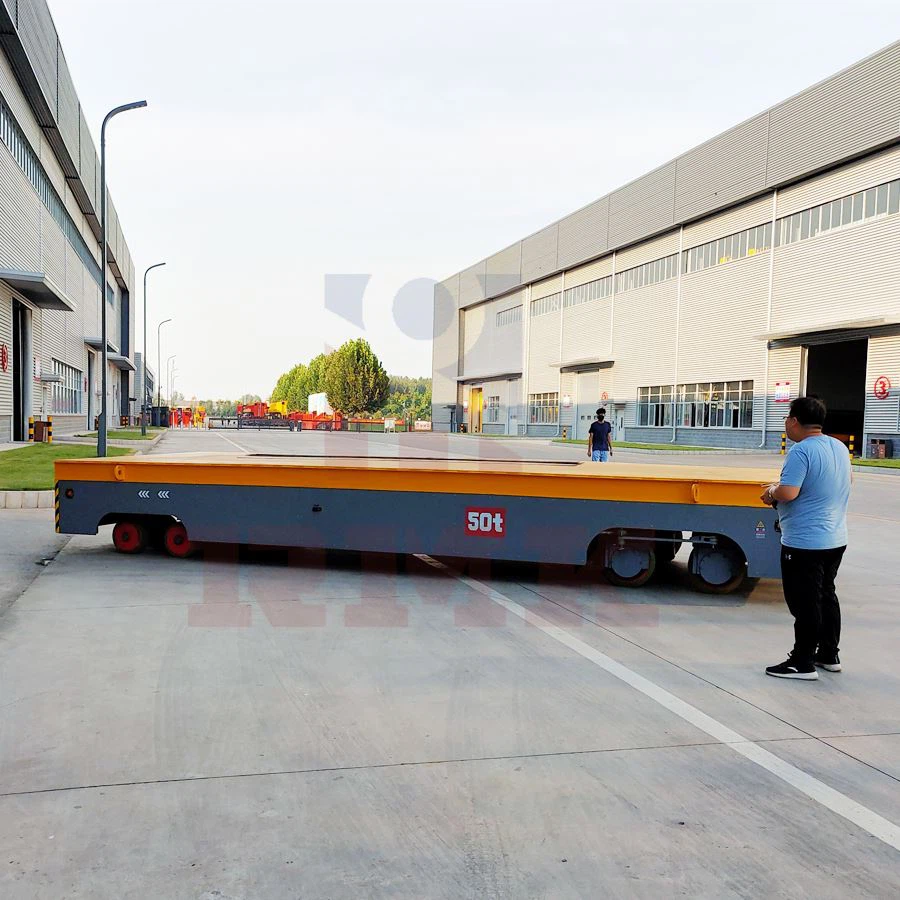
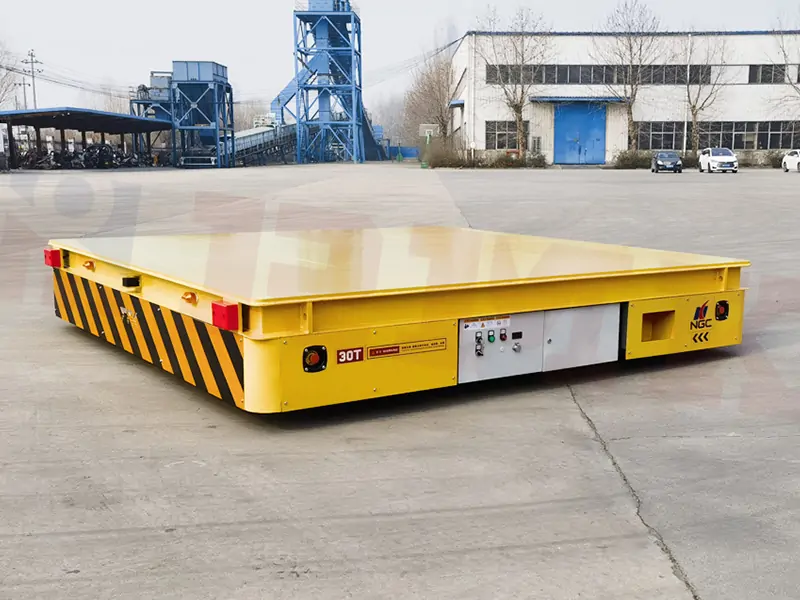
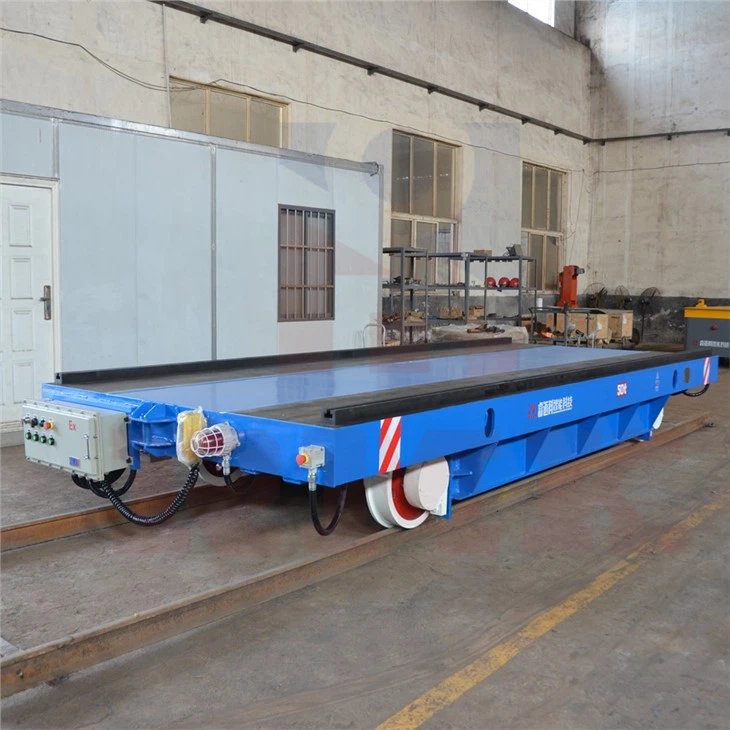 Carro de transferencia de 50 toneladas
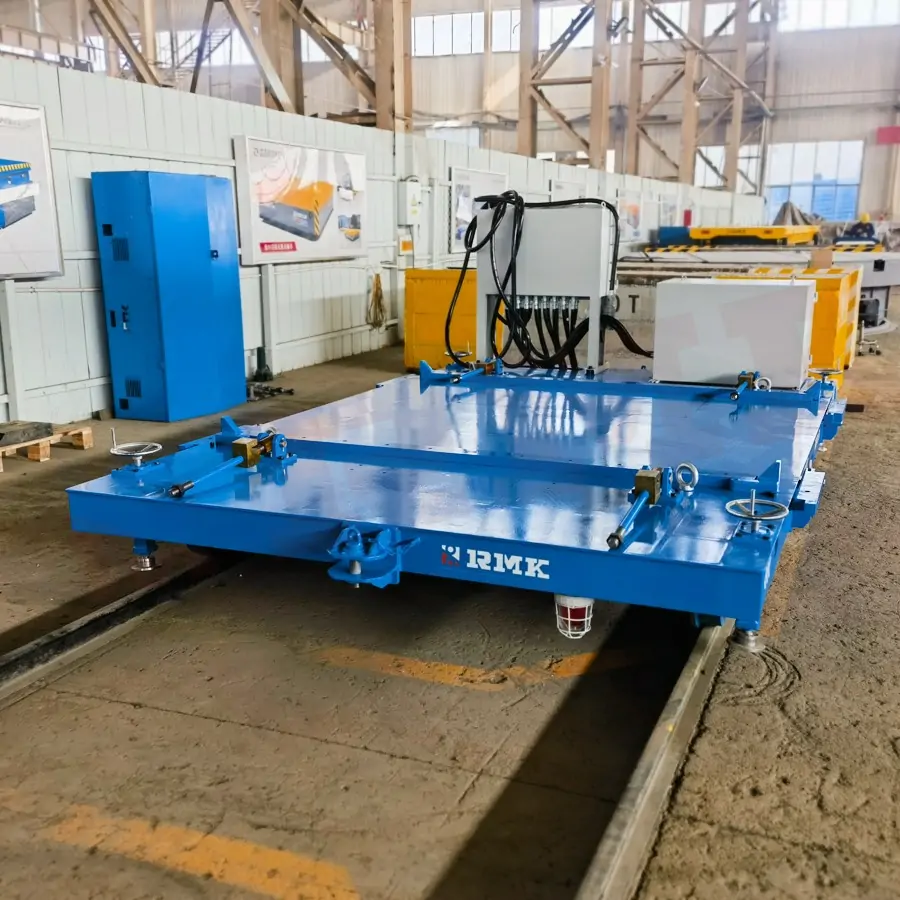
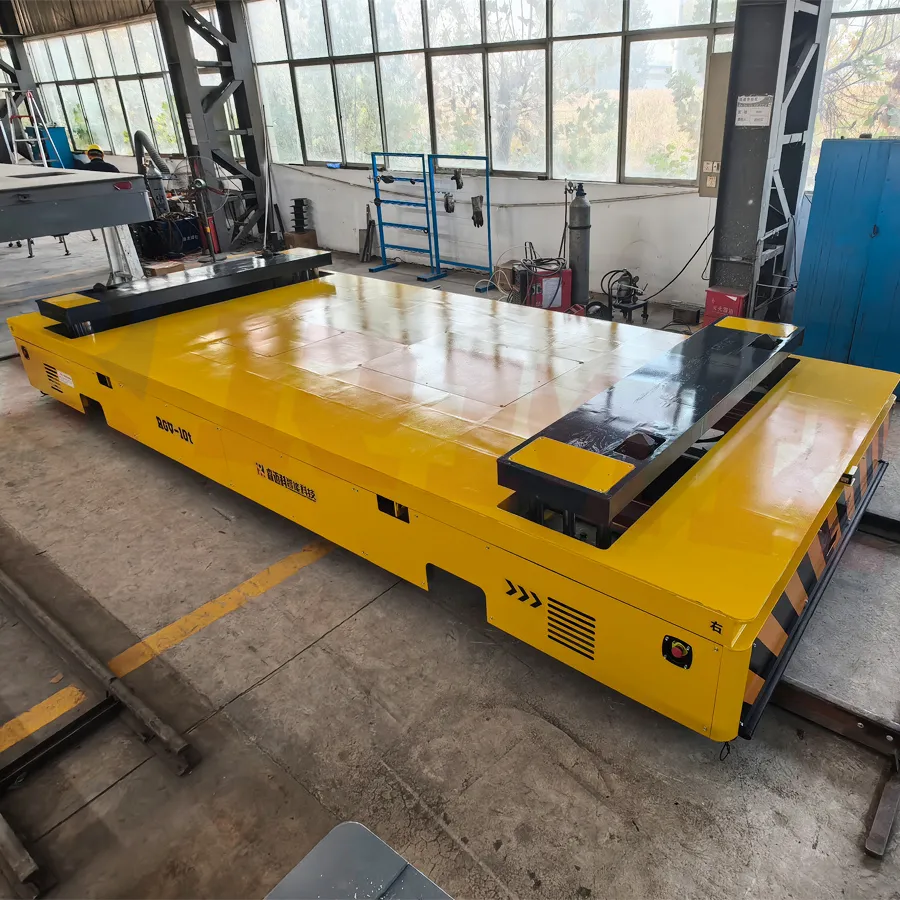
 Carro de transferencia de 50 toneladas
A continuación, se presenta un análisis de las configuraciones principales y los escenarios de aplicación de las dos soluciones:
AGV de Carga Pesada: El Referente en Manipulación Inteligente de Materiales
¿Qué es un AGV de Carga Pesada?
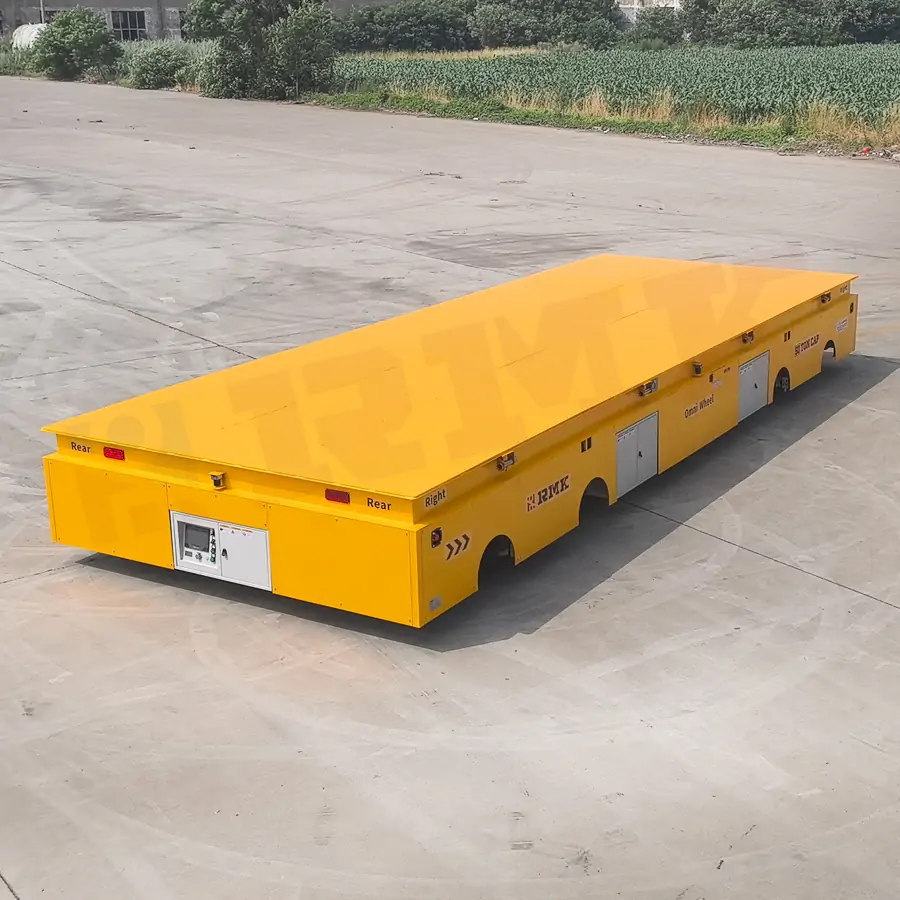
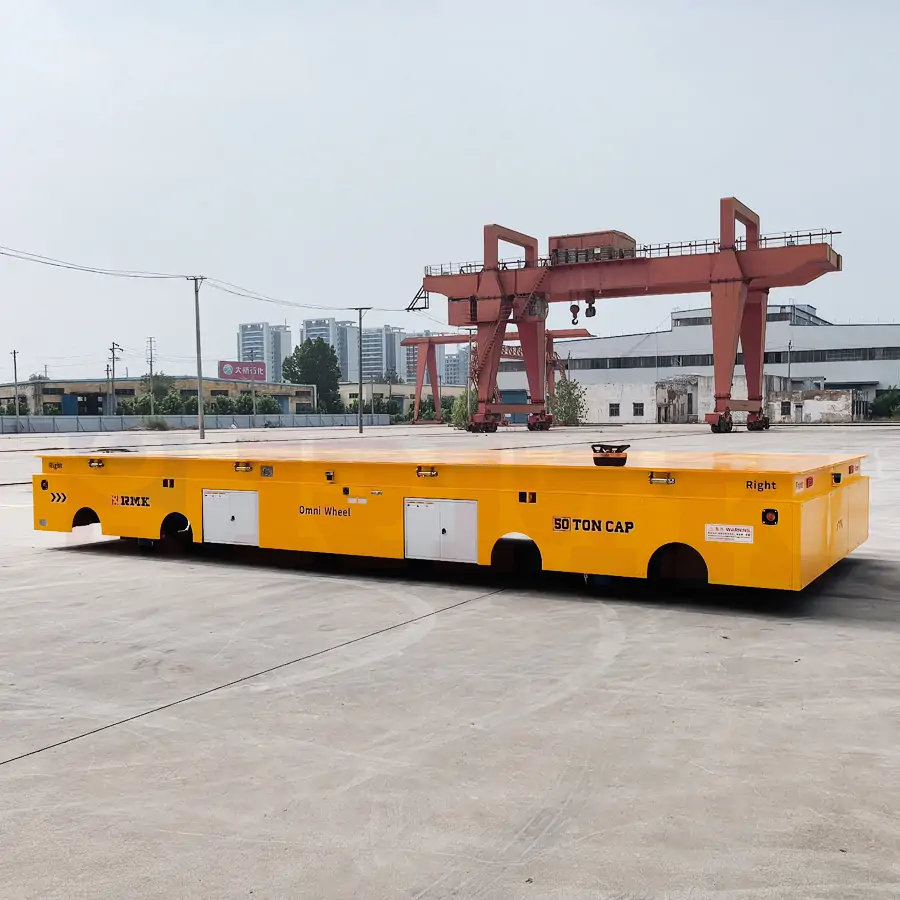
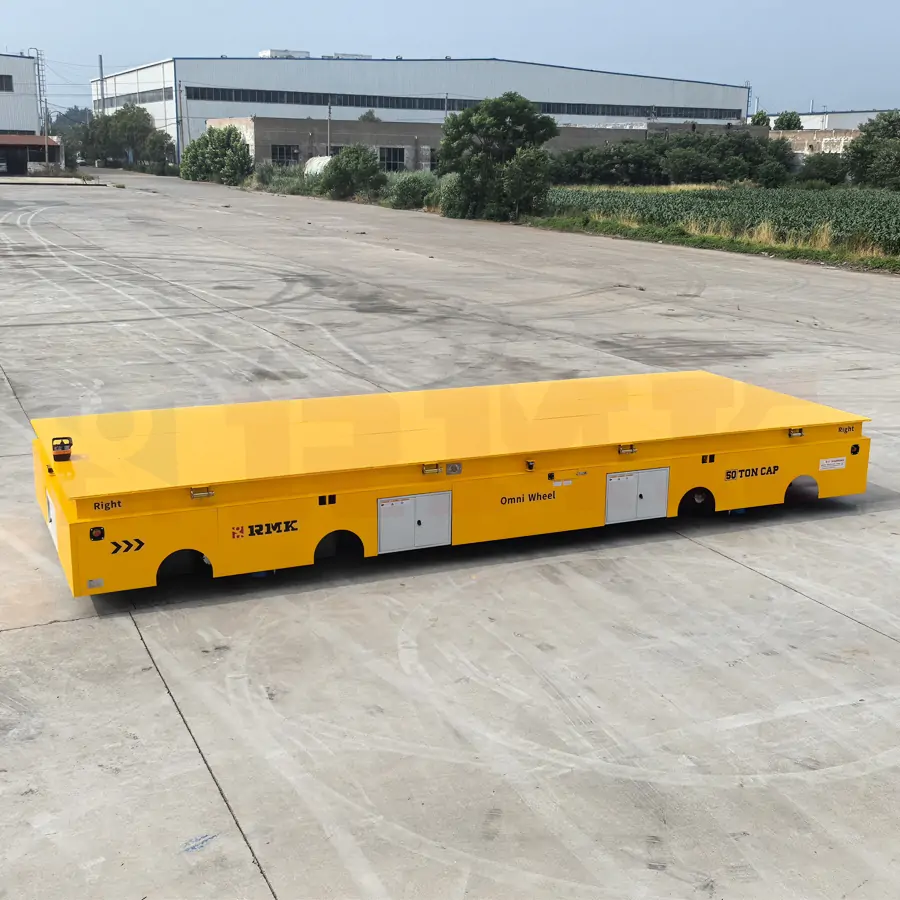
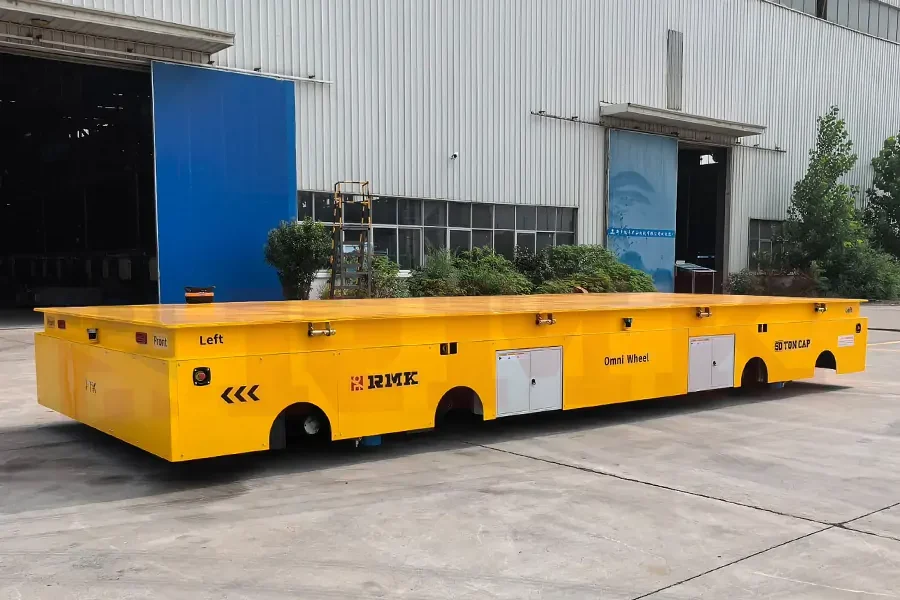
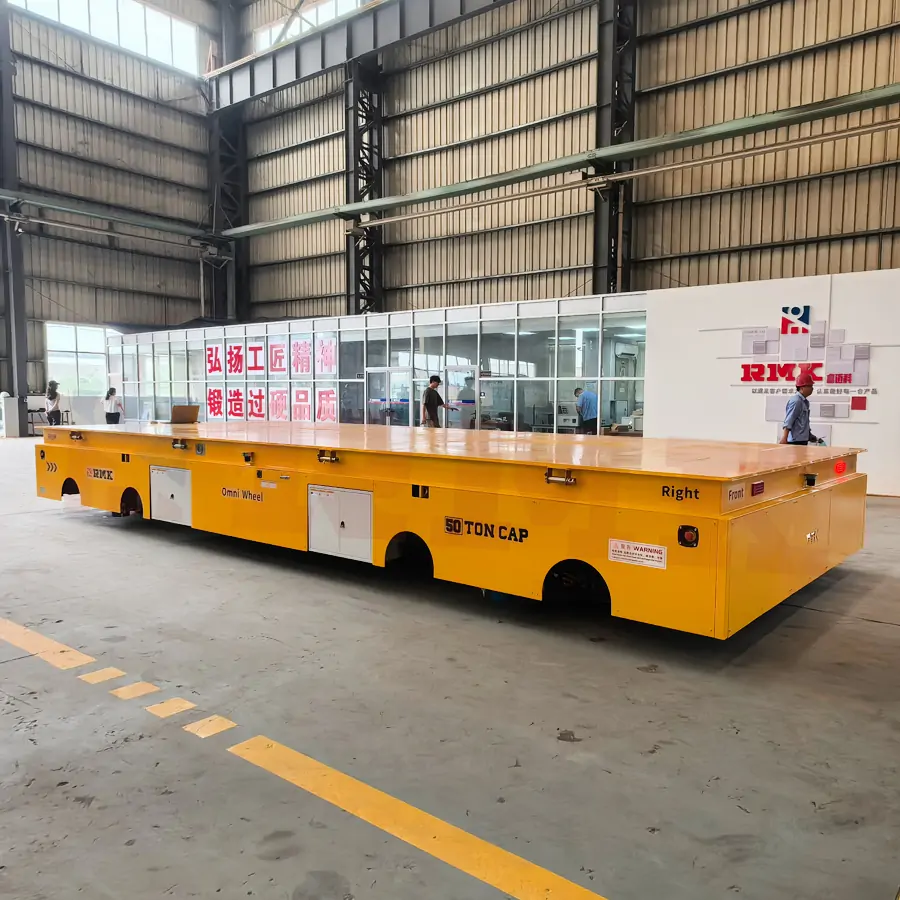
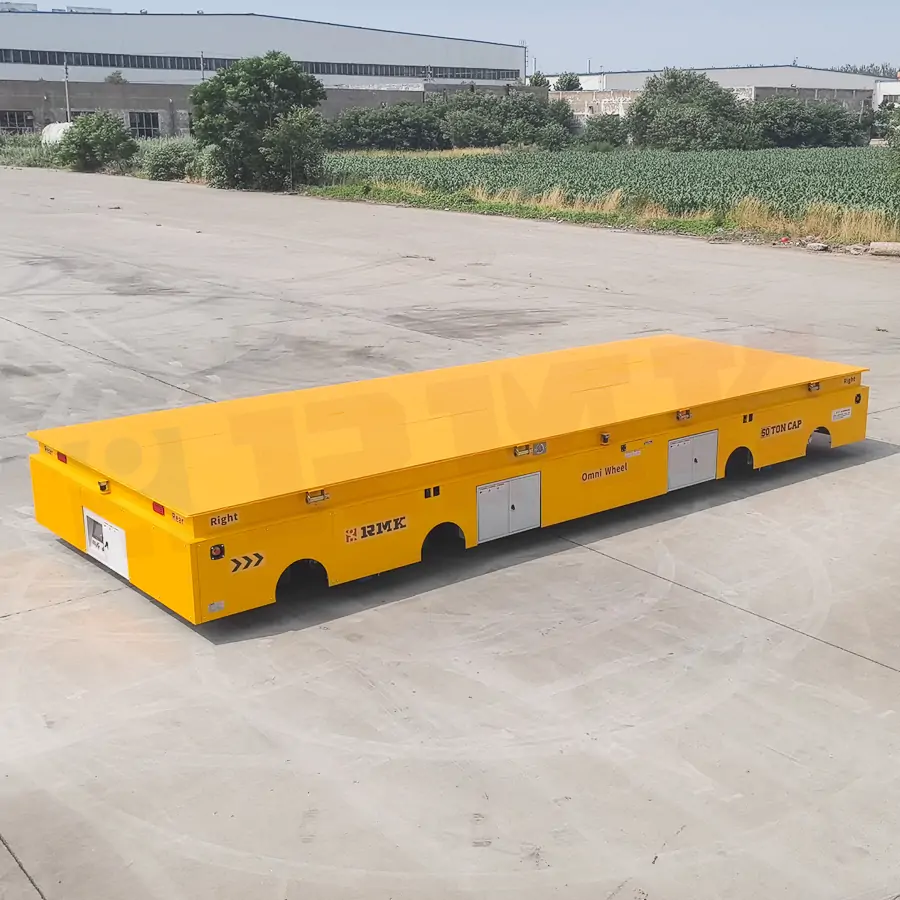
Un AGV (Vehículo Guiado Automáticamente) de carga pesada es un vehículo no tripulado de autoconducción diseñado para transportar cargas grandes y pesadas dentro de instalaciones industriales. Opera mediante sistemas de navegación autónoma como SLAM láser o guiado magnético, integra software de despacho inteligente y se utiliza ampliamente en fábricas inteligentes, almacenes automatizados y plantas de manufactura pesada. En comparación con montacargas o tractores convencionales, un AGV de carga pesada ofrece mayor precisión de posicionamiento, operación más segura e integración perfecta con sistemas de producción digital.
Ventajas:
Equipado con capacidades de navegación autónoma, despacho de múltiples vehículos y planificación de rutas complejas, los AGV de carga pesada AGVcubren capacidades de carga de 10 a 100 toneladas y son altamente adaptables a entornos de producción dinámicos y diseños de manufactura flexibles.
Configuración Técnica:
- Sistema de Transmisión:
Adopta ruedas direccionales o ruedas Mecanum, con una capacidad de carga por rueda de 3 a 5 toneladas. Una combinación de 8 ruedas puede soportar establemente una carga de 50 toneladas. Por ejemplo, los AGV de carga pesada REMARKABLE logran movimiento omnidireccional mediante conjuntos de ruedas motrices dobles y un sistema de potencia distribuida, con una capacidad de ascenso de ≥5°. - Navegación y Posicionamiento:
Se aplica navegación láser o navegación magnética, con una precisión de posicionamiento ≤±10 mm. Algunos modelos (como los AGV de transferencia de contenedores de almacenamiento de energía) pueden alcanzar una precisión de ±5 mm, asegurando un acoplamiento preciso con líneas de producción automatizadas y sistemas de manufactura inteligente. - Safety Protection:
Integra sistemas de evitación de obstáculos por láser, sistemas anticolisión mecánicos y botones de parada de emergencia. Admite programación coordinada de múltiples vehículos con un tiempo de respuesta de <0.1 segundos, garantizando un transporte seguro de cargas pesadas en entornos industriales complejos.
Applications:
Transferencia de carrocerías de automóviles, rotación de líneas de producción de contenedores de almacenamiento de energía y transporte de carga pesada en puertos. Por ejemplo, después de introducir AGV, una empresa siderúrgica aumentó el volumen diario de transporte de bobinas a más de 3,000 toneladas, reduciendo el consumo de energía en un 18%.
Carro de Transferencia sobre Rieles: Una Solución Eficiente para Rutas Fijas
¿Qué es un Carro de Transferencia sobre Rieles?
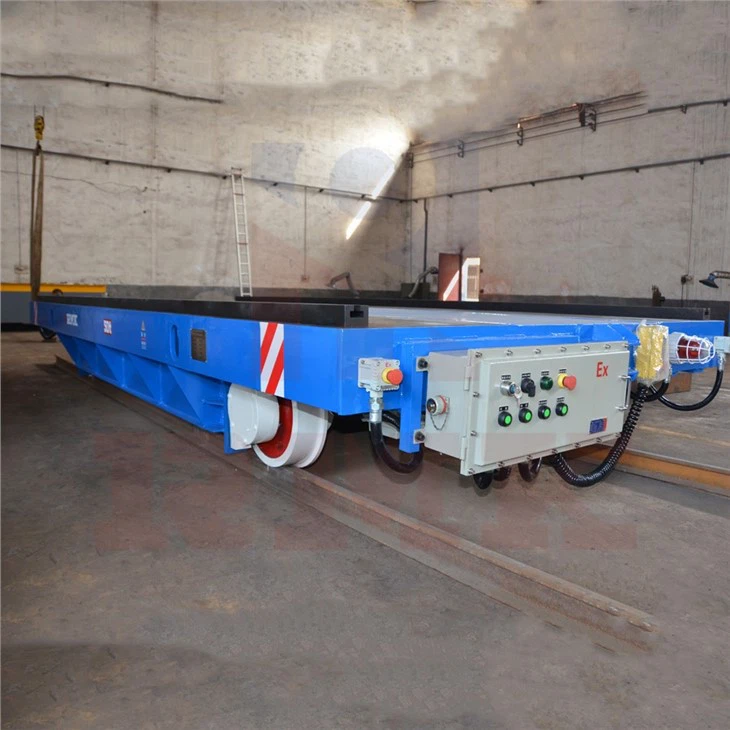
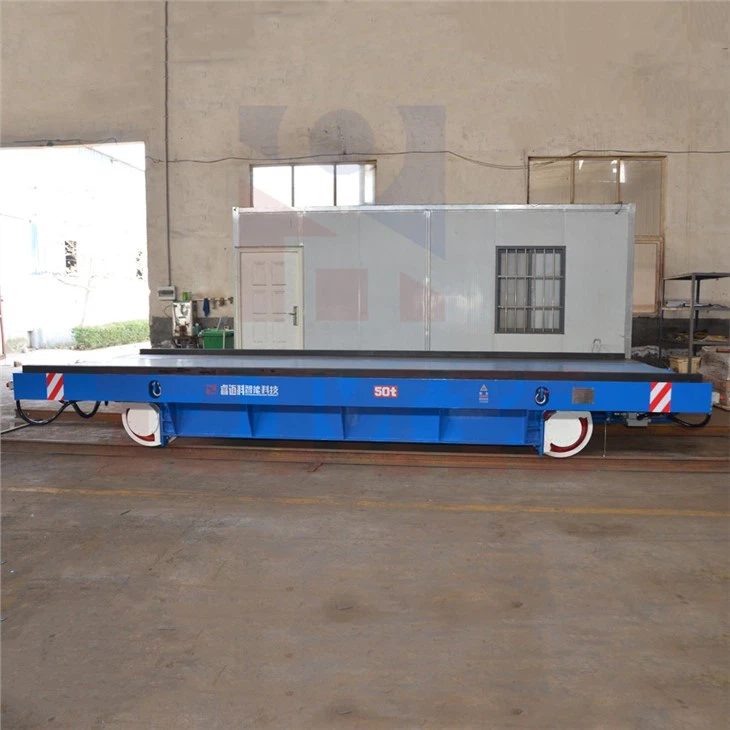
Un carro de transferencia sobre rieles es una plataforma de transporte de carga pesada que opera sobre rieles de acero preinstalados. Se alimenta mediante baterías, carretes de cable o líneas de contacto deslizantes y está diseñado específicamente para la transferencia de materiales en rutas fijas dentro de talleres, naves y líneas de producción. Debido a su estructura mecánica simple y operación estable, se utiliza ampliamente en metalurgia, plantas siderúrgicas, astilleros y fabricación de equipos pesados, donde se requiere transporte repetitivo a lo largo de rutas definidas.
Ventajas:
Estructura simple y bajo costo de mantenimiento. Adecuado para rutas fijas rectas o circulares, con capacidad de carga de 50 a 500 toneladas, lo que lo hace ideal para tareas repetitivas de transferencia de materiales pesados.
Configuración Técnica:
- Método de Alimentación Eléctrica:
Alimentado por batería (como los carros de transferencia sin rieles REMARKABLE) o por línea de contacto deslizante. La autonomía supera las 8 horas, y 1 hora de carga admite de 4 a 6 horas de operación, asegurando un rendimiento estable en la logística interna. - Diseño Estructural:
Un bastidor de viga de cajón combinado con múltiples juegos de ruedas para distribuir la carga de manera uniforme. El número de juegos de ruedas se configura según la capacidad de carga (por ejemplo, de 8 a 12 ruedas para 50 toneladas). La desviación del ancho de vía debe controlarse dentro de ±2 mm para garantizar una operación suave y segura. - Bobinas de acero, bobinas de aluminio, carretes de cable, tuberías redondas
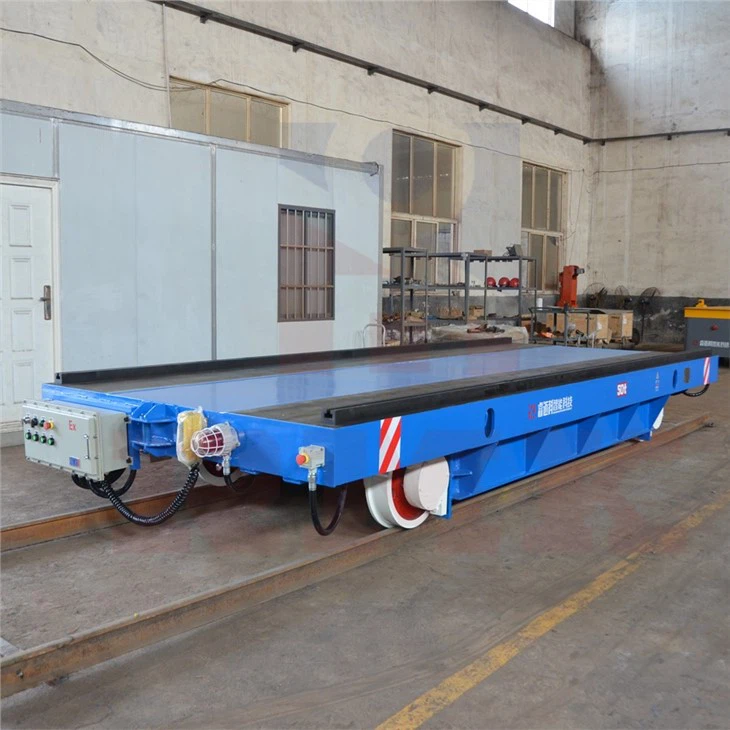
Dispositivos antideslizantes, alarmas sonoras y luminosas, y sistemas de detección por infrarrojos. Adecuado para entornos hostiles como alta temperatura, polvo pesado y talleres metalúrgicos.
Applications:
Transferencia entre talleres y manejo de palanquillas en la industria metalúrgica. El carro de transferencia sobre rieles de 50 toneladas de REMARKABLE logra una entrega punto a punto de proceso a proceso a través de rieles preestablecidos, mejorando la continuidad de la producción y la eficiencia operativa.
AGV de Carga Pesada vs Carro de Transferencia sobre Rieles
Los AGV de carga pesada y los carros de transferencia sobre rieles difieren principalmente en flexibilidad de ruta, requisitos de infraestructura, nivel de inteligencia y escalabilidad a largo plazo. Los AGV ofrecen enrutamiento flexible, navegación autónoma e integración con sistemas digitales, lo que los hace ideales para entornos de manufactura inteligente con diseños de producción cambiantes. Los carros de transferencia sobre rieles dependen de rieles fijos, ofreciendo mayor capacidad de carga y menor complejidad estructural, lo que los hace más adecuados para operaciones estables, de alta frecuencia y de carga pesada en rutas fijas.
| Dimensión | AGV de Carga Pesada | Carro de transferencia de raíles |
|---|---|---|
| Capacidad de carga | 10–100 toneladas | 50–500 toneladas |
| Flexibilidad de Ruta | Movimiento omnidireccional, adecuado para rutas complejas | Riel fijo, solo recto/curvo |
| Requisito del Piso | Piso endurecido, planicidad ≤5 mm | Instalación de rieles requerida, cimentación reforzada |
| Esta es una decisión clave que afecta el costo, la flexibilidad y los requisitos de infraestructura. | Mayor (incluye sistema de despacho) | Medio (costo de instalación de rieles) |
| Limitado a rutas de transporte fijas. | Medio (mantenimiento de baterías y sensores) | Bajo (estructura mecánica simple) |
| Aplicaciones Típicas | Fábrica inteligente, acoplamiento con línea automatizada | Cruce de talleres, transferencia metalúrgica |
Cómo Elegir una Solución de Manipulación de Materiales de Carga Pesada
En aplicaciones industriales prácticas, seleccionar el sistema de transporte de clase de 50 toneladas adecuado requiere evaluar la complejidad de la ruta, el diseño del taller, la frecuencia de carga, la redundancia de seguridad y los planes de expansión a largo plazo.
Adaptación al Escenario Primero:
Para aplicaciones con cambios frecuentes de línea o múltiples rutas, elija sistemas AGV. Para transporte de alta frecuencia en rutas fijas, elija carros de transferencia sobre rieles.
Diseño de Redundancia de Seguridad:
Se recomienda una redundancia de carga del 20%. Por ejemplo, al transportar carga de 50 toneladas, es aconsejable seleccionar un sistema con capacidad nominal de 60 toneladas para evitar la operación a plena carga a largo plazo que acelera el desgaste de los componentes.
Integración Inteligente:
Los AGV de servicio pesado pueden conectarse a sistemas MES para lograr la programación de múltiples vehículos y la integración digital de la fábrica. Los carros de transferencia sobre rieles pueden equiparse con sistemas RFID para la identificación automática de estaciones y la gestión logística semiautomatizada.
Hoy en día, los vehículos de transferencia de servicio pesado no son solo herramientas de transporte, sino nodos inteligentes dentro del flujo de trabajo de producción. Con el desarrollo de la tecnología de accionamiento de motores SiC y los sistemas de programación de IA, los equipos de la clase de 50 toneladas de REMARKABLE continuarán evolucionando hacia una mayor precisión, un menor consumo de energía y una automatización industrial más inteligente.
REMARCABLE tiene una amplia experiencia en proyectos de sistemas AGV de servicio pesado y soluciones de carros de transferencia sobre rieles. Basándonos en sus requisitos de carga, distribución de la planta, ciclo de operación y estructura presupuestaria, proporcionamos soluciones de ingeniería personalizadas y soporte de evaluación técnica.
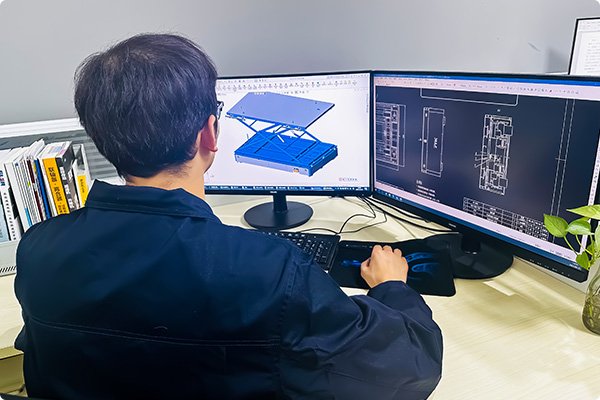

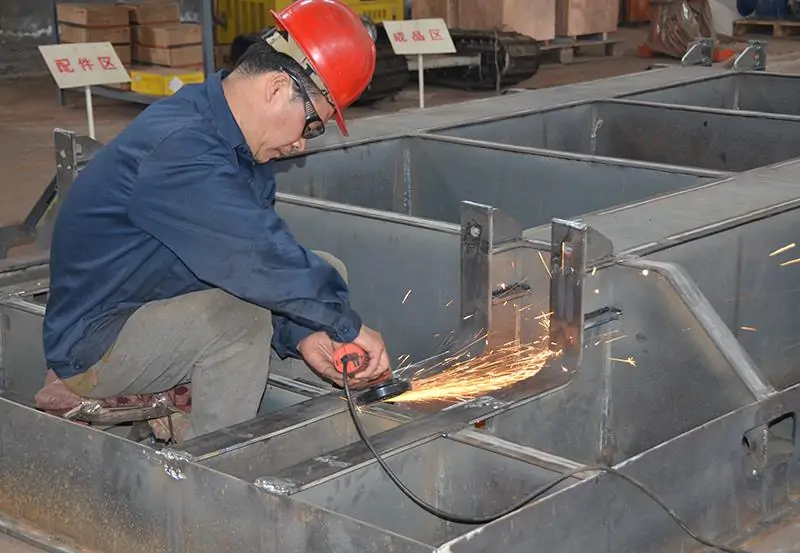
Si está planificando un sistema de carro de transferencia de 50 toneladas, no dude en compartir su escenario de aplicación con nosotros. Nuestro equipo de ingeniería proporcionará asesoramiento profesional sobre la selección y referencias de proyectos para ayudarle a lograr un equilibrio óptimo entre seguridad, eficiencia y costo operativo a largo plazo.
Correo electrónico: transfercart@rmkzn.com
Teléfono: +86-18637369355