
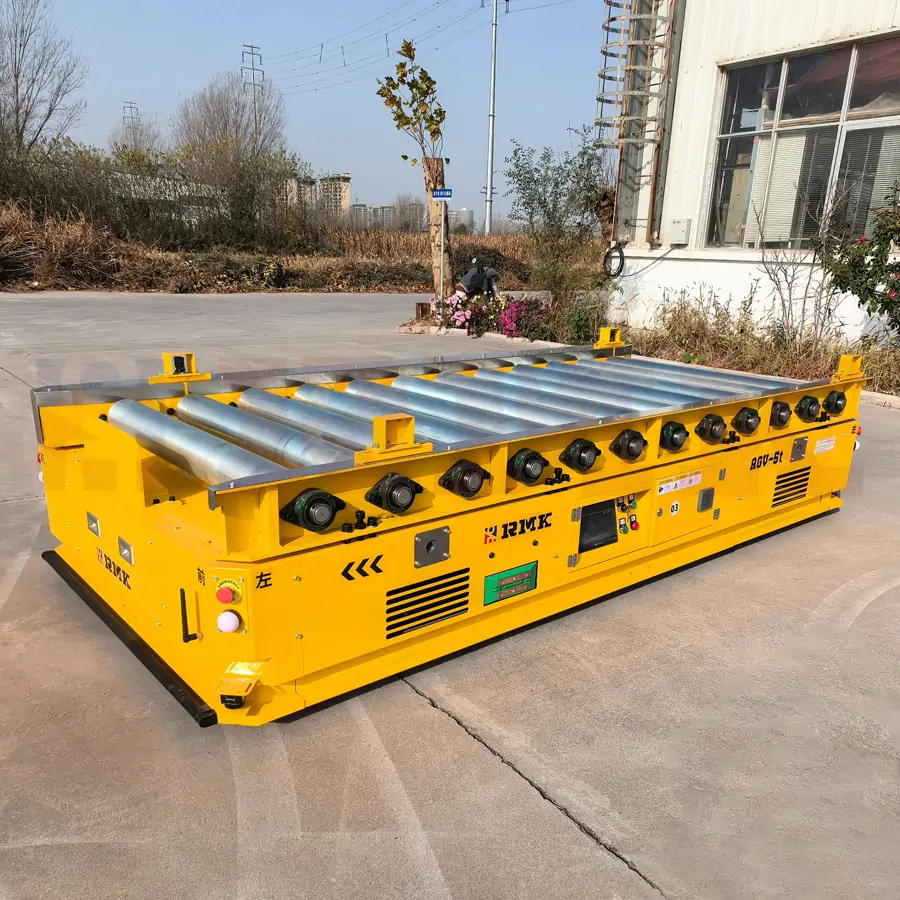
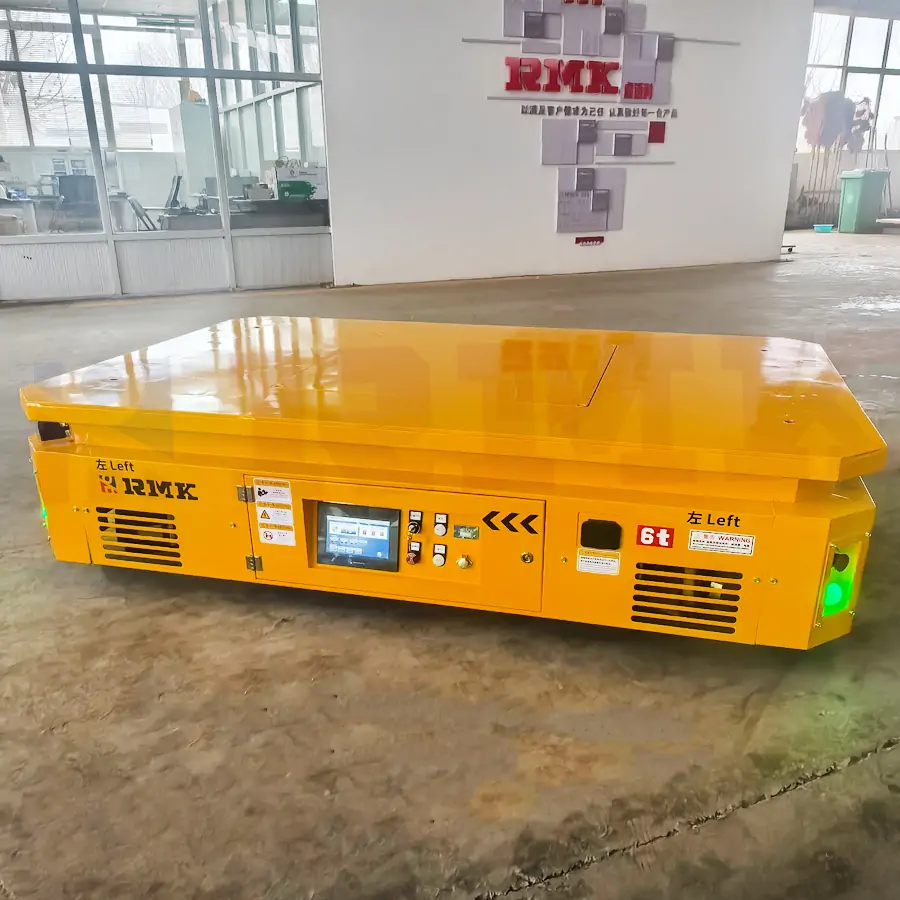
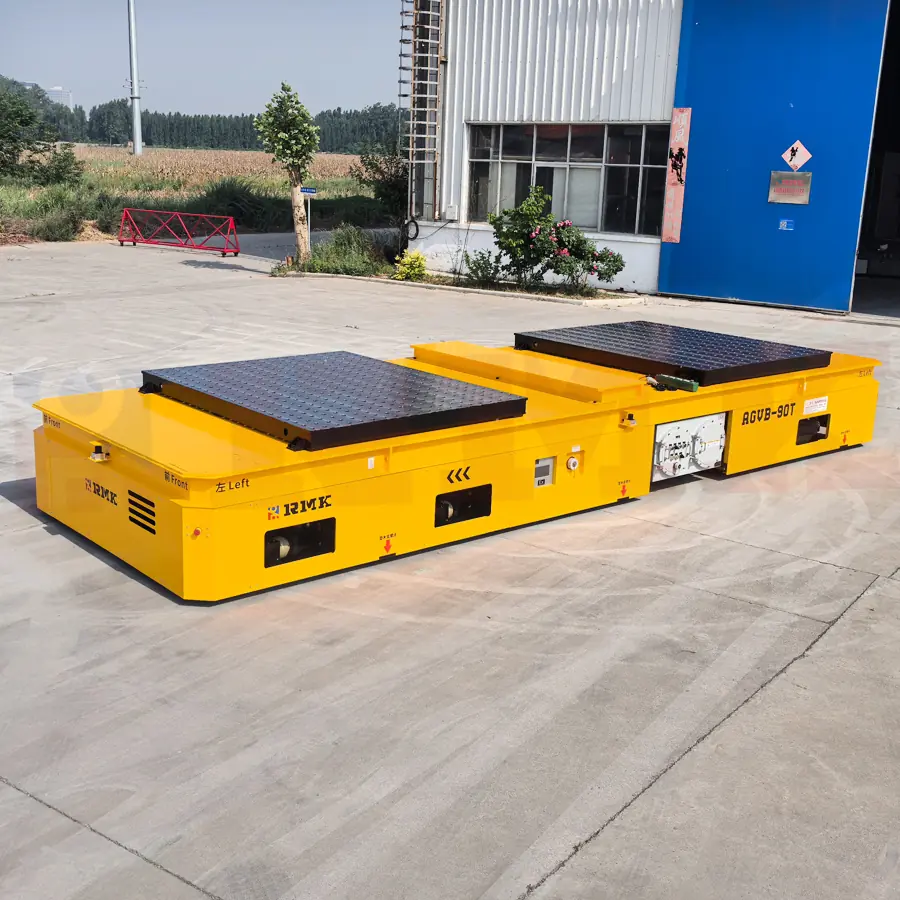
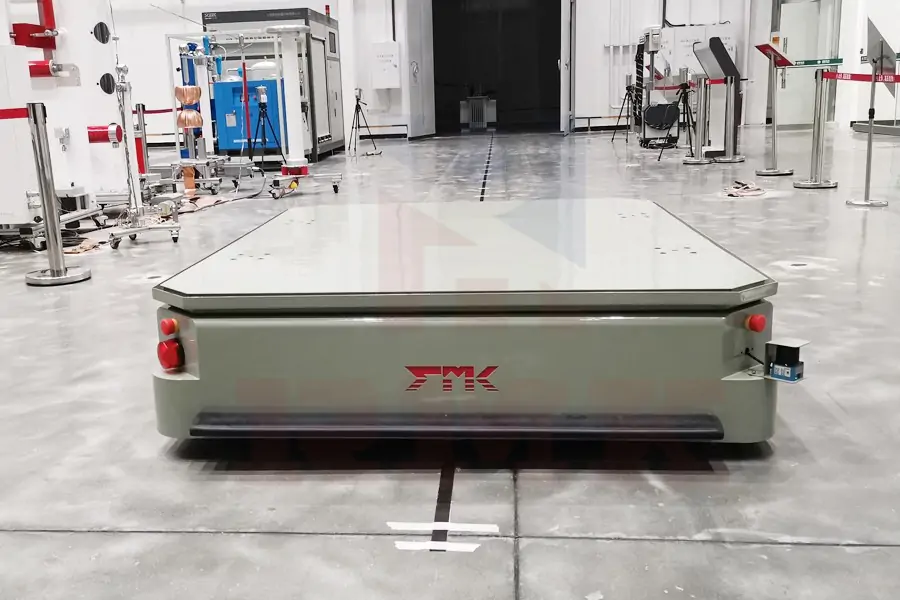
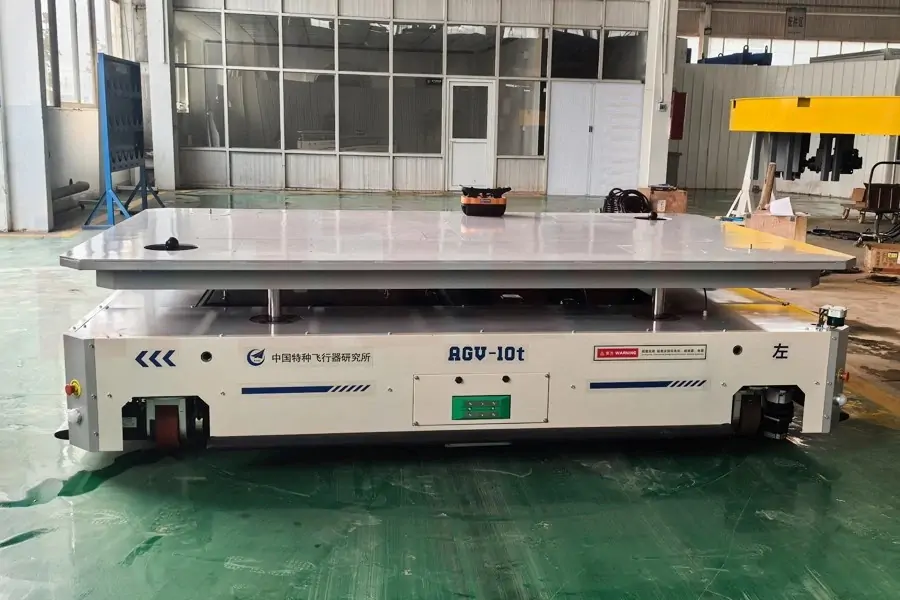
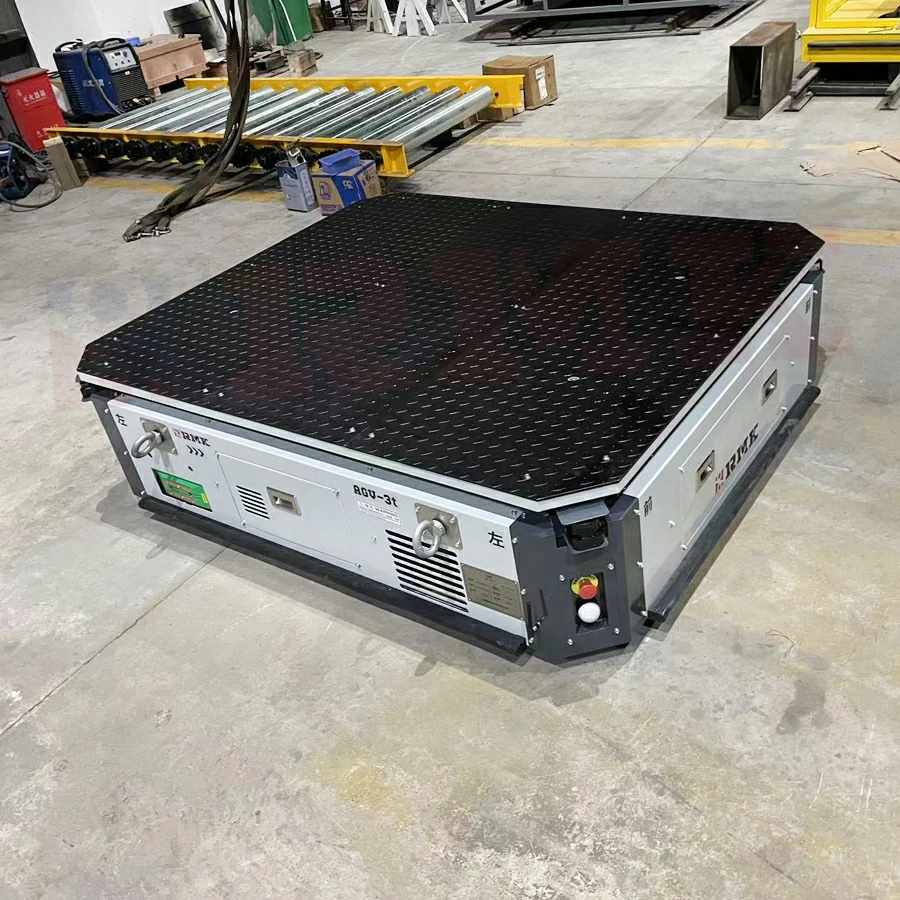
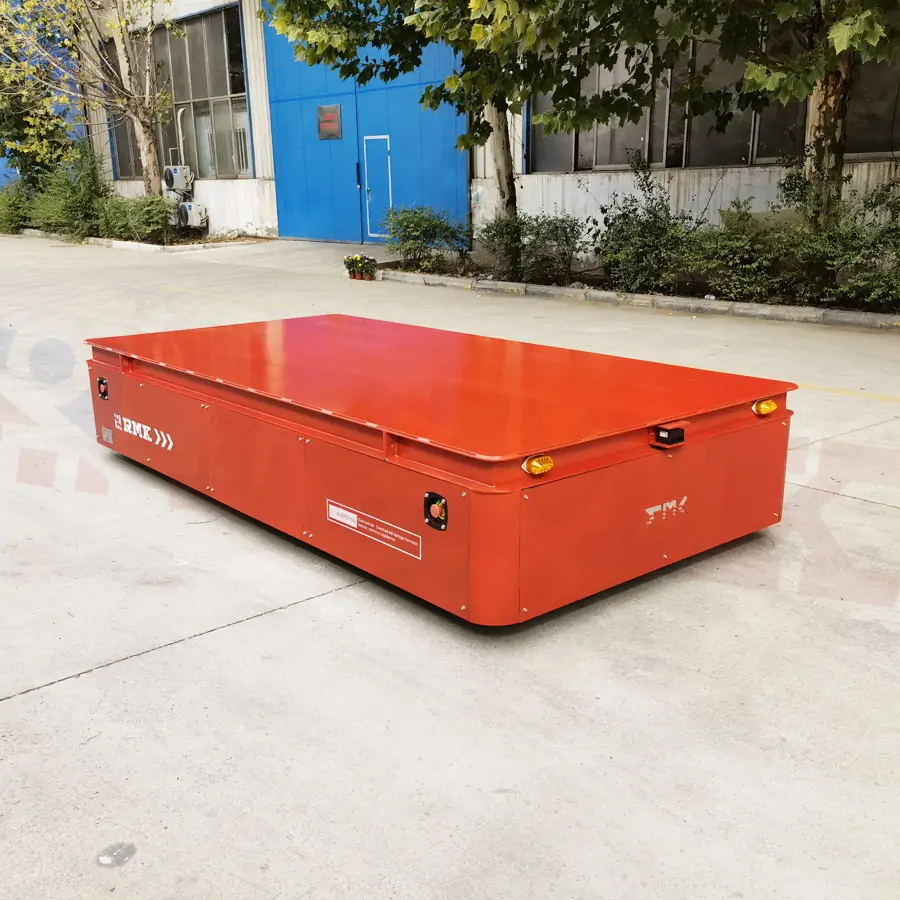
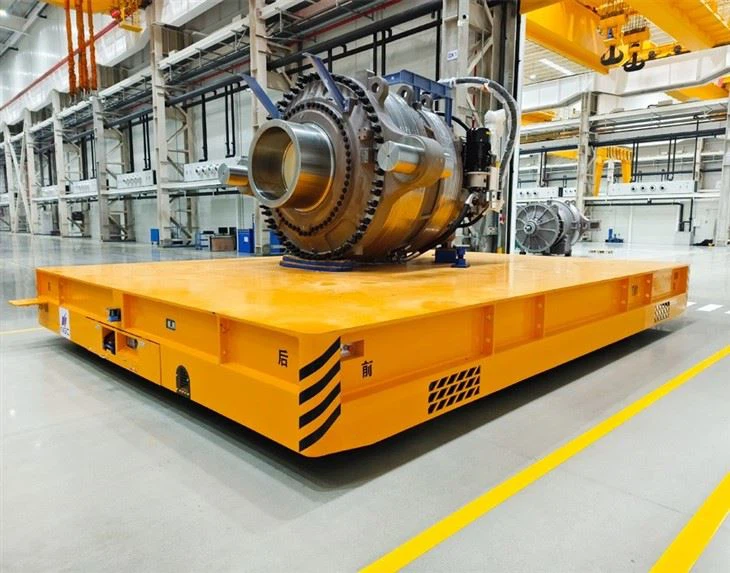
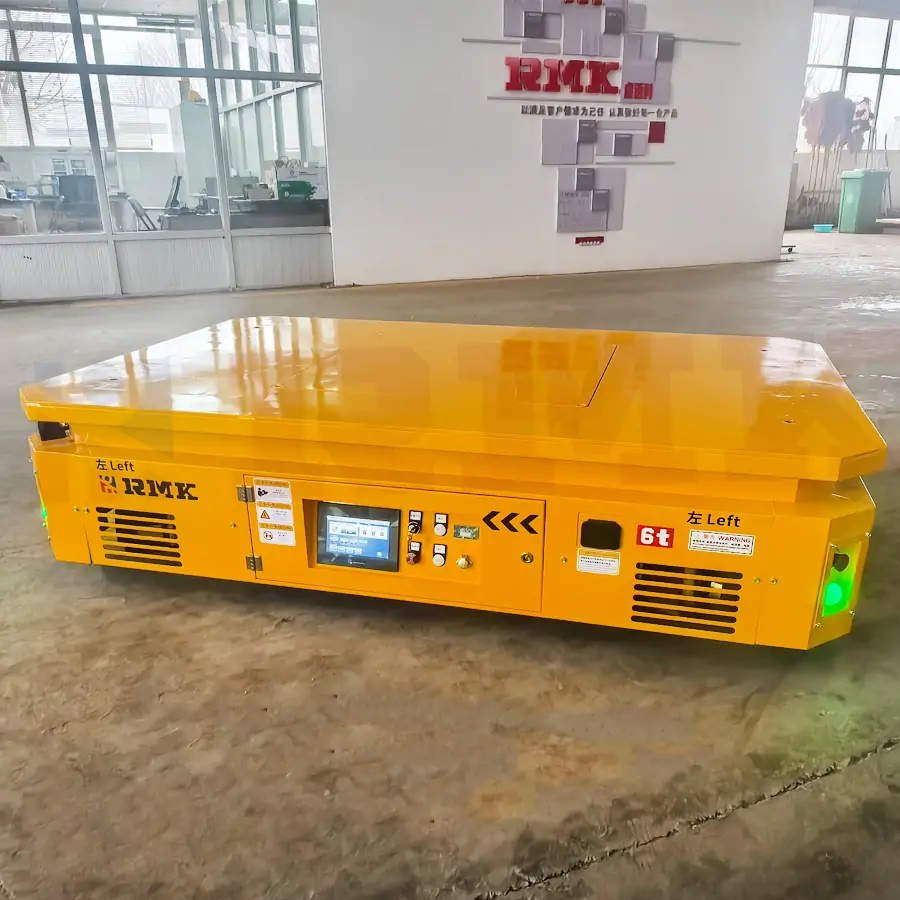
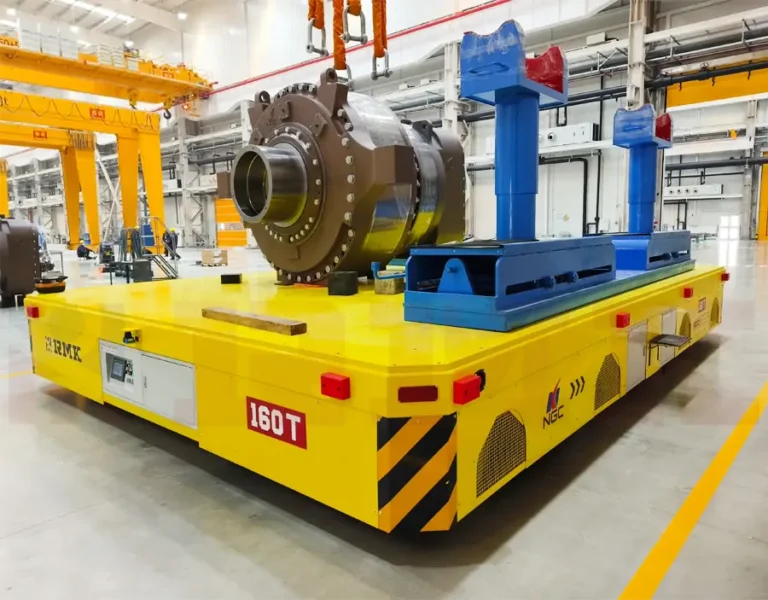
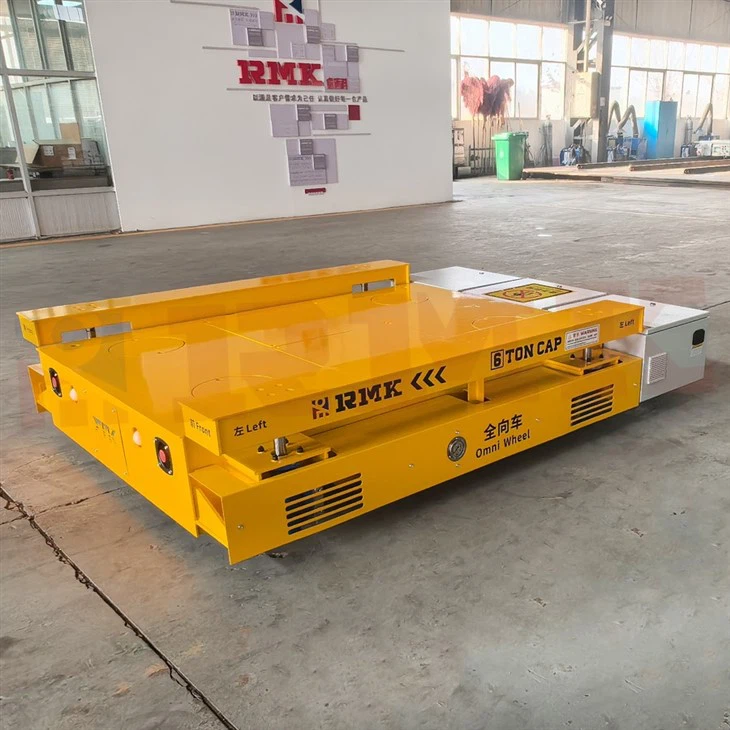
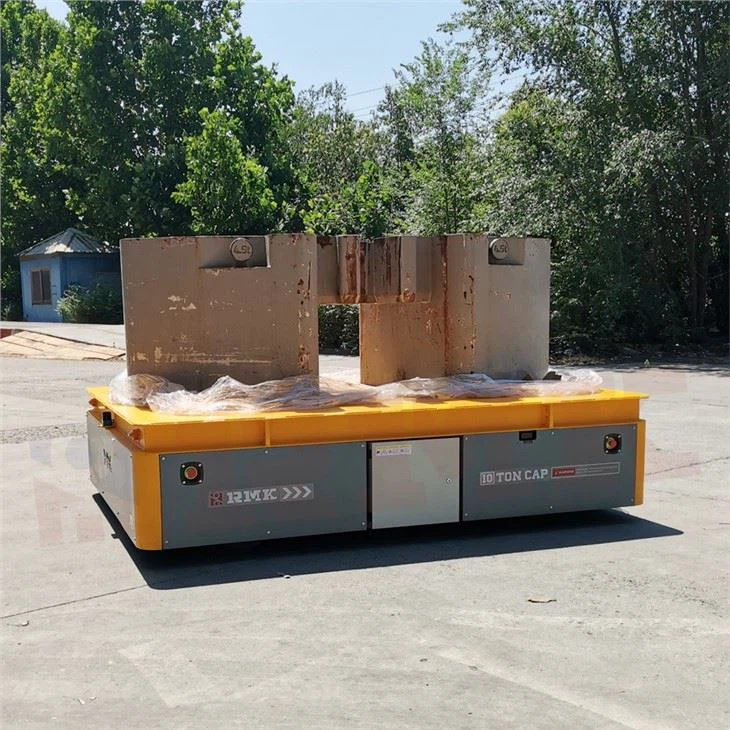
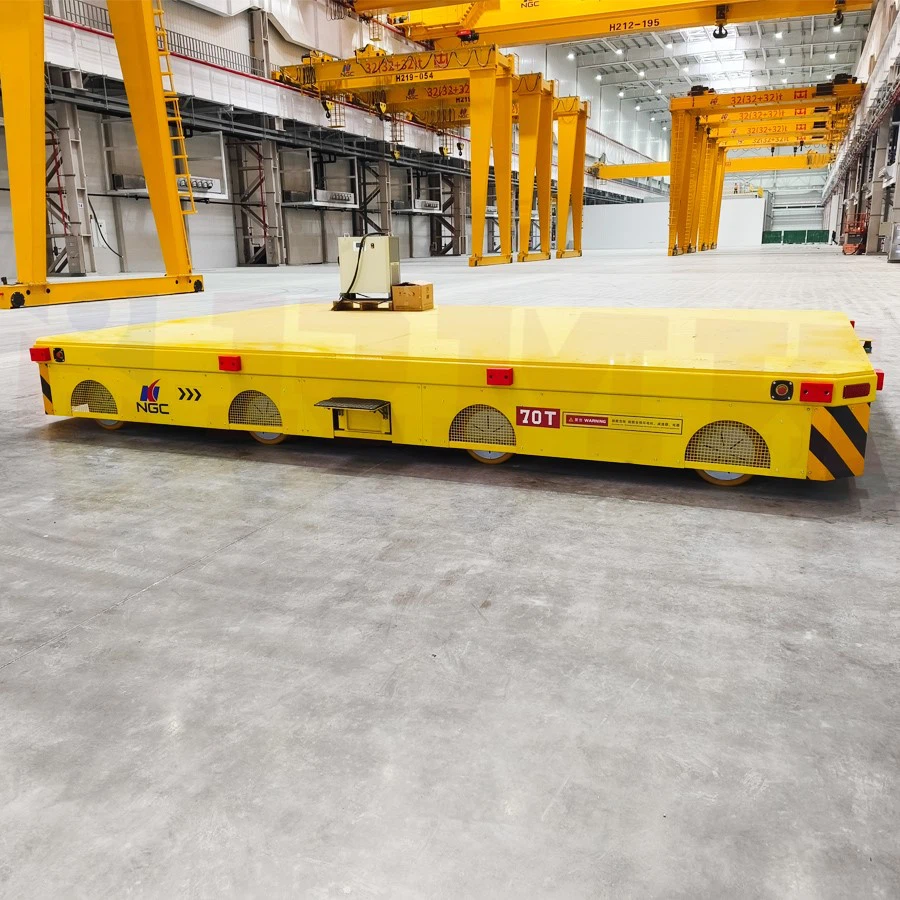
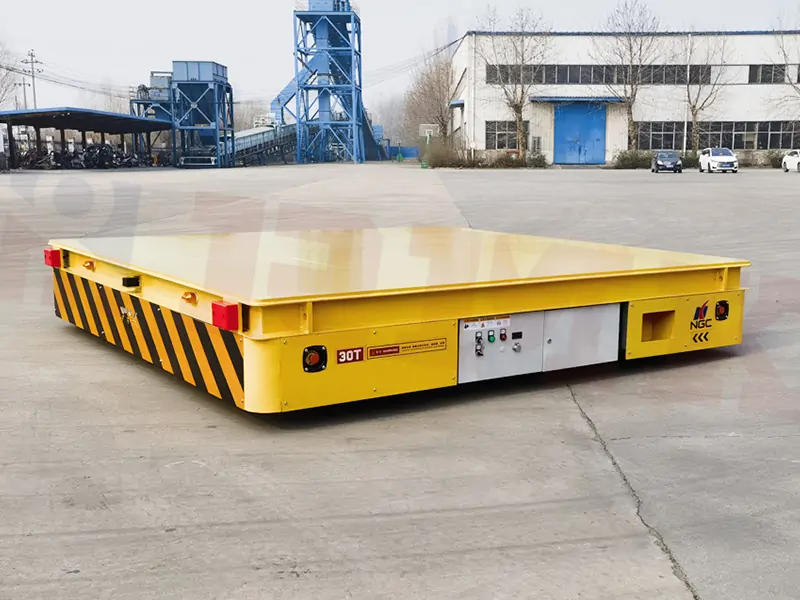
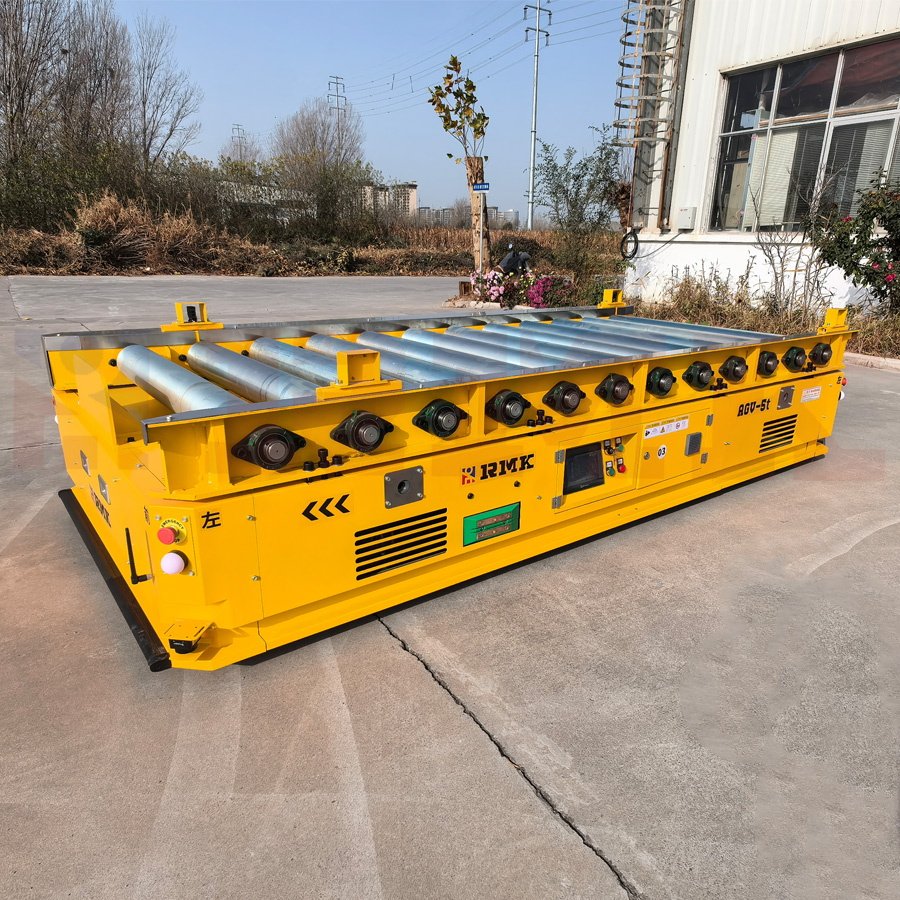
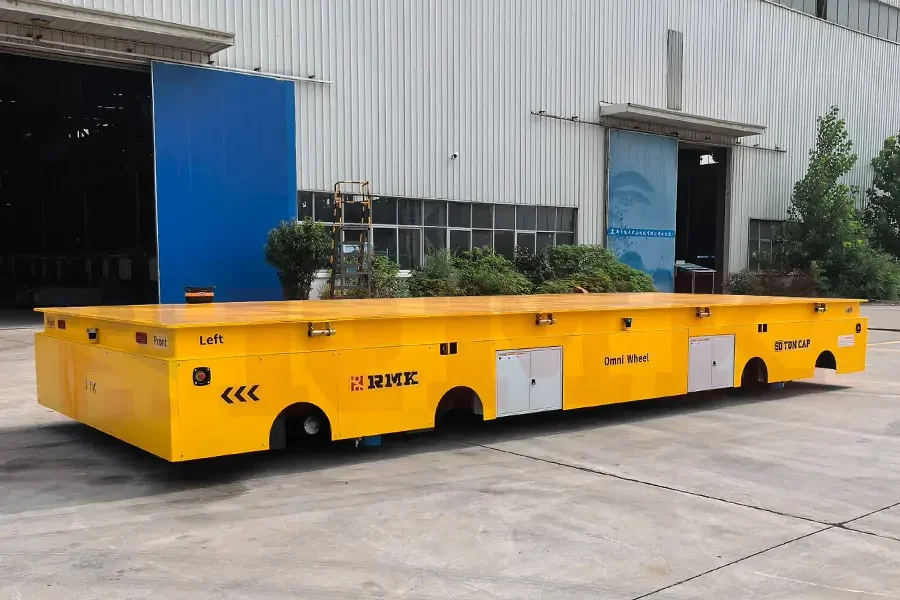
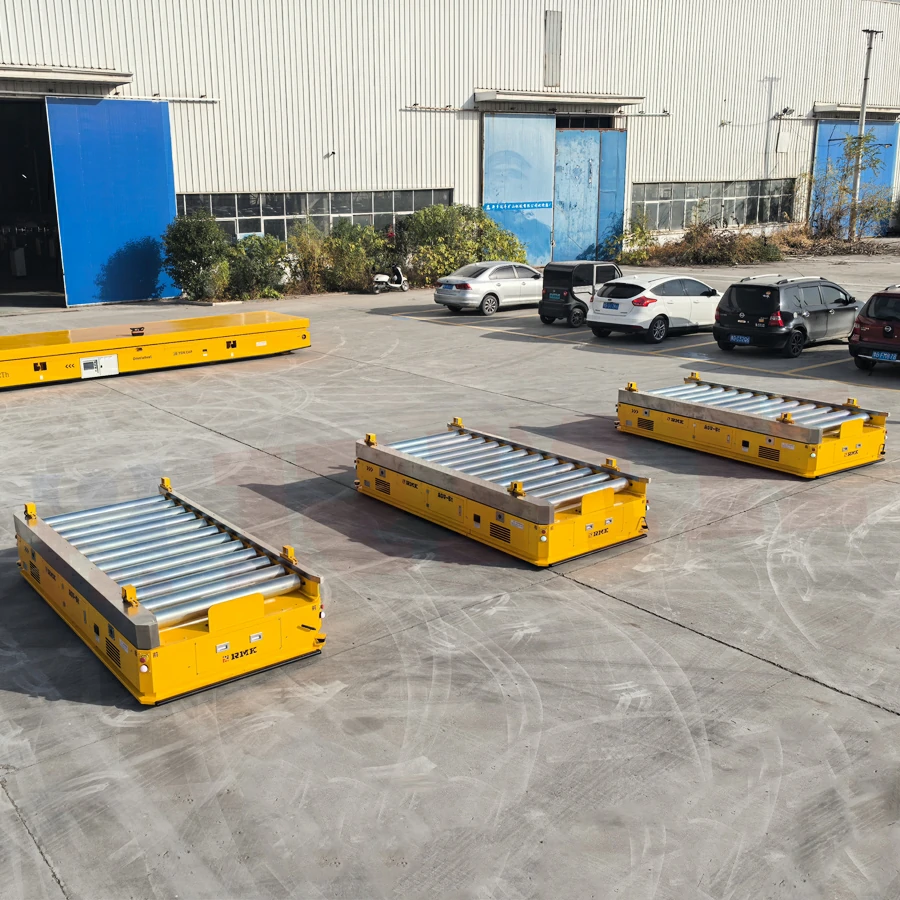
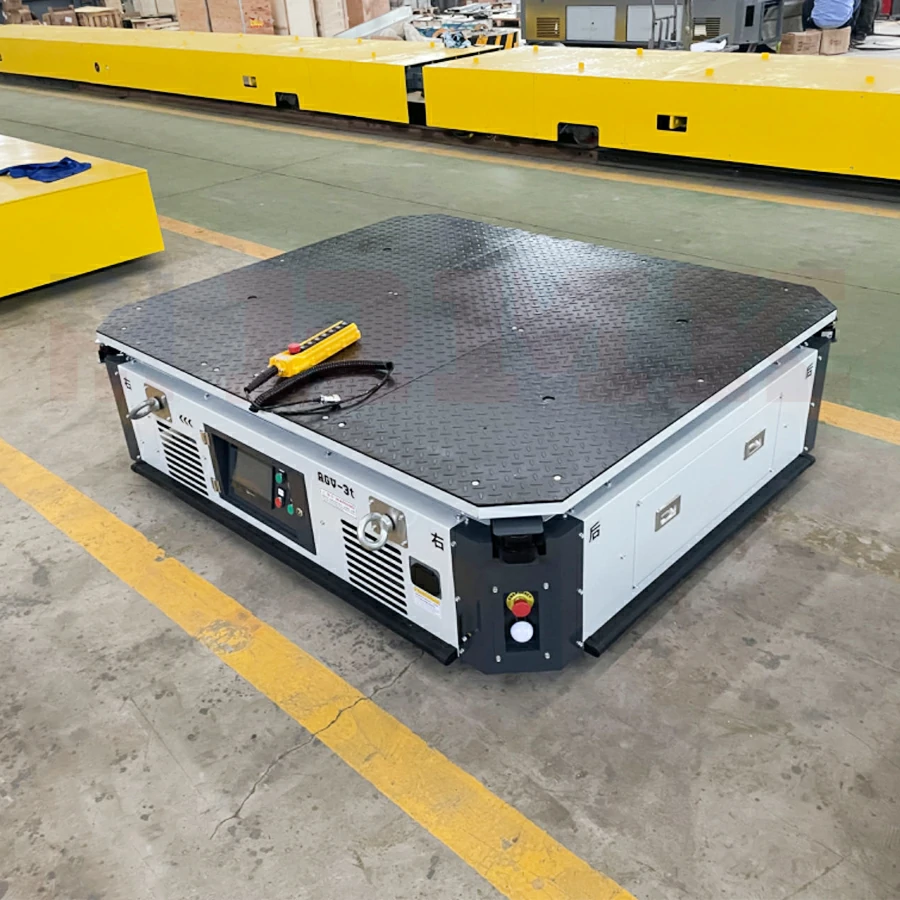
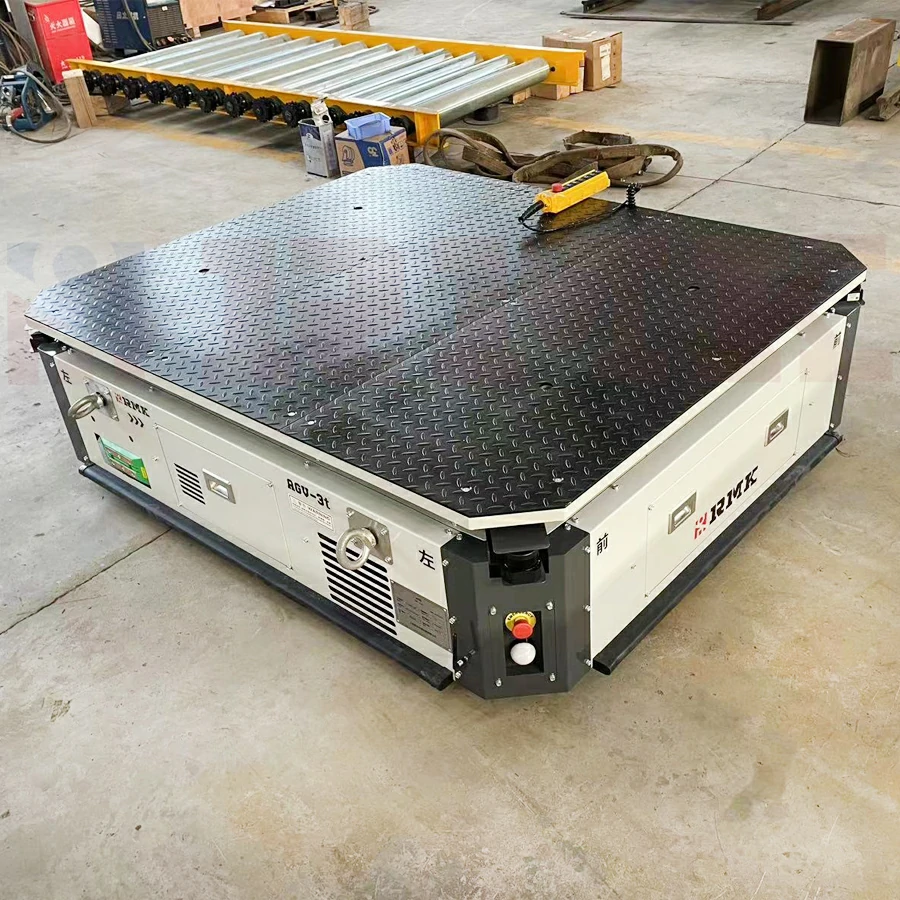
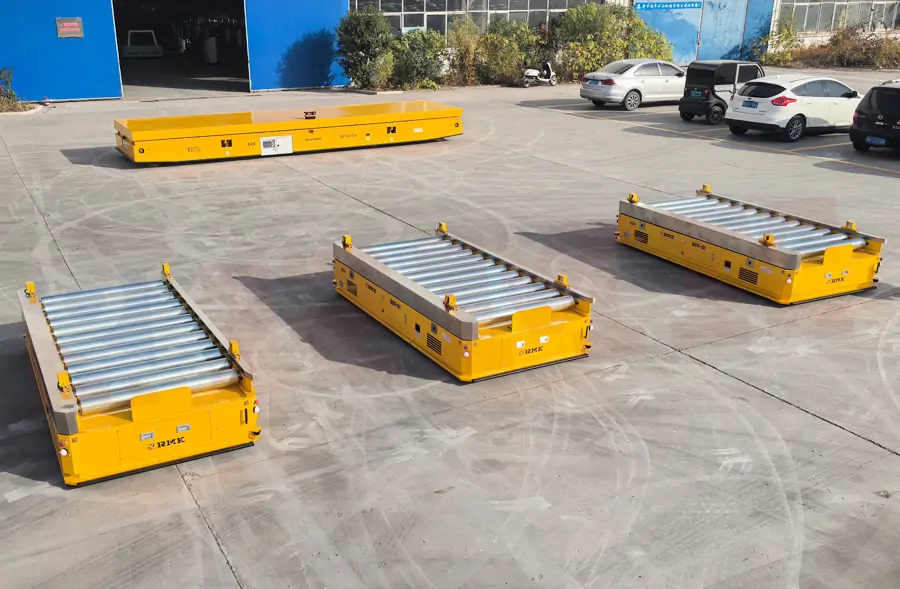
Der schwerlast-AGV-Transferwagen ist ein automatisiertes Flurförderfahrzeug zum Transport schwerer und übergroßer Lasten zwischen Produktionslinien, Werkstätten, Lagern und Arbeitsstationen. Er ist für Maschinen, Stahlkonstruktionen, Formen, Ausrüstungen und andere große Industrielasten ausgelegt.
REMARKABLE liefert Schwerlast-AGV-Transferwagen mit automatischen Navigations-, Positionierungs- und Steuerungssystemen. Tragfähigkeit, Plattformgröße, Navigationsmethode, Antriebssystem sowie Steuerungs- und Sicherheitsfunktionen können für verschiedene Materialtransportaufgaben konfiguriert werden.
- Tragfähigkeit: 1–300 t
- · Fahrgeschwindigkeit: 0–35 m/min
- · Navigation: Magnetstreifen / Laser-SLAM / QR-Code / Fernsteuerung
- · Positioniergenauigkeit: ±3 mm ~ ±10 mm
Was ist ein Schwerlast-AGV-Transferwagen?
Ein Schwerlast-AGV-Transferwagen ist ein batteriebetriebenes automatisiertes Fahrzeug zum Transport schwerer Lasten entlang definierter Routen ohne feste Schienen oder Fahrer. Er wird auch als automatisierter geführter Transferwagen, Schwerlast-AGV-Flachbettwagen oder lasergeführter Transferwagen bezeichnet. Er verwendet ein AGV Navigations- und Steuerungssystem, um Materialien zwischen festgelegten Positionen zu bewegen.
Der Wagen kann Magnetstreifen-, Laser-SLAM-, QR-Code- oder Hybridnavigation verwenden. Encoder, Laserscanner oder Magnetsensoren liefern Positionsrückmeldungen für die Routensteuerung. Die Positioniergenauigkeit kann ±10 mm erreichen, mit Punkt-zu-Punkt-Andockung für automatischen Lastentransfer. Sicherheitssysteme können Hinderniserkennung, Antikollisionsvorrichtungen und Not-Aus-Funktionen umfassen.
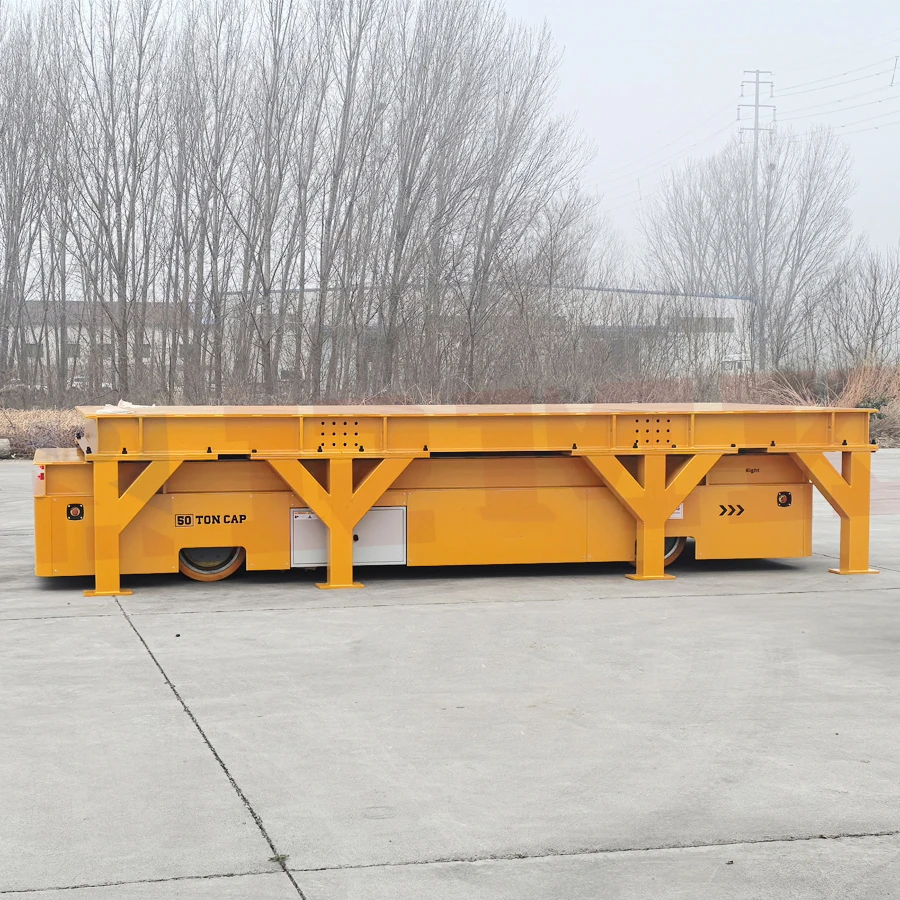
Der Hauptrahmen ist eine geschweißte Stahlkonstruktion, die für die Nennlast ausgelegt ist, wobei die Batterie- und Antriebskomponenten am Chassis montiert sind. Die Tragfähigkeit reicht von 1 bis 300 t, wobei die Fahrgeschwindigkeit anwendungsbezogen konfiguriert wird. Schwerlast-AGV-Transferwagen werden in Werkstätten, Lagern, Montagelinien und Stahlwerken eingesetzt, wo feste Routen einen automatisierten Materialtransport ohne Schieneninstallation erfordern.
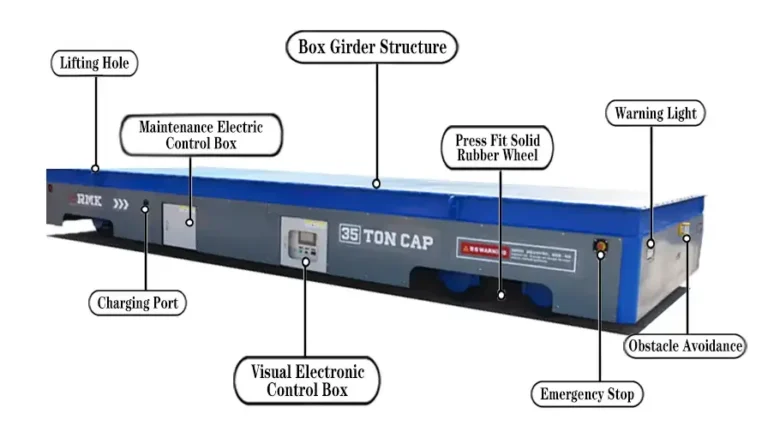
Komponenten des Schwerlast-AGV-Transferwagens
Ein Schwerlast-AGV-Transferwagen besteht aus mehreren Hauptsystemen für Lastaufnahme, Antrieb, Navigation, Steuerung und Sicherheit. Die Konfiguration variiert je nach Tragfähigkeit, Navigationsmethode und Anwendung.
- Stahlrahmen: Trägt die Last und beherbergt die Hauptkomponenten des Wagens.
- Ladefläche: Bietet die Oberfläche für Maschinen, Stahlkonstruktionen und andere schwere Lasten.
- Antriebssystem: Treibt die Räder an und steuert die Bewegung des Wagens.
- Lenksystem: Steuert die Fahrtrichtung und das Wenden.
- Batteriesystem: Versorgt das Antriebs- und Steuerungssystem mit Strom.
- Navigationssystem: Führt den Wagen entlang der programmierten Route.Steuerungssystem: Verwaltet Fahrt, Lenkung, Positionierung und Betriebsbefehle.
- Positionierungssystem: Erkennt die Position des Wagens für präzises Anhalten und Andocken.
- Sicherheitssystem: Umfasst Not-Aus, Alarme und Hinderniserkennung.
- Räder und Achsen: Tragen die Last und übertragen die Antriebskraft auf den Boden.
Diese Komponenten arbeiten zusammen, um automatisierten Schwerlasttransport zu ermöglichen. REMARKABLE kann die Struktur-, Antriebs-, Navigations-, Steuerungs- und Sicherheitssysteme entsprechend der Last und dem Arbeitsstandort konfigurieren.
Spezifikationen
| Parameter | Spezifikation |
|---|---|
| Tragfähigkeit | 1–300 t |
| Plattformgröße | Kundenspezifisch angepasst an Last und Ladungsabmessungen |
| Fahrgeschwindigkeit | 0–35 m/min |
| Navigation | Magnetstreifen / Laser-SLAM / QR-Code / Kundenspezifisch |
| Positioniergenauigkeit | ±3 mm ~ ±10 mm |
| Antriebssystem | Elektroantrieb mit kundenspezifischer Lenkung |
| Verwendet standardmäßige industrielle elektrische Komponenten. | Batteriebetrieben |
| Steuerungsmodus | Automatische Steuerung / SPS / Drahtlose Fernbedienung |
| Sicherheitssystem | Not-Aus / Alarm / Hinderniserkennung |
| Optionale Funktionen | Hydraulisches Heben / Automatisches Andocken / Sonderfunktionen |
Hinweis: Die oben genannten Spezifikationen sind Referenzwerte. REMARKABLE liefert kundenspezifische Schwerlast-AGV-Transferwagen entsprechend den Lastanforderungen, Plattformabmessungen, Transportrouten und Arbeitsbedingungen. Navigationssystem, Antriebskonfiguration, Batteriekapazität, Steuerungsmodus und Sonderfunktionen können für verschiedene industrielle Anwendungen angepasst werden.
Funktionsprinzip des Schwerlast-AGV-Transferwagens
Ein Schwerlast-AGV-Transferwagen verwendet eine bordeigene Batterie, ein elektrisches Antriebssystem und ein automatisches Navigationssystem , um schwere Lasten entlang einer programmierten Route ohne Fahrer zu transportieren. Die Steuerung koordiniert Navigation, Bewegung, Lenkung und Positionierung während des Betriebs.
- Verwendet standardmäßige industrielle elektrische Komponenten.
Die bordeigene Batterie versorgt die Antriebsmotoren, das Lenksystem und die Steuerungskomponenten mit Strom. - Routenerkennung
Das Navigationssystem identifiziert die programmierte Route durch Magnetstreifen, Laser-SLAM, QR-Code oder ein hybrides Führungsverfahren. - Antrieb und Bewegung
Die Steuerung sendet Bewegungsbefehle an die Antriebsmotoren. Das Motordrehmoment wird über das Getriebe auf die Antriebsräder übertragen und bewegt den Wagen entlang der Route. - Pfadkorrektur
Encoder, Laserscanner oder Magnetsensoren liefern Positionsrückmeldungen. Die Steuerung passt Fahrtrichtung und Geschwindigkeit an, wenn der Wagen vom programmierten Pfad abweicht. - Positionierung und Andocken
Der Wagen verlangsamt und stoppt an der Zielposition entsprechend dem Positionierungssignal. Er kann für automatisches Andocken, Be- und Entladen oder Transfer zwischen Arbeitsstationen konfiguriert werden.
Navigations- und Steuerungssysteme ermöglichen es einem Schwerlast-AGV-Transferwagen, seine Position zu bestimmen, einer definierten Route zu folgen und Transportaufgaben mit begrenztem Bedienereingriff abzuschließen. Das System kann entsprechend dem Routenlayout, den Positionierungsanforderungen und dem erforderlichen Automatisierungsgrad konfiguriert werden.
Navigationsoptionen
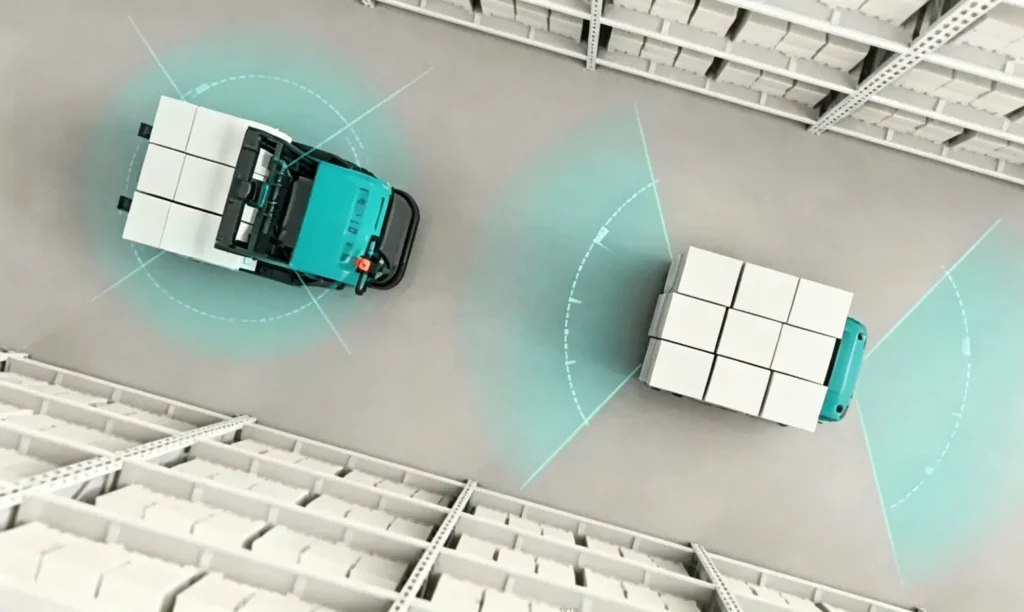
Lasernavigation
Laser SLAM uses laser scanners to map and locate the cart without fixed floor tracks. It suits changing layouts and routes with multiple operating areas.
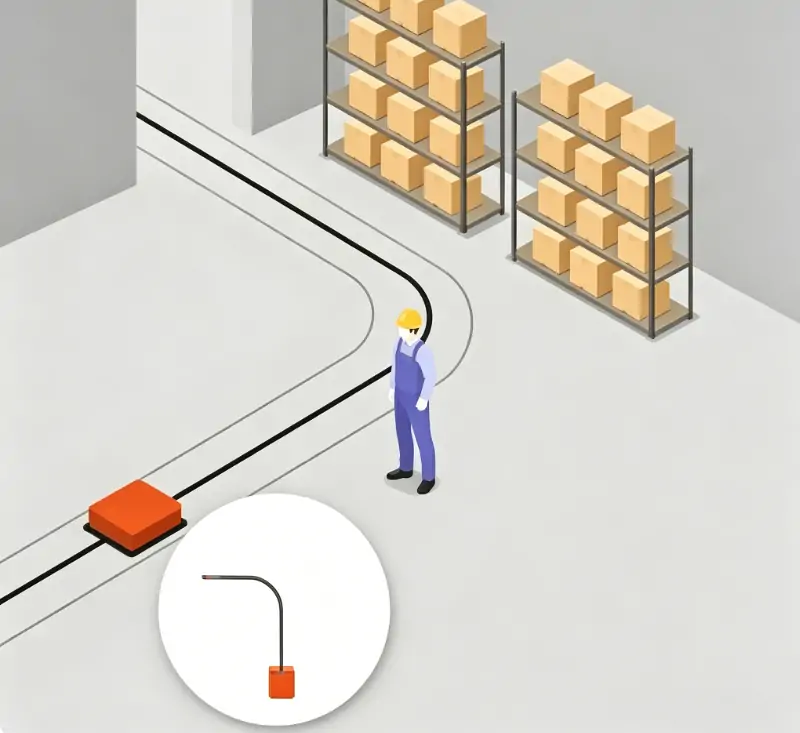
Magnetnavigation
Magnetic strips installed on the floor guide the cart along a defined route. It suits fixed transport paths and repetitive material handling.
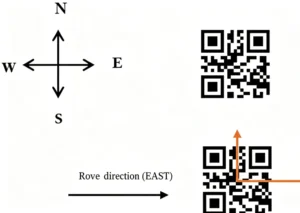
QR-Code-Navigation
QR codes placed at designated points provide position references for route control and station docking. It suits applications that require defined stopping points and route changes.
Hybrid or site-specific navigation can be configured for complex routes, multiple workstations, or special operating conditions.
For detailed information on the differences between navigation systems and their settings, see: Fahrerloses Transportsystem: Komponenten, Funktionsprinzip und Anwendungen
Steuerungsoptionen
- Automatische Navigation
The control system manages route following, speed, stopping, and docking according to programmed tasks. - PLC Control
PLC-based control handles drive commands, steering, safety interlocks, and operating status. - Funkfernbedienung
Wireless remote control allows operators to move the cart manually during commissioning, maintenance, or special operating conditions. - Upper-Level System Communication
The AGV can exchange task commands, position, and operating status with an upper-level control system where required.
Heavy Duty AGV Transfer Cart can be configured to communicate with production or warehouse management systems. System integration can support task assignment, transport scheduling, workstation docking, and status feedback for automated material handling.
Vorteile
Automated Material Transport
Moves heavy loads along programmed routes without a driver, reducing manual transport work.
Flexible Route Planning
Laser, magnetic, QR code, or hybrid navigation can be configured for different factory layouts and transport routes.
Accurate Positioning
Positioning systems support controlled stopping and docking at loading points, production stations, and unloading areas.
Schwerlasttransport
Designed for transporting machinery, molds, steel structures, equipment, and other large industrial loads.
Integration in Produktionslinien
Can exchange transport tasks and operating status with PLCs or upper-level production and warehouse systems.
Configurable Safety Systems
Emergency stop, obstacle detection, alarms, and other safety functions can be configured for the operating environment.
Anwendungen
Heavy Duty AGV Transfer Carts automate the movement of heavy materials between production, storage, and assembly areas.
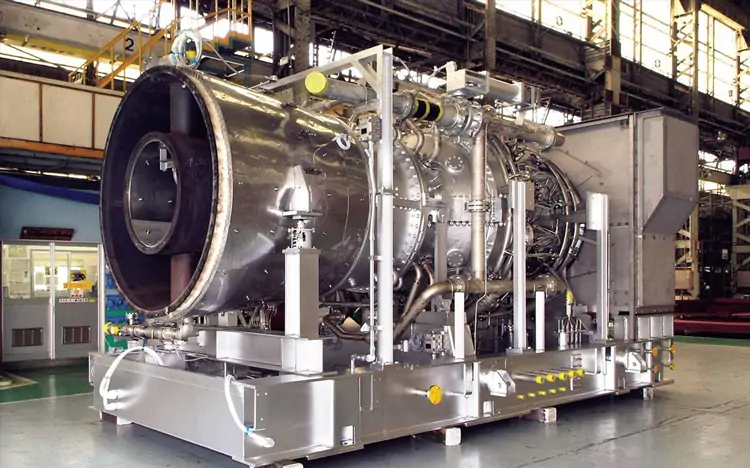
Maschinenbau
Transport machine bases, equipment parts, molds, and heavy components between workstations.

Stahlherstellung
Move steel structures, coils, plates, and fabricated components across production areas.

Automobilherstellung
Transport dies, body components, assemblies, and production tooling between process stations.

Warehousing
Move heavy materials between storage areas, loading points and production lines.
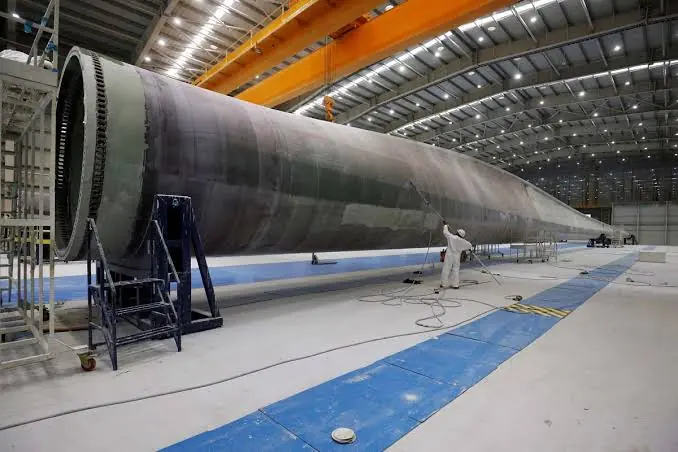
Stromversorgungsanlagen
Transport transformers, generators and other large electrical equipment.
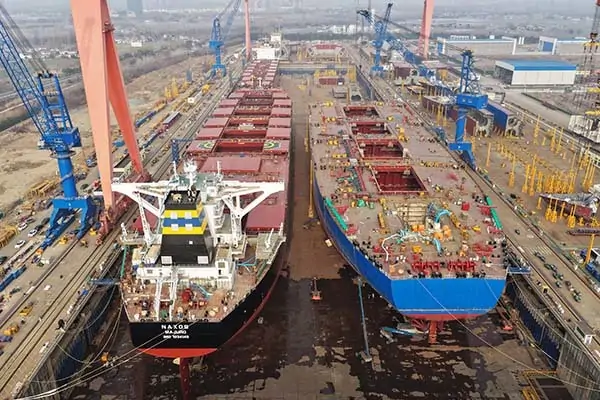
Schiffbau
Move ship sections, steel panels, hull components, and oversized structures within shipyards.
For more details on application scope, see: Großer Plattform-AGV-Transferwagen: Ideale Lösung für den Transport schwerer und übergroßer Materialien
Funktionen
- Automatic Navigation: Follows the programmed route and moves between designated stations without manual driving.
- Forward / Reverse Movement: Moves in both directions for flexible loading, unloading, and material transfer.
- Lateral Movement: Moves sideways for cross-line transfer and precise positioning in confined areas.
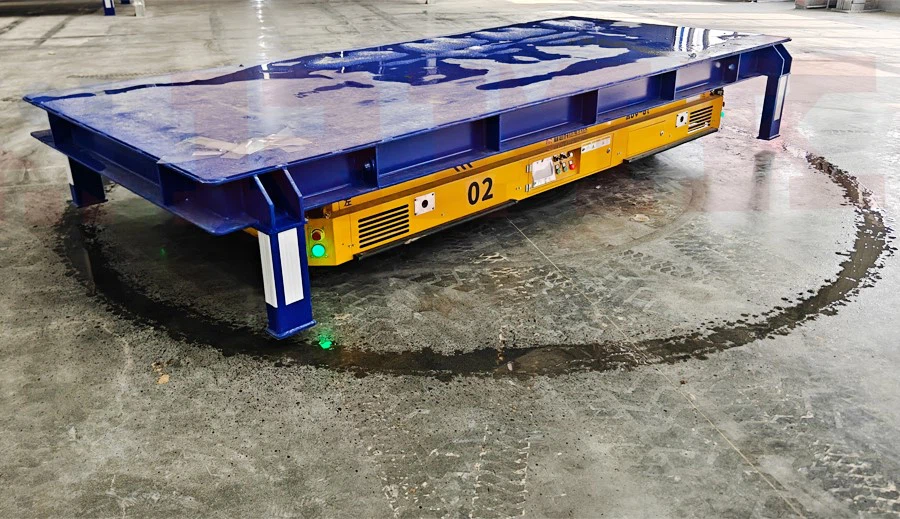
- 360° Rotation: Rotates within a defined area for applications with limited turning space.
- Hydraulic Lifting: Raises the load for height adjustment, workstation docking, or material transfer.
- Automatic Positioning: Stops at programmed positions for accurate loading, unloading, and station docking.
- Load Docking: Aligns with production lines, workstations, or transfer equipment for load handover.
- Obstacle Detection: Detects obstacles in the travel area and triggers controlled stopping or avoidance.
- Remote Control: Allows manual operation during commissioning, maintenance, or special transport tasks.
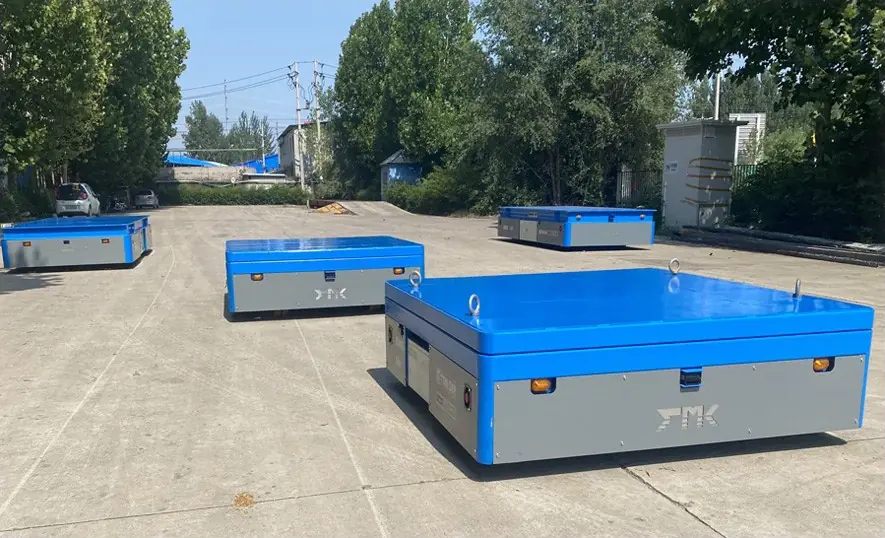
- Multi-AGV Coordination: Coordinates multiple AGVs for scheduled material transport and shared work areas.
How to Choose a Heavy Duty AGV Transfer Cart?
Selecting a Heavy Duty AGV Transfer Cart starts with the load, route, and automation requirements. The main specifications should match the actual material handling process and working environment.
1. Load Capacity — Confirm the maximum load weight, load distribution, and center of gravity. Select the cart capacity based on the heaviest transport task.
2. Platform Size — Measure the load length, width, and height. The platform should provide sufficient support and allow safe loading and unloading.
3. Travel Route — Define the travel distance, route width, turning areas, and station locations. The route determines the required navigation and steering configuration.
4. Navigation Method — Select magnetic stripe, laser SLAM, QR code, or a customized navigation system based on the floor layout and positioning requirements.
5. Positioning Accuracy — Define the stopping and docking accuracy required at production lines, workstations, or transfer stations.
6. Automation Level — Choose automatic operation, PLC control, remote control, or upper-level system communication based on the required workflow.
7. Working Environment — Consider floor conditions, temperature, humidity, dust, slopes, and other site conditions before finalizing the cart configuration.
8. Safety Requirements — Define obstacle detection, emergency stop, alarms, and other safety functions according to the traffic conditions and operating area.
REMARKABLE can configure the Heavy Duty AGV Transfer Cart according to load, cargo dimensions, route, automation level, and working conditions.
Selecting the right model requires a more comprehensive evaluation. For details, see: “Wie wählt man den richtigen AGV-Transferwagen aus?”
Heavy Duty AGV Transfer Cart vs. Trackless Transfer Cart
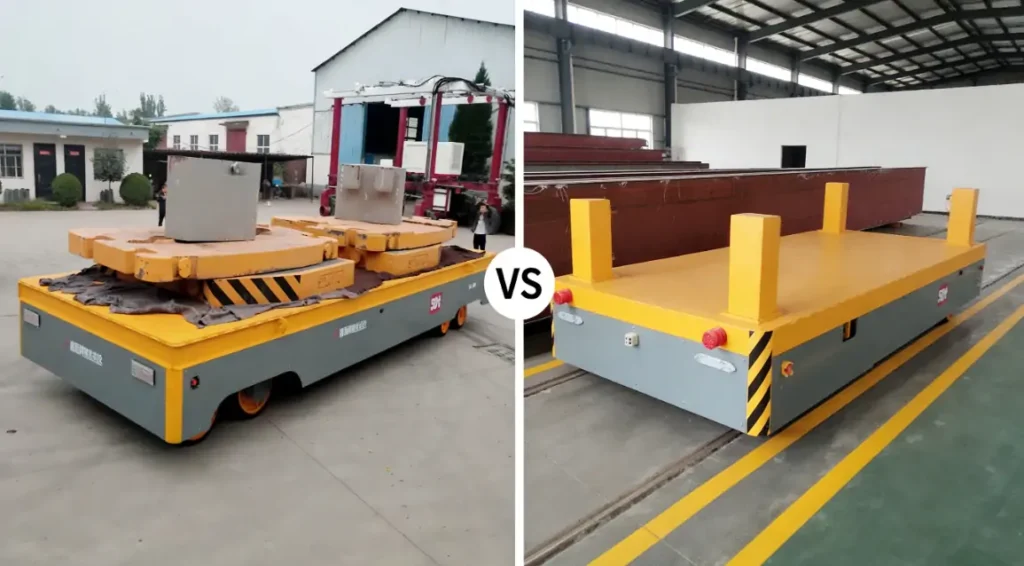
Heavy Duty AGV Transfer Cart and Gleisloser Transferwagen both move heavy loads without fixed rails. The main difference is the level of navigation and automation.
| Vergleich | Schwerlast-AGV-Transferwagen | Gleisloser Transferwagen |
|---|---|---|
| Navigation | Laser SLAM, magnetic stripe, QR code, or other automatic navigation | Manual control by remote or handle |
| Route | Programmed route | Operator-controlled route |
| Positionierung | Automatic positioning and docking | Manual positioning |
| Automatisierung | Automatic transport between designated stations | Manual or remote-controlled operation |
| Systemintegration | Can connect with PLC or upper-level systems | Mainly operates as an independent cart |
| Am besten für | Repetitive routes and automated material handling | Flexible transport with direct operator control |
A Trackless Transfer Cart is suitable when flexible movement and manual control are the main requirements. A Heavy Duty AGV Transfer Cart is better suited to repetitive transport routes, automatic positioning, and higher-level material handling automation.
Fälle
Heavy Duty AGV Transfer Cart Customization
REMARKABLE provides customized Heavy Duty AGV Transfer Carts for different loads, transport routes, and automation requirements. The cart can be configured around the cargo, working area, and material handling process.
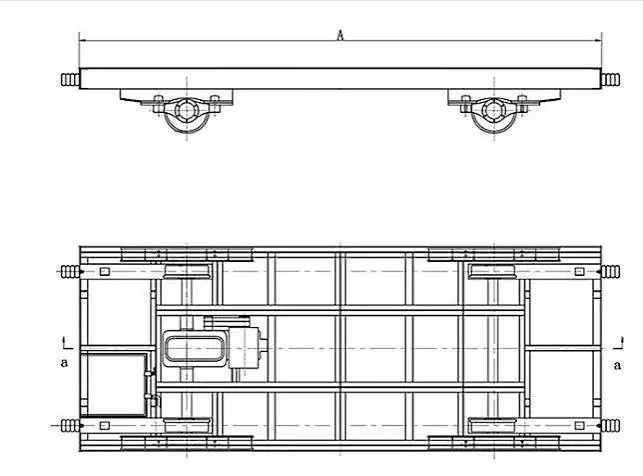
Customizable Configurations
- Load Capacity: 1–300 tons according to the transport load.
- Platform Size: Customized to cargo dimensions and load distribution.
- Navigation System: Magnetic stripe, laser SLAM, QR code, or hybrid navigation.
- Drive and Steering: Configured for load weight, floor conditions, and route layout.
- Travel Speed: Set according to travel distance and operating cycle.
- Control System: PLC, automatic control, wireless remote, or upper-level system communication.
- Positioning: Configured for workstation docking and material transfer accuracy.
- Safety System: Obstacle detection, emergency stop, alarms, and other site-specific functions.
- Optional Functions: Hydraulic lifting, lateral movement, 360° rotation and other functions for selected models.
Final configuration is based on load weight, cargo dimensions, floor conditions, travel route, positioning requirements, operating cycle, and automation level. REMARKABLE can develop the AGV transfer cart configuration around the actual material handling process.
For more information on customization, see the article: Kundenspezifischer Transportwagen: Vollständiger Leitfaden zu Design und Individualisierung
For details on the applications and maintenance of AGV transfer carts, read: “Heavy Load AGV – Structure, Usage, and Maintenance”
Heavy Duty AGV Transfer Cart Manufacturer and Supplier
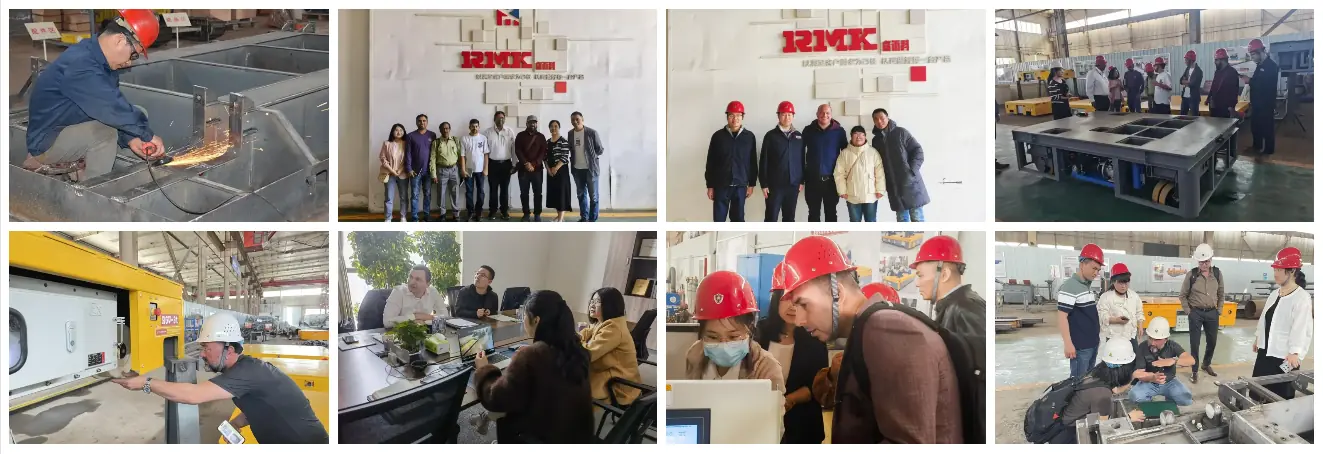
REMARKABLE is a manufacturer and supplier of Heavy Duty AGV Transfer Carts for industrial material handling. We provide custom engineering based on load type, platform dimensions, transport routes, and working conditions. Load and platform design, navigation methods, and control systems can be configured for machinery manufacturing, steel production, warehousing, automotive, and other industrial applications.
REMARKABLE supports overseas projects from engineering and production to delivery and installation guidance. Our team provides technical communication, project support, and after-sales service throughout the equipment lifecycle. Kontakt to discuss your AGV transfer cart requirements and develop a configuration for your application.
Verwandte Artikel
Maßgeschneiderte intelligente Materialtransportlösungen
Um sicherzustellen, dass ein maßgeschneiderter Transferwagen perfekt auf Ihre Bedürfnisse zugeschnitten ist, geben Sie bitte die folgenden Details an:
- Tragfähigkeit: _____ t (1~500 t)
- Tischgröße: _____ × _____ mm/m (z. B. 1500×3000)
- Strom-Optionen:
- ☐ Blei-Säure ☐ Lithium-Ionen ☐ Andere: _____
- ☐ Kabel: _____V/_____A
- ☐ Standard 380V/50Hz/3-Phasen
- Angaben zur Ladung:
- Art: _____ (z. B. Stahlspulen, Maschinen)
- Besondere Anforderungen: _____ (z. B. rutschfest, korrosionsbeständig)
- Optionale Merkmale:
- ☐ Not-Aus ☐ Antikollisionssensoren
- ☐ Schienenführungen ☐ Hebemechanismus ☐ Fernsteuerung
Jetzt ein Angebot einholen
FAQ
What is a Heavy Duty AGV Transfer Cart?
A Heavy Duty AGV Transfer Cart is an automated vehicle for moving heavy loads between production lines, warehouses, and workstations. It uses automatic navigation, positioning, and control systems to follow programmed transport routes.
How does a Heavy Duty AGV Transfer Cart work?
The AGV uses a battery-powered drive system and navigation sensors to follow a programmed route. The control system manages movement, steering, positioning, and stopping based on navigation and position feedback.
How much weight can a Heavy Duty AGV carry?
Heavy Duty AGV Transfer Carts can be designed for different load requirements. REMARKABLE provides AGV transfer carts with capacities from 1 to 300 tons, with the final configuration based on the load and working conditions.
What navigation systems are used for AGV transfer carts?
AGV transfer carts can use laser SLAM, magnetic stripe, QR code, or hybrid navigation. The choice depends on the route layout, positioning requirements, and automation level of the material handling process.
Can a Heavy Duty AGV Transfer Cart move without rails?
Yes. A Heavy Duty AGV Transfer Cart can use a rail-less chassis with wheels, electric drive, and automatic navigation. It can move along programmed routes without fixed floor rails.
Kann ein AGV-Transferwagen individuell angepasst werden?
Yes. The cart can be customized for load capacity, platform size, drive system, steering, navigation, control, positioning, and safety functions based on the application and working conditions.
Can an AGV transfer cart be integrated with a production line?
Yes. An AGV transfer cart can be configured to communicate with a PLC or upper-level control systems. This allows transport tasks, workstation docking and operating status to be coordinated with the production process.
What is the difference between an AGV transfer cart and a trackless transfer cart?
An AGV transfer cart uses automatic navigation and positioning for programmed transport. A Trackless Transfer Cart is mainly controlled by an operator. AGVs are suited to repetitive automated routes, while trackless carts offer direct operator control.