Introduction
If you’ve visited a modern warehouse or distribution center in recent years, you’ve probably noticed more automated equipment moving materials with minimal human intervention. Among these solutions, the warehouse AGV transfer cart has become a popular choice for transporting pallets, components, and finished goods between different work areas. As labor costs continue to rise and efficiency requirements become more demanding, many warehouse managers are turning to a warehouse transfer cart to streamline internal logistics and improve operational consistency.
In this article, we will explain what a warehouse AGV transfer cart is, how it works, its key features, common warehouse applications, available navigation methods, and the factors that influence purchasing costs.
What Is a Warehouse AGV Transfer Cart?
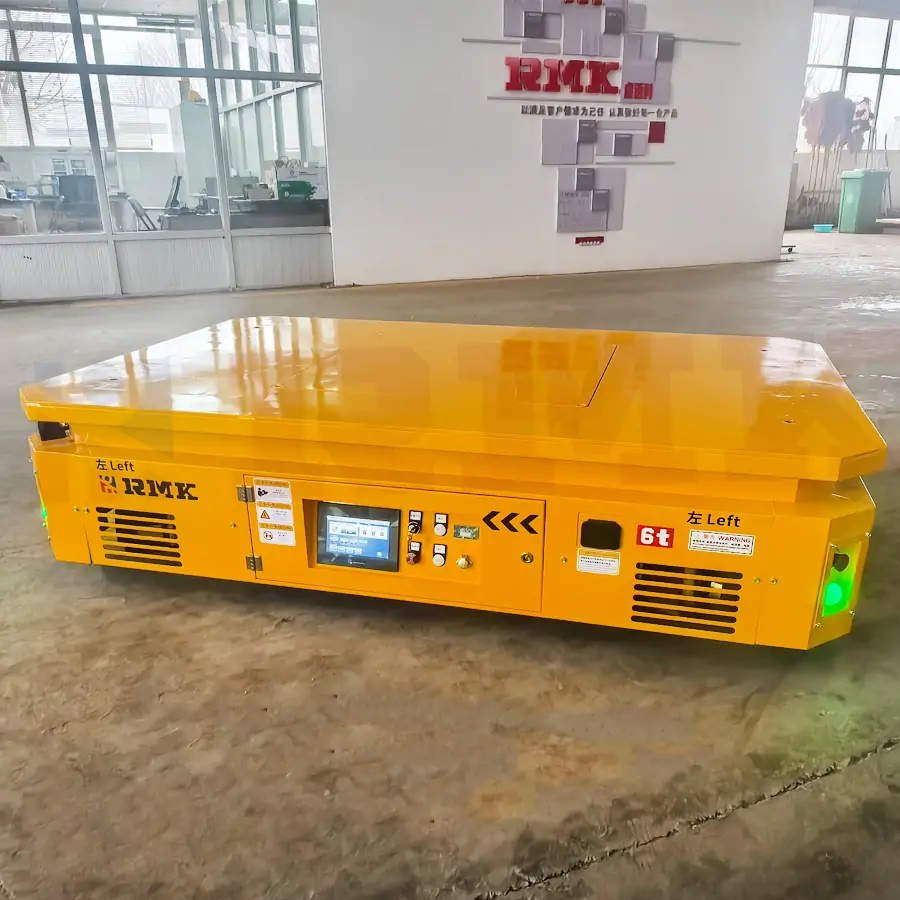
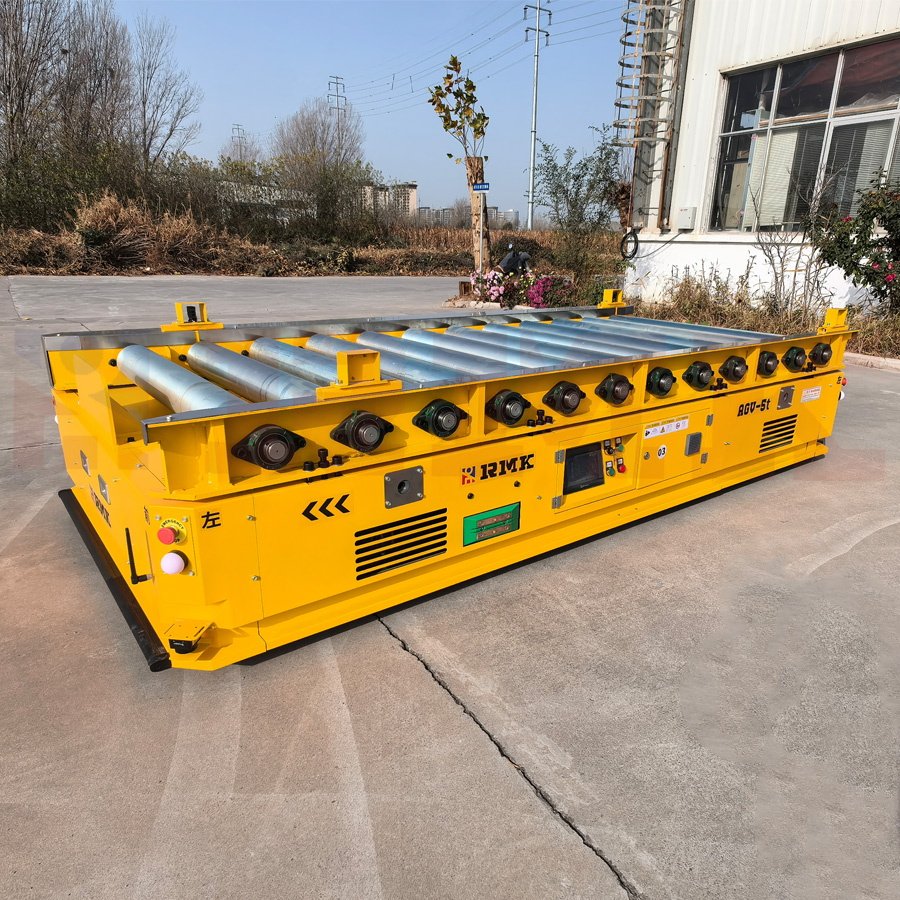
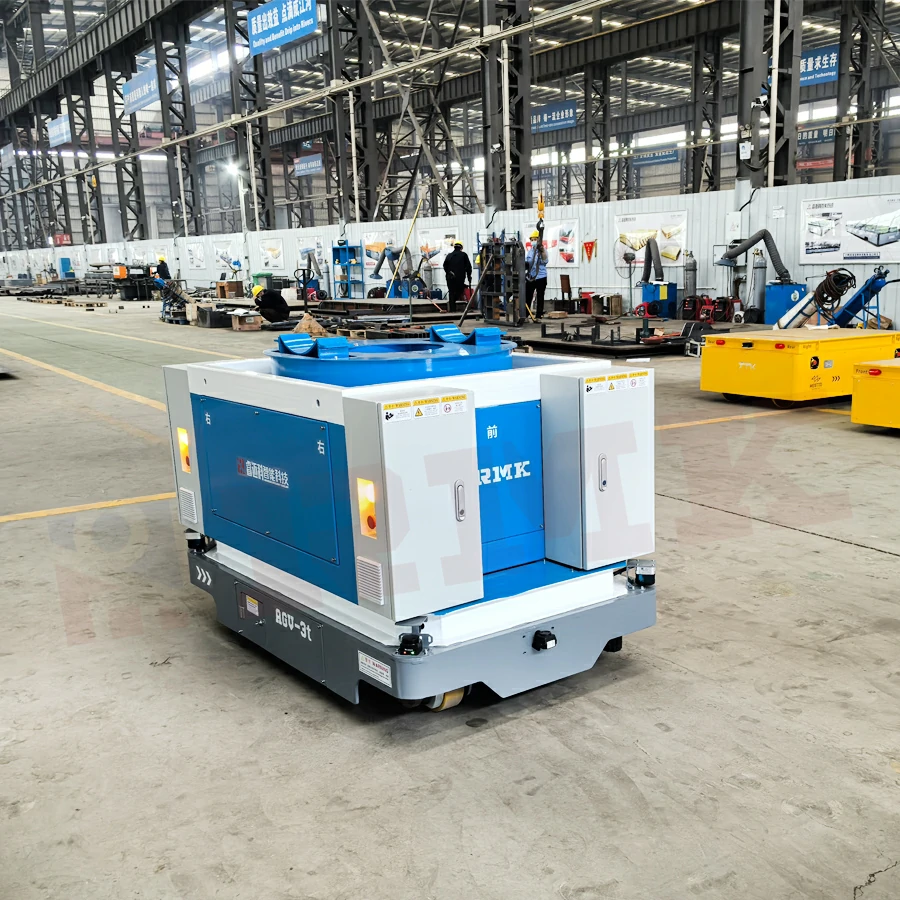
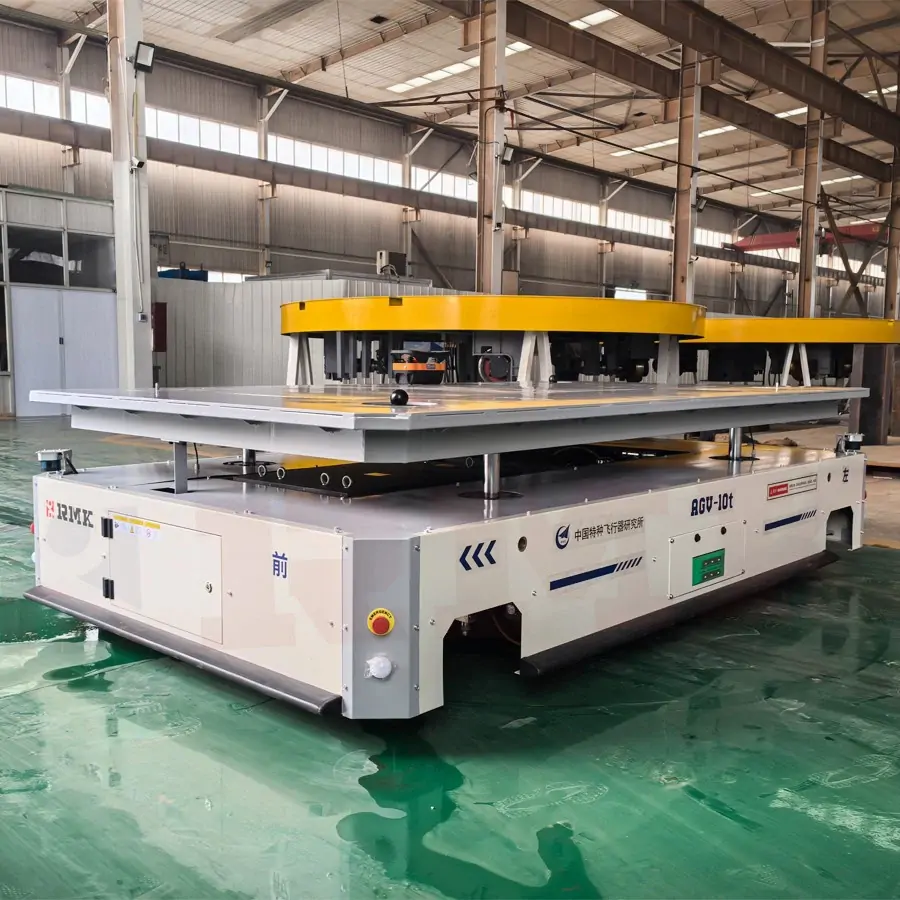
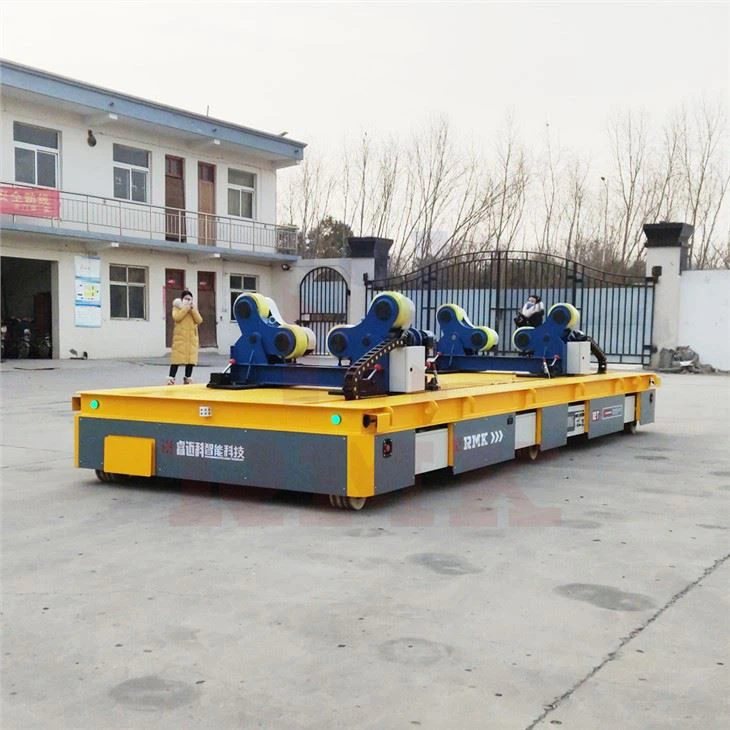
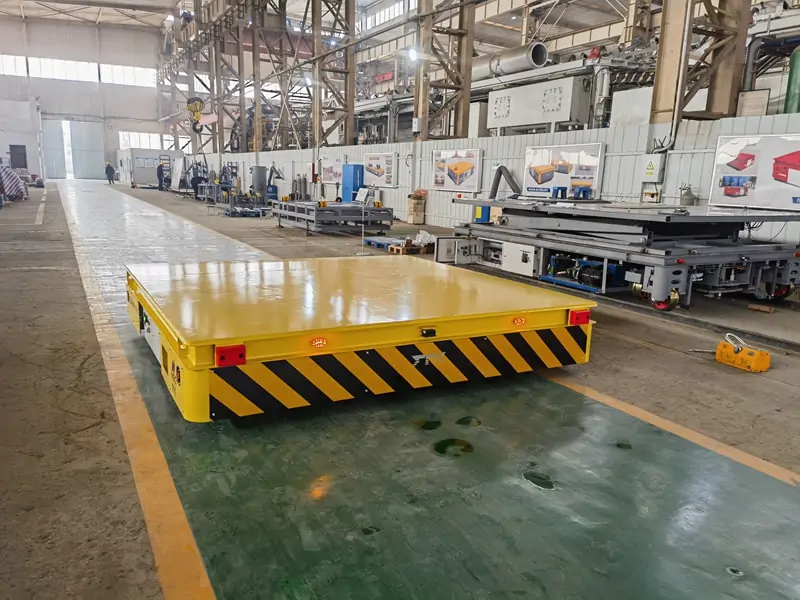
A warehouse AGV transfer cart, short for Automated Guided Vehicle transfer cart, is an unmanned material handling vehicle designed for warehouse and intralogistics operations. It is equipped with navigation systems and safety protection devices that allow it to follow predefined routes and complete cargo handling, transportation, and docking between storage areas, workstations, and sorting lines without manual operation.
How Does a Warehouse AGV Transfer Cart Work?
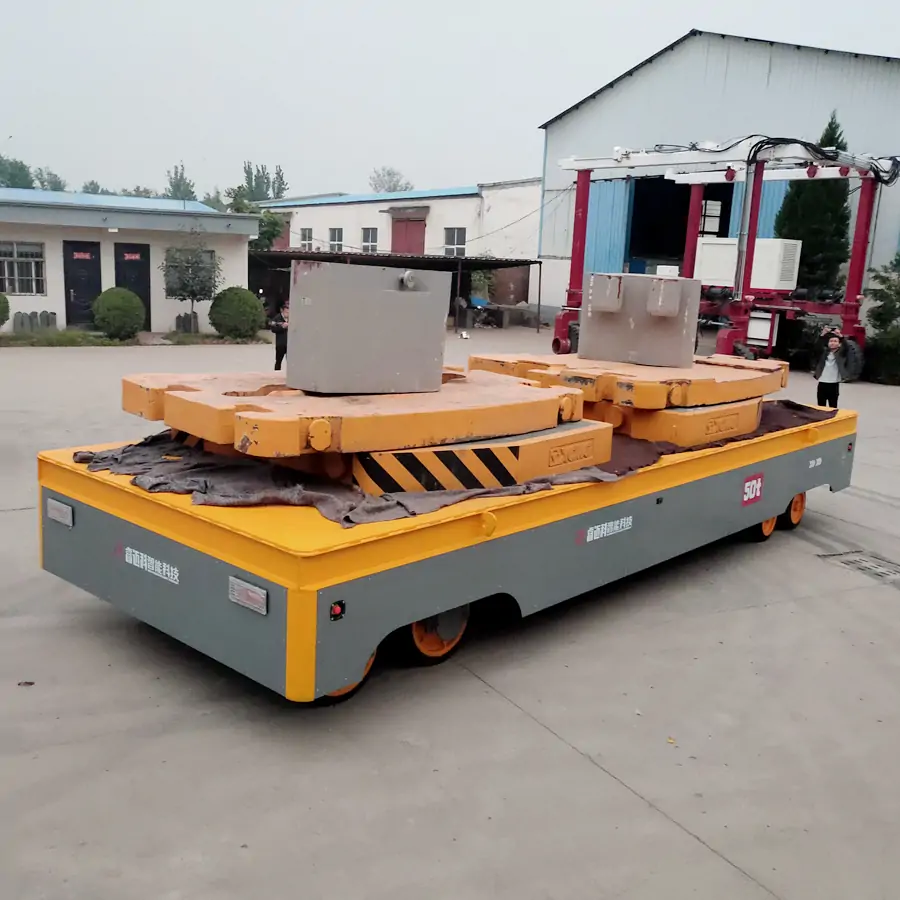
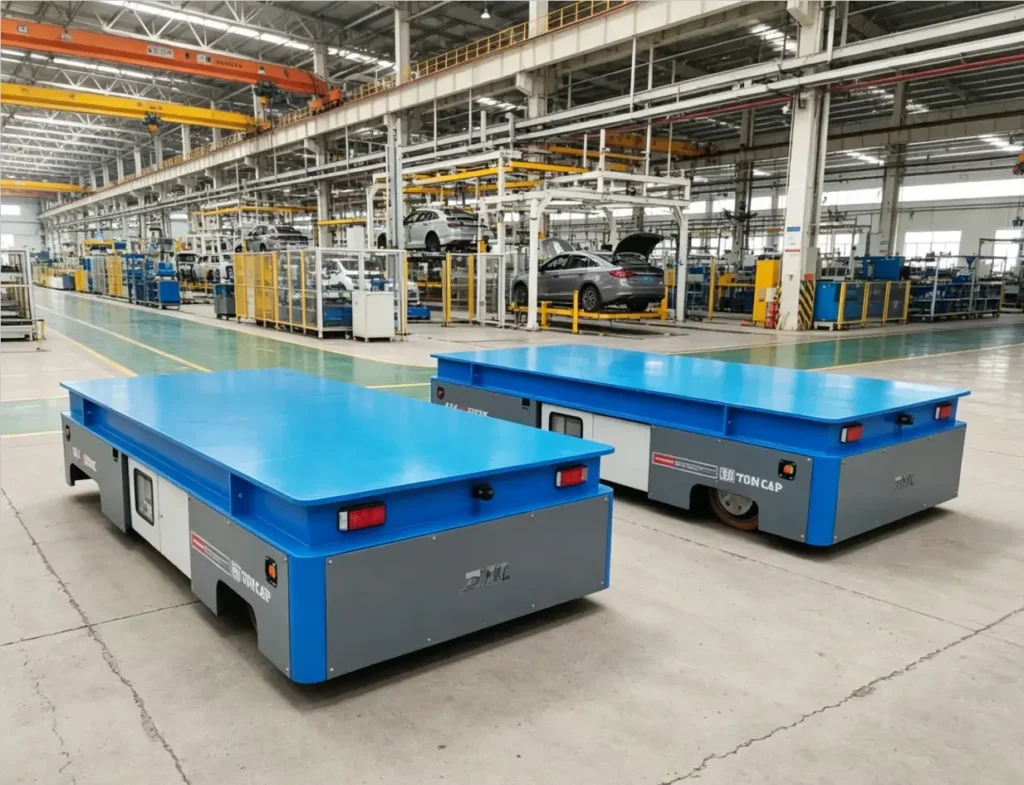
A warehouse AGV transfer cart works through a coordinated process of task control, navigation, movement, and safety management to complete unmanned material handling in warehouse environments.
- Task receiving: The cart receives instructions from the warehouse control system and is assigned transport tasks based on location, battery level, and priority.
- Navigation and positioning: It uses laser SLAM or magnetic navigation to determine its position and follow a predefined route. Magnetic navigation relies on ground magnetic strips, while laser SLAM builds a real-time map of the environment for positioning.
- Path planning and movement control: The onboard controller calculates the optimal route and adjusts motor speed and steering to keep the cart moving along the planned path.
- Obstacle detection: Sensors continuously detect obstacles ahead. The system will slow down, stop, or reroute when necessary to ensure safe operation.
- Docking and task completion
At the target point, the cart performs precise positioning for loading or unloading, then reports task completion to the system. - Power management: When the battery is low, the cart automatically returns to a charging station for recharging before resuming standby.
The warehouse AGV transfer cart completes automated warehouse transport with minimal human intervention.
For a more detailed article on AGV systems and their applications, see: Automated Guided Vehicle System: Components, Working Principle, and Applications
Advantages
A warehouse AGV transfer cart is built to support efficient material handling in modern warehouse operations, with key features summarized as follows:
- High flexibility: No fixed track is needed, and routes can be adjusted through software when warehouse layouts change.
- Continuous operation efficiency: It can run 24/7 with optimized routing, helping reduce empty runs and improve overall handling efficiency.
- Accuracy and safety: Precise navigation ensures stable positioning, while multiple sensors detect obstacles and trigger automatic stopping when needed.
- System integration: It connects with WMS, MES, and ERP systems to receive tasks and share real-time operation data.
- Long-term cost efficiency: While the initial investment is higher, it helps reduce labor costs and maintenance requirements over time.
A warehouse AGV transfer cart combines flexibility, stable operation, and precise control to support modern warehouse material handling. It improves efficiency, enhances safety, and reduces long-term operating costs.
Applications
A warehouse AGV transfer cart is used across a wide range of warehouse and logistics environments where material transfer is required between fixed points.
Inbound and outbound docks
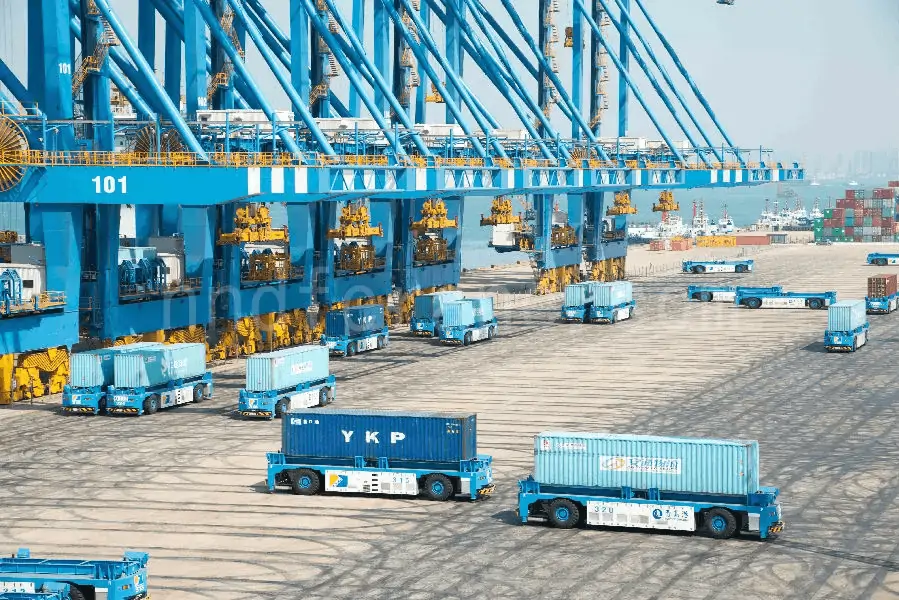
Transport between receiving docks and storage areas, and between storage zones and shipping docks.
Pallet storage areas
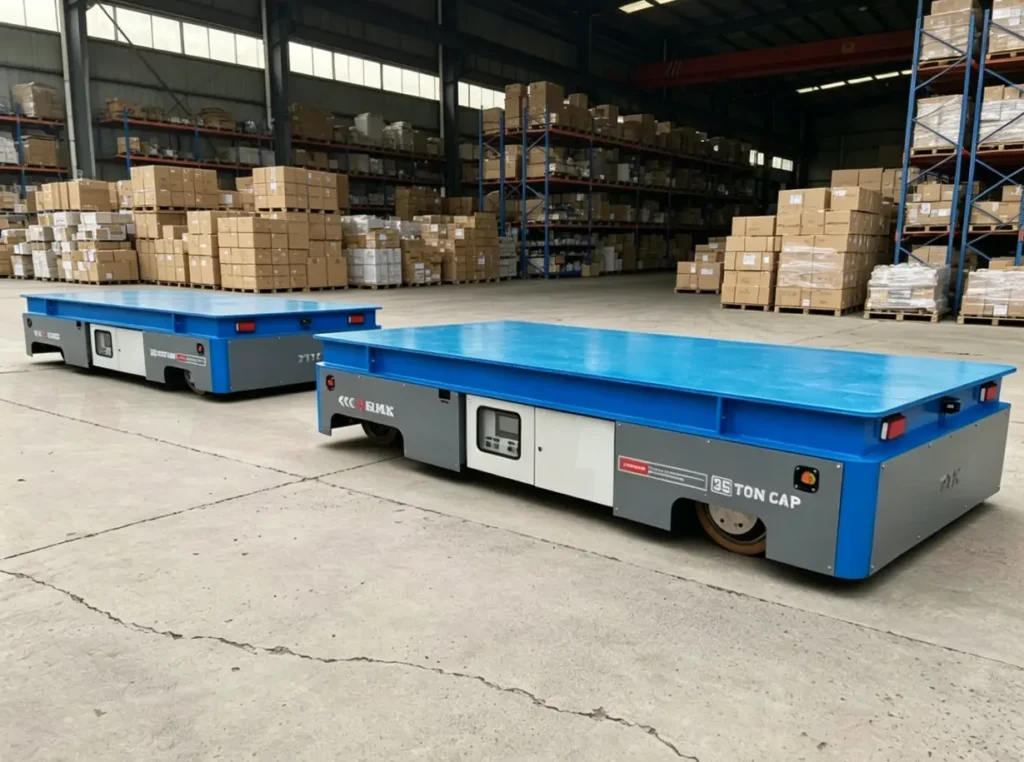
Movement of palletized goods between different storage locations within the warehouse.
Production workshop connection
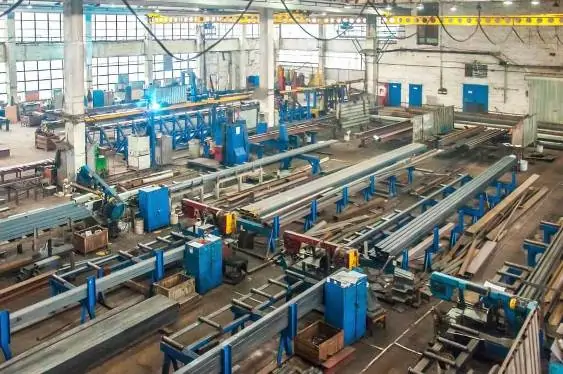
Material transfer between warehouses and production lines in manufacturing facilities.

Sorting centers
Transfer between sorting stations, buffer zones, and dispatch areas in distribution hubs.

Automated storage systems
Connection between storage racks, conveyors, and automated handling equipment.
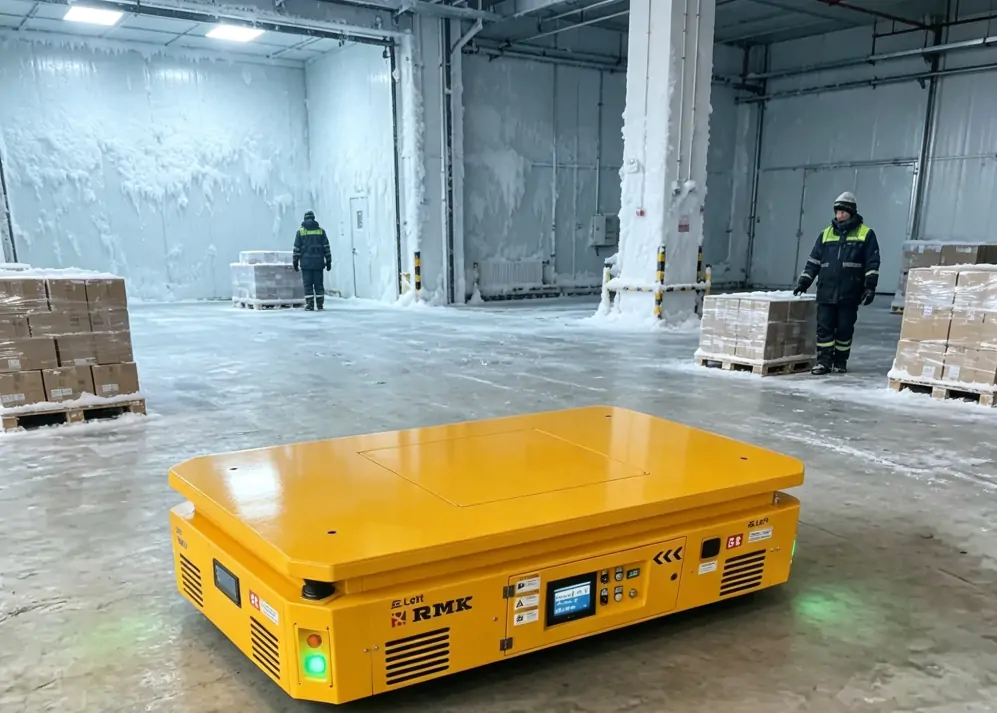
Cold storage warehouses
Material handling operations in refrigerated and frozen storage environments.
A warehouse AGV transfer cart is applied in multiple warehouse and logistics scenarios where fixed-point material transfer is required, covering storage, production, sorting, and specialized storage environments.
Warehouse AGV Transfer Cart Load Capacity Options
The warehouse AGV transfer cart is available in a wide range of load capacities, from light-duty material handling to heavy industrial transportation. Capacity selection is typically based on application scenarios, cargo weight, and warehouse layout requirements.
| Type | Load Capacity Range | Typical Applications |
| Light-duty AGV | 300 kg – 2 tons | Small components, electronic parts, packaged goods |
| Medium-duty AGV | 2 – 20 tons | Palletized goods, warehouse circulation, general manufacturing transport |
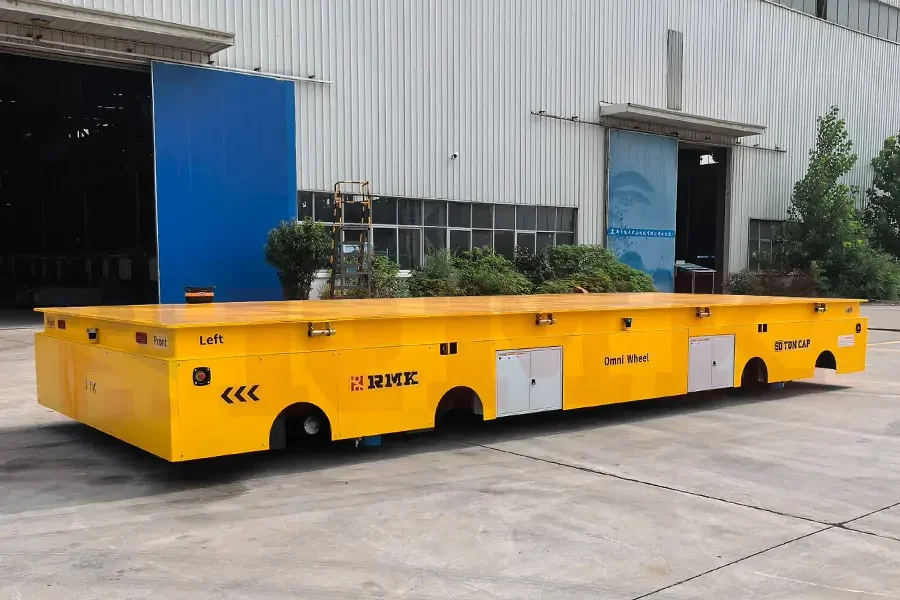
| Heavy-duty AGV | 20 – 100 tons | Steel structures, molds, machinery parts, heavy industrial materials |
| Ultra-heavy AGV (customized) | 100+ tons | Large industrial equipment, oversized components, special project handling |
Choosing the right capacity helps maintain stable operation and reliable performance in different warehouse handling scenarios. View more types of AGV transfer carts: AGV Transfer Cart Factory
How Much Does a Warehouse AGV Transfer Cart Cost?
The price of a warehouse AGV transfer cart varies significantly, typically ranging from several thousand dollars to over one hundred thousand dollars per unit, widely depending on technical configuration, load capacity, and project requirements.
1. Navigation system
Magnetic or QR navigation is more economical, while laser SLAM costs more due to higher flexibility and no need for floor modification.
2. Load capacity
Light-duty models are cheaper, while heavy-duty units require stronger structure, motors, and batteries, increasing overall cost.
3. Functions and configuration
Basic transport units cost less, while features like auto charging, obstacle avoidance, and multi-vehicle control raise the price. Special environments also require customization.
4. System integration and project scope
Total cost includes not only the cart but also control systems, WMS/MES integration, charging stations, and installation work.
5. Typical Investment Range
A small system with 2–3 units and a basic control setup usually starts from about $28,000–$42,000 (≈ 200,000–300,000 RMB). Larger multi-vehicle systems with higher automation levels require a significantly higher budget, depending on configuration and complexity.
6. Return on Investment
A warehouse AGV transfer cart can reduce labor costs and improve handling efficiency. In typical applications, payback periods are around 1–3 years, depending on workload and usage.
The cost of a warehouse AGV transfer cart depends on the navigation system, load capacity, functions, and project scope. It should be considered as part of a complete automation solution rather than a single machine. In most cases, long-term savings and efficiency improvements help offset the initial investment.
Factors Affecting Warehouse AGV Transfer Cart Pricing
The price of an AGV (Automated Guided Vehicle) transfer cart is influenced by multiple factors and can vary significantly depending on configuration and application scenarios. It cannot be simply evaluated based on a single unit price.
- Navigation system: Magnetic or QR navigation is generally lower in cost, while laser SLAM or vision-based navigation requires more advanced components and increases overall price.
- Load capacity and customization: A higher payload means a stronger structure, larger motors, and more powerful batteries. Non-standard designs for specific industries also add to the cost.
- Hardware configuration: Key components such as sensors, motors, batteries, and the steel structure directly affect performance and price differences between models.
- Software and control system (RCS): The scheduling system and integration with WMS or MES are often major contributors to total cost, especially in multi-vehicle projects.
- Project scope and service: Installation, debugging, system integration, training, and after-sales support are all included in the overall project budget.
AGV pricing is determined by the full system, not just the vehicle itself. The right configuration depends on actual application needs and project conditions. For more information on the cost of die/mold transport carts, see: How Much Does a Die/Mold Transport Cart Cost?
Warehouse AGV Transfer Cart vs Forklift
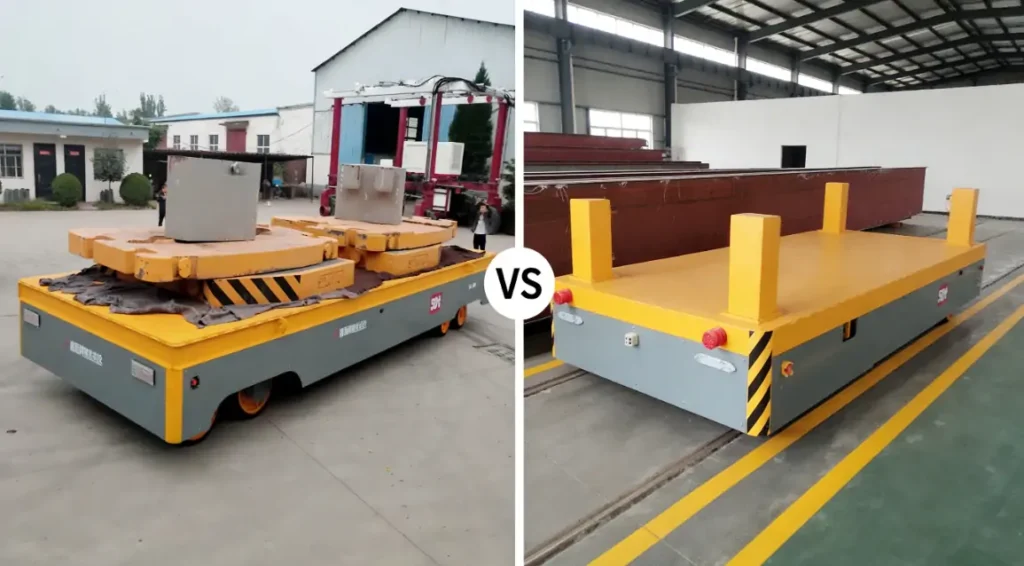
Warehouse AGV transfer carts and AGV forklifts are two common types of automated material handling equipment. Warehouse AGV transfer carts are mainly used for point-to-point horizontal transportation of pallets or materials, while AGV forklifts combine lifting and handling functions, enabling vertical operations such as stacking and retrieval.
| Comparison | AGV Transfer Cart | AGV Forklift |
| Core function | Horizontal transport between fixed points | Lifting, stacking, and pallet handling |
| Structure type | Platform-based or towing type | Fork structure with lifting mast |
| Load & height | Handles pallet or material transport, low lifting height | Handles pallet storage and retrieval with vertical lifting |
| Typical use | The AGV transfer cart is suitable for moving materials between production lines, warehouses, and staging areas | AGV forklift is suitable for rack storage, stacking, and loading/unloading operations |
| Space use | Suitable for general warehouse layouts and flexible routes | Suitable for narrow aisles and vertical storage systems |
As shown in the comparison table, AGV transport vehicles are suitable for horizontal transport between fixed points such as production lines, warehouse areas, and loading/unloading zones. AGV forklifts, on the other hand, are better suited for warehouse operations involving vertical material handling, such as stacking, shelf access, and high-bay storage or loading/unloading.
How to Choose the Right Warehouse AGV Transfer Cart
Choosing the right AGV transfer cart depends on your warehouse layout, load requirements, and automation level. Below are the key factors to consider, each explained in a simple and practical way.
Load Capacity
Select based on the maximum transport weight. Light-duty models are for small parts, while heavy-duty AGVs handle pallets, molds, or steel structures.
Transport Distance & Route
Basic navigation is enough for short, point-to-point transport. For long distances or complex routes, SLAM or QR/magnetic guidance is required.
Navigation Method
Laser SLAM offers high flexibility without floor modification. Magnetic or QR code guidance is more cost-effective but less flexible.
Battery & Runtime
Lithium batteries provide longer lifespan and fast charging, making them suitable for 24/7 operations.
Floor Conditions
Standard AGVs work on smooth floors, while rough or heavy-duty environments require reinforced wheels and suspension systems.
Automation Level
Basic AGVs handle simple transport tasks, while advanced systems support scheduling, multi-vehicle coordination, and WMS integration.
Safety Features
Look for obstacle detection, emergency stop, anti-collision sensors, and alarm systems to ensure safe operation.
Customization
For special requirements, choose a manufacturer that supports customization in size, structure, navigation, and control systems.
A suitable AGV transfer cart should match your load requirements, warehouse layout, navigation needs, and automation goals to provide stable, efficient, and scalable material handling. For tips on selecting the right model, see: How to Choose the Right Mold Transport Cart for Your Factory
Conclusion
Warehouse AGV transfer carts help improve material handling efficiency, reduce manual labor, and support warehouse automation. By evaluating factors such as load capacity, navigation technology, operating environment, automation requirements, and overall investment cost, businesses can choose a solution that fits their operational needs and future growth plans.

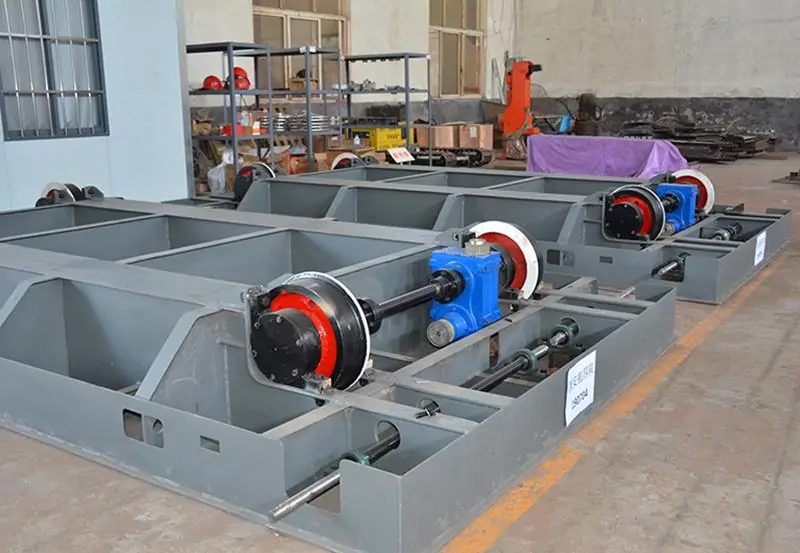
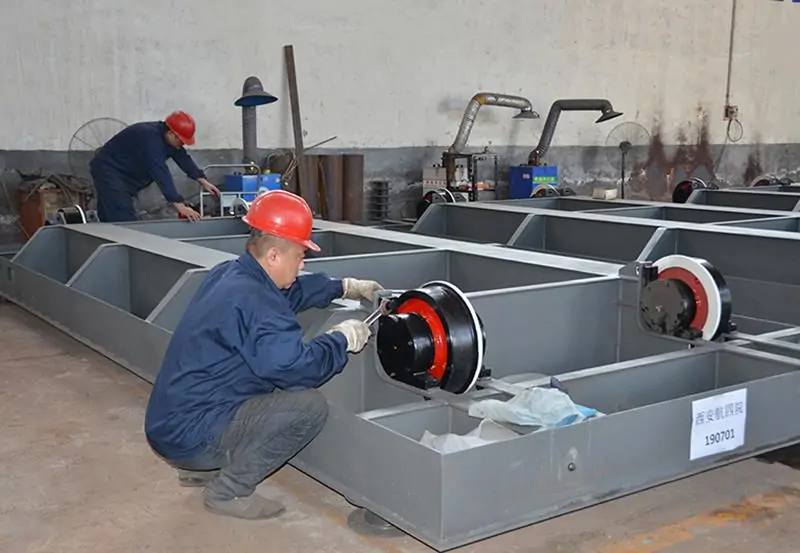
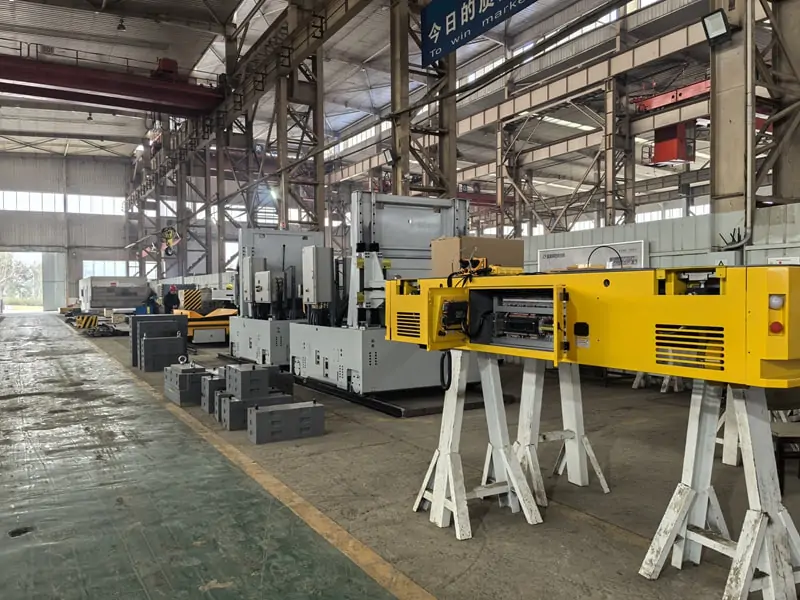
REMARKABLE is a professional AGV transfer cart manufacturer and supplier with extensive industry experience and customization capabilities. Whether you need a standard warehouse AGV or a tailored solution for a specific application, our team can provide technical support and project guidance. Contact us today to discuss your material handling requirements and find the right AGV solution for your facility.
Email: transfercart@rmkzn.com
Phone: +86-18637369355

FAQs
What is a warehouse AGV transfer cart?
A warehouse AGV transfer cart is an automated guided vehicle used to move materials within warehouses or production facilities without manual driving.
How much does a warehouse AGV transfer cart cost?
The cost varies depending on load capacity, navigation system, and customization level, typically ranging from entry-level models to high-end automated systems.
What is the load capacity of a warehouse AGV transfer cart?
Load capacity can range from a few hundred kilograms to several tens of tons, depending on the application requirements.
How does a warehouse AGV transfer cart navigate?
It uses technologies such as laser SLAM, magnetic strips, QR codes, or predefined track systems to follow routes accurately.
Can a warehouse AGV transfer cart replace forklifts?
Yes, in many repetitive and fixed-route transport tasks, AGV carts can replace forklifts and reduce manual labor.
What industries use warehouse AGV transfer carts?
They are widely used in manufacturing, automotive, logistics, warehousing, metallurgy, and heavy industry.
How long does the battery last on an AGV transfer cart?
Battery life depends on capacity and usage, but lithium battery systems typically support long shifts and fast charging for continuous operation.
How do I choose the right warehouse AGV transfer cart?
You should consider load capacity, transport distance, navigation method, floor conditions, automation level, and whether customization is needed.