
Inhaltsverzeichnis
Einleitung
Ein Schwerlast-Transferwagen ist für den Transport schwerer industrieller Lasten wie Stahlkomponenten, Formen, Maschinen und großer Strukturen ausgelegt. Die Tragfähigkeit kann von mehreren Tonnen bis zu mehreren hundert Tonnen reichen, wobei für Sonderanwendungen über 1000 Tonnen kundenspezifische Modelle erhältlich sind. Die tatsächliche Tragfähigkeit hängt von der Art der Ladung, der Wagenkonstruktion, der Fahrweise und den Arbeitsbedingungen ab.
In diesem Leitfaden erkläre ich, wie die Traglast von Schwerlast-Transferwagen bestimmt wird, einschließlich gängiger Traglastbereiche, wichtiger Konstruktionsfaktoren, Lastberechnungsmethoden und Auswahlkriterien. Diese Details helfen Käufern, die Beziehung zwischen Lastanforderungen und Wagenkonfiguration zu verstehen, bevor sie ein geeignetes Modell auswählen.
Welches Gewicht kann ein Schwerlast-Transferwagen tragen?
Schwerlast-Transferwagen sind in einem breiten Traglastbereich von mehreren Tonnen bis zu mehreren hundert Tonnen erhältlich. Die Auswahl der Traglast hängt von der Art der Last, den Transportanforderungen und den Arbeitsbedingungen ab.
| Kapazitätsbereich | Höher aufgrund spezieller Konstruktion und Zertifizierung. | Hauptmerkmale |
|---|---|---|
| 5–20 Tonnen | Stahlteile, Maschinensockel, Schweißkomponenten, Werkstatttransport | Geeignet für den allgemeinen Materialtransport zwischen Arbeitsstationen |
| 30–100 Tonnen | Produktionslinien, Schwerindustrie, Fabrikhandling | Verstärkte Struktur für häufigen Schwerlasttransport |
| 100–500 Tonnen | Stahlwerke, Werften, große Ausrüstungsprojekte | Kundenspezifische Plattform, Radsystem und Schienenkonstruktion für schwere Lasten |
| 500 Tonnen und mehr | Besondere Schwerlastprojekte, Transport übergroßer Ausrüstung | Vollständig kundenspezifischer Rahmen, Antriebssystem, Radlastverteilung und Stromversorgung |
Die tatsächliche Traglast eines Schwerlast-Transferwagens hängt von mehr als der Nenn-Tonnage ab. Lastgewicht, Schwerpunkt, Plattformkonstruktion, Radlast, Antriebsleistung, Fahrstrecke und Arbeitsbedingungen beeinflussen alle die endgültige Konfiguration.
Was sind die gängigen Traglastbereiche von Schwerlast-Transferwagen?
Die Traglast von Schwerlast-Transferwagen liegt typischerweise zwischen 5 Tonnen und 500 Tonnen, wobei für Sonderanwendungen über 1000 Tonnen kundenspezifische Modelle erhältlich sind. Die erforderliche Traglast hängt vom Lastgewicht, den Ladungsabmessungen, der Fahrweise und den Arbeitsbedingungen ab. Verschiedene Traglastbereiche sind für unterschiedliche industrielle Handlingsanforderungen ausgelegt.
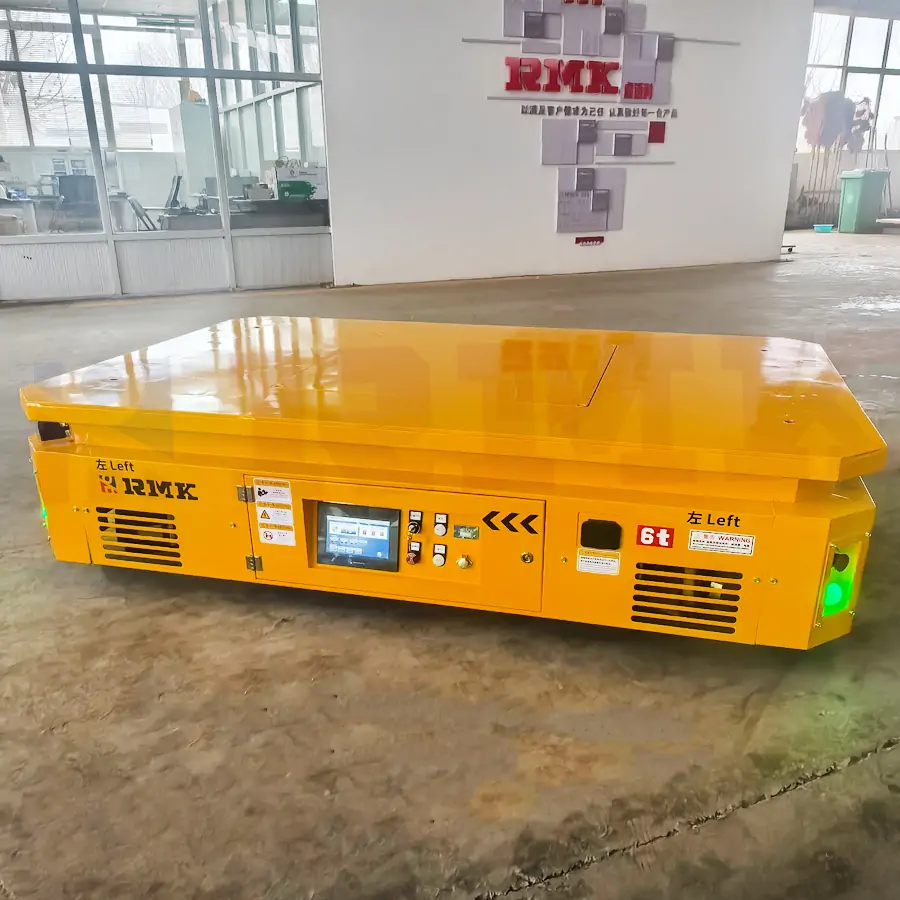
Transferwagen mit kleiner Traglast (5–20 Tonnen)
5–20-Tonnen-Transferwagenwerden häufig in Werkstätten und Produktionsbereichen zum Bewegen von Maschinenteilen, Schweißkomponenten und kleinen industriellen Ausrüstungen eingesetzt.
Diese Modelle konzentrieren sich auf eine kompakte Struktur und flexible Bedienung, was sie geeignet macht für:
- Materialhandling in der Werkstatt
- Transport von Maschinenteilen
- Bewegung von Produktionsausrüstung
Transferwagen mit mittlerer Traglast (30–100 Tonnen)
30–100-Tonnen-Transferwagen werden häufig in Schwerindustrieanwendungen eingesetzt. Sie sind für den Transport von Stahlkomponenten, Formen und industrieller Ausrüstung mit höherer Laststabilität ausgelegt.
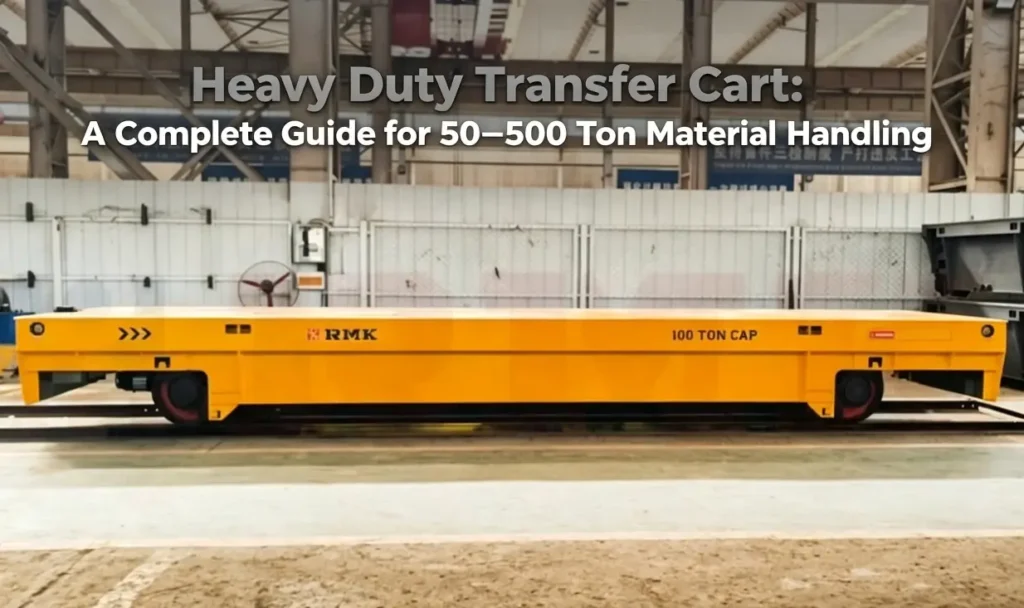
Ein 100-Tonnen-Schienentransferwagen kann eine Plattform von etwa 6500×2800 mm und schwere Schienenprofile für den häufigen Betrieb auf festen Routen verwenden.
Geeignete Anwendungen umfassen:
- Handhabung von Stahlkomponenten
- Formtransport
- Produktionslinien in der Fertigung
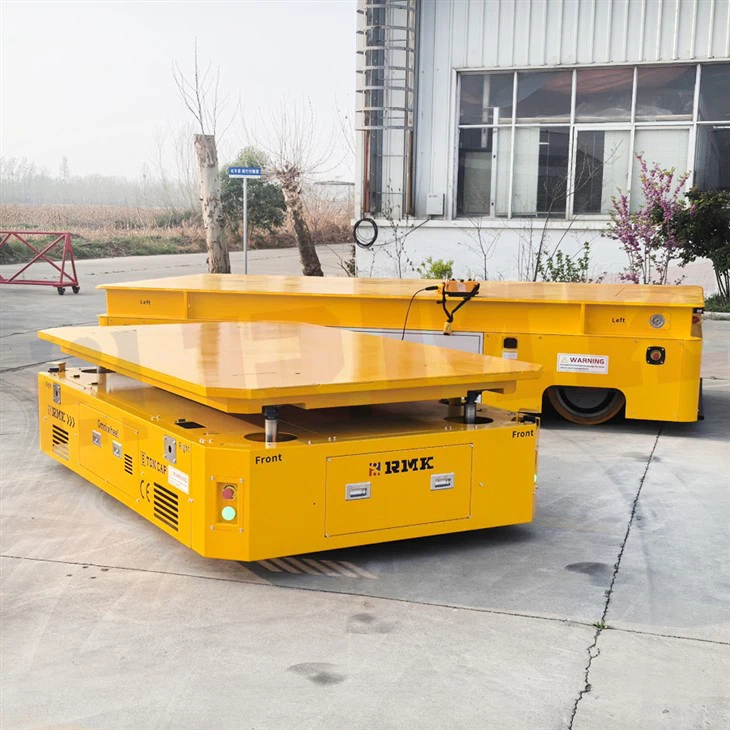
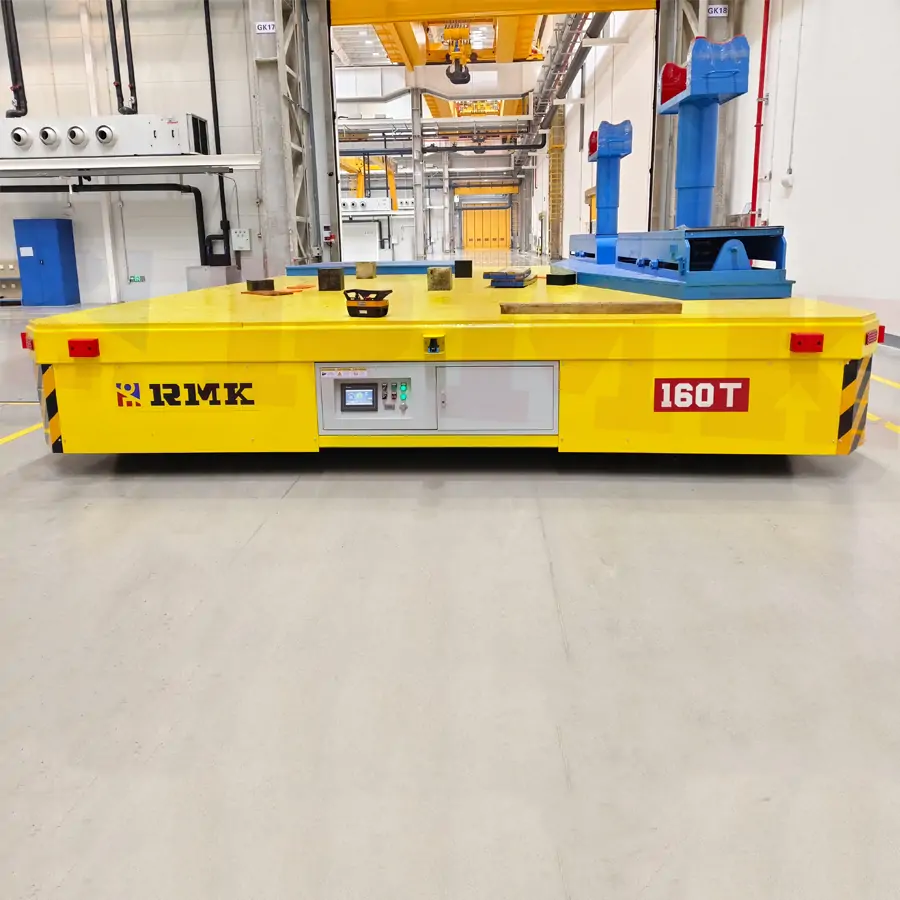
Transferwagen mit schwerer Traglast (100–500 Tonnen)
100–500-Tonnen-Transferwagen werden für großtechnische industrielle Transporte in Stahlwerken, Werften und schweren Fertigungsanlagen eingesetzt.
Diese Modelle erfordern in der Regel kundenspezifische Plattformen, Schwerlasträder und mehrere Antriebssysteme, um große Strukturen und konzentrierte Lasten zu bewältigen.
Typische Anwendungen:
- Materialtransport in Stahlwerken
- Bewegung von Werftausrüstung
- Transport großer Strukturen
Ultra-Schwerlast-Transferwagen (500 Tonnen+)
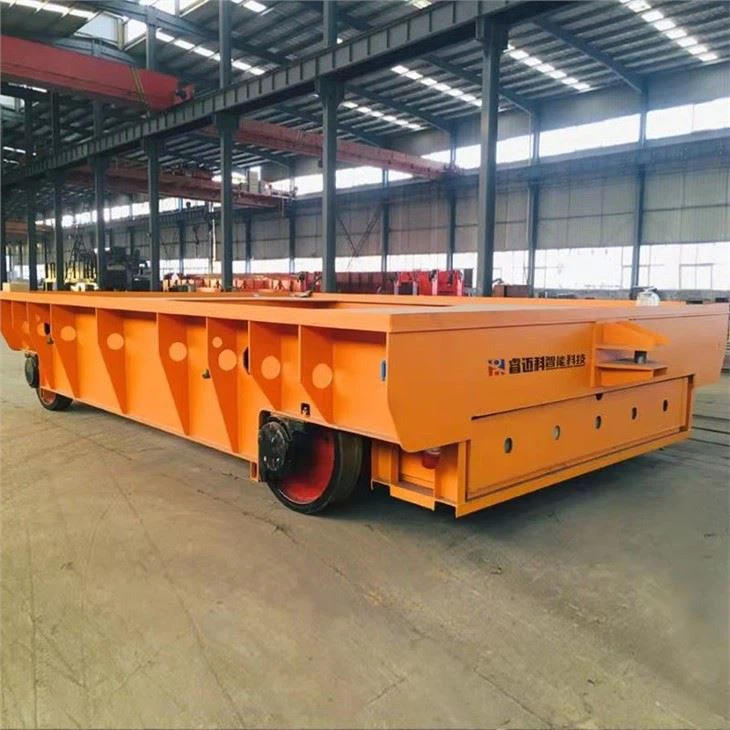
Transferwagen über 500 Tonnen sind für spezifische Schwerlastprojekte konstruiert. Sie sind keine Standardprodukte und erfordern eine kundenspezifische Konstruktion basierend auf Lastverteilung, Radanordnung, Antriebsleistung und Transportbedingungen.
Applications include:
- Ship section handling
- Turbine transportation
- Large industrial equipment movement
Some customized heavy duty transfer carts can handle loads exceeding 1000 tons.
Was bestimmt die Traglast von Schwerlast-Transferwagen?
The capacity of a heavy duty transfer cart is determined by more than the rated load. Cargo conditions, structural design, drive system, and operating environment all affect the final capacity selection.
| Faktor | Considerations | Impact on Capacity |
|---|---|---|
| Load Weight and Distribution | Cargo weight, center of gravity, load distribution, single-point loading, lifting method | Determines frame strength and load stability |
| Plattformgröße und -struktur | Deck size, reinforced structure, support frames, special fixtures | Affects load support and stress distribution |
| Wheel and Drive System | Wheel quantity, wheel load, motor power, gearbox selection | Determines running capability and heavy load performance |
| Fahrweise | Rail or trackless operation, route layout, positioning requirements | Affects stability, flexibility, and maximum load range |
| Working Conditions | Travel distance, operation frequency, floor or rail condition | Influences safety margin and component selection |
For special loads, the platform design may require additional solutions, such as V-frame decks for steel coils or support frames for large equipment. A 50-ton transfer cart may use a platform around 5500×2500 mm, while a 100-ton model may require around 6500×2800 mm.
The correct capacity should be selected according to the maximum actual load, cargo dimensions, transport route, and operating conditions.
Wie wird die Traglast eines Transferwagens berechnet?
Transfer cart capacity is calculated based on the actual load requirements and operating conditions, not only the cargo weight. The selection process should consider the following factors:
- Confirm Maximum Load Weight: Calculate the heaviest load the cart will handle, including fixtures, tools, and additional equipment. Capacity should be based on the maximum expected load, not the average load.
- Add a Safety Margin: A suitable capacity margin helps handle load changes and future production requirements. The margin depends on the application, load conditions, and operating frequency.
- Check Load Distribution: Evaluate the cargo shape, center of gravity, and loading position. Uneven or concentrated loads may require a higher capacity rating and customized platform design.
- Match Wheel and Drive System: The selected capacity must match the wheel load, motor power, gearbox, and running system to ensure stable movement under full load.
- Verify Working Conditions: Consider travel distance, route type, floor or rail conditions, operating frequency, and environment before finalizing the capacity.
Selecting transfer cart capacity based only on average load may cause insufficient performance or unnecessary cost. The correct specification should match the actual handling requirements.
Transferwagen haben Tragfähigkeiten von einigen metrischen Tonnen bis über tausend metrischen Tonnen. Wie bestimmt man die tatsächliche Tragfähigkeit eines Transferwagens, und wie berechnet man die endgültige Tragfähigkeit? Einzelheiten siehe: Wie viel Gewicht kann ein schwerlast-Transferwagen tragen?
Bedeutet eine höhere Traglast eines Transferwagens immer besser?
A higher capacity transfer cart does not always fit the application. A model with excessive capacity requires a stronger structure and larger drive components, which can increase purchase cost, power consumption, and maintenance workload.
The selected capacity should match the actual cargo weight, working frequency, transport route, and site conditions. A suitable capacity provides stable operation without unnecessary equipment costs.
Kann die Traglast von Schwerlast-Transferwagen individuell angepasst werden?
Yes, heavy duty transfer cart capacity can be customized according to specific load requirements and working conditions. Manufacturers can design the cart structure, platform size, wheel arrangement, and drive system based on the actual application.
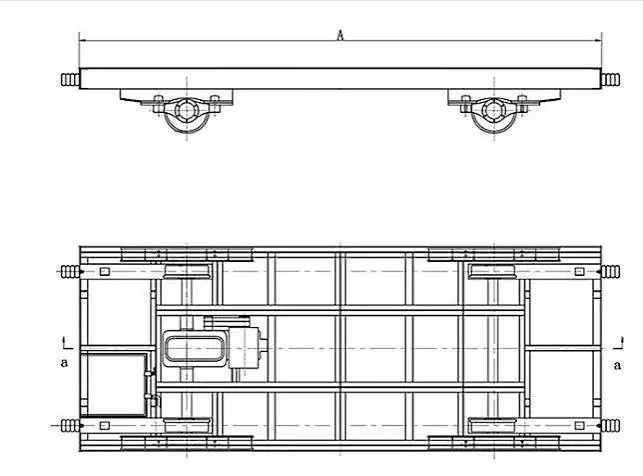
Common customization options include:
- Load Capacity: Customized capacity from several tons to hundreds of tons for different handling requirements
- Platform Design: Custom deck size, height, support structure, and fixtures for special loads
- Wheel and Drive System: Different wheel arrangements, motor power, and drive configurations for load conditions
- Power Supply: Battery, cable reel, or conductor rail power systems based on operation requirements
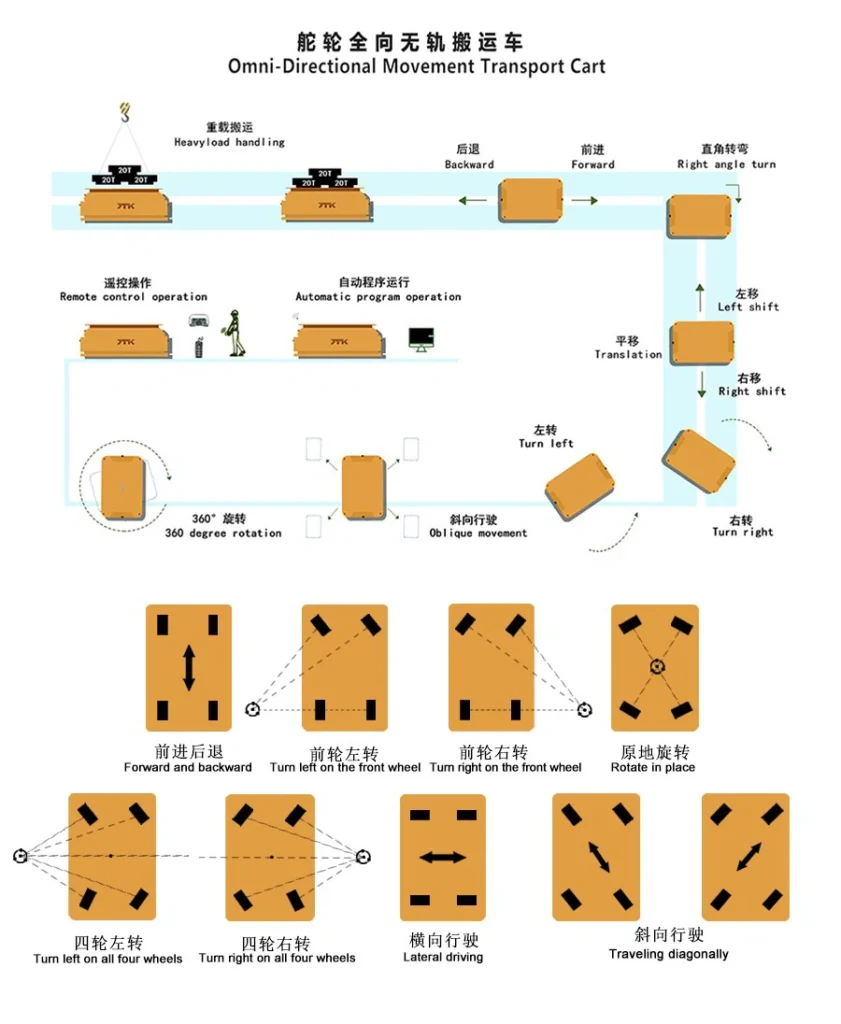
- Travel Design: Rail-mounted, trackless, or special travel solutions for different factory layouts
- Control System: Remote control, automatic operation, and positioning functions
Before customization, provide the load weight, cargo dimensions, transport route, running distance, and working frequency. These details help determine the suitable capacity and configuration.
For more detailed information on customization options and limitations, see: Kundenspezifischer Transportwagen: Vollständiger Leitfaden zu Design und Individualisierung
Wie wählt man die richtige Traglast für einen Schwerlast-Transferwagen?
Selecting the right capacity starts with understanding the actual handling requirements. The rated capacity should match the heaviest load, operating conditions, and future handling needs. Before ordering a heavy duty transfer cart, confirm:
- Maximum load weight: Determine the heaviest cargo, including fixtures and supporting equipment.
- Cargo dimensions: Check length, width, height, and loading position to select a suitable platform design.
- Load distribution: Consider center of gravity and uneven loading conditions.
- Transport distance: Define the travel distance and route layout.
- Rail or trackless operation: Select the suitable travel method based on factory conditions.
- Working frequency: Confirm daily running time and operation cycles.
- Floor or rail conditions: Check surface condition, rail design, and site environment.
- Future production requirements: Reserve suitable capacity for possible load changes.
Choosing capacity based only on the current load may limit future use. A proper specification should match the actual application and operating conditions.
Different types of heavy-duty transfer carts are suited for different work scenarios. Which type is right for your factory? Check out this article to learn how to choose the right transfer cart for your needs: Kaufratgeber für Schwerlast-Transferwagen: Wie wählt man das richtige Modell?
Warum REMARKABLE Schwerlast-Transferwagen wählen?
REMARKABLE manufactures heavy duty transfer carts with capacity ranges from 1 to 500 tons for industrial material handling applications. Each cart is designed according to the customer’s load requirements, transport route, and working environment.
Customized cart design: Platform size, capacity, wheel arrangement, and structure can be adjusted for different loads and applications.
Multiple power options: Battery, cable reel, and rail power systems are available for different operating conditions.
Flexible control solutions: Manual remote control and automated operation options are available based on project requirements.
Project experience and service support: Export experience, technical assistance, and after-sales support are provided for overseas customers.
From standard material handling to special heavy-load transportation, REMARKABLE develops transfer cart solutions based on actual site requirements.
Schlussfolgerung
Heavy duty transfer cart capacity is the key specification for safe and efficient material handling. Load weight, cargo structure, transport route, and working conditions all affect the final design. Customized solutions are required for special loads and complex working environments.
REMARKABLE provides customized heavy duty transfer carts for industrial material handling applications. Kontakt with your load requirements and working conditions to get a suitable transfer cart solution.
E-Mail: transfercart@rmkzn.com
Telefon: +86-18637369355
Verwandte Artikel
FAQ
Wie viel Gewicht kann ein Schwerlast-Transportwagen tragen?
A heavy duty transfer cart can carry from several tons to hundreds of tons. Common capacities range from 5 to 500 tons, while customized models can be designed for special applications exceeding 1000 tons.
Wie hoch ist die maximale Tragfähigkeit eines Transportwagens?
The maximum capacity depends on the application requirements and cart design. Standard heavy duty transfer carts usually handle up to 500 tons, while customized solutions can be engineered for heavier loads such as ship sections, turbines, and large industrial equipment.
What factors affect transfer cart capacity?
Transfer cart capacity is affected by load weight, cargo dimensions, load distribution, center of gravity, platform structure, wheel load, drive system, travel method, and working environment.
Can a transfer cart carry uneven loads?
Yes, but uneven loads require proper platform design and load distribution analysis. Factors such as cargo shape, center of gravity, and loading position must be considered to avoid excessive stress on the deck and wheel system.
What capacity transfer cart is used for steel plants?
Steel plants commonly use heavy duty transfer carts ranging from 50 to 500 tons, depending on the material type and handling requirements. Applications include steel coils, ladles, heavy components, and large fabricated structures.
How do I calculate transfer cart capacity?
Calculate capacity based on the maximum actual load, including fixtures and supporting equipment. Then check load distribution, safety margin, wheel load, drive system, and working conditions before selecting the final specification.
Are higher capacity transfer carts more expensive?
Yes. Higher capacity transfer carts require stronger frames, larger wheels, more powerful drive systems, and additional engineering design. The final cost also depends on platform size, power supply, control system, and customization requirements.
Can manufacturers customize heavy duty transfer cart capacity?
Yes. Manufacturers can customize heavy duty transfer cart capacity according to load requirements, transport routes, and working conditions. Options include custom platforms, wheel arrangements, power systems, and control configurations.