
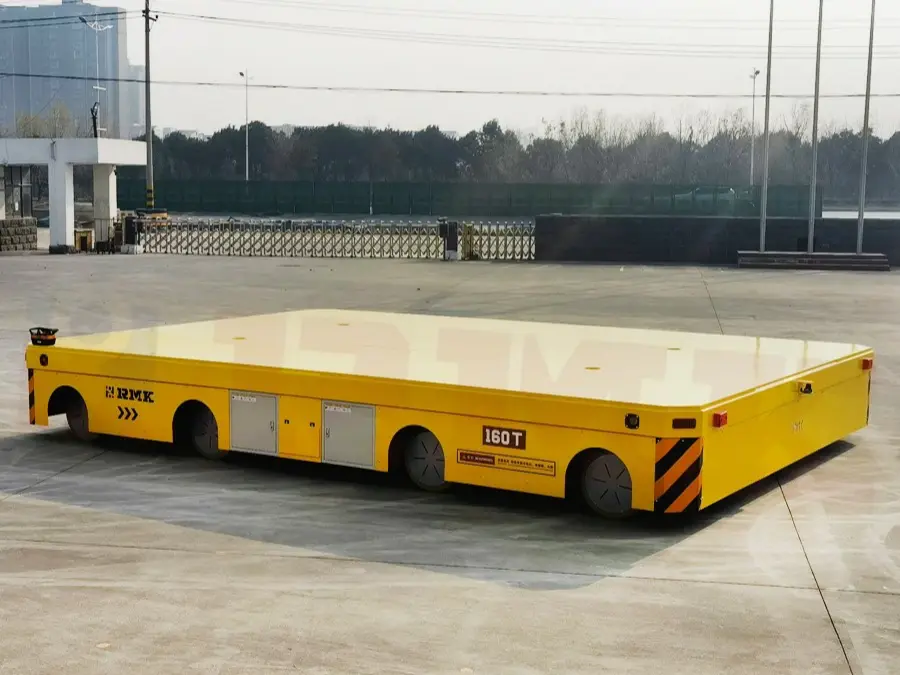

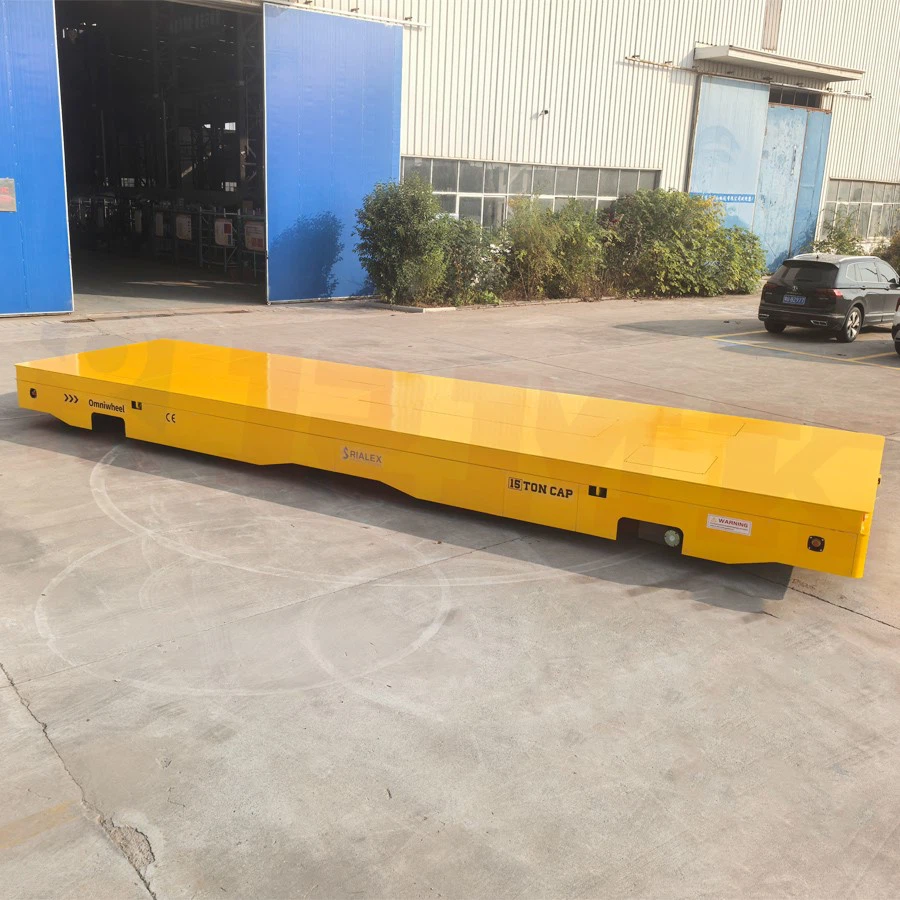

A Steerable Transfer Cart is an electric industrial vehicle for transporting heavy loads with adjustable steering control. It moves machinery, steel structures, molds, and oversized components across factories, workshops, and production areas through a powered drive system and steerable mechanism.
REMARKABLE manufactures steerable transfer carts with differential steering, steering wheel drive, trackless travel, and remote control configurations. Each cart is developed around the load weight, platform size, transport route, floor condition, and working environment of the project.
- Load Capacity: 1–300 tons
- Platform Size: 2,000–12,000 × 1,500–4,000 mm
- Steering System: Differential steering / Steering wheel drive
- Power Supply: Battery / Rail power
- Control Mode: Wired pendant / Wireless remote / PLC
What Is a Steerable Transfer Cart?
A Steerable Transfer Cart is an industrial material handling vehicle used for horizontal transportation of heavy loads. It uses a controlled steering system to adjust the travel direction during operation, allowing the cart to move machinery, steel structures, molds, and other oversized components through factories, workshops, and production areas.
A steerable transfer cart is also known as a steerable transfer trolley, industrial transfer cart, or heavy load transfer cart. Unlike fixed-direction transfer carts that follow a limited travel path, steerable models can change movement direction according to the workspace layout, turning space, and transport route.
The steering system plays a key role in cart movement. Differential steering, steering wheel drive, and other steering configurations allow the equipment to handle different industrial transportation conditions where flexible movement and turning capability are required.
For more details, see the article: “What is a Steerable Transfer Cart?”
How Does a Steerable Transfer Cart Work?
A Steerable Transfer Cart works through the cooperation of the power system, drive system, steering mechanism, and control unit. The power source drives the electric motor. The motor transfers torque through the gearbox to the wheels, providing traction for load movement. The steering system controls wheel direction or rotation speed differences to change the travel path. Operators control movement, speed, and braking through a pendant or remote controller.
- Power Supply: The power system provides electricity for the drive motor and control components. Battery-powered models use onboard batteries for independent operation. Rail-powered models receive power through fixed electrical supply systems.
- Drive System: The motor outputs power through a reduction gearbox to the drive wheels. The gearbox increases torque output for transporting heavy loads such as steel structures, molds, and machinery components.
- Steering System: The steering mechanism controls the cart’s travel direction. Differential steering adjusts the speed of the left and right wheels, while steering wheel systems change wheel angles to complete turning operations.
- Control System: The control unit manages travel commands, speed adjustment, and braking functions. Operators use wired pendants or wireless remotes for manual operation. PLC control systems are available for automated transport requirements.
View Structural Details: Detailed Structure of the Steerable Transfer Cart
Steering Systems of Steerable Transfer Cart
The steering system determines the travel direction, turning radius, and maneuverability of a Steerable Transfer Cart. Different steering structures are selected based on load capacity, platform size, transport route, and working space.
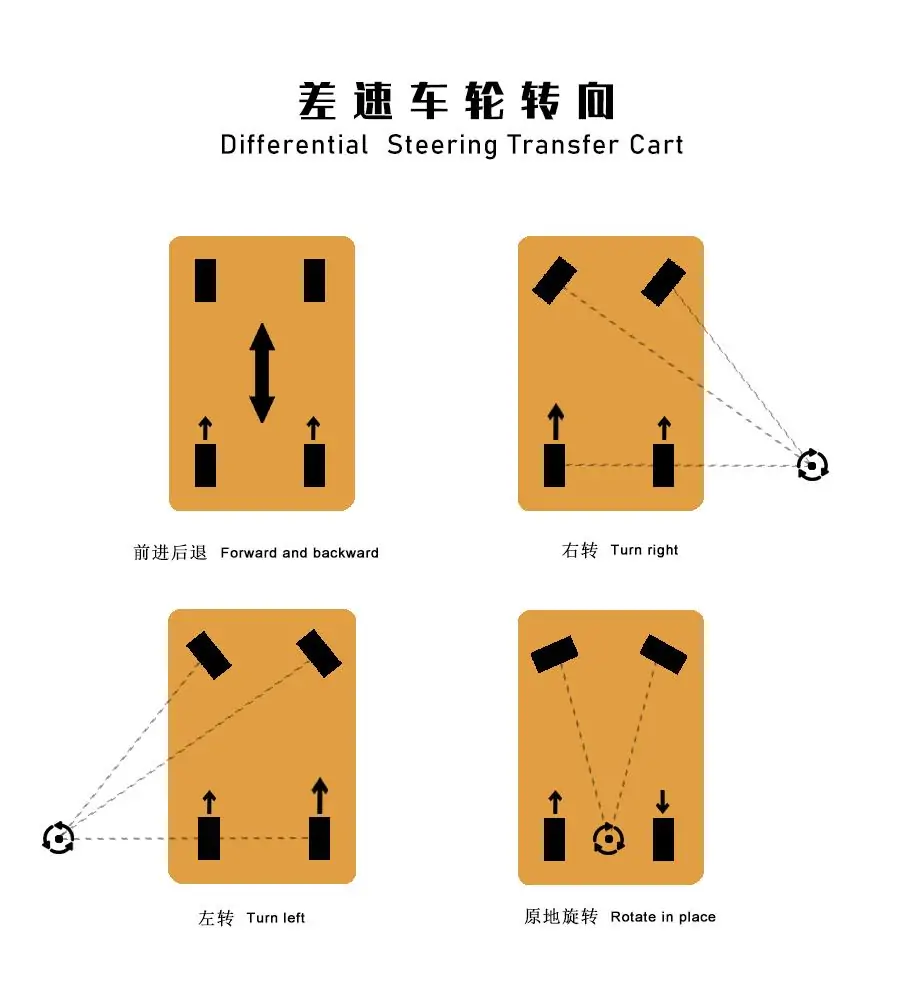
Differential Steering System
Differential steering controls the speed difference between the left and right drive wheels to change the cart direction. The system does not require a mechanical steering linkage, making it suitable for trackless transfer carts and areas with limited turning space.
Features:
- Small turning radius
- Suitable for narrow workshops
- Suitable for trackless operation
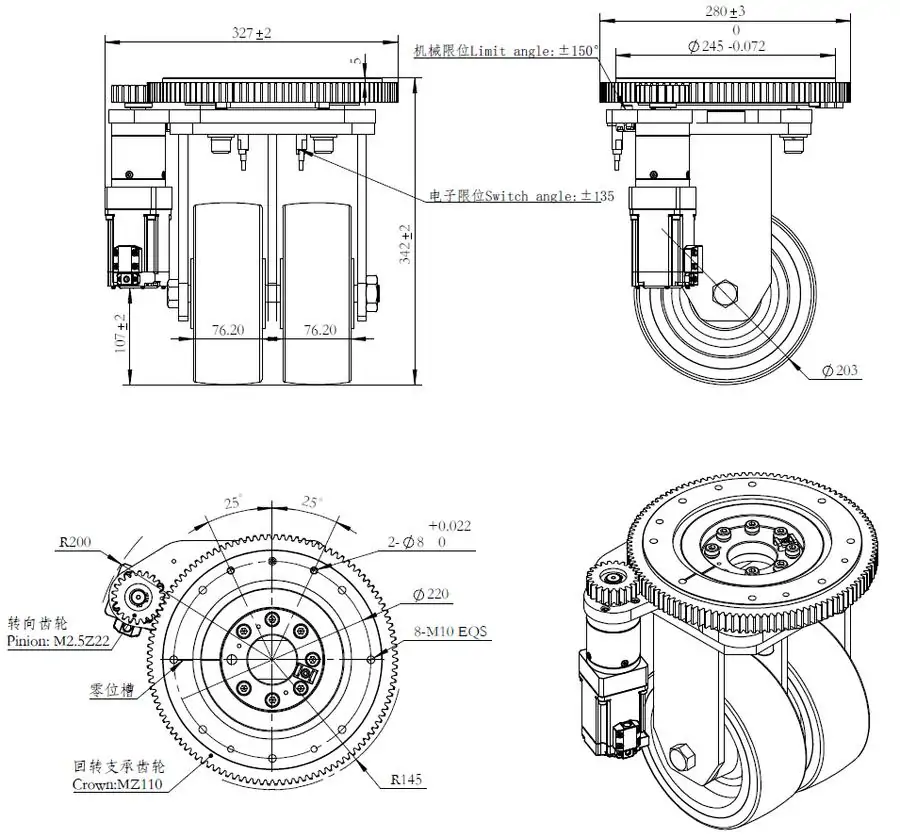
Steering Wheel Drive System
The steering wheel drive system changes the travel direction through adjustable steering wheels. This configuration provides stable movement during straight-line transportation and is commonly used for heavy load transfer applications.
Features:
- Stable straight-line travel
- Suitable for long transport routes
- Suitable for heavy load handling
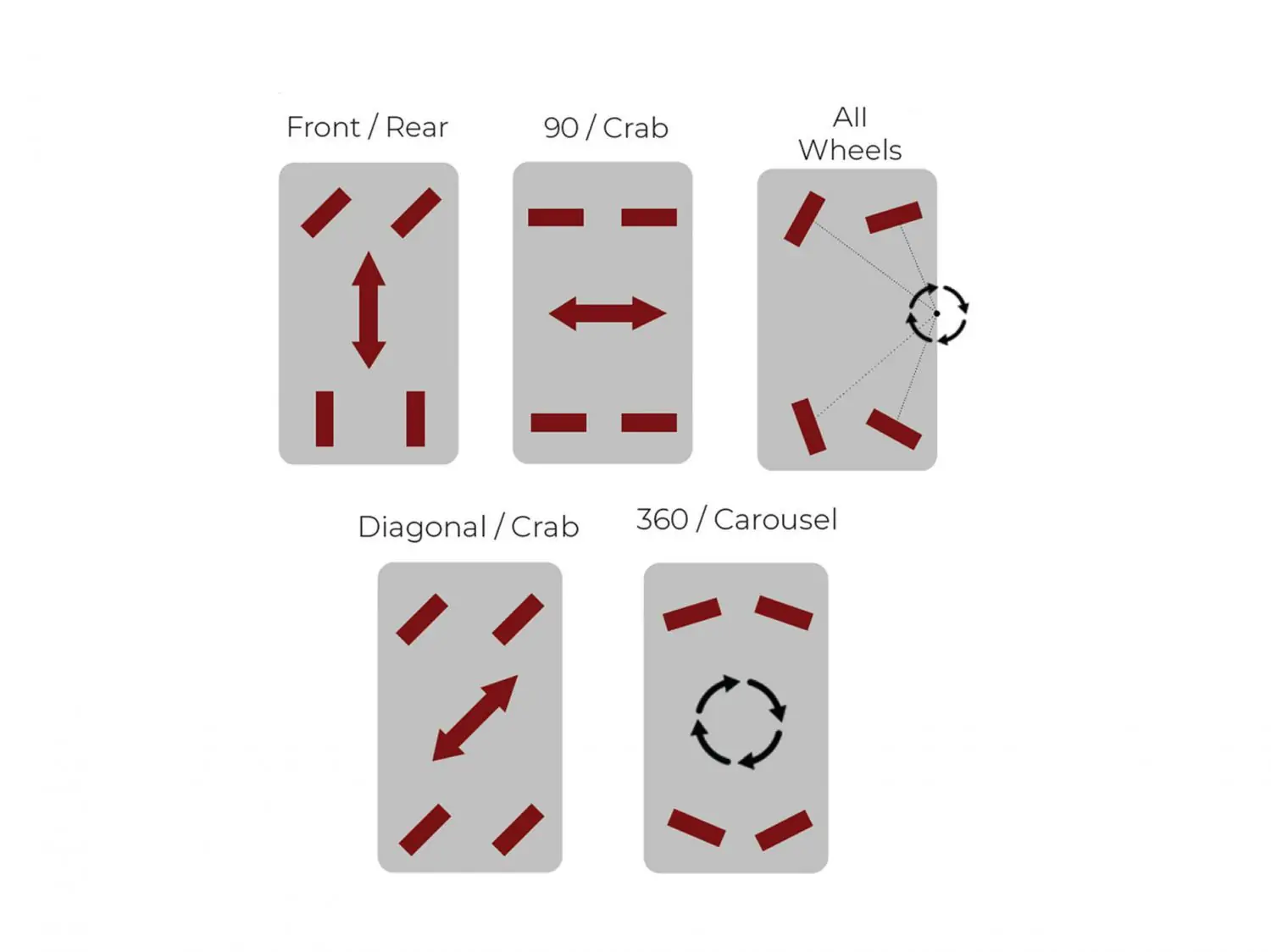
Four Wheel Steering System
The four-wheel steering system allows all wheels to participate in directional control. The cart can adjust its movement path with a smaller turning radius compared with conventional steering structures.
Features:
- Improved maneuverability
- Reduced turning space requirement
- Suitable for large platform designs
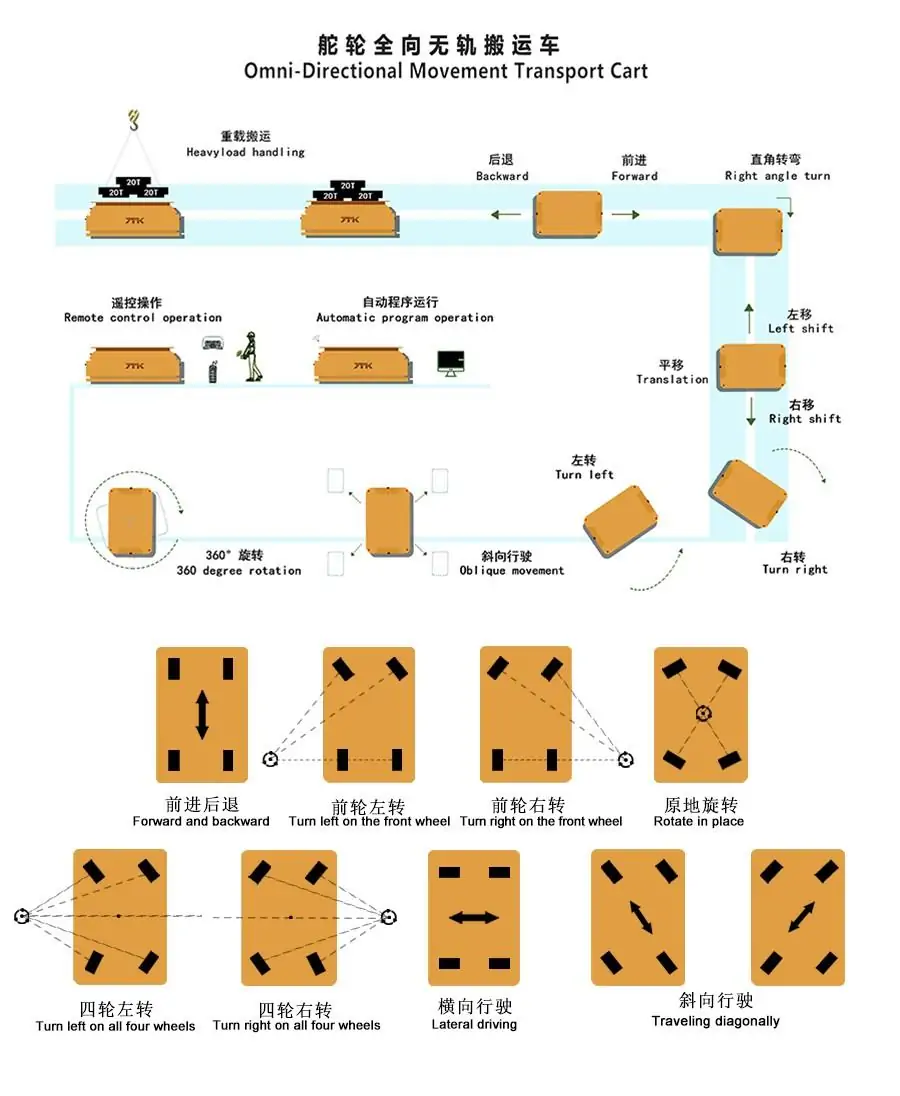
360° Rotation Steering System
The 360° rotation steering system allows the cart to change direction within a limited area. It is used for applications requiring precise positioning and movement adjustment.
Applications:
- Assembly workshops
- Heavy equipment positioning
- Precision material handling
Steerable Transfer Cart Specifications
| Parameter | Specification |
|---|---|
| Load Capacity | 1–300 tons (customizable) |
| Platform Size | 2,000–12,000 mm (L) × 1,500–4,000 mm (W), customizable |
| Platform Height | Customized according to load requirements |
| Drive System | Electric motor + gearbox |
| Steering System | Differential steering / Steering wheel drive / Four-wheel steering |
| Steering Control | Wheel speed control / Steering actuator control |
| Turning Method | Differential turning / Mechanical steering / Multi-wheel steering |
| Power Supply | Lead-acid battery / Lithium battery / Rail power |
| Battery Voltage | 24–72 V (model-dependent) |
| Travel Speed | 0–30 m/min (adjustable) |
| Control Mode | Wired pendant / Wireless remote / PLC control |
| Wheel Type | Polyurethane / Solid rubber / Pneumatic tires |
| Braking System | Electromagnetic brake |
| Drive Mode | Two-wheel drive / Four-wheel drive (configuration-dependent) |
| Floor Condition | Indoor concrete floor / Industrial workshop surface |
| Safety Features | Emergency stop / Audible and visual alarms / Obstacle detection (optional) |
| Protection Rating | IP54 / IP65 (model-dependent) |
| Operating Temperature | -20°C to +50°C (model-dependent) |
The steering configuration is selected based on turning radius, floor conditions, transport route layout, and load requirements. REMARKABLE provides differential steering, steering wheel drive, and customized steering solutions for different industrial applications.
Advantages
Flexible Steering Control
Move between multiple transfer points without installing fixed rails. Routes remain subject to floor suitability, clearance, and safe operating procedures.
Small Turning Radius
Steerable Transfer Carts can operate in areas with limited space. The steering mechanism reduces turning requirements for workshops, assembly areas, and production lines.
Heavy Load Transportation
The cart is designed for moving heavy industrial loads, steel structures, molds, and large components. Load capacity and platform dimensions can be customized for different applications.
Trackless Operation Capability
Trackless models run on suitable industrial floors without fixed rails. The cart can change transport routes when production layouts or handling paths change.
Customized Configuration
The cart configuration can be selected based on load weight, platform size, steering method, power supply, and control requirements.
Easy Operation and Control
Operators can control travel direction, speed, and braking through wired pendants or wireless remotes. PLC control systems are available for automated material handling applications.
Types of Steerable Transfer Cart
Steerable Transfer Carts can be classified by power supply, travel path, and load handling requirements. Different configurations are selected based on factory layout, transport frequency, floor conditions, and load characteristics.
Battery Powered Steerable Transfer Cart
A Battery Powered Steerable Transfer Cart uses an onboard battery system to supply power to the drive motors. It operates without a fixed power connection and suits production areas where transport routes change frequently.
Features:
- Built-in battery power supply
- No fixed power connection required
- Suitable for flexible transport routes
- Available with wired or wireless control
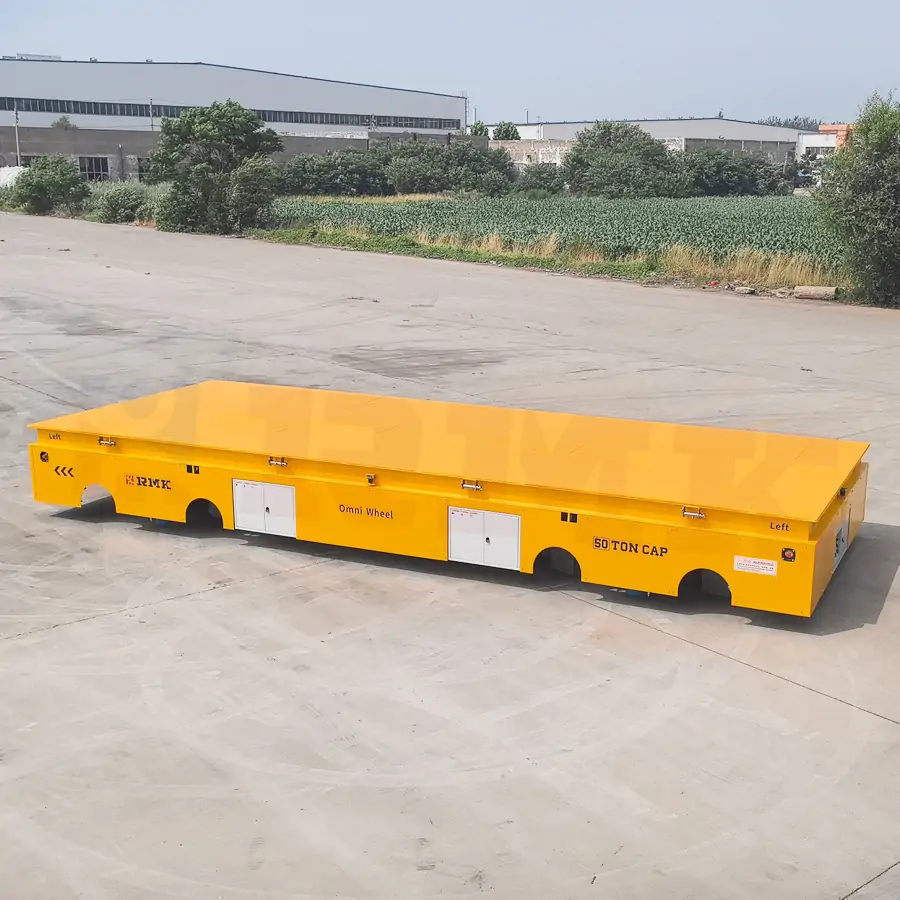

Trackless Steerable Transfer Cart
A Trackless Steerable Transfer Cart travels directly on industrial floor surfaces without fixed rails. The steering system allows the cart to change direction according to the workshop layout and transport route.
Features:
- No fixed rails required
- Flexible route changes
- Differential steering or steering wheel drive available
- Suitable for multi-area material handling
Rail Guided Steerable Transfer Cart
A Rail Guided Steerable Transfer Cart operates along installed rails for repeated transportation between fixed locations. The rail system provides stable movement for applications with regular transport paths.
Features:
- Fixed transportation path
- Stable travel performance
- Suitable for repetitive material movement
- Accurate positioning along rail routes
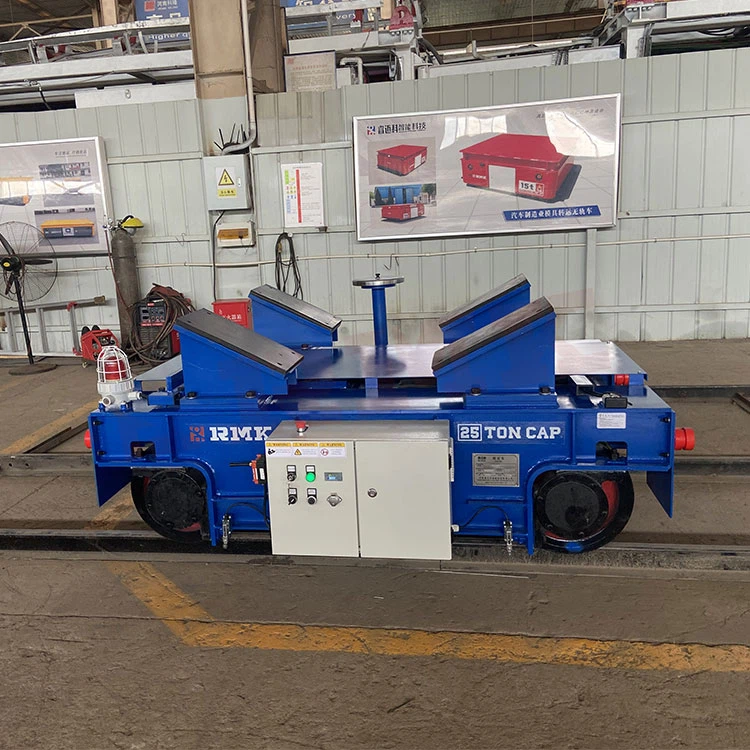
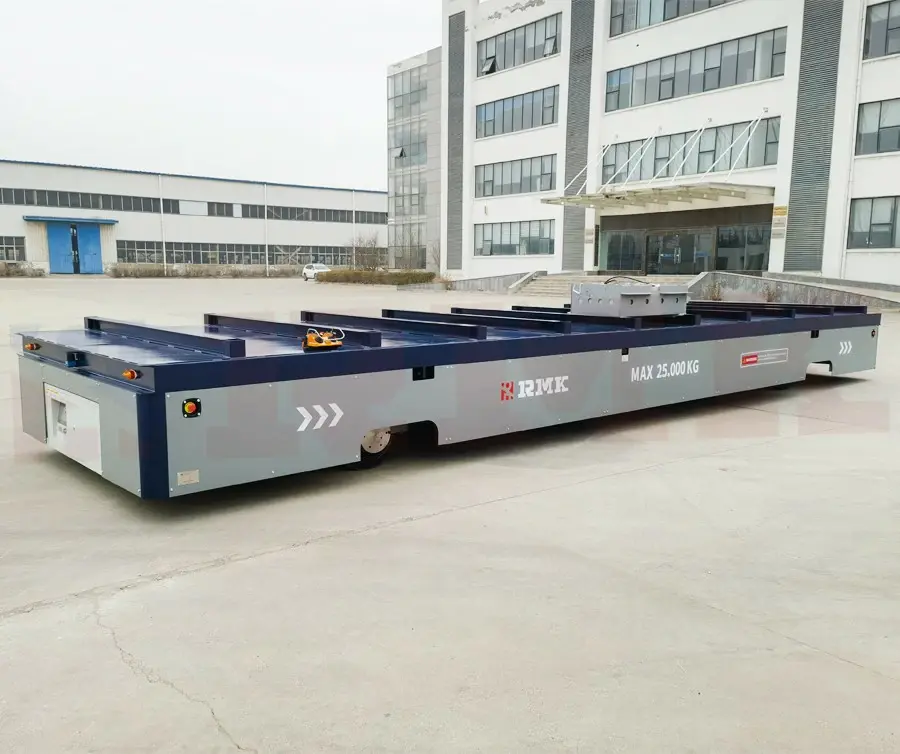
Heavy Duty Steerable Transfer Cart
A Heavy Duty Steerable Transfer Cart is developed for transporting large and heavy industrial loads. The frame structure, platform size, drive system, and steering configuration can be selected based on the load requirements.
Features:
- Large load capacity
- Custom platform dimensions
- Designed for heavy industrial applications
- Suitable for machinery, steel structures, and oversized components
Applications
Steerable Transfer Carts are used for heavy load transportation in factories, workshops, steel plants, shipyards, and assembly facilities. The steering system allows the cart to move through different working areas for machinery handling, component transfer, and production logistics.
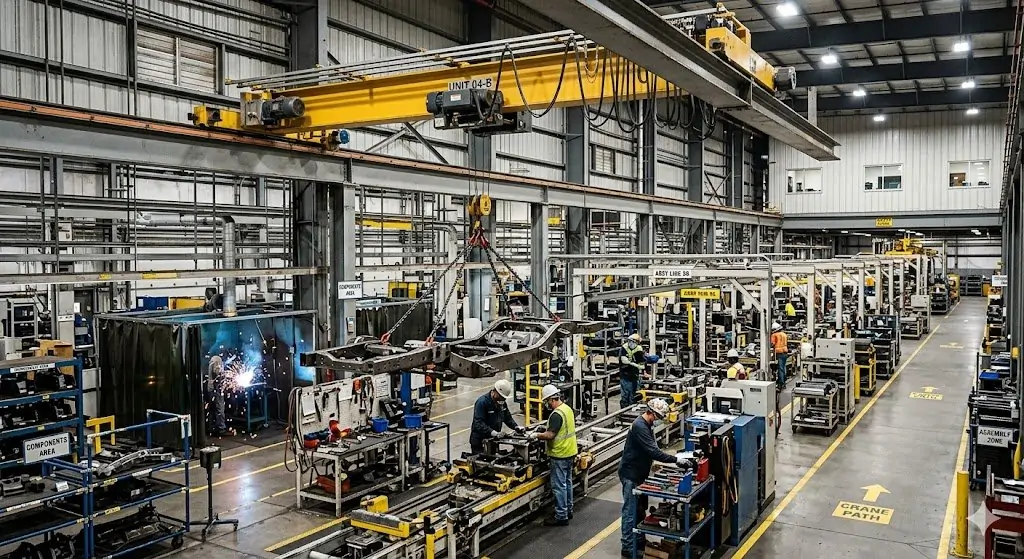
Machinery Manufacturing
Transports machine bases, industrial equipment, and large mechanical components during production and assembly.
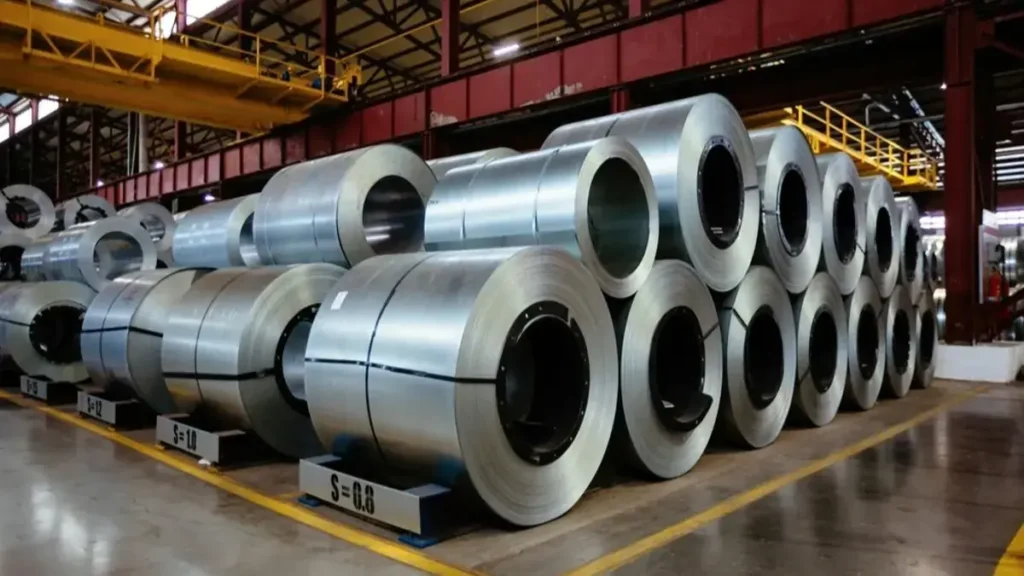
Steel Industry
Handles steel plates, coils, fabricated structures, and other heavy steel materials between processing areas.
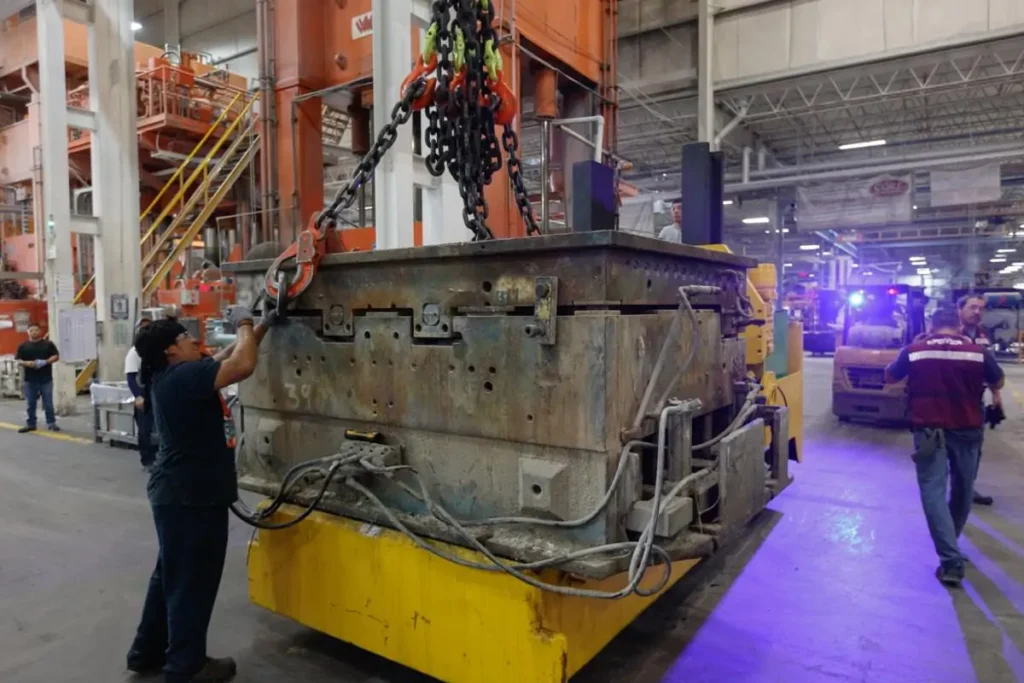
Mold Handling
Moves injection molds, stamping dies, and large tooling equipment in manufacturing facilities.
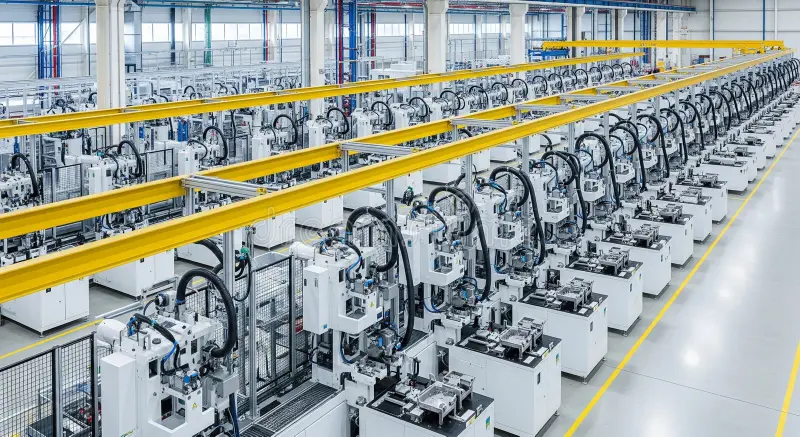
Assembly Workshops
Transfers production fixtures, equipment sections, and assembly components between workstations.
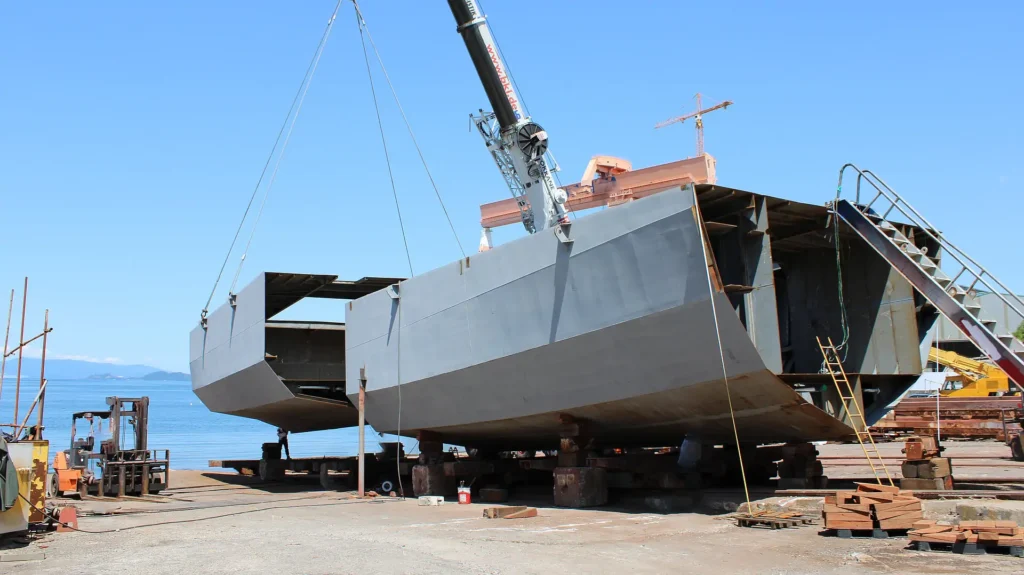
Shipyard and Heavy Equipment Manufacturing
Carries ship sections, structural assemblies, and oversized fabricated components across working areas.
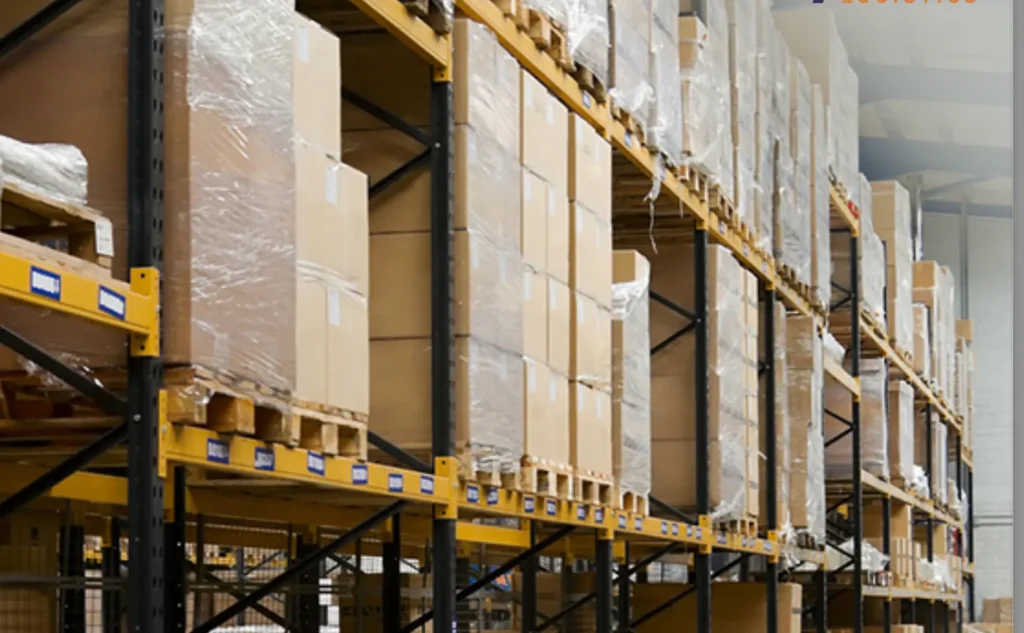
Warehouse and Factory Logistics
Moves heavy goods, production materials, and oversized loads between storage and operating areas.
Steerable Transfer Cart vs Fixed Transfer Cart
Steerable Transfer Carts and Fixed Transfer Carts are both used for industrial material transportation. The main difference is the movement method and route flexibility. Steerable models use adjustable steering systems for changing travel direction, while fixed transfer carts follow predetermined transport paths.
| Item | Steerable Transfer Cart | Fixed Transfer Cart |
|---|---|---|
| Movement Direction | Adjustable travel direction through steering system | Moves along a fixed direction or route |
| Steering System | Differential steering, steering wheel drive, or other steering configurations | Fixed wheel arrangement with limited direction control |
| Transport Route | Suitable for changing routes and complex layouts | Suitable for repeated transportation between fixed points |
| Turning Space | Requires less turning space in suitable configurations | Requires more space for route changes |
| Application | Flexible material handling in factories, workshops, and assembly areas | Dedicated transport lines and regular material transfer |
| Installation | Trackless models require no fixed rails; rail models use installed tracks | Usually requires fixed rails or dedicated travel paths |
- Choose a Steerable Transfer Cart for applications requiring flexible movement, multiple transport routes, or limited workspace.
- Choose a Fixed Transfer Cart for repetitive transportation between fixed locations with stable operating routes.
How to Choose a Steerable Transfer Cart?
Selecting a Steerable Transfer Cart requires matching the equipment configuration with the load characteristics, transport route, workspace layout, and operating conditions. The steering system, power supply, and control method should be selected based on the actual handling requirements.
1. Load Capacity and Load Dimensions
Confirm the total load weight, load distribution, center of gravity, and platform size. The cart structure should match the transported equipment dimensions and loading conditions.
2. Steering System
Select the steering method according to the required turning space and movement conditions.
- Differential steering for narrow working areas and trackless operation
- Steering wheel drive for stable directional control
- Four-wheel steering for large platforms and complex movement routes
3. Transport Route and Floor Conditions
Check the travel distance, aisle width, turning area, floor flatness, and floor load capacity. These factors affect wheel selection, drive configuration, and cart design.
4. Power Supply
Choose the power system based on the working environment and operating cycle.
- Battery power for flexible routes without a fixed power supply
- Rail power for fixed transportation paths with continuous operation
5. Control Method
Select the control mode according to operation requirements.
- Wired pendant for manual operation
- Wireless remote for flexible control
- PLC system for automated handling applications
6. Operating Frequency
Consider daily transport cycles, running distance, loading time, and working hours. These factors affect battery capacity, motor selection, and equipment configuration.
A suitable Steerable Transfer Cart configuration should match the load, route, steering requirements, and working environment. REMARKABLE provides customized solutions based on project conditions, including capacity, platform design, steering system, power supply, and control configuration.
Custom Steerable Transfer Cart Manufacturer
REMARKABLE designs and manufactures Steerable Transfer Carts for heavy material handling in factories, workshops, steel plants, and other industrial environments. Each cart is configured around the load conditions, transport route, workspace layout, and operation requirements.
- Load Capacity: Configurations from standard to heavy-duty capacities for different load weights and handling conditions.
- Platform Dimensions: Customized platform length, width, and deck height for machinery, steel structures, molds, and oversized components.
- Steering System: Differential steering, steering wheel drive, four-wheel steering, and other steering configurations for different movement requirements.
- Power Supply: Battery-powered and rail-powered solutions based on transport routes and operating conditions.
- Drive Configuration: Motor, gearbox, and wheel arrangements selected according to load capacity and floor conditions.
- Control System: Wired pendant, wireless remote, PLC control, and automation options for different operation methods.
- Safety Devices: Emergency stop, alarms, obstacle detection, and other safety components based on the working environment.
For information on customization options and details, see the article: “Custom Transfer Cart: Complete Guide to Design and Customization”
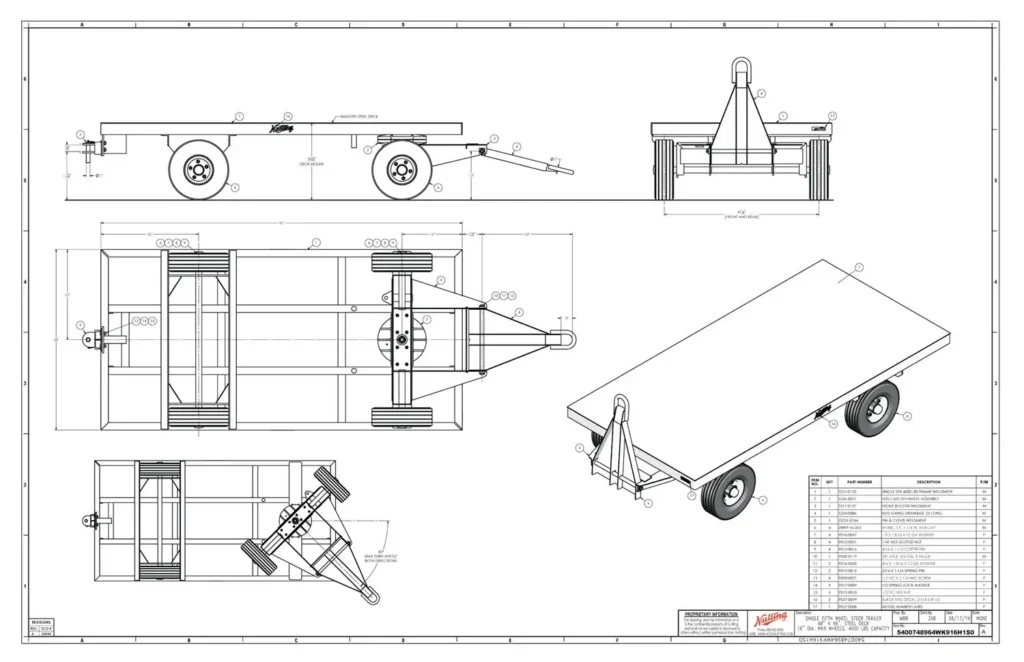
REMARKABLE provides complete Steerable Transfer Cart solutions from engineering design and manufacturing to inspection and delivery. The team works with customers to define the suitable cart configuration for each industrial handling project.
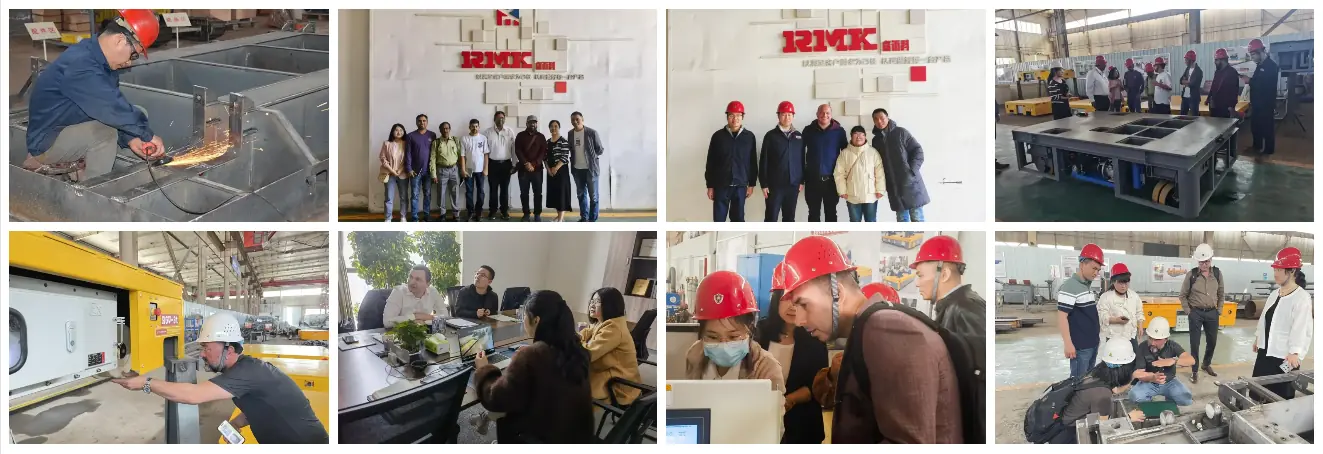
Customized Intelligent Material Handling Solutions
To ensure that a customized transfer cart fits your needs perfectly, please provide the following details:
- Load Capacity: _____ tons (1~500 ton)
- Table Size: _____ × _____ mm/m (e.g., 1500×3000)
- Power Options:
- ☐ Lead-acid ☐ Lithium-ion ☐ Other: _____
- ☐ Cable: _____V/_____A
- ☐ Standard 380V/50Hz/3-phase
- Cargo Details:
- Type: _____ (e.g., steel coils, machinery)
- Special Needs: _____ (e.g., anti-slip, corrosion-proof)
- Optional Features:
- ☐ Emergency stop ☐ Anti-collision sensors
- ☐ Rail guides ☐ Lifting mechanism ☐ Remote control
Get a Quote Now
FAQ
What is a steerable transfer cart?
A steerable transfer cart is an industrial material handling vehicle used for horizontal transportation of heavy loads. It uses a steering system to control travel direction and move machinery, steel structures, molds, and other large components through factories, workshops, and production areas.
How does a steerable transfer cart work?
A steerable transfer cart uses an electric drive system to move heavy loads. The motor transfers power through a gearbox to the wheels, while the steering mechanism controls wheel direction or speed difference for turning. Operators control travel speed, direction, and braking through a wired pendant or wireless remote.
What steering systems are available for transfer carts?
Common steering systems include differential steering, steering wheel drive, four-wheel steering, and 360° rotation steering. The suitable system depends on the turning space, transport route, load size, and operating environment.
Can a steerable transfer cart operate without rails?
Yes. Trackless steerable transfer carts can travel on suitable industrial floor surfaces without fixed rails. They use steering systems such as differential steering or steering wheel drive to change direction according to the transport route.
What is the difference between a steerable and fixed transfer cart?
A steerable transfer cart can adjust its travel direction through a steering system, making it suitable for flexible routes and complex layouts. A fixed transfer cart follows a predetermined path and is commonly used for repeated transportation between fixed locations.
How much load can a steerable transfer cart carry?
The load capacity depends on the cart structure, wheel arrangement, platform design, and operating conditions. REMARKABLE provides steerable transfer carts with capacities from 1 to 300 tons for different industrial handling applications.
Can the steering system be customized?
Yes. The steering system can be configured according to the transport route, turning space, load requirements, and operating conditions. Available options include differential steering, steering wheel drive, and other customized steering solutions.
How do I choose the right steerable transfer cart?
Select the cart based on load weight, platform dimensions, transport route, floor conditions, turning requirements, power supply, and control method. REMARKABLE can configure the suitable drive system, steering system, and control solution according to the project requirements.