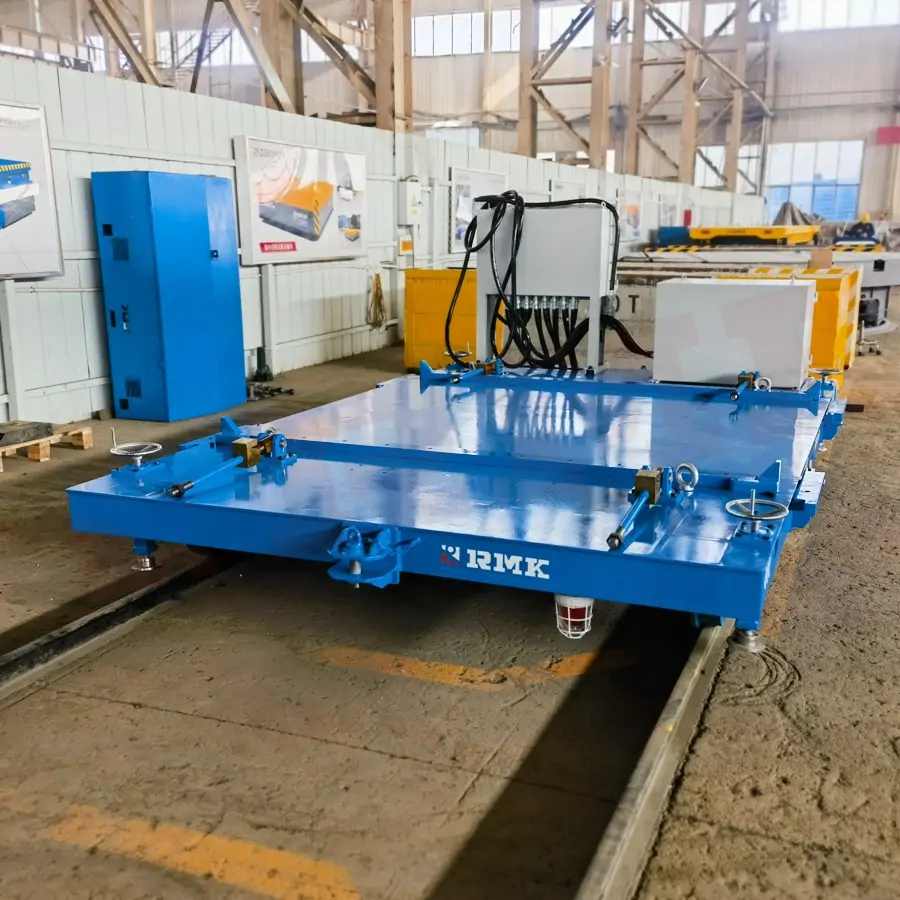
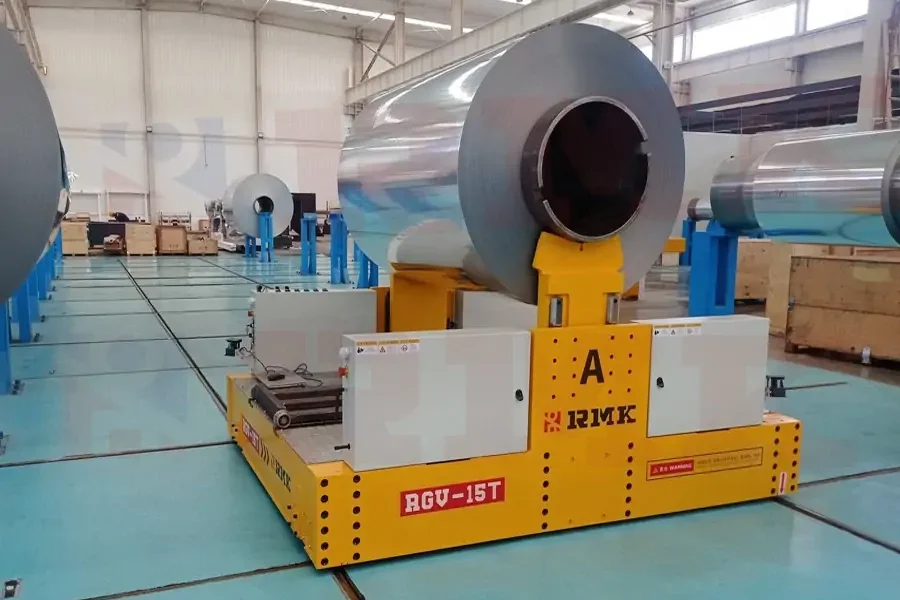
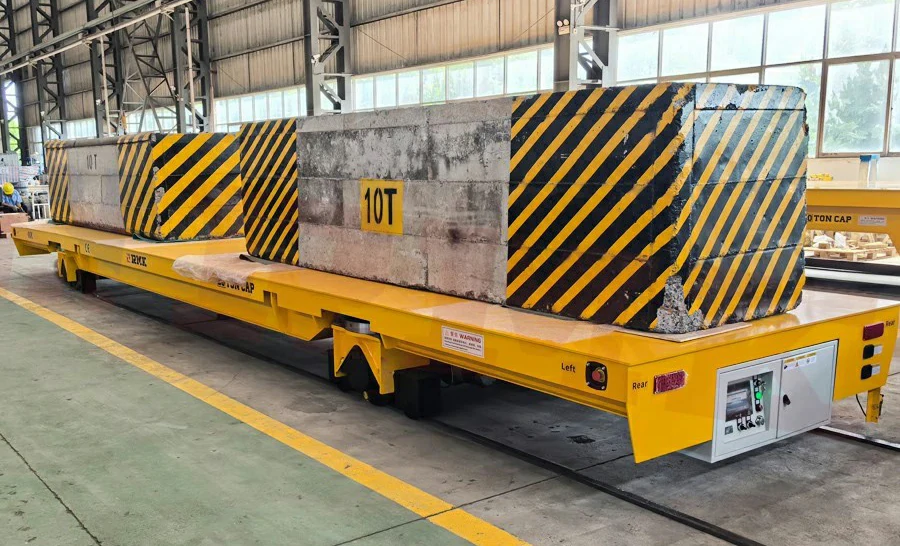
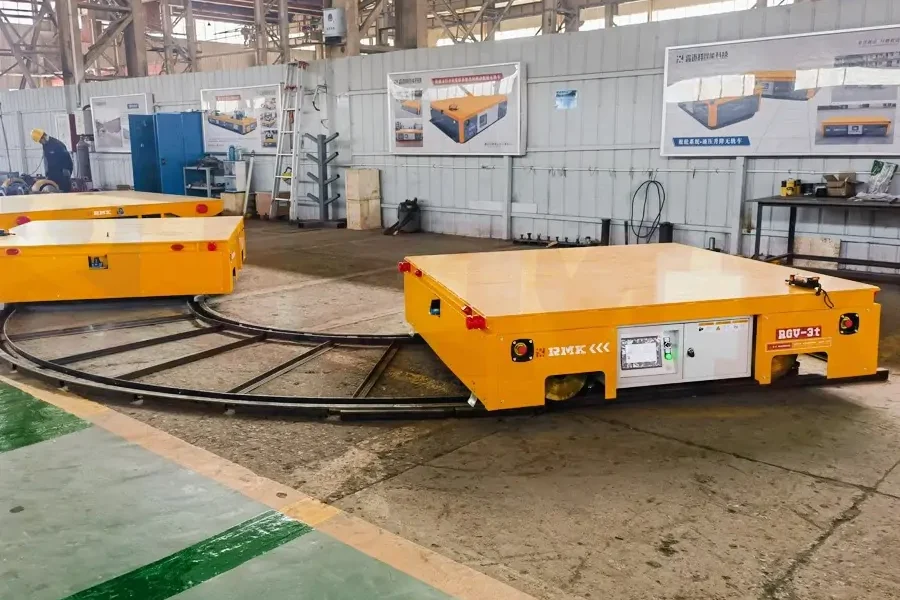
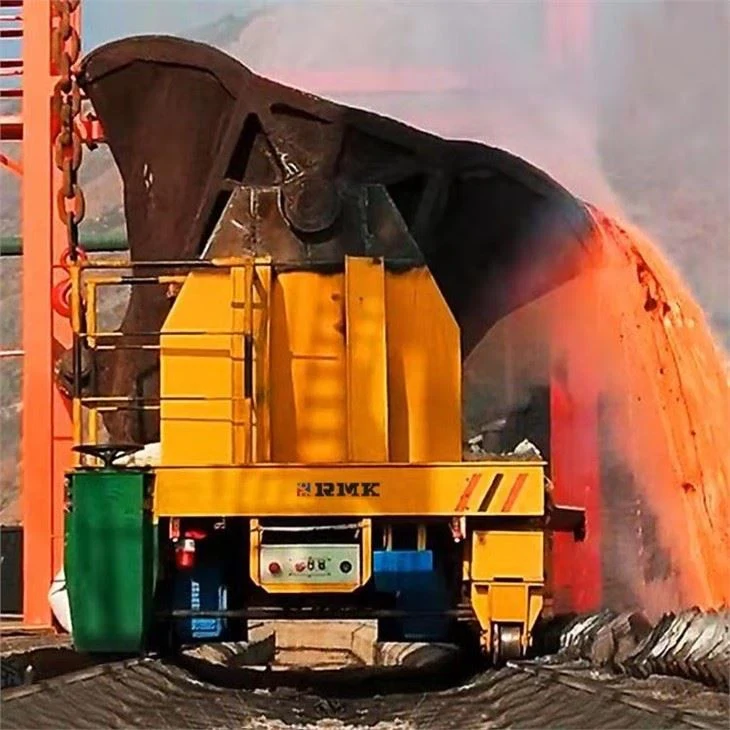
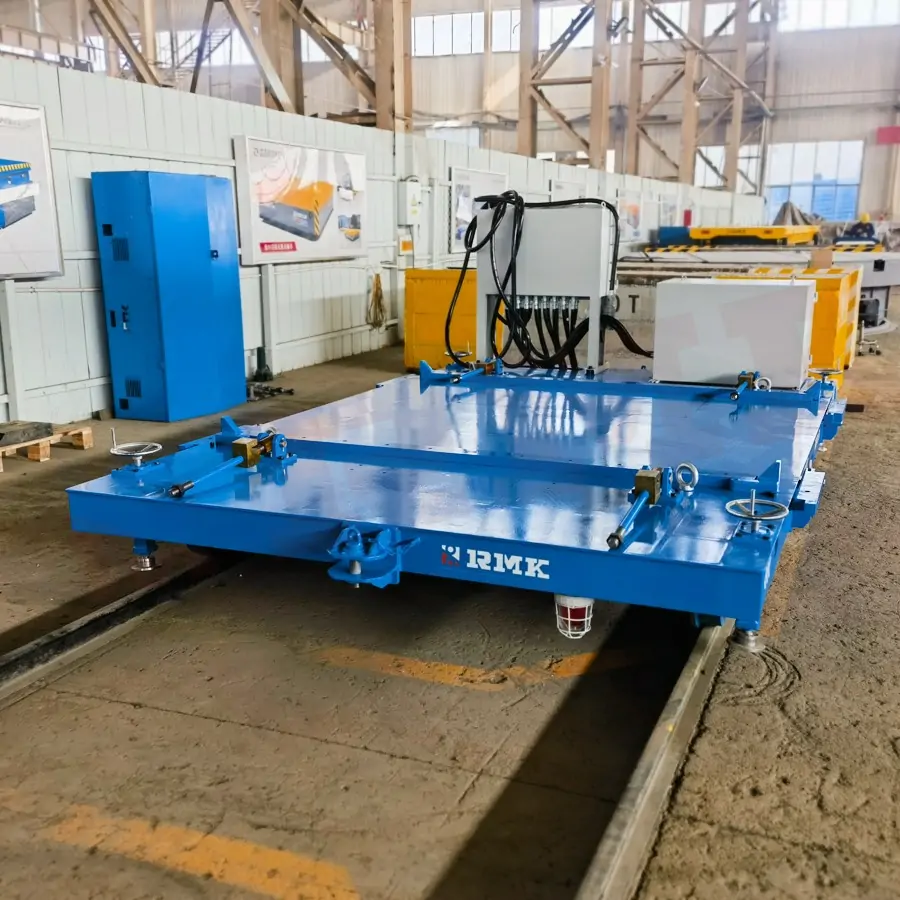
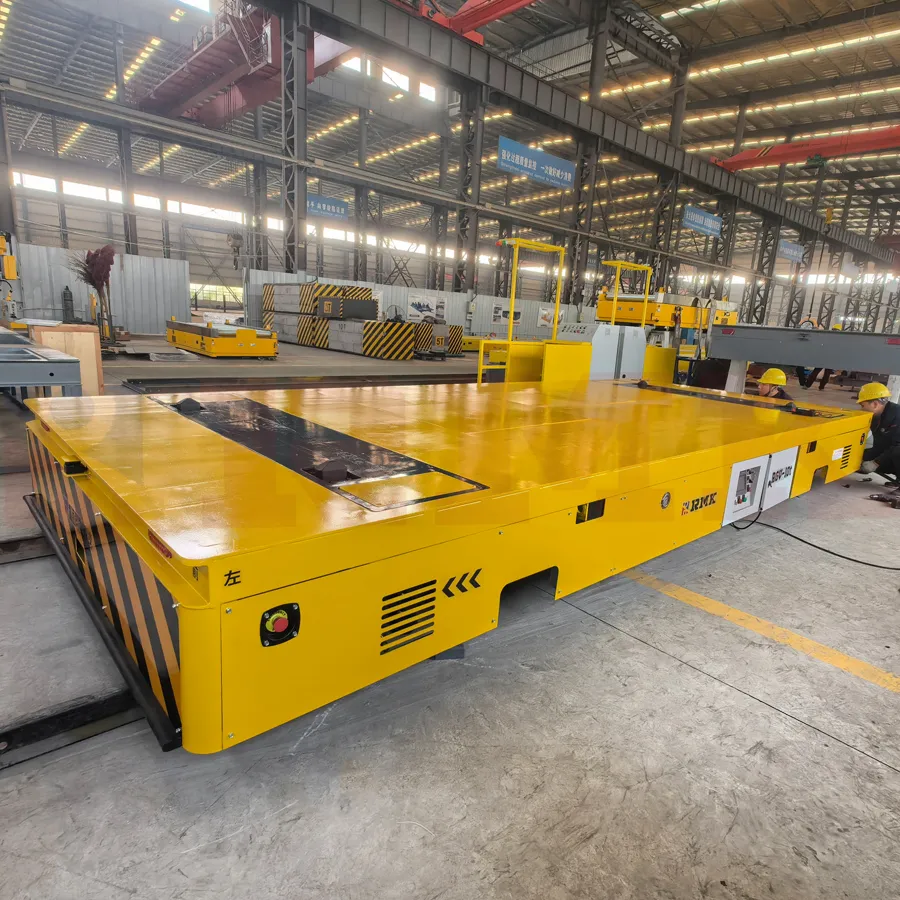
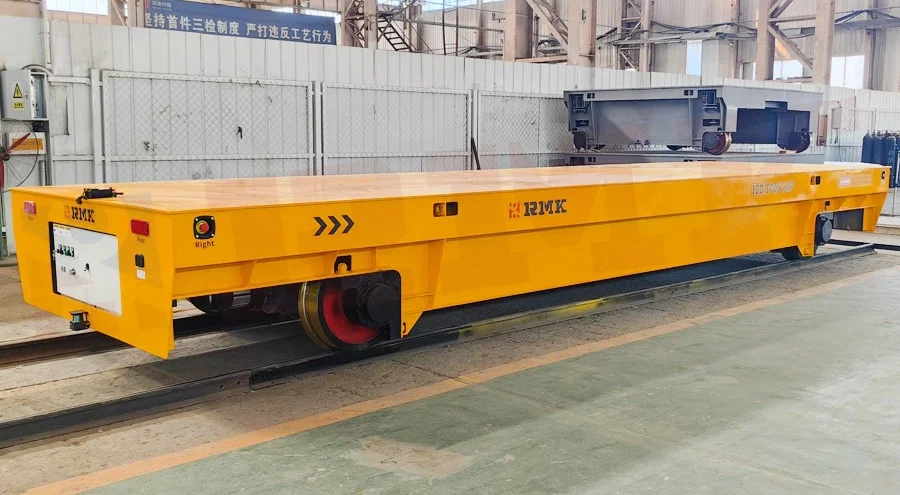
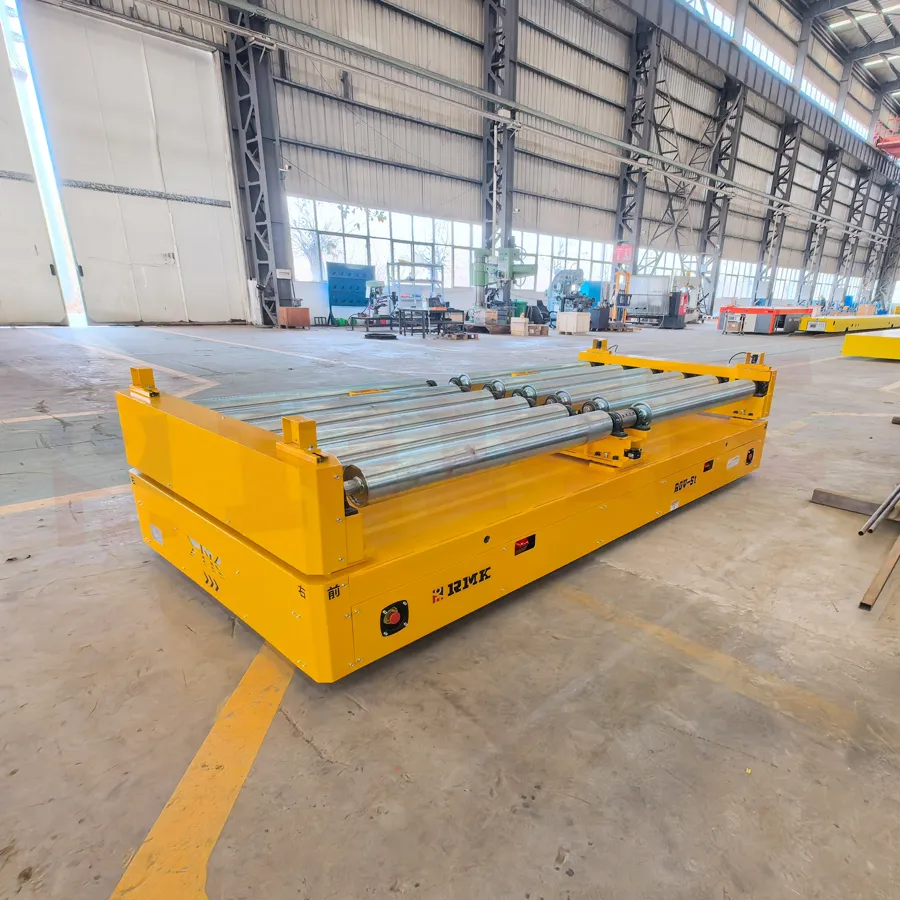
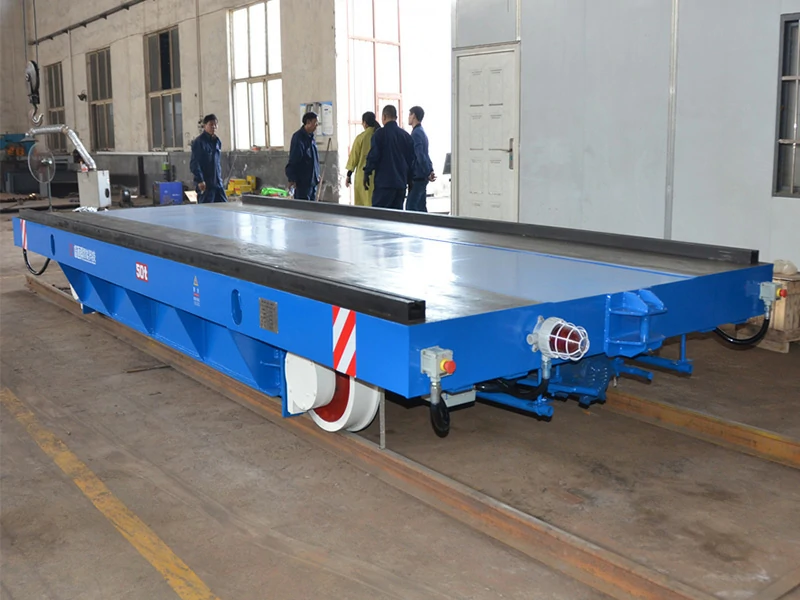
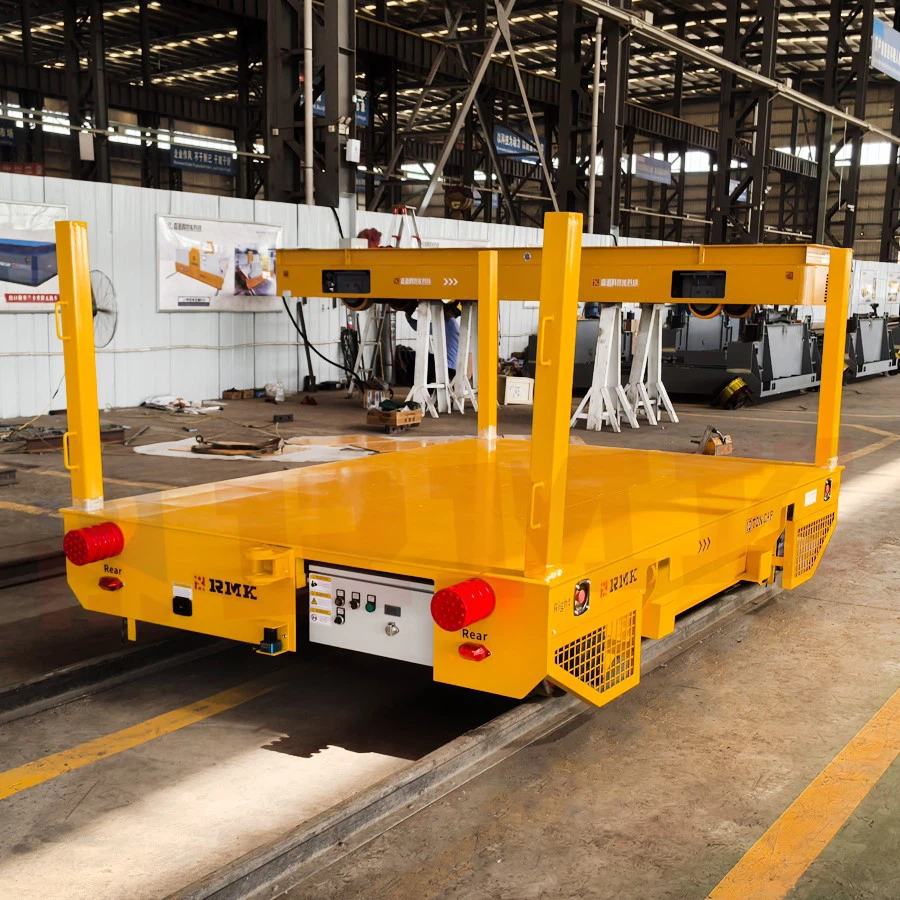
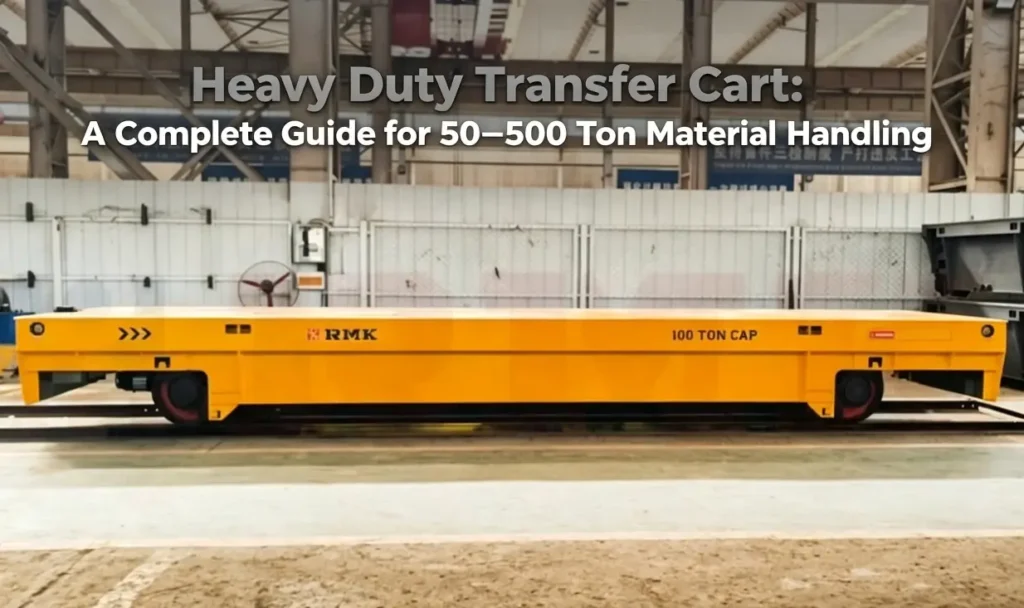
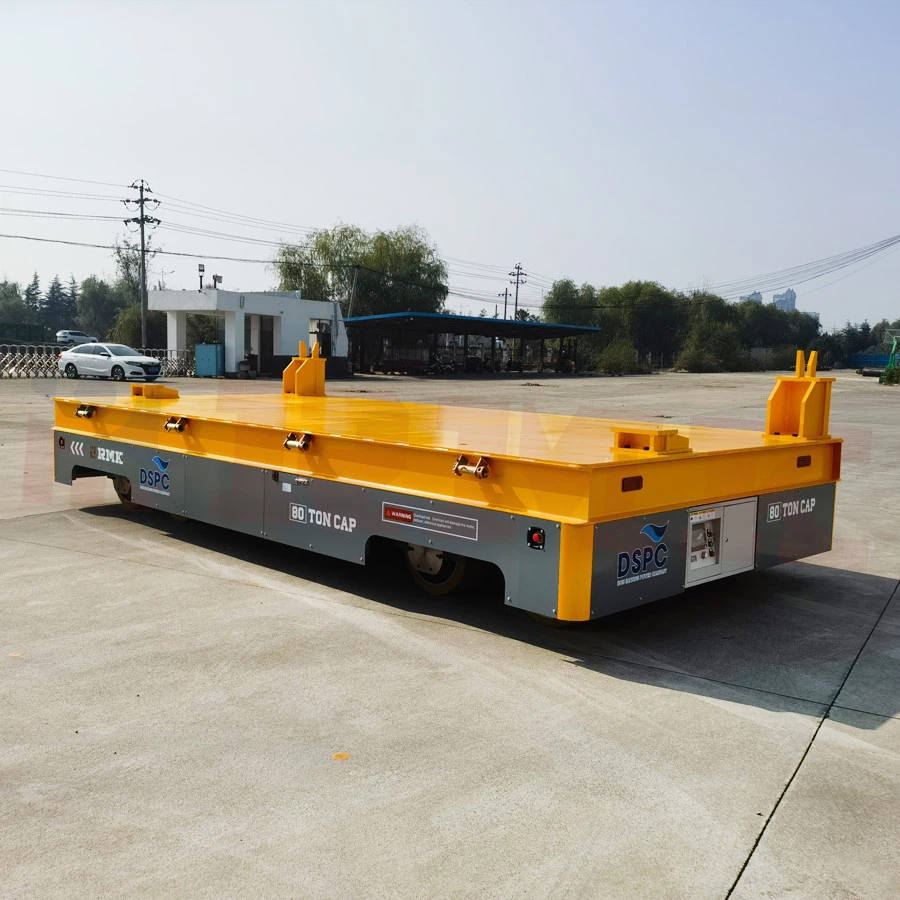
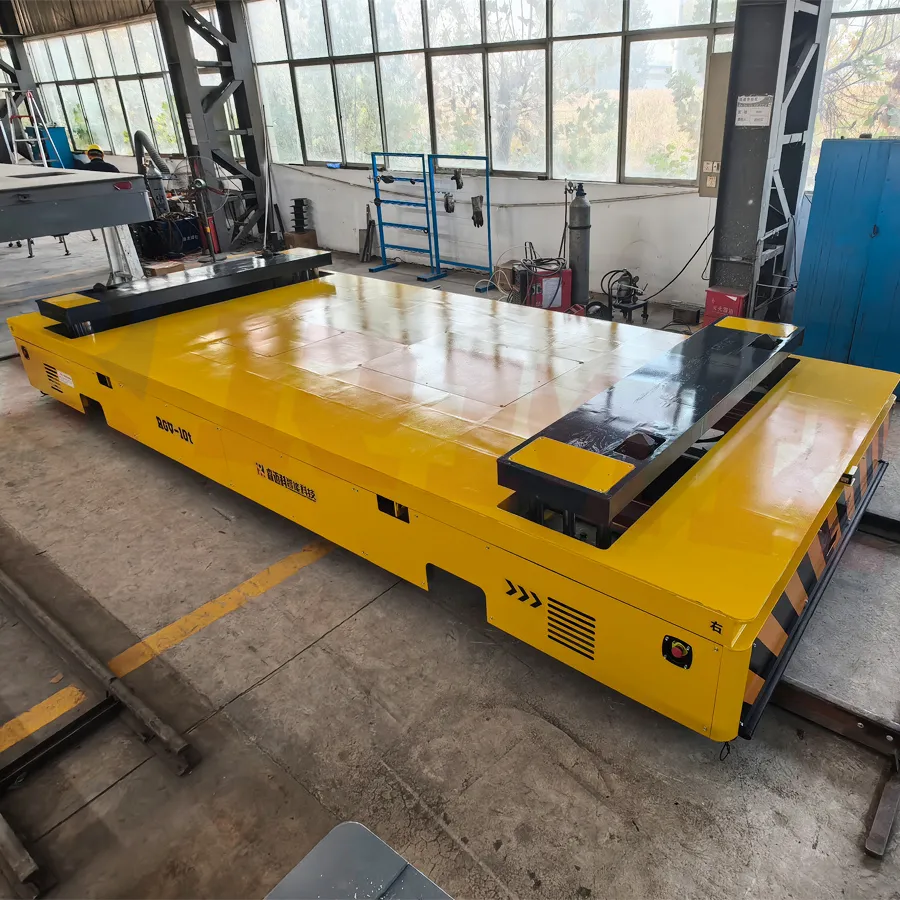
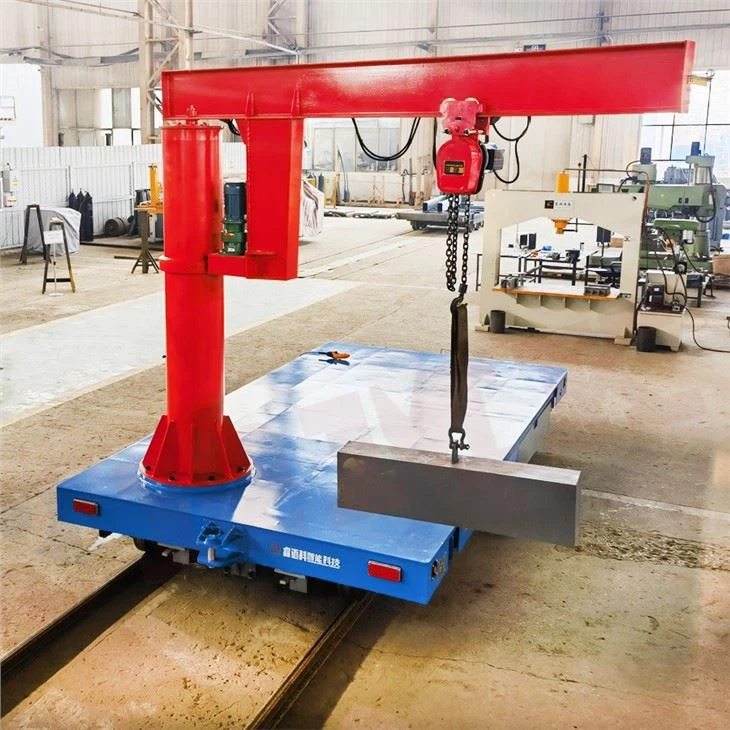
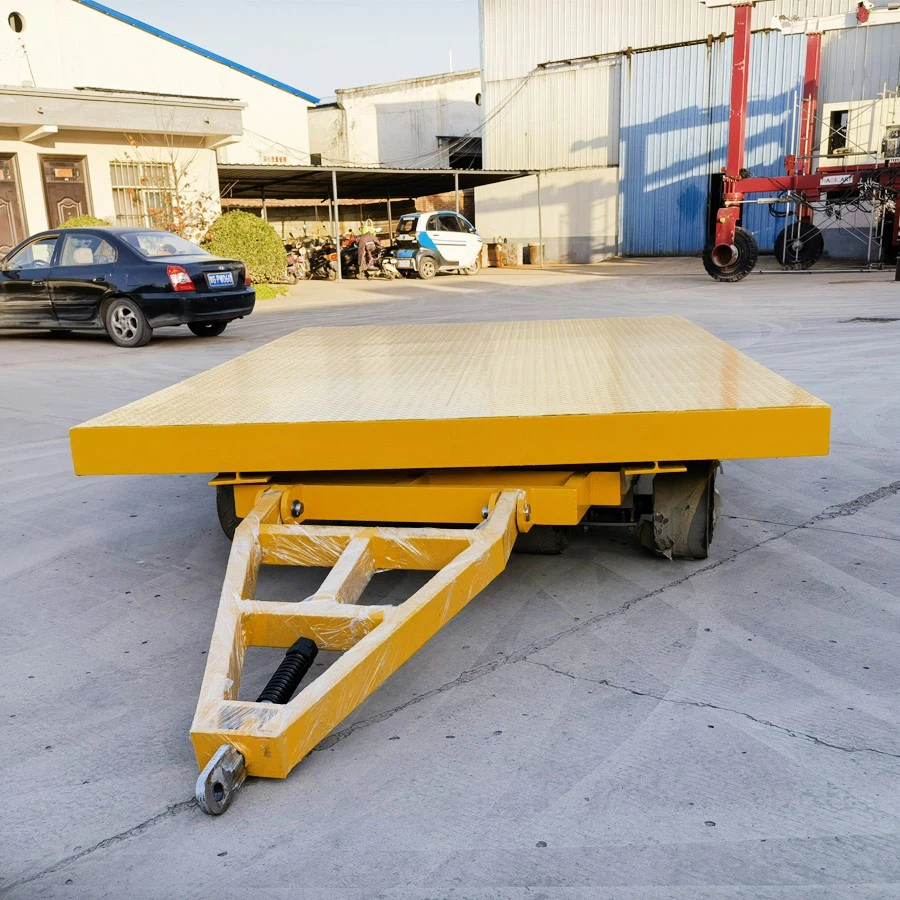
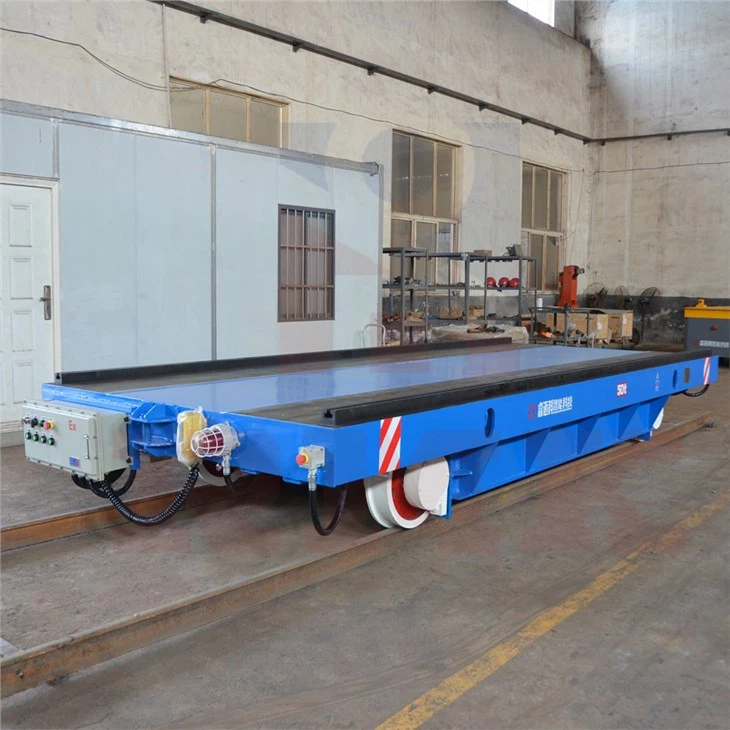
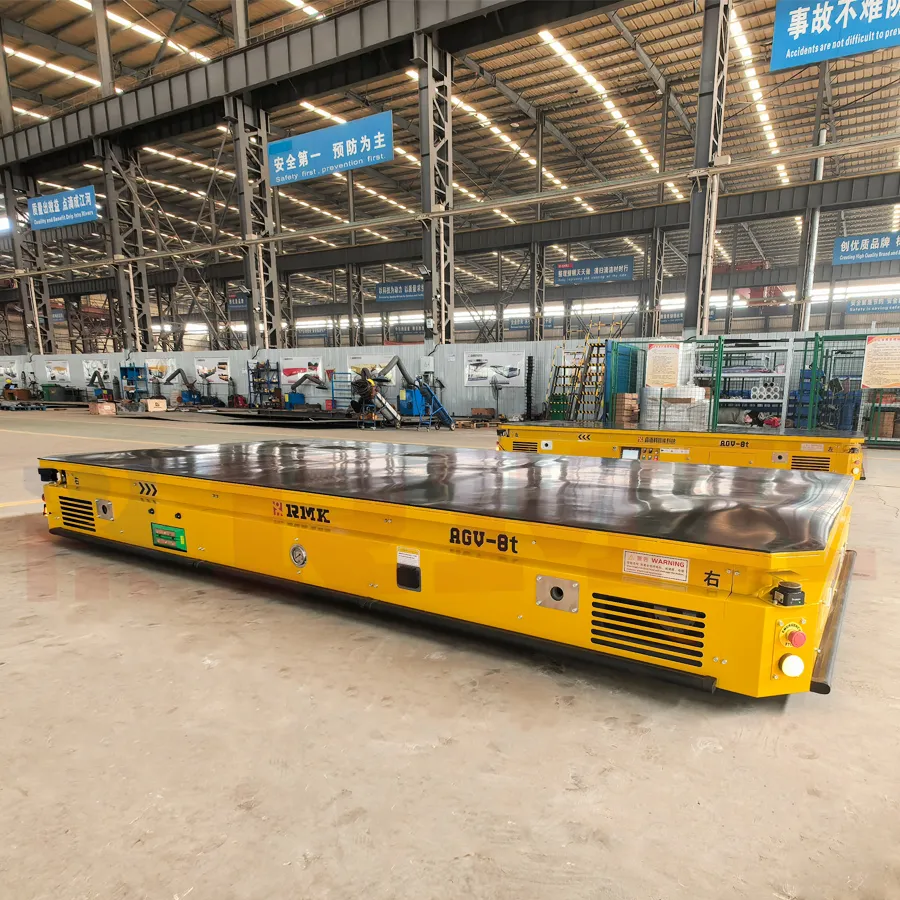
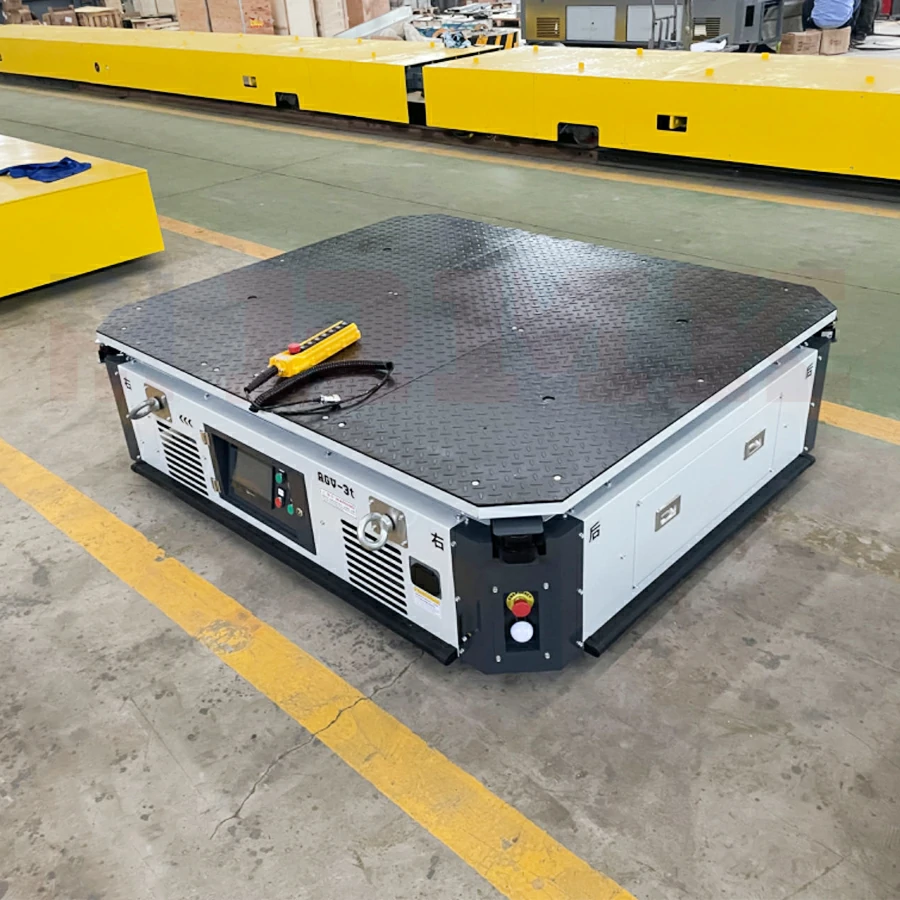
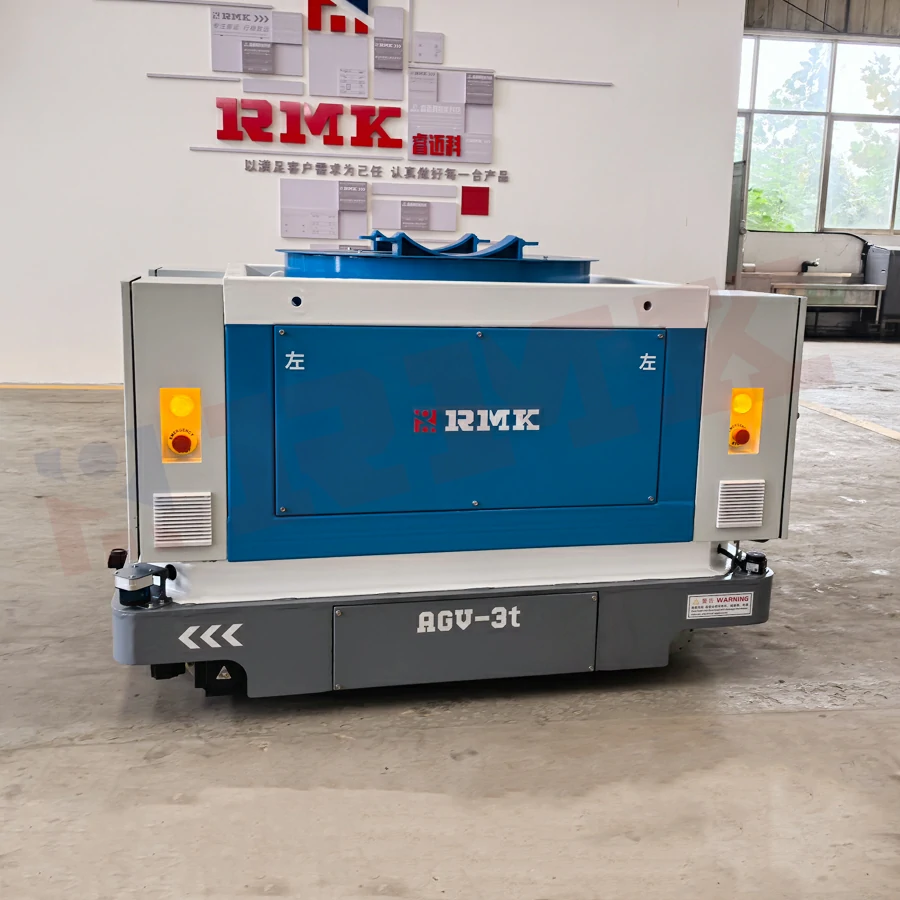
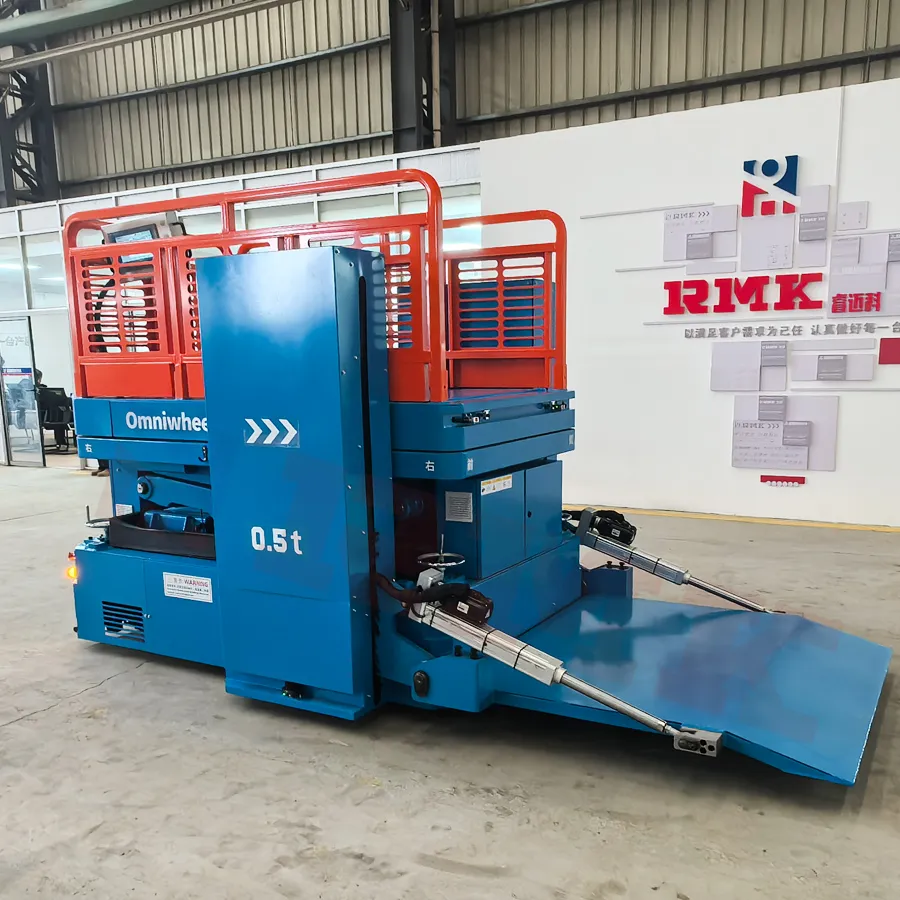
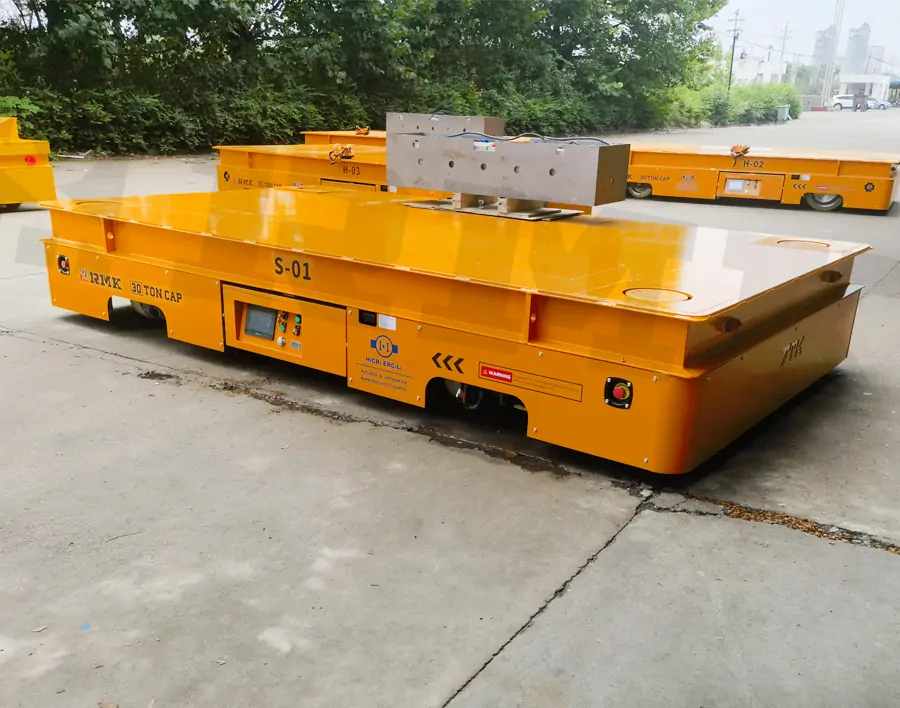
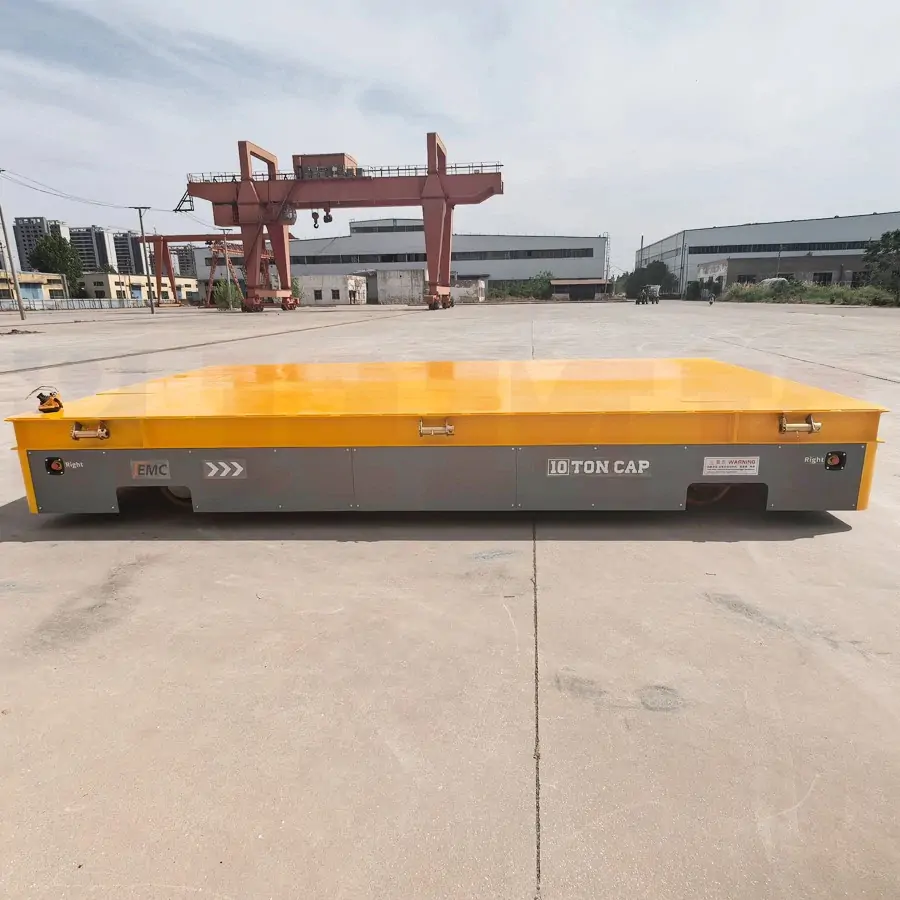
The rail guided transfer cart (RGV, Rail Guided Vehicle) is an automated material handling system that operates along a fixed rail track. Through the integration of mechanical structure and intelligent scheduling, it enables efficient and precise material flow in factories, warehouses, and industrial facilities.

Unlike AGV systems that rely on environmental navigation markers, a rail transfer cart system follows a predefined track path, allowing higher travel speeds (up to 160 m/min in straight lines) and positioning accuracy (±2 mm to ±5 mm). It is particularly suitable for heavy-duty, high-frequency, and long-distance standardized transportation tasks.

Its core advantages lie in the dual-rail structure, intelligent switching tracks, and dispatching algorithms, which solve the flexibility limitations of traditional single-track systems.

Today, rail guided transfer carts are widely used in automotive manufacturing, e-commerce warehousing, pharmaceutical cold chain logistics, and other industrial applications.

Core Components of the Rail Guided Transfer Cart System

The structure of a rail guided transfer cart combines mechanical engineering and intelligent control. With modular design, it achieves heavy load capacity, high speed, and precise positioning. The system mainly consists of four core parts: cart body, rail system, drive unit, and control system.

Cart Body

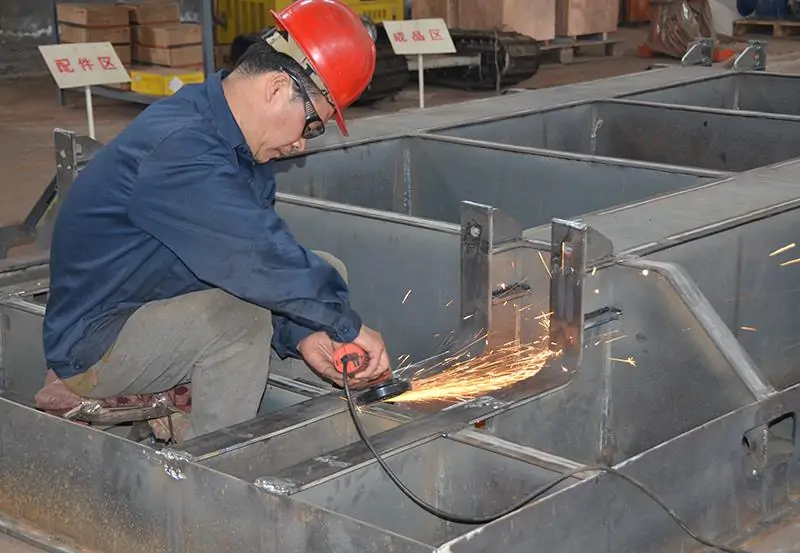
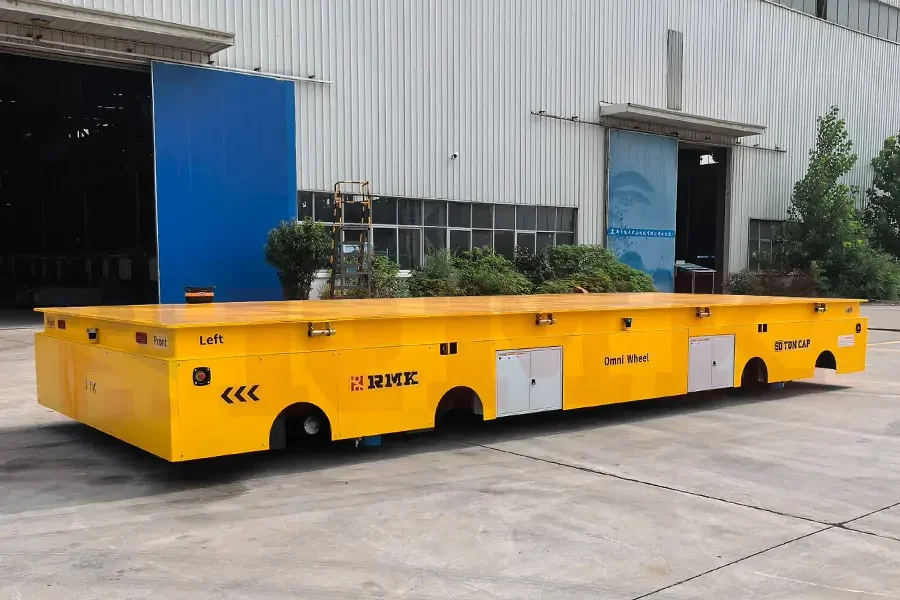
The cart frame is constructed from high-strength welded steel tubes. After annealing treatment to eliminate internal stress, key mounting surfaces are precisely machined using CNC gantry milling, ensuring load capacity exceeding 50 tons without long-term deformation.

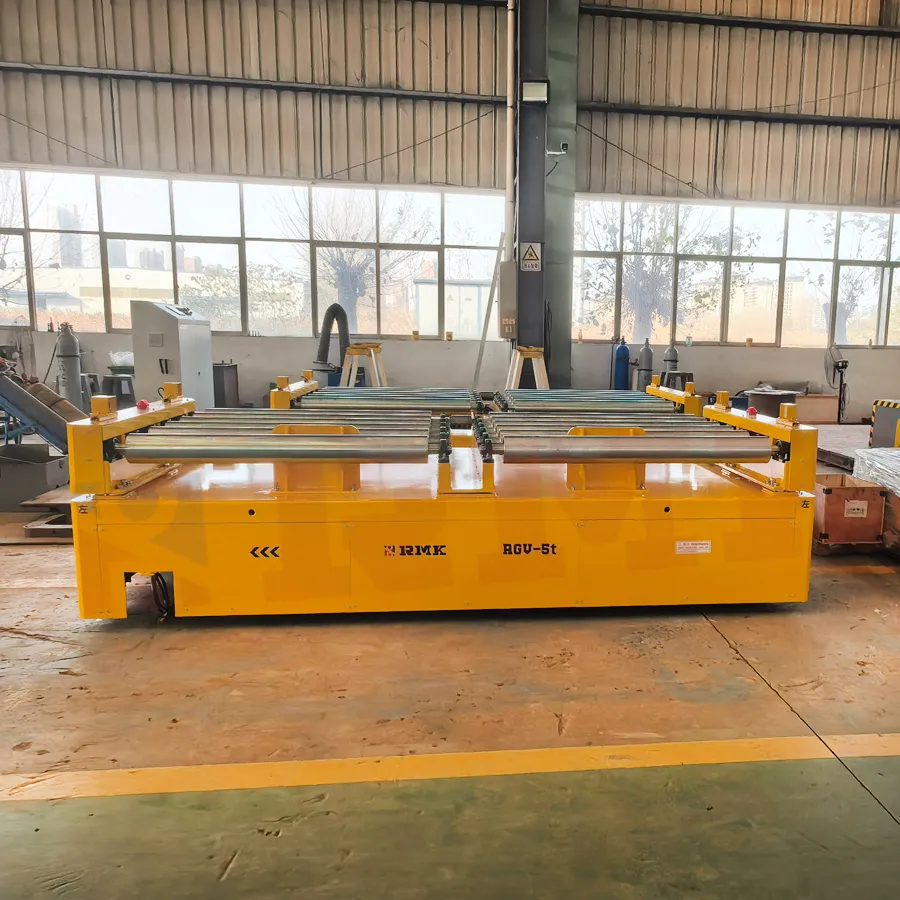
The upper frame integrates a conveying device composed of chains, sprockets, and geared motors. Depending on material types, roller conveyors, belt conveyors, or lifting mechanisms can be selected. For example, pallet handling in e-commerce warehouses often uses a chain-driven conveyor device to seamlessly connect with storage racks.

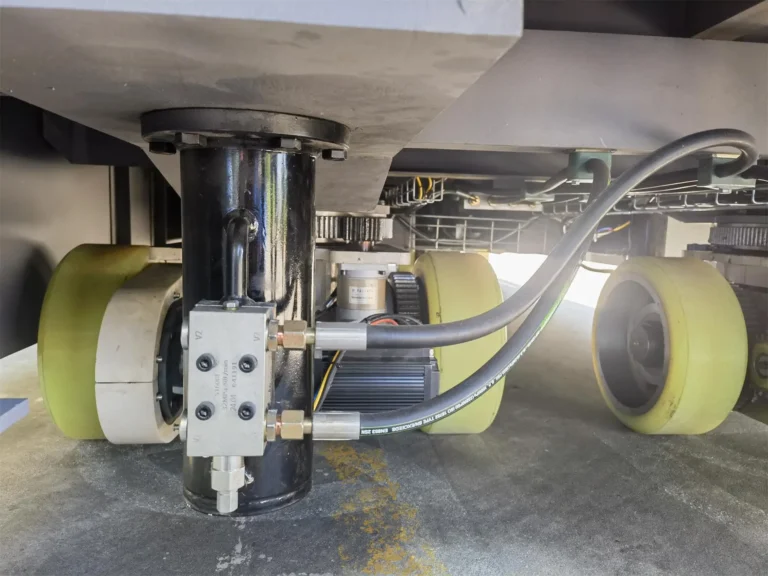
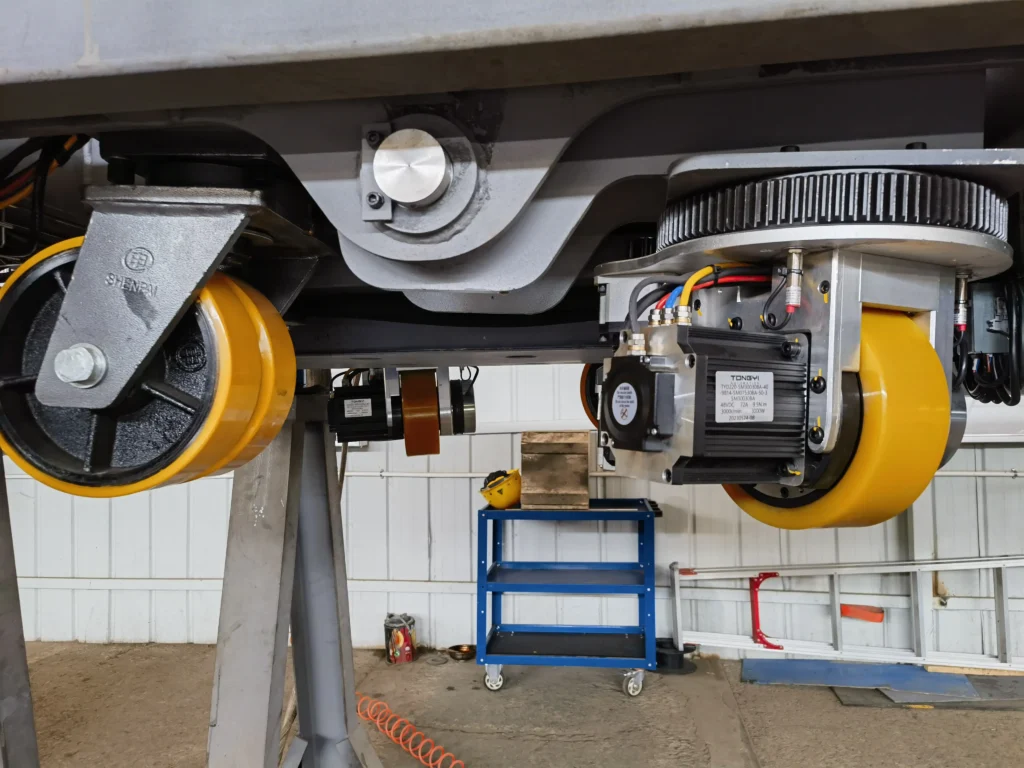
The wheel assembly is a technical core. An independent suspension design decouples driving force from vertical load:

  • Drive wheels provide traction
  • Load-bearing wheels carry weight
  • Lateral guide wheels control direction

Elastic preloading maintains constant rail contact pressure, reducing vibration by 40%. Polyurethane-coated wheels are optional to lower noise (≤75 dB) and ensure up to 5 years of service life, making the system ideal for pharmaceutical and electronics environments sensitive to noise and cleanliness.

Rail System

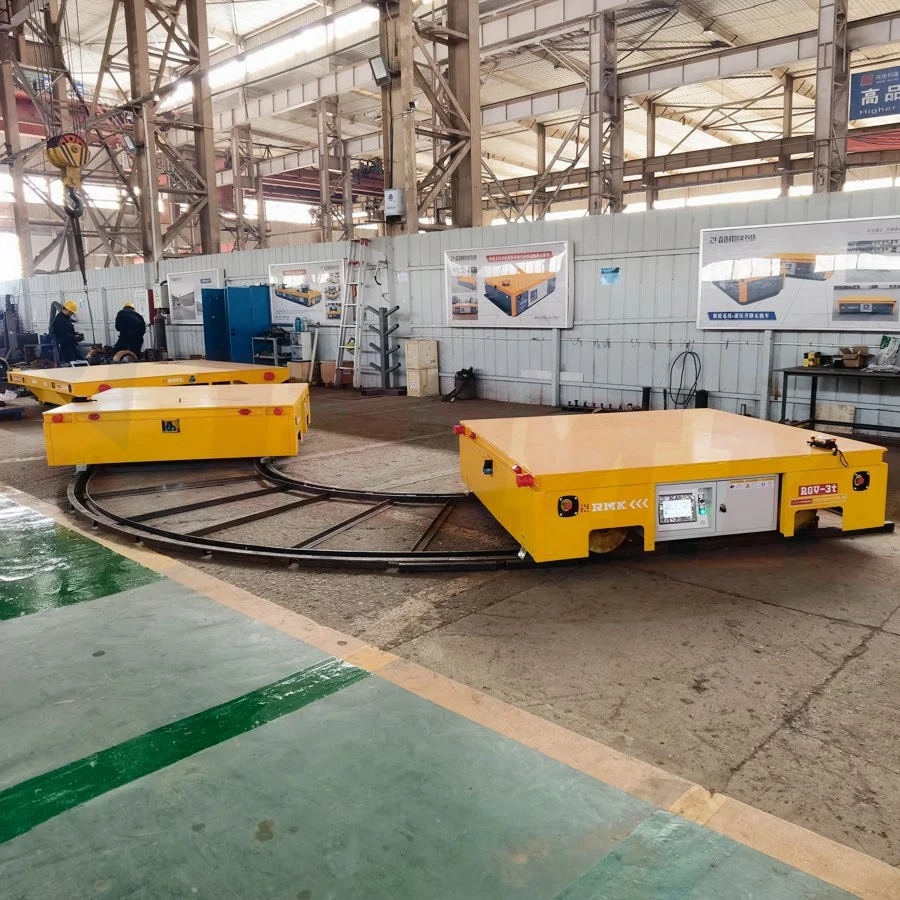
The rail system includes ground-mounted dual rails or circular rail configurations. The structure uses aluminum profiles or light rails fixed on the floor or embedded in pits.

The switching system is the key component for flexibility. Left/right switches consist of a rotating platform, base frame, and drive mechanism. The rotating table moves via guide wheels on the base track, and a motor-driven linkage enables track switching within ≤2 seconds.

In one e-commerce warehouse project, eight switches working with 20 rail guided transfer carts applied a “shortest path + dynamic priority” scheduling strategy, increasing multi-cart traffic efficiency by 50%.

Drive Unit

The drive system adopts a synchronous AC motor combined with a planetary gearbox, enabling stepless speed regulation from 0 to 160 m/min via a frequency inverter. Speed automatically reduces to 40 m/min on curves.

The braking system uses an electromagnetic brake that locks automatically during power failure, with a braking torque redundancy factor of 2.5.

Heavy-duty rail transfer carts can adopt lithium battery power with automatic charging stations. Brush plate alignment accuracy is adjusted through bolts under the rail, eliminating maintenance issues associated with traditional cable reel systems.

The positioning system combines barcode strips and encoder closed-loop control. Barcode strips mark positions every 2 mm, and onboard laser sensors read data in real time. With motor encoder feedback, repeat positioning accuracy reaches ±2 mm.

In cleanroom applications, dual encoder redundancy reduces positioning error to ±1.5 mm, meeting high-precision docking requirements such as semiconductor chip packaging.

制御システム

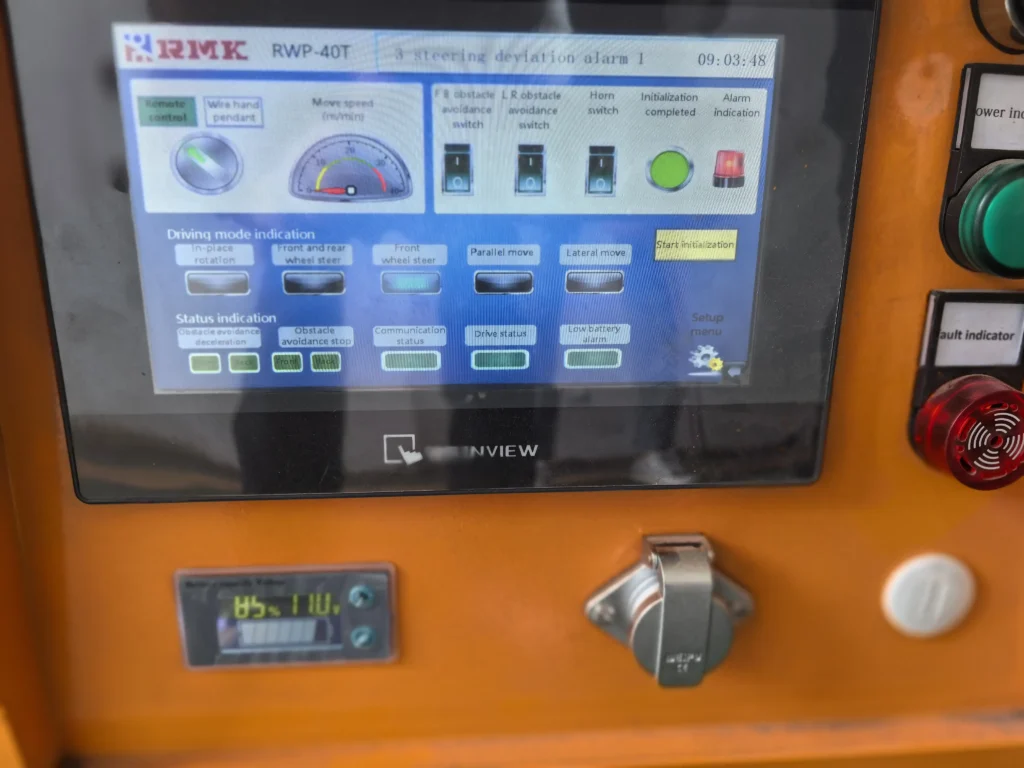
At the hardware level, the system uses a PLC + motion controller architecture. The onboard unit adopts an S7-1511 controller to manage the travel motor via servo drives, while the conveyor motor is driven by a MOVIFIT module.

The ground dispatching system (RTIS) runs on an industrial control server and communicates with multiple carts via UDP/IP protocol. It integrates task management, traffic control, and fault diagnostics modules. An adaptive ant colony optimization algorithm improves route efficiency and increases task response speed by 40%.

The safety protection system consists of three levels:

  1. Laser photoelectric sensors (3 m detection range)
  2. Buffers capable of absorbing 15 kJ of impact energy
  3. Emergency stop buttons and safety relays

The system complies with ISO 13849-1 PLd standards. In case of human intrusion, braking is triggered within 0.3 seconds to ensure safe human-machine collaboration.

This integration of mechanical precision and intelligent coordination enables the rail guided transfer cart system to transport 50-ton workpieces in automotive welding workshops, achieve three times the warehouse throughput of forklifts in e-commerce distribution centers, and maintain Class 100 cleanroom standards.

Working Principle of the Rail Guided Transfer Cart

The rail guided transfer cart operates by driving wheels along the rail through a motor and reducer system. Power is supplied via rail electrification or cable systems to the drive unit.

Once the control system receives commands, it manages start, stop, acceleration, and deceleration functions.

Because the travel path is fixed, the system offers:

  • Stable operation
  • 正確なポジショニング
  • Strong load-bearing capacity
  • Low maintenance cost
  • Ideal suitability for high-frequency transport along fixed routes

Difference Between Rail Guided Transfer Cart and AGV System

比較項目Rail Guided Transfer CartAGVシステム
動作モードFixed rail operationTrackless navigation
柔軟性LowerHigher
負荷容量Up to several hundred tonsGenerally medium and small loads
コストLowerHigher
申し込みFixed-route high-frequency transportFlexible production environments

If the production route is fixed and heavy load requirements are significant, a rail transfer cart system offers better cost-effectiveness.

Factors to Consider When Selecting a Rail Transfer Cart System

When choosing a rail guided transfer cart system, the following factors should be evaluated:

  • Maximum load capacity
  • Travel distance
  • Operating frequency
  • Rail installation conditions
  • Automation level requirements
  • Workshop environment (high temperature, corrosive conditions, etc.)

Customized design according to specific working conditions ensures stable and efficient long-term operation.

Why Choose Remarkable Rail Guided Transfer Cart System?

注目に値する is committed to providing global manufacturers with high-reliability and high-load rail guided transfer cart system solutions.

  • 1–500 ton load capacity customization
  • Battery-powered or cable-powered options
  • Explosion-proof versions available
  • PLC and AGV intelligent upgrade options
  • Complete material handling system solutions

From solution design to on-site implementation, we build stable and efficient industrial transportation systems tailored to your factory.

結論

The rail guided transfer cart system is a mature, stable, and high-capacity industrial material handling solution, particularly suitable for fixed-route heavy-load transportation.

Compared with flexible AGV systems, it offers advantages in heavy-duty capacity, operational stability, and cost control.

For manufacturing enterprises seeking high efficiency, low failure rates, and long-term stable operation, investing in a rail guided transfer cart system is a reliable automation choice.

Contact Remarkable Today

Looking for a stable and reliable rail guided transfer cart solution?

Contact Remarkable today to obtain a customized industrial material handling system tailored to your plant conditions. Our engineering team will provide configuration recommendations based on your load requirements, travel distance, and automation level.

Make transportation safer. Make production more efficient.

Eメール transfercart@rmkzn.com

Phone: +86-18637369355

メール送信

FAQs

Q1: What is a rail guided transfer cart system?

A1: A rail guided transfer cart system (RGV) is an automated material handling solution that operates on fixed rails. It integrates mechanical structure and intelligent dispatching to achieve efficient and precise material transport in factories and warehouses. Compared with trackless systems, a rail transfer cart offers higher speed (up to 160 m/min) and positioning accuracy (±2 mm to ±5 mm), making it ideal for heavy-duty and high-frequency transport.

Q2: What load capacity can a rail guided transfer cart handle?

A2: A rail guided transfer cart can handle loads from 1 ton up to 100 tons or more, depending on customization requirements. The cart frame uses high-strength welded steel structures with precision machining to ensure long-term deformation resistance. In heavy industrial environments, it can transport 50-ton workpieces in automotive welding workshops.

Q3: How does a rail transfer cart system achieve precise positioning?

A3: The rail transfer cart system uses a barcode strip combined with encoder closed-loop control. Position markers are set every 2 mm along the track, and onboard laser sensors read the data in real time. With motor encoder feedback, repeat positioning accuracy reaches ±2 mm. In cleanroom environments, dual encoder redundancy can further improve accuracy to ±1.5 mm.

Q4: What is the difference between a rail guided transfer cart and an AGV system?

A4: A rail guided transfer cart operates on fixed rails, while an AGV system uses trackless navigation. RGV systems offer stronger load capacity (up to several hundred tons), higher stability, and lower overall cost for fixed-route transportation. AGVs are more flexible but typically used for medium or light loads in flexible production environments.

Q5: What factors should be considered when selecting a rail transfer cart system?

A5: When selecting a rail transfer cart system, key factors include maximum load capacity, travel distance, operating frequency, rail installation conditions, required automation level, and workshop environment such as high temperature or corrosive conditions. Proper customization based on working conditions ensures stable and efficient operation.

Q6: Is a rail guided transfer cart suitable for high-frequency industrial transport?

A6: Yes. A rail guided transfer cart is particularly suitable for fixed-route, high-frequency transportation. Because the path is predefined, the system provides stable operation, strong load-bearing capacity, precise positioning, and low maintenance cost, making it highly cost-effective for repetitive industrial material handling tasks.

関連記事

人気商品