
Table des matières
Introduction
Un chariot de transfert à usage intensif est conçu pour déplacer des charges industrielles lourdes telles que des composants en acier, des moules, des machines et de grandes structures. La capacité de charge peut aller de plusieurs tonnes à plusieurs centaines de tonnes, avec des modèles personnalisés disponibles pour des applications spéciales dépassant 1000 tonnes. La capacité de charge réelle dépend du type de cargaison, de la structure du chariot, du mode de déplacement et des conditions de travail.
Dans ce guide, j'expliquerai comment la capacité d'un chariot de transfert à usage intensif est déterminée, y compris les plages de capacité courantes, les facteurs de conception clés, les méthodes de calcul de charge et les considérations de sélection. Ces détails aident les acheteurs à comprendre la relation entre les exigences de charge et la configuration du chariot avant de choisir un modèle approprié.
Quel poids un chariot de transfert à usage intensif peut-il transporter ?
Les chariots de transfert à usage intensif sont disponibles dans une large plage de capacité, de plusieurs tonnes à plusieurs centaines de tonnes. Le choix de la capacité dépend du type de charge, des exigences de transport et des conditions de travail.
| Plage de capacité | Applications typiques | Principales caractéristiques |
|---|---|---|
| 5–20 tonnes | Pièces en acier, bases de machines, composants soudés, transport en atelier | Adapté au transfert général de matériaux entre postes de travail |
| 30–100 tonnes | Lignes de production, fabrication lourde, manutention en usine | Structure renforcée pour le transport fréquent de charges lourdes |
| 100–500 tonnes | Aciéries, chantiers navals, grands projets d'équipement | Plateforme, système de roues et conception de rails personnalisés pour charges lourdes |
| 500 tonnes et plus | Projets spéciaux à usage intensif, transport d'équipements surdimensionnés | Châssis, système d'entraînement, répartition de la charge sur les roues et alimentation électrique entièrement personnalisés |
La capacité réelle d'un chariot de transfert à usage intensif dépend de plus que du tonnage nominal. Le poids de la charge, le centre de gravité, la conception de la plateforme, la charge sur les roues, la puissance d'entraînement, la distance de déplacement et les conditions de travail affectent tous la configuration finale.
Quelles sont les plages de capacité courantes des chariots de transfert à usage intensif ?
La capacité d'un chariot de transfert à usage intensif varie généralement de 5 tonnes à 500 tonnes, avec des modèles personnalisés disponibles pour des applications spéciales dépassant 1000 tonnes. La capacité requise dépend du poids de la charge, des dimensions de la cargaison, du mode de déplacement et des conditions de travail. Différentes plages de capacité sont conçues pour différentes exigences de manutention industrielle.
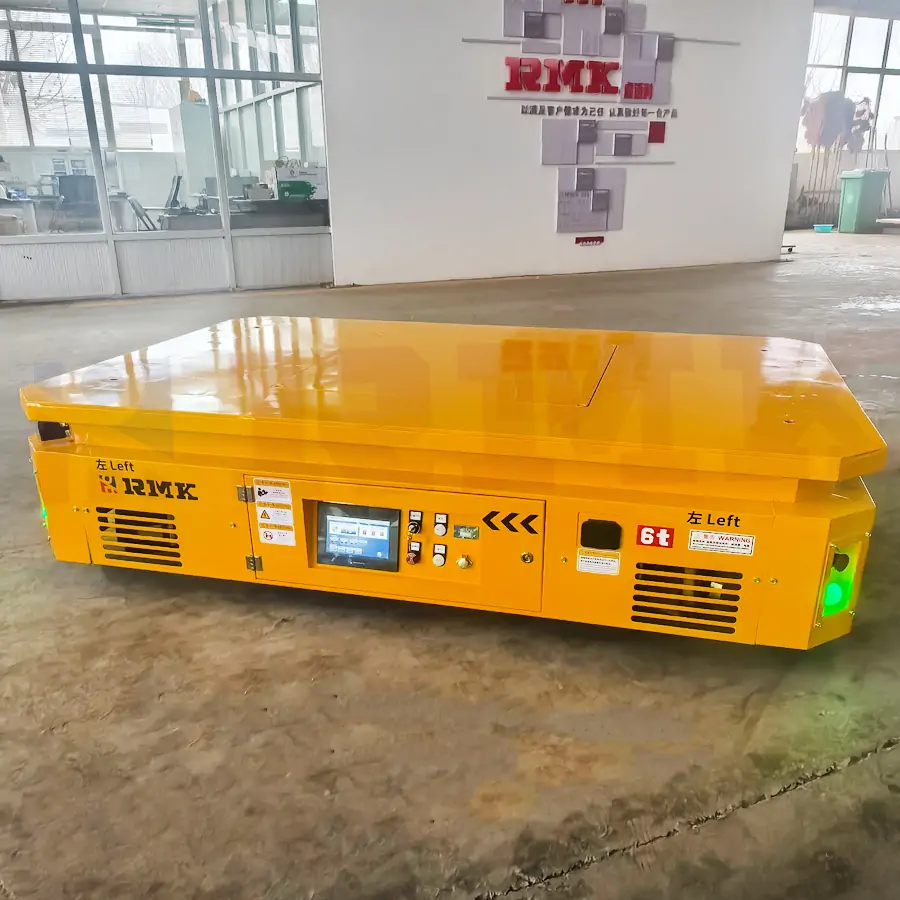
Chariot de transfert de petite capacité (5–20 tonnes)
Les chariots de transfert de 5–20 tonnessont couramment utilisés dans les ateliers et les zones de production pour déplacer des pièces de machines, des composants soudés et de petits équipements industriels.
Ces modèles mettent l'accent sur une structure compacte et un fonctionnement flexible, ce qui les rend adaptés à :
- Manutention de matériaux en atelier
- Transport de pièces de machines
- Déplacement d'équipements de production
Chariot de transfert de capacité moyenne (30–100 tonnes)
Les chariots de transfert de 30–100 tonnes sont largement utilisés dans les applications de fabrication lourde. Ils sont conçus pour transporter des composants en acier, des moules et des équipements industriels avec une stabilité de charge plus élevée.
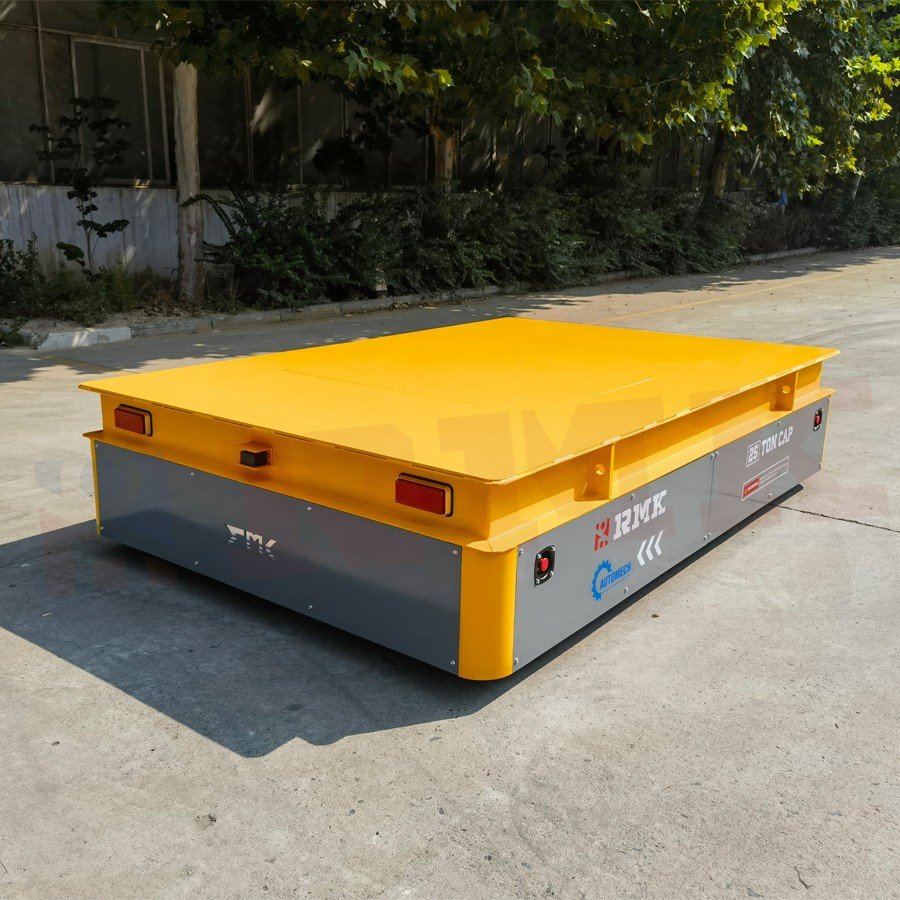
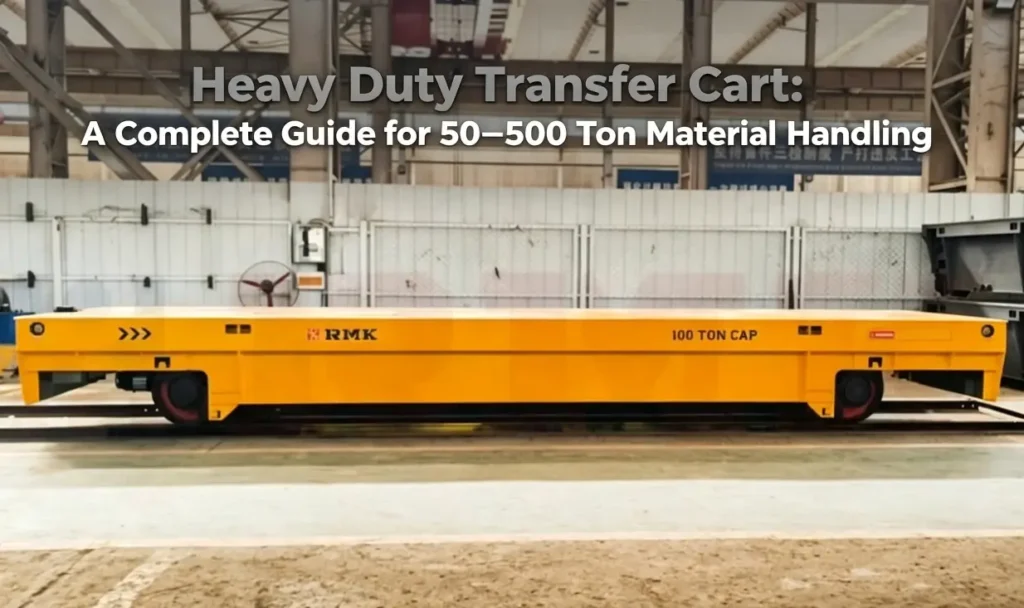
Un chariot de transfert sur rail de 100 tonnes peut utiliser une plateforme d'environ 6500×2800 mm et des sections de rail lourdes pour un fonctionnement fréquent sur des itinéraires fixes.
Les applications appropriées comprennent :
- Manutention de composants en acier
- Transport de moules
- Lignes de production manufacturière
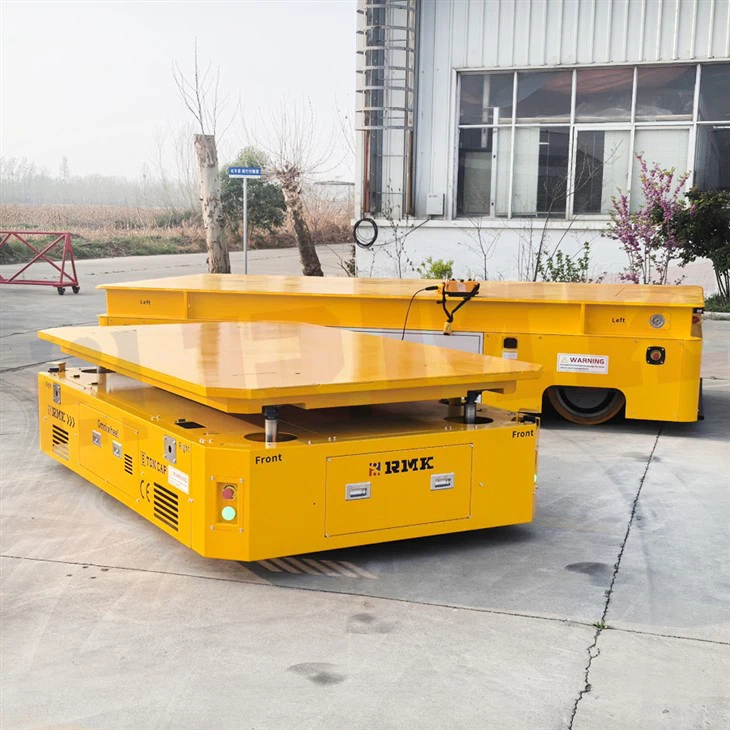
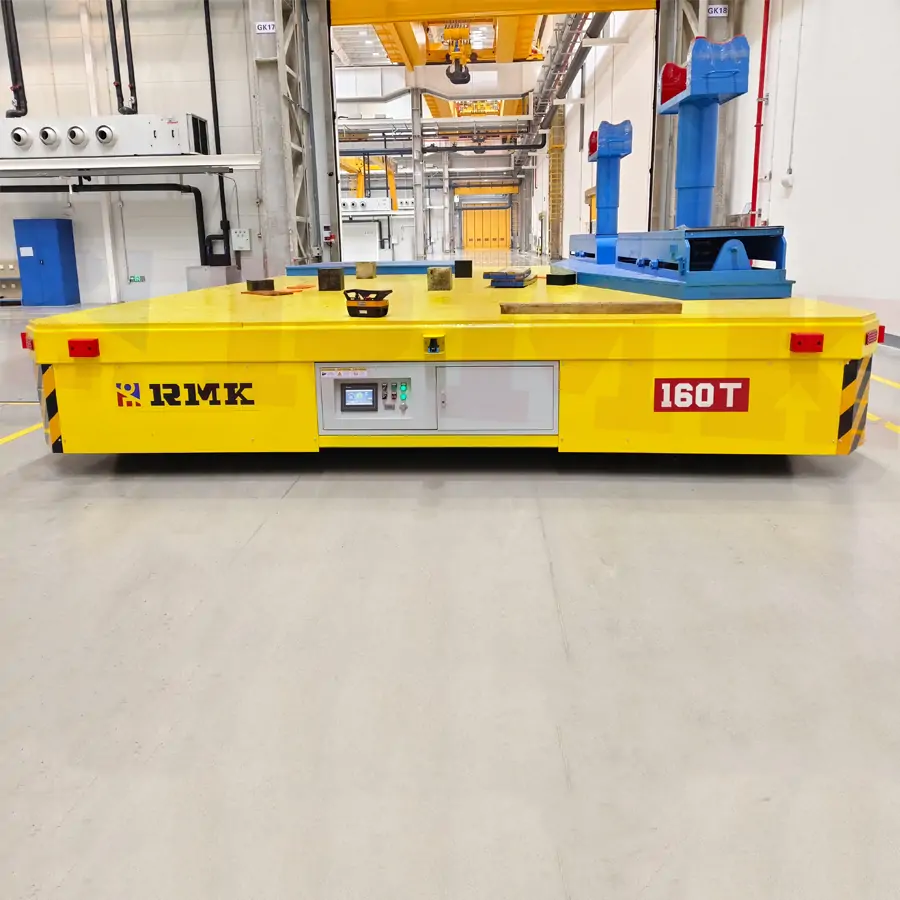
Chariot de transfert de forte capacité (100–500 tonnes)
Les chariots de transfert de 100–500 tonnes sont utilisés pour le transport industriel à grande échelle dans les aciéries, les chantiers navals et les installations de fabrication lourde.
Ces modèles nécessitent généralement des plateformes personnalisées, des roues à usage intensif et plusieurs systèmes d'entraînement pour gérer de grandes structures et des charges concentrées.
Applications typiques :
- Transfert de matériaux en aciérie
- Déplacement d'équipements de chantier naval
- Transport de grandes structures
Chariot de transfert ultra-robuste (500 tonnes et plus)
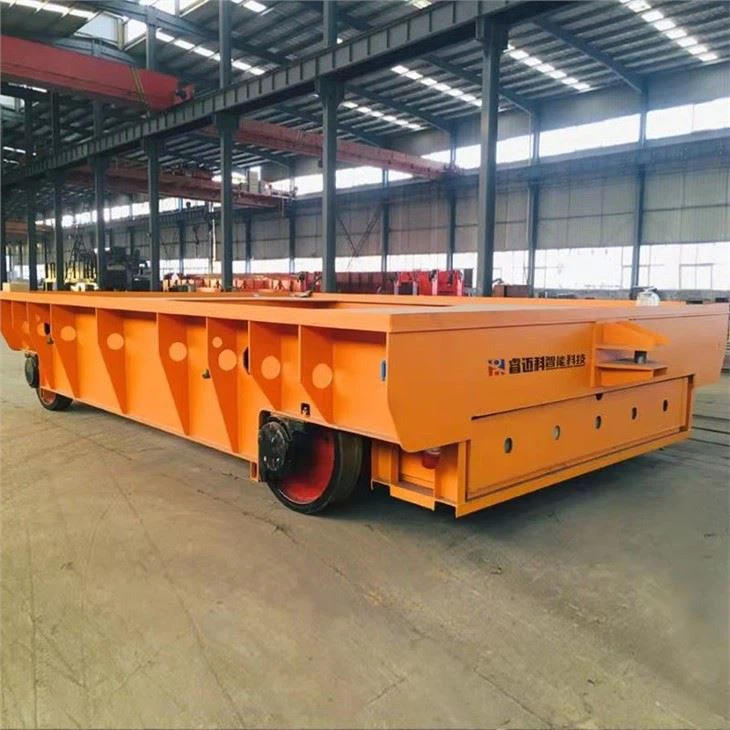
Les chariots de transfert de plus de 500 tonnes sont conçus pour des projets spécifiques à charges lourdes. Ce ne sont pas des produits standard et ils nécessitent une conception personnalisée basée sur la répartition de la charge, la disposition des roues, la puissance d'entraînement et les conditions de transport.
Applications include:
- Ship section handling
- Turbine transportation
- Large industrial equipment movement
Some customized heavy duty transfer carts can handle loads exceeding 1000 tons.
Qu'est-ce qui détermine la capacité d'un chariot de transfert à usage intensif ?
The capacity of a heavy duty transfer cart is determined by more than the rated load. Cargo conditions, structural design, drive system, and operating environment all affect the final capacity selection.
| Facteur | Considerations | Impact on Capacity |
|---|---|---|
| Load Weight and Distribution | Cargo weight, center of gravity, load distribution, single-point loading, lifting method | Determines frame strength and load stability |
| Taille et structure de la plateforme | Deck size, reinforced structure, support frames, special fixtures | Affects load support and stress distribution |
| Wheel and Drive System | Wheel quantity, wheel load, motor power, gearbox selection | Determines running capability and heavy load performance |
| Méthode de déplacement | Rail or trackless operation, route layout, positioning requirements | Affects stability, flexibility, and maximum load range |
| Working Conditions | Travel distance, operation frequency, floor or rail condition | Influences safety margin and component selection |
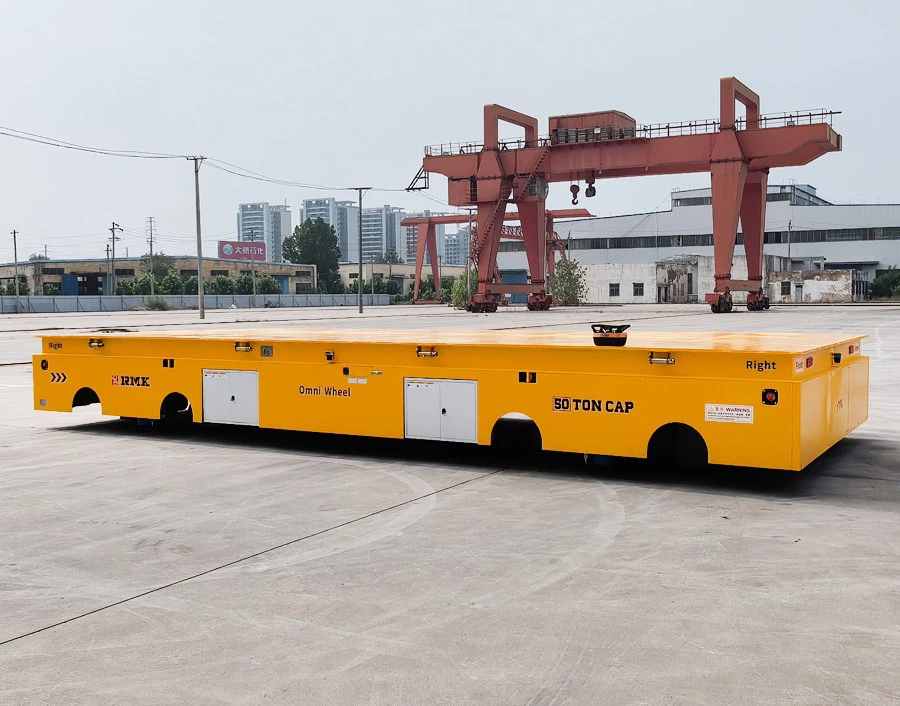
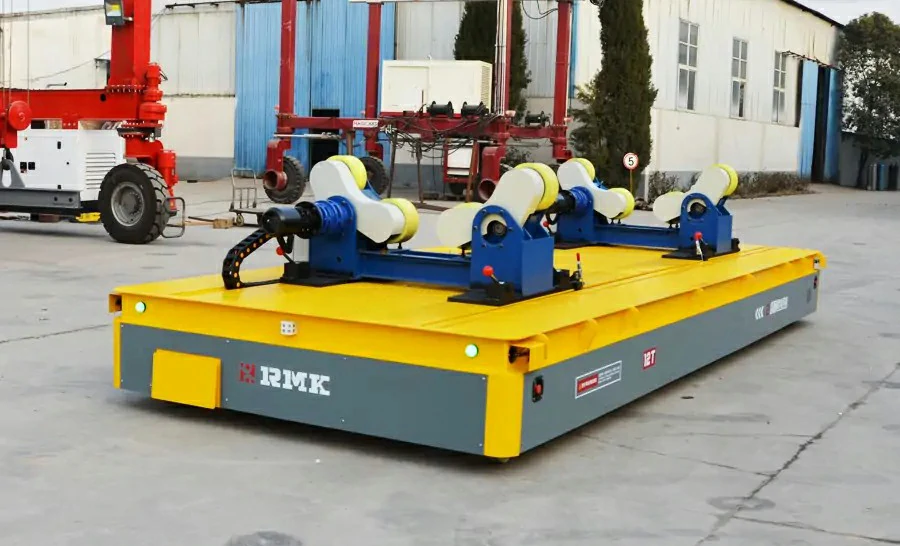
For special loads, the platform design may require additional solutions, such as V-frame decks for steel coils or support frames for large equipment. A 50-ton transfer cart may use a platform around 5500×2500 mm, while a 100-ton model may require around 6500×2800 mm.
The correct capacity should be selected according to the maximum actual load, cargo dimensions, transport route, and operating conditions.
Comment la capacité d'un chariot de transfert est-elle calculée ?
Transfer cart capacity is calculated based on the actual load requirements and operating conditions, not only the cargo weight. The selection process should consider the following factors:
- Confirm Maximum Load Weight: Calculate the heaviest load the cart will handle, including fixtures, tools, and additional equipment. Capacity should be based on the maximum expected load, not the average load.
- Add a Safety Margin: A suitable capacity margin helps handle load changes and future production requirements. The margin depends on the application, load conditions, and operating frequency.
- Check Load Distribution: Evaluate the cargo shape, center of gravity, and loading position. Uneven or concentrated loads may require a higher capacity rating and customized platform design.
- Match Wheel and Drive System: The selected capacity must match the wheel load, motor power, gearbox, and running system to ensure stable movement under full load.
- Verify Working Conditions: Consider travel distance, route type, floor or rail conditions, operating frequency, and environment before finalizing the capacity.
Selecting transfer cart capacity based only on average load may cause insufficient performance or unnecessary cost. The correct specification should match the actual handling requirements.
Les chariots de transfert ont des capacités de charge allant de quelques tonnes métriques à plus de mille tonnes métriques. Comment déterminez-vous la capacité de charge réelle d'un chariot de transfert, et comment calculez-vous la capacité de charge finale ? Pour plus de détails, voir : Combien de poids un chariot de transfert robuste peut-il transporter ?
Un chariot de transfert de capacité supérieure est-il toujours meilleur ?
A higher capacity transfer cart does not always fit the application. A model with excessive capacity requires a stronger structure and larger drive components, which can increase purchase cost, power consumption, and maintenance workload.
The selected capacity should match the actual cargo weight, working frequency, transport route, and site conditions. A suitable capacity provides stable operation without unnecessary equipment costs.
La capacité d'un chariot de transfert à usage intensif peut-elle être personnalisée ?
Yes, heavy duty transfer cart capacity can be customized according to specific load requirements and working conditions. Manufacturers can design the cart structure, platform size, wheel arrangement, and drive system based on the actual application.
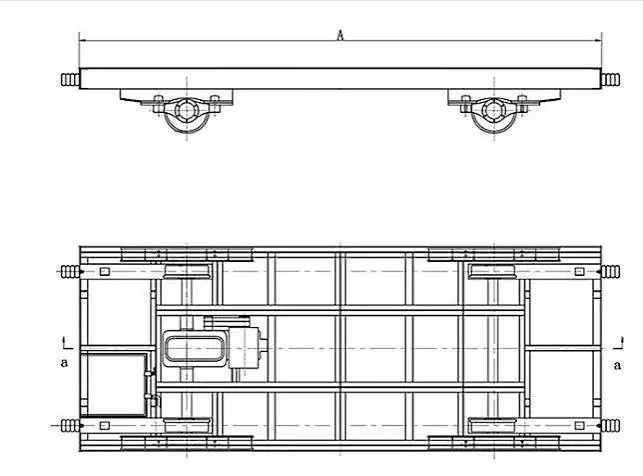
Common customization options include:
- Load Capacity: Customized capacity from several tons to hundreds of tons for different handling requirements
- Platform Design: Custom deck size, height, support structure, and fixtures for special loads
- Wheel and Drive System: Different wheel arrangements, motor power, and drive configurations for load conditions
- Power Supply: Battery, cable reel, or conductor rail power systems based on operation requirements
- Travel Design: Rail-mounted, trackless, or special travel solutions for different factory layouts
- Control System: Remote control, automatic operation, and positioning functions
Before customization, provide the load weight, cargo dimensions, transport route, running distance, and working frequency. These details help determine the suitable capacity and configuration.
For more detailed information on customization options and limitations, see: Chariot de transfert personnalisé : Guide complet de conception et de personnalisation
Comment choisir la bonne capacité de chariot de transfert à usage intensif ?
Selecting the right capacity starts with understanding the actual handling requirements. The rated capacity should match the heaviest load, operating conditions, and future handling needs. Before ordering a heavy duty transfer cart, confirm:
- Maximum load weight: Determine the heaviest cargo, including fixtures and supporting equipment.
- Cargo dimensions: Check length, width, height, and loading position to select a suitable platform design.
- Load distribution: Consider center of gravity and uneven loading conditions.
- Transport distance: Define the travel distance and route layout.
- Rail or trackless operation: Select the suitable travel method based on factory conditions.
- Working frequency: Confirm daily running time and operation cycles.
- Floor or rail conditions: Check surface condition, rail design, and site environment.
- Future production requirements: Reserve suitable capacity for possible load changes.
Choosing capacity based only on the current load may limit future use. A proper specification should match the actual application and operating conditions.
Different types of heavy-duty transfer carts are suited for different work scenarios. Which type is right for your factory? Check out this article to learn how to choose the right transfer cart for your needs: Guide d'achat des chariots de transfert pour charges lourdes : comment choisir le bon modèle
Pourquoi choisir le chariot de transfert à usage intensif REMARKABLE ?
REMARQUABLE manufactures heavy duty transfer carts with capacity ranges from 1 to 500 tons for industrial material handling applications. Each cart is designed according to the customer’s load requirements, transport route, and working environment.
Customized cart design: Platform size, capacity, wheel arrangement, and structure can be adjusted for different loads and applications.
Multiple power options: Battery, cable reel, and rail power systems are available for different operating conditions.
Flexible control solutions: Manual remote control and automated operation options are available based on project requirements.
Project experience and service support: Export experience, technical assistance, and after-sales support are provided for overseas customers.
From standard material handling to special heavy-load transportation, REMARKABLE develops transfer cart solutions based on actual site requirements.
Conclusion
Heavy duty transfer cart capacity is the key specification for safe and efficient material handling. Load weight, cargo structure, transport route, and working conditions all affect the final design. Customized solutions are required for special loads and complex working environments.
REMARQUABLE provides customized heavy duty transfer carts for industrial material handling applications. Contactez nous with your load requirements and working conditions to get a suitable transfer cart solution.
Courriel : transfercart@rmkzn.com
Téléphone : +86-18637369355
Articles connexes
FAQ
Quel poids un chariot de transfert à usage intensif peut-il supporter ?
A heavy duty transfer cart can carry from several tons to hundreds of tons. Common capacities range from 5 to 500 tons, while customized models can be designed for special applications exceeding 1000 tons.
Quelle est la capacité maximale d'un chariot de transfert ?
The maximum capacity depends on the application requirements and cart design. Standard heavy duty transfer carts usually handle up to 500 tons, while customized solutions can be engineered for heavier loads such as ship sections, turbines, and large industrial equipment.
What factors affect transfer cart capacity?
Transfer cart capacity is affected by load weight, cargo dimensions, load distribution, center of gravity, platform structure, wheel load, drive system, travel method, and working environment.
Can a transfer cart carry uneven loads?
Yes, but uneven loads require proper platform design and load distribution analysis. Factors such as cargo shape, center of gravity, and loading position must be considered to avoid excessive stress on the deck and wheel system.
What capacity transfer cart is used for steel plants?
Steel plants commonly use heavy duty transfer carts ranging from 50 to 500 tons, depending on the material type and handling requirements. Applications include steel coils, ladles, heavy components, and large fabricated structures.
How do I calculate transfer cart capacity?
Calculate capacity based on the maximum actual load, including fixtures and supporting equipment. Then check load distribution, safety margin, wheel load, drive system, and working conditions before selecting the final specification.
Are higher capacity transfer carts more expensive?
Yes. Higher capacity transfer carts require stronger frames, larger wheels, more powerful drive systems, and additional engineering design. The final cost also depends on platform size, power supply, control system, and customization requirements.
Can manufacturers customize heavy duty transfer cart capacity?
Yes. Manufacturers can customize heavy duty transfer cart capacity according to load requirements, transport routes, and working conditions. Options include custom platforms, wheel arrangements, power systems, and control configurations.