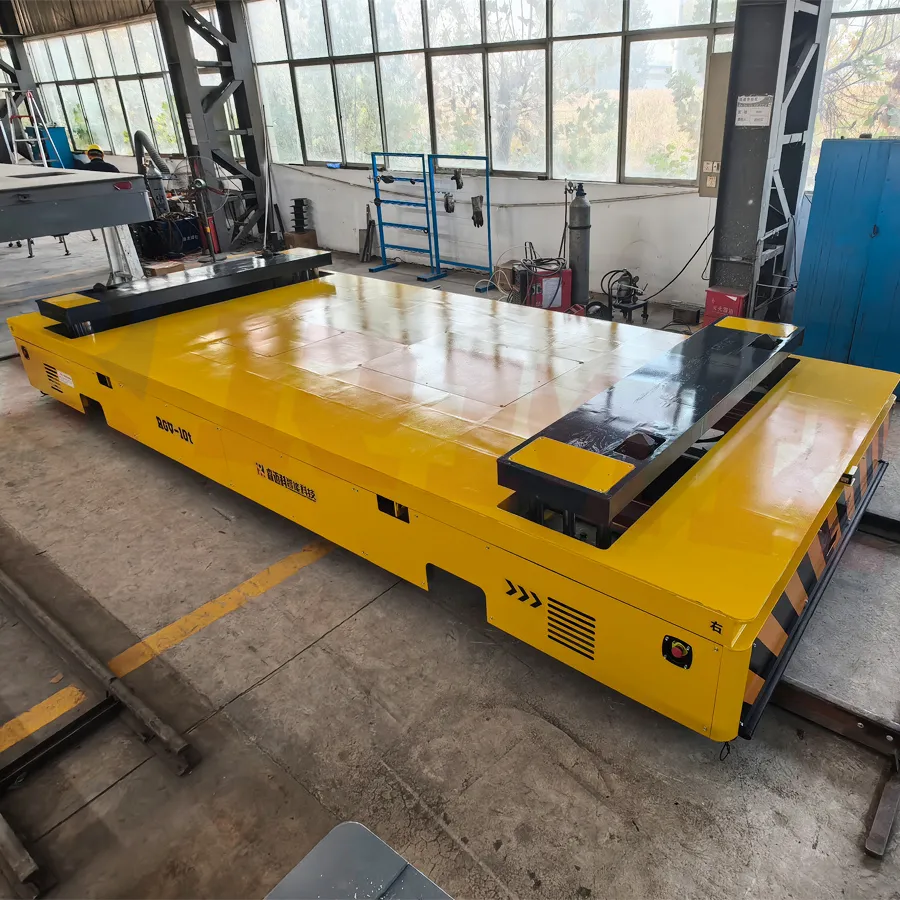
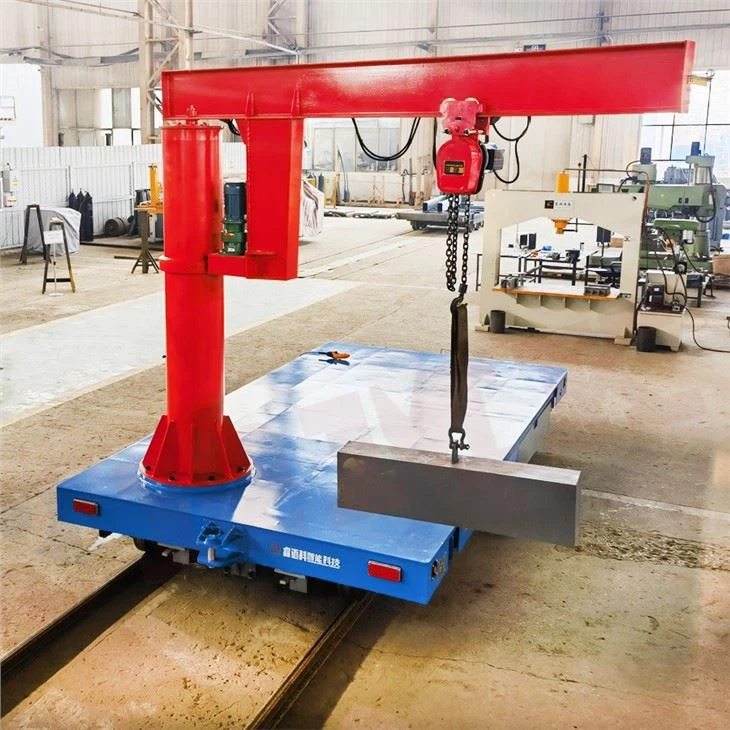
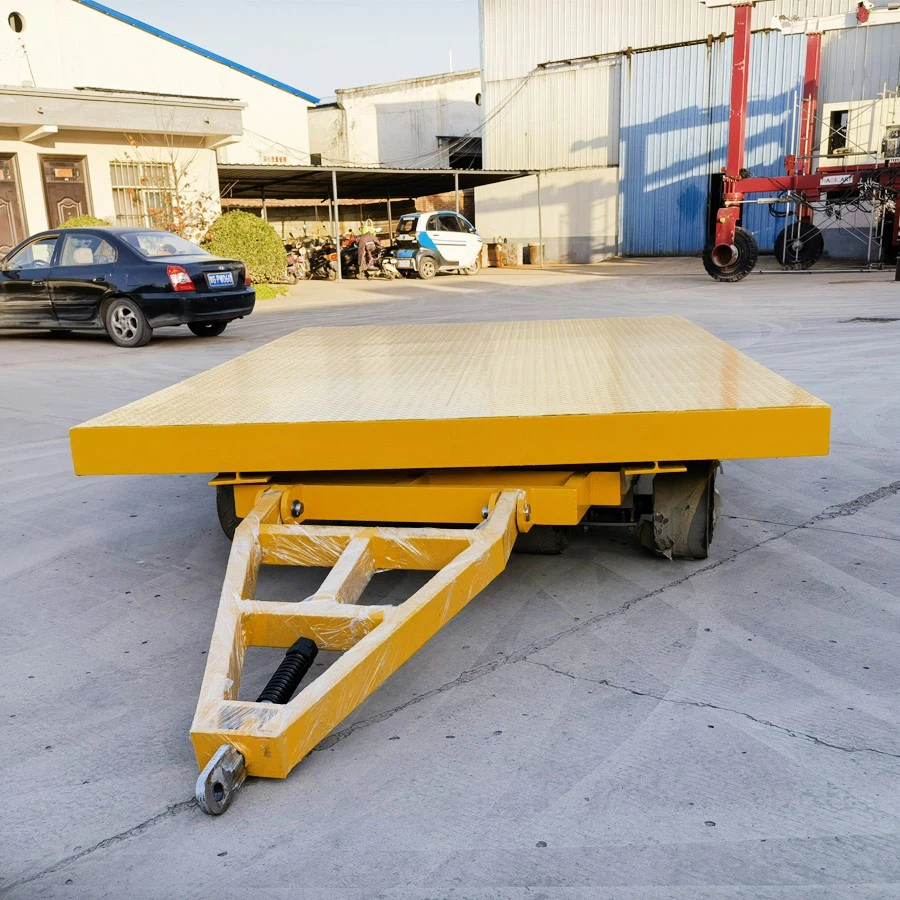
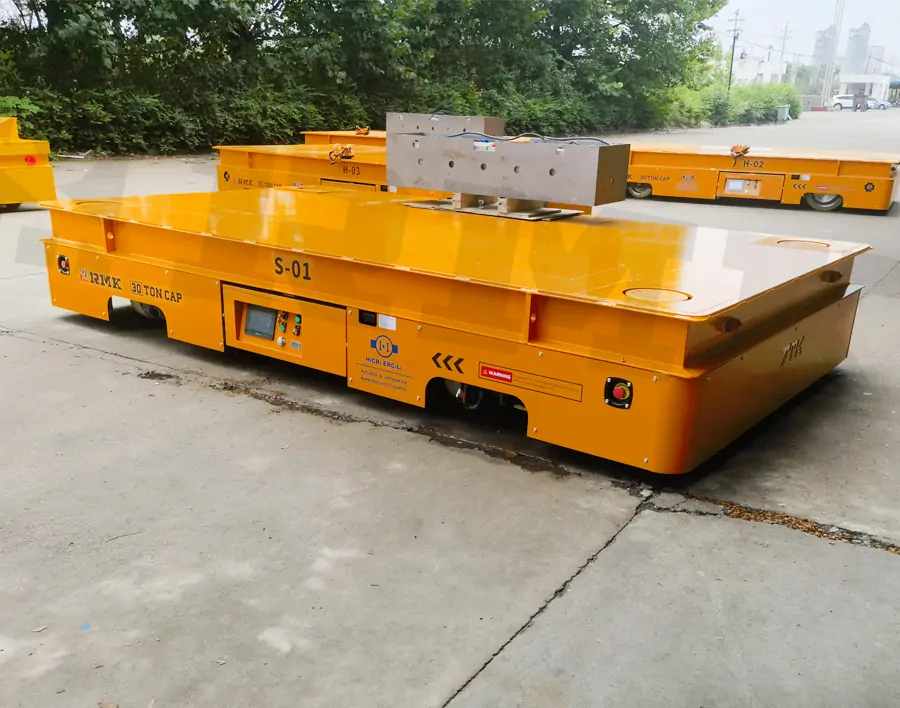
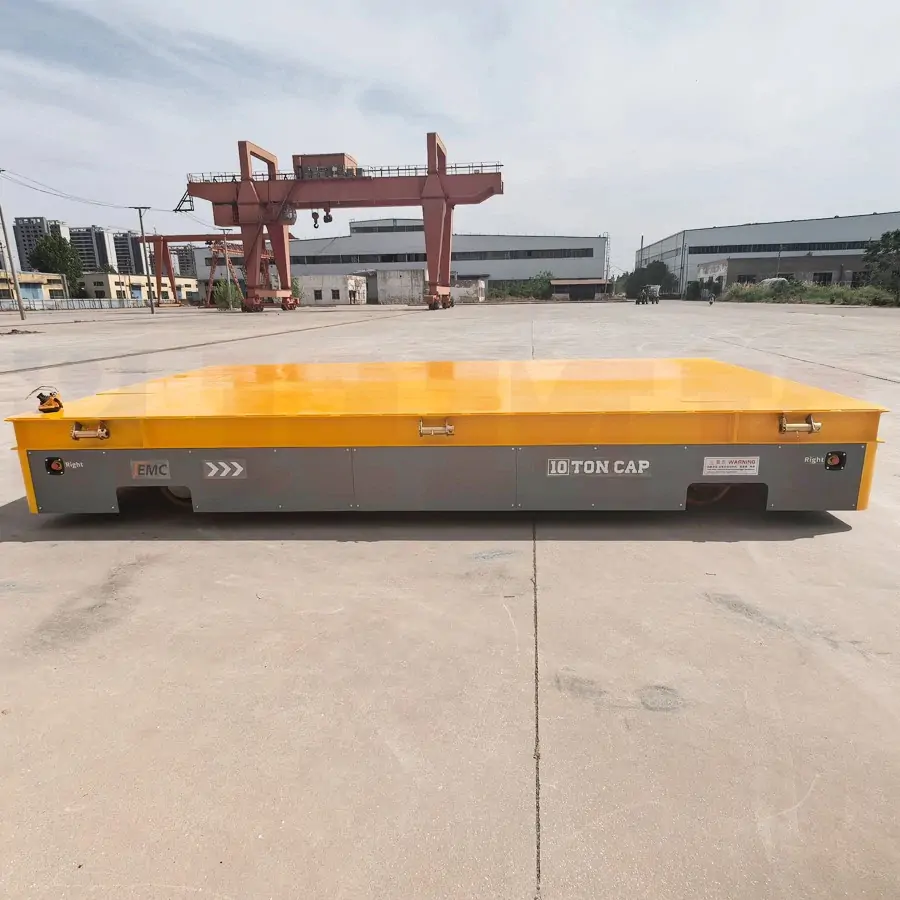
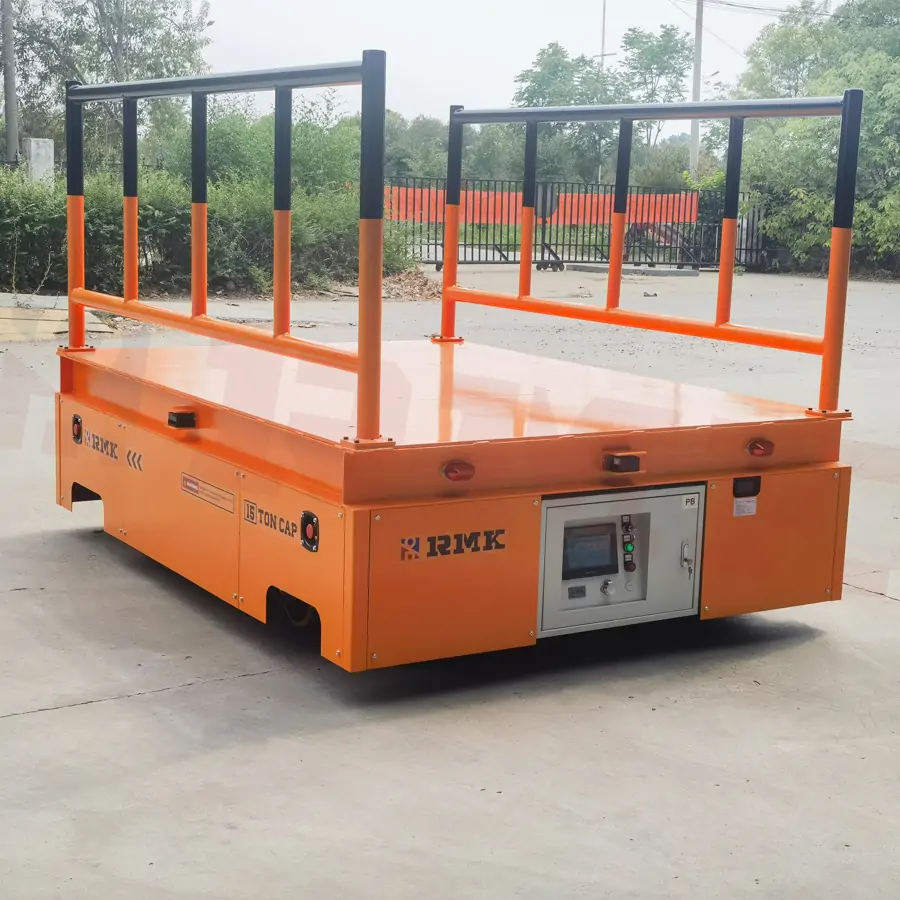
En un taller de fábrica, mover cargas que pesan decenas o incluso cientos de toneladas siempre es un dolor de cabeza. El2. carro de transferencia plano3. (plataforma eléctrica industrial plana) está diseñado específicamente para este tipo de levantamiento pesado. Es una máquina potente impulsada por motores de precisión, capaz de transportar cargas masivas. Con frecuencia, los puentes grúa no pueden alcanzar ciertos puntos, y las carretillas elevadoras simplemente no tienen la fuerza suficiente. Ahí es donde el4. carro de transferencia de plataforma plana5. se convierte en la solución más fiable para mover materiales pesados a través de diferentes vanos. Ya sea para palanquillas de acero en una acería o componentes gigantes en un astillero, estos carros son los que realmente ponen en marcha la logística interna. A continuación, hablaremos sobre los tipos comunes de estos carros y cómo evitar los errores típicos al elegir uno.6. ¿Qué es un Carro de Transferencia Plano?7. Un Carro de Transferencia Plano es un vehículo de transporte de perfil bajo diseñado específicamente para la manipulación horizontal de materiales de servicio pesado dentro de instalaciones industriales. Con un chasis soldado de viga de cajón de alta resistencia, ofrece una excelente rigidez estructural y capacidad de carga, capaz de manejar cargas pesadas industriales que van desde unas pocas toneladas hasta cientos de toneladas. Alimentado por un motor eléctrico a bordo y acoplado a un reductor de engranajes para proporcionar un alto par, elimina los puntos ciegos durante el transporte entre talleres. Esta versátil gama de carros de transferencia se adapta a diversos escenarios industriales, sirviendo como una solución vital de manipulación de materiales en líneas de producción modernas de ensamblaje pesado, metalurgia, manipulación de moldes y automatizadas.8. No es un equipo "talla única". Dependiendo de la capacidad de carga del suelo, la frecuencia de los movimientos y el espacio disponible, los dividimos en varias estructuras de potencia y transmisión diferentes para asegurar que cada céntimo invertido genere la máxima eficiencia.9. Carros de Transferencia de Plataforma Plana Guiados por Riel10. Este tipo de equipo se denomina colectivamente11. carros de transferencia sobre rieles12. , que circulan sobre raíles. La trayectoria es fija, y los raíles soportan la enorme carga vertical, lo que lo convierte en el "levantador pesado" más estable en la industria pesada.13. 1t – 500t+14. Batería, carrete de cable, riel de baja tensión o línea deslizante15. Pulsador con cable + mando a distancia inalámbrico16. Aplicaciones:17. Giro de bobinas de acero, talleres de fusión en fundiciones, líneas de estampado de moldes continuos y acoplamiento de líneas de producción automatizadas.18. Carros de Transferencia Plana Sin Rieles19. Carro de transferencia sin rieles20. equipado con ruedas macizas recubiertas de poliuretano, que circulan directamente sobre suelos de hormigón o chapas de acero. Sin la limitación de los raíles, admiten un giro in situ de 360°, siendo la opción principal para talleres flexibles.21. 1t – 150t22. Gira en el sitio (Radio cero)23. Vida útil de la batería:24. 6 – 8 horas de operación continua a plena carga25. Requisito del suelo:26. Hormigón, epoxi o asfalto27. Capacidad de ascenso:28. 0 – 3° (Condición de carga pesada)29. Aplicaciones:30. Giro de moldes en almacenes, talleres de ensamblaje de fuselajes/alas, transporte de transformadores, centros de distribución logística.31. Carros de Transferencia de Plataforma Plana Direccionables32. Los carros de transferencia direccionables33. utilizan sistemas de dirección hidráulica o ruedas direccionables avanzadas para moverse en múltiples direcciones. Puede manejar movimientos laterales, desplazamiento diagonal o maniobras complejas en espacios extremadamente reducidos.34. Modo de transmisión:35. Accionamiento diferencial o accionamiento de rueda direccionable36. Movimiento:37. Recto, lateral, diagonal y rotación omnidireccional38. 5t – 100t39. Protección de seguridad:40. Evitación de obstáculos por láser, bordes de seguridad, alarmas sonoras y luminosas41. Control inteligente PLC42. Aplicaciones:43. Acoplamiento de estaciones de mecanizado de precisión, manipulación de componentes pesados para energía nuclear, rotación en almacenes de pasillos estrechos.44. Carros de Transferencia con Plataforma Elevadora de Tijera45. Basado en el carro de transferencia de plataforma estándar, este modelo integra un sistema de elevación hidráulico de tijera para proporcionar compensación de altura vertical durante el transporte horizontal.46. Altura de elevación:47. 500mm – 2000mm (Personalizable)48. Planeidad de la plataforma:49. Sincronización hidráulica de alta precisión50. Capacidad de elevación:51. 1t – 50t52. Velocidad de elevación:53. 2 – 5m/min54. Error de sincronización:55. Menos de 2mm56. Aplicaciones:57. Acoplamiento alto/bajo en líneas de producción, soporte de ensamblaje de equipos grandes, elevación de palés sumergidos y líneas de ensamblaje final de automóviles.58. Estos cuatro tipos de carros de transferencia de plataforma plana tienen cada uno sus propias fortalezas. Al elegir uno, no se puede mirar solo cuánto tira; hay que considerar las condiciones del suelo y la trayectoria de desplazamiento. Conseguir la estructura correcta es la única manera de garantizar la eficiencia a largo plazo y la vida útil del equipo.59. Después de comparar carretillas elevadoras y grúas, muchas empresas finalmente se decantan por el carro de transferencia plano. No se trata solo de la fuerza bruta, sino del rendimiento profesional "estable, preciso y robusto" que aporta a un taller complejo.60. Capacidad de Carga Extrema y Estabilidad:61. A diferencia de las carretillas elevadoras que dependen de contrapesos para el equilibrio, un carro de transferencia de plataforma utiliza una estructura de viga de cajón que distribuye el peso uniformemente. Ya sea un molde de 5 toneladas o un rotor de 300 toneladas, no hay riesgo de vuelco.62. Seguridad Operativa y Adaptabilidad Ambiental:63. Sin combustible significa sin emisiones y bajo nivel de ruido. Más importante aún, puede ingresar a áreas a prueba de explosiones como cabinas de pintura o zonas de alto calor como fundiciones, lugares donde las carretillas elevadoras con batería normalmente no pueden sobrevivir.64. Operación de Bajo Costo a Largo Plazo:65. Aparte de la lubricación básica de las piezas de desgaste y las revisiones rutinarias de la batería/cable, estos carros tienen casi cero gastos adicionales. Es muy común que un carro de transferencia de plataforma plana estándar dure de 8 a 10 años, lo que hace que el costo anual sea increíblemente bajo.66. Diseño de Plataforma Personalizable y Flexible:67. Estos pueden adaptarse a la forma de la carga: bastidores en V para tuberías, revestimiento de ladrillo refractario para acero fundido o elevadores hidráulicos para acoplamiento automatizado. Realmente es "el carro sigue a la carga".68. Este carro de plataforma plana utiliza el sistema de potencia más simple para resolver los problemas de manipulación de materiales más pesados y desafiantes en la producción industrial. Se adapta a cualquier entorno y está construido para manejar trabajos sucios y exigentes. Echemos un vistazo más de cerca a varias industrias típicas para ver exactamente cómo sobresale en entornos de producción reales.69. En la producción real, dondequiera que se necesite mover cargas pesadas, es probable que el carro de transferencia de plataforma plana esté presente.70. Mecanizado y Almacenes de Moldes:71. En talleres de inyección o estampado, los moldes de varias toneladas se mueven constantemente entre máquinas y estanterías; estos carros se alinean perfectamente en pasillos estrechos.72. Líneas de Ensamblaje de Componentes Grandes:73. Durante el ensamblaje de torres eólicas o transformadores, el carro actúa como una base móvil. El material permanece en el carro, moviéndose de estación en estación, evitando el tiempo perdido en izajes repetidos. flat transfer cart (industrial electric flatbed) is built specifically for this kind of heavy lifting. It’s a powerhouse driven by precision motors, capable of carrying massive loads. Quite often, overhead cranes can’t reach certain spots, and forklifts just don’t have the muscle. That’s where the flatbed transfer cart becomes the most reliable solution for moving heavy materials across different spans. Whether it’s steel billets in a mill or giant components in a shipyard, these carts are what really get the internal logistics moving. Below, we’ll talk about the common types of these carts and how to avoid the typical pitfalls when choosing one.
What Is a Flat Transfer Cart?
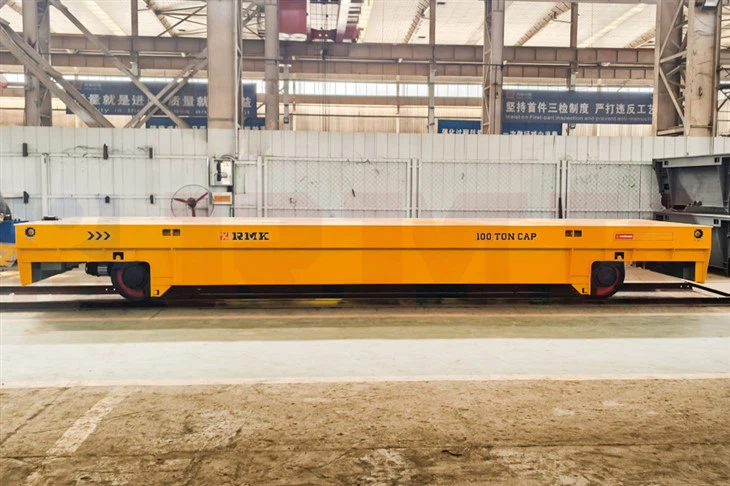
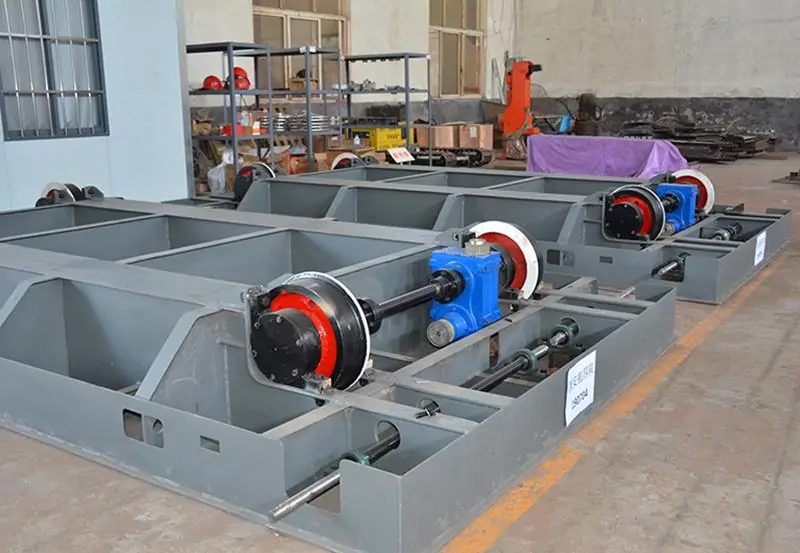
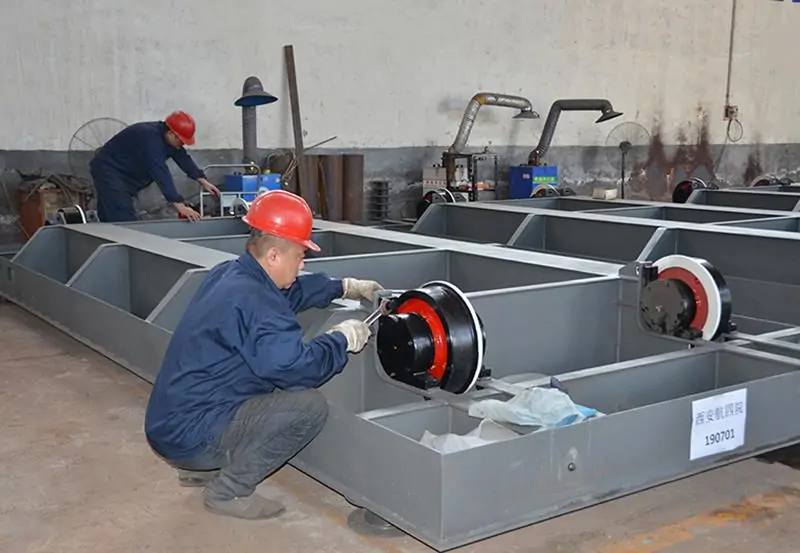
A Flat Transfer Cart is a low-profile transport vehicle specifically designed for the horizontal handling of heavy-duty materials within industrial facilities. Featuring a high-strength box-beam welded chassis, it offers excellent structural rigidity and load capacity, capable of handling industrial heavy loads ranging from a few tons to hundreds of tons. Powered by an onboard electric motor and paired with a reduction gearbox to deliver high torque, it eliminates blind spots during cross-workshop transport. This versatile range of transfer carts adapts to various industrial scenarios, serving as a vital material-handling solution in modern heavy-duty assembly, metallurgy, mold handling, and automated production lines.
Tipos
A flat transfer cart is not a “one-size-fits-all” piece of equipment. Depending on the floor’s load capacity, the frequency of moves, and the available space, we break them down into several different power and drive structures to make sure every cent invested brings back maximum efficiency.
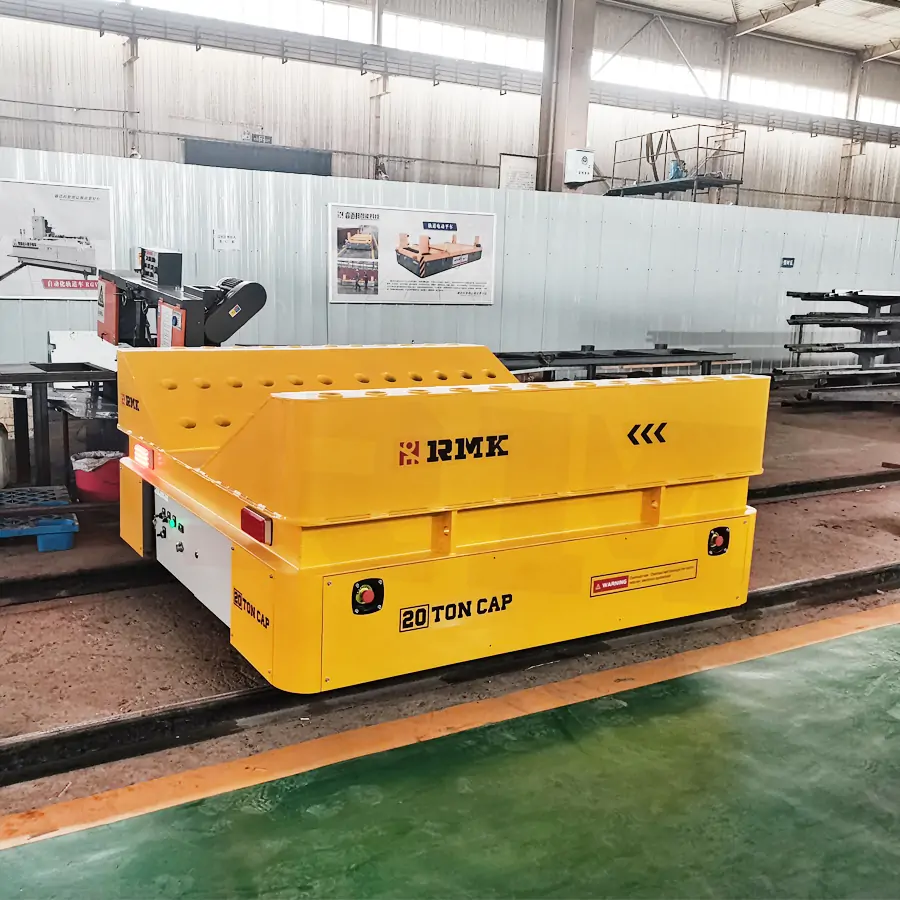
Rail-Guided Flatbed Transfer Carts
This type of equipment is collectively referred to as rail transfer trolleys, which run on rails. The path is fixed, and the rails handle the massive vertical load, making this the most stable “heavy lifter” in heavy industry.
- Rated Load:
Carga nominal:
1t – 500t+ - Velocidad de Desplazamiento: 0 – 30 m/min (Control de velocidad por frecuencia variable)
- Fuente de alimentación: Battery, cable reel, low-voltage rail, or sliding line
- Integrado con visión industrial o sensores láser, este modelo se enlaza con sistemas de despacho in situ para manipulación no tripulada. ±5mm
- Modo de control: Wired pendant + wireless remote
- Applications:
Steel coil turnover, foundry melting shops, continuous mold stamping lines, and automated production line docking.
.
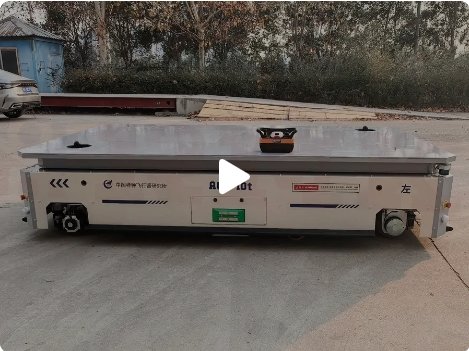
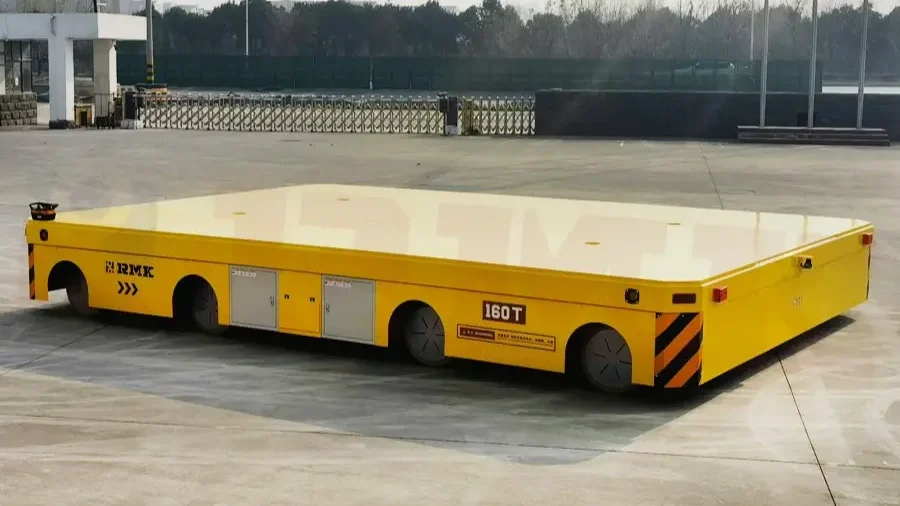
Trackless Flat Transfer Carts
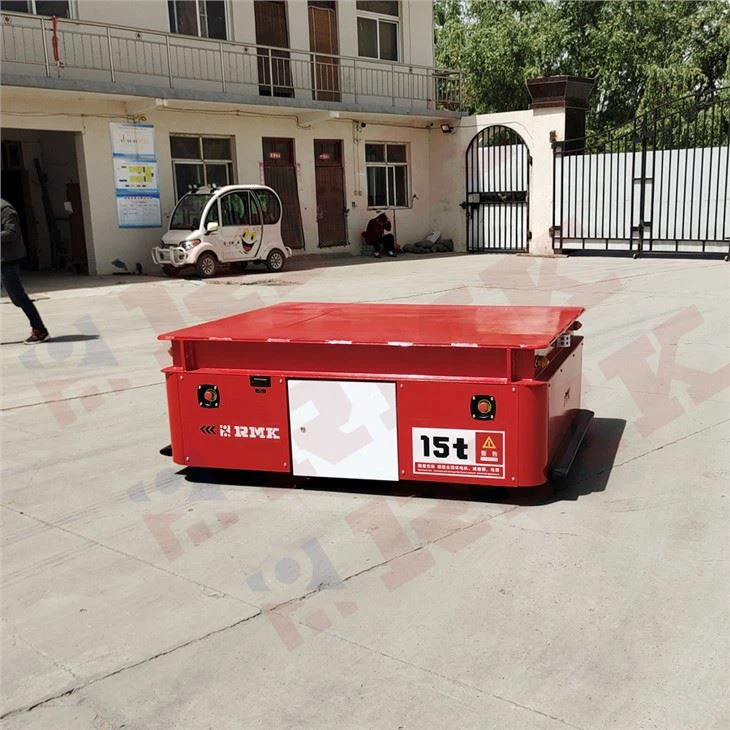
ETrackless transfer cart
equipped with polyurethane-coated solid wheels, which run directly on concrete or steel-plated floors. Without the limitation of rails, they support 360° on-the-spot turning—the top choice for flexible workshops.
.
- Rated Load:
Carga nominal:
1t – 150t - Radio de giro: Turns on the spot (Zero radius)
- Battery Life:
6 – 8 hours of continuous full-load operation - Floor Requirement:
Concrete, epoxy, or asphalt - Climbing Ability:
0 – 3° (Heavy load condition) - Applications:
Mold warehouse turnover, fuselage/wing assembly shops, transformer transport, logistics distribution centers.
.
Steerable Flat Bed Transfer Carts
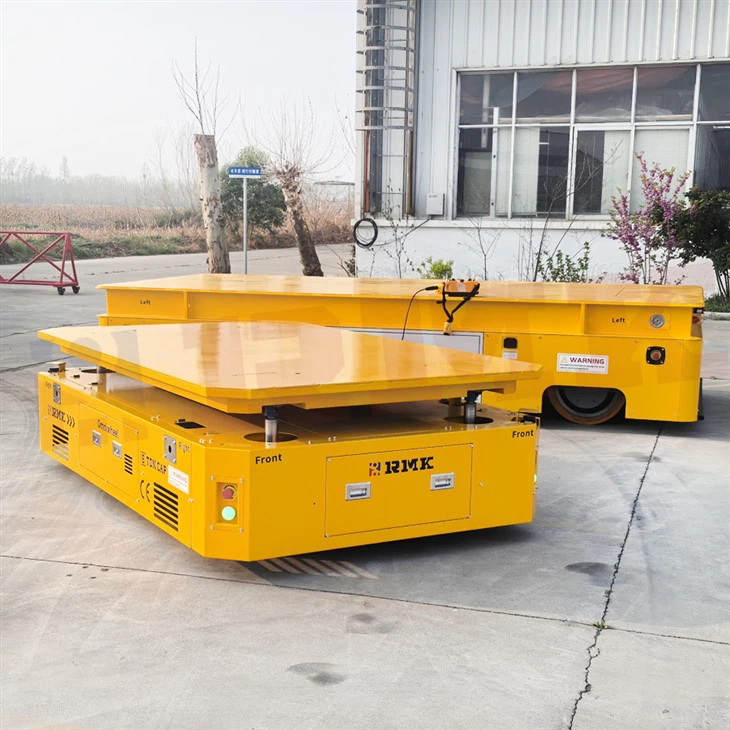
Steerable transfer carts
use hydraulic steering systems or advanced steerable wheels to move in multiple directions. It can handle lateral moves, diagonal travel, or complex maneuvers in extremely tight spaces.
.
- Drive Mode:
Differential drive or steerable wheel drive - Movement:
Straight, lateral, diagonal, and omnidirectional rotation - Rango de Carga: 5t – 100t
- Safety Protection:
Laser obstacle avoidance, safety edges, sound, and light alarms - Sistema de control: PLC intelligent control
- Applications:
Precision machining station docking, heavy nuclear power component handling, narrow-aisle warehouse turnover.
.
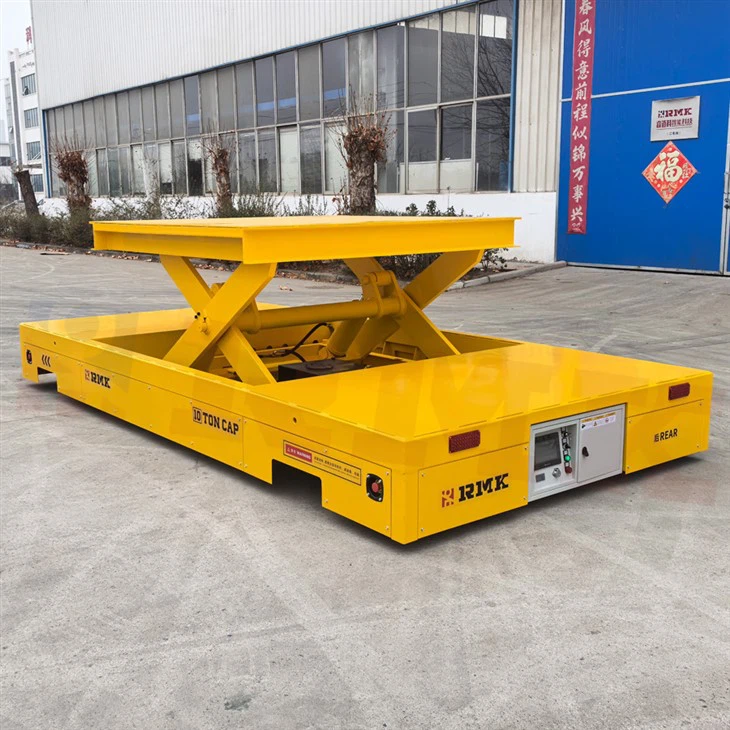
Scissor Lift Platform Transfer Carts
Based on the standard platform transfer cart, this model integrates a hydraulic scissor lift system to provide vertical height compensation during horizontal transport.
.
- Lift Height:
500mm – 2000mm (Customizable) - Platform Flatness:
High-precision hydraulic synchronization - Lift Capacity:
1t – 50t - Lifting Speed:
2 – 5m/min - Sync Error:
Less than 2mm - Applications:
Production line high/low docking, large equipment assembly support, submerged pallet lifting, and automotive final assembly lines.
These four types of flatbed transfer carts each have their own strengths. When picking one, you can’t just look at how much it pulls; you have to consider the floor conditions and the travel path. Getting the structure right is the only way to guarantee long-term efficiency and equipment life.
2. After comparing forklifts and cranes, many companies eventually settle on the flat transfer cart. It’s not just about the raw strength—it’s about the “stable, accurate, and tough” professional performance it brings to a complex workshop.
3. Extreme Load Capacity & Stability:
4. Unlike forklifts that rely on counterweights for balance, a platform transfer cart uses a box-girder structure that distributes weight evenly. Whether it’s a 5-ton mold or a 300-ton rotor, there’s no risk of tipping.
5. Operational Safety & Environmental Adaptability:
6. No fuel means no exhaust and low noise. More importantly, it can enter explosion-proof areas like paint booths or high-heat zones like foundries—places where battery-powered forklifts usually can’t survive.
7. Low-Cost Long-Term Operation:
8. Aside from basic lubrication of wear parts and routine battery/cable checks, these carts have almost zero extra expenses. A standard flatbed transfer cart lasting 8 to 10 years is very common, making the annual cost incredibly low.
9. Flexible Customizable Platform Design:
10. These can be tailored to the shape of the cargo—V-frames for pipes, refractory brick lining for molten steel, or hydraulic lifts for automated docking. It really is “the car follows the cargo.”
11. This flatbed cart uses the simplest power system to solve the heaviest and most challenging material-handling problems in industrial production. It adapts to any environment and is built to handle dirty, demanding work. Let’s take a closer look at several typical industries to see exactly how it excels in real-world production settings.
12. In real-world production, wherever heavy loads need to be moved, the flatbed transfer cart is likely there
13. Machining & Mold Warehouses:.
Ventajas
After comparing forklifts and cranes, many companies eventually settle on the flat transfer cart. It’s not just about the raw strength—it’s about the “stable, accurate, and tough” professional performance it brings to a complex workshop.
- Extreme Load Capacity & Stability: Unlike forklifts that rely on counterweights for balance, a platform transfer cart uses a box-girder structure that distributes weight evenly. Whether it’s a 5-ton mold or a 300-ton rotor, there’s no risk of tipping.
- Operational Safety & Environmental Adaptability: No fuel means no exhaust and low noise. More importantly, it can enter explosion-proof areas like paint booths or high-heat zones like foundries—places where battery-powered forklifts usually can’t survive.
- Low-Cost Long-Term Operation: Aside from basic lubrication of wear parts and routine battery/cable checks, these carts have almost zero extra expenses. A standard flatbed transfer cart lasting 8 to 10 years is very common, making the annual cost incredibly low.
- Flexible Customizable Platform Design: These can be tailored to the shape of the cargo—V-frames for pipes, refractory brick lining for molten steel, or hydraulic lifts for automated docking. It really is “the car follows the cargo.”
This flatbed cart uses the simplest power system to solve the heaviest and most challenging material-handling problems in industrial production. It adapts to any environment and is built to handle dirty, demanding work. Let’s take a closer look at several typical industries to see exactly how it excels in real-world production settings.
Escenarios de aplicación
In real-world production, wherever heavy loads need to be moved, the flatbed transfer cart is likely there
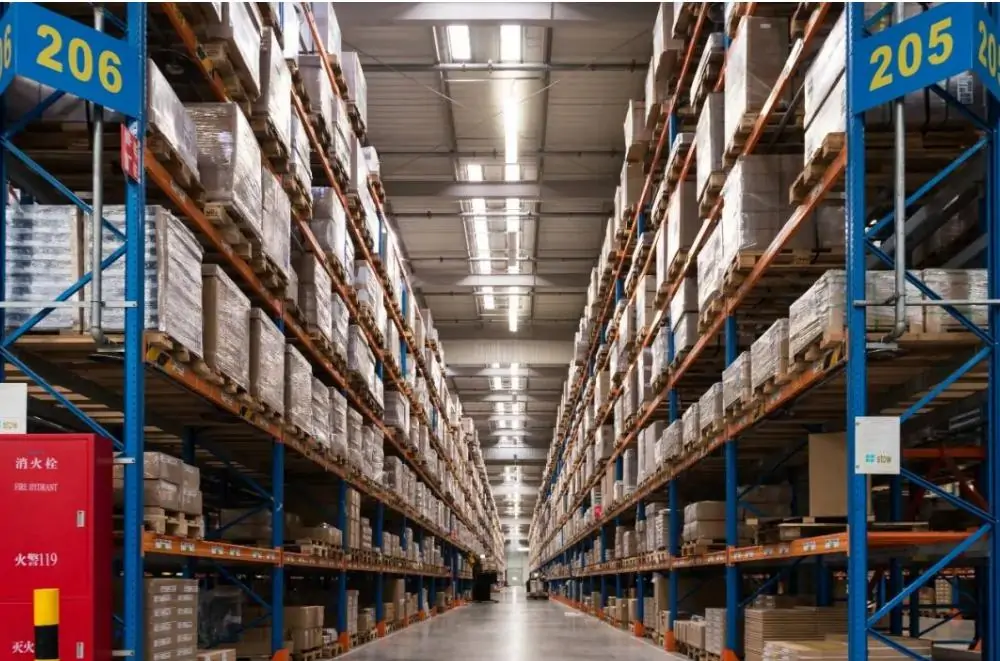
Machining & Mold Warehouses: En talleres de inyección o estampado, los moldes de varias toneladas se mueven constantemente entre máquinas y estanterías; estos carros se alinean perfectamente en pasillos estrechos.

Líneas de Ensamblaje de Componentes Grandes: Durante el ensamblaje de torres eólicas o transformadores, el carro actúa como una base móvil. El material permanece en el carro, moviéndose de estación en estación, evitando el tiempo perdido en izajes repetidos.
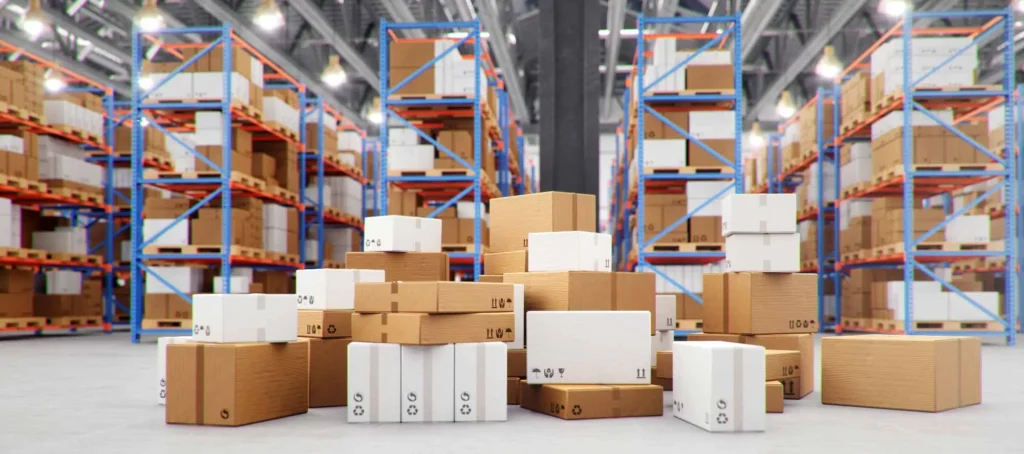
Transporte entre Naves/Talleres: Cuando el material necesita pasar de una nave a otra donde los puentes grúa no pueden cruzar, el carro actúa como el “centro logístico” perfecto.”
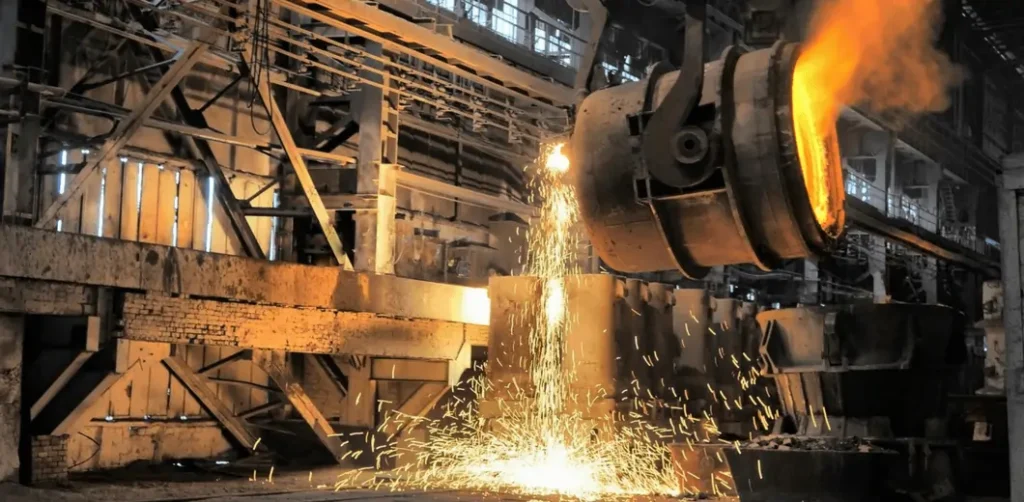
Sustitución de Mano de Obra en Zonas Peligrosas: En cabinas de chorro de arena, cabinas de pintura o áreas de fundición a alta temperatura donde las personas no deben permanecer mucho tiempo, un carro de transferencia de plataforma automatizado maneja el trabajo a la perfección.
Guía de Selección
No se puede comprar un carro de transferencia de plataforma basándose únicamente en el precio. Si las especificaciones no coinciden, es solo un montón de chatarra. Preste atención a estas cuatro áreas durante la selección:
- Conozca su Carga y Tamaño de Plataforma: No diga simplemente “10 toneladas”. ¿Cómo se colocan esas 10 toneladas? ¿Es una carga concentrada o distribuida? ¿La carga es sobredimensionada o está descentrada? Esto determina si el acero del chasis debe ser grueso o delgado.
- Elija la Fuente de Alimentación Correcta: Para distancias cortas y alta frecuencia, la alimentación por cable es más económica. Para rutas flexibles entre diferentes áreas, la alimentación por batería es la mejor. Si hay rieles y el carro necesita funcionar 24/7, la alimentación por riel de baja tensión es la opción adecuada.
- Evalúe el Piso y la Ruta: Si desea un sistema sin rieles, ¿el piso es de concreto o epoxi? ¿Es lo suficientemente nivelado? Si la ruta nunca cambia, opte por rieles; el costo y la estabilidad son mucho mejores.
- Iguale el Nivel de Seguridad: ¿La fábrica está concurrida? ¿Necesita evitación de obstáculos por láser? En espacios reducidos, la dirección omnidireccional y las advertencias sonoras/luminosas son características que salvan vidas: no recorte el presupuesto en esto.
En resumen, capacidad de carga, alimentación eléctrica, espacio libre al suelo y seguridad—solo cuando estas cuatro piezas encajan perfectamente, este vehículo puede rendir al máximo. En lugar de pagar después el precio de reparaciones frecuentes y riesgos de seguridad, es mejor elegir las especificaciones correctas desde el principio basándose en las tareas “duras y exigentes” reales. Solo un carro de transferencia de plataforma con la capacidad de carga y las especificaciones de rendimiento adecuadas puede servir verdaderamente como la “línea vital logística” en sus instalaciones.
Conclusión
En resumen, los carros de transferencia de plataforma son esencialmente las “arterias principales” de una fábrica, apoyando la transición hacia la automatización industrial. Sin embargo, dado que cada fábrica tiene diseños de piso, limitaciones de espacio y materiales únicos, el equipo estándar rara vez se ajusta perfectamente. Si tiene alguna pregunta sobre los carros de transferencia de plataforma, no dude en Contacto.

Como especialista en el campo de la personalización de carros de transferencia de plataforma, Notable no solo vende equipos—nos enfocamos en resolver esos difíciles problemas de manipulación. Solo díganos lo que necesita. Remarkable está listo para proporcionar diseños técnicos gratuitos y cotizaciones precisas para ayudar a que su línea de producción funcione con la máxima eficiencia.
Correo electrónico: transfercart@rmkzn.com
Teléfono: +86-18637369355
PREGUNTAS FRECUENTES
Entre un carro de transferencia de plataforma sobre rieles y uno sin rieles, ¿cuál es mejor?
Depende del trabajo. Si la ruta es una línea recta y permanente, los rieles son más fáciles para manejar más peso y cuestan menos. Si necesita moverse flexiblemente entre diferentes estaciones, opte por el sin rieles: funciona directamente sobre concreto y puede girar en cualquier lugar.
¿Cuál es la capacidad máxima para este tipo de carro de transferencia de plataforma?
La tecnología está muy madura ahora. Hemos hecho desde unidades pequeñas de 1 tonelada hasta soluciones ultra pesadas de más de 500 toneladas. La pregunta no es “si” se puede hacer, sino hacer coincidir el chasis y el par del motor para asegurar que el bastidor no se deforme bajo el peso.
¿Cuánto tiempo funciona un carro con batería con una sola carga?
En condiciones normales de carga completa, de 6 a 8 horas es estándar. Para trabajo de alta frecuencia en tres turnos, podemos usar baterías de litio de alta capacidad, paquetes de baterías de intercambio rápido, o cambiar a alimentación por cable/riel para operación las 24 horas.
¿Un carro de transferencia plano sin rieles dañará mi piso de concreto?
Usamos ruedas de poliuretano de alta resistencia. Son elásticas y resistentes al desgaste, lo que significa que son muy amigables con los pisos de concreto o epoxi y no dejarán marcas como las ruedas de acero. Siempre que su piso cumpla con las clasificaciones de carga industrial estándar, no necesita preocuparse.
¿Se pueden usar estos carros en exteriores bajo la lluvia?
Sí, pero necesitan las especificaciones correctas. Actualizamos el motor y el gabinete de control a niveles de protección más altos (como IP55 o superior) y usamos cables resistentes a la intemperie. Siempre que no esté sumergido en agua estancada profunda, el transporte normal en exteriores no es problema.
¿Qué pasa si el carro golpea a alguien?
La seguridad es nuestra máxima prioridad. Además de las alarmas, instalamos sistemas de evitación de obstáculos por láser. Si el carro detecta una persona u objeto en su camino, reduce la velocidad y se detiene automáticamente. Esta “seguridad activa” es mucho más confiable que solo tener a alguien vigilándolo.
¿Puede el carro subir rampas?
Puede, pero debe especificar la pendiente de antemano. Aumentamos la potencia del motor y el par de frenado según el gradiente (generalmente recomendado dentro de 3°). Si la pendiente es demasiado pronunciada, afecta el frenado y la estabilidad, así que informe al ingeniero los datos exactos de la pendiente durante la selección.
¿Cuánto tiempo se tarda en fabricar un carro de transferencia de plataforma personalizado?
Desde la finalización del diseño hasta las pruebas finales, un modelo estándar generalmente toma de 30 a 45 días. Si es una versión compleja con navegación AGV o elevaciones especiales, podría tomar un poco más—el buen trabajo requiere un poco más de tiempo para perfeccionarse.