
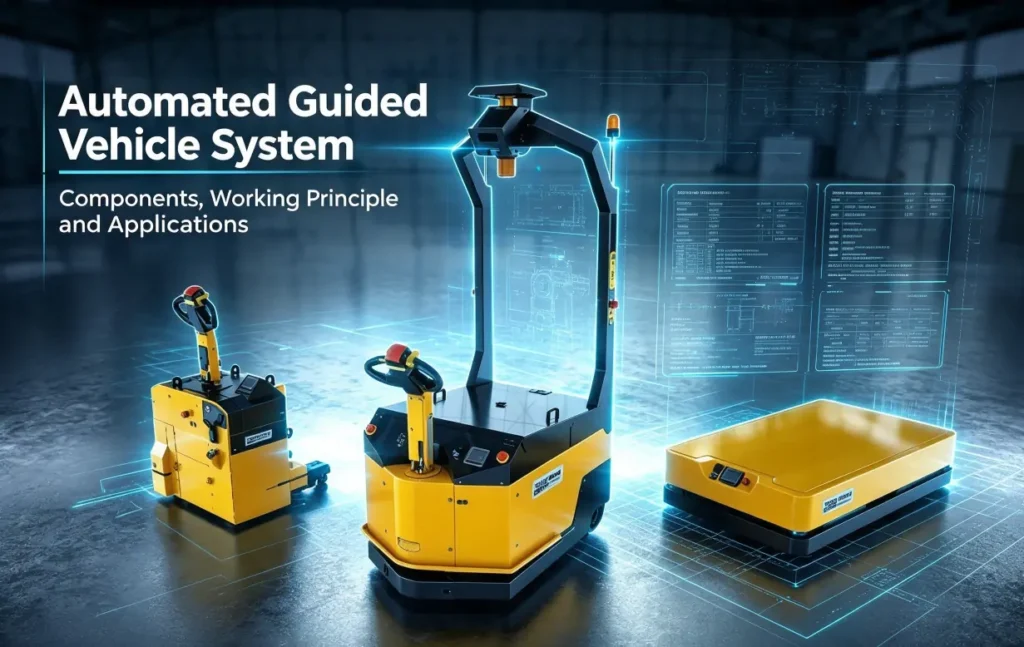
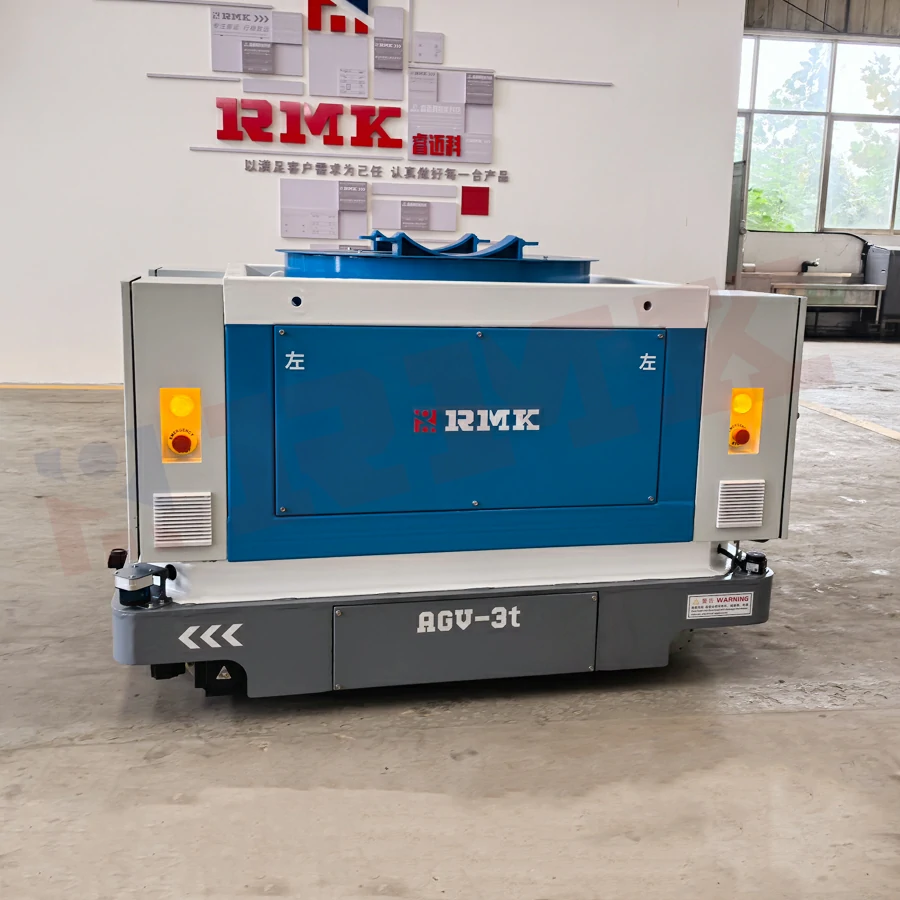
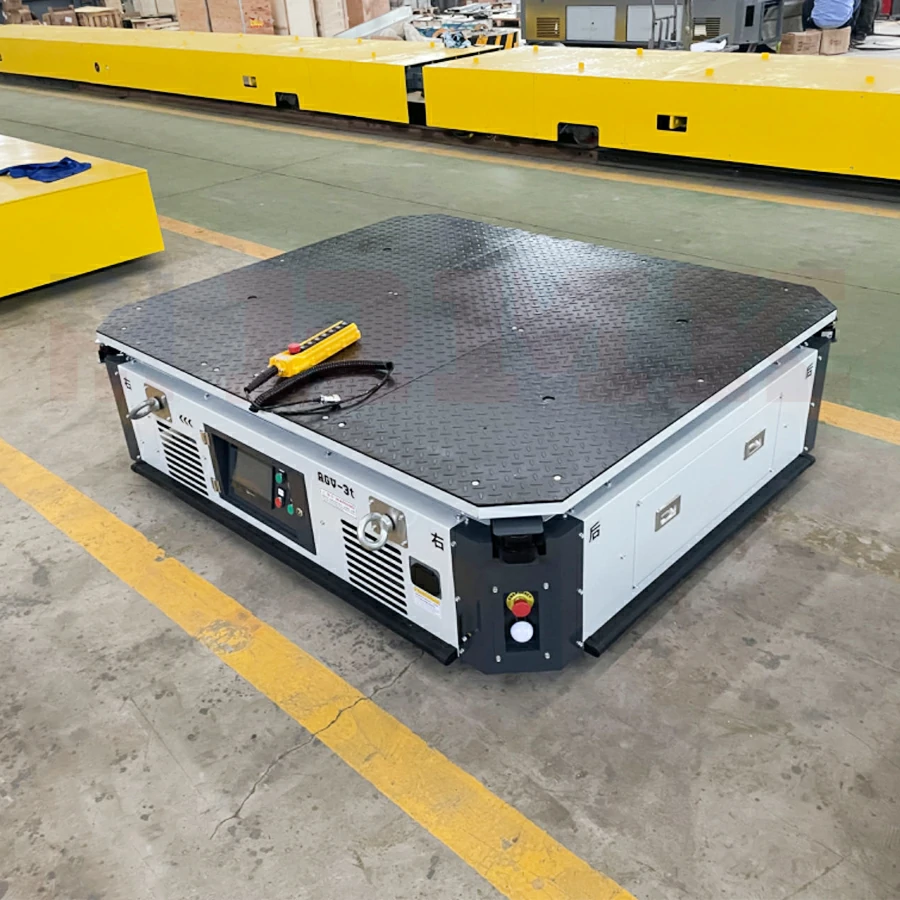
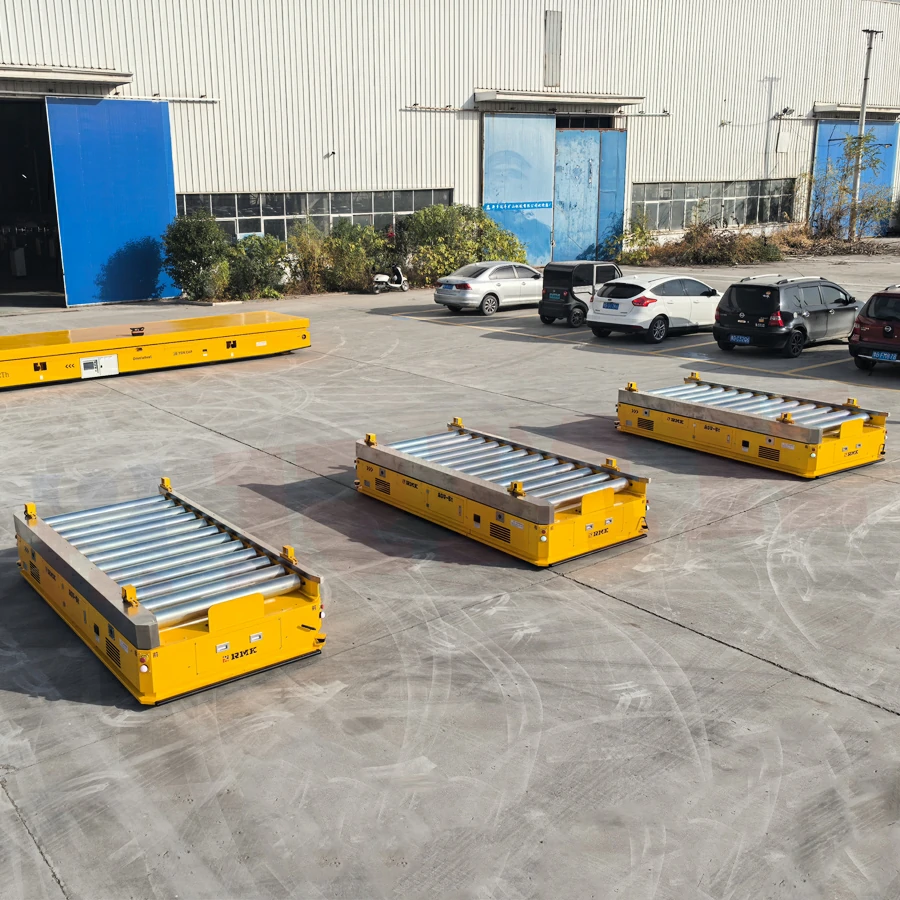
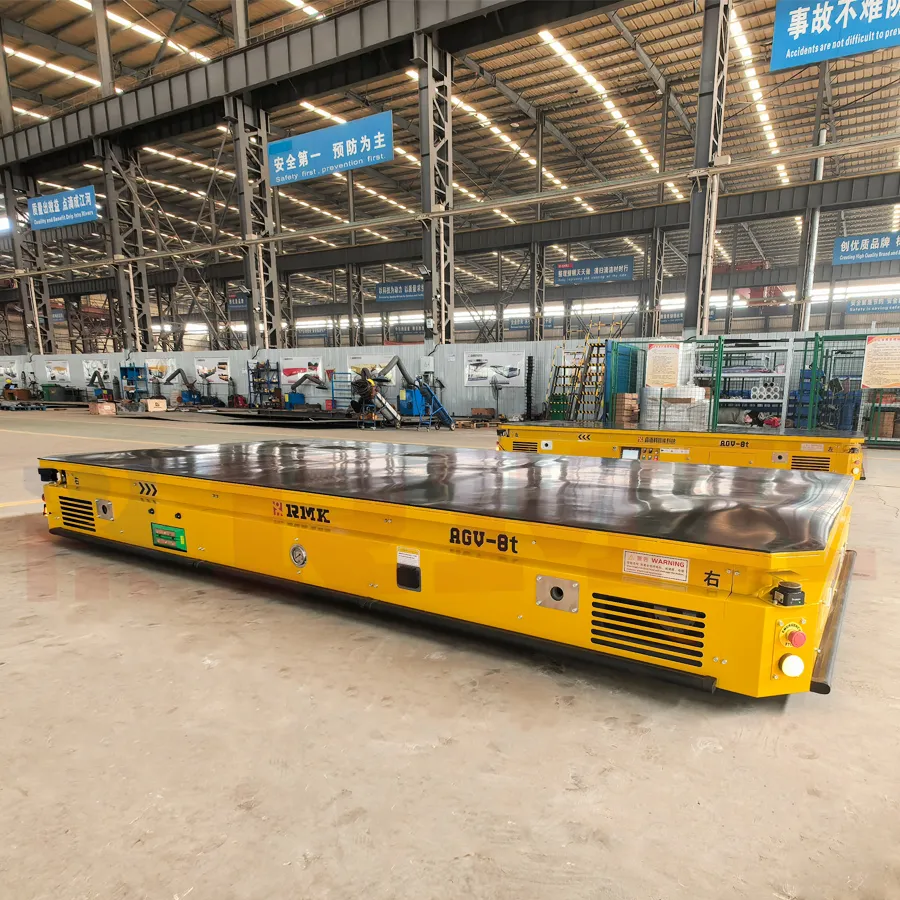
Eine Automatisiertes Fahrerloses Fahrzeug, auch bekannt als Automatisch Geführtes Fahrzeug, Selbstgeführtes Fahrzeug oder Mobiler Roboter, ist eine Art automatisiertes Transportfahrzeug. AGV ist ein intelligentes Transportsystem, das aus mehreren Automatisch Geführten Fahrzeugen mit unterschiedlichen intelligenten Systemkonfigurationen und verschiedenen Transportgeräten besteht. Sie können Waren oder Materialien in einer Fabrikumgebung ohne manuellen Betrieb oder Fahren transportieren. Häufig eingesetzt in Fertigungsanlagen, Lagern oder Verteilzentren. Dieser Artikel stellt verschiedene Arten von AGVs vor. Bitte lesen Sie weiter.

Verschiedene Arten von fahrerlosen Transportfahrzeugen
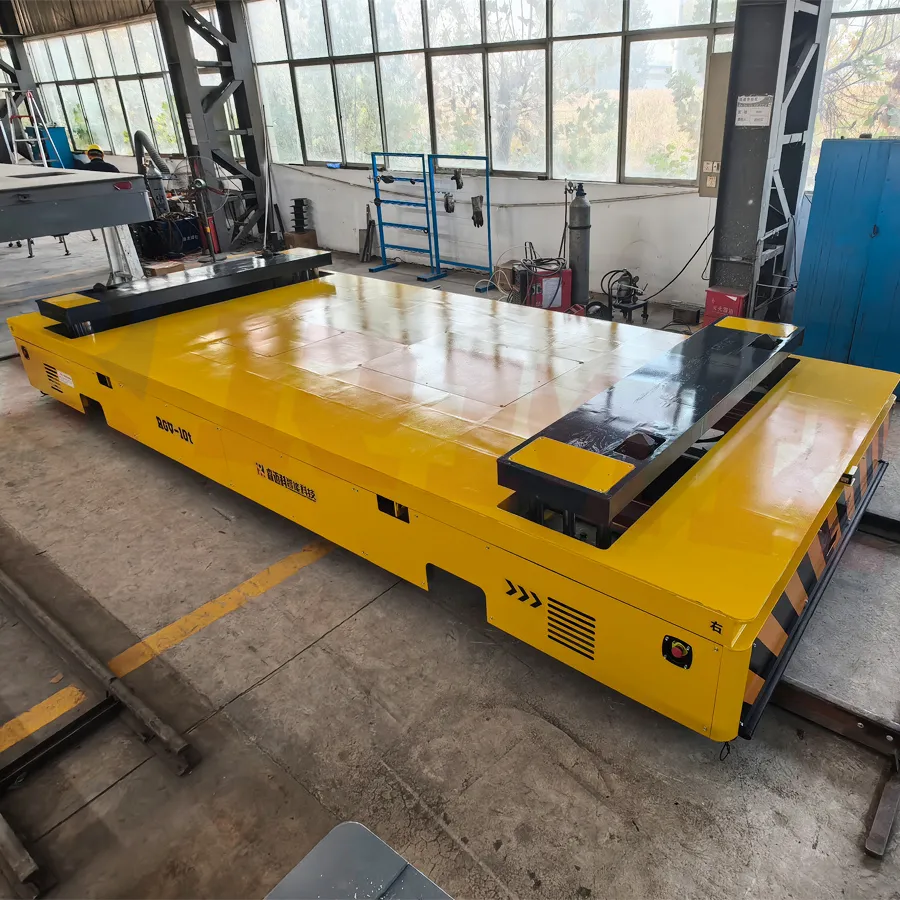
Ein Automatisch Geführter Fahrzeug (AGV) Transferwagen ist ein unbemanntes Materialtransportfahrzeug, das für den automatischen Transport von schweren Materialien, Werkstücken, Formen, Stahlcoils und Geräten in Fabriken und Lagern ausgelegt ist. Je nach Werkstattlayout und Transportanforderungen sind AGV-Transferwagen in verschiedenen Konfigurationen erhältlich, darunter schienengeführte AGV-Transferwagen, spurgeführte AGV-Transferwagen, omnidirektionale AGV-Transferwagen, hybride AGV-Transferwagen, schwere AGV-Transferwagen, hebende AGV-Transferwagen, rotierende AGV-Transferwagen und kundenspezifische AGV-Transferwagen. Jeder Typ ist für spezifische Betriebsumgebungen, Lastkapazitäten und Automatisierungsanforderungen ausgelegt.
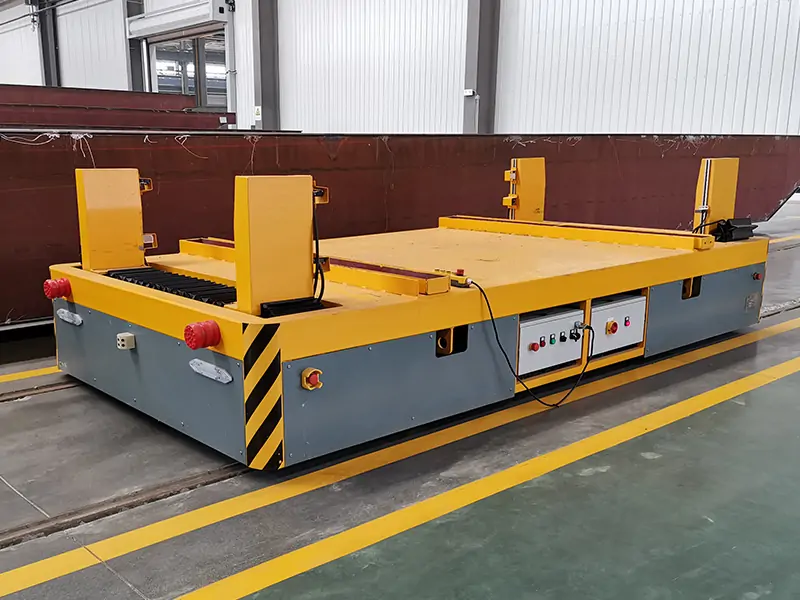
Schienengeführter AGV-Transferwagen
Ein schienengeführter AGV-Transferwagen, auch als Schienen-AGV bezeichnet, fährt auf festen Schienen für den wiederholten Materialtransport. Er wird häufig dort eingesetzt, wo Transportwege unverändert bleiben und schwere Lasten zwischen festen Arbeitsstationen bewegt werden.
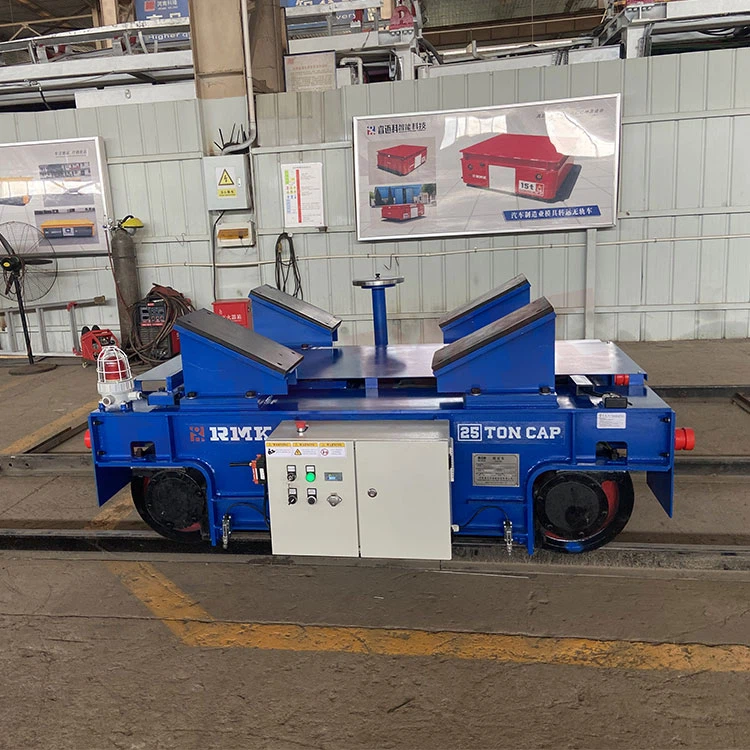
- Fester Schienenbetrieb
- Hohe Positioniergenauigkeit
- Große Ladekapazität
- Stabiler Langstreckentransport
- Geeignet für kontinuierliche Produktion
Anwendungen: Stahlwerke, Stanzwerkstätten, Formenbau, Schwermaschinenfabriken und automatisierte Produktionslinien.
Spurgeführter AGV-Transferwagen
A Spurgeführter AGV-Transferwagen, auch als spurgeführtes Automatisches Transportfahrzeug (AGC) bezeichnet, bewegt sich ohne Schienen und folgt Navigationsbefehlen in der gesamten Werkstatt. Er eignet sich für Fabriken, die flexible Transporte zwischen mehreren Arbeitsstationen benötigen.
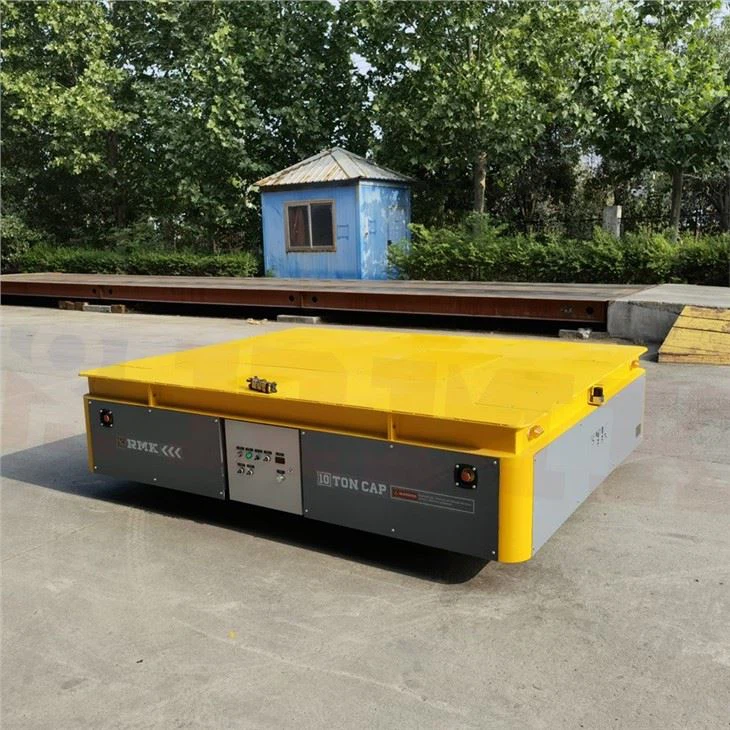
- Keine Schieneninstallation
- Flexible Fahrtrouten
- Mehrere Navigationsoptionen
- Einfache Layoutänderungen
- Geeignet für Mehrpunkt-Transport
Anwendungen: Automobilwerke, Smart Factories, Lager, Montagewerkstätten und flexible Fertigungssysteme.
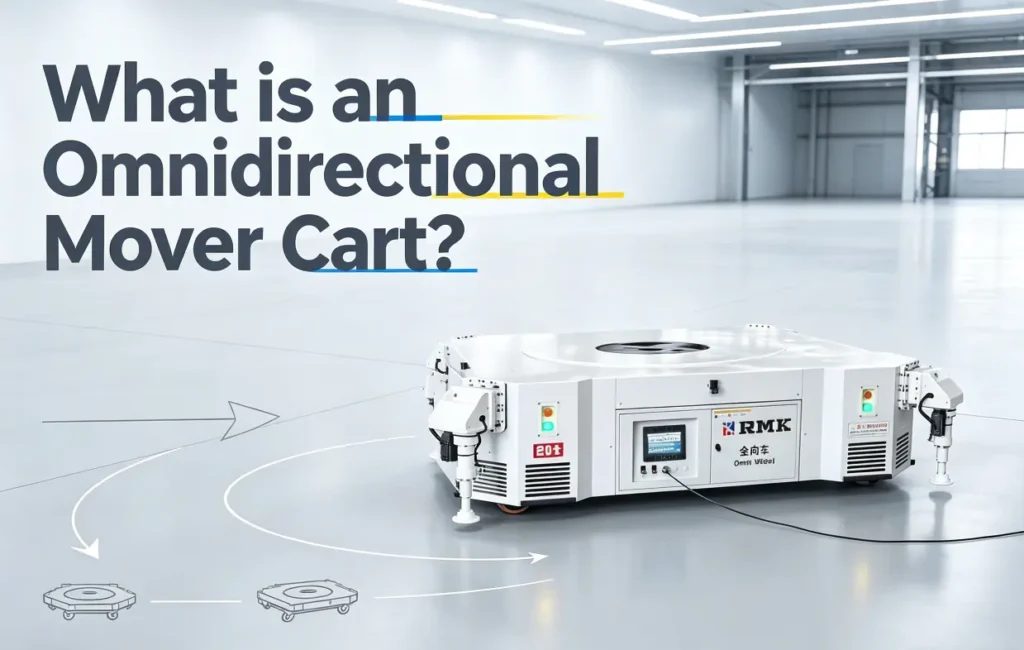
Omnidirektionaler AGV-Transferwagen
Eine Omnidirektionaler AGV-Transferwagen, auch als Mecanum-Rad-AGV bezeichnet, kann sich in mehrere Richtungen bewegen, ohne seine Ausrichtung zu ändern, was ihn für beengte Produktionsbereiche geeignet macht.
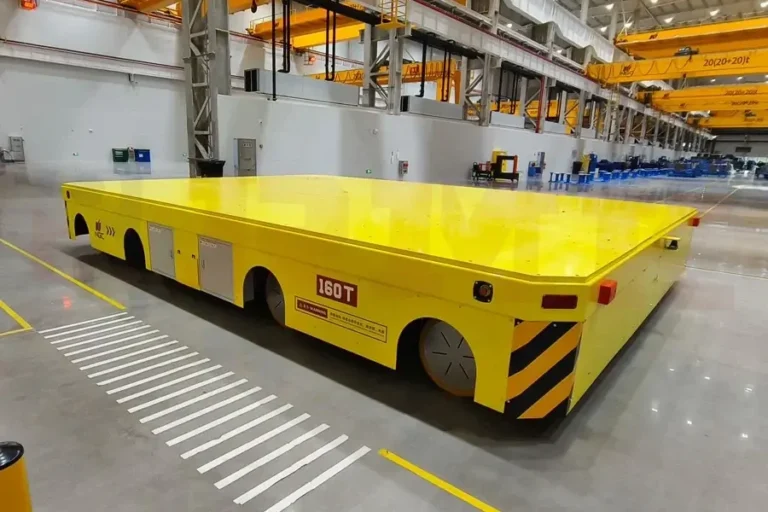
- 360°-Bewegung
- Seitwärts- und Diagonalbewegung
- Null-Radius-Wendung
- Hohe Manövrierfähigkeit
- Präzise Positionierung
Anwendungen: Formenfabriken, Luft- und Raumfahrtfertigung, Präzisionsmaschinenbau, Schwermaschinenmontage und Bearbeitungswerkstätten.
Hybrider AGV-Transferwagen
A Hybrider AGV-Transferwagen, auch als Hybrid-AGV bezeichnet, kombiniert verschiedene Betriebsmodi, um komplexe Fabriklayouts und Transportanforderungen zu erfüllen.
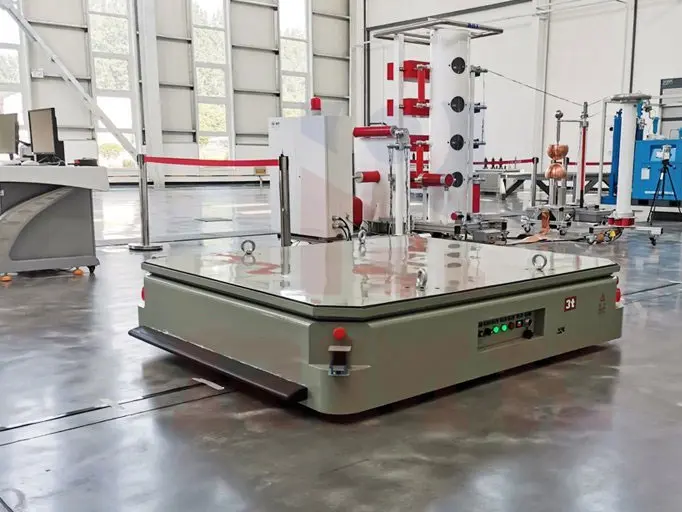
- Schienen- und spurgeführter Betrieb
- Automatische und manuelle Steuerung
- Flexible Routenauswahl
- Geeignet für komplexe Layouts
- Anpassbar an Produktionsänderungen
Anwendungen: Große Fertigungsanlagen, Mehrwerkstatt-Fabriken, integrierte Produktionssysteme und intelligente Fertigungseinrichtungen.
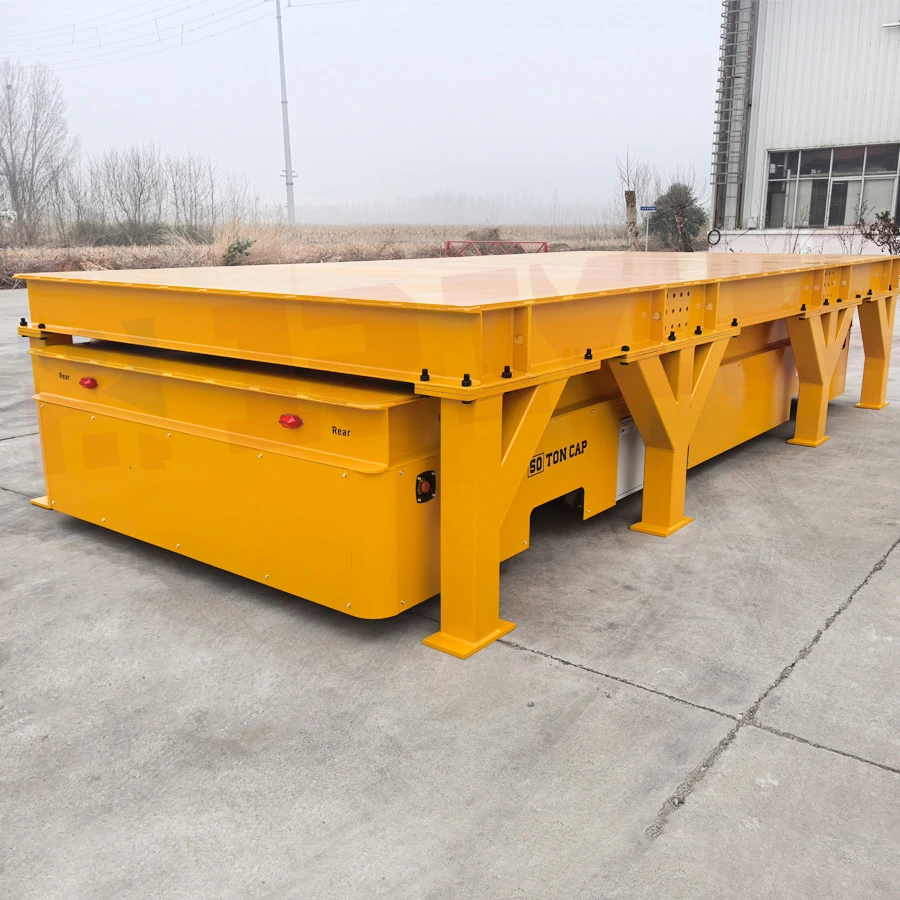
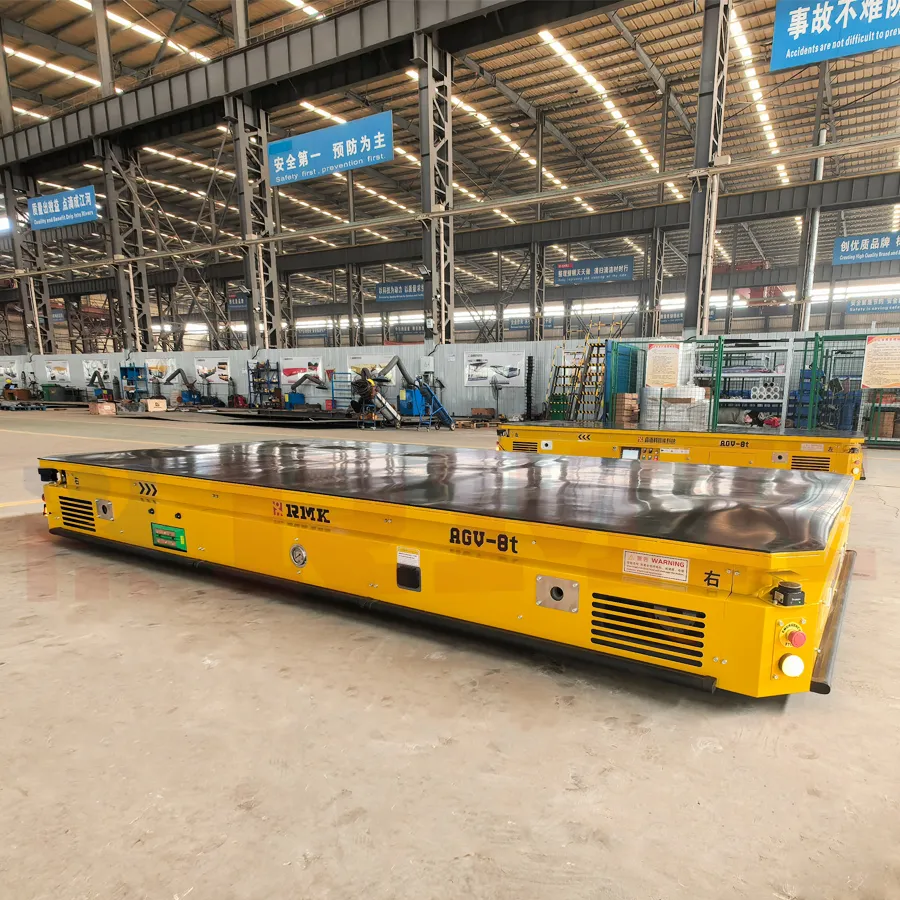
Schwerlast-AGV-Transferwagen
A Schwerlast-AGV-Transferwagen, auch als Schwerlast-AGV bezeichnet, transportiert übergroße Materialien und Geräte mit hohen Lastanforderungen.
Weitere Informationen zu den Merkmalen, Vorteilen und Auswahlkriterien für Schwerlast-AGVs finden Sie in diesem Artikel: “Großflächiger AGV-Transferwagen: Ideale Lösung für den Transport schwerer und übergroßer Materialien”
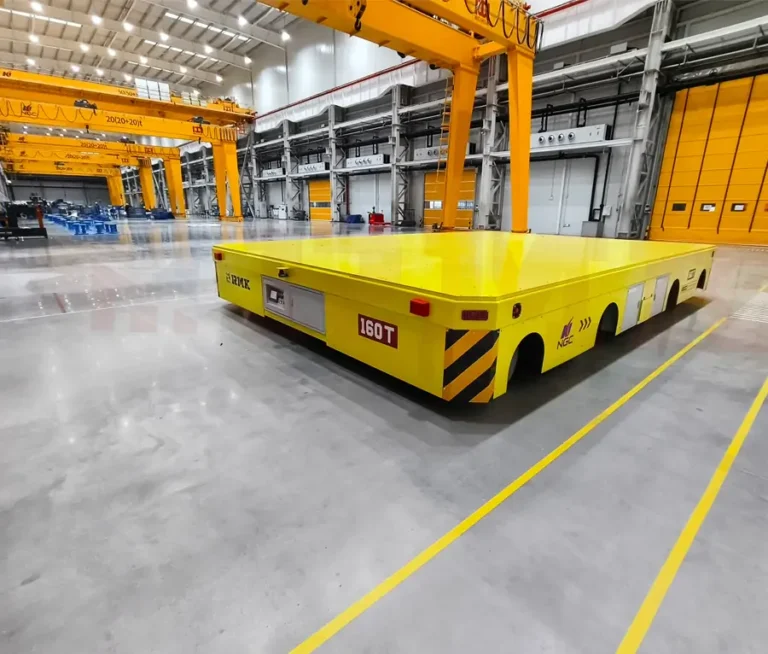
- Hohe Belastbarkeit
- Verstärkter Stahlrahmen
- Stabiler Schwerlasttransport
- Schwerlast-Antriebssystem
- Dauerbetrieb
Anwendungen: Stahlwerke, Werften, Windkraftanlagen, Transformatorenfertigung, Formenfabriken und Schwermaschinenproduktion.
Hydraulischer AGV-Transferwagen
A Hydraulischer AGV-Transferwagen, auch als AGV-Hubwagen bezeichnet, integriert eine Hubplattform für automatisches Be- und Entladen sowie Arbeitsstationsausrichtung.
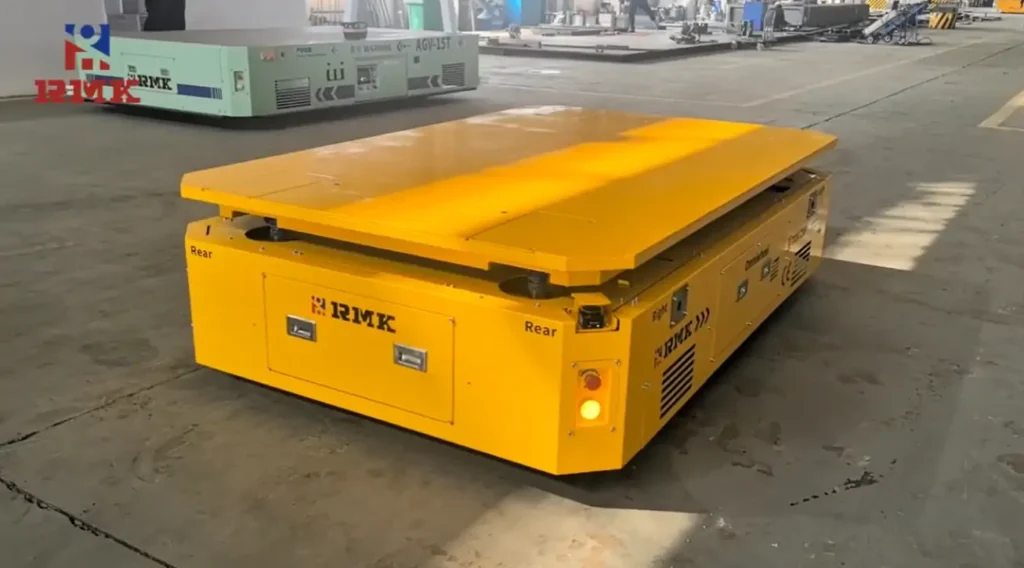
- Hydraulisches oder elektrisches Heben
- Einstellbare Plattformhöhe
- Automatische Andockung
- Sanfter Lasttransfer
- Kundenspezifische Hubhöhe
Anwendungen: Montagelinien, Bearbeitungszentren, Batterieproduktion, automatisierte Lager und intelligente Fertigungssysteme.
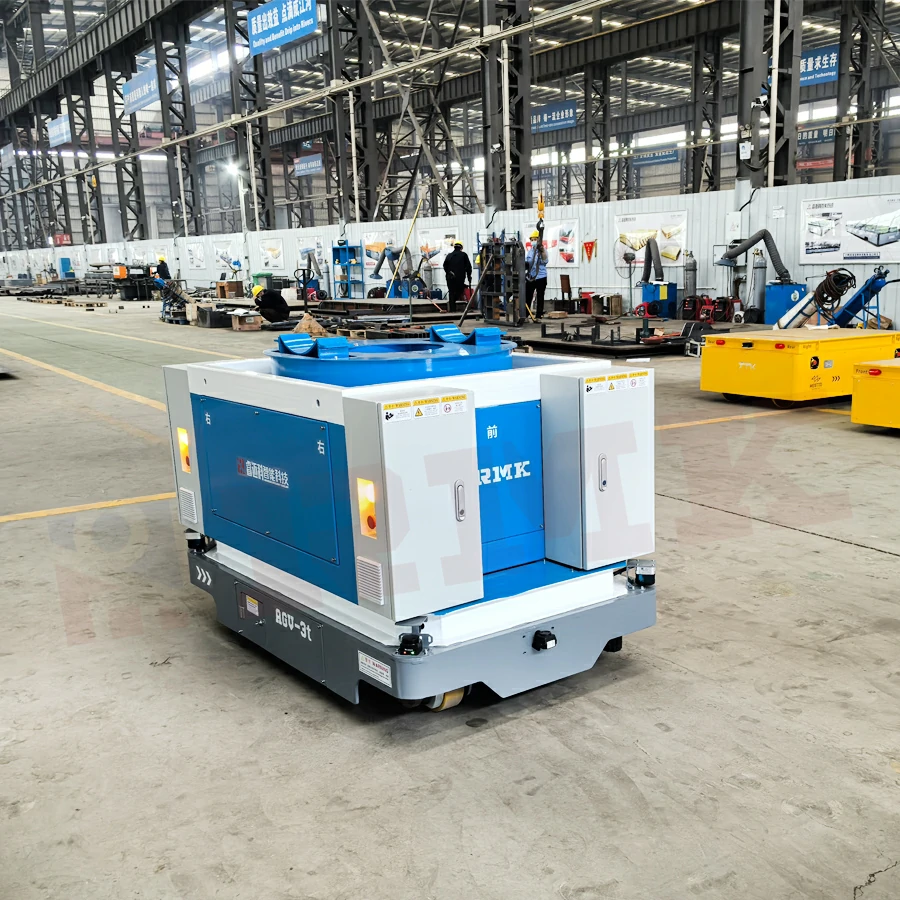
Rotierender AGV-Transferwagen
A Rotierender AGV-Transferwagen, auch als Rotations-AGV bezeichnet, enthält eine Drehplattform zur Änderung der Ausrichtung transportierter Materialien.
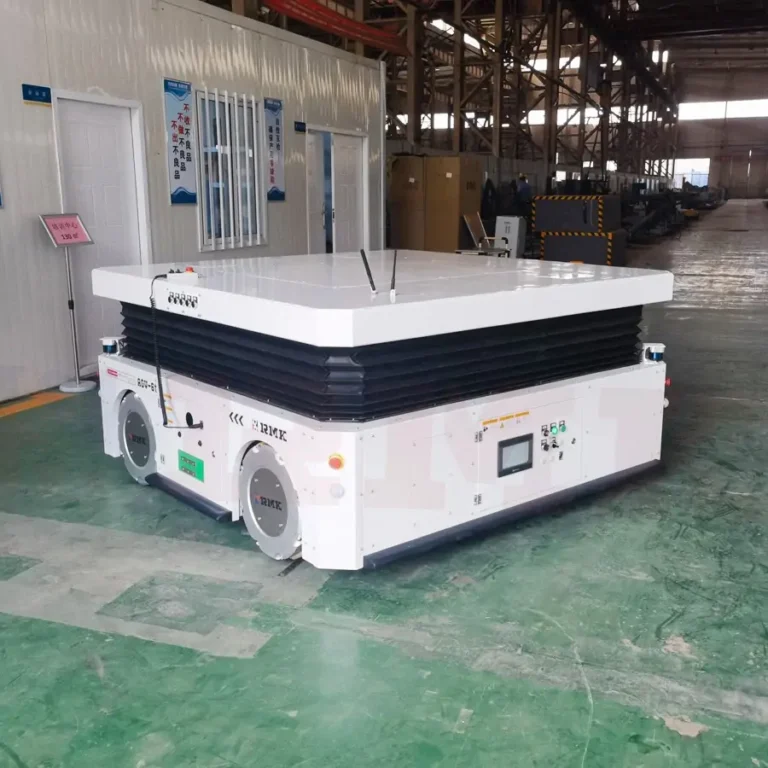
- Integrierter Drehtisch
- 360°-Drehung
- Automatische Positionierung
- Reduzierte manuelle Handhabung
- Kompatibel mit automatisierten Linien
Anwendungen: Schweißstationen, Roboter-Produktionslinien, Bearbeitungszentren, Lackiersysteme und Montagewerkstätten.
Kundenspezifischer AGV-Transferwagen
Ein kundenspezifischer AGV-Transferwagen, auch als kundenspezifisches AGV bezeichnet, wird für spezifische Produktionsprozesse und Transportanforderungen gebaut.
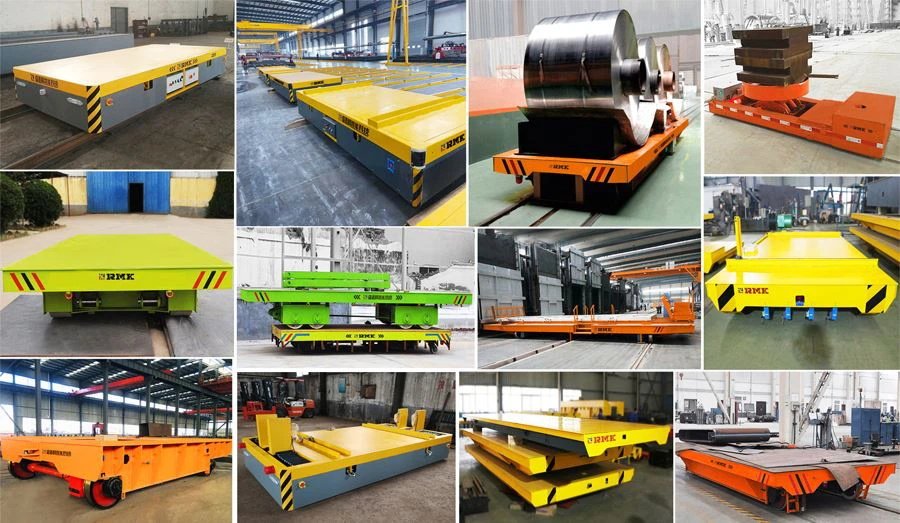
- Kundenspezifische Abmessungen
- Kundenspezifische Lastkapazität
- Optionales Heben und Drehen
- Mehrere Navigationssysteme
- Konfigurierbares Steuerungssystem
Anwendungen: Stahlverarbeitung, Formenhandling, Luft- und Raumfahrtfertigung, Schwermaschinenproduktion und andere kundenspezifische industrielle Materialtransportprojekte.
Videovorstellung
Fälle
Wie wählt man das richtige Automatisch Geführte Fahrzeug aus?
Jede Fabrik hat unterschiedliche Materialtransportanforderungen. Das richtige Automatisch Geführte Fahrzeug (AGV) hängt vom Produktionslayout, der Transportroute, der Lastkapazität und der Transportaufgabe ab. Die folgende Tabelle kann Ihnen helfen, den am besten geeigneten AGV-Transferwagen für Ihre Anwendung zu identifizieren.
| Arbeitsumgebung | Anwendbare Typen | Anwendungen |
|---|---|---|
| Feste Transportwege mit wiederholter Bewegung | Schienengeführter AGV-Transferwagen | Stahlwerke, Stanzlinien, Bearbeitungswerkstätten |
| Flexible Produktionslayouts oder mehrere Transportwege | Spurgeführter AGV-Transferwagen | Smart Factories, Lager, Montagelinien |
| Enge Gänge oder begrenzter Arbeitsraum | Omnidirektionaler AGV-Transferwagen | Formenwerkstätten, Präzisionsgeräte, Luft- und Raumfahrtfertigung |
| Sowohl fester als auch flexibler Transport in einer Fabrik | Hybrider AGV-Transferwagen | Mehrwerkstatt-Anlagen, integrierte Produktionssysteme |
| Schwere Materialien von 10 bis über 300 Tonnen | Schwerlast-AGV-Transferwagen | Stahlcoils, Formen, Transformatoren, Schwermaschinen |
| Automatisches Be- und Entladen oder Geräteandockung | Hub-AGV-Transferwagen | Automatisierte Produktionslinien, Bearbeitungszentren |
| Werkstücke, die eine Winkelanpassung erfordern | Rotierender AGV-Transferwagen | Schweißen, Bearbeitung, Roboter-Montage |
| Sondermaße oder kundenspezifische Fertigungsanforderungen | Kundenspezifischer AGV-Transferwagen | Schwerlastfertigung, übergroße Ausrüstung, Sonderprojekte |
Sie sind sich nicht sicher, welches Automatische Fahrerlose Transportfahrzeug (AGV) für Ihr Projekt geeignet ist? Bitte kontaktieren Sie uns und geben Sie Details zu Ihrer Anwendung an, wie Tragfähigkeit, Fahrstrecke, Werkstattlayout und Produktionsprozess. RMK-Ingenieure empfehlen eine geeignete Lösung basierend auf Ihrer Anwendung.
- Für einen detaillierten Einblick in Auswahltipps lesen Sie: “Wie wählt man den richtigen AGV-Transferwagen aus?”
- Lesen Sie weitere Artikel über die Anwendungen von automatischen fahrerlosen Transportfahrzeugen (AGVs): Welche Branchen verwenden AGV-Transferwagen? Anwendungen in der modernen Fertigung
Umfang der Individualisierung
Wenn Ihr Projekt ungewöhnliche Lastabmessungen, begrenzten Werkstattplatz oder spezielle Produktionsprozesse umfasst, ist ein Standardmodell möglicherweise nicht die beste Wahl. RMK kann das Automatische Fahrerlose Transportfahrzeug basierend auf Folgendem anpassen:
- Tragfähigkeit – Von leichten Anwendungen bis zum Schwerlasttransport über 300 Tonnen.
- Plattformgröße – Kundenspezifische Plattformlänge, -breite und -höhe für verschiedene Materialien und Ausrüstungen.
- Navigationssystem – Magnetband, QR-Code, Laserführung, SLAM oder andere Navigationsmethoden.
- Antrieb & Lenkung – Schienengeführt, spurungebunden, omnidirektional, Differenziallenkung oder Vierradlenkung.
- Heben & Drehen – Hydraulische Hubplattformen, elektrische Hubsysteme und Drehtische.
- Stromversorgung – Lithiumbatterie, Blei-Säure-Batterie, Kabeltrommel, Stromschiene oder andere Energielösungen.
- Steuerungssystem – SPS-Steuerung, drahtlose Kommunikation, Flottensteuerung und Integration mit MES- oder WMS-Systemen.
- Sicherheitsfunktionen – Laserscanner, Hinderniserkennung, Not-Aus, Warnleuchten, akustische Alarme und Kollisionsschutz.
- Betriebsumgebung – Lösungen für hohe Temperaturen, Staub, Feuchtigkeit, Reinräume oder explosionsgeschützte Anwendungen.
Senden Sie uns Ihre Anwendungsanforderungen, und unsere Ingenieure empfehlen den am besten geeigneten AGV-Transferwagen für Ihre Fabrik.
Schlussfolgerung:
Automatische Fahrerlose Transportfahrzeuge (AGV) umfassen schienengeführte, spurungebundene, omnidirektionale, schwere, hebende, drehende und kundenspezifische Typen. Jeder Typ ist für unterschiedliche Fabriklayouts, Lastanforderungen und Materialtransportprozesse ausgelegt. Die Auswahl der richtigen Lösung hängt von den Produktionsbedingungen, Transportwegen und Automatisierungsanforderungen ab.
REMARKABLE spezialisiert sich auf das Design und die Herstellung von industriellen AGV-Transferwagen für den Schwerlast- und automatisierten Materialtransport. Mit nachgewiesener Exporterfahrung auf Überseemärkten wird unsere Ausrüstung weltweit in Stahlwerken, Maschinenbau und automatisierten Produktionsanlagen eingesetzt. Kontakt mit Ihren Projektanforderungen, und wir werden eine geeignete Lösung für Ihr Automatisches Fahrerloses Transportfahrzeug empfehlen.
FAQS
Welche verschiedenen Arten von AGV-Transportwagen gibt es?
Häufige Typen umfassen schienengeführte, spurungebundene, omnidirektionale, hybride, schwere, hebende, drehende und kundenspezifische AGV-Transferwagen. Jeder Typ ist für unterschiedliche Fabriklayouts und Materialtransportanforderungen ausgelegt.
Was ist der Unterschied zwischen einem schienengeführten und einem spurungebundenen AGV?
Ein schienengeführtes AGV fährt auf festen Schienen für stabile und wiederholbare Routen. Ein spurungebundenes AGV arbeitet ohne Schienen und folgt Navigationspfaden, was flexible Bewegungen und Layoutänderungen ermöglicht.
Wann sollte ich einen omnidirektionalen AGV wählen?
Ein omnidirektionaler AGV eignet sich für enge Räume, komplexe Layouts und Anwendungen, die seitliche Bewegungen, diagonale Fahrten oder präzise Positionierung großer Werkstücke erfordern.
Welche Navigationssysteme verwenden AGVs?
AGVs verwenden üblicherweise Magnetbandführung, Lasernavigation, QR-Code-Führung, SLAM-Navigation und visuelle Systeme, abhängig von den Anforderungen an Genauigkeit und Flexibilität.
Wie viel Gewicht kann ein AGV-Transferwagen tragen?
Die Tragfähigkeit hängt vom Design ab. Standardmodelle bewältigen einige Tonnen, während schwere AGV-Transferwagen 10 bis über 300 Tonnen für Stahlcoils, Formen und schwere Ausrüstung transportieren können.
Können AGV-Transportwagen individuell angepasst werden?
Ja. AGV-Transferwagen können hinsichtlich Tragfähigkeit, Plattformgröße, Navigationssystem, Lenkmethode, Hub- oder Drehfunktionen, Stromversorgung und Steuerungssystem individuell angepasst werden.
In welchen Branchen werden AGV-Transportwagen häufig eingesetzt?
Sie werden häufig in Stahlwerken, Werften, im Formenbau, in der Automobilproduktion, in der Windkraft, im Schwermaschinenbau und in automatisierten Fabriken eingesetzt.
Wie wähle ich den richtigen AGV-Transferwagen aus?
Die richtige Wahl hängt von Lastgewicht, Transportentfernung, Werkstattlayout, Produktionsprozess und Automatisierungsgrad ab. Schienengeführte Modelle eignen sich für feste Routen, spurungebundene Typen für flexible Layouts und schwere Modelle für den Transport großer Lasten.
Verwandte Artikel
Maßgeschneiderte intelligente Materialtransportlösungen
Um sicherzustellen, dass ein maßgeschneiderter Transferwagen perfekt auf Ihre Bedürfnisse zugeschnitten ist, geben Sie bitte die folgenden Details an:
- Tragfähigkeit: _____ t (1~500 t)
- Tischgröße: _____ × _____ mm/m (z. B. 1500×3000)
- Strom-Optionen:
- ☐ Blei-Säure ☐ Lithium-Ionen ☐ Andere: _____
- ☐ Kabel: _____V/_____A
- ☐ Standard 380V/50Hz/3-Phasen
- Angaben zur Ladung:
- Art: _____ (z. B. Stahlspulen, Maschinen)
- Besondere Anforderungen: _____ (z. B. rutschfest, korrosionsbeständig)
- Optionale Merkmale:
- ☐ Not-Aus ☐ Antikollisionssensoren
- ☐ Schienenführungen ☐ Hebemechanismus ☐ Fernsteuerung