
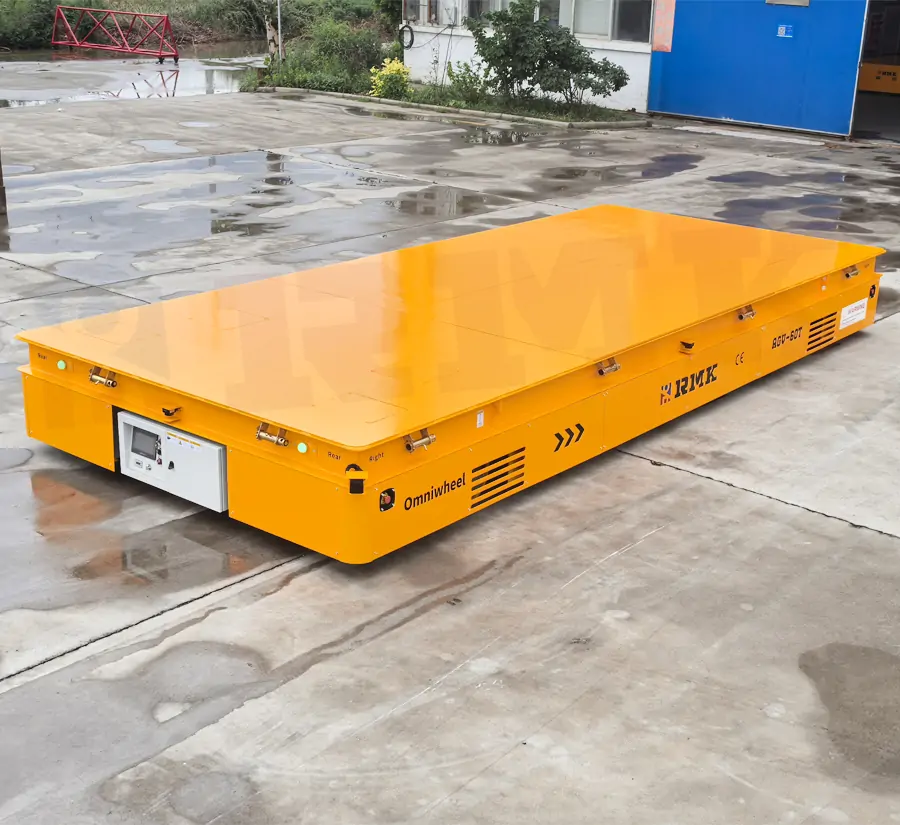
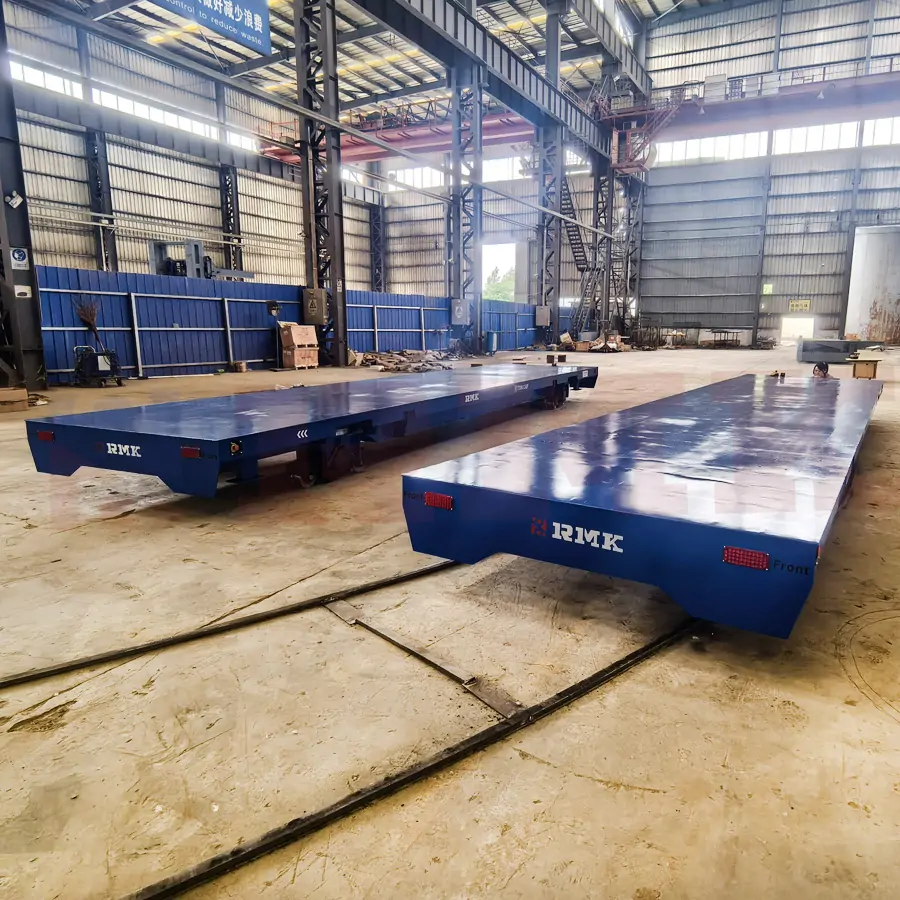
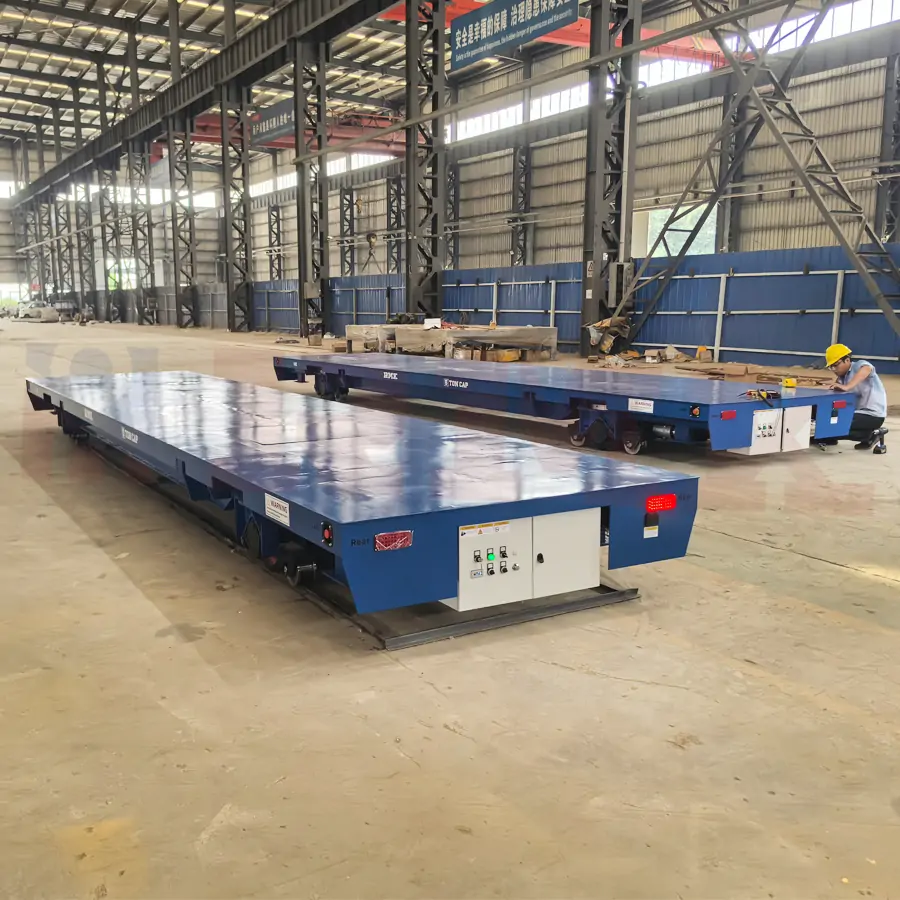
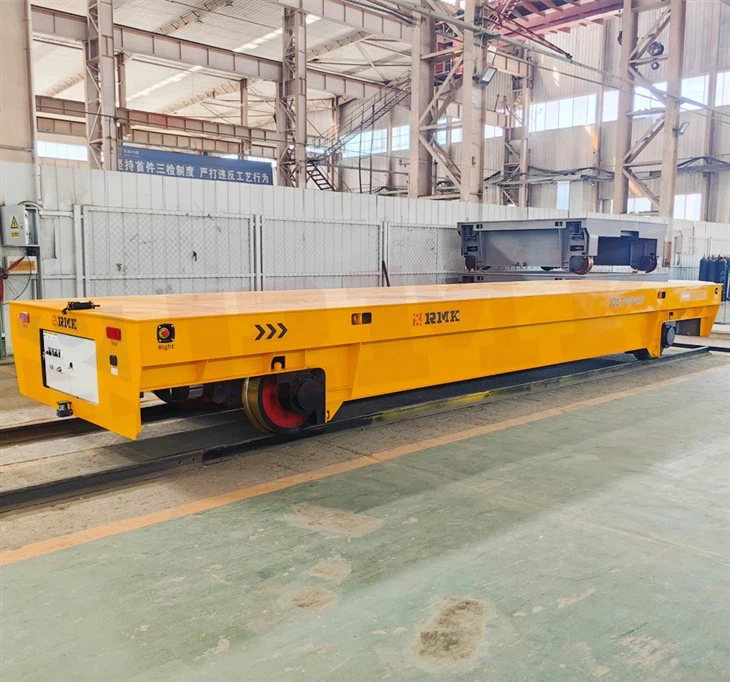
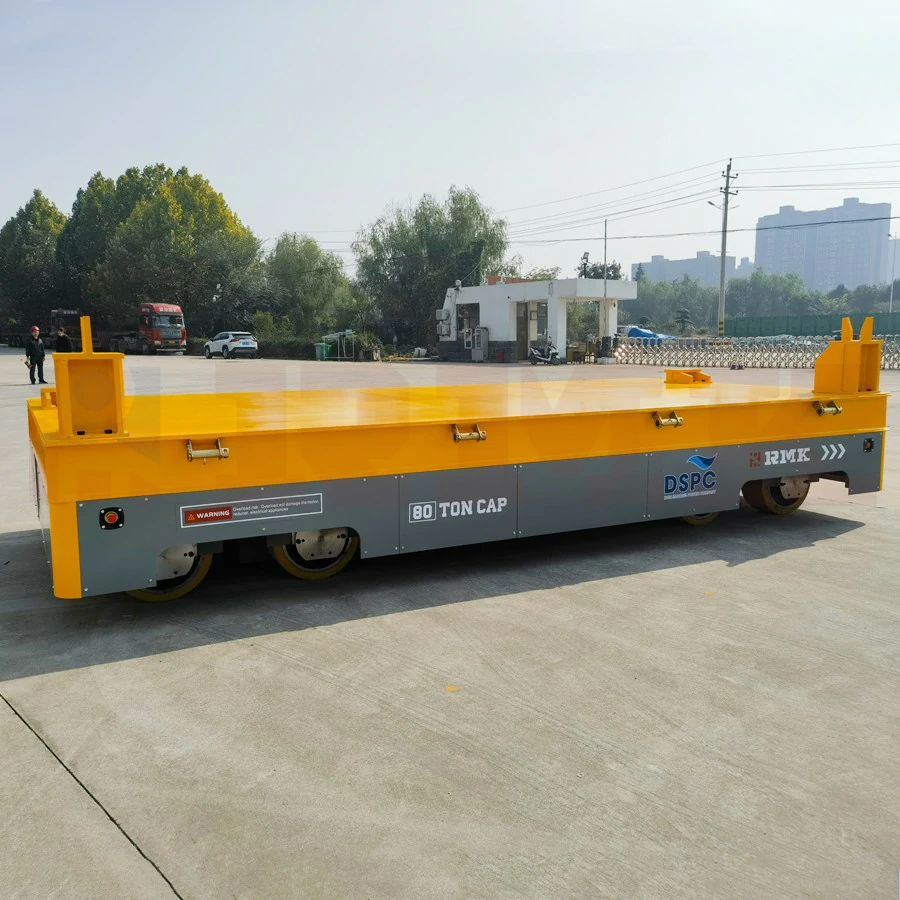
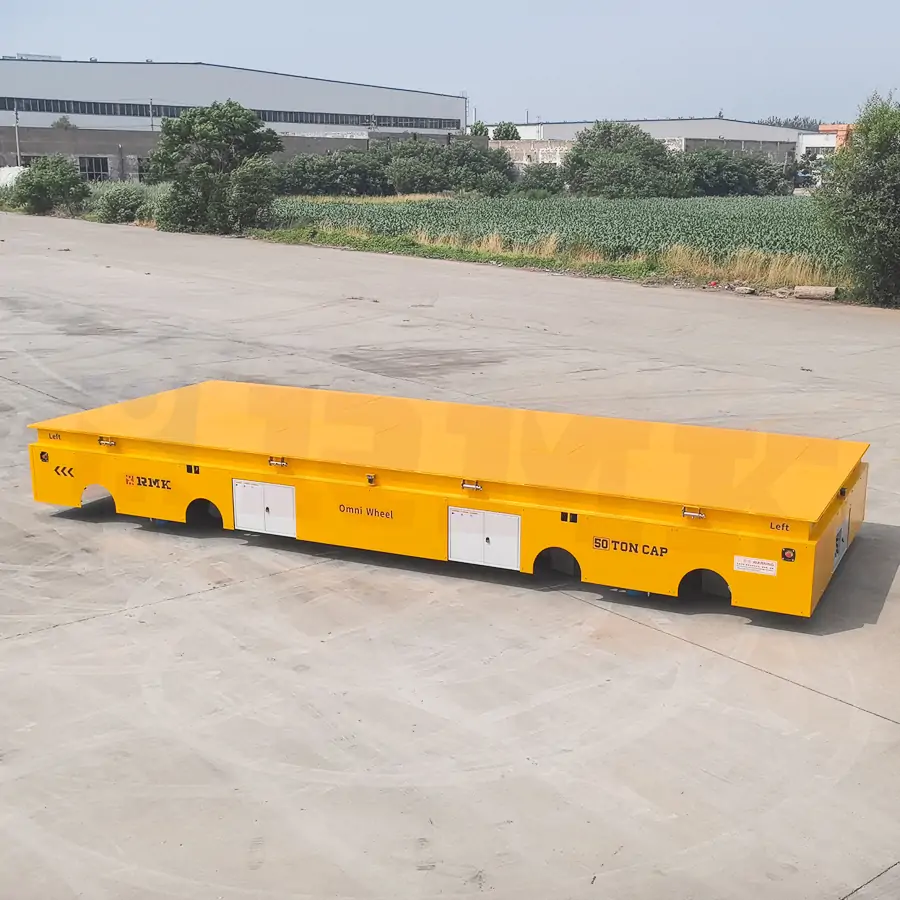
A Self Propelled Transfer Cart uses an onboard drive system to transport heavy loads without an external towing vehicle. Designed for factories, warehouses, and industrial workshops, it can be configured with battery or rail power, different steering systems, and manual or automatic controls to suit the transport route and operating conditions.
- Load Capacity: 2–150 tons (customizable)
- Travel Speed: 0–25 m/min (model-dependent)
- Power Supply: 24–72 V battery (model-dependent)
- Platform Size: 2,000 × 1,500 mm to 10,000 × 3,000 mm (customizable)
- Control Mode: Wired pendant / Wireless remote / PLC (optional)
What Is a Self Propelled Transfer Cart?
A Self Propelled Transfer Cart, also known as a self-propelled industrial transfer trolley or powered transfer cart, is a material handling vehicle driven by its own electric motor and drive system. It transports heavy loads across factories, warehouses, and industrial workshops without an external towing vehicle.
The drive system converts motor power into wheel movement. Battery-powered models operate without fixed power rails, while rail-powered models follow a designated track. Platform dimensions, rated capacity, wheel configuration, and steering mode are selected according to load weight, floor conditions, and transport routes.
Self-propelled describes the cart’s drive capability, not its navigation method. Operators can control the cart through wired pendants or wireless remotes. PLC or AGV control can be integrated when the application requires programmed movement or automated material transport.
How Does a Self Propelled Transfer Cart Work?
A Self Propelled Transfer Cart uses an onboard electric drive system to move heavy materials without an external towing vehicle. Its operation involves load positioning, motor-driven travel, steering, and controlled stopping. The drive and control configuration depends on load weight, travel distance, and site conditions.
- 1. Load Placement: The load is positioned on the cart platform within the rated capacity and allowable center-of-gravity limits. Load distribution must suit the platform structure and wheel layout.
- 2. Power Transmission: The battery or other configured power source supplies the electric drive motor. A gearbox reduces motor speed and transfers torque to the drive wheels, moving the cart under load.
- 3. Travel and Steering: The operator controls travel speed and direction through a wired pendant or wireless remote. Differential steering or a configured steering system controls turning. PLC or AGV control can manage movement on equipped models.
- 4. Braking and Unloading: The cart decelerates and stops at the designated unloading point. After the load is secured and the cart is stationary, the operator removes the material using the specified handling equipment.
Self-propelled transfer trolley performance depends on the drive system, wheel arrangement, steering mode, and load distribution. REMARKABLE customizes cart capacity, platform dimensions, power supply, and control options to match industrial transport routes and handling requirements.
Self Propelled Transfer Cart Specifications
| Parameter | Specifications |
|---|---|
| Load Capacity | 1–300 tons (customizable) |
| Platform Size | 2,000–12,000 mm (L) × 1,500–4,000 mm (W) |
| Power Supply | Lead-acid battery / Lithium battery |
| Drive System | Electric motor drive |
| Travel Type | Trackless, rubber-tired |
| Travel Speed | 0–30 m/min, adjustable |
| Steering Mode | Differential steering / Steering wheel drive |
| Gradeability | Up to 5% (configuration-dependent) |
| Control Mode | Wired pendant / Wireless remote / PLC |
| Navigation System | Magnetic strip / LiDAR / SLAM / QR code (optional) |
| Wheel Type | Polyurethane / Solid rubber / Pneumatic tires (optional) |
| Safety Features | Emergency stop / Audible and visual alarms / Obstacle detection (optional) |
| Protection Rating | IP54 / IP65 (optional) |
| Operating Temperature | -20°C to +50°C (model-dependent) |
Specifications vary by model. Load capacity, platform dimensions, power supply, steering, control system, and safety features can be customized to suit site conditions and handling requirements.
Advantages
No External Towing Vehicle
An onboard electric drive system moves heavy loads without a forklift, tractor, or other towing vehicle.
High Load Capacity
Load capacities can range from a few tons to hundreds of tons, depending on the cart structure, drive system, and operating conditions.
Flexible Power Supply
Battery-powered models operate without fixed power rails, while rail-powered versions suit dedicated transport routes and repetitive material handling.
Controlled Travel and Steering
Variable-speed drives and selectable steering systems support controlled movement through workshops, production lines, and warehouse aisles.
Multiple Control Options
Wired pendants and wireless remotes support operator-controlled movement. PLC or AGV integration is available for applications requiring automated transport.
Application-Specific Design
Platform dimensions, deck height, wheel type, load restraints, and drive configuration can be selected for machinery, steel components, molds, and other industrial loads.
Types of Self Propelled Transfer Carts
Self propelled transfer carts are available in different configurations based on power supply, travel path, and control method. The main types include battery-powered, rail-powered, trackless, and AGV transfer carts. Selection depends on the transport route, load capacity, operating cycle, and automation requirements.
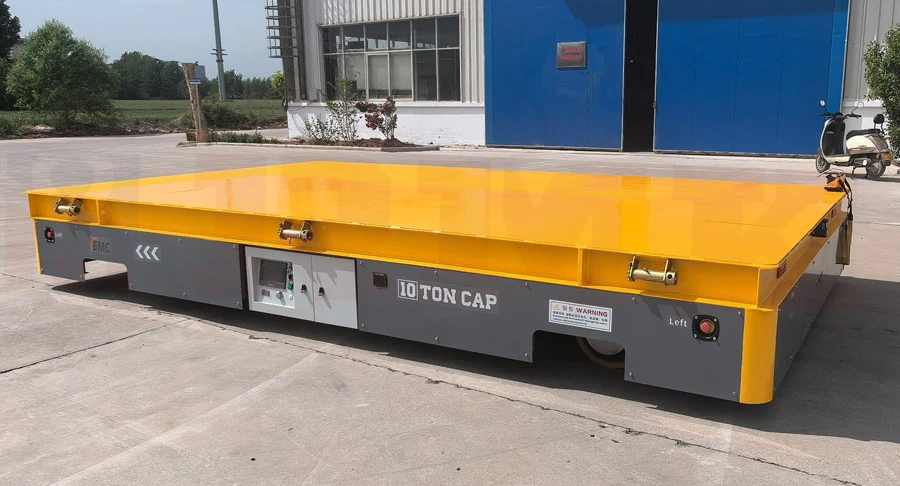
Battery Powered Transfer Cart
A battery-powered transfer cart uses an onboard battery to supply the drive motor. It operates without a continuous external power connection and suits factories, workshops, and warehouses where transport routes require flexible movement. Operating time depends on battery capacity, load weight, travel distance, and duty cycle.
Load Capacity: 1–300 tons (customizable)
Power Supply: Lead-acid battery / Lithium battery
Travel Speed: 0–30 m/min (model-dependent)
Control Mode: Wired pendant / Wireless remote / PLC (optional)
Rail Powered Transfer Cart
A rail powered transfer cart receives electrical power through a configured rail power supply system and travels along fixed tracks. It suits repetitive material handling between production lines, workshops, and designated loading or unloading stations.
Load Capacity: 1–300 tons (customizable)
Travel Path: Fixed steel rails
Drive System: Electric motor and gearbox
Control Mode: Wired pendant / Wireless remote / PLC (optional)
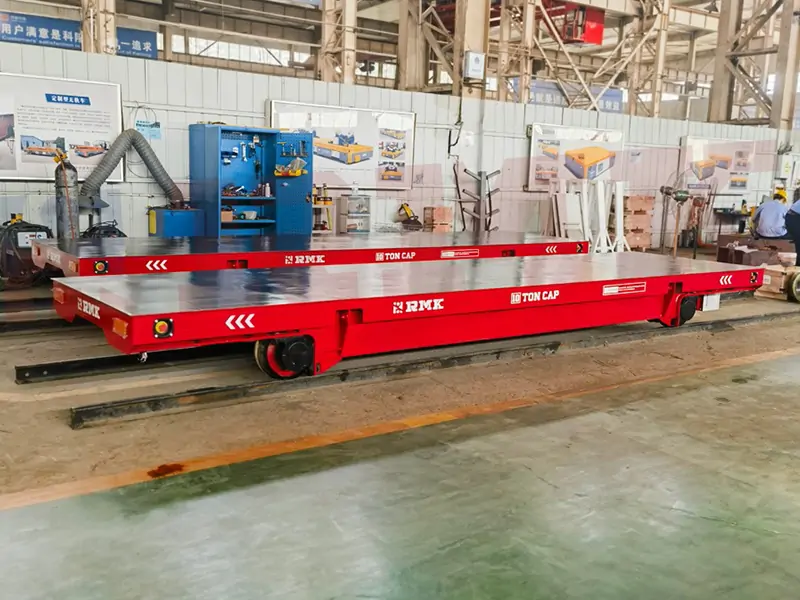
Trackless Transfer Cart
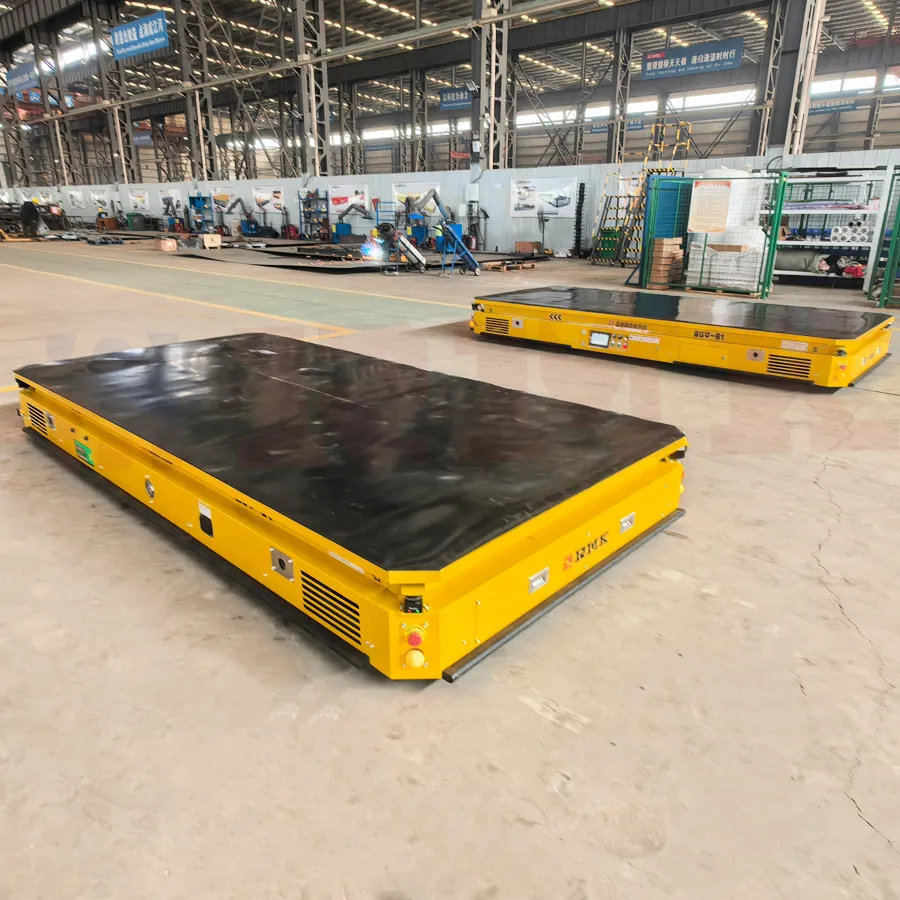
A trackless transfer cart travels on wheels across suitable industrial floors without fixed steel rails. It supports material transport between workstations and across changing routes. Floor load capacity, surface condition, turning space, and wheel type must match the operating requirements.
Load Capacity: 2–150 tons (customizable)
Power Supply: Lead-acid battery / Lithium battery
Travel Speed: 0–30 m/min (model-dependent)
Steering Mode: Differential steering / Steering wheel drive (configuration-dependent)
AGV Transfer Cart
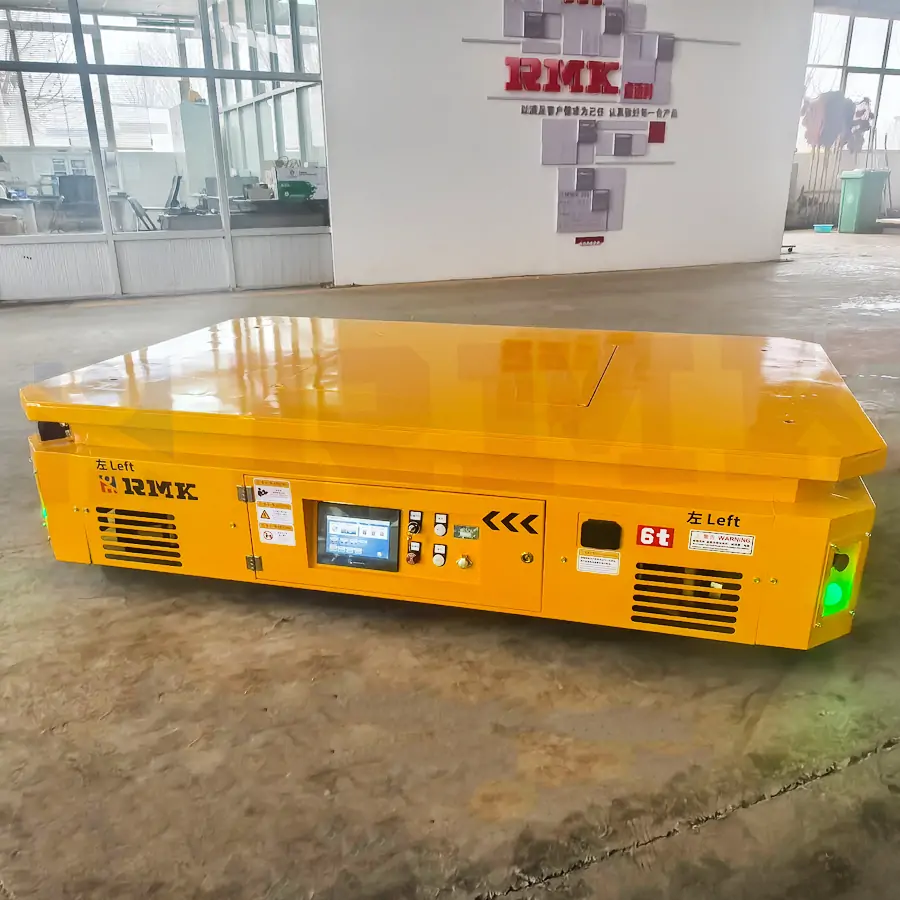
An AGV transfer cart combines an electric drive system with automatic navigation and control. Depending on the navigation configuration, it follows programmed routes for repeated material movements in factories, warehouses, and production areas. Route planning, obstacle detection, and dispatch integration depend on the selected system.
Load Capacity: Model-dependent; customized for the application
Power Supply: Battery powered
Navigation Options: Magnetic strip / LiDAR / SLAM / QR code (system-dependent)
Control System: Automatic navigation and PLC or AGV control
Applications
Mold and Die Handling
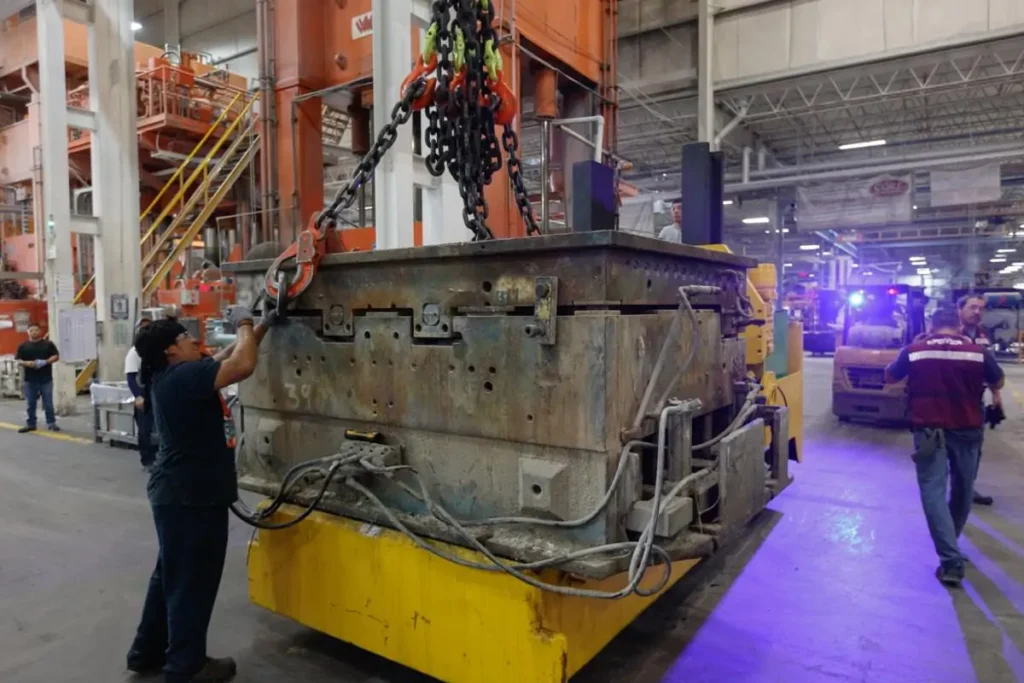
Move injection molds, stamping dies, and large tooling between storage racks, presses, and maintenance stations. Low-deck platforms can simplify loading and unloading.
Steel and Metallurgy
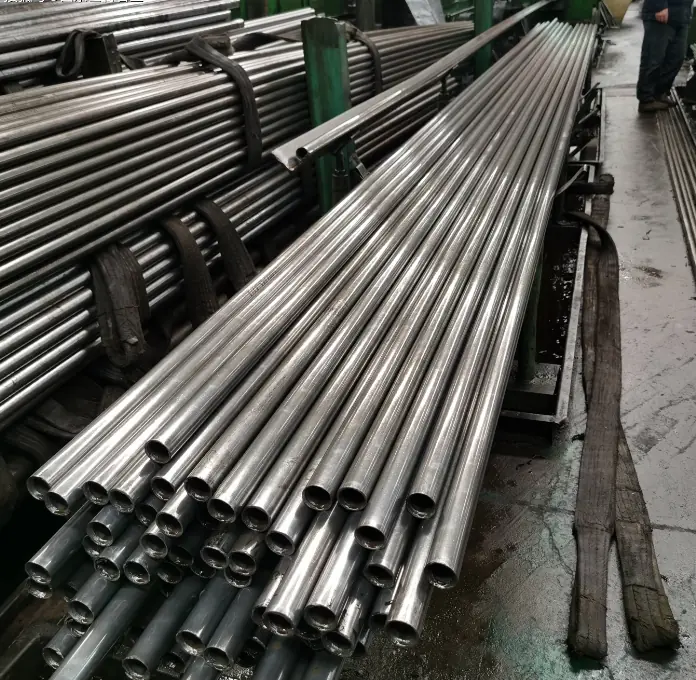
Transport steel plates, coils, billets, and fabricated sections. Heavy-duty platforms and load restraints are configured for the material weight and shape.

Shipyards and Heavy Equipment Workshops
Move large fabricated sections, engine components, and heavy assemblies across designated work areas. Cart capacity, wheel configuration, and braking systems must match the load and floor conditions.

Warehouses and Logistics Centers
Transfer pallets, heavy goods, and oversized materials between storage, staging, and dispatch areas. Trackless models suit suitable floor layouts without fixed rails.
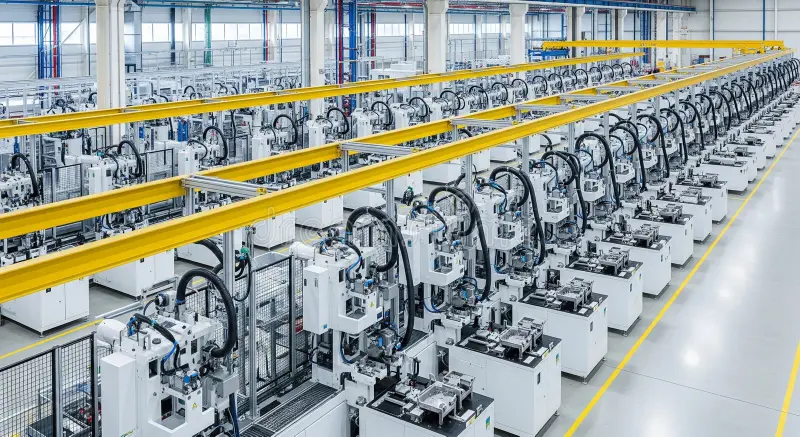
Machinery and Equipment Assembly
Carry large machine bases, industrial equipment, and assemblies between manufacturing and installation areas. Platform dimensions and positioning controls are selected for each load.
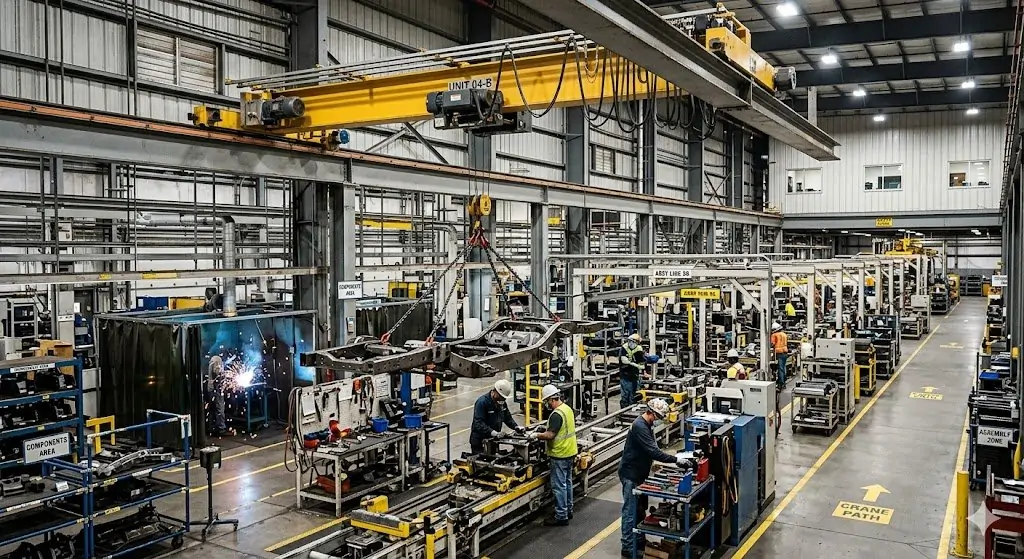
Manufacturing Plants
Move machine components, steel structures, castings, and work-in-process materials between production stations and assembly areas.
Self Propelled Transfer Cart vs. Towed Transfer Cart
The main difference between a self propelled transfer cart and a towed transfer cart is the drive system. A self propelled cart uses its own motor and drive mechanism, while a towed cart relies on an external vehicle for movement. The suitable option depends on the transport route, load requirements, maneuvering needs, and available equipment.
| Comparison | Self Propelled Transfer Cart | Towed Transfer Cart |
|---|---|---|
| Movement | Driven by its onboard motor and drive system | Pulled by a forklift, tractor, or other towing vehicle |
| Power Source | Onboard battery or configured external power supply | Movement powered by the towing vehicle |
| Steering | Controlled through the cart’s drive and steering system | Steering depends on the towing vehicle, hitch, and cart design |
| Equipment Structure | Includes drive motors, transmission, and control components | Typically uses a chassis, wheels, and towing connection |
| Operation | Operator-controlled or automated, depending on configuration | Movement coordinated through the towing vehicle |
| Suitable Applications | Independent material transport and controlled positioning | Transport routes where a suitable towing vehicle is available |
- A self propelled transfer cart suits applications requiring independent movement, dedicated steering, and flexible control options.
- A towed transfer cart fits transport tasks where a suitable towing vehicle is already available.
REMARKABLE configures transfer carts according to load capacity, route layout, floor conditions, and operating requirements.
How to Choose the Right Self Propelled Transfer Cart
Selecting a self propelled transfer cart requires matching the cart configuration to the load, travel route, floor conditions, and operating cycle.
- 1. Determine the Required Load Capacity: Calculate the total load weight, including fixtures and supporting structures. Check load distribution and center of gravity when sizing the frame, wheels, and drive system.
- 2. Confirm Platform Dimensions: Measure the load length, width, height, and support points. Specify platform dimensions and deck height to suit loading equipment, transfer stations, and available clearance.
- 3. Select the Power Supply: Choose battery power for routes without fixed electrical connections. Rail power suits repetitive travel along dedicated tracks. Battery capacity should match travel distance, load, operating hours, and charging intervals.
- 4. Check the Travel Route and Floor: Assess route length, aisle width, turning space, floor flatness, load-bearing capacity, and gradients. Trackless carts require suitable floor conditions; rail-powered carts need an appropriate track layout.
- 5. Choose the Steering and Control System: Differential steering or steering-wheel configurations suit different turning requirements. Wired pendants and wireless remotes support operator control. PLC or AGV systems are options for applications requiring automated movement.
- 6. Specify Safety and Environmental Requirements: Select braking systems, emergency stops, alarms, and obstacle detection according to the operating environment and risk assessment. Check ambient temperature, dust, moisture, and the required enclosure protection rating.
- 7. Match the Cart to the Operating Cycle: Estimate trips per shift, travel distance, loaded and unloaded speed, and charging time. These values guide motor sizing, battery selection, and duty-cycle requirements.
REMARKABLE provides customized self propelled transfer carts with configurable load capacity, platform dimensions, power supply, steering, and control systems. Share your load data, route layout, and operating conditions to define a suitable configuration.
Custom Self Propelled Transfer Cart
REMARKABLE manufactures custom self propelled transfer carts for heavy industrial material handling. Each configuration is specified according to load capacity, platform dimensions, travel route, floor conditions, and operating cycle.
- Load Capacity: 1–300 tons, based on project requirements
- Platform Design: Customized length, width, deck height, and load supports
- Power Supply: Lead-acid battery, lithium battery, or other applicable power systems
- Drive and Steering: Motor configuration, wheel arrangement, and steering mode
- Control System: Wired pendant, wireless remote, PLC, or AGV integration
- Safety Configuration: Braking systems, emergency stops, alarms, and optional obstacle detection
- Environmental Adaptation: Protection rating and component selection based on site conditions
To specify a suitable cart, provide the load weight and dimensions, required travel distance, floor layout, operating frequency, and preferred control method. REMARKABLE can develop a configuration around your material handling process and project requirements.
For information on customization options and details, see the article: “Custom Transfer Cart: Complete Guide to Design and Customization”
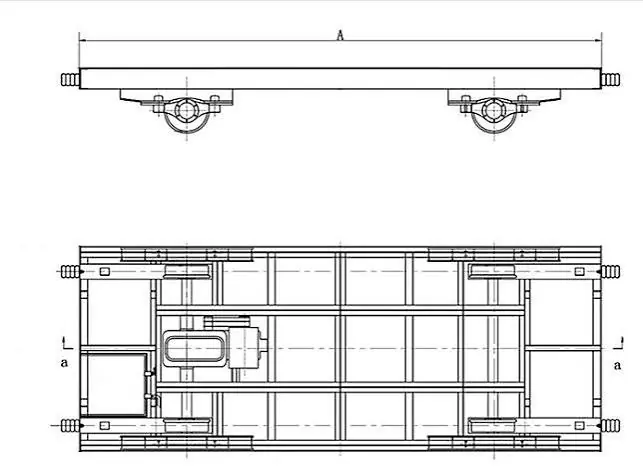
Self Propelled Transfer Cart Manufacturer and Supplier
REMARKABLE specializes in the design and manufacture of industrial transfer carts for heavy material handling. Custom configurations cover load capacity, platform dimensions, power supply, drive systems, steering, and control methods. Equipment specifications are developed around actual load data, transport routes, and site conditions.
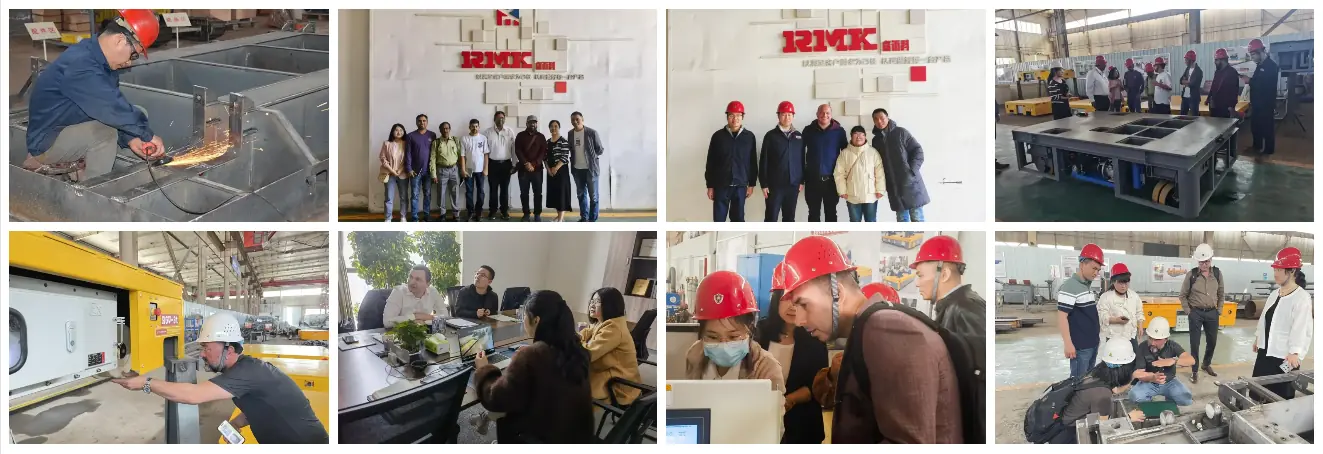
From technical confirmation and manufacturing to delivery and after-sales support, REMARKABLE provides project assistance for industrial customers and overseas orders. Product specifications, engineering drawings, and relevant project references can support equipment evaluation and configuration decisions. Contact us for a Custom Solution
Customized Intelligent Material Handling Solutions
To ensure that a customized transfer cart fits your needs perfectly, please provide the following details:
- Load Capacity: _____ tons (1~500 ton)
- Table Size: _____ × _____ mm/m (e.g., 1500×3000)
- Power Options:
- ☐ Lead-acid ☐ Lithium-ion ☐ Other: _____
- ☐ Cable: _____V/_____A
- ☐ Standard 380V/50Hz/3-phase
- Cargo Details:
- Type: _____ (e.g., steel coils, machinery)
- Special Needs: _____ (e.g., anti-slip, corrosion-proof)
- Optional Features:
- ☐ Emergency stop ☐ Anti-collision sensors
- ☐ Rail guides ☐ Lifting mechanism ☐ Remote control
Get a Quote Now
FAQ
What is a self propelled transfer cart?
A self propelled transfer cart is an industrial vehicle that uses its own motor and drive system to transport heavy materials without an external towing vehicle. It is used in factories, warehouses, assembly areas, and other industrial facilities.
How much weight can a self propelled transfer cart carry?
Load capacity depends on the cart design and operating conditions. REMARKABLE offers customized configurations within a range of 1–300 tons, subject to project requirements, load distribution, wheel arrangement, and floor conditions.
How does a self propelled transfer cart work?
A power source supplies the electric motor, which transfers torque through a gearbox to the drive wheels. The operator or control system manages travel speed and direction. The cart stops at the designated position for unloading.
What is the difference between a self propelled and a towed transfer cart?
A self propelled transfer cart uses its own drive system for movement. A towed transfer cart relies on an external vehicle, such as a forklift or tractor. The choice depends on transport routes, maneuvering requirements, and available equipment.
Can a self propelled transfer cart operate without rails?
Yes. A trackless self propelled transfer cart travels on wheels across suitable industrial floors without fixed steel rails. Floor strength, surface condition, turning space, and wheel type must match the load and operating requirements.
What power supply options are available?
Common options include lead-acid batteries and lithium batteries for battery-powered models. Rail-powered or other electrical supply systems may be available for specific configurations. The choice depends on travel distance, operating hours, charging access, and site layout.
Can a self propelled transfer cart be customized?
Yes. Custom options include load capacity, platform dimensions, deck height, power supply, wheel arrangement, steering, control systems, and safety devices. Specifications are selected according to the material dimensions, transport route, and working environment.
How do I select the right drive and steering system?
Evaluate the total load, load distribution, travel distance, floor conditions, turning radius, and operating cycle. Differential steering suits some compact layouts, while other steering systems support different maneuvering requirements. Drive motor and battery specifications should match the required duty cycle.