
Table of Contents
Introduction
Hydraulic transfer carts are designed to handle heavy material transportation while providing additional lifting functions for different working heights. By combining a transfer cart system with a scissor lifting mechanism, the equipment can move loads smoothly and adjust the platform height for production lines, assembly areas, and material handling operations.
In this article, we will explain How Does a hydraulic transfer cart Work? from the structure, lifting principle, operating process, and application aspects. We will introduce the main components, how the hydraulic system drives the scissor mechanism, advantages, and factors to consider when selecting a suitable hydraulic transfer cart for industrial use.
What Is a Hydraulic Transfer Cart?
A hydraulic transfer cart is an industrial electric handling vehicle that combines horizontal transportation and vertical lifting functions. It is also called a scissor lift transfer cart, hydraulic transfer cart, or scissor electric rail cart. The equipment is built with a scissor-type hydraulic lifting mechanism installed on the transfer cart platform. The hydraulic cylinder drives the crossed scissor arms to extend and retract, allowing the platform to move vertically for load handling at different heights.
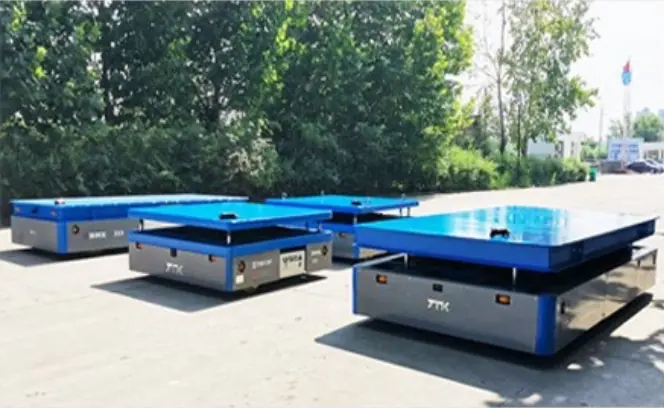
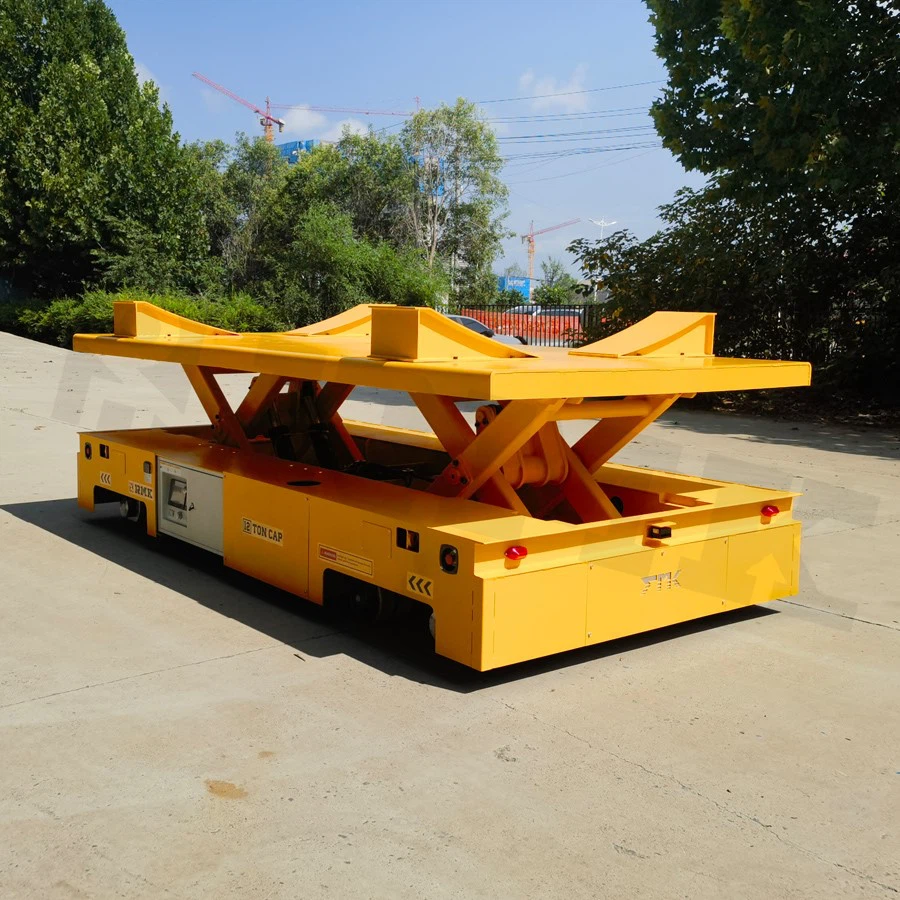
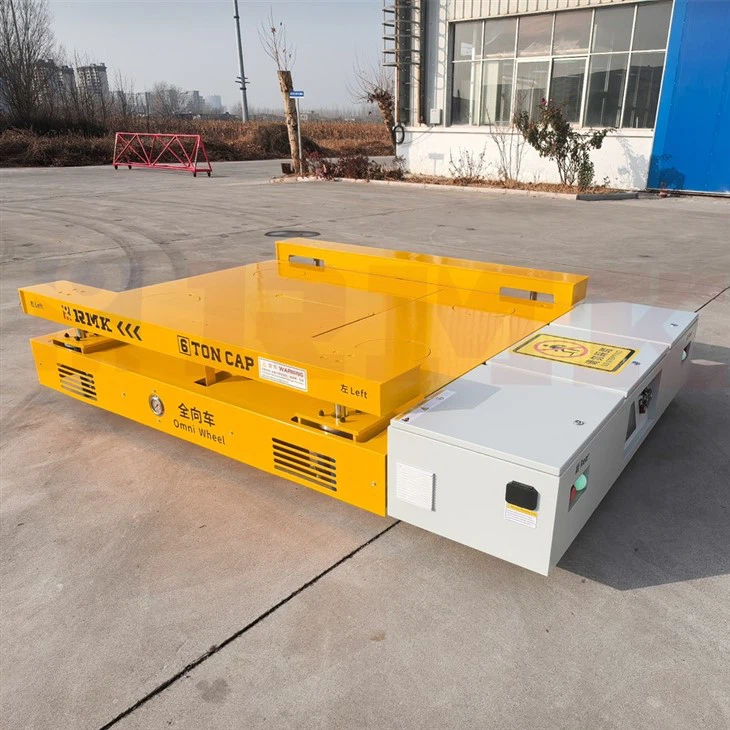
Different from a standard transfer cart, a hydraulic transfer cart can transport materials inside the workshop and adjust the platform height when reaching the working position. This allows connection with production lines, racks, and machines at different levels. According to operating conditions, it can use battery power, cable reel power, or rail power supply. Load capacity, platform size, and lifting height can be customized based on specific handling requirements.
For more details, see the article: What is a Hydraulic Lifting Transfer Cart?
How Does a Hydraulic Transfer Cart Work?
A hydraulic transfer cart combines a transfer cart drive system with a hydraulic scissor lifting mechanism. The drive system is responsible for horizontal movement, while the scissor lift system controls the vertical height adjustment of the platform.
Horizontal Transportation System
The cart is powered by battery, cable reel, or rail power supply. The power system supplies energy to the motor, which drives the wheels to move the cart forward, backward, or change direction. For different working conditions, the cart can be equipped with differential steering, hydraulic steering, or lateral movement functions. The operator can control the running speed and direction through a wired handle or wireless remote control.
Vertical Lifting System
The lifting function is realized by the hydraulic scissor mechanism installed under the platform. When the hydraulic pump supplies oil to the cylinder, the cylinder pushes the crossed scissor arms to extend or retract, driving the platform to rise or lower vertically. The reinforced scissor structure provides stable support during lifting and allows the cart to connect with production lines, machines, and workstations at different heights.
Safety devices such as emergency stop buttons, warning lights, buffers, and platform guardrails can be added according to operating requirements to improve operational safety.
Parts of Hydraulic Transfer Cart
A Hydraulic Transfer Cart consists of the cart frame, hydraulic lifting system, drive system, power supply, control system, and safety components. These parts work together to handle heavy loads and complete transportation or lifting operations in industrial environments.
- Steel Frame — The steel frame supports the load and provides the main structure of the transfer cart. The size and strength are designed according to the load capacity and working conditions.
- Hydraulic Lifting System — The hydraulic system includes hydraulic cylinders, pumps, valves, and oil tanks. It provides lifting force for raising and lowering the platform or load.
- Drive System — The drive system consists of motors, reducers, and wheels. It provides travelling power for moving the cart along rails or workshop routes.
- Power Supply System — The cart can use battery power, cable reel power, or rail power supply. The power system provides energy for the drive motor, hydraulic unit, and control components.
- Control System — The control system manages travelling and lifting operations. It supports wired control, wireless remote control, or PLC control according to application needs.
- Safety Devices — Safety components include emergency stop buttons, limit switches, warning lights, and buffers to improve operation safety during transportation and lifting.
A hydraulic transfer cart mainly includes the steel frame, hydraulic lifting system, drive system, power supply, control system, and safety devices. These components form the complete structure for heavy load transportation and lifting operations.
Working Process of a Hydraulic Transfer Cart
The working process of a hydraulic transfer cart includes material loading, transportation, lifting, and unloading.
- Power Supply and Start-up
The control system receives power from the battery, cable reel, or rail power supply. The operator starts the cart through the remote controller or handle. - Horizontal Movement
The drive motor operates the wheels, and the cart moves along the designed route to the target position. The operator can adjust the speed and direction according to the working environment. - Platform Height Adjustment
After reaching the working station, the hydraulic system starts and drives the scissor arms to lift or lower the platform to the required height. - Material Transfer and Reset
After completing loading, unloading, or production line docking, the platform returns to the original position, and the cart continues the next transportation cycle.
Through the combination of electric drive and hydraulic lifting, the scissor transfer cart provides a practical solution for heavy material handling where both movement and height adjustment are required.
Applications
Manufacturing Production Lines
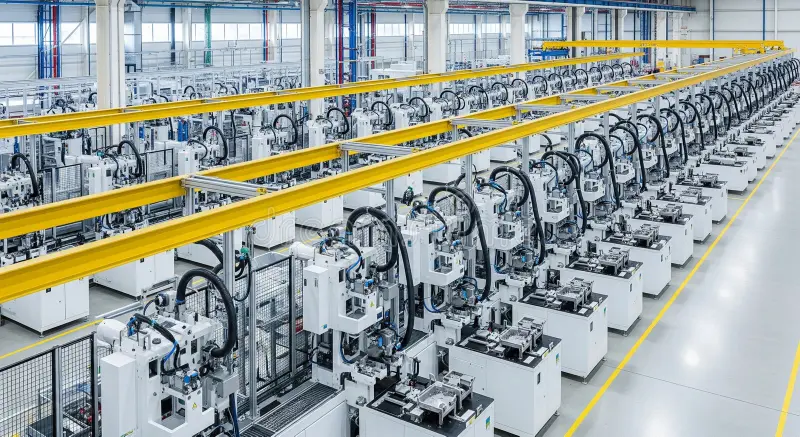
Used for transporting heavy parts, molds, and workpieces between different production stations. The lifting function allows the cart to match the height of assembly lines and processing equipment.
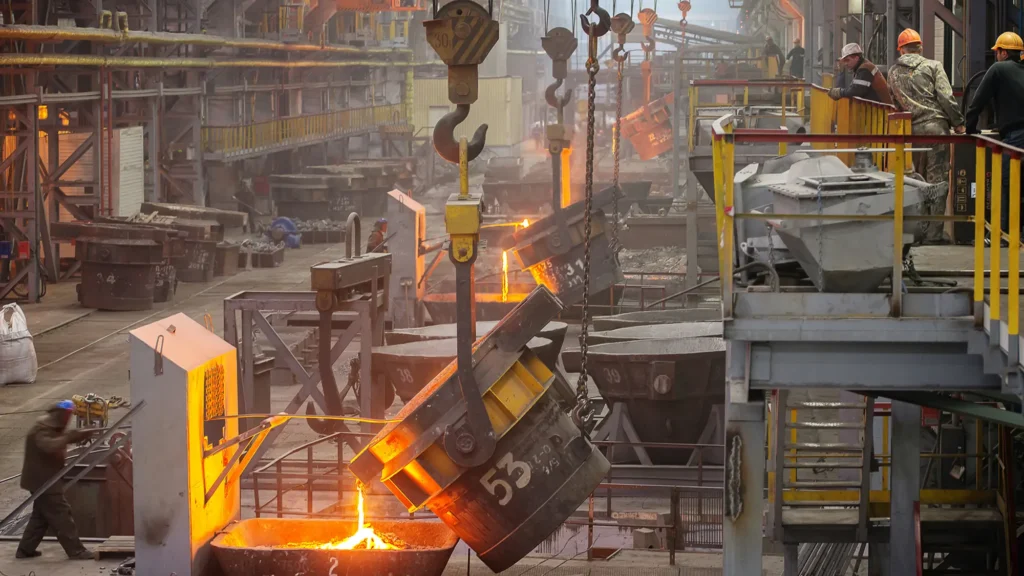
Steel and Metal Industry
Applied for handling steel plates, steel structures, and large metal components. The heavy-duty design supports high-load transportation in workshops.
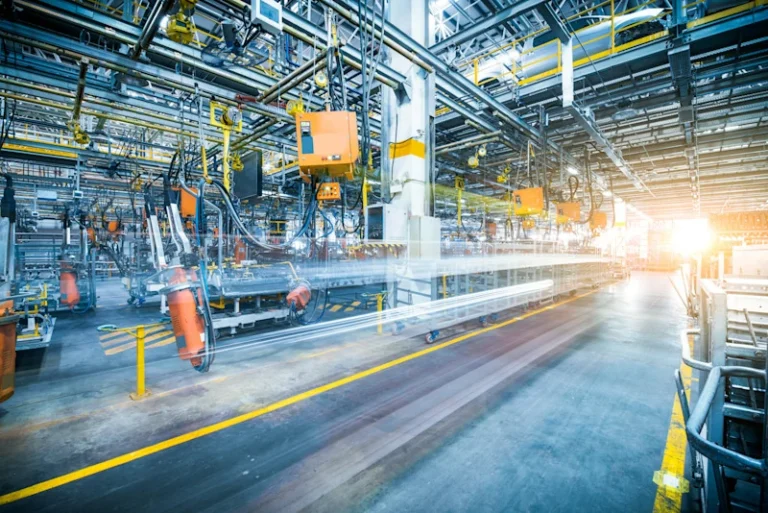
Machine Installation and Maintenance
Used for moving and positioning large machines, motors, and mechanical components. The lifting platform helps adjust installation height during equipment setup.
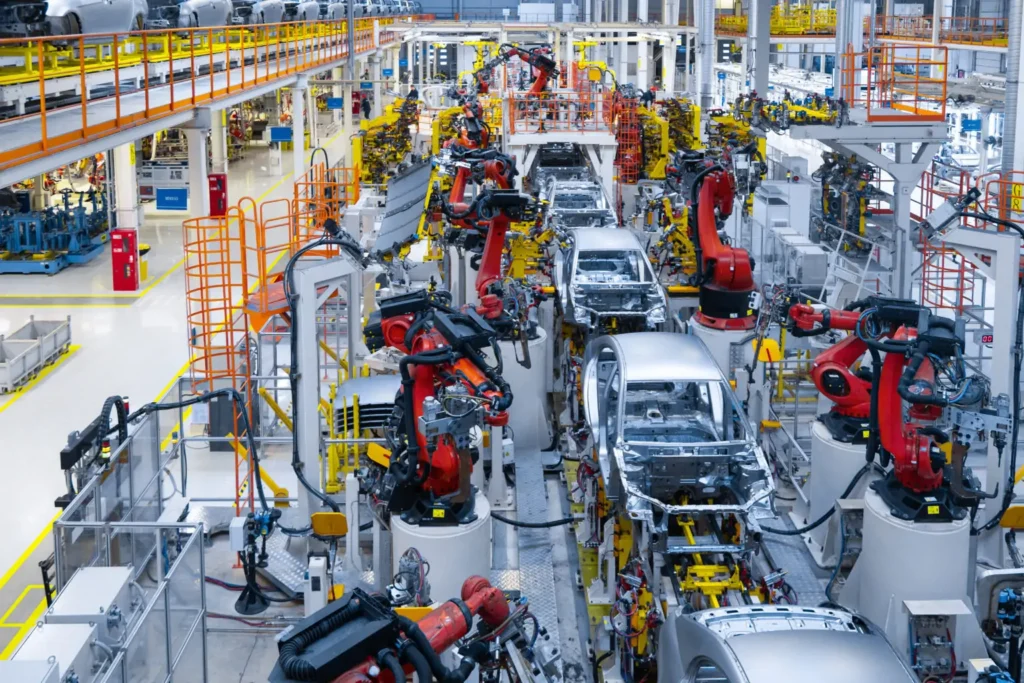
Automotive Manufacturing
Used for transferring vehicle parts, production fixtures, and assembly components between different work areas. The height adjustment function supports flexible production line connections.
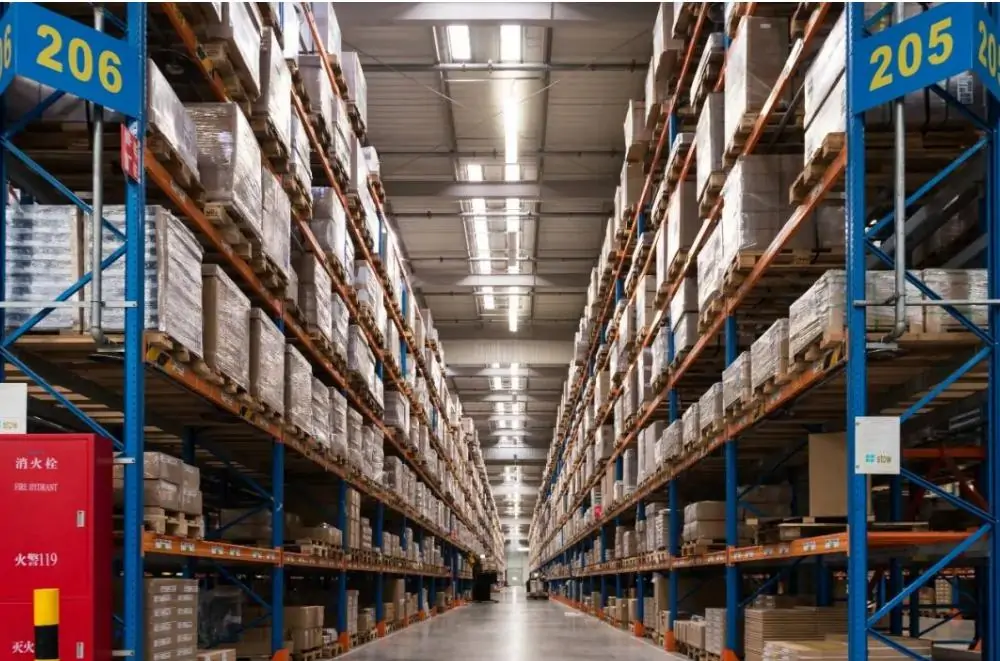
Warehouse and Material Handling
Suitable for moving heavy goods between storage areas, loading points, and workstations. The lifting platform helps with loading, unloading, and height matching.
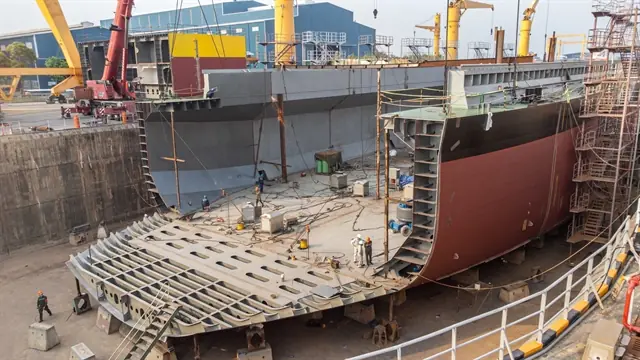
Shipbuilding and Heavy Equipment Manufacturing
Used for transporting large sections, components, and equipment parts in shipyards and heavy industry plants where high-capacity handling is required.
Hydraulic Transfer Cart vs Standard Transfer Cart
A hydraulic transfer cart and a Standard Transfer Cart are both used for industrial material handling. The key difference is that a hydraulic transfer cart has a hydraulic lifting system, while a standard transfer cart only moves materials horizontally.
| Feature | Hydraulic transfer cart | Standard Transfer Cart |
|---|---|---|
| Function | Transportation and platform lifting | Horizontal material transportation |
| Lifting System | Equipped with hydraulic scissor lift mechanism | No lifting system |
| Platform Height | Adjustable lifting height | Fixed platform height |
| Structure | Transfer system + hydraulic lifting system | Frame + drive system |
| Application | Production line docking, equipment installation, multi-height handling | Workshop material transfer and fixed-route transportation |
| Maintenance | Requires maintenance of drive and hydraulic systems | Mainly focuses on drive system maintenance |
| Cost | Higher due to additional lifting components | Lower with simpler structure |
A standard transfer cart is suitable for moving materials between fixed locations. A hydraulic transfer cart is used when materials need to be transported and lifted to different working heights.
Advantages
- Transportation and Lifting in One Piece of Equipment: The hydraulic transfer cart combines material transportation and platform lifting functions, reducing the need for separate lifting equipment during handling operations.
- Adjustable Working Height: The hydraulic lifting platform can be adjusted to match different production lines, machines, and workstations for easier loading and unloading.
- Heavy Load Handling: The reinforced steel structure and hydraulic lifting system support the movement of heavy materials in industries such as steel, machinery, and manufacturing.
- Flexible Power Options: The cart can be configured with battery power, cable reel power, or rail power supply according to workshop conditions.
- Custom Design Options: Load capacity, platform size, lifting height, travel method, and control system can be customized to meet different handling requirements.
- Improved Workshop Handling Efficiency: The cart reduces manual handling and simplifies the transfer process for heavy materials between different working areas.
How to Choose the Right Hydraulic Transfer Cart?
Choosing the right hydraulic transfer cart requires considering load capacity, lifting height, platform size, power supply, and working conditions
Load Capacity
Choose the cart capacity based on the maximum weight of the materials. The rated load should meet the actual handling requirements.
Lifting Height
Select the lifting height according to the height of production lines, machines, or workstations that need to be connected.
Platform Size
The platform size should match the material dimensions and loading method to keep the load stable during transportation.
Power Supply
Choose the power supply based on the working environment, such as battery, cable reel, or rail power supply.
Travel Method
Select rail or trackless operation according to the workshop layout and transportation route.
Control System
Choose the control method, including wired control, wireless remote control, or PLC control, based on operation requirements.
Working Environment
Consider factors such as indoor or outdoor use, dust, temperature, and working frequency when selecting the cart.
Customization Requirements
Confirm whether the manufacturer can customize the load capacity, platform size, lifting height, and structure for specific applications.
The right hydraulic transfer cart should match the factory layout, load requirements, and lifting needs. A professional manufacturer can provide customized solutions for different handling applications.
Hydraulic Transfer Cart Customization Options
Hydraulic transfer carts can be customized by load capacity, lifting requirements, workshop layout, and operation conditions.
- Load Capacity — Available from 1 ton to 300 tons for handling steel parts, molds, equipment, and heavy components.
- Platform Size — Platform designs include flat, V-shaped, U-shaped, and custom fixtures based on material size and loading method.
- Lifting Height — Lifting height can be customized according to production line and equipment requirements. Common ranges are 500–3000 mm.
- Power Supply — Options include battery, cable reel, and rail power supply for different workshop conditions.
- Travel Mode — Available in rail type and trackless type to match fixed routes or flexible workshop movement.
- Control System — Supports wireless remote control, pendant control, and PLC control for different operation methods.
- Special Design — Optional features include rotating platforms, guardrails, positioning systems, and automatic docking devices for specific applications.
Conclusion
A hydraulic transfer cart is designed for applications that require both material transportation and platform height adjustment. Its working performance mainly depends on the cart structure, lifting system, load capacity, and operating conditions.
REMARKABLE manufactures customized hydraulic transfer carts with load capacities from 1 ton to 300 tons, supporting different platform sizes, lifting heights, power supplies, and control methods. Based on factory layout and handling requirements, we provide suitable transfer solutions for manufacturing, steel, machinery, and other industrial applications. Contact us for more details.
Email: transfercart@rmkzn.com
Phone: +86-18637369355
FAQ
What is a scissor transfer cart?
A scissor transfer cart is an industrial cart equipped with a scissor lifting mechanism for transporting and vertically positioning heavy loads.
How does a scissor lift transfer cart work?
It uses a hydraulic system to expand the scissor arms and raise the platform while the cart moves materials horizontally.
What is the lifting capacity of a scissor transfer cart?
The capacity depends on the design and can range from several tons to hundreds of tons.
Can a scissor transfer cart be customized?
Yes. Load capacity, platform size, lifting height, power supply, and control system can be customized.
What industries use scissor transfer carts?
They are widely used in steel, machinery manufacturing, automotive, shipbuilding, and warehouse industries.
What is the difference between a scissor transfer cart and a lift table?
A scissor transfer cart combines lifting and transportation functions, while a lift table mainly provides vertical lifting.
How is a scissor transfer cart powered?
Common power options include battery, rail power supply, and cable reel systems.
How do I choose a scissor transfer cart manufacturer?
Consider manufacturing experience, customization capability, load capacity range, safety design, and after-sales service.