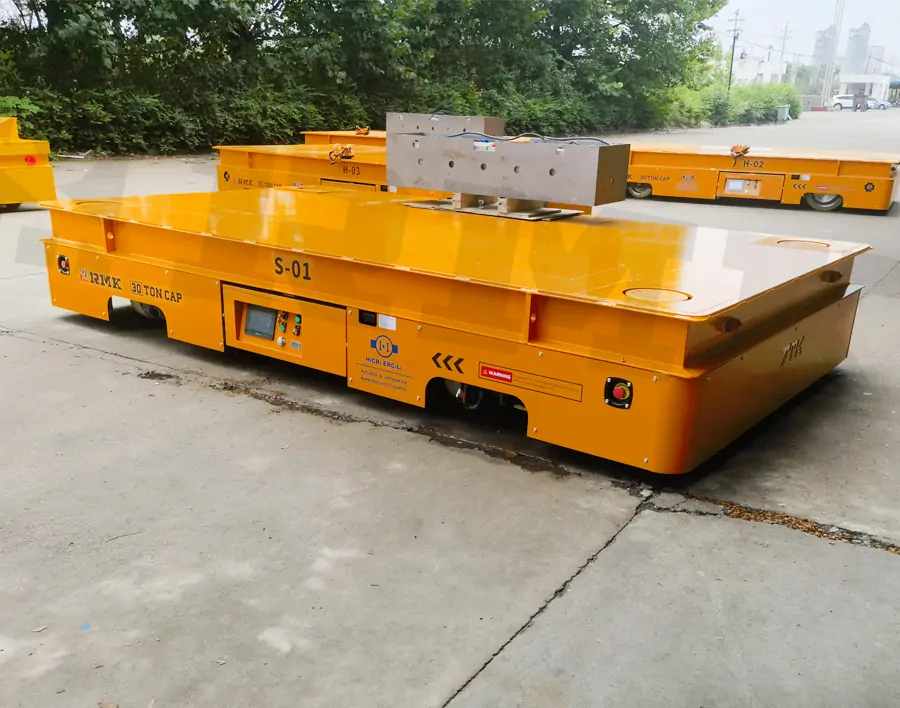
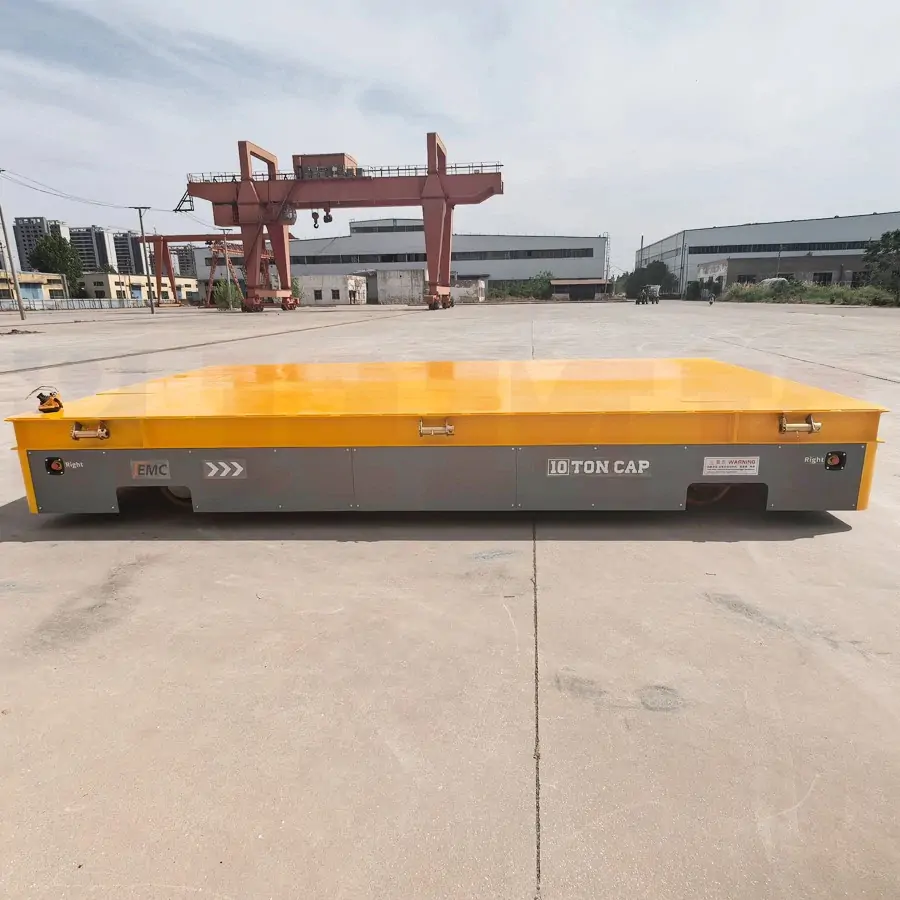
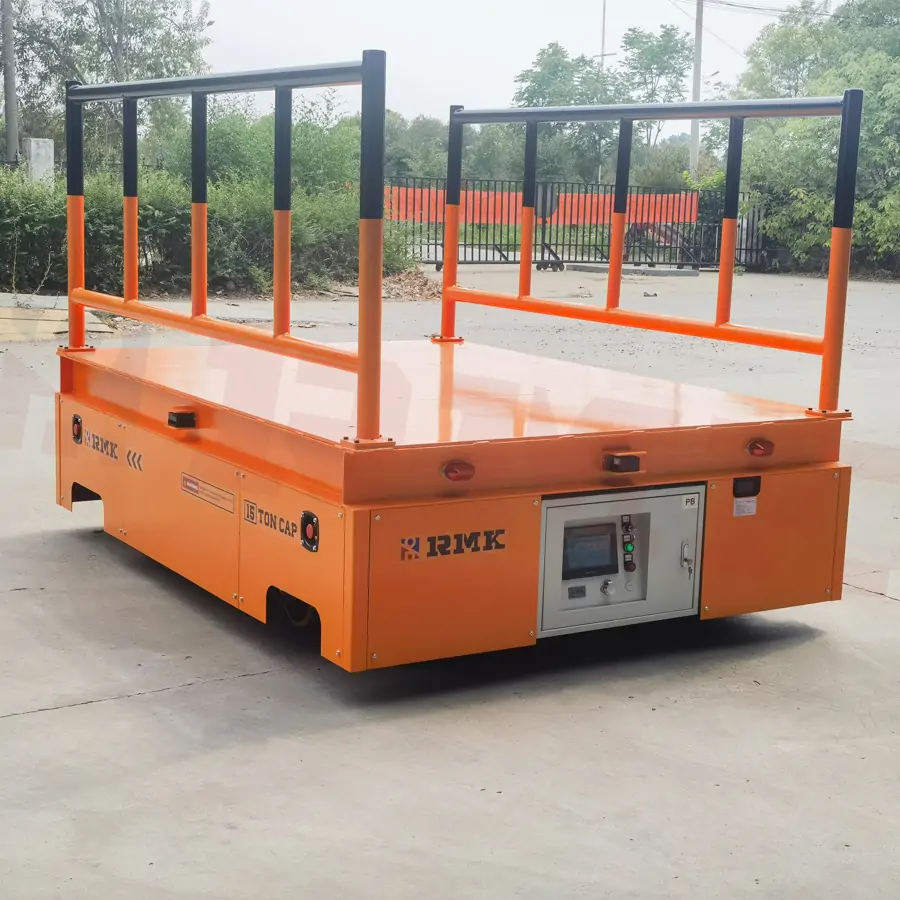
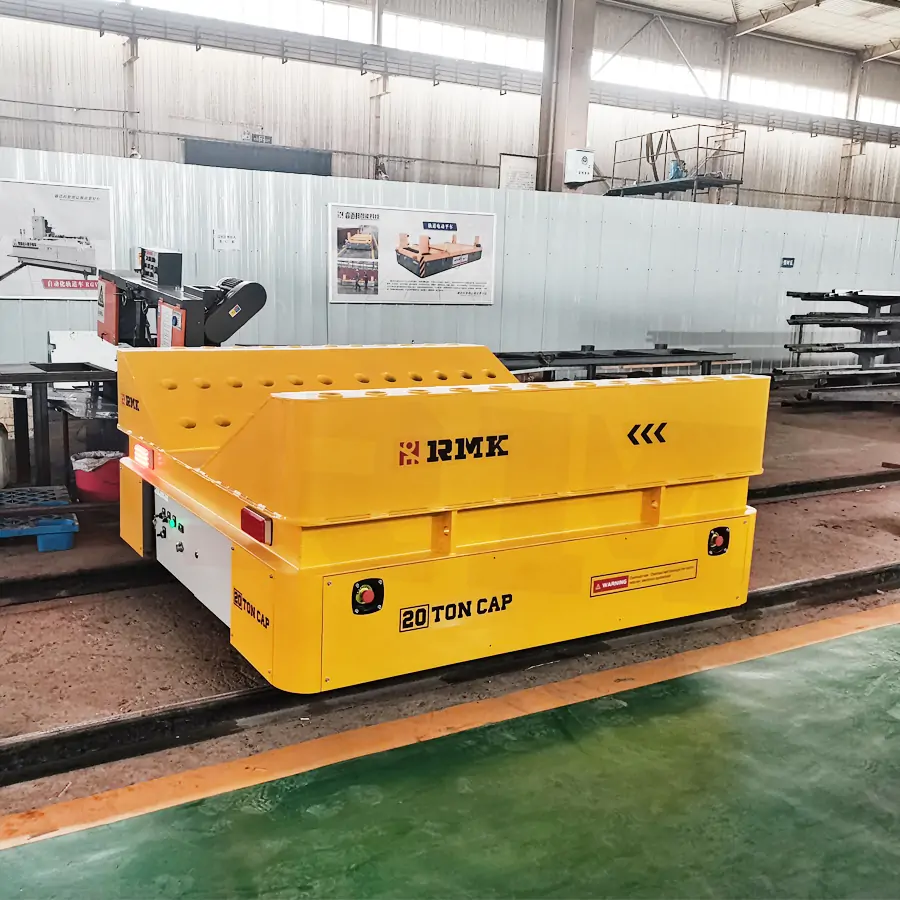
Qu'est-ce qu'un chariot de transfert dédié aux matériaux lourds ?
Les chariots de transfert industriels sont des équipements de transport spécialisés utilisés dans les ateliers industriels ou entre les bâtiments d'usine pour livrer des matériaux lourds par dizaines de tonnes. Alimentés par diverses méthodes d'alimentation électrique (telles que batteries, rails basse tension ou câbles), ils résolvent les limitations des ponts roulants traditionnels en termes de contraintes de portée et de chemins fixes.
Dans la manutention de matériaux lourds, chaque tonne déplacée affecte directement le coût, l'efficacité et la sécurité opérationnelle. Choisir le mauvais modèle peut entraîner des dommages au sol ou des arrêts de production, tandis qu'un choix correct devient un “ accélérateur ” d'efficacité d'usine. Comprendre les avantages et les scénarios applicables des différents types de chariots de transfert est la première étape pour devenir une usine automatisée efficace. Cet article explorera en profondeur les types, les scénarios d'application et les directives d'achat des chariots de transfert de matériaux lourds.
Quatre types de chariots de transfert industriels
Dans la manutention de matériaux lourds, il n'existe pas d'équipement universel, seulement des solutions personnalisées les mieux adaptées à des conditions de travail spécifiques. Voici une analyse détaillée des quatre types couramment utilisés de chariots de manutention de matériaux lourds :
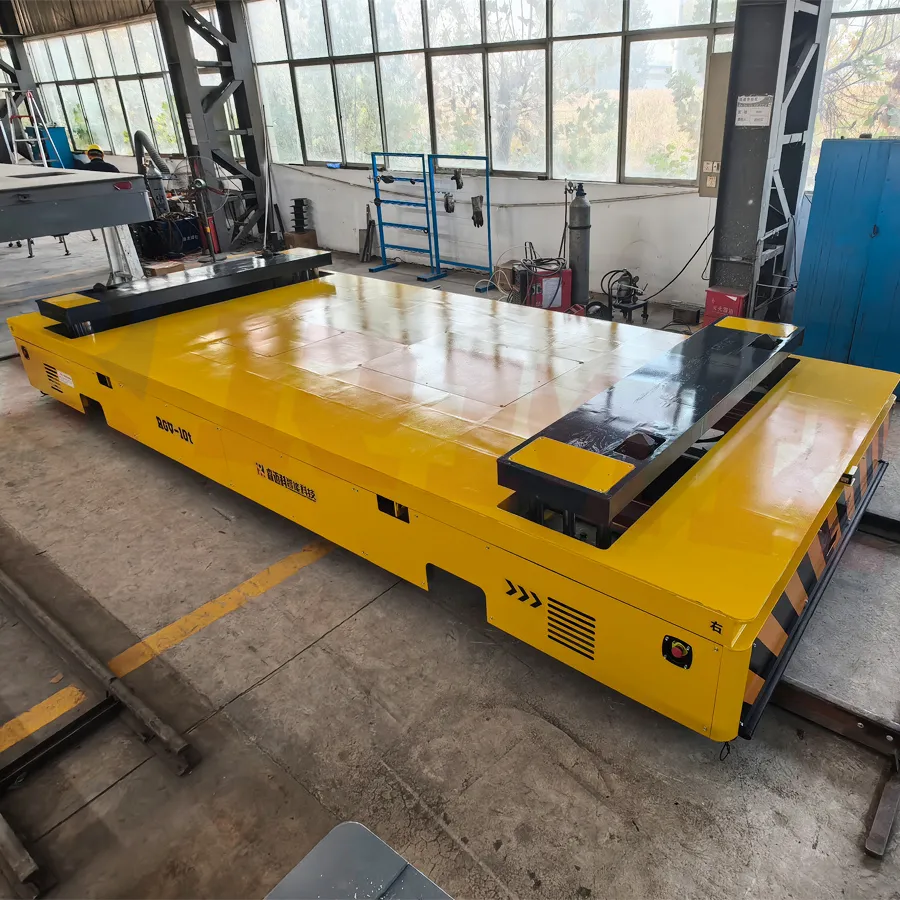
Chariot de transfert sans rail
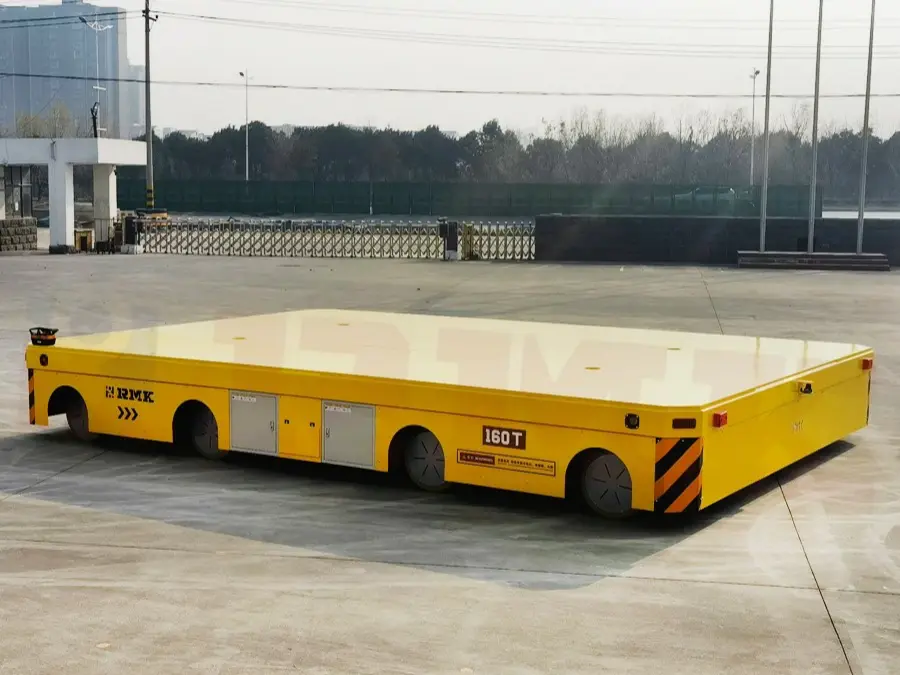
A Chariot de transfert sans rail est un dispositif intelligent de manutention de matériaux lourds alimenté par des batteries de stockage qui ne nécessite pas de rails fixes. Utilisant un système de direction différentielle à double moteur, il peut effectuer une rotation sur place à 360° et se déplacer librement dans toutes les directions. Il ne cause aucun dommage au sol pendant le fonctionnement, ne nécessite aucune contrainte de câble et est le meilleur assistant pour les lignes de production industrielles et les chemins de transport complexes entre ateliers.
| Dimension | Indicateurs techniques / Données | Description de la valeur de performance |
| Capacité de charge | 2t – 150t | Couvre les besoins de manutention des pièces légères aux moules lourds. |
| Vitesse de Déplacement | 0 – 30 m/min (Régulation de vitesse sans palier) | Ajustable finement selon les conditions pour garantir un démarrage et un arrêt stables en charge lourde. |
| Capacité de direction | Rotation sur place à 360° | Rayon de braquage minimal, s'adaptant aux allées de production extrêmement étroites. |
| Autonomie de la batterie | 4 à 8 heures de travail sur charge complète | Adapté aux quarts de travail industriels, prend en charge le “ charge et utilise ”.” |
| Coefficient de sécurité | 150% (Structure à poutre caisson) | Soudure de qualité militaire garantissant aucune déformation du plateau sous des charges lourdes à long terme. |
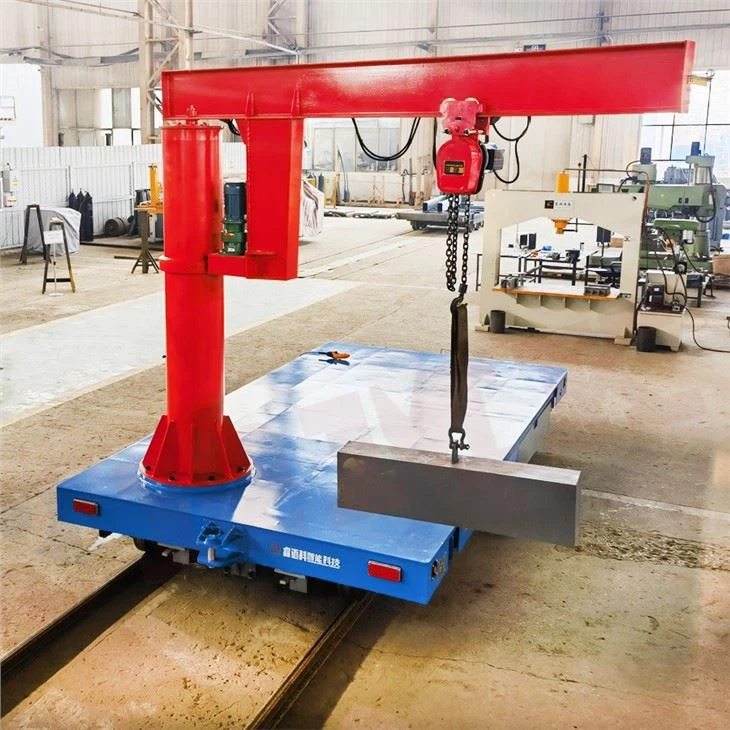
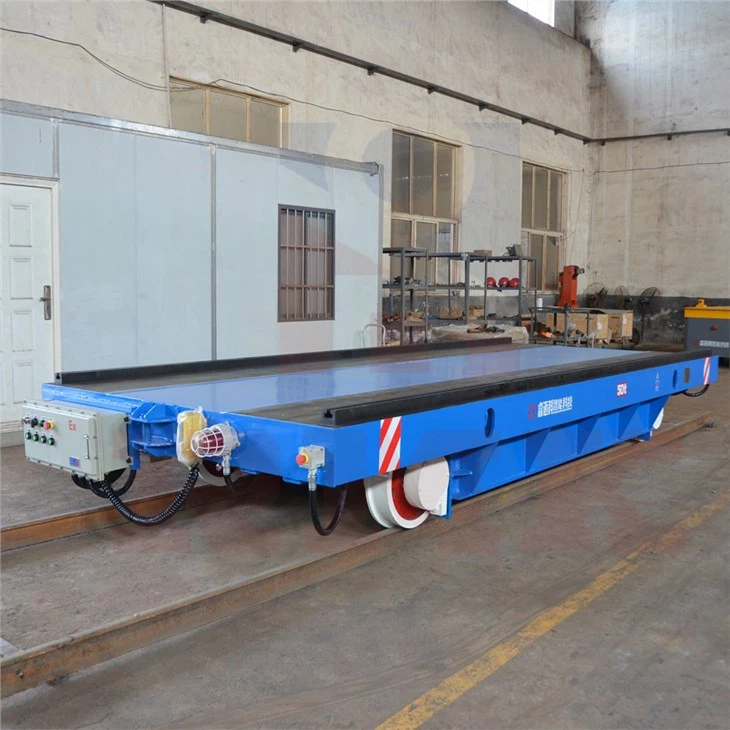
Chariot de transfert alimenté par rail
Un dispositif de manutention lourde qui tire son énergie en conduisant une tension de sécurité de 36 V à travers les rails. Il ne nécessite pas de batterie et est utilisé dans les opérations à haute fréquence, charges ultra-lourdes et chemins fixes sur chaîne d'assemblage.
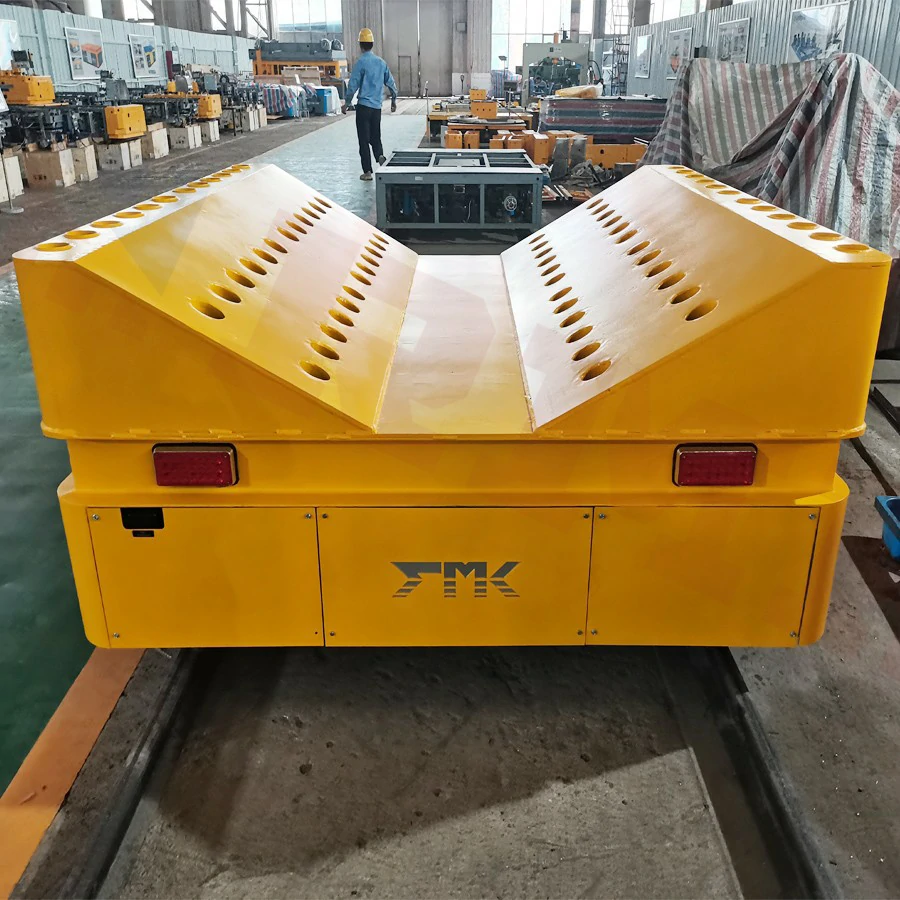 Chariot de transfert sur rail lourd
| Dimension | Données / Détails de l'indicateur | Analyse de la valeur |
| Capacité de charge | 1t – 1000t | Conçu spécifiquement pour les charges lourdes extrêmes, la stabilité dépasse de loin les solutions sans rail. |
| Principe d'alimentation | Conduction par rail à tension de sécurité 36 V | Aucune batterie nécessaire, offrant une endurance infinie pour un fonctionnement continu 24h/24. |
| Caractéristiques de maintenance | Charge sans entretien | Adapté aux lignes à haute fréquence et chemins fixes, réduisant les coûts de main-d'œuvre opérationnelle. |
| Éléments de coût principaux | Transformateurs, installation de rails isolés | Bien que le coût du chariot soit modéré, le traitement d'isolation des rails entraîne des frais de projet supplémentaires. |
| Adaptation industrielle | Aciéries de fusion, blocs de chantier naval | Fonctionne pendant de longues périodes dans des environnements à haute température et poussiéreux avec des configurations personnalisées. |
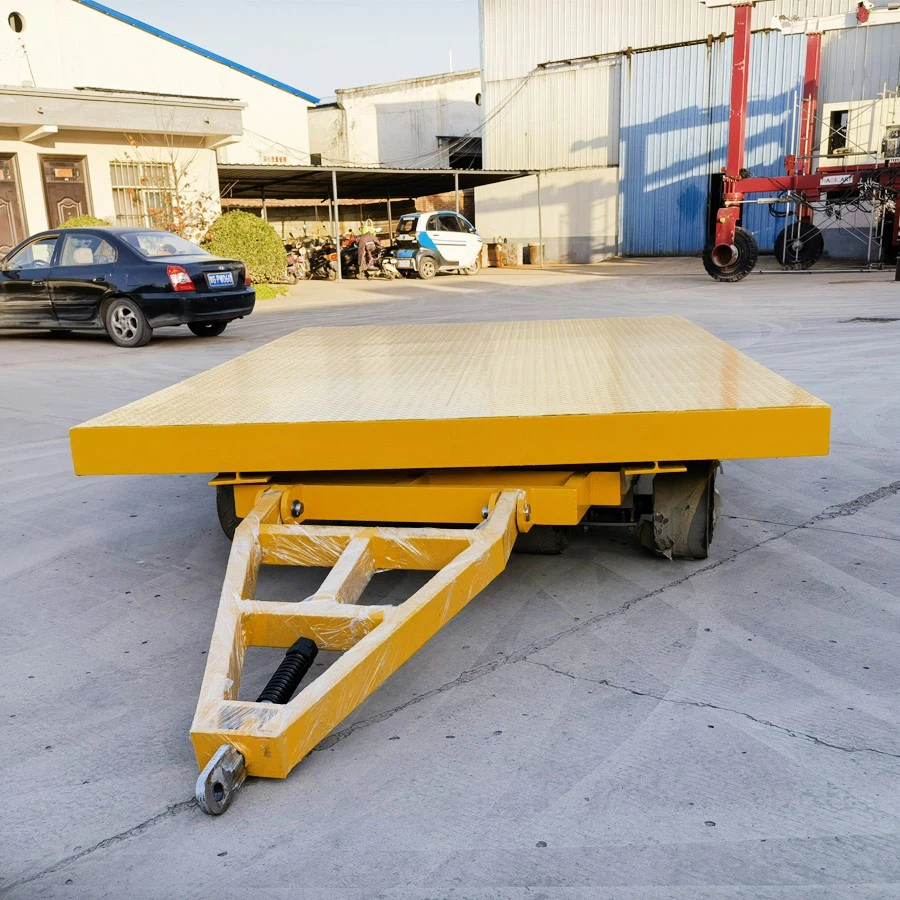
Chariot de transfert à câble
Un dispositif dynamique qui repose sur un enrouleur de câble pour rétracter/dérouler automatiquement les câbles ou prend l'alimentation via une ligne de contact glissante. Sa structure est simple et durable, peut résister à des températures élevées et à la poussière, et convient à la manutention linéaire en va-et-vient.
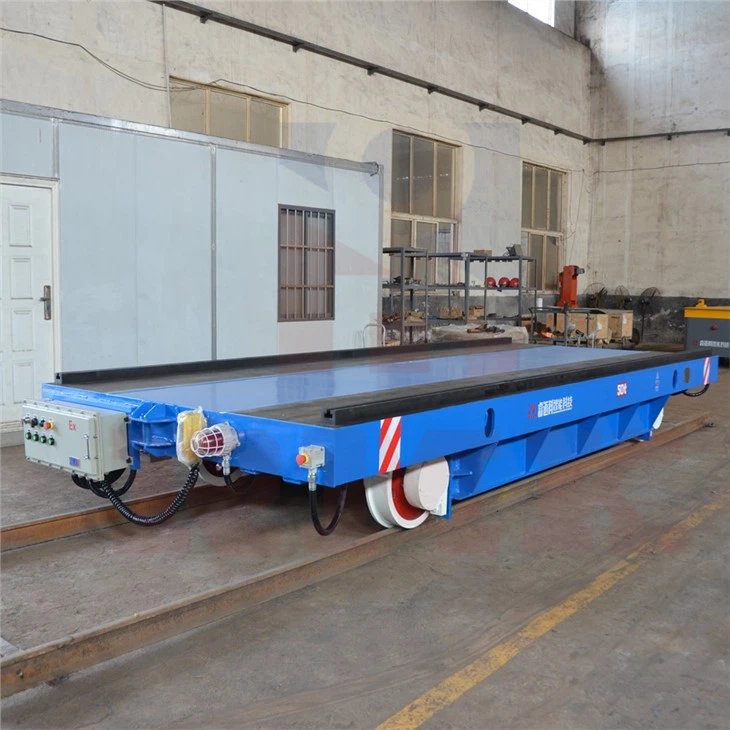 Chariot de transfert de 50 tonnes
| Dimension | Données / Détails de l'indicateur | Analyse de la valeur |
| Tolérance environnementale | Résiste à des températures élevées supérieures à 80°C | Extrêmement durable, capable de gérer la poussière et les conditions extrêmes explosives/inflammables. |
| Caractéristiques techniques | Taux de défaillance extrêmement bas | Structure mécanique simple, coût de maintenance le plus bas parmi tous les types. |
| Éléments de coût principaux | Enrouleur de câble, acier de structure de base | Les coûts sont principalement concentrés sur la longueur de l'enrouleur et l'acier du châssis. |
| Application typique | Briqueteries, mines, fonderies | S'adapte parfaitement aux scénarios linéaires en va-et-vient avec environnements difficiles et chemins fixes. |
Chariot de transfert AGV
Cet équipement est un Véhicule à guidage automatique(AGV) intégré à la technologie de navigation laser SLAM ou magnétique. Il ne nécessite aucune opération manuelle et prend en charge la mise en réseau avec les systèmes MES/WMS de l'usine, représentant la manutention sans personnel de l'Industrie 4.0.
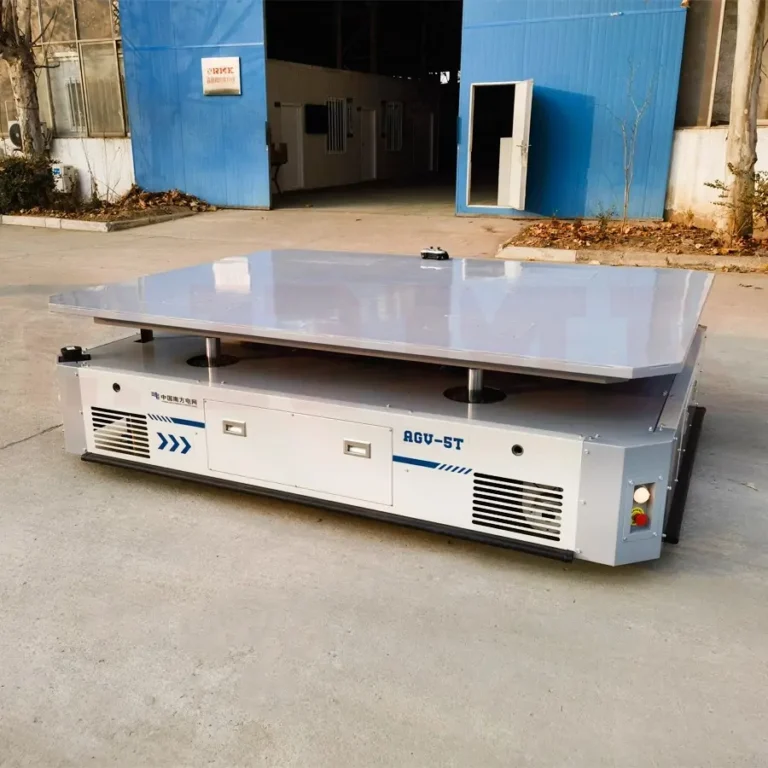 types de chariots de transfert industriels AGV
| Dimension | Données / Détails de l'indicateur | Analyse de la valeur |
| Précision d'accostage | Précision d'arrêt jusqu'à 5 mm | Accostage de précision centimétrique répondant aux besoins de la fabrication de précision et des lignes automatiques. |
| Niveau d'intelligence | Prend en charge Wi-Fi/5G et MES/WMS | Réalise une opération sans personnel ; équipement de base pour la construction d'usines intelligentes. |
| Niveau de sécurité | Évitement radar multi-niveaux + Planification de chemin intelligente | Offre le plus haut niveau de sécurité de coexistence homme-machine. |
| Proportion des coûts | Capteurs, système de contrôle et logiciel | Produit personnalisé haut de gamme ; les composants automatiques représentent une part élevée du coût total. |
| Domaine d'application | Fabrication de précision, entrepôt automatique, alimentation/médicaments | Convient à la manutention à haute fréquence et aux parcs intelligents recherchant la précision de stockage. |
Chaque type de chariot de transfert industriel est conçu pour résoudre des problèmes logistiques dans des environnements industriels spécifiques. Leur véritable valeur réside dans leur capacité à s'intégrer dans des processus de production complexes pour relever des défis de manutention apparemment impossibles. Ensuite, examinons plusieurs sites industriels typiques pour voir quel équipement résout leurs problèmes.
Pour plus de détails sur les applications et les types de chariots de transfert lourds, consultez l'article : “ Chariot de transfert lourd : guide complet pour la manutention de matériaux de 50 à 500 tonnes ”
Pour une comparaison des chariots de transfert industriels et des options de personnalisation, voir l'article :
Cinq types courants de chariots de transfert industriels et leurs utilisations
Chariot de transfert personnalisé : Guide complet de conception et de personnalisation
Application
Les environnements de production, les caractéristiques de charge et les flux de processus diffèrent considérablement selon les industries, il n'y a donc pas de “ meilleur ” chariot, seulement la solution la plus adaptée à un scénario. Chaque application correspond à différentes voies techniques et configurations d'équipement.

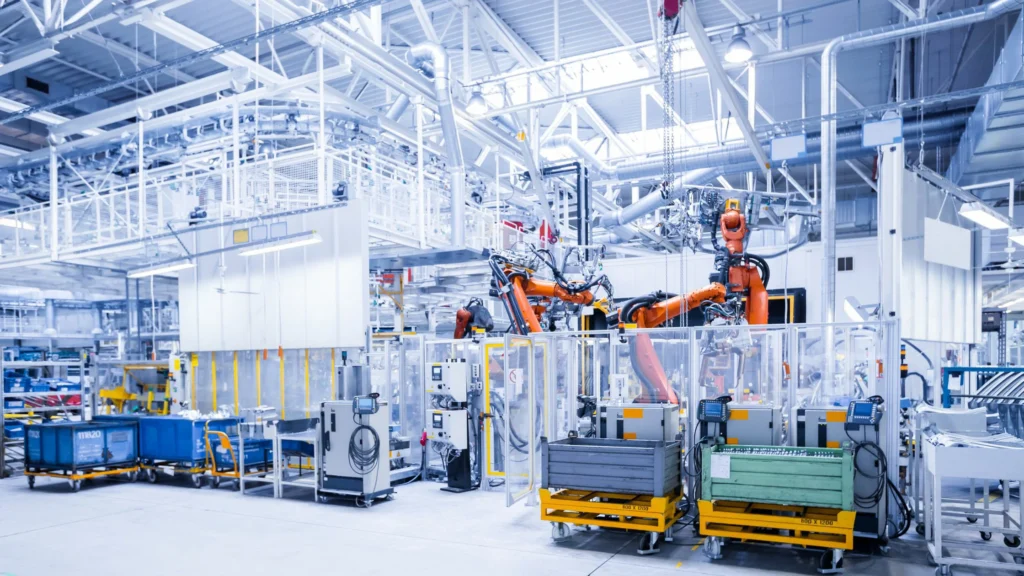
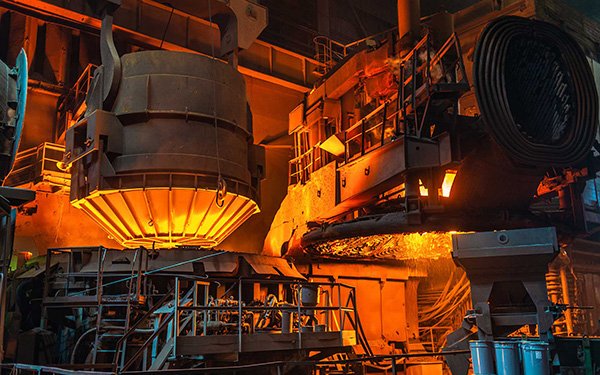
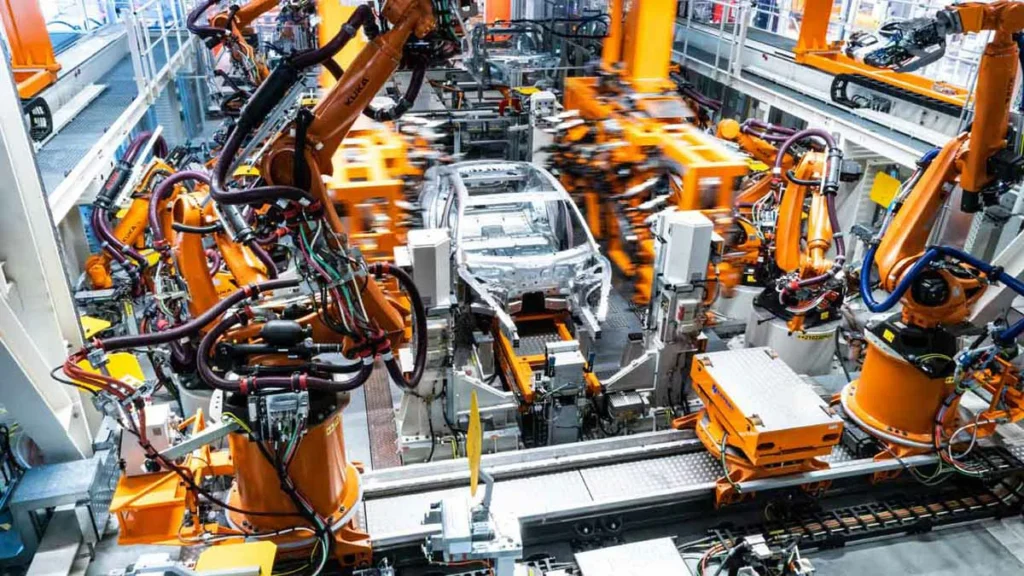
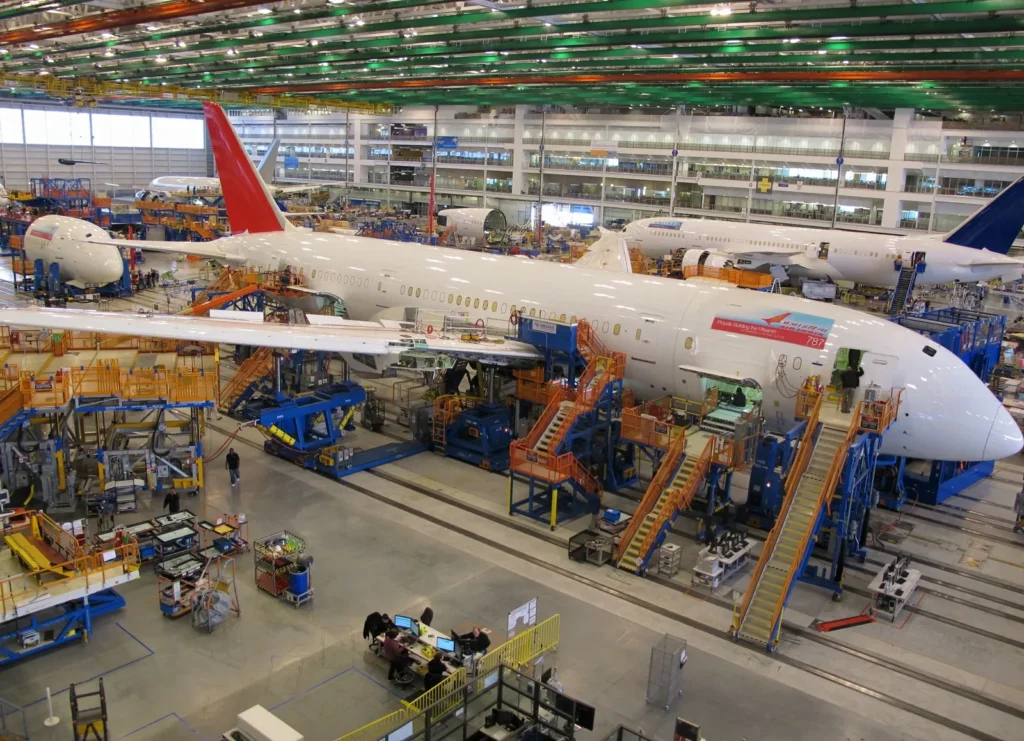
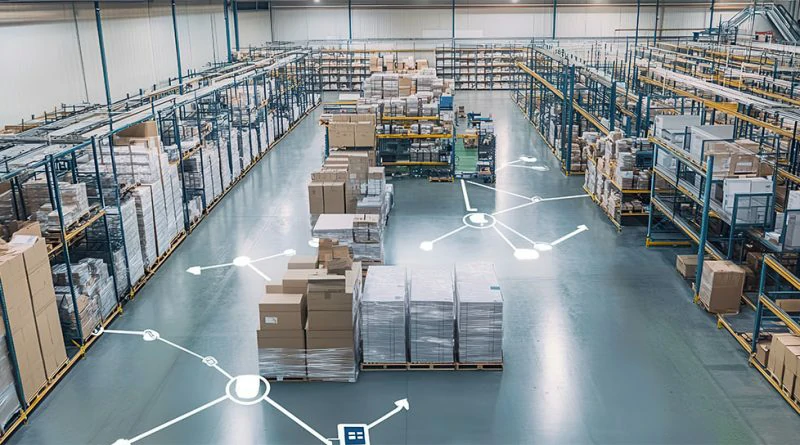
- Sidérurgie et métallurgie : Pour les scénarios à haute température comme les poches de coulée et les billettes d’acier, un chariot de transfert sur rail avec un plan de personnalisation haute température est recommandé. Les plaques d’isolation thermique installées et les moteurs antidéflagrants permettent un fonctionnement stable et continu dans les environnements de fusion.
- Fabrication et manutention de moules : Pour le commerce de moules ou les postes à positions non fixes, la capacité de direction à 360° du chariot de transfert sans rail permet de positionner avec précision les moules dans les espaces étroits des machines-outils.
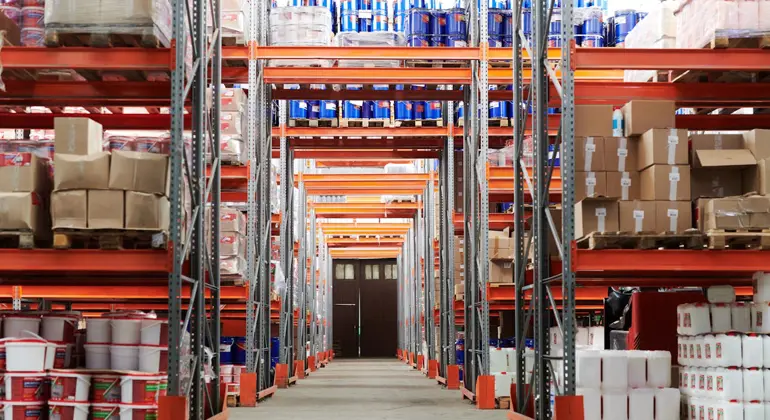
- Transport et logistique : Pour le commerce de moules ou les postes à positions non fixes, la capacité de direction à 360° du.
- permet de positionner avec précision les moules dans les espaces étroits des machines-outils. Transport et logistique :.
Dans les environnements nécessitant une haute précision en manutention et stockage, les véhicules à guidage automatique AGV sont les partenaires idéaux pour les parcs logistiques intelligents.
Pour plus d'informations sur les chariots de transfert industriels à usage intensif et leurs applications, consultez l'article : “ Applications des chariots de transfert à usage intensif dans la manutention industrielle ”
Étude de cas
Chantiers navals et équipements lourds :
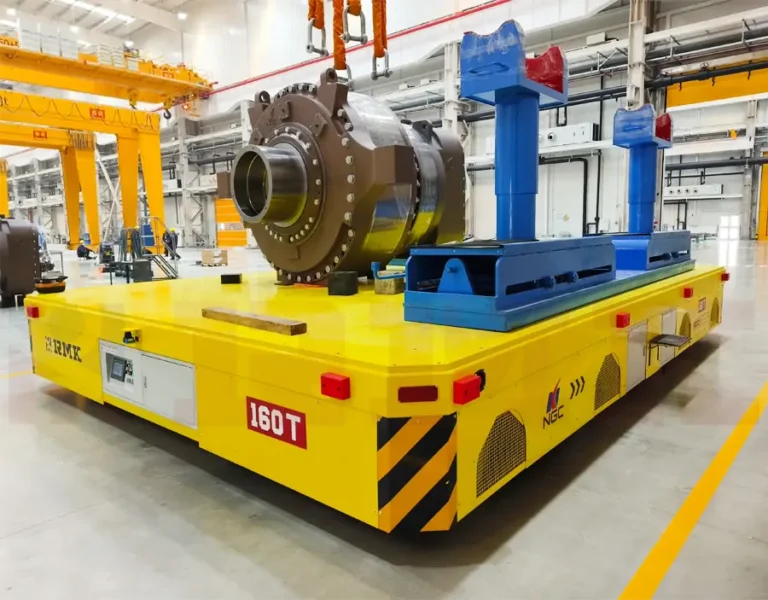
Remarquable, Pour les pièces ultra-longues ou ultra-lourdes (comme les pales d'éoliennes), les systèmes ferroviaires lourds intègrent une technologie de synchronisation par « liaison de deux chariots ». Grâce à la coordination de plusieurs chariots sur rail, le transfert de grands équipements est effectué en douceur. À travers ces scénarios, nous voyons que la technologie de manutention personnalisée est devenue un équipement essentiel pour améliorer la qualité et l'efficacité dans diverses industries. Comment ces chariots de transfert se comportent-ils dans des environnements d'usine réels ? Ensuite, nous vous emmenons sur un site industriel. Étude de cas concernant un projet de fabrication de moteurs pour l'énergie éolienne offshore et les nouvelles énergies :.
Guide de sélection
, avec sa profonde accumulation technique, a collaboré pour la quatrième fois avec un grand fabricant national de moteurs pour personnaliser un
- chariot de manutention AGV mobile omnidirectionnel lourd avec une capacité de charge de 160 tonnes. Cet équipement est spécialement conçu pour la production intelligente de grands moteurs de stockage d'énergie tels que les éoliennes offshore. Il utilise une table de travail basse de 940 mm et des roues en polyuréthane revêtues de caoutchouc, qui peuvent supporter des charges lourdes de 70 à 160 tonnes tout en protégeant le sol. Son avantage réside dans le système de roues directionnelles avancé, qui prend en charge la rotation sur place à 360°, le mouvement transversal et la conduite en diagonale, en utilisant un rayon de braquage nul pour s'adapter aux espaces d'usine étroits. En utilisant une technologie intégrée d'évitement d'obstacles par laser, de freinage électromagnétique et de conduite sans conducteur, il permet un transport efficace, précis et sûr des matériaux lourds dans la logistique d'usine intelligente.
- Le choix d'un chariot de transfert doit être basé sur une analyse systématique des conditions de travail plutôt que sur une comparaison de paramètres uniques. Évaluez les éléments suivants : Charge et taille de la pièce :.
- Méthode d'Alimentation Électrique : Définissez la charge maximale, la présence de charges déséquilibrées ou de choc, ainsi que la longueur, la largeur et le centre de gravité de la pièce ; ceux-ci déterminent la structure du châssis et le facteur de sécurité.
- Parcours et mode de fonctionnement : Déterminez s'il s'agit d'un itinéraire fixe (adapté aux chariots sur rail) ou d'un itinéraire multiple avec des changements de direction fréquents (adapté aux chariots sans rail ou AGV), tout en tenant compte de la fréquence et de la distance.
- Choisissez la batterie, le rail basse tension, le câble enrouleur ou la ligne de contact à glissement en fonction de l'intensité et de l'environnement pour équilibrer l'endurance et les coûts de maintenance. Environnement de travail :.
- Bobines d'acier, bobines d'aluminium, tourets de câbles, tuyaux ronds Évaluez les exigences de haute température, de poussière, antidéflagrantes et d'étanchéité pour déterminer si une isolation thermique ou une protection de haut niveau est nécessaire.
- Automatisation et système de contrôle : La nécessité d'une télécommande, de systèmes PLC ou d'une intégration MES/WMS détermine le niveau d'intelligence et l'évolutivité future.
Comprend l'évitement d'obstacles par laser, les alarmes sonores et lumineuses, les arrêts d'urgence et les systèmes anti-collision pour garantir la sécurité dans les environnements mixtes homme-machine.
Conclusion
Coût et valeur à long terme :.
Tenez compte de manière exhaustive du coût d'achat initial, de la maintenance, de la consommation d'énergie et de la durée de vie pour évaluer le retour sur investissement global., nous contacter Dans l'ensemble, la sélection d'un chariot de transfert industriel doit se concentrer sur cinq éléments majeurs : « Charge, Parcours, Environnement, Automatisation et Coût ». Ce n'est qu'en comprenant pleinement vos propres conditions de travail que vous pourrez sélectionner un équipement efficace et sûr.
Courriel : transfercart@rmkzn.com
Téléphone : +86-18637369355
FAQS
Dans le paysage de la fabrication lourde, un chariot de transfert n'est pas seulement un outil pour se déplacer de « A à B » ; c'est un contrôleur du rythme de production. Nous trouvons le meilleur équilibre entre efficacité, coût et sécurité grâce à une simulation de conditions 1:1 et des normes de fabrication de qualité militaire.
Si vous ne savez pas quelle spécification est la meilleure pour votre usine,.
ingénieurs experts. Nous vous fournirons une solution de diagnostic industrielle gratuite pour rendre le flux de matériaux lourds plus simple, plus sûr et plus efficace.
Q1 : Quelles sont les exigences spécifiques des chariots de transfert sans rail pour les sols d'usine ?.
R : Le fonctionnement sur des sols plats et durcis (tels que les surfaces en béton, époxy ou en tôle d'acier) est recommandé. Nos chariots sans rail utilisent des roues en polyuréthane à haute résistance pour protéger le sol, mais la capacité de charge du sol doit répondre à la pression unitaire à pleine charge.
Q2 : Si mon atelier a une pente, quel chariot de transfert est le plus adapté ?.
R : Les solutions sur rail et sans rail peuvent toutes deux être personnalisées avec des fonctions de montée. Généralement, les pentes doivent être inférieures à 3°. Pour les pentes plus importantes, nous garantissons la sécurité en augmentant la puissance du moteur, en renforçant le freinage électromagnétique et en ajoutant des conceptions antidérapantes.
Q3 : Quelle est la sécurité de l'alimentation électrique par rail basse tension ? Y a-t-il un risque de choc électrique provenant des rails ?.
R : C'est très sûr. La solution réduit la puissance à une tension de sécurité de 36 V, donc même si le personnel touche accidentellement la voie, il n'y a aucun danger. De plus, les rails sont isolés pour garantir que le courant est délivré avec précision à l'équipement.
Q4 : Quelle est la fréquence de charge et la durée de vie des chariots de transfert alimentés par batterie ?.
R : Ils peuvent généralement fonctionner en continu pendant 4 à 8 heures sur une charge complète. Nous proposons des batteries au plomb-acide sans entretien (durée de vie 2-3 ans) et des batteries au lithium haute performance (5-8 ans). Avec des chargeurs automatiques séparés, ils peuvent être chargés pendant les pauses de production.
Q5 : Les chariots de transfert peuvent-ils être utilisés dans des cabines de peinture ou des environnements de fonderie à haute température ?.
R : Oui. Pour les cabines de peinture, nous fournissons une personnalisation antidéflagrante complète du véhicule. Pour les fonderies, nous installons des écrans thermiques, des matériaux ignifuges et des composants électriques haute température pour garantir un fonctionnement stable.
R : Tous les types de chariots de transfert industriels Remarkable sont équipés de série de capteurs d'obstacles laser (arrêt automatique), d'alarmes sonores et lumineuses, de boutons d'arrêt d'urgence et d'interrupteurs de fin de course de sécurité. Les modèles AGV sont équipés d'un radar de balayage à 360 degrés pour le plus haut niveau de sécurité.
Q8 : Combien de temps faut-il pour personnaliser un chariot de transfert dédié ?
R : Le cycle de production pour les modèles standard est d'environ 30 à 40 jours. Pour les AGV impliquant des algorithmes complexes ou des fonctions spéciales, cela prend généralement 45 à 60 jours. Nous fournissons un retour d'information sur l'avancement tout au long du processus. Cela implique l'ajout d'équipements, permettant d'économiser près d'un million de yuans de coûts par an.