جدول المحتويات
مقدمة
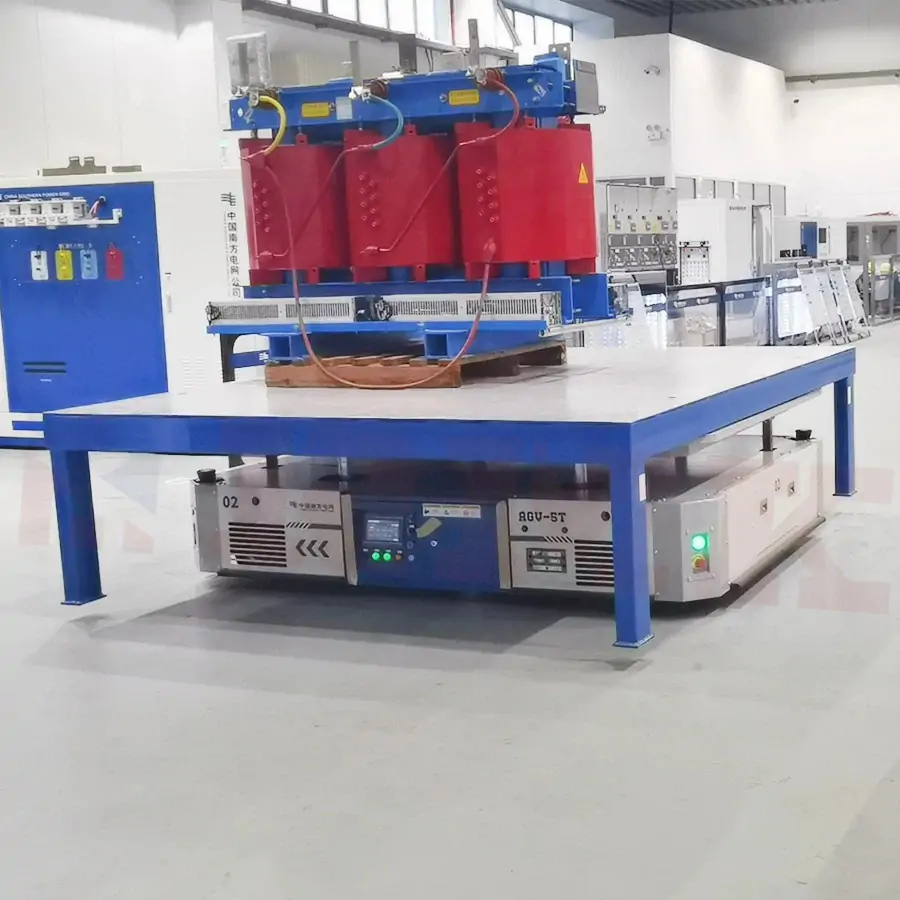
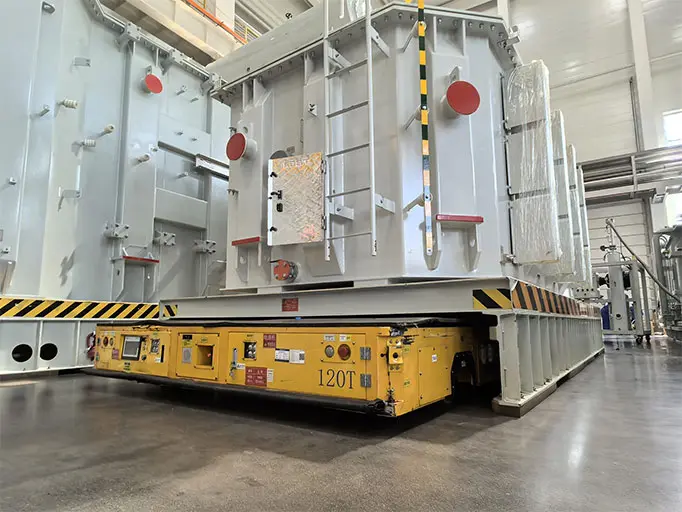
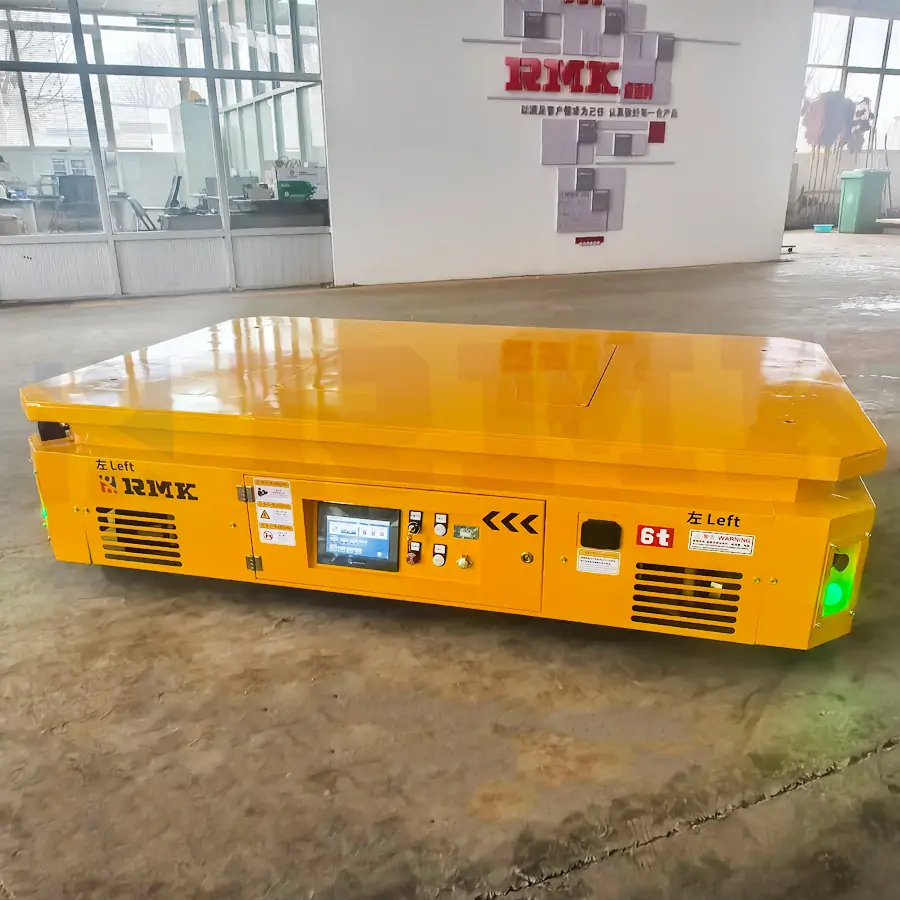
Heavy-duty AGVs are designed to transport large, heavy materials and equipment within factories, warehouses, and industrial facilities. They handle loads such as steel structures, machinery, metal components, and wind power equipment between production areas, assembly stations, and storage zones. Compared with manually operated transport equipment, AGVs follow programmed routes and carry out repetitive material handling tasks with less manual intervention.
A heavy-duty AGV system can be configured according to load capacity, cargo dimensions, travel routes, floor conditions and handling requirements. Navigation methods, drive systems, platform structures, and safety devices are selected for each application. In this article, we look at how heavy-duty AGVs work, their main technical features, handling advantages, and applications in industrial material transport.
ما هو AGV الثقيل؟
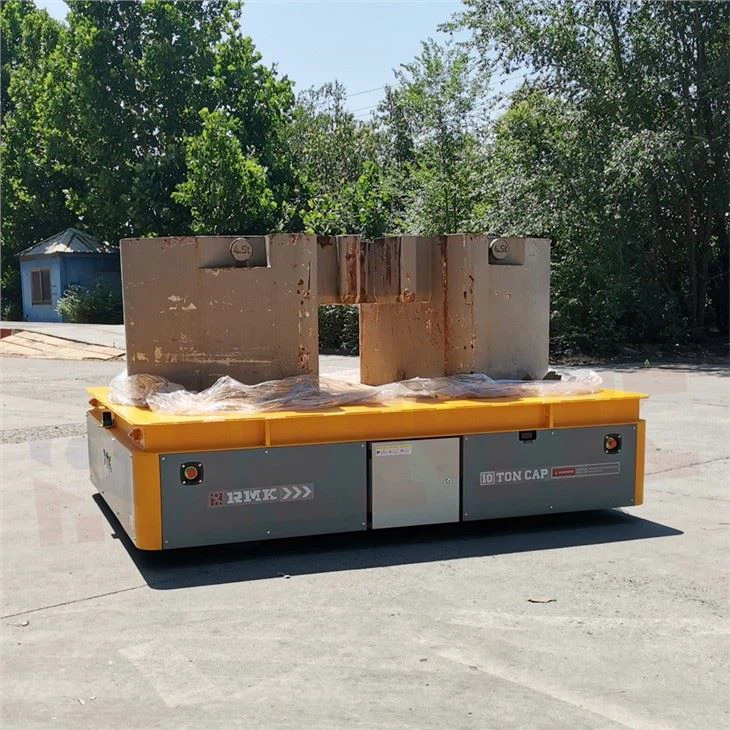
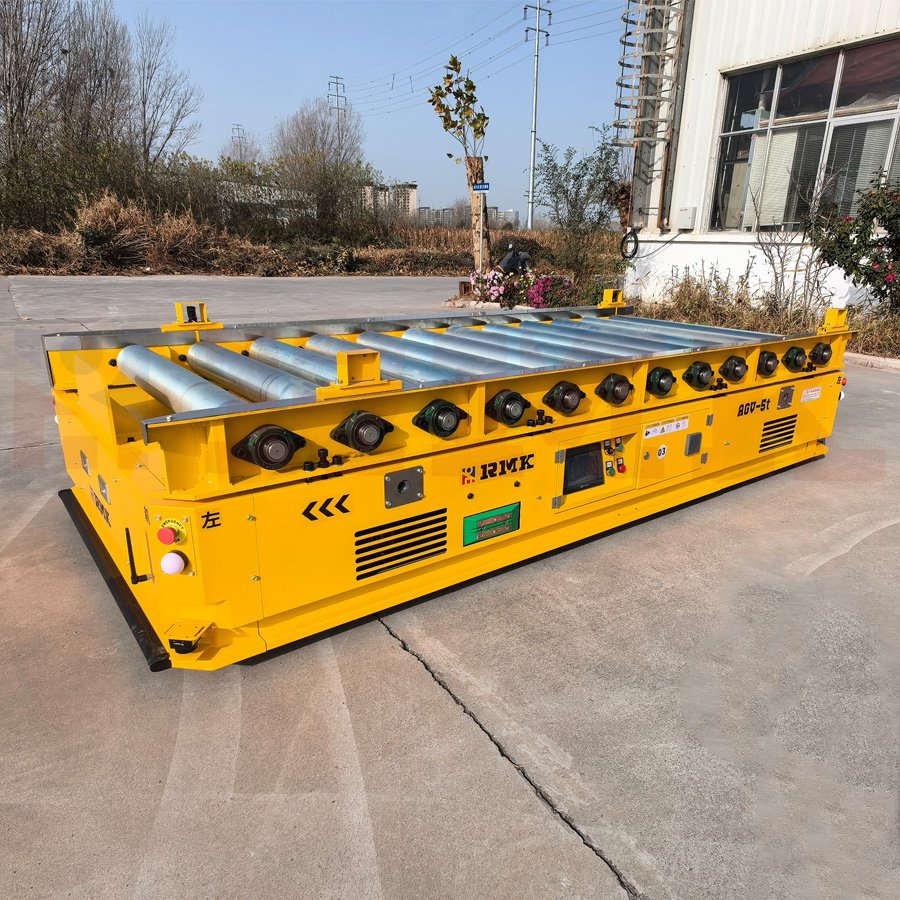
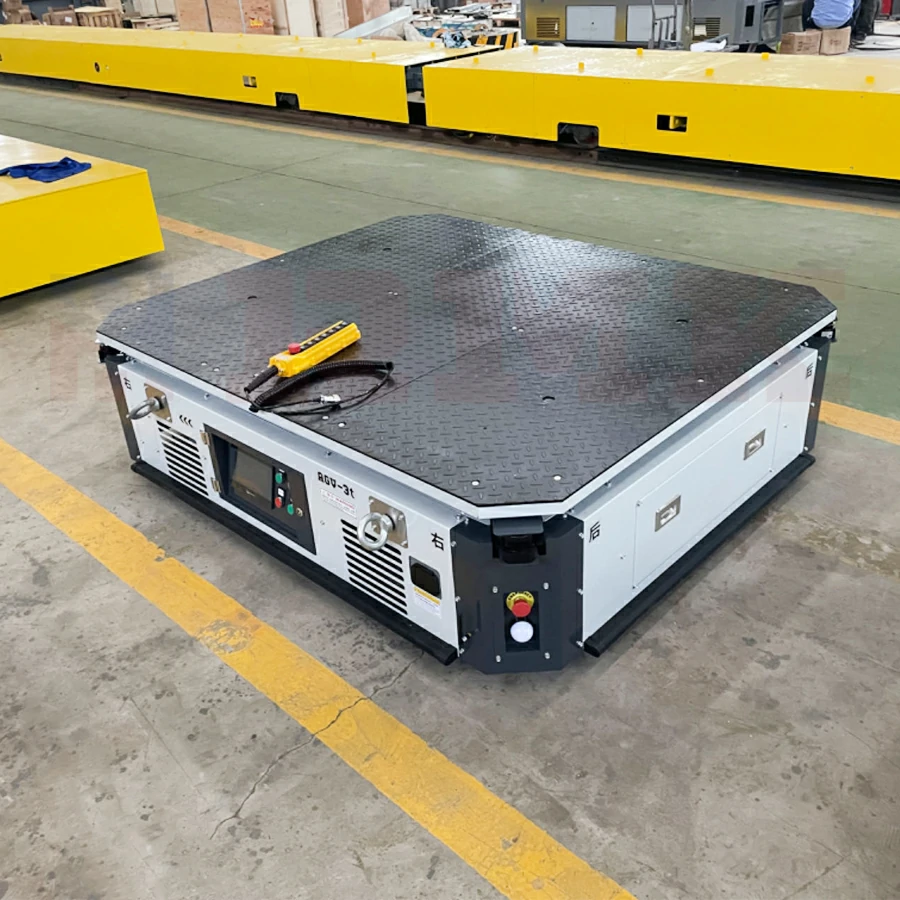
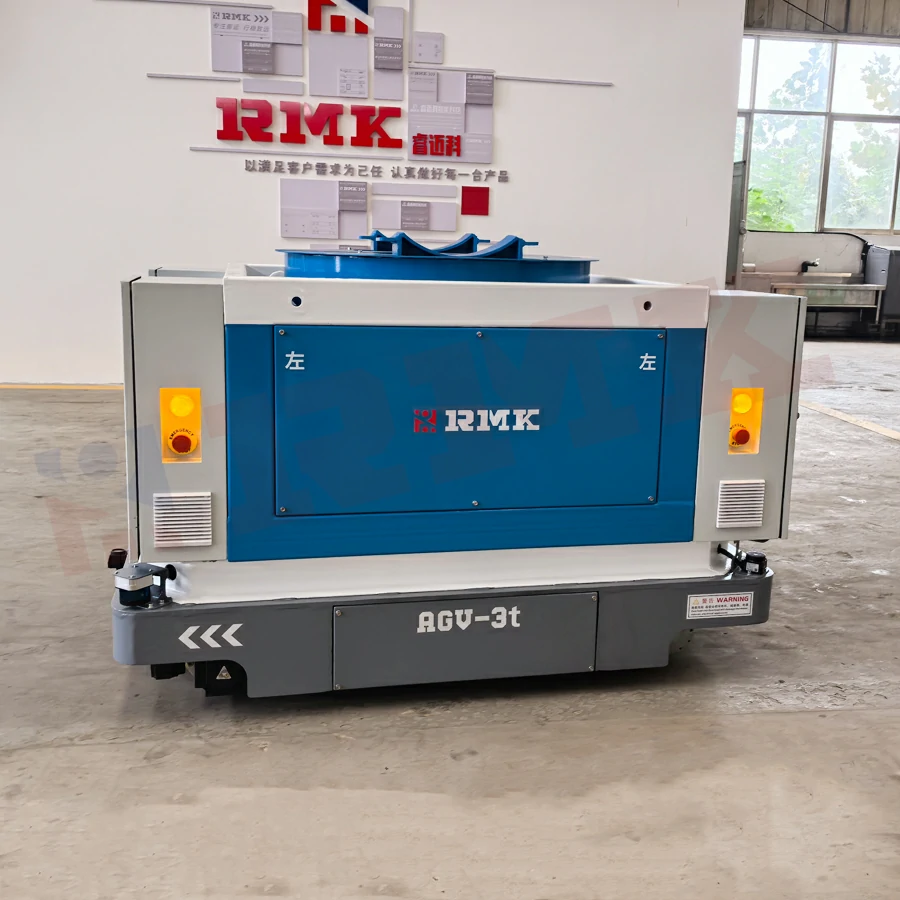
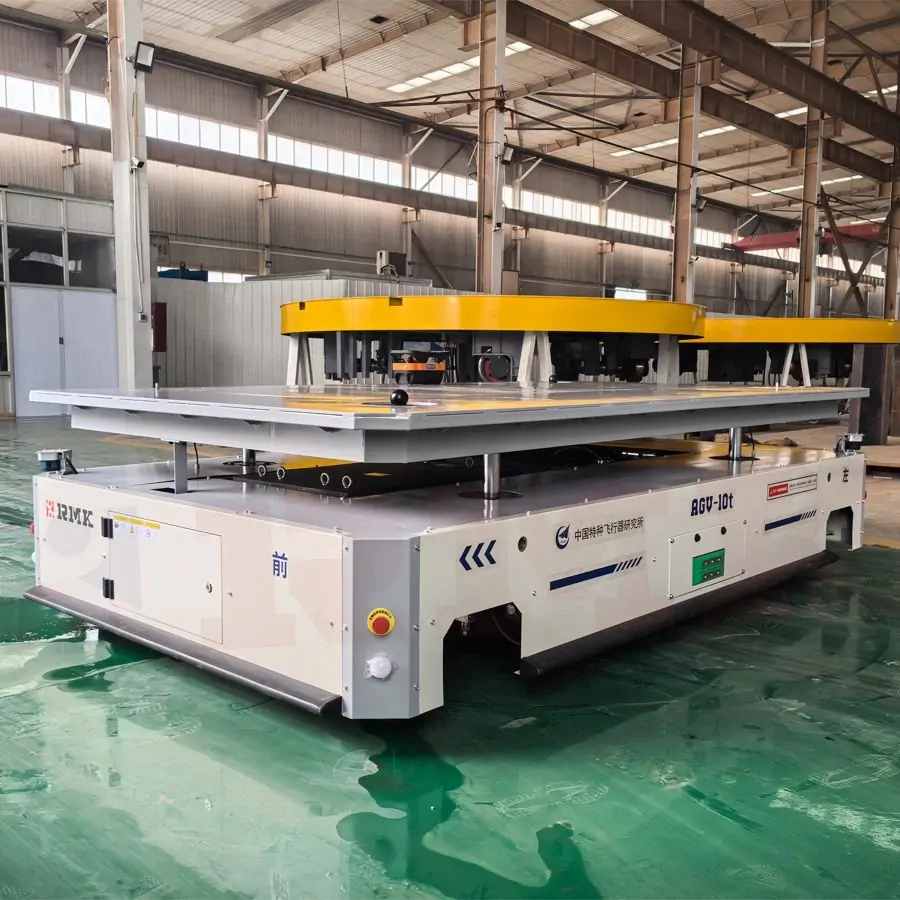
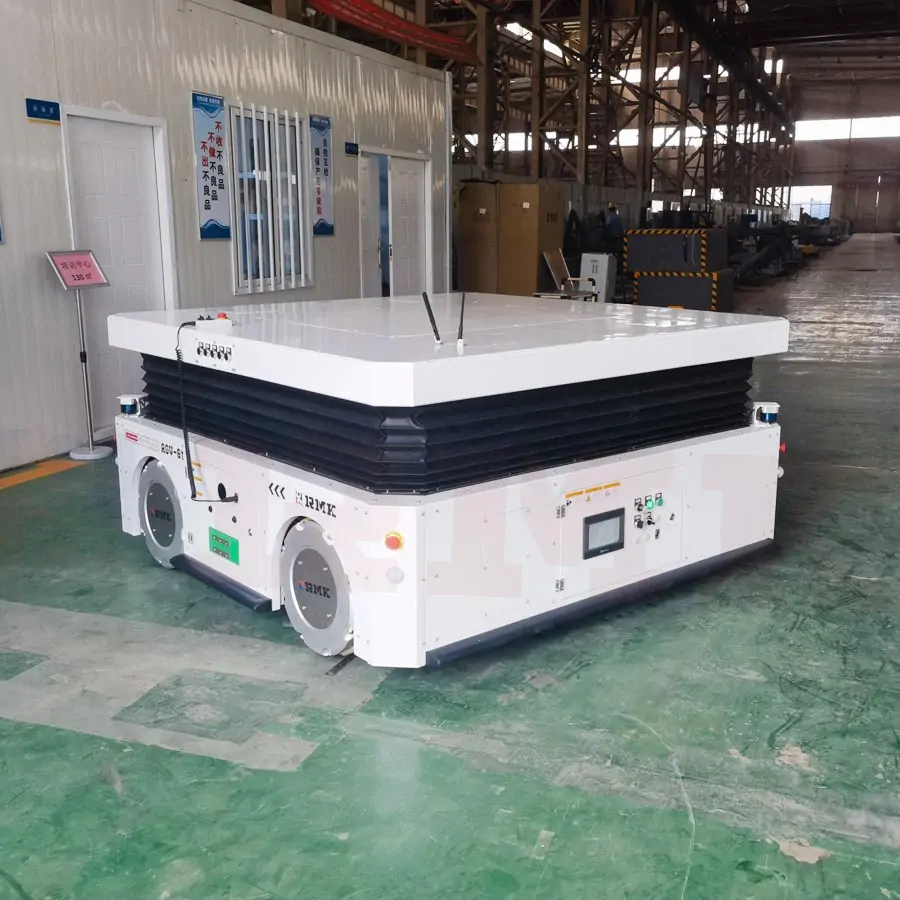
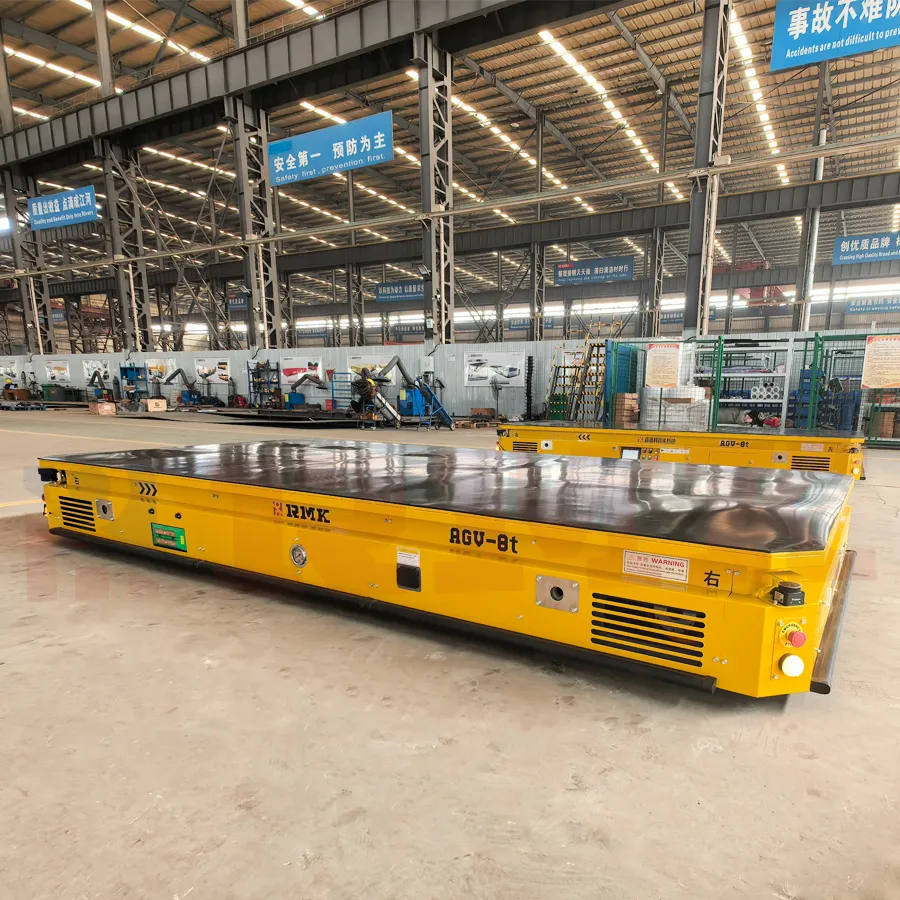
A heavy-duty AGV (Automated Guided Vehicle), also known as a heavy-duty automated guided vehicle, heavy load AGV, or عربة نقل AGV, is an industrial transport vehicle designed to move heavy materials, large components, and machinery within factories and industrial facilities. Depending on its design, load capacity can range from several tons to hundreds of tons, with customized models developed for specific material handling tasks.
Unlike standard AGVs used for lighter loads, heavy-duty AGVs feature reinforced chassis structures, high-capacity drive systems, and multiple-wheel configurations to support heavy cargo during transportation. Equipped with automatic navigation, positioning, and control systems, they follow programmed routes to transfer materials between production lines, assembly stations, warehouses, and other work areas. Common applications include automotive manufacturing, heavy machinery production, steel processing, wind power equipment manufacturing, and port logistics.
Core Technical Features of Heavy Duty AGVs
Heavy duty AGVs consist of a load-bearing frame, drive assemblies, navigation devices, control units, and safety components. Each part is designed according to the vehicle’s load capacity and operating conditions.
Reinforced Chassis Structure
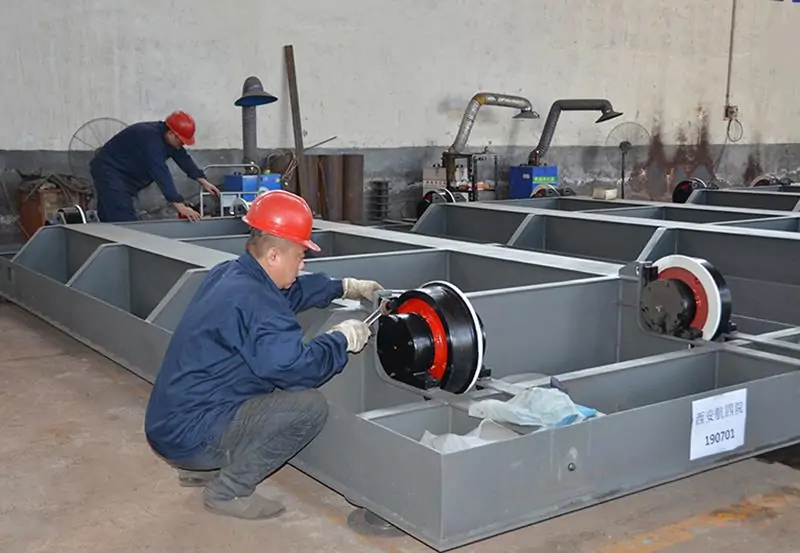
The chassis is built with welded steel sections and reinforced support structures. Frame dimensions, plate thickness, and wheel positions are calculated according to cargo weight, load distribution, and platform size.
نظام القيادة والتوجيه
The drive system consists of motors, gearboxes, drive wheels, and steering components. Differential steering, four-wheel steering, and omnidirectional drive can be selected according to vehicle design, turning space, and travel route.
Navigation and Positioning System
Heavy duty AGVs use Laser SLAM, magnetic guidance, or visual navigation. The navigation system identifies the travel path, determines vehicle position, and controls movement along assigned routes.
نظام التحكم الكهربائي
The control system includes a PLC or dedicated AGV controller, motor drives, communication modules, and operating interfaces. It controls vehicle movement, speed, steering, positioning, and task execution.
نظام الحماية الآمنة
Safety devices include laser scanners, obstacle detection sensors, emergency stop switches, warning lights, and audible alarms. Sensor signals are connected to the vehicle controller for speed control and emergency stopping.
البطارية ونظام الشحن
The power system consists of a battery pack, battery management system (BMS), and charging equipment. Battery capacity is selected according to vehicle load, travel distance, operating hours, and charging intervals.
What Does a Heavy Duty AGV Handling Solution Include?
| Main Component | Main Functions |
|---|---|
| Heavy Duty AGV | Reinforced chassis, load capacity, platform dimensions and drive configuration |
| نظام الملاحة | Laser SLAM, magnetic or visual navigation for route guidance and positioning |
| نظام التحكم | Vehicle movement, speed control, route planning and task dispatching |
| نظام السلامة | Laser scanners, obstacle detection, emergency stops and warning devices |
| نظام الشحن | Battery pack, BMS, charging equipment and power management |
| Communication System | Data exchange between AGVs, central control systems and MES/WMS platforms |
Note: System configurations are selected according to cargo requirements, factory layout and operating conditions.
Heavy Duty AGV vs. Traditional Material Handling Equipment
Heavy duty AGVs, forklifts, and overhead cranes handle industrial materials through different operating methods. Their applications depend on cargo weight, travel routes, lifting requirements, and factory layout.
| المقارنة | Heavy Duty AGV | رافعة شوكية | الرافعة العلوية |
|---|---|---|---|
| التشغيل | Automatic guided operation | Manual operation | Manual or automated operation |
| مسار السير | Programmed routes | Flexible floor routes | Fixed crane runway |
| مناولة المواد | Heavy loads transported on platforms | Pallets, equipment and general cargo | Suspended loads and large components |
| Labor Requirement | Operator supervision or automated control | Requires an operator | Requires an operator or automated control |
| Main Application | Repeated factory material transportation | Loading, unloading and short-distance transport | Lifting and transferring heavy materials |
Heavy duty AGVs suit repetitive transportation along planned routes. Forklifts handle flexible loading and unloading tasks. Overhead cranes are used for vertical lifting and material movement within their designated working areas.
How to Choose the Right Heavy Duty AGV for Your Factory?
Heavy duty AGV selection requires an assessment of cargo specifications, factory layout, and transportation tasks.
- 1. Load Capacity: Calculate the total cargo weight, including fixtures and supporting structures. Allow for load distribution and dynamic forces during starting, stopping, and turning.
- 2. Cargo Dimensions: Check cargo length, width, height, and center of gravity. These measurements determine platform dimensions, support positions and vehicle clearance.
- 3. Travel Route: Measure the travel distance, aisle width, turning radius, and route layout. Check intersections, loading points and any narrow sections along the route.
- 4. Floor Conditions: Check floor load capacity, flatness, slope, joints, and surface conditions. These factors affect wheel selection, traction, and vehicle stability.
- 5. Navigation Method: Select Laser SLAM, magnetic navigation, or visual navigation according to the factory layout, floor markings, lighting, and surrounding environment.
- 6. Loading and Unloading: Determine how cargo is loaded and unloaded. Options may include manual loading, lifting platforms, roller conveyors, or dedicated cargo fixtures.
Different handling tasks require different vehicle structures and configurations. Provide your cargo weight, dimensions, factory layout, and transport route to RMK for a suitable heavy duty AGV design.
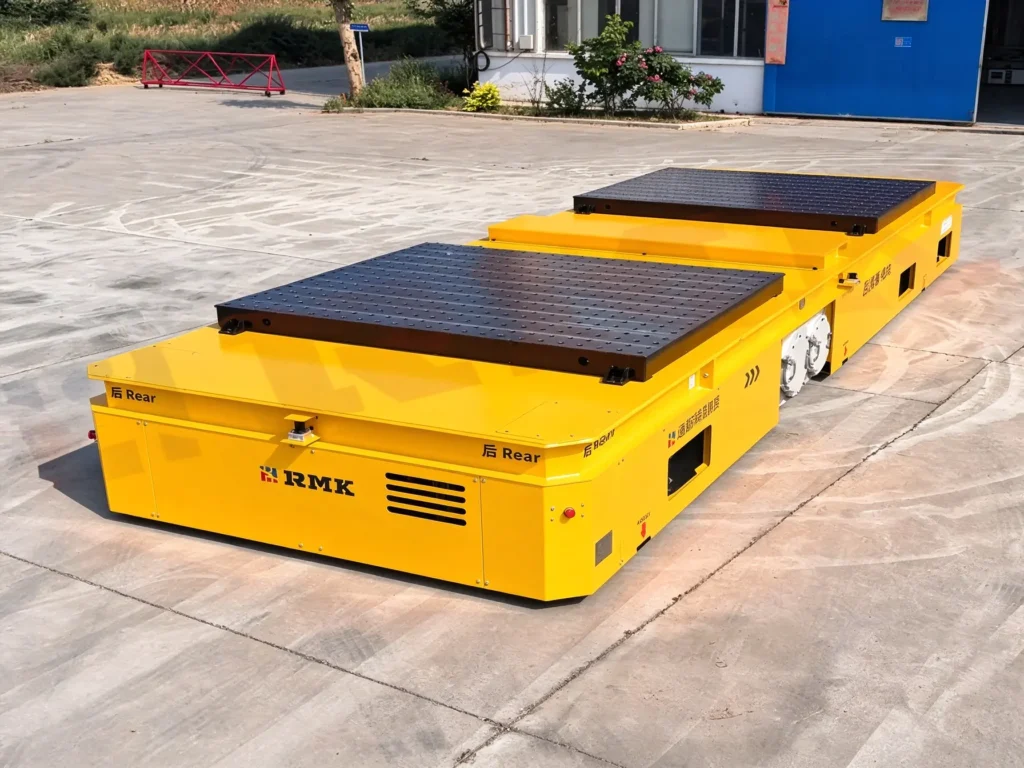
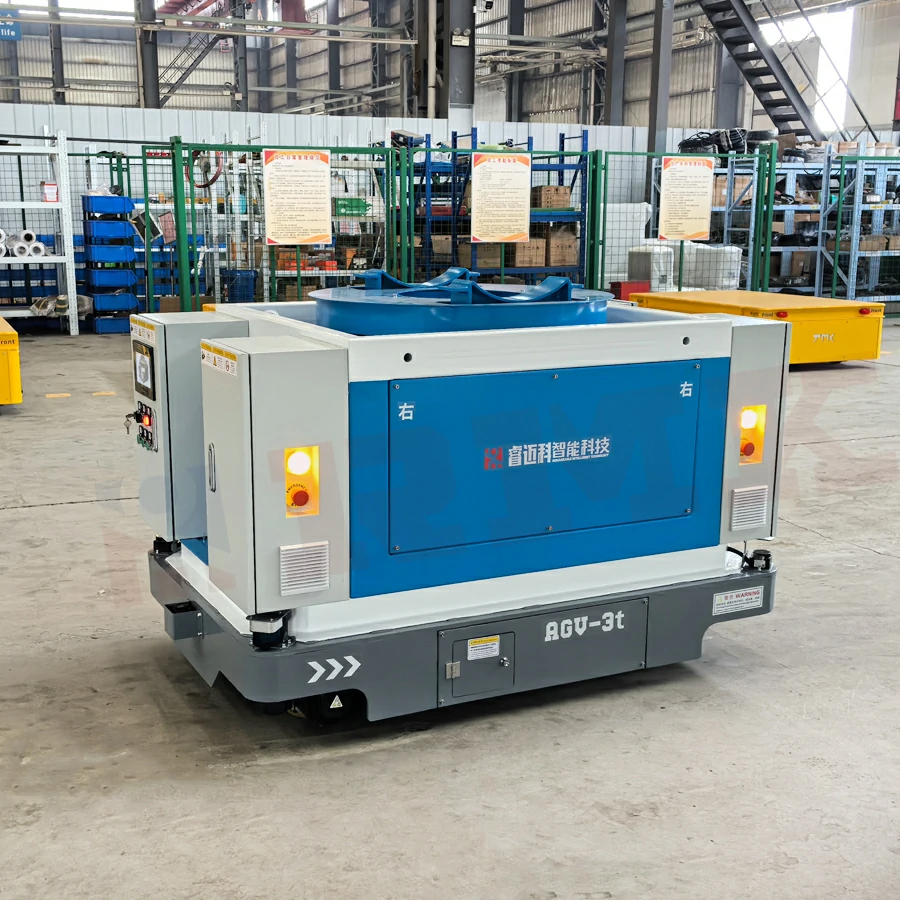
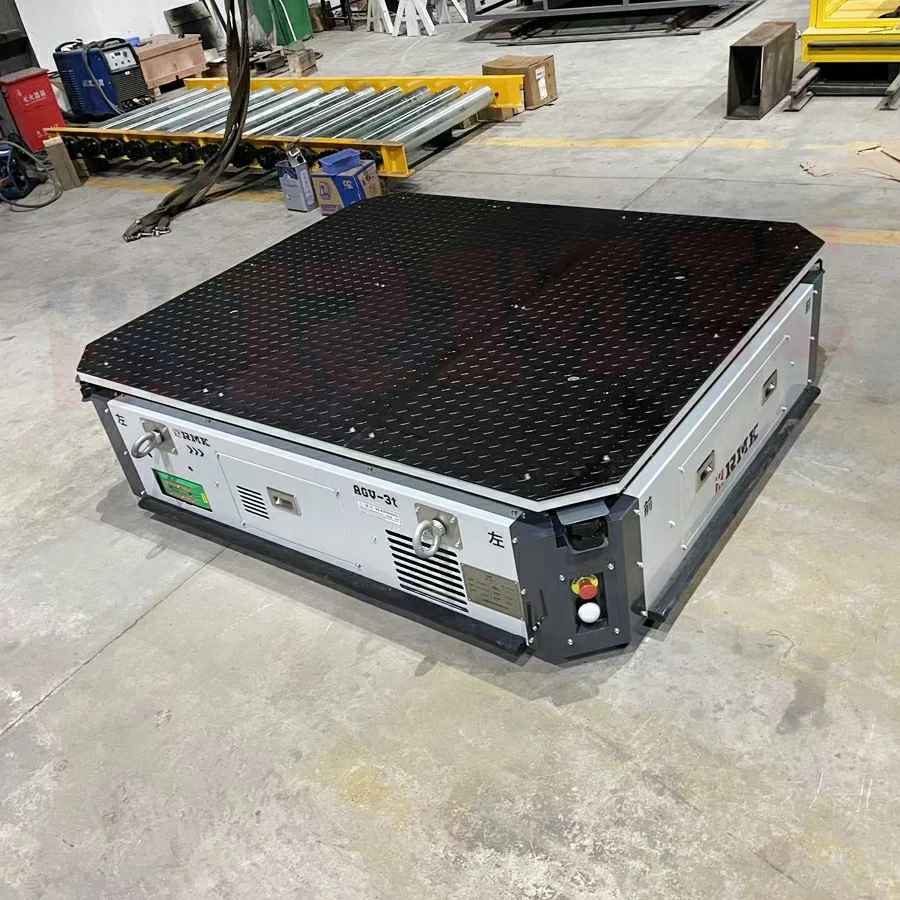
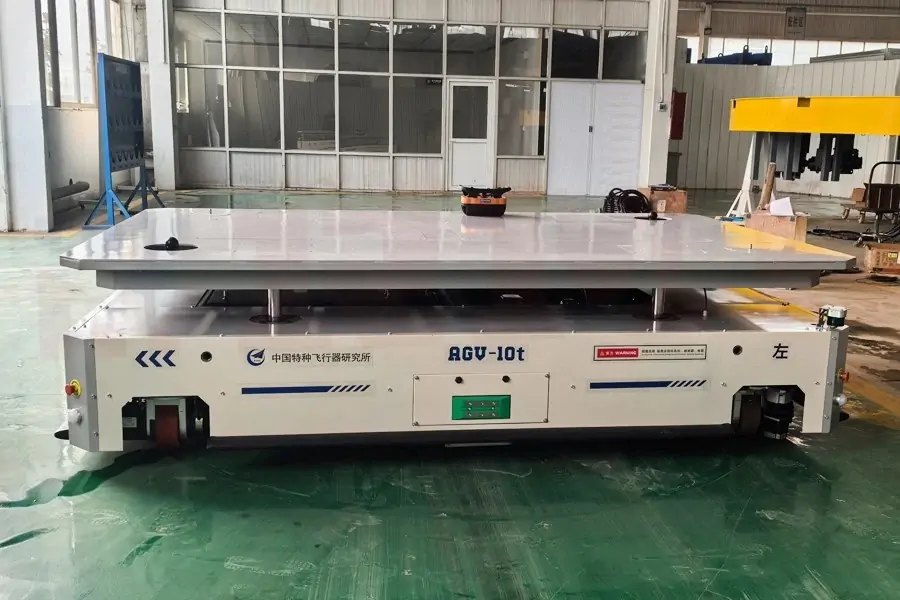
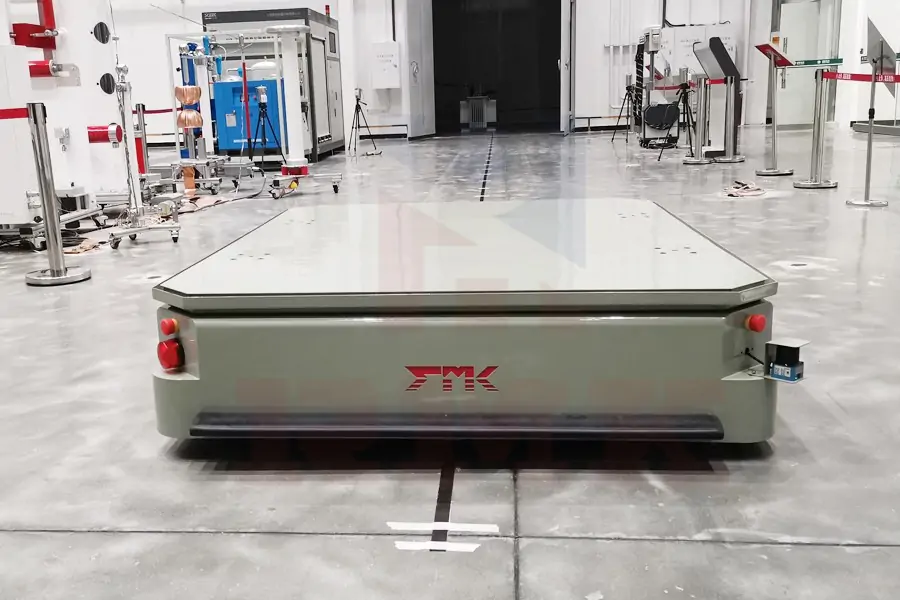
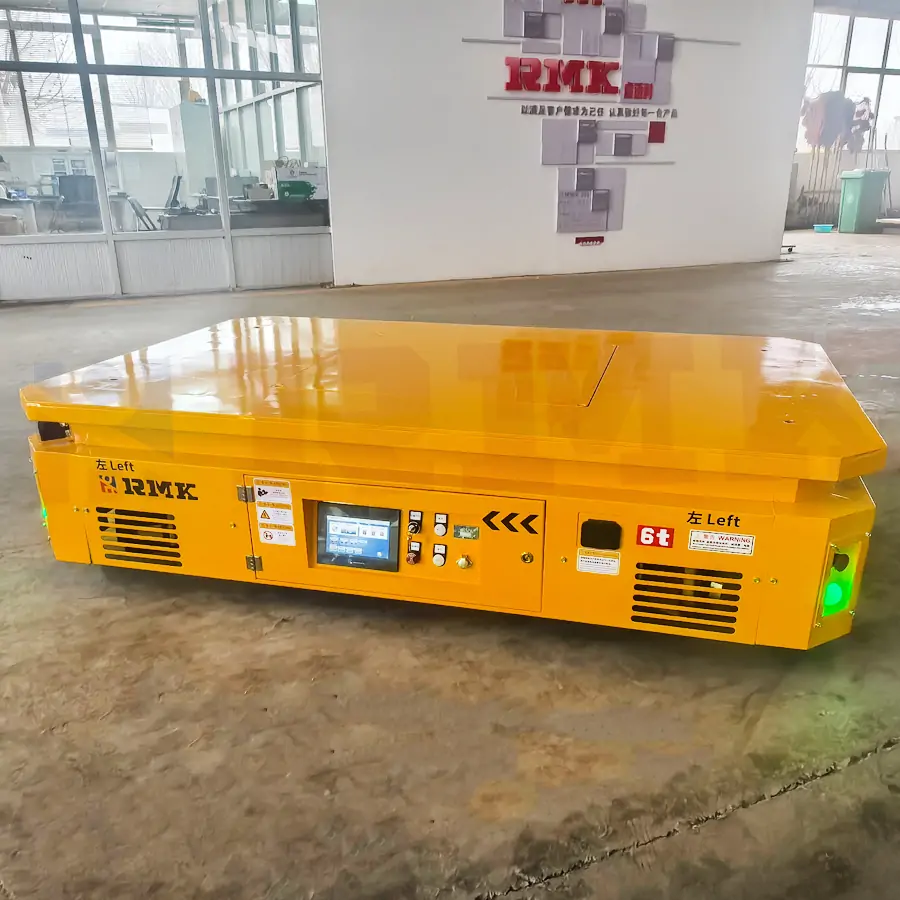
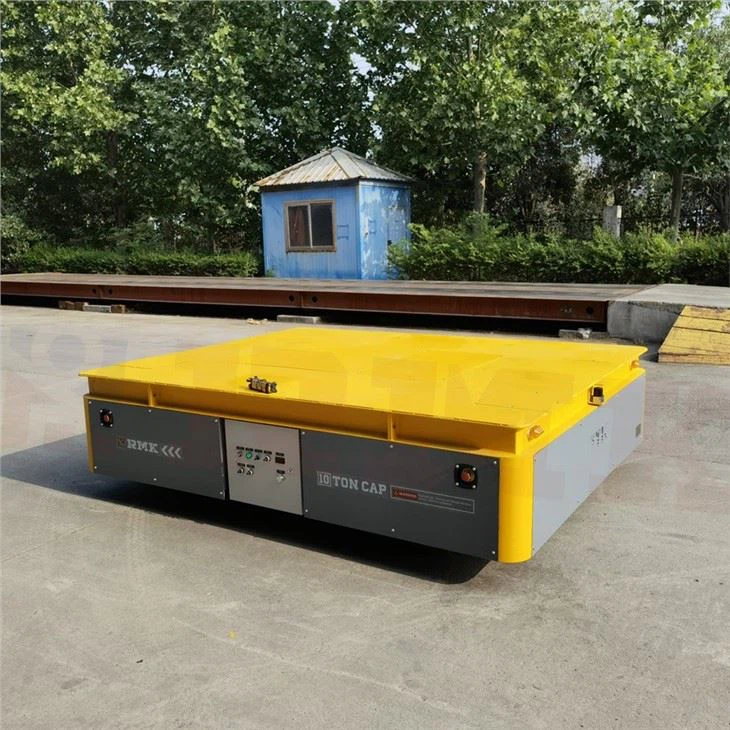
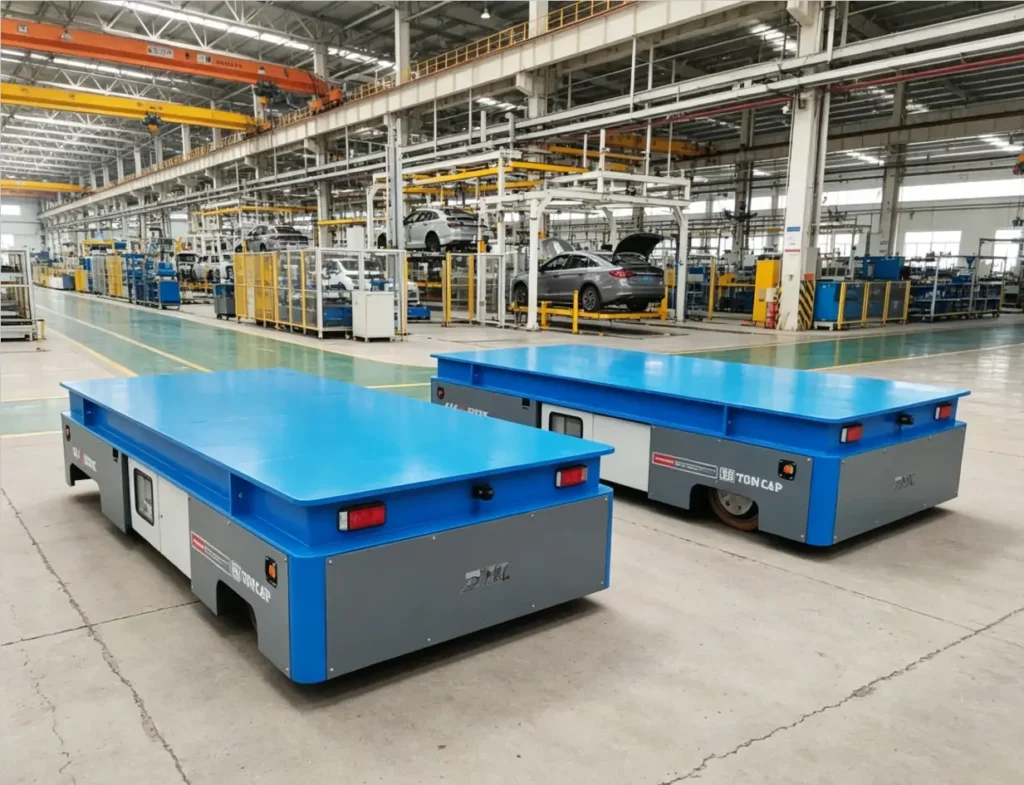
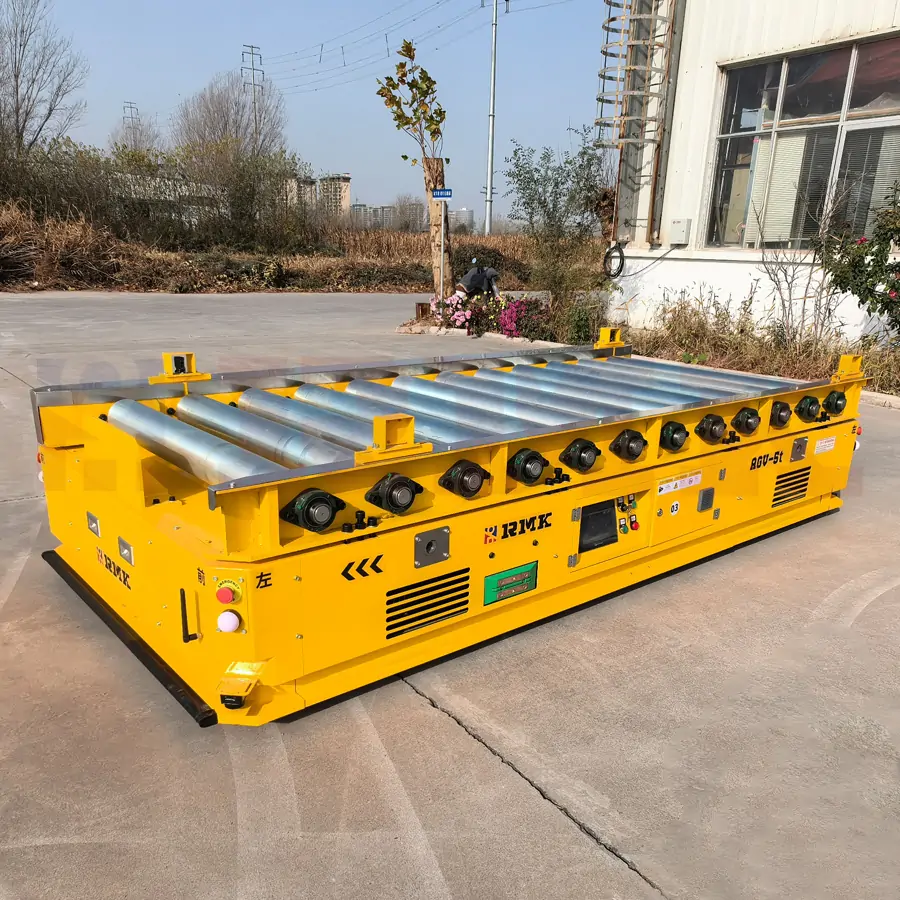
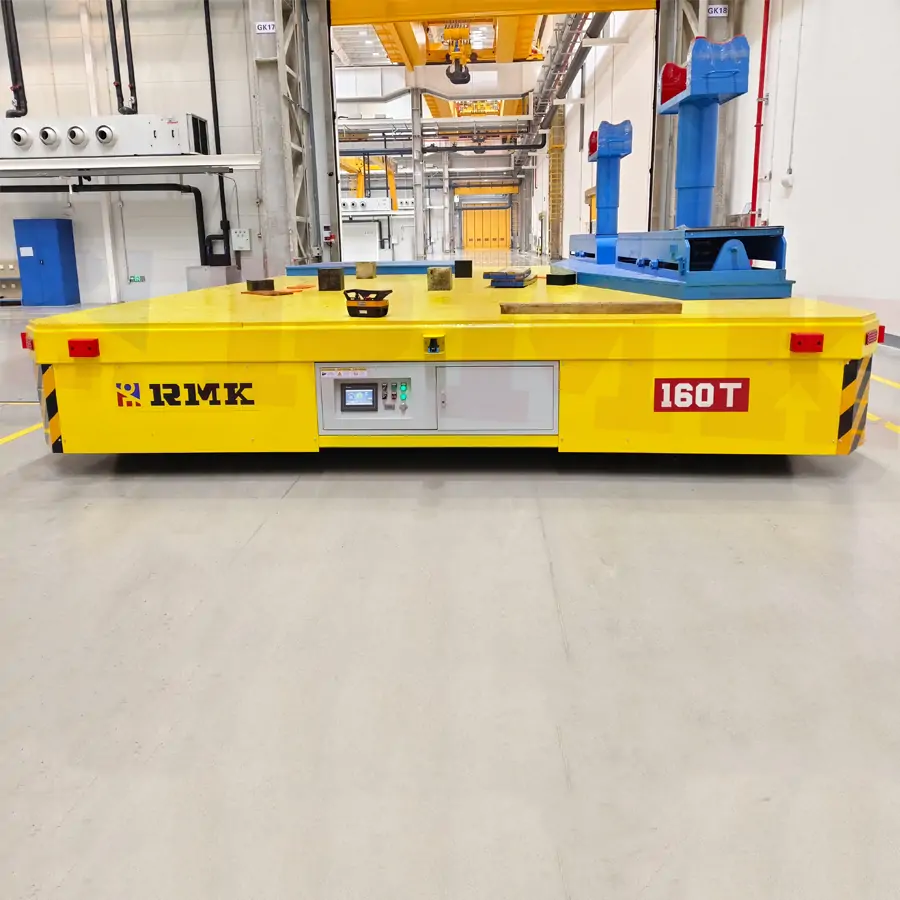
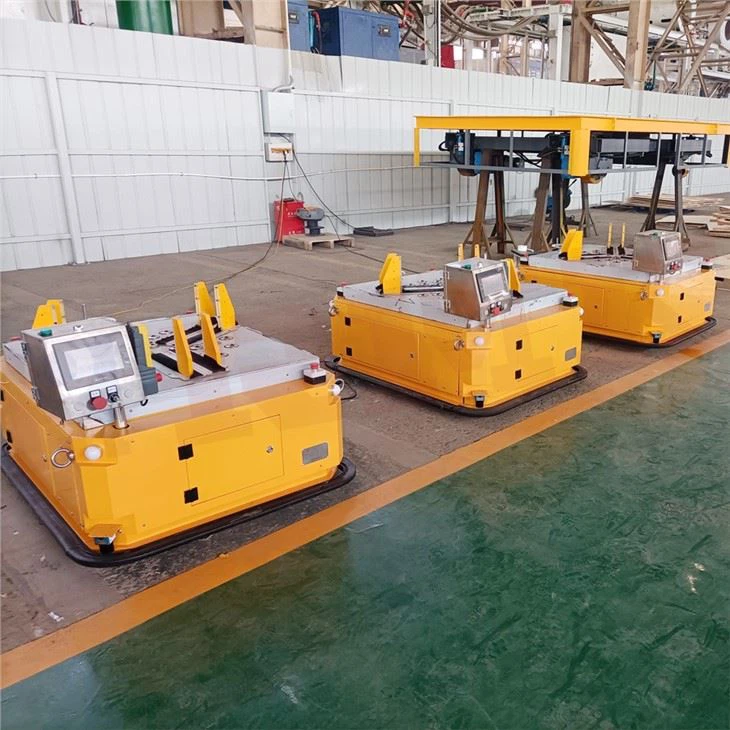
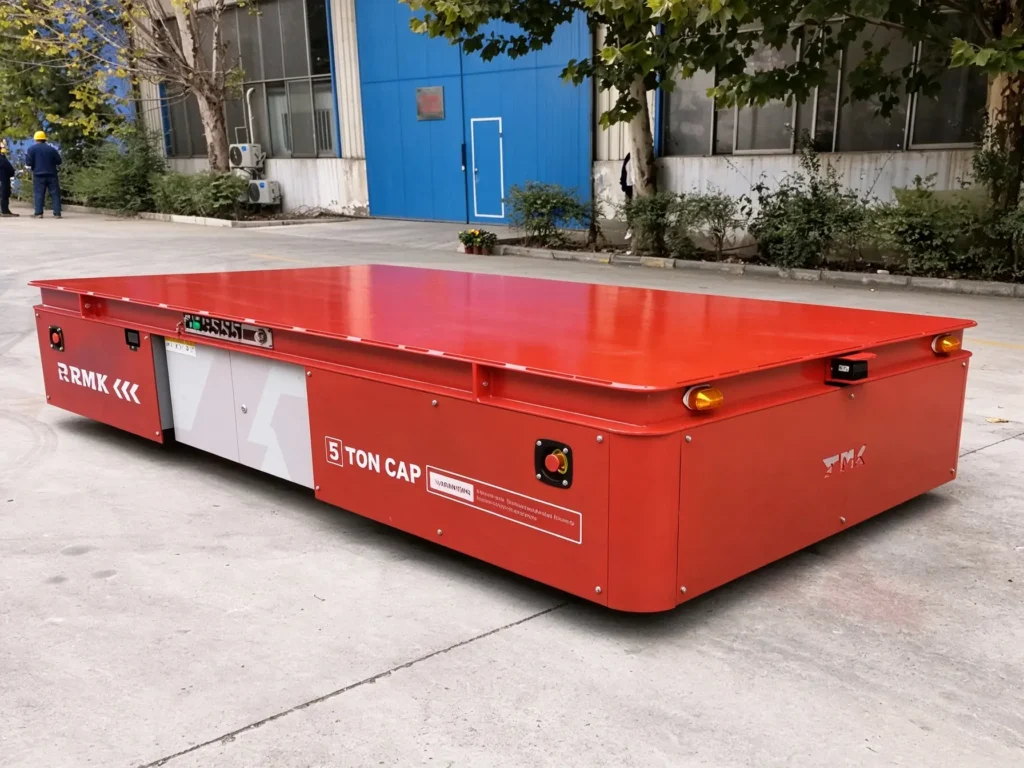
Heavy Duty AGV Project Case
Why Choose REMARKABLE Heavy Duty AGV?
1. In-House Manufacturing
REMARKABLE handles equipment design, manufacturing, assembly, and testing at its facility in Xinxiang, Henan, China. Production equipment and testing facilities support custom material handling projects.
2. Engineering and Customization
Our engineering team develops AGV configurations based on load capacity, cargo dimensions, factory layout, and operating conditions. Custom options include platform structures, navigation systems, drive units, and lifting mechanisms.
3. Heavy Load Project Experience
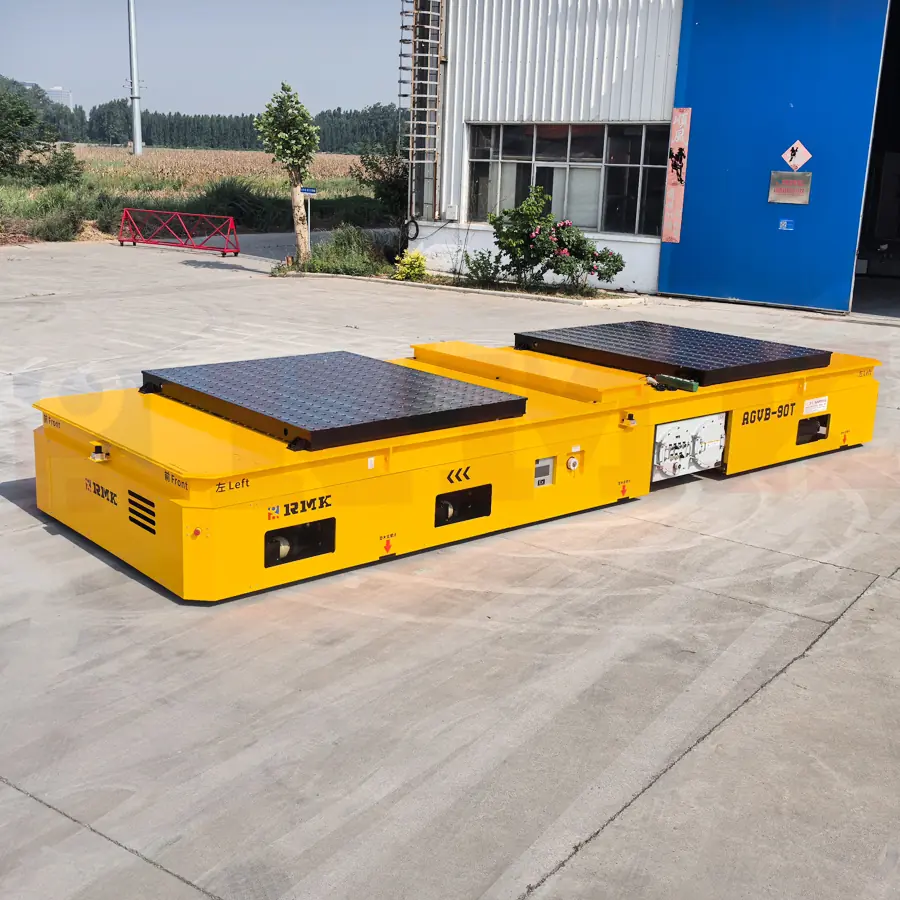
REMARKABLE supplies material handling equipment for steel, automotive, wind power, shipbuilding, and other industrial applications. Our project portfolio includes a 90-ton explosion-proof AGV transfer cart for the wind power industry.
4. Quality Certifications and Testing
REMARKABLE holds ISO 9001 quality management certification and CE-certified product models. Equipment testing includes structural checks, functional testing, and load testing according to the applicable product requirements.
5. Export and Technical Support
We supply industrial transfer equipment to overseas markets and provide technical consultation, project communication, delivery coordination, and installation guidance.
6. Warranty and After-Sales Service
REMARKABLE provides a 12-month warranty, online technical consultation, and remote troubleshooting. Repair, replacement parts, and maintenance services are available according to warranty terms and service agreements.
الخاتمة
Heavy-duty AGVs transport large and heavy materials along designated routes in factories and industrial facilities. Their load capacity, chassis structure, drive system, navigation method, and safety configuration must match the cargo, factory layout, and handling requirements.
مدهش designs and manufactures heavy-duty AGVs for industrial material handling projects. اتصل بنا with your cargo weight, dimensions, transport route, and factory layout. Our team will discuss the required configuration and provide a solution based on your operating conditions. Reliable heavy-load solutions for global customers.
مقالات ذات صلة
- AGV مقابل RGV: الاختلافات بين AGV و RGV
- ما هي عربة النقل الناقلة الأسطوانية AGV?
- عربة النقل الأوتوماتيكية مقابل روبوت النقل الآلي
- لماذا يحظى روبوت AGV بشعبية كبيرة؟
- مركبة نقل الحمولة الثقيلة AGV - الهيكل والاستخدام والصيانة
- What are the Types of AGV Automated Guided Vehicle?
- المركبات ذاتية القيادة متعددة الوظائف: الوظائف، عملية العمل والتطبيقات
- عربة النقل AGV ذات المنصة الكبيرة: الحل الأمثل لمناولة المواد الثقيلة وذات الأحجام الكبيرة
- تكلفة عربة نقل AGV للمستودعات، الميزات، ودليل الاختيار
- كيفية اختيار عربة نقل AGV المناسبة؟
- ما الصناعات التي تستخدم عربات نقل AGV؟ التطبيقات عبر التصنيع الحديث
- عربة نقل 50 طن: دليل حل AGV أو السكك الحديدية

البريد الإلكتروني: transfercart@rmkzn.com
الهاتف: +86-18637369355
الأسئلة الشائعة
What is the difference between a heavy-duty AGV and a standard AGV?
A heavy-duty AGV carries large and heavy loads, using a reinforced chassis and high-capacity drive system. Standard AGVs are generally designed for lighter materials, pallets, and routine warehouse transport.
How much weight can a heavy-duty AGV carry?
Heavy-duty AGV load capacity ranges from several tons to hundreds of tons, depending on the vehicle design. The required capacity is calculated from cargo weight, fixtures, and load distribution.
Can a heavy-duty AGV transport oversized or irregularly shaped loads?
Yes. A heavy-duty AGV can be designed with custom platform dimensions, support structures, and dedicated fixtures. Cargo dimensions, center of gravity, and support positions must be assessed before design.
What navigation systems are used in heavy-duty AGVs?
Common heavy-duty AGV navigation systems include Laser SLAM, magnetic guidance, and visual navigation. The selection depends on factory layout, route conditions, positioning requirements, and the operating environment.
Can heavy-duty AGVs operate on uneven factory floors?
Heavy-duty AGV operation depends on floor flatness, slope, surface joints, and load-bearing capacity. Wheel configuration, ground clearance, and drive system must match the actual floor conditions.
How do heavy-duty AGVs communicate with production and warehouse systems?
Heavy-duty AGVs can connect with PLCs, MES, WMS, and central dispatch systems through configured communication interfaces. Integration depends on the control architecture, communication protocols, and factory automation requirements.
What safety systems are used in heavy-duty AGVs?
Common safety devices include laser scanners, obstacle detection sensors, emergency stop switches, warning lights, and audible alarms. The safety configuration depends on vehicle speed, load, route, and operating environment.
What information is needed to customize a heavy-duty AGV?
Customization requires cargo weight and dimensions, center of gravity, transport distance, route layout, floor conditions, loading method, and operating frequency. These details determine the vehicle structure and technical configuration.