Table des matières
Introduction
Les usines dont les lignes de production évoluent ont besoin d'équipements flexibles pour le transport interne des matériaux. Un chariot de transfert électrique sans rail est un véhicule de transport alimenté par batterie qui déplace des matériaux lourds sans rails fixes, adapté aux ateliers, zones d'assemblage, entrepôts et autres environnements industriels.
Ce guide couvre la structure, le mode de fonctionnement, les types, les spécifications et les points de sélection des chariots de transfert électriques sans rail. Le contenu se concentre sur la capacité de charge, la configuration de la batterie, le système de direction et les conditions d'application afin d'aider les utilisateurs à sélectionner un modèle adapté à leurs besoins de manutention.
Qu'est-ce qu'un chariot de transfert électrique sans rail ?
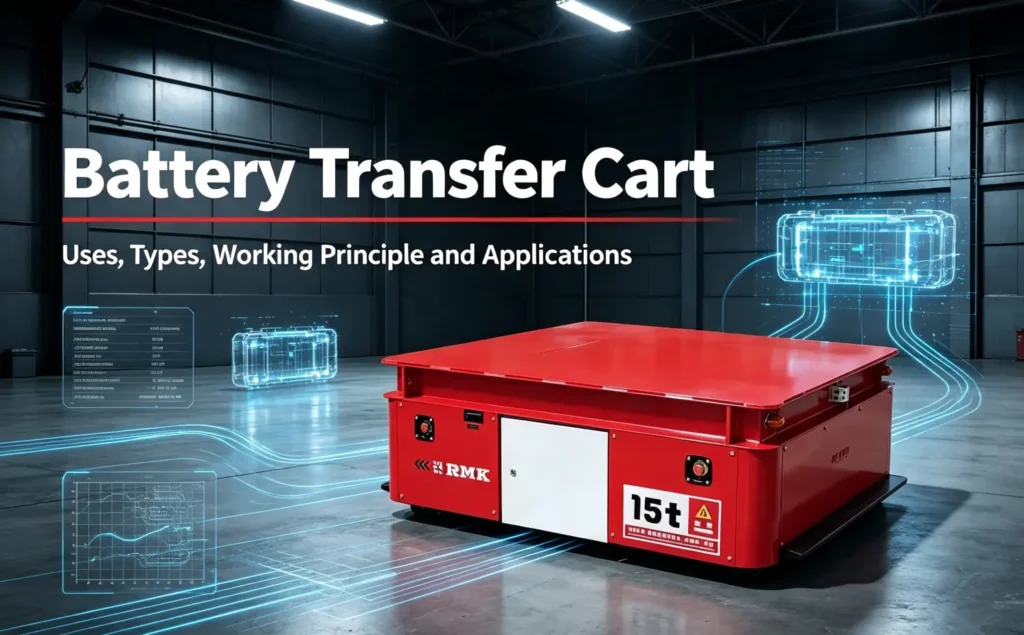
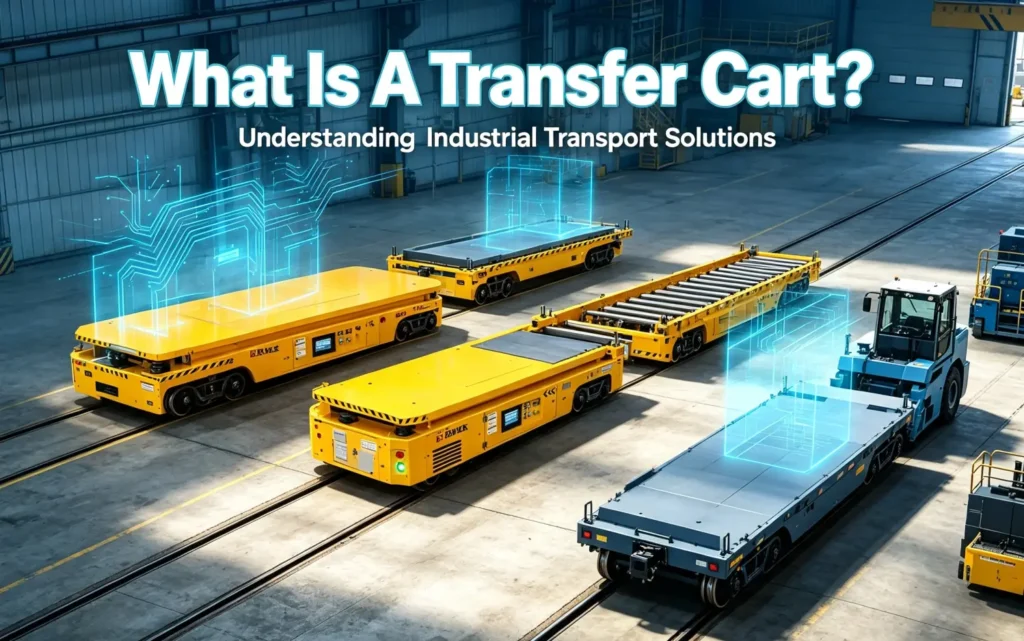
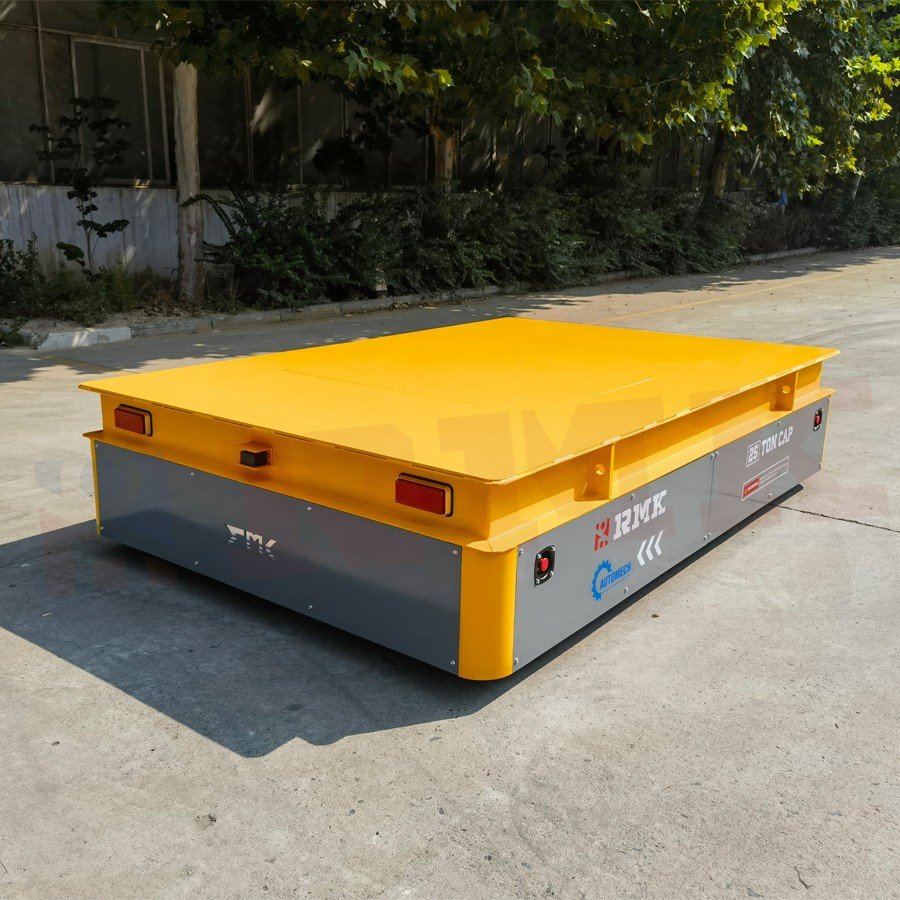
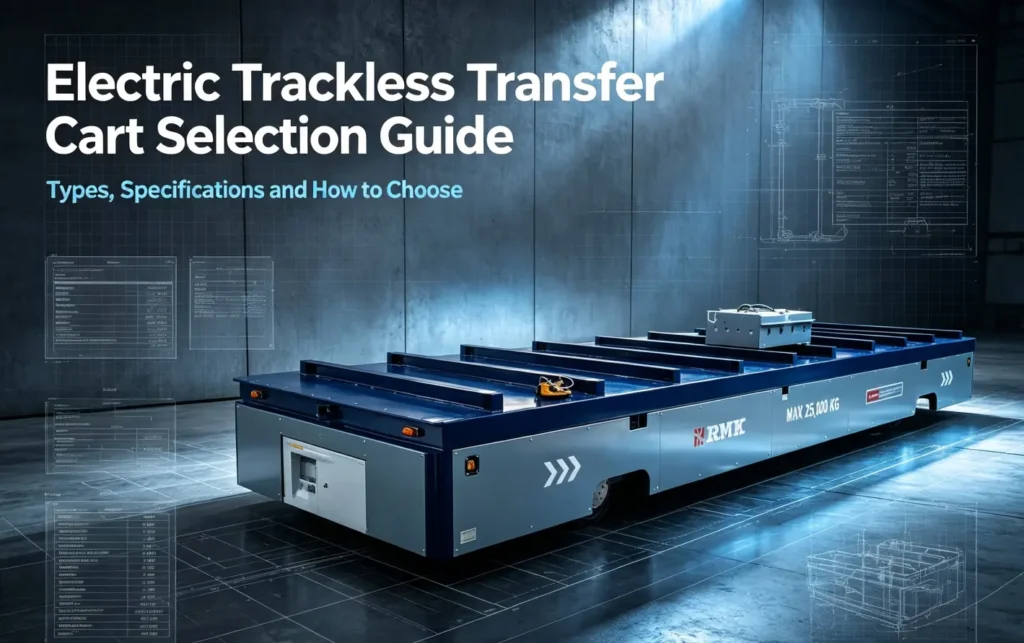
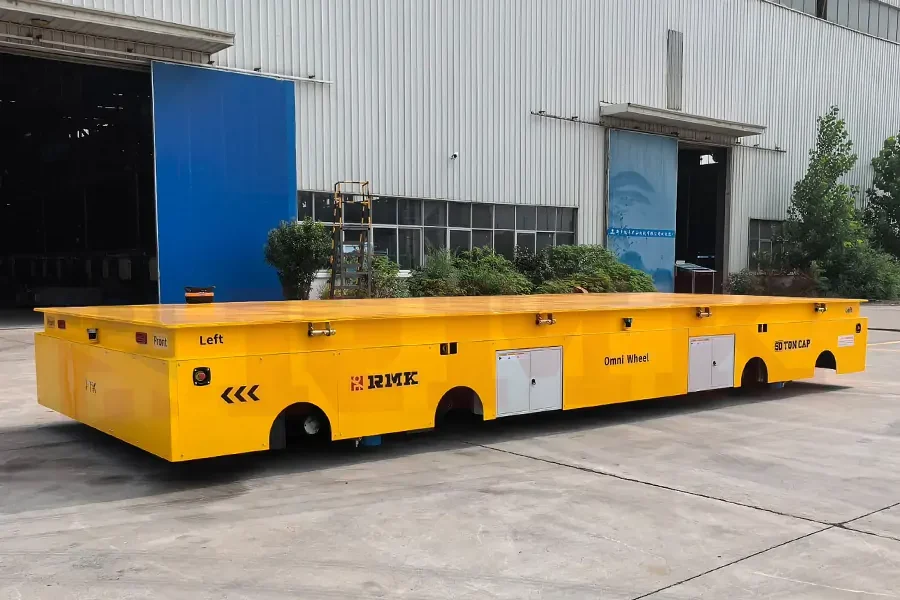
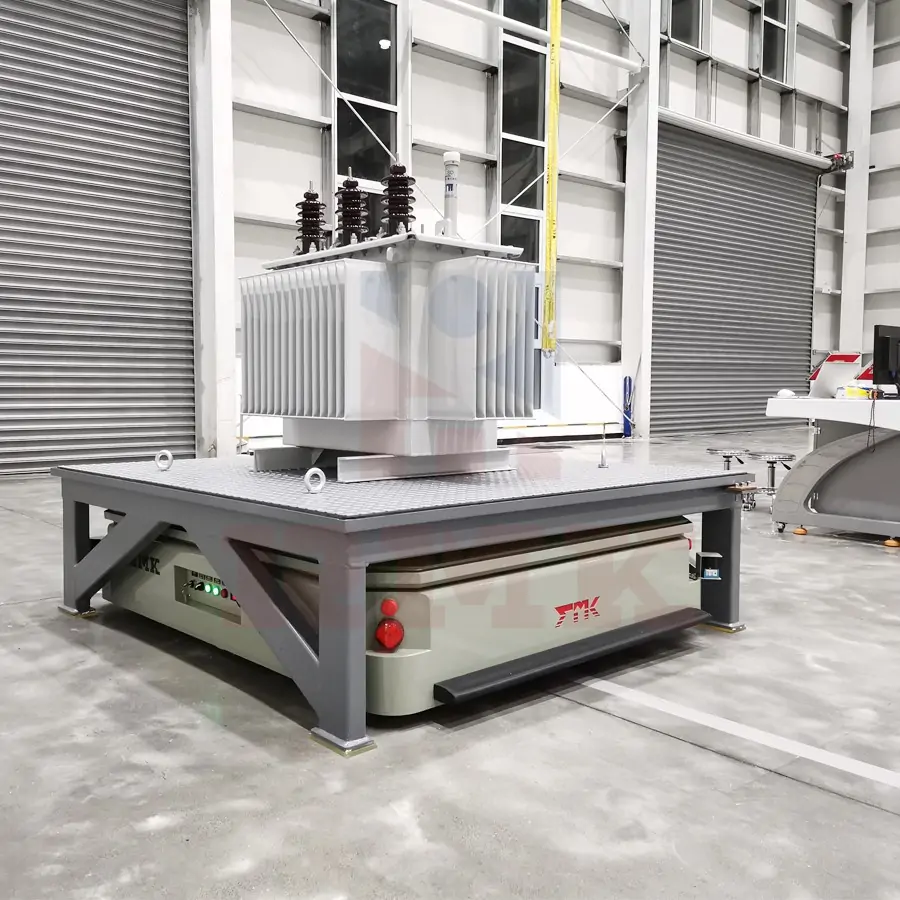
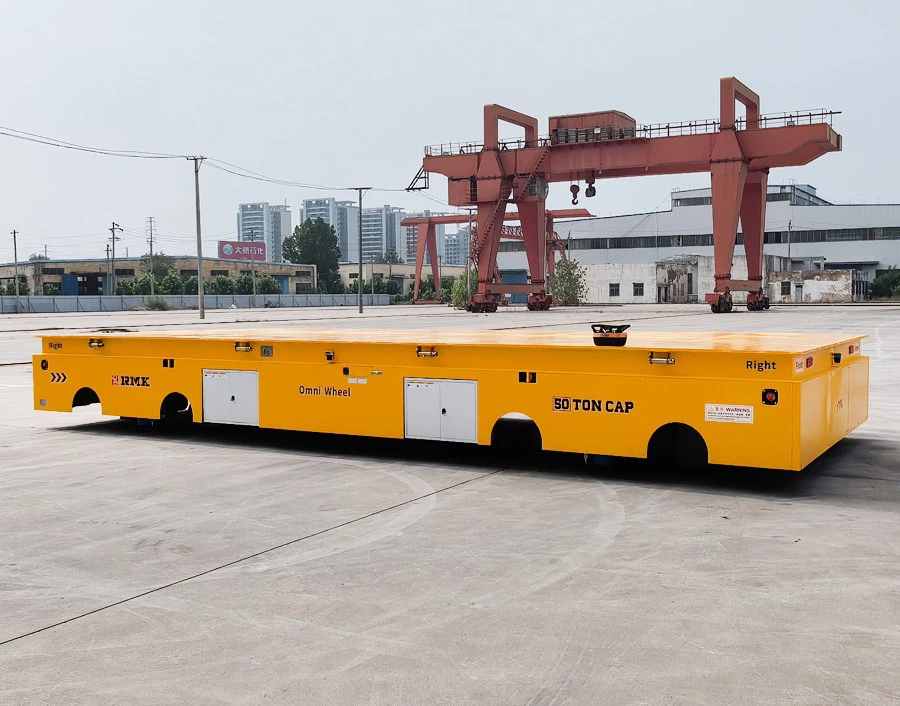
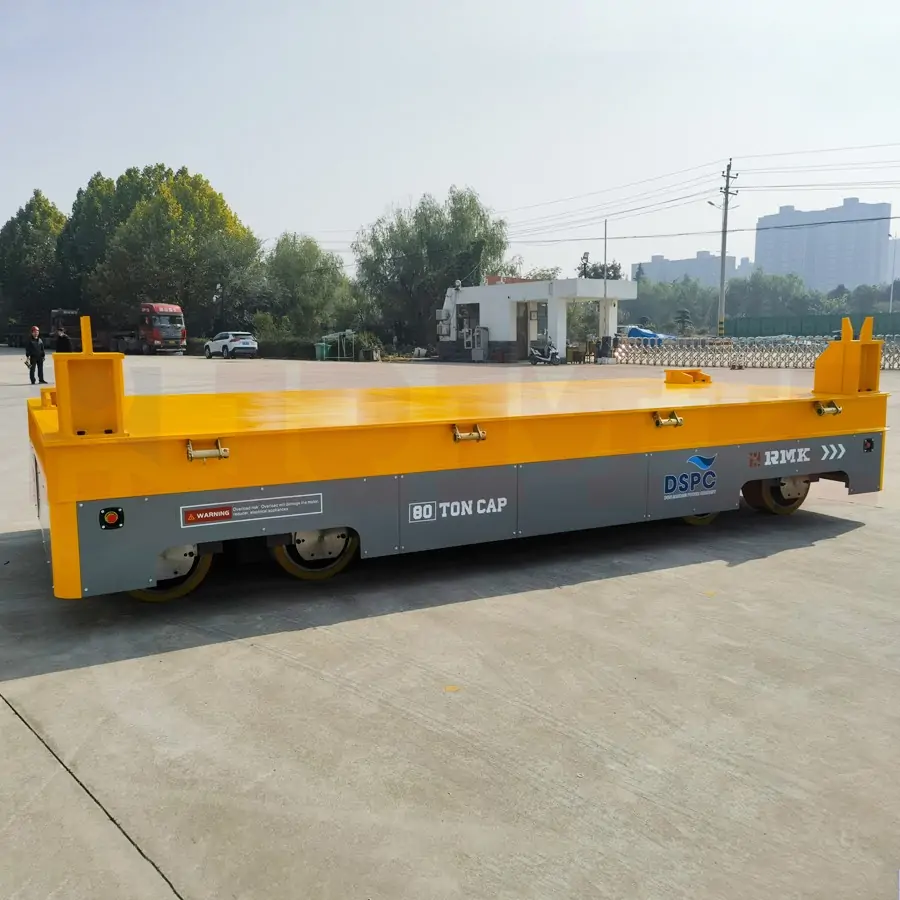
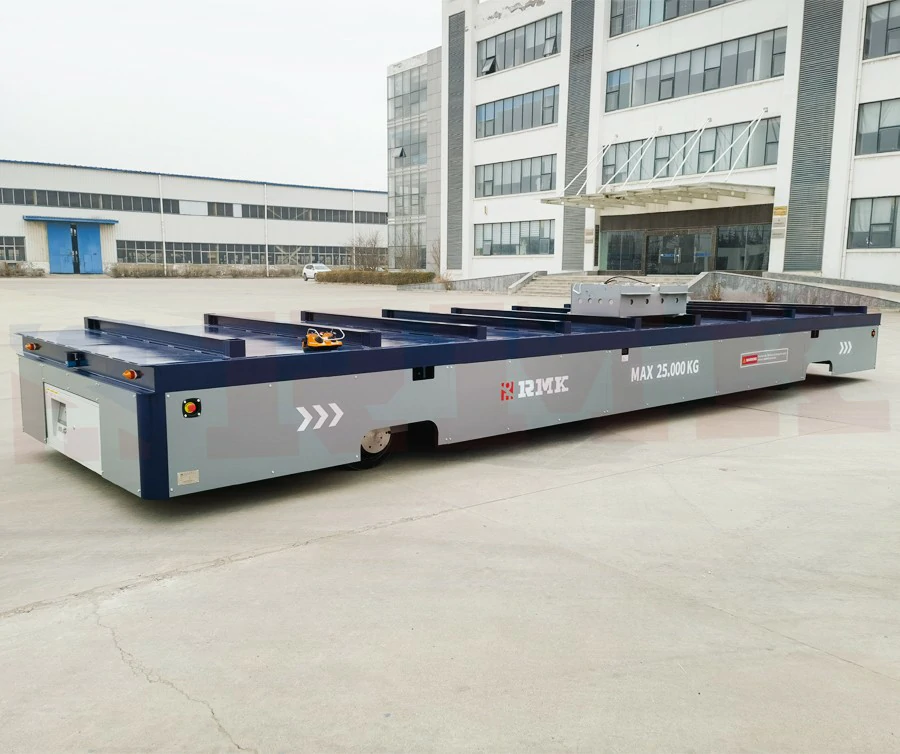
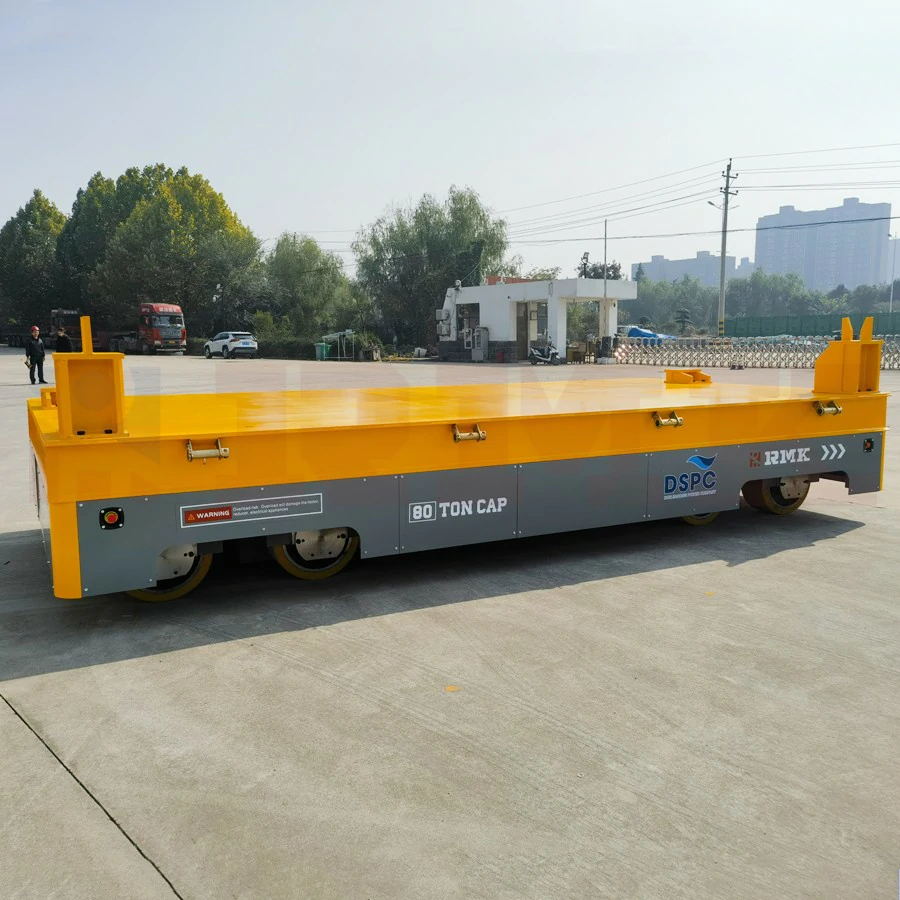
Un chariot de transfert électrique sans rail, également appelé chariot plat électrique sans rail ou véhicule de transfert à roues en caoutchouc, est un véhicule de manutention qui fonctionne sans rails fixes. Il utilise des batteries rechargeables embarquées pour alimenter le moteur et le système d'entraînement, permettant un déplacement flexible dans les usines, entrepôts et ateliers.
Le chariot se compose d'un châssis en acier, d'un système d'entraînement, d'un mécanisme de direction, d'un système de freinage et d'une unité de commande. Les roues en caoutchouc assurent un déplacement stable sur les sols en béton ou en époxy, tandis que le système de direction permet une utilisation dans les espaces restreints et les zones de production en évolution. Les modèles standard gèrent généralement 1 à 50 tonnes, avec des conceptions personnalisées disponibles pour des charges plus élevées.
Sans installation de rails, les chariots de transfert électriques sans rail peuvent être déplacés entre différentes zones de travail avec un temps de mise en place réduit. Ils sont couramment utilisés pour le transport de moules, l'alimentation de lignes d'assemblage et le transfert de matériaux lourds. La télécommande, la détection d'obstacles et les systèmes de navigation AGV peuvent être ajoutés pour les applications de manutention automatisée.
Comment fonctionne un chariot de transfert électrique sans rail ?
Un chariot de transfert électrique sans rail utilise un système d'entraînement alimenté par batterie pour déplacer des matériaux lourds sans rails fixes. La batterie alimente le moteur, et le système de commande gère le mouvement, la direction et le freinage pendant le fonctionnement.
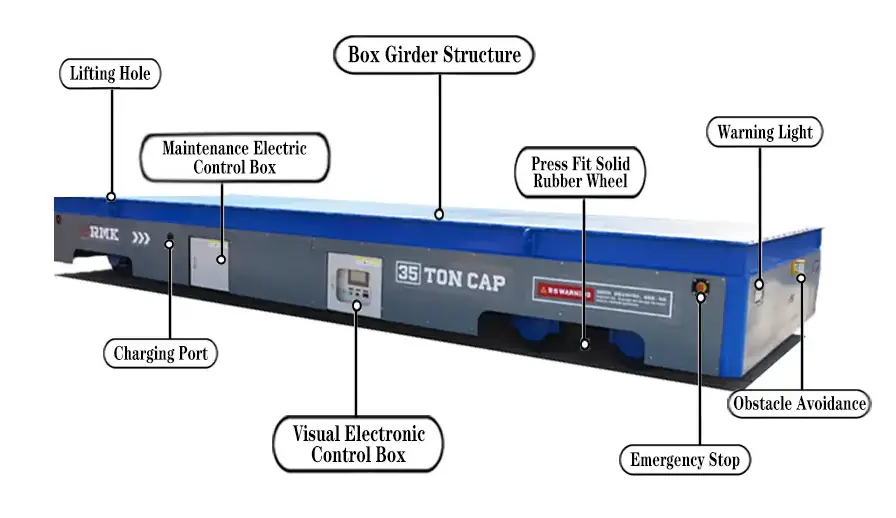
- Alimentation par batterie
La batterie embarquée fournit l'énergie électrique au moteur d'entraînement et au système de commande. Les batteries au plomb-acide et au lithium sont couramment utilisées selon les heures de travail et les exigences de charge. - Système d'entraînement par moteur
Le moteur électrique génère la force motrice et transmet la puissance aux roues via la boîte de vitesses. Le chariot avance, recule et s'arrête selon les signaux de commande. - Direction et contrôle du mouvement
Le système de direction contrôle la direction de déplacement via une direction différentielle, une direction hydraulique ou d'autres méthodes personnalisées. Les roues en caoutchouc permettent un déplacement flexible dans les ateliers sans limitation de rails. - Contrôle de fonctionnement
L'opérateur contrôle le chariot via une télécommande sans fil ou un boîtier pendentif. Les modèles avancés peuvent intégrer des capteurs, la détection d'obstacles ou des systèmes de navigation AGV pour un fonctionnement automatique.
Le chariot de transfert électrique sans rail combine l'alimentation par batterie, l'entraînement électrique et des systèmes de direction flexibles pour effectuer le transport de matériaux lourds. Sa conception sans rail lui permet de s'adapter aux changements de configuration des usines et à diverses exigences de manutention industrielle.
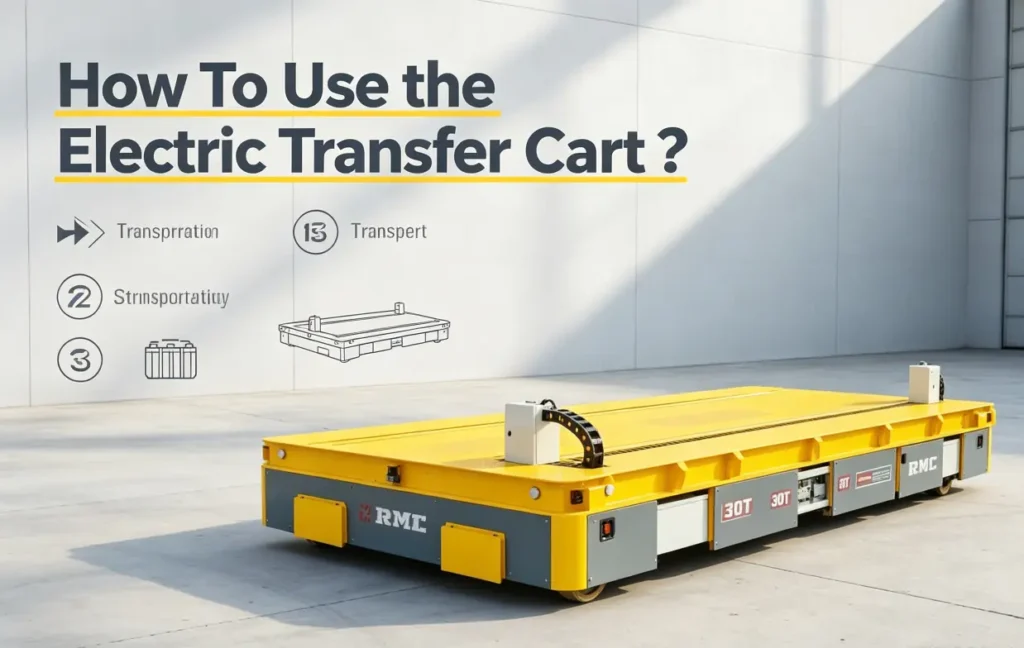
Pour plus de détails sur l’utilisation du chariot de transfert électrique, voir : Comment utiliser le chariot de transfert électrique ?
Types de chariots de transfert électriques sans rail
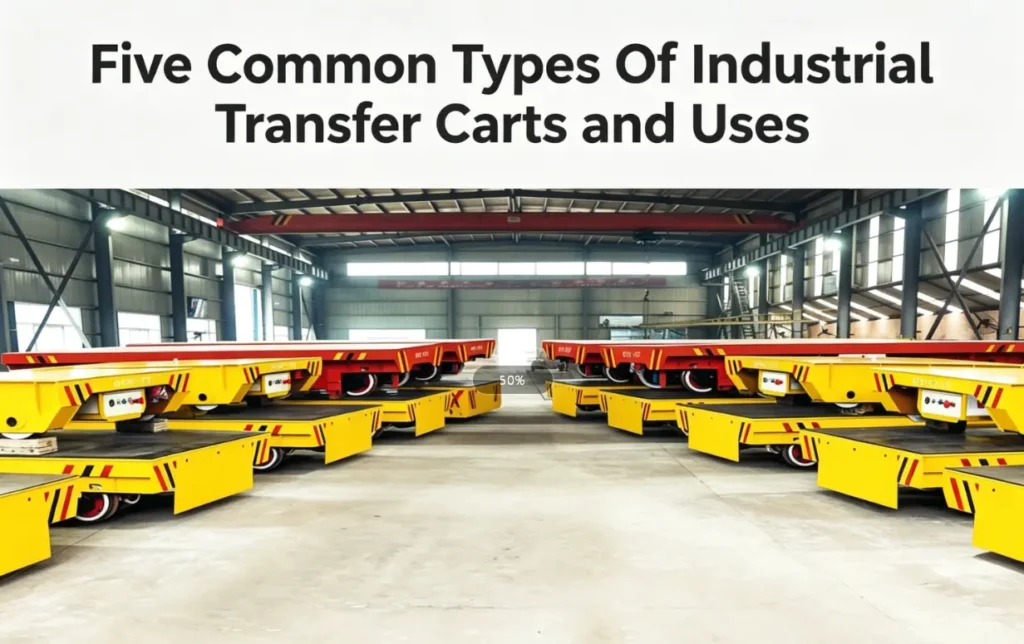
Les chariots de transfert électriques sans rail sont conçus dans différentes configurations selon la capacité de charge, les exigences de direction et les niveaux d'automatisation. Les types courants incluent les modèles standard alimentés par batterie, les modèles lourds, les chariots sans rail AGV et les modèles à levage hydraulique.
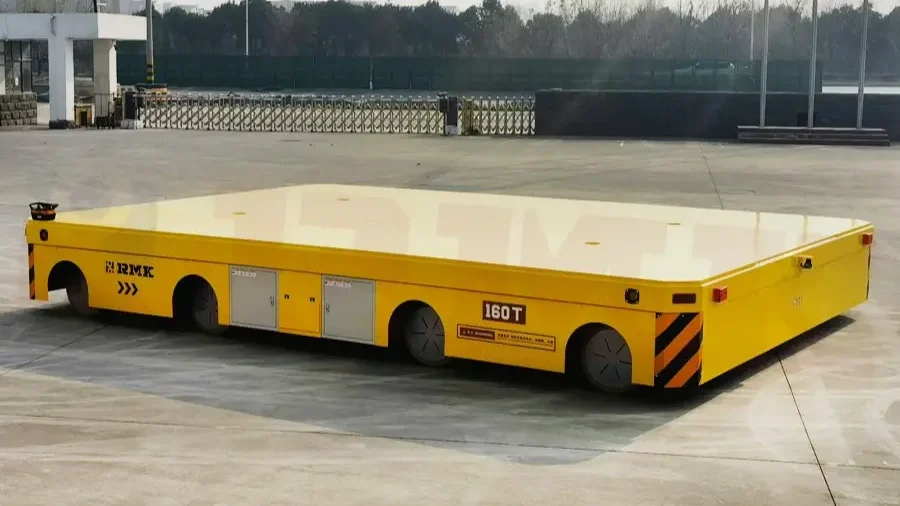
Chariot de transfert électrique sans rail standard
Les modèles standard utilisent l'alimentation par batterie et des roues en caoutchouc pour le transport flexible de matériaux dans les usines et ateliers. Ils conviennent aux tâches de manutention générales avec des charges modérées et des itinéraires variables.
- Capacité de charge : 1 à 50 tonnes
- Alimentation : Batterie au plomb-acide / Batterie au lithium
- Méthode de contrôle : Télécommande sans fil / Commande par boîtier suspendu
- Application : Manutention en usine, transport en atelier
Chariot de transfert électrique sans rail lourd
Les modèles lourds sont conçus pour transporter des charges volumineuses et surdimensionnées telles que des structures en acier, des moules et des équipements industriels. Ils disposent de châssis renforcés et de systèmes d'entraînement à couple élevé pour des conditions de travail exigeantes.
- Capacité de charge : 50 à 100+ tonnes
- Système d'entraînement : entraînement par moteur lourd
- Taille de la plateforme : personnalisée
- Application : aciéries, chantiers navals, fabrication lourde
Chariot de transfert électrique sans rail AGV
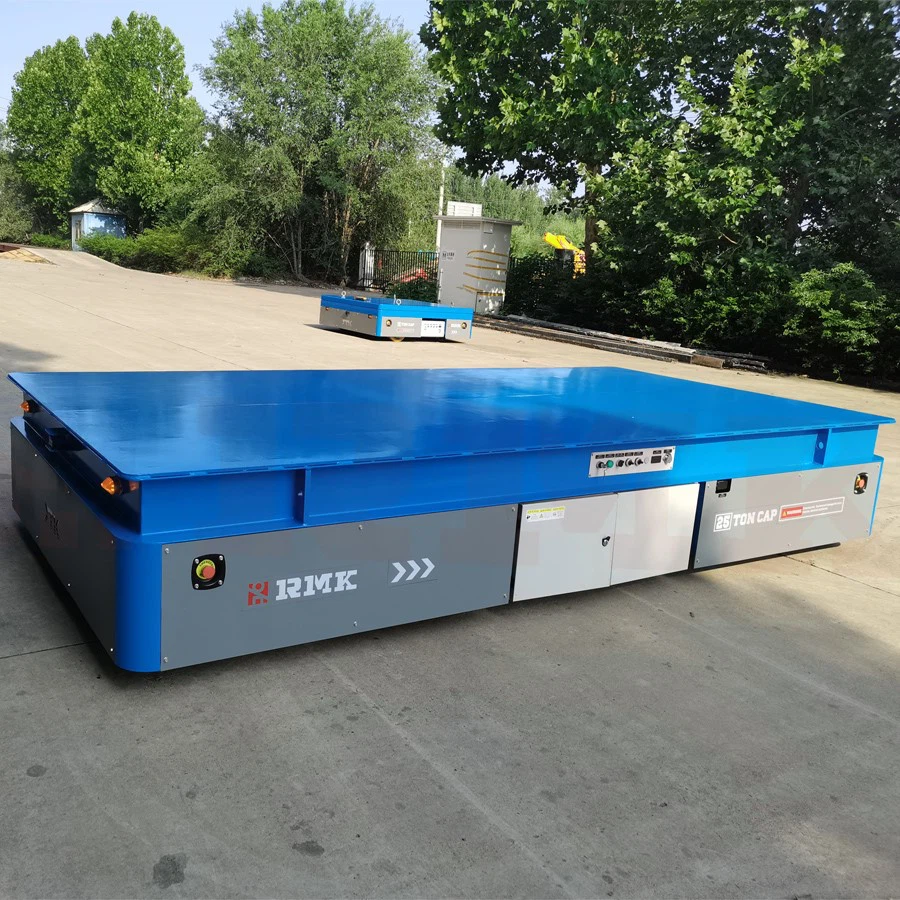
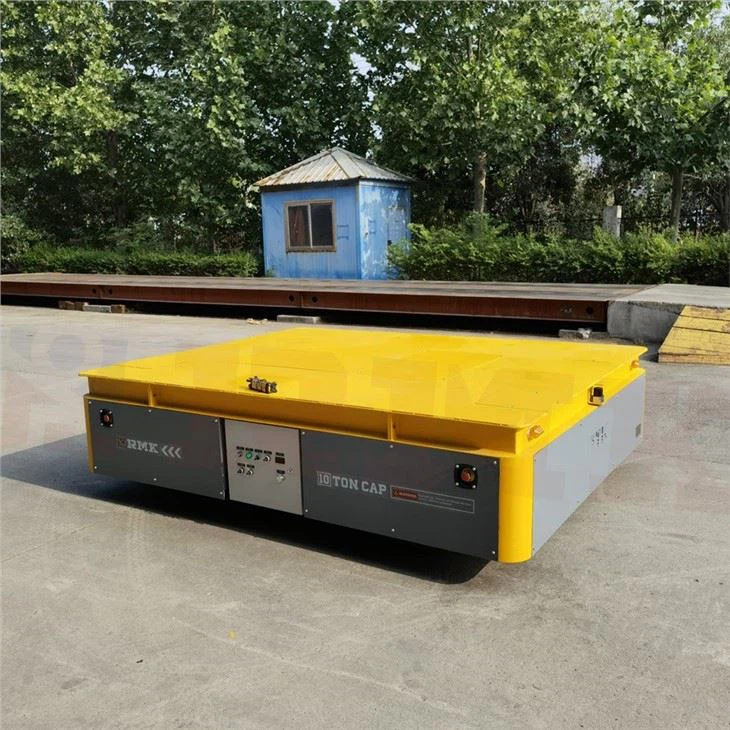
Les chariots de transfert sans rail AGV intègrent des systèmes de navigation et de commande pour le transport automatique de matériaux. Ils peuvent suivre des itinéraires prédéfinis, éviter les obstacles et se connecter aux systèmes d'automatisation d'usine.
- Navigation : navigation magnétique / navigation laser / SLAM
- Précision de positionnement : ±10 mm
- Mode de contrôle : contrôle automatique
- Application : usine intelligente, lignes de production automatisées
Chariot de transfert électrique sans rail à levage hydraulique
Les modèles à levage hydraulique combinent les fonctions de transport et de levage. La plateforme peut ajuster sa hauteur pour se connecter aux équipements de production, aux postes d'assemblage ou aux systèmes de stockage.
- Capacité de charge : 3 à 30 tonnes
- Hauteur de levage : 0,5 à 2 m
- Système de levage : entraînement hydraulique
- Application : lignes d'assemblage, transfert d'équipements, accostage de postes de travail
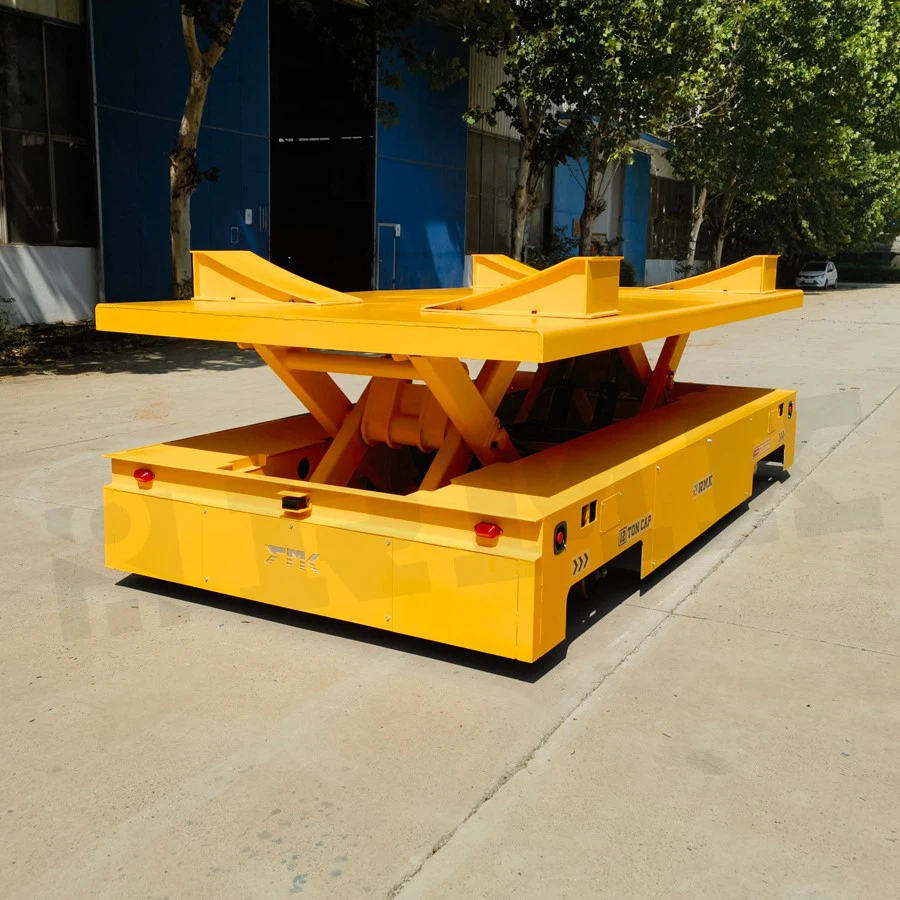
Différents chariots de transfert électriques sans rail sont sélectionnés selon le poids de la charge, l'itinéraire de transport, l'environnement de travail et les exigences d'automatisation. Une configuration appropriée aide à adapter le chariot au processus de production réel.
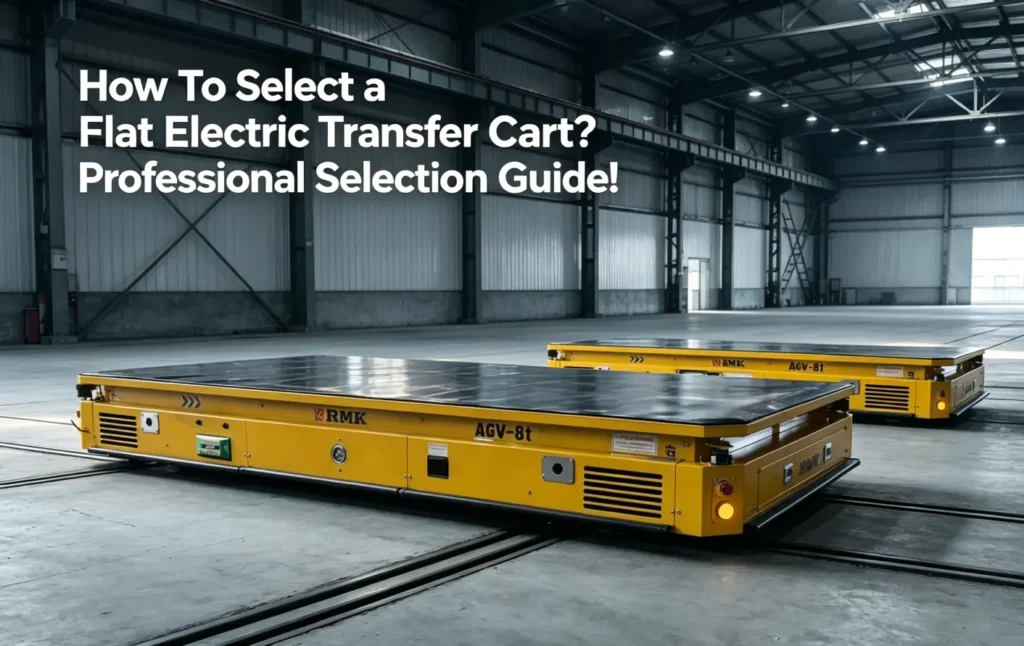
Pour plus de détails sur les modèles de chariots de transfert plats électriques et un guide de sélection, voir : Comment sélectionner un chariot de transfert plat électrique ? Guide de sélection professionnel !
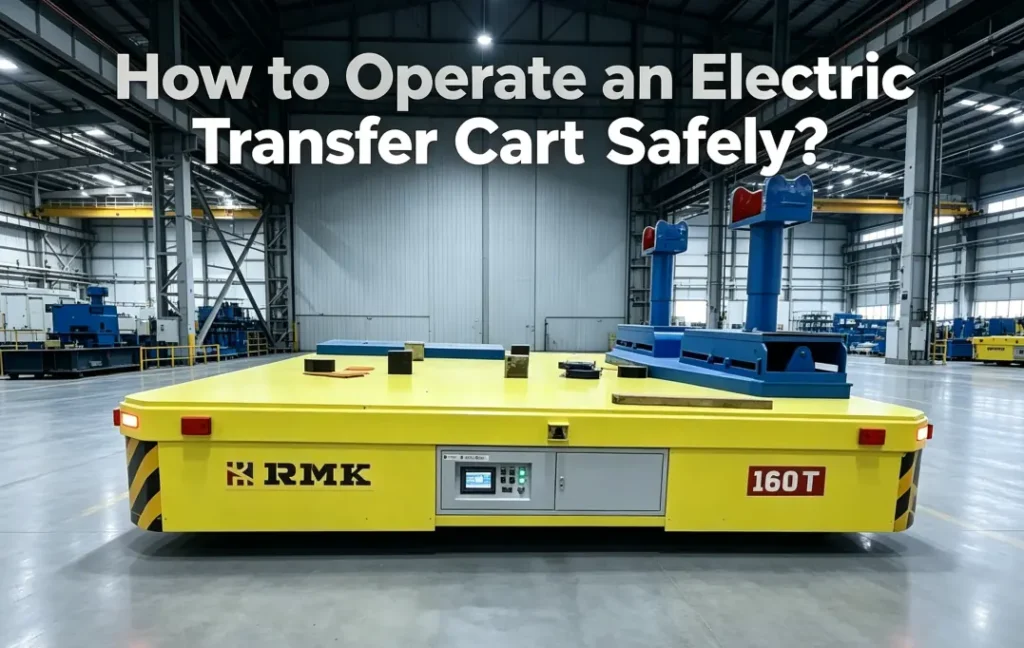
Pour les directives sur l'utilisation et la sécurité des chariots de transfert électriques, voir : Comment faire fonctionner un chariot de transfert électrique en toute sécurité ?
Spectacle vidéo
Spécifications
Les spécifications des chariots de transfert électriques sans rail varient selon les exigences de charge, les conditions de travail et les besoins de personnalisation. Les principaux paramètres incluent la capacité de charge, la vitesse de déplacement, les dimensions de la plateforme, le système de batterie et la méthode de contrôle.
| Paramètres | Spécifications |
|---|---|
| Capacité de charge | 1 à 300 tonnes (modèles personnalisés disponibles pour des charges plus élevées) |
| Vitesse de déplacement | 0–20 m/min |
| Taille de la plateforme | 3000 × 3000 mm à 4000 × 3000 mm (personnalisable) |
| Hauteur de plateforme | 550 à 1000 mm |
| Rayon de braquage minimum | Environ 4500 mm (dépend du modèle et du système de direction) |
| Pente maximale | ≤3° |
| Alimentation électrique | Batterie au plomb-acide / Batterie au lithium |
| Temps de fonctionnement | Jusqu'à 8 heures par charge (selon la charge et les conditions de travail) |
| Système d'entraînement | Moteur à courant continu + réducteur à engrenages |
| Système de pilotage | Direction différentielle / Direction hydraulique / Direction personnalisée |
| Type de roue | Pneu en caoutchouc plein / Pneu pneumatique |
| Méthode de contrôle | Télécommande sans fil / Commande suspendue |
| Option de navigation | Navigation magnétique / Navigation laser / Système AGV |
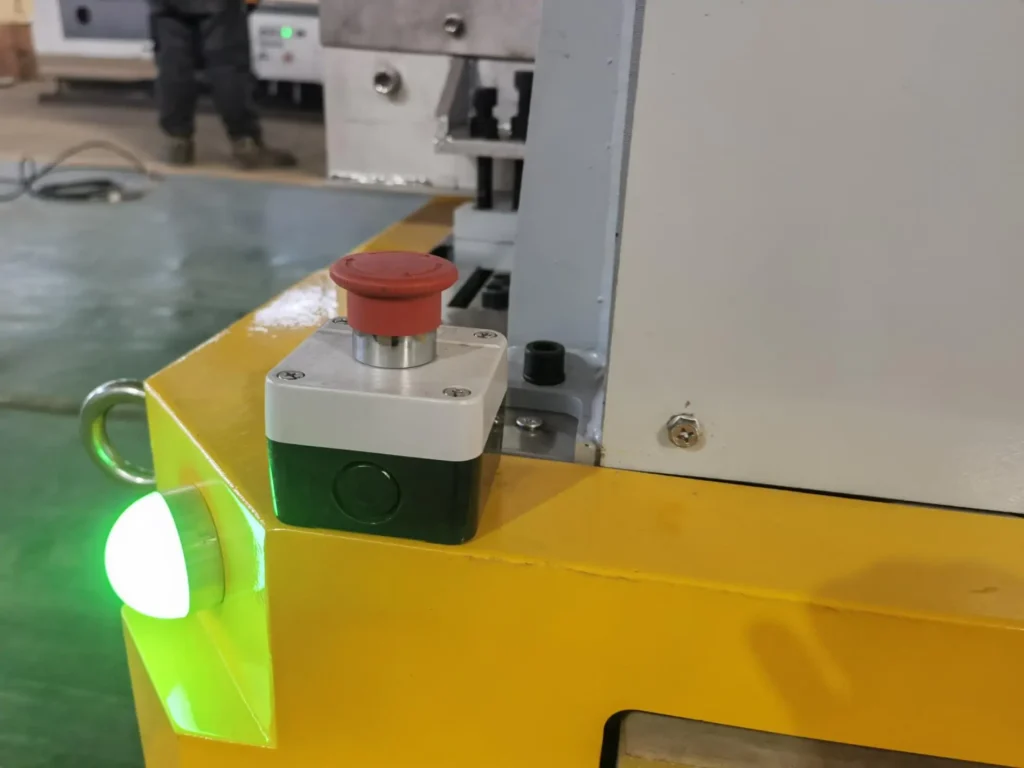
| Caractéristiques de sécurité | Arrêt d'urgence, système d'alarme, détection d'obstacles |
Les spécifications d'un chariot de transfert électrique sans rail doivent être sélectionnées en fonction de la capacité de charge, de l'environnement d'exploitation, des exigences de déplacement et des tâches de manutention. Des configurations personnalisées aident à adapter le chariot à différents besoins de transport industriel.
Des inspections et une maintenance régulières sont nécessaires pour garantir le fonctionnement à long terme des chariots de transfert électriques. Pour plus de détails, voir : Guide d'entretien du chariot de transfert à batterie : inspection quotidienne et soin de la batterie
Comment choisir un chariot de transfert électrique sans rail ?
La sélection d'un chariot de transfert électrique sans rail repose sur les exigences réelles de transport, notamment le poids de la charge, les conditions de travail, le trajet et la méthode d'exploitation. La configuration correcte affecte les performances du chariot, sa durée de vie et l'efficacité de la manutention.
Confirmer la capacité de charge et les dimensions de la plateforme
La capacité de charge est le premier facteur à considérer. Le chariot doit être sélectionné en fonction du poids maximal du matériau transporté, avec une marge de capacité suffisante pour l'exploitation quotidienne. Les dimensions de la plateforme doivent correspondre aux dimensions du matériau pour garantir un positionnement stable pendant le transport.
Pour les matériaux longs tels que les tuyaux et les profilés en acier, une plateforme personnalisée avec supports en V peut empêcher tout mouvement pendant l'exploitation.
Paramètres principaux :
- Capacité de charge : 1 à 50 tonnes pour les modèles standard, capacité supérieure disponible sur demande
- Dimensions de la plateforme : personnalisées selon les dimensions du matériau
- Conception de la plateforme : plateforme plate / support en V / structure personnalisée
Vérifier l'environnement de travail et les conditions du sol
Les chariots de transfert électriques sans rail fonctionnent sur des roues en caoutchouc, donc les conditions du sol affectent directement la stabilité de fonctionnement. Les sols en béton plat et les sols époxy conviennent au fonctionnement normal.
Pour les zones extérieures, les environnements humides ou les ateliers avec poussière et huile, le chariot doit être équipé de composants de protection adaptés.
Considérations :
- Planéité du sol
- Espace de l'atelier
- Largeur des allées
- Zone de virage
- Exploitation intérieure ou extérieure
Sélectionner le bon niveau d'automatisation
La méthode de contrôle dépend du processus de production et de la fréquence de manutention. Les modèles standard utilisent la télécommande, tandis que les modèles automatisés peuvent intégrer des systèmes de navigation pour le transport sans conducteur.
| Type de contrôle | Application |
| Télécommande Sans Fil | Transport général de matériaux |
| Positionnement automatique | Transport répété entre des emplacements fixes |
| Système de navigation AGV | Lignes de production automatisées et usines intelligentes |
Déterminer les fonctions requises et les dispositifs de sécurité
Des fonctions supplémentaires sont sélectionnées en fonction de la tâche de transport. Différents matériaux et processus de production nécessitent différentes configurations de chariot.
| Fonction | Application |
| Plateforme de levage hydraulique | Réglage de la hauteur et accostage au poste de travail |
| Cadre en V | Transport de tuyaux et de profilés |
| Détection d'obstacles | Protection de sécurité dans les zones de travail |
| Système d'arrêt d'urgence | Arrêt immédiat en cas d'urgence |
Choisir une configuration de batterie adaptée
Le type de batterie affecte le temps de fonctionnement, la fréquence de charge et les exigences de maintenance. La sélection dépend de la distance de déplacement quotidienne et des heures de travail.
Options de batterie :
- Batterie au plomb-acide : adaptée à un usage industriel régulier
- Batterie au lithium : adaptée aux opérations fréquentes et aux exigences de charge rapide
Évaluer les capacités du fabricant
Les chariots de transfert électriques sans rail nécessitent souvent une personnalisation selon les conditions de l'usine. Le fabricant doit avoir de l'expérience en conception structurelle, en systèmes électriques et en solutions d'application.
Facteurs d'évaluation :
- Capacité de personnalisation
- Expérience en fabrication
- Assistance technique
- Service après-vente
Le processus de sélection commence par la capacité de charge et la taille de la plateforme, puis prend en compte l'environnement de travail, la méthode de contrôle, le système de batterie et les fonctions requises. Un chariot de transfert électrique sans rail correctement configuré peut répondre à différentes exigences de transport industriel et maintenir un fonctionnement stable.
Chariot de transfert électrique sans rail vs chariot de transfert sur rail
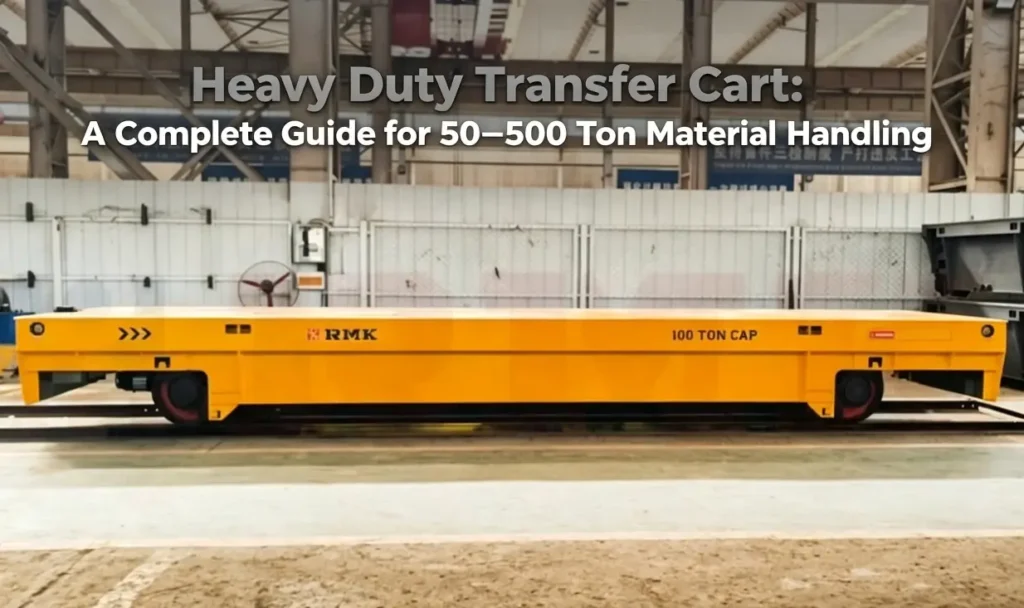
Les chariots de transfert électriques sans rail et les chariots de transfert sur rail sont couramment utilisés pour le transport de matériaux lourds. La principale différence réside dans la méthode de déplacement. Les chariots de transfert sans rail utilisent des roues en caoutchouc pour un mouvement libre, tandis que les chariots de transfert sur rail fonctionnent sur des voies fixes.
| Comparaison | Chariot de transfert électrique sans rail | Chariot de transfert de rails |
|---|---|---|
| Méthode de déplacement | Roues en caoutchouc, aucun rail fixe requis | Fonctionne sur des rails installés |
| Flexibilité de parcours | Adapté aux itinéraires changeants et à plusieurs zones de travail | Adapté aux itinéraires de transport fixes |
| Installation | Aucune construction de voie requise | Nécessite une installation de rail |
| Capacité de charge | 1 à 100+ tonnes, personnalisable pour des charges plus élevées | Adapté au transport de charges lourdes, y compris les applications à grande tonnage |
| Direction | Direction flexible, adapté aux espaces étroits | Se déplace le long de la direction du rail |
| Exigence de plancher | Nécessite un sol en béton plat ou en époxy | Nécessite une fondation de rail appropriée |
| Entretien | Implique principalement l'entretien de la batterie, du moteur et des roues | Inclut l'entretien du chariot et l'inspection des rails |
| Applications typiques | Ateliers, lignes d'assemblage, entrepôts, zones de production flexibles | Aciéries, chantiers navals, lignes de production fixes |
Différences clés
- Les chariots de transfert électriques sans rail sont adaptés aux zones de production où les itinéraires de transport changent fréquemment. Ils ne nécessitent pas l'installation de rails et peuvent se déplacer entre différents postes de travail selon les besoins de production.
- Les chariots de transfert sur rail sont utilisés pour le transport répété entre des emplacements fixes. Leur fonctionnement guidé par rail assure un mouvement stable et convient aux charges lourdes et au service continu à long terme.
La sélection dépend de l'agencement de l'usine, de l'itinéraire de transport, de l'exigence de charge et de la fréquence d'exploitation.
Le prix des chariots de transfert électriques est influencé par divers facteurs. Pour plus de détails, voir : Prix des chariots de transfert électriques : Guide des coûts, facteurs et conseils d'achat
Customization Options
- Conception de la plateforme : Taille et structure de plateforme personnalisées pour différents matériaux et exigences de manutention.
- Capacité de charge : Le châssis du chariot et le système d'entraînement sont conçus en fonction de la charge requise.
- Système de direction : Options de direction différentielle, hydraulique ou omnidirectionnelle disponibles.
- Configuration de la batterie : Le type et la capacité de la batterie sont sélectionnés en fonction du temps de travail et de la distance de déplacement.
- Système de contrôle : Les options incluent le contrôle par pendentif, la télécommande sans fil et le contrôle automatique.
- Caractéristiques de sécurité : Arrêt d'urgence, alarmes, détection d'obstacles et systèmes de freinage peuvent être ajoutés.
- Fonctions spéciales : Levage hydraulique, positionnement et fonctions de navigation AGV sont disponibles pour des applications spéciales.
Nous offrons une large gamme d'options de personnalisation. Consultez l'article : Chariot de transfert personnalisé : Guide complet de conception et de personnalisation
Conclusion
Les chariots de transfert électriques sans rail offrent des solutions flexibles pour le transport de matériaux lourds dans les usines, les entrepôts et les installations de fabrication. Avec différentes configurations pour la capacité de charge, les systèmes de direction, les options de batterie et les niveaux d'automatisation, ils peuvent être adaptés à diverses exigences de manutention.
REMARQUABLE fournit des solutions de chariots de transfert électriques sans rail personnalisées en fonction des conditions de travail, des caractéristiques des matériaux et des besoins de production. Contactez nous pour discuter de vos exigences d'application et sélectionner le chariot de transfert adapté à votre projet.
Courriel : transfercart@rmkzn.com
Téléphone : +86-18637369355
FAQ
Qu'est-ce qu'un chariot de transfert électrique sans rail ?
Un chariot de transfert électrique sans rail est un véhicule de manutention alimenté par batterie qui utilise des roues en caoutchouc plutôt que des rails fixes. Il est utilisé pour transporter des matériaux lourds dans les usines, les ateliers et les entrepôts.
Comment fonctionne un chariot de transfert sans rail ?
Un chariot de transfert sans rail utilise des batteries embarquées pour alimenter un moteur électrique. Le moteur entraîne les roues via le système d'entraînement, tandis que le système de contrôle gère le mouvement, la direction et le freinage.
Quelle capacité de charge un chariot de transfert sans rail peut-il supporter ?
Les chariots de transfert sans rail peuvent généralement supporter des charges de 1 tonne à plus de 100 tonnes. La capacité dépend de la structure du chariot, du système d'entraînement et des exigences de l'application.
Quelle batterie est utilisée dans les chariots de transfert sans rail ?
Les chariots de transfert sans rail utilisent couramment des batteries au plomb-acide ou des batteries au lithium. Le type de batterie est sélectionné en fonction des heures de fonctionnement, de la distance de déplacement et des exigences de charge.
Quelle est la différence entre les chariots de transfert sur rail et sans rail ?
Les chariots de transfert sur rail fonctionnent sur des voies fixes et conviennent aux itinéraires fixes et aux charges lourdes. Les chariots de transfert sans rail utilisent des roues en caoutchouc et offrent plus de flexibilité pour les itinéraires de transport changeants.
Un chariot de transfert électrique sans rail peut-il fonctionner à l'extérieur ?
Oui. Les chariots de transfert électriques sans rail peuvent être utilisés à l'extérieur lorsqu'ils sont équipés de composants appropriés, tels que des systèmes électriques résistants aux intempéries, des roues durables et une protection contre la poussière et l'humidité.
Les chariots de transfert sans rail peuvent-ils être personnalisés ?
Oui. Les chariots de transfert sans rail peuvent être personnalisés en termes de capacité de charge, de taille de plateforme, de système de direction, de type de batterie, de méthode de contrôle et de fonctions supplémentaires selon les exigences de l'application.
Comment choisir le bon chariot de transfert sans rail ?
La sélection dépend du poids de la charge, de la taille des matériaux, de l'itinéraire de déplacement, des conditions du sol, des heures de travail, des exigences de batterie et des besoins d'automatisation. Une configuration appropriée doit correspondre au processus de manutention réel.