Introduction
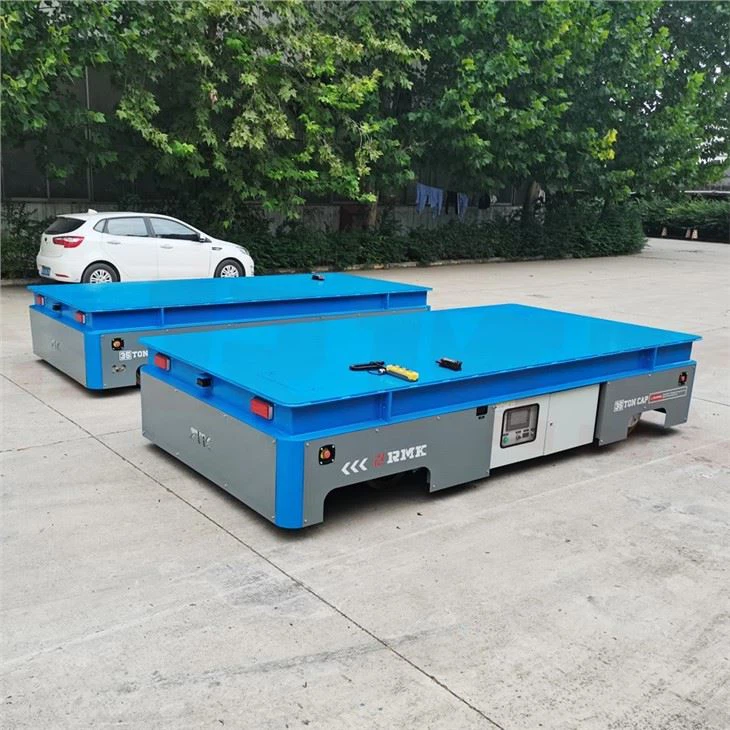
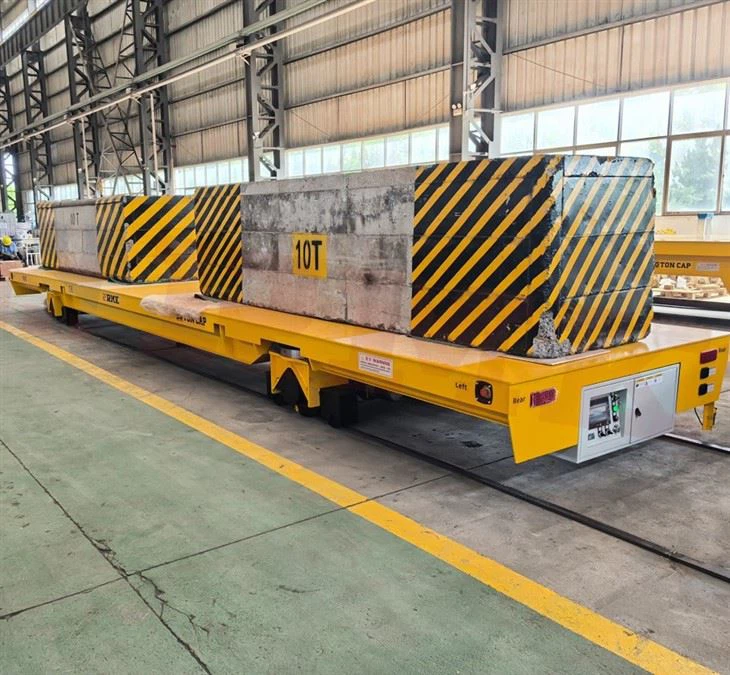
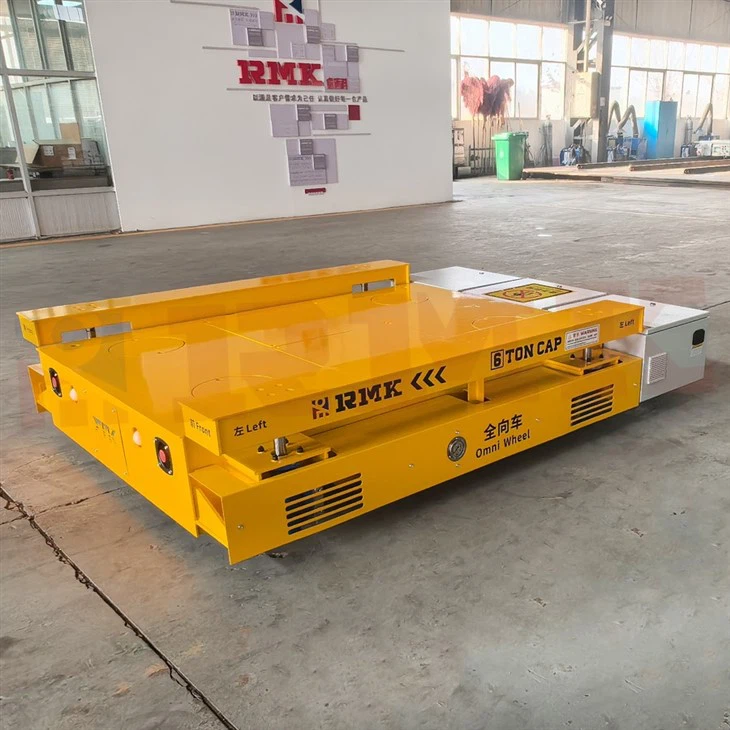
Un chariot de transfert de matrices (également appelé chariot de transfert de moules) est un équipement lourd chariot de transfert industriel conçu pour déplacer les moules, matrices et autres composants volumineux dans les usines. Il est largement utilisé dans les industries de l'emboutissage, du moulage par injection et du moulage sous pression, où une manutention sûre et efficace de charges lourdes est requise. Comparé à la manutention manuelle, un chariot de manutention de matrices ou chariot de transport de moules offre une meilleure stabilité, une capacité de charge plus élevée et une efficacité améliorée.
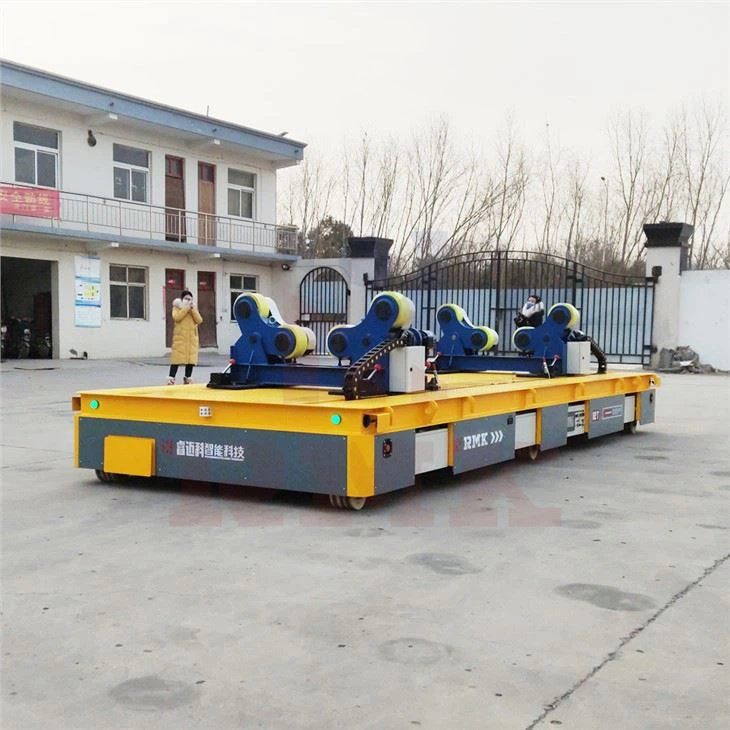
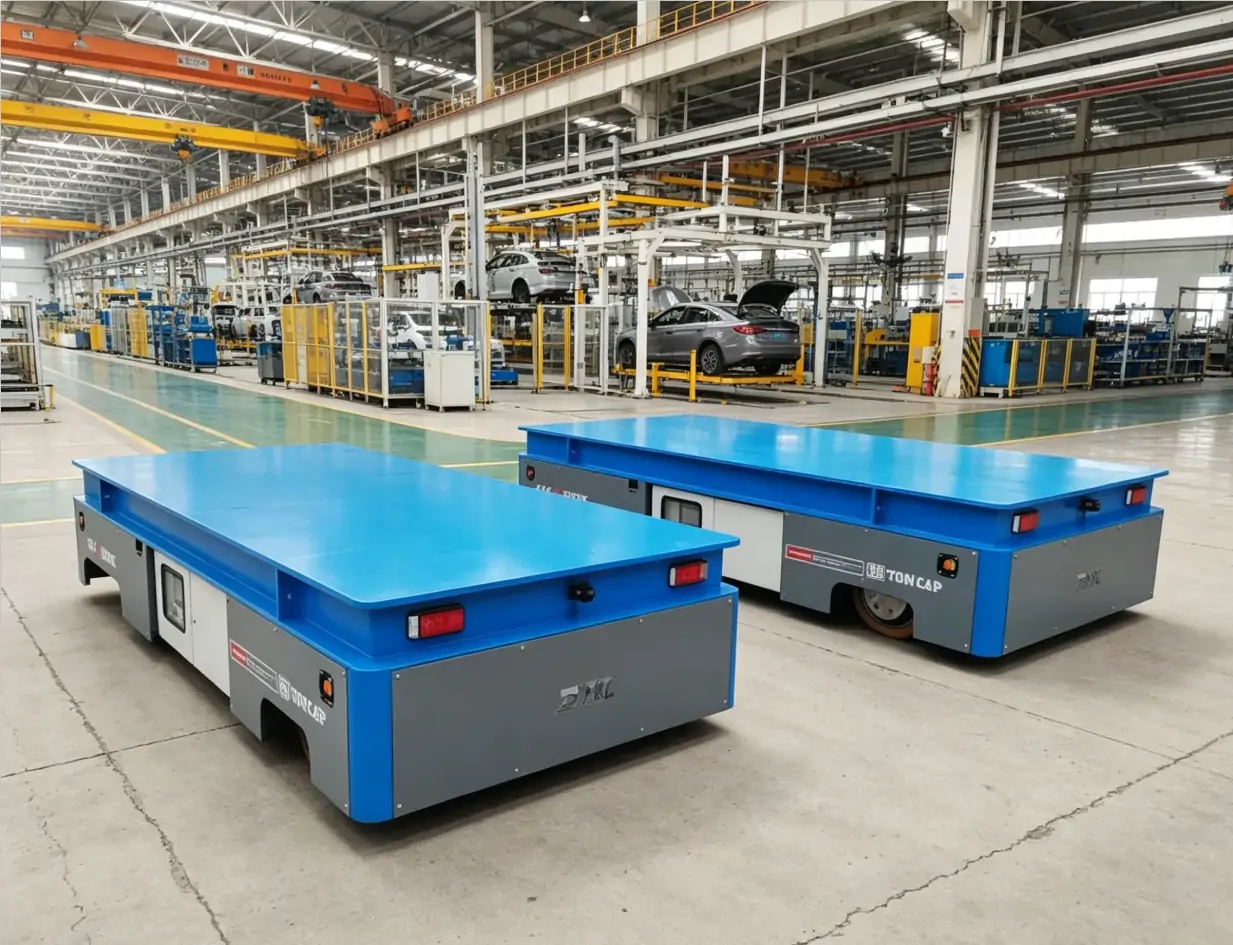
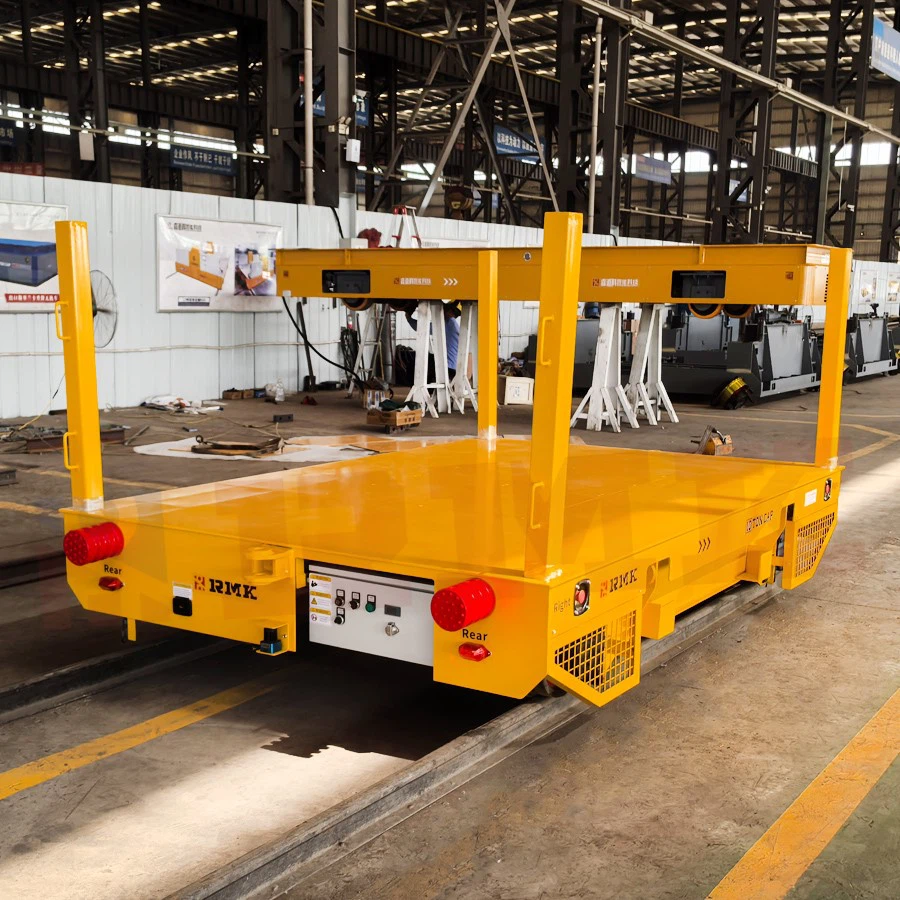
Dans cet article, nous expliquerons le fonctionnement d'un chariot de transfert de matrices, y compris son principe de fonctionnement, ses composants principaux et ses applications. Nous présenterons également différents types, tels que les chariots de transfert électriques et les chariots de transfert guidés par rail pour moules, afin de vous aider à comprendre comment les équipements de manutention de moules pour charges lourdes opèrent dans des environnements industriels réels.
Qu'est-ce qu'un chariot de transfert de matrices ?
Un chariot de transfert de matrices, également connu sous le nom de chariot de transfert de matrices, est un équipement de manutention spécial conçu pour transférer des moules lourds et de grandes pièces dans les ateliers industriels. Selon les différents scénarios d'application et les exigences de charge, il peut être divisé en petits chariots manuels et en équipements spéciaux électriques lourds, qui peuvent effectuer efficacement et en toute sécurité le transfert de moules entre les entrepôts, les différents équipements de traitement et les postes de production.
Pourquoi est-il important dans la fabrication moderne
Le chariot de transfert de matrices est un type important de chariot de transfert industriel. Il est largement utilisé pour déplacer des moules et matrices lourds dans les usines de fabrication. De plus en plus d'usines choisissent des chariots de transfert de moules et des solutions de chariots de transfert électriques pour améliorer l'efficacité de la manutention des matériaux, réduire le travail manuel et soutenir des opérations de production stables.
- Amélioration de l'efficacité de la production: Un chariot de manutention de matrices permet de transférer rapidement les moules et matrices entre les postes de travail, contribuant ainsi à réduire les temps d'arrêt de production et à améliorer l'efficacité du flux de travail.
- Réduction de la main-d'œuvre et des risques de sécurité: L'utilisation d'un chariot de transport de moules réduit la manutention manuelle des moules lourds, diminuant ainsi le risque de blessures au travail et de dommages aux équipements.
- Soutien à la production automatisée: Un système de chariot de transfert de matrices électrique peut fonctionner en conjonction avec des lignes de production automatisées et des systèmes d'entrepôt pour améliorer l'efficacité du transport des matériaux.
- Réponse aux exigences de transport lourd: Un chariot de transfert guidé par rail pour moules peut transporter en toute sécurité des moules volumineux et lourds, ce qui le rend adapté aux industries automobile, sidérurgique et des équipements lourds.
- Amélioration de la gestion de la production: Les équipements modernes de déplacement de matrices industriels aident les usines à organiser le transport des matériaux plus efficacement, améliorant le contrôle du flux de travail et réduisant les coûts d'exploitation.
Un chariot de transfert de matrices est un équipement important pour les usines modernes, contribuant à améliorer la sécurité, l'efficacité et les performances de manutention des charges lourdes.
Industries clés utilisant les chariots de transfert de matrices
Un chariot de transfert de matrices est largement utilisé pour transporter des moules lourds, des matrices et des matériaux industriels dans les usines de fabrication. En tant que type de chariot de transfert de moules et de chariot de transfert industriel, il peut améliorer l'efficacité de la manutention, réduire le travail manuel et soutenir des opérations de production stables dans différentes industries.
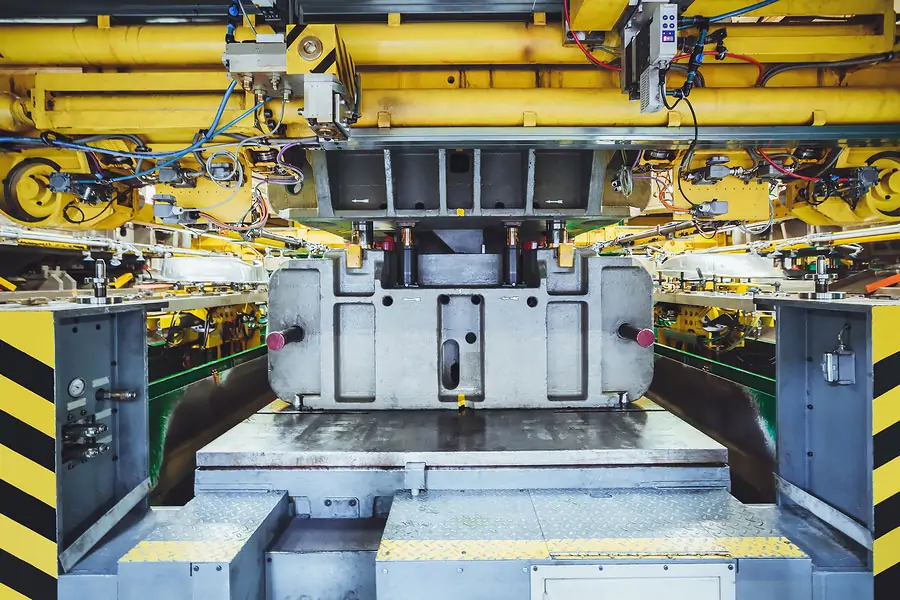
Industrie métallurgique et de l'emboutissage
Un chariot de manutention de matrices est couramment utilisé pour déplacer les matrices d'emboutissage et les moules métalliques lourds entre les ateliers et les postes de production.
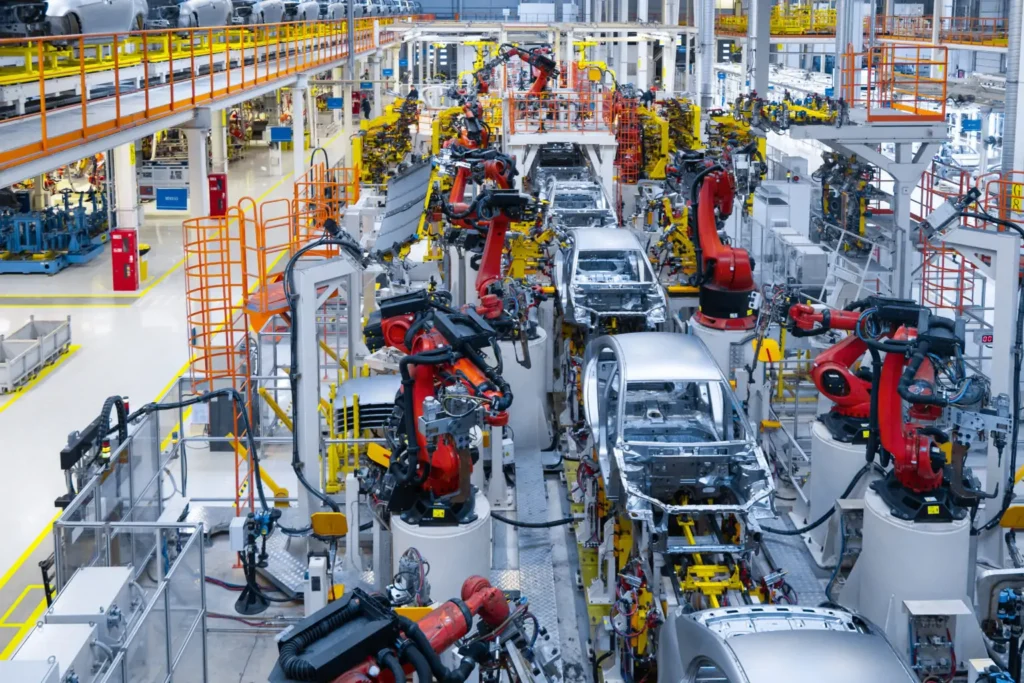
Fabrication automobile
Un chariot de transfert électrique aide à transporter les grandes matrices d'emboutissage dans les usines automobiles, réduisant le temps de remplacement des matrices et améliorant l'efficacité de la production.
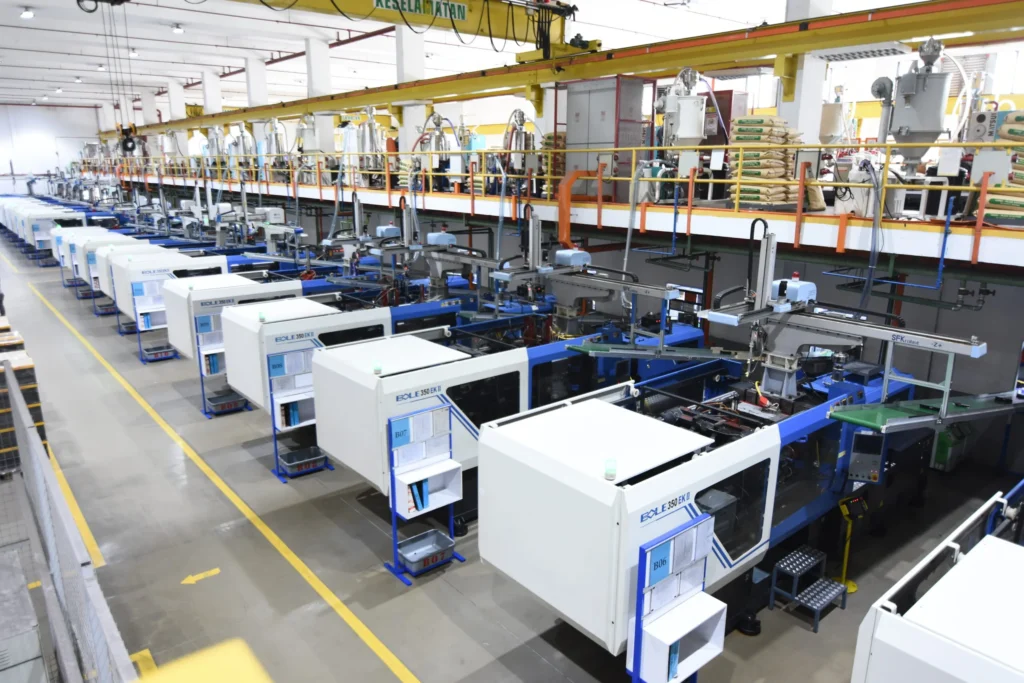
Industrie du moulage par injection
Un chariot de transport de moules est utilisé pour transférer en toute sécurité les moules d'injection entre les machines de moulage et les zones de stockage.
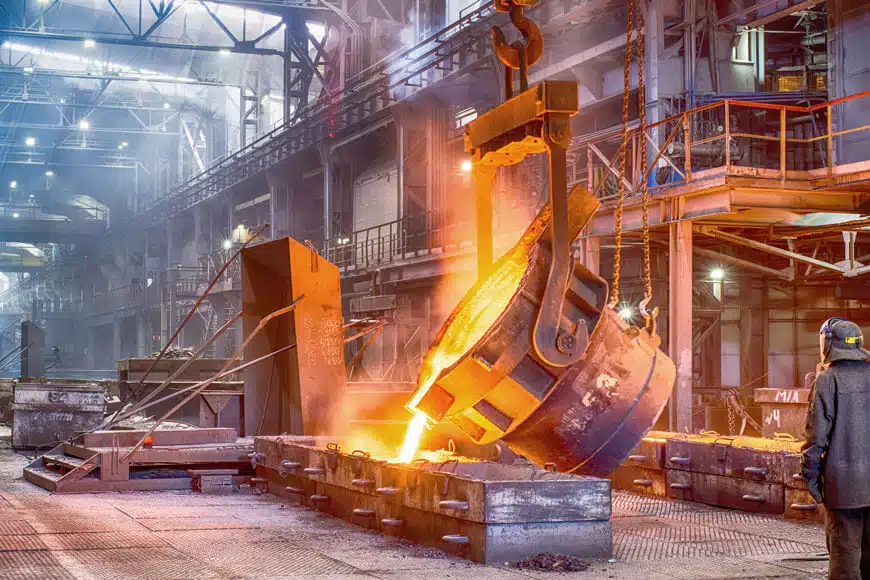
Industrie de la fonderie
Un chariot de transfert guidé par rail pour moules peut transporter des moules lourds et à haute température dans des environnements de fonderie exigeants.
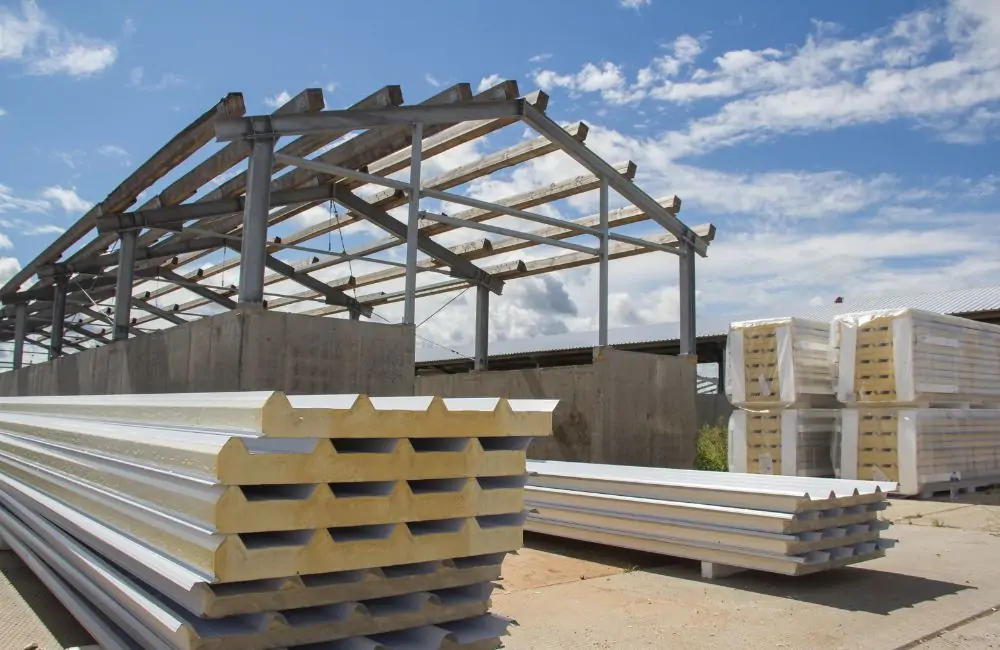
Industrie des matériaux de construction préfabriqués
Un chariot de transfert de matrices est utilisé pour déplacer les moules de panneaux muraux et les moules de composants en béton entre les processus de production.
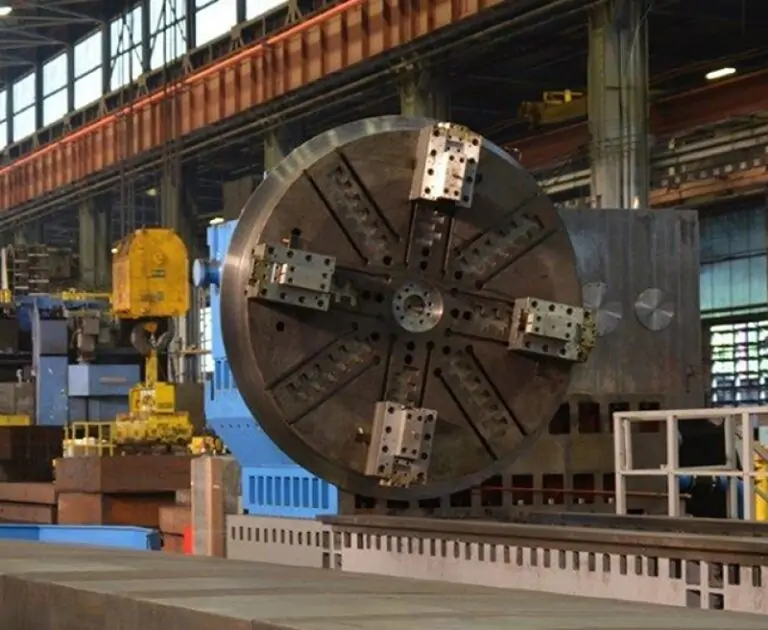
Industrie de la machinerie lourde et de la construction navale
Les équipements industriels lourds de déplacement de matrices sont adaptés au transport de moules surdimensionnés et de composants structurels dans la construction navale et la fabrication d'équipements lourds.
Aujourd'hui, de nombreuses solutions de systèmes de chariots de transfert de matrices électriques peuvent être personnalisées en fonction de la capacité de charge, des dimensions de la table, du type de rail et de l'environnement de travail pour répondre à différentes exigences de manutention industrielle.
Pièces détachées
Les composants principaux d'un chariot de transfert de matrices travaillent ensemble pour assurer un fonctionnement stable, un transport de charges lourdes et une manutention sécurisée des matériaux. Du support structurel à la transmission de puissance et à la protection de sécurité, chaque pièce joue un rôle important dans la performance globale de l'équipement.
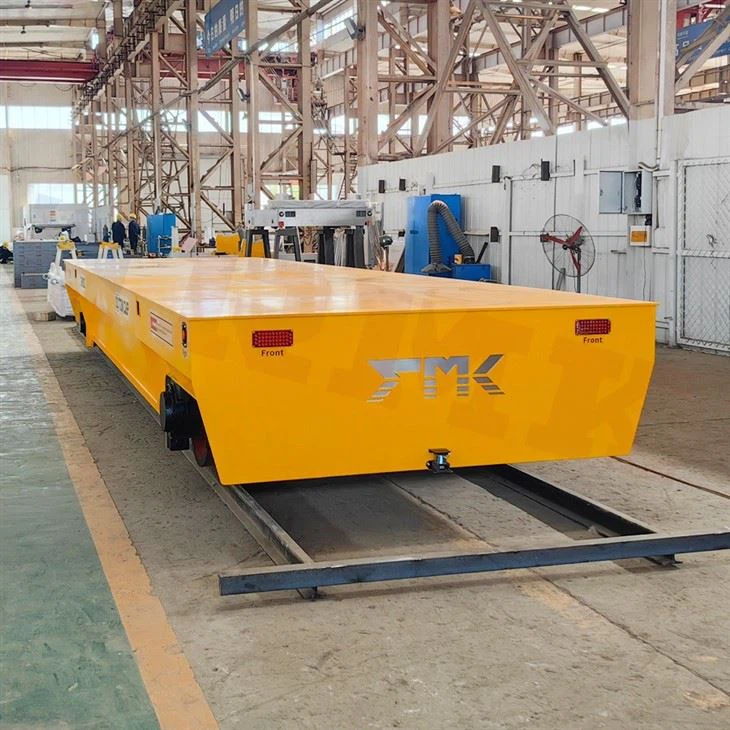
Structure en acier 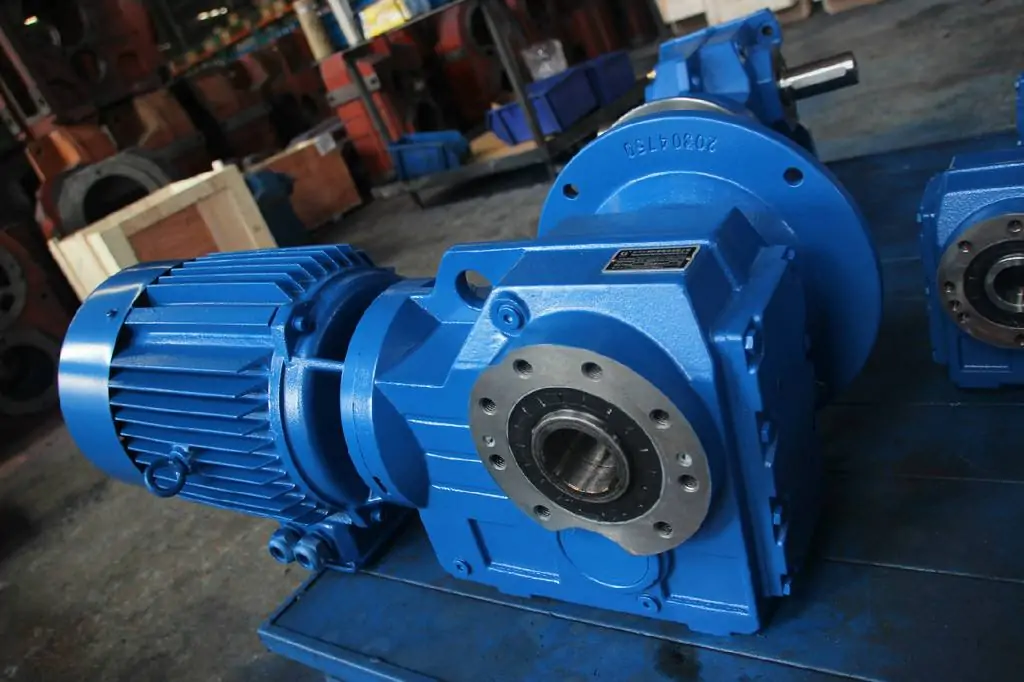
Moteur électrique 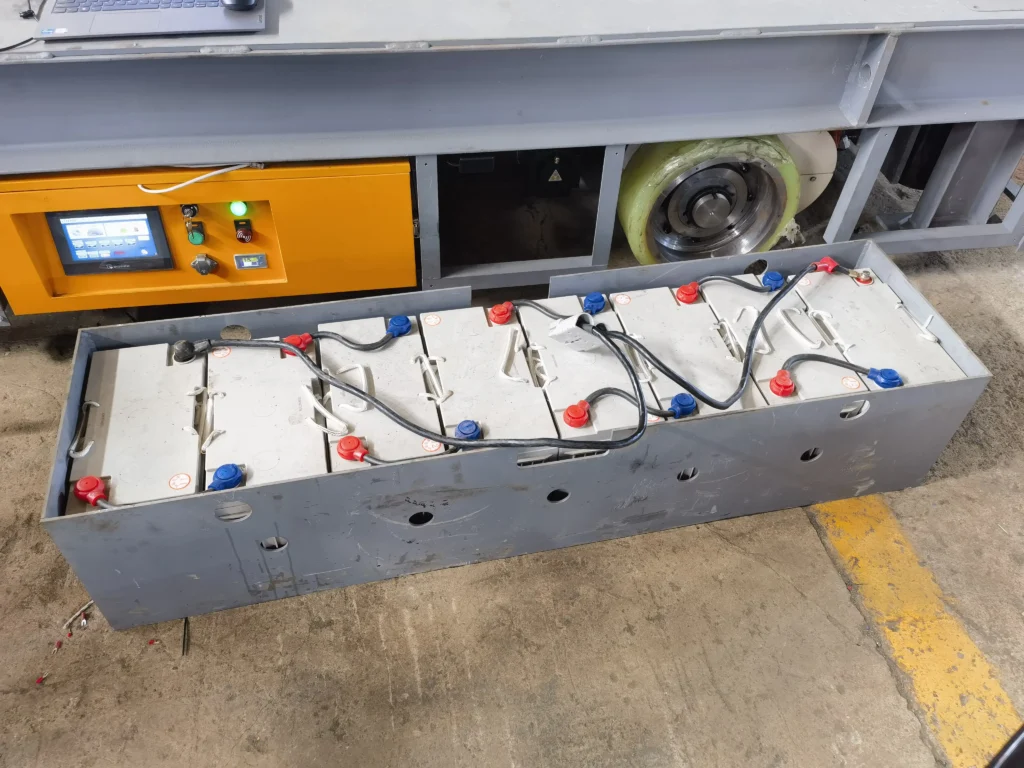
Batterie 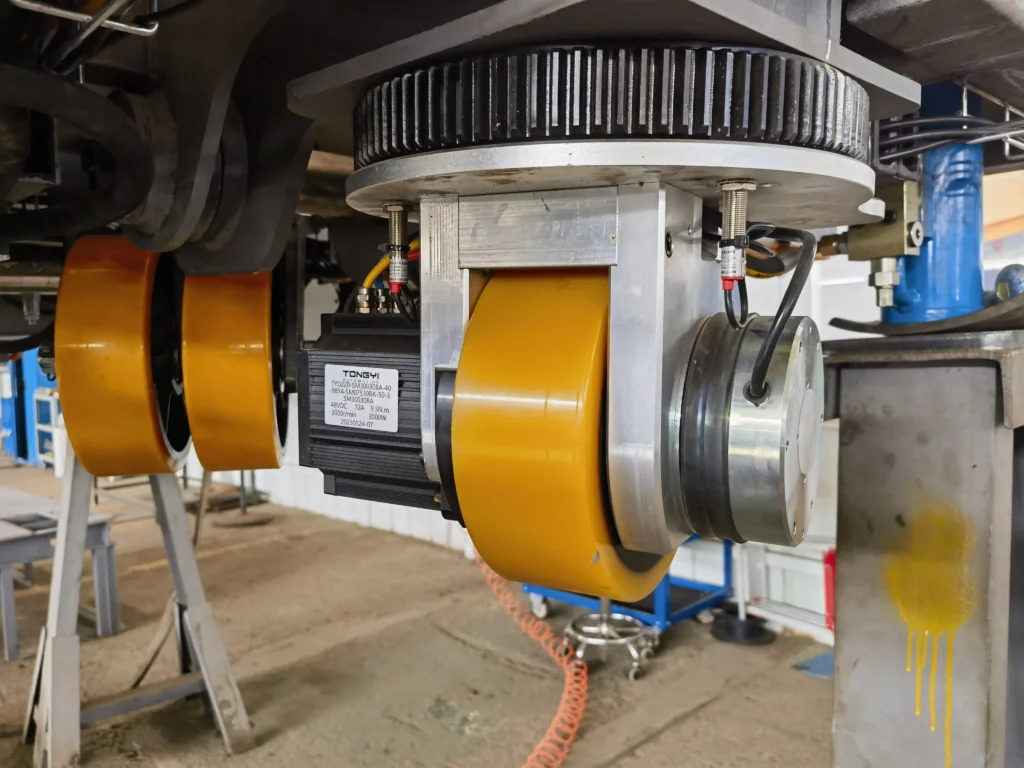
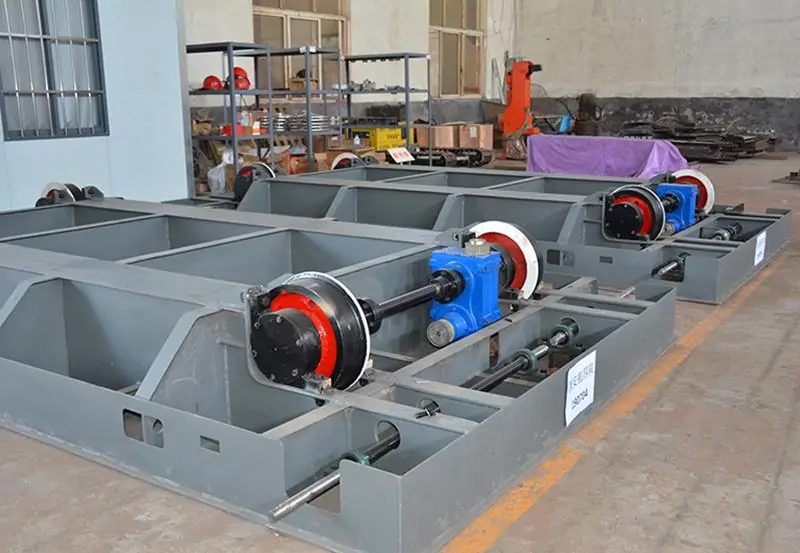
Système de roues 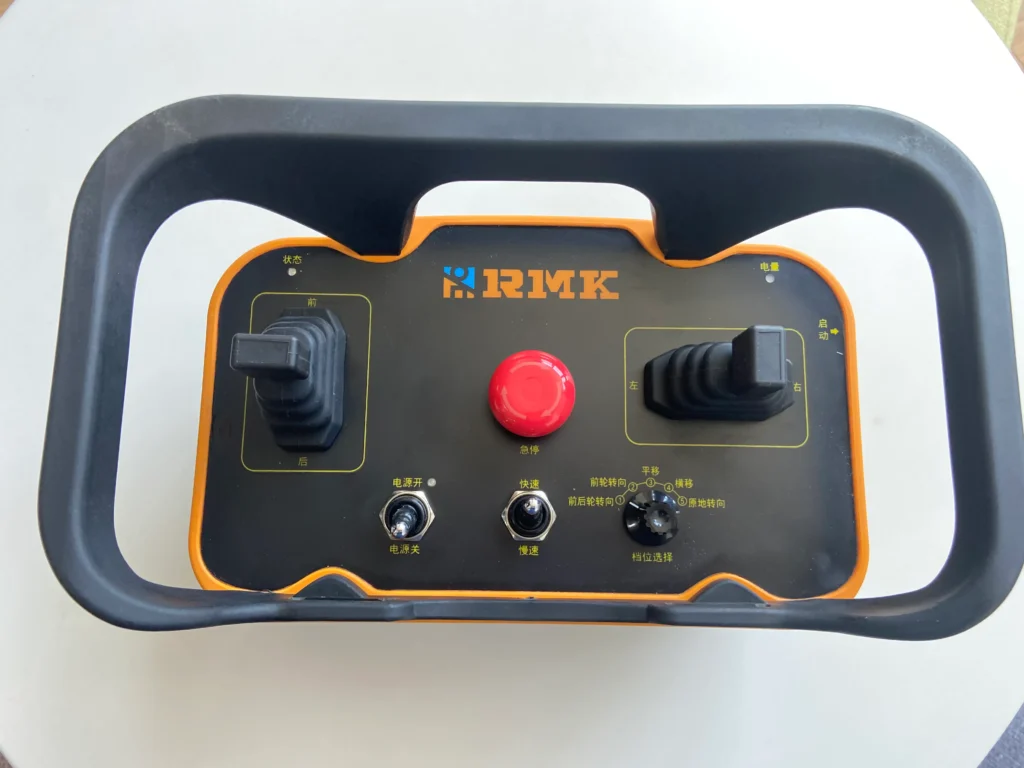
Panneau d'automatisation 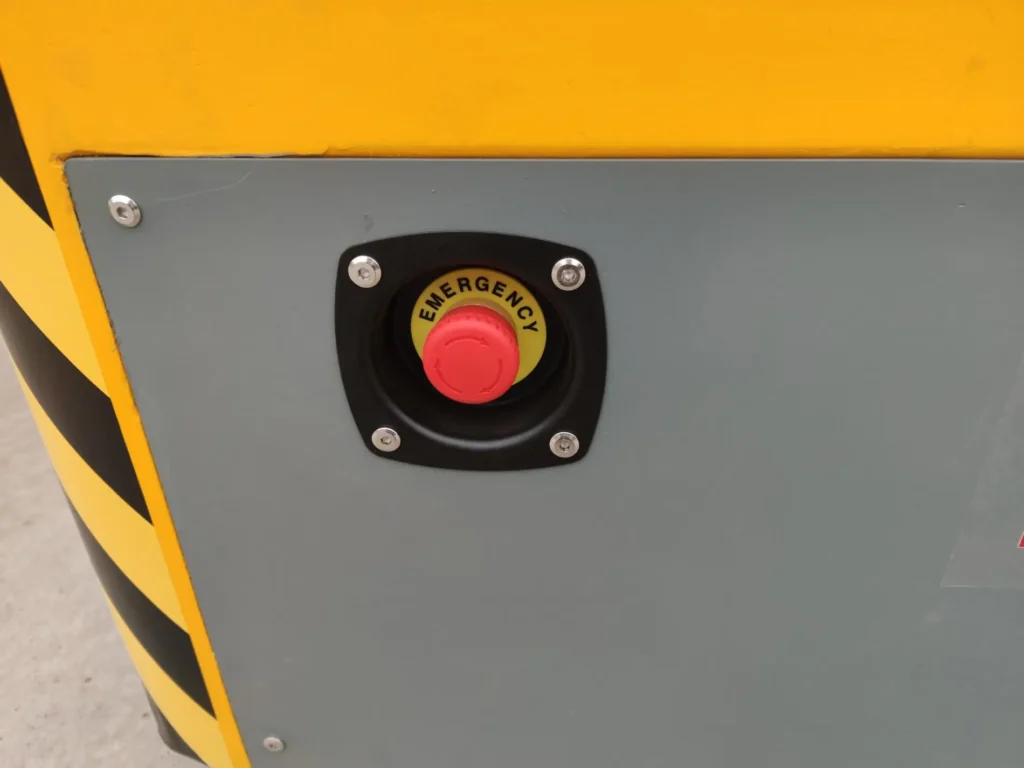
Arrêt d'urgence 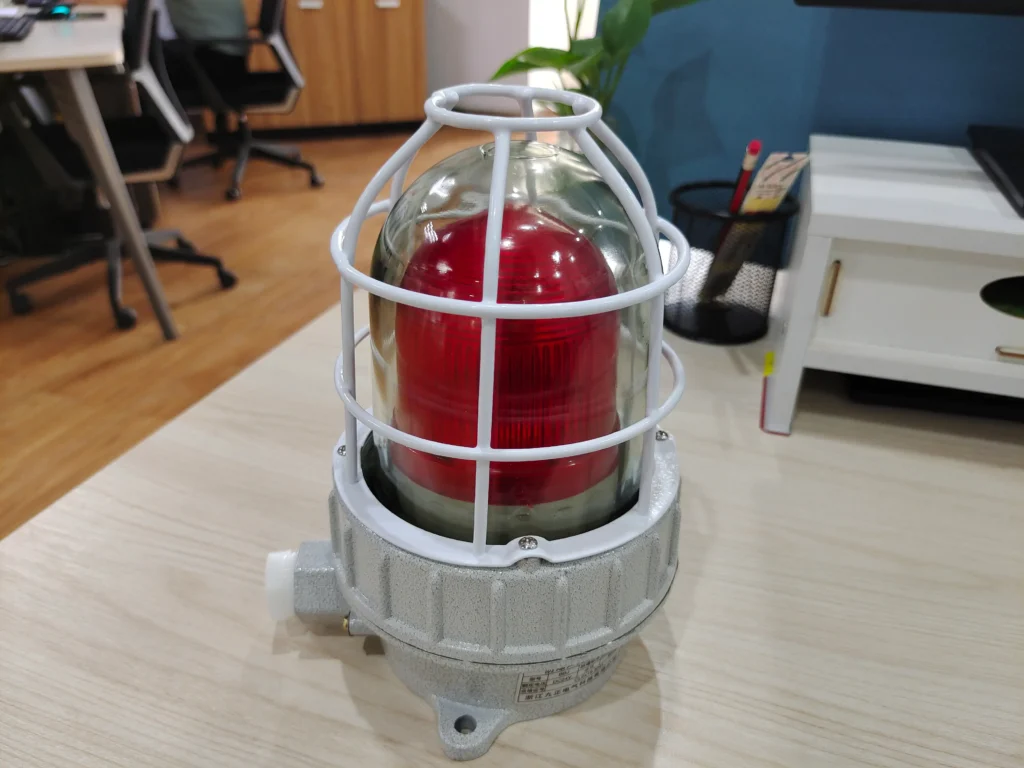
Alarme 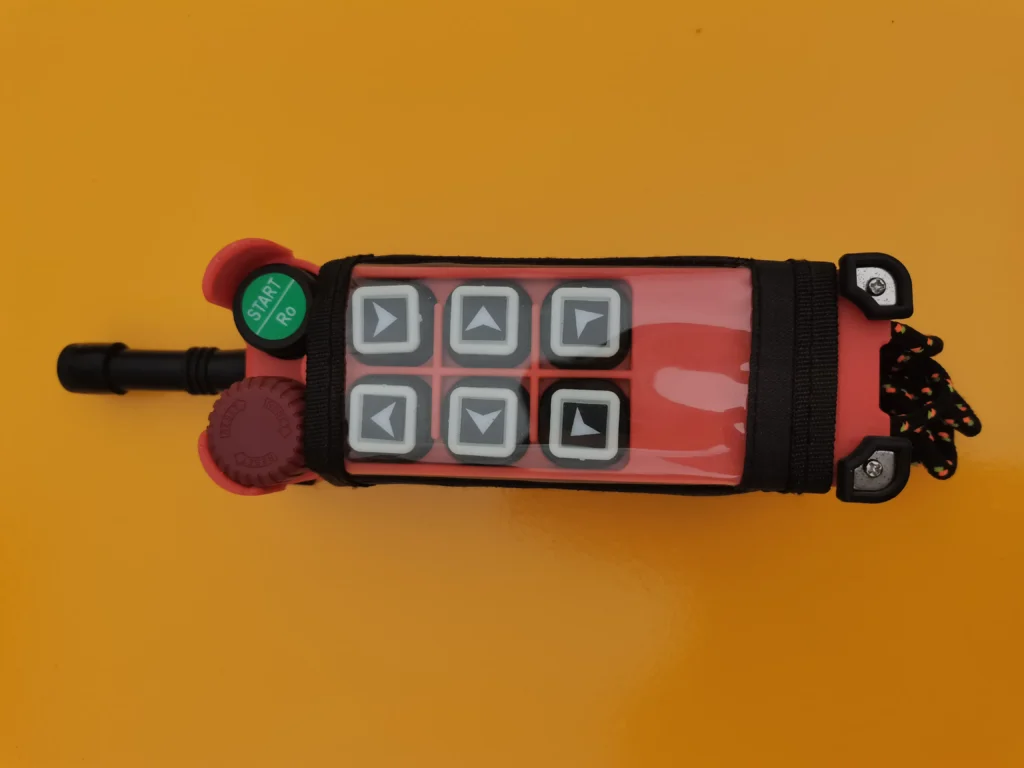
Télécommande 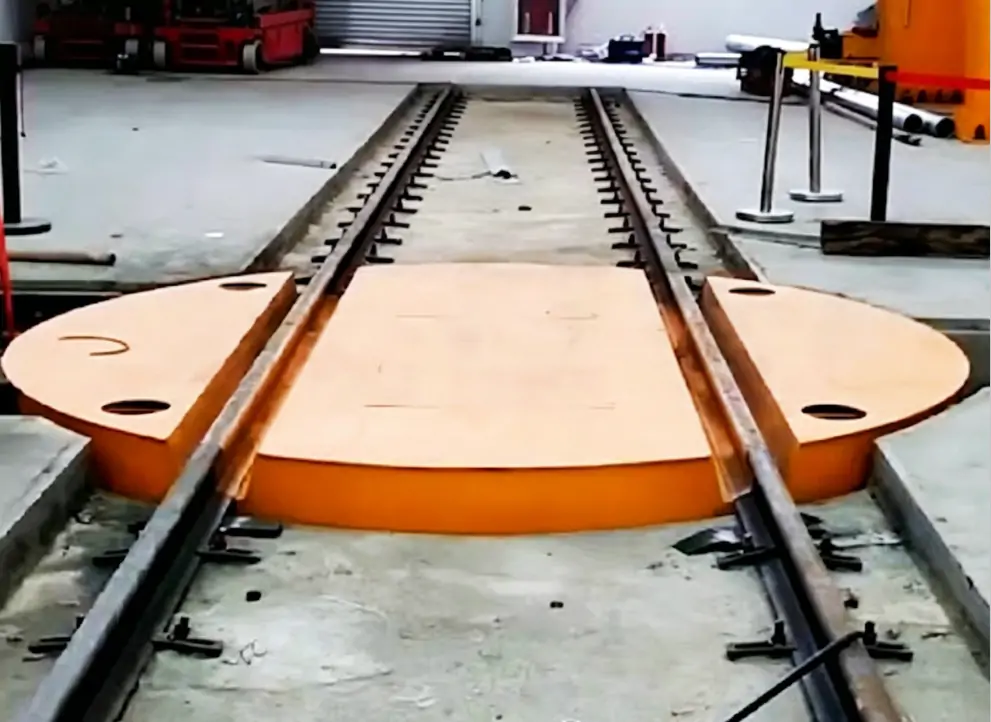
Rails 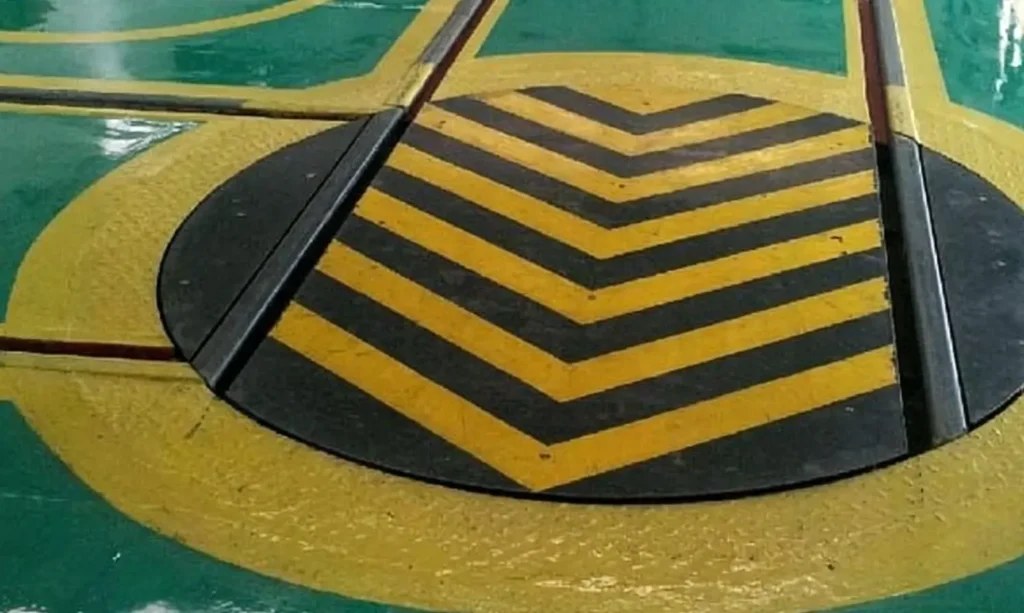
Rails
Structure en acier: Le châssis en acier est le noyau porteur, fournissant un support rigide pour éviter la déformation sous des charges lourdes et maintenir un fonctionnement stable des composants internes.
Système d'entraînement (moteur électrique et boîte de vitesses): Le système d'entraînement convertit la sortie à haute vitesse et faible couple du moteur en une puissance à basse vitesse et couple élevé pour les roues, permettant un démarrage en douceur, une accélération et un positionnement précis.
Système d'alimentation électrique (Batterie / Câble / Alimentation par rail): La batterie offre une mobilité sans fil, tandis que l'alimentation par câble ou par rail permet un fonctionnement continu pour différentes conditions de travail.
Système de roues (Roues de rail ou roues en polyuréthane): Les roues de rail supportent un fonctionnement sur voie fixe, tandis que les Lignes de production automatisées : roues conviennent aux applications sur sol plat, offrant une capacité de charge élevée, un faible bruit et une résistance à l'usure.
Système de contrôle (télécommande / PLC / panneau d'automatisation): La télécommande permet une opération homme-machine séparée, tandis que les PLC ou panneaux d'automatisation prennent en charge des itinéraires prédéfinis et la coordination de plusieurs chariots, améliorant la flexibilité et l'efficacité opérationnelles.
Dispositifs de sécurité (arrêt d'urgence, alarme, capteurs): Le bouton d'arrêt d'urgence coupe l'alimentation pour prévenir les accidents, les alarmes sonores et visuelles indiquent l'état de fonctionnement, et les capteurs détectent les obstacles en temps réel pour la sécurité du personnel et de l'équipement.
Ces composants forment ensemble un système complet. Du support physique au contrôle intelligent en passant par la protection de sécurité, chaque élément sert l'objectif principal de transporter des charges lourdes de manière efficace et sécurisée. Dans les applications pratiques, le choix de la configuration dépend de la capacité de charge, de l'environnement d'exploitation et des exigences d'automatisation.
Comment fonctionne un chariot de transfert de matrices ?
Le fonctionnement d'un chariot de transfert de matrices implique à la fois le principe de fonctionnement de l'équipement et le processus de transport réel lors de la production quotidienne. De la transmission de puissance au contrôle de mouvement en passant par le déplacement et le positionnement de la charge, chaque étape affecte la stabilité et l'efficacité de la manutention des matrices.
Les sections suivantes expliquent le principe de fonctionnement d'un chariot de transfert de matrices et le flux de travail complet, du démarrage au transfert de la matrice et au positionnement final.
Principe de fonctionnement
Un chariot de transfert de matrices fonctionne grâce à la coordination du système d'alimentation, du système d'entraînement, du système de contrôle de mouvement et des dispositifs de sécurité. Différentes configurations et conceptions fonctionnelles permettent à l'équipement de manipuler efficacement des matrices lourdes dans divers environnements industriels.
Principe d'alimentation et d'entraînement
La plupart des solutions de système de chariot de transfert de matrices électrique utilisent des batteries au plomb-acide ou des batteries au lithium comme source d'alimentation principale. La batterie alimente le moteur à courant continu, qui utilise une technologie de contrôle de vitesse du moteur pour fournir une puissance de sortie stable.
Principe de contrôle de mouvement
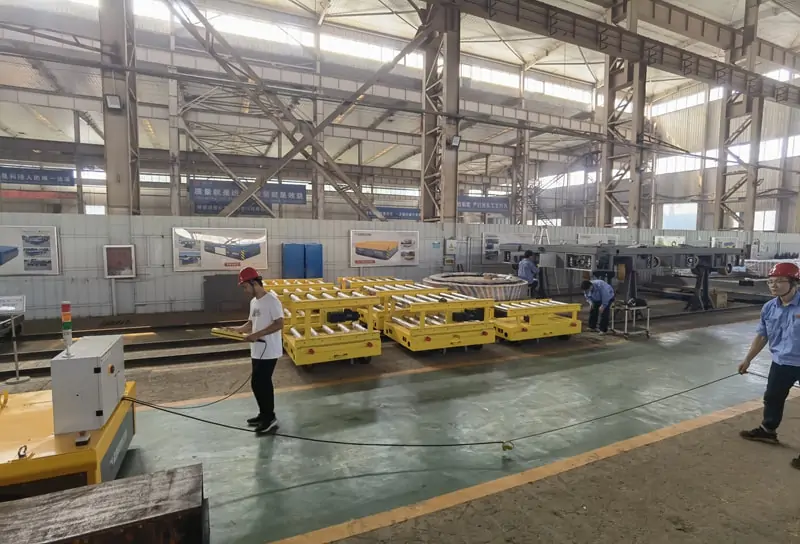
L'équipement prend en charge les modes de fonctionnement par commande filaire et par télécommande. Les opérateurs peuvent envoyer des commandes via le système de contrôle pour effectuer des mouvements de base, notamment le démarrage, l'arrêt, la marche avant, la marche arrière, le virage et le réglage de la vitesse.
Principe de protection de sécurité
Le chariot est équipé de dispositifs de sécurité tels que des alarmes et un radar d'évitement d'obstacles. Lorsque des obstacles sont détectés pendant le fonctionnement, le système active la fonction d'arrêt pour éviter les collisions et protéger le personnel et les matrices lourdes pendant le transport.
Principe de fonction étendue
Les modèles fonctionnels peuvent inclure des plates-formes de levage, des systèmes de navigation intelligents et des structures de rails multicouches. Les modèles de levage prennent en charge le réglage de la hauteur pour le chargement des matrices et l'accostage des équipements, tandis que les systèmes intelligents prennent en charge la navigation automatique, la détection d'obstacles et l'accostage. Les systèmes de rails multicouches utilisent des chariots principaux et secondaires coordonnés pour le transfert de matrices entre différents postes de travail. chariot de transfert de matrices Flux de travail.
Un chariot de transport de matrices est un véhicule industriel spécialisé alimenté par batterie, conçu pour déplacer des objets lourds tels que des matrices de grande taille. Son fonctionnement peut être divisé en trois étapes : la sortie de puissance, le contrôle de mouvement et l'exécution de la sécurité. Le processus détaillé est le suivant :
Entrée de puissance et activation du système :
Après la connexion de l'alimentation électrique, l'opérateur envoie une commande de démarrage via un contrôleur filaire ou une télécommande sans fil. Les modèles sans rail utilisent généralement l'alimentation par batterie, tandis que les modèles guidés par rail utilisent couramment l'alimentation par câble ou par rail. Placement de la charge et répartition du poids :.
Après avoir placé la matrice sur la plate-forme, l'opérateur ajuste la position de la charge pour maintenir le centre de gravité près du milieu du châssis du chariot, réduisant ainsi l'influence d'une charge inégale pendant le mouvement. Mécanisme de mouvement (marche avant, marche arrière, direction) :.
Une fois la charge fixée, l'opérateur envoie des commandes de mouvement via le système de contrôle. Le moteur fournit la puissance via le réducteur pour entraîner les roues de déplacement. Les mouvements avant et arrière sont contrôlés en changeant le sens de rotation du moteur, avec une vitesse de déplacement réglable.
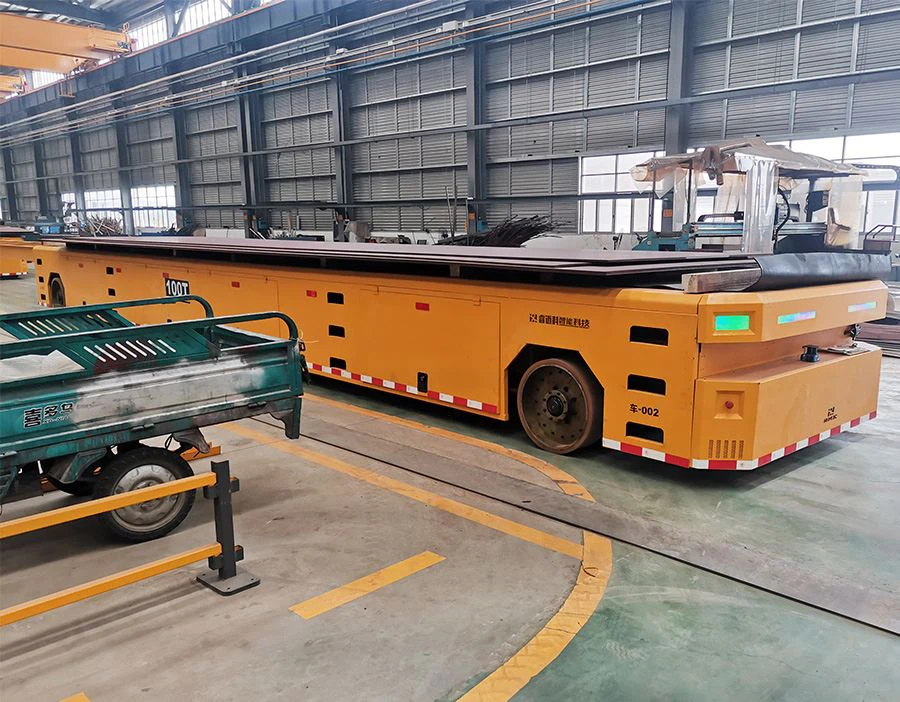
- Les systèmes de chariot de manutention de matrices sans rail pour charges lourdes utilisent généralement une direction hydraulique multiroue pour des virages flexibles et une rotation à 360°.
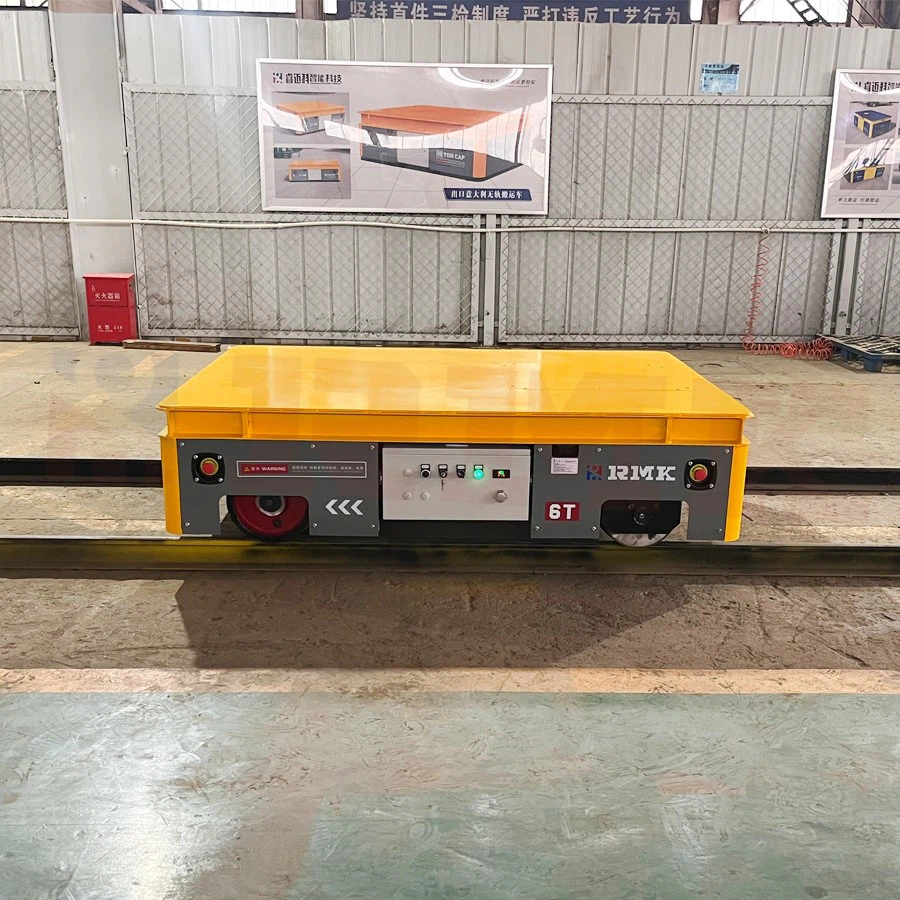
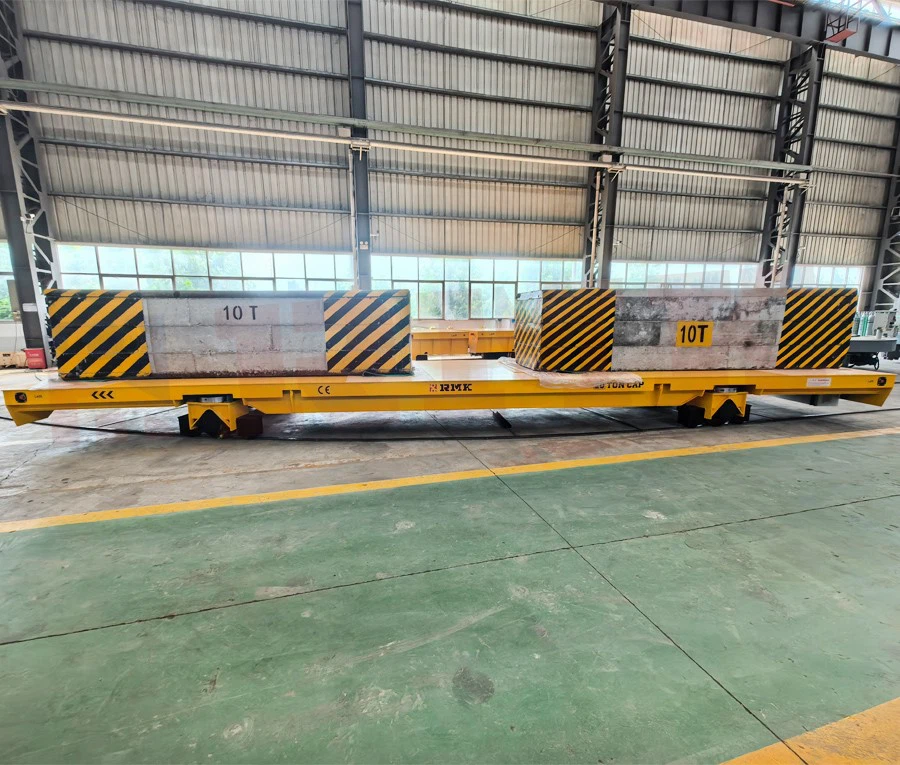
- Un chariot de transfert de matrices guidé par rail se déplace le long de rails fixes, tandis que les systèmes de rails multicouches effectuent un transfert directionnel grâce à la coordination du chariot principal et du chariot secondaire.
- Différences de fonctionnement entre guidage par rail et sans rail.
Guidage par rail : Le chariot se déplace le long de rails préinstallés et peut fonctionner sur des voies courbes ou en forme de S. Il convient aux itinéraires fixes et au transport longue distance entre les stations.
- Sans rail : Le chariot se déplace librement sur les sols plats de l'atelier sans rails fixes, prenant en charge une direction flexible et un ajustement d'itinéraire pour différentes configurations d'atelier.
- Arrêt, positionnement et contrôle précis :.
Lorsque le chariot s'approche de la station cible, l'opérateur ou le système de navigation envoie une commande d'arrêt. Le moteur cesse sa sortie et le système de freinage ralentit le chariot pour le positionner. Les chariots guidés par rail utilisent des interrupteurs de fin de course et des broches de positionnement pour un accostage précis avec les équipements de production.
- Les chariots intelligents sans rail utilisent des systèmes de navigation tels que le guidage laser ou magnétique pour le positionnement automatique et l'ajustement d'itinéraire.
- Si un ajustement de position est nécessaire, l'opérateur peut effectuer un réglage fin du chariot via la télécommande. Une fois le positionnement terminé, le dispositif de freinage verrouille le chariot avant le déchargement ou le transfert de la matrice.
- Remarque : La capacité de charge du chariot de transport de matrices peut être personnalisée pour répondre à diverses exigences de transport de matrices.
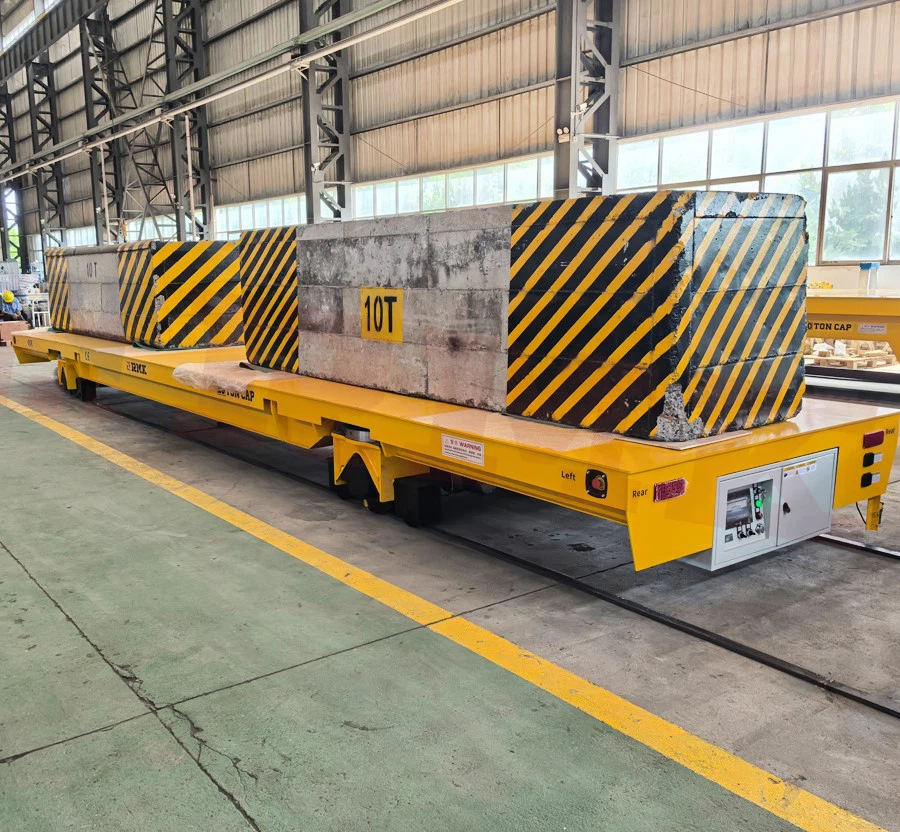
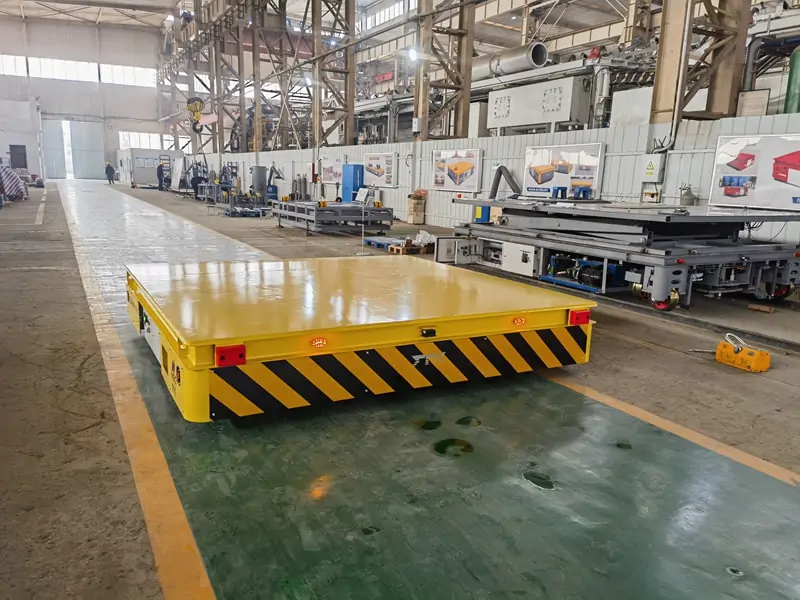
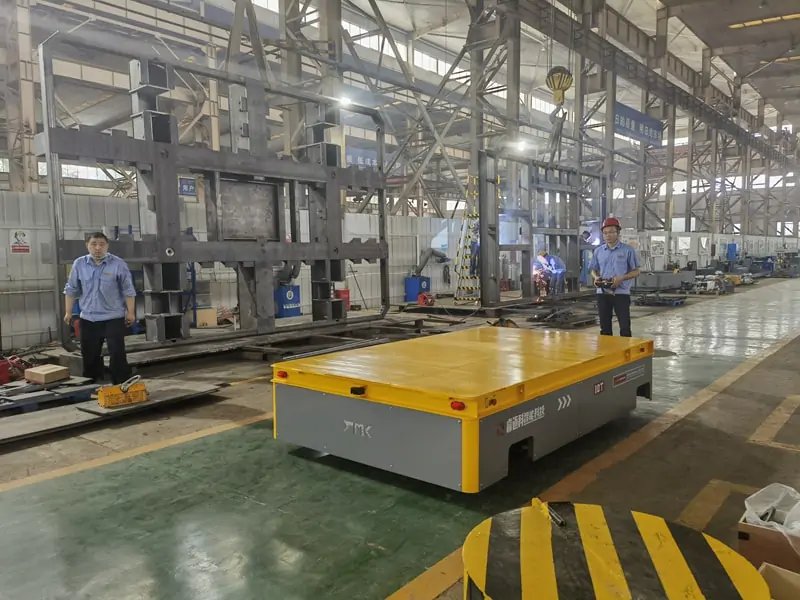
Selon la méthode de déplacement, l'équipement peut être divisé en types guidés par rail et sans rail. Un système d'équipement de déplacement de matrices industrielles sans rail peut se déplacer librement sur des sols en béton plats sans rails préinstallés, offrant une direction flexible et des coûts de modification de site plus faibles.
Différents types de systèmes de chariot de transfert de matrices sont disponibles pour différents environnements de manutention de matrices, capacités de charge et exigences de transport. En fonction de l'agencement de l'usine, de l'itinéraire de déplacement et du niveau d'automatisation, les fabricants peuvent choisir parmi des solutions de transport guidées par rail, sans rail, alimentées par batterie, alimentées par câble et AGV automatiques. Voici les types les plus courants de chariots de transfert de matrices utilisés dans la production industrielle moderne.
Types
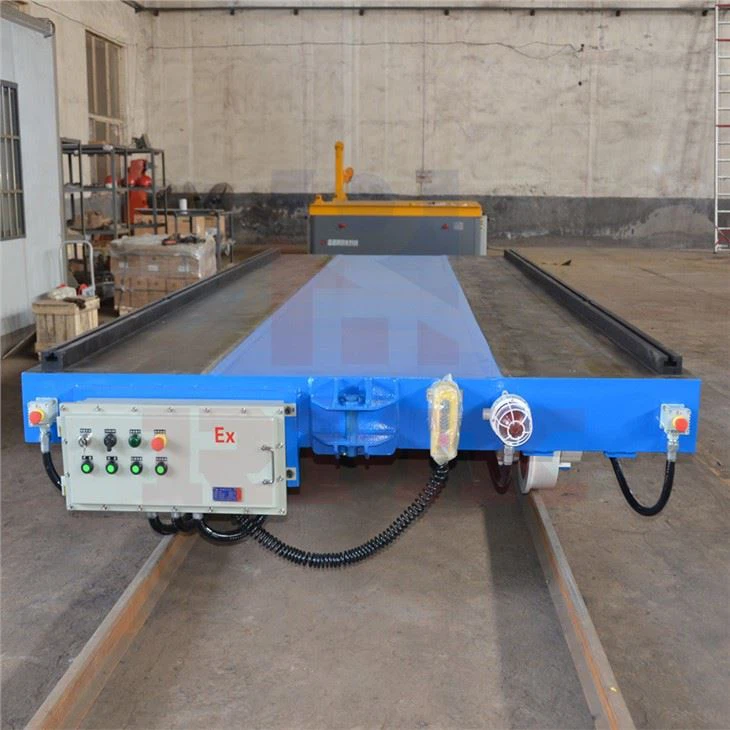
Chariot de transfert alimenté par batterie.
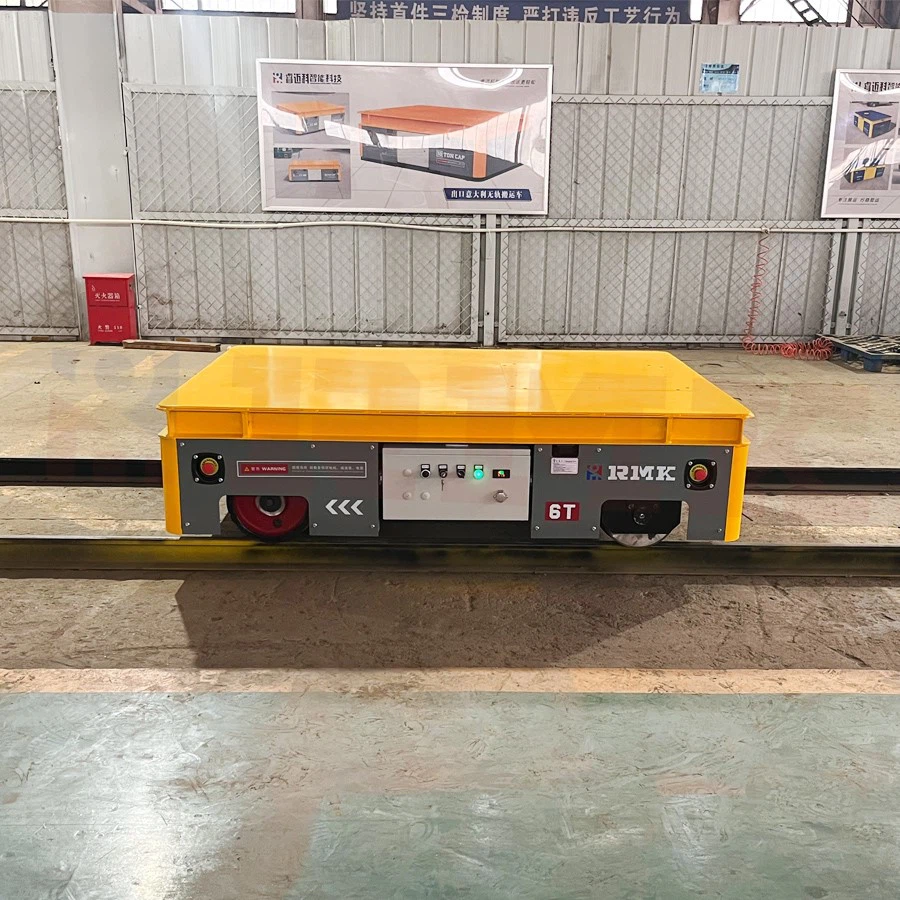
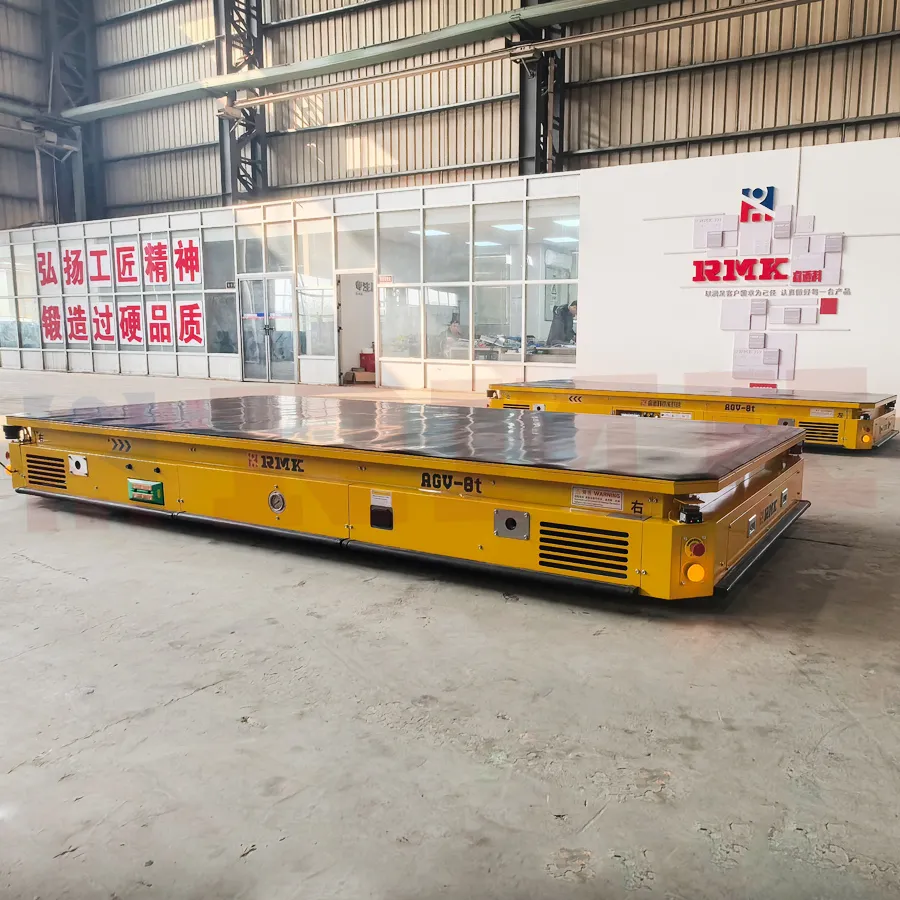
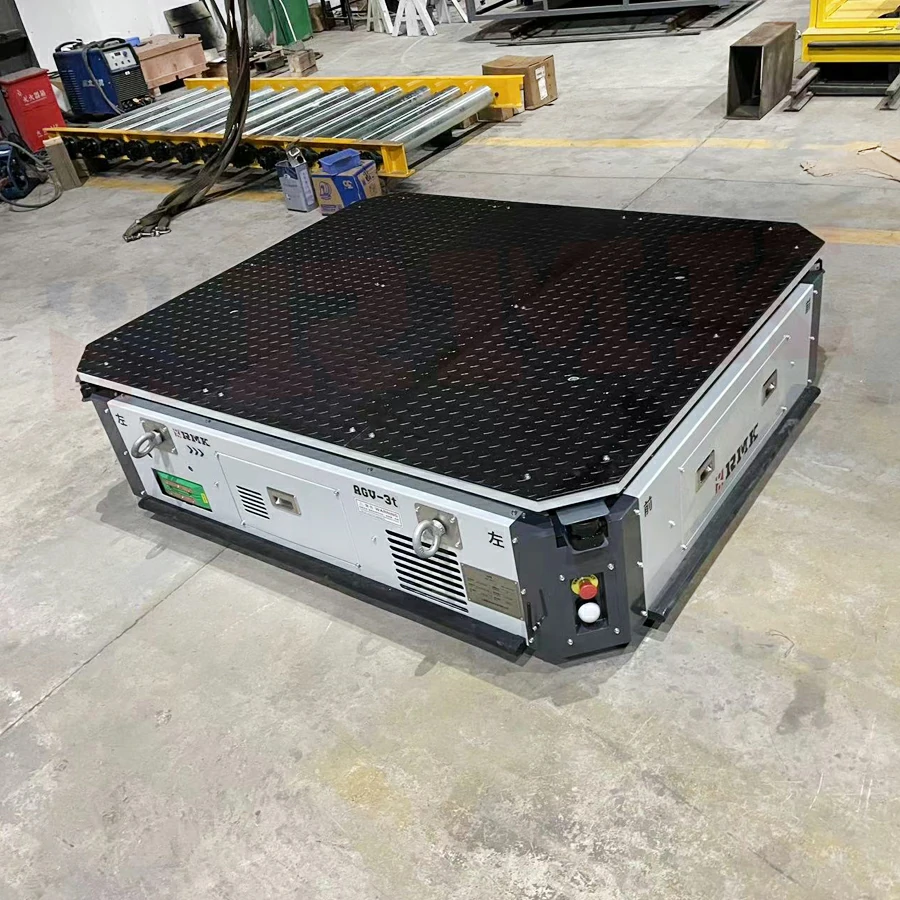
Chariot de transfert AGV automatisé
Différentes industries et lignes de production ont des exigences différentes en matière de capacité de charge, de distance de déplacement, de méthodes de direction et de fonctions d'automatisation. REMARQUABLE se spécialise dans les chariots de transfert de matrices personnalisés et les solutions de chariots de transfert industriels, proposant des conceptions sur mesure basées sur les conditions de travail réelles, notamment le type de rail, les dimensions de la table, le mode d'alimentation électrique, le système de levage et la configuration de contrôle intelligent.
Courriel : transfercart@rmkzn.com
Téléphone : +86-18637369355
Applications des chariots de transfert de matrices
Un chariot de transfert de moules est conçu pour transporter des moules lourds et de grands composants industriels dans différents environnements de production. Il est largement utilisé dans les industries manufacturières où une manutention de charges lourdes sûre, stable et efficace est requise. Voici les principaux scénarios d'application.
| Scénario d'application | Description |
|---|---|
| Emboutissage et fabrication automobile | Utilisé pour le changement rapide de moules entre les zones de stockage et les lignes d'emboutissage, améliorant l'efficacité de la production dans la fabrication automobile en série. |
| Industrie du moulage par injection et de la fonderie | Utilisé pour le transport de moules d'injection et de coulée, avec des matériaux résistants à la chaleur et des surfaces antidérapantes en option pour une manutention plus sûre dans les environnements à haute température. |
| Ateliers automatisés intelligents | Prend en charge la navigation automatique, l'évitement d'obstacles et l'amarrage pour le transfert de moules sans conducteur et l'intégration avec des systèmes de production automatisés. |
| Transfert interne de moules multi-postes | Les systèmes de rails multicouches permettent le transfert entre postes, avec un mouvement coordonné entre les chariots principaux et secondaires pour la manutention multi-points. |
| Industrie de la machinerie lourde et de la construction navale | Convient pour des charges de 1 à 80 tonnes, manipulant de grands moules et pièces structurelles dans les industries de l'équipement lourd et de la construction navale. |
| Transport flexible inter-ateliers | Les chariots sans rail fonctionnent sur des sols plats avec une rotation à 360° et une capacité en pente, adaptés au transfert inter-ateliers. |
| Transport longue distance sur rail fixe | Les chariots guidés par rail circulent sur des voies prédéfinies, adaptés aux itinéraires courbes ou en S avec un transport stable et précis. |
| Applications d'amarrage d'équipement | Les plates-formes de levage ajustent la hauteur pour l'alignement avec les presses et les machines d'injection, simplifiant les opérations de chargement et de déchargement. |
En plus de la manutention des moules, un chariot de transfert de moules peut également être utilisé pour les bobines d'acier, les billettes et les composants préfabriqués. Les spécifications telles que la capacité de charge, les dimensions de la plate-forme et la méthode de déplacement peuvent être personnalisées en fonction des différentes conditions de travail.
Avantages de l'utilisation d'un chariot de transfert de matrices
Les avantages des chariots de transfert de moules résident dans leur capacité à améliorer l'efficacité, renforcer la sécurité et accroître la flexibilité opérationnelle, en particulier dans les environnements de fabrication tels que les ateliers d'emboutissage et de moulage par injection.
- Économies significatives de temps et de main-d'œuvre : Un chariot de transfert de matrices réduit le temps de changement de moule de 30 à 60 minutes à environ 3 à 5 minutes, diminuant les temps d'arrêt et améliorant l'efficacité globale de la production.
- Amélioration des performances de sécurité : Équipé de systèmes de sécurité tels que des alarmes et une détection d'obstacles, le chariot réduit les risques lors du transport de moules lourds.
- Fonctionnement flexible et utilisation multifonctionnelle : Les chariots sans rail offrent un mouvement libre, une rotation à 360° et une capacité de montée en pente. Les chariots guidés par rail assurent un mouvement stable sur des voies fixes ou courbes. Les modèles de levage prennent en charge le réglage en hauteur pour un amarrage facile avec les machines ou les systèmes de stockage.
- Optimisation de l'espace : Les systèmes de transfert de moules automatisés intègrent des fonctions de changement rapide et d'automatisation, contribuant à réduire la surface au sol occupée et à améliorer l'efficacité de l'agencement de la ligne de production.
- Réduction de la charge de travail de manutention manuelle : Le transport mécanique des moules lourds, des bobines et des billettes d'acier remplace la manutention manuelle et réduit la dépendance aux ponts roulants pour le mouvement horizontal.
Les chariots de transfert de matrices favorisent des processus de production plus rapides, plus sûrs et plus efficaces, contribuant à réduire les coûts d'exploitation et à améliorer la productivité.
Directives de maintenance et de sécurité
Les directives de maintenance et de sécurité pour un chariot de transfert de matrices se concentrent sur un fonctionnement fiable à long terme et une manutention sûre des équipements de charges lourdes. L'approche centrale est la maintenance préventive et le contrôle des risques, visant à améliorer la stabilité de l'équipement, à prolonger la durée de vie et à réduire les risques opérationnels.
Directives de maintenance
- Principe de maintenance préventive : La maintenance d'un chariot de transfert de matrices suit une approche préventive avec une inspection régulière et un entretien programmé pour réduire les pannes, prolonger la durée de vie et soutenir un fonctionnement stable à long terme.
- Inspection de routine et composants clés : Les pièces clés telles que le système d'entraînement, les roues, l'alimentation électrique, les freins et le système de contrôle nécessitent des vérifications régulières. Les pièces d'usure doivent être remplacées en fonction des conditions d'utilisation et des cycles de service pour éviter les pannes inattendues.
- Nettoyage du système et vérification des performances : Maintenir les pièces mécaniques et électriques propres aide à maintenir des performances stables. L'inspection de routine des capteurs, des unités de contrôle et des pièces mobiles aide à détecter les problèmes potentiels à un stade précoce.
- Gestion des enregistrements de maintenance : L'enregistrement des inspections, des réparations et des remplacements de pièces aide à suivre l'état de l'équipement et soutient la planification de la maintenance et le dépannage.
Directives de sécurité
- Règles de sécurité opérationnelle de base : Les opérateurs doivent suivre les pratiques de sécurité standard, notamment le port d'équipements de protection, le maintien de l'organisation de la zone de travail et l'évitement des comportements d'exploitation dangereux pendant les processus de manutention.
- Sécurité électrique et d'alimentation : Avant l'inspection ou la réparation, l'alimentation doit être coupée pour réduire les risques électriques. Les composants électriques doivent être manipulés avec les précautions appropriées pour éviter les courts-circuits ou l'activation accidentelle.
- Sécurité de la manutention des charges et de l'environnement de travail : Les charges doivent être placées uniformément pour éviter tout déséquilibre pendant le mouvement. La zone de travail doit rester dégagée de tout obstacle pour réduire les risques de collision pendant le fonctionnement.
- Mesures d'intervention d'urgence : En cas de conditions anormales telles qu'une surcharge ou une défaillance du système, l'opération doit être arrêtée immédiatement. Le diagnostic des pannes doit être terminé avant de redémarrer l'équipement.
Un système structuré de maintenance et de sécurité aide à maintenir le chariot de transfert de matrices en fonctionnement sûr, efficace et avec des temps d'arrêt réduits dans les environnements industriels.
Conclusion
Un chariot de transfert de matrices intègre un entraînement motorisé, un système de contrôle, des dispositifs de sécurité et des structures de mouvement flexibles pour soutenir la manutention efficace de charges lourdes dans la fabrication moderne. Du principe de fonctionnement aux composants clés et aux applications industrielles, il joue un rôle essentiel dans l'amélioration de la productivité, de la sécurité et de la stabilité des flux de travail dans différents secteurs.
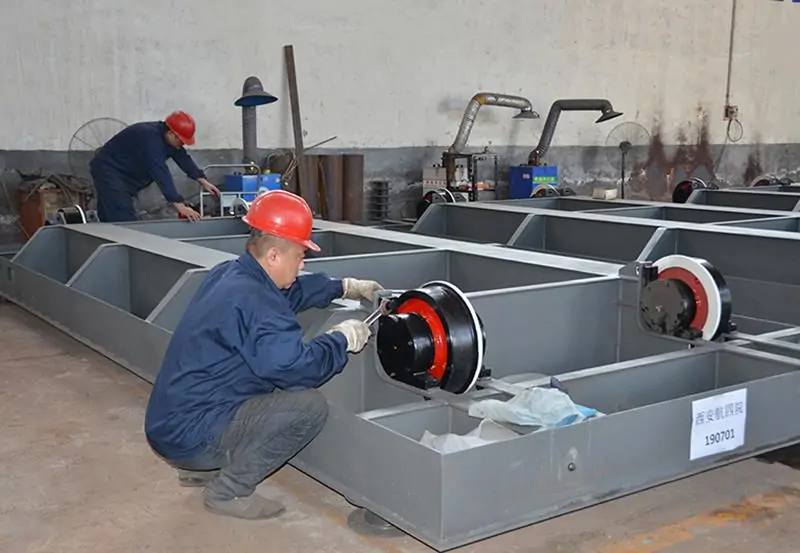
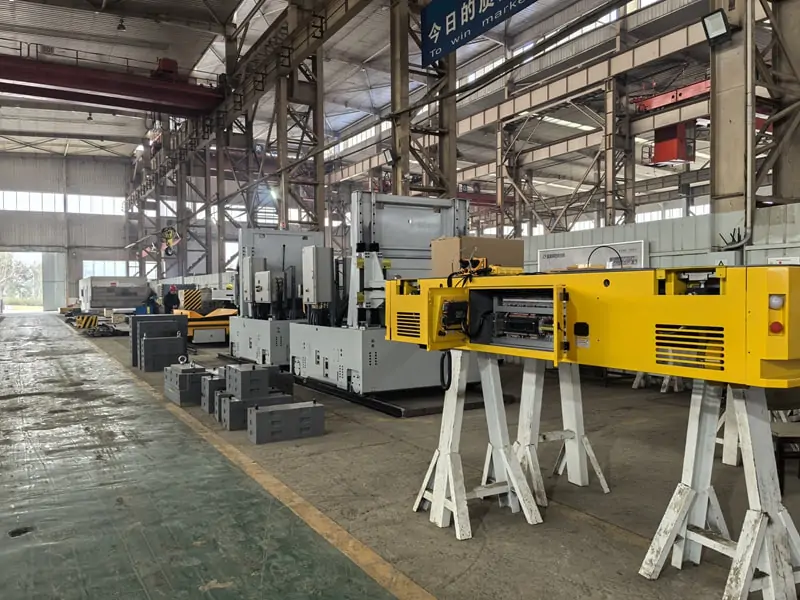
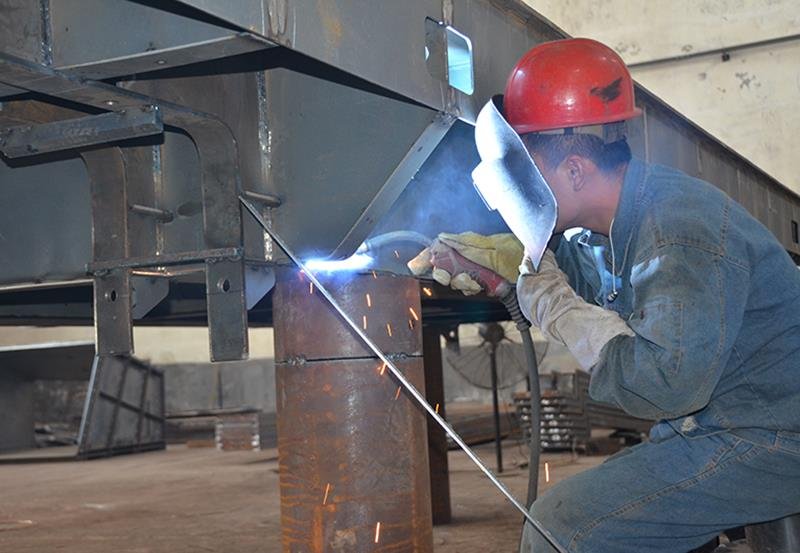
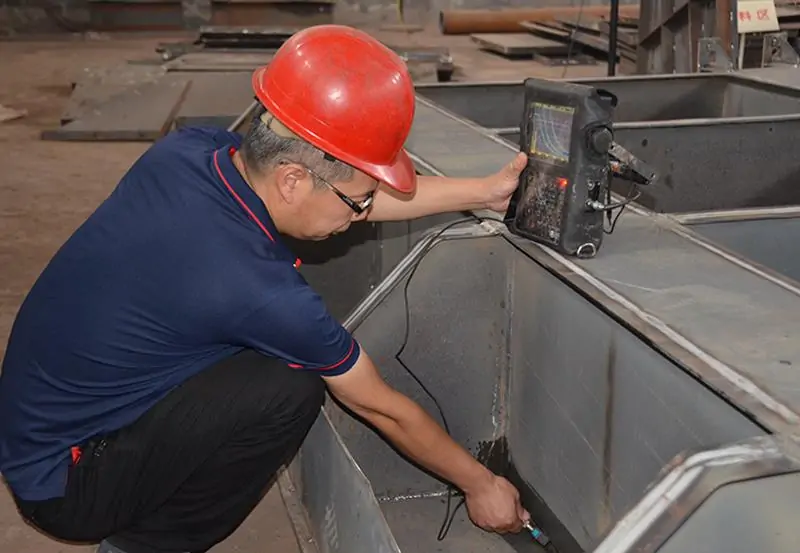
REMARQUABLE se concentre sur la conception et la personnalisation de solutions de transfert industrielles, y compris les chariots de transfert de matrices adaptés à différentes capacités de charge et environnements de travail. Pour des spécifications détaillées ou des solutions personnalisées, n'hésitez pas à nous contacter pour discuter des exigences de votre projet.
Courriel : transfercart@rmkzn.com
Téléphone : +86-18637369355
FAQ
Quelle est la capacité de charge d'un chariot de transfert de matrice ?
La capacité de charge varie généralement de 1 tonne à 80 tonnes, et peut être personnalisée en fonction des exigences de l'application.
Peut-il fonctionner sans rails ?
Oui. Les modèles sans rail fonctionnent sur des sols d'usine plats sans rails fixes et permettent un déplacement flexible.
Est-ce adapté aux usines de moules d'injection ?
Oui. Il est couramment utilisé pour transporter les moules d'injection entre les machines et les zones de stockage.
Quelle est la durée de vie d’un chariot de transfert ?
La durée de vie atteint généralement 8 à 15 ans, selon les conditions d'utilisation et le niveau de maintenance.
Quelles options d’alimentation sont disponibles ?
Les options courantes incluent l'alimentation par batterie, l'alimentation par câble, l'alimentation par rail et les systèmes hybrides.
Peut-il être personnalisé pour différents agencements d'usine ?
Oui. Il peut être personnalisé en termes de capacité de charge, de dimensions de plateforme, de système d’alimentation et de configuration de déplacement en fonction des exigences d’implantation.