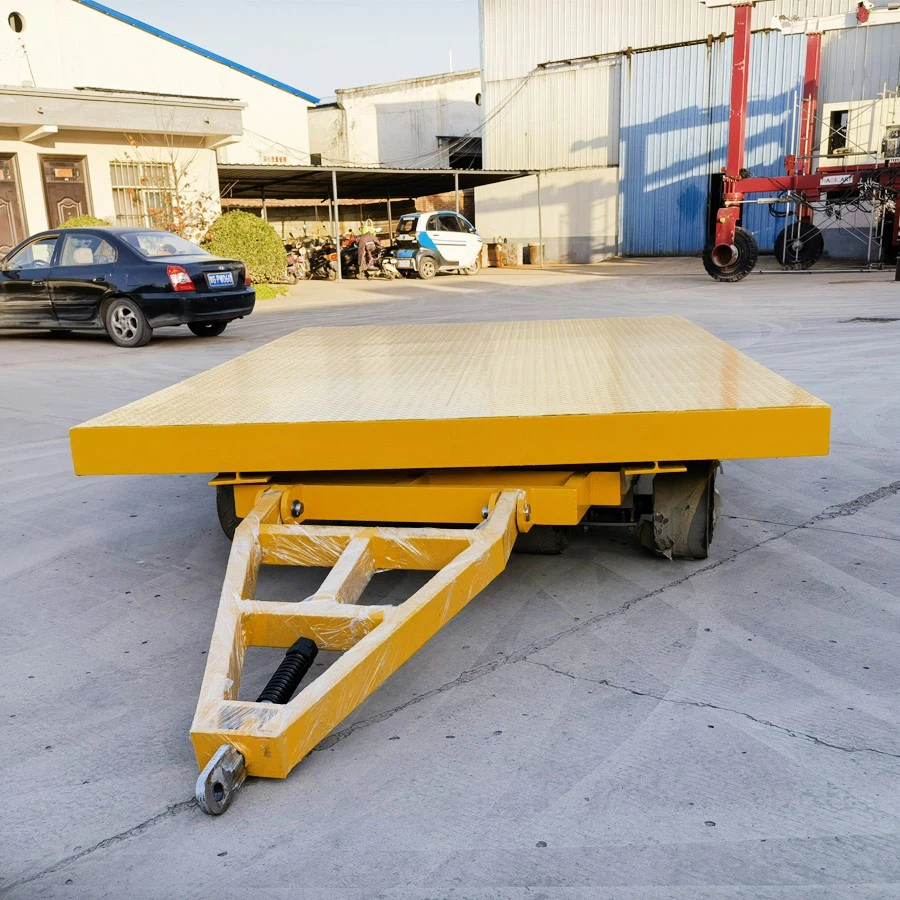
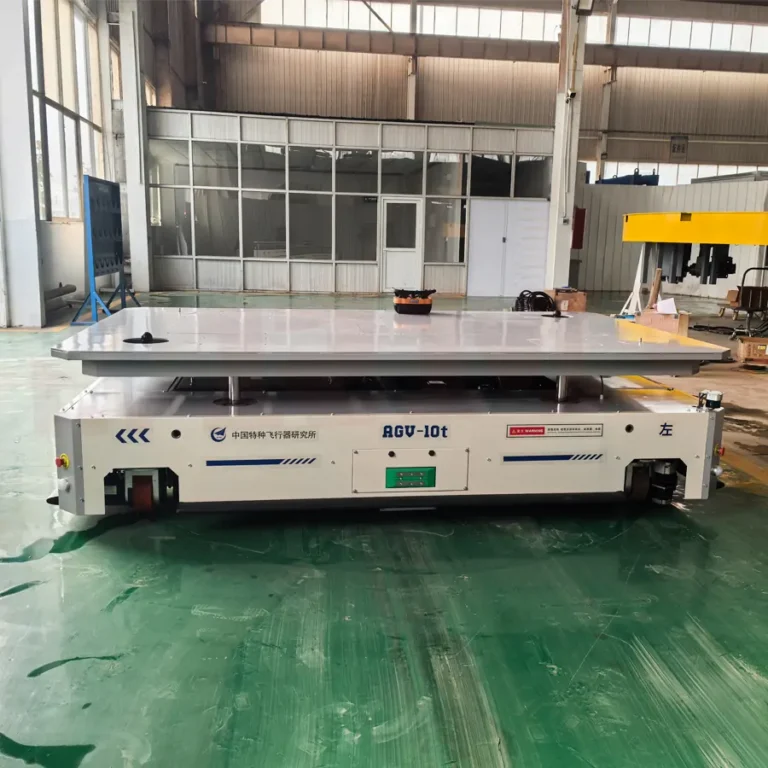
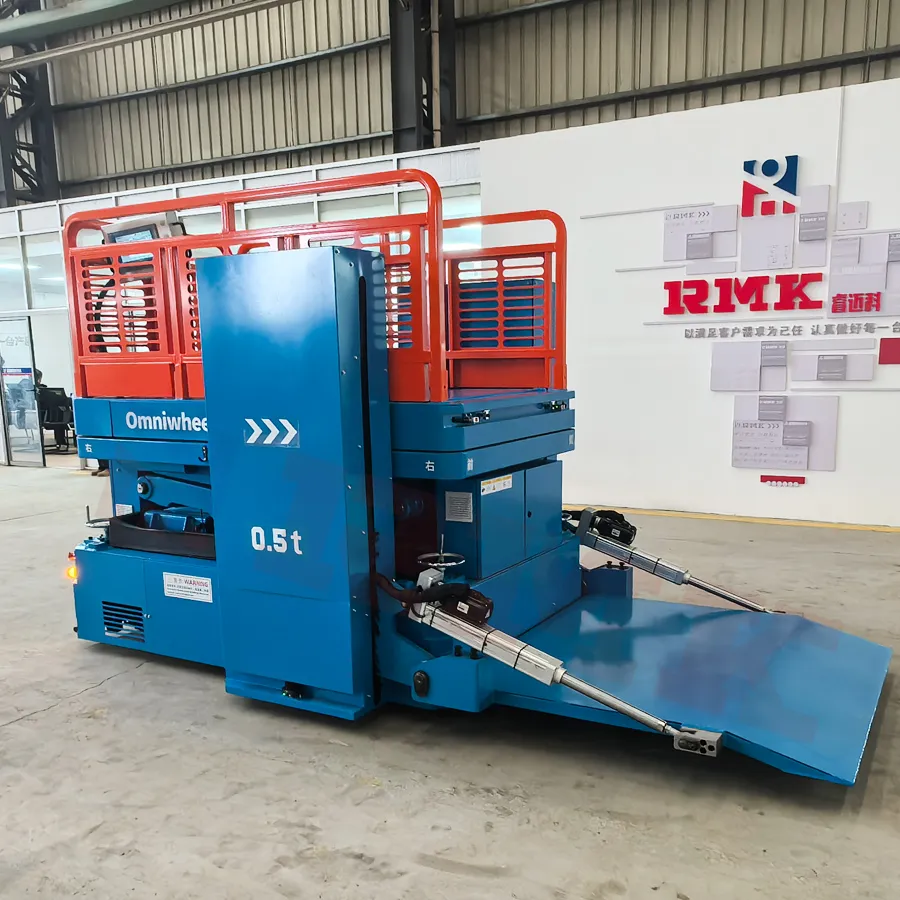
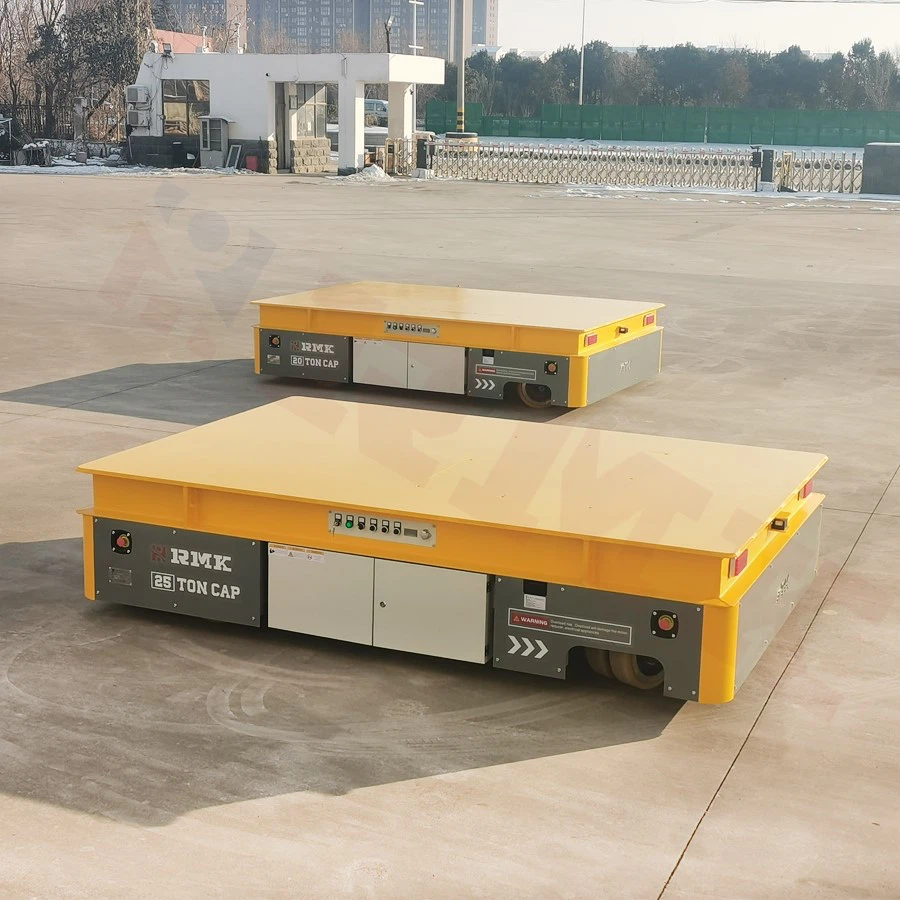
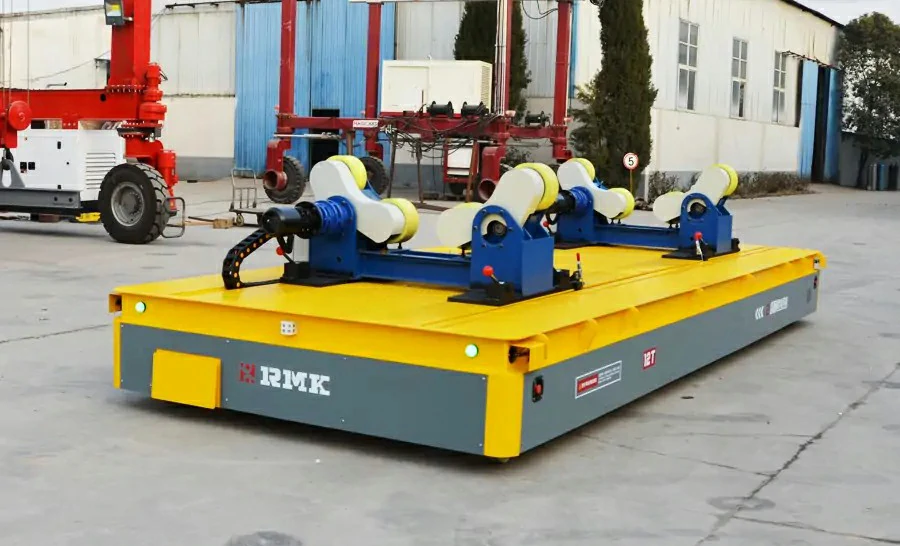
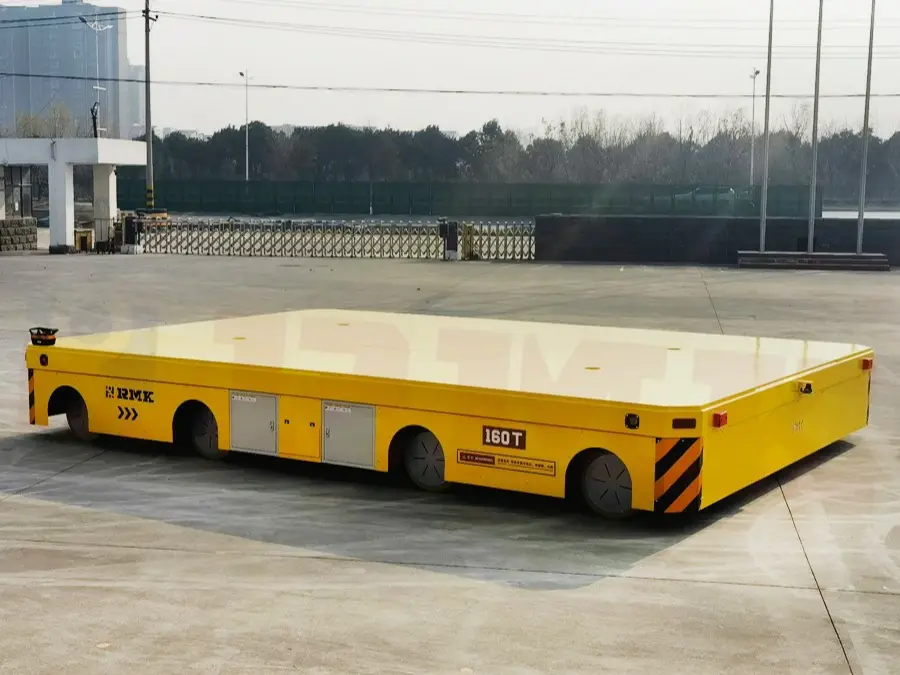
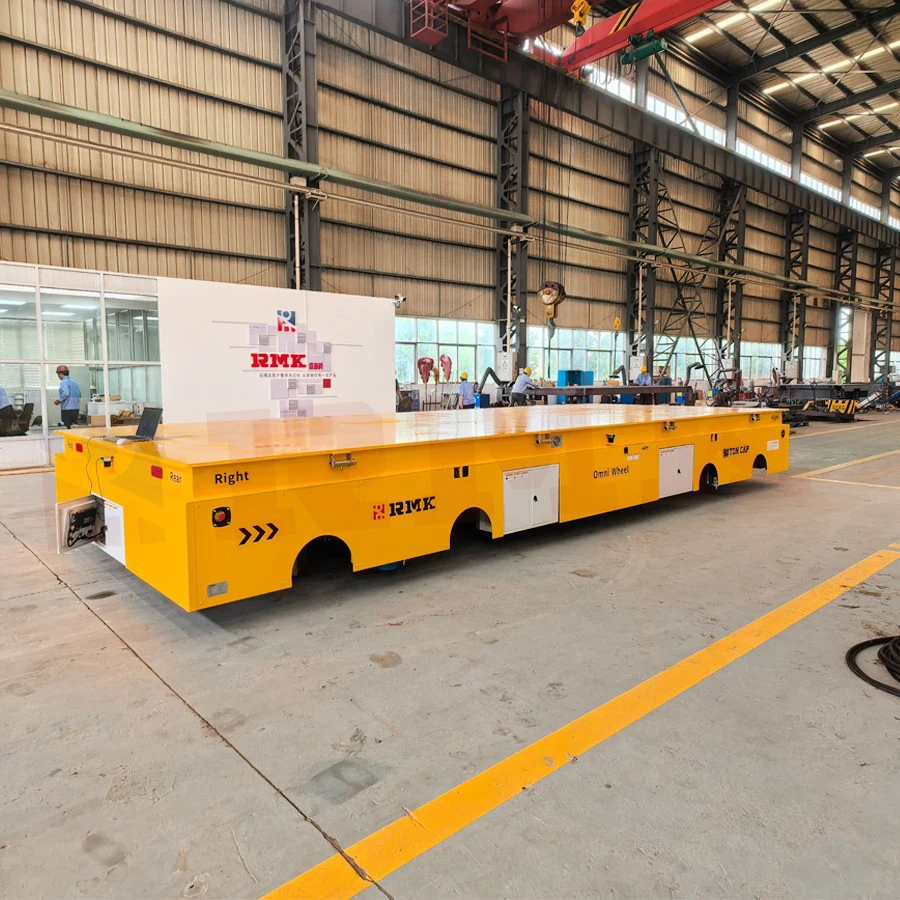
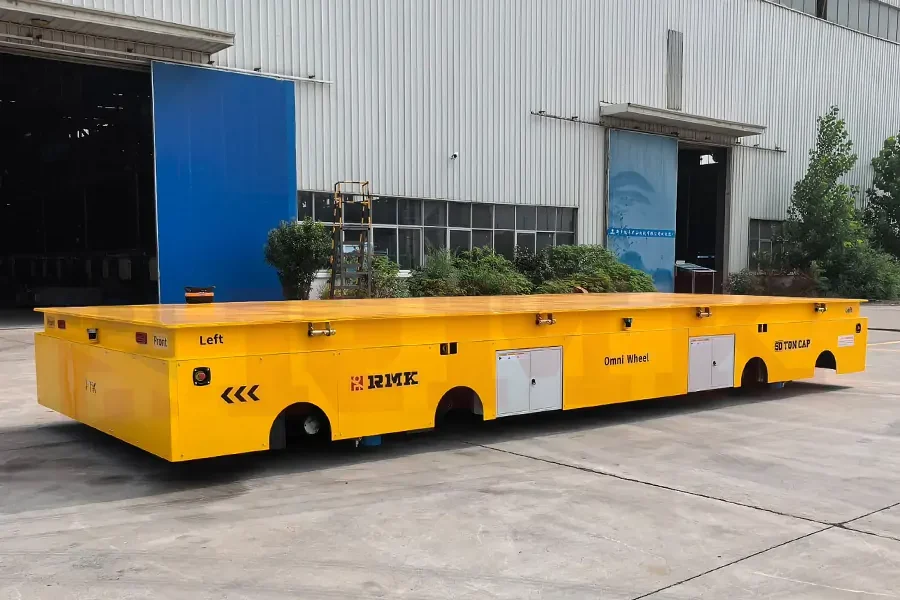
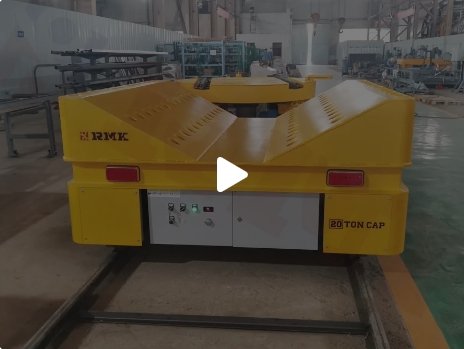
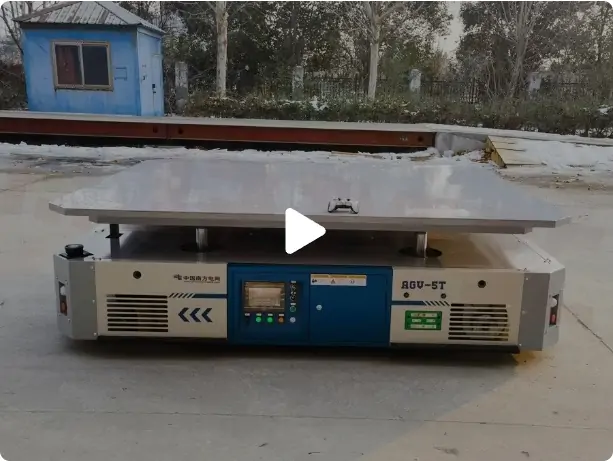
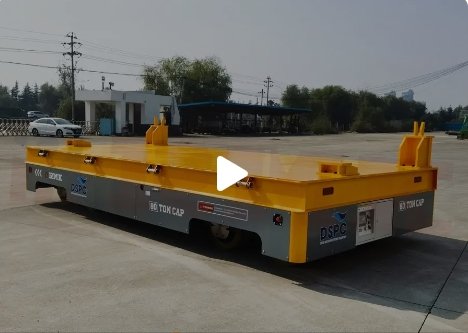
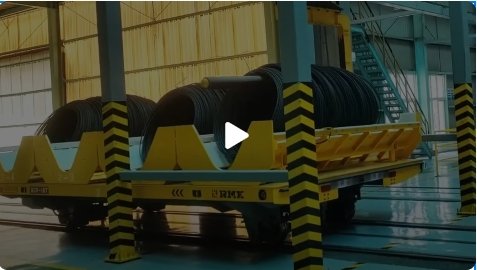
An industrial transfer cart is intelligent handling equipment designed for transporting materials, steel coils, molten metals, and heavy components within factory premises. Offering high load capacity, smooth operation, and strong customization capabilities, they are widely used in mold manufacturing, metallurgy, and equipment manufacturing industries. Industrial transfer carts come in various types. How can they be classified, and how does one choose the appropriate cart? Let’s explore.

Main Types and Characteristics of Industrial Transfer Carts
Based on transported material type, usage scenarios, and operating methods, industrial transfer carts can be categorized as follows:
| Type Primary | Характеристики | Грузоподъемность | Метод работы | Приложение | Подходящие отрасли |
|---|---|---|---|---|---|
| Тележка для переноса пресс-форм | High load capacity, safe, and stable | 10–200 tons | Electric/Hydraulic | Mold transportation and installation | Mold manufacturing, injection molding, stamping |
| Тележка для переноса рулонов | V-shaped anti-slip/anti-roll brackets | 10–100 tons | Rail/trackless | (steel/copper) handling | Metallurgy, metal processing |
| Ladle Transport Cart | High-temperature resistance, leak-proof | 20–150 tons | Rail-based | Molten steel/liquid metal transport | Steelmaking, foundry |
| Heavy-Duty Material Transfer Carts | Ultra-high load capacity, customizable | 50–500 tons | Cable/Battery | Large machinery and structural component handling | Equipment manufacturing, heavy industry |
| Rail-Guided Transport Cart | Stable operation, suitable for continuous work | 5–300 tons | Железнодорожный транспорт | Fixed-route material transfer | Automated production lines |
| Тележка для переноса штампов | Off-track operation, agile and lightweight | 5–100 tons | Electric/Wireless remote control | Flexible mold transportation | Injection molding, mold manufacturing |


Different transfer cart types feature distinct characteristics and industry applications. If you’d like to learn more about industrial transfer carts, you may also refer to the following article: Five Common Types of Industrial Transfer Cart and Uses. What factors should be considered when selecting the appropriate industrial transfer cart? Let’s explore how to choose the right transfer cart for your specific operational requirements.
Для сравнения промышленных транспортных тележек и вариантов кастомизации см. статью:
Пять распространённых типов промышленных транспортных тележек и их применение
Индивидуальная транспортная тележка: Полное руководство по проектированию и настройке
Как выбрать промышленные тележки?
An industrial transfer cart is key to enhancing production efficiency and transportation safety. Since different factories vary in transported materials, spatial layouts, and operational methods, multiple factors must be comprehensively considered during selection. Below is a detailed selection guide:
Load Capacity and Platform Dimensions Matching:
- Load Selection Principle: The rated load capacity should be 1.2 to 1.3 times the maximum transported material weight, allowing for a safety margin.
- Platform Dimension Matching: Platform length and width must correspond to the base dimensions of the transported object to prevent center of gravity shift or localized stress.
- Structural Strength: For high-load or large equipment handling, a high-strength steel chassis is recommended.


Recommendations: Mold handling typically ranges from 10 to 60 tons; coil and heavy structural components generally fall between 50 and 300 tons. Special applications (e.g., ladles, castings) require high-temperature protection and center-of-gravity stabilization designs.
Power Supply Selection:
Industrial transfer carts feature diverse power supply methods, with each method determining the equipment’s application scope and flexibility:
| Источник питания | Method Features | Подходящие сценарии |
|---|---|---|
| Cable Reel Power Supply | Low-cost, stable power supply, simple maintenance | Fixed workstations, shuttle-type transport |
| Sliding Contact Rail Power Supply | Continuous power supply, suitable for long-distance operation | Rail-based continuous production lines |
| Battery Power | Cable-free operation, agile turning | Trackless systems, complex layouts, or cross-area operations |
| Rail Conductor Power | High stability, extended lifespan | High-frequency operations, long-cycle production environments |

Recommendation: For fixed factory layouts with short transport paths, cable-powered models are suitable. For complex spaces with frequent cross-area operations, battery-powered trackless transport vehicles are recommended.
Operating Environment and Spatial Layout:
- Floor Conditions: Floor flatness affects operational stability. For uneven surfaces, select models equipped with suspension damping systems or rubber anti-slip wheels.
- Aisle Width: For workshops with narrow aisles or multiple turns, prioritize trackless designs capable of 360° on-the-spot turning.
- Operating Temperature: High-temperature zones (e.g., metallurgical workshops) require models with thermal insulation and high-temperature-resistant drive motors. Cleanrooms demand low-noise, maintenance-free battery types.
Recommendation: For complex layouts with variable routes, trackless models offer greater flexibility. For single-path, repetitive tasks, track-based models provide superior stability.
Operation and Control Methods:
The control system of industrial transfer vehicles impacts operational convenience and safety. Common configurations are as follows:
| Метод контроля | Характеристики | Подходящие сценарии |
|---|---|---|
| Manual Control | Low cost, intuitive operation | Single-operator, low-frequency tasks |
| Wireless Remote Control | Flexible, convenient, extended safety range | Medium-to-high frequency transport, open spaces |
| PLC Automatic Control | Precise control, programmable paths | Automated production lines, MES integration |
| AGV Navigation System | Unmanned operation, intelligent scheduling | Smart factories, high-end manufacturing |

Safety and Protection Configuration:
Safety is an often-overlooked yet critical factor in selecting industrial transfer vehicles. Qualified transfer equipment should incorporate the following fundamental protective measures.
- Collision Prevention System: Infrared or ultrasonic sensors trigger automatic braking
- Speed Limiter: Adjusts travel speed based on load weight
- Emergency Stop Buttons: Multiple points for quick shutdown
- Anti-Slip Platform & Limiters: Prevents cargo slippage
- Audible/Visual Alarm System: Indicates operational status and prevents entry into hazardous zones

Cost and Maintenance:
При выборе промышленного транспортного оборудования учитывайте не только стоимость покупки, но и долгосрочные эксплуатационные расходы, включая потребление энергии, замену изнашиваемых деталей и периодичность технического обслуживания. Аккумуляторные модели требуют минимального обслуживания, но имеют ограниченный запас хода. Системы с токопроводящей шиной и рельсовым питанием подходят для непрерывного производства с увеличенными интервалами обслуживания. Выбирайте транспортеры с модульной конструкцией для упрощения будущего ремонта и замены деталей.
Возможности производителя:
Авторитетный производитель промышленных транспортных тележек должен обладать следующими возможностями:
- Предоставлять 3D-решения по компоновке и анализ грузоподъемности
- Разрабатывать конфигурации электропитания и механизмы поворота с учетом условий эксплуатации
- Поддерживать функциональные расширения, такие как интеллектуальное управление, автоматическая смена пресс-форм и интеграция с производственной линией
- Обеспечивать комплексные механизмы послепродажного обслуживания и поддержку технического обучения

Производители RMK с возможностями индивидуального проектирования и надежными системами послепродажного обслуживания могут значительно снизить долгосрочные затраты предприятий на обслуживание и модернизацию.
Заключение:
Из этой статьи вы получили базовое понимание выбора промышленных транспортных тележек, подходящих для ваших нужд. Для получения конкретных рекомендаций по моделям и ценовых предложений, связаться с нами, профессиональный производитель. Мы предоставим индивидуальные решения для обеспечения вашего предприятия эффективной и интеллектуальной транспортировкой материалов.