
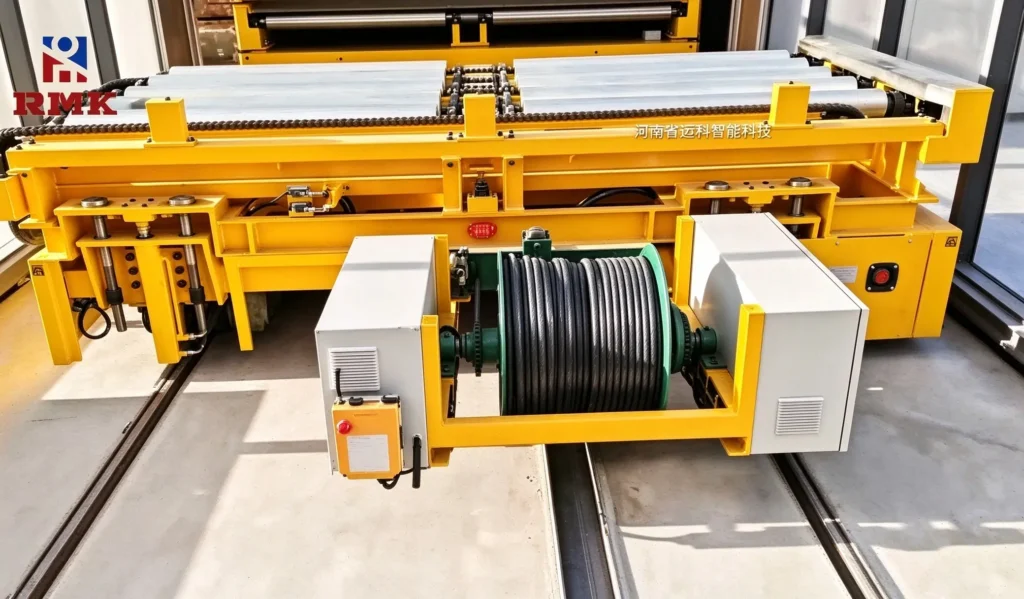
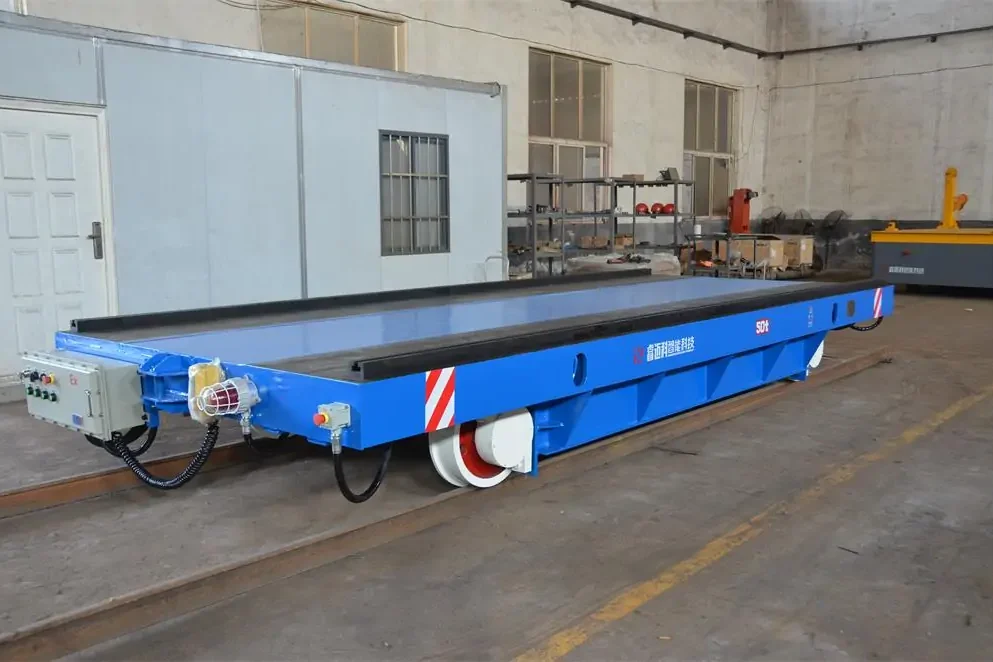
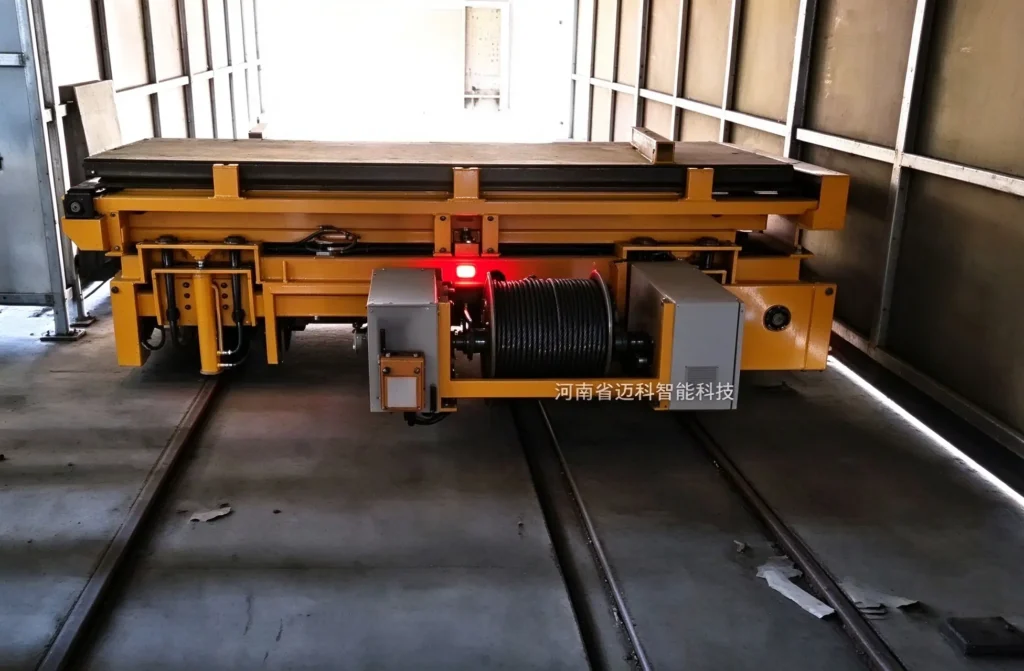
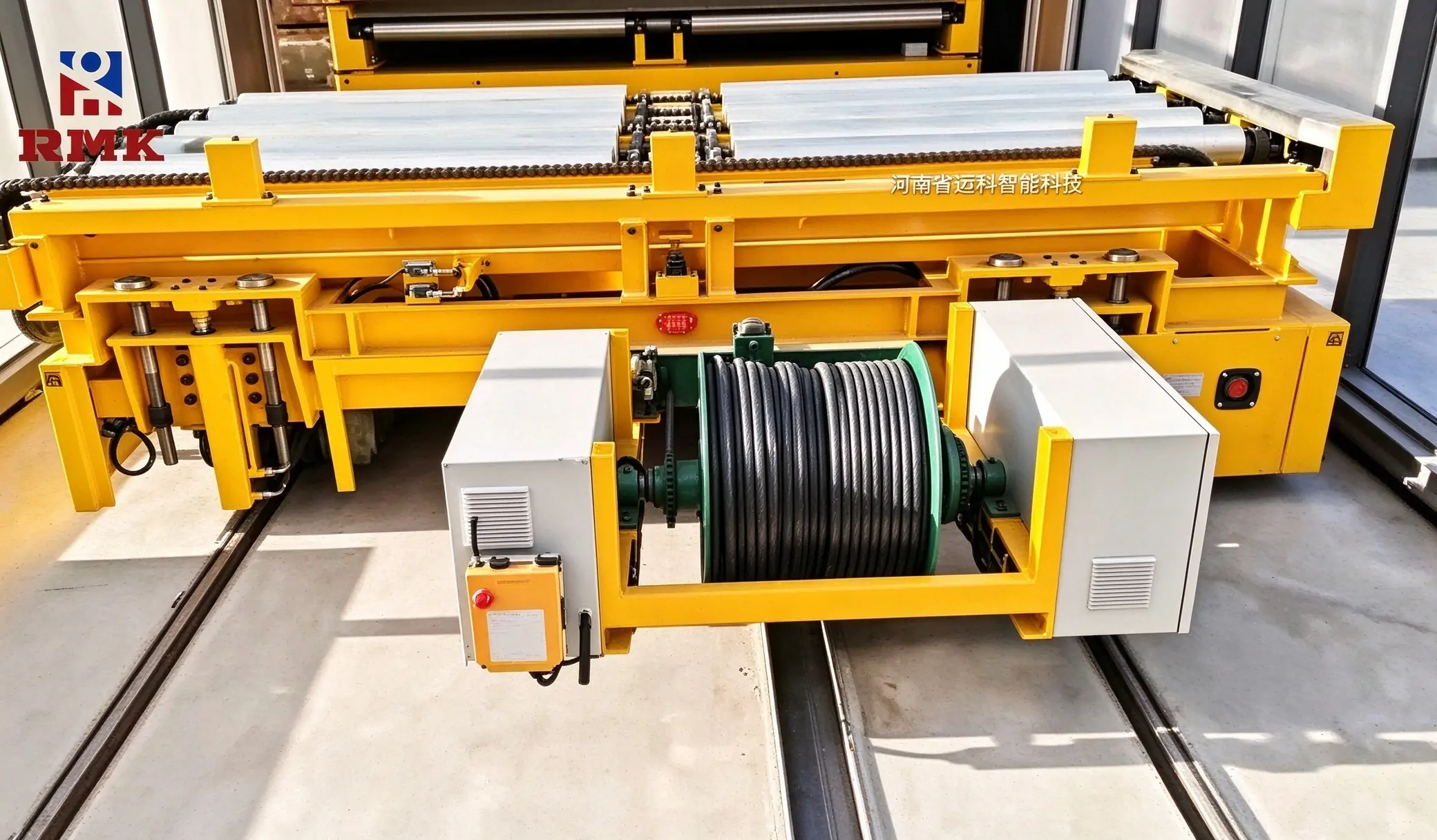
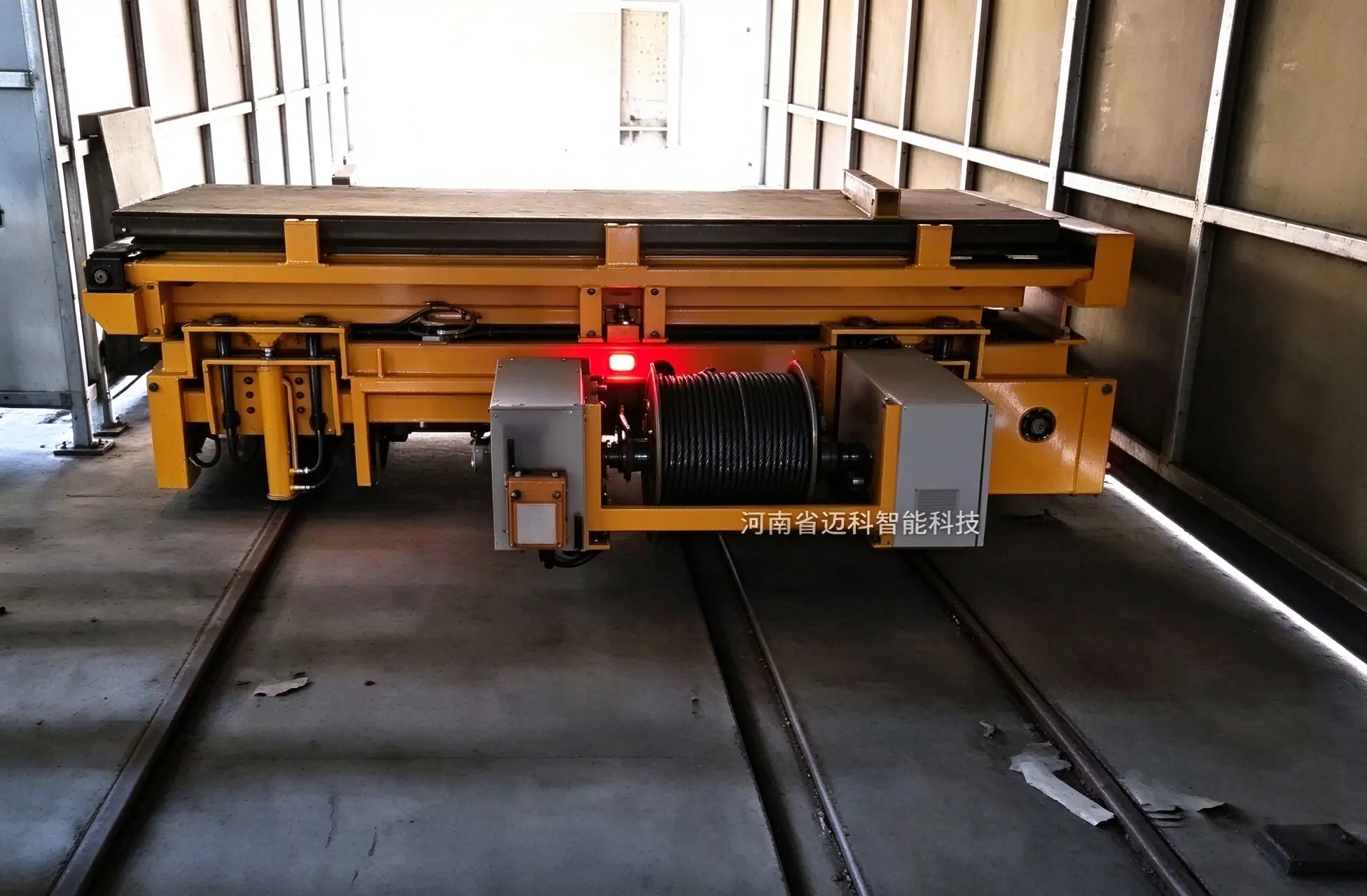
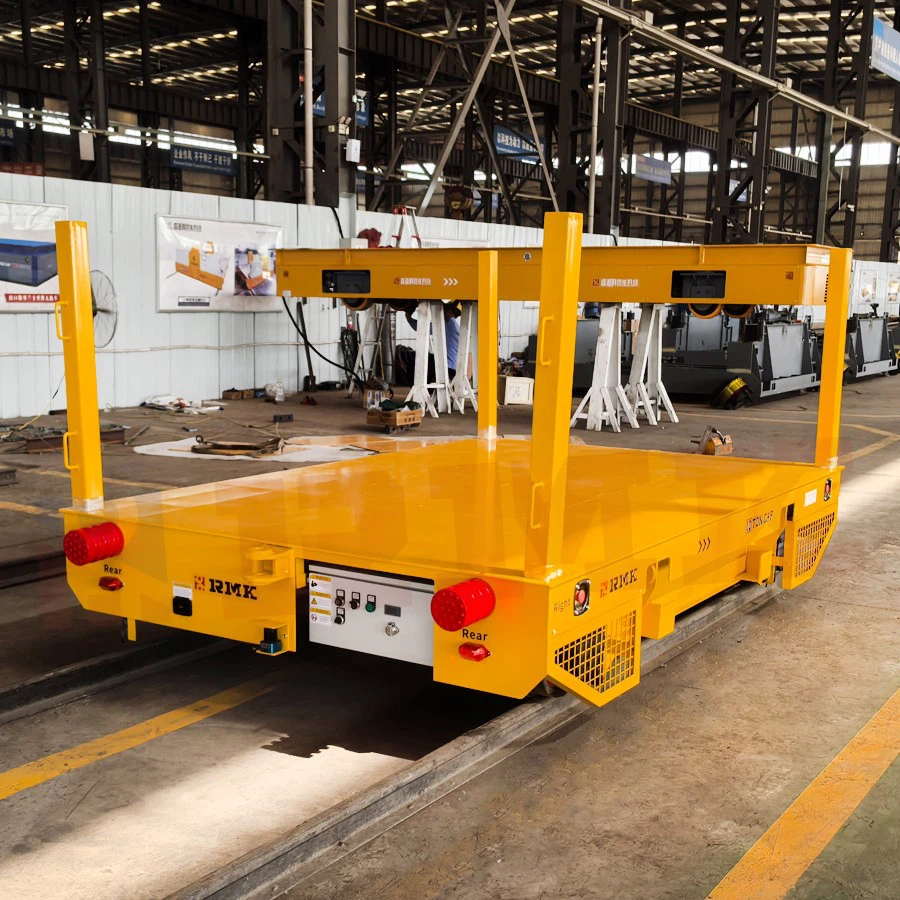
RMKケーブルリール給電式レール搬送台車は、固定されたレール経路に沿って重量物を搬送するために設計されています。外部交流電源は、自動リールで巻取り・繰出しされる移動ケーブルを通じて台車に供給されるため、走行用バッテリーを充電することなく、高頻度の搬送作業に対応できます。工場内で鋼材、金型、機械部品、その他の重量物を搬送する用途に適しています。.
- 定格積載荷重: 案件ごとに異なります。特殊な重量物搬送仕様には技術検討が必要です。
- 電源: ケーブルリールを介した外部交流電源
- 走るスピード: 運用要件に合わせてカスタマイズ
- 制御モード: ペンダント/ワイヤレスリモート/PLC
ケーブルリール給電式レール搬送台車とは?
各ケーブルリール給電式レール搬送台車は、使用条件に合わせて設計され、積載量、荷台寸法、軌間、ケーブルリールシステム、駆動構成をカスタマイズできます。搬送物や生産要件に応じて、平面荷台、V字型荷台、ローラーテーブル、専用の荷役治具を選択できます。ペンダント操作、無線リモコン操作、PLC制御に対応できます。.
ケーブルリール給電式レール搬送台車は、ケーブルリール式搬送台車またはKPJシリーズレール搬送台車とも呼ばれ、固定レールに沿って重量物を搬送するために設計された電動搬送車両です。移動ケーブルを介して供給される外部交流電源を使用し、台車に搭載されたケーブルリールが走行中にケーブルを自動で巻取り・繰出しします。.
ケーブルリールシステムは、台車の前進・後退中、駆動モーターと電気制御システムに継続的に電力を供給します。バッテリー式搬送台車とは異なり、搭載バッテリーの容量や充電サイクルに依存しません。また、低電圧レール給電式台車とは異なり、導電レールではなく可とう性ケーブルを通じて給電されます。.
ケーブルリール給電式レール搬送台車は、固定された搬送経路と高頻度の運転サイクルが求められる工場、製鉄所、倉庫、生産施設で使用されます。積載能力、走行距離、ケーブルリールの構成、荷台の設計は、搬送レイアウトや使用条件に合わせて変更できます。.
ケーブルリール給電式レール搬送台車の技術仕様
| パラメータ | 参考構成 |
|---|---|
| 定格荷重 | 案件ごとに異なります。特殊な重量物搬送仕様には技術検討が必要です。 |
| 荷台寸法(L × W × H) | 搬送物と積載方法に応じて設定 |
| 電源 | AC 380V、50Hz |
| 走行速度 | 0~30 m/分 |
| 运行距离 | 最大200 m(ケーブルリールの構成による) |
| 轨道类型 | P形 / QU形鋼製レール |
| 駆動方式 | ACモーター + 減速機 |
| ケーブルリールタイプ | ばね駆動式 / 電動式 |
| 制御モード | ペンダント/ワイヤレスリモート/PLC |
| 荷台形式 | 平形 / V形 / ローラー式 |
| ホイール材質 | 鋳鋼製 |
| フレーム構造 | 溶接鋼製箱形梁 |
| 警告灯、バッファーバンパー、リミットスイッチ、緊急停止ボタン | 非常停止 / 音・光警報 |
| 操作环境 | 屋内 / 屋外 |
注:これらは参考設計範囲であり、単一の標準モデルの仕様ではありません。最終的な仕様は、荷重、レール配置、電源、ケーブル長、使用条件によって異なります。記載範囲を超える積載能力や走行距離については、個別案件として検討できます。.
ケーブルリール給電式レール搬送台車の構造と主要部品
ケーブルリール給電式レール搬送台車は、溶接鋼製フレーム、ケーブルリール、移動ケーブル、駆動装置、鋼製車輪、電気制御部品で構成されます。各部品は、定格荷重、レール配置、走行距離、使用条件に応じて選定されます。.
| 部件 | 機能 |
|---|---|
| 鋼製フレーム: | 定格荷重を支え、車輪ユニットに荷重を分散するよう設計された溶接箱形梁構造です。. |
| ケーブルリール装置: | 台車に搭載され、走行中に移動ケーブルを巻き取り、繰り出します。ばね駆動式または電動式を選択できます。. |
| 移動ケーブル: | 外部電源から台車へ電力を供給します。ケーブル長、断面積、曲げ半径は、走行距離とリールの設計に応じて設定されます。. |
| 駆動モーターおよび動力伝達装置: | 電動モーターと減速機が駆動トルクを車輪に伝達し、前進および後退を制御します。. |
| 鋼製車輪: | 台車と積荷を支持し、車輪ユニットを介して荷重をレールに伝達します。. |
| 电气控制系统: | 電力の配分、モーターの運転、速度制御、走行方向、電気保護を管理します。. |
| 操作システム: | 搬送工程に応じて、ペンダント操作、無線リモコン操作、またはPLCによる操作に対応します。. |
荷台および搬送機構のオプション:
- V字型荷台:鋼材コイル、パイプなどの円筒状の積荷を所定の位置に保持します。.
- ローラー式荷台:生産ラインと接続し、材料の積み降ろしを行います。.
- 油圧昇降式荷台:積荷を必要な作業高さまで上昇させます。.
- カスタム治具:特殊なワークを搬送中に位置決めし、固定します。.
フレーム、駆動システム、ケーブルリールユニットが台車の主要な機能構造を構成します。荷台の種類、昇降機構、治具、制御オプションは、積荷の寸法、搬送工程、設置場所の要件に応じて設定します。.
ケーブルリール給電式軌道搬送台車の動作原理
ケーブルリール給電式軌道搬送台車は、台車に搭載されたケーブルリールに接続された移動用ケーブルを通じて、外部交流電源から電力を受け取ります。台車が固定レール上を走行すると、ケーブルリールがケーブルを繰り出しまたは巻き取り、その長さを調整して電源接続を維持します。電気制御システムは、モーターの運転、走行方向、速度を制御します。.
動作プロセス:
- 電源接続: 移動用ケーブルを通じて、外部交流電源から台車に電力が供給されます。.
- ケーブルの繰り出し: As the cart moves away from the power connection, the cable reel releases the required cable length.
- Electrical Control: The control cabinet distributes power to the drive motors and control circuits.
- Motor Drive: The motor transmits torque through the gearbox to the wheel assemblies.
- Rail Movement: The cart travels forward or backward along the rails according to the operator’s commands.
- Cable Retraction: As the cart moves toward the power connection, the reel retrieves cable to control slack and reduce the risk of tangling.
On a cable reel powered rail transfer cart, the reel maintains the electrical connection throughout movement. Spring-driven and motorized cable reels use different winding and release mechanisms; the selection depends on travel distance, operating speed, cable specifications, and installation conditions.
Advantages of Cable Reel Power
Continuous External Power Supply
Draws power from an external AC source through a traveling cable, eliminating dependence on onboard battery capacity and charging cycles.
No Onboard Battery Maintenance
Eliminates traction battery replacement, charging equipment, and routine battery maintenance.
Suitable for Frequent Operations
Supports repeated transport cycles and extended operating hours on fixed rail routes in industrial production facilities.
Controlled Rail-Guided Movement
Steel wheel assemblies follow fixed tracks, maintaining a defined travel path for heavy material handling between designated workstations.
Flexible Platform Design
Available with flat decks, V-shaped platforms, roller tables, and custom fixtures for different cargo dimensions and loading requirements.
Configurable Cable Reel System
Spring-driven and motorized cable reels accommodate different cable lengths, travel speeds, and installation layouts.
Industrial Applications
Cable Reel Powered Rail Transfer Carts are used in industrial facilities with fixed transport routes and frequent heavy-load handling requirements. Platform structures and load capacities are selected according to the materials, production processes, and site layout.
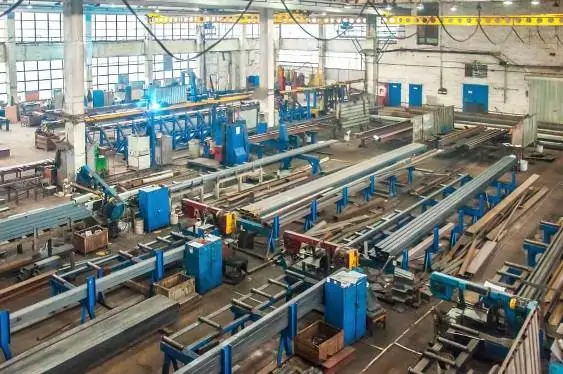
製鉄所
Transport steel coils, plates, billets, and other heavy metal materials between production areas. V-shaped platforms are available for cylindrical loads.
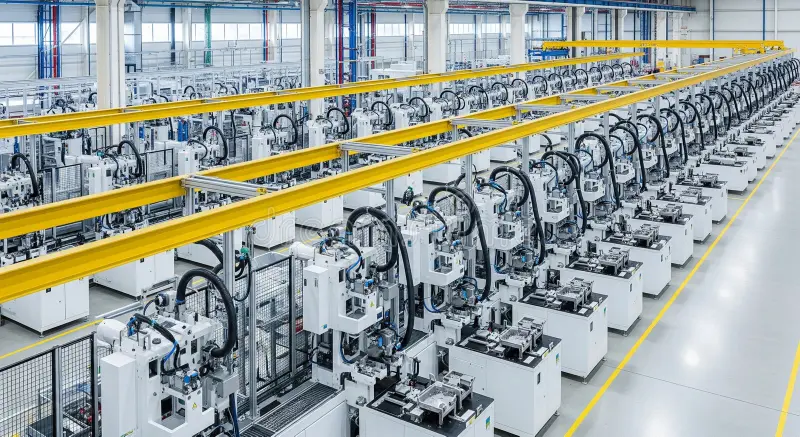
机械制造
Move machine components, heavy equipment bases, steel structures, and assembled parts between machining and assembly workstations.
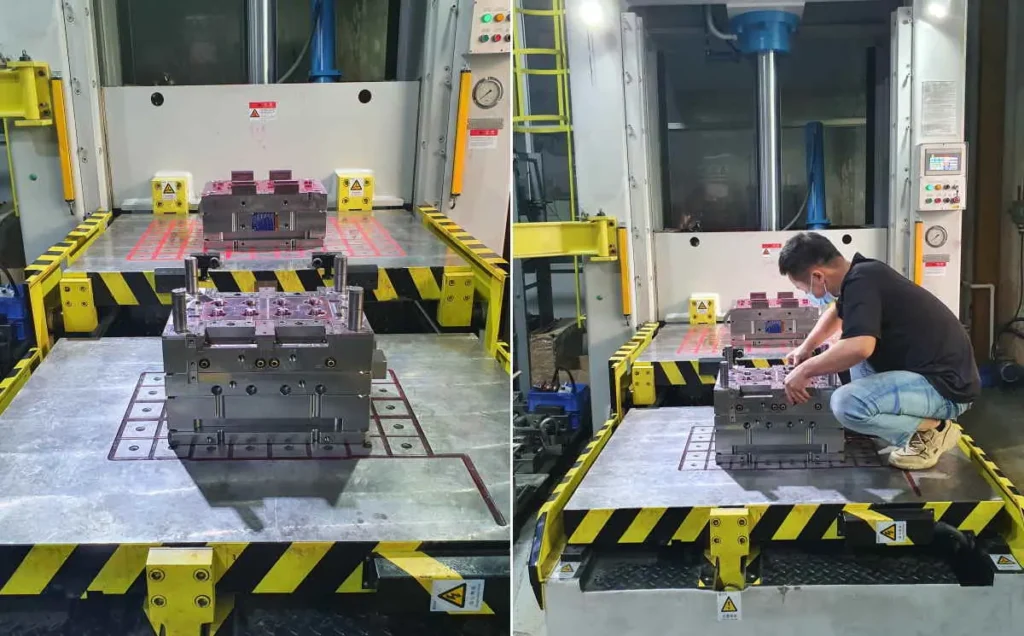
Mold Workshops
Transfer injection molds, stamping dies, and other heavy tooling between storage areas, maintenance stations, and production machines.
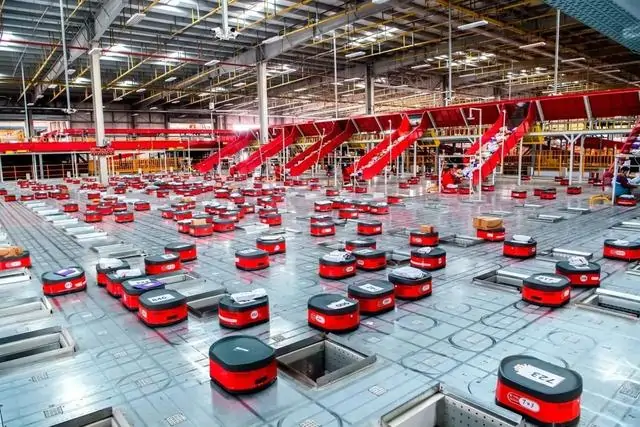
Production Lines
Transport workpieces between designated processing stations. Roller platforms can be configured for loading and unloading at production line interfaces.
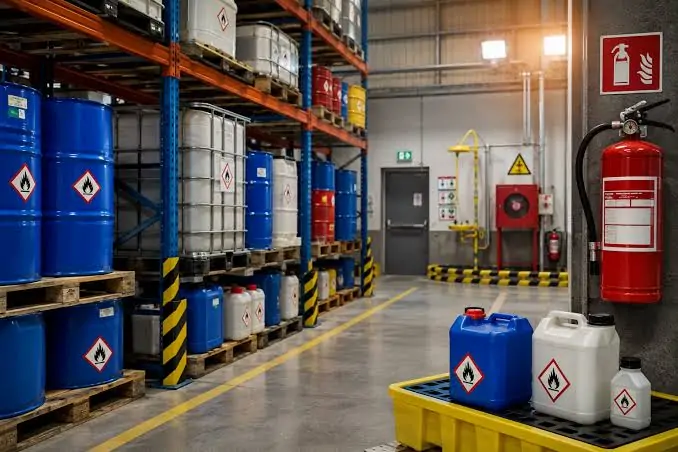
Warehouses and Storage Facilities
Handle heavy materials, industrial components, and packaged goods between storage zones, loading areas, and dispatch stations.
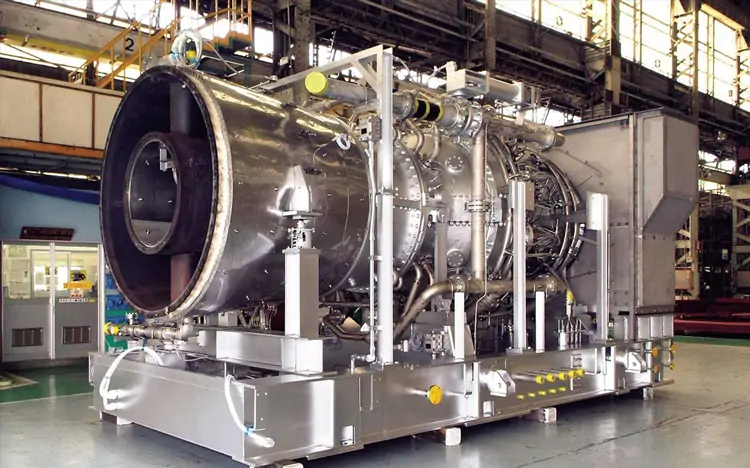
造船および重量機器製造
Move large structural components, equipment sections, and fabricated assemblies across designated workshop and assembly areas.
How to Choose a Cable Reel Powered Rail Transfer Cart
Selecting a cable reel powered rail transfer cart requires checking the cargo specifications, rail layout, power supply, and operating conditions.
- Load Capacity and Cargo Dimensions: Specify the maximum cargo weight, overall dimensions, center of gravity, and load distribution. The rated capacity must cover the total working load.
- Rail Layout and Travel Distance: Provide the rail length, gauge, track alignment, and turning radius. Straight and curved track layouts require different wheel and cable routing arrangements.
- Cable Reel Configuration: Select a spring-driven or motorized cable reel according to travel distance, operating speed, cable length, and installation position. Cable diameter and minimum bending radius must match the reel specifications.
- Power Supply Requirements: Confirm the available voltage, frequency, phase configuration, and power connection location. Motor power and cable cross-section must match the electrical load.
- Operating Speed and Control: Define the required travel speed, positioning accuracy, and operating cycle. Pendant control, wireless remote control, or PLC integration can be selected according to the production process.
- 走行経路と運転モード: Specify indoor or outdoor operation, ambient temperature, dust, moisture, and exposure to heat or corrosive substances. Special electrical protection and structural modifications require project assessment.
Cable Routing and Power Connection Layout
A cable reel powered rail transfer cart receives electricity through a flexible cable connected to a fixed supply point. The onboard reel pays out or retrieves the cable as the cart moves. The supply point, reel position, and cable path should be planned together across the full travel route. Our guide to cable transfer carts explains the main cable supply arrangements and their applications.
Power Connection Location
Select the connection point according to the track layout, available electrical supply, and required working range. Include the cable length needed between the connection point and the cart at each end of its travel.
Cable Path
Check the payout direction, cable guides, and clearance from wheels, drive components, and loading equipment. The route should avoid sharp edges, excessive twisting, and bends tighter than the cable manufacturer’s permitted radius.
Workshop Traffic
Identify crossings with forklift routes, pedestrian aisles, and loading areas. Where crossings cannot be avoided, assess a recessed channel, a suitable protective cover, or another engineered routing arrangement. Any protection must accommodate cable movement without trapping, crushing, or abrading the cable.
Cable Selection and Protection
Use a cable rated for the selected reeling arrangement and operating conditions. Check allowable tension, repeated bending, abrasion, temperature, and exposure to moisture or chemicals. The cable guides and reel geometry must be compatible with the selected cable.
Maintenance Access
Leave enough space to inspect the drum, guides, electrical connections, and reel drive. Cable replacement and maintenance should be possible with the equipment stopped and its electrical supply isolated.
Spring-Driven and Motorized Cable Reels
Both spring-driven and motorized reels can manage the power cable on a rail transfer cart. Selection depends on the required cable length, cable weight, travel speed, acceleration, operating cycle, and allowable cable tension. The ratings of the proposed reel matter more than a general distinction between short and long routes.
| 選定要因 | Spring-Driven and Motorized Reel Considerations |
|---|---|
| 駆動方式 | Spring-driven reels use stored spring energy to retrieve the cable. Motorized reels use an electric drive to control retrieval and, where provided by the design, cable payout. |
| Cable Length and Weight | Spring-driven reels are often considered for shorter runs and lighter cables, provided that spring torque remains suitable throughout the working range. Motorized reels can accommodate longer or heavier cable arrangements when the drum, drive and supporting structure are sized accordingly. Neither type has a universal travel-distance limit. |
| Travel Speed and Tension | A spring-driven reel must maintain acceptable cable tension as the effective drum radius and spring torque change. A motorized reel uses its drive and control arrangement to manage winding torque or speed. For either type, the permitted travel speed and acceleration must be checked against the reel ratings and cable limits. |
| 動作頻度 | Check the rated duty of the spring mechanism or motorized drive against the expected transport cycles. Frequent starts, reversals and extended operation require an assessment of component life, thermal limits and winding performance. A motorized reel should not be assumed to support continuous duty unless its ratings confirm this. |
| 極めて低い | Spring-driven reels require inspection of the spring mechanism, guides, drum and cable condition. Motorized reels also require inspection of the motor, transmission, and controls fitted to the selected assembly. Electrical transfer components, including slip rings where fitted, should be included in the maintenance plan. |
When specifying a cable reel powered rail transfer cart, confirm usable cable capacity, winding torque, allowable tension, cable diameter and minimum bending radius. The reel supplier should verify the proposed operating cycle against the selected assembly.
Factors Affecting Travel Distance
The effective travel distance of a cable reel powered rail transfer cart is not simply the total cable length. Connection leads, the cable path and any turns that must remain on the drum reduce the length available for working travel. The position of the fixed supply point also changes the relationship between cable payout and cart movement.
- Usable Reel Capacity
Drum diameter, winding width, cable diameter, and the permitted number of cable layers determine storage capacity. The usable working length must also allow for the reel manufacturer’s required residual turns or other retention provisions. - Supply Point Position
Calculate the cable path from the fixed connection to the cart throughout the route. An end-fed layout and a centrally fed layout may require different payout and retrieval arrangements. The maximum working range must be checked against the actual geometry rather than inferred from cable length alone. - Connection and Routing Allowances
Allow for fixed connections, cable guides, bends and transitions. Trenches, obstacles and protective structures may increase the required path length. Reserve cable must be managed so that it does not create uncontrolled slack or interfere with the cart. - Voltage Drop and Cable Heating
Check conductor size, circuit length, operating current and connection resistance against the permitted voltage drop, including motor starting conditions. Cable current ratings must also account for the installation method, ambient temperature, and operation with cable remaining wound on the reel.
The specified operating range should satisfy both the mechanical payout requirements and the electrical limits. For longer routes or demanding operating cycles, verify reel torque, cable tension, starting voltage, and thermal duty before confirming the configuration.
Comparison of Transfer Cart Power Supply Types
| 電源 | Power Arrangement | 申し込み |
|---|---|---|
| ケーブルリール電源 | Main Characteristics: External power transmitted through a retractable cable | Suitable Conditions: Fixed routes with suitable cable management |
| 电池驱动 | Main Characteristics: Onboard battery supplies electrical power | Suitable Conditions: Fixed rail routes without trailing power cables |
| Low Voltage Rail Powered | Main Characteristics: Power transmitted through conductive rails | Suitable Conditions: Fixed routes with dedicated rail power infrastructure |
The final selection should account for route layout, operating frequency, electrical installation and maintenance requirements. Compare low-voltage rail power when a traveling cable is impractical, or review the full 電動レール搬送台車 range.
Custom Cable Reel Powered Rail Transfer Cart Options
RMK designs cable reel powered rail transfer carts around cargo specifications, transport routes, and site operating conditions. Customization covers the cart structure, loading platform, cable reel system, drive configuration, electrical controls, and production line interfaces.
- Load Capacity and Frame Design: Frame dimensions, structural reinforcement, and wheel load distribution are designed around the rated load, cargo dimensions, and center of gravity.
- Platform and Loading Configuration: Platform length, width, and height can be customized. Options include flat decks, V-shaped platforms, roller tables, hydraulic lifting platforms, and special fixtures for different loading and unloading methods.
- Cable Reel and Power System: Spring-driven or motorized cable reels are selected based on cable length, cable specifications, travel speed, and installation layout. Power voltage and cable cross-section are matched to the site supply.
- Rail Layout and Wheel Configuration: Rail gauge, wheelbase, wheel diameter, wheel quantity, and track arrangement are specified for the transport route, track structure, and floor layout.
- Drive System and Operating Performance: Motor power, gearbox ratio, braking system, travel speed, and operating duty are configured for the rated load and required transport cycles.
- Control and Positioning System: Pendant control, wireless remote control and PLC integration are available. Limit switches, positioning sensors, fixed-point stopping, and automatic travel control can be specified for the operating process.
- Safety and Environmental Protection: Emergency stops, audible and visual alarms, travel limit switches, and electrical protection devices can be configured. Anti-corrosion, dust protection, heat-resistant, and explosion-proof designs require assessment of site conditions.
- Multi-Cart and Production Line Integration: Multiple-cart coordination, equipment interlocking, PLC communication, and production line interfaces can be designed for projects requiring coordinated material handling.
RMK provides equipment design and manufacturing based on approved project specifications. Final dimensions, component selections, electrical parameters, and optional functions are confirmed in the technical proposal and engineering drawings.
Cable Reel Powered Rail Transfer Cart Manufacturer & Supplier
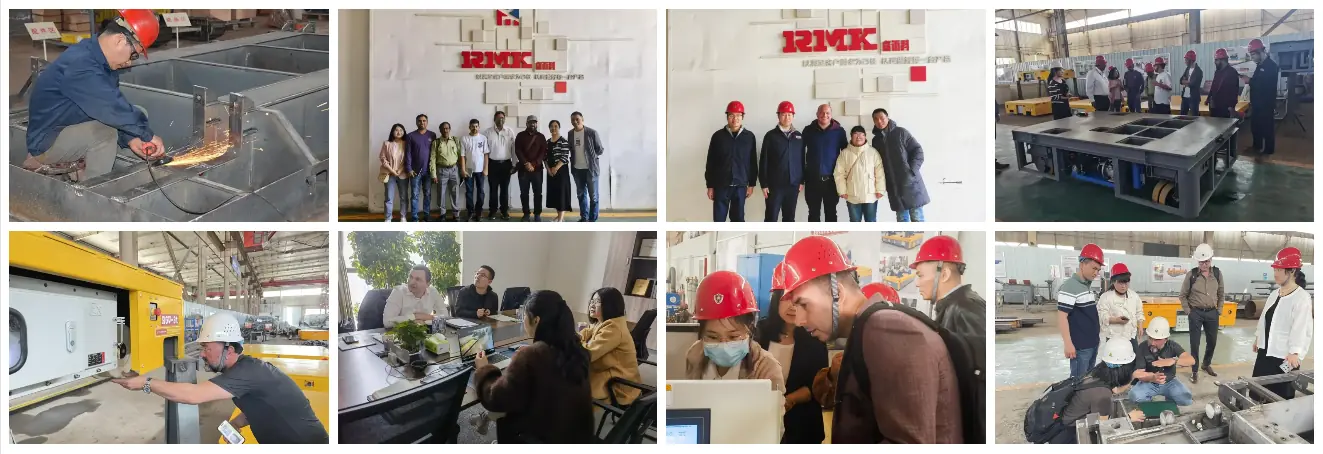
REMARKABLE is a manufacturer and supplier of cable reel powered rail transfer carts for industrial material handling. The company provides customized transfer cart solutions for different load capacities, platform dimensions, rail layouts, power supply systems, and operating conditions. Contact RMK to request the technical documentation and conformity information available for the proposed model and destination market.
REMARKABLE provides project consultation, equipment design, manufacturing, installation guidance, operation training, and after-sales technical support for overseas customers. Warranty service is provided under the agreed product warranty terms. REMARKABLEにお問い合わせください with your cargo specifications, transport route, and site requirements to discuss a cable reel powered rail transfer cart for your project.
よくあるご質問
What is a cable reel powered rail transfer cart?
A cable reel powered rail transfer cart is an electric material handling vehicle that travels on fixed rails and receives external power through a traveling cable managed by an onboard cable reel.
How does a cable reel powered rail transfer cart work?
External AC power passes through the traveling cable to the cart’s electrical system. The motor drives the wheels through a gearbox, while the cable reel releases or winds the cable during travel.
What is the load capacity of a cable reel powered rail transfer cart?
Load capacities vary by model and design. RMK provides customized configurations for different industrial loads. The rated capacity must be confirmed against the selected model and actual cargo specifications.
How far can a cable reel powered rail transfer cart travel?
Travel distance depends on cable length, reel capacity, winding speed and cable routing. The required distance should be specified during design to determine the appropriate reel and cable configuration.
What types of cable reels are used on rail transfer carts?
Common types include spring-driven and motorized cable reels. Spring-driven reels use mechanical spring force for cable retraction, while motorized reels use an electric drive for controlled winding.
Can a cable reel powered rail transfer cart operate continuously?
It can support extended operation with external power. Continuous duty depends on motor ratings, cooling capacity, cable specifications and the electrical system’s operating limits.
Can a cable reel powered rail transfer cart run on curved tracks?
Yes, with a suitable design. Track radius, wheel arrangement, cable routing, and reel position must be evaluated. Not all standard configurations support curved-track operation.
What information is needed to customize a cable reel powered rail transfer cart?
Provide the cargo weight and dimensions, rail layout, travel distance, power supply, required speed, control mode, and operating environment. These details form the basis for equipment design.
Related Rail Transfer Cart Articles


Discuss Your Transfer Cart Requirements
Send the cargo weight and dimensions, rail layout, travel distance, operating cycle, and available power supply. RMK can review the application and prepare a configuration and quotation with a defined scope of supply. For the main cost factors, see our electric transfer cart pricing guide.
- 负载: Cargo and fixture weights, dimensions, and load positions
- Track: Rail gauge, profile, route length and curve radii
- Duty: Trips per shift, travel speed and stopping requirements
- Site: Available power, loading method and working environment