
Table des matières
Introduction
Choosing a heavy duty transfer cart manufacturer involves more than comparing prices and rated load capacities. The manufacturer’s production capabilities, engineering experience, and customization skills all affect how well the cart performs in daily operation. After-sales support also matters, especially when the equipment is built for a specific factory or transport task.
So, how do you know if a supplier is the right choice? This guide covers the key points to check, including factory capabilities, engineering and customization, product quality, project experience, and after-sales service. These factors will help you compare manufacturers and make a better purchasing decision.
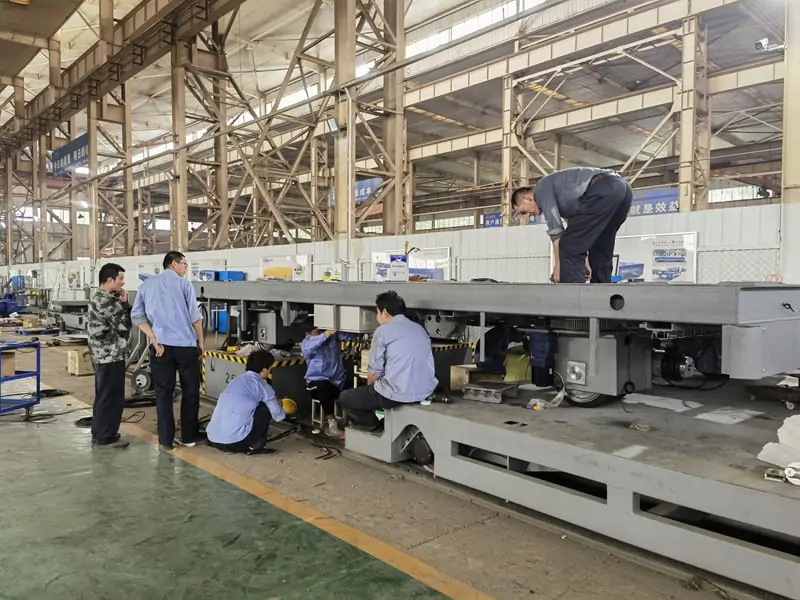
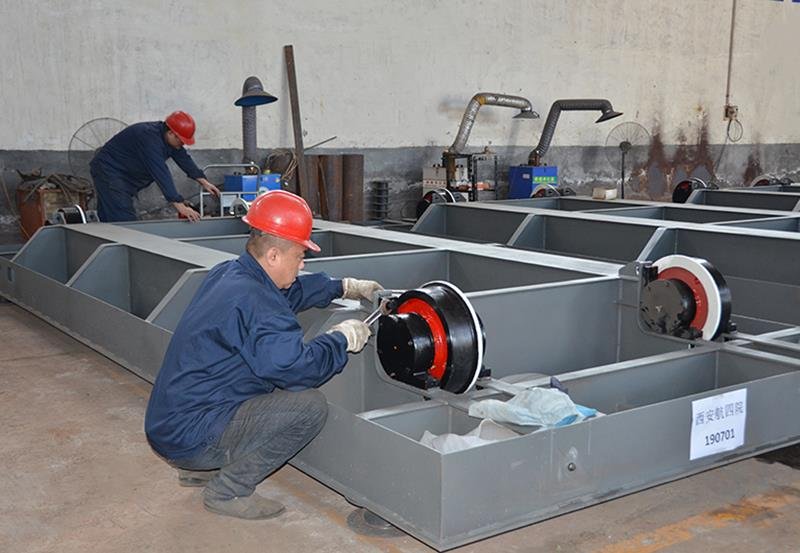
Check the Manufacturer’s Factory and Production Capabilities
Check the manufacturer’s factory, production equipment, manufacturing process, and production capacity before placing an order.
- 1. In-House Manufacturing: Check whether the company owns a factory and handles fabrication, welding, machining, and assembly in-house.
- 2. Production Equipment: Check the cutting, welding, machining, and assembly equipment available at the factory.
- 3. Production and Assembly Process: Review the manufacturing steps and inspection procedures for each production stage.
- 4. Production Capacity: Confirm whether the factory can handle the required load capacity, order quantity, and delivery schedule.
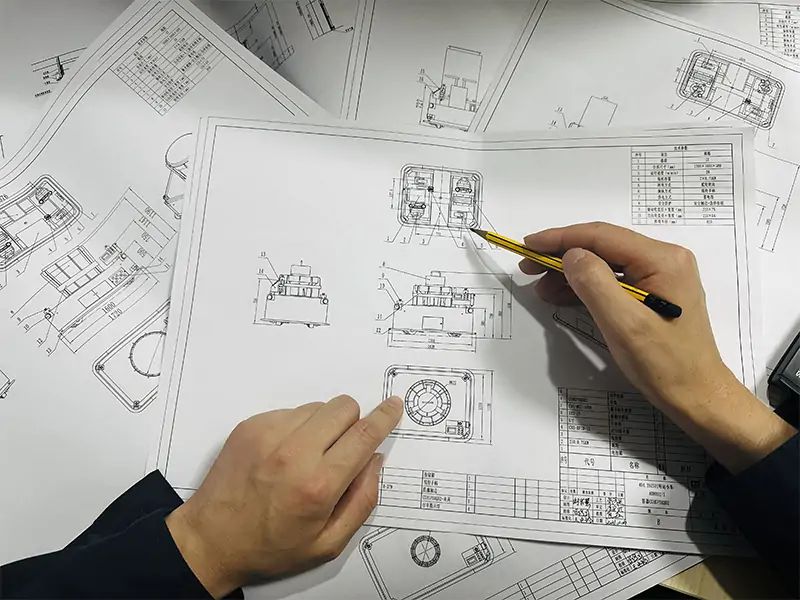
Evaluate Engineering and Heavy Load Design Experience
Heavy duty transfer carts require engineering calculations and component selection based on the actual load and transport conditions. Check the manufacturer’s experience in these four areas:
| Load Capacity Calculation | Check whether the manufacturer considers cargo weight, center of gravity, load distribution, and working frequency when determining the rated capacity. |
| Conception structurelle | Review the platform load-bearing structure, wheel arrangement, axle design, and support components for the specified cargo weight. |
| Drive and Power System Design | Check how motors, gearboxes, braking systems, and power supply methods are selected according to load capacity, travel speed, and operating conditions. |
| Operating Condition Assessment | Check whether the manufacturer evaluates rail or floor conditions, ground bearing capacity, slopes, turning radius, and transport routes. |
The manufacturer should be able to explain how the cart’s load capacity, structural design, and operating configuration are determined for the actual project.
Check Product Range and Customization Capabilities
A manufacturer’s product range shows the types of transfer carts it can supply. Check whether its existing models cover your transport requirements and whether it can modify the configuration for your project.
1. Transfer Cart Product Range
RMK offers several types of industrial transfer carts for different material handling tasks. The main product categories include:
| Type de produit | Main Characteristics |
|---|---|
| Chariot de transfert de rails | Rail-guided transport for fixed routes. |
| Chariot de transfert sans rail | Steerable movement without fixed rails. |
| Chariot de transfert AGV | Automated navigation and material handling. |
| Chariot de transfert hydraulique | Hydraulic lifting or other hydraulic functions. |
| Chariot de transfert électrique | Electrically powered material handling. |
| Chariot de transfert de moules | Transport of industrial molds and dies. |
2. Customization Capabilities
Standard models may not match every factory layout or cargo requirement. Check which dimensions, power systems, operating functions, and control options the manufacturer can customize.
- Load Capacity and Platform Size: Rated load, platform length, width, and height.
- Wheel and Steering Configuration: Wheel quantity, arrangement, and steering mode.
- Alimentation électrique : Battery, cable reel, low-voltage rail, or other suitable power systems.
- Functional Structures: Hydraulic lifting, roller conveyors, cantilever cranes, and other loading or unloading equipment.
- Control and Automation: Remote control, PLC, AGV navigation, and positioning systems.
- Special Requirements: Explosion-proof protection, corrosion resistance, and high-temperature operation.
3. RMK Product Range and Custom Design
RMK offers heavy duty transfer carts with standard load capacities from 1 to 500 tons. The product range includes rail-guided, trackless, AGV, hydraulic, electric, and mold transfer carts. Special projects can be designed for capacities up to 1,500 tons, subject to engineering assessment.
The final configuration is determined by cargo dimensions, transport routes, operating conditions, and required functions. Customers can provide technical drawings or project details for RMK engineers to develop a suitable design.
Verify Manufacturing Quality and Safety Control
The quality of a heavy duty transfer cart depends on its materials, fabrication, component assembly, and final testing. Before placing an order, ask the manufacturer how each stage is inspected and whether inspection records are available.
1. Raw Material Inspection
Check the specifications, dimensions, and material certificates of steel plates, profiles, and major purchased components. Material grades should match the approved equipment drawings and technical requirements.
2. Welding and Fabrication Inspection
Review weld quality, welding positions, structural dimensions, and fabrication accuracy. Ask whether the manufacturer performs visual weld inspections and dimensional checks before assembly.
3. Electrical and Mechanical Inspection
Check the installation and operation of motors, gearboxes, brakes, electrical components, and control systems. Major components should match the approved configuration and technical specifications.
4. Load and Functional Testing
Ask whether the finished cart undergoes load testing and functional checks before delivery. Testing items can include rated-load operation, starting, stopping, braking, steering, and control functions according to the project requirements.
5. Certifications and Applicable Standards
RMK’s standards and certifications:
- JB/T 6127-2010: Machinery industry standard for electric flatbed carts.
- ISO 9001: Quality management system certification.
- ISO 14001: Environmental management system certification.
- ISO 45001: Occupational health and safety management system certification.
- CE Conformity: Relevant conformity documentation for applicable products and configurations.
These certifications and standards can be used as part of the supplier evaluation. Buyers should request copies of the certificates and check the issuing body, validity period, certified company, and applicable scope. ISO certification applies to the management system, while Certification conformity must be verified against the specific product and applicable EU requirements.
6. What Quality Documents Should You Request?
Before confirming the order, ask the manufacturer for relevant records:
- Material inspection records.
- Welding and fabrication inspection reports.
- Electrical and mechanical component lists.
- Load testing and functional testing reports.
- Applicable certificates and technical documents.
Review the Manufacturer’s Project Experience
A manufacturer’s project experience shows whether it has handled transport tasks similar to yours. Review previous projects by load capacity, industry, equipment configuration, and working conditions rather than relying on customer lists alone.
Project Evaluation Criteria
| Evaluation Point | What to Check |
|---|---|
| Capacité de charge | Check whether the manufacturer has delivered carts with load capacities close to your requirements. |
| Industry Experience | Look for projects in steel, metallurgy, machinery manufacturing, wind power, and other relevant industries. |
| Cart Configuration | Check for experience with similar rail, trackless, AGV, hydraulic, or automated configurations. |
| Conditions de fonctionnement | Review whether previous projects involved similar transport routes, floor or rail conditions, cargo dimensions, and working frequency. |
| Résultats du projet | Ask for actual equipment photos, operation videos, technical specifications, and commissioning records. |
RMK Project Experience
RMK’s project cases across different industries and equipment configurations. The following examples can be used to demonstrate its delivery experience:
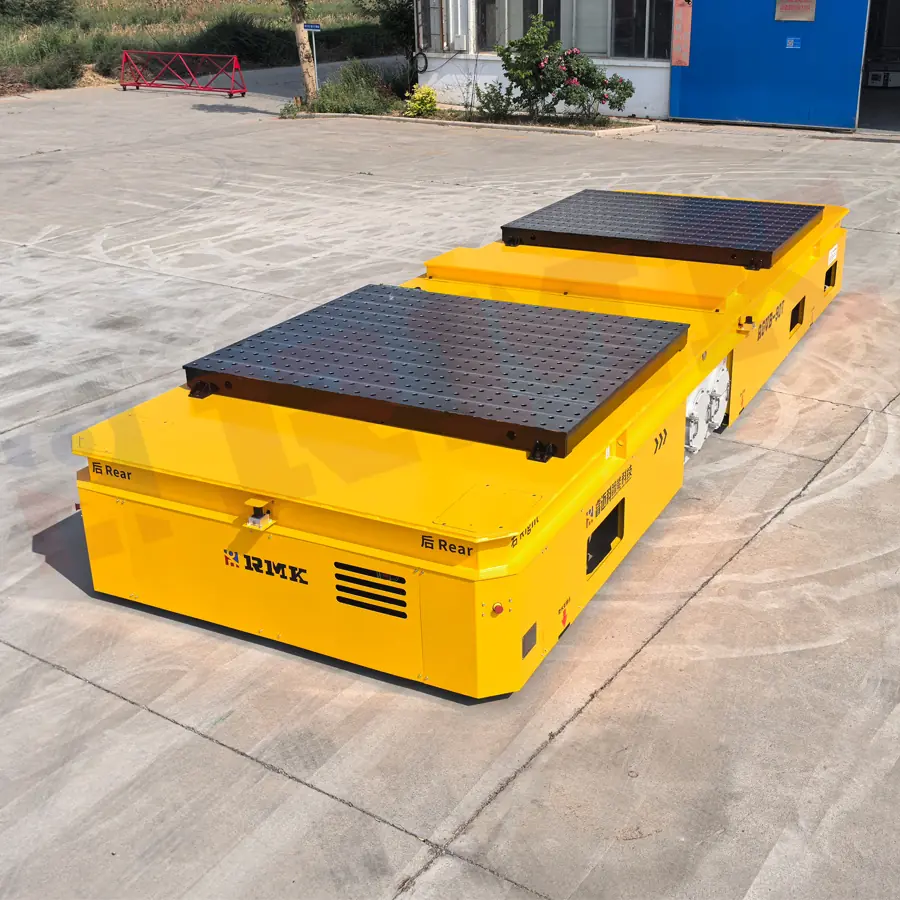
90-Ton Explosion-Proof AGV for Wind Power Manufacturing
Designed for transporting large wind power components between welding, assembly, inspection, and storage areas. The configuration includes lithium battery power, laser navigation, and automatic control.
Load capacity: 90 tons
60-Ton Rail Guided Vehicle for Steel Pipe Handling
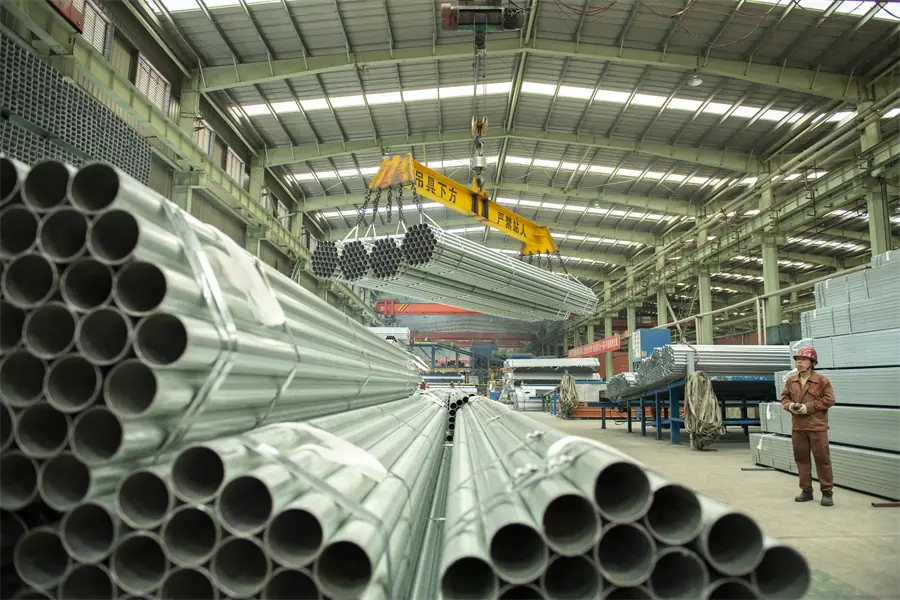
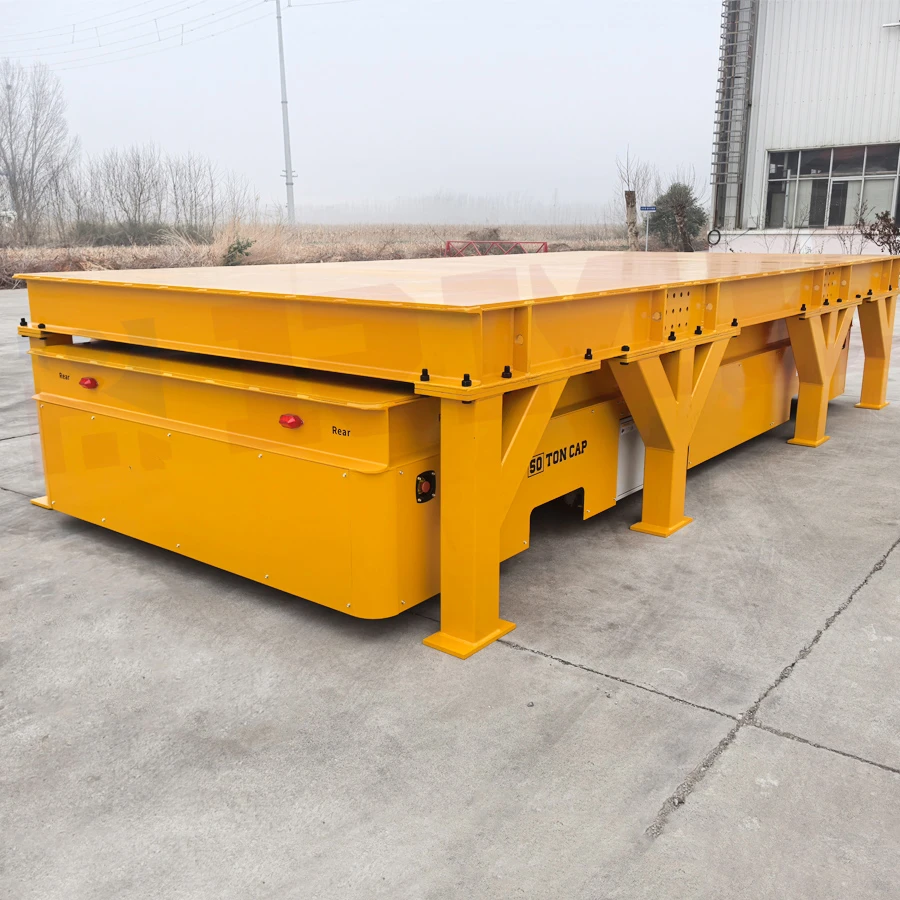
A 30-meter-long RGV designed to transport steel pipes between production areas, with PLC control and battery power.
Load capacity: 60 tons · Platform length: 30 m
50-Ton Hydraulic Transfer Cart for Mold Handling
Customized for a Turkish mold manufacturer, with hydraulic lifting and trackless movement for handling heavy steel components.
Load capacity: 50 tons
Compare Warranty and After-Sales Service
Heavy duty transfer carts require ongoing maintenance and technical support after delivery. Before placing an order, confirm the warranty terms and the services available during equipment operation.
| Service Item | What Buyers Should Confirm |
|---|---|
| Warranty | Warranty period, covered components, and exclusions. |
| Installation Support | Whether the manufacturer provides installation guidance or on-site assistance. |
| Assistance technique | Availability of remote troubleshooting and technical guidance. |
| Spare Parts | Availability, supply time, and pricing of wear parts and key components. |
| Formation des opérateurs | Whether training covers equipment operation, safety, and routine maintenance. |
| Maintenance Guidance | Availability of operation manuals, maintenance instructions, and service recommendations. |
RMK After-Sales Service
RMK’s service policy includes:
- One-Year Warranty: Warranty starts after equipment acceptance.
- Installation Guidance: Technical guidance during equipment installation.
- Technical Response: The service page states a response within 2 hours after receiving a product quality issue report.
- Regular Follow-Up: Periodic contact to check equipment operation.
- Lifetime Service: Ongoing technical support after the warranty period.
Before signing the contract, specify the warranty scope, response time, spare parts arrangements, and service responsibilities in the contract or technical agreement.
Supplier Comparison Checklist
Use the following table to compare shortlisted manufacturers. Fill in each column based on supplier quotations, technical proposals, factory information, and service agreements.
| Evaluation Criteria | Supplier A | Supplier B | Supplier C |
|---|---|---|---|
| In-House Manufacturing | |||
| Engineering Capabilities | |||
| Heavy Load Project Experience | |||
| Customization Options | |||
| Quality Inspection Records | |||
| Project References | |||
| Warranty and After-Sales | |||
| Delivery Schedule | |||
| Quotation Scope |
1. What Should You Compare First?
- Technical Proposal: Check whether the proposed cart capacity, platform dimensions, power supply, and control system match your transport requirements.
- Manufacturing and Quality: Compare factory capabilities, customization options, inspection procedures, and similar project experience.
- Price and Delivery: Review the total quotation, included components, delivery schedule, warranty, and after-sales services.
2. Compare the Full Quotation, Not Just the Price
Different suppliers may quote different equipment configurations for the same transport task. Check whether the price includes the cart body, power supply, control system, safety devices, spare parts, installation guidance, and other required items.
A lower quotation may exclude components or services included in another supplier’s offer. Compare the technical scope and delivery terms before making the final decision.
What Information Should You Provide When Requesting a Transfer Cart Quotation?
A detailed quotation starts with clear project information. Before contacting a manufacturer, prepare the following details about your cargo, transport route, and operating requirements.
Information Required for a Transfer Cart Quotation
| Information | Required Details |
|---|---|
| Cargo Information | Maximum cargo weight, dimensions, shape, and center of gravity. |
| Cart Requirements | Required load capacity, platform dimensions, and loading or unloading method. |
| Itinéraire de déplacement | Transport distance, route layout, turning radius, and slopes. |
| Conditions de fonctionnement | Working frequency, travel speed, and daily operating hours. |
| Alimentation électrique | Battery, cable reel, low-voltage rail, or other power requirements. |
| Site Conditions | Rail type, floor conditions, indoor or outdoor operation, and working environment. |
| Control Requirements | Manual operation, remote control, or automatic control. |
| Project Details | Required quantity, delivery schedule, and destination. |
Request a Customized Transfer Cart Quotation from RMK
Send RMK your cargo specifications, site layout, transport route, and operating requirements. Drawings, photos, and videos of the working area are also useful for the initial assessment.
RMK’s engineering team will review the project details and recommend a suitable transfer cart configuration. Contactez RMK to discuss your requirements and request a project quotation.
FAQ
What should I look for in a heavy duty transfer cart manufacturer?
Look for a manufacturer with in-house production, heavy load engineering experience, documented quality inspections, relevant project references, and clear warranty and after-sales terms.
What is the difference between a transfer cart manufacturer and a trading company?
A manufacturer handles equipment design and production directly, while a trading company sources products from external factories. Ask who controls manufacturing, technical changes, and quality inspections.
Can a heavy duty transfer cart manufacturer customize the platform size and load capacity?
Yes. Manufacturers can customize platform dimensions and rated capacity based on cargo weight, size, center of gravity, and site conditions. Provide cargo drawings and transport details for assessment.
How can I verify a transfer cart manufacturer’s production capabilities?
Request factory photos, production equipment records, fabrication and assembly details, inspection reports, and project videos. A factory visit or live video inspection can provide further confirmation.
What certifications should a heavy duty transfer cart manufacturer have?
Required certifications depend on the destination market and equipment configuration. Check applicable ISO management system certificates, CE conformity documents for EU markets, and relevant machinery standards.
How long does it take to manufacture a custom heavy duty transfer cart?
Manufacturing time depends on load capacity, customization level, component availability, production schedule, and testing requirements. Request a confirmed lead time after technical specifications and drawings are approved.
What should be included in a heavy duty transfer cart quotation?
A quotation should specify rated capacity, platform dimensions, power supply, drive and control systems, safety features, included accessories, warranty terms, installation scope, and delivery conditions.
Does a transfer cart manufacturer provide installation and after-sales support?
Many manufacturers provide installation guidance, operator training, spare parts, maintenance manuals, and technical support. Confirm the service scope, response time, and warranty responsibilities before signing the contract.