Quando a escala de implantação de AGVs (Veículos Guiados Automatizados) está mudando de “pequenos grupos de três ou cinco” para “centenas de unidades operando de forma colaborativa”, novos desafios surgem. Quando dezenas ou até centenas de AGVs se movem pelo mesmo espaço, evitar colisões, resolver impasses de tráfego e manter a eficiência em ambientes altamente dinâmicos tornaram-se os únicos critérios para avaliar a qualidade de um sistema de escalonamento.
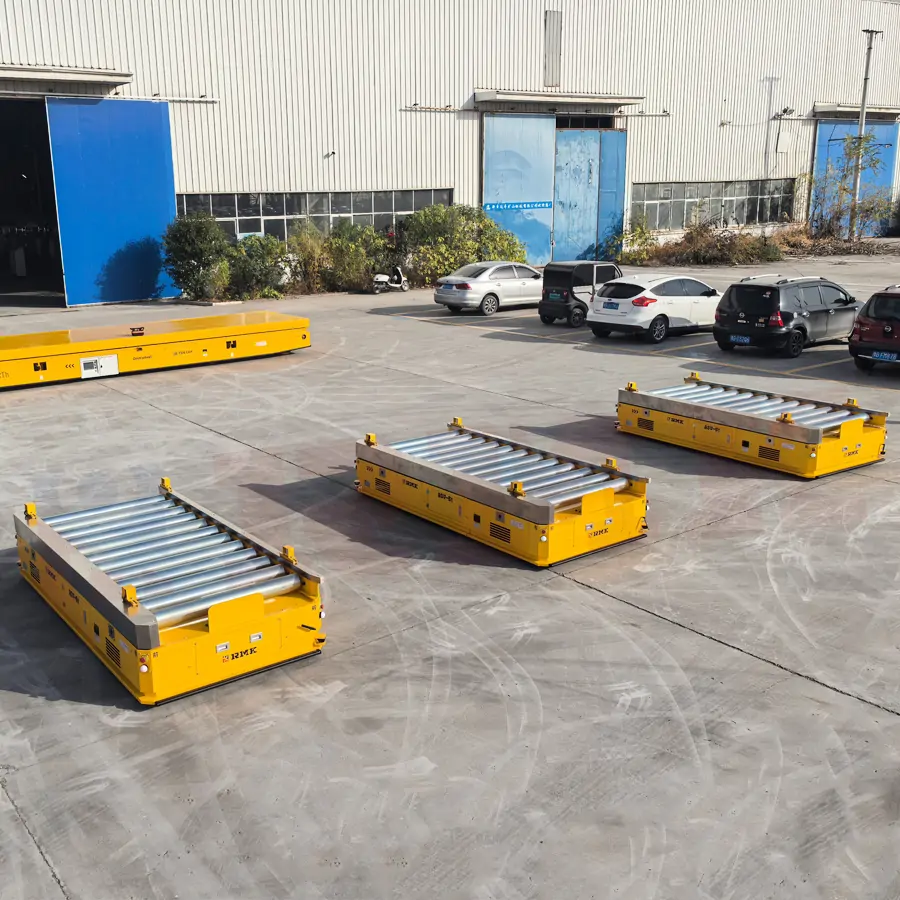
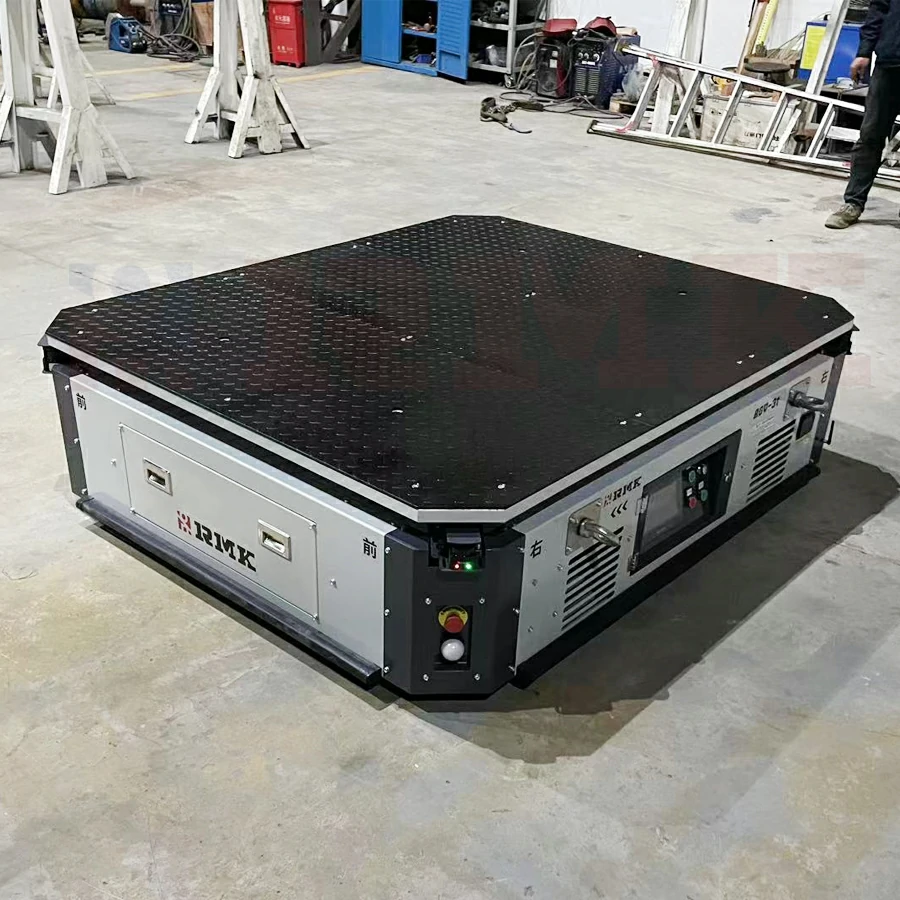
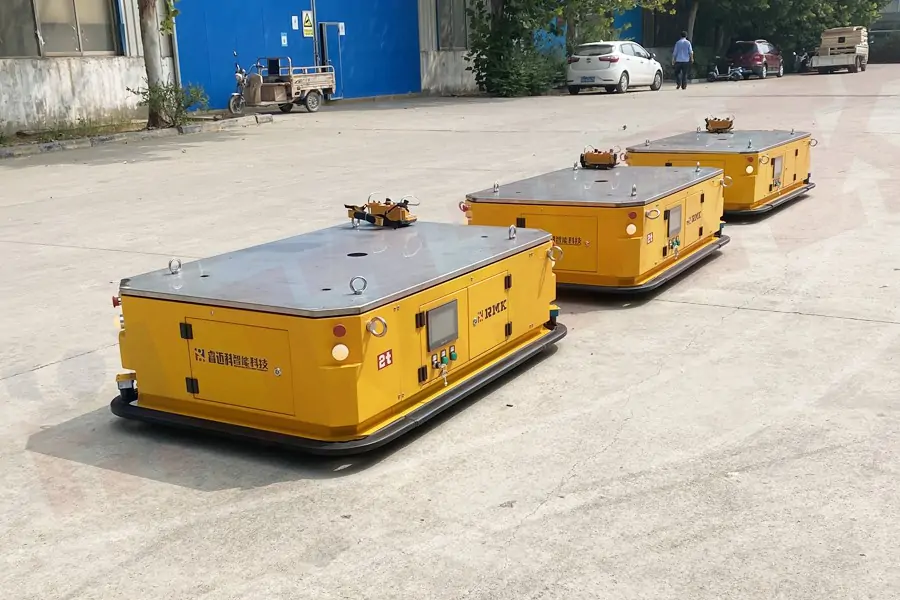
Na Remarkable, analisaremos a lógica dos sistemas de prevenção de colisões de AGVs em três dimensões: percepção de hardware, algoritmos de software e prática de engenharia.
Percepção Ambiental: Os “Cinco Sentidos” e os Limites de Segurança do AGV
A primeira linha de defesa para prevenção de colisões é a capacidade de percepção de um único AGV. Ele deve detectar com precisão e continuamente tanto a infraestrutura estática quanto os obstáculos dinâmicos.
LiDAR: O Sensor Central de Prevenção de Obstáculos
Atualmente, O design do AGVs industriais convencionais adotam LiDAR de linha única ou multilinha. Ao emitir feixes de laser de alta frequência e receber sinais refletidos, o sistema constrói um mapa de nuvem de pontos 2D ou 3D do ambiente.
- Zoneamento de Segurança: Engenheiros dividem os alcances de detecção em “zonas de desaceleração” e “zonas de parada de emergência”.”
- Suporte de Algoritmo: Usando tecnologia SLAM, o LiDAR é utilizado não apenas para navegação, mas também para comparar com mapas pré-construídos, filtrar racks fixos e identificar com precisão pessoas ou objetos inesperados.
Fusão Multissensor
Um único sensor tem limitações (por exemplo, interferência de vidro ou luz forte). Portanto, normalmente adotamos:
- Sensores Ultrassônicos: Detectam objetos transparentes ou obstáculos suspensos acima do alcance do LiDAR.
- Câmeras 3D: Reconhecem formas de objetos, permitindo que o sistema distinga se o obstáculo é “uma pessoa” ou “uma empilhadeira”.”
Cérebro de Escalonamento: Lógica de Decisão do Sistema de Controle Central (RCS)
Se os sensores são os olhos, então o RCS (Sistema de Controle de Robôs) é o cérebro. O cerne da prevenção de colisões de múltiplos AGVs não é “evitar”, mas “planejar”.”
Regras de Tráfego Predefinidas (Gerenciamento Estático)
Semelhante aos sistemas de tráfego urbano, o RCS define regras obrigatórias no mapa virtual:
- Pistas de Mão Única: Impõem movimento em direção única em corredores estreitos.
- Bloqueio de Interseção: Um mecanismo de “Token” é aplicado. Quando um AGV solicita passar por uma interseção, o sistema concede permissão e bloqueia o acesso para outros até que o veículo saia da área.
Algoritmos de Planejamento de Caminho Dinâmico
- Algoritmo A Aprimorado: Adiciona uma dimensão temporal à busca de caminho tradicional. O sistema calcula o espaço ocupado por cada AGV em T1, T2 e T3. Se ocorrer sobreposição no mesmo tempo, ajusta o tempo de espera ou redireciona um veículo.
- Prevenção e Resolução de Impasse:
Cenário: AGV A espera por B, B espera por C e C espera por A. Solução: O sistema prevê a ocupação de recursos ao longo das rotas. Uma vez detectada uma espera circular, um AGV é forçado a recuar para uma zona de amortecimento para quebrar o impasse.
A prevenção de colisões de múltiplos AGVs depende de um sistema de escalonamento centralizado eficiente (sistema de gerenciamento de tráfego). Ele atua como um centro de controle, garantindo operações seguras e eficientes por meio de planejamento e coordenação globais.
| Categoria de Estratégia | Ideia Central | Tecnologias-Chave | Características e Aplicações |
|---|---|---|---|
| Planejamento de Caminho Global | Planejar rotas livres de conflitos antecipadamente | MAPF, A aprimorado, algoritmos genéticos | Adequado para ambientes previsíveis como armazéns |
| Controle de Tráfego em Tempo Real | Resolver conflitos dinamicamente | Janelas de tempo, tabelas de reserva, prioridade de interseção | Alta flexibilidade para ambientes dinâmicos |
| Prevenção de Colisão Local | Percepção em tempo real e resposta de emergência | Detecção de colisão 2D, ORCA, corredores espaço-temporais | Camada de segurança final para eventos inesperados |
| Prevenção de Impasse | Evitar ou resolver espera cíclica | Previsão de impasse, design de regras, zonas seguras | Previne estagnação em todo o sistema |
Três Armadilhas de Engenharia a Evitar
Impacto da Carga e Inércia
Um AGV vazio e um carregando 2 toneladas têm distâncias de frenagem completamente diferentes. Um sistema robusto deve considerar peso, velocidade e atrito nos cálculos de segurança.
Cenários de Tráfego Misto
Em áreas compartilhadas com humanos, parar simplesmente reduz a eficiência. Sistemas avançados adotam algoritmos ORCA para permitir que AGVs ajustem caminhos suavemente em vez de parar.
Importância dos Testes de Simulação
Antes da implantação, ferramentas de simulação como FlexSim ou Gazebo devem ser usadas:
- Testar congestionamento em condições de alta densidade
- Avaliar casos extremos (falha de energia, falha de sensor)
Conclusão
A prevenção de colisões de múltiplos AGVs é um projeto de engenharia sistêmico, desde a percepção de hardware até a computação em nuvem. A tendência futura é a integração da computação de borda e do escalonamento centralizado: otimização global pelo sistema central, enquanto os AGVs coordenam localmente via comunicação V2V.
Para clientes industriais que buscam máxima estabilidade, selecionar um sistema com mecanismos maduros de previsão de impasse e protocolos de comunicação confiáveis é essencial para operações de fábrica inteligente 24 horas por dia, 7 dias por semana.
Se você tem requisitos semelhantes, contactar-nos agora. Nossos engenheiros têm vasta experiência e podem fornecer suporte profissional.
Correio eletrónico: transfercart@rmkzn.com
Telefone: +86-18637369355
PERGUNTAS FREQUENTES
P1. Como os sistemas AGV evitam colisões em ambientes de alta densidade?
A: Os sistemas AGV combinam LiDAR, fusão multissensor e escalonamento centralizado (RCS). Por meio de planejamento de caminho global, previsão de conflitos baseada em tempo e detecção de obstáculos em tempo real, eles garantem operação segura mesmo com centenas de AGVs.
P2. Os AGVs podem evitar impasses automaticamente?
A: Sim. Sistemas avançados usam algoritmos de previsão de impasse e análise de ocupação de recursos. Quando uma espera circular é detectada, um AGV é automaticamente redirecionado para uma zona de amortecimento para resolver o problema.
P3. Quais sensores são essenciais para uma prevenção de obstáculos confiável em AGVs?
A: O LiDAR é o sensor central, apoiado por sensores ultrassônicos e câmeras 3D. Essa fusão multissensor garante detecção precisa de obstáculos estáticos e dinâmicos, incluindo objetos transparentes ou irregulares.
P4. Como o sistema lida com a interação humano-AGV?
A: Em ambientes mistos, os sistemas usam algoritmos ORCA para permitir ajustes suaves de caminho em vez de parar. Isso melhora tanto a segurança quanto a eficiência operacional.
Q5. Quais fatores afetam a frenagem e a distância de segurança dos AGVs?
A: Os principais fatores incluem peso da carga, velocidade e atrito do piso. Um sistema confiável ajusta dinamicamente as zonas de segurança e os modelos de frenagem com base nas condições operacionais em tempo real.
Q6. A simulação é necessária antes da implantação de AGVs?
A: Sim. Ferramentas de simulação como FlexSim ou Gazebo são essenciais para testar congestionamento, picos de carga e cenários extremos, como falhas de energia ou de sensores, antes da implementação no mundo real.