جدول المحتويات
مقدمة
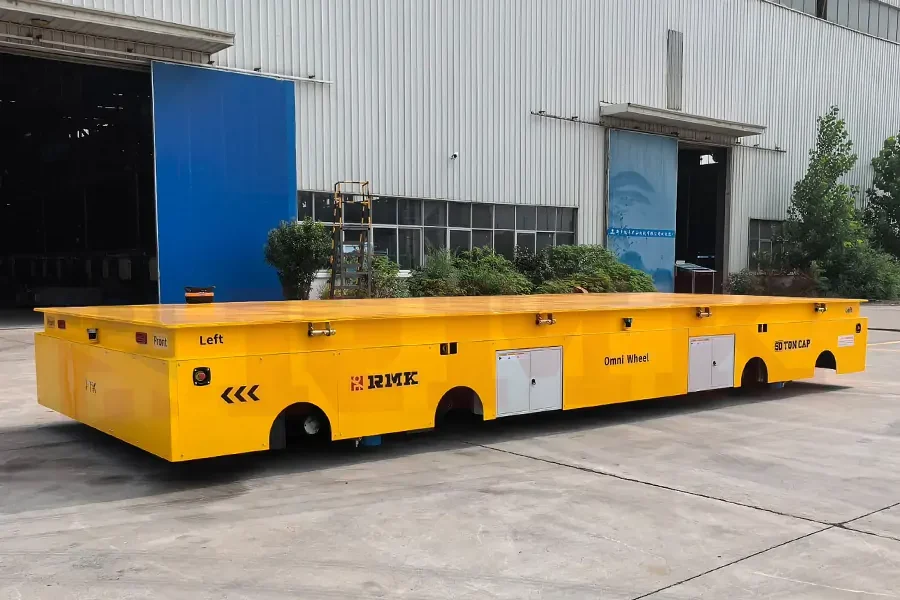
In modern industrial material handling, factories need reliable equipment to move heavy loads safely and efficiently over long distances. A عربة نقل البطاريات is a rail- or trackless vehicle designed for transporting materials such as steel structures, molds, machine parts, and production components.
In this guide, I will explain how battery transfer carts work, why they are widely used in factories, and which industries benefit from this equipment. The article covers their main applications, operating methods, advantages, and selection factors to help you better understand how a battery transfer cart can fit different industrial transportation requirements.
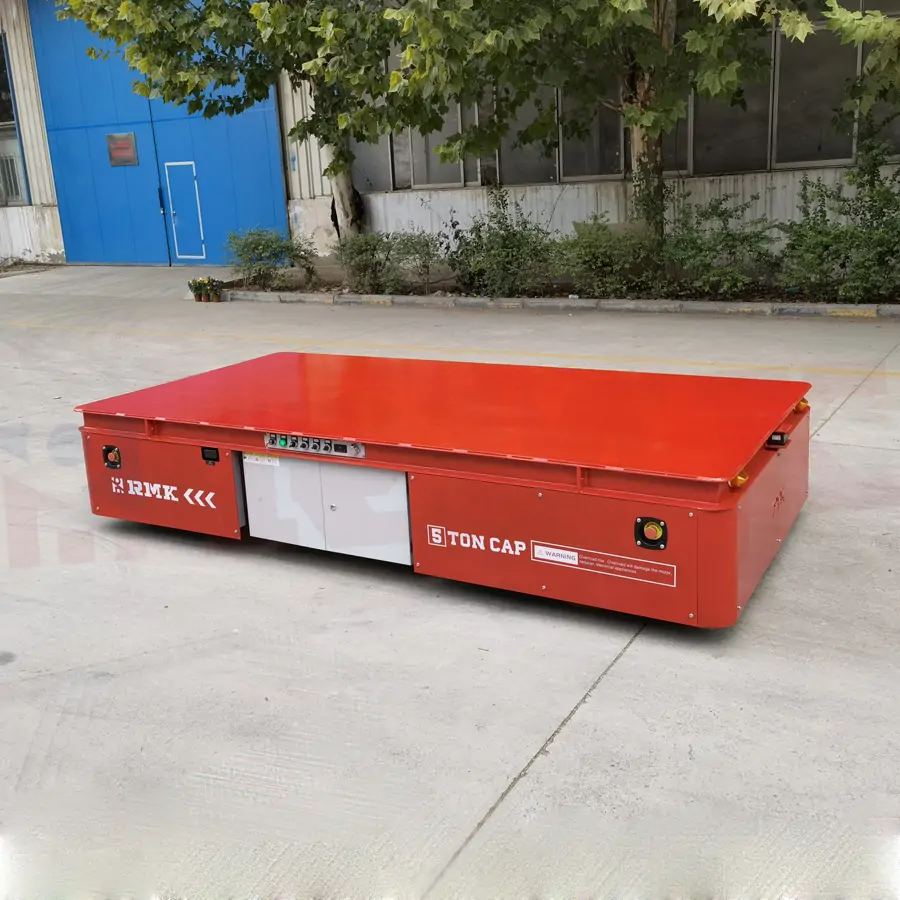
What Is a Battery Transfer Cart?
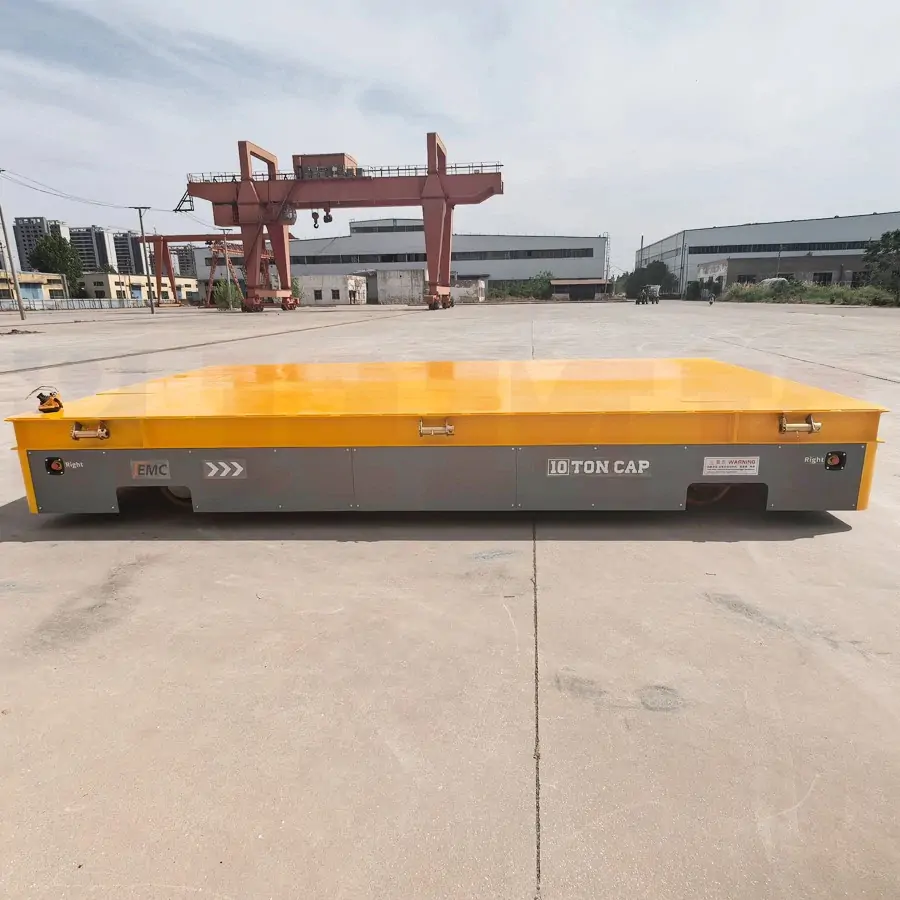
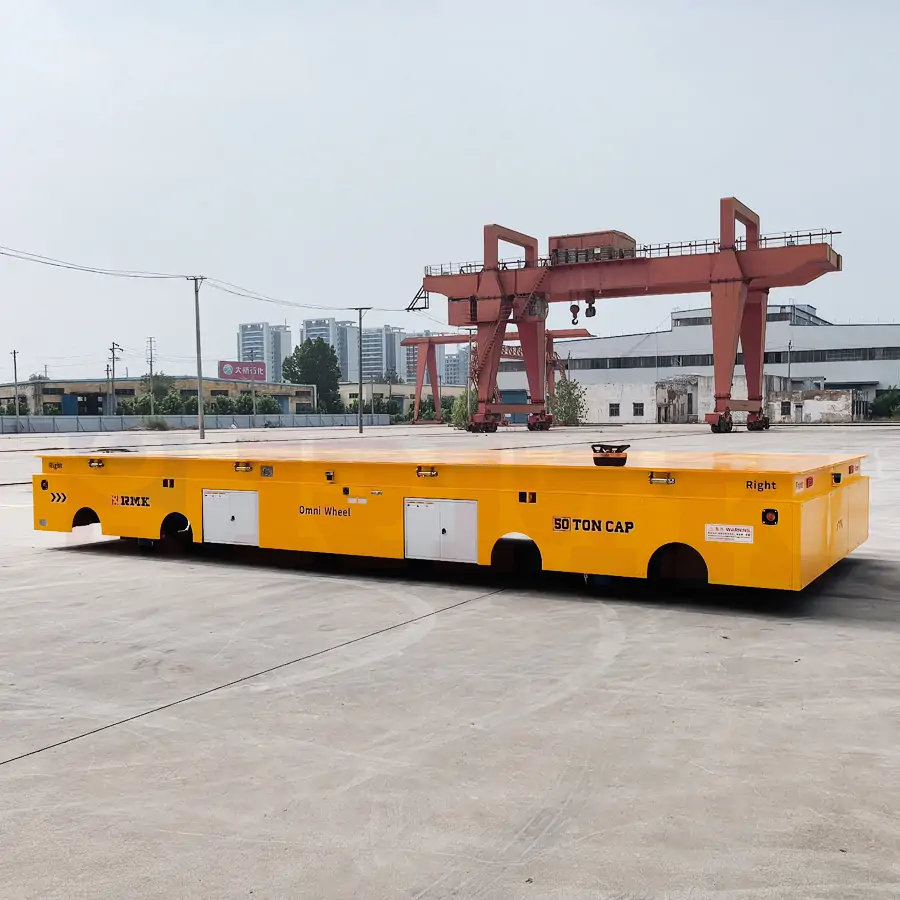
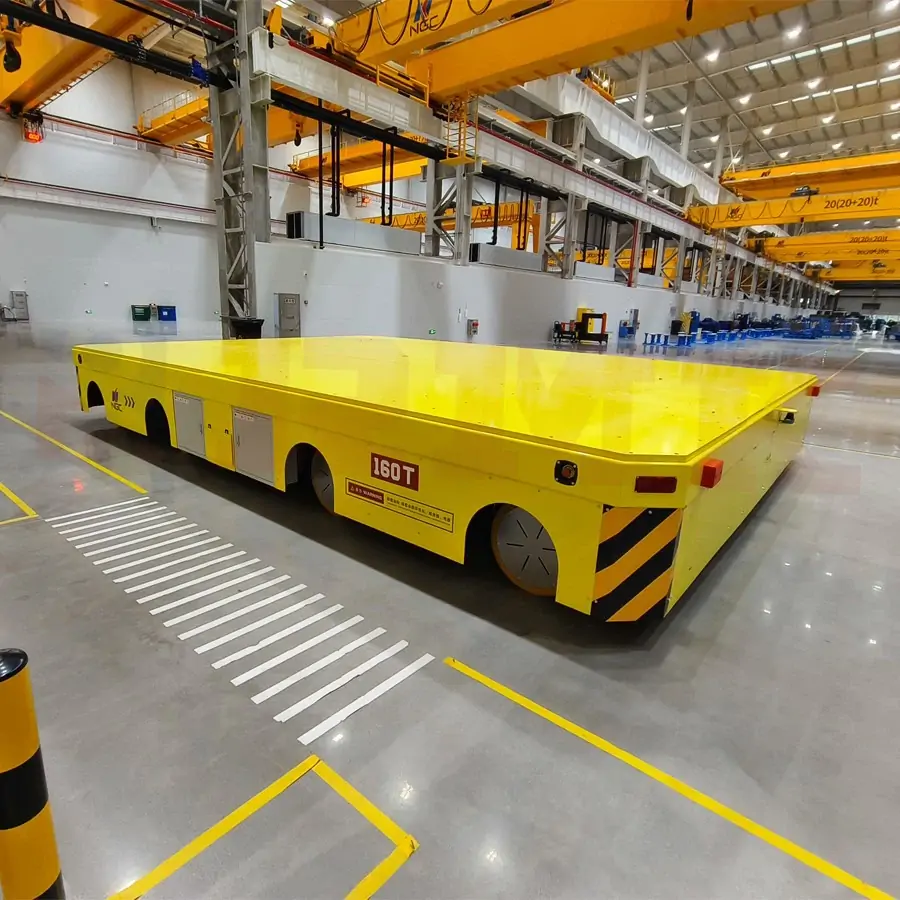
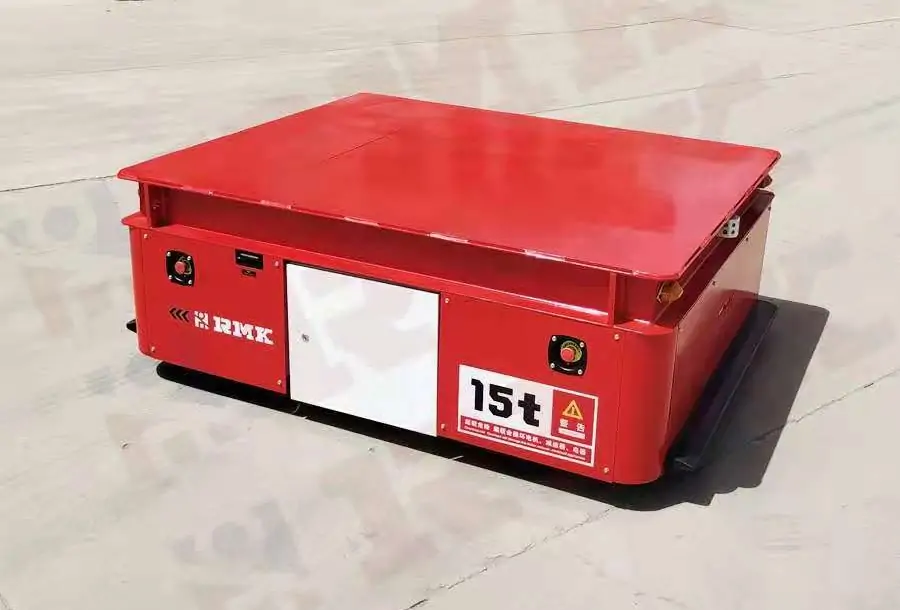
A battery transfer cart, also known as an electric flat transfer cart or battery-powered rail cart, is a self-propelled industrial vehicle used to transport heavy loads in factories, warehouses, and workshops. Powered by rechargeable batteries such as lead-acid or lithium-ion batteries, it drives through an electric motor and wheel system without requiring external power cables or fixed power lines.
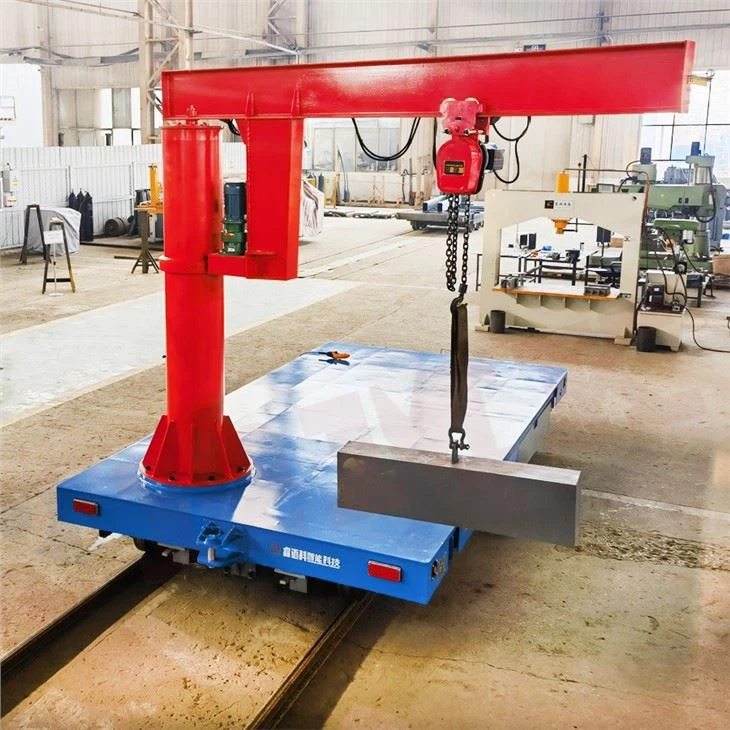
Battery transfer carts are widely used for moving steel structures, الكبيرة, machine parts, and other heavy materials where safe and efficient transportation is required. Depending on the application, they can handle loads from several tons to over 100 tons. They can be equipped with features such as wireless remote control, variable speed control, and automatic guidance systems.
The cart consists of a heavy-duty steel frame, drive system, braking system, battery pack, and control unit. These components work together to provide stable operation under continuous industrial use. Safety options such as emergency stops, alarms, and anti-collision devices can be added for different working environments. Its modular structure also makes maintenance easier and helps reduce long-term operating costs.
مبدأ العمل
A battery transfer cart is powered by an onboard battery system that supplies energy to the electric motor. The motor drives the wheels through the transmission system, allowing the cart to move heavy loads along rails or on the factory floor without external power cables.
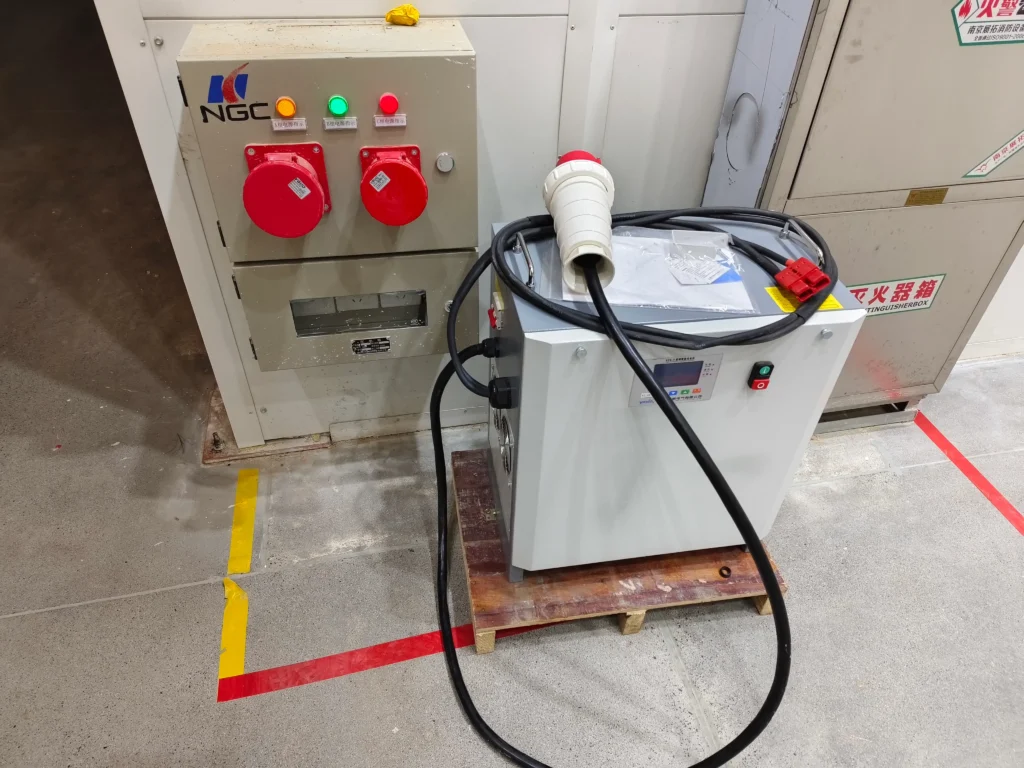
1. Battery Power System — The battery is the main power source of the cart. Common options include lead-acid batteries and lithium batteries. The battery capacity is selected based on the cart load, travel distance, and working hours to suit different industrial applications.
2. Drive and Control System — The motor generates driving force and transfers power to the wheels through a reducer. The control system manages starting, stopping, speed adjustment, and forward or reverse movement. Operators can control the cart through a wireless remote control or pendant controller. Emergency stop switches, alarms, and braking systems are installed to improve operation safety.
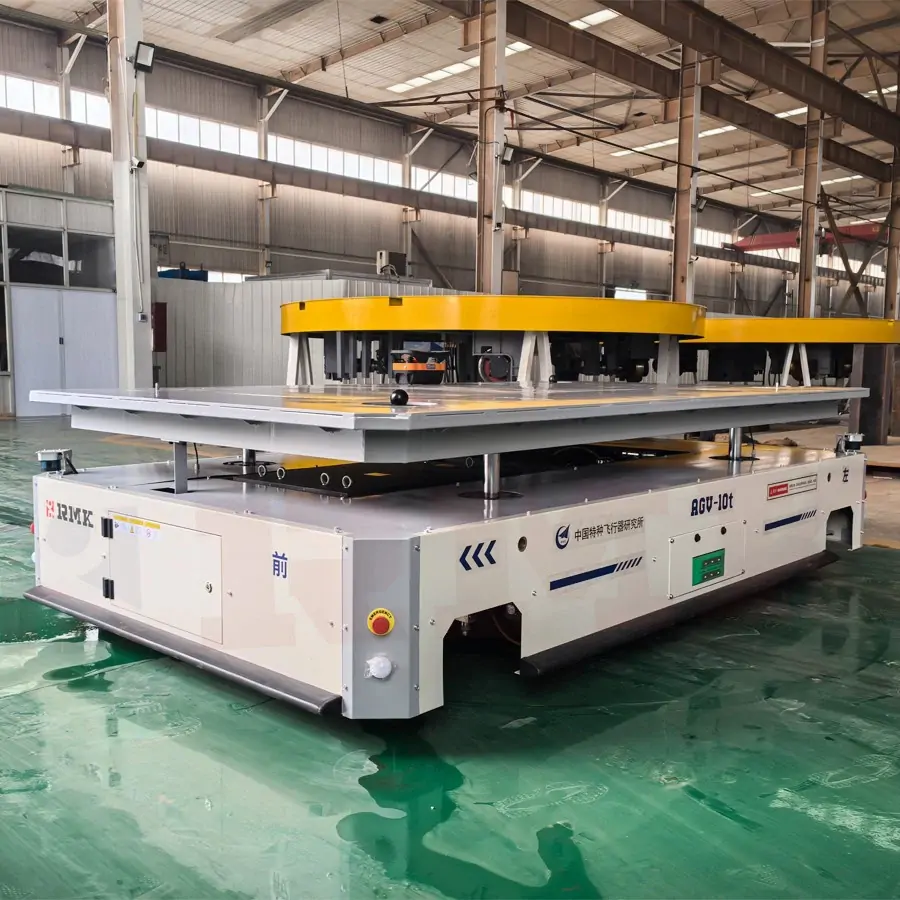
3. Guidance and Automation System — For automatic material handling, battery transfer carts can be equipped with guidance systems such as magnetic navigation, sensors, or AGV control technology. These systems control the travel route and improve positioning accuracy during operation.
The battery, drive system, and control unit work together to complete the transportation of heavy materials in factories, steel plants, shipyards, and other industrial facilities.
للحصول على معلومات تفصيلية حول صيانة وفحص عربات النقل التي تعمل بالبطارية، راجع المقال: “صيانة عربات النقل التي تعمل بالبطارية: دليل للفحوصات اليومية والعناية بالبطارية.”
التطبيقات
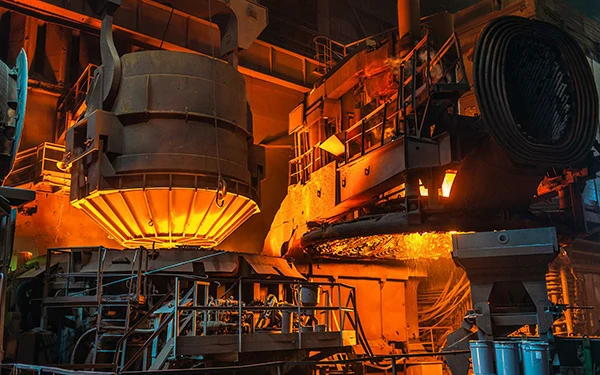
صناعة الصلب
Used for transporting steel coils, plates, ladles, and heavy steel structures between production areas. Heavy-duty models are designed for high-load operation in steel plants.
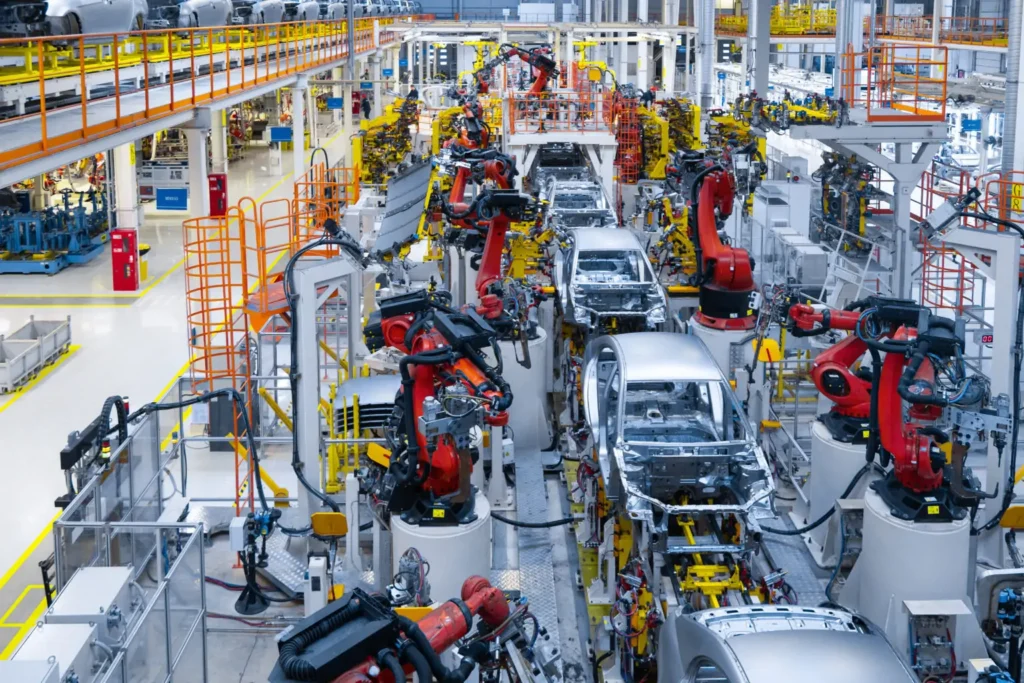
صناعة السيارات
Used to move vehicle bodies, molds, fixtures, and components between assembly lines, improving material handling efficiency on the production floor.
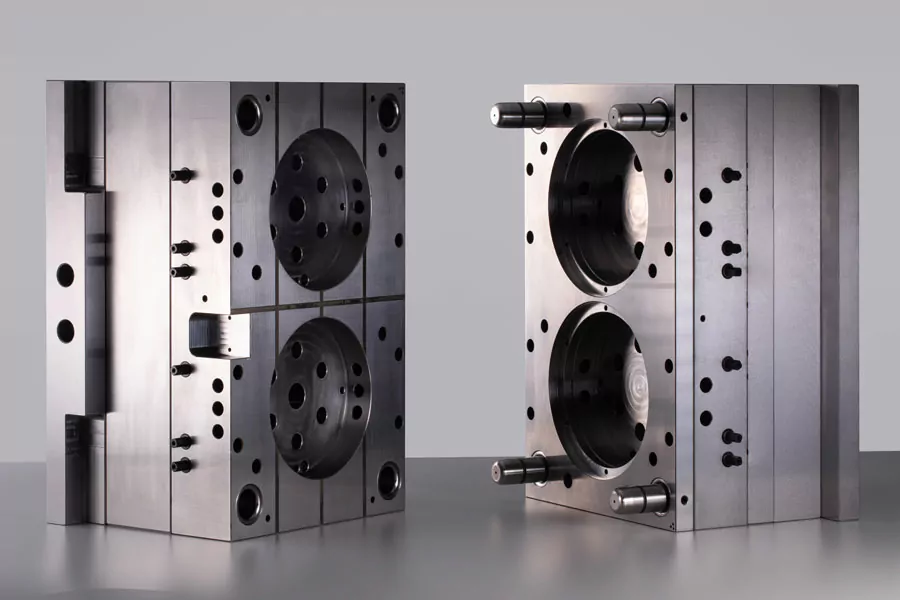
صناعة القوالب والآلات
Used for transporting large molds, machine bases, and oversized equipment during production, installation, and maintenance.
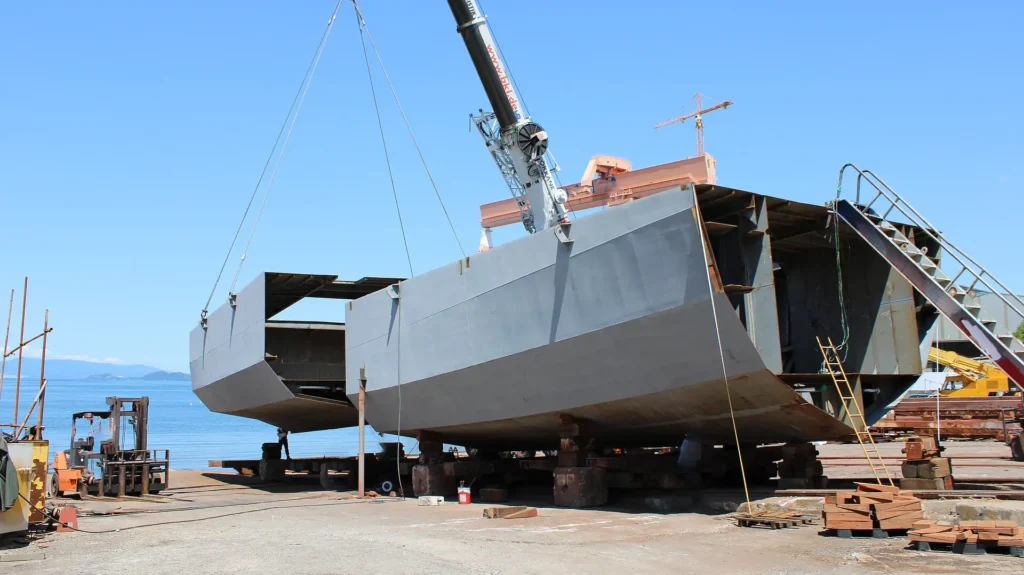
الورش الآلية
Used to transfer ship blocks, steel sections, and large fabricated parts in shipyards. The platform size and load capacity can be customized for different projects.
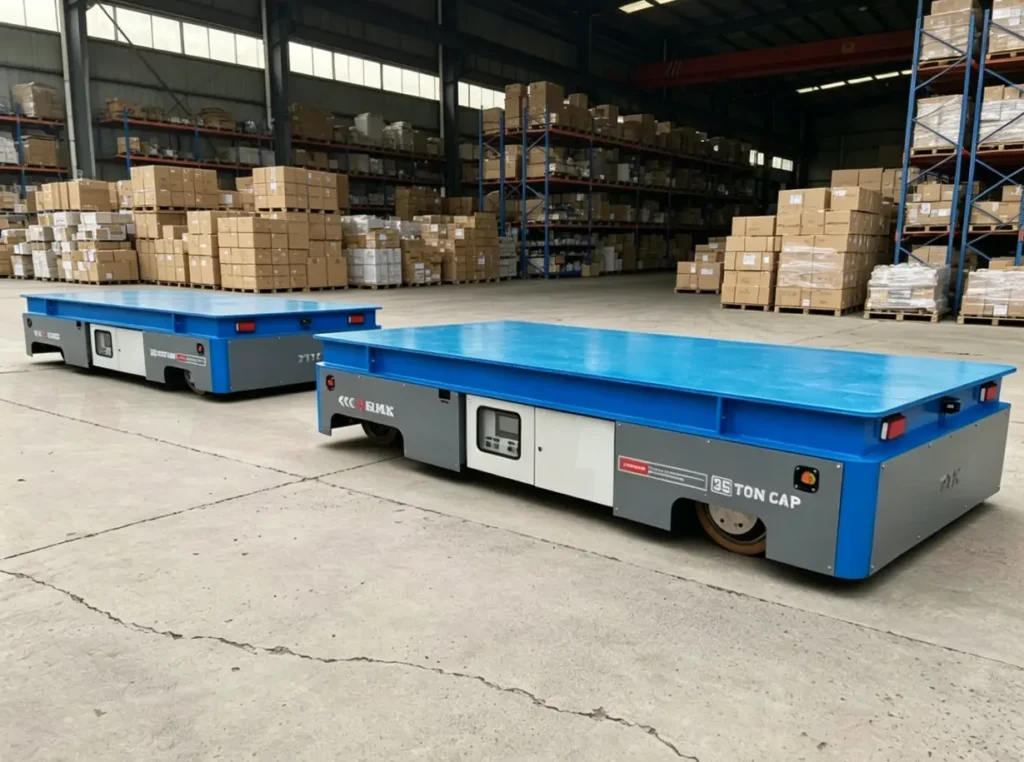
Warehouses and Logistics
Used for internal transportation of heavy goods, pallets, and production materials in large warehouses and factories.

صناعة الطاقة الجديدة
Used for moving battery modules, energy storage equipment, and production components in battery and energy equipment manufacturing facilities.
أنواع عربات النقل التي تعمل بالبطارية
Battery transfer carts are available in different designs based on load requirements, travel routes, and working conditions. Common types include rail-type, trackless, AGV, and hydraulic lifting models, each designed for specific material handling applications.
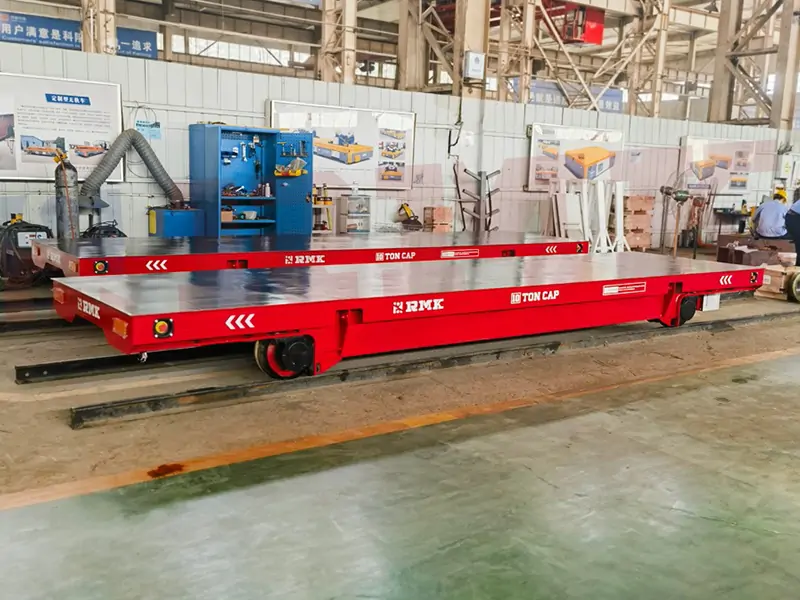
Rail Battery Transfer Cart
Rail-type battery transfer carts run on fixed tracks and are designed for heavy-load transportation along designated routes. They are widely used in steel plants, shipyards, and heavy manufacturing facilities where stable operation and high load capacity are required.
- Load Capacity: 5–150 tons (customized up to 300+ tons)
- Running Speed: 0–20 m/min
- Power Supply: Lead-acid Battery / Lithium Battery
- Control Method: Wireless Remote Control / Pendant Control
عربة نقل البطاريات غير المسارية
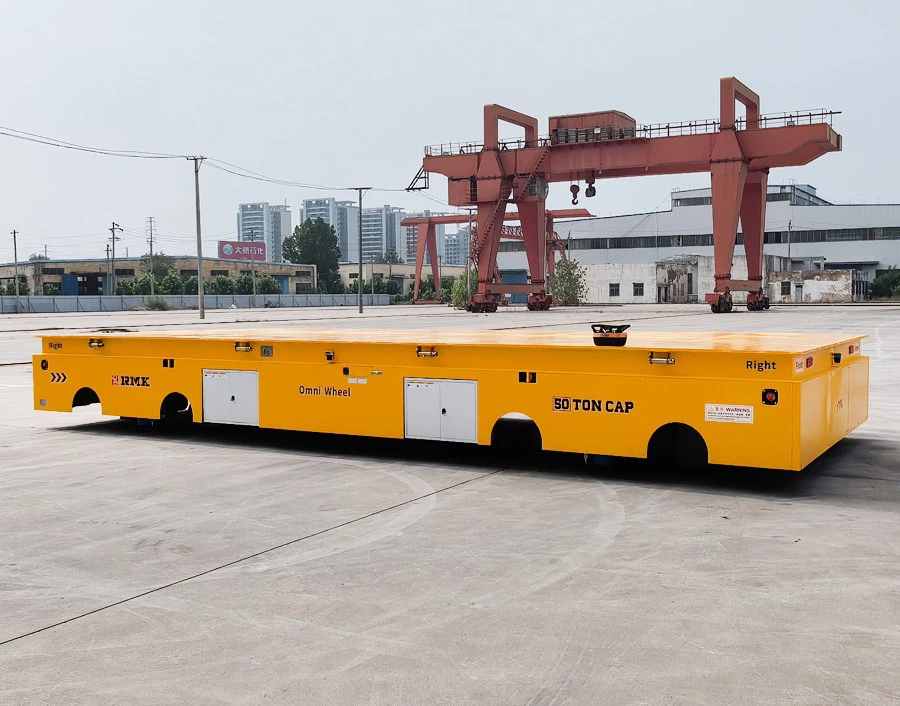
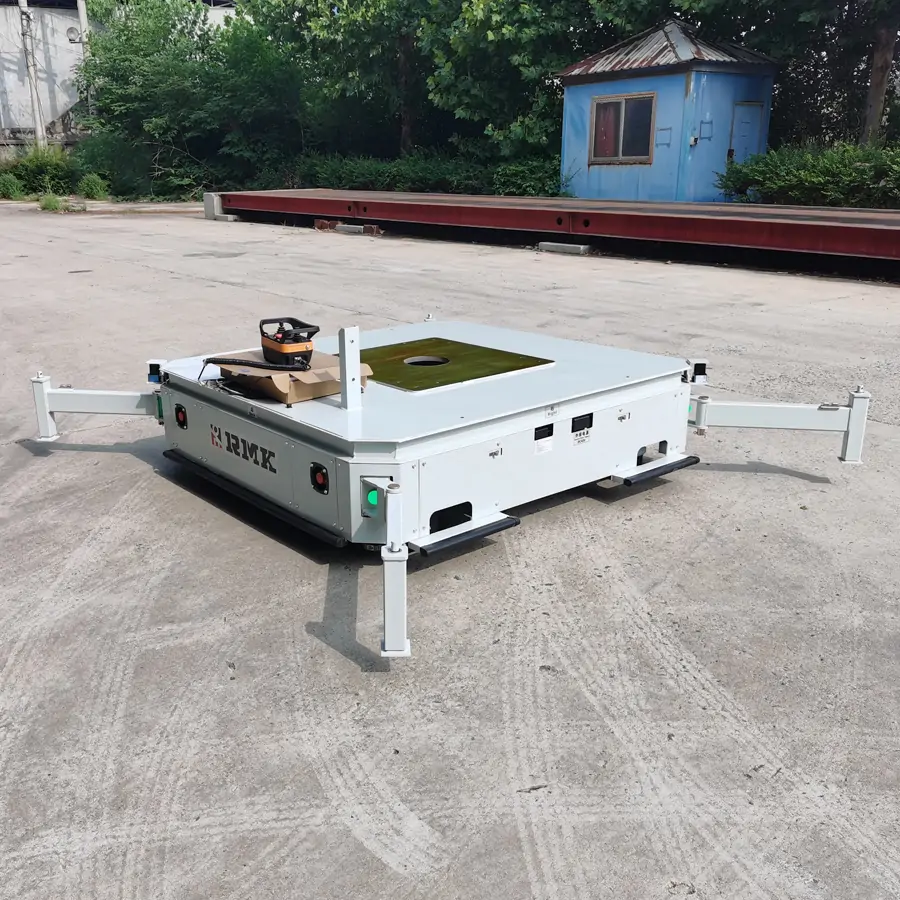
Trackless battery transfer carts use rubber wheels and steering systems to move freely without rails. They are suitable for factories with flexible transportation routes, limited space, or frequent changes in material handling paths.
- Load Capacity: 1–50 tons
- Steering Type: Two-Wheel Steering / Four-Wheel Steering
- Drive System: DC Motor Drive
- Battery Capacity: 48V/200Ah–72V/400Ah
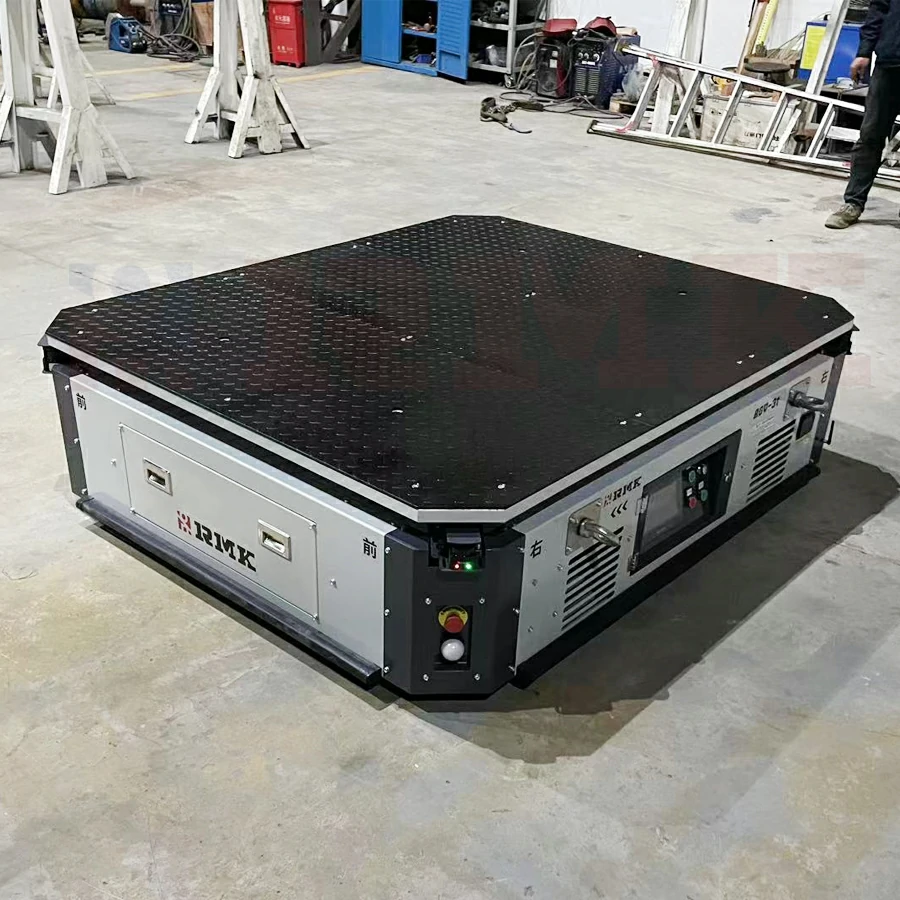
AGV Battery Transfer Cart
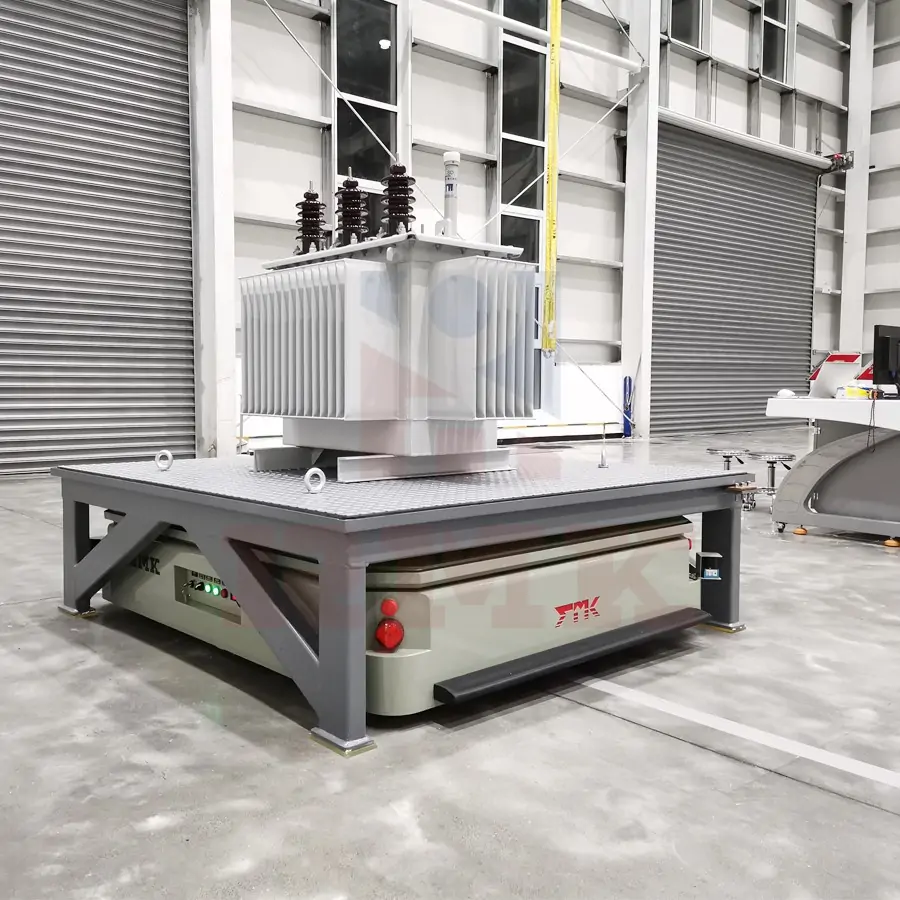
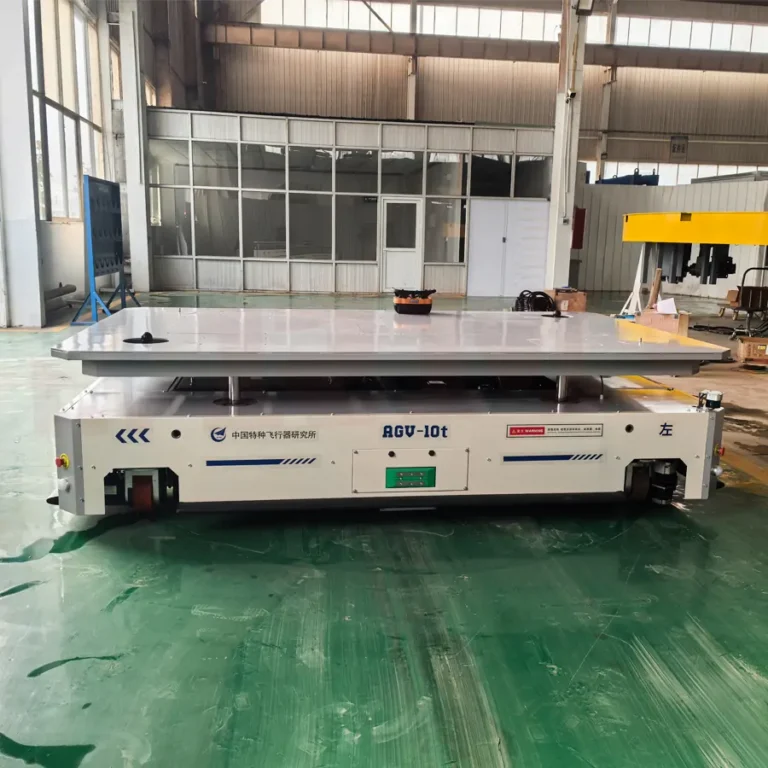
AGV battery transfer carts combine battery power with automatic navigation technology. They can operate without manual control and are used in automated factories, intelligent warehouses, and production lines requiring precise material movement.
- Navigation: Electromagnetic / Laser / SLAM Navigation
- Positioning Accuracy: ≤±10 mm
- Load Capacity: 500 kg–10 tons
- Charging Method: Automatic Charging / Battery Replacement
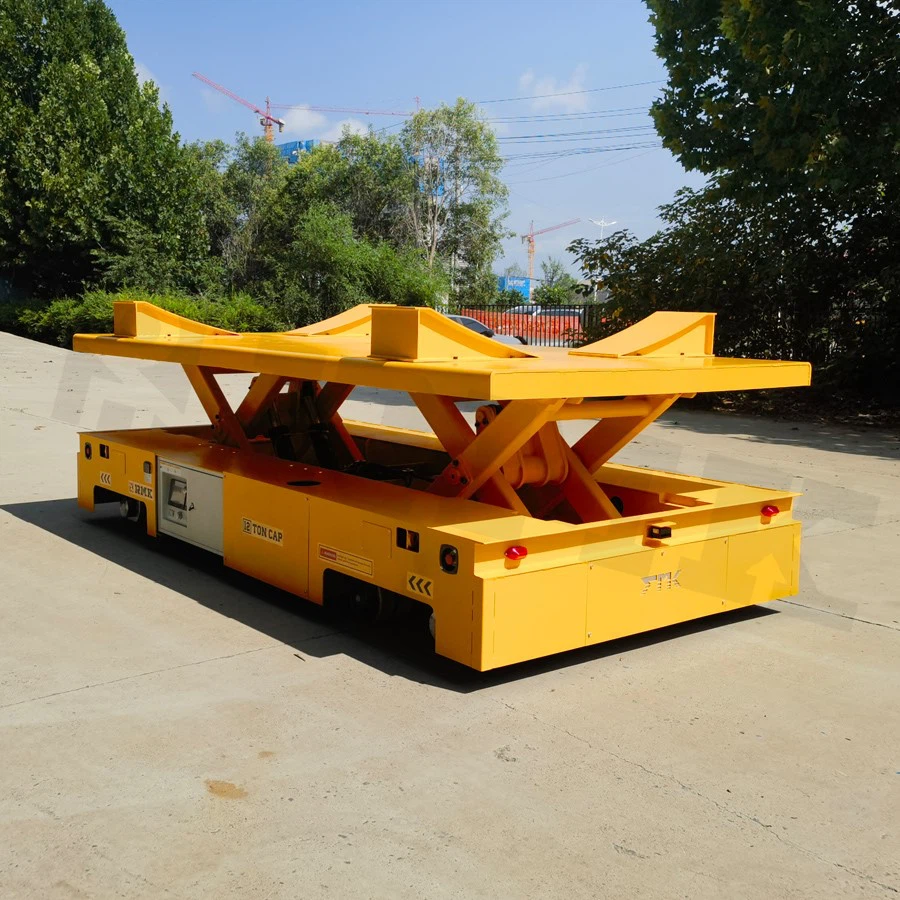
Hydraulic Lifting Battery Transfer Cart
Hydraulic lifting battery transfer carts combine material transportation with platform lifting functions. They are used for moving heavy loads between different working heights, such as assembly lines, production stations, and warehouse areas.
- Lifting Height: 0.5–2 m
- Load Capacity: 3–30 tons
- Lifting Accuracy: ±5 mm
- Lifting System: Battery-Powered Hydraulic System
The right battery transfer cart depends on load capacity, travel route, working environment, and automation requirements. Rail-type models are suitable for heavy fixed-route transport, while trackless and AGV models provide more flexibility for modern production systems.
الحالات
المزايا
- Flexible Power Supply: Battery transfer carts use onboard batteries, eliminating the need for external cables or fixed power systems. They can operate in different areas of a factory with greater movement flexibility.
- Heavy Load Handling: Designed for industrial transportation, battery transfer carts can handle loads from several tons to hundreds of tons, making them suitable for heavy materials and large components.
- Low Operating Cost: The electric drive system requires less maintenance than traditional fuel-powered equipment. Rechargeable batteries also reduce energy costs during daily operation.
- Safe and Stable Operation: Equipped with braking systems, emergency stops, alarms, and control devices, battery transfer carts provide stable transportation in industrial environments.
- Easy Customization: The cart structure, platform size, load capacity, control method, and power system can be customized according to different material handling requirements.
- Suitable for Various Applications: Battery transfer carts can be used in steel plants, shipyards, automotive factories, warehouses, and machinery manufacturing facilities for different transportation tasks.
Battery Transfer Cart vs Traditional Handling Equipment
Battery transfer carts and traditional handling equipment are used for moving materials in industrial facilities. Their differences mainly include power supply, load capacity, flexibility, automation, and application range.
| المقارنة | عربة نقل البطاريات | Traditional Handling Equipment |
|---|---|---|
| Power Supply | Uses onboard batteries (lead-acid or lithium batteries), no external cables required, supports continuous operation | Uses fuel, external power supply, or manual operation |
| المرونة | Trackless models support flexible movement, while rail models are suitable for fixed-route heavy transport | Forklifts require larger operating space; cranes and rail systems have fixed routes |
| الأتمتة | Can integrate AGV navigation, sensors, and automatic control systems for unmanned operation | Mainly relies on manual operation and operator skills |
| السلامة | Equipped with safety functions such as emergency stop, overload protection, alarms, and obstacle detection | Standard equipment has limited safety functions for special industrial materials |
| سعة التحميل | 1–300+ tons, with customized designs available | Forklifts usually handle 1–10 tons; heavy equipment requires fixed infrastructure |
| Operation Efficiency | Suitable for continuous material transfer and multi-shift operation | Efficiency depends on manual handling and equipment availability |
| تكلفة الصيانة | Electric drive system requires less routine maintenance and components are easier to replace | Fuel systems and hydraulic components require more maintenance |
| التطبيقات | Steel plants, shipyards, automotive factories, battery plants, and automated warehouses | General warehouses, workshops, construction sites, and standard material handling |
Battery transfer carts are suitable for heavy-duty material handling with flexible operation and customized options. Traditional equipment remains practical for standard handling tasks with simpler requirements.
How to Choose a Battery Transfer Cart?
The selection of a battery transfer cart depends on the load, transportation route, working environment, and operating requirements. The right configuration helps the cart match the actual production conditions.
- Load Capacity: The cart capacity is selected according to the weight of the transported materials. Heavy industries such as steel plants and shipyards usually require high-capacity models.
- Running Route: Rail-type battery transfer carts are used for fixed transportation routes. Trackless models are suitable for workshops where the transportation path changes frequently.
- Working Environment: The factory conditions determine the cart structure and protection design. Factors such as floor condition, temperature, dust, and humidity should be considered during selection.
- Battery Type: Lead-acid and lithium batteries are common power options. Battery selection depends on operating time, charging conditions, and daily workload.
- Control Method: The control system is selected based on operation requirements. Wireless remote control, pendant control, and automatic control systems are available for different applications.
- Platform Size: The platform design should match the size and shape of the transported materials. Customized platforms are available for steel plates, molds, equipment, and other large components.
- Automation Level: For automated production lines, battery transfer carts can be equipped with AGV navigation and positioning systems for automatic material transportation.
Choosing a battery transfer cart starts with understanding the actual handling requirements, including material weight, travel distance, working environment, and control needs. Different applications require different cart designs and configurations.
الخاتمة
Battery transfer carts are used for heavy material transportation in steel plants, factories, warehouses, and other industrial sites. Different models, including rail-type, trackless, AGV, و عربات نقل رفع هيدروليكية, meet different requirements for load capacity, route design, and operation methods. The battery-powered drive system provides stable performance for continuous industrial handling.
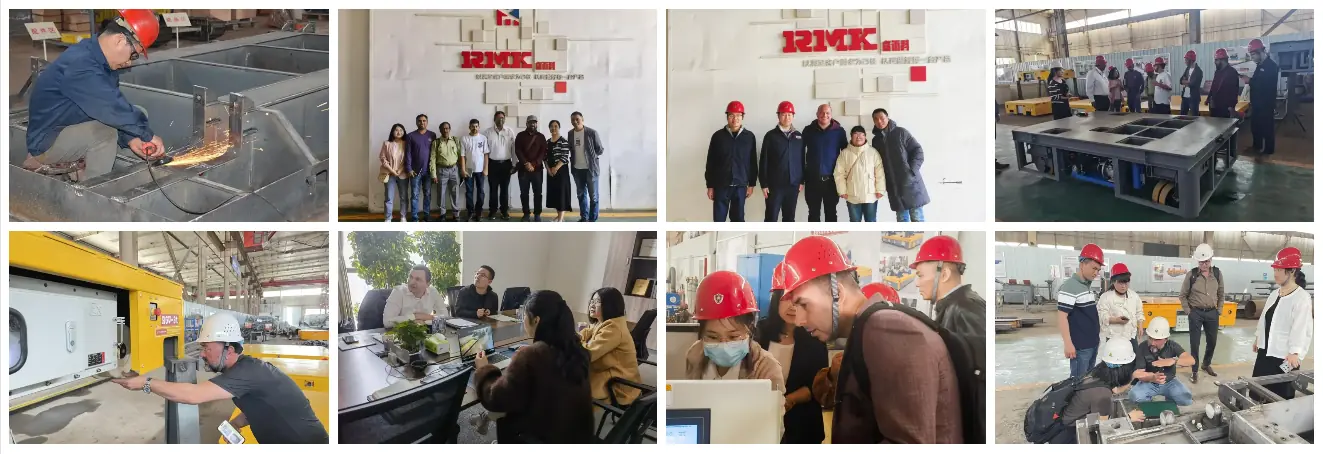
مدهش manufactures battery transfer carts with customized options for load capacity, platform design, power system, and control method. اتصل بنا to discuss your material handling requirements and select the right transfer cart for your application.
الأسئلة الشائعة
What is a battery transfer cart?
A battery transfer cart is an electric-powered industrial vehicle used to move heavy materials in factories and workshops. It uses onboard rechargeable batteries to drive the motor and transport loads without external power cables.
What is a battery transfer cart used for?
Battery transfer carts are used for transporting steel coils, molds, machine parts, steel structures, battery modules, and other heavy materials in industries such as steel manufacturing, automotive production, shipbuilding, and warehousing.
How much weight can a battery transfer cart carry?
A battery transfer cart can typically handle loads from 1 ton to over 300 tons. The capacity depends on the application requirements, cart structure, and transported material weight.
How long can a battery transfer cart operate?
The operating time depends on battery capacity, load weight, travel distance, and working frequency. Standard battery transfer carts can usually operate for one working shift before recharging.
What batteries are used in transfer carts?
Battery transfer carts commonly use lead-acid batteries or lithium batteries. Lead-acid batteries are suitable for standard industrial applications, while lithium batteries provide longer service life and faster charging.
ما هو الفرق بين عربات النقل السككية واللا سككية؟
Rail transfer carts run on fixed tracks and are suitable for heavy loads and fixed transportation routes. Trackless transfer carts use rubber wheels and can move freely in workshops with changing transportation paths.
Can a battery transfer cart be customized?
Yes. Battery transfer carts can be customized according to load capacity, platform size, power system, control method, running route, and working environment.
How do I choose a battery transfer cart?
The selection depends on load capacity, transportation distance, route conditions, battery type, control requirements, and automation needs. The cart configuration should match the actual material handling process.
حلول مناولة المواد الذكية المخصصة لمناولة المواد الذكية
للتأكد من أن عربة النقل المخصصة تناسب احتياجاتك تماماً، يُرجى تقديم التفاصيل التالية:
- سعة التحميل: _____ طن (1 ~ 500 طن)
- حجم الطاولة: _____ × _____ مم/م (على سبيل المثال، 1500 × 3000)
- خيارات الطاقة:
- □ حمض الرصاص □ حمض الرصاص □ ليثيوم أيون □ أخرى: _____
- □ كابل _____V/_____A
- □ قياسي 380 فولت/50 هرتز/3 مراحل قياسية
- تفاصيل الحمولة:
- النوع: _____ (مثل لفائف الصلب، والآلات)
- الاحتياجات الخاصة: _____ (على سبيل المثال، مضاد للانزلاق، مقاوم للتآكل)
- ميزات اختيارية:
- □ حساسات منع التصادم في حالات الطوارئ □ حساسات منع التصادم
- □ موجهات السكك الحديدية □ آلية الرفع □ جهاز التحكم عن بُعد