
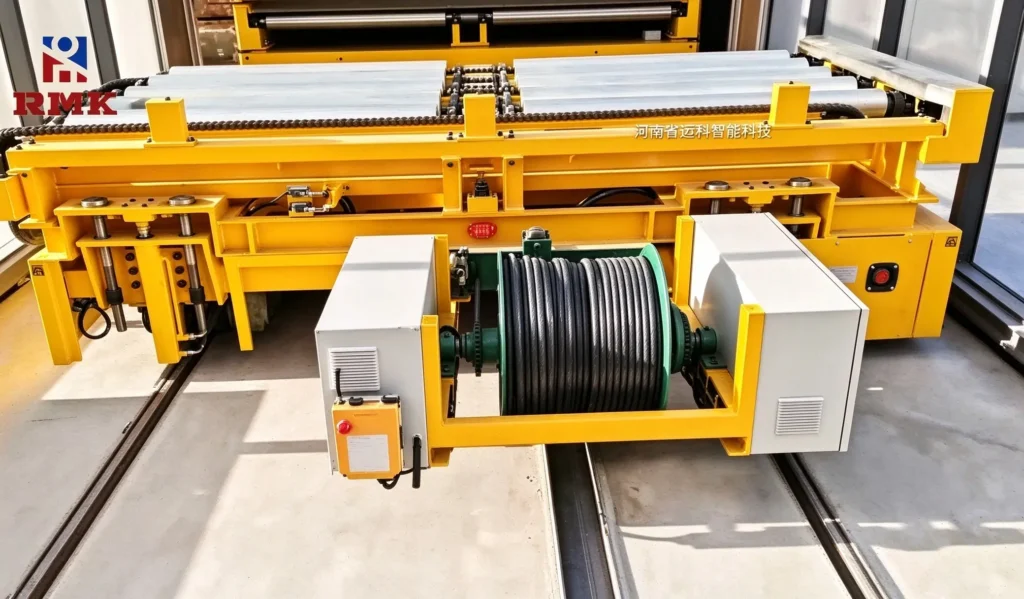
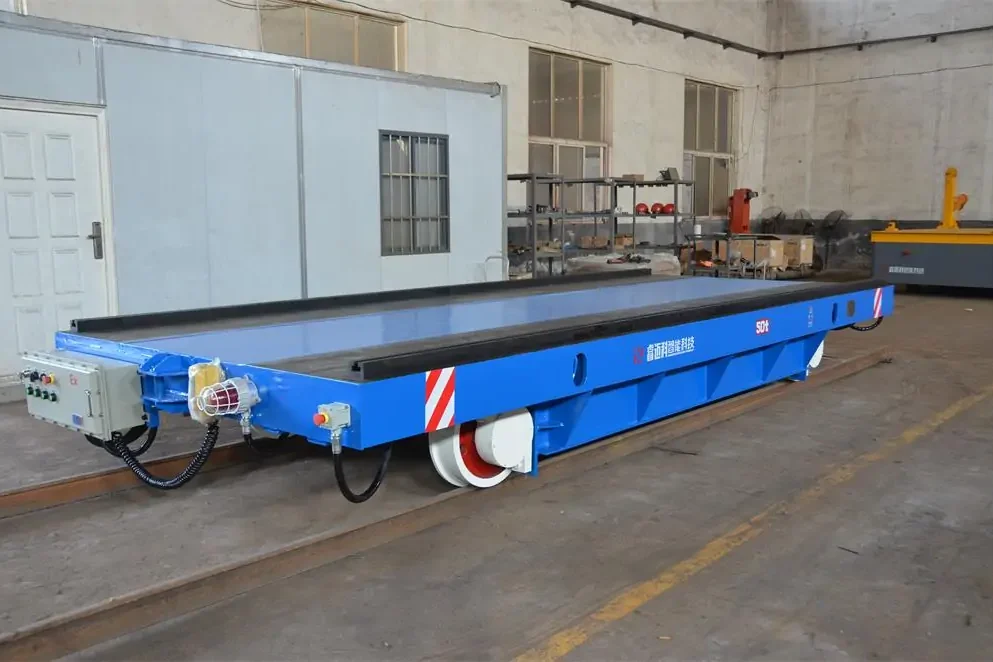
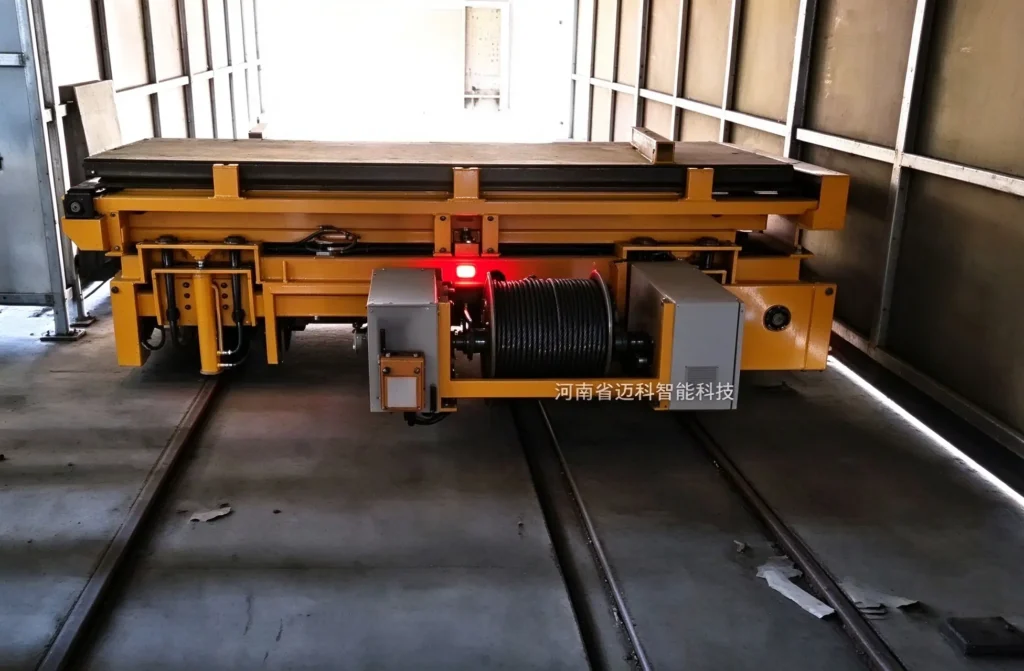
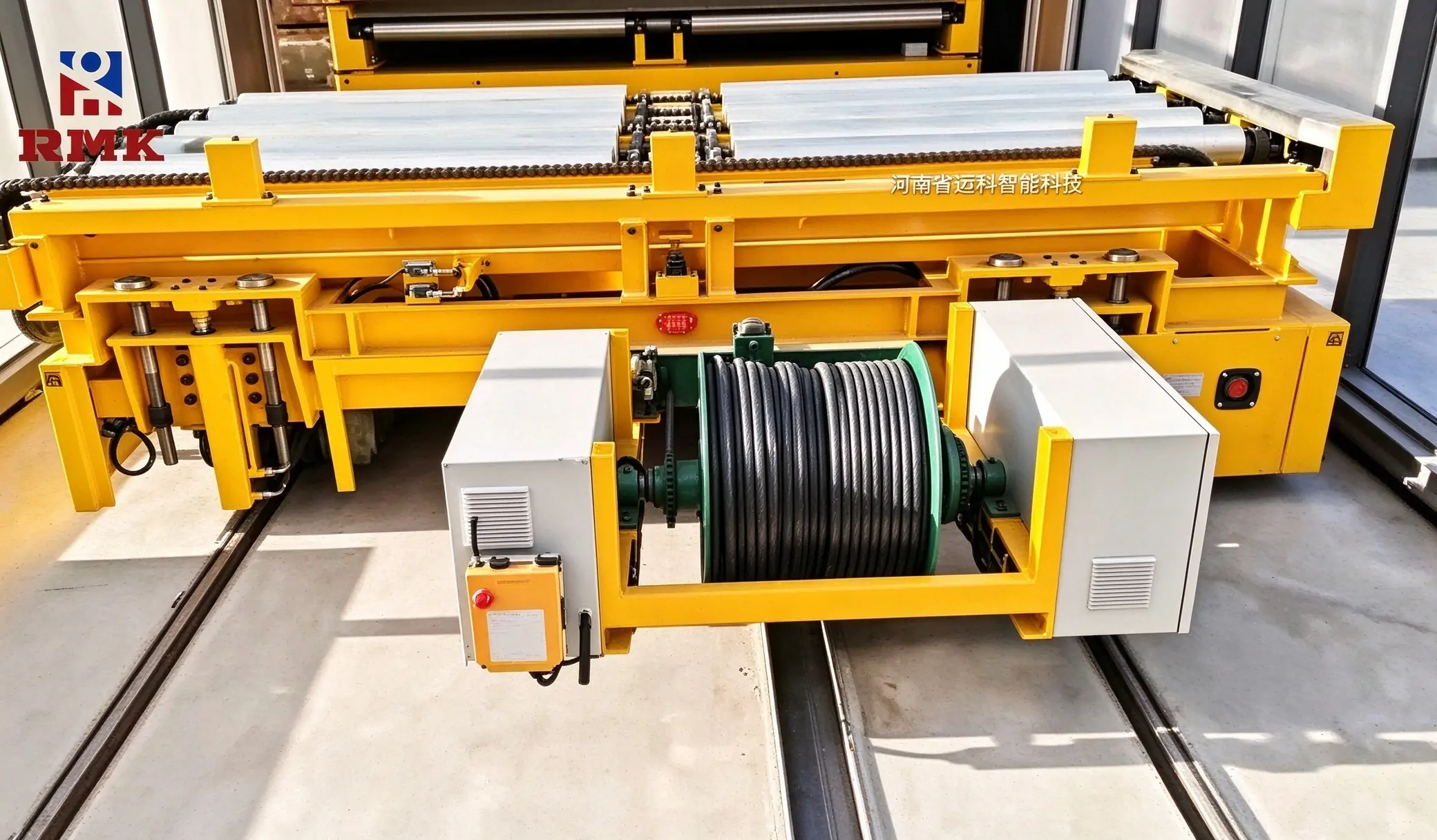
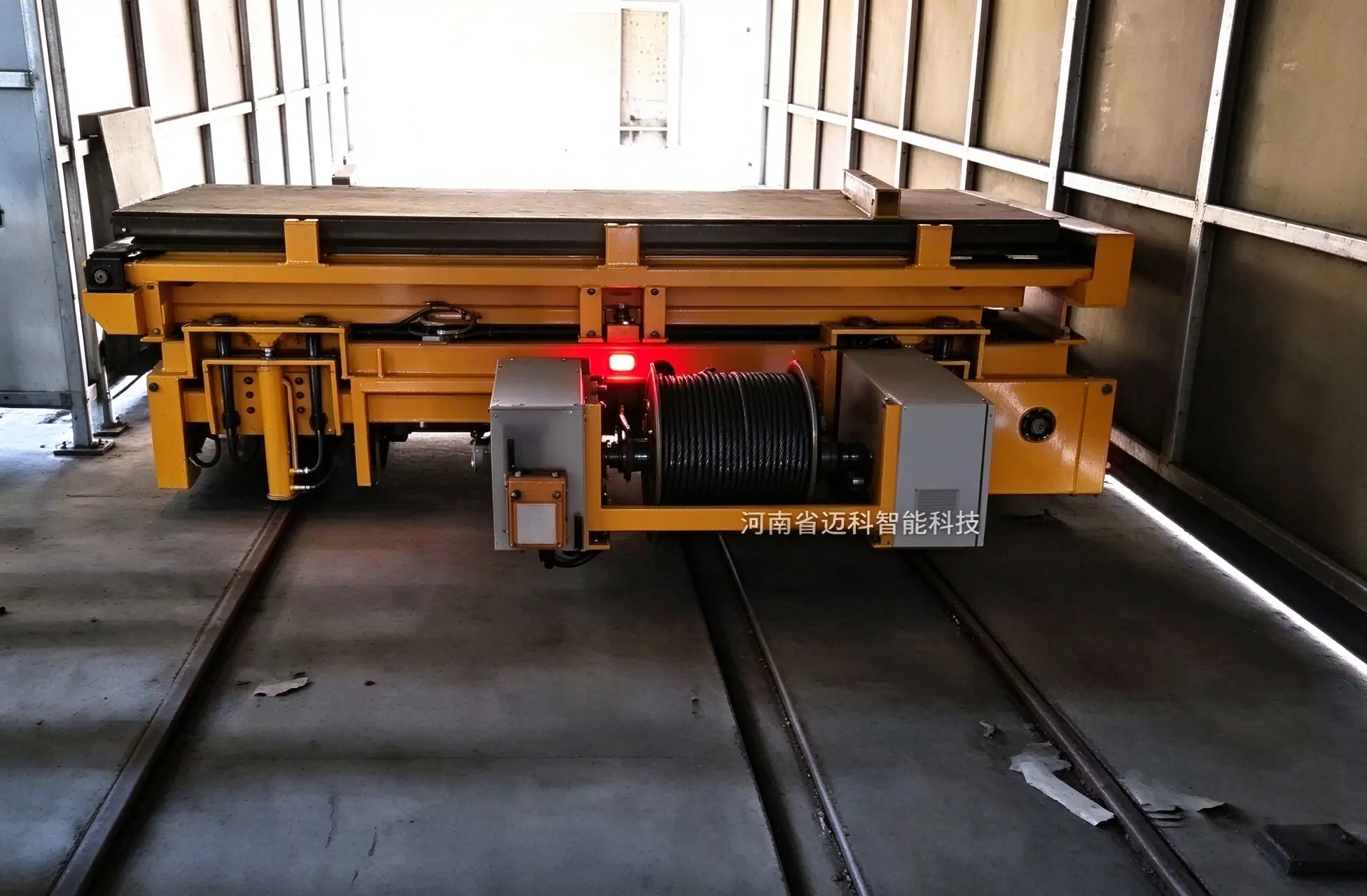
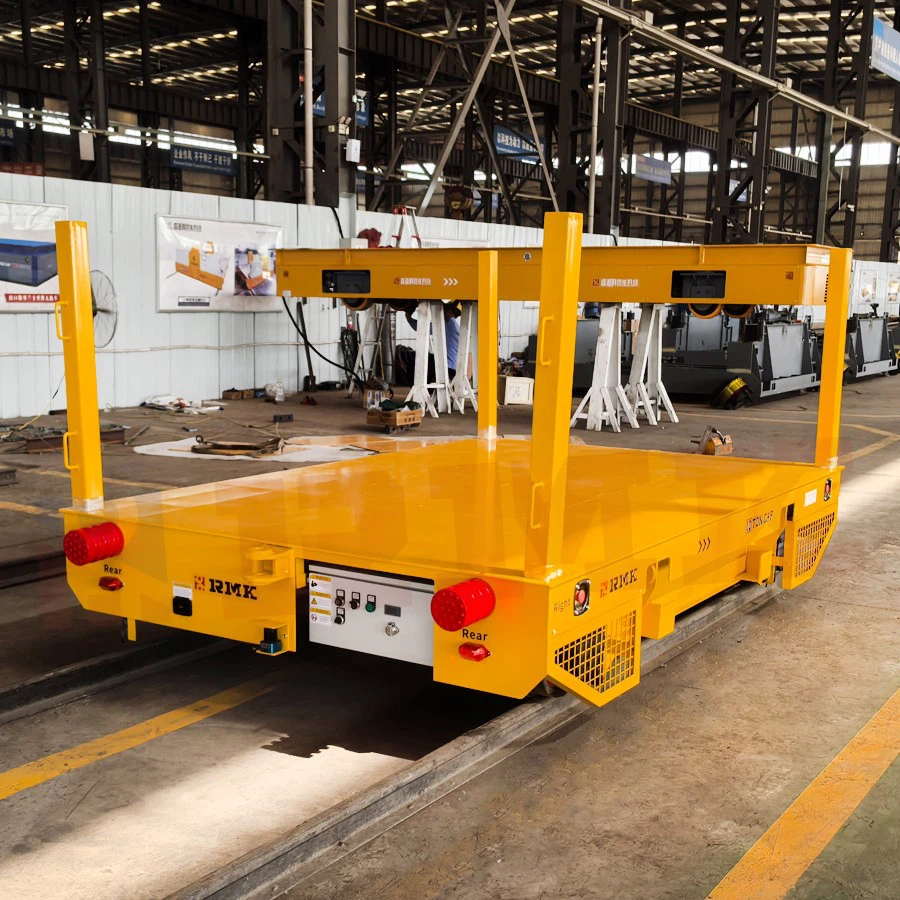
صُممت عربة النقل على القضبان من طراز RMK، التي تتغذى كهربائياً عبر بكرة كابل، لمناولة المواد الثقيلة على مسارات قضبان ثابتة. وتصلها الطاقة من مصدر خارجي للتيار المتردد عبر كابل متحرك تديره بكرة أوتوماتيكية، مما يتيح دورات نقل متكررة دون الحاجة إلى شحن بطارية جر. وهي مناسبة لنقل المواد الفولاذية والقوالب ومكونات الآلات وغيرها من الأحمال الثقيلة داخل المنشآت الصناعية.
- سعة الحمولة المقدرة: حسب متطلبات المشروع؛ تتطلب التصميمات الخاصة بالأحمال الثقيلة مراجعة هندسية
- مزود الطاقة: مصدر خارجي للتيار المتردد عبر بكرة كابل
- سرعة الجري: يُخصص وفقاً لمتطلبات التشغيل
- وضع التحكم: وحدة تحكم معلقة / جهاز تحكم لاسلكي عن بُعد / PLC
ما هي عربة النقل على القضبان التي تتغذى كهربائياً عبر بكرة كابل؟
تُصمم كل عربة نقل على القضبان تتغذى كهربائياً عبر بكرة كابل لتلائم ظروف التشغيل المحددة، مع إمكانية تخصيص سعة الحمولة وأبعاد المنصة ومقياس عرض القضبان ونظام بكرة الكابل وتكوين نظام الدفع. وتتوفر منصات مسطحة ومنصات على شكل V وطاولات ذات بكرات وتجهيزات خاصة لمناولة الأحمال، وفقاً لمتطلبات الحمولة والإنتاج. كما تتوفر خيارات التحكم بوحدة معلقة أو جهاز تحكم لاسلكي عن بُعد أو متحكم منطقي قابل للبرمجة PLC.
عربة النقل على القضبان التي تتغذى كهربائياً عبر بكرة كابل، والمعروفة أيضاً باسم عربة نقل ببكرة كابل أو عربة نقل على القضبان من سلسلة KPJ، هي مركبة كهربائية لمناولة المواد، مصممة لنقل الأحمال الثقيلة على قضبان ثابتة. وهي تستخدم مصدر تيار متردد خارجياً تنتقل منه الطاقة عبر كابل متحرك، وتُركب على العربة بكرة تلف الكابل وتفرده تلقائياً أثناء التشغيل.
يوفر نظام بكرة الكابل الطاقة باستمرار لمحرك الدفع ونظام التحكم الكهربائي أثناء تحرك العربة إلى الأمام أو الخلف. وعلى خلاف عربات النقل التي تعمل بالبطاريات، لا يعتمد هذا النظام على سعة بطارية محمولة على العربة أو دورات شحنها. وعلى خلاف عربات النقل التي تتغذى عبر قضبان منخفضة الجهد، تتلقى العربة الطاقة عبر كابل مرن بدلاً من القضبان الموصلة للكهرباء.
تُستخدم عربات النقل السككية المزودة ببكرة كابل في المصانع ومصانع الصلب والمستودعات ومنشآت الإنتاج التي تتطلب مسارات نقل ثابتة ودورات تشغيل متكررة. ويمكن تخصيص سعة الحمولة ومسافة الحركة وتكوين بكرة الكابل وتصميم المنصة لتناسب تخطيط النقل وظروف التشغيل.
المواصفات الفنية لعربة النقل السككية المزودة ببكرة كابل
| المعلمة | التكوين المرجعي |
|---|---|
| سعة الحمولة المقدرة | حسب متطلبات المشروع؛ تتطلب التصميمات الخاصة بالأحمال الثقيلة مراجعة هندسية |
| أبعاد المنصة (الطول × العرض × الارتفاع) | تُحدد وفقًا للحمولة وترتيب تحميلها |
| Power Supply | تيار متردد 380 فولت، 50 هرتز |
| سرعة الجري | 0–30 م/دقيقة |
| مسافة التشغيل | حتى 200 متر (حسب تكوين بكرة الكابل) |
| Rail Type | سكك فولاذية من السلسلة P / السلسلة QU |
| نظام القيادة | محرك تيار متردد + علبة تروس |
| نوع بكرة الكابل | تشغيل بنابض / تشغيل بمحرك |
| وضع التحكم | وحدة تحكم معلقة / جهاز تحكم لاسلكي عن بُعد / PLC |
| نوع المنصة | مسطحة / على شكل V / ذات بكرات |
| مادة العجلة | فولاذ مصبوب |
| هيكل الإطار | عارضة صندوقية فولاذية ملحومة |
| أجهزة السلامة | إيقاف طارئ / إنذار صوتي ومرئي |
| بيئة التشغيل | داخلي / خارجي |
ملاحظة: هذه نطاقات تصميم مرجعية وليست مواصفات لطراز قياسي واحد. تعتمد المعلمات النهائية على الحمولة وتخطيط السكك ومصدر الطاقة وطول الكابل وظروف التشغيل. يمكن تقييم سعات الحمولة ومسافات الحركة التي تتجاوز النطاقات المذكورة للمشاريع الخاصة.
هيكل عربة النقل السككية المزودة ببكرة كابل ومكوناتها الرئيسية
تتكون عربة النقل السككية المزودة ببكرة كابل من إطار فولاذي ملحوم ومجموعة بكرة الكابل وكابل حركة ونظام دفع وعجلات فولاذية ومكونات تحكم كهربائية. يُختار كل مكون وفقًا للحمولة المقننة وتخطيط السكك ومسافة الحركة وظروف التشغيل.
| المكون | الوظيفة |
|---|---|
| الإطار الفولاذي: | هيكل صندوقي العوارض ملحوم، مصمم لدعم الحمولة المقننة وتوزيع الوزن على مجموعات العجلات. |
| نظام بكرة الكابل: | يُركب على العربة للف كابل الحركة وفكه أثناء الحركة، وتتوفر تكوينات تعمل بنابض أو بمحرك. |
| كابل الحركة: | ينقل الطاقة الكهربائية من مصدر التغذية الخارجي إلى العربة، ويُحدد طول الكابل ومساحة مقطعه ونصف قطر انحنائه وفقًا لمسافة الحركة وتصميم البكرة. |
| محرك الدفع وناقل الحركة: | ينقل المحرك الكهربائي وعلبة التروس عزم الدوران إلى العجلات للتحكم في الحركة إلى الأمام والخلف. |
| العجلات الفولاذية: | تدعم العربة والحمولة، وتنقل الحمل إلى القضبان عبر مجموعات العجلات. |
| نظام التحكم الكهربائي: | يدير توزيع الطاقة وتشغيل المحرك والتحكم في السرعة واتجاه الحركة والحماية الكهربائية. |
| نظام التشغيل: | يدعم التحكم بوحدة معلّقة أو التحكم اللاسلكي عن بُعد أو التشغيل بواسطة متحكم منطقي قابل للبرمجة (PLC)، وفقًا لعملية المناولة. |
تكوينات المنصة والمناولة الاختيارية:
- منصة على شكل V: تثبّت لفائف الفولاذ والأنابيب والأحمال الأسطوانية الأخرى في مواضعها.
- منصة بكرات: تتصل بخطوط الإنتاج لتحميل المواد وتفريغها.
- منصة رفع هيدروليكية: ترفع الحمولة إلى ارتفاع العمل المطلوب.
- تجهيزات تثبيت مخصصة: تحدد مواضع قطع العمل الخاصة وتثبتها أثناء النقل.
يشكل الهيكل ونظام الدفع ومجموعة بكرة الكابل البنية الوظيفية الرئيسية للعربة. وتُحدد أنواع المنصات وآليات الرفع وتجهيزات التثبيت وخيارات التحكم وفقًا لأبعاد الحمولة وعملية المناولة ومتطلبات الموقع.
آلية عمل عربة نقل سككية تعمل بالطاقة عبر بكرة كابل
تتلقى عربة النقل السككية العاملة بالطاقة عبر بكرة كابل الطاقة الكهربائية من مصدر تيار متردد خارجي عبر كابل متحرك متصل ببكرة الكابل المثبتة على العربة. أثناء حركة العربة على طول القضبان الثابتة، تُفرد البكرة الكابل أو تلفّه للتحكم في طوله والحفاظ على اتصال الطاقة. وينظم نظام التحكم الكهربائي تشغيل المحرك واتجاه الحركة والسرعة.
عملية العمل:
- توصيل الطاقة: تُزوّد العربة بالطاقة من مصدر تيار متردد خارجي عبر الكابل المتحرك.
- فرد الكابل: As the cart moves away from the power connection, the cable reel releases the required cable length.
- Electrical Control: The control cabinet distributes power to the drive motors and control circuits.
- Motor Drive: The motor transmits torque through the gearbox to the wheel assemblies.
- Rail Movement: The cart travels forward or backward along the rails according to the operator’s commands.
- Cable Retraction: As the cart moves toward the power connection, the reel retrieves cable to control slack and reduce the risk of tangling.
On a cable reel powered rail transfer cart, the reel maintains the electrical connection throughout movement. Spring-driven and motorized cable reels use different winding and release mechanisms; the selection depends on travel distance, operating speed, cable specifications, and installation conditions.
Advantages of Cable Reel Power
Continuous External Power Supply
Draws power from an external AC source through a traveling cable, eliminating dependence on onboard battery capacity and charging cycles.
No Onboard Battery Maintenance
Eliminates traction battery replacement, charging equipment, and routine battery maintenance.
Suitable for Frequent Operations
Supports repeated transport cycles and extended operating hours on fixed rail routes in industrial production facilities.
Controlled Rail-Guided Movement
Steel wheel assemblies follow fixed tracks, maintaining a defined travel path for heavy material handling between designated workstations.
Flexible Platform Design
Available with flat decks, V-shaped platforms, roller tables, and custom fixtures for different cargo dimensions and loading requirements.
Configurable Cable Reel System
Spring-driven and motorized cable reels accommodate different cable lengths, travel speeds, and installation layouts.
Industrial Applications
Cable Reel Powered Rail Transfer Carts are used in industrial facilities with fixed transport routes and frequent heavy-load handling requirements. Platform structures and load capacities are selected according to the materials, production processes, and site layout.
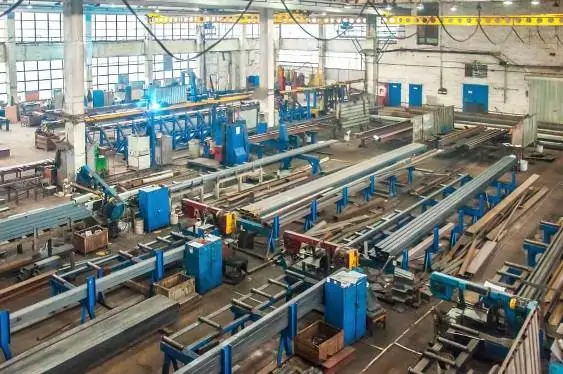
مصانع الصلب
Transport steel coils, plates, billets, and other heavy metal materials between production areas. V-shaped platforms are available for cylindrical loads.
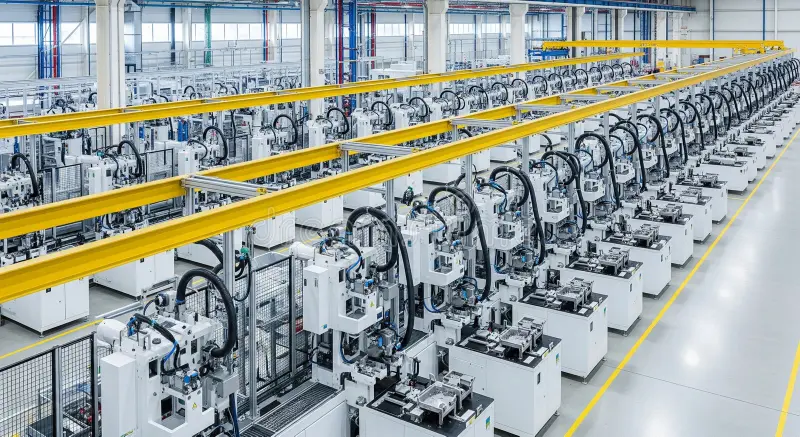
تصنيع الآلات
Move machine components, heavy equipment bases, steel structures, and assembled parts between machining and assembly workstations.
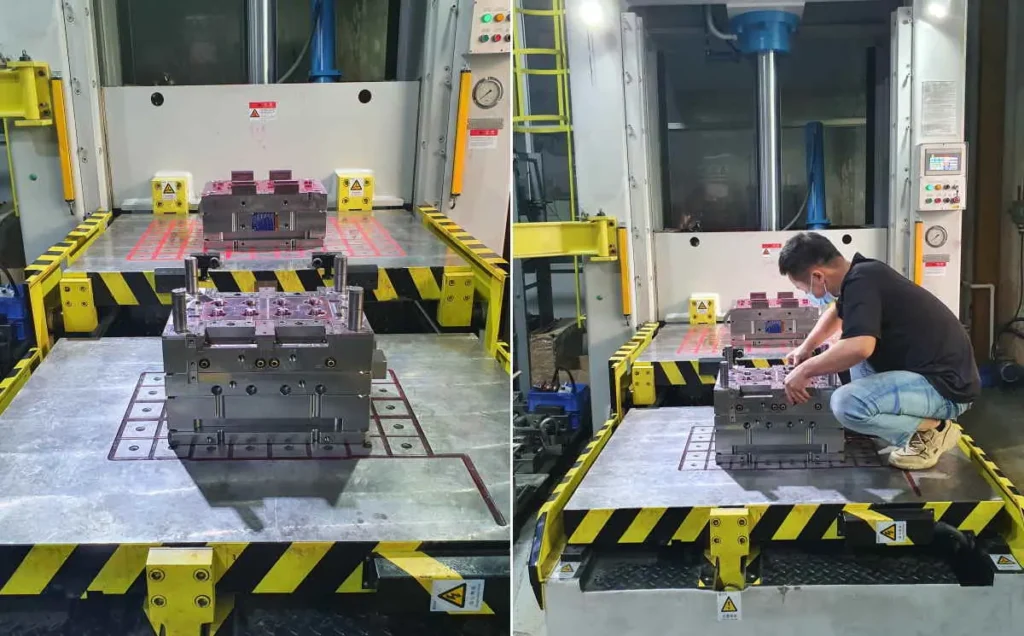
Mold Workshops
Transfer injection molds, stamping dies, and other heavy tooling between storage areas, maintenance stations, and production machines.
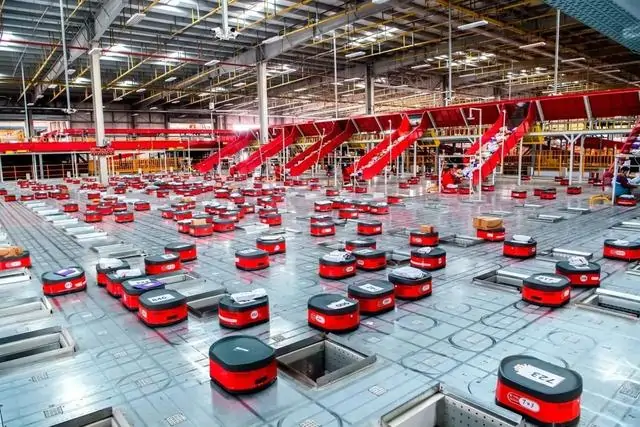
Production Lines
Transport workpieces between designated processing stations. Roller platforms can be configured for loading and unloading at production line interfaces.
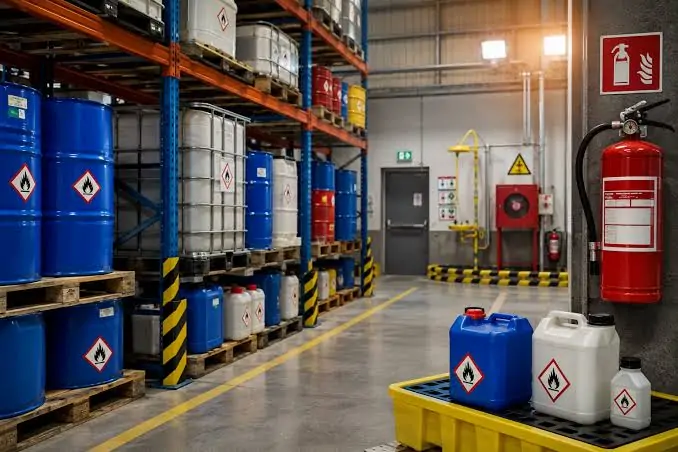
Warehouses and Storage Facilities
Handle heavy materials, industrial components, and packaged goods between storage zones, loading areas, and dispatch stations.
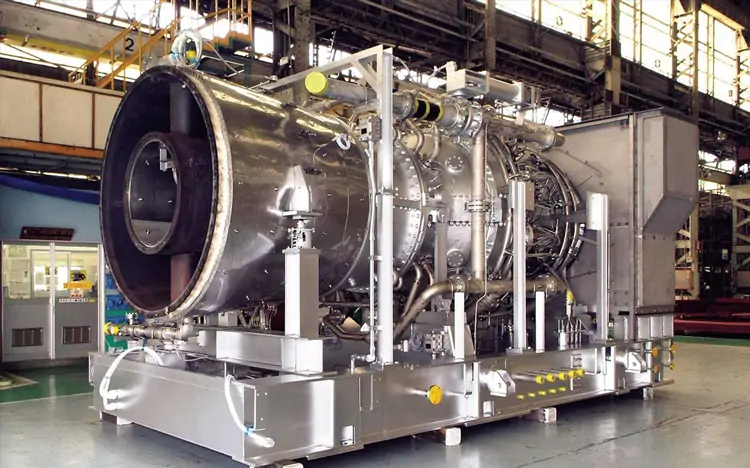
بناء السفن وتصنيع المعدات الثقيلة
Move large structural components, equipment sections, and fabricated assemblies across designated workshop and assembly areas.
How to Choose a Cable Reel Powered Rail Transfer Cart
Selecting a cable reel powered rail transfer cart requires checking the cargo specifications, rail layout, power supply, and operating conditions.
- Load Capacity and Cargo Dimensions: Specify the maximum cargo weight, overall dimensions, center of gravity, and load distribution. The rated capacity must cover the total working load.
- Rail Layout and Travel Distance: Provide the rail length, gauge, track alignment, and turning radius. Straight and curved track layouts require different wheel and cable routing arrangements.
- Cable Reel Configuration: Select a spring-driven or motorized cable reel according to travel distance, operating speed, cable length, and installation position. Cable diameter and minimum bending radius must match the reel specifications.
- Power Supply Requirements: Confirm the available voltage, frequency, phase configuration, and power connection location. Motor power and cable cross-section must match the electrical load.
- Operating Speed and Control: Define the required travel speed, positioning accuracy, and operating cycle. Pendant control, wireless remote control, or PLC integration can be selected according to the production process.
- مسار التشغيل وطريقة التشغيل: Specify indoor or outdoor operation, ambient temperature, dust, moisture, and exposure to heat or corrosive substances. Special electrical protection and structural modifications require project assessment.
Cable Routing and Power Connection Layout
A cable reel powered rail transfer cart receives electricity through a flexible cable connected to a fixed supply point. The onboard reel pays out or retrieves the cable as the cart moves. The supply point, reel position, and cable path should be planned together across the full travel route. Our guide to cable transfer carts explains the main cable supply arrangements and their applications.
Power Connection Location
Select the connection point according to the track layout, available electrical supply, and required working range. Include the cable length needed between the connection point and the cart at each end of its travel.
Cable Path
Check the payout direction, cable guides, and clearance from wheels, drive components, and loading equipment. The route should avoid sharp edges, excessive twisting, and bends tighter than the cable manufacturer’s permitted radius.
Workshop Traffic
Identify crossings with forklift routes, pedestrian aisles, and loading areas. Where crossings cannot be avoided, assess a recessed channel, a suitable protective cover, or another engineered routing arrangement. Any protection must accommodate cable movement without trapping, crushing, or abrading the cable.
Cable Selection and Protection
Use a cable rated for the selected reeling arrangement and operating conditions. Check allowable tension, repeated bending, abrasion, temperature, and exposure to moisture or chemicals. The cable guides and reel geometry must be compatible with the selected cable.
Maintenance Access
Leave enough space to inspect the drum, guides, electrical connections, and reel drive. Cable replacement and maintenance should be possible with the equipment stopped and its electrical supply isolated.
Spring-Driven and Motorized Cable Reels
Both spring-driven and motorized reels can manage the power cable on a rail transfer cart. Selection depends on the required cable length, cable weight, travel speed, acceleration, operating cycle, and allowable cable tension. The ratings of the proposed reel matter more than a general distinction between short and long routes.
| عامل الاختيار | Spring-Driven and Motorized Reel Considerations |
|---|---|
| س1: ما الفرق بين عربات النقل القابلة للتوجيه و | Spring-driven reels use stored spring energy to retrieve the cable. Motorized reels use an electric drive to control retrieval and, where provided by the design, cable payout. |
| Cable Length and Weight | Spring-driven reels are often considered for shorter runs and lighter cables, provided that spring torque remains suitable throughout the working range. Motorized reels can accommodate longer or heavier cable arrangements when the drum, drive and supporting structure are sized accordingly. Neither type has a universal travel-distance limit. |
| Travel Speed and Tension | A spring-driven reel must maintain acceptable cable tension as the effective drum radius and spring torque change. A motorized reel uses its drive and control arrangement to manage winding torque or speed. For either type, the permitted travel speed and acceleration must be checked against the reel ratings and cable limits. |
| تكرار التشغيل | Check the rated duty of the spring mechanism or motorized drive against the expected transport cycles. Frequent starts, reversals and extended operation require an assessment of component life, thermal limits and winding performance. A motorized reel should not be assumed to support continuous duty unless its ratings confirm this. |
| الصيانة | Spring-driven reels require inspection of the spring mechanism, guides, drum and cable condition. Motorized reels also require inspection of the motor, transmission, and controls fitted to the selected assembly. Electrical transfer components, including slip rings where fitted, should be included in the maintenance plan. |
When specifying a cable reel powered rail transfer cart, confirm usable cable capacity, winding torque, allowable tension, cable diameter and minimum bending radius. The reel supplier should verify the proposed operating cycle against the selected assembly.
Factors Affecting Travel Distance
The effective travel distance of a cable reel powered rail transfer cart is not simply the total cable length. Connection leads, the cable path and any turns that must remain on the drum reduce the length available for working travel. The position of the fixed supply point also changes the relationship between cable payout and cart movement.
- Usable Reel Capacity
Drum diameter, winding width, cable diameter, and the permitted number of cable layers determine storage capacity. The usable working length must also allow for the reel manufacturer’s required residual turns or other retention provisions. - Supply Point Position
Calculate the cable path from the fixed connection to the cart throughout the route. An end-fed layout and a centrally fed layout may require different payout and retrieval arrangements. The maximum working range must be checked against the actual geometry rather than inferred from cable length alone. - Connection and Routing Allowances
Allow for fixed connections, cable guides, bends and transitions. Trenches, obstacles and protective structures may increase the required path length. Reserve cable must be managed so that it does not create uncontrolled slack or interfere with the cart. - Voltage Drop and Cable Heating
Check conductor size, circuit length, operating current and connection resistance against the permitted voltage drop, including motor starting conditions. Cable current ratings must also account for the installation method, ambient temperature, and operation with cable remaining wound on the reel.
The specified operating range should satisfy both the mechanical payout requirements and the electrical limits. For longer routes or demanding operating cycles, verify reel torque, cable tension, starting voltage, and thermal duty before confirming the configuration.
Comparison of Transfer Cart Power Supply Types
| Power Supply | Power Arrangement | التطبيق |
|---|---|---|
| مدعومة ببكرة الكابل | Main Characteristics: External power transmitted through a retractable cable | Suitable Conditions: Fixed routes with suitable cable management |
| تعمل بالبطارية | Main Characteristics: Onboard battery supplies electrical power | Suitable Conditions: Fixed rail routes without trailing power cables |
| Low Voltage Rail Powered | Main Characteristics: Power transmitted through conductive rails | Suitable Conditions: Fixed routes with dedicated rail power infrastructure |
The final selection should account for route layout, operating frequency, electrical installation and maintenance requirements. Compare low-voltage rail power when a traveling cable is impractical, or review the full عربة النقل الكهربائية السككية range.
Custom Cable Reel Powered Rail Transfer Cart Options
RMK designs cable reel powered rail transfer carts around cargo specifications, transport routes, and site operating conditions. Customization covers the cart structure, loading platform, cable reel system, drive configuration, electrical controls, and production line interfaces.
- Load Capacity and Frame Design: Frame dimensions, structural reinforcement, and wheel load distribution are designed around the rated load, cargo dimensions, and center of gravity.
- Platform and Loading Configuration: Platform length, width, and height can be customized. Options include flat decks, V-shaped platforms, roller tables, hydraulic lifting platforms, and special fixtures for different loading and unloading methods.
- Cable Reel and Power System: Spring-driven or motorized cable reels are selected based on cable length, cable specifications, travel speed, and installation layout. Power voltage and cable cross-section are matched to the site supply.
- Rail Layout and Wheel Configuration: Rail gauge, wheelbase, wheel diameter, wheel quantity, and track arrangement are specified for the transport route, track structure, and floor layout.
- Drive System and Operating Performance: Motor power, gearbox ratio, braking system, travel speed, and operating duty are configured for the rated load and required transport cycles.
- Control and Positioning System: Pendant control, wireless remote control and PLC integration are available. Limit switches, positioning sensors, fixed-point stopping, and automatic travel control can be specified for the operating process.
- Safety and Environmental Protection: Emergency stops, audible and visual alarms, travel limit switches, and electrical protection devices can be configured. Anti-corrosion, dust protection, heat-resistant, and explosion-proof designs require assessment of site conditions.
- Multi-Cart and Production Line Integration: Multiple-cart coordination, equipment interlocking, PLC communication, and production line interfaces can be designed for projects requiring coordinated material handling.
RMK provides equipment design and manufacturing based on approved project specifications. Final dimensions, component selections, electrical parameters, and optional functions are confirmed in the technical proposal and engineering drawings.
Cable Reel Powered Rail Transfer Cart Manufacturer & Supplier
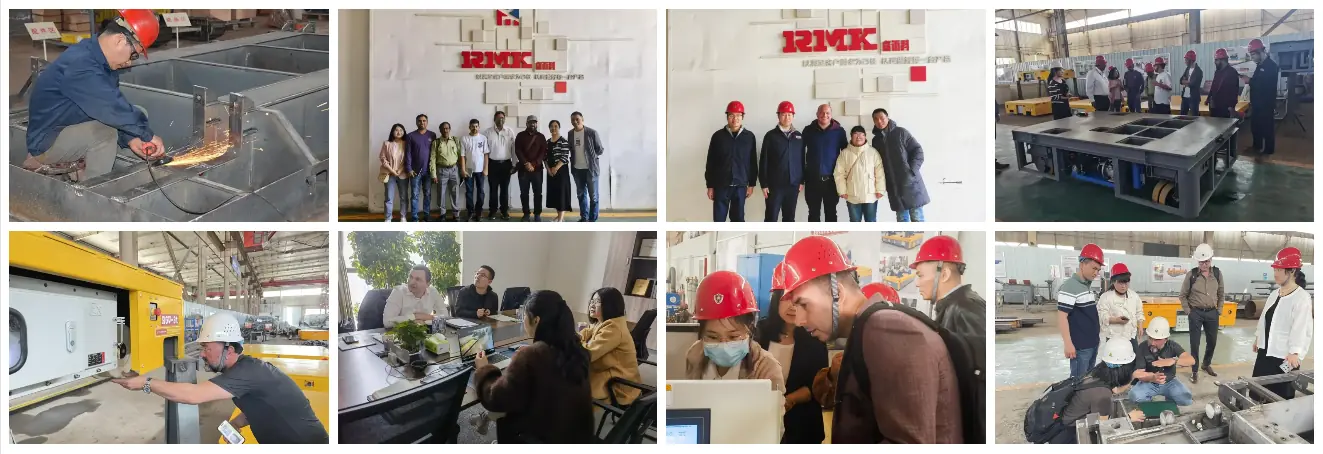
REMARKABLE is a manufacturer and supplier of cable reel powered rail transfer carts for industrial material handling. The company provides customized transfer cart solutions for different load capacities, platform dimensions, rail layouts, power supply systems, and operating conditions. Contact RMK to request the technical documentation and conformity information available for the proposed model and destination market.
REMARKABLE provides project consultation, equipment design, manufacturing, installation guidance, operation training, and after-sales technical support for overseas customers. Warranty service is provided under the agreed product warranty terms. اتصل بـ REMARKABLE with your cargo specifications, transport route, and site requirements to discuss a cable reel powered rail transfer cart for your project.
الأسئلة الشائعة
What is a cable reel powered rail transfer cart?
A cable reel powered rail transfer cart is an electric material handling vehicle that travels on fixed rails and receives external power through a traveling cable managed by an onboard cable reel.
How does a cable reel powered rail transfer cart work?
External AC power passes through the traveling cable to the cart’s electrical system. The motor drives the wheels through a gearbox, while the cable reel releases or winds the cable during travel.
What is the load capacity of a cable reel powered rail transfer cart?
Load capacities vary by model and design. RMK provides customized configurations for different industrial loads. The rated capacity must be confirmed against the selected model and actual cargo specifications.
How far can a cable reel powered rail transfer cart travel?
Travel distance depends on cable length, reel capacity, winding speed and cable routing. The required distance should be specified during design to determine the appropriate reel and cable configuration.
What types of cable reels are used on rail transfer carts?
Common types include spring-driven and motorized cable reels. Spring-driven reels use mechanical spring force for cable retraction, while motorized reels use an electric drive for controlled winding.
Can a cable reel powered rail transfer cart operate continuously?
It can support extended operation with external power. Continuous duty depends on motor ratings, cooling capacity, cable specifications and the electrical system’s operating limits.
Can a cable reel powered rail transfer cart run on curved tracks?
Yes, with a suitable design. Track radius, wheel arrangement, cable routing, and reel position must be evaluated. Not all standard configurations support curved-track operation.
What information is needed to customize a cable reel powered rail transfer cart?
Provide the cargo weight and dimensions, rail layout, travel distance, power supply, required speed, control mode, and operating environment. These details form the basis for equipment design.
Related Rail Transfer Cart Articles


Discuss Your Transfer Cart Requirements
Send the cargo weight and dimensions, rail layout, travel distance, operating cycle, and available power supply. RMK can review the application and prepare a configuration and quotation with a defined scope of supply. For the main cost factors, see our electric transfer cart pricing guide.
- الحمولة: Cargo and fixture weights, dimensions, and load positions
- Track: Rail gauge, profile, route length and curve radii
- Duty: Trips per shift, travel speed and stopping requirements
- Site: Available power, loading method and working environment